The Cult of Relaxation

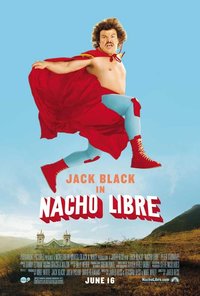
Relaxation comes with a price.  As with most people who work hard, I find taking more than a day or two off work tricky.  It’s not that I want to go to work, but that I feel the need to keep improving my mind.  I read quite a bit on holidays, and, being of the opinion that movies are the modern mythology, I like to watch what I can.  Last night I saw a film I’m too embarrassed to name, but which was so utterly awful that I can’t get it out of my head.  Call it an experiment in relaxation.  Or call it madness.  Either way, I came to realize just how much impact a movie might have without really containing anything to give back.  This particular film is often listed as a cult classic.

I’ll confess right now that I loved Attack of the Killer Tomatoes the first time I saw it.  (This is not last night’s feature.)  It is a bad movie—so bad that it’s good.  My professional reputation may suffer for it, but I have to admit to having watched it multiple times over the years.  I’d heard that last night’s film was like that.  So bad that it’s good.  And that made me ponder the blurring of these categories.  Without a universal deity to declare the terms, good and bad are matters of consensus.  No quantitative means exists for making, a movie for example, good or bad, beyond the human judgment of viewers.  We tend to listen to critics, who experience more cinema than the rest of us can afford, but I’m sure we all have our secret likes that don’t match the decrees of the experts.

Films that flaunt convention so radically, and which gather disciples, are, as I mentioned, called “cult classics.”  This is the language of religion.  Although religionists have moved away from the use of the word, cult implies irrational intensity of devotion toward that which is clearly, in the eyes of the majority, bad.  Again we come to the question of who defines value.  For most of human history it has simply been majority opinion.  Cults, however, give meaning to those who “get it.”  Cult classics have faithful followers.  In the line of duty some months back I watched Exorcist II: The Heretic.  I later found out that it also frequently makes the list of all-time worst movies, despite starring Linda Blair, James Earl Jones, Paul Henreid, and Richard Burton.  It’s a cult classic.  The unnamed film from last night has no known stars.  Hideous acting.  Ludicrous writing.  I watched it to relax.  Now I wonder if I’ve joined a cult, or if I just need a vacation.


Puzzling Traditions

Like most families, we have tried over the years to develop our own holiday traditions.  These, like all things, evolve.  When I was a professor the semester break meant, after a flurry of grading, a month of a more relaxed schedule.  We would travel to family outside of Wisconsin every year, and worked on what a “usual” holiday might look like for our small family in the remaining time at home.  Now that I work for a company, and my wife works for a company, the holiday break is severely curtailed, but it has allowed us the opportunity to invent our own traditions.  One of them is to put together a quality jigsaw puzzle on Christmas Day.  (Two of these puzzles were destroyed in the flood that ruined so many books, and will need to be replaced eventually.)

I’m aware how nerdy puzzle-solving might sound.  I’m not spending the day out riding an ATV through the woods, discharging a firearm, or watching sports on television.  Piecing together a puzzle is a quieter pursuit, and the puzzles we have are of quality artworks, and completing one makes it feel like all is right with the world for a little while.  As with most things on this blog, it also serves as a metaphor.  Yesterday as we watched the movie The Man Who Invested Christmas (which portrays very well the life of those who try to write; the exception being that Dickens had little trouble finding publishers and the benefit of early success), it occurred to me that as we put together the puzzle of our lives, we do so with the box top missing.  We don’t know what the picture is.  Slowly some sections start to come together, but overall, we don’t know what we’re doing.

Long ago I learned the folly of planning out a life.  Moving forward is good, yes, and making plans wise.  You cannot, however, know the way those plans might fit elsewhere in this decades-long unfinished puzzle.  There’a a fairly large section of mine called Nashotah House.  I would never have planned that intentionally, and thinking back, it was being there that renewed my interest in horror.  I thought I’d be at a university where I might continue my research into ancient deities and how the world of biblical Israel developed its own conception of that world.  That’s what I thought the cover of the box would look like.  Instead I’ve found myself editing the books that others write and using the scant time left over to write my own, on a topic far different than that in which I earned an advanced degree.  As the last piece slips into the puzzle, I feel a sense of accomplishment.  I may not have done much, but I’ve used the limited time off to step back and try to take, however briefly, the larger view.


Christmas Lights

How many people read a blog on a major holiday?  The process of writing takes no vacations, however, and I often think of holidays as a time to write.  It doesn’t really matter if anyone reads it; writing is our witness to the cosmos that “Kilroy was here.”  Even if most of us have no idea who Kilroy was.  So I find myself awake earlier than most children on Christmas morning.  My long habit of rising early to catch the bus hasn’t been easy to break.   I creep down the stairs and water the tree before turning on its colorful lights.  I make a cup of coffee and wash the dishes left in the sink after a festive Christmas Eve.  And I think.  There’s always the thinking.

The meaning of Christmas, as the holiday classic tells us, eludes Charlie Brown.  Linus van Pelt gives one rendition—that of the Gospel of Luke—as the canonical meaning, but in my experience it shifts during a lifetime.  Christmas, after all, is one of a host of solstice celebrations.  My thinking these days is that it’s all about light.  Shimmering angels, glowing stars, light coming into the darkness.  These ideas seem to have, for the most part, Zoroastrian origins, but they’ve been thoroughly appropriated and, in true American style, commercialized.  The news headlines read how disappointed retailers always are.  The take could’ve been bigger.  Capitalism relies on Christmas to make the third quarter.  Light in the darkness, in its own distorted way.

As I sit for these quiet moments in the glow of only a tree, I think of those for whom the holiday has become a kind of disappointment.  Not a cheery Christmas thought, I know, but an honest one.  As families grow and diversify the childhood Christmas of excited children scrambling under the tree to excavate the next gift for me starts to fade.  Our economic system separates, and the dearth of days off around the holidays makes travel back to childhood homes difficult.  We do the best we can, but the fact is the sixties (speaking for me) are over.  Our reality is colder and darker than it used to be.  I part the curtains and look for any sign of dawn.  It will be a few hours yet before the sun brightens this winter sky, but then, that’s what the holiday has come to mean for me.  At least this year, it is the hope of light returning.  And that, alone, makes it a holiday.


The Night before Reading

Like many people bound to their circumstances by work (and now a mortgage) I see travel to far-off places is a dream.  On my personal bucket-list is Iceland.  Perhaps that’s a strange place to yearn for in winter, but it’s on my mind today because of Jolabokaflod.  I’ve posted on Jolabokaflod before, but in case the concept is unfamiliar I’d summarize it by saying Icelanders, who are exceptionally literate, give each other books on Christmas Eve and spend the dark hours reading.  For the past three years I’ve taken part in a reading challenge that lists a book in translation, and invariably I choose one by an Icelandic author.  Publishers in Iceland, being less corporate than our native species, accept books for publication somewhat more readily—I’ve been shopping a novel around for nearly a decade now and I’ve read worse.  If it doesn’t jack up the dollar signs, so nobody around here’s interested.

I’m sure it’s not all sweetness and light in Iceland.  I suspect, for one thing, it’s hard to be vegan there.  Then there’d be the need to learn Icelandic.  The nights would be even longer in winter, but then, those long nights would be filled with books.  I sometimes imagine how different America would be if we loved books that much.  I remember well—as you may also—the classmates who grumbled about “having to read” as part of their school curriculum.  And this began well before high school.  Young people’s bodies are full of energy and they want action (which can be found in books, I might add) and new experiences (ditto).  Our culture feeds them the myth that such things lead to happiness.  Instead, they find sitting still tedious.  When life leads them to commute, they fill bus time with devices.

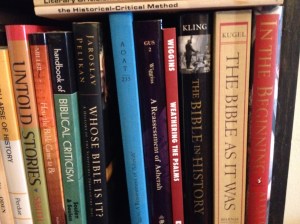
The other day I had an electrician in our house—the previous occupants had some strange ideas about power distribution.  He, as most visitors do, commented that we have a lot of books.  I’m beginning to feel less apologetic about it than I used to.  We have books not only because it’s been part of my job to read, but because we like books.  One of the painful memories of 2018 was the loss of many volumes due to a rainstorm that flooded our garage right after our move.  It still makes me sad to go out there, remembering the friends I lost.  Nevertheless, it’s Christmas Eve, at least in my tradition, and the thought of books combined with the long hours of darkness brings a joy that I’d almost characterize as being Icelandic.  At least in my mind.  Jolabokaflod might well be translated, “silent night, holy night.”


Solstice Musings

Should my posts of late be castigated as against the Christmas spirit I would rely on Andy Williams’ song, “The Most Wonderful Time of the Year” in my defense.  “There’ll be scary ghost stories,” the crooner sings amid images of cheer and celebration.  What may not be appreciated by my less sober celebrants is that the long nights of winter have as close an association with ghosts as they do with the numerous religious holidays that fervently pray for the return of the light at this time of year.  In merry old England, which along with Germany developed the modern concept of Christmas, the holiday was observed with evening ghost stories as is well represented by Charles Dickens’ A Christmas Carol (likely the source behind Williams’ lyric reference).

So I read about ghosts when the light begins to fail.  Or at least that’s my excuse.  When Ghost Hunters took to the air in 2004 the world became aware that electronic devices can pick up anomalies and other ghost-hunting groups began to appear.  Alan Brown, apparently curious about this development, wrote Ghost Hunters of New England as a field guide of sorts to paranormal investigators.  The book divides the region by states and includes the answers to survey questions asked to each of them.  The result isn’t especially inspirational, however, as these groups share in common the obvious absence of scientists.  It may be that professional scientists fear the career impact of such associations, but as is the case in many academic disciplines, their lack of participation simply erodes the credibility of science in the eyes of many.

Human investigation of the world has reached a point where many academic specialists can no longer communicate effectively with the average person.  I work in academic publishing and it is clear that many specialists simply do not recollect the level at which those without advanced training read.  We therefore see the rise of hoi polloi as self-appointed experts.  If scientists won’t investigate ghosts, plumbers will.  And since, no matter what science declares, many people experience ghosts, they will listen to those who at least seek answers.  The problem with books like Brown’s, of course, is that if a fad fades the groups disappear leaving the information outdated.  A couple of the groups were interesting enough to send me to the websites listed only to find the domain name for sale and the ghost hunting shingle removed from the door.  Still, the book had some useful information for those willing to consider the possibilities.  After all, the nights can be awfully long in December.  And there’ll be scary ghost stories…


Better Late Than

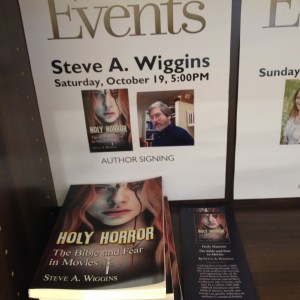
It seems that Holy Horror is now available, although I haven’t seen it yet.  According to the McFarland website it’s in stock just in time for the holidays.  Those of you who know me (few, admittedly) know that I dabble in other social media.  One of my connections on Goodreads (friend requests are welcome) recently noted that he does not like or watch horror.  Indeed, many people fall into that category.  His follow-up comments, however, led me to a reverie.  He mentioned that reading the lives of the saints and martyrs was horrific enough.  One of the claims I make in Holy Horror is that Mel Gibson’s Passion of the Christ is a horror film.  My friend’s comment about martyrs got me to thinking more about this and my own revisionist history.

Traditionally horror is traced to the gothic novel of the Romantic Period.  Late in the eighteenth century authors began to experiment with tales of weirdly horrific events often set in lonely castles and monasteries.  From there grew the more conventional horror of vampire and revenant tales up into the modern slasher and splatter genres.  I contest, however, that horror goes back much further and that it has its origins in religious writing.  Modern historians doubt that the mass martyrdoms of early Christianity were as widespread as reported.  Yes, horrible things did happen, but it wasn’t as prevalent as many of us were taught.  The stories, nevertheless, were written.  Often with gruesome details.  The purpose of these stories was roughly the same as the modern horror film—to advocate for what might be called conservative social values.  The connection is there, if you can sit through the screening.

Holy Horror focuses on movies from 1960 onward.  It isn’t comprehensive, but rather it is exploratory.  I’ve read a great number of histories of the horror genre—a new one is on my reading stack even as I type—and few have traced this phenomenon back to its religious roots.  Funnily, like horror religion will quickly get you tagged as a weirdo.  Perhaps it’s no coincidence that both goths and priests wear black.  As I’ve noted before on this blog, Stephen King’s horror novels often involve religious elements.  This isn’t something King made up; the connection has been there from the beginning.  We may have moved into lives largely insulated from the horrors of the world.  Protestants may have taken the corpus from the crucifix for theological reasons, but for those who’ve taken a moment to ponder the implications, what I’m saying should make sense.  Holy and horror go severed hand in bloody glove.


The Dots

Connections have always fascinated me.  Maybe it’s because life is a random stream of stuff constantly thrown at you that makes a mockery of any plans you might try to implement.  Me at Nashotah House?  Really?  Nevertheless, these events shape us and everything that happens thereafter is seen in light of them.  So when connections occur amid this continual flux, I sit up and take notice.  For example, I had never thought of moving to eastern Pennsylvania.  Now, around Christmastime, I find myself not far from Bethlehem.  Bethlehem was so named because it was founded on Christmas Eve by Moravians who’d settled in the area.  Although not counted among the most numerous of Protestants today, Moravians had a profound effect on the founder of Methodism, John Wesley.  In fact, he met Count Zinzendorf, whose name appears on this handsome plaque in historic downtown Bethlehem, at a pivotal moment in his own spiritual journey.

Having grown up Fundamentalist, the United Methodist Church would not have been our choice, although we had unwittingly attended one of the Methodist offshoots—the Church of the Nazarene—from time to time.  In one of those unplanned things, we found ourselves in Rouseville, Pennsylvania, where the only Protestant church was United Methodist.  Once ensconced in the UMC it was my plan to become a minister in that tradition.  That led me to Boston University School of Theology where I first learned about the Wesley-Zinzendorf connection.  It was also there that I met my wife.  And subsequently joined the Episcopal Church.  Why?  John Wesley had been adamant that his followers not drop out of the church in which he was an ordained priest.  I was only following instructions.

Had that not happened I would never have had my first, and so far only, full-time academic job.  Nashotah House was conservative, and I was not.  We nevertheless had a connection.  Growing up I’d barely heard of Wisconsin, let alone planned to live there.  When Nashotah no longer required my services my career had to change as well.  None of this was in the plan.  Who plans to move to New Jersey?  And now everyone thinks of me as an editor, a fallback position if there ever was one.  Since I work in New York City, moving back to my native Pennsylvania wasn’t really on the agenda.  An outside agent led to that.  So I find myself near Bethlehem in the Christmas season, staring at Count Zinzendorf’s name, which I first heard of in a seminary now far away.  Connections, even with those long gone, are always worth noting.


Evangelical Angels

Angels are everywhere at this time of year.  The Christmas stories of the gospels of Matthew and Luke have made them an indelible part of the tradition.  It’s not unusual for entirely secular individuals to be decorating with them and they are generally without controversy in public displays of holiday spirit.   A colleague once asked me why Americans were so credulous when it comes to a belief in angels—the numbers of believers are quite high, statistically.  I wonder if it’s because we need them.  Considering that the Republican Party is the Evangelical’s party, it’s no small wonder that even atheists embrace angels.  We all could use a little help from on high.  This time of year, such hope can be disguised behind tinsel and bows.

America must seem a strange country to those who immigrate (or had immigrated, when that was possible).  We wear our religiosity—and this is not the same thing as true religion—not only on our Christmas trees, but even on billboards by decidedly secular highways.  It’s as if even all the things America stands for, such as love of money, guns, and automobiles, only hold together with the saccharine glue of a sickly sweet religion.  A Bible-believing nation that has no idea what the Bible actually says and lauds a president who breaks at least a commandment a day and gains no reprimands.  We have shown our red neck to the rest of the world and yee-haw we are proud of it.  And we got the Good Book to prove it.

After all this shakes out we’ll be needing some angels, I suspect.  My colleague felt that sophisticates, big city skeptics, ought to be more willing to dismiss unenlightened beliefs such as those in spiritual beings.  The thing is, spiritual beings serve a very useful purpose.  They keep us honest—and I don’t mean in an Evangelical way; I’ve seen Evangelical honesty and it’s as corrupt as the Devil.  No, I mean that angels are important to show that we have hope.  Maybe they are secular angels—even the Bible doesn’t give any description of them at all, so how can you tell a secular from a religious angel?  That lack of pedigree doesn’t mean we don’t want them watching over us.  Belief is an important part of being human, secular or not.  The billboard space tends to go to those who want your money, and that applies to the ones that appear to be religious as well.  If this is the way the religious behave, we’d better hope there are angels everywhere.


I’ll Be Googled

It’s a strange sensation to do an innocent web search only to find yourself cited.  (And no, I was not googling myself.  At least not this time.)  I was searching an obscure publisher and my own pre-publication book, Holy Horror, came up on Google books.  Now, the computer engineers I know tell me that Google remembers your searches, and this has a way of being unintentionally flattering; when I search for my book it pops up on the first page because I have searched for it before.  Still, it was a bit of a surprise to find myself where I had no idea I’d been cited.  All of this drew my mind back to my “post-graduate” days at Edinburgh University.  To how much the world has changed.

One of the first things you learn as a grad student is you can’t believe everything you read.  Granted, most of us learned that as children, but nevertheless, with academic publishing a new bar is raised.  That which is published by a university press is authoritative.  So we’re led to believe.  But even university presses can be fooled.  This prompts the fundamental question of who you can really believe.  Our current political climate has elevated that uncertainty to crisis levels, of course, and the vast majority of people aren’t equipped to deconstruct arguments shouted loudly.  Where you read something matters.   Even publishers, however, are fallible.  So what am I to make of being cited by the web?  And is my book already available before I have seen a copy?

Even credibility can be bought and sold.  Colleagues make a much better living than me with the same level of training, but with more influential connections.  It was just this reason that I decided to try to shift my writing to these who don’t need credentials to impress each other.  Some of the smartest people I ever knew were the janitors with whom I started my working life.  As a fellow post-grad in Edinburgh once said, professors are always ready to fail you for your lack of knowledge but most can’t tell you what an immersion heater is.  (That’s one of those Britishisms that no amount of graduate courses at Harvard will teach you.)  I suppose when it’s all said and done nobody else will ever search for the obscure publisher that brought my book to Google’s attention.  No matter, at least Google will always flatter me.


Editing the Week

Every great once in a while I have to pull my head from the clouds and remind myself I’m an editor.  Actually, that happens just about every Monday morning.  Surprisingly, academics who have trouble getting published don’t bother to consult editors for advice.  Having sat on both sides of that particular desk, I certainly don’t mind sharing what I’ve learned since publishing isn’t as straightforward as it seems.  It has its own mythology and authors—I speak from experience here—feel extremely protective of their books.  Nevertheless, editors are under-utilized resources when it comes to figuring out how to approach a topic.  They often possess valuable advice.

It’s easy to think publishing exists to preserve and disseminate ideas and insights, tout court.  The idea that if you get past your dissertation committee you’ve done service that requires wide readership is natural enough.  Publishers, however, have other angles to consider.  Books incur costs, and not just paper, glue, and ink.  There are many people involved in bringing a book from idea to object, and each of them has to be paid to do their part.  (Many academics in the humanities may not understand the concept of “overhead,” but it’s an everyday reality in the publishing world.)  Not only that, but even the book itself is a matter of negotiation.  My latest book (and I suspect well over 90 percent of the authors with whom I work have no idea that I write books as well) had a chapter expunged and a new one written at the behest of my McFarland editor.

One of the pervasive myths in this business is that authors write whatever book they want and then find a publisher.  Sometimes that works.  Often when it does the authors are disappointed in the results.  There are presses that specialize in cranking out such works, slapping an enormous price tag on them, selling them to libraries, and then letting them go out of print.  I’ve been there.  I know.  Academics want prestige presses to take their books to a higher profile, but without having to change things according to the advice of an editor.  There are hidden lives of editors.  I can’t share much of that here, but I can expound its corollary—taking advantage of free editorial advice makes good sense.  I wouldn’t be bothering you with such mundane thoughts on this blog, but when I rolled out of bed today I learned it was Monday morning.


Christmas at the Bus Stop

I had to make one of my periodic treks into New York City this week.  Unlike most years when a warm spell comes after the onset of winter, we’ve kind of fallen straight to the heart of the season this year and those of us standing in line for the bus were experiencing it via wind chill.  The cold got some regulars to talking about Christmas.  Although I’m not the oldest one who makes this long trip, the majority of the commuters this far out have yet to attain my years.  Those chatting at the stop had kids at home that still believe in Santa Claus.  It made me recall how we trick our kids with all kinds of quasi-religious folkloric figures, but also how seriously some adults participate in the mythology as well.

Among those chatting, the leaving out of cookies and carrots was almost canonical.  The cookies are for Santa, of course, and the carrots for the reindeer.  The more I pondered this, the more it became clear that this is a form of thank offering.  The story of Bel and the Dragon, in the Apocrypha additions to Daniel, tell of how priests leave out food for an idol.  The offering is gone in the morning and the credulous worshippers assume the statue has eaten it.  Religious offerings, except those entirely burnt up, were often used to support priesthoods.  Santa has his elfly acolytes, of course, but the priesthood for his cult is that of parents eager to make Christmas a special time for their children.  Capitalism’s big pay-off.

Then one of the commuters mentioned how she had her husband leave a footprint in the fireplace ash to add verisimilitude to the ruse.  We never had a fireplace when I was growing up, and I often wondered how Santa got in when we had no chimney to come down.  In any case, my hazy morning mind thought once again of Daniel and Bel.  The way that wily Daniel exposed the fraudulent priests was by sprinkling—you guessed it—a fine layer of ash around the offering after the priests had “left” for the night.  In the morning he showed the people the footprints of the deceptive heathens to the people.  The statue hadn’t eaten the food after all!  Serious consequences followed.  Christmas, despite its commercialization, brings fond childhood memories to many of us, and we’re reluctant to let that go.  The one man in on the discussion (it wasn’t me) said that when he was growing up they had a somewhat different offering.  “My dad,” he said, “told us to leave Santa a beer and a sandwich.”  This guy’s name might’ve been Daniel.


Carrie On

Stephen King was still a fairly new writer when I first read “Lawnmower Man” for an English class in high school.  Carrie had been published by then, but I didn’t read any more Stephen King until after my academic job ended.  (There is, for those who are curious, a correlation between that traumatic change and my interest in horror.)  Like many, I suspect, I saw some of the movies before reading the King books behind them.  With a writer as prolific as King there’s always the issue of where to start, and I’m often subject to the selections independent bookstore owners make.  I seldom buy fiction through Amazon—I have to see the book for it to grab me (a kind of King thing to happen).

A used copy of Carrie recently came my way.  Now, I’ve seen the movie (both versions) many times; it is discussed at some length in Holy Horror.  I’d not read the novel until now.  Obviously there are differences between book and movie, but as this was Stephen King’s debut novel it struck me just how central religion was to the fearful scenario he paints.  That’s pretty clear in the film, I know, but it’s even more so in the novel.  Carrie is made into a monster by religion.  One could argue that she was born that way—telekinesis as a genetic marker is also a theme in the book, although absent from the films.  Still, it is Carrie’s rejection by others, largely because of her religion, that leads her to use her powers to destroy Chamberlain, Maine.

In a strange way, Carrie is a coming-of-age story from a girl’s perspective.  Strange because King is a man and some literary magazines won’t even accept stories written from the point-of-view of someone of the opposite gender.  Men can’t know what women go through.  Indeed, most of the male characters in the story are less than admirable, while some are downright wicked.  The real question is whether religion saves from wickedness or causes it.  There’s not much ambiguity here on the part of Mr. King.  Holy Horror, although it deals with movies and not novels,  makes the point that films based King don’t infrequently use religion as a source of horror.  Long-time readers of this blog know that I frequently make the point that this genre, more so than most, relies on religion as an engine to drive it.  And religion also has a role in repressing women.  Coincidence?  Ask Carrie.


Personal Gothic

As I continue work on Nightmares with the Bible, I am reminded just how influential Edgar Allan Poe has been in my life.  It’s not that I read Poe every day, but it’s more that his stories have stayed with me since childhood.  For an English term paper in high school, the last one I recall writing, I selected Poe as the subject.  Something of the sadness of his life made me feel as though we were kindred spirits, although I could never meet him, and never let him know that he would have had a friend if he had been born a maybe a century and a half later, and if possible, in Franklin, Pennsylvania.  If his fondness for drink came with him, he would likely have met my father in such circumstances.

Even today I feel a kind of fiercely protective interest in Poe, as if his poems and stories had been written exclusively for me.  Seeing a handwritten fine copy of “The Raven” on display in the Morgan Library and Museum brought tears to my eyes.  Like Poe, I strive to make a living as a writer, but unlike Poe, I cop out.  I’m too afraid of losing everything.  Jobs necessarily interfere with writing, and some jobs actively discourage it.  Nevertheless, I still feel the shudder when I think about the first time I read many of his stories.  This was, I suspect, what fed my young interest in horror.  It wasn’t the blood and gore of the slasher film, it was the quiet, sad, disturbing atmosphere of Poe.  It has been recaptured by few, in my experience maybe only by Shirley Jackson.

Those who write are connection seekers.  Writing is a way of testing to see if we alone see the world in our own way.  Will others respond?  Poe somehow, mainly after his own lifetime, touched a responsive chord with many.  His work is now very widely known.  His visage appears on everything from bandages to socks.  His stories and poems are endlessly retold, adapted, and parodied.  When I read Poe I hear someone speaking from a life of hard knocks.  His response was to strike back, through his writing.  The life story written by one of his relatives suggests that he wasn’t as gloomy and tortured as he is generally portrayed.  Perhaps not.  Nevertheless, those of us who find gothic literature somehow redemptive know, once we close the cover, who it is we should thank.


Captive to Capitalism

Some people are born capitalists, while others are not.  I recall the old TIAA-CREF ads showing some famous thinker and stating that some of us don’t have time to think about money.  Since I’m an obscure private intellectual I feel hard pressed to put myself in such exalted company as university professors, but here I am anyway.  I just don’t think much about money, other than to panic over my lack thereof.  It doesn’t motivate me and as long as I can get along without too many worries, I seldom think about it.  Or so it used to be.  Then I bought a house.  Suddenly everything is about money.  This needs to be fixed, and that requires repair.  Instead of spending weekends writing (as I’m fond of doing), I now try my hand at skills like carpentry and masonry.  At least now the grass has started to turn brown.

I was never offered TIAA-CREF as a fiduciary option.  (I can’t believe I even know what fiduciary means!)   Having grown up poor I didn’t think much about things like retirement or dental care.  These were things middle class people did.  Now that I’m technically part of the club, I think back to being a poor kid working my summers away.  I had lots of time to write in those days.  It’s not that ideas for writing have stopped—they’re rather backed up—but the concerns and cares of this world have forced me to think about that thing I’d rather not face.  You see, capitalism takes no prisoners.  Once it starts the entire world has to play its game, otherwise the rich can’t keep getting richer.  Those of us who’d like to make a living by creativity take jobs that, in turn, take our time.  And more than just 8 hours a day of it.  Some people don’t realize that money doesn’t motivate everyone.

Accuse me of being a utopian; I promise I won’t take offense.  I can imagine a world where money would be an opt-in.  I’m careful to be discreet about it, but there are frankly some of us that would work for books, should our other basic needs be covered.  Secular monks, perhaps, unleashed from dogma and allowed to roam where the human mind can go.  Once you start thinking about money it’s difficult to stop.  You want to have a cushion that will soften unexpected eventualities—which seem to be coming somewhat more frequently these days—and every time you rub your back after a fall you think that pad should be a little thicker.  Getting paid for writing?  In your dreams!  I’d say more about it but I think Lowe’s is open now.


Mythic Truth

“Myth embodies the nearest approach to absolute truth that can be stated in words.”  I recently came across this quote from Ananda K. Coomaraswamy.  Coomaraswamy was a philosopher and metapmhysist from Ceylon, and like many eastern thinkers had a more holistic view of the world than western rationalism.  We’re taught from a young age that myth is something false, not true.  This colloquial use of the word is so common that those of us who’ve specialized in myth slip into it during everyday conversation.  Words, however, have uses rather than meanings.  Coomaraswamy was engaging this reality in the quote above.  Words can take us only so far in exploring reality when we have to break into either formulas or poetry.  Although they are under-appreciated poets are the purveyors of truth.

Having studied ancient mythology in some detail, it became clear to me as a student that these tales weren’t meant to be taken literally.  Instead, they were known to be true.  It takes a supple mind to parse being true from “really happened,” as we are taught in the western world that on what “really happened” is true.  In other words, historicism is our myth.  Meaning may not inhere in words, but when we use words to explore it we run up against lexical limits.  Is it any wonder that lovers resort to poetry?  On those occasions when I’ve been brave enough to venture to write some, I walk away feeling as if I’ve been the receiver of some cosmic radio signal.  We have been taught to trust the reality of what our senses perceive.  Myth, and poetry, remind us that there’s much more.

The Fundamentalist myth is that the Bible is literally true.  If they’d stop and think about it, they’d realize the mockery such thinking makes of Holy Writ.  The Good Book doesn’t look at itself that way.  In fact, it doesn’t even look at itself as a book—an idea that developed in later times.  The time and the cultures that produced the Bible were cool with myth.  They may not have called it that but the signs are unmistakable.  Ananda Coomaraswamy knew whereof he wrote.  The closest to absolute truth we can come takes us to the end of declarative, factual writing.  Scientists writing about the Big Bang devolve into complex mathematical formulas to explain what mere words can.  Myth is much more eloquent, even if we as a society, dismiss it along with other non-factual truth.