Where Was I?

Finally!  I have sent my proofs and the index for Holy Horror back to McFarland and I find myself in that state following intensive concentration on one thing.  Well, as much as work will allow such concentration.  Those who write books know how difficult it is to switch gears from fifth back to first while driving at highway speeds.  As soon as the email arrived stating that the proofs were ready, I dropped everything to get them read, outside work hours, of course.  With mind focused on a single goal—get the job done—I’ve managed to forget where I was before being interrupted by my own work.  I recall it had something to do with demons, though.

Perhaps the most taxing part of trying to write while employed full time is keeping track of where you are.  The luxury of spending hours outside of class doing the index, for example, is compressed into the little free time I have between writing for this blog and work—between a blog and a hard place, as it were.  Indexing, which can be quite pricey when a professional does it, is  much easier with a searchable PDF than it ever was going through a printout page-by-page to find obscure references you forgot you ever wrote.  It reminded me of the time I had Owen Chadwick over for dinner at Nashotah House.  I recalled someone asking him about something he’d once written and he looked puzzled for a moment and then replied, “One writes so many things.”  Indeed.  Millions and million of words in electrons, if not on paper, mark the status of a life.  And indexing will prove it to you somehow.

This morning I awoke with the proofs and index safely emailed back to the publisher.  What was I doing before that?  I know that work is looming just a short hour or two ahead, and I need to accomplish part of my life’s work before going to work.  I can’t afford to waste this time.  Nightmares with the Bible is coming along nicely.  A very drafty draft of the book exists.  I have some more research to do, however, and the annotated bibliography—ah, that’s where I left off!—is still a shambles.  Not only that, but I’ve got a stack of reading on the topic next to my chair.  Time to put on a pot of coffee and warm up those typing fingers.  I’ve got real work to do.


Free Cookie

So, it started out as a freebee.  The way I looked at it, I paid enough for my computer to justify some free software.  We had Quicken on our desktop for years before we started to use it.  Then came the notice that it would no longer work on our system (which upgrades apparently every nano-second).  If we didn’t want to lose our financial data we would, the note cheerily said, have to upgrade.  You have to buy what once was in the land of the free.  We consulted about it—I still have an objection to paying for something made strictly of electrons; when I pull the blanket off the bed this time of year I get a healthy jolt of electrons without having to pay for them.  We caved.  Then the notice came again.  Upgrade time!  Only you can’t buy Quicken, you can rent it.  The one-time fee for buying software is now an annual fee.  Isn’t everyone happier now?

I don’t mean to pick on Quicken, although that is the most insidious offender since you can’t very easily transfer all that data back to paper.  Services withdrawn.  Welcome to the internet of thieves.  Bakeries worldwide know that a free cookie leads to sales often enough that it’s worth the small loss in profits.  But electrons are free all the time.  Shuffle your feet across the carpet in you stocking feet and test it.  Amazon for a while sent the Washington Post headlines daily, for free.  Now, Amazon ought to know me by name since I’m a book addict.  Then, just at the midterm elections, they announced this freebee was over.  I don’t know what in the world has been happening since.  I do hope someone will tell me when our currency converts to rubles.

Who wants a cookie?

Humans are susceptible to the myth of permanence.  Although change is constant and time never ceases to flow, we tend to think things will stay where we put them.  Technological change, however, has become so swift that we now pay for the privilege.  Unlike that cookie which lasts a moment and the choice of buying more is up to you, the internet has swept up our lives and you can no longer opt out.  We pay our bills online because letter carriers drop things.  We communicate online because who has the time to pick up and dial an actual landline phone?  The fact that the signal cuts out now and again isn’t a problem, even when we lose valuable information.  It’s only electrons, after all.


Time Taking

Publishing is a slow business.  In a world of instant information, such plodding may appear to be old-fashioned.  Outdated.  Each step of the process takes time and anyone can sit down and type thoughts directly into the internet, so why bother with traditional publishing?  These thoughts come to me as I read through the proofs of Holy Horror, and work on the index.  This is time-consuming, and time is hard to come by.  That, I suppose, is a major reason for doing things this way.  Ironically, people don’t have a problem seeing that handmade items—which tend to take time and be less efficient than machine-made articles—are more valuable.  They represent care and quality, things that a machine can’t assess well.  This is the world beyond math.  It is the human world.

Those of us born before computers took over sometimes have difficulty adjusting.  The world of the instant goes well with inflation—the myth that constant growth in a limited world is possible.  The fact is that value is a human judgment and we value things that take time.  It’s true that most non-fiction books are instantly dated these days.  Often it’s because information flies more quickly than pre-press operations.  It takes a couple years to write a book and a publisher takes a year or two getting it into print.  Back when the process was invented news traveled slowly and, I venture to say as a historian of sorts, didn’t often carry the dramatic shifts we witness today.  A book could take a long time to appear and still be fresh and new when it did.  For the internet generation it may be hard to see that this is an issue of quality.

Most of us are content with the satisfactory.  We’re willing to sacrifice quality for convenience.  We do it all the time.  Then, in the recording industry, vinyl starts to come back.  Corporate bigwigs—for whom fast and cheap is best—express surprise.  Why would anyone buy a record?  The question can only be answered by those who’ve listened to one.  There is a difference, a difference that we’ve mostly been willing to jettison for the convenience of the instant download.  Our lives are being cluttered with disposable-quality material.  Even now I’m writing this daily update for my blog rather than continuing the drudgery of working on an index.  We all have expectations of alacrity, I guess.  The slower world of publishing is more my speed.


Family Names

Holidays are all about family.  In our society where families, due to jobs, often get spread across states, if not the world, we value holidays as times to get as many as possible of our close ones together.  They’re also rare days when work isn’t required, and true relaxation—a rarity—can take place.  This Thanksgiving break I’ve been reading the proofs for Holy Horror, but I put them aside after anyone else awakes.  We all, I think, come out of it feeling rested.  It has been many years, however, since I’ve had time to work on genealogy.  I don’t write much about it here because most people don’t find other people’s family history to be of interest.  Many of us are nevertheless fascinated by the ancestors without whom we would not be here.

One summer while I was teaching at Nashotah House I became fixated on one great-grandmother.  Nobody in my family knew her name.  I had a first name (a fairly common one), and, adding insult to injury, I grew up with her daughter (my grandmother) living in my home.  Kids, as nature dictates, aren’t interested in that kind of thing, and nobody thought to ask my grandmother her mother’s name before she died.  I found myself stuck at just two generations back.  I made trips to the repository of state and federal records at Madison, spending the summer in a basement room reading through microfiche—talk about ancient history!—trying to find her name.  Nothing.  I wrote to the federal agencies of vital statistics in Washington which gladly cashed my checks but never sent any information.  Later, when the internet began to fill up, I searched for her married name.  Nothing turned up.  I ordered books of gravestone inscriptions from the District of Columbia, where she’d died, but dug up nothing.  One of the cemeteries sends me newsletters now.  When my daughter asked why I was getting them in the mail I told the story.  We began to search online.

I couldn’t believe it.  At least a decade and a half after I’d found no clues, and after many web searches after that, we finally found her.  Someone had entered her on Findagrave.com.  As I pondered the dates, which seemed about right, my daughter pointed out that the site stated she’d been married to my great-grandfather.  My ancestry suddenly grew by two new surnames because her parents were also listed.  I was stunned.  I once calculated that, due to exponential growth, just ten generations back, (eight “greats”) we all have over a thousand ancestors, or 500 couples.  Genealogy could be a full-time addiction.  For the moment, however, I’m pleased to have found a long lost name, and an instantly larger family for this holiday season.


Flight Home

Although I was not looking forward to the long, late flight home scheduled for tonight, I can’t help but think there was something almost prophetic in the weather that prevented my trip.  I awoke in Newark only to confirm with many other stranded passengers that this was not a lot of snow.  I’ve had to commute into New York when much higher amounts were in the forecast.  Many of us, meteorologists included, were asking why this storm was so devastating to travel.  Part of the answer comes down to belief.  Nobody believed we could have this kind of nor’easter in November.  Even now nobody seems to want to discuss the elephant in the igloo.  Global warming, we’ve known for decades, will make erratic weather patterns.  We need to think about weather differently than we have before.

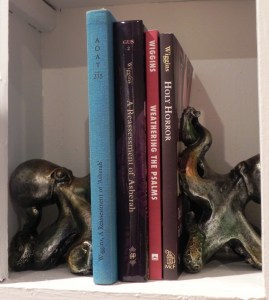
One of the motivations behind writing Weathering the Psalms was that for all of our technology, we still don’t understand, or appreciate, the weather.  Driven by dollars in great collectives, businesses are reluctant to allow employees a “day off,” even when many of them have work laptops at home.  We believe in money, supposing the weather to be only a minor nuisance.  Having bought a house, though, has revealed something to me.  Home and hearth are all about staying safe from the weather.  (Well, and in keeping out wild animals too, but we’ll just drive them extinct.)  A house is a place to keep the water and wind out.  We want to keep dry and to prevent the wind from chasing away our body heat.  Homes are our places to keep the weather outside because we instinctively fear it.  Reverence it.  Weather may well be the origins of at least some religious thought.

Ancient peoples and modern religious fundamentalists believe(d) in gods literally in the sky.  They looked up when wanting to understand matters beyond their control.  Yes, predators attacked, but you could fight back.  Against the sky there’s no recourse.   Weather can kill, and can do so in many ways.  Building shelter helps, but we’ve all seen enough hurricane footage to know that even our structures are subject to the wind.  Computer models were suggesting that this storm might have been pulling back for a real roundhouse punch but our conservative views on the weather (such things don’t happen in November, right, Edmund Fitzgerald?) prevail.  The official stance of our current government is this is all a myth anyway.  It’s only when myths interfere with money that we start to pay attention.


Saturdays Past

Feeling somewhat between a state of self-pity and that of a salmon who couldn’t find his way upstream, I turned to horror.  The weekend before Thanksgiving has traditionally been AAR/SBL weekend for me.  I missed the Annual Meeting a few times due to unemployment, but for the most part I have been there every year since 1991.  As the representative of a publisher it is an endurance-testing event.  I had half-hour meetings scheduled all day on Saturday, Sunday, and today, and even a couple for the much neglected Tuesday morning.  Then I found myself home, awaiting a suitcase delivery.  United Airlines couldn’t say where the bag would be, and it only arrived Saturday night.  My wife had to work all that day, and so I turned to my boyhood.  Saturday afternoon was monster movie time.

For my current book project I’m discussing the components of The Conjuring diegesis.  I’m also trying to do some traditional research on the films.  Airport-lagged (I hadn’t been on a jet, but at my age being awake so late and sleeping so poorly has its own consequences), I pulled out Annabelle and Annabelle: Creation.  I wondered what it would be like to see them in the order of their plots rather than their actual chronological order.  Would the story hold together?  Would I find anything new?  The films discussed in my books are those I’ve watched many times—what I like to call “guilty pleasure research.”  Or just a boyhood Saturday afternoon revisited.  I couldn’t leave the house since I was told my bag couldn’t just be dropped on the porch.

From the beginning the story of Annabelle, the “possessed doll,” takes many twists and turns.  The demon is invited into the spooky toy by distraught parents after the tragic death of their child.  It then takes over an orphan who is adopted by a couple that she murders, as their natural daughter, in the earlier installment.  The doll is possessed in that telling because the girl Annabelle had joined a Satanic cult, like Charles Manson’s, and her blood dripped into the doll as she lay dying.  After claiming another female victim, the doll is sent to a couple of nurses as a present, where she appears at the opening of The Conjuring.  The story shifts with each sequential telling, leaving the binge viewer dissatisfied.  I haven’t had time for a double-feature since moving this summer.  Thick snow still covered the ground and the sky held that solemn haze of late November.  My colleagues were discussing erudite topics in Denver, and I was home using horror as therapy.  If you’re curious for further results, the book will be out in a couple of years.  Be sure to look for it at AAR/SBL.


Righteous City

I’m a stomach sleeper, if that’s not TMI.  This began many years ago when I realized that upon awaking from nightmares I was always on my back.  I started doing what I knew was dangerous to infants, safe since I haven’t been part of that demographic for decades.  Terrazzo isn’t one of my favorite sleeping surfaces, however, and on my back on the floor of Newark’s Liberty Airport I realized I couldn’t roll over, for many reasons.  My glasses, for one thing, were in the internal pocket of my Harris Tweed.  For another, on one’s stomach one’s wallet is exposed in a way that’s maybe too inviting.  Before suggesting I could’ve placed my wallet and glasses elsewhere, let me write in my own defense that rationality isn’t my strong suit after midnight.

The night before

I found a spot next to a set of escalators where the constant thrumming alternately kept me awake and soothed me to nod.  I heard many languages spoken as I drifted in and out of consciousness for the few hours I had to wait for dawn.  And nobody disturbed me.  This is rather remarkable—a person asleep is a vulnerable being.  Doing it out in public with no private walls was a new experience for me.  I don’t sleep on planes, buses, or trains.  Or, until two days ago, airports.  It brought to mind the biblical world.  A town was considered a righteous place if a stranger could sleep unmolested in a public place.  The traveller—please take note, United—was in need of special consideration.  My situation revealed something unexpected about Newark Airport.

The morning after

It was full of angry, frustrated people.  I opened my eyes at five a.m. to find a very long line snaking down the corridor behind me—a queue that had been there when I first drifted off.  These were people trying to reschedule flights since United couldn’t bump that day’s passengers because they’d decided not to fly out the night before.  Despite the weariness and intensity of emotions, there was very little bad behavior.  We were biblical strangers, mostly in the same circumstances.  No creature comforts, no privacy.  An east Asian woman said the next morning that in her country the airline would’ve brought food, and blankets at least.  In the United States fiscal concerns reign supreme, however; do you know how much it would cost to care for all these stranded people?  When I opened my eyes the situation was about the same as when I closed them.  I couldn’t help noticing I awoke on my back.


Odyssey in Blue

Now I have the United bastardization of Gershwin’s “Rhapsody in Blue” stuck in my head.  This comes from listening to the same recording approximately a quarter-gazillion times while on hold.  I expected to awake this morning in Denver, but instead I learned a very valuable lesson about refugees.  It went down like this: yesterday’s east coast storm over-performed while United Airlines under-performed.  Seeing the forecast, I changed to an earlier flight to try to beat it out of Dodge.  I arrived in Newark only to have my flight incrementally delayed until it was cancelled around 9:30.  By this time all the hotels within 11 miles of the airport were booked solid from earlier cancellations.  Taxis were running into Manhattan only.  Access to New Jersey Transit was not possible.  I’d been awake since the 4 a.m. text alert from United that said bad weather was on the way.  Finally, around 1 a.m. I found an unoccupied piece of floor and slept next to total strangers.

The experience opened my eyes to the plight of refugees.  Weary airline employees (probably worried about getting home themselves) were not friendly and didn’t welcome questions.  The line for rescheduling flights was, by no exaggeration, at least 400 individuals long, one of whom told me this morning she’d waited 8-hours to talk to someone.  Since cancelled flight baggage is not checked, it had to be retrieved, and the line for doing such was equally as long as the rescheduling queue.  United was under-staffed, stressed, and not in control of the situation.  Nobody wanted to listen to you.  You were just another stranger with a sad story and all of us have problems, don’t you know.  The refugee has no place to go.  Nobody to care.

With my aging cell phone dying, my lifeline to those who cared was fading.  The shops closed, cutting off access to food.  Ground transportation was not responsive.  Hundreds and hundreds of people were stranded, relying on their own wits (or in my case, lack thereof) to decide what to do.  I just wanted someone to say “Go here.  Do this.”  Instead I found myself wrapped in tweed, using my carry-on, Jacob-like, for a pillow.  I felt for the strangers around me.  They were suddenly friends as we were all in the same category—displaced people.  This nightmare lasted under 24 hours for me, but I am now keenly aware that it never ends for some.  Refugees need a caring glance.  A kind word.  And it would help if the powers that be would leave Gershwin alone.


Eternal Return

For those of you who don’t live, eat, and breathe academic religious studies, it’s my duty to point out that the American Academy of Religion and Society of Biblical Literature (AAR/SBL) annual meeting begins this week.  For those of us in the biz it’s like the sun holding still at Makkedah as we try to prepare for our various roles.  This year the conference is in warm and sunny Denver, so be sure to dress in layers.  The meeting was held in Denver many years ago now, and I remember very little of it other than it being the year my final published paper from my Nashotah House days was read.  Or started to be.

I don’t know whether it was the altitude or the time of year, but I wasn’t feeling well the last time we met in Denver.  Although it may not show on this blog, I’m really into geology and the city has a great mineral collection in the Denver Museum of Nature and Science.  I went out to look at the collection the morning of my paper and had the great embarrassment of being sick while in the museum.  I went back to my hotel for a nap and when it was time to read my paper I had to excuse myself because running my eyes across the lines of text made me nauseous.  Concerned-looking philologists didn’t know what to do as I sat through the session with my head between my knees.  That’s how I remember Denver.

Perhaps this year will offer redemption.  You see, it’s very different attending the conference as the representative of a press instead of an institution.  Your time is completely booked.  People want to discuss their book ideas with you.  For a few short days of the year you’re one of the popular guys.  But for me, there are colleagues from every stage of my career on hand.  Not too many people from Nashotah House come, although there are more now than there were when I was about the only faculty member who went.  I see those I knew from Oshkosh and Rutgers, Gorgias and Routledge.  Those I knew as friends before we became professional colleagues.  They’re not after me to publish their books, and sometimes that’s all it takes to make three days of popularity really count.  Later today I’m off to Denver and I won’t have time to see the sparkling minerals this time around, but hopefully I’ll remember it more fondly when its over.


Paying Troll

There was a time, should the media of my youth be believed, when a man insulted another man’s wife at his peril.  A barroom fight, or perhaps a sober brawl, would ensue.  Such chivalrous days are likely over and the internet makes nasty comments so easy to disseminate (how terribly masculine!) for all the world to see.  Hiding behind assumed names, avatars, or delusional fictions, you can feel like a big man by saying unkind things to a person you’ll never meet.  Such is the world of Trump’s America.  Although he may think himself divine, Trump didn’t invent Twitter or the internet.  Neither did Al Gore.  Still, the distasteful political rancor leading up to the midterm elections led to a man (I presume) trolling my wife behind a mask of Facebook anonymity.

It’s hard to tell how to react.  Feminism doesn’t always want a man to step in and defend, but we’re all raised with tales of princesses and those who honor them.  Having been raised by a woman with an absentee husband, I have nothing but admiration for strong women.  Although categorized as a “white man,” I can’t see my own brand as better than any other.  We are all human beings, and with some rare exceptions, we deserve respect.  Like all evolved creatures, however, I sometimes reach deeply back into my primate roots and the tropes of my childhood begin to simmer.  Who trolls another man’s wife over politics?  Who doesn’t stop to consider that every woman is a daughter and many are mothers and sisters?  If you want to pick on someone, well, you know how the saying goes.

The midterm elections brought some much-needed balance to a government way off kilter.  There are still trolls under the bridges, however.  The storybooks tell how knights vanquish trolls and even the liberated male can’t help but imagine himself on that proud steed.  What kind of man takes a keyboarded cheap-shot at another man’s wife?  The quality of his discourse speaks volumes.  Those on the left believe in equality and can’t respond in kind.  It is, ironically, a far more biblical response than trolling on the right.

I’ve lost readers of this blog due to politics.  Some of my former readers have even told me so.  I appreciate their candor.  We can’t all agree, I know.  What we can do, however, is be civil.  Those who put themselves in elected office know that they are opening themselves to criticism.  It is very hard to slander a United States president, in the words of the Good Book, “how the mighty are fallen.”  Those with thin skin should think twice (or even once) before running for the most criticized office in the world.  Most, until now, knew that what they said would set the tone for the nation.  We’re all entitled to an opinion, and, for the time being, are free to express it.  Still, I’d think twice before insulting another man’s wife.  But then, I’ve always been a hopeless idealist.


And Found

For a kid who grew up on a steady diet of television, I have to admit being out of practice.  A combination of Gilligan’s Island and Dark Shadows informed much of my young outlook.  Starting all the way back to our days in Edinburgh, my wife and I had stopped watching TV.  We were in our twenties then, and it was a matter of not being able to afford the luxury.  Back in the States, cathode-ray tubes were ubiquitous, but cable was expensive and my employers not generous.  We had a television but only watched very occasionally, and then only what fuzzy programs we could pick up on the aerial.  So it continued.  We’re now at the point of not having had television service for over half of our lives, and we understand from the younger generation that a good internet provider makes cable superfluous anyway.

This prologue is simply a way to introduce the fact that we have finally, after two or three years of watching (we still have little time for it), finished Lost.  Now, I don’t get out much, but I had heard people talking about it when it originally broadcast.  More importantly, I’d read about it in books published by university presses.   I knew going into it—spoiler alert for those even more behind the times than me!—that the castaways were in Purgatory.  That seems to have been the point all along, but when money keeps rolling in because the story is compelling, you don’t want to reveal your hand too quickly.  Last night we watched the final episode where what was suggested back at the beginning was made clear: the passengers of Oceanic flight 815 had died in the crash and were making up for past sins.

The role of Jack’s father (Christian Shephard) as leading the passengers to the light may have been a bit heavy-handed, but the church where they finally meet has the symbols of many world religions, conveying the message that there is more than a single path.  The truly surprising aspect of all this is how popular the series was.  There were religious overtones from the beginning, but since the series wasn’t preachy, viewers apparently didn’t mind.  Yes, as the star character’s surname indicates, people don’t mind being led.  In fact, the names of many of the characters are indicative of some of the paths up that mountain.  I have to wonder if those who vociferate loudly and longly about their religion being the only way might not learn a lesson from television.  Even if the suggestion only comes from someone who grew up watching Gilligan’s Island.


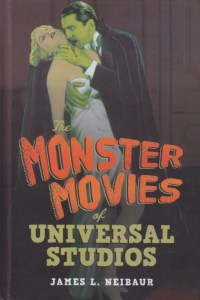
Universal Books

I’m reading an overwritten book right now.  In fact, I just finished an overwritten book.  Such works, I suppose, are the results of being taught how to write.  It’s not that people can’t be taught to compose, but for various reasons some authors, either through the privilege of having high-powered publishers, or their own conviction that they don’t require correction, overwrite.  I suppose overwriting is, like beauty, in the eye of the beholder.  Several years back I recall a critic stating Lemony Snicket’s A Series of Unfortunate Events was overwritten.  I thought it was fun.  Yes, deliberately exaggerated, but nevertheless well-composed.  Those books were enjoyable to read because, I think, they refused to take themselves seriously.  Writers can be temperamental people.

As an editor something I need to repeat—for academics are consummate overwriters—is to keep your intended readership in mind.  No book is written for everyone.  In fact, many people can’t make it through books like the Bible because they’re hard to read.  Religious books often are.  There’s no such thing as a universal book, but some believers in some religions make the claim for their sacred texts.  Like many curious people I find it rewarding to read the scriptures of other traditions.  It’s not always easy—in fact, it seldom is.  It’s frequently disorienting and I look for an edition with an introduction.  The reason is when it comes to books, even sacred ones, it’s not one size fits all.  Many religious conflicts in the world could be resolved if we’d just realize this.

Someone who reads a lot is bound to be disappointed from time to time.  We turn to books either looking for a certain mood or specific pieces of information.  Authors often take things in their own directions.  Our minds don’t all work in the same way.  That’s why, in my opinion, reading is so important.  I prefer “long form” writing—I always have.  Sometimes an idea can be well expressed in an article, but taking the time to develop ideas requires a nuance not all publishers appreciate.  (Yes, I realize that by expressing this sentiment in a brief essay like this I leave myself open to deconstruction—one of the overwritten books I just read was written by a deconstructionist.)  Still, I have trouble abandoning books that take ideas in a way I wouldn’t go.  Usually when I start reading, I’m committed to finish.  Some would say that’s foolish.  I take it as a learning opportunity.


The Myth of the Extra Hour

The selling point of an extra hour of sleep is, unfortunately, a myth.  I’m not talking about young people who can sleep on demand, but your average, everyday working body who adheres to a schedule set by the man.  Like many Americans I probably don’t get enough sleep.  Long years of habit are hard to break, and besides, I still have to commute into New York City.  Not every day, but every couple of weeks.  Still, my sleep-deprived brain knows that means awaking early on those days and since getting up extra-early is hard, why not maintain the status quo ante?  Habitual early risers don’t really benefit from setting the clocks back.  You see, you’re never given something without it being taken away again elsewhere.

Humans can’t seem to help themselves from messing with nature.  There’s always something to do on the farm, and other creatures don’t keep clocks.  Interestingly, standardized time (instead of the more natural local time) only came into being with the railroad.  Trains were scarce and to make sure those down the line didn’t miss one, time had to be synchronized.  Even earlier, the process of navigating the oceans required knowing what time it was back home—local time could be determined by the sun—to determine one’s longitude.   With railways, however, the nine-to-five could become the accepted norm so that business could be conducted and time could be divided into profitable and domestic.  And everyone knows which one is more lucrative.

No doubt some will wake this morning well rested.  Others will have stayed up later, knowing they’d have an extra hour this morning.  For the rest of us, biology moves us along the same trajectory it’d been keeping ever since March.  Daylight Saving Time could be instituted all year, you know.  When we set the clocks back in March we could just keep them there.  The slow, steady rhythms of time would adjust.  Yes, the gods of Greenwich would be annoyed, but mean time could mean time that is useable.  The modern commuter lives by the clock.  Work depended on that train or bus or camel.  You don’t want to miss it.  And if you think camels are an odd addition to the list, it could be that the present writer isn’t getting enough sleep.  No matter what longitude, or mass transit schedule, nothing beats a good night’s sleep.  And changing clocks doesn’t help.


Last Call

The alarm that wakes you in the middle of the night.  There’s something primal, something visceral about that.  We humans, at least since our ancestors climbed down from the trees, have felt vulnerable at night.  If our sleep is constantly interrupted we don’t think clearly.  We build secure houses. Lock our windows and doors at night.  Say our prayers before we go to sleep.  Last night I discovered that the homeowner has even greater concerns than the humble renter.  While 11:30 may not be the middle of the night for some, for early risers it is.  And there’s nothing to strike terror into the heart of a homeowner like a tornado warning.  Especially here—our realtor laconically told us that they never have tornadoes in eastern Pennsylvania.  The weather warning system disagreed with him last night.

Getting up as early as I do, first light is hours away.  Hours before I might check for damage with the light of old Sol.  My wife had to work, no less, at a venue some distance away and we both had to rise early and wonder what the damage might be.  We knew, of course, that the pointless ritual of changing our clocks would occur tonight, but that does alleviate concerns about whether the roof was still on the house or not.  You can’t take anything for granted, not even the continuity of time.  Thus my thoughts returned to Weathering the Psalms.

Severe weather led to that book.  If I were to rewrite it now it would come out quite differently, of course.  No one would write the same book the same way after a decade and a half.  Still, there may have been some things I got right in it.  The weather is a cause of awe and fear.  The sound of the wind roaring last night was impressively terrifying, even in a technological world.  Especially in a technological world that relies on an unwavering power grid and constant connectivity.  In the midst of a wakeful night, alone with thoughts too haunting for the day, the weather has a power with which we’re foolish to trifle.  Global warming is a myth if it gets in the way of profits.  Then darkness falls and we realize just how very small we are.  In the light of dawn, the damage was not too bad.  A frightened car meeping its mewling alert.  And a strange justification that perhaps my book contained some truth after all.


Halloween Mood

As America becomes scarier and scarier, I appreciate the fact that I grew up loving Halloween.  I don’t know why the dark mood appeals to me—I don’t like being scared, and I certainly don’t want others to suffer.  It’s more the mood that appeals; think of it as Halloween in the abstract.  I begin to feel it in August when I walk into stores already beginning to stock their black and orange wares.  It grows stronger through September as the dark comes on noticeably earlier each day, culminating after an October of anticipation.  Unlike some consumers of horror, what I’m after is the mood.  I started reading Poe as a young person, and “The Fall of the House of Usher” remains my favorite short story.  It’s the mood.  The narrator riding his horse through the woods toward dereliction.  There’s a sublimity in it that’s hard to match.

Yes, I watch contemporary horror.  I even write books about it.  Still, it’s difficult finding others who share my sensibility concerning horror.  I don’t like the jump scares or the gore.  I’m after the mood.  Poe knew about mood—he wrote stories that maintained it throughout.  A kind of beautiful hopelessness.  It’s a feeling in the air around Halloween when it’s clear nothing is going to stop the leaves from falling and the onset of a long and lonely winter.  Writers will shiver in their garrets, allowing their thoughts to flow despite the pale sky and feeble sun that is the only hope of continued life on this isolated planet.  Halloween tells us there is a spirit world no matter what the scientific authorities say.  It’s a world you can feel, but you can’t find it rationally.

Masquerading is a theme in some of Poe’s work as well.  We, as social beings, tend to excel at it.  We hide our real feelings so that others won’t hurt us, or so as not to hurt them.  We all know the childhood feeling of putting on that Halloween mask that permits us to act as we really feel, within limits.  Even as a Fundamentalist, I knew the catharsis of masquerading.  I read Poe and I understood him in my own way.  As an Episcopalian, I saw how fear of death was hidden behind All Saints and All Souls.  Masquerading.  Halloween was the Eve of All Hallows, but it usurped the master in its own form of beautiful dereliction.  The holidays following this are more comforting and heimlich, until the solstice comes to remind us that light will return, no matter how feeble at first.  We need Halloween.