Organic Experience

Holy Horror, it looks like, has been delayed until January.  That doesn’t mean that I have to wait to find some relief in the escape to film.  Over the weekend my wife surprised me by being willing to watch The Exorcist with me.  As we settled in to see it, a few things occurred to me—watching horror with someone else isn’t nearly as frightening as watching it alone.  I know this from experience, and it seems that it has something to do with the willing suspension of disbelief.  It’s harder to do when someone is with you.  Left to one’s own devices, it’s possible to believe what you’re watching, even if intellectually you know that it is merely a movie.  That tells us something about the way brains are wired.

I object to the word “wired,” really.  As organic beings, we are not computers.  What invented consciousness would watch a scary movie for pleasure?  What is the rationale for it?  It was a gray and rainy Saturday evening in late October.  In human experience that may be all that it takes.  Seeing orange and black in the stores sets a mood that computers, I strongly suspect, simply can’t feel.  They lack the human experience of childhood trick-or-treating, or throwing on another layer as the days grow chillier, or watching the leaves turn and slowly drift down from weary trees.  No, these aren’t wired experiences—they’re very organic ones, and often those that mean something even to adults as the seasons wend their way through the calendar.

The author waiting for proofs is rather like an expectant parent.  Well, that analogy’s not quite right either, but you get the point.  I know the book is coming.  It was accepted and submitted long ago.  The publication process, however, is more complex than most people might assume.  In fact, in the publishing industry it is often the main role of the editorial assistant to assure that manuscripts make it through all of the necessary hoops to move from finished manuscript to printed book.  Johannes Gutenberg likely had a simpler process worked out, although, in the early days of book-buying you could purchase the pages and have them bound by your choice of bindery.  Now cover and content are glued or stitched together in what one hopes is a seamless way.  Still, that stitching can’t help but to recall Frankenstein’s monster.  It is, however, another gray, rainy day in October.  It’s just a shame my computer can’t share the experience with me.


Masses and Markets

The other day I had to go somewhere that I knew would involve a wait.  I’ve always thought of waiting as a theological problem—time is very limited and I don’t have it to squander while dallying about for my turn.  That’s why I take a book.  The problem is that many books I read, I feel, require explanation.  That’s because many of them are the 6-by-9 format preferred by publishers these days.  The idea behind the paperback that fit into your pocket—the “mass market paperback”—was that it was essentially disposable.  Cheap, easily printed in large quantities, it was handy for taking along while on a bus, plane, or submarine.  It didn’t take up too much space.  It was easy to keep private.  I miss the mass market paperback.

The majority of my books—fiction as well as non—are larger than the mass market.  That’s the price you pay for reading books that don’t sell in those quantities.  If your interests aren’t the lowest common denominator, you have to buy a copy that won’t easily slip into a pocket.  And everybody can see what you’re reading.  I work in publishing, so I get it.  The idea is that the book cover is a form of advertisement.  The thing is, reading is generally a private activity.  I post on this blog most of the books I read (but not all!).  I want to support those who write and actually manage to find publishers to advocate their work.  But I’d really like to be able to put the book into my pocket between appointments.  

The waiting room is a kind of torture chamber of daytime television and insipid magazines.  Most of the people in here are looking at their phones anyway.  I have a book with me, and I’m vulnerable with everyone freely able to read my preferences.  I want to explain—“I’m writing a book about demons, you see.  It’s not that I believe all this stuff…” and so on.  It would be so much easier if the book were small enough to be concealed by my hands.  If others want to know what I’ve been reading, they can consult this blog.  Well, the stats show they haven’t been doing that.  They might, however, if my own books had been published in mass market format.  Available in the wire-rack at the drug store or vape-shop.  Then the readers could easily hide their interest by putting it into their pocket.  None would be the wiser.


Not so New

I remember it clearly.  The ubiquity of technology robs me of the memory of how I knew about it, but there was plenty of pre-internet buzz.  A new Bible translation was being published and people were very excited.  Including me.  By the time the New International Version (NIV) was set to appear, I had read every translation of the Good Book I knew, cover-to-cover.  Being a good evangelical, I started with the King James.  I’d read it a time or two, then moved on to the Revised Standard Version.  As you might guess, with my interests I didn’t have a lot of friends, but I do recall people complaining that it wasn’t literal enough.  I’d read the Living Bible, and the Good News Bible.  My favorite was probably the New American Standard Bible, though, because it was as close to languages I then didn’t know as I could get.

We didn’t have much money in my family, and since my summer jobs covered the cost of my school clothes, disposable income was fairly rare.  But then a miracle.  Christmas morning I opened my “big gift”—a brand new NIV.  In a way that is somehow difficult to recapture these days, I was absurdly happy getting a new Bible.  I started reading it right away.  Little did I know it would become the best-selling modern English translation of all time.  And that’s saying something—Bibles are big business.  The reason for the NIV’s appeal was that it was Evangelical-friendly.  No awkward issues like inclusive language, and, to be honest, a nicely rendered English.

Being in the Bibles business I decided to read about who was behind the NIV and found an unexpected connection with Rutgers University, where I used to teach.  The owner of the NIV translation is Biblica.  Biblica is the name of the International Bible Society, initially founded in 1809 as the New York Bible Society.  In a way that’s hard to imagine in today’s New York City, that’s where the group formed.  One of its founders?  Henry Rutgers.  Eventually the New York Bible Society became international, and like many good evangelicals, moved to Colorado Springs.  The money from continuing sales of the NIV must contribute to their somewhat posh-looking campus.  Meanwhile, Rutgers University has moved in quite a different direction.

Connections like this have always fascinated me.  Although much detritus has flowed under the bridge with all that water, I can still feel that brief, sharp release of endorphins when I pick up my well-used NIV.  I think of days of naive faith and all that has come after.  Yes, Bibles are big business, and yet somehow so very small.


Cheaper than Swords

It’s chilly in here.  What with the early onset winter and the uncertainty of being able to afford the heating bills, we keep the thermostat pretty low.  That may not be the problem with our pens, though.  You’ve probably had it happen too.  You’ve got an idea and you need to write it right down.  You snatch up the nearest pen and begin scribbling on whatever’s to hand—a bill, a receipt, the dog—only to find the pen doesn’t write.  You scratch out circles or zigzags, depending on your mood and temperament.  The pen is, however, persistent in its refusal to let any ink flow.  You grab another.  The same thing happens.  Finally—third time’s a charm, right?—the pen writes and you’ve forgotten what you desperately need to put on paper (or parchment).

Despite wanting others to think I’m cool (I don’t see many people) years ago I started carrying a pen in my pocket.  Not just any pen, but one that would write immediately, the first time, without question or complaint.  Such pens don’t come cheap.  Then, of course, I would lose said pen.  The shirt pocket is an invitation to lose things.  You bend over and, depending on the fabric, what’s in the pocket falls out.  When it happens on a bus or plane—and it does!—your writing implement may roll away before you can reach it.  Have you ever tried getting on your hands and knees on a bus to try to squeeze down to look under a seat?  I have.  I don’t recommend it.  It’s like praying to the god of grime.  Still, I need that pen that obediently writes—I reach for it.

Some have gone the way of electronic writing.  Thumbs flying like a ninja they tap out texts so fast Samuel Morse’s eyes would pop out if they hadn’t long ago turned to dust.  I’m not a texter, though.  Those who know me know I prefer email where ten digits can work in concert and spare me sore thumbs and unintentionally brief messages that could easily be misunderstood.  No, better yet, give me a pen.  Any scrap of paper will do, but the pen is crucial.  How many ideas have died prematurely due to the pen that just won’t work?  I found a reliable pen refill.  I saved the package so that I could remember the brand.  Now I have to work out a way to have the pen with me at all times.  If the option for useful bodily modifications ever becomes a reality, a pen in the hand seems like the most practical of all.  Now what was I going to say in this blog post?


Keypad of Heaven

There are those who celebrate technology, and those who mourn it.  I fall somewhere in the middle.  One of the selling points for our house was keyless entry.  The great thing about it is you never have to worry about forgetting your keys.  The bad thing is that batteries don’t like cold weather.  The former owners of our house seem to have had it even less together than we do,  They had no instructions or emergency keys for these electronic locks.  So it would happen on a cold, blustery weekend morning we would find ourselves locked out of our most expensive possession.  Now, you have to understand that this “well-maintained” house—so claimed by the not-inexpensive inspector—has turned into a money pit.  The list of derelict pieces and appliances grows weekly and we haven’t even paid off the roof yet.  Emergency locksmiths, I now know, earn their keep.

As I stood on the porch in the gusting wind, waiting in a thin jacket (we were not out for a long trip) for someone I would pay handsomely to break into my house, I considered technology.  If you can afford to keep up with it, it must be great.  If, say, electronic keypads were solar, wired to panels on the roof so that the batteries never died, that would be fantastic.  Even a key would be an advance on a day like this.  So once our teeth stopped chattering and we added yet another creditor to our growing list, I thought how that very morning my computer told me it needed a systems upgrade.  “Didn’t you just have one?” I asked, almost out loud.  I know what it is to be a servant.  My thoughts wandered, as they frequently do, to The Matrix.  When the machines take over, their problem is battery power.  Since we scorched the sky, they began using us as wet cells.  

Later in the day, for cheap entertainment, we went to a local parade.  Among the many vehicles on display were old cars and tractors.  Tractors that even I might have a chance of understanding because they were merely open engines on a frame with seats and large wheels.  This was technology that fed people rather than preventing them from entering their houses.  I couldn’t help but notice that they started with keys.  There’s a reason that the key has always been a potent symbol.  Its simple technology leads to hidden wonders.  And on a cold morning those hidden wonders might well include your own house.

“Now, put these where you won’t lose them!”


Headline News

Some headlines just can’t be resisted.  George Knapp: Christian Fundamentalists in the Pentagon Shut Down Government Paranormal and UFO Probes Due to Demon Fears” is one such headline.  It appears on the blog of Jason Colavito, a name I recognized from the book The Cult of Alien Gods: H. P. Lovecraft and Extraterrestrial Pop Culture that I read several years back.  Skeptical of many strange claims made, Colavito criticizes journalist George Knapp for some sloppy reporting.  If you go all the way down the rabbit hole, you will end up in some very weird places indeed!  What caught my attention here, however, is the connection between demons and UFOs.  More than that, the claim that government funding was deep-sixed for fear of the Devil.  (Has anyone else noticed that it’s October?)

This isn’t the first time I’ve read about this.  Having grown up Fundamentalist, I often heard talk of the Devil’s wiles.  One of the things he had his demons do, I was told, was fly around in UFOs to deceive people into thinking demons were aliens.  If this sounds far-fetched to you, remember that God made dinosaur bones to plant in the ground to test people’s faith in Genesis 1.  That’s just the kind of universe we live in.  Better get used to it.  The real problem, and one with which Colavito concurs, is that high ranking military officers (and other government officials) believe the Fundamentalist screed.  This is a matter of documented truth—much of our government policy is dictated by the evangelical agenda.  Stranger than fiction.

In 1952 there was a UFO flap in Washington DC.  No matter how you choose to explain it, this is an incident on the public record, and the Air Force responded with its famous temperature inversion explanation.  At the same time, some Fundamentalists were thinking that demons had improved on the bat-wings they’d been using for millennia.  They now zipped around in silvery discs with the same object as they’ve always had—to dis the Almighty.  As entertaining as such a story may be, it becomes scary when it might indeed be the motivation for government action.  I don’t know about you, but when I look at just how much of my meager paycheck goes to the powers that be, I want to know that rational people are spending it wisely.  Wait.  Well, I thought some of them were rational until a couple of years ago, about this time.  In any case, we do get some entertainment value for our cash, which is some comfort I suppose.  Keep watching the swamp!


Absalom v. Occam

Getting a haircut is like going to confession.  You don’t go as often as you probably should, and you feel embarrassed and awkward when they ask how much you want taken off.  The penance of looking funny several days afterward ought to be punishment enough, without your head feeling cold once shorn of its natural covering.  At least in my experience.  The truth is I like long hair.  Biblical-length hair.  The truth is also that many people think it inappropriate for a guy my age.  I always eventually bow to peer pressure, but it can take a while.  Beautician forgive me, it has been six months since my last haircut.  Absalom, after all died because of his long hair. O Absalom!

This isn’t just idle musing on my part.  I grew up in the Evangelical tradition that is now ripping our nation apart.  One of the greatest markers of that faith is conformity.  In college I learned to call it the “Evangelical haircut.”  Any guy who had hair over his collar or ears was suspect of not being “Christian.”  I began to notice that this same mindset preferred well manicured lawns, cutting down trees and keeping outward appearances neat and tidy.  There’s no better way to mask what goes on internally than to present an outward look of a well-ordered world.  Getting a haircut always brings this back to me—it is a statement being made.  I’m not sure how to explain this to the poor girl standing there with scissors in her hand.  I don’t want to look Evangelical!

Of course, the beard helps.  Until recently Evangelicals didn’t permit beards.  The girls in college said they made men look unclean.  As if they were never washed.  And these days some Evangelicals have come to support the stubble beard—electric razors, those allies of Occam, can be purchased to keep the half-way bearded look fresh.  I prefer to get my money’s worth out of a haircut.  I also prefer to signal that I am not one of them.  Absalom may have been an overly ambitious young man, but despite Michelangelo’s famous statue, David the man was himself in all likelihood bearded and might’ve sported a mullet.  Samson wore dreds.  Uncomfortable with history, Evangelical illustrators in the ‘80s began portraying Jesus with a Roman haircut and neatly trimmed beard.  Perhaps I’m overthinking this, but now that I’ve got Samson’s fate in mind I find it difficult to open the door, knowing I’ll walk out after confession not feeling so much redeemed as just plain chilly.  Even Absalom, I remind myself, had his hair cut once a year.


Collinsport

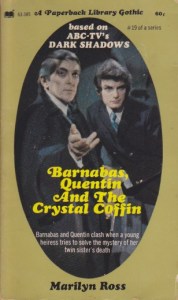
Nothing is ever wasted.  That’s my economy of the soul.  I spent my tween years mooning about Maine.  I’d grown up watching Dark Shadows after school and I’d begun reading the pulp fiction based on the series by Marilyn Ross.  My mother wondered how I could waste my time on vampire nonsense when there was sun shining outside and other kids to play with.  Little did she know that I was learning valuable lessons for the future.  My fascination with Maine—still intact—led me to vacation there whenever possible and over my career I’d applied to more than one or two jobs there based primarily on the potential reward of living in the same state as Collinwood and its spooky mansion  atop the cliffs overlooking the stormy Atlantic.  Once some friends in Norwalk, Connecticut took us to see the  Lockwood–Mathews Mansion, used for Collinwood in the movie House of Dark Shadows.   Such is the draw of childhood imagination.

What were these lessons I’ve mentioned?  Well, Collinwood stands outside the quaint fishing village of Collinsport.  Both are named after the family that houses some very dark secrets, as well as shadows.  Barnabas Collins is a vampire.  He has run-ins with many supernatural creatures, including ghosts, witches, and a few Scooby-Doo kinds of cases where someone’s faking the paranormal.  But Barnabas isn’t the only monstrous Collins.  His cousin Quentin, whom I kind of remembered being his ally, was an unstable werewolf.   Of course, I’m not sure there is such  a thing as a stable werewolf, but still.  Those in the family stay loyal, despite the beasts that lurk within their walls.  Some of the early Collinses were involved in the slave trade.

The Collins family has a long association with the state of Maine.  During the groovy 1970s they seemed somewhat progressive while maintaining the aloofness of the aristocracy they’d become.  Despite Tim Burton’s spin on it, they were the undisputed lords of Collinsport.  You felt you could trust them.  Unelected though they were, they possessed an innate sense of social responsibility.  I also learned as a child that, as appealing and tortured as they might be, you could never really trust a Collins.  Barnabas was not evil, but he was a vampire.  He required blood to survive, and his victims, like those of the current Collins of Maine, Susan, were female.  Any girl who trusted a Collins was in danger, unless she was their willing servant.  I was not squandering my childhood afternoons.  I was learning lessons about trust and its costs.


Writers Reading

A lot of misconceptions about books abound out there.  One of those misconceptions that has become clear to me is that authors write books to teach.  (Or to make money.  Ha!)  That may well be part of the motivation, but for me, the larger part has been writing books to learn.  You see, the frontiers of human knowledge cannot be reached without stretching.  Writing a book is a way of learning.  Long gone are the days when a person could read every known published work.  Indeed, there aren’t enough hours on the clock for anyone even to read all published books on the Bible, let alone the far bigger topics these days.  And so writing a book that deals with a biblical topic—let’s say demons—is the ultimate learning exercise.  It’s a very humbling one.

I recently read an article where book pirates (yes, there is such a thing!  I should explain: there are those who believe authors are ripping off society by getting royalties for their books.  These pirates, like those of galleys of yore, take ebooks and make them available for free on the internet.) call authors “elitists” for wanting to earn something from their labors.  These folks, I’d humbly suggest, have never written a book.  Most books (and I’m mainly familiar with non-fiction publishing here, but the same applies to the other kind) take years to write.  Authors read incessantly, and if they have day jobs (which many do) it is their “free time” that goes into reading and writing.  They do it for many reasons, but in my case, I do it to learn.

The doctoral dissertation is accomplished by reading as much as possible beforehand and writing up the results quick, before someone else takes your thesis.  It is the practice I also used for my second book as well, Weathering the Psalms.  The third book, Holy Horror, was a little bit different.  Yes, I read beforehand, but much of the research went on after the body of the book had largely taken form.  I had to test my assumptions, which are on ground most academics, needing and fearing tenure, tremble to tread.  I read books academic and popular, and having been classically trained, often went back and read the books that led to the first books I read.  It is a never-ending journey.  I could easily spend a lifetime writing because I’d be learning.  But like other misconceptions, those who write books don’t lead lives of luxury.  They work for a living, but they live for the chance to learn.  And that’s worth more than royalties.  Besides, the nine-to-five demands constant attention.


October Devotee

Here it is October and I have hardly written about monsters.  Apart from the US government, that is.  I suspect that I could use a little escapism right about now, and most of the boxes are unpacked from the move.  Perhaps it’s time to watch a little horror and feel better about the world.  Monsters, you see, crop up in the most unexpected places.  Yes, in October we expect them to be crouching in dark corners and in dismal swamps as the light begins to fail.  Yet the trees are still mostly green around here and I think I might be in need of some new material.  As with most people my age, I get lost on the internet—someone needs to offer a roadmap to it.  Preferably on paper. 

I admit being stuck in the past.  As any music therapist will tell you, a person’s musical tastes often reflect the sounds of their youth, and some of us believe that rock hit its high point in the 1980s.  My work doesn’t lend itself to background music, so I seldom listen to the radio, and I wouldn’t even know what station to try to hear contemporary offerings.  Fortunately I know some people half my age who find their tunes on the internet, and I was recently introduced to Panic! At the Disco via YouTube.  I’m old enough to remember when music videos first appeared, although I never saw them.  We lived in a small town and, besides, we couldn’t afford cable.  Kids at school, however, talked about MTV and other places—there was no world-wide web then, kids!—that they had seen the latest, coolest video that I could only imagine.  When my contemporary young friends showed me “LA Devotee” by Panic! I was stunned.

If you haven’t seen it, just look up the official video on YouTube.  You’ve got the whole internet at your fingertips!  While the lyrics seem innocent enough—young person wants to make it big and so imitates the Los Angeles lifestyle—the video is horror show.  Literally.  Borrowing from M. Night Shyamalan the opening sequence is a cross between The Village and Signs.  Then it becomes a torture chamber for a young boy (from Stranger Things, no less, a show I binge-watched when it came out on DVD).  And Satanism.  Yes, taking on the LA lifestyle is compared to selling your soul to the Devil.  The stunning visuals kept me clicking the replay button.  Even as I felt my age, I also felt October growing.  And I was glad to see the monsters are still there.  Too bad we can’t banish them from DC, however.


Graymalkin October

It’s not like you need an excuse to read ghost stories in October.  At least that’s what I hoped other passengers on the bus would think.  Yesterday on my way into and out of New York City I read the next in the series of Ed and Lorraine Warren books, this one titled Graveyard, and written by Robert David Chase.  Now, you need to realize that I’d heard of the Warrens long before The Conjuring came out.  Those of us curious about ghosts to the point of reading at least semi-serious books on them know the brand.  What I don’t know is how to find out much about what “the Warrens” actually wrote.  These books are being (have been) republished by Graymalkin Media, after having originally been published by mainstream publishers.  This one was originally released by St. Martin’s Press.  Those of us in publishing believe that stands for something.

Loosely tied together around graveyard stories, featuring for half the book Union Cemetery near the Warrens’ Monroe, Connecticut home, the book ranges far and wide concerning ghosts.  Here we meet a man or two who turned into demons—I wonder how that works?—and a good demon punishing an evil person.  Some of these stories seem straight out of the high school scare-your-date playbook, while others are actually pretty scary.  A mix of accounts by either Ed or Lorraine, and stories embellished, it seems, by Chase, this book is like a trick-or-treater’s Halloween bag—you never know what you’re going to get.  It’s a little too bad because I’ve read some sober, and serious treatments of ghosts over the past several autumns, and with the Warrens’ vast experience, it’s a unfortunate that the accounts had been so dolled up.

It’s a shame that scholars of religion can’t be more forthright about their interest in the spiritual world.  I know many that I won’t call out here that are secretly—some openly—exploring these kinds of questions.  That won’t get you tenure anywhere (something the Ghostbusters reboot got right).  Even in the world of science there are forbidden topics.  That’s because, as this little book points out, spirits creak open the doors to all kinds of uncertainties.  I suspect that’s a similar reason that scholars of religion are treated with a certain mistrust by other guilds within the academy.  We need to play it straight and prove that we aren’t given to flights of fancy that might suggest something as unsophisticated as belief.  Still, as Graveyard shows, ghost stories are extremely common.  In fact, no October would be complete without them.  So I hope the other passengers think.


Getting Dirty

Composting is a very biblical activity.  Adam, according to the second creation account in Genesis, was formed from the divinely created dirt.  Some scholars try to capture the word-play in that story by suggesting “human” was made from “humus,” but since that sounds like chickpea dip it may not help so much after all.  Besides, we now know that soil has a complex and fascinating history.  Erosion grinds up rocks.  Organic matter dies and decays, forming the loosely packed substrate in which plants can survive, slowly breaking up the more dense pieces through the transformative power of water.  It is, imprecisely speaking, a miracle.  When Adam drops dead, he becomes once more part of the soil from which he was formed.  It’s poetic.  Elegant.  Economical.

Now that we have a house we’ve decided to try our hand at composting.  We’d considered it many times over the years since, what with recycling and hoarding, we’d managed to get our weekly garbage down to one fairly small bag.  Besides, since our government won’t be nice to the planet, somebody has to.  Institutional people that we are, my wife and I had to read up on composting before giving this very natural decomposition a try.  Things have to be just so for the process to work perfectly.  It was in the process of this reading that the biblical aspect became clear to me.  

The trick is to make sure the neighbors don’t complain about the smell.  That, in part, determines what can or can’t go into the compost bin.  Meat and dairy can’t go into the mix.  Since I’m primarily vegan such things aren’t generally here to be disposed of in any case.  Even the drier lint can go there, for the clothes that we wear become part of who we are, right Henry David?  And here’s where there’s a danger of TMI, although it’s good theology—cast-offs from our selves can also be composted.  Hair, for example.  The composting literature we have seems to take Adam himself out of the equation by specifying pet hair, but hey, mammals are mammals.  The longer I thought about this, the more obvious it was that burial, ideally, is a form of composting.  Giving back to the earth from which we’ve sprung.  That simple wire bin out by the garage is in the process of making the substrate for new life.  We may not be farmers, or gardeners like Adam, but composting feels like giving back somehow.  It’s an act of creation.


Beyond the Facade

Over the summer the New York Historical Society had an exhibit, now over, on Norman Rockwell, Franklin Roosevelt, and the Four Freedoms.  I think we may be down to one or two freedoms by now, but nevertheless.  One weekend my wife and I went to the exhibition.  She’d just read a biography of Rockwell, and although his Americana is my America, I suppose, his pluck is sometimes unnerving.  You see, an artist has to show emotions on people’s faces and in their gestures.  Long ago I learned that if you show what you’re feeling in real life, people will quickly take advantage of you.  I learned, even as a teen, to be subtle.  If you think you’ve got me figured out, here’s a hint—that subtlety continues even into my writing.  It’s often not what it appears to be.

Some months back I wrote a funny piece on this blog.  Some people who actually know me—or the part that I let be known—thought I was depressed.  Or angry.  Or both.  That’s a side effect of subtlety.  Episcopalians have it down to a science.  At least they used to.  The only place they showed emotion was in high mass, and that, if done right, packs a wallop.  One of my brothers comments that I seldom smile.  I might say too much about myself if I did.  What would you do with that knowledge?  In my earliest experience, you might use it to hurt me.  Walking through Manhattan to the exhibit, I noticed the stone facades.  Some buildings have solemn stonework, almost gothic is aspect.  Behind the windows, however, I can sense emotion left unshown.  It’s not very Rockwell.

I admire Rockwell’s outlook.  Indeed, I might share more of it than I want to reveal.  Rockwell, according to the exhibit, believed in America for all races and all creeds.  Strong women dominate his paintings and illustrations.  Equality was what America used to stand for.  And although I’m reluctant to admit it, when my writing’s most serious an element of humor enters in.  Like a Rockwell painting.  He wished to be taken for a serious artist, but had a difficult time suppressing the irony of life itself.  I get that.  It’s just that if other people see what’s beneath the surface—what goes on behind that stone facade?—they will find a means of extorting it.  Best to be subtle.  Words can mean the opposite of what they say or can be literally true.  The shades between the extremes are endless.


Sinful Thoughts

Nothing is quite so scary as that which is undefined.  I learned that as an Evangelical child.  There’s a verse in the gospel of Mark—I’ll use Mark because it’s the earliest, by consensus—that reads, “Verily I say unto you, All sins shall be forgiven unto the sons of men, and blasphemies wherewith soever they shall blaspheme:  But he that shall blaspheme against the Holy Ghost hath never forgiveness, but is in danger of eternal damnation.”  Now, that was heavy stuff for a kid.  There was an unforgivable sin.  Naturally, the mind goes to what exactly blasphemy against the Holy Ghost might be.  I hadn’t learned much about context by the point, but Mark places this statement right after the good people of Capernaum accuse Jesus of casting out a demon by the power of Satan.  In context the unforgivable sin in stating that what comes from God is of the Devil.  By extension, vice versa.  Keep that in mind.

A few chapters later Jesus is describing sin again.  This time he lists: “evil thoughts, adulteries, fornications, murders, thefts, covetousness, wickedness, deceit, lasciviousness, an evil eye, blasphemy, pride, foolishness.”  If you read the news these characteristics sound very much like the repeated and continued behavior of 45.  Jesus himself cites this as evil—and here’s where it’s important to remember the unforgivable sin—to claim that such things come from God is blasphemy against the Holy Ghost.  Yet Evangelicals are doing precisely that.  Every time they exonerate Trump and his ground in behavior that for any other human being would be condemned as “sinful,” they are committing the unforgivable sin.  And they’re not even scared.

When I was a child, Evangelicals took the Bible seriously.  It was more important than anything—even railroading anti-abortion judges through to the Supreme Court.  Little known fact: Evangelicals of the 1950s supported abortion.  Since that time they’ve lost their faith.  And their mind.  Sucked into a political activism controlled by forces they don’t understand—if any man have ears to hear, let him hear—they committed the unforgivable sin that kept me awake countless nights with the fires of Hell roaring in my head.  I set aside the gospel of Mark and scratched my head.  How’d we come to this?  A nation, one might say a house, divided against itself.  The kind that Jesus, again speaking of Satan, declared could not stand.  No wonder Evangelicals avoid the Bible these days.  It is a very scary book.


Fear Factory

Every politician knows that fear wins elections.  Just how deep into Orwellian territory we are became clear at 2:18 p.m. on Wednesday.  A man I loath and distrust, who happens hold high office sent out a national presidential alert to cell phones everywhere.  After being awakened at odd hours a time or two over my cell phone owning years, I’d turned off my smart phone alerts.  I wasn’t out driving to spot amber alert situations in the middle of the night.  If there’s a severe thunderstorm coming, I’m already awake.  The idea that if everyone with a phone is on the lookout we’ll all be safe seems a bogus one to me.  There is, however, no way to turn off a presidential alert.  Like most Americans I was working when my phone went off.  I wasn’t afraid.  Just annoyed.

Random scary sounds are among the most frightening things people experience.  I recently started writing in the attic (if you read this blog regularly you won’t even ask why).  As I was writing this post a gust of wind blew and it sounded like the roof might collapse upon me.  Sudden load sounds make us look for comfort in a strong person.  On a national scale that means, God help us, politicians.  When my phone alert goes off, it’s telling me to vote for the party in power.  There’s psychology afoot here.  This was no accidental coincidence.  Midterm elections are just weeks away.

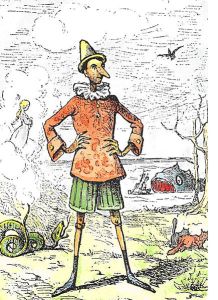
I know something about fear.  Not only do I write about horror films, I grew up with so many childhood phobias that my mother wondered how I would ever get along.  Those phobias may have gone underground when I became an adult, but they never truly left me.  I don’t encounter them on a daily basis, but I can draw on them for my fiction.  I don’t, however, appreciate my government using them against me.  Perhaps this sounds paranoid.  If paranoid it’s by design.  Even if 45 can’t see beyond his own proboscis, those on his team know the fear factor works.  Winston will come to love big brother.  Fear robs rationality.  We’re mere primates, after all.  Was it coincidence that there was what appeared to be an impromptu Trump rally later that afternoon?  There is a difference between paranoia and naiveté.  We’re a wired nation and the Republican Party has the phone number of each and every one of us.  If this is not a drill, you know where to find me.