Prejudices of the Time

When my daughter was in middle and high school, I made an effort to read every book she was assigned for her English classes.  This gave us something to talk about during the years when many teens grow laconic and uncommunicative.  Some of the books I’d read before, but one frightened me off.  Ken Kesey’s One Flew Over the Cuckoo’s Nest pressed the wrong buttons.  You have to understand that I saw the movie for a class in college.  It disturbed me.  Even before encountering H. P. Lovecraft, one of my deepest phobias was insanity.  Children of alcoholics sometimes fear those who are out of control, and mental patients had become, in my head, associated with the non-rational behavior of my father that frightened me so.  During a clown ministry event we visited the local state hospital for mental patients.  I trembled for about a week after we left.

One Flew Over the Cuckoo’s Nest is in many ways a sixties novel.  One reflection of that is the fact that the religious imagery in the novel is presented in the form of punishment.  Everyone knows the narrative of R. P. McMurphy’s battle of the wills against Nurse Ratched.  The latter uses electroshock therapy as punishment and she tries to wear McMurphy down by using it repeatedly after the fight in the shower.  The electroshock table is described as a cross.  The metal headset is a crown of thorns.  Indeed, one of the patients is described as being crucified to the wall of the ward where he hangs throughout the novel.  The sixties frequently saw religion—especially the staid, conservative evangelicalism of the 1950s—as a form of punishment.  That’s pretty clear here.

Although the novel celebrates the freedom of the sixties, it also reflects the prejudices of the times.  The African-American attendees on the ward aren’t portrayed sympathetically.  The women—nurses and prostitutes alike—are there for the pleasure of the male patients’ gaze, exemplified in the leering laugh of McMurphy.  Still, there’s a kind of catharsis to this tale.  The Chief, from whose point-of-view the story’s told, is arguably cured by the antics and special attention McMurphy shows him.  Beneath the callous, self-serving conman there is a human decency that “the system” fails to find.  Indeed, McMurphy is a kind of Christ figure.  A fallen savior, no doubt, but a liberator nonetheless.  This was a difficult novel to read.  I couldn’t make myself pick it up half-a-decade ago, but I suspect somewhere beneath the surface I’m glad I’ve finally read it.  It didn’t cure any of my phobias but it made me think.


January 2019

When January starts grinding you down you have to find something to hang onto.  See, I even ended a sentence with a preposition.  January.  If I’m not careful I can find myself getting quite depressed, so a bit of self-induced music therapy helps.  Although I hate to admit it, I am a bit of a fussy person when it comes to my likes.  My music tastes are quite personal and I mourn when a performer I like retires or dies.  There’s not a ton of stuff that I enjoy and I don’t listen to music as often as I should.  I work from home most days so I could have music on, but I find it hard to read (which is much of my job) with music playing.  Like I said, fussy.

The other day—a weekend—I pulled out John Cale’s Paris 1919.  John Cale is an underrated member of the Velvet Underground.  Okay, with Lou Reed in the lead it’s gonna be tough to stand out.  Cale, who suffers from competing with J. J. Cale (who was actually John Cale too; I empathize!), is a very thoughtful lyricist.  Despite having been abused by a priest in his youth, he sprinkles his songs with religious references.  “Andalucia” is a haunting single with the words “castles and Christians” hanging there for anyone to interpret.  And “Hanky Panky Nohow” has an intriguing line about nothing being more frightening than religion at one’s door.  There’s something profound here.

I grew up listening to The Velvet Underground & Nico when my older brother played it and the curtain door between our rooms didn’t block any sound.  The only performer I could name was Reed.  Years later, when the music of my young, virginal ears started in with a longing I couldn’t explain, I bought the album and learned of John Cale.  I have to confess that I first encountered his name as the performer of Leonard Cohen’s “Hallelujah” in Shrek.  It drove me nuts when ill-informed students used to say it was Rufus Wainwright; yes, he performed it on the CD, but not in the movie.  John Cale is one of those somewhat offbeat singers, who, like Nick Cave, salts his songs with images of a Christian upbringing that show a grown man clinging to something to which he somehow can’t fully commit.  It makes us who we are and then leaves us wondering.  It must be January.


Book Life

Like a book, life can be divided into chapters.  This is perhaps an instance of art following reality, or perhaps it’s the other way around.  The episodic nature of life suggests the chapter structure of books.  As I was waking up this morning (disappointingly before 4:00 a.m.) I was reflecting on the chapters of my life.  As with a book, the most recently read decade is perhaps freshest in one’s mind, but the decades do seem to fall roughly into format.  We tend to think of that first decade—childhood—fondly, even if in reality it wasn’t all games and candy.  It’s biology’s way of encouraging us toward that weird teen chapter of puberty with its intense emotions and maturing bodies.  That chapter is recalled, at least in my experience, as a turmoil involving both good and bad.

The twenties, in my book, were spent in higher education.  It was a cerebral chapter.  Finishing college and starting grad school.  Finishing a masters and discovering employment difficult to find with a master’s degree.  In my book marriage was in the twenties chapter, along with a doctorate.  The next chapter, the thirties, was spent entirely at Nashotah House.  That involved becoming a father as well as a professor.  The other faculty were fathers of a different sort.  I always thought chapters should show some continuity but the forties chapter was that part of the book known as the crisis.  The upending of convention.  The self-reinvention.  The move.  I suppose in terms of a novel that was when it started to get really interesting, but from my perspective life had been plenty interesting enough by that point.

The fifties have been a bit more settled.  The publishing chapter.  The house-buying move added drama, of course, but otherwise the nine-to-five is like a mind-numbing drug.  Mine involved a commute that lead to its own unpublished book, as well as two somewhat academic  tomes.  All of this was going through my head the way thoughts do when you can’t force yourself back to sleep.  The paradigm suggests itself to someone who has, in one form or another, been writing for his entire life.  Or writing his life.  My first attempts at being a novelist began in chapter two.  On yellowed paper somewhere in the attic I still have that first handwritten attempt at literary expression.  The current chapter has me becoming a gruncle (with a nod to Gravity Falls fans) and wondering how a great niece might read a book written like this.  If she will even have an interest.  That’s the way of books, as any librarian knows.  Maybe some warm milk and a cookie are indicated.

Life is a book.


Mastering the Elements

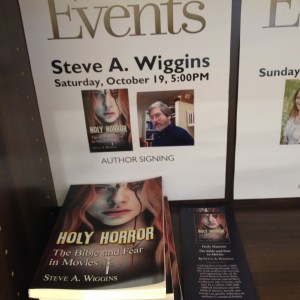
First time home ownership is best left to younger people.  And perhaps younger houses.  The constant onslaught of things falling apart, or falling off (it has been an extreme weather year) has soured me on the idea.  You get set in your ways, you see.  The move from apartment to house didn’t come with a raise that would cover all the repairs invisible to a home inspector’s eye.  Although our house has stood for over 120 years, the last owners let lots of things go with a lick and a promise and we, the naive middle-aged first-time buyers in a seller’s market, bit.  I thought there would be repairs to make, but not all at once.  The royalties from books like Holy Horror don’t make even a small dent in the contractor’s fees.  We should maybe have bought a house in Jericho instead.  One right on the city wall.

The shake-down voyage of a ship reveals the problems, so the theory goes.  It stands to reason that people have to go through a shake-down year as well.  I’ve got the roofer on speed-dial, and I keep a wary eye on a garage that has more love than actual care poured into it.  All I want to do is read and write (which I could do just fine as a renter, thank you) in a place dry and not too cold.  The weather, however, has been unforgiving.  Rain and more rain.  There’s something primal about all this—an element of having to struggle against nature in order to survive.  In the modern world we’ve taken for granted our ability to keep the beasts and weather at bay.  Storm systems like the one that has just blown through serve to remind our species that there are things that will forever remain beyond our control.

The lament is the most numerous genre of psalm

Something like this was going through my mind as I wrote Weathering the Psalms.  (We didn’t own our house at Nashotah House, though.  Whose house?  Nashotah’s house.)  Living in the Midwest gave me a new appreciation for the weather.  Some of the storms we witnessed were nothing short of theophanic.  Global warming has a way of bringing the weather front and center.  Elements of this element, however, are within our control.  We understand at least the human-driven elements of global warming.  We deny they exist to scrape together a few more pennies at the end of the day.  Meanwhile those who buy houses need to do their homework.  If need a roofer too, I’ve got one on speed-dial.


Truth Is Marching On

A funny thing happens to human minds when they’re in a crowd.  They begin thinking collectively.  We’ve all heard of “mob mentality” and dismiss it as so common that we don’t stop to think how remarkable it is.  Maybe we’re afraid to.  Yesterday I attended my third Women’s March, this time in New York City again.  Being an introvert, I find the prospect of putting myself into a large crowd daunting, and with a winter storm warning posted, worries  about getting home provided a convenient excuse.  My wife knows me well enough, however, to sense when my enochlophobia kicks in and tries to kick out that part of me that’s passionate about social justice.  You see, women are still not counted equal citizens in this “land of equality.”  The Equal Rights Amendment has never passed.  Pay is still based on gender rather than qualification.  And we have an unrepentant misogynist in the White House.

Once I’m in a likeminded crowd, supporting social justice, it’s clear that my thinking is influenced by the activity of all those brains around me.  Scientists know this happens in nature.  Ant colonies, for example, “know” more than a single individual does.  Recent studies have even suggested this “hive consciousness” can exist beyond a lifespan, creating an archive of learning that exceeds the lives of an entire generation.  If only we could teach Republicans to do that.  In any case, being in the crowd of bright, intelligent, hard-working women found me in a good head-space.  The men in DC are certainly doing nothing to make the male gender proud.

Although crowd estimation isn’t an exact science, the media has consistently underestimated the sheer numbers of these marches.  The National Park Service, on duty in Washington in 2017, estimated 1.3 million had shown up for the march.  It’s still not unusual to see the number cited as 500,000.  Regardless, with the sister marches it was the largest single-day protest event in U.S. history.  We have to keep marching as long as men continue to elect the most ignorant of their gender to high office.  There’s nothing controlled about the chaos in the White House.  Fake news, alternative facts, a revolving door of staff, and Fox News’ nose so brown you could grown corn on it is not the way to run a democracy.  I may have been part of a hive mind for a few hours yesterday, and it was a far better mind than those that abound in the federal government seeking only their own glory.  Let’s hope the collective mind outlives this generation.


The Truth of Fiction

The thing about reading is that it’s a lifestyle.  I record books both here and on Goodreads, but I read a lot more than books.  Although I don’t have much time for magazines or even newspapers, I read a lot on the web.  And billboards.  And sidewalks.  I’m quite content doing it.  One thing I’ve noticed in all this reading is that fiction writers tend to be more often cited as experts and intellectuals than do non-fiction writers.  Oh the non-fic practitioners get their footnotes, and other specialists mention them, but fiction writers get analyzed, probed, and explored.  Literary types wonder what they meant by some obscure doggerel they wrote.  When’s the last time a non-fiction writer drew that kind of attention?  It makes me wonder about all the time I’ve been spending on non-fiction lately.

I suffer from graphomania.  There’s no cure.  The other day I went looking for an old, pre-electric typewriter to get my fix in case the power goes out.  I have notebooks, zibaldones, commonplace books.  I carry one in my pocket.  I have one on my bedside stand.  And the thing I’ve noticed is that the ideas that come to me unbidden are often fictional.  You see, I have a hidden life as a fiction writer.  That persona is very poor since he’s never made any money from his writing.  He was nominated for a Pushcart Prize some years ago, but he never won.  That fiction writer has been suffering cabin fever because I’ve been finding publishers for my non-fiction work.  I wonder, however, if maybe I shouldn’t be spending my time on fiction.  It’ll never get me to the point I can make a living on it, but it might get quoted after I’m gone.

Writing, after all, is a stab at immortality.  Those of us who do it are legacy builders.  Even as the web has moved us more and more toward visual, iconic forms of entertainment, it has still left a few dusty corners for the written word.  When I pass the sometimes impressive graffiti on the way into New York I think I know what the vandals are feeling.  We’re kindred spirits.  We don’t want to be forgotten.  Whether with spray can, fingers on a keyboard, or fountain pen (or maybe even an old-fashioned typewriter) we are trying to say, “I was here.”  I used to print out all my blog posts in case the web failed.  It grew to thousands of pages.  I had to stop.  I was beginning to act like a fictional character.


Care and Keeping of Books

I take good care of books.  It’s my personal goal that after I’ve read a book you won’t be able to tell.  I used to mark books up, but it occurred to me that I want the books to outlast me and if someone else is to get the full benefit of them I shouldn’t be doing such scribbling.  Of course, when a book has to commute with you there’s bound to be some scuffing from being put into a briefcase along with other necessities.  On the days I don’t commute, I try to replicate bus time for reading.  I curl up in a chair with my book and a cup of coffee to warm my fingers, and read.  The other day as I did this, a drop of coffee made its way from my mug onto the open page.  I was aghast.

Reading a marred book page is eternally distracting.  My eye is immediately drawn to the imperfection and I sometimes can’t even make sense of the sentence in which the blemish occurs.  Not because I can’t read it, but because I can’t get beyond the hurt.  Coffee rings are chic, I know, on the cover of a book or a notebook page.  It’s one of the truest clichés of the literary crowd.  Coffee and a good book.  Not coffee in a good book!  I tried to get back into the flow of the narrative.  My eye kept wandering back to the spot I’d unintentionally marred—I’d violated my own principles.  Unintentionally of course—this isn’t Starbucks where the heat is set at a reasonable level and you don’t have to scrunch up to keep warm.  But still.  But still.

After many minutes of feeling like I’d shot a friend, I managed to move on.  I kept turning back to my coffee page to see if the damage was as distracting as I thought it was.  After work that night when I picked my book up again—commuting is a twice a day activity—I turned back to the damaged page and frowned.  Books are, to some of us, friends.  I want to treat them right.  I line them up in order on their shelves, knowing just where to find them when I need them again.  One careless drop of coffee had taken its eternal toll on an innocent tome.  I realize this world lacks perfection; I’m not naive.  Still, this book, which wasn’t cheap, now bears a scar that I dealt it.  Will I ever comprehend what that one page says?  I hope my silent friend will forgive.


Instant Gramification

To be a writer these days, so industry publicists tell us, one must be savvy on social media.  But do not spend too much time, they tell us, on that same media.  What publicists don’t understand is that social media has become a zero-sum game.  It demands your time.  Just for instance, I was trying to get set up on Instagram.  Why?  Because, apparently, there is a large presence of those who like looking at pictures of books on Instagram.  The real problem for anyone who writes is to let people know when you’ve got a book out.  (By the way, I have a book out.)  Print catalogues and newspaper ads don’t have the same punch they used to, and social media is the reason.  So I tried to get set up on Instagram.

It took a few hours before I realized that Instagram is meant only for mobile devices.  My phone is several years old now and although it does (mostly) what I need it to do, it has trouble with upgraded apps.  Instagram, for instance.  You might say “it’s time for a new phone, then,” but I don’t like feeling coerced into upgrading when an iPhone 4S is already smarter than I am and it functions just fine as a phone.  And a camera.  And a GPS.  And a tape recorder.  What it doesn’t do so well is social media.  Ah, yes, and that’s what got me into this mess in the first place.  My thumbs aren’t dextrous enough to text, let alone post.  I feel old fashioned because I use a computer.

After a few hours, during which Dropbox kept telling me my storage was almost full and for a recurring charge I could upgrade it, I finally managed to get a photo (not my best) posted on Instagram.  I can’t access my “library” where a number of decent photos dwell.  It complains vociferously if I try to access said photos.  I’m not even sure it will do any good to bring awareness to my recent publication.  Our publicists like Twitter better anyway.  You can’t tweet during the day, however, when people from your company follow you.  Herein lies another of the dilemmas of a working writer.  You’ve got to manage to keep your day job.  Writing books, unless you’ve got an agent, doesn’t bring in enough money to pay your electric bill, let alone your mortgage.  And besides, work is where I learn such valuable things from publicists, like using social media so that I have a readership for my reduced time to write.


Web Design

As those who read this blog on the actual site will have noticed, I’ve been playing around a bit with my “look.”  Neither famous nor influential, I’m just a regular guy with a doctorate who wants to make some use of it.  This blog is a way of doing that.  In any case, as I was changing templates and background images, I noticed my rather lengthy blogroll.  Apart from sounding like a particularly tasteless eastern appetizer, blogrolls are pretty much outdated these days.  Back when I started this, there was a community of like-minded bloggers who linked to each others’ pages and helped stir some stats.  In those days doing something like posting on the winner of the Super Bowl could garner you a thousand hits in a day.  The web’s become a bit more crowded since then, I suspect.

So I went to edit my blogroll.  As I did so I found no other blogs linked to mine—no offense taken!—and many that had become defunct.  Many, many.  And there were many blogs that hadn’t been updated in years.  Now, I understand that it is possible to make a living as a blogger these days.  According to my stats, this will be my 3,447th post.  When I consider the time it takes each day to write one of these things, I realize it’s a considerable piece of my life.  Seeing the blogs that have become inactive was like walking through a technological graveyard where many virtual comrades are buried.  For me, the exercise of writing (and I don’t mean the physical typing) is an essential part of each day.  I’d miss it if I stopped.

My redesign focuses on a couple of things: books and pelicans.  Since the books part should be obvious, the pelicans might need explaining.  The background image is one I took while visiting the University of California, Santa Barbara for Routledge.  On my lunch break I went down to the beach and this flock of pelicans flew right over my head.  The iPhone was new in those days, so I pulled it out and snapped a picture.  It won a company photo of the month prize (no monetary value).  There’s quite a bit of symbolism in this image of birds against the California sun.   This blog tends to be metaphorical and those who’ve complained on it over the years don’t really get that.  That’s because things are not what they seem.  There’s something valuable about having to dig for meaning, even if it means looking up.


Reentry

Image credit: NASA/ISS Expedition 28, public domain from Wikimedia Commons

They call it reentry, I suspect, because of the perils and stress experienced by astronauts reentering the earth’s atmosphere.  If the calculations are off, you either burn up or bounce back into the void.  Neither is a pleasant prospect.  It is also the feeling many of us experience at returning to work after the holidays.  We’ve had a taste of life without gravity, then suddenly you’re back into the thick of things.  It didn’t help that among my accumulated emails (I do not check work emails during my few allotted vacation days or holidays) was the notice of the sudden death of fellow scholar Gary Knoppers.  Gary’s interest early on included Ugaritic, before shifting to Second Temple Studies.  I once asked him over breakfast if he recalled the question I posed as a grad student when he presented an Ugaritic paper back in Kansas City.  Of course he didn’t; I don’t recall any questions I was ever asked either.  (With one exception.)

Gary died prematurely, just back before Christmas.  The usual venues for finding out such news, like the Society of Biblical Literature portal, were also on vacation.  It is maybe best that I didn’t learn about it until reentry.  Still, it didn’t make it any easier.  I can’t claim to have known Gary very well, but the suddenness with which someone you know dies can lead to shock.  Not so much the fact of death itself, but that it has claimed someone you knew.  I was working with him on a book idea for my employer.  We had traded health complaints about not being young men anymore.  It’s all so very human.

On Ash Wednesday a couple years back one of my colleagues asked if I was going to get ashes.  I replied that I thought about death every day and that I didn’t need ashes to remind me.  She thought it was a funny response, but it is actually true.  One benefit of my religious upbringing is that it early took away the fear of dying.  Since all people have to face mortality, it never made sense to me to fear it.  That doesn’t mean the same thing as wanting to die, but the price to pay is frequent visits to the valley of the shadow in my mind.  I was merely being honest that Ash Wednesday; my interest in horror is, by the way, related to that constant awareness.  Gary was a productive scholar and a kindly man.  Learning of his death so soon after the holidays became its own kind of reentry.  And a reminder that January looks both forward and back.


Bookish Dreams

Driving into upstate New York via interstate 81 you’ll find a remarkable rest stop.  To put this into context, I should say that my wife and I have driven from Maine to Washington (not on a single trip) and from Wisconsin to Louisiana and South Carolina.  We’ve laid down considerable mileage together, and never have we encountered such a nice rest stop.  Clean, modern, and featuring local goods for sale, it’s a loving homage to the southern tier, the New York outside the city.  One of the features of this unusual facility is a terrazzo floor fresco highlighting the various points of interest within a couple hours’ drive.  Mostly when we stop here we look toward Binghamton and Ithaca, the cities we most frequently visit.  We stop to use the restroom and then drive on.

When we stopped over the holidays, however, we lingered a little bit.  There’s a display on Mark Twain—he lived in Elmira, New York for a time—and there’s an in-ground plaque outside to Rod Serling.  I spent some time looking over the points of interest in the floor map when my wife pointed out a site listed as Hobart Book Village of the Catskills.  I couldn’t believe that I’d been in this building dozens of times but had never bothered to look that far east.  Curious, I did a web search once we reached out destination.  There is, it turns out, a village in upstate known for its main street of book stores.  What perhaps impressed me even more was that it was considered significant enough to be given a kind of “Hollywood star” treatment in what is an often overlooked part of the state.

Now I can’t say what my impressions of Hobart are.  I’ve never been there, having just learned of it on a recent roadtrip.  What I can say is that my world suddenly began to feel just a bit more friendly knowing that such a place exists.  We live in a country that could indeed use a bit more positive influence.  Some of my happiest memories involve bookstores.  Back in my teaching days we made regular autumnal literary weekend trips, visiting sites haunted by writers.  Often we’d find an independent bookstore near such sacred places.  To many, I realize, this would smack of nonsense, but to those ensconced in literary dreams, it created pleasant memories.  You feel something in the air as you stand near the house or grave of an author.  Places are made sacred by what transpires within them.  The writing of books shapes the very space-time around them.  At least it does for those who even find inspiration in an interstate rest stop.


New Horror

Now that Holy Horror is out I’ve been noticing an increasing number of scholars who are writing on the topic of monsters.  Book writing takes several years, as a rule, and when I began work on my contribution to the discussion the bibliography was a touch slim.  There weren’t many books out there and academics who addressed the topic did so warily.  Now scarcely a day or two will pass when I won’t find another book I should read on the topic.  Publishing may be an industry in crisis, but there’s no dearth of new books being produced.  Monsters—which define horror—are a means of coping with the realities of a world out of control.  Since 2016 many of us have felt a vague, if at times pointed, sense that something is seriously threatening out there.  Horror seems a logical response.

Academia tends to run behind trends rather than setting them.  Academic books in general don’t sell too well, and monsters often have crossover appeal.  The longer I’m at this, the more I think of how knowledge as a whole is gathered.  Having that shiny Ph.D. doesn’t do so much anymore when it comes to credibility.  It may get you in the publisher’s door, but to attract readers it helps to pick topics that scholars have typically avoided.  Monsters are a calculated risk in this regard.  Those who publish in the field become somewhat suspect among their colleagues, as if the subject is one that can only play itself out in naivety, an under-developed sense of sophistication.  Anything popular tends to be devalued in the academic mindset.  It is, therefore, encouraging to see others addressing my beloved monsters.

A new year is starting and, like many people I have high hopes that it will show some improvement over the past.  I can actually dream of a world without monsters and although pleasant it isn’t realistic.  We have evil with which we must deal.  Horror allows for a fair amount of practice in that regard.  I’m very well aware that many people find the topic repugnant, or at least distasteful.  Academics, it seems, are following their restless curiosities to the darker corners of the mind.  It’s getting difficult to keep up with the monster books appearing, even from reputable presses.  Holy Horror is my first contribution to the discussion and Nightmares with the Bible, which I hope to finish this year, will continue the conversation.  It looks like it’s becoming trickier to find a voice in this crowd already.  I wonder if that implies a better 2019, as we run behind the times.


Yearn Books

While this blog ranges over an outdated map of my mind, one of the two common elements that hold it together is books.  I don’t have many bibliophile followers, but for any who happen upon my pages, welcome.  Each year at this time I look back over the year in books.  I started doing this when I joined Goodreads.  I don’t put every single book in Goodreads, but it’s a fair register of what I’ve been up to.  This year I set a reduced goal of 65 books (I knew I’d be moving and commuting less, and I do most of my reading on the bus).  Happily I ended the year with 83 officially read, but then the first five months of the year were still spent in daily commutes.

Three years ago my wife discovered the Modern Mrs. Darcy’s reading challenge.  I can’t say just how much I look forward to the new year just to begin reading the books I select to meet that challenge.  The reason I do this is to force myself into reading things I might not feel like reading, or often, books I’ve been putting off for some reason or another.  It only amounts to a dozen books and if I can’t get through twelve in a year, something’s terribly wrong.  Margaret Atwood once said something like “Show me a person who’s read a thousand books and I’ll show you an interesting person.”  I didn’t really need that quote to set a goal, and I don’t think of it as bragging for readers to share their experience with books.  I started getting into books in middle school, and although I didn’t keep track in those days I likely read a thousand books before I graduated from high school.  Branches begin to bend to the light early on.

So, were there memorable books this year?  My reading, due to contractual obligations (I brought them on myself), has tended to be dark.  There were, nevertheless, spots of light.  Thomas Hardy’s Jude the Obscure and Paul Bogard’s The Ground Beneath Us were early favorites.  I managed to stop my ears enough to miss spoilers from Jeff Vandermeer’s wonderful Annihilation.  Carl Sagan’s The Demon-Haunted World was artfully done, and Gregory Alan Thornbury’s Why Should the Devil Have All the Good Music? was a saunter down memory lane.  Selections from my reading challenge fiction that I really enjoyed were Anne Tyler’s Vinegar Girl, and Emily Fridlund’s History of Wolves. And Lee Irby’s Unreliable.  And and Carlos Ruiz Zafón’s The Shadow of the Wind.  The last inspired non-fiction title I read was Susan Fair’s American Witches.  I always appreciate suggestions, just sayin’.  Reading is the balm in my personal Gilead, and I look forward to a 2019 full of books, even if I can’t keep the pace of years past.


Holly Days

Thirty years ago today, my wife and I were penniless grad students.  Trying to be logical about when to marry—I’d been accepted at Edinburgh University shortly after we’d decided on a May wedding and the latest I could matriculate was April—we decided the holidays would be the best time.  Not Christmas, of course.  Or New Year’s Day.  As students we held to the illusion that others observed the natural caesura between the two.  We considered it from the feast of Stephen to New Year’s Eve, days when everyone is recovering from the intensity of Christmas or staying up late to welcome in 1989.  We settled on December 30.  The church was already decorated for Christmas, saving that expense.  Having moved up the date by some five months we did ask them to remove the banner that read “For unto us a child is born.”  Our reasons were purely academic.

I generally avoid writing too much about my personal life on this blog, but a thirty-year wedding anniversary is somewhat extraordinary.  Being a working-class kid I told my wife when I proposed that I couldn’t promise much but I could assure her our life together would be interesting.  That slippery qualifier has proven correct time and again.  Our first three years as a couple were spent in Edinburgh, and quite unexpectedly, the next fourteen at Nashotah House.  The first two of those years involved being apart from Sunday through Wednesday as I commuted from Champaign-Urbana to Delafield to teach my courses.  And, of course, to attend chapel.  Our daughter was born while we lived at the seminary and a Fundamentalist takeover led to the loss of my first (and to date only) full-time academic job.

The academic job market had been tough when I started and it had tanked in the meantime.  We had to uproot and move to New Jersey to find any work at all.  Publishing proved remarkably unstable and yet we stuck together.  This year we bought a house and moved to Pennsylvania.  It took three decades, but we’ve finally achieved what some would term normalcy.  The fact is, though, that long-term marriages are to be celebrated.  Many of the vicissitudes we’ve faced could easily have capsized our little boat.  Looking back over the years I can see that we never did prosper in any kind of financial or career situation.  Life has indeed been interesting.  I don’t blog much about my personal life, but today I can’t help but think of how incredibly fortunate I am to have found a soul-mate willing to stick with a guy who still thinks like a penniless grad student.  Thirty years of schooling and it’s not nearly enough.

A young couple’s anniversary in Wales.


Fossilized Ideas

In our current political climate, perspective helps quite a bit.  Indeed, one of the shortcomings of our conscious species is our inability to think much beyond the present.  In either direction.  Because of the biblical basis of western civilization, a significant portion of otherwise intelligent people believe that the world was created 6000 years ago.  I grew up believing that myself, before I learned more about the Bible and its context.  I also grew up collecting fossils.  Somehow I had no problem knowing that the fossils were from times far before human beings walked the earth, but also that the earth wasn’t nearly as old as it had to be for that to have happened.  Faith often involves contradictions and remains self-convinced nevertheless.

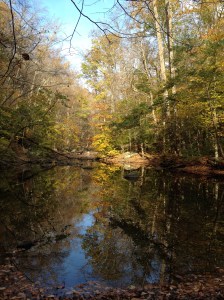
While out walking yesterday I came across a fossil leaf.  Unbeknownst to our movers last summer, I have boxes of fossils that I’ve picked up in various places that I’ve lived.  I find it hard to leave them in situ because of the fascinating sense of contradictions that still grabs me when I see one.  There was an impression of a leaf from millions of years ago right at my feet.  It was in a rock deeply embedded in the ground and that had to be left in place.  Never having found a floral fossil before this was somewhat of a disappointment.  Still it left an impression on me.  Perhaps when dinosaurs roamed Pennsylvania—or perhaps before—this leaf had fallen and been buried to last for eons.  How the world has changed since then!

After that encounter, I considered the brown leaves scattered from the recently departed fall.  Some lay on the muddy path, but few or none of them would meet the precise conditions required to form a fossil.  If one did, however, it would be here after humanity has either grown up and evolved into something nobler or has destroyed itself in a fit of pique or hatred.  We know we’re better than the political games played by those who use the system for their own gain.  The impressions we leave are far less benign than this ossified leaf at my feet.  The Fundamentalist of the dispensationalist species sees world history divided into very brief ages.  God, they opine, created the entire earth to last less than 10,000 years.  All this effort, suffering, and hope exists to be wiped out before an actual fossil has time to form.  It’s a perspective as fascinating as it is dangerous.