Cthulhu You Knew

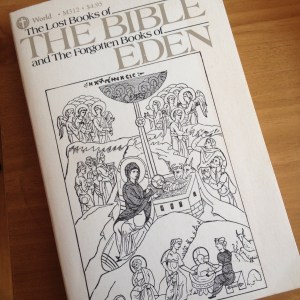
Humans tend to be visually oriented.  Arresting images stop us cold, causing us to focus on what we’re seeing.  As a tween I could be transported by large, lavishly illustrated, full-color books of other worlds.  While these went the way of Bradbury, I still sometimes recollect scenes that stopped me in my young tracks, making my juvenile mind wonder, what if…?  As an adult I realize “coffee table” books are heavy and a pain when you’re moving.  Printed on specialized paper, they have more heft than your mass-market paperback, or even most academic tomes.  Nevertheless, Gothic Dreams Cthulhu was a book that carried me, like a time-machine, back to my younger years.  Unlike in those days, however, I read the text as well as lingered over the images.  And I wondered about Cthulhu.

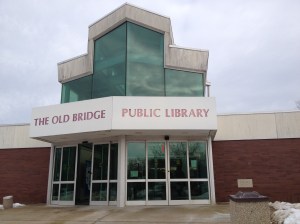
You see, I didn’t know about Lovecraft as a child.  The only reading regularly done in my family was Bible-oriented.  I discovered science fiction and gothic literature as a tween and, living in a small town, had no one to guide me in my choices.  Rouseville (the town pictured in the background on this website) had no public library.  My reading was left to my own, uninformed devices.  I discovered Cthulhu through my long fascination with Dagon.  I’d pitched Dagon as my dissertation topic, but settled on Asherah instead.  While teaching religion at the University of Wisconsin Oshkosh, I discovered Lovecraft, and Cthulhu, through Dagon.

Gordon Kerr, the author of Gothic Dreams Cthulhu, might be forgiven his hyperbole about H. P. Lovecraft.  Lovecraft was not a great writer—that’s not intended as any kind of slight, I hasten to add.  Classically, however, he didn’t have the level of literary finesse of Edgar Allan Poe, for example.  Still, Lovecraft created credible worlds.  His was a life of imagination—one might almost say divinity.  He was a creator.  Cthulhu has become a cultural icon.  With the magic of the internet bringing a writer still obscure to international attention, many people who never read horror fantasy nevertheless know who Cthulhu is.  Or they think they do.  As Kerr explains, the descriptions by Lovecraft himself are spare, thus the variety of ideas represented in the delicious artwork on every page of this book.  As Lovecraft earns more academic attention, surely others will notice the religious potential of the Great Old Ones that were, in their time, gods.  A guilty pleasure read, to be sure, Gothic Dreams Cthulhu fits well into this serious world of chaos we’ve created for ourselves.


Book Naked

Alogotransiphobia doesn’t just strike me when I’m on the bus.  Whenever I travel anywhere I try to take a book along.  To the DMV.  To movie theaters.  To take the paper to the shredding truck.  Anywhere there might be a line.  There comes a time when you realize every second is a gift, and time runs swiftly through the glass.  Life’s too short not to read.  So it is that I find myself in a hotel for a night.  Feeling somewhat like taking a risk, I’ve only brought three books.  Will I read them all tonight?  Most likely not.  But just in case…

Alogotransiphobia is real.  In my long-distance commuting days—in a past still very recent—I tried to calculate carefully.  Would I finish this book in the three hours I knew I’d have on New Jersey Transit?  If even a chance seemed to exist that I would, I would add another book to my bag.  But then that occasional Monday morning would arrive when somehow Sunday night seemed to slip away unbidden, leaving me bleary eyed and foggy brained to face pre-dawn alone on a deserted street corner.  And I neglected to calculate the chances.  Once in a great while, on such a day I would finish a book only to face a very long ride home without another.  Alogotransiphobia would kick in.  I would squirm in my seat as well as in my mind, anxious to get off that bus, as if I needed to shower to wash the feeling of wasted time off me.  A commute without a book was remaindered, unrecoverable time.  Lost time.  Squandered.

For two months now I’ve been delivered from the daily commuting life.  Now I find the opposite phobia.  That which entails staying at home and having so much to do that time to read is stolen back by that cosmic trickster we call fate.  I try to carve out time for reading, but the funny thing about work is that when you do it from home you feel you have to prove yourself.  I suspect employers know that.  A certain type of worker—perhaps one who’s lost a job or two in recent years—will always reach for supererogation.  And such a one will even sacrifice literacy on the altar of an assured paycheck.  Until recent days I was like a hermit on the bus.  Those around me may have been going in the same direction but we were in completely separate places.  I was, during the commute, lost in a book.  Alogotransiphobia was in the seat right beside me.


The Persistence of Unity

I came across some Ray Bradbury books while unpacking.  I recently learned that Ray Bradbury was a Unitarian.  Now, the religion of a writer is only ever an ancillary bit of information, yet for someone of my combination of interests, it’s compelling intelligence.  Having grown up reading Bradbury, my own fiction often comes out seeming like an imitation of his.  I discovered him the way I found most of my early, influential writers—through Goodwill.  Living in a town with no bookstores, Goodwill was a great venue for walking out with a good handful of books for under a buck.  Since Mom was there looking for “practical” stuff, I hovered over the book tables and discovered a new world.  Then I grew up.

Embarrassed by my childish interests, I gave away or sold most of my Bradbury books after college.  I was more sophisticated than that now.  I read Greek and was soon to learn Hebrew.  Books were meant to have footnotes, and lots of them.  Who wants to be seen with Bradbury on their shelves?  But the indiscretion of youth does come back to haunt one.  About two decades later I began to yearn for something missing from my life.  Perhaps like a good Unitarian I wasn’t exactly sure what it was, but I knew it was lacking.  Then my daughter was assigned Fahrenheit 451 for school reading.  I tried to read whatever she was assigned, and once I did memories of Bradbury flooded back.  I no longer had his books, but that could be remedied.

Occasionally I’m criticized for having too much in the way of books.  I’m sometimes asked if I will ever read some of them again.  The answer is how should I know?  I jettisoned Ray Bradbury with Episcopal pretention, only to find that behind the ceremonial there was a more unified version of things waiting.  A continuity with my younger self.  A lust for imagination.  A desire to remember what it was like to walk on Venus.  Or to see a man presciently covered with tattoos.  Or simply to thrill at the idea of October.  I began to acquire the old books again.  The newer editions lacked the visual resonance of the old, but the essence was still there.  Orthodoxy, I discovered, often isn’t true to life.  What’s true is what we discover early on.  Sophistication isn’t all it’s cracked up to be.  And yes, I may well just read that again after all.


A Kind of Happening

The roofers were here.  One of the things you learn only after laying down a ton of money is that those selling a house like to withhold information.  Moving during one of the rainiest summers in history, we naturally discovered leaks.  And so the roofers are here, like noisy angels banging above my head.  Given the orientation of our house, their access is outside the window of my work office.  I figured it was an opportunity to learn.  As the old shingles came raining down, however, I couldn’t help thinking of M. Night Shyamalan’s The Happening.  One of his more disappointing efforts, this horror film involved a memorable scene of mass suicide where people jumped off of a high building one after another.  Maybe other people would think of other comparisons, but the falling debris brought the film to mind in my case.

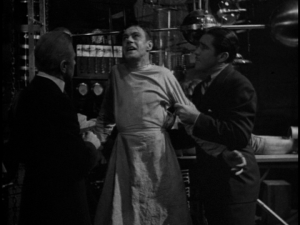
It’s a matter of framing, I suppose.  I’ve watched enough horror that it has become a framing device.  This is true although it has literally been months since I’ve seen a horror film.  (Moving proved to be its own kind of nightmare and one day I suspect we’ll be unpacked enough to watch movies again.)  Instead of losing the frame of reference, however, I find it intact.  If you spend long enough with Poe, he gets under your skin.  And changing states to M. Night Shyamalan’s eastern Pennsylvania might have something to do with it.  This is Bucks County territory, after all.  Another frame of reference, mediated by media.

As I watch the old shingles drop, I realize the window through which I’m witnessing this is another frame.  Like a camera lens, it limits my view.  At times it can be like Hitchcock’s Rear Window, seeing neighbors at their daily business.   Indulge me. For nearly the past five years I worked in a cubicle with no view of any windows whatsoever.  I was completely cut off from the outside.  (Which, for those of you who’ll admit to having seen The Happening, might not have been an entirely bad thing.)  Now that I have a window—my own framing device—I realize some of what I’d been missing.  At Routledge I had a window, but at such a level that the Manhattan outside seemed artificial.  You couldn’t see individuals down on the street.  The entire wall was a window—too much of a frame.  Gorgias Press involved working in a windowless room as well.  I’m professional enough not to let the falling material or the pounding distract me much.  There’s work to do because there are bills to pay.  And horror films prepared me for that as well.  It’s the ultimate framing device.


A Star in the East

The times they are a, well, you know—nobody wants to violate copyright.  In any case, nothing stays the same for long.  New York, for example, is a city in a constant state of transformation.  Fully grown buildings now stand where there were literally holes in the ground when I began working there.  One building near Times Square recently had a facelift that revealed the steel girders beneath.  On the I-beam were the words “Bethlehem Steel.”  And it’s not just New York.  Our cultural transformation has been taking place over the last few centuries as populations have moved to urban areas, abandoning farming to the few who remember how.  Being from western Pennsylvania, I pretty much thought the eastern part of the state was Philadelphia.  I’d heard of other urban regions, of course, such as Scranton and Allentown, but they were well outside my experience.  We didn’t get out much.

Now that I’m here in the eastern part of the state, I’m begun to explore the ever-changing micropolitan area of Allentown-Bethlehem-Easton.  The three cities blend at the edges, and this region is the third largest population zone in the state, after Philly and Pittsburgh.  It’s also the fastest growing region in the commonwealth.  I suppose we might’ve helped with that statistic.  The other day I had to run an errand in Bethlehem.  I pulled over to marvel at the hulk of what had once been Bethlehem Steel.  Now, I grew up in a town with an active steel mill, and Pittsburgh grew to fame for the same metal, but this was a behemoth of a plant.  Subdivided and open to development, it now houses a casino, in part, and an arts center.  And still there’s more space.

Bethlehem was founded on Christmas Eve by the Moravians.  Perhaps appropriate for a town trying to resurrect itself, Bethlehem calls itself the Christmas City.  Star imagery abounds, and many businesses name themselves with this Christian symbol.  The image is quite different from that of a steel city with hard-working men on the shift.  The grime and din of industry.  Bethlehem, like many places in the state, was named for its biblical forebear.  On my visit to the original Bethlehem many years ago I was, like many tourists, disappointed that it isn’t “O little town of” anymore.  There were people everywhere and it was difficult to imagine a quiet stable inside a noisy stone church thronging with the faithful.  Clearly things don’t remain unchanged for long, even in towns famous for their remoteness.  Although far from New York, they share a common heritage of people everywhere, and that heritage could bring us peace if only we would allow it.  The answer, it seems, is blowin’ in the, well, you know.


Away and a Stranger

“And Joseph also went up from Galilee, out of the city of Nazareth, into Judaea, unto the city of David, which is called Bethlehem.”  Strangely enough, the great physician (although we know nothing of his medical practice) Luke was writing about a place an ocean and a sea away from here.  The place names of eastern Pennsylvania demonstrate the religious awareness of the early colonial Europeans who brought their Bibles and diseases to this nation.  Bethlehem, Pennsylvania was known more for being a house of steel than being a house of bread.  It’s just down the road from the little town of Nazareth, made famous by The Band’s classic hit, “The Weight.”  The road to Emmaus is nearby.  And the major medical facility is, you guessed it, St. Luke’s.

The Band had an influence somewhat surprising for those who may have trouble recalling their nondescript name.  “The Weight” is a story of a traveler coming to, of all places, Nazareth, Pennsylvania.  So taken by the song was a Scottish band that they adopted the name Nazareth before informing us that “Love Hurts.”  This is something the evangelist and purported doctor Luke presumably knew.  If you go down from Nazareth even unto Bethlehem, you’ll find the steel city recast as the Christmas city.  For those of us who grew up in the western part of the state, Pittsburgh was the real steel city anyway.  When I was growing up, Pittsburgh was the 16th largest city in the country.  It now sits at 65th, because, like Bethlehem it had trouble drawing people without the natural hardness that is Pennsylvania.  There’s a parable in a city transforming from a heavy metal to a holiday.  There’s no Pittsburgh in the Bible.

When Luke begins his Christmas narrative (think of this as one of those “Christmas in July,” or August things), quoted above, he ironically leaves Mary until the next verse.  Joseph, whom later tradition will say had nothing to do with the conception anyway, still gets first billing.  One wonders what might’ve been different had Mary led the way.  It was much later, after the gruesome crucifixion account, that Emmaus came into the picture.  Two unnamed disciples were walking along that road and didn’t recognize who Jesus was.  Had they kept walking, I wonder if they might’ve ended up in Pittsburgh, for the biblical names soon give way to places like Kutztown and Fleetwood, the latter of which, I have to admit, I never got into.  Had Mary taken a load off in Nazareth, this story would’ve been completely different.  Thus saith The Band.


The Distortion of Absence

I’m sure it’s happened to you, too.  After some time away, you return to somewhere familiar.  For some reason this doesn’t seem to apply to places you spend only a little time—for example, the cabin where I tend to go on vacation every year.  Rather, it impacts quotidian spaces, the places you see nearly every day.  Returning after an absence, the place looks strange, as if you’d forgotten what it was really like.  A fairly common example is a college dorm room.  When you return to it after, say, the winter holiday, it looks not quite how you remembered it.  It’s a little smaller or larger than you recalled, or you didn’t remember that the floor tiles were that color.  Within a day or so the feeling disappears and you accept the “new normal.”

The strange, or unfamiliar, is the source of many monsters.  Freud famously phrased the uncanny as “unheimlich,” un-home-like.  It is close to what you expected, but not exactly.  The uncanny valley is that place where things are about right, but slightly off.  It generates a creepy feeling, as if reality is being distorted.  On a business trip to Boston a few years back I visited Boston University School of Theology, a place where I spent over two years in my twenties.  745 Commonwealth Avenue hadn’t been renovated, but I stepped inside and was stunned by how wide the hall was.  In my mind it had become far narrower.  It was downright disturbing, as if I’d walked into somebody else’s past.  It made me wonder—is any of this really real?  Or more frighteningly—is my memory that fragile?

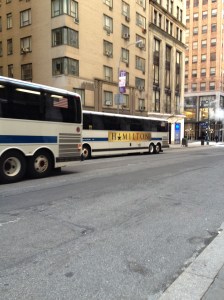
I recently spent a day working in the New York office.  While the office itself seemed the same, the city did not.  Emerging from the Port Authority Bus Terminal I knew exactly where I was.  Or did I?  I’d walked roughly the same route daily for almost five years, and two years before that a similar track.  It was as if the bus had exited the Lincoln Tunnel into an alternate Manhattan.  Unheimlich.  I’ve returned to many places after being away for awhile and this distortion of absence always creeps me out.  Can my memory be that faulty or is all of this an illusion?  The gap between present reality and remembered reality provides crevices into which monsters crawl, waiting.  By the time I reached the block of my office the feeling had gone away.  But somehow, the monsters remained. 


Homework

I’m trying to organize a home office.  Gone are the days that this meant a stapler and mug full of pencils.  The office is essentially a laptop since work is essentially virtual.  Oh, there are days when I have to haul myself into New York City, but even making traditional print books is an exercise done largely online.  The office is a place conducive to work.  In the case of an editor, a room of books that can be used for reference.  In our apartment we had bookshelves (mostly homemade) around the inside perimeter, covering all wall space that wasn’t claimed by more necessary furniture.  We realized, as we were packing, that no free wall space reached to the floor.  We didn’t plan it that way, but a reading life can be a complicated one.  To write books you need to read books.

Our house has some built-in bookshelves.  Not enough to hold our surviving books, but it’s a start.  My office, however, is a spartan room.  Over the weekend I unpacked my “work books.”  That meant, for the most part, books about the Bible.  I filled three large bookshelves then ran out of room.  Not only was there that embarrassment, but there was the fact that a large number of “religion” books remained unshelved.  You see, I was a religion editor for a few years before being more narrowly slotted into the Good Book.  Some might say I should jettison these books since my career has moved on.  Those who suggest such heresy don’t understand the career of a displaced professor at all.  These books are still work books.  Job descriptions aren’t as stable as they used to be.

The complaint is an old one, at least to my wife’s ears.  In my mind I’m still a professor.  I still write—strictly on my own time—and I still research.  I do so without access to a university library so I have, over the past several years, made my own library.  This office, now out of bookshelves, is that amateur academic library.  My research has shifted from ancient Near Eastern studies (and that’s another whole discipline’s worth of books, some unfortunately washed away in the flood) to religion more broadly.  Not only is that reflected on this blog, but also in my publications.  The office isn’t done yet.  There’s a desk and a chair.  More importantly, there’s internet access.  There are some shelves, but in coming days there will need to be more.  Libraries are like minds; if they shrink they become less functional.  All books, no matter how dry, began in someone’s imagination.  That’s virtual reality.


Be It Resolved

I’m not a believer in New Years Resolutions.  A constant and critical self-monitor, when I notice a bad behavior I try to correct it right away.  Sometimes I’m actually successful.  Now that I’ve finally removed all books from the garage—some were being held high above the water-line on plastic boxes—I’ve started to sort through systematically what is beyond redemption.  A comment of occasional visitors, however, has goaded me into a resolution; you see, people sometimes ask “Are you going to read those again?”  While aching to address the mindset betrayed by that very question, I cede a point; if I’m going to the expense of replacing a non-reference book, I should want to read it again.  My resolution—when I buy another copy, I will read it then and there.

One of the stinging parts of this resolution is that some of the books were read by me just this past year, or even earlier this year.  Jude the Obscure, although I enjoyed it, cost me a quarter year of my life of evening reading time.  On that basis alone I should replace it, but if I’m not going to reread it why should I incur the expense?  (Moving is anything but cheap.)   I will also face rereading old favorites that have been put aside for a while.  No house, for example, should be without Emily Brönte’s Wuthering Heights, although I read it again just months back, or so it feels.  

This is perhaps a way of making lemonade from a cloud.  Or finding the silver lining on a lemon.  Whichever it is, I sense that it will figure toward my reading goal for next year.  As I’ve spent the rainy weekend unpacking books, literacy is on my mind.  For those who see my literomania as some kind of disease, I was cheered to note just how many of the books on display I had indeed read.  The same goes true for a number of the academic books in the study, but, I must confess, while pulling them from their boxes I thought how boring most of them are.  Boring, however, doesn’t equate to useless when it comes to books.  Given their price points some of them may take years to replace.  That’s the point of a resolution, in any case.  It can cause some pain.  As I stuff the moldy, distorted tomes into their body-bags I hope that rereading their replacements will bring them back to life.  After all, resolution and resurrection are not so far apart.


August Mornings

It’s August and I’m already starting to feel haunted.  While science may declare it nonsense, there’s a feeling in the air—particularly in the early morning—that tells us the seasons are changing.  While it may be different for everyone, for me it begins in the tip of my nose.  I can smell the change coming.  That doesn’t mean that we won’t have more hot days—a long string of them yet awaits—but the shift has begun.  Autumn is perhaps the season closest to the soul.  While I like all seasons for what they represent, fall has always put me in mind of melancholy rapture.  It’s a difficult concept to explain,  a kind of blissful evisceration.  A hitching of the breath in my lungs.  A sudden rush of joy followed by sadness.  The ease of summer living is ending.

Summer is the growth season when we look out and see the promise of provisions that will see us through long months of cold and chill.  The times we huddle down only to be blinded by the arctic beauty of the sun on a snow-covered day.  The indoors time.  Summer is when we can dash outside without a coat, giving no thought to whether we will be warm enough.  The scent of autumn is a slight chill.  It reminds me that while the crops have been growing, the monsters have too.  There’s a reason horror films are released in the fall.  I’m not the only one who knows they are coming.

Late summer is a liminal time.  While the calendar may tell us summer lasts until the autumnal equinox, traditional cultures marked time in a different way.  Equinoxes and solstices were closer to the middle of a season than its start.  Most years we begin to feel summer in May, or even April.  Winter cuts through November, and the thaw may begin as early as February.  When I step outside just after sunrise and breathe deeply, I can feel the monsters coming.  In a way I can’t explain, their lurking fills me with a frisson of anticipation.  Already the days are noticeably shorter.  Daylight itself seems to be fleeing before the ethereal chill that is still available in our rapidly warming world.  The seasons are all about feelings.  Emotions suffuse the changes of weather and human habits that accommodate to it.  There are shivers and then there are shivers that the creatures of autumn bring.  They’ve already begun to gather.


Temporary Id

Who am I, really?  I can’t help but ponder this whenever I apply for a new form of identification.  While at the Department of Motor Vehicles I observed a room full of strangers—if there’s a melting pot in the United States, it’s the DMV.  Outside those cloistered in the major cities, you must drive to survive in this country (or at least to thrive) and the ritual of waiting your turn by number at the DMV is part of it.  I glanced at my application while waiting.  I’ve held drivers’ licenses in at least four states, but I’ve lived in at least six—how do you count where you live, really?  I think I must’ve had an Illinois license at some point, but I could find no record of it.  Who am I?  Are the Illinois years lost?  Big brother will find out, no doubt.

To apply for a license in Pennsylvania, as in most states, you have to prove you are who you say you are.  Swapping in your old license just doesn’t work any more.  While the actual “who” depends on government-issue documents (social security, birth certificates, or passports) the where question is more financial.  To prove your residence you must present bills with your name and current address.  You’re defined by your money.  Bills demonstrate that you’re integrated into the system, the matrix.  I spent one day, as a temp with Manpower, working for Detroit Electric (no, I didn’t have a Michigan license; I kept the Massachusetts one), processing requests for new service.  Despite not being asked back because they had expected a woman (really!), I learned that to get service you had to prove you were part of this matrix, with a history of paying your bills.

None of these agencies ask the deeper, more philosophical questions of identity.  None seem to care that each day is a struggle to define our spiritual selves in a world hopelessly secular and financial.  Yes, my birth certificate “proves” I was born in Pennsylvania.  The DMV records “prove” I learned to drive here and had my first license in this state.  They show nothing of the real question of who I am.  A reasonable facsimile of my visage appears on the plastic card that certifies my citizenship within these artificial borders.  But now my home state stamps “Temporary” on the card so that a security check can be run.  They want to discover if I am who my records say I am.  What the powers that be don’t seem to recognize is that although where we are born influences us every day for the rest of our lives, no little plastic card, despite the amount of information it conveys, can say who it is I really am.  “Temporary” may be the truest word on it.


Forever Jung

A funny thing about aging is that you recollect your youth, but you find yourself less able to do the things that seemed so easy when you were more spry.  We live in a world where the elderly are coming to outnumber the young, and that means a lot of memories of “the time when.”  This thought confronted me when reading a story about two missing patients from a nursing home in Germany.  Authorities were frantic to find them until they were spotted at Wacken Open Air, the largest heavy metal fest in the world.  The news stories seemed bemused—it was cute, in a way, wasn’t it?  Two old guys trying to recapture their youth, like salmon swimming upstream where they were born.  I’ve got to wonder if there’s more to it than that.

Music has a way of touching us deeply.  While I prefer my rock on the harder side, I’m not exactly a metal-head.  There’s something, however, in the rage of metal that resonates with some of us when we get older.  It’s almost religious.  You see, I recall hearing the music from my brother’s room when I was growing up.  As a naive fundamentalist, I sometimes went downstairs shaken, as if my virginal soul had seen some image it shouldn’t have.  Some teens reach a level of maturity before others, and metal speaks to them.  Let’s face it—life is unfair.  We see that every single day.  Music can help us cope with such unfairness and there are times when John Denver and James Taylor seem downright gullible.  Ask the elderly.

Our society harbors many myths.  One of them is that evolution doesn’t occur.  Not only is it a biological fact among species, but it’s also, on a macro-level, something that happens as we age.  Perspectives shift.  We come to see the wisdom of Heraclitus—no one steps into the same river twice.  Especially when it’s Styx.  Technology keeps us alive longer now, and sometimes it seems that it does so just to tell us what we can no longer do.  I’ve got, I hope, a number of miles left on the odometer, but my focus is on the car’s stereo system.  When driving to Wacken Open Air to pick up two men trying to plug into either the rage or the euphoria that heavy metal means to the elderly what comes through your speakers?  What would the “sweet Psalmist of Israel” have wanted to hear when not even Abishag could keep him warm?  Yes, Herman, there is a wisdom that is woe.  And banging your head may not be the worst option at such times as these.


Trending Horror

It’s not often that I can claim to be ahead of the curve.  A “late bloomer,” I was a timid child whose reaction to most of the world was a species of phobia.  It probably didn’t help that I watched monster movies and was an early fan of the original Dark Shadows.  As I learned to relate to others and take consolation in religion, these more macabre interests became latent rather than obvious, only to come out into the open when working at a Gothic seminary in the woods of Wisconsin and then being fired from said seminary, casting me into the outer darkness.  I found myself being interested in horror again although I’d put it aside from bachelor’s to doctorate.  Now it started to feel therapeutic.

My wife sent me an NPR story by Ruthanna Emrys titled “Reading Horror Can Arm Us Against A Horrifying World.”  The premise is one I’d read before—we find horror compelling because it gives us skills that we need to survive.  It teaches us how to separate evil from mere shadow and how to (or not to) fight such evil.  In other words, horror can be heuristic.  Those who know me as a generally calm, quiet—shy even—individual express surprise when I confess to my secret fascination.  One of the most common responses is the question of “why?”  Why would anyone want to watch such stuff?  My observation is that those who ask haven’t tried.  Horror is not often what it seems.  Or perhaps they have better coping mechanisms than I have already in place.

The names of many writers of what might be considered horror have gained mainstream respectability.  Stephen King’s name alone is enough to assure the success of a novel.  These days you can mention the name Lovecraft and a fair number of people will have at least heard of it (him) before.  Jorge Luis Borges has respectability for having been Argentine.  Joyce Carol Oates for being both an academic and a woman.  If you’ve read their works, however, there’s no doubt that something scary is going on here.  As Emrys points out, with our world becoming a more polarized and frightened place, horror may be ready to hang out its shingle saying “the mad doctor is in.”  In fact, it may become even more popular than it is already.  We human beings set ourselves up for horror constantly and repeatedly.  I’m seldom ahead of the curve.  I hang back to see what might happen to those out in front.  Call it a survival technique.


Soggy Symbols

House-buying is perhaps best left for the young.  Flexibility is, unfortunately, something that effaces with age, and house-buying is a rough transition at best.  For anyone following this blog over the past month, the theme of moving is familiar.  How we hired a moving company that didn’t get us in our new place until after 2:30 in the morning.  How torrential rains came later and flooded our worldly goods temporarily stored in the garage.  How mowing the lawn caused me to question my faith—wait—I haven’t told that one yet!  Well, you get the picture.  Suffice it to say that although I didn’t think moving would be easy, it’s been a lot more difficult than I could’ve possibly imagined.  In the midst of it came a dove.

At times, I must confess, I’m tempted toward superstition.  A strange significance between events that are, in actual fact, random.  We’ve all read of people who buy a house and discover some secret treasure left stashed away in the attic.  The former owners of our house only left undisclosed defects that become clear in periods of prolonged rain.  Even so, as I was feeling as miserable as one of Ray Bradbury’s astronauts on Venus—yes, the precipitation does begin to drive you insane after a while!—I decided to try an impose some order on the chaos that is our garage (we haven’t had a dry weekend since moving in to transfer the soggy stuff to our house) I looked down.  There, amid the screws and other little detritus left behind in the way of treasure, I found a dove charm.  A dove sent after a flood.

The symbolism of the dove with hope is ancient indeed.  It predates the Bible when it comes to a symbol that the flood is nearly over.  The Mesopotamians also had a dove sent out from the ark, and I’m given to believe this is something ancient mariners, whether they rhymed or not, regularly did to assess if land was near.  Unlike our heavy, wingless species, birds can soar over chaos.  At least for a while.  They are a symbol of hope.  Was that dove sent to me on purpose at a time when I needed it, or was it just a random find, one of those too much stuff in a small world moments?  There’s no way to assess that, I suppose.  For me, on yet another rainy day, it’s a symbol of hope.  The only other choice, it seems, would be to build an ark.


Childhood’s End?

Writers are agents against chaos.  Those of you who read this blog frequently know that chaos has been one of my themes lately.  Moving, which is a process that takes months and months of time, is pure chaos.  Whenever I settle down to write, yet another moving-related task comes to me—this box needs to be unpacked, that gap in the fence must be mended, where did I put the toolbox?  Mundane things.  Writers like to think the world conforms, somehow, to their inner lives.  In reality, things are far more complex than that and don’t seem to be getting any easier.  Starting to learn about house ownership is something best left for the young, I suspect.  Every question (where should we put the television?) leads to a daisy-chain of other issues (but first we need to move that hutch, but it’s too heavy for either of us to lift, etc.).

In ancient times water symbolized chaos.  Before we left on vacation, the main issue was to get all boxes off the floor in the garage.  We haven’t had time to move them safely inside yet, what with planning for vacation and all, so plastic became the order of the day.  We do need, however, to get things inside eventually.  A slow process for two middle-aged people with full-time jobs, even without jet lag.  Writing feels like a luxury item, for what is most required is time—time to move things to their proper places.  Time to figure out what those proper places are.  Time to go to work again.

Had we thought this through, we might’ve used vacation this year to unpack.  We bought our plane tickets, however, before we bought the house.  This latter transaction is one of chaos embodied.  Who knew, for example, that the grass had to be cut so often?  That all roofs leak?  That chaos is constant, and not intermittent?  In biblical times, one of the signs of God’s greatness was the ability of the Almighty to hold chaos in constant check.  The waters were always lurking, looking for any opening—except when you need rain and it just won’t come.  Sitting here writing feels like the giddy irresponsibility of childhood where there’s so much to get done and so little time in which to do it.  And neighbors don’t appreciate the lawn being mowed before the sun is properly out of bed.  The renter pays a price for living with, for at least some stretches of time, chaos-free maintenance.  The home-owner quickly learns that any time left over for writing feels like being irresponsible, and a little bit divine.