Predestined?

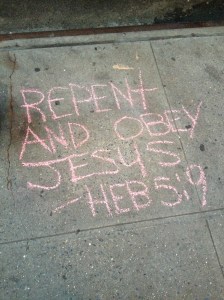
This particular doctrine struck me as evil. It violated every experience and thought I’d ever had, even raised as an unquestioning Christian as I was. Then, at Grove City College I was faced with it for the first time—predestination. If free will is an illusion, what crueler God can be conceived? I couldn’t avoid such thoughts upon re-reading Anthony Burgess’ A Clockwork Orange. A non-conforming non-conformist at the college assigned it in a science fiction class, so it has been decades since I’d read it. Now I found it perhaps more profound than before. Much has happened since my initial reading of the book, o my brothers. (And sisters.)

The framework of the story is well known. Alex and his friends are teenage punks who love ultra-violence. Alex is betrayed and imprisoned. Considered incorrigible, he’s reprogrammed to the point that he can’t even defend himself in a society that’s grown even worse during his time in jail. In the hospital after a suicide attempt, he awakes to find his old self restored, whether this is a good thing or not. The main point that’s behind this, it seems, is that without free will, repentance means nothing. In fact, in my edition of the book, an afterword by Stanley Edgar Hyman makes the point that some interpret A Clockwork Orange as a fictional defense of Christianity. Certainly the comparisons are there, from Judas through Jesus, healing, sin, and suffering. How much it actually meets that idyllic vision of God in Heaven directing the lives of individuals is, of course, an open question.

The idea that human beings are born as Hell-fodder posits a cruel and sadistic deity. Not only are the majority of human beings going to face eternal punishment for matters beyond their control, there is a divinity who planned it that way. We are all, literally, puppets in a universal morality play written by a being whose moral compass is horribly skewed. Indeed, even at Grove City some of the faculty would state that philosophically there could be no contest—free will was right. But, they would add, tapping the Bible, it’s not true because the Word of God says so. When I protested, it was declared, without irony, that even my protest had been predestined. In other words, in this clockwork universe I was clearly an Alex. Upon closer inspection, however, the truer analogy would be that we are all the victims of Alex and his droogs. But only if we have the freedom to make such an observation.


Spinning Wheels

That warm, secure feeling of being home for the holidays never goes away. Admittedly Thanksgiving takes on a different cast for those of us who are vegetarians becoming vegan, but it’s not about the food, really. It’s never been only just about the food. Thankfulness as a way of life seems to hard to obtain when your own government has turned against all the principles that once made America a wonderful nation in which to have been born, but it doesn’t mean you can’t be grateful. As a commuter, I’m especially thankful for time. Each day’s normally spent riding a bus, working, and riding again. Over the past several days I took a train to Boston for the AAR/SBL annual meeting, and then a long train ride back. Followed by a single-day drive to Ithaca and back. I’m thankful for a little time not to be on the move.

Among the many memories for which I’m grateful is a mountain road that divides Glen Kinglas and Glen Croe in Scotland. Known for its splendid view, it’s one of many places that I have had the privilege of visiting. Although sitting still, here in my chair, I recall yet another busy day of driving with friends. Poor graduate students all, we nevertheless knew the value of good company and taking little for granted. As someone who grew up poor, I had managed to move to Boston, travel to Israel and work on a dig, and now I was living in Edinburgh, working toward a doctorate in one of the world’s great universities. That afternoon, however, I was out viewing what the wider world had to offer. The name of the viewpoint on the A83—from which that world all seemed visible—was “Rest and Be Thankful.”

The name speaks volumes. New Jersey certainly isn’t Scotland. My job is not that for which I trained. I continue to live as if I were a graduate student while friends have purchased houses and furnished them nicely. Today none of that matters. I’m not on a bus, train, or plane. I’m not glued to my seat in an automobile. I’m thankful to have some time to sit and reflect. Catch up, perchance, on a little bit of sleep. Unstructured time is perhaps the rarest commodity in a capitalistic society. Today I have it in relative abundance. No turkeys have lost their lives on my account and I’m able to rest and be thankful. There’s still a long way to go, but for today I’ll enjoy family and stillness. And I am thankful.


The Pace of Progress

Scientists tell us the earth is slowing down. It’s only by a fraction of a fraction of a second, but like a top set spinning these endless revolutions can’t go on forever. Although the evidence all points in this direction, it feels like it’s speeding up. How else can I account for the apparent loss of time I’ve been sensing? Let me contextualize that. I’ve been attending the Society of Biblical Literature and American Academy of Religion annual meeting since 1991. That first meeting in Kansas City’s acid-etched in my friable consciousness with the long hours waiting for interviews that never came and no mentors to show me what to do. Those three-and-a-half days stretched on into an endless Tom Sawyer summer. I was anxious to get back to my wife in Edinburgh to and finish my dissertation. Fast forward a quarter of a century.

My days are now filled with back-to-back meetings. Normally by now I’d have had a leisurely perambulation among the bookstalls (where I spend all day) taking in the volumes the competitors publish, noting what I need to read. Instead, the time has been shortened. I have to keep a constant watch on my watch for the next appointment. Hearing about new books being born rather than tending the infants that surround me. We are a thriving population of readers here. Although it looks like a large crowd, I know that in reality we don’t make much of a dent. Boston’s big enough to absorb us and all our feverish ideas. When wakefulness arrives at my usual New York commuting time, even the nights seem to be shorter. Where has the time gone?

Most of those I meet have no idea I write books of my own. It was a process started long before the conferral of a diploma from a university far away. The earth is spinning in that direction, I’m told, so I should be in the tailwind of Edinburgh all the time. I’ve grown old with some of these colleagues. Those I’ve known since I was a young man, thinking he knew something about life, learning how little he really knew in this very city. I’m pretty sure I know even less now. The world, for example, seems to be speeding up to me. In fact I know it’s slowing down. Days are growing longer, but there is ever more yet to do. And all I want to accomplish right now is to walk around a bit and browse the books that others have written. I’m absolutely sure the earth is indeed speeding up.


Sacred Places

Boston Brahmins, lock up your doctrines—AAR/SBL’s come to town. Boston always has special associations for me. My first home away from home. Where I met my wife. Where I learned what you can only learn at seminary. Coming back is like coming home. Of course, I’m here to work. As I was getting ready for this trip I recalled that the conference met in Boston when I was studying for my Master’s degree at Boston University. Unlike many graduate schools these days, no overtures were made for students to attend. In fact, I didn’t know what all the in-joking among the faculty was all about. I relearned the existence of the conference as a grad student in Edinburgh a few years later. Few traveled across the Atlantic for it, at that point. In fact, none of the Edinburgh faculty who’d eventually become regulars had ever considered going. My first meeting was in Kansas City.

The meeting has grown since those days. Now regularly expecting about 10,000 scholars (can one help but think of 10,000 maniacs?) a year, the venues are limited. Atlanta, Boston, San Antonio, San Diego. Chicago and Denver once in a while. Personally, I’m glad it’s close enough for a train ride. New York City and Boston, two peas in a pod. My only regret is that I won’t be able to get out to my old stomping grounds. Some colleagues (few read this blog) contact me at the last minute asking if we can get together. My schedule’s booked from breakfast through supper each day. Those who attend as participant-observers have no idea. These are the longest working days of my entire year. Still, they’re in Boston.

I often muse about place on this blog. We’re attached to the place where we’re born—it’s our personal sacred space. In life we grow attached to other places, whether we can settle there permanently or not. I wanted to live in Boston. I did so for a year after attending seminary here, making a living doing this and that. Having a master’s degree in religion doesn’t get you far in life. In those heady days of sleeping on the floor and finding out what life was really like for the unconnected, I learned an awful lot. And when the woman I wanted to marry came back for a visit, I proposed. I’ve only ever visited Boston since. But whenever I manage to do so, even if it’s just for work, it’s like coming home.


De-programming

I’m no foodie. That’s not a trendy thing to admit, I know. I’ve never been a good consumer. I think it’s because I don’t like being programmed. One area of life where we are most open to programming is in what we eat. Raised to masticate animal flesh, we’re told that it’s healthy for us, and besides, where on earth are you going to get protein if you don’t eat animals? Without thinking too much about it, we step in line. I remember asking my mother, as a child, what part of the animal “the meat” is. I was kind of hoping, I guess, that it was some part that might be kind of painless to lop off, because I didn’t like to think of the implications otherwise. Even when the answer wasn’t satisfactory, I didn’t change my diet.

Once, when eating with a friend, my host commented that you shouldn’t be allowed to eat meat unless you were willing to kill the animal yourself. He wasn’t advocating vegetarianism—he was serving meat—but he was thinking through the process logically. I became a vegetarian, because of that logical thought process, about 18 years ago. I continued to be programmed, however. Yesterday I attended a vegan lunch. I always thought of vegans as spare, acsetical types, emaciated and gaunt. I learned that they are often people who think through the consequences of our love affair with meat. And other animal “products.” The problem is industrial farming. In a word, the commodification of animal suffering. Those who don’t work in the agri-business—to which most looming environmental disasters can be directly traced—are prevented from seeing the conditions in which their “food” is being kept. Animal cruelty on a scale that is, well, industrial. Decisions are made based on one metric—profits.

I don’t think about food a lot. It has become clear to me that my friend’s logic works. One of the things our vegan presenter pointed out is that pigs are considered the fourth most intelligent animal species. Our love of bacon has them kept in conditions where they literally lose their minds. We don’t see it, so we continue to be programmed. Go to the grocery store. The healthy foods are more expensive—“consumers” are punished for refusing to play the “no thinking” game. I don’t know much, but I do know that it’s often the things I do without thinking that ultimately lead to trouble. Capitalism rewards the greedy only. The rest of us, including our animals, pay the price. Think it through and consider the conclusions. I don’t like being programmed.


Keystones

It was one of the very few parties to which I’d been invited in Edinburgh. “When a Scotsman asks you where you’re from,” one of the guests said to me, “he means where you were born.” Although we have no control or say over where we come into the world, we do feel that the place has a claim on us. Combined with my undying interest in local history, that means I like to read books about my native Pennsylvania. I was a first generation Pennsylvanian, to be sure, but to keep a nearly forgotten Scotsman happy, that’s where I’m from. Sarah Hutchison Tassin’s Pennsylvania Ghost Towns: Uncovering the Hidden Past is that familiar kind of book considered light reading, geared largely to the tourist and nostalgic past visitor or homebody crowd. Still, these kinds of quick studies often inspire the imagination. Lots of people lived here before you did.

A couple of factors stood out to me about Pennsylvania’s elder communities. One obvious feature is that a number of them began as intentional religious communities. Often breakaway sects from some major denomination, they established settlements to pursue spirituality in their own way, generally with strict rules, such as celibacy, that would spell their ultimate demise. Pennsylvania is well known for its separatist Anabaptist sects—Amish, Mennonites, and others who’ve been around for centuries and have integrated into the cultural mix of the state. I had no idea that a few ghost towns remain where some less successful spiritual seekers had broken ground. The second feature that stood out is how many communities were intentionally founded for commercial purposes. Often these were mining or lumber-processing towns. Some wealthy individual would buy a natural resource, build houses and a communal store, and permit workers to purchase goods only there. This meant individuals could never save money and never really afford to leave the mine or mill.

These are two very different conceptions of what it means to live in community. One is overly idealistic the other overly exploitative. At one end, the basic necessities of life—food, shelter, clothing—were kept from those who found themselves, like most of us, in need of a job. Or, at the other extreme, being held back from eternal life by failure to keep to the rules of a newly revealed religion. I never really thought of towns intentionally founded in these ways before. My naive view was more eclectic. But then, what do I know? I was born in a small Pennsylvania town and never thought to question why it was there. Where are you from? It’s a matter of perspective.


Digging Even Deeper

What does it mean to exist for someone else? Isn’t this the very definition of slavery? Yes, we may voluntarily give ourselves to someone for the sake of love, but woe to the person who thinks he owns his spouse. Human beings may be an acquisitive lot, but that doesn’t excuse it. To be civilized, after all, means to be more advanced than we are by nature. These thoughts follow on hearing one of my colleagues interviewed on Game Plan on Bloomberg. In the light of the Harvey Weinstein scandal, Francesca Levy and Rebecca Greenfield are interviewing people in different professions to see what inappropriate treatment women receive at the behest of men. Their job is, unfortunately, not one where it’s difficult to find examples. In this particular case, they interview Beth Alpert Nakhai of the University of Arizona. Dr. Nakhai is an archaeologist and she describes the perils faced by women in the field.

In 1987 I volunteered on the dig at Tel Dor in Israel. I had just graduated from seminary, didn’t have a job, and was pretty sure I’d be going on to graduate school. Tel Dor, like many digs, had different loci excavated by different university teams. I was on the Boston University area, B1, next to the section being worked by one of the universities in California. At one point one of the seasoned men—I can’t remember who—remarked to me that digs in Israel were great because of the three A’s: “alcohol, adultery, and archaeology; in that order.” It was intended as a joke, but it had that time-worn feel of a sentiment that’s been around for a while. At the time I thought little of it. I was there only for the last A, and, had circumstances been different, I might’ve made that my career choice.

Listening to Beth’s interview, however, showed me the darker side of careless remarks like this. Archaeologists often work in remote locations where local laws treat women differently than men. University professors have great power over graduate students and are able to make or break careers. Often married men leave their families in safe locations while they spend their summers directing teams that include female students and other volunteers. I’d never thought of the experience from that angle before. As a man I didn’t have to worry about anyone coercing me into an unwanted physical relationship far from prying eyes or legal systems which, at least in theory, protect women. The truly sad thing about all this is that forces are, especially now, at work to make women victims again even in this country. The point of archaeology is to try to understand civilization writ large. And yet, civilization in the advanced world is now moving backward. How long before we too are buried under a pile of shiftless dust waiting to be discovered by some future excavators whom we can only hope are more advanced than we are?


All Hallows Eve

I can tell that I’ve been far too busy when I don’t have time to prepare for Halloween. I don’t mean commercially—running out and buying decorations and the like—but mentally. For reasons perhaps only understood by psychologists, Halloween is my favorite holiday. I love the comfort of being with my small family on Thanksgiving and Christmas, huddled inside while the cold whistles against our windows. The sense of relief at not having to go to work even though it’s a weekday, and that increasingly rare luxury of simple breathing space. Still, Halloween takes me back to a childhood with which I resonate in a way against which other holidays only vibrate in sympathy. The days are undeniable darker. My fears, I’m told, are not unfounded. I wear a mask and am free to be myself.

Commuting prevents me from getting out to see the decorations for which some neighborhoods have become notorious. The large, billowing, air-filled frights, however, are just hot air. Even the younger generation at the office, whispering among themselves that this is also their favorite holiday, decorate their cubicles in a way that’s more cute than chilling. No, I’m not a fan of gore—this is more subtle than that. Those who’ve long dwelt with existential angst are connoisseurs of dread. We know, for example, that it will be many months now before we step out into the morning light or come home from work able to see our way clearly. The shades of darkness aren’t always the same. There’s a texture to them. To prepare properly, you need time. The very commodity of which I’m being drained.

Those who know me as a mild, “uncomplicated” sort of person don’t know me. They’ve only become accustomed to the Halloween mask that I wear almost constantly now. Life can do that to you. Instead of the creepy novels which generally crowd my autumn, I’ve been spending time with the existentialists, listening to them reflect on death and its meaning. Or lack thereof. Religions, of course, hurl themselves into that void offering plans of escape. And yet in October that man who walks his dog before dawn wearing a white bathrobe sure looks like a ghost to me. And I’m standing on this street corner utterly alone as the wind blows down the avenue, chasing frightened leaves past me, sending a chill down my spine. I’m looking forward to sitting on a bus to get out of the cold. I’m complicit, I realize, in the death of Halloween.


Contracting Something

Book contracts make me happy. After slipping from higher education into the limbo of editing, it took a few years before realizing that not all books have to be academic monographs. For the past couple of years I’ve been silently writing a book intended for general readers. The subject will remain hidden for now, but a contract for the book has arrived and I’m happy. As my friend Marvin says, “for a man being published is about the closest you can come to giving birth.” There’s a bit of truth to that. Several months of thoughts growing in your head finally culminate in a full developed form, capable of surviving outside the confines of your protective mind.

The motivation for many academics to write is “publish or perish.” In my career track I both published and perished. The thing is, I write because I read. It seems unfair to read so much and not to share a bit of what I’ve learned. If you read this blog regularly you know that I have a restless intellect—the kind of thing that in the old days would’ve made you a professor. I no longer have access to university libraries with their arcane journals and massive collections, but reading on the bus is its own kind of research. (Anyone who’s tried to write notes on a bus, however, knows that the research is limited strictly to what can be remembered after a wearisome 90-minute-plus ride in stop-and-go traffic.) A few years back I decided to start writing up what I’d been observing. Slowly a book was formed. The process is not a swift one.

Many people question the ability of editors to write books. No, seriously. Agents are generally only interested in professors, celebrities, and journalists, not those who may have been one of the above once upon a time. That’s why this book contract feels like a small victory. Weathering the Psalms was written for other professors while I was still one myself. A lot has happened since then. I’ve read hundreds of books in the intervening years. Slow study that I am, it took some time before I realized I could begin to analyze all of this and write it in a way the average educated reader could find engaging. Agents declined the project, but now I’ve found a publisher who believes. When you work on your own, like many authors do, finding just one believer is sometimes all that it takes.


Hiding Out

It’s seen better days. The spine is coming unglued and the pages are brittle, fracturing into tan snowflakes as I turn the pages. Still, this unusual little book is crowded with memories. I recall the used book store where I bought it—the Boston Book Annex, now sadly defunct. Unlike any other paperback I’d purchased, this one has gray-dyed page edges, adding an appropriate October gloom to the reading. Friedrich Duerrenmatt may not be properly among the existentialist novels, but that’s where he lives on my bookshelf. I picked up The Quarry three decades ago when “Der Besuch der alten Dame” was still relatively fresh in my mind. If I were a younger man I might’ve tried to find an edition in German, but the internet didn’t exist in those days and after a few years of no use, my Deutsch was dusty. It had been my gateway language.

As I read The Quarry I wondered why I had waited so long to do so. The story is brief but intense. And like novels of the period, it is philosophical and theological. (Like many translations it is sold under different titles; this one is also known as Suspicion, but The Quarry captures the duality nicely.) Hans Bärlach, a Swiss police commissioner, is on the trail of a Nazi war criminal. Suffering from cancer, Bärlach is bed-ridden but his quarry is a doctor and he finds a plausible excuse to become his patient. To help him set the trap, he enlists the aid of Gulliver, a Jewish concentration camp survivor. Their dialogue is what makes this brief story so theologically pregnant. Gulliver calls Bärlach “Christian” and reflects on how that feels to a Jew who was intended to be exterminated. I won’t spoil the ending here, but when Bärlach meets his quarry and realizes that he is also the quarry, the conversation once again turns to religion.

There’s an honesty to such novels as this. Writers were not yet afraid to invoke philosophical dialogue. A friend at the time I purchased the book once told me “nobody writes like that anymore.” Since his father-in-law was a novelist, I supposed he was right. I should have instead relied on my memories from high school German. We read “Der Besuch der alten Dame” and even went to see a stage adaption at the local community college. I’d shortly discover the existentialists. Their views on the absurdity of life mingled so readily with a theology becoming broken, tired, and top-heavy. Those ideas I’d met in class such as, if memory serves, Ilse Aichinger’s “Wo Ich Wohne,” became a part of my young psyche and, not surprisingly, many years later I’m finding myself their quarry.


Colleagues

The death of a colleague is a shocking grief. Although my teaching career was cut short at Nashotah House, the faculty there was always small, and often close-knit in a way that an insular school promotes. I had been teaching there for about eight years when Daniel Westberg was hired to teach ethics and moral theology. Dan was kind, gentle, and non-political. At first he was part-time, but eventually he became a regular member of the faculty at some personal expense. We came to know him and appreciate his wisdom and patience. Dan was a priest and had earned his doctorate at Oxford University. Just over a decade my elder (the faculty from which I left was generally at his age; I was the youngster), Dan kept in good physical shape, as befits a truly spiritual person.

Nashotah House takes its name from the lake by which it was built. Colleagues sometimes joked about the fact that the seminary was wooded, lake-front property and implied that recreation time belied research time. It was, however, a place of intense study for the faculty. It did also offer the opportunity to experience nature. Dan drowned in a boating accident on Upper Nashotah Lake this past week. The image of that lake is etched forever in my mind. The night before I learned of my colleague’s death I was reflecting how I stood on the shore of that very lake late one night to photograph comet Hale-Bopp burning in the western sky. I had been reading about comets and that night by the lake stands out in my mind as a numinous moment. The lake, it seemed, had always been there.

After I left Nashotah House I let my colleagues fall into the safe mental compartments of memories. A few of my students kept in touch, but in general I heard from my colleagues only very rarely. Some may assume I spend more time on Facebook than I do. There are painful memories associated with the seminary. Now one more painful memory is added to the rest. I ate with Dan and his wife. Talked with him. Attended chapel with him. We had that distance that always separates clergy from laity, but I considered him a man that could be trusted. A priest with integrity. We went through quite a lot together in that small community on the lake. The death of a colleague comes with a guilt for not having kept in touch. A sadness for an opportunity missed. A life of kindness extinguished is a shocking grief.


Contrary Living

“Where, o where, are you tonight?” If your mind has supplied the tune and pitchfork, you know just what I’m talking about. Or perhaps you too remember this old chestnut: “Gloom, despair, and agony on me…” Those who know me often think I’m just another middle-class professor-wannabe like all the others. The truth of the matter is that I grew up culturally backward, living in a place that looked up to hillbillies as our sophisticated superiors. I’m no classist. When I say blue collar I may be exaggerating the shade of gray working-class outerwear actually represents. The myth when I was young was that getting an education meant you’d improve your lot in life. Yet here I am with a car in the garage that won’t start and a president who courts my kind for reelection when he should be thinking about trying to govern.

Now that we’ve got a Beverley Hillbilly White House, I think we ought to bring Hee Haw back. For those who might secretly doubt my redneck pedigree, I was raised on a steady diet of the country-western music and comedy variety show and WWF Wrestling. And there was, at least in the former, some wisdom to be had. Reading the headlines I see that what the Democrats need is somebody that people like. Celebrities are the political future. We’ve seen enough Ronald Reagans, Sonny Bonos, Jesse Venturas, and Arnold Schwarzeneggers to tell us that. Ironically, many entertainers are Democrats. The problem is our party likes intellectuals to run the country. It’s not a bad idea, really it isn’t. The electoral college has become the Nielsen ratings board.

No matter how many times I watched the “Where, o where, are you tonight” sketch, I always turned my attention to the TV when it came on. You never knew who the second singer would be, or how the verse might change for the week. And the down and outs on the dilapidated front porch with their moonshine always sang of “deep dark depression, excessive misery.” What I didn’t know then is that Hee Haw was ahead of its time. Of course, back then the rural south tended to vote Democrat. Why, even the opening title card had a donkey on it. Perhaps I’m stretching for a little too much sophistication here. I wouldn’t know, because I grew up with back-woods sensibilities. I just wish that since Jed is in the White House we might have a little comedy once in a while to lighten things up on the way to World War III.


The Falls

I can’t recall if I’ve been to Mexico City before. You see, back in the late 1980s I frequently read the novels of the existentialists, and although a copy of The Fall has been on my shelf since then, I don’t recall if I read this Camus classic. It’s sometimes that way with existentialists. In late 1980’s Back Bay, a used bookstore called the Boston Book Annex charmed my days. The Annex has sadly closed, but I do remember buying my Camus novels there. This one, however, I don’t remember reading.

So, unsure of my past, I decided to read it. Perhaps again. The existentialists make sense to me. I have to say that in today’s rushed and harried lifestyle it’s a little more difficult to find time to spend in Mexico City. Although the book is short, it’s not quick. There’s much to ponder as you wend your way through an evening bending elbows with Albert. Perhaps that’s an unwonted familiarity regarding a man who died before I was born, but existentialists know that kind of thing happens.

One of the more compelling aspects of this literature is that the existentialists often address religion. The Fall is a first person narrative throughout, and about four-fifths of the way through Jean-Baptiste Clamence begins to address Christianity explicitly. Since this is a retelling, in secular terms, of the biblical “fall,” this is not unexpected. Jean-Baptiste is a lawyer who is making his confession. He states that his clients “probably feared that heaven could not represent their interests as well as a lawyer invincible when it came to the code of law.” Genesis, of course, is attributed to Moses, himself a law-giver. From this point until the end of the chapter he reflects on the fact that although no one is innocent, all are glad to find the crime in others. He describes torture devices of the Middle Ages, exonerating God from their invention. He respects Jesus, but not what people have made of religion.

Reading, perhaps re-reading, this reminded me of why I found the existentialists so compelling as a seminarian. They force you to think. I read Kafka, Camus, and Duerrenmatt, pondering how much wisdom could be crammed into such brief books. Ironically, it takes time to read them. Our world is crowded with concerns about money over meaning. Matter over mind. Once in a while we need to step back, spend an evening or two in Mexico City, and consider how we’ve become a fallen race.


Beam Me Where?

It’s kind of like the transporter dilemma on Star Trek. Where is the person/Vulcan/Klingon when their atoms are being disassociated in one location and reassembled in another? In the classic series, McCoy was never happy with the technology, and even today our doubts linger about what constitutes a person. The other day in a routine medical procedure, I underwent anesthesia. Lying there in the corridor, staring at the calmly themed over-head light colors (no, they actually were themed covers; the drip hadn’t started yet), I wondered where I was about to go. I’ve only had anesthesia once before that I can remember, and I recalled awaking suddenly from the most profound, dreamless sleep ever. It was very different from ordinary sleep. So where was my consciousness at the time?

We have no satisfactory answer to the question of what consciousness is, let alone where it is. Materialists would say, literally, it’s all in your head. Consciousness is a happy mixture of electro-chemical signals in a dull gray organ that’s busing churning out this illusion that Steve A. Wiggins is something more than, well, a mixture of electro-chemical signals. Those of us who’ve experienced enough to question such simple answers wonder a bit more deeply about it. What is consciousness? We’ve all had that feeling, I suppose, of awaking from a dream and being disoriented, even throughout the day at points, as to whether it was real or not. Or, alternatively, remembering something but not being sure if it “really happened” or might’ve been a dream. Ordinarily we recognize the difference between waking and dreaming consciousness, but sometimes the line is blurred.

My experience this time around was the same as last. One moment you’re talking to an anesthesiologist and the next you’re awaking from a completely blank state of mind, a little confused about where you are. You haven’t been in dreamland since there was nothing there. The exact mix of chemicals isn’t the same as when you fall asleep. For all intents and purposes, you are completely gone for that span of time. When I woke up I remembered the anesthesiologist and the watch he was wearing. His accent. His assuring me that the bubbles in the tube were okay. Between that moment and this, nothing. A complete blank. I went in hoping that I might explore alternate states of consciousness in those few disassociated moments, but that’s not how it happened. I think I’m ready to beam back aboard now, though. I trust my consciousness will follow my gray matter, even as I’m being beamed through the ether.


Shipping Good News

Some say the infrastructure of this country is crumbling. It’s something I try not to think much about when I’m on the Helix or in the Lincoln Tunnel, but the concrete of those aging piers doesn’t look too healthy to me. So when I see a truck with a religious message, I guess I’m supposed to take comfort. On a recent drive along interstate 80, the great New York to San Francisco highway, we passed a Sam Kholi truck. You can tell a Sam Kholi truck because they declare “Jesus Christ is Lord, not a swear word” in bold letters on the side. The back has just the first part of the aphorism followed by “Almighty God the First and the Last.” A little research revealed that Sam Kholi is from Syria and now lives in San Diego. Many Americans, in these days of Trump, don’t realize that many “middle easterners” are indeed Christian. I got my start in publishing from a Syrian Christian. Prejudging is seldom a good idea.

Sam Kholi is combining his faith with his practice—something that harkens back to more ancient forms of religion. Lived religion used to be the only kind of religion. Once it was systematized, it became an academic pursuit. Knowing precisely what you believed became more important than what you did with it. Today’s religion, at least in these hallowed states, seems to be purely a matter of what you believe. Whether you live morally, treat others justly, or even pay attention to what the Bible says about caring for those in need, none of this matters as long as you believe the right thing. The result is people suffer. No matter, orthodoxy is secure.

Since our actions are more vocal than our words, I’m amazed and perplexed by what many evangelicals say. They are the ones who claim for themselves the literal truth of Jesus’ words. How they can deny the rights and needs of others based on race, gender, or sexual orientation is a mystery given the many passages in the Bible concerning forgiveness and love. When it comes to religion as how you live, apparently it is one size fits all. Driving, it seems to me, is one of the places where lived religion is put to its harshest test. Religion is how we live with others, and driving is how we show what we really believe. It takes a tremendous amount of faith to paint your belief on the side of a truck.