The Past of Education

Meanwhile on earth, I have been checking up on my colleagues at General Seminary. While I’m limited in what I’m allowed to say, an article last week on Inside Higher Ed indicated that a provisional readmission of seven of eight of General’s faculty is now in place. There will be mediation. People are especially good at recognizing patterns. Some years ago, a naive and overly trusting individual, I also participated in mediation. The faculty at a certain seminary had been turned over to Conflict Management Incorporated to learn that you need to make the pie larger before slicing it up. Everyone can get enough to be satisfied. Of course, that doesn’t mean you’ll still have a job after the dessert course. Power structures being what they are, no one willingly lets go. And we’ll do just about anything to get the media off our backs.

Seminaries are probably more important to higher education than anyone would like to admit or acknowledge. The impetus to gather and educate individuals began as a religious enterprise. The earliest universities were often founded for that very purpose, and even the great intellectual powerhouses of Harvard, Yale, and Princeton were originally established to train clergy. Religion and education have been inextricably tied together since the Middle Ages and even before. Ironically, these days clergy are often cast as backward and superstitious. When’s the last time a seminary faculty landed a robot on a comet? If you ever venture to a church door, however, often the denizen of the pulpit is seminary bred. And there is power here. The collective collections can support such splendor as the Vatican. The faithful, we know, are willing to give. With a little pressure.

The Protestant traditions, despite their power structures, never officially developed a doctrine of ex cathedra truth. It is actually a difficult concept to pull off when there are over 40,000 different denominations of Christianity, and many other religions besides. But we can insist that our clergy attend special schooling. We can pay close attention to those we hire to teach them. Not everyone can read a dead language. Anyone, however, can quote scripture (or at least look it up on the internet). Seminary professors must have advanced degrees and faithful hearts. A combination that may be rarer than a comet. And we will put those individuals into a power structure that dates from the Middle Ages and wonder why it no longer works. Somewhere out past Jupiter a human device sits on a comet. Meanwhile in New York City we’re just not sure we can trust these people with our future priests. People are, however, especially good at recognizing patterns.

IMG_1275


Someplace Beyond Longing

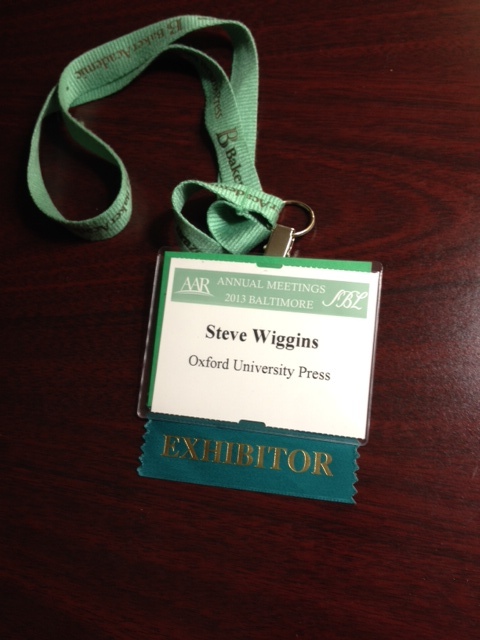
November is a month pregnant with significance. It is the month of NaNoWriMo (National Novel Writing Month; when I tried it a few years back I finished a novel in three weeks). It is the start of the “Holiday Season” with Thanksgiving kicking off a slightly more relaxed schedule for businesses and students alike. Often the first day of Advent falls near the end of the month. In many places it has already provided the first snow of the season. For scholars of religion, however, November is the month of the American Academy of Religion and Society of Biblical Literature annual meeting. This year it will be held in San Diego, and will, no doubt, impact my blogging schedule somewhat. Being a creature of consistency, I try to upload my posts around 4:30 a.m. eastern time on weekdays, as I start pulling myself together for work. I’ll be three hours off for the latter part of this week, but if trips to California conform to any pattern, I may still find myself awaking at 1:30 wondering why the city is so quiet. California, here I come!

When I attended as a participant, I gave a paper nearly every year. Several of these papers were making their way toward a book that will never be published. Some produce content. Others only consume. Attending as a participant was kind of like a professional vacation—a few days off the usual teaching schedule, trying to find colleagues to catch up on, listening to papers. From the publishing perspective, it is a non-stop four-day weekend of work. As I see my colleagues on their way to late night receptions, I have to beg off. Tomorrow’s a working day for me. The exhibit halls open at eight, and I will have no idea what time it is in any case.

Ironically AAR/SBL is one of the things that has remained consistent in my professional life. It is almost a migratory feeling. I began attending in 1991, only missing the odd year here and there when something more important took its place. I was, however, never an insider. I chaired one of the sections for six years, but nobody ever contacted me suggesting we meet up. I could advance no one’s career. Now my calendar’s full. Now that I have something others want, suddenly I’m a commodity. Funny thing about a conference dedicated to disciplines associated with selflessness. As I pack my bags and make my plans to take care of details while I’m gone, my mind wanders to the purpose of it all. I used to dream that I would forget to visit the book stalls, and on the plane returning home I’d realize that I’d missed one of the most important parts of the show. That nightmare no longer plagues me. It is now the sole purpose for which I attend.

Am I that obvious?

Am I that obvious?


Revisiting Jericho

I don’t get out from the office much. As those who commute to New York City will readily tell you, there is a constant anxiety about getting to and from the city that keeps you in the office (cubicle) as long as possible. Just yesterday my bus broke down on halfway there. I seldom take lunch away from my desk, and even more rarely get out to see what’s actually in Manhattan. Besides work. Earlier this week I wrote a post about the Berlin Wall. Wanting a picture that wasn’t somebody else’s work, I decided to visit the famous slab of the wall in Paley Park. Like many parks in Midtown, this is a mere pocket in the shadow of a high-rise, but a large slab of the Berlin Wall had been there for years, drawing tour guides and history buffs alike. It is only 19 blocks from my office. I’m a fast walker, and I made it all the way catching only three red lights. Since the anniversary of the wall’s Jericho moment had been twenty-five years and a day before, I expected crowds. Instead, no Berlin Wall was to be found. Businessmen smoking away their lives and lunch hours, but no oppressive wall. I double-checked my location. Triple-checked, with GPS. Then I walked 19 blocks back.

Photo credit: Gaurav1146, WikiMedia Commons

Photo credit: Gaurav1146, WikiMedia Commons

Visiting the comments on one of the wall’s websites, I saw that it had been, perhaps unintentionally symbolically, removed. After standing in this pocket park for nearly a quarter of a century, the slab had been absconded mere weeks before the anniversary when I, and given the number of cameras I saw, not I alone, had gone to see and to reflect. Where does one put the Berlin Wall? There was another piece, I read, at the United Nations gardens. You only had to pay 18 dollars to get in. Although it is close to my old office at Routledge, it is a lengthy walk from where I now find myself. Once I arrived home I searched for answers. The wall had been removed for restoration. A wall that had been sufficient to divide a city, scrawled with graffiti, apparently, required restoration. On the long walk back, I considered my similarly ill-fated trip a couple years back to find the closed Gotham Book Mart. Like the wall, have I become useless history?

My Germanic ancestors came to America nearly two centuries ago, and although I never knew that side of the family well, I suspect it was for economic, not religious reasons. It is sometimes easy to think, given all the rhetoric, that Europeans came here to be part of a Christian free-for-all. No doubt, some did. Many others, however, had more mundane motivation. A strong Protestant work ethic that somehow seems genetic, and a belief that somewhere else is better, will help you get along. So I’m told. So the tale goes in the book of Joshua. Israelites, wanting to cross the water to a new home, blowing their trumpets and raising a shout. Yes, the Berlin Wall did come down. Like the fallen wall of Jericho, it’s nowhere to be seen.


Literary Hunter-Gatherers

Perhaps the clearest place my hunter-gatherer roots show is in my tendency to collect. In principle, in Manhattan, I leave coins on the pavement for those less fortunate than myself. This past week on the way to work, I walked past a scattering of pennies on the sidewalk. It physically ached to leave the shiny coins there—one of my recurring dreams is to find a bunch of coins that will lead to the end of my constant fear of want. News of ancient hordes found excite me inordinately. As a child I collected odd things if they came in numbers: stamps and coins and baseball cards go without saying, but also fossils, bottle caps, little HO scale military figurines, even pockets full of punched metal slugs that had obviously fallen from a truck leaving the steel mill just across the river in blessed abundance. My mother asked, not unreasonably, “what do you plan to do with those?” My brothers and I had no answers, but we had found something in profusion. The hunter-gatherer urge was to collect.

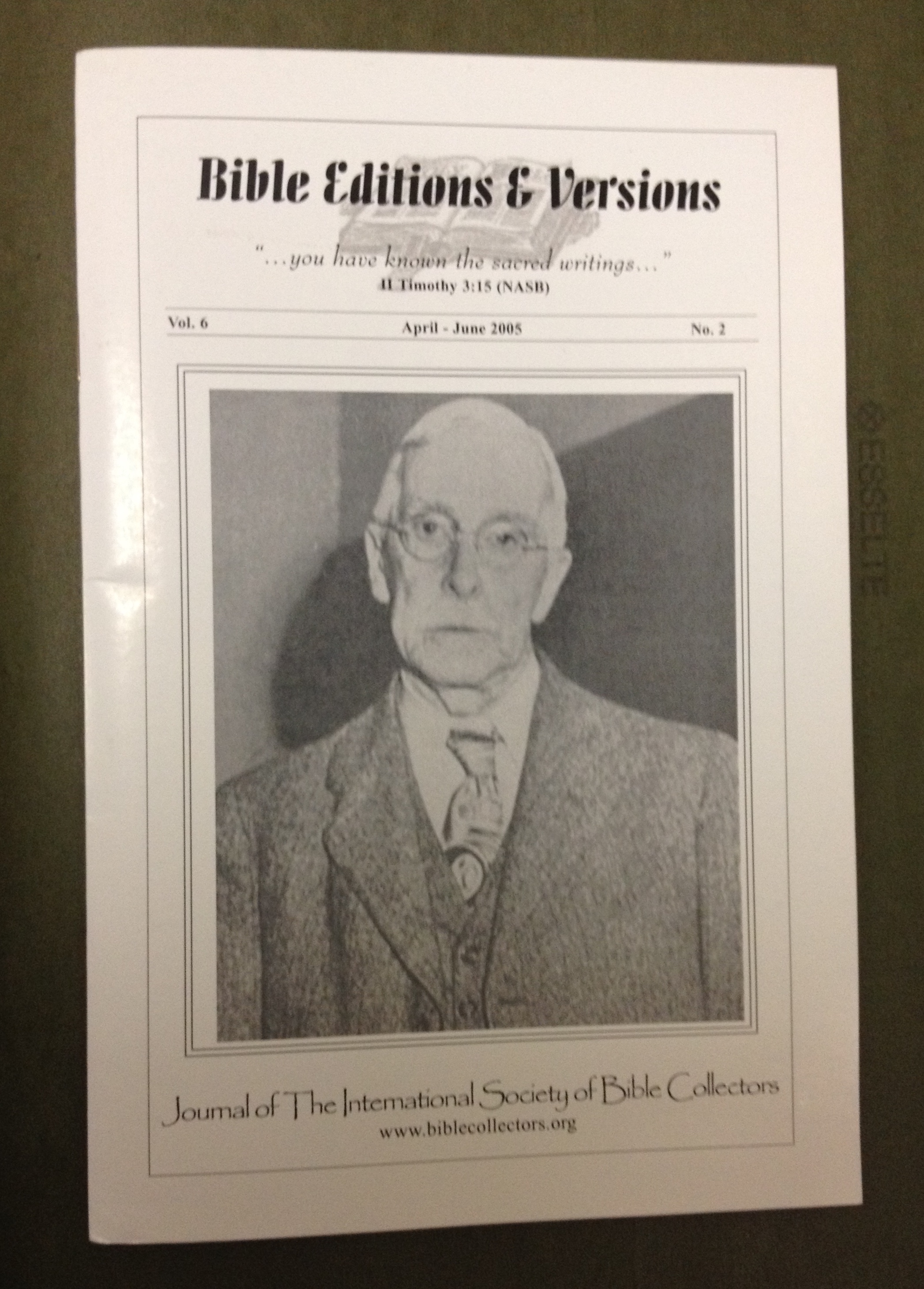
IMG_1642In my teenage years my collecting focused on books. It has remained there ever since. Even in times of penury when I’ve visited the used book store with intent to sell, I’ve always skulked out with more guilt than cash. The Judas Iscariot of the publication world. While sorting through some old files at work, I found a magazine called Bible Editions and Versions. Now, Bibles are books, and I have a fair collection of them, and have even read most of them cover-to-cover. I never knew, however, that Bible collecting was a recognized avocation. And one with a society and magazine. Looking closer, I found the address: www.biblecollectors.org, online home of the International Society of Bible Collectors. Yes, they have a website and the magazine still exists. Porn for sacred writ aficionados. The society has been around since I was two, but it took me half a century to find it.

The Bible is a totem. One colleague describes it as an iconic book. The more secular elements of society simply dismiss it until the loss of the senate makes them scratch their heads and say, “there are people who still take this stuff seriously?” While the numbers may have fallen off a bit, Bibles remain big business. Large print editions may be selling better these days, but the species is hardly endangered. In a world where so much seems uncertain, there is a natural appeal to a book that hasn’t really changed too much for a couple thousand years. Oh, and which claims to have God as its author. As I walk by that pile of pennies on the sidewalk, an almost magnetic force slows me down. I really want to stop and pick them up. I walk on knowing that in a box in my attic I have some real collectors items, in certain segments of society. For the ISBC I might be considered already a wealthy man.


Allhallowtide

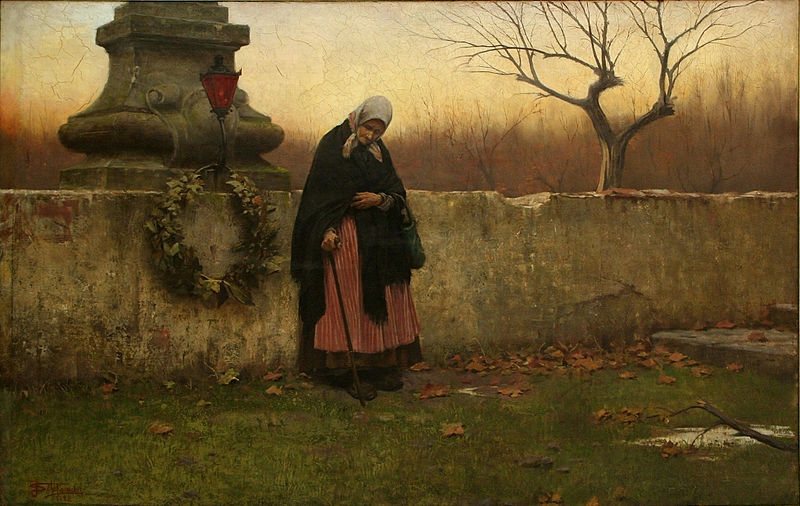
Allhallowtide is a triduum. No, I’m not writing in tongues. Ecclesiastical language can often be foreign to the secular world, and the fact that it’s All Souls’ Day for some has me thinking about feasts that come in threes. I first heard the word “triduum” at Nashotah House. There, of course, the great spring coalition of Maundy Thursday, Good Friday, and Easter made the holy triduum of required marathon chapel attendance. It was not unusual to spend a dozen hours in chapel during that stretch. Always considered less important, but perhaps far more human, was the autumnal triduum of Allhallowtide: All Hallow’s Eve (Halloween), All Hallows (All Saints, or Hallowmas), and All Souls’ Day. In Mexican tradition the three days make up the Day of the Dead. For people who live close to the economic edge of perpetual poverty, that makes perfectly good sense. Even for the liturgically literate, however, parsing the triduum of Allhallowtide takes some effort. We all know Halloween, and the title All Saints is self-explanatory. All Souls’ might require some thought.

All Souls’ commemorates the “faithful departed.” We can’t all be saints. (Well, in some traditions all Christians get to use the title, but alas, in the more Catholic world, no.) What about those who’ve died believing, but not earning a place among Ralph Vaughn Williams’ masterpiece? The ordinary, like us? All Souls’ is our day. Since the macabre is considered puerile, what with its possibilities of ghosties, and ghoulies, and one-eyed beasties, the church has continued to give a polite nod to Halloween (at Nashotah it used to be done up in great style) but doesn’t take it seriously. More evangelical denominations say it’s demonic, but in actuality, historically, it is the opposing triduum to that of the spring. Liturgical life holds an incipient balance for those who don’t take things too literally. Understanding our mythologies covers a multitude of sins.

Perhaps this chilly, rainy Allhallowtide in the northeast has me far from the hot and dry Day of the Dead, but I admire the Mexican acknowledgement that something should be done about those who’ve died never knowing affluence. Somewhere just to the north lies one of the most successful (until recent years) economies in the world. Social fragmentation, violence, and drugs (which draw big money from that self-same northern economy) bring many of our fellow North Americans to their knees at the feet of Santa Muerte. The light is fading fast at this time of year, and the wind is ripping the desiccated leaves from their skeletal branches, preparing us for the long chill that is to come. While work prevents too much investment in the liturgical year, I look with a peculiar longing over this triduum, and this soul, in any case, is grateful for a weekend to contemplate it all.

Jakub_Schikaneder_-_All_Souls'_Day


Fear and Dissembling

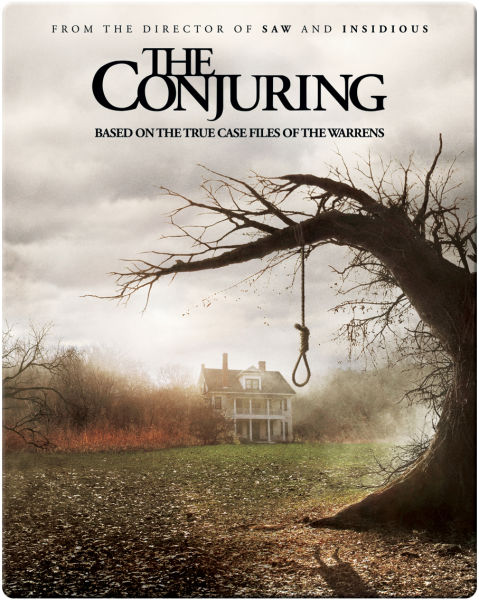
The ConjuringLast year, when The Conjuring was released, it quickly became one of the (if not the) top earning horror films of all time at the box office. Based on a “true case” of Ed and Lorraine Warren—real life paranormal investigators—the film is a demonic possession movie that ties in the Warren’s most notorious case of a haunted (or possessed) doll, with a haunting of the Perron family of Rhode Island. (The Warrens were also known as the investigators behind the Lutz family in the case of the “Amityville Horror,” showing their pedigree in the field.) Given that Halloween has been in the air, I decided to give it a viewing. As with most horror movies, the events have to be dramatized in order to fit cinematographic expectations. Apparently the Warrens did believe the Perron house was possessed by a witch. In the film this became somewhat personal as the dialogue tied her in with Mary Eastey, who was hanged as a witch at Salem (and who was a great-great (and a few more greats) aunt of my wife). Bringing this cheap shot into the film immediately made the remainder of it seem like fiction of a baser sort.

Witches may be standard Halloween fare, but when innocent women executed for the religious imagination are brought into it, justice demands separating fact from fiction. Writers of all sorts have toyed with the idea of real witches in Salem—it was a trope H. P. Lovecraft explored freely—but there is no pretense of misappropriation here. Lovecraft did not believe in witchcraft and made no attempt to present those tragically murdered as what the religious imagination made them out to be. The Conjuring could have done better here. It reminds me of Mr. Ullman having to drop the line about the Overlook Hotel being built on an Indian burial ground. Was that really necessary? (Well, Room 237 has those who suggest it is, in all fairness.) The actual past of oppressed peoples is scary enough without putting it behind horror entertainment.

A doctoral student in sociology interviewed me while I was at Boston University. She’d put an ad in the paper (there was no public internet those days) for students who watched horror movies. I was a bit surprised when I realized that I did. I had avoided the demonic ones, but I had been in the theatre the opening week of A Nightmare on Elm Street (on a date, no less) and things had grown from there. I recall my answer to her question of why I thought I did it: it is better to feel scared than to feel nothing at all. Thinking over the oppressed groups that have lived in fear, in reality, I have been reassessing that statement. What do you really know when you’re a student? As I’ve watched horror movies over the years, I have come to realize that the fantasy world they represent is an escape from a reality which, if viewed directly, may be far more scary than conjured ghosts.


Devil’s Food

One figure among the standard repertoire of Halloween characters has never appeared on my list of favorite monsters. I suppose it may be because as a child I fervently believed there was a devil that he never made my A-list. Satan was real, according to my church, in some almost biological, corporeal form. Even as a youngster I knew vampires, werewolves, Frankenstein’s monster, and the rest, really didn’t exist (even after I hid under my covers all night once, after putting my head down on a bat that had flown into my bedroom). The devil was, however, biblical. And I never felt tempted to dress up with red horns and pointy tail, carrying a plastic pitchfork. Halloween was always among my favorite holidays, but it was for pretend monsters and ghosts (which might perhaps be real, but which were not diabolical, according to my childhood economy of the spiritual world). The consequences of devil imitation seemed eternal, and even today, in the rational light of the twenty-first century, I can still be given pause even though I know the concept is a Zoroastrian one that morphed into early Christianity’s need for a kind of anti-Christ.

IMG_0276 copy

There are many who still believe in a real devil. Some branches of Christianity (and Islam) teach that a literal devil lurks about in our world. In western culture he is a figure instantly recognizable, although there are differences of opinion in his anti-iconography. Last weekend I visited a fine little restaurant in a New Jersey town that has a reputation for being haunted (the town, not the restaurant). It was a seat-yourself day and the table my wife and I ended up selecting had shellacked cards on top as part of the decoration. There in front of me was the devil. I pondered this. The cards, all captioned in Spanish, had mundane subjects: an umbrella, a musician, plants, a spider (okay, so that last one’s a little scary too), but only one supernatural figure. Perhaps the entire deck, had I seen it, might have had more. No doubt, for a world that postulates a good God, a devil covers, well, a host of evils.

The word “devil” is somewhat loosely applied these days. New Jersey has its own cryptid called the Jersey Devil, which has led to iconic names for sports teams and perhaps a public official or two. But even in the aftermath of 9/11 there were those who seriously postulated seeing the face of the devil in the tumbling debris of the twin towers. For a character of the religious imagination, the devil has managed to impress deeply on the human psyche. I know in my rational mind that I should simply dismiss all of this and get on with the business of enjoying the monsters that will show up at my door later this week. Nevertheless, when the waiter comes out with our food, I look down at the table and decide to pass on the hot sauce for today, just in case.


Know It All

Perhaps it’s the fact that I had a career malfunction in the middle of my chosen vocation, or perhaps it’s a natural consequence of earning an advanced degree. Whatever the cause, I am convinced that I know less than I used to know. That’s not the same as not having learned—indeed, it is a consequence of precisely that. You see, my education has led me to believe that things I thought I knew were not, in fact what I knew them to be. We all live with false assumptions—the sun rises and sets, the earth holds still, and that we aren’t made up of particles so tiny as to be invisible and that are mostly empty space. There was a time when I believed that science gave “the truth,” but we now think of science as ever provisional—the best theory to account for the facts at this time. It is open to change. And in fact, we know very little.

A deep irony lurks in the fact that many people treat their religion as the locus of certain knowledge. This is a known fact; Jesus resurrected, Muhammad was a prophet, Maroni spoke to Joseph Smith. When confronted with contrary data, such thinking withdraws into itself claiming all the more loudly that it knows the truth already. Learning should, I think, may one more humble. More circumspect. Of course I think I’m right about things. If I thought I was wrong, I would change to the correct way of thinking. What I know, however, is a different matter. As I set out to learn a new career, I find I know less than I thought I did. I know little and I know less all the time.

As an academic I can’t help but to spend my life trying to gain knowledge. I read voraciously, I try to engage in intellectual exchange with others. If I’m lucky, I learn something. And know that much less. That which I learn teaches me that I know less than I did before. The world is vast. The universe infinite, according to our best understanding at the moment. We travel through it all, picking up information and treating it humbly as we go along. I’m moving toward knowing nothing at all. Perhaps that is the true goal of all of this—to get to the point of knowing nothing. Then we shall be truly educated. Except, of course, for the true believers who already know everything there is to know. Of course we are all mostly empty space. I think.

DSCN4907


Autumn Music

It is an experience as old as humanity itself. At least humanity that started to realize that age, as remote as it may seem, will always eventually catch up with you. This past weekend was Family Weekend at my daughter’s college. Since her school does things up right, there were a variety of events on offer, one of which was an a cappella group concert. A cappella has come a long way since my college days, with students able to use their voices to sound like a band, professionally mixed, and full of energy. Somehow, I don’t recall that much energy from when I was a student. In any case, the inevitable group doing “oldies” took the stage an opened with a song from 1987. Wait. What? Since when was a song of which I remember the first release an oldie? The kids did a great cover, and I suspect in their minds it was really an old song. I was only 25 when it was given to the world. Can I really be an oldie? Outside the leaves on the trees were brilliant, as if on cue for the tuition payers to have their heartstrings wrung. Trees become their most alluring as they are about to die.

Songs, however, have a way of becoming part of you. Back when we were young(er) and idealistic, my wife had thought to study music therapy. Nashotah House, however, decided to change the career trajectories of an entire family in the name of orthodoxy. One of the things she learned in her classwork, prior to being sent back to the work-a-day world, was that patients suffering from dementia can often sing a song from their youth, even if they can’t speak a word. Music gets into our brains in a way that language learning doesn’t, and when we hear that song we are, to borrow a phrase from Bob Dylan (which another of the groups sang), forever young. It is a beautiful wish, endlessly covered and recovered. Watching those kids on stage, I recalled being on the cusp of adulthood myself. Everything seemed possible then. Then a world that others constructed imposed its constraints on me. My hair began to grow gray even as the leaves lit up yellow and scarlet and fire orange.

DSCN4928

Religion is the business of those who are old. Even as a religion major in college I was classed among those old before my time. We think of the hereafter on our deathbeds, not when we’re twenty. For those who teach their children to ponder eternity at a young age, however, that portal is never far from view. My fellow students were looking ahead to careers in all kinds of fields that would make their fortunes and reputations. My modest attempt to bring a younger generation to a more mature outlook faltered at the hands of Fundamentalists, and it was music that helped me through that terrible shock. Little do we think that that song we like so much is marking us indelibly as a child of our age. Time will not relent. We will be the ones, like the trees, showing our signs of age as our children show us where the future lies. And the attitude of that song from 1987 will be, for any who truly listen, forever young.


Small Town Heroes

When World War Three starts I hope someone will let me know. You see, I barely have time to satisfy the needs of employers and tax collectors to get everything done in a day, let alone read newspapers. Or Facebook. I check my page, very briefly, twice a day and get on with the business that I’m assigned in life. But yesterday I had a notice from a high school friend that one of my teachers had died. Since I don’t name people I know here without their permission, suffice it to say I took a current events course with this teacher in either my junior or senior year. Then, as now, I didn’t read newspapers. Given the small town rags available in rustic regions, there was often not much mentioned beyond deer season and local tragedy anyway. Originally enrolled in the regular curriculum, several friends told me, “You’ve got to take Current Events! The teacher is great!” Those who’ve influenced my life for the good were great teachers, and despite my reservations, I took the class. When it came time to sign up for projects, I was a bit flummoxed. What did I know of current events?

Our teacher kindly allowed me to offer evolution as a topic. It was occasionally in the news then. Six of us decided to debate the issue, three for, three against. My religion having held me in a headlock, I was the lead debater against evolution. The day for the debate came and we ran over the bell. Our teacher, with his usual calm wisdom, suggested we continue the next day. And the next. Three days of sometimes acrimonious debate and it looked, from my point of view, as if creationism had demolished evolution. How terribly naive I was. Ironically, I had just posted a piece on evolution yesterday when I saw the notice about my teacher’s demise. The position in my post was a sharp 180 from high school. It was a tribute to the love of education.

Source: Wellcome Images, Wikimedia Commons

Source: Wellcome Images, Wikimedia Commons

I was an outsider in high school. I literally lived outside of town and after school activities were not really feasible. We were poor and couldn’t afford extra-curriculars anyway. I wore a large cross on my chest and although I was shy, I felt that it said all I had to say. My teachers, to their eternal credit, let me explore. In college I learned about Fundamentalism. I had never heard the term although I grew up in it. Gently my teachers nudged me to think more deeply about things. Through three degrees delving more profoundly into the origins of religion, as well as humankind, I came to see the errors of my ways. Had I been forced in high school I would’ve fought back. Instead, a persistent, patient wisdom guided many of my teachers. I don’t know how they recognized that I might be worth salvaging, but they apparently did. They let me speak, they let me trip. Just as I was about to fall they caught me. And I hope, in my own small way, to repay this favor in kind.


Books on Wheels

Some unexpected serendipities transport you to childhood. Somewhere on Interstate 80 I passed a bookmobile. The notion felt strangely old-fashioned in this days of Nooks and Kindles. Indeed, a Kindlemobile would have been no less surprising. The idea, I recall, that someone cared enough about my little school to drive a bus full of books right up to it, made me feel special. I mean, these were books—for me! I don’t recollect ever checking any out since it was the ’60’s and everything communal had a strangely communist cast to it. We couldn’t afford many books. Indeed, growing up, we didn’t have a proper bookshelf anywhere in the house. When I began to buy books, I kept them in a cheap suitcase. The only trips I made, really, were in my mind.

IMG_1587

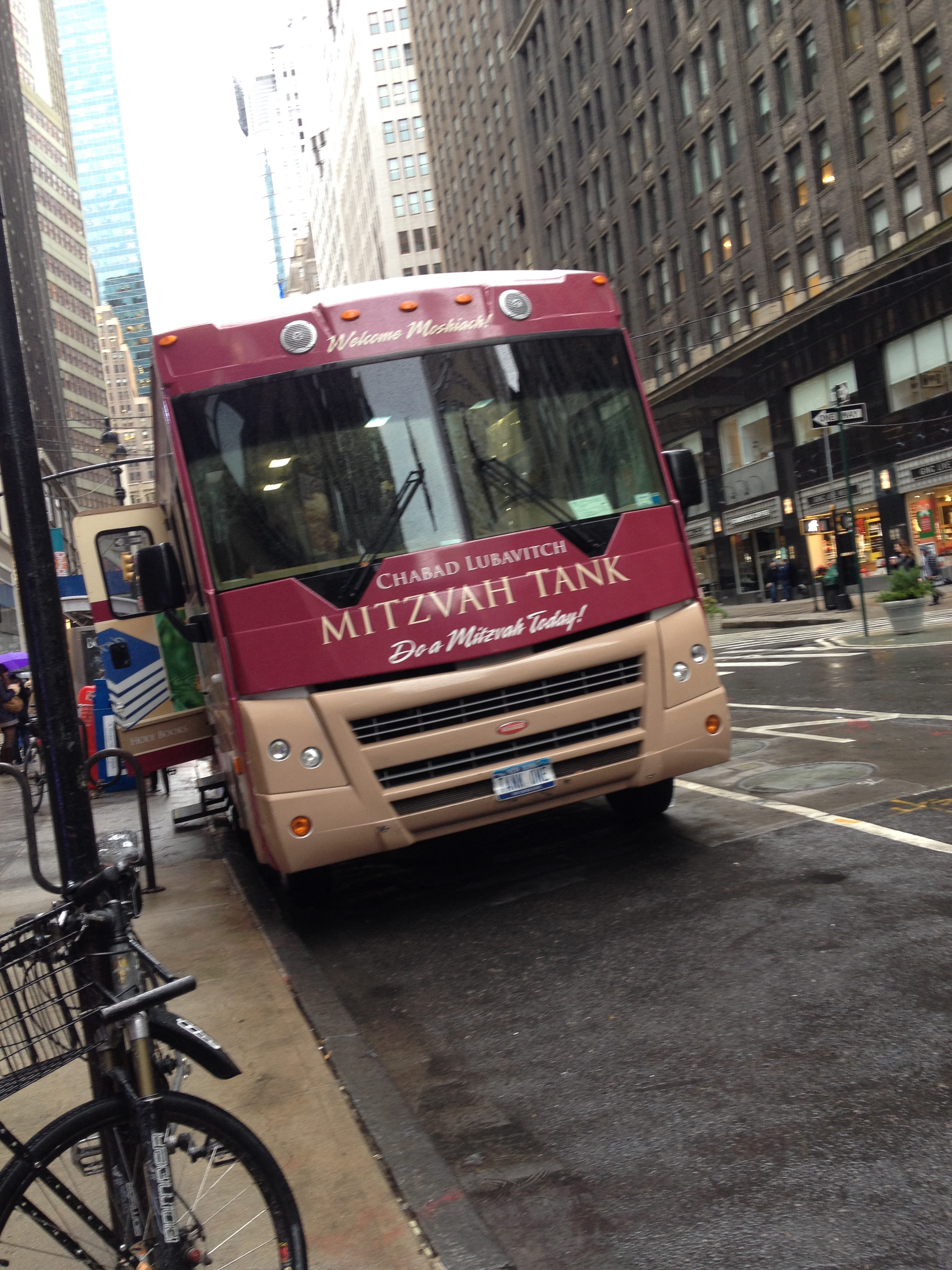
In Manhattan I occasionally see the Mitzvah Tank. New York is often thought of as one of the most literate cities around. Even here, books can come to your door. With chutzpah. Religions, at least many of them, coalesced around books. Sacred writings are among the omnipresent symbols that you’ve come into religious territory. The act of writing itself is somehow holy, even to the most secular, beyond the most cynical. We share our minds through our fingers and others are invited to see, or at least to glimpse, what might be going on inside this three-pound universe locked in our craniums.

IMG_1116

What would I put in a bookmobile? The other day my family began putting together a list of the influential authors in our lives. We all read quite a bit, and the list grew lengthy rather quickly. What would be in the canon of a Bible for the twenty-first century? What books would we want others to share? Ironically, many would find religious books objectionable on some level or another. The armored personnel carrier of Christian soldiers might well set us on the run. Nevertheless, with enough reading even the extremes can be viewed in perspective. On this highway I’ve found a kindred spirit, and when books are coming your way, it is a mitzvah indeed.


Theological Cemetery

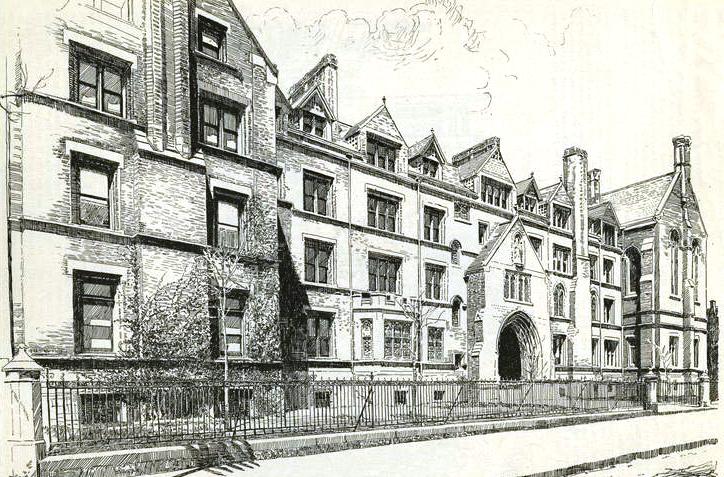
Implosion is a word frequently associated with demolition. Implosions are episodes where buildings collapse in upon themselves, in theory, harming no one on the outside. In 1992, as a starry-eyed, fresh Ph.D., I was hired by one of the then eleven Episcopal seminaries in the United States. Each had been around so long as to acquire a feel of almost biblical antiquity—something their governance models appear to reflect. Just over two decades later, the mythically wealthy Episcopal Church is watching its seminary structure implode. It’s not for want of funds, but from lack of will. With shrinking demand for clergy, some had to merge to maintain even their historic names. Others are effacing by degrees. The Nashotah House I was asked to leave was not the Nashotah House where I began my academic career.

General_Theological_Seminary_1890_crop

Within hours of hearing rumors of a mass firing of the faculty of the General Seminary—The General Seminary!—I received confirmations both personal and from the Huffington Post. Eight faculty who had concerns over the Dean committed the (in the Anglican world) unpardonable sin of requesting a meeting with the board of trustees. At Nashotah, I served two stints as a faculty representative to the board of trustees and my nightmares have taken on a different quality since. In the Episcopal system the Dean is also President. Not a whiff of democracy taints these hallowed halls. They claim the title Very Reverend, no matter how appropriate, and some, if they’ve ever read Acton, did it for instruction. There must be incredible power knowing that higher education is in crisis and that faculty with legitimate complaints are only setting themselves up for protracted purgatories of joblessness, should they question you. Trustees don’t want to be bothered with the “formation” that is happening within. O Captain! My Captain!

I am heartsick. This is how Christians treat their most highly educated and dedicated—no one takes a job at a seminary without knowing the risk it poses to a career. A more protracted dismissal of faculty, including yours truly, took place in Wisconsin almost a decade ago. I knew those who lost their jobs—fine scholars and decent human beings—as apocopated visions of a fictional future flashed before the credulous eyes of true believers. Where do discarded seminary faculty go? Back into the arms of Judas? I could not. I admire those wounded healers who returned to the cure of souls. We started, did we not?, with the best of intentions. The church, it seems, forgets that even faculty are human beings. “Enlighten,” the collect for education reads, “those who teach and those who learn, that, rejoicing in the knowledge of your truth, they may worship you and serve you from generation to generation.” Or, barring that, speak the truth, and lose their vocations.


Dirty Words

I don’t have any bumper-stickers on my car. As clever as I may think any particular one to be, driving down the highway is not the place that I want other drivers to get ticked off at me. A more judicious use of turn-signals would be my preference over mass-produced witticisms. I suspect that most readers know of my liberal leanings. Some have even bothered to inform me that they no longer read my musings precisely because of this. On the information superhighway, unlike the real highway, you can just click off and not be annoyed anymore. My bumper, therefore, will stay clean. While in a parking lot recently I saw a bumper-sticker reading “Not A Liberal.” I had to ponder this a bit.

IMG_1589

I grew up conservative, although, as working-class folk, we didn’t label ourselves with that word at home. I wouldn’t have even known what it meant. Liberal, in its basic form, has to do with generosity and being respectful of others. The media has built it up into a kind of evil juggernaut that intends to take over the safe, unchanging world of religion and politics. I wonder how liberal became a dirty word. Who, among your friends, would want to remain so if you disrespect their views and refuse to show generosity? I get the sense that even conservatives are liberal with their friends. When I walk past the homeless sleeping on a subway vent to keep warm, I wonder if conservatives ever read the parable of the good Samaritan. What bumper-stickers would the homeless wear?

A polarized society had better prepare for the big chill. In my admittedly limited experience, people come in a continuum of positions, not just one extreme or the other. It makes better news, however, when we divide into camps, the more clearly to spar with one another. What separates us is more important than what brings us together. Yes, I grew up conservative. I continued, however, to grow up. I suspect in some things I am still conservative, while in many I am liberal. I’m not sure what I’d put on my bumper-sticker. What do I want people to know about me while I’m driving? I think it might be better to suggest “I Respect You,” than an implied “I don’t like your views.” Then again, since it happens so often, I now look for a Jesus fish automatically when I’m cut off in traffic. Be careful of what you put on your bumper, because dirty words are in the eyes of the reader.


Cuneiform Lover

I’m busy. Too busy most of the time. You see, I used to be able to keep my mental files neatly in order. Recall was swift and efficient. I suppose that was back when I was doing the job for which I’d been preparing my entire life. Then a midlife, unexpected career change shifted things a bit. That mental file that you always kept here has now been shunted over to there. I suppose I always knew this was coming, and that’s why I started writing things down. Of course, this led to stacks of papers and a whole series of notebooks that follow varying forms of logic. “Commonplace books” as they used to be called. Then computers. I never used a computer until after my master’s degree. My wife showed me how. And then writing ideas down became pretty easy—who could ever afford more than one personal computer? And since they were as heavy as a small television (cathode-ray tube variety, of course), you always knew where you’d find it. Then laptops. iPads. iPhones. Something called “the Cloud.” A computer on my person at all times and I still can’t find that ruddy file, and has anybody seen my phone?

I wrote an important (for me) paper back in 2012. Just two years ago. I remembered vividly typing it on my laptop, working on it for weeks. Recently I wondered where I put it. I searched my laptop. Not there. I must have backed it up. Checked my backup files, on CD. Not there. Where did I put the thing? Although a Luddite at heart, I don’t delete old files. Please, tell me I didn’t do something like back it up on a floppy disk! I can barely remember when we used those. No, no, it was much more recent than that. Was it on this laptop or the one before? Maybe I stored it on the hard disk of the antiquated one. When you get a new computer (or at least when I do) it is such a rare occasion that you don’t bother backing up every single little loose file on your old machine—there’s too much shiny new stuff to admire. But the file wasn’t there. Finally I attached a terabyte backup, admittedly overkill for someone of my limited mental ability, and searched. Although the icon said it was on the terabyte drive, the file was actually on the Cloud, and since I hadn’t updated my software in a while, I was denied access.

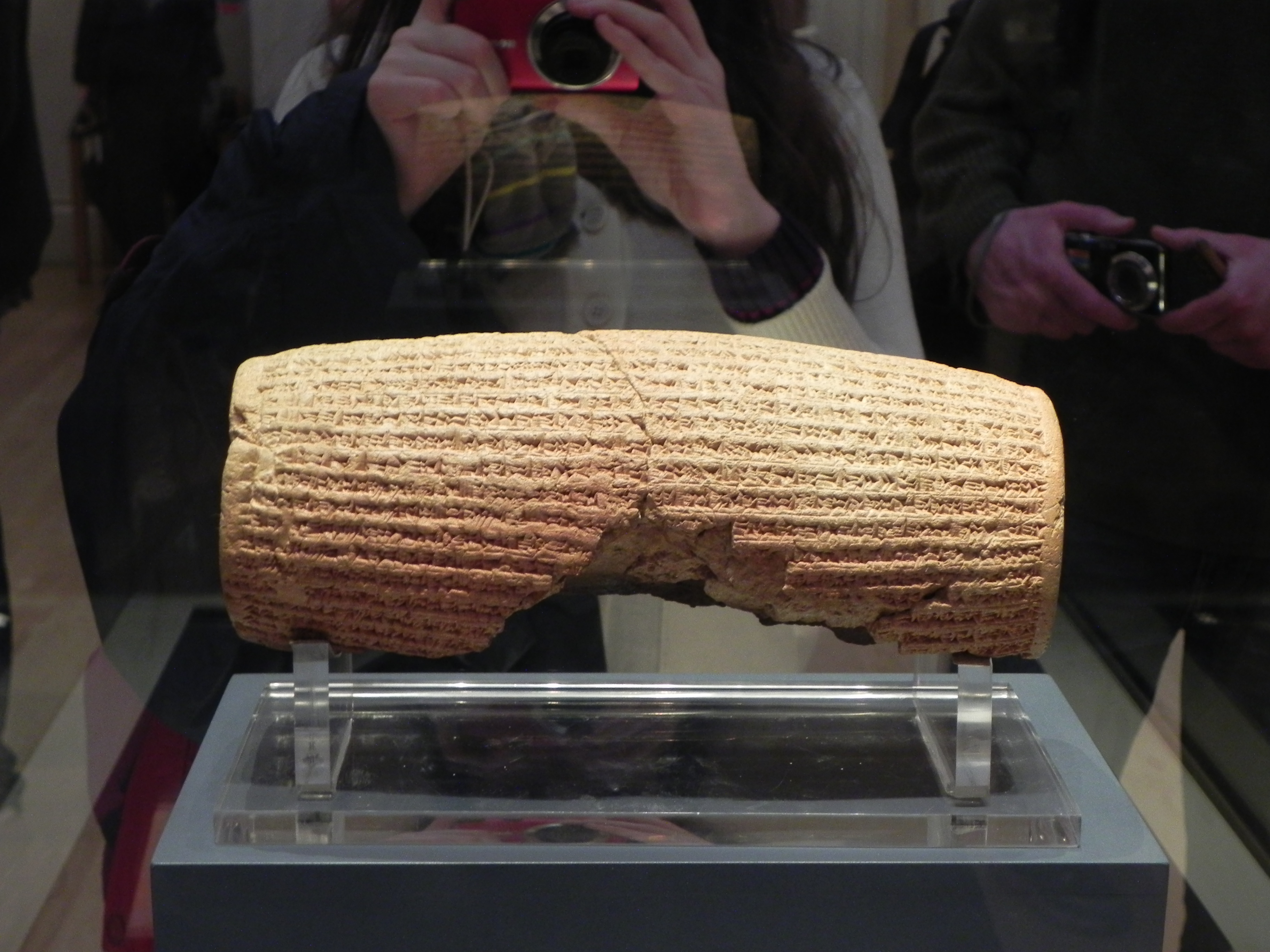
I learned to write with fallible pencil on cheap, lined tablet paper. Back when tablets were paper. Our ancient ancestors started the process by writing on clay. For some five thousand years this pressing stylus unto substrate method worked fine. All of scared writ was scrivener-mediated that way. When computers were new you stored your files on floppies. At least you knew where they were. Now dialogue boxes ask me questions in a language more obscure than Sumerian and quickly shuttle my files off to I-don’t-know-where, assuring me that I’ll be able to get them back. Honestly. As long as I remember to upgrade my system, which will, of course, require periodic outlays of substantial sums of money. You can choose not to pay, but your documents are with us. I’ve still got some clay here, and a sharpened flint taken to a twig will make a stylus, old school. And clay tablets have been known to last for millennia.

DSCN1816


Casing the Promised Land

In one of the great ironies of the English language “flammable” and “inflammable” mean the same thing. Sometimes an extra syllable can make all the difference. “Ideas are incombustible,” wrote Ellen Hopkins in the final stanza of “Manifesto.” Unlike inflammable, that which is incombustible can’t be burned away. Most literally expressed in Ray Bradbury’s Fahrenheit 451, ideas are, however, endangered in a culture that claims to support them while secretly allowing them to be banned. Orwell called it doublespeak, and we all owe it to our heirs to fight it wherever we can. Sometimes the promised land may not be all that it seems. Can the brave truly be this afraid? Some politicians think “Born in the USA” is a complimentary song. Never has there been a better case for emphasizing literacy.

We fear the ideas our children might encounter, making them into the people they are meant to be. I’d like to return to an idea I broached at the beginning of this year’s Banned Book Week—the Bible has been a banned book. According to the antics of various preachers and vigilantes, so have been the Quran and the Book of Mormon. Destroying books or their authors, however, only creates martyrs. Until the world begins to understand that memes are more durable than genes we will fight our futile wars to drive the thoughts away. Azar Nafisi in Reading Lolita in Tehran tells of how some regimes want to control even our dreams. As if cutting the wings from angels were even possible. How do you physically cut an incorporeal being? Some may need to look “incorporeal” up in a dictionary.

I can’t remember when I started to read for fun, but I do know I haven’t been able to stop since. I have no idea how many books I’ve read, but it certainly comes out to more than the money I’ve ever been able to save. I write this with not an iota of regret. In my humble opinion people are products of the books they read, the songs they hear, the movies they watch. Ideas. Ideas permeate us and we, like sponges, absorb our nutrients from them. Inevitably we come to resemble the concepts we ingest. Ingesting concepts is perhaps the best way to think of Banned Book Week. Inflammable and flammable mean the same thing. Incombustible, however, is something completely different.

IMG_1497