Not Sterling

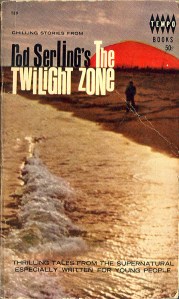
Only indirectly has the coronavirus pandemic influenced my decision to read books of short stories.  Indirectly because bookstores are closed and I have several such volumes gathered here at home.  This particular collection includes a book “especially written for young people” called Chilling Stories from Rod Serling’s The Twilight Zone.  This is a book I had as a young person, discarded, and then regretted discarding.  I have to say that most books I discard I eventually regret.  When you’re young and moving from apartment to apartment, though, you can’t keep all your books.  Anyway, I re-acquired it several years back.  The book doesn’t list an author.  Instead, the title page says “Adapted by Walter B. Gibson.”  Gibson was best known for writing The Shadow series.  The end result is that I don’t know who wrote the stories in this book.  They have the ideas of Rod Serling, but the writing isn’t in his style.

When I buy a book (I got this one used on the internet, back when it was young) I like to know the author.  WorldCat lists Serling as the author, but the book was published pre-ISBN days, back when publishers could be a bit less than transparent about such things.  Other websites put Gibson first under authors, followed by Serling.  The publisher, Tempo Books, was an imprint of Grosset & Dunlap, which eventually came under the Random House/Penguin umbrella.  Originally publishing primarily children’s books, Tempo lists this book for young readers, although as an adult reader I wonder if it could appeal to young people today.  There’s no sex and any violence is really implied rather than explicit, but there’s some adult-level subtlety going on.  Books for young readers are much different these days.

Just recently my daughter introduced me to the increasing sophistication of levels of book genres.  Like most readers and writers I’m encouraged at how young adult books have taken off.  A future generation of readers is cause for hope.  There are now “new adult books.”  These are targeted at those college aged or just over.  Unlike young adult titles they’ll have sex and adult language.  My Twilight Zone book lacks these, and it also lacks the sparkle of Serling’s teleplays.  Serling was a playwright and screenwriter.  These stories clearly contain his ideas but not his ability.  I didn’t know that as a child.  I do know that I never finished the book before now.  One of the reasons, I expect, is that it didn’t really seem like I was reading Serling, even to my young self.  Still, ghost stories during a pandemic have their own appropriate place, and who doesn’t want to be young at heart?
Making Frankenstein

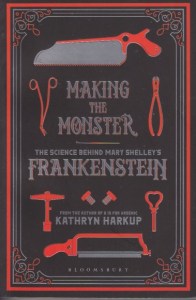
Some days ago I mentioned reading a book about Frankenstein.  This was Making the Monster: The Science behind Mary Shelley’s Frankenstein, by Kathryn Harkup.  I’ve read several books like this, many of them written about on this blog (search “Frankenstein”—there is a search box out there!), about the context of Frankenstein.  The base story is all the more compelling for having been written by a teenager who’d eloped with a married man who would eclipse her literarily.  Mary Shelley never got rich off Frankenstein, but it is one of the best known novels of the nineteenth century.  It had an impact during the author’s lifetime and has continued to have one these centuries later.  Harkup, however, is a scientist.  Her specific interest, apart from being a female writer herself, is in the science of the story.

Arranged thematically, Making the Monster covers several of the developments which would’ve been “in the air” at the time.  Mary and Percy Shelley both read science also, and knew many of these things.  There was the question of reanimating the dead that coincided with the early dissections of humans that made the modern study of anatomy possible.  There were medical breakthroughs—some of the more difficult parts of this book to read—and there were experiments with electricity.  There were cases of children raised in the wild that had been found and their subsequent stories documented.  There was evolution (in the form known to Charles Darwin’s grandfather Erasmus), there was revolution.  It was a time with so much happening that Frankenstein became a cathartic outpouring of the human soul amid the science that both Shelleys atheistically accepted.

Much of this book is fascinating, even after reading other similar accounts to the background of the novel.  What really brought it all together for me, however, was reading through the chronology at the end.  It takes me several days to read books.  What with the monster of daily work I often forget some of what I’ve read along the way from introduction to conclusion.  Having a chronology at the end reminded me of just how much information is packed in between these covers.  The narrative covers about a century (longer, if you include the alchemists), and shows how Mary was using fiction to address some very real science.  Harkup never loses track of Mary Shelley’s personal experience, however.  Estranged from her father, constantly on the move, widowed fairly young, losing several children, treated poorly by aristocratic in-laws, hers was a story of perseverance and ultimately influencing the western canon.  It shows that science and art can assist one another to make us all more human.  And the monsters left behind endure.


Frankenstein’s Family

The story of Frankenstein has many unexpected twists and turns.  I’m currently reading a book about the writing of the novel—something I’ve done a number of times before.  There was an aspect of this story that hadn’t really caught my attention too much, but then, circumstances changed.  Suddenly old information became new.  It all started with a missed opportunity from childhood. 

It was a real puzzle.  Although my grandmother lived with us her last years, I never knew the name of her mother.  There had been hints.  My grandfather’s book with birthdays in it listed the first name, so I had a Christian moniker and birthdate only.  She’d died young, I knew, somewhere in the Washington, DC area.  This had been the state of my knowledge for many years.  My grandmother died before I was a teen, and before I took any interest in the family story.  I knew her heritage was Germanic, her father having been a first-generation American.

So young Mary Shelley (technically Godwin) was on a tour of Europe with her lover Percy.  Although they both came from distinguished backgrounds, they were cash poor.  Running out of money they made their way back to England as cheaply as they could.  They passed near Castle Frankenstein along the way, although there is no record that they actually visited it.  The name seems to have stuck, as does the story that they potentially learned about a mad scientist who’d lived in that castle.  This scientist was a theologian who dabbled in alchemy and experiments with dead bodies.  I know what you’re thinking—it’s like a puzzle piece we desperately want to go in this place but its fit’s ambiguous.  We’re not sure how much of this Mary Shelley knew.  The alchemist’s name was Johann Konrad Dippel.  I’d read about him before.

I’d spent nearly an entire summer some years back working on my grandmother’s family, finding little.  Just two years ago I did a casual search on “Find a Grave,” and to my surprise, I found my great-grandfather.  I knew it was him because his second wife’s name matched information from all the family records.  The cemetery record, in Maryland rather than DC, had his first wife’s name.  It was that easy.  After decades of searching, a few keystrokes revealed the mystery.  When it also listed her parents, the significance of her mother’s maiden name—Dippel—escaped me.  Now I have no way of knowing if this is the same Dippel family of Castle Frankenstein, but it put flesh on the bones of my long-standing interest in monsters.  Seeking them out may be the same as learning family secrets.  Perhaps it always is.


Coincidentally

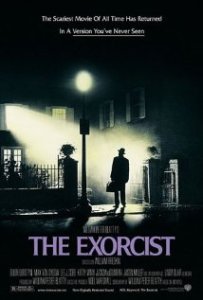
I hope I never become too sensible not to pay attention to coincidences.  With the death of Max von Sydow falling the same week as the time change, the full moon, and Friday the thirteenth, I’m left feeling a little vulnerable.  I mean, what do we do now that the Exorcist is gone?  A couple days ago, when the moon was full—the last full moon before the vernal equinox—I awoke before 3:00 a.m.  Thinking Daylight Saving Time would have me groping for a few extra minutes abed, instead I found myself wide awake at the hour when monsters are thought to be afoot.  As I put my feet to the floor I saw the brilliant lunar light beating through the blinds like midday.  It was remarkable how very light it was.

A bipartisan bill has been introduced in congress to make Daylight Saving Time permanent.  Of course, getting any law passed without numerous riders and bickering is unlikely, but I do wish they’d get on with it.  That having been written, the time shift has been remarkably easy on me so far this year.  Perhaps those of us regularly awake in the dead of night adjust a little more quickly.  Keeping out of New York with the coronavirus lurking, I’d rather deal with my own monsters anyway.  I remember my amazement at seeing Max von Sydow unchanged from Fr. Merrin to Dr. Naehring.  Then I looked up just how much makeup the Exorcist had to have to age himself several decades.  He was a young man when The Exorcist was filmed.  At this time of day anything is believable.

Friday the thirteenth is a bit of lore grown from Christianity.  Friday was inauspicious because of Good Friday and the thirteenth lot fell on Judas, who, along with the others, made thirteen.  It was as if some demon were afoot on such Fridays.  These bits of Christian lore made their way into popular culture and then crept into horror films.  A good deal of Nightmares with the Bible revolves around The Exorcist.  So I sit here before sunrise with a bit of just-past full moon shining in, not too tired from losing an hour on Sunday.  It’s not difficult to think of scary things at this time of night.  Of course, demons traditionally come out around 3:00 a.m.  This week has been like that.  And without Max von Sydow, we want to be very cautious around demons.


Classic Monsters

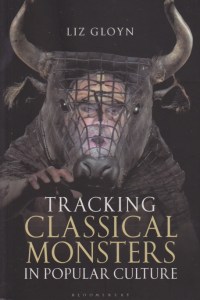
Convergent evolution is a term that’s used for when two unrelated species, separated by some gulf, develop a smilier trait independently.  I began studying monsters in biblical reception history before I really knew others were doing so.  After I’d written Holy Horror I discovered an article by another scholar who was doing similar things, even looking at some of the same movies.  Liz Gloyn, it turns out, was also doing something quite similar with classical monsters.  Her Tracking Classical Monsters in Popular Culture just came out a couple months ago.  Having taught classical mythology for a few semesters at Montclair State University, I have retained an interest in the subject and I was delighted to find a scholar who suggested that to get at the real substance you sometimes have to look beyond the heroes to the monsters they fight.  It’s the monsters who often prove more human.

Covering both cinema and television, Gloyn considers how classical monsters are represented in modern reception.  She looks at their appearance in literary forms as well.  Obviously not all of these reception avenues can be examined, but those she chooses are entertaining and informative.  In the case of biblical studies, I long ago came to the conclusion that biblical scholars pretty much just speak to each other.  The average person doesn’t read their books and the average pastor doesn’t either.  Laity, for the most part, get their interpretation of the Good Book from pop culture.  There’s a very good case to be made that, shy of sitting down and reading through a very big book, people would have little access to the Bible, or classics, if it weren’t for media representations.

Concurrent with my teaching classical mythology, the release of the reboot of Clash of the Titans transpired. (Gloyn covers both the original and the remake in her book.)  Students were really excited, anticipating the film.  It was one of the rare times (The Book of Eli was another) when I felt compelled to watch a movie as an adjunct professor, simply to share the experience with my pupils.  Clash of the Titans had made an impact on me in high school but the reboot failed to take me to the same place.  Still, here be monsters.  Those who’d never read Hesiod, Ovid, Pseudo-Apollodorus, or Homer, may have thought they were getting the straight dope from the silver screen.  That’s what reception history is all about.  Gloyn’s treatment kept me riveted, and I used to teach the subject.  Monsters have a way of doing that to you.


Horror Homework

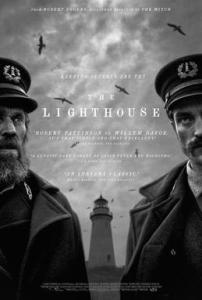
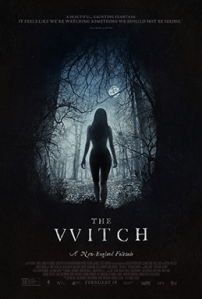
Although I haven’t been writing much on horror here lately, I’ve been doing my homework.  At least for homeroom.  Horror Homeroom, that is.  I’ve published on Horror Homeroom before, and, surprisingly, they’ve let me do it again.  This piece is on the films of Robert Eggers.  It’s pretty unusual for me to get in on the ground floor with a director’s oeuvre, but my wife has a tolerance for what is being called “smart horror” or “intelligent horror,” or even “transcendent horror,” and so we can get to the theater to see movies like The Witch and The Lighthouse before they go to DVDs or Amazon Prime.  In order to write up my thoughts about these two films I had to rewatch them a few times.  There’s so much going on here that both stories are difficult to summarize.

Holy Horror treated The Witch in the context of its biblical worldview.  The Calvinistic religion of William, and by extension, his family, is pretty scary stuff.  In The Lighthouse we find two men each grasping for their own ideas of the divine, as found atop the eponymous structure they inhabit.  Both films explore the psychology of isolated individuals, and, perhaps not surprisingly, finds frightening things.  We are social creatures, even those introverts among us.  When deprived of the interaction of those who think differently (hear this, o Republicans!) we soon begin to wilt.  We need not agree with all we hear, but conversation cannot be had without being open to at least the possibility that one might be wrong.  Nobody wants to think they are incorrect, but unless they can admit that possibility, there will be no discussion, by definition.

Horror quite frequently thrives on separating people from their fellows.  One of the fascinating aspects of the genre is the way in which it does this.  Groups, even, that separate themselves from the rest of humanity soon begin to behave in odd ways.  Checks and balances are necessary for any health in a society.  Those who claim absolute positions often can’t admit this.  Do I hear the violins of Psycho coming to life?  I suppose community is why I try to publish once in a while in wider venues like Horror Homeroom.  Even people who like to watch horror prefer not to do so alone.  Maybe having seen The Witch and The Lighthouse in theaters was a crucial part of their impact upon me.  And what is a good shudder without someone with whom to share it?


Frankenstein, Frankly

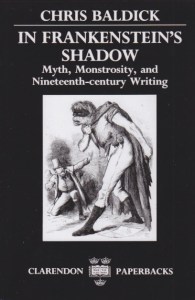
The classics.  No matter how much I read more contemporary fiction, the classics keep me coming back.  Mary Shelley’s Frankenstein is a classic in more than a single sense.  It was a novel that had tremendous influence in the nineteenth century and has continued its impact to the present.  Chris Baldick’s In Frankenstein’s Shadow can be considered a classic in its own right.  Although it only dates from the 1980s, it contains exhilarating analysis of Frankenstein in a number of authors and genres of the nineteenth century.  And I’m a fan of literary scholars who write accessibly.  I’ve read modern literary studies that I simply don’t understand and they leave me feeling alienated and cold, as if they were written for a private audience.  One that didn’t include me.  Baldick’s treatment is wide-ranging and full of moments of blinding insight and is open to all.

Often I put the book down thinking that I’d had my world changed.  Baldick’s no hero-worshipper.  He notes the weaknesses in Shelley’s writing (and they are admittedly there), but he does so respectfully.  The astonishing part of this study is the sheer breadth of the influence Baldick finds for Frankenstein.  A word or phrase, a theme here or there, and yet he makes an excellent case that these can be traced back to their monstrous forebear.  His section on Melville made me want to stand up and cheer.  (I have to admit to being more of a hero-worshipper than the author.)  This is literary criticism done right.  It makes you want to read the books you haven’t.

Since the book deals with literature, it doesn’t really address how the creature morphed into something completely different in the twentieth century.  I know I grew up thinking Frankenstein’s monster was part robot.  I suppose it was the bolts in his neck, according to the Universal script, that convinced me.  That, and his stiff-jointed lumbering about.  Shelley’s story is, however, very much a human one.  In many respects the monster is more humane than his creator.  Various aspects of this tale, including that one, are taken up in other classics and turned over, examined, and reapplied.  Suddenly quite a bit of what I’d read elsewhere made immediate sense.  Interestingly, although I grew up not so much a fan of this particular monster, books on him have become among my favorites as an adult, if I am such.  I think Baldick may have had his fingers on that revivified wrist when he wrote this book.  It certainly did for me what literary criticism always should.  At least for the classics.


A Stiff Salute

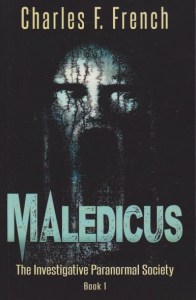
From the way he writes, Charles F. French was a Marine.  I don’t know that for certain, but those of us who venture into fiction put ourselves into our stories.  Those who blithely reject something into which you’ve poured yourself are either boorish or unfeeling.  Yes, even literary types can be so.  This year’s reading challenge includes a book from a local author.  Since I live within a (long) commuting distance of the city, I suppose I could count New York as local.  That felt like cheating, though.  To find local authors you have to haunt independent bookstores.  I do that anyway, and a few weeks ago I found a copy of French’s Maledicus.  It fit the bill.

Although the story is about the titular demon, the ensemble protagonists are mostly military men.  There’s a strong sense of combat-readiness among them, and a good deal about military honor.  I have to admit this made me a little sad.  Don’t get me wrong, I have respect for those who are willing to fight to protect their country.  I’m sad because we need military forces at all.  I’m also a born pacifist.  My father was a veteran of the Korean War.  The military was present at his otherwise sparsely attended funeral.  I grew up reading the Bible and committed to the peaceful resolution of disagreements.  In my idealized world, we really wouldn’t need weaponry at all.  There are bad people, yes.  But like Eli Lapp, I wonder how humans can judge such things.  There are good people too.  More of them than there are bad.  More often than not, they are the victims of weaponry.

Given my work on demons, I’m always interested in their origin stories.  Maledicus gives us an evil Roman lieutenant to emperor Caligula (ahem), who is a climber and a sadist.  After his nasty and brutish life, he’s approached by a demon in the next world and joins it.  This even worse Maledicus is then taken on by the Investigative Paranormal Society, which consists of three old men, two of them retired Marines.  So you see how the military comes into it.  I won’t give any spoilers, although to my knowledge I have no local followers here in eastern Pennsylvania.  It’s a nice area for peace, actually.  The same could be said for the rest of the world.  If we put our fears aside and pooled our resources to help the vast majority of good and innocent a good number of our demons would be banished naturally.


Shifting Perspectives

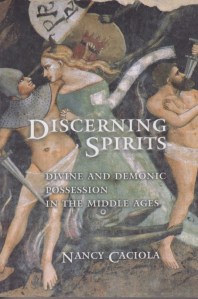
Perspective.  The ability to change it is vital to understanding.  I’ve been working with the idea of demons for a few years now.  My perspective, however, has been aided by Nancy Caciola’s Discerning Spirits: Divine and Demonic Possession in the Middle Ages.  Noting something that has long been a puzzle—behaviors attributed to saints were also recognized among the demonically possessed—Caciola suggests a solution.  In the Middle Ages very few female saints were canonized.  Delving into records from the period Caciola noticed that when saintly behaviors exhibited by men were experienced by women those behaviors were deemed demonic.  In other words, from a perspective that saw masculine experience as normative, when supernatural events were encountered in women they were seen as diabolical.  Using Hildegard of Bingen’s frame of an “effeminate age,” Discerning Spirits explores the idea of how the Medievals told good from evil.

 My own experience of “discerning spirits” came about through a United Methodist curricular study on spiritual gifts.  I was in either junior or senior high school, and deeply involved in the church.  An adult study (I was close enough) on spiritual gifts explained the laundry list compiled by Paul in 1 Corinthians 12.  The apostle from Tarsus notes that discerning spirits is a divine gift.  I trembled as a teen, wondering if I might possibly have it (that was the point of the study).  It seemed like an immense responsibility.  The issue, it turns out, was nothing new.  Since codified in the Bible it had to be true, but what was it all about?  Smarter people than me were struggling with it.

There’s plenty of provocative and explanatory information in Discerning Spirits.  From ancient times it was understood that gods could possess people.  By the New Testament demons clearly could too.  We hear less and less about divine possession as time goes on.  In fact, it becomes a kind of heresy in itself.  Demonic possession was never really in doubt.  It fell out of favor with the Enlightenment, but it didn’t really disappear.  This book shows a clear trajectory from women’s possession as being demonic straight toward the witch craze that erupted in Europe toward the end of the Middle Ages.  It was no coincidence that the majority of accused witches were female.  The perspective had shifted with the fortunes of the church during the Medieval period.  Fear of schism and fear of unsupervised spirituality in a world where only men could be priests led to results that, in hindsight, look inevitable.  Caciola’s book is an important source for not only ages past, but also a mindset all too prevalent in our present world.


Patina

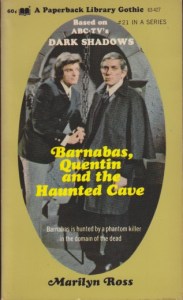
When reading three books by the same author, most of the time, it seems, it’s good to spread them out.  For the past few years my wife and I would visit an independent bookstore in January to pick up a few books for the year’s looming reading challenges.  We slipped behind this year and I happen to have three unread Marilyn Ross books at home.  Barnabas, Quentin and the Haunted Cave was the second of them.  Since, unbelievably, I didn’t have books to fit into the other categories, I read my second Dark Shadows book of the season shortly after the first.  It is a revealing experience to come back to a childhood influence as an adult.  I’m pretty sure I hadn’t read this one as a child, and as much as I like Barnabas Collins, this particular story was somewhat tedious.  And that’s saying something, considering how formulaic the series is.

One of the reasons I found it slow going—especially for a book of less than 200 pages—was that Ross relied too much on dreams to move the plot along.  I read quite a bit of fiction and I always find writing about dreams tricky.  Even within the diegesis of the story you don’t know whether to believe what’s going on in dreams or not.  Just as in real life, dreams are a break from the tedium of consciousness and they permit the mind to wander.  The dreamer can go anywhere, do anything.  Generally without consequence.  You awake back in the more continuous narrative of your life and the dream is forgotten.  In fiction, which is largely made up, dreams often act as filler.  Given the number of times Ross repeated himself in this particular book, it seems that he had to pad the story out quite a bit.  It would’ve worked just fine without the dreams.  Might’ve fallen short of contracted length, though.

It also continues the conceit of Quentin as a Satanist.  I have to confess that the original series was so long ago I don’t remember much about it.  The theremin music of the opening, with the waves crashing against the cliffs of Maine, yes.  Barnabas, tortured but not evil vampire, yes.  Much beyond  that, no.  I’ve had friends discover Dark Shadows as adults.  I watched it on commercial television during its first run and I haven’t seen it since.  I certainly don’t have time for soap operas in days crowded with other demands.  Still, these little books can take me back to a dusty corner of childhood that has a pleasant patina over it.  But it is best to keep such experiences separated a bit in time.


Bodies and the Fall

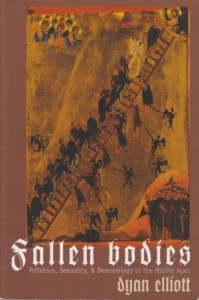
Less common than it once was, the term “Dark Ages” was formerly used to denote what in Europe was known as the Medieval Period.  We now know that the pervasive darkness ascribed to the time was only partial: science, legal thinking, and rationalism were well underway.  Nevertheless, the sway of the church was enormous, and even until and beyond the days of Isaac Newton, the supernatural was assumed to exist.  Dyan Elliott’s Fallen Bodies: Pollution, Sexuality and Demonology in the Middle Ages is a fascinating journey through this contradictory time.  Elliott explores how the mysteries of sex (nocturnal emissions and menstruation loom large among them) played important roles in the development of Catholic theology that ultimately led to the close association of demons and witches.  Concerns with priestly purity, largely due to concerns about transubstantiation, led to enforced celibacy and the (further) denigration of women.

It would be difficult to summarize this insightful book.  Although relatively brief, it packs a wallop.  Concerns about purity go back to the Bible and before.  Ancient cultures had recognized aspects of contagion and knew that some diseases spread by contact.  Their perception of biology was “scientific” according to their current understanding, but it lacked microscopes and knew no shortage of supernatural entities.  Demons had great explanatory value in such a world.  As Elliott shows, they often appear in disquisitions about sex.  How can spiritual beings engage in physical relations with human bodies?  What were they made of?  Were they all bad?  Although demons had explanatory value they also raised many questions.

Fallen Bodies draws correlations between the dismissal of priests’ wives and the evolution of witches.  As the Eucharist became more and more holy, stricter controls had to be placed on consecrating hands.  Sex was the great source of pollution, and the Virgin Mary became rather less human through her own miraculously sterile conception.  The implied misogyny may not have been so much intentional as a reflection of the struggle to understand what modern medical science generally explains materially.  We still grapple with the mystery of life.  Conception can be viewed clinically, and biological responses can be “explained” scientifically (anyone who’s been in love will admit to the mystery of it, though).  Denizens of the Middle Ages worked with the tools they had to make sense of a world often bewildering.  Even physics still has to deal with quantum realities.  History teaches by its unfortunate missteps.  Someday those who “govern” the world may learn to read it and exorcise demons now otherwise readily explained.


Poe’s Demons

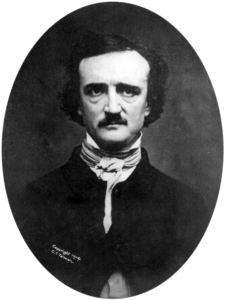
In Nightmares with the Bible I use an idea penned by Edgar Allan Poe as one of the threads holding the book together.  One early reader complained that Poe didn’t write about demons, so the use of the great man was inappropriate.  That reader misunderstood me.  Today is Poe’s birthday.  As I think about the influence a writer can have on a young mind, I come back to this reader’s comments.  I can’t think of my book without Poe.  No, Poe did not write about demons, but he set the stage for what I’m trying to do in my book.  I’ve read analysts who claim Poe wasn’t a horror writer.  Certainly in the modern sense that’s probably true.  Still, he, like many others, was brave enough to suggest the tenebrous side of life was worth exploring, even if you only had a candle.  

Poe’s monsters were often interior.  They were psychologically probing, and although Sigmund Freud had not yet been born, it’s not inappropriate to say that Poe explored psychology.  Writers, I suspect, often deal with things they can’t name.  This is the way knowledge moves forward, even with fiction.  Especially with fiction.  As I’m reading books by academics who’ve done well for themselves, I often reflect how their legacy will remain within their field only.  It’s the rare nonfiction writer who manages to reach a cultural status that will find readers from other disciplines.  Most of us, however, will admit to reading a novel or two now and again.  Fiction writers, such as Poe, can claim things without backing them up with footnotes and citations.  That doesn’t mean they were any less astute at observing the world than academic writers are.  Often they’re more so.

I didn’t put Poe into Nightmares to show off.  His work has long been in the public domain.  I don’t cite him to claim that he would have agreed with my use of his insights.  No, I cite him because even if he wasn’t a horror writer my early encounter with him started me on a path of exploration.  Poe had trouble getting along in a literary world where rejection was endemic (it still is, I know from personal experience) and making a living as a literary person was unheard of.  He nevertheless knew that fiction was more honest than the alternatives, at least for some of us.  If we wish to face the world with integrity, we should admit that our heroes may have been made so in our own minds.  That doesn’t make them any less authentic, just because we’ve appropriated them for our own purposes.  We borrow what we find meaningful.


Strange Powers

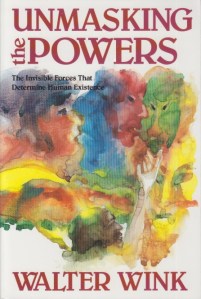
Some books take you to strange places.  Not all of them are fiction.  I began Nightmares with the Bible as a way of understanding the many, disparate ideas of demons I encounter in popular culture.  (I can’t tell you too much about my conclusions, otherwise you wouldn’t be tempted to buy the book!)  One of those nagging questions is: what does “based on a true story” mean?  I’ve known of Walter Wink’s powers trilogy for many years.  Because of my research I’ve now settled down to read Unmasking the Powers (number two, for those keeping count).  This book will take you into strange places.  Wink was very much a Christian in his outlook and orientation.  At the same time, he raises questions I’ve had other Christians put to me—were the “gods” of other nations, as in the Bible, real?  That word real is slippery, and Wink tries to hold onto it.

Unmasking the Powers is a kind of systematic exploration of the various “spirits” found in the universe we inhabit.  One of these is the Devil, and although Wink doesn’t see him as necessarily a “being,” neither does he find the Bible making him entirely evil.  Indeed, one of the great conundrums of monotheistic belief is theodicy; how is it possible to justify the goodness of a single, all-powerful deity in a world with so much suffering?  Wink approaches this question from an angle we might not anticipate.  He then deals with demons.  Since this is my subject in Nightmares, I found his discussion apt.  And yet again, strange.  Powers emanate from the institutions we create (you might have correctly guessed this was the book I wrote about on Tuesday).  Wink is willing to challenge materialism and take such powers seriously.

Finding a new perspective when we’ve been reared in a materialistic one, can be difficult.  For those of us raised religious, there was an inherent schizophrenia involved.  Our teachers told us of a mechanistic universe, but had Bibles on their desks.  (Yes, this was public school, but let’s not kid ourselves.)  While physics taught us everything could be quantified, church taught us that spirit couldn’t.  At least not by any empirical means.  Wink will unblinkingly take you there.  He offers both scientific and spiritual points of view on these entities, although he tries to refrain from calling them such.  Still, he records many people who have seen angels.  And although quantum entanglement wasn’t really known when he wrote this book, if it had been, Wink would’ve been nodding his head.


Cave Monsters

A story in Discover back in December discusses cave drawings from Indonesia.  Dating back almost 40,000 years before the creation of the world, these cave paintings represent the oldest yet discovered.  The interesting thing about such cave art is the representation of figures—both human and animal—that are instantly recognizable.  Scientists studying the art are able to identify likely species, but, as John Morehead pointed out on his Theofantastique Facebook post, there are also fantastical beasts.  We might call them monsters.  It’s interesting to see how scientific writers shift from their awe at life-like illustration to a nearly palpable embarrassment when the creatures become mythical.  Indeed, the article itself suggests such figures point to a very early sense of either fiction or spirituality.  The monstrous and religion have long trod parallel paths and we are only now beginning to explore the implications.

Monsters are beings over which we have no control.  They don’t abide by human rules and often the only recourse against them is religious.  When monsters come knocking, it’s often wise to drop to your knees.  Or at least reach for your crucifix.  Many rationalists like to claim that human civilization developed without religion.  The discoveries at sites such as Göbekli Tepe gainsay that assessment, indicating that humans first gathered for religious reasons and agriculture and all the rest followed from that.  Perhaps they came together for fear of monsters?  That’s only a guess, but I recall the defensive tower of Jericho.  The archaeologist lecturing us as we stood by this neolithic structure asked “What were they afraid of?”  He never answered that question.

Bringing monsters into the discussion isn’t an attempt to make light of these significant discoveries.  Rather, we need to learn to appreciate the fact that monsters are serious business.  Religion, whether or not literally true, is important.  Civilization has been running the opposite direction for some time now.  When surveys emerge demonstrating that the vast majority of the world’s population is still religious, analysts frown.  It does make me wonder, however, if nature itself programs us this way.  To other sentient creatures who experience us as predators, humans must look monstrous.  We come in a variety of colors and textures (clothing), we smell of deodorant, shampoo, soap, aftershave, or none of the above.  We emit strange sounds (our music).  Are we not the monsters of the natural world?  And should animals develop religion, would we not be one of the causes?  It’s just a guess, but I need to sit in my cave and think about it for a while.


New Year Reading

Childhood has a powerful draw.  I first started reading Dark Shadows books when they were published for (I kid you not) 60 cents.  I got them for cheaper than that at Goodwill.  Every time I read one I wonder what my young imagination found so compelling in them, but in an effort to trust my younger self I keep on.  So I read Marilyn Ross’ Barnabas, Quentin and the Witch’s Curse.  The book doesn’t really say anything about a witch’s curse, providing as it does some of the backstory for Quentin.  If you aren’t familiar with that background, and you want to be, Barnabas is a vampire and his cousin Quentin is a werewolf.  Both were made so by curses, a plight the Collins family has long faced.  

In recent years I have read the 19 volumes in the series preceding this one.  They tend to be formulaic, and often show the signs of having been written quickly.  W. E. D. Ross is sometimes listed as the most prolific Canadian author ever.  He wrote over 300 books, mostly in genre fiction.  It’s no wonder many of them sound the same.  Still, I have to admit that both from watching Dark Shadows and from reading these novels as a kid, I liked Quentin.  Yes, he was smug and self-confident, but as a werewolf he had the ability to become someone else.  Unlike other books in the series, this one focuses on Quentin and points a pretty heavy finger to him being a Satanist.  That seemed pretty harsh to me.  There’s a difference between being the victim of a curse and being a Devil worshipper.

Now I know I shouldn’t take this as belles lettres.  Ross is not remembered as a great stylist, master of character development, or for being all that creative.  Dark Shadows was a soap opera—one of the more intelligent of the genre—and there’s only so much you can do with it.  Satanism was a cultural concern in the 1970s.  In the following decades it would bloom into an outright panic.  I’m pretty sure that I never read this particular volume when I was young.  Even now as a relatively mature man I found the implications somewhat disturbing.  The Scooby-Doo ending doesn’t do much to ameliorate the undercurrent of evil.  Quentin always seemed like such a sympathetic character to me.  Maybe it just goes to show what happens when you go for a quick read rather than choosing a book of substance.  Childhood can be that way.