Science of the Immaterial

One of the truly frustrating things for the honestly curious is a lack of good resources. Specifically here I’m talking about ghosts. More generally, about the supernatural. “Don’t worry,” laugh the reductionists, “there’s no such thing.” But some of us are seriously curious. Those who are willing to admit candidly the events of life will eventually confess to things they can’t explain. People have been seeing ghosts since at least the Stone Age, and yet finding a serious, non-dismissive approach to the topic can be annoyingly difficult. Curious about the background to the film The Conjuring, I wanted some kind of objective treatment to the Perron family haunting. One of the girls involved has written a three-volume treatment, but that will take some time to get through. So I turned to the investigators, Ed and Lorraine Warren.

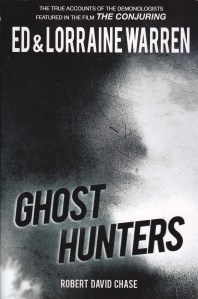
The Warrens were (Lorraine is still alive) some of the world’s first ghost hunters. Self-taught and deeply religious, they referred to themselves as demonologists. Lay Catholics, they couldn’t perform exorcisms, but they could assist in them. Apart from the Perrons, they investigated Amityville, the haunted doll Annabelle, and the Snedeker house, and many other famous cases. A guilty pleasure read, Ghost Hunters, written by Robert David Chase, along with the Warrens, thumbs through several of the investigations. When all is read and done, however, people who claim to know better accuse the hauntings of hoaxing and since there is no arbiter, the curious are left with that unsatisfying state of “he said, she said,” but no real answers. Ghost Hunters contains a potpourri of cases, mostly of demonic possession. Nothing about the Perron family, though.

No doubt much of the hoopla around reality television ghost hunting is clever marketing and nothing more. Even the acclaimed Ghost Hunters were caught gaming the system a little on their Halloween specials. That doesn’t stop people from seeing ghosts, however. Some academics have attempted to address the issue and soon find themselves in untenured positions (so much for freedom of speech) or mocked by their more “serious” colleagues. What ever happened to old fashioned curiosity? Materialism isn’t the only show in town, is it? We need treatments of the subject that move beyond the anecdotal. It’s difficult to get a ghost into the machine, apparently. Science hasn’t figured out a way to study the immaterial yet. Until it does, those who want to know the truth will be left relying on those who make a living by addressing questions even empiricists fear to ask.

Living Challenged

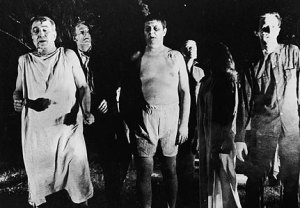
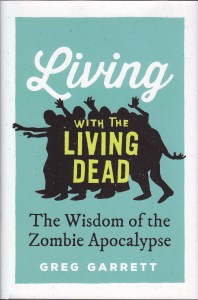
One of the surest signs of hope for the world is that academics are beginning to notice monsters. A trickle began some time ago and it’s probably best to call it a trickle still, nevertheless, the quality of the trickle is improving. Some serious publishers are now counted among the mix of those who pay attention to the lovable unlovable. Greg Garrett’s Living with the Living Dead: The Wisdom of the Zombie Apocalypse is one of the more recent approaches to the undead that looks for religious themes among them. They’ve been there from the beginning with zombies, of course, but few with tenured positions bothered to look. It’s an open question how long the current fascination with the undead might last, but Garrett’s treatment finds them useful sources of theological thought.

Perhaps the aspect of my own fascination that I feel most often compelled to explain is why fear has such an appeal. Garrett makes the point that fear often causes people to make bad choices, and I would have to agree. It is, however, the fear of fear that takes a greater toll. You see, fear is a survival instinct. Without fight or flight we’re all zombie food. Some of us learn this harsh lesson early in life, and if we manage to survive long enough we might even become nostalgic for it. It’s not that I like be afraid, but I do know that if we fear fear—if we avoid looking at what scares us—we put ourselves in danger that the flight response might well prevent.

Garrett’s treatment is helpful in demonstrating that there is a reason for such stories. In fact, according to his analysis zombies can leave you with a profound sense of hope. He uses the living dead as a means of thinking about community, ethics, and apocalypse. Not all end of the world scenarios are that bad. How we treat the living dead may tell us quite a bit about our own rectitude or lack thereof. In other words, zombies are more than their puerile thrills might suggest. There’s something of substance here. I don’t agree with all of Garrett’s conclusions, but he offers a stimulating tour of the current media frenzy around the living challenged and is surely correct that there is more going on with monsters than many of our parents would like to have a religion expert admit. Those childhood years might not have been wasted on monsters after all.


The Nature of Evidence

Home alone on a Friday night, I turned to Werner Herzog’s Nosferatu. Not a typical horror film, this art house production is an updating and remaking of F. W. Murnau’s technically illegal 1922 adaptation of Bram Stoker’s Dracula. It has been a few years since I’ve watched it, but the beauty of the cinematography kept coming back to me at unexpected times. Klaus Kinski is an unforgettable Count Dracula, hideous and compelling simultaneously. He draws pity and revulsion. When he’s not on camera you can’t wait for him to appear. There’s not much new in the story, of course, as it follows Murnau pretty closely, with some shots being nearly identical. One exception to this is the plague. Wherever Dracula appears the Black Death accompanies him. This leads to one of the most unusual twists of this retelling—the role of Dr. Van Helsing.

Instead of being the authority on vampires and leader of the attack, Van Helsing is here a reluctant rationalist who doesn’t accept superstition. He encourages the town elders to respond calmly to an outbreak of the plague. When Lucy Harker insists that Jonathan has been the victim of a vampire (which he has) the professor again urges caution. He insists that this must be approached scientifically, empirically. You don’t pull up wheat to see if it’s growing, he notes philosophically. Take time, trust science, and all will be well. Meanwhile the audience knows the reality of the vampire. There is a supernatural threat and it is moving fast. Lucy knows they must strike against Dracula before the vampire destroys the whole town. Despite the mounting number of deaths by plague, Van Helsing still clings to slow and steady evidence, only realizing after Lucy’s death that she had been right all along.

There’s quite a bit to unpack in this retelling after all. A female takes the lead. Lucy is the one determined to stop the vampire. She does so out of belief. Van Helsing rightly points out that this is a dangerous way to approach a problem. One ponders what might’ve happened had science been allowed to run its course. Van Helsing, if science be science, would’ve had to at last come to the same conclusion that Lucy had experientially. She’d read Jonathan’s diary and she had a late night conversation with Dracula where he did not appear in her mirror and did shy away from her crucifix. She too is evaluating evidence, only she has to allow for the reality of the supernatural. Since the story is old and the production artistic, this is no bloodbath horror spectacle. It is a thoughtful, almost quiet reflection on how we perceive reality. Even among the many vampire films it remains a thing of beauty.


Sleepy Holy

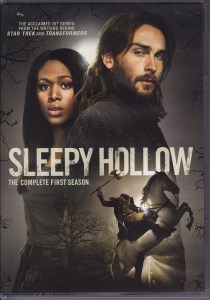
Fox recently announced that, after four seasons, Sleepy Hollow is being cancelled. The news, while not unexpected, is still disappointing. The initial success of the series caught just about everybody by surprise. Intelligent, witty, and literate, this program tapped into a number of themes dear to American sensitivities. One of those sensitivities, surprisingly, was the Bible. I sometimes wonder if the Bible might’ve been able to save Sleepy Hollow. In my limited view the first season was the best. It started out with an all-American apocalypse. To survive an apocalypse you need a Bible. George Washington’s Bible featured throughout the mythology of the first installment. Two of the four horsemen of the apocalypse had arrived in Sleepy Hollow. Then something went wrong.

In season two, Moloch—clearly a stand-in for the Devil in the series—was killed off. Apocalypse no. The end of the world, in Scofield’s canonical view, had been cancelled. Even Ichabod and Abbie began to wonder what good it is to be mentioned in Revelation if your role as world saviors has been made redundant. A new arch-villain was needed. The coven that had shielded Ichabod, headless without its horsemen, simply faded away. Ichabod learned how to drive. Where’s an enemy when you need one? Enter Pandora for season three. But wasn’t she rather a sympathetic figure? Sure, she unleashed lots of negativity but hardly with malicious intent. There’s no villain like a biblical one.

Where do you go after the apocalypse is over? What use is the Bible in such a world? Pandora has no book of Revelation behind her. No special effects budget can rival Pestilence, War, Famine, and Death. What can make you shudder like that pale horse and its skeletal rider? In a world with ebola and zika it would seem that pestilence still has a place. Famine in a world of plenty is horror defined. Two out of four isn’t bad, I suppose, but when you start off with Death you’re not leaving yourself much room for maneuver. Of course, after the horsemen there are three seals left. Perhaps if Sleepy Hollow had stayed with the script and followed through until just before the final trump, it might still be here among the land of the living. Just like creation, the “end of the world” has multiple versions in the Good Book. The Bible’s a consistent narrative only in the imagination of harmonizers eager for easy answers. The possibilities are endless. Where there is no vision, the people parish.


Revisiting Frankenstein

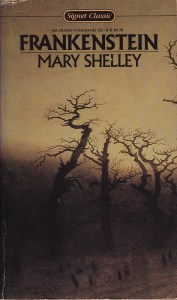
There’s nothing like going back to the classics. Many people don’t realize that one of the best-selling books of the nineteenth century was Mary Shelley’s Frankenstein. It has never been out of print. As a novel it has its issues, but the tale strikes something deeply responsive in readers. And the story may not be what you think. You see, the movies have made Frankenstein’s monster into something Shelley never intended. Indeed, today’s Frankenstein monster is pieced together from various monster images, just like the mad doctor’s original creation.

After a lapse of many decades, I decided to read Frankenstein again. It must’ve been in my tweenage years that I’d last done so. I recall putting the book down thinking how sad it was. Something happens, however, when you return to a book after a span of many years. This time I was looking for the mad doctor and hoping to determine if the monster deserved that title at all. The story won’t let any easy answers come. Victor Frankenstein is a young, impulsive man carried away by an idea. He doesn’t contemplate the consequences of what he’s doing. It’s like buying a dog without considering that you’ve just realigned your priorities for several years. Not noticing that his growing creation is hideous to the eyes until it’s too late, he simply abandons the creature without a word. (The parallels with an absentee father should be obvious.)

The creature—monster is a bit harsh—wants acceptance. He isn’t a mute brute with bolts in his neck. He’s not a robot. He is Adam kicked out of the garden with no Eve. He doesn’t start out evil. The rejection of his creator forces him to murder in a desire for revenge. Shelley’s world was deeply influenced by the Bible as well as Milton. Religious concepts are constantly under evaluation. The child of radical parents—her mother was one of the first feminists on record—Shelley questions everything here. No doubt in Victor’s mind he’s created a demon. Or has the monster created Frankenstein? Until the very final pages nobody else actually sees his monster, or at least hasn’t seen him and lived to tell about it. What fuels the creature’s fury is rejection. Evil doesn’t just happen in the world of the mad doctor.

Sympathies are divided in Frankenstein. We feel for the monster. His creator never apologizes. Never reflects that he somehow shares (or completely owns) the blame for the sad fate of that which he’s created. Living under a Frankenstein presidency, these unanswered questions hang thickly in the air. Lack of foresight seldom ends well. The monster isn’t always who you assume it to be.


Frankly Frankenstein

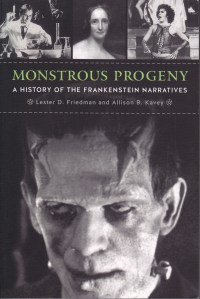
As a novel, like its monster, Frankenstein trespasses all kinds of boundaries. Is it science fiction or horror? Is it Gothic or presciently modern? Is it feminist or conventional? One thing about it is certain: it has been immensely influential. Lester D. Friedman and Allison B. Kavey have created for the world a truly wondrous treatment of this meme. Monstrous Progeny: A History of the Frankenstein Narratives is perhaps the most engaging monster book I’ve ever read (and there have been many). One of the main reasons for this is that Friedman and Kavey are keenly aware that binaries don’t necessarily exclude their opposites. Frankenstein is about both science and religion, and it treats both profoundly. Considering that Mary Shelley was only 21 when the novel was published bespeaks a rare genius in blurring boundaries and making those on each side think.

Monstrous Progeny considers multiple issues associated with Frankenstein. Should science be approached alone, or should peer review be involved at every stage? Is religion eschewed by this woman so strongly influenced by atheism, or is it the very crux of the matter? And what about the incredible and continuing afterlife of Shelley’s story? Friedman and Kavey survey not only the novel but several movies associated with, or based on ideas from, the book. Modern science, if we’re to be honest, also owes much to the fictional musings of a 19-year-old girl on a dark and stormy night. The tale of the tale is nearly as fantastic as its progeny. Challenged to write a ghost story, Shelley produced an undying Zeitgeist feature instead. Monstrous Progeny delves deeply into this unexpectedly profound idea, showing how it grips the heart of many contemporary nightmares.

Genres can be deceiving. Shelley wrote her tale as a “ghost story.” It received literary acclaim, becoming one of the best selling books in England in the nineteenth century. Only when Universal found success with Dracula in 1931 and followed it up with Frankenstein the same year did film critics want something to call movies like this. The term “horror film” was invented. There is certainly horror in Frankenstein, but there’s much more to it than that. The relationship between religion and science, and the very real ethical issue of making something because we can, are never far from the reader’s mind. Giving life to the creature only underscores the conflicts and contradictions of life in a world where to be gods risks destroying any possibility of heaven. Monstrous Progeny is a thought-provoking book that will, in its own way, brings our present fears to life.


Death Challenged

Long before the Walking Dead, and even before Twilight or Buffy the Vampire Slayer, people took the undead seriously. Now, I know ratings are important (they attract advertisers and their money, after all), but when the fear is reality the stakes are upped a bit. Two readers sent me a Guardian story this past week of Yorkshire villagers mutilating the dead. In the Middle Ages, that is—it’s perfectly safe to die in Yorkshire now. The story by Maev Kennedy describes how archaeologists have been studying deliberately defiled corpses, well, actually the bones from those corpses to be precise, to solve a centuries-old mystery. Their conclusion? Medieval folk really did fear the dead coming back from the grave.

Now, Easter’s just around the corner and resurrection’s on a lot of minds. Outside the context of the Bible, however, resurrection of the dead is one of the most ancient and persistent of human fears. Nobody’s quite sure why. Dreams and visions of the recently departed are extremely common. Belief in ghosts is ancient and fairly universal. The destruction of the bodies of people already dead is not. We treat our gathered ones with respect. To me it seems to come down to the puzzle of consciousness. Call it a soul if you like, but I have a feeling things would be getting rather crowded in here if too many distinct entities claimed this body as home. Mind, soul, spirit, psyche, consciousness. We don’t know what it is because it can’t be studied empirically. We know that something like it exists and opinions of what happens to it after death vary. The body, we can all agree, has a more prosaic end.

That’s what makes fear of the undead so fascinating. They are only bodies. Bodies without souls. Rather like leaders of the Republican Party. We fear them because when we look into their unblinking eyes we see no vestige of human warmth or sympathy. Those who walk among us and who don’t care about those of us not yet undead remain a perennial fear. In the case of the Yorkshire corpses these were people already buried. Putting them back in their graves seemed kind of pointless when they would only climb out again. We don’t know what it was like on the ground in the Middle Ages. History, however, has an ironic way of repeating itself. We’re entering a new age when I suspect we’ll want to make sure the remains of some remain well and truly gone once they’ve finally given up the ghost.


Theoretical Monsters

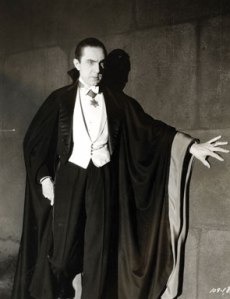
We’ve had a lot of rain lately. One rainy night over this past weekend I talked my wife into watching Dracula with me. It’s been a few years since I’ve seen this classic myself. Difficult to believe that it was ever scary. This is the film that launched the horror genre that has become such a major part of the entertainment industry. It has the right mood for a rainy night. Movies were paced much more slowly in the 1930s, and viewers are given ample time to drink in what’s happening. In some current day films the cross-cutting in action scenes is so rapid that I really have no idea what took place. Dracula is slow, stately even. Thinking back, I believe this was the first monster movie I ever saw, so it has a resonance with me. When Renfield balks at the huge spider web in Dracula’s castle, the vampire quotes from Leviticus—“the life is in the blood.” Monsters are religious creatures.

A year ago in January, with the help of two colleagues, I proposed a new unit for the American Academy of Religion annual meeting—Monsters and Monster Theory. After working on this proposal a couple of months (strictly off work time for me), the new unit was declined by the academy. We decided to try again. This year our exploratory session was approved. The idea had come to me when I noticed that papers on monsters and religion had been on the rise, but there was no central forum to discuss them. They were like zombies without a shepherd. Not being an academic, I couldn’t start the session by myself. Now the society agrees that we’re worth at least one meeting room and a couple of hours to see whether the topic might become a recurring one.

Some people, I’m well aware, find this combination odd. Religion, after all, is about sweetness and ethereal light. Being nice to one another. Things like that. Monsters, on the other hand, inhabit the dark. They’re creepy and unsettling. They’re also wonderful metaphors for so much of life. What some of my colleagues have come to realize, and the academy seems to be backing us up on this, is that if anyone can understand monsters, religion can. Psychology will continue to try. Literature will continue to create them. Scholars of religion, however, are those who would like to bring some order to a chaotic world. We study monsters to learn about what it means to be human. It has been raining quite a lot lately.


Crossing Beowulf

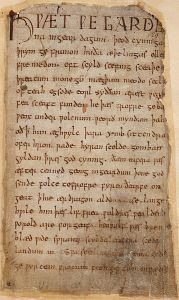
Beowulf, from Wikimedia Commons.

Slaying dragons is costly. In much of the western hemisphere the ultimate metaphor for the perils that await humanity in a world imperfectly understood, dragons were the bane of the medieval imagination. And earlier. Dragons are mentioned in the Bible and were stock creatures in the bestiaries of the Mesopotamian imagination. And, of course, it is a dragon that causes Beowulf’s fall. Almost a type of a latter-day Gilgamesh, Beowulf likewise holds an early, if non-negotiable place in the western canon. In this month’s Atlantic, James Parker discusses the dynamic of this pre-Christian poem in our post-Christian context. Specifically he addresses how modern renditions, perhaps inadvertently, Christianize the story. A popular subject for movies and graphic novels, Beowulf is a monster-hunting story that begs for baptism.

The story itself is familiar to most alumni of American high schools. Perhaps before we’re ready to be exposed to Old English, we find ourselves assigned a story of drinking, rage, and violence. Make no mistake—Beowulf is a hero. A deliverer like the judges of old. Grendel, after all, is the spawn of Cain, the evil seed that continues into a moody world of stygian nights and dismal swamps. Parker’s brief article demonstrates the reception history of the poem nicely. It also raises the question of what’s going on when heroes fight monsters. When the Christian imagery that’s deeply embedded in our culture comes to play Beowulf can’t help but become a Christian monster slayer just as Grendel becomes the enemy of God. All of this may be quite unintentional. What we see, however, isn’t imaginary. That’s the way reception history works.

Parker suggests that, although Beowulf is a pre-Christian poem, the cosmic order laid out in the tale is a Christian one. Even today in a post-Christian America it’s vital to understand how important religion remains. It’s not so much that churches are overflowing (unless they’re mega-churches stating that you can get rich by attending) as it is a recognition that centuries of Christian identity can’t help but leave their mark on culture. We see crosses in the handles of swords. Or even in the grid patterns laid out in city streets. Telephone poles. What’s so remarkable is that we see such things naturally and think nothing of it as we go on our secular way. There may be monsters out there. What may not be so obvious is that in slaying them we’re engaging in a religious activity as old as Gilgamesh, if not as obvious as a crucifix held up to a vampire in the present day.


Strange Worlds

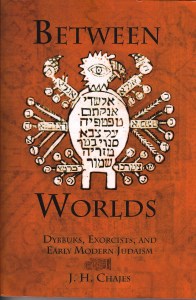
The Bible can lead you astray sometimes. Don’t worry, it’s unintentional, I’m sure. It has less to do with the Bible itself than with the way it was compiled. Any book written over centuries by different people is bound to show some inconsistencies. Unfortunately some of those inconsistencies are about things people really want to know. What happens when you die, for instance. Pretty important to get that one straight. The Bible has shifting views about that, and those views led to ideas such as Heaven, Hell, Purgatory, and reincarnation. Wait, what? Reincarnation? Isn’t that an eastern religion thing? That’s what I always thought. Then I read the provocative Between Worlds: Dybbuks, Exorcists, and Early Modern Judaism by J. H. Chajes. This started for me, as things often do, with a scary movie.

Some time back I watched The Possession. For those of you who haven’t seen it, it regards a Jewish exorcism—based on a true story, it says, but aren’t they all? Now demons exist in the Hebrew Bible, but the monster in this movie wasn’t exactly a demon. It was a dybbuk. Sharing the Gentile liability, I wasn’t aware of what a dybbuk was. A religion professor in the movie tried to explain it, but I had to read a book. Between Worlds seemed the best place to start. What a fascinating book this is! Anyone who’s interested in the history of exorcism, whether Christian or Jewish (and perhaps even Muslim) will find abundant information here. Jewish exorcism? Much of it depends on how one understands the concept of “soul.” It also depends on who’s doing the possessing. A dybbuk is a displaced human soul from someone deceased. If it can’t get into Gehinnom (which Jesus mentions a time or two) it reincarnates into an available body, often sharing it with the resident soul.

From there things only get more unusual. For those of us who know about exorcism from the movie (you know the one I mean) or even from Chick tracts, the idea that a human soul (which can be good or bad, depending) can possess someone is unexpected. The fact that reincarnation developed from the same Bible that gave us Heaven and Hell is equally surprising. I suspect it’s because the Good Book doesn’t give a clear picture of what comes hereafter. The Hebrew Bible has Sheol, and the New Testament adds Heaven, Gehenna, Hell, and the underpinnings of Purgatory—a buyer’s market for the afterlife. With that being the case I suppose it’s to be expected that some spirits prefer to move from house to house. To learn what’s available Chajes is an excellent choice.


Signs and Portents

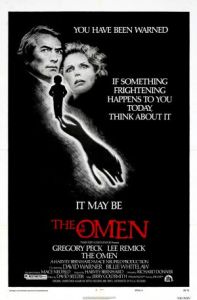
Horror movies are, of course, more than escapism. Although it’s taken many years academics are starting to pay some attention to them. Because of a conversation with a colleague this past week I felt compelled to watch The Omen again. The current political situation merits such viewing, in any case. Interestingly, the first time I saw The Omen—which was during a spate of unemployment—it didn’t scare me much. Like most classic horror, the scenes that had everybody talking in the mid-‘70s had been described so often that they failed to shock. All that was left was a dispensationalist tale of the end of the world—non-biblical, and the fright only came from belief. This time, however, I could see it as nothing but a film about a political takeover.

Omen_ver4

With the open admission on the part of Steve Bannon that his administration—let’s not kid ourselves here—intends to dismantle the government we’ve had in this country since around 1776, we can see that this election was only an excuse. Knowing that this dark side of human nature (some call it the Devil) won’t be given a chance again—they didn’t win the popular vote this time around and unless they silence the media they won’t win the next one—Bannon’s crew, like Damien, has to deconstruct quickly. The Republican establishment, unless it opens its eyes soon, will find itself locked outside as well. Ironically, it’s the public that can see this, not the elites. It’s as if George III were back from the grave. Power, as The Omen intimates, is incredibly seductive. The GOP, wrongly supposing it will share it, goes along with nominations that have now been openly declared agents of destruction. Where is Revelation when you need it?

The Omen is all about Satan getting a back-door entry to the White House. The politicians are all easily duped. Evangelical Christians have been brainwashed into thinking that only by voting Republican can they prevent abortion and gay marriage—two decidedly non-biblical issues. You see, the Devil works that way. Scripture says he can disguise himself as an angel of light. People who don’t educate themselves are very easily fooled. We’ve followed the script rather precisely. Satan’s greatest tool, it’s said, is that people don’t believe in him. So after you finish reading 1984—which we all should—watch The Omen. Ponder what inviting evil to take over the one remaining superpower might really mean.


Dreaming Reality

The problem with monsters is that they’re not easily reduced to a lowest common denominator. This becomes clear in an article about the under explored (from a western perspective) monsters of Australia. Christine Judith Nicholls, in “‘Dreamings’ and place – Aboriginal monsters and their meanings” (sent by a friend), describes many of the scary creatures of the outback. The article title references Dreamtime, a kind of aboriginal journey that ties into indigenous Australian religion. The division between imagination and reality isn’t as wide as we’re sometimes taught. (More on this is a moment.) Nicholls’ article demonstrates that many of these monsters impress on children the dangers of wandering away from parents. Indeed, that is clearly part of the socializing function of monsters. The question, however, is whether that’s all there is to monsters or not. (Nicholls doesn’t use reductionistic language—she does note this is a psychological explanation.)

In an unrelated article in The Guardian, by Richard Lea—“Fictional characters make ‘experiential crossings’ into real life, study finds”—researchers suggest that fictional characters seem to appear in “real life” from time to time. All those who read fiction know this phenomenon to a degree. Just because someone is completely made up doesn’t mean that s/he doesn’t exist. Since our minds are the ultimate arbiters of reality, fictional characters and monsters may indeed be “real.” This isn’t to suggest that physical, flesh-and-blood imaginary beasts lurk in the dark, but it isn’t to suggest that they don’t either. Reality is something we haven’t quite figured out yet. The more we think about it, the more it appears that both hemispheres of our brains contribute to it.

monster

When the morning newspaper raises alarm after alarm about the frightening tactics of the Trump administration the temptation is to give up to despair. That’s not necessary, actually. Reality requires our consent. Imagination can be a powerful antidote to the poison spewed by politicians. What fictional character—or monster—might step into a situation such as this to make it right? If the power of millions of smart minds were concentrated on such a being, would it not become real? Friends have suggested over the past four months that the arts—creativity—are going to be especially important in the coming years. If we are to survive evil we’ll have to use our imaginations. That’s something that the aboriginal peoples can teach us, if only we’re willing to believe.


Devil of a Time

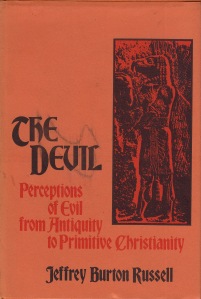
thedevilOne might be excused for thinking so much about the Devil these days. Displays of lies and evil intentions are on pretty obvious display at the highest levels. Indeed, the current political situation has me reassessing my skepticism about the Antichrist. One of the truly well thought out books on the subject is Jeffrey Burton Russell’s classic, The Devil: Perceptions of Evil from Antiquity to Primitive Christianity. The first in a series of books Russell wrote on the topic, The Devil opens with evil. Noting that the Devil defies easy definition, Russell begins rather disturbingly with literary descriptions of acts that can only be described as evil. This allows him to point out that real life events often surpass those that authors can get us to read, intimating that something is seriously wrong with the world.

Having noted that, the emergence of the Devil is not an easy one to trace. Evil has been recognized in many cultures and it has been explained in many ways. Some have personified it, but even that took a long and circuitous route to the dark lord we know today. Bits of Greek philosophy and Zoroastrian cosmology combine with an emerging monotheism among the Israelites and their kin until eventually we have an embodiment of evil appearing. Even so, the Bible has no clear image of who “the Devil” is. This took further developments beyond the New Testament and the image that eventually won out, so to speak, borrowed heavily from classical mythology. Eventually Old Scratch emerges in a recognizable form.

Belief in the Devil still runs high in American culture. I suspect it will run even more so in months to come. At the end of Russell’s well researched study, the Devil comes down to the blatant disregard for the suffering of others. One might think of the mocking of the disabled or the favoring of the wealthy over the poor. Evil may be known by many names but it is easily recognized by those not caught up in its worship. This became clear in the biblical quotations sprinkled throughout the book. “Woe unto them that call evil good, and good evil,” for example. Or “when an ungodly man curses Satan, he curses his own soul.” Mirrors may serve multiple purposes. The vain look into them and see only beauty. Those who believe in the Devil can’t help but know who it is that stares back.


Know Your Monsters

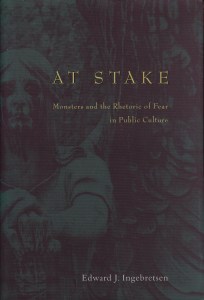
at-stakeEdward J. Ingebretsen is one of the most intelligent analysts of monsters about. That may seem like a small order, but it’s not—many people write about monsters, and Ingebretsen is one to whom attention is owed. At Stake: Monsters and the Rhetoric of Fear in Popular Culture is not an easy book to read. Narratively sophisticated, it takes on some issues we’d rather not have addressed. One of the great myths about monsters is that they’re all for fun. The current understanding of monsters gives the lie to that worn adage. Monsters tell us something extremely troubling about ourselves and we don’t like to have someone pointing it out. When hearing that some of the monsters considered are Jeffrey Dahmer and Susan Smith, the prospective reader might wrongly assume why. The monster may not be whom one expects. Indeed, Bill Clinton makes his way into the discussion, as do Andrew Cunanan, O. J. Simpson, and Matthew Shepard. Be not quick to judge, however; you must pay attention.

As most writers on monsters recognize, religion often fuels them. Without belief monsters have no power to scare. We’ve probably all seen horror films that underscore this point. If a creature is unbelievable it loses its ability to be frightening. The movie invariably ends up in the B category and is appropriated for laughs or for an example of how not to make a film. Ingebretsen knows that to understand monsters we must understand ourselves. We too often allow unspoken prejudices (which are sometimes nevertheless shouted aloud) to inform our opinions of what is deviant or evil. Just look to Washington and see if you can disagree. The more we tease these monsters apart, the less they conform to expectations.

As implicated by his title, a great deal is at stake in coming to grips with monsters. They aren’t just for childhood Saturday afternoons anymore. It may be that they are one of the healthiest means for dealing with the steady stream of fear flowing from the District of Columbia. Without our metaphors, we are lost. Those set on destroying monsters have no concept of just how terribly helpful they are. You can’t be sure who the beast is, they are so very protean. They will, however, get you through some dark nights. Not without scars, but wiser, if a touch more melancholy, in dawn’s cold light. Take monsters seriously. It’s the only way to survive them.


Made of Clay

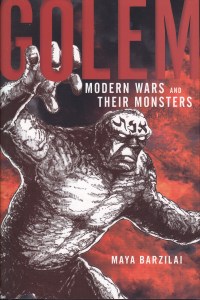
golemInvestigating a new field, at least on an academic level, involves a little disorientation. Part of this derives from the fact that academics didn’t use to write about monsters. Another part of it, however, is that those who do such writing have been doing so while my attention was elsewhere. It’s not easy to learn dead languages reasonably well. I didn’t pay much mind to the golem, being as it is, a “modern” monster. Probably responding to early modern pogroms, the golem was considered a defender of persecuted Jews. He was, however, a mindless defender. Made of animated clay, the golem was brought to life by magic and could only be killed in the same kind. Maya Barzilai has written a masterful account of how this monster relates to war. Golem: Modern Wars and Their Monsters explores how modern golem stories (and there are many) tend to relate to situations of conflict.

I had read about the golem before, and had trouble locating many academic resources on the creature. Barzilai demonstrates how much there is to ponder. It seemed, prior to reading her book, that the golem was mostly obscure, but it turns out that many writers, artists, and filmmakers have appropriated the clay giant over the years. Those who trace the history of comic books suggest that Superman was originally a kind of golem figure. I hadn’t realized that the golem had his own short-lived comic book series. When a people are persecuted repeatedly, having a secret weapon may not seem a bad thing. But the golem is difficult to control. It rampages. It can kill the innocent. Barzilai raises the question of whether a people with an unstoppable weapon are ever justified in using violence.

That question hangs pregnantly over the present day. The rich white men that run this country feel that they’ve been oppressed. Not willing to admit that it’s morally reprehensible to treat women as objects (they’re “hosts,” we’re told), blacks as inferiors, or hispanics as illegal, they bluster away about family values that aren’t consistent with anything other than threatening those who are “different” into submission. And yes, the Jews are among those these white men scorn. I wonder where the golems have gone. It could be that, like those of us self-identified as pacifists, that those who know how to make golems simply can’t justify violence. Barzilai didn’t intend for this in her book, I’m sure. Still, each new era brings new perspectives to these monsters made of clay.