The Body Apocalyptic

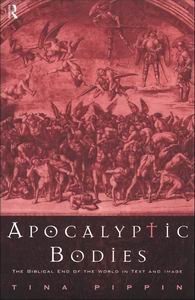
We are all products of our upbringing. Our early assumptions, although sometimes challenged and overcome, are generally with us for life. So it was that my progression of education led me to a small, conservative college to major in religion. Compared to what I learned at Grove City, the historical criticism firmly in place at Boston University sounded downright sinful. Nevertheless, it made sense, so I followed reason. At Edinburgh we were way beyond historical criticism in that wonderful, European way. Somehow in the midst of all the excitement, I missed Post-Modernism. “Po-Mo” has, like most recent movements, been quickly added to the pile of the passé, but I find it refreshing. I just finished reading Tina Pippin’s Apocalyptic Bodies (Routledge, 1999). This may have been one of the first truly Post-Modern biblical critiques I have read, and it was fascinating. Pippin is taking on especially the book of Revelation. If more people had read her book there would have been less panic back around May 21.

I find feminine readings of the Bible enlightening. As a member of the gender largely responsible for a book filled with sex and violence, it is often difficult to see how the other half of the human race might read that same text. Having grown up with a literal understanding of Revelation, I never questioned whether it was a good or a bad thing. The end of the world must be God’s will, therefore, by definition, good. One of the beauties of a Post-Modern interpretation is that everything is thrown open to question. Pippin does just that. Noting the ennui associated with eternity, she asks a question that always lurked in my mind—isn’t too much of anything eventually a problem? Eternity itself becomes problematic. Where do we go from here?

Perhaps the most striking comment Pippin makes is in the context of her chapter on the monsters of the apocalypse, “Apocalyptic Horror.” She compares Revelation to horror movies and demonstrates how all the elements are there in the Bible. She notes, “There are many monsters in the Apocalypse, but the real bad ass monster sits on the heavenly throne.” Pippin explains that God, in Revelation, joys in killing off humankind. As many of us have come to learn, people are generally good; at least most people have done nothing to deserve the heinous punishments gleefully doled out in Revelation. That, of course, raises the sticky question of ethics as applied to the divine. Here the book of Job comes to mind where our hapless hero declares that even though he is innocent, God still can count him guilty. It is the human situation. And Job was a good guy. Pippin’s little book challenged many of the assumptions with which I’d grown. Anyone who can read such a book and not worry about being a good parent is more Po-Mo than me.
Brain Death

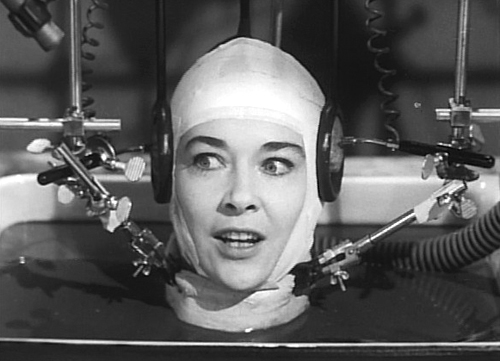
The computer revolution has spoiled some of the wonder associated with old films that had been formerly staged with cheap props and poorly written dialogue. (Well, computer literacy has not always improved the dialogue, in all fairness.) Nowhere is this more apparent in the science-fiction/horror genre where CGI has made the impossible pedestrian. There’s little we’re not capable of believing. Back in the fifties and early sixties when even color film often went over budget, some real groaners emerged. Over the weekend I watched one of the movies at the front of the class for poorly executed. The Brain that Wouldn’t Die, however, is experiencing something of a renaissance with a stage musical coming out next month in New York based on this campy classic. Most horror movies don’t really scare me much, probably due to overexposure. The Brain that Wouldn’t Die, however, creeped me out in an unexpected way. Daring toward exploitation status (the movie was shot in 1959 but not released for three years), the “protagonist” is Dr. Bill Cortner who specializes in transplants. When his girlfriend Jan is decapitated in an automobile accident, Cortner keeps her head alive while seeking a body onto which to transplant it. Ogling over girls in a strip club, or even stalking them from his car while they’re walking down the street, the doctor imagines what features he’d like grafted onto his girlfriend’s still living head.

Campy to a nearly fatal degree, the film is nevertheless disturbing on many levels simultaneously. Although I was born the year the film was released, I was raised to consider both genders as equal. The unadulterated sexism of a man grocery shopping for the body he wants stuck onto his girlfriend’s head was so repellant that I reached for the remote more than once. A bit of overwritten dialogue, however, stayed my hand. Kurt, the obligatorily deformed lab assistant, while arguing with Cortner declares that the human soul is part in the head, yet partially in the heart. By placing a head on another body, the soul is fractured. Now here was a piece of theological finesse unexpected in such a poverty of prose. The question of the location of the soul has long troubled theologians, an inquiry complicated by the growth of biological science. Heart transplants are common today, but the resulting people are in no way monstrous. The amorphous soul, theologians aver, is non-material yet resides within a specific biological entity. Some have even suggested that you can capture its departure by weighing a dying body at the moment of death. Others suggest no soul exists—it is a mere projection of consciousness. Cortner, however, once his eyes have opened the possibilities, can’t look back.

Our social consciousness has grown considerably since the late 1950s. Politicians and Tea Partiers who hold that era up as a paradigm of sanity do so at the price of half the human race. On the outside with the oiled hair, polished shoes, spotless automobiles, society seemed clean cut and orderly. Women, however, were relegated to inferior roles while men made the rules. Life was less complicated then. We knew who was in charge. Or did we? As a species that has evolved via sexual reproduction, it has taken us surprisingly long to realize that both genders are essential to humanity. We still tolerate gender disparity in pay scales, often shored up with the tired excuse that pregnancy and childbirth disrupt “productivity” and therefore female efforts are worth less than male—never changing due to biology. Such trumped-up excuses ring as hollow as a head without a body. Many Neo-Cons will even use the Bible to support it. John Q. Public (always male, please note), they insist, yearns for the “good old days.” The days they desire, however, were days of cheap horror and unrealistic dialogue. If they can watch The Brain that Wouldn’t Die without flinching, our future is bleak indeed.


The Truth of Ghosts

Strange noises in the night. Objects moving of their own accord. Disembodied voices laughing fiendishly. It must be nearing autumn. After having a brief discussion on novel writing with Brent Monahan earlier this summer, I decided to read his book, The Bell Witch: An American Haunting. Setting the story in the “found manuscript” genre, Monahan tells this famous account through the eyes of Richard Powell, one-time elected official in the Tennessee House of Representatives. The can be no doubt that the story has some basis in actual events, but the serious study of “ghosts” is a taboo that serious scholars break at their own peril. On my long bus rides this week I read Monahan’s version of the story as the rain continued to fall. As I read I was continually reminded how dependent we’ve become on genre labels. The book purports to be an eyewitness account and there is no genre declaration on the back cover. The Library of Congress Cataloging in Publication (CIP) data declares it fiction. Where is truth to be found?

Human beings are capable of great and terrible acts. Working in a city the size of New York after having been raised in small towns, the amount of distrust is very blatant. Security is evident in many places with cleverly locked doors and guards surveying those who enter buildings. We simply can’t trust everyone. Or anyone. When it comes to literature, stories often blend fact and fiction. Guidelines on books or classifications in bookstores help us to decide if our reading material is conveying actual events or not. The Bell Witch is one of those reminders that sometimes the truth will never be known. Historical records can be searched, but even these are often subject to human error. If someone tells us a ghost story, we base the veracity on the teller’s reputation. At the end of the day, sometimes we just can’t know.

Perhaps the most poignant aspect of Monahan’s version of these events is his reconstruction of the history. Although the supernatural remains intact at the end, Powell is able to uncover the “fact” that Betsy Bell was abused as a child and that the poltergeist-style events that pervade the story are an extension of her trauma. Actually, the treatment is very closely tied to the religiosity of the Bell family, good church-going folk who ran afoul of a fine point of church teaching. In the end, it is this rejection by the church that pressures John Bell to the point of incest. Is the story true? Yes. Did it every really happen? Probably not. The two are very different questions. In a society that increasing seeks easy answers, stories like this remind us that we are all a blend of fiction and fact. Easy answers are inevitably wrong. The movie An American Haunting once again revived “the Bell witch” but also raised the specter of the ambiguity of truth. Is it out there? If it is, how will we know when we’ve found it?

What really happened here?


A Summer Fright

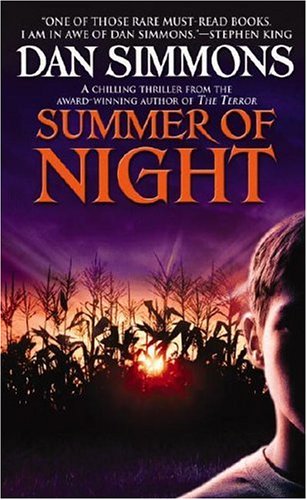
Although primarily known for his science fiction, Dan Simmons has also strayed down the dark path of horror fiction as well. During the depths of winter I found Simmons’s A Winter Haunting a moody and appropriate concomitant to the season. Not realizing that it was a sequel, when I saw his Night of Summer while at a Borders going out of business sale, I wondered if the same effect might work in warmer times. Both books rely on Egyptian funerary cult to move the story along, although in Night of Summer it is difficult to determine if the real menace is Osiris or the Judeo-Christian devil. Simmons has characters refer to Osiris as the power behind a haunted bell, but the climax of the story bears little resemblance to Egypt and quite a bit to standard monster flick tropes. “The master” of the reanimated dead is not explicitly identified. The use of Anubis in A Winter Haunting is quite effective, but the infernal characters were intermixed a little too much for my liking in Night of Summer. Better the devil that you know…

Perhaps it is simply that summer represents a time of relative ease and recovery from the frenetic pace of the remaining three quarters of the year. Although the heat and high humidity often make the season feel unbearable, the blush of abundance is all around. It is not easy to be afraid. When the air begins to chill and nature seems prepared to shut down production in the autumn, we naturally turn towards the desolate and constant struggle that will see us through the winter. Ancient people needed reassurance that warmth and relative ease would return. New Year’s rituals frequently marked autumn or spring, sometimes both. The death or life of the crops symbolized things to come.

Osiris, the god of the dead, also served as a god overseeing the renewal of crops for the ancient Egyptians. Death and life were knotted so tightly together that to unravel them was to fray the essence of the divine world itself. Among the cultures of the ancient world the Egyptians boasted the most developed concept of an afterlife. Even Paleolithic human burials contain grave-goods, demonstrating a belief in some kind of continuity beyond death. Simmons plays on that primal fear by resurrecting the dead in his novel. Beliefs about death and what might come thereafter have been one of the constant identifiers of religion from antiquity to the present. When evil pollutes the process the genre shifts to horror: witness the current fascination with vampires, zombies, and other undead entities. Religion and death are inextricably bound. Although Night of Summer may not live up to its sequel, the correlation between religion and fear meets the expectations of the genre, even during the long days of relative ease.


Demonic Beginnings

A friend recently asked me what seemed like an innocuous question: what is the origin of demons. I typed out an answer on the basis of my outdated reading on the subject only to realize that this is a very complex question indeed. While teaching my Ancient Near Eastern religions class over the past three years I regularly told students that there is no regular word for “demon” in Akkadian, the language of ancient Mesopotamia. Mesopotamian religion was the dominant system of belief in sheer size of area and antiquity in the Ancient Near East. There are characters recognized as demons: Pazuzu of The Exorcist fame among them. Their origin, however, is murky. In Mesopotamia demons are generally a mix of human and animal components supposed in some way to be responsible for misfortune. They are not evil, but they carry out the punishments decreed by the gods. In the first millennium BCE demons were understood to inhabit the Underworld, paving the way for Hell, once Zoroastrianism contributed the necessary duality for the region.

The Hebrew Bible contains no uncontested word for “demon” either. The words generally translated that way do not indicate evil spirits in the sense that the Christian Scriptures seem to depict them. In the Hebrew Bible they appear to be associated with the worship of “false gods” and the inhabitants of deserts and wastelands. In neither the Mesopotamian nor Israelite concepts do demons appear to “possess” people. By the time of Christianity, with its Zoroastrian-fueled dualism, we have an anti-God (the devil) and his anti-angelic minions (demons). One purpose here seems to have been to clear the monotheistic God of charges of originating evil. If there is only one God where does evil come from? Better to posit a devil than take that one where logic leads.

Back in the days when I was still in school, demons were regularly cast as the explanation for various mental illnesses and epilepsy. In a society that had trouble understanding the sudden onset of an epileptic fit or a sane individual growing insane, such misfortunes could appear supernatural. In a supernatural realm where evil is mediated by the devil, demons naturally volunteer for their old role as purveyors of divine punishment. Eventually the mythology of a revolt in the world of the gods emerged, probably based on the dualistic outlook of Zoroastrianism, and we soon have verses referring to the king of “Babylon” being reinterpreted as literal episodes on a spiritual plane. Once Jesus utilized this language to describe the suffering souls of his day, it became heresy to think of demons in any other way than as physically, or at least spiritually, real. In the modern day they are still with us as “spiritual entities that have never been human” according to Ghost Hunters. They do, however, resemble people in significant ways more than they resemble their mythic forebears. Where do they come from? The dark recesses of the human psyche. Their mythic origins, however, remain obscure.


Parsing an Exorcism

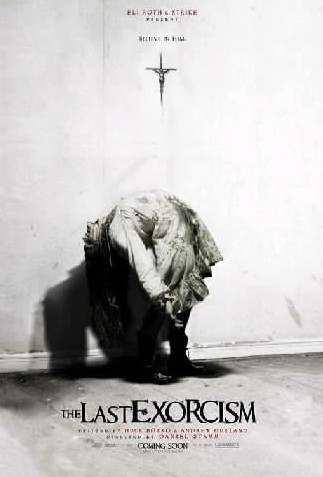
The latest in my spate of scary movie viewings is The Last Exorcism. The press when it was released last year made claims of extreme fright, but my impression was that I’d seen it all before. The “found footage” fantasy is difficult to maintain—although the camera work in the film is good—and the premise of demonic possession is frightening if the viewer is a believer. The hook for this movie, however, is that the exorcist himself doesn’t believe and becomes a victim of his own unbelief. The pattern overall follows The Exorcist, but without the creepy soundtrack and staged lighting effects, The Last Exorcism relies heavily on the viewer’s willingness to believe. The demonic possession is presented as extreme contortionism and self-destructive behavior, as well as the uncharacteristic violence by the victim. When Nell Sweetzer gives birth to a demonic child, a la Rosemary’s Baby, the role of good Christian gone occult feels a little hackneyed.

I’ve tried to analyze what scares so many people with movies of demonic possession. The core fears seem to come down to two: belief in the reality of demonic possession and the fear of being out of control. Historically the concept of possession was originally relegated to the gods with demon possession apparently arising as a pre-scientific attempt to explain epilepsy. The fact that most Christian denominations no longer recognize physical demon possession (a fact exploited by The Last Exorcism) makes it more frightening still. For a generation of media-saturated viewers convinced that cover-ups are common the credibility of the church, struggling with its own metaphorical demons, is suspect. Perhaps demons are out there—a common enough assertion on the reality show Ghost Hunters—and the church has lost control over them. When Jason and Grant explain what demons are, however, they are pretty far afield from Legion being cast into a herd of swine.

If the Internet is any kind of reliable measure of people’s fears, zombies and demons appear to be nearly on a level when it comes to belief. Both are supernatural and neither stretches credulity to the point of humans growing fangs or matted fur. Both participate in the idea that there is more to be feared beyond death. Both fail in the court of science. The Exorcism of Emily Rose raised the ambivalence of demonic possession to the level of the courtroom. One thing I learned on jury duty last week is that the truth is measured on the basis of the judgment of a quorum of rational individuals. The implications of this are frightening indeed: those who accept the reality of non-physical monsters (the jury is still out on ghosts) are fully capable, in a legal setting, of deciding the truth of the matter. The only corrective to witch-hunts and state-sponsored exorcisms would seem to be education. Today education comes via the media where zombies and demons freely roam.


Monsters Are Due on Elm Street

November 1984. George Orwell’s dark vision had not fully emerged, but the veneer had worn off of the fairy-tale world promoted by the evangelical, free-market professors at Grove City College. As a blue-collar kid in a blue-blood institution, I was out of place. The campus was buzzing, however, about a new movie—A Nightmare on Elm Street—for which I finally plucked up the courage to ask a cute coed for a date. I’d never seen a slasher movie before, having sampled mostly traditional monster-flick fare as a child. I felt a sense of accomplishment since some of my college friends had to leave the theater for fear. On the big screen, with no previous knowledge of the plot, the film worked for me on many levels. Last night I decided to watch it again.

My first reaction was a sense of surprise at how much of the movie I still recalled with pristine clarity. For having been nearly thirty years ago, such clarity is a rare phenomenon for many details of life, often reserved for memories of early girlfriends. A second reaction was noticing how religion featured in the film. The girls skipping rope chant, “One, two, Freddy’s coming for you / Three, four, better lock your door / Five, six, grab your crucifix.” Indeed, the crucifix features in several scenes as an ineffectual weapon against Freddie Krueger. The days of defying vampires are over when your own subconscious turns on you. In one of the early chase sequences, Freddie, raising his infamous glove, says, “This is God!” Religion and its overarching concerns with death and suffering come together with horror in that one moment. The traditional power structures of religion have lost their power to defend the troubled teenagers. The only one well adjusted is, ironically, Johnny Depp’s Glen. Even he falls victim to the revenge sought by Krueger.

Surprisingly, the scene I had most trouble recalling was the end. I recollected the bright, hazy sunshine, but couldn’t remember how Wes Craven released his audience from the drama. Of course, there is no end. Freddie came back in countless sequels, none of which I ever watched. Although I wouldn’t know it at the time, Robert Englund based the screen presence of Freddie on Klaus Kinski’s Nosferatu in Werner Herzog’s classic remake of that silent gem. Freddie is the vampire that defies religious cures. Movie villains are among the most adept practitioners of resurrection on the silver screen. The occasional E.T., Neo, or Spock will come back from the dead, but those who repeatedly return are the denizens of our nightmares. As Orwell’s vision continues to unfold in subtle ways, 1984 looks like an age of innocence before the ineffectual god worshipped by the establishment became self-image, writ large, on Elm Street.


Religion Al Dente

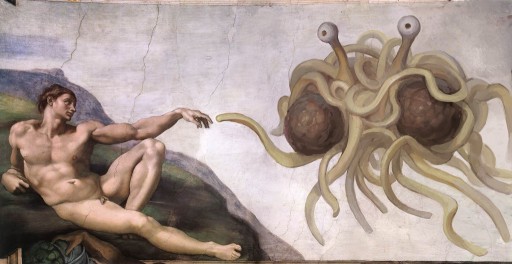
I first learned of the Flying Spaghetti Monster while teaching a course on the Bible and Current Events a number of years ago at the University of Wisconsin Oshkosh. Being freed from the confines of my humorless seminary teaching post, I was free to explore innovative ways to approach my subject matter. When discussing evolution, it was helpful to bring in Pastafarianism as an example of how some highly intelligent—and very creative—people deal with the ridiculousness of Creationism. Lest I be accused of unfairness here, Pastafarianism is also ridiculous. That is precisely the point. The Church of the Flying Spaghetti Monster (FSM) was formed to demonstrate that any inane idea might pass as a religion and should be given equal time with those who use ultra-conservative views on the Bible to effect public policy.

A friend sent me a link to a BBC story of an Austrian man who has finally been successful in his attempt to wear a pasta-strainer on his head in his driver’s license photo. Claiming the headgear to be demanded by the Flying Spaghetti Monster, Niko Alm wished to have his official ID photo taken with the symbol of his faith. I sense an evolution taking place here. The Church of FSM has gone mainstream in many respects; there is a Bible available, you can buy a bumper-magnet to rival a Jesus fish, adherents have designed a slick website, and it boasts many, many followers. While the website of the Church of FSM defiantly refuses to be taken seriously, it makes legitimate claims—religions do not require literal belief, and therefore Pastafarianism is a true religion with believers not being held to any particular doctrine.

The outcry against the FSM movement (which began roughly early in the new millennium) demonstrates its effectiveness. Are there really people who believe this religion? A tour of the website should be proof enough. The claims made by the group have analogues in traditional religion; many major religions teach events and doctrines that are equally unbelievable in the confines of the physical world in which we find ourselves. It is difficult to believe that Niko Alm actually takes this seriously, but who are we to judge? The FSM has moved from making fun of Intelligent Design to casting the very definition of religious belief into sharp relief. Who’s to say we haven’t all been touched by his noodly appendage?

Touched by his Noodly Appendage


Religious Reflections

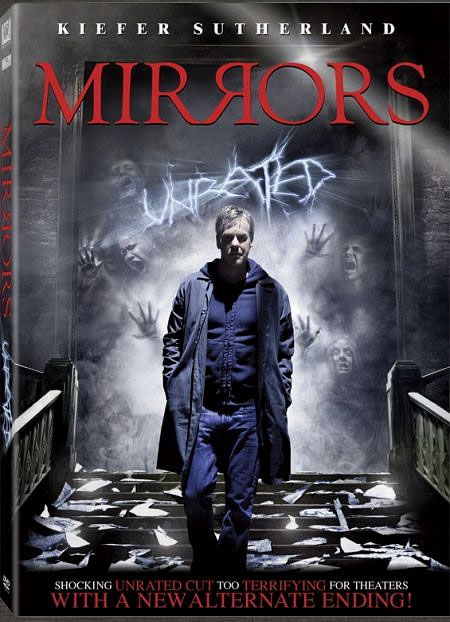
In a stunning display of alacrity, over the weekend I viewed the movie Mirrors only three years after it was released. Since I watch horror films with a view to how they portray religion, I was preparing myself for disappointment when well over halfway through no overt, or even subtle references seemed to have been made to any holy topic. As Ben Carson, security guard, discovers that the mirrors of his night-watch building are haunted, the story seemed to be evolving into the standard ghost movie. When the missing character of Anna Esseker was finally found, I breathed a sigh of relief—she was living in a convent (because there were no mirrors there). What I supposed was a ghost movie was really a demon movie, and I found yet another example of how fear and religion interact.

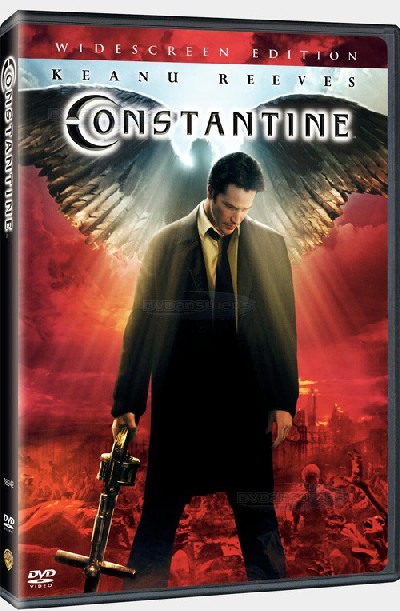
Since I’m currently preparing a program for a local church on the way that Christianity is represented in the movies, I’ve been rewatching a couple of standard films to gauge the scope of this interaction. So this weekend I also watched Constantine. This has never been one of my favorite movies, but as imbued as it is with Christian mythology it cannot really be ignored. When Gabriel is explaining to Constantine why he is bringing the devil’s son into the world, I realized that the reason coincided with some of my observations. Gabriel notes that humans need fear to appreciate God. By bringing fear into the world, Gabriel will force humans to become more pious. Intertextuality in the movies.

If I might indulge in some theological (that word makes me shudder) speculation that may not have been intended by the writers/producers, both of these movies utilize the concept that demons are trapped by mirrors. This may be a reflection truer than ever intended—we are our own demons. Mirrors reflect the vanity of visual appeal; our looks fade and our true self remains. Is that self an angel or a demon? Christian tradition states they are one and the same. Demons are only fallen angels. I’ve seen enough horror films to know that religion is not a universal element, but it often does appear in the role of producer of both good and evil. In this sense, at least, the movies are very honest.


American Haunted

Serendipity, although rare, still occurs in university life. As an adjunct instructor whose livelihood revolves around the number of courses that may be squeezed into a limited number of days, I have been considering online courses. As an avid watcher of horror movies—excellent preparation for adjunct life these days—I have attempted to sample the genre widely. It is therapeutic to see people in fictional situations worse than my own. While attending a training course on constructing online courses earlier this week I was surprised to find out my instructor was Brent Monahan, a versatile and talented individual of whose presence at Rutgers I was unaware. Most famously Dr. Monahan wrote the novel and screenplay for An American Haunting, a movie I had written a post on back in January.

Compulsive in my desire to be on time, I generally show up to all appointments early. For this particular session I was the first person present, so, not recognizing my teacher, we struck up a conversation about my field of studies. (He asked; I try not to lead with my chin.) He was nonplussed about the fact that I am affiliated with the religious studies department—in general this is a conversation stopper since, along with politics, it is a forbidden topic in polite company. Before I realized who he was he suggested that perhaps people go into this field because of their internal struggle with good and evil. It was a perceptive statement and it made sense when it came out that he was a writer of horror films and novels.

Since I’ve been exploring the nexus between religion and horror I have wondered what the deeper connection might be. Clearly fear of the unknown, the overly powerful, and the randomness of life in an uncaring universe play into it, but perhaps it is also the struggle of good and evil. Horror films often present the “what if” scenario: what if the side of evil were allowed free reign? Often the fount of that evil, in horror films, is religion gone awry. Certainly in An American Haunting a pious man is driven by inner demons to the abuse of his own child. That he is a religious man is made plain from the near-constant presence of a clergyman in his house once the haunting starts. While the exact relationship remains to be parsed, it is clear that fear and religion reside very near one another in our brains, perhaps as near as good resides to evil.


Zombie Friday

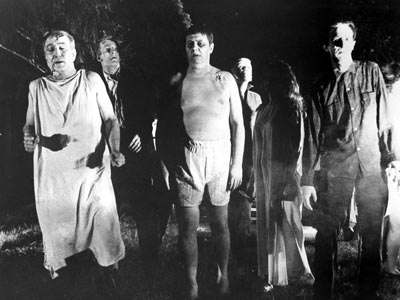
New Jersey is known for its zombies. Last October Asbury Park gained admission to the Guinness Book of World Records for the largest zombie walk (exception is made, of course, for daily life in Washington, DC). The movie zombie, in its now classic form, was reborn in western Pennsylvania, but New Jersey is the place where strange afterlives appear to gravitate. Yesterday Stephen Finley was sentenced. Finley, a mortician, had been convicted of selling the healthy organs of his dead customers to earn a little extra on the side. Given that the governor, Chris Christie, might rival Vlad the Impaler in his zeal for chopping, this really does not surprise me at all. Is it not the ultimate triumph of the free market to consider human beings commodities to be packaged, used up, repackaged and resold? Moral rectitude is on the side of the strong arm.

As someone who has been on the receiving end of the chop more than once, and reduced to a zombie-like state of perpetual job-insecurity, I think I know how the undead feel. Not having a place in the normal world of the living, but not quite dead, the zombie wanders about looking to feed on brains. This idea of brain-lust seems to stem from the cult classic The Return of the Living Dead, although, not being a film specialist, I would welcome correction on this point. Nevertheless, like the modern zombie I hail from western Pennsylvania and nothing satisfies me like a good brain (metaphorically, of course).

The idea of harvesting the organs of the powerless dead also suggests the endlessly referenced Soylent Green. Here the staunch NRA promoter Charlton Heston fights against the establishment that is turning (spoiler alert) people into Soylent Green, the ultimate solution to food shortages! For, after all, are people not just commodities? America’s thirst for zombies reflects our growing sense of victimization: the zombie is primarily a creature without a will, brought back by powers beyond its control. In the original vodun context the zombie was a source of cheap labor. Is it any surprise that West African slaves brought the concept to the New World with them? Today, of course, those with the cash may simply purchase the organs they desire, cutting out the middle man and going straight to the source.


Blood Lust

They emerge at night. They take your life-essence. They are very difficult to remove. In a particular political party their ruthless ways are highly praised. Yesterday I had occasion to watch the History Channel’s Vampire Secrets. Frequent readers of this blog know of my contention that horror films generally convey religious fears and certainly the vampire is prominent among such hosts of fear. Although superstition has held that actual creatures drew actual bodily fluids from their victims as far back as the Sumerians, today’s perception of the vampire has gone through several transformations. This particular documentary attempts to trace the origins of the modern vampire fascination through its major stages, beginning in ancient times. The writers and editors seem to favor a Far East origin of the concept, but linger for several minutes on the character of Lilith in Jewish folklore. Although Lilith does not really fit the profile of a classic vampire, she does contain a key to understanding the transformations: they are religious in nature.

People have believed in blood-suckers long before the GOP took on its recent transformation; there is no doubt, however, that the blood-lust of the vampire developed in the light of Christian ideas about the crucifixion. The regular imbibing of “blood” was an aspect of early Christianity that led to problems with the Roman authorities supposing this was some sort of precursor to Vampire: the Masquerade. By the time stories began to circulate about Elizabeth Bathory (ironically, at the same time the King James Version of the Bible was being translated) and her famous blood-lust, and after Bram Stoker later selected Vlad Tepes as a fictional model for his Dracula, blood-ingestion had become the singular hallmark of the vampire. In both cases, despite their historical facts, religious elements had entered in.

One of the most disturbing transformations, however, is that whereby religion itself becomes vampiristic. Originally established as a means of propitiating angry deities, religion very early assumed the aspect of blood-letting as a means of accomplishing that propitiation. With the development of religious abstractions, however, literal bloodshed has become distasteful and less common, but the deities still demand sacrifice. Even in the twenty-first century many accepting people are informed of the pecuniary sacrifice desired, commanded even, by the gods. While the occasional poverty-stricken cleric may occasionally appear, many far surpass the status quo in their crystal cathedrals while many of the faithful suffer want. The History Channel found vampire subcultures in the streets of New York City. They might also have found them in just about any town in any country of the world.

Saint or sinner?


Malleus Practice

Misfortune takes a quiet seat in the back of the bus for many people, but it is always there riding behind you. My recent trip to Salem is now over, but it has left me with that haunted feeling that sometimes tragedy just won’t let go. Reading up on the history of witches and the belief therein, it is pretty clear that the whole idea began as a form of theodicy. Misfortune happens. When a one-to-one correspondence attends it, people don’t worry too much. (John has a stomachache. We know that John slapped Bob, and Bob punched John in the stomach so there’s no supernatural agent at work here.) When the adversity comes out of nowhere, to all appearances, we naturally look for a cause. As long ago as ancient Sumer, and probably before, the answer was sometimes the baleful influence of enemies with supernatural powers. The witch was born.

This idea has remarkable longevity. Even as the eighteenth century dawned, just a few short years after the tragedy at Salem, Puritans and politicians embarrassingly looked at their feet and admitted this mockery of justice had been an unfortunate error. Yet they still believed witches existed. The concept is alive even today in parts of the world minimally influenced by schooling in science and logic. (I taught at a seminary where various witch hunts still took place; books were even burned.) Who doesn’t know the feeling that a totally natural disaster was in some way targeting them? Whether tornadoes, tsunamis, or rain on your Memorial Day picnic, the normal human response is one of a minor (or major) persecution complex.

To solve the riddle of witches, horseshoes and witch bottles are not necessary, but education is. Witchcraft was not considered Satanic until the late Middle Ages when apocalyptic fever raged through Europe with the Black Death. Not understanding microbes, the populace supposed a great war presaging the end of times was escalating between God and Satan. The minions of the Dark Lord were spawned by witches and demons. (Add Tim LaHaye and you’ve pretty much got Left Behind.) To solve the problems of the righteous, sacrifice a few innocent victims. If we call them witches—actually any undesirable name will do, eh, Senator McCarthy?—we will feel justified in doing so. The real solution, namely, working together to overcome natural and human-made afflictions, is really just too hard.


Lesson of Salem

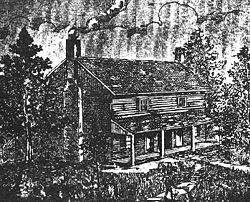
I married a witch. I suppose I ought to clarify that a bit. My wife is descended from Rebecca Nurse’s brother Jacob. Rebecca Nurse was one of those unfortunately hanged as a witch in Salem, Massachusetts in 1692. My family has been spending the last couple of days touring Salem, seeking to get in touch with our heritage. Yesterday we had the rare opportunity to tour the home of Rebecca Nurse which, remarkably, still stands over 300 years after the tortured events of the late seventeenth century. Our tour guide was impressively knowledgeable about the witch hysteria. She noted that in the Puritan (Reformed) mindset, with no science to speak of, evil could only be explained by the Devil. If misfortune came, the Devil was to blame. Even after the “witches” were exonerated (too late to save 20 lives), it was understood that the Devil incited the girls to make their false claims against their ultimately and penultimately righteous neighbors. Without the Devil none of this made sense.

The Rebecca Nurse homestead

Salem was founded as a utopian community free to live out its Puritan religion. It was named after Jerusalem, a city of peace (!). As our guide noted, religious freedom was not the same as tolerance; the Puritans wanted the freedom to celebrate their own religion, but were extremely suspicious of all others. One of those hanged as a witch, George Jacobs, had nearly beaten a neighbor to death simply because he was a Quaker. Rebecca Nurse, however, at 72 years old, was no threat to anybody. She was a member of a Christian community that turned on her. Condemned for charges the nearly deaf woman could not even hear properly, she was hanged for consorting with a mythical Devil.

Rev. Parris's house, where the witch hysteria began

No doubt the religion of the Puritans was a harsh religion with a God nearly as unforgiving as that of Sweeny Todd. The problems occurred, however, when the law came into the hands of religious leaders. There is an allegory and a moral to this story. Today many of the tourist attractions in Salem focus on the need for true tolerance. They no doubt come closer to the spirit of the founder of Christianity than the Puritans ever did. As I stood looking over the hole in the ground that is all that remains of Rev. Parris’ parsonage—the very location the witch hysteria began as his daughter Betty started to act odd after hearing the stories of the slave Tituba—a profound sadness afflicted me. Twenty people died and many lost all their worldly possessions because of an uncontrolled mythology of a church convinced of its own righteousness. An allegory and moral for the twenty-first century indeed. Have we yet learned the lesson of Salem?


Decomposition

The following video report addresses a number of issues recently raised on this blog: apocalypses, zombies, fear, and humor. Zombies, of course, have been clawing their way to the top of the monster pile for a few years now. Media analysts have suggested that they represent the triumph of the working class—no sartorially suave vampires these—instead they are spattered with blood and gore, multitudinous, and clumsy. Having watched the most recent apocalypse come and go, and having been a victim of an unstable economy for several years of my professional life, I think zombies represent something else. Instead of being the triumphal usurpers of vampiristic free markets, zombies represent the breakdown in culture we are experiencing in the present.

If history gives us anything to go by, we know that powerful world empires ebb and flow. The Persians succumbed to the Greeks, and the Romans could not stop the Goths. The Holy Roman Empire was dissected into the nations of the modern European Union (roughly), and the sun now sets regularly on the British Empire. The United States, the capital of the zombie craze, has perhaps passed its zenith and the zombies know it. Since the 1970s we’ve watched as religious extremists have made a mockery of a political system that had already grown problematic. Like decaying corpses that won’t go away, the factors that propelled the United States to a place of prominence have been undermined so that the non-undead can continue to feather nests already stuffed with down as high as Babel. In the constant see-sawing of political parties the imperialist trends of the obscenely wealthy have rocked their way into the dominant. Is it any wonder that zombies are brainless, yet insatiably driven?

What does it feel like to watch the azimuth decline on a great empire? It is difficult to say. History, as the aphorism states, is written by the winners. Revisionist history has become quite fashionable to those who find that the facts refuse to bow to their worldview. Zombies are those who, historically, do the will of their masters without question. Instead, the zombie of the twenty-first century bows to no master. Pure selfish survival is its sole aim. Perhaps the CDC is too late, the zombies have already overrun us.

Newsy.com’s Report