Sleepy Hallow

Sleepy_hollow_ver2Upon occasion I found movie clips to be of great help in explaining ideas in religion classes. A movie whose clips I used sparingly, due to concerns for squeamishness, was Sleepy Hollow (the Tim Burton movie, not the modern television series). Upon viewing it again recently, I was impressed by just how much religion is intertwined in the narrative. This is especially interesting since Washington Irving’s story does not contain much in the way of religious symbolism or motifs. From the beginning of the film, Rev. Steenwyck is one of the conspirators, making the church complicit in the attempt to subvert the van Garrett will. When Ichabod Crane arrives in Sleepy Hollow the cleric drops a Bible—a recurring motif in the movie—on the table beside him, telling Ichabod it is the only book he will need. Christianity and Paganism clash throughout the film as a number of the women are revealed to be witches, either “innocents” or practitioners of a darker kind of magic.

In flashbacks Ichabod Crane recalls his mother’s white magic that draws the ire of his ordained father. Indeed, Ichabod’s father is a stylized amalgamation of Roman Catholicism and Protestantism blended into one. His harsh white chapel houses an inquisitorial torture chamber in which he murders his wife. Seeing her pagan symbols in the fireplace ash, he too drops a heavy Bible to point out his wife’s sins. When he stalks off from his medieval chamber of horrors, the camera angle shows him to be headless—he is the true terror, rather than the Horseman who was raised by magic and appeased by the simple return of stolen property—his head. Even in the present Rev. Steenwyck is both an adulterer and a murderer. The melee in the church leaves the final three conspirators dead.

The white witches, however, are marked by their purity. Mother Crane is so light that she can float up into the air. Katrina van Tassel draws chalk icons to protect Ichabod, indeed, the whole town, from evil. While Ichabod refers to his father with the evocative phrase “Bible-black tyrant,” his mother was an innocent child of nature. In the film Ichabod moves from the rational view of life to one that allows for the supernatural, in the form of magic. True, the Horseman cannot cross onto the consecrated ground of the church (another Catholic concept mixed in with the Protestant milieu), but the faith that saves Ichabod’s life is the book of spells given to him by Katrina. Yes, the physical book stopped a material bullet, but it was faith the put the book in the pocket in the first place. All very appropriate to bring students’ minds to religion in the autumn of the year.


Bible According to Batman

DarkKnightRises Biblical tropes are alive and well in popular culture. Many would choose the flight option rather than admit they enjoy a good Bible story. They may anyway, however, without realizing it. Although The Dark Knight Rises came out over a year ago, I only just had the chance to watch it. For a kid who grew up on the campy 1960’s television series, Christopher Nolan offers adult fare. Put the kiddie menu away and sit up straight at the table. I don’t read reviews, in general, before seeing movies because I don’t enjoy spoilers. I had no idea whether Batman would come out of this alive or not. I wasn’t really even sure who Bane was (even before The Dark Knight everyone knew who the Joker was, or thought they did). The Dark Knight Rises places the whole of Heilsgeschichte (sacred history) before the viewer with verbal cues. Unless you’re reading while watching, you’ll miss it though.

Bruce Wayne is clearly cast as the wounded healer in this final installment of the trilogy. Physically and psychologically crippled, he hobbles around in a combination of Jesus and Yoda figures, somehow supernatural yet fully human. Death and resurrection transpire twice for him in this film. When Bane breaks Batman’s back (an often fatal injury) even Catwoman thinks he might be dead. He is very much alive, however, in the prison only “Bane” escaped (resurrection one). Not only does he rise from the grave, he also ascends into heaven by escaping the well—anyone who’s read Jeremiah, or even Genesis, knows the origin of that motif. Risen, ascended, and glorified, Batman returns to beat the crap out of Bane. But the bomb is still on the loose and before Batman faces his nemesis he tells Commissioner Gordon to arrange “an exodus”—Joseph’s descendants must get out of Egypt. At the Red Sea (the Hudson River) the Pharaoh’s army blocks the exodus of the children of St. Swithun’s who, in response, bow their heads in prayer (am I the only one seeing this?)

Commissioner Gordon, found guilty of betraying the common man, receives the sentence of Exile (“death, by exile” to be precise). Again, those sensitive to Jeremiah know that exile is a kind of death, but death with a noble purpose. The Heilsgeschichte of Israel involves exodus and exile. The Christians added on death, resurrection, and ascension. Christopher Nolan put them together in one Dark Knight. But I mentioned two resurrections, no? Flying the bomb out of Gotham, Batman is definitively blown to smithereens—the blast radius was, after all, six miles. And yet, Alfred has a post-resurrection visitation, where no touching occurs (Touch me not; for I am not yet ascended to my Father) sees his savior. Was the Bat the Holy Spirit on autopilot? Is that Catwoman with him? Might I be so bold as to type Mary Magdalene? Well, I may be over a year late with my observations of The Dark Knight Rises, but as I think Christopher Nolan understands, the Bible has been lying around even longer. If the success of this movie is anything to go by, it will be around for a long time yet to come.


Which Way to Eden?

We don’t have television service, and I haven’t watched TV regularly for about two decades. Over the years, however, we’ve collected the DVDs of the shows we miss, or which we wish we’d seen so that we missed them, and use those in lean times. Feeling a bit lonesome over the weekend I downed a few Twilight Zones followed by a Star Trek chaser. On a three year mission to explore strange new worlds, my wife and I have been working our way through Star Trek, the original series. We’ve finally reached the final chapters of the final frontier. I’ve noticed as we’ve gone through the episodes just how biblically literate the series is. Even Spock quotes the Bible from time to time. Over the weekend, to keep my mind off present reality, we ended up watching “The Way to Eden.” As much as I enjoyed Star Trek as a kid, when it was still new, the overtly ’60’s-themed episodes bother me as an adult. I’m very much still a hippie at heart, but I don’t like lingo, and the alien cool cats in their weird shorts and funky hairdos chanting “Herbert! Herbert!” still really bother me. Somewhat predictably the aliens hijack the Enterprise to reach their fabled paradise.

Leonard_Nimoy_William_Shatner_Star_Trek_1968

Spoiler alert! For those of you who’ve been asleep since 1969, or have had no curiosity about the inspiration behind all those geniuses who’ve ushered in the technological revolution, I’m about to reveal some details. Eden is deadly. The landing party finds the short-pants wearing, funky guitar-strumming crooner dead under a fruit tree. “His name was Adam,” Spock laconically notes. The scene of Dr. Sevrin’s burned foot has stayed with me since childhood, and I still cringe when he leaps out of the shuttlecraft to take a bite of the poisoned fruit. It was only as an adult that I realized his name was reminiscent of Eve, indeed, a kind of blending of the words “sin” and “Eve.” In a kind of homoerotic death scene, the two male leaders end up under the tree together. Probably my overactive imagination.

Sometimes I ponder how much a biblically illiterate society misses. I frequently told my students that the Bible is foundational for our culture. Whether or not you’re aware of it, it is reinforced regularly in ways both ortho- and heterodox. Despite our very secular self-awareness, entire movies, such as The Book of Eli, can be based on the premise of biblical literacy. It is entirely possible to watch movies and television shows, and to read novels (graphic and literary) with enjoyment and not notice the allusions. The reasons they are there, however, is that despite the abuses of literalism, the Bible does have some profound things to say. It’s up there with Shakespeare and Chaucer. And even with Roddenberry and his host of staff writers. And I suspect that it still will be, in some form, in the twenty-third century.


Personal Dogma

Dogma is a movie that many seminarians discover at some point in their theological education. Smart, funny, and irreverently reverent, the film follows the exploits of a couple of misled angels trying to get back into Heaven and thereby negating all of existence. It is no surprise, given Kevin Smith’s origin myth, that the film opens and closes in New Jersey, but I often ponder the strange coincidence of places in the movie to places I’ve lived since my own seminary career began (and ended, rather like the massacre scene in Red Bank before God cleaned it all up). Nashotah House, where I discovered Dogma, is in Wisconsin. Wisconsin is the state to which Bartleby and Loki, the two angels, have been banished. The means of their escape from this upper-Midwest purgatory is a church in New Jersey. Along their way the angels pass through Illinois and Pittsburgh, before crossing into the very state where God is located throughout the movie (the Garden State, of course!). After having been summarily dismissed from my seminary post in Wisconsin (not for watching Dogma, I’m assured), I too headed for New Jersey. Before that I had lived for a while in Illinois (home of Bethany) and Pittsburgh (home of Moobie). Watching Dogma is in many ways a reflection of a journey that I’ve accidentally undertaken.

YEE.tif

Another kind of dogma seems to be at work in the Eagle Mountain International Church in Newark, Texas. The Associated Press announced that 21 cases of childhood measles had broken out in the church, particularly among the homeschooled and unvaccinated. Fears of inoculating against a pre-medieval faith have led many of those who trust their own knowledge above that of the collective specializations of educators, to put their children at risk for the sake of belief. The belief, perhaps unsurprisingly, is poorly informed. One of the pastors of EMIC (!) has been encouraging vaccination as biblically sanctioned. If not for the sake of your children, for the sake of the scriptures…

Vaccination, in various forms, was developed in both Christian and pagan contexts. The earliest examples come from Asia where the plagues sent by the devil were resisted with human ingenuity. It takes a paranoid twenty-first century, first-world faith to suppose saving our children is some kind of conspiracy. “Let the one without germs,” we can almost hear them say, “throw their tissues away first.” In my Pittsburgh days, I was very much a literalist. How surprised I was to see Lady Aberlin from Mister Roger’s Neighborhood playing an angst-ridden nun, derailed by an exegesis of “The Walrus and the Carpenter” in Dogma. Although the Neighborhood is “anytown” those of us locals knew that Fred Rogers was from Pittsburgh. Lady Betty Aberlin was the niece of King Friday XIII, and only those with no conspiratorial imagination would suggest it is merely coincidence that her cousin is named Kevin. With or without dogma.


Grand Delusion

Humphrey_Bogart_in_Casablanca_trailer

“The problems of three little people don’t amount to a hill of beans in this crazy world,” Rick memorably quoted in his once safe haven in Casablanca. Rick had fled his country for moral causes, only to become jaded and callus in an unfeeling universe. So it was with interest that I read the story of the Gastonguay family that my wife pointed out to me. The Gastonguays were stranded at sea when they took their kids and father-in-law and tried to sail away from a US rife with abortions, homosexuality, and “the state-controlled church.” Apart from sailing lessons, and perhaps a primer on US history, the little family had all they needed. They believed that their religion was sufficient to survive on Kiribati, their personal Xanadu, where there aren’t enough people to interfere with free religion. The Gastonguays, however, ran into a series of ocean storms after they set out from San Diego in May, eventually being rescued by a presumably Catholic Venezuelan fishing vessel. Their plane fare home is being footed by the godless government they fled.

Mrs. Gastonguay seems to be the family spokesperson. She notes how the Bible is pretty clear on social issues, according to the story on NBC. I couldn’t help, perhaps a bit naughtily, of thinking of the Bible as well, particularly Ecclesiastes 11.1. “Cast thy bread upon the waters: for thou shalt find it after many days.” That bread may be quite soggy, however, and the government you distrust might just have to bake you some new if you are to eat. I complain about government policies and shenanigans on this blog, but it is because I appreciate the ideals upon which this country was founded. Religious freedom is more or less a reality. Our government doesn’t force you to have abortions or marry a homosexual. School vouchers, which the Gastonguays may appreciate, are about the closest we come to a state-sponsored church.

Shifting genres a bit, I think of the hair band Styx’s hit, “Come Sail Away.” On that mythic journey the unnamed captain sees a gathering of angels swirling about his head. Of course, the angels are really aliens inviting him aboard their starship for an even more dramatic exit from a planet so full of troubles that any good Christian should have trouble sleeping. I can’t say that I don’t dream of escaping every once in a while. The ills that churn my stomach most are a pythonesque capitalism that just won’t let a poor soul breathe free without having to earn an extra greenback or two on the side. If it was up to me, however, I think I’d rather hang with Dennis DeYoung and await the unfolding of the grand illusion. That starship might just be the closest any of us will come to heaven on earth after all.


Resurrinception

Inception_ver3Like most profound movies, Inception keeps me coming back repeatedly. I’ve already written a post on how the Theseus and minotaur myth lurk deep within the labyrinths of this film, but upon my most recent viewing a new angle caught my attention. In the first level down into Fischer’s dream, when Saito is unexpectedly shot, Eames asks Cobb, “What happens when we die?” It could be the question of a child faced with a dead pet for the first time. Of course, Eames refers to death in a dream under sedation, and limbo is the closest thing to spiritual death that a person can experience. The timing of that question, however, triggered in my head the number of resurrections that take place in the movie. I have frequently noted here that resurrection is a standard part of the tool kit for western movies, particularly American ones. We expect resurrection. So, finally, three layers down, a dream within a dream within a dream (even Poe would be proud), Saito dies. He is lost in limbo.

Limbo is a fuzzy theological construct thought up by the church for those who don’t deserve Heaven, or Hell, or even Purgatory. Some, it seems, end up in limbo. In Inception limbo is unconstructed sub-conscious, an area even Freud would fear to tread. Saito dies and goes to limbo. Fischer, meanwhile, also ends up in limbo because Mal shoots him dead in the third-level dream. Mal is already in limbo because she killed herself in real life—or was it a dream? Cobb, of course, must die to return to limbo to retrieve Saito so that he won’t be arrested when the plane lands. In limbo, three of the four escape, riding the kick back up to consciousness. Only after baptism in the first level dream, when the van plunges into the river, do the lost souls emerge. What happens after we die? Resurrection.

I’m not suggesting that Christopher Nolan planted a Christian idea in the viewers’ subconscious mind. Resurrection is part and parcel of our culture. Perhaps, however, this helps to explain the durability of some religious concepts. We long for resurrection on such a deep—maybe subconscious—level that we want to see it on the big screen. Even ghosts, we’re told, haunt because of unfinished business. It is Saito, the Japanese business mogul, however, who undergoes the most resurrections. He dies in the van underwater, in the fortified mountain hospital, and in limbo (perhaps in the elevator as well, but this is uncertain). His is a regular reincarnation of resurrections. Inception, I’m sure, will keep me coming back for more. One of the questions that none of us escapes while alive, is that uttered at the level of the dream.


Let It Shine

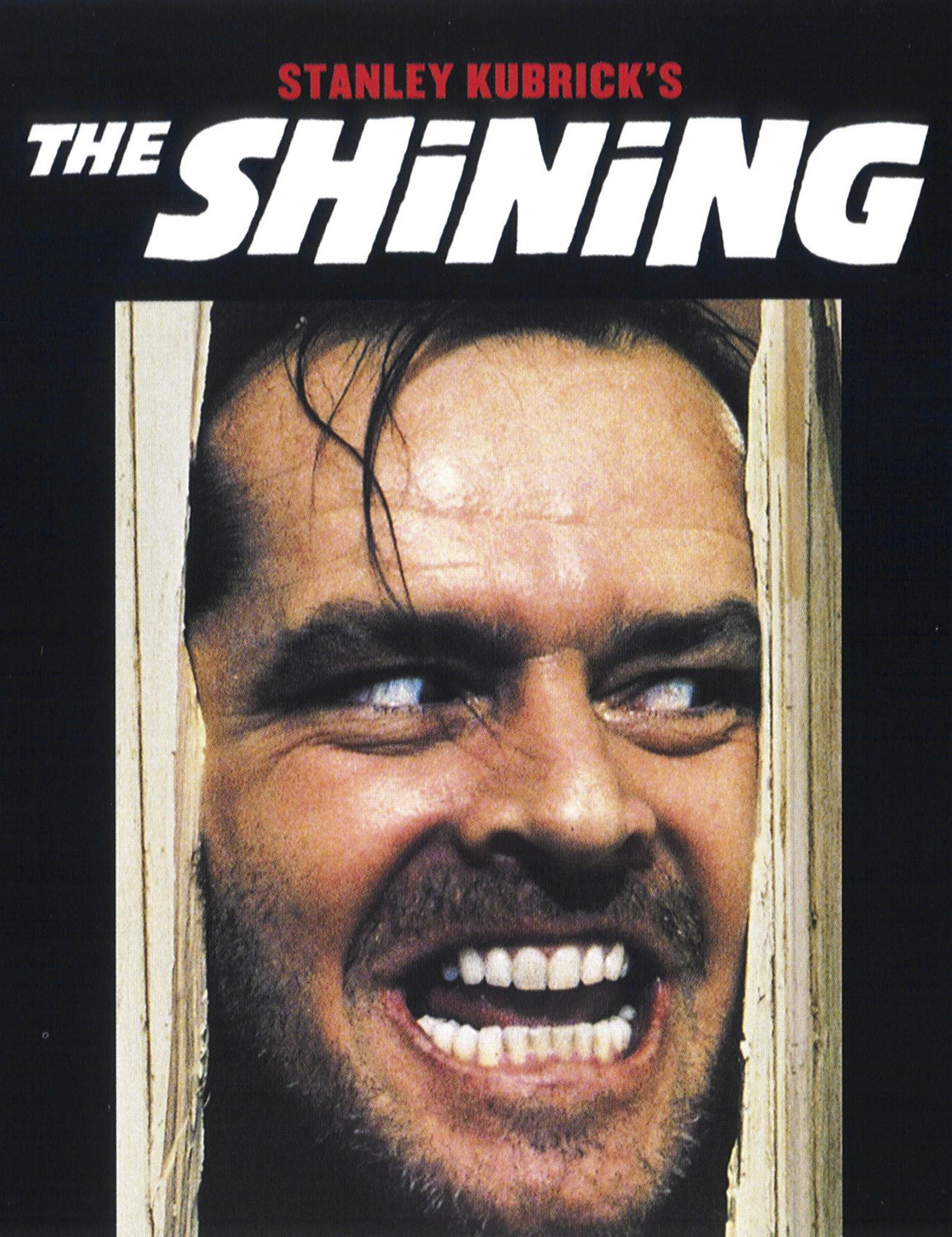
Stanley Kubrick was not the most prolific of movie makers, yet his efforts often create striking impressions. I saw 2001: A Space Odyssey at a young age, and it has remained one of my favorite films ever since. Although I’ve watched horror movies since my college years, I shied away from The Shining until about five years ago. By that point I’d seen enough clips and parodies to kind of know what to expect. Since finally viewing the original, it has become one of my most admired movies as well. Kubrick films may not be easily slotted into a genre, and The Shining is not a typical horror movie. There always seems to be something more going on in addition to the growing menace of Jack Torrance’s insanity. I’ve been hearing about Room 237 for a few months now, and I’m eager to see it. Room 237 is admittedly a movie about a movie, an exploration of how The Shining has inspired multiple interpretations of what most consider to be one of the scariest movies of all time.

The_Shining_poster

An article by Jay Kirk in the June edition of Harper’s Magazine examines this movie of a movie. Kirk is the cousin of Tim Kirk, the producer of Room 237, and offers a personal introspective of a mind under the spell of Kubrickian influence. The article, “The Shining Path: Room 237 and the Kubrick cult,” not surprisingly, keeps turning back to religion. It may be fallout from the Kirk cousins both being children of clergy, or it may be that effective horror films are, as I’ve maintained before, inherently religious. Even the meeting of the Kirk cousins takes place at Gaudi’s Sacred Family cathedral in Barcelona. It seems that there’s no way to get at The Shining without involving religion. Not that it’s a religious movie, but it may take some religion to understand it.

No doubt Stanley Kubrick was a deep man. Even those who try to interpret his movies end up adding a kind of hidden message of their own to the plethora of ideas he eloquently shot. I know nothing of Kubrick’s religious convictions, if any. Any film with the gravitas to inspire continuing hermeneutics over three decades after its release, however, will surely open itself to a kind of sanctification. The penultimate section of Kirk’s introspective focuses on Proverbs 3.5-8, a passage underlined in his grandmother’s Bible. To understand the genius behind The Shining, it seems, religion will have to be part of the discussion.


Before Twilight

Despite the summer with its long, languid days, The Telegraph reported on vampires last week. In an article entitled “Polish archaeologists unearth ‘vampire grave,’” Matthew Day narrates how archaeologists have uncovered skeletons buried with their heads—decapitated, obviously—on their legs. This was apparently a not uncommon medieval practice for ensuring that suspected vampires stayed safely in their graves. Interestingly enough, Day comments that the practice mainly began after the Christianization of the pagan cultures that had preceded them. Even pagans, he suggests, ran the risk of being accused of vampirism, a broadly defined threat in the Middle Ages. Of course, the Twilight series had not been written then so that the safe, Mormon cast of vampire was unknown.

Vampires represented a couple of concepts terrifying to people before the scientific revolution: they were a source of draining an individual of some life essence, and they were the problematic undead. The decapitation, in Tim Burton-Sleepy Hollow style, was intended to prevent the vampire from being able to locate its head after death. Unable to find the business end of its vampiristic corpus, the undead might remain just plain dead. Of course, staking works, if the tales of the Highgate vampire, near whose grave I recently stayed while in London, are to be believed.

The belief in vampires, or at least fascination with them, has been very hard to shake. One of the earliest horror films made was Nosferatu, a rip-off of Bram Stoker’s Dracula that was nearly obliterated because of copyright violations. Nosferatu continues to be ranked among the scariest of horror movies, and the Werner Herzog’s 1979 remake is a classic in its own right. The Shadow of the Vampire was an even more recent movie about the filming of the F. W. Murnau original. Among the earliest of the Universal monster movies was Tod Browning’s Dracula, which forever identified the face of Bela Lugosi with the infamous Count. No matter how deeply we bury them, the vampires keep coming back to stalk our nights and nightmares. When future archaeologists uncover the detritus of our civilization, no doubt they will conclude that we too, in a secularized world, feared the undead.

Bela_lugosi_dracula


Hansel and Regretel

HanselGretelHansel and Gretel: Witch Hunters was on offer on the trans-Atlantic flight. Since I missed it in theaters, I decided to watch it on my mini-screen inches from my face. Witches, among the classical monsters, have a strange longevity into the world of science—like van Helsing (of movie fame) the protagonists have steam-punkish gadgets to destroy the naturally invincible foes. What’s not to like? I could not help but be disturbed, however, at what seemed to be the inherent misogyny of the film. Perhaps it was the lighting on the plane, but I saw only one male witch among the monstrous hordes of females who were battered, shot, and burned with apparent sangfroid. Women were guilty, it seemed, until proven innocent. And Mina, the white witch, again underscores that women who are “clean” are still potential witches underneath. Naturally, she dies before it’s over, but in a noble way.

The witches in the movie are strangely removed from a traditional, satanic context. They derive their power, like modern wiccans, from nature and strange mixes. The source of their magic is never explored very deeply, but when they catch trespassers in their forest, their queen states that even God himself fears to go there. Bewitching bravado, to be sure, but where does this image of God originate? A god afraid of the very nature that (in a film such as this, certainly) “he” created? The sacrifice of children is a good biblical trope, but seems to do little more here than to build the tension.

Monster movies, I realize, are “guy flicks.” Something about all that testosterone seems to be energized by images of ordinary people fighting monsters, against incredible odds. The monsters here, however, are barely distinguishable from regular women. Folklore has a deep well of traditions about witches from which the savvy might draw to write an intelligent, entertaining tale of witch-hunters. After all, the real antagonist, traditionally, is the male devil. He is, in medieval tradition, the source of witching magic. By removing Satan from the picture, we are left with strong women who must be repressed, and the world is really no safer when Hansel and Gretel are done. In fact, the end of the movie implies that they will never be finished. An opportunity for a subtle shift of paradigm was missed in this film, and, as usual, it is women who end up paying the price.


Something to Believe

Xfilesiwanttobelieve After a rough week at work, nothing helps so much as simple escapism. Thinking back to my glory days in the classroom, I remembered the movies I used to get students thinking about how the Bible is represented in popular culture. One of those movies was The X-Files, I Want to Believe. Not that the movie was my favorite, but escapism isn’t picky—there’s one reality I want to escape, and just about any other will do. As I watched the film again last night I was struck how very much the whole movie is premised on religion. I suppose the title should’ve given that away, but since it is the slogan of Mulder’s famous poster, I’d not really given it serious thought. Scully is now a practicing doctor in a Catholic hospital, and the number of lingering scenes with stained-glass icons in the background simply can’t be ignored. She has given up chasing monsters in the dark, and come to live in a very Gnostic kind of light. Through a pedophile priest (Father Joe), the darkness finds her again. How could I have missed the centrality of a priest to the plot?

The scene I always pointed out to my students was where Father Joe goes into a seizure while quoting Proverbs 25.2, again citing Gnostic hidden ways. The Bible slips from his trembling hands and falls, closed, to the floor. Later, as Mulder is literally about to be axed to death, Scully finds him by noticing the mailbox number 25-2. A proverb was a prophecy and the Bible retains its ability to guide the believer toward salvation. Through paranormal means, of course. After all, this is the X-Files.

Faith versus science, religion versus reason; these are the underlying motifs of the entire film. Scully the skeptic is the one who believes. Mulder, the high priest of the preternatural is just waiting for her to come home. It isn’t the greatest of movies, but it is based on some classic themes. Wanting to believe, but not being able to believe—isn’t this one of the most religious tensions possible? For years now the internet has been buzzing with rumors of a third, and probably final, X-Files movie. And yes, many people are wanting to believe. And if work continues with weeks like this past one, I’ll be needing a lot more escapism as well. Yes, I want to believe.


Z War to End

World_War_Z_posterWorld War Z is playing in theaters and I haven’t even had time to stock up on water and canned goods. Zombies are everywhere. And we can’t say that we didn’t see them coming. As movie critic Stephen Whitty points out, there are over 900 movies featuring zombies and the vast majority of them are recent productions. Major news corporations have been analyzing this undead interest for a few years now. No doubt the zombie is a populist monster, but why does it have such a potent effect on the modern imagination? Stepping back from the screen a minute, I think perhaps an answer is very obvious.

We live in an essentially programmed society. Philosophically we believe in free will, but economically much of our lives are predetermined. Among the happiest years—speaking strictly from the point of view of what I have been required to do for work—of my life were those of adjunct teaching. I had finally broken into the realm of the major university, and I had class after class of students who wanted to learn. Many disparage undergraduates. I never did. They come to college with what they have been taught, and that teaching comes at the behest of a society that informs them college is all about money. Who needs to really learn to not split infinitives? Or reason out that even if you know that Genesis 1-3 is a myth that evolution is not about religion at all? Who needs to learn to think when your boss will not want criticism? Do what you’re told. Be a good citizen. Be a zombie.

Our children are not stupid. I had many intelligent conversations with many bright young people at our state universities. I learned from them, and I hope they learned from me. The voice of the adjunct instructor, however, is nowhere near the decibel level of higher earnings. Is not the price of being a zombie worth having an adequate home, crippling debt, and access to wifi? The zombie, after all, is the antipode to the life of the mind. Zombies are, by definition, mindless. They carry around a carcass that does only what, in the classical sense, it is told to do. And so, if I loved that bohemian life so much, why did I hypocritically leave it? I have a family that requires healthcare. I have a child to support through college. I have a retirement fund that will not support a modest lifestyle for more than a single year. Yes, I too am a zombie. World War Z is indeed already here.


Supergod

ManofSteelThis weekend the most-seen UFO in the skies was the Man of Steel. I didn’t see the new Superman movie, partly because, I suppose, of my own inadequacy issues. Also partly because I’ve always had trouble warming up to Superman. He’s just got too much going for him. Don’t get me wrong—I love heroes. But heroes are vulnerable. In fact, their vulnerability is the key to their strength. Superman, truly threatened only by kryptonite, is maybe just a little too perfect. A little too… messianic? So it would seem, according to CNN’s Belief Blog. According to a post by Eric Marrapodi, Warner Brothers is pushing hard on the Christian imagery of Man of Steel, encouraging church discussion groups, and even providing a study packet of Jesusesque tropes to discuss with the faithful. All this for a hero dreamed up by a couple of Jewish kids in the 1930s.

A telling observation appears somewhere in the middle of the article, where Ted Baehr is quoted as saying “I think it’s a very good thing that Hollywood is paying attention to the Christian marketplace.” Did you catch it? Christian marketplace? No surprises here, really. Christianity has “been good” to many who advocate the prosperity gospel—god wants the good to be rich. And since I haven’t been able to walk through Times Square for two weeks without seeing the Man of Steel, larger than life, flying off of massive billboards into the crowds of tourists and locals, I have no doubt the movie did very well over the weekend. Some may have even had their faith restored. Others will have had their pockets lined.

A few years back I was asked to present a program for adult education for a church in Princeton. They wanted someone to talk about religion and movies, and this is something I’d often addressed in my classes. I selected movies to discuss that were not “religious”—no films premised on religious characters or situations—and had no difficulty filling an hour with example after example. Movie makers have long known the benefits of movies based on Christian concepts. Self-sacrifice, redemption, and resurrection permeate the movie industry. This is a Christian culture. The parallels between Superman and Jesus have long been noted by critics of religious imagery in both films and comic books. And those who make films have also realized that Christianity is more than just a belief system. Indeed, it is a marketplace. And with enough money, even a regular mortal can bend steel.


Sweet Morality

CharlieandtheChocolateFactory When I saw Willy Wonka and the Chocolate Factory as a child, I had never heard of Roald Dahl. Although I enjoyed the movie, it was never a favorite. Like any kid I liked candy, but I’ve seldom been motivated by sweets. I discovered Roald Dahl when my daughter was young, and read for the first time his somewhat more disturbing original version of the story. Tim Burton has a reputation for going back to the roots of beloved childhood characters and revealing their darker sides. When his Charlie and the Chocolate Factory came out in 2005, the appeal went beyond sweets, for this was a modern, if sinister, morality play. While rewatching the movie recently a number of what should’ve been obvious religious motifs suggested themselves. The first came when Charlie Bucket is shown in the main chocolate processing room reaching for a candy apple. Violet Beauregarde steps in and snatches the apple from the tree in a defiantly Evesque move. She later receives her punishment by being transformed into a fruit.

Augustus Gloop receives a strange, chocolatey baptism is what might otherwise be the waters of life. After all, the Oompa-Loompas are shown bowing down in worship to a cocoa bean in a flashback. When Veruca Salt attempts to catch one of Willy Wonka’s nut-sorting squirrels, in a rather disturbing scene reminiscent of Ben, the squirrels pin her down and carry her to the garbage chute. She is carried in classic cruciform style, emphasizing the martyrdom she receives at the hands of her indulgent father. Even Mike Teavee undergoes a kind of resurrection after being atomized and projected into a television.

A friend once told me that the characters in the film represent various deadly sins. Augustus Gloop easily falls into gluttony, and Violet Beauregarde is an emblem of pride. Veruca Salt clearly represents greed, and Mike Teavee is full of wrath. Willy Wonka is part devil and part god in the film, doling out just punishment in a seemingly unfeeling way, while rewarding the few instances of virtue. Deprivation forges virtue in Charlie Bucket demonstrating how clearly the movie is in the realm of a morality play. With its horror film tropes and forays into the truly strange, Charlie and the Chocolate Factory is an example of how morality persists even in the vision of those often considered completely secular. Without it the movie becomes just another excuse to overindulge in sweets.


Monsters Incorporated

Monsters

Monsters. What’s not to like? With a title so innocuous and limited US marketing, this 2010 British indie film only just came to my attention. I hadn’t even heard anything about it as I sat down to view it. The premise of invading aliens is as old as H. G. Wells, if not earlier, but this is a film without over-the-top CGI and a very human story. Showing far more tension than bloodshed, Andrew and Samantha, their Anglo names very prominent, are caught in alien-infested northern Mexico. Somewhat predictably, Samantha has a rich daddy who happens to be Andrew’s boss, but the couple has to find their way back to the United States as giant insectoid-octopi rampage through the night, destroying just about anything they can get their tentacles on. So far it sounds like standard Saturday-afternoon fare. As Andrew and Samantha reached the Rio Grande, however, overlooking the huge wall the US government built to keep out the aliens, I realized what the film is really about.

During the Bush years, shortly after the Berlin Wall had come down, a new wall was snaking its way along the Mexican border. America had become weary of “Give me your tired, your poor.” This was the land of opportunity, instead, for the chosen few. Never mind that we know that many of the jobs most of us don’t want are gratefully accepted by those who may not be technically legal in this country. Never mind that we deny social justice, in many ways, to those who make our lifestyle possible. Andrew and Samantha face the massive wall that says, “keep out.”

Of course, they make it back to Texas. They discover, however, that the aliens have breeched the walls as well. And they really pose no threat beyond wanting to draw strength from the abundant light-sources of a power-hungry world. The film’s ending is a bit ambiguous, but then again, the plight of the alien generally is. I watched the film with no expectation beyond a bit of sci-fi action to help give me the energy to make it through another week of work. Instead I saw a brash American coming to a deeper sense of humanity while standing in a church where hundreds were mourning their dead. The death of one small girl was as much a tragedy of as the breeching of the borders. Until humanity prevails over artificial borders, there will indeed be monsters. Were that they were only giant insectoid-octopi.


Girls Rising

While I was home watching Bruce Almighty, my wife was attending a local screening of the documentary Girl Rising. (There was a good reason for this discrepancy; you’ll need to trust me on this one.) Chances are that many readers haven’t heard of Girl Rising; I know that if I weren’t the husband and father of Girl Scouts, I’d likely have missed it myself. Isn’t that part of the problem? Why does our society make females invisible, unless sex objects? Tabby Biddle has a thoughtful observation about this in the Huffington Post. She notes the importance of the film, but laments that the only way to make it through to the masculine mind is to pose the argument that educating girls will increase the GDP of less fortunate nations. Girls should be educated for their very humanness, Biddle suggests, but our view of a masculine God often prevents this from happening. While Biddle may have fallen a little under the spell of Marija Gimbutas, she makes a very valid point: there is no human reason that girls should not receive equal opportunities with boys. The fact that I even have to write that in the twenty-first century saddens me. It is not just “Third World” girls that have to struggle to gain what is rightfully theirs.

In my career I have been passed over more than once so that a woman might take the advertised position. (I have even been informed of this fact by friends on search committees.) Somehow I can’t find any injustice in this situation, as much as it has personally disappointed my hopes and dreams. Men have been frustrating female hopes and dreams for millennia. Maybe the matriarchy that Gimbutas envisioned never really existed, but the concept is sound: women and men both contribute to this thing we call civilization. Our religions, as they developed in our societies, have held the mirror up to the might-makes-right paradigm from the very beginning. Wouldn’t a male god with a more muscular upper body shove a fair, and giving goddess out of the way every time? Just ask Zeus. Or Odin. Or El. Divine civilization is only human projection, and we just can’t relate to a genderless God. So he becomes the excuse for female repression.

The face of divinity?

The face of divinity?

We’ve firmly entered a new millennium, and, looking at our treatment of half of our species, we still have an incredibly long way to go. In much of the western world, traditional religion has lost its grip, but I’m a little frightened by what I see taking its place. There are a few pockets of female-friendly religions awaking, but there are many more backlashes from the traditional male preserves of conservatism, patriarchy, and free enterprise. It is time for all men to consider that none of us would be here without our real-life goddesses. Some may rail against unorthodoxy, but unfair structures must be imploded for a new, and true, orthodoxy to be established. Women and men—not women for men, not women for profit—that is the only right teaching. So we should promote Girl Rising, and we should seek to move beyond the mere financial benefits for a free market to find the divine spark that masculine interest seems to have lost.