Flash Freeze

Frozen_(2013_film)_poster

One industry has, in this era of leisure, proven itself powerfully recession-proof. Entertainment, conceived broadly enough to include the sellers of strong drink, always seems to do well when the bread-and-butter parts of the economy tank. Among the entertainment giants is Disney, making it an easy target for curmudgeons like yours truly. Every once in a while, however, the cynicism has to melt. Frozen induced one of those experiences. I left the theater feeling that this may have been the best Disney movie of all time. You see, I grew up largely without Disney. We didn’t vacation in fantasy-lands like Disney World (when we could afford to vacation at all), and watching a movie was a rare treat. We did see some of the old style animations that came to our small town, such as Bambi and Dumbo, and we did watch the television program, I want to say on Sunday night. My real experience of Disney, however, came with parenthood where VHS and then CD then online versions of the movies made them accessible any time, in nearly any place. In the past decade or so, I’ve noticed, Disney has been putting considerable money behind the crafting of story, something many movie moguls fail to attempt. Frozen, however, stunned me.

The visual beauty of the Scandinavian world is no doubt part of it. I don’t often mention C. S. Lewis on this blog—he has been so thoroughly appropriated by the evangelical crowd that it is often difficult to admit how influential his work was to my college-age self. Lewis was unashamed of his Christianity, but in his fiction it isn’t always in your face. When I read Surprised by Joy, his autobiography, a scene—just a sentence really—lodged in my head. Joy, he noted, could be brought on by visions of the grandeur of the frozen far north. Lewis noted that not everyone has that perception, but I certainly share it with him. Elsa’s icy world impales with its beauty. Although I’m sensitive to cold, a deep desire stirred in the construction of that isolated ice castle. Elsa could, as an appropriately messianic figure, walk on water and ascend to heaven.

Of course, as I’ve observed before, the central trope of cinema is resurrection. Anna takes on the self-sacrificial role for her sister, marking Disney’s move away from the magic of the heterosexual kiss as the cure to all female ills. No, here are women who thrive not only without, but in spite of strong male characters. This is a world where not one, but two female protagonists are needed to carry the plot to fulfillment. Self-sacrifice, in fantasy worlds, often leads to resurrection. With Anna’s act of love for her sister, the cinematic world has reached an important pinnacle in its lesson to children: love comes in many forms, and if it is really love it is never bad. Elsa ends up satisfied without a king to guide her, a woman who reigns as she is, not as society says she should be. If only the ice of our patriarchal world could be melted so easily.


Shipwrecked

Childhood dies in pieces. There is nothing a young boy desires more than a father to show him how to negotiate life. As Mick Jagger eloquently declared, however, many of us know “you can’t always get what you want.” I did not get to know my father growing up, and so I did what any American did in the 1960s—I looked to television for solutions. Children can be terribly naive, but I had a shortlist of ideal candidates in my head. The one who unwittingly set the direction for my life was shipwrecked on a not-so-grim deserted island. Everyone loved Gilligan because he made them laugh, but the Professor, he seemed the ideal father: rational, mostly kind, and generally unflappable. My earliest career ambition, before I decided that janitor was my true calling, was to be a scientist. This was largely because of the Professor. Religion eventually interfered in my plans, but even as I attended seminary, and then graduate school, the Professor never left me. He had been a kind of father figure to me. I’m sure going to miss Russell Johnson.

TheIsland

I still feel a stab of delight when, watching old Twilight Zone episodes, “the Professor” appears. When I see Johnson in It Came From Outer Space and This Island Earth, it’s a particular island I’m thinking about. An island where, if religion came up, it was treated lightheartedly but even science, for all its clear thinking, never managed to help get the castaways rescued. This island represented my childhood. Innocent, sincere, and strangely funny. Little did I realize at the time that the science Roy Hinkley advocated would become such a fierce enemy to the religious milieu from whose baptismal waters I’d never fully emerge. It sure would’ve helped to have had a father to sort all this out.

Back before Borders (a kind of ersatz father) closed,Tina Louise came to our local to promote her new children’s book. I couldn’t believe I was standing twenty feet from a childhood icon—a movie star, nonetheless. How shocked I was to see her in The Stepford Wives where she talked about sex—that was always in the deep, deep background on the island. Pagan gods exerted real power on Gilligan’s island. As I grew up, religion held me in its powerful grip. With the Professor and the Bible in my head, I went off to become logical, intellectual, cynical. I taught Bible, students called me professor. Then my career was shipwrecked. Is it any wonder that I had that nightmare about being lost at Nashotah House again last night? Sometimes a boy just needs a father to show him the way. Thank you, Professor, for stepping in. You influenced one life in a way that I’m sure you never expected.


Of Cuckoos and Kings

One_Flew_Over_the_Cuckoo's_Nest_poster

Having a life-long phobia of mental institutions, I shy away from situations that refuse to make sense. Some have attributed this to my having had an alcoholic father and responding with an über-rational expectation of analyzing how other people would likely act. Whatever its cause, the fear is real. So thirty years ago, when I watched One Flew over the Cuckoo’s Nest, I assumed it would be the last time. It was a relatively recent movie at the time, and it was required viewing for one of my college courses. With my phobia I really couldn’t get beyond the heebie-jeebies to consider what was going on beneath the surface, which is to say, most of the movie. Well, a few decades will cure many ills and I sat down to watch the movie again and my own experiences of asylum-like, heartless institutions in the intervening years had indeed hardened me a bit. I noticed much that I’d missed the first time around. For one thing the story of King David kept coming to mind.

For those who read the Bible somewhat objectively, David is a player, and not always the most admirable character. He has a subtle charm that wins the reader of the books of Samuel back time and again. He steps into a situation where his ambition is held back by a kind of Nurse Ratched named King Saul. So what does David do? He pretends to be insane and runs off to join the Philistines. He gathers a band of miscreants about him and goes to towns taking what isn’t his. He even brings a forbidden woman into his house. As R. P. McMurphy goes through these same shenanigans, he comes to really love young Billy (Saul’s son Jonathan). In the course of the movie our ersatz David takes a suffering nation and heals it. There, however, the parallels end and Ken Kesey’s story takes over.

Of course, I’m not suggesting that Kesey intentionally drew on the story of David—that would be crazy talk—but I do often wonder about the aphorism attributed to his son Solomon that there is nothing new under the sun. There were those who felt that Solomon had lost touch with reality as he sat down to write Ecclesiastes. The great stories, in some sense, have already been told. But not all. Those of us who write seek new truths, and sometimes use ancient sources to do it. David is remembered as one of the great biblical characters. One of the reasons, undoubtedly, is that he is so fallibly human—he’s not impossibly pious like Moses, or unfailingly sad like Jeremiah. He is a good man with peccadilloes for which we are willing to forgive him just for the pleasure of watching him go on. No, Kesey may not have had the Bible in his hand as he dreamed up the character of R. P. McMurphy, but he produced a true representation nevertheless. Of course, I might just be insane myself.


Reach Out and

Contact_ver2Carl Sagan, one of the great proponents of the idea that earthlings have never been visited by aliens, wrote a novel entitled Contact. I haven’t finished reading it yet, but many years ago, on a long plane ride, I caught part of the movie version—most of it without the sound on, as I recall. While the ideas have been brewing for about a decade, I’ve been meaning to get around to watching the film. It is a bit of a slow-starter, but I finally sat down to watch it, with sound. While the movie ultimately remains agnostic—with a Twilight Zonish twist at the end—about whether the contact is truly alien or not, one aspect leaves no room for doubt: the movie is really about the relationship between religion and science. Eleanor Arroway cannot raise faith in anything but science, especially since her father’s premature death. Although she has a brief affair with Palmer Joss, a theological journalist, she just can’t believe what her senses don’t confirm.

Once the alien signal is announced, the response of the populace is overwhelmingly religious. One sect in particular seems to channel its faith into the hatred of science, and even Palmer, now an advisor to the president, questions whether science alone can really help humanity to progress. He is the one who nails shut the coffin of Dr. Arroway’s hopes of going to Vega to see the aliens. The reason: she doesn’t believe in God, and therefore is not qualified to represent the human race. Ah, the cruel irony of it all. When she finally does get a chance to visit space, the results are both Freudian and religious. She finds her father in a place like heaven, but her beloved science makes no record of her journey. At a congressional hearing she is made to admit that she believes in what happened without proof. Science is now standing on faith while the religious look smugly on.

Despite the pacing, Contact is an enjoyable movie. In many ways it hasn’t aged much since its 1997 release. Science and religion are still at loggerheads in some camps, and we are no closer to the stars than we were a decade and three-quarters ago. Reading books on the nexus of religion and science, one often gets the impression that the two are inevitably foes. Much of it goes back to a principle that recurs throughout Contact—Occam’s razor. The idea that the simplest explanation is the best does not seem to serve science (or religion) well. Although it works most of the time, it is because, as a friend recently said, we are willing to sweep the stuff that doesn’t fit off the table. Contact showed Occam’s razor with its indiscriminate cutting. Both the religious and the scientific end up bloody when it’s all over (metaphorically speaking, of course). It seems what religion and science really need is indeed contact.


Rites and Wrongs

One thing about Amazon Prime is that you can watch a movie multiple times with no real fiscal consequences. Alone on a Saturday, I started my ritual of looking for a movie to match my mood. I’ve posted before on Cabin in the Woods, a kind of Lovecraftian parody of the five-people-in-an-isolated-cabin motif, but the movie is so deeply based on religious motifs that I noticed many things I’d missed the first time around. When the college kids descend to the basement to choose, unwittingly, their fate, they happen upon a diary written by Patience Buckner—one of the zombie family that will eventually emerge to murder three of the five. So far so good. The backstory to the Buckner family is sketchy (Drew Goddard and Joss Whedon are said to have written the script in three days, not much time to develop backstory), but they are religious zealots who believe in pain as a spiritual purgative. In other words, they hurt each other in an attempt to be religious. This idea is not without historical foundation, and although it plays only a small role in the movie, it is part of the larger plot as well.

The entire control center that is intended to keep the old gods satisfied, is a highly technical ritual center where the horror movie tropes take place to appease the ancient ones. As Sitterson and Hadley explain, the suffering of the kids as they face the ritual sacrifice is an essential element in pleasing the gods. It is, nevertheless, a ritual. As each victim is killed, a lever is pulled channelling blood down across icons of the roles played by the scapegoats. Marty, the stoner who ultimately figures out what is going on, makes the point that for a ritual all you need are robes and sticks. Of course, ritual is one of the main constituents of religion, and ritual has to meet the specs provided by the gods.

Cthulhu takes Manhattan

Cthulhu takes Manhattan

Modern day fascination with H. P. Lovecraft has led to a resurgence of interest in “the old gods.” Lovecraft, while personally an atheist, knew the powerful draw of the idea. Gods are controlled by ritual. Many religions trace the architecture of rituals to the deity placated by them, but this tacit domestication is a kind of archaic rule of law. Humans do this, gods will do that. The hastily written story of Cabin in the Woods abides by this pattern. As long as somewhere in the world a human sacrifice is made according to specifications, things will continue as they are. In other words, our random world is a throw of the dice by the gods. Unlike his contemporary, Albert Einstein, Lovecraft’s gods did apparently play dice. Cabin in the Woods is a modern farce of that ritual and is, in an unexpected way, a deeply religious movie.


Honorable Theft

The_Book_ThiefYoung adult literature can be amazingly profound. My curiosity about Markus Zusak’s The Book Thief bubbled to the surface after the movie was released last weekend. I didn’t see it, along with thousands of others, because of its very limited theatrical release. I’m sure you know that distressing feeling when you type your zip code into Fandango and come up with zero results. Short of going all the way into New York City just to see a movie, I was pretty much out of luck. The silver lining is that it made me read the book. I’m not sure what I was expecting (I can also be the victim of hype), but what I found was deeply engrossing while also being deeply disturbing. Spoiler alert!

The Book Thief is set in Nazi Germany. It is narrated by Death. The protagonist, Liesel Meminger, represents the plight of all people; we have no control over when, where, or to whom we’re born. With parents considered enemies of the state, the Book Thief is raised by foster parents who are German, but who are also poor. They are good people, and much of the tension in the book revolves around their hiding a Jewish friend in their small house. The convention of Death as a narrator predates George Pendle’s Death: A Life, by three years. Although in the end Death is the only survivor, he is remarkably sympathetic to the human condition. Death also supplies the main religious observations in a book otherwise devoid of God. When Death attempts to pray during the horrors of war, a devastating conclusion is drawn: “God never says anything.” Is that why Veteran’s Day celebrations tend to be so silent? There may not be any atheists in foxholes, but there’s no God there either.

As Death stalks all those who are dear to her, Liesel finds her comfort in books. Although she begins the story illiterate, and although books are difficult to find in a poor family in a nation at war, Liesel discovers that words have a power that even dictators can’t steal. Her love of reading saves her life as her street is obliterated in an air raid. Even Death has to question the futility of war. In my most idealistic of moments, I hold the conviction that many of the world’s evils would be eliminated if people just read more. We would discover, for example, that even the devastation of war can be overcome by words. The only book Death is portrayed as reading is the Book Thief’s life story. And this gives Death pause, because even young adult literature can be amazingly profound.


Atomic Girls

GirlsofAtomicCityRay Bradbury. Ray Harryhausen. Radioactive dinosaur loose in Manhattan. What’s not to like? I was inspired to watch The Beast from 20,000 Fathoms again for a single line, where Dr. Nesbitt informs the marksman his grenade has “the only isotope of its kind this side of Oak Ridge.” You see, I had just finished reading Denise Kiernan’s The Girls of Atomic City: The Untold Story of the Women Who Helped Win World War II. Atomic City, in this context, is Oak Ridge, Tennessee, a city built almost overnight with one objective: to produce uranium for the atomic bomb, then under development. The employees, many of them women, were not told the nature of their work and were not allowed to speak about the little they knew, putting many strains on marriages and human relationships. It is a captivating story, especially since Kiernan doesn’t pull any punches—the facility was in a segregated south, women scientists were belittled to their faces, and the end result was thousands of people incinerated in Japan. It is like the end of Eden, the loss of humanity’s innocence.

Growing up in the 1960s, I had heard of Oak Ridge. I knew it had something to do with nuclear stuff, but my understanding only went as far as the planetary model of the nucleus of an atom. I feared nuclear war. The height of that fear in the 1950s may have passed, but I was born just a month before the Cuban Missile Crisis began and all through the Reagan era that veiled threat of total, mutual annihilation hung heavily in the air. The religious had claimed God had created all this, but human hubris threatened to erase it all. On the eve of a friend’s wedding I sat across the Susquehanna River, eyeing Three Mile Island for the first time. Just six years earlier even those of us hundreds of miles to the northwest wondered if we would succumb to its radioactive glow. The power of the atom, as Kiernan demonstrates, was considered to be the basic power of the universe. And it was not divine.

When the war was over, a symbol of peace was erected at Oak Ridge. The International Friendship Bell was challenged as recently as 1998 by a local claiming that ringing the bell endorsed Buddhism, and it was therefore a religious symbol that had no business in a public place. For those who believe, ringing the bell is a form of Buddhist prayer. For others, it is a sign of goodwill between nations that have put their differences to rest. It is easy, sixty years after the release of The Beast from 20,000 Fathoms, to laugh smugly at Harryhausen’s famed stop-motion animation and the incessant worry about atomic fallout. But near the beginning of the movie, George Ritchie says of the atomic blast they’ve been monitoring, “You know, every time one of those things goes off, I feel as if I was helping to write the first chapter of a new Genesis.” Indeed, at least as far as chapter three. With the dawn of the atomic age, we had outgrown our need for the final chapters of Revelation as well.


Vampires Versus Science

Blade_movie

In keeping with my current explorations of vampire religiosity, I watched Blade for the first time. I’m aware that the figure of Blade is based on a comic book hero, but it is a series with which I’m unfamiliar. The movie is the basis of my knowledge here. The first interesting connection, or more properly, disconnect, between religion and vampires is the fact that in Blade’s universe crosses and holy water do not work. Vampires do respond to garlic and silver, and even to chemicals developed in medical labs. The faith-based origins, however, have disappeared. At one point Karen tells the vampire Frost that he’s just infected, like with a virus. Vampirism was, historically, based on diabolic influence and the signs of the “one true faith” had the ability to destroy them. In the modern worldview, however, organic chemistry holds greater promise. These seem to be secular vampires.

Still, not so fast—religion is not completely absent from this world. Frost conspicuously bears the cognomen Deacon, and he plans a revolution that will bring about the incarnation of “the blood god.” This is because of a prophecy in the book of Erebus, “the vampire Bible,” shown hanging in strips like so many Undead Sea Scrolls. Erebus, of course, is borrowed from one of the many Greek terms for sections of the Underworld. Hades is a general term, but an entire geography of the realm of the dead was speculated. Erebus may be translated as “deep darkness,” and thus is appropriate for vampiric faith. Religion is not absent, it is just that Christianity is irrelevant for vampires. They do, however, borrow the concepts of sacred scripture, sacrifice, incarnation, and even twelve disciples.

When Blade has his final showdown with Frost—now the blood god incarnate—it is the EDTA, the scientifically developed anticoagulant, that destroys him. A fascinating subtext lurks here. Although clearly intended as an action movie, the plot undermines the vampire religion with science. Frost believes that the ancient ritual, decoded from a forgotten language, will turn him into a god. When you need to bring down a god, science seems to be the best weapon. Vampires—Frost anyway—are believers. Karen is confronted with the existence of vampires by accident, yet she discovers the most effective means of killing them scientifically. In the bloody battle between science and religion, it is clear which side is most powerful in the vampire universe of Blade.


Heilige Geist

Poltergeist is one of those movies that evokes mixed emotions. Sure, it was one of the really scary ones when it just came out, and the rumors of a curse after the tragic early death of Heather O’Rourke probably added to the mystique. I actually didn’t see the movie until over a decade had passed since its release. It came out when I was in college, and I didn’t often splurge to see a movie in those days. VCRs were still expensive and your only real option was to rent a movie. In any case, a few years back I bought a cheap DVD and, after having seen many horror movies, it felt a little tame. And the ending was over-the-top. I have a theory that being unemployed makes you vulnerable to suggestion. Over the weekend I was looking for a movie I could watch for free on Amazon Prime, when Poltergeist II showed up. I hadn’t even realized that there had been a sequel, and after watching it, I think I understand why the movie was buried.

Poltergeist-2-the-other-side

Poltergeist II: The Other Side picks up where the original left off. An added character, Taylor, a Native American shaman, brings good spirits to the Freeling family as the original poltergeists start to haunt Diane’s mother’s house, where they are staying. Interestingly, the ghosts are revealed to be those of a traveling, apocalyptic preacher and his followers. The preacher, Henry Kane, led his group to the desert where they awaited the end of the world and then died after it did not come. They were apparently the ghosts haunting the original Freeling house, and not those of the “Indian burial ground” that the first movie touted. Taylor brings the healing, Native American spirits into the conflict and they win out over the Christian sect ghosts. All of this was becoming more unbelievably campy until Carol Anne was rescued by her now deceased grandmother, in the form of an angel. This mythological cocktail left me feeling a bit dizzy.

Some interesting subtexts floated through this film. Native Americans were now good, rather than the haunting spirits of the first movie. Kane’s sect, which had to be a veiled reference to the Latter Day Saints, showed Christian millennialists as the truly dangerous otherworldly residents. Kane is a preacher (and Mezcal worm) that doesn’t really want to pass over into the light. Why he travels all the way to Phoenix to try to pick up a nine-year-old girl isn’t really clearly explained. Horror movies, of course, frequently make use of religion as a vehicle for what truly frightens. Often it is religion misunderstood. Kane was not a believable character, in this case, without the abject cynicism of an unholy ghost who traveled to the desert southwest to set up a new religion. Once Mormonism breaks into the mainstream, perhaps I’ll have the stomach to watch Poltergeist III and see where the evil shifts the next time.


Voting Vicissitudes

“Remember, remember, the fifth of November, the Gunpowder Treason and plot. I know of no reason, why the Gunpowder Treason, should ever be forgot.” Election day fell on November fifth, and as I watched V for Vendetta again, I was reminded how true it rings. Religious leadership takes over government, the common person becomes an enemy of the state, and criticism is treason. Tea, anyone? I’ve always had a soft spot for dystopias, but the world of V is entirely too plausible at times. I have watched rational people transformed by fear and the certainty of religious dogma into those who will do what they are told without question. The movie always gives me a profound hope that the human spirit is larger than the powers that be. V can also stand for Vote.

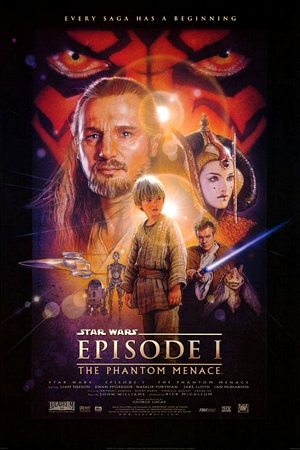
I cast my ballot knowing that a vote against a governor who enjoys the bully image was indeed close to a lost cause. People are enamored of power. In my deepest Jedi dreams, however, I know that the most powerful moment in Star Wars is when Obi Wan turns off his light saber to allow himself to be struck down. There is a power, one upon which entire religions are premised, in the self-sacrificial act. It’s not that I have anything against Parliament; I saw it just this past year and enjoyed the experience in a way that Guy Fawkes could perhaps not have appreciated. As Evey says, “this country needs more than a building right now. It needs hope.” I guess we can hold on another four years. V can also stand for five.

“He’s a deeply religious man and a member of the conservative party. He has completely single-minded convictions and has no regard for the political process. Eventually, his party launches a special project in the name of ‘national security’.” So V tells Finch concerning a dictator who could be wearing any number of political masks in our world. We hand power over to those who encourage our fears rather than those who inspire our imagination. Camelot died in 1963. It is not so difficult to imagine a world so much better than the one we’ve constructed, but plutocracy does prevail when people do not take the implications of their religion seriously. When we only glance at the surface, the deeper message gets lost in the mythology of it all. November fifth is a myth that still has the potential to change the world. If we would allow it.

VoteV


Final Frontier?

Stay away from the dark side. That’s generally good advice. Ironically, new religious movements (NRMs, in the biz) have come up in my conversations quite a bit lately. Some of my friends have suggested that I start a new religion—job security would no longer be an issue. I’ve been studying religions my whole life, and at times I’m sorely, sorely tempted. Meanwhile a friend pointed me to a story on Details.com about Jediism. Yes, there is a religion based on Star Wars—actually, I shouldn’t be too hasty here. There is at least one religion based on Star Wars; likely there are many. The question that is indubitably raised is okay, so do these people actually believe this stuff? Don’t they know Star Wars was written by George Lucas? How can it be a religion? I can only respond with: Have you ever heard of Scientology? Religions do not have to be believable to be believed in. History has shown that time and again.

StarWars

Jediism is based on the teachings of saints like Yoda and Obi Wan Kenobi. What they are teaching is straight Joseph Campbell. Served neat. Good versus evil. A sense that a cosmic force surrounds us. The hero’s journey. The same thing can be found in the Bible. Wrap it up in a Jedi cloak or in a Galilean robe and the end result isn’t much different. I’ve seen bumper stickers suggesting that Obi Wan died for my sins. Just as long as good wins out in the end, who’s to complain? Does it really matter if it happened a long time ago in a galaxy far, far away or just away in a manger?

The problem with religion is that we lack a proper definition. Christianity clearly uses the word to describe itself. When looking at those who thought differently (adherents of Judaism, Roman paganism, the great goddess of Syria) early Christians had to call them something. If Christianity is a religion, so must they all be. Some religions, however, are not based on belief, but practice. To be is to do. Some religions are based on historical people, some on fictional people. Some are very serious while others are difficult to tell. Some religions are ancient, but looking at the state of the world it’s hard to say that they’ve been terribly successful. So when a bunch of sci-fi fans think they’ve discovered the truth in the mind of George Lucas, who’s to argue? And I really do mean that about keeping away from the dark side.


Hungry Again

The_Hunger_film_poster
Vampires are on my mind. The funny thing is this often is the case when I’m unemployed. Feeling lost and alone, I settled down to watch the most depressing vampire movie I know, The Hunger. Miriam Blaylock, an unaging vampire, has made her way through history by taking lovers with the promise of eternal life. As she makes her lovers vampires, they survive centuries as young people, but then suddenly age and die within days. Terribly artistic (how could it not be with David Bowie as the male lead?), the film has a very heavy atmosphere and a calculating coldness as Miriam promises her lovers that they will live forever, knowing that once the aging begins, their decaying corpses will continue to live, weak, hungry, and wanting to die. I did say that it was depressing, right? The vampire, besides feeding off the essence of others, is concerned with eternal life. Religious symbols do not affect Blaylock and her ilk—in fact, they wear knives hidden within ankhs to stab their victims. The ankh, the Egyptian sign of eternal life, is the means of death. The only way to live forever is to feed off others.

Like many of those who pay attention to society, I have been fascinated by the enduring power of the vampire. When I was a child watching Dark Shadows on TV after school, I supposed vampires were things kids were interested in—the adults I knew had other things on their minds. As my generation grew, however, the vampire grew along with us. We had Interview with a Vampire, Lost Boys, Buffy the Vampire Slayer, Blade, Underworld, the Twilight series, I am Legend, Van Helsing, Priest, the Vampire Diaries, and on and on and on. Why are we so fascinated with a mythological creature? The vampire is profoundly religious and deeply symbolic. Evolution endows us all with a will to survive, the desire, if you will, of eternal life. The vampire is the symbol of that hope with no constraints. We are taught, and some of us even believe, that other people have the same rights as we do. The vampire’s urges, however, overwhelm even personal conviction and we are all potential victims.

Vampirism may be the ultimate symbol of our society. When future historians look back on the late twentieth and then the twenty-first century, won’t they see a world of profoundly deep inequality? Won’t they see multiple millions being sucked dry by the reassuring words that they are “middle class”? In The Hunger, daylight, crosses and mirrors do not dissuade the undead. Miriam needs her lovers, even though it will mean an agonizing unending end for them. Promises are made, and, when broken, the lovers are too weak to fight back. And her wealth increases with every generation. I lost my job at a very profitable company. Those who remain, on top, do not suffer fear of want. I look at Miriam Blaylock and wonder what it must be like to think that way.


Omega Alpha

The-Omega-Man-Poster Perhaps out of a warped—perverse even—sense of self-punishment, I watched The Omega Man. Being unemployed will make you react that way. I have a pretty high tolerance for theatrical assault, as my regular readers will know. For those of you with less self-destructive penchants, The Omega Man was the second cinematic adaptation of Richard Matheson’s novel, I Am Legend. The first movie version, The Last Man on Earth, was released in 1964, starring Vincent Price. The most recent version, borrowing the novel’s name and starring Will Smith, is the third and best attempt so far. In any case, The Omega Man opens with Charlton Heston thinking he’s the last man alive, and even that doesn’t stop him from taking his shirt off at every opportunity. That I could tolerate, however, had the movie not strayed from what I thought was its central premise—that Robert Neville was alone with a city full of vampires. Although Vincent Price did not, uncharacteristically, make a convincing last man alive, the earliest version at least retained the vampires. The Omega Man, perhaps in the spirit of 1971, substituted them for religious fanatics.

The substitution didn’t bother me so much, but the religious fanatics were pathetically acted. Leibowitzian, anti-progress monks, hating the science that led to the nuclear holocaust that made them photophobic night dwellers, they snack on sardines and graham crackers, but only come out at night to kill scientists. Well, only one, since Neville seems to be, uh, the last man on earth. They accuse him of making the wheel and using technology as they run around in off-the-rack children’s Halloween costumes acting otherwise infantile while Heston strikes dramatic poses, grimacing with a variety of machine guns in hand, as he simply shoots them. That’s not the way the world’s supposed to end. The vampires have become a religious society doing everything short of handing out tracts on the corner. Well, maybe it is the end of the world after all.

It is difficult to portray loneliness effectively. Those of us who’ve been there know it intimately, and somehow Charlton Heston has too much fun with it. Even Vincent Price had trouble making it look convincing (I mean, who still uses a saucer when having their coffee and wears a tie after the apocalypse?). Will Smith at least showed a man occasionally breaking down in tears. Charlton Heston doesn’t cry. And he doesn’t shy away from god-like delusions. When he finds the other survivors (or they find him), we learn that Neville has been attempting to cure the religion virus. Dutch says, “Christ, you could save the world.” Neville doesn’t deny the obvious messianization of his mission. In fact, pseudo-crucified on a piece of modern art, Neville receives a spear-thrust to the chest, and dies in cruciform posture in a pool of his own blood. His blood that has the antibodies to save the world. Sound familiar? For all the blood, the vampires are gone. And when I feel that the world is against me, I want to see vampires.


Carrie the Cross

Carrie1976With all the buzz about the new Carrie movie just released, I decided to go back and watch the Brian De Palma version again. I’ve written here before about the religious symbolism of the movie, but I have to confess to never having read the novel. This time a particular symbol stood out, and I’m not sure whether it derives from De Palma or King. Crosses abound in the 1976 Carrie. This is a bit odd because of the indeterminate religion of Carrie’s mother. Clearly she has a belief in Jesus, but an odd Jesus it is. In Carrie’s prayer closet the statue—presumably of Jesus, since it is never clearly identified otherwise—is of a man whose abdomen in pierced with arrows. Those familiar with saints immediately recognize Saint Sebastian, but the arms are outstretched, as if this poor victim were both crucified and superfluously shot with arrows. The traditional cross, however, seems to be missing in that dark room. It reappears on prom night.

While Carrie is getting ready for the prom, her crazed mother peers out the window at passing cars, telling Carrie that Tommy isn’t coming. In one shot, as two cars pass in the street, there appears an inverted white cross on the road. I supposed at first that this was a painted parking space marker, but then, this is a residential street, and no such markers appear in other shots. Carrie’s mother had accused her of being a witch, and the upside-down cross is an oft-claimed symbol of Satanism (not the same, however, as Wicca). At the prom, Tommy insists that Carrie vote for them as the prom queen and king. When Carrie makes her x, the camera angle rotates slightly to reveal the sign as a Latin, as opposed to Saint Andrew’s cross. After Carrie kills everyone and goes home, her mother stabs her and, chasing her through the kitchen, makes the sign of the cross with her knife. Finally, Sue—in a dream?—wanders to Carrie’s burnt down house to lay flowers at the foot of a “for sale” sign that is a white cross, with the clashing words “Carrie White Burns in Hell” scrawled on it.

I may have missed more since the use of the symbol only dawned when the passing cars pointed me toward it. There is a strange kind of misuse of the cross here—not visible on the Sebastian-Jesus, and ultimately also Carrie’s mother figures, but inverted on the street, a sign of pride at the voting, made with a knife by the mother, and scrawled with an arrow pointing to Hell in the final scene. Carrie’s fiery end appears to confirm her mother’s interpretation of telekinesis as witchcraft. There is no forgiveness in this film. Well, I suppose I’ll have to go see the remake now. And maybe even read the book. I need to know if I’m just seeing things or if I’m still sleep-deprived from worrying about jobs and a surfeit of imagination as October’s chill settles in.


At World’s End

“I am not a number, I am a free man” Number 6 plaintively cried on The Prisoner. Capitalism, however, has a way of making each of us quantifiable. A statistic. Not a guy with a kid in college. Not a human being with a sense of self worth and pride of achievement. From far above, in houses and penthouses owned by those who climb ladders made of other human beings’ hopes and dreams, those below are just means to an end. I’m sorry Number 6, you are wrong. Freedom is not free and the capital in capitalism is humanity, commodified.

It used to be that on the way to work I’d walk past the homeless in Midtown and wonder what could have brought them here. What could happen to a person to make them invisible—just a statistic waiting to die? What system could reduce a person to a number? Learning to count is, at times, a betrayal of our very humanity. It used to be that hard work was rewarded. It used to be when someone looked our way s/he saw a human being, and not a number. I’m terribly sorry, Number 6, I truly am. We don’t know your name. You are a number. So are we all.

In the aptly named Pirates of the Caribbean series, the second installment complicated the story by introducing the unmoved Englishman Lord Cutler Beckett. Satisfied with nothing less than the control of the world’s oceans—some two-thirds of the planet, he secures the means to reduce all enemies to fish-food with no show of emotion beyond a shallow smile. In At World’s End, as the Flying Dutchman and the Black Pearl bombard the Endeavour, blowing the ship of unbridled capitalism to bits, Lord Beckett, bewildered, significantly climbs down the steps muttering, “It’s just good business.” Aye, but not Aye, aye. (There is a serious difference.) As the Endeavour sinks I think I hear Number 6 from the depths, and I desperately hope he’s right.

Pirates_3_AWE_Poster_International