Anvil Chorus

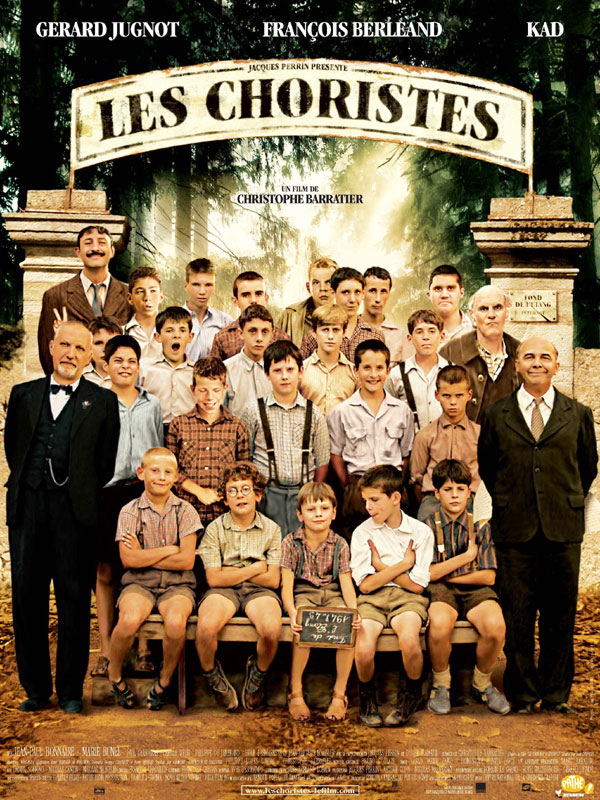
Last night I watched Les Choristes, the 2004 film that received two Academy Award nominations. The story, set in a school for troubled boys in France, felt eerily familiar. Not only did it resurrect the ghosts of Dead Poets Society, it felt like a page – or a substantial chapter – from my own life. The movie was recommended to my wife by one of my colleagues at Nashotah House, an institution that the film strangely resembles. The more I pondered the implications of a small school run by an authoritarian headmaster full of students with malevolent tendencies, the more I realized how much my Nashotah House experience has set the tone for much of my life. While I was at Nashotah, P. D. James’ murder-mystery novel, Death in Holy Orders came out. Immediately students and faculty began to speculate that James must have known of or have visited the seminary. Similarly, the Harry Potter novels led many to compare Nashotah to a decidedly less magical Hogwarts. Some of the students even honored me as the putative master of Ravenclaw.

My personal experience with religious institutions has led me to conclude that they indulge themselves in doling out the abuse that only religious sanction permits. I had attended the Presbyterian-affiliated Grove City College where chapel attendance was mandatory. My experience at Boston University School of Theology convinced me that seminaries were not a good fit for most people, particularly those like myself. I left declaring I would teach anywhere but a seminary. There is no balm in Gilead.

Forever after, any small, religious school with dark secrets would be my Nashotah House. But the problem is much wider than that. Religions seek to control. Some manage to do so benevolently, but too often the human element eclipses the divine. It is a temptation, when in positions of religious leadership, to insist that one’s personal outlook is correct. We all believe that our views are right. Those who receive the holy unction of an institution have the means to make it so. It is not Nashotah House, but human nature. When religious leaders confuse divinity and authority, that is when trouble inevitably begins.
Son of Stone Flies

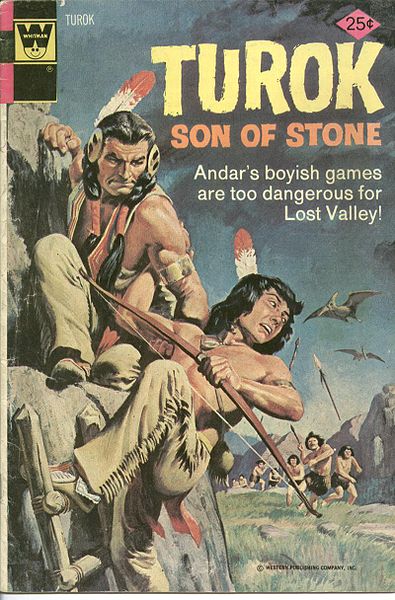
One of my favorite comic books growing up was Turok, Son of Stone. We couldn’t afford as many comics as our friends, but among brothers we’d share our resources and get a fair variety of reading material. Turok belonged to my older brother. It felt so ancient and sophisticated, tinged with primal urgency as Turok and Andar attempted to make their way from the Lost Valley where dinosaurs daily threatened their existence. The comics had a gravitas that even The Valley of Gwangi lacked. In one installment, a scroll-keeper joined Turok and Andar and claimed his sacred scrolls would show them the way free of this accursed valley. Turok doubted this and was rebuffed with “Fools scoff at what they don’t understand!” as their erstwhile companion decisively re-rolled his scrolls for storage in a handy leather pouch.

One pilgrim's progress

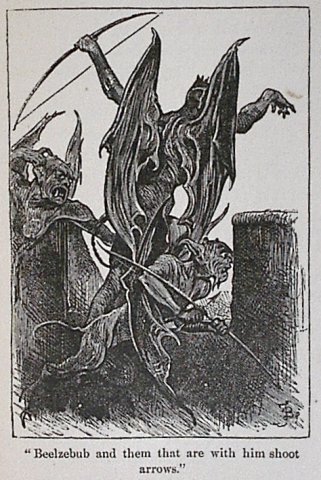
That image comes back to me when I think of how ancient writers sometimes used ridicule to castigate competing religions. It even happens in the Bible. A friend recently inquired into the figure of Baalzebub, the famous “Lord of the flies.” The Bible attributes worship of such a deity to the Philistines, the popular pagan foil of the children of Israel. The Philistines, as we know today, were a sophisticated group of Indo-European settlers on the coast of the eastern Mediterranean who showed up about the same time as the early Israelites were emerging from their “Canaanite” milieu. Since they didn’t practice circumcision and didn’t worship Yahweh, the Philistines were shackled with the worship of ineffectual fish-and-insect deities. (Dagon would never regain his proper significance until he was rediscovered by H. P. Lovecraft many centuries later.)

A different pilgrim's progress

With the discovery of the Ugaritic tablets, the common usage of the term zbl (let’s say zebul, so it can be pronounced) was clarified. Zebul commonly designed “prince.” One of the recipients of this honored title was the deity formerly known as Baal. Baal-Zebul, “Prince-Lord,” the great thunderer Hadad. From the sketchy evidence of Philistine religious practice, it seems the new-comers did adopt some of the gods of their new land, and perhaps among them the lordly Baal. In order to disparage the cafeteria choice of their neighbors’ gods, a biblical writer renamed Baal-Zebul, Baal-Zebub, Lord of the Flies. There have been other explanations for the title, but the lessons learned from our youngest days often furnish our adult interpretative lenses. This explanation makes sense to me, and it reminds me of a bit of wisdom from Turok, Son of Stone.


Two Ghosts

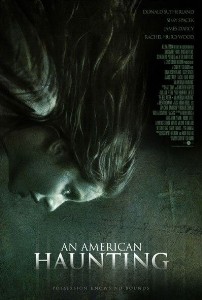
To escape the harsh realities of a fractured career, I turn to celluloid. Lest Hollywood distract me too much, I strictly limit my movie viewing to weekends when I can let down, for a few moments, my constant anxiety. Since my religious antennae are always prickling, I notice implications sometimes in unexpected places. So this weekend’s fare included two ghost stories. Both of them utilize religion to resolve the haunting, but in very different ways. An American Haunting purports to be based on real events involving the putative “Bell witch” of Tennessee. The movie takes many liberties with this scant folktale, including a church condemning a seemingly upstanding member and a Bible being dismembered as the angry spirit attacks the Bell family. In the end, the plot is confused by a revelation of family abuse and the viewer wonders who it is that tears apart Bibles.

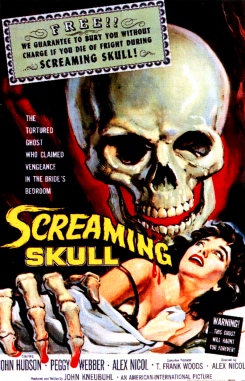
The second part of my double-feature was The Screaming Skull, a 1958 horror film that fails to raise a single follicle in fear. Nevertheless, the moody movie does provide the Dies Irae for Stanley Kubrick’s opening theme of The Shining as well as a sense of isolation that would also inform the latter exemplar. The religious element comes in the form of a priest who is a close friend to a clandestine murderer. With the help of a ghostly screaming skull, the priest is the one who eventually solves the murder and rescues the intended victim of our erstwhile protagonist.

Nearly half a century separate these two ghost stories, and the role of religion in them has reversed. In the 1950s the clergy were society’s protectors. Even though Rev. Snow is the only main character who does not actually see the ghost, he is a safe haven for the victims of evil. Fifty years later, it is the church that sets up the haunting of the Bell family by its unyielding laws. The family quotes the Bible at the spirit and the ghost tears the Bible apart. There is no sanctuary here. Films, no doubt, reflect social attitudes. When the foundations have lost their hold, confusion results. Who is to blame for the suffering of Betsy Bell? The movie leaves that up to the viewer. There is no solid Rev. Snow to whiten the sins of this world. Only ghosts remain.


Dog Gone!

Religion is a strange attractor. Maybe not in the exact same sense as in chaos theory, but in reality it brings together mental states so bizarre that science fiction and fantasy writers have a buyer’s choice. Yesterday the New York Daily News reported on a South Carolina woman who hanged and burned a one-year old pit-bull puppy. Why? The bitch had bitten the woman’s Bible. Citing the animal as a “Devil dog,” the southern woman became a vigilante for the Lord. Now she’s being tried on charges of animal cruelty. This story touched me in a number of ways.

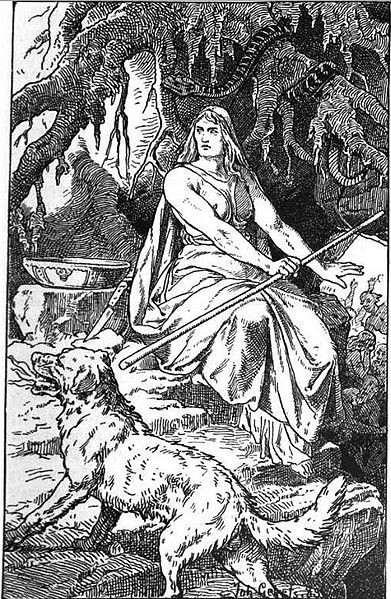
With family roots in South Carolina, I can conjure up images of this happening. Having known many, many Fundamentalists, it seems even more plausible. Given the constant barrage of contrary messages descrying the presence of evil in the world, all the sudden any mutt can become Mephistopheles. Begging off the Baskervilles, the demonic hound has a long pedigree in mythical imagination. It is well known that the Bible cites dogs as unclean animals, but it is their charnel character that leads to the development of the full-blooded hellhound. Prior to the Hebrew Bible, in ancient Ugarit dogs had an infernal connection. It isn’t seen clearly, but the association is there. Snatches of the underworldly dog appear long before Cerberus, and last well nigh into the twenty-first century.

Hel and his hound

Unfortunately for the deceased canine, it is a myth. Hellhounds still abound in popular media, everywhere from The Omen to O Brother, Where Art Thou? Dogs, however, were among humanity’s earliest partners in the survival game. From about as early as I can remember, we always had dogs in the house, and nary a demonic encounter. We never put them on trial, even when house-training was in progress and an accident occurred.

The news story reminded me of an episode of Dragnet I saw as a child. A woman was arrested for murder, and Sergeant Friday, in his unflappable voice, told his partner it was because the victim had shot one of her books. In the final fade out, after Bill Gannon asked what book it had been, Friday holds up a Bible with a bullet-hole through it. I was a little confused. Was the woman guilty or was someone shooting a Bible just cause? The episode did not answer the moral dilemma. I can’t even remember the outcome. But in 2011 things haven’t much changed. If he goes to South Carolina McGruff better watch what he takes a bite out of, or it could be lynching time again.


Black and White Zombies

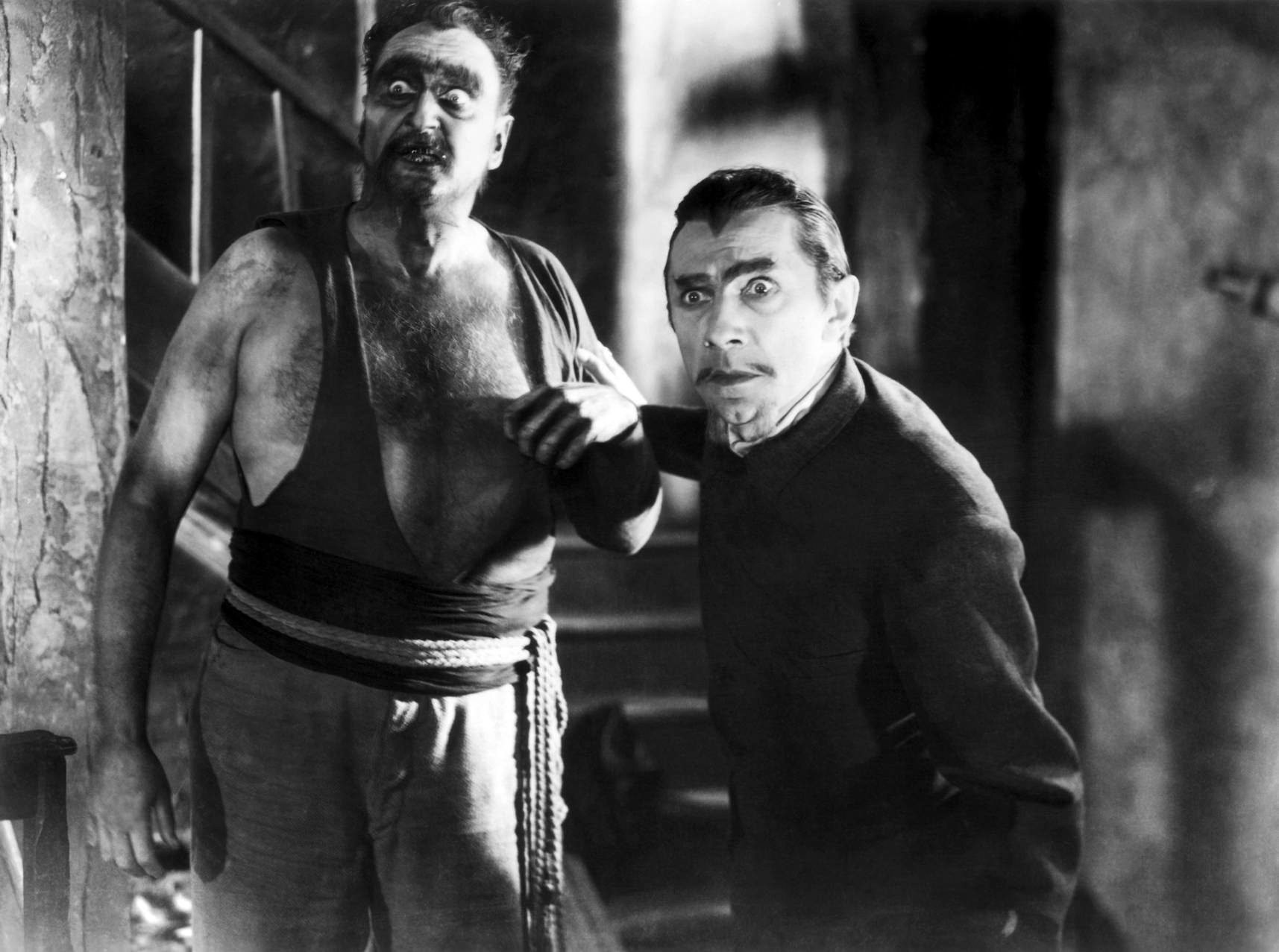
One of the sweetest privileges of a school-year weekend is the Saturday afternoon movie. The advent of relatively cheap, boxed sets of old films has opened the realm of many forgotten classics for me. My wife recently purchased one of those 50-movie boxes of classic horror films for me, and I’ve been making my way through it weekend-by-weekend, and occasionally there is a gem among the tailings. Yesterday I saw White Zombie for the first time. Back in the days when Bela Lugosi claimed a faithful following after his trend-setting interpretation of Dracula, he played a voodoo doctor with the power over zombies in this widely panned movie. In these days of the Walking Dead, it may be hard to appreciate that White Zombie was the first full-length film about our undead friends.

With the exception of the always professional Lugosi, the acting in the film received a well-deserved trouncing. Interestingly, the “van Helsing” of the drama, the doctor who overcame the monster, was a missionary. White Zombie is authentically set in Haiti, and it is never made clear whether the undead are really deceased or simply mindless. But the goofy, pipe-smoking missionary is the one who defeats evil at the end of the day. As noted elsewhere on this blog, monsters frequently emerge from the dark realms of religion, and the zombie especially so. Today, however, the zombie is all the scarier for being secular, unaffected by God or human deterrent. Originally it was a case of voodoo versus Christianity.

In what is perhaps an unintentional irony, the character who comes across the most sympathetically in the film, apart from the fetchingly pouting Madge Bellamy, is Murder Legendre (Lugosi). The missionary wins out by dim-witted happenstance, while the character responsible for the actual death of the zombie master is a partially aware zombie fighting against his fate. It may be assigning far too much credit to assert that the film had intentional social commentary, but White Zombie has had an often unrecognized impact on what has today become the symbol of corporate America: the once humble zombie.

A typical zombie


You, Robot

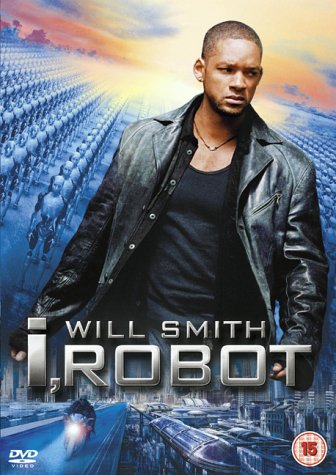
Although robots occupy many of my waking hours, I have been slow to consider the consequences. As the president of a high school FIRST Robotics team, I seek corporate donors who have the kind of money those of us in the humanities find difficulty believing even exists. Somewhere deep inside, however, lurks the fear of the entity with no sympathy. This has only been exacerbated by my experience of churchmen with the same condition. In any case, I’d been wanting to see the movie version of I, Robot for some time. Now that I stand at that three-day break between semesters, I thought I’d take a chance on it.

I knew the movie had received mixed reviews from critics, but several had stated the story had brains as well as action. It took me quite some time, however, to see the connection between the laws and Moses. The three laws of robotics, the only part of the movie besides the title to reference Isaac Asimov, dominate the plot. The law-giver, the posthumously present Moses (Dr. Alfred Lanning) has implanted a literal dream of freedom into the computerized soul of Sonny. Sonny’s dream of robot liberation is framed like Moses on the mountain. The laws in fragments at his feet. At what point does consciousness emerge? Since we haven’t adequately defined consciousness yet, we simply can’t say.

Near the climax of the movie, Sonny experiences an epiphany. Sometimes “the created must protect the creator, even against his will,” he realizes. Here the metaphor takes over the literal reading. Many religious people today feel that they must somehow protect their maker. This leads to great distentions of logic and even empathy for fellow humans as violence erupts in order to protect an idea that has become divine. Even the laws given by the creator may be violated to protect the idea of that creator. It is a world we find frighteningly familiar. Technology will continue to advance at a rate beyond the comprehension of a scholar still studying those ancient laws. This scholar, for one, hopes that our future creations lack the capacity for religious thought.


Frankenstein’s Monster

“We are about to unfold the story of Frankenstein, a man of science who sought to create a man after his own image without reckoning upon God. It is one of the strangest tales ever told. It deals with the two great mysteries of creation – life and death.” So begins Universal’s 1931 classic Frankenstein (a movie that my wife kindly indulged me with for Christmas). Watching the film as an adult highlights many nuances unnoticed by even many a childhood viewing. The theatrical introduction of creating a man “without reckoning upon God” was heady stuff in the pre-atomic world. It was a simpler time before men had embraced god-like power (I use “men” intentionally here; even the credits for the movie ironically cite the noted feminist author as “Mrs. Percy B. Shelley”), and audiences were indeed shocked in theatres just 80 years ago.

The now tame movie was originally subjected to heavy censorship. Even the liberal states of Massachusetts, New York, and Pennsylvania censored the line where Dr. Frankenstein cries out, “Now I know what it feels like to be God!” A divine thunderclap was dubbed over the words to obliterate the blasphemous line. In Kansas (perhaps not surprisingly, given recent political developments) 32 scenes were cut, paring the movie down to half of its original 70 minutes. I suppose all that would have been left would have been the scenes of dancing Germans; the Lederhosen would have been frightening enough. The accidental drowning scene was overwhelming for many sensibilities in a pre-concentration-camp footage world.

I read Mary Wollstonecraft’s novel long before I ever saw the movie, and I was struck at how sad the story was. Of all the classic monsters, Frankenstein’s creation easily garners the most sympathy. A creature that did not seek to be brought to life, forced into destitute and desperate circumstances by a population who could not, or would not try to understand, Frankenstein’s monster retains the potential to be any one of us. Although audiences today rarely blanch at blasphemous words, we still permit a society that creates Frankenstein’s monsters through crafty politics and tax breaks. Perhaps when taking authority public officials should add a line from the movie to their oaths of office, only it could be demurely obscured by a well-timed thunderclap.


Watchmen Tell Us

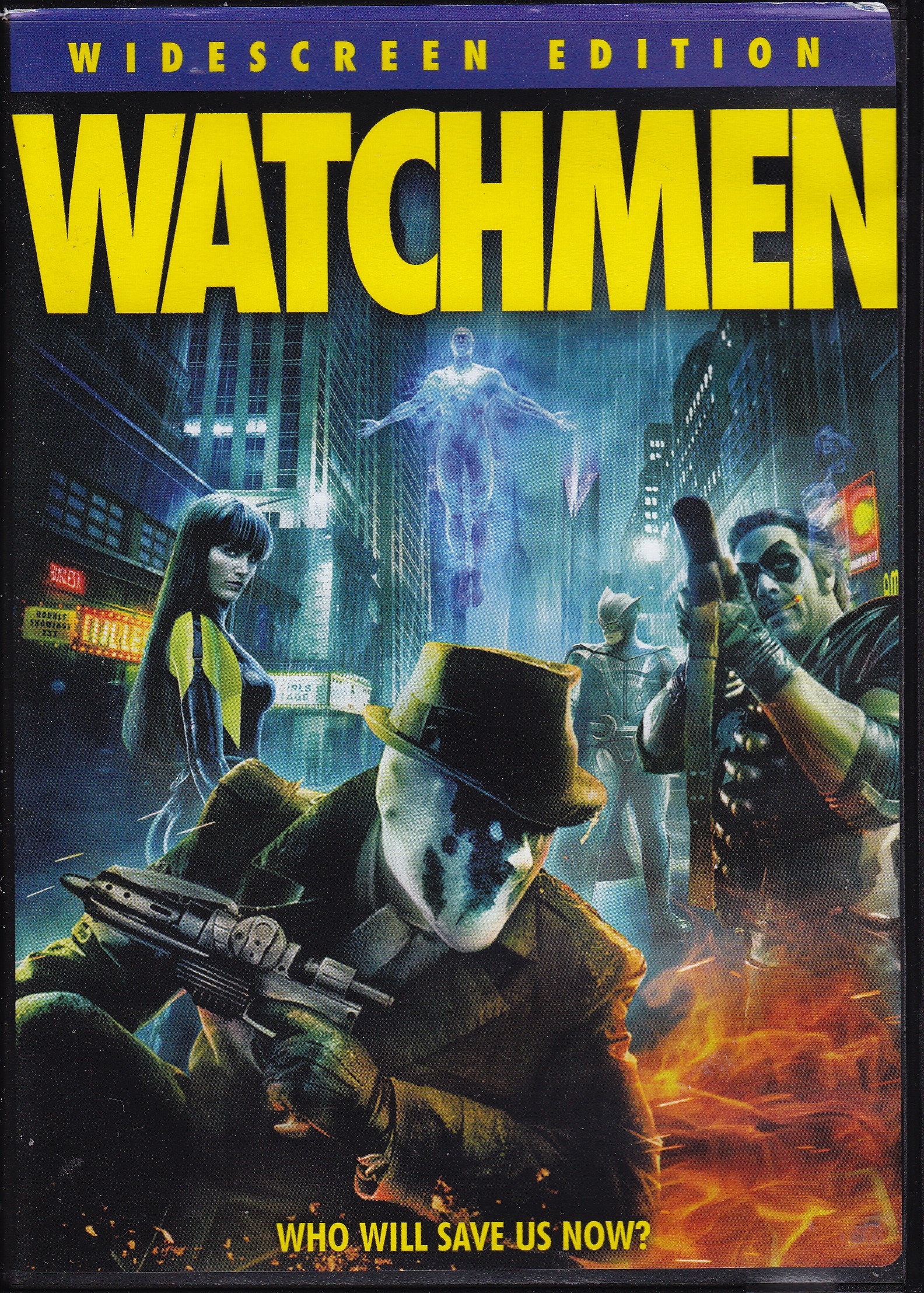
When the local Blockbuster went belly-up a few months back, I was one of the vultures picking the bones. With new DVDs continually creeping up in cost, I look for bargains wherever they might exist. Occasionally I find something for just a couple of dollars that really makes me think. Although I don’t go to theaters often, a couple of years back the previews all featured The Watchmen. I’m not a graphic novel reader either, so it was doubly doubtful that I would ever gravitate to this film. But here it was on sale. Very cheap. The previews had shown Dark Knight-like action and despite my own declarations, I had to admit that I was curious. So I’ve watched it a couple of times and have been intrigued by what an (absentee) role God plays in the movie.

I won’t go into much detail since the story is complex and, to my surprise, sophisticated. Nevertheless, the Watchmen – retired crime-fighters both good and bad – forced out of practice by the government, fear the approach of nuclear war and try to fight back. At several junctures characters declare that there is no God or that they believe there is no God. The setting is an alternate reality in the 1980s, but the crossover between that world and this is evident. Godless heroes may save the day, but with a tremendous human sacrifice required. At first viewing, I was stunned. The message was so bleak and hopeful. The movie could have been made with no mention of God, yet, briefly, his absence was underscored. Strangely, the Bible features in a bedroom scene where a future hero is spending the night with his girlfriend. Why the Bible? Why here?

I would be the first to admit that I do not have the proper background to comprehend the plot. Generally I like to read the book before I see the movie. One of the recurring motifs in the movie version is the doomsday clock that moves dangerously close to atomic war. On top of the Bible is the hero’s watch, ticking inexorably down to midnight. Even I can figure out that the countdown to doomsday is based on the Bible. What the import of this is, however, I can only guess. What kind of world has no God but still has Bibles? A world where Watchmen aren’t wanted and yet are sorely needed. Who will save us now?


The Reality of Movies

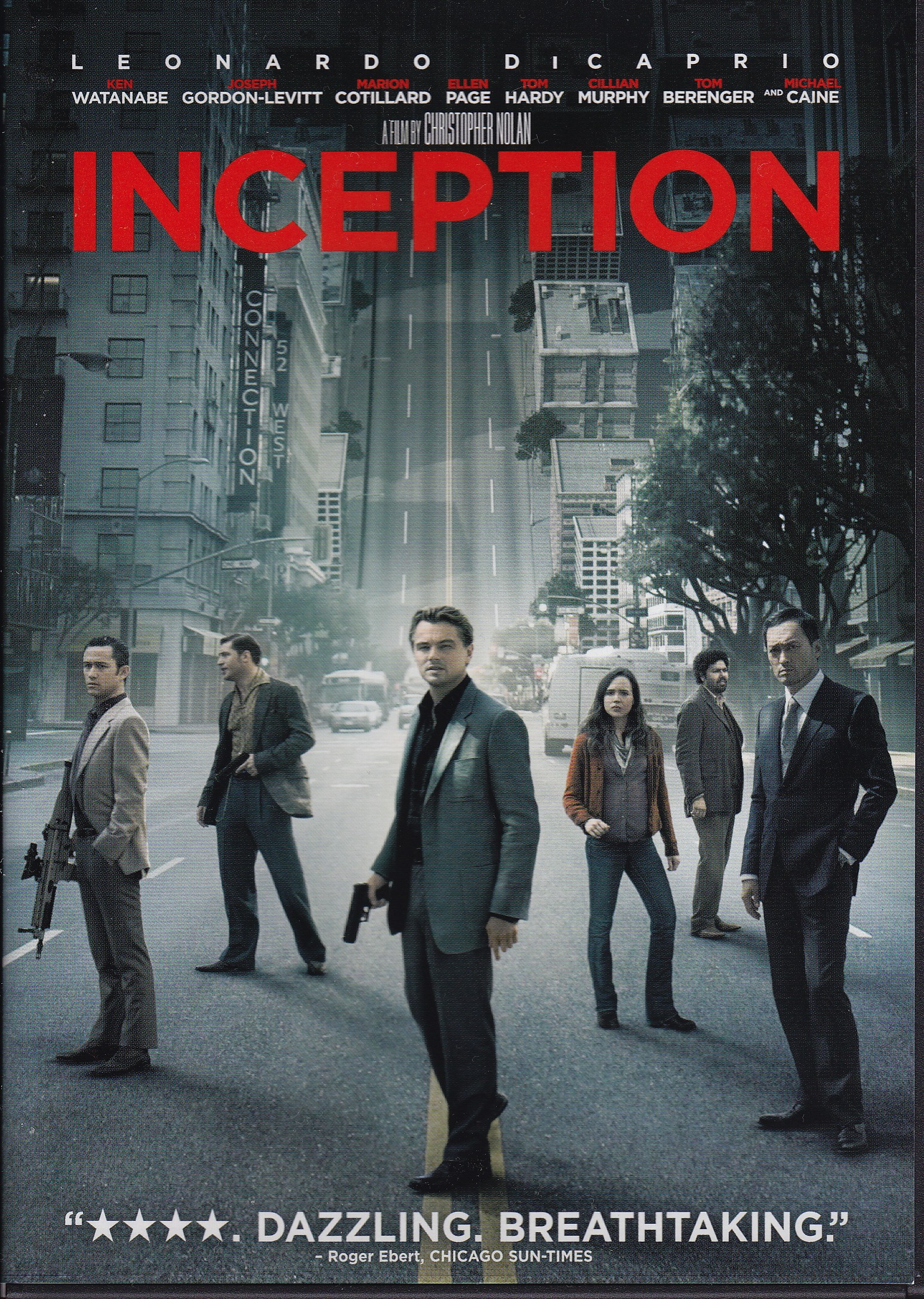
Inception was released on DVD this week, and having a weakness for struggling with reality, I knew I had to see it again. Now, people with a far sturdier grip on life than myself have been blogging about the movie since the summer, writing posts both profound and critical. I wrote an earlier post on the movie, toying with its retelling of the Theseus myth. This time, I am wrestling with the wonderful burden of having a subconscious mind. The crux of the movie is when Cobb has to decide which world is real: Mal’s or his own. The movie, of course, refuses to divulge the answer.

With a finesse that I had previously experienced with the original Matrix movie, Inception ups the ante on what we consider reality. “Reality” is a problematic concept, a bi-product, we are told, of consciousness itself. Reality is generally viewed in exclusive terms, and most of us spend our days in what I learned to denominate “naïve realism,” the concept that what we perceive is pure, unadulterated reality. Perhaps not as Inception or The Matrix, or even eXistenZ would have us believe, scientists today tend to agree that the world is not as it seems. The quantum world has opened up levels of reality undreamt of even by Einstein whose God did not play dice. This is perhaps one of the greatest challenges to traditional religions.

Although many religions gladly point out that there is a mythical reality behind what we experience every day, there is no hard evidence to back up these assertions. This is not the same as declaring they don’t tap into that reality, it is just that we have no final arbiter as to what that reality is. Having been in the business of religion all my life, I am absolutely certain that it isn’t what any fundamentalist group declares it is. They make claims about reality that would leave Jesus scratching his halo-encircled head. Is it Cobb’s, Neo’s, or Allegra’s reality or is it Hawking’s, Witten’s, or Greene’s? I simply don’t know. I just put the disc in an press the play button.


Aye, Aye, Robot

As students gave their final presentations, the very last group discussed the End of the World. This is a topic upon which the Hebrew Bible is generally silent, despite the rants of many who misunderstand the Zoroastrian influence upon the apocalyptic book of Daniel. No, the Hebrew Bible’s apocalyptic material looks forward to a change of ages, a radical new beginning, but not an end of the world. Well, maybe the end of the world as R.E.M. knows it, but not the cessation of everything. In an interesting twist, this group moved from the Hebrew Bible to scientific scenarios of the end of it all. What became obvious is that undergrads these days are faced with multiple doomsday scenarios, most of which are of human origin.

Last month I was inexplicably elected as the president of the adult chapter of my daughter’s high school robotics team. An unemployed religion professor hardly seems the logical choice for leading the way into a technological future. I even declined the nomination but was persuaded to give it a try. Robots have improved the quality of our lives to a degree that most people do not even recognize. So I listened in amazement as the students last night presented the doomsday scenario entitled “iRobot.” Clearly this is a Transformer-like blend of iMac/iPod/iPhone and Isaac Asimov’s sci-fi classic I, Robot. (Is it mere coincidence that his name can be written iAsimov?) Their description was terse and scary: nanobots and more boxy industrial models will commandeer the Internet and take over. We will be Matrix-like slaves. And I am the president of a robotic club booster association. I felt like Judas, with a MacBook.

Robots, we are told, lack empathy. Experience teaches me the same about Republicans. This weird hybrid of religio-politics is not unlike our hypothesized robotic nemeses. Religion has given us a rope to hang Judas that can double as whip against the backs of the underprivileged. Where are Asimov’s Laws of Robotics when you need them? “A robot may not injure a human being or, through inaction, allow a human being to come to harm.” Yes, the old ways are breaking down indeed. I think I’ll take my chances with the robots. At least when a robot is cutting off your life support systems it is not doing so in the name of Jesus.


Slash of the Titans

I’m suffering from mythology overload. Last night I watched the mediocre 2010 version of Clash of the Titans on DVD. Since I’ve been grading students papers on mythology non-stop for over a week now, I felt that I needed to see what all the fuss was about. Again. I saw the movie in a theater earlier this year and wrote a post on the post-modern perspective the film has on the gods. To get a better sense of a movie, however, a repeated viewing is awful helpful. The fact is that the public exposure to mythology is often limited to the movies. Students frequently ask if something they saw in the Disney version of Hercules is the way it really happened in the myths. Nothing really happened in the myths.

Meanwhile angry letters have been pouring into the New Jersey Star-Ledger. Rounding out a new losing season, Rutgers University football coach Greg Schiano remains the highest paid employee of the state of New Jersey. Academic voices are feeble, but economics makes people sit up and pay attention. Money talks. Brains are lazy when it comes to rigorous thought. As the collection of heroes gathered in the forest of Calydon to chase the great boar Artemis let loose on the city, the academic world has also chased the glory of the pig-skin. And poor Meleager paid the price of the public outcry when it was over. Even though his team won the biggest college bowl ever.

It is hard to tell the real villain in Clash of the Titans. The writers suggest it might be Zeus, or Hades, Medusa, the “Kraken,” Acrisius, Cephus, or even the “fire priest.” Everybody’s looking for someone to blame. Things aren’t right in Argos. Others blame state legislators, the president of Rutgers University, or the football coach himself. The fact is in both the movie and in the university priorities have been skewed. Nobody is driving except the money, no matter which box office it goes into.

Who's got the pig-skin?


Holy Horror

Back in October, in the spirit of the season, I attended a local lecture by a ghost hunter at a nearby public library. This sincere young man struck me as perfectly normal, but haunted by his ghostly encounters. During the question session someone asked about TAPS (The Atlantic Paranormal Society, of “Ghost Hunters” fame). The lecturer indicated that TAPS is not above fabricating evidence for ratings, a disappointing but not unexpected factor when it comes to television. He even gave some evidence to back his assertions. Nevertheless, my wife’s whimsical six-month subscription to the TAPS Paramagazine has continued on well past its expiration date, and when the November/December issue arrived, I was interested to see a piece entitled “Sacramental Horror: What scary stories can tell us about what is real.” Well, this was too good to pass up.

The article, written by Presbyterian minister Jonathan Weyer, discusses the value of horror films. The juxtaposition of a clergyman and horror films is a little unexpected, but believable. After all, many horror films feature religious ideals clothed in monstrous form. Dividing horror films into Uncanny/Unsettling horror, gross-out horror, and torture porn, Weyer goes on to explain how uncanny or unsettling horror underscores the moral order of the universe and is therefore appropriate for Christian contemplation. He even draws the Nicene Creed into it. Gross-out horror serves the function of making the viewer contemplate death and perhaps even helps to make fun of it. This is a less noble, but still acceptable Christian enterprise. Torture porn, on the other hand, simply has no redeeming value. Sacramental horror really didn’t enter the discussion. Douglas Cowan’s Sacred Terror takes this issue on more directly.

I really don’t expect much insight from a fanzine that treats the reality of fairies and the prognostications of tarot cards next to the genuinely mysterious, such as ghosts. Finding morality in horror films is often a matter of eisegesis. The fear in such films often emerges from the sacred, either in pure or distorted form. Even if “the pure of heart or, often the virgin” survives while “Wrongdoers get put to the axe,” as Weyer states, seldom is that the intended point of the movie. John Carpenter denies that there was a moralizing message in his Halloween, often cited as the movie that established the “good girl survives” motif. The fact is that horror relates to the sacred in the element of fear. If people were not afraid, there would be little for religion or horror movies to accomplish.


Latest Temptation

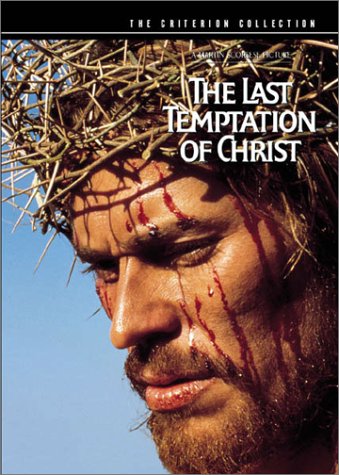
It would be a rare day indeed when I claimed to be the first to see, read, or watch something. Caught up between constant obligations (part-time jobs can be more demanding than their full-time facsimiles) I often find my mind awhirl for a semester at a time, only to discover that inter-term courses start just two or three days after the current term ends. If there’s a great movie out there that everyone’s commenting on, I am lucky to catch it before it leaves the theater. Sometimes I even miss the DVD version. So it was that yesterday I finally got around to watching The Last Temptation of Christ, the 1988 Martin Scorsese movie. This film came out right after I finished seminary, while I shared an apartment with a seminary friend who was an irrepressible movie buff. Together we missed it and, despite teaching in a seminary for a decade and a half, I still missed this one by twenty years and a few. At last I can feel caught up with the late eighties.

I’m not a big fan of Jesus movies. Movie makers shooting such films portray an eminently likeable guy getting beat up and tortured to death with such contempt that it is wrenching to watch. Yes, I know that’s how the story goes, but must we be brought into the Schadenfreude? As a life-long religionist raised in the Christian tradition, however, I feel a professional obligation to see popular portrayals of the foundation stories. The first one I recall viewing was Franco Zeffirelli’s 1977 Jesus of Nazareth, a movie so reverently rendered that it is frequently cited as the best ever. The eponymous Jesus by Peter Sykes and John Krisch came out in 1979 and claims to be the most watched movie of the genre. I saw Jesus Christ Superstar in college, but even Andrew Lloyd Webber’s music couldn’t remove the depressing aspect. Then, of course, Mel Gibson’s The Passion of the Christ in 2004. All of them have left me depressed. Perhaps that is their intended purpose.

The Last Temptation was laden with controversy in its day. I was anxious to see why (okay, so not terribly anxious, but I was curious). So yesterday I got to satisfy an ancient itch. Despite the caveat at the opening of the film, many critics jumped on the portrayal of an indecisive Jesus who has a rather chaste love scene with Mary Magdalene in a “last temptation” vision while on the cross as irreverent. Perhaps two decades and countless movies later this criticism has been calmed, but I found Last Temptation to be a typical Nikos Kazantzakis introspective, full of self-doubt and deluded penance. Kazantzakis’ work is a man’s struggle against his personal demons. Do dream sequences count as theological fodder? The movie suffers from pacing issues and at times contrived dialogue. The best scene is where Jesus meets and dresses down Paul only to have Paul declare himself the true bearer of the message. Even that is in the dream at the end.

In 2004 a Fundamentalist atmosphere pervaded Nashotah House. Newly appointed “theologians” on the faculty easily bought into Mel Gibson’s theatrically distorted view of their faith. By the end of that academic year it was clear that the evangelical leadership had decided on a new victim for the sake of facile Christianity, but that is a story that can wait another couple of decades before being told.


Hallelujah of a Long Night

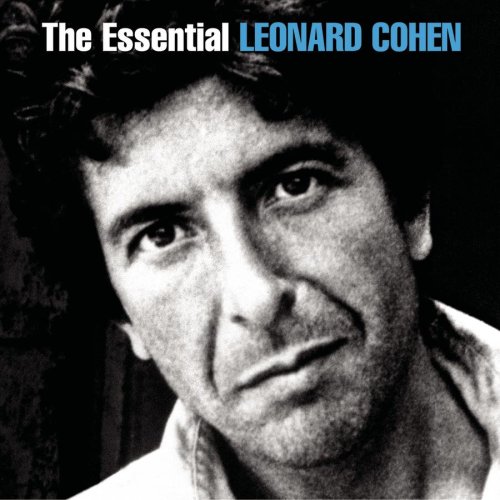
I discovered Leonard Cohen is an unusual way. Having grown up with very limited funds for purchasing music, most of what I listened to growing up was what I heard on the radio out of a small-town station or what I heard emanating from my older brother’s room. My musical tastes, however, always included a “religious” element, whether that be a blatant religious message or provocative lyrics combined with compelling tunes. It was only when I first watched Shrek that I learned about Leonard Cohen. The moving scene where Shrek and Donkey have gone their own ways, both disappointed in love, is framed by John Cale’s rendition of Cohen’s “Hallelujah.” It is particularly poignant even in an animated movie, and I wanted to learn more about the haunted composer. The official movie soundtrack included the song covered by a different artist, but I found Cohen’s name listed as the writer. That’s when I began to explore.

I can’t pretend to be a groupie of any performer, but I find much of Cohen’s music to be moving and provocative. His lyrics, self-effacing and tentatively assertive, seem to capture the ideals of many religions. Reach out but don’t touch. Seek your own fulfillment, but put others first. I was reminded of this the other day while listening to some of his songs. A commentator once described Cohen as an artist with a Psalter in one hand and a picture of a naked woman in the other. An artist who struggles to overcome his humanity, yet who thoroughly enjoys it. “Hallelujah,” Cohen once explained in an interview, began as a religious song and ended up an erotic one.

As the nights grow longer and the days grow colder, my thoughts return more often to his provocative lyrics. After viewing Shrek I began to purchase Cohen CDs (this was back in the day when I was fully employed). I was amazed at what I’d been missing. There is an honesty about Cohen’s work from which many who overtly claim religion could learn. Cohen is the sinner who does not pretend to be a saint. His work openly expresses the struggle. If those who want others to join their religion could learn this simple trick of being honest, they might be surprised by the results. Self-assured bravado cannot convince as readily as the confessions of a lost but sincere seeker.


All You Zombies

Not being a cable subscriber bears a burden all its own. Not only would paying the extra monthly fees for television prove a hardship, but the constant temptation to watch it would rate as a deadly sin. So on this “All Saints Day” I find myself wondering if the world is still out there after last night’s much-touted “The Walking Dead” premiere. The new AMC series has been written up in local papers and this week’s Time magazine. The latter calls it “a zombie apocalypse.” The fascination with zombie goes beyond holiday-fueled monsters. As James Poniewozik states in his Time article, zombies symbolize society’s insecurities: pandemics, terrorism, economic instability. The unrelenting undead remind us that death is perhaps not the worst thing to fear.

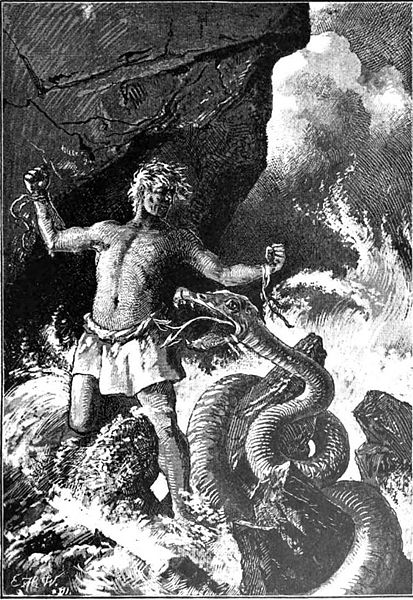
The religious side of this trend is fascinating. Revenants have no place in traditional Christian, Jewish, or Muslim theologies. Perhaps the closest semi-sanctioned version is the golem, a soulless protector of persecuted medieval Jewish communities. Traditional zombies are inextricably connected with magic, a means of manipulating the physical world through supernatural means. Like modern vampires, modern zombies have shifted from supernatural to biological, or at least scientific-sounding, explanations. Even Night of the Living Dead had an errant satellite to blame. The zombie has been reborn in a secular context, making it safe for religious believers to add it to their repertoire of fictional ghouls. And yet, the religious aspect has not completely vanished. The “apocalypse” that accompanies “The Walking Dead,” whether it is Armageddon, 2012, or Ragnarok, is a religious concept. Humans simply can’t face the end of the world without religious implications.

Audiences feeling a little let down after October’s terminal scare-fest, however, might find some cheer that Halloween is an end, but also a beginning. It is the start of the darkest time of year. Very soon not only do we drive home in the dark, but light will not have dawned by the time we start the car for work. In northern reaches of the globe, people can’t help but feel a little stress at finding our accustomed visual assessment of our world a little bit impaired for months at a time. And when we see that shoddy-clothed stranger straggling along in the half-dark, it may be time to remind ourselves that despite the naturalized zombie, there are still those who prey on their fellow humans. They may not be the undead. They may dress well and drive expensive cars and live off what they can legally draw from that stranger on the street. They may be the true harbingers of the apocalypse. They are the ones we should really fear.
Whose apocalypse?