Movie by Faith

Yesterday’s New Jersey Star-Ledger carried an article by film critic Stephen Whitty entitled, “Where script meets scripture: Recent films take a leap of faith.” The phenomenon he observes is that mainstream, big studio-backed film-makers are more and more turning to plots and scripts that emphasize faith. It is not always standard, revealed religion-type faith, but a belief that there is something else. Something beyond that with which our daily lives presents us. People are seeking, but traditional religions are having a hard time convincing them that they have the answers.

In a striking contrast, films that present a spiritual danger frequently revert to the stock image of a Catholic priest as the means of deliverance. When is the last time a Protestant exorcist took on a demon on the big screen? Torn though it is with its long and checkered history of imperialism, exploitation, and scandal, the Catholic Church with its obscure rituals is effective where the machinations of the Protestants are not. This too is a leap of faith, one that believes in the efficacy of ritual despite its origin or lack of scientific theory. Science provides a way of understanding the world that many people experience as cold and comfortless. Even many scientists choose simply to trust in what their spiritual guides teach them.
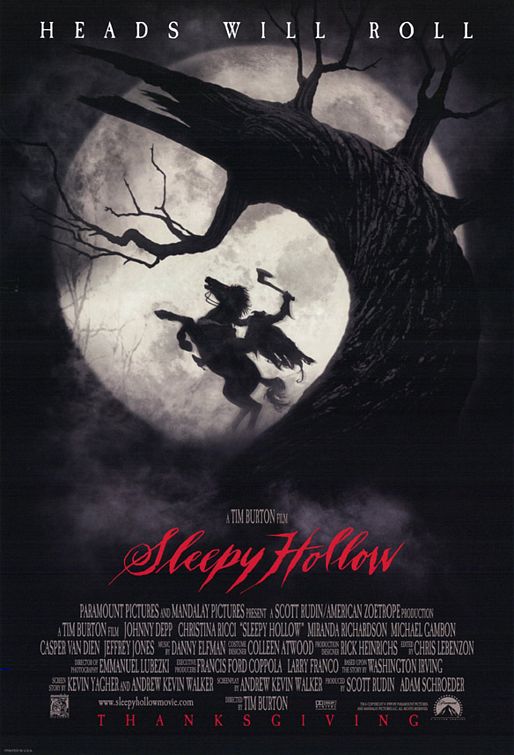
Over the weekend my wife and I watched Sleepy Hollow. It is an annual tradition; it is our October movie. In this film Tim Burton plays off the superstition of Sleepy Hollow – in fact real, in the movie – against the science of Ichabod Crane. In the end, Ichabod has to face the supernatural on its own terms in order to bring the world back to science. Having sent the headless horseman back to perdition, Crane once again returns to a New York City at the start of a new millennium, full of the optimism of science. It is the dilemma of the modern western world. People are tugged, torn even, in two diametrically opposed directions. Our experience leads us to believe in a “demon haunted world” while science placidly informs us that all can be explained. Movies do reflect the human outlook in many respects, and the end sequence has yet to be shot.

Fearsome Fish

It must be October. As I was looking up a word on Dictionary.com, I noted one of their “the hot word” features entitled, “Scientists discover a fish they name ‘dracula.’” The fish, which is native to the eastern part of Asia, was discovered in 2009 but is just now starting to draw attention. The name apparently derives from its fangs. Vampires, however, have their ancient origins in creatures that draw the life force from humans. In the ancient world the “life force” could take different forms: blood, breath, and even semen. Soon a whole array of life snatchers populated the ancient mind – incubi, succubae, Lilith, demons, and any of a number of other contenders for the human essence. The fear of being drained is a very ancient one indeed.

While in my adjunct office at Montclair yesterday I met a colleague. We discussed the visit of the exorcist to campus that I missed but he attended, and while discussing the mythology class we both teach he mentioned how vampire movies make use of mythic themes. I have been using this information from the beginning for my class, but I was fascinated that another part-time instructor would latch onto the same film motif as I did to illustrate modern myth. The vampire is such a part of our culture that people often forget its religious origins.

I attended a public performance of a two-man play at a local library this week. The play was a conversation between Edgar Allan Poe and Bram Stoker. Naturally, vampirism played a strong element in the single-act show. While Poe and Stoker were not contemporaries, they did both share an awareness of how religion tied in with the macabre. The Frank Ford Coppola movie Bram Stoker’s Dracula makes this connection explicit as an enraged Vlad Tepes stabs a cross in his chapel with his sword, starting a flow of blood that he greedily drinks.

Vlad Tepes on a good day

We’ve just crossed into mid-October and I already find myself surrounded with vampires. It is characteristic of religion to deal with our deepest anxieties, and the more we reflect on vampires the deeper we find they reside in the religious sensibilities of both fish and phantom.


Gods and Demons

In ancient times people were sometimes possessed by gods. They were called “prophets” and they gained a breed of knowledge hidden from most other people. Demons were believed to exist, but they did not possess people. Instead, demons were used as explanations for misfortune, whether malevolently premeditated or not. Demons reflect, in today’s society, the concept of pure evil. Fr. Vincent Lampert, one of America’s 24 official exorcists, visited Montclair State last night to discuss evil, and according to the New Jersey Star-Ledger, he believes evil is a reflex of how people treat one another more often than a “figure with the hooves and horns.” No doubt there is a public fascination with demons, but few people understand their religious pedigree or what other explanations may be used to categorize them. According to the paper, Italy claims 300 exorcists – demonstrating that demons show culturally determined characteristics.

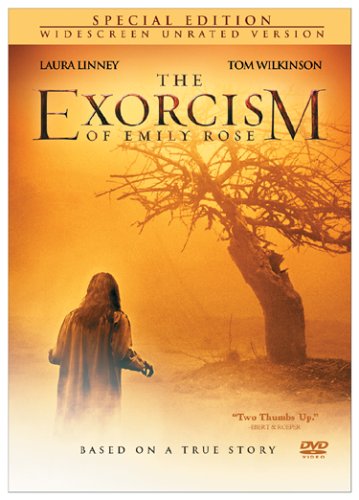
The 2005 movie The Exorcism of Emily Rose, lays out how science and religion differ on the issue of the demonic. Anneliese Michel, a young German woman, died in 1976 after being subjected to a prolonged treatment of exorcism. Her story was the “inspiration” for the film, and it raises the question of the reality of the demonic in the physical world. Fr. Lampert is more circumspect, noting that real life exorcisms are not as dramatic as those shown in the movies. He does, however, recall having seen a person levitate, but not during an exorcism. The human behavior he’s seen while on duty may all be readily explained by mundane physical and mental phenomena.

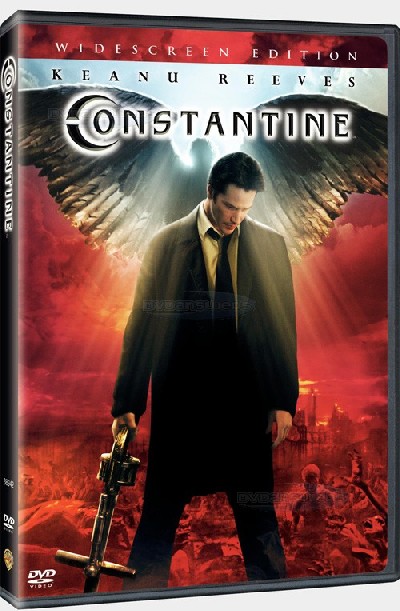
What does seem certain in all of this is that demons are not the behooved and behorned antagonists of films like Constantine or countless other graphic-novelesque portrayals of evil. Their Pan-based characteristics hearken back to the days when Christianity had to make plain its dismissal of foreign gods. In the ancient world hooves and horns were symbols of strength generally associated with powerful, if sometimes capricious, deities. In other words, what were one culture’s gods have become another culture’s demons. Movie makers understand the simultaneous revulsion and draw of the demonic character, but it seems that Fr. Lampert strives for a more balanced perspective. Evil has many faces, and most of them do not conform to Hollywood standards. Perhaps if all religions were respected demons would lose their power to torment and people would learn to get along with each other.


The Problem with Demons

One of the perks to life among a university community is the special programs that come to campus. As an adjunct instructor with a schedule so confusing that even Escher would get lost, however, I do not often have the opportunity to take advantage of such programs. More’s the pity since next week Montclair State University is hosting an event called “The Real Exorcist.” One of the very few authorized exorcists of the Catholic Church will be speaking on campus. The event overlaps with a previously scheduled class at Rutgers.

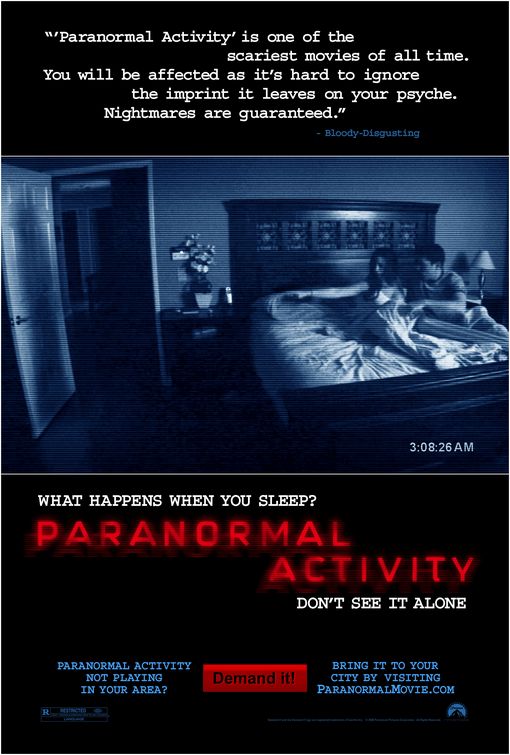
A little disappointed, last night I sat down to watch Paranormal Activity, the indie movie that made such a splash last year. Assuming it was a ghost story, I wasn’t too concerned about watching it alone on an October night. When I discovered it was a demon story, however, I wasn’t sure watching it alone was such a good idea. You see, in the hands of paranormal investigators the demon has undergone a transformation. Ancient Mesopotamians believed in a set of lesser gods who caused misfortune, although they don’t seem to have been pure evil and they didn’t call them demons. By the time we reach nascent Christianity, demons are cohorts of the Devil and are utterly malign and capable of possessing a person making them do the bidding of their dark lord. That’s where they remained on the divinity scale until modern day investigators using scientific equipment found them. I confess to having watched Ghost Hunters a time or two. Here the demon has morphed into a non-human disembodied entity – the very antagonist of Paranormal Activity.

Being aware of the origin of concepts is often a comforting place to be. When I realize that no special revelation has suddenly validated the existence of a baleful creature set to do me serious harm, a relief encompasses me. The problem with demons is that they don’t evaporate so easily. “Invented” by the Mesopotamians to explain misfortune, by the change of the era they had evolved into (largely) an explanation for epilepsy and mental illness. Now today they are back as haunting entities that have no human sympathy since they were never human. Paranormal investigators take them very seriously, despite their checkered theological pedigree. I guess I side with Shakespeare on this one: “there are more things in heaven and earth, Horatio…” After all, it is October and the nights are growing noticeably long.


Escanaba in da Moonlight

My daughter was ill at school recently and I went to pick her up. It has been a few years since this has happened, so I guess I’m a little out of practice. In the school office there is a Star-Trekish device poking up through the counter where visitors check in. I was instructed to put my driver’s license on the device and an eerie glow emerged from it as they scanned my card. You are not allowed to leave with your own child, even if the school calls you, without being scanned. A New Jersey license is a real hassle to acquire with multiple forms of ID required – this isn’t the Midwest where you just turn in your expired license and they hand you a new one. Every four years you have to prove you are who you say you are. As we climbed into the car, I was glad for the school security, but I couldn’t help remembering.

I grew up in western Pennsylvania where deer worship was the dominant religion. The first day of buck season was a school holiday; I can’t recall if doe opening day was just a half-day or not. We could not graduate without passing a course called “hunter’s safety” which involved detailed instructions on how to shoot rifles and shotguns. My high school – God’s truth – had a rifle range in the basement and you were allowed to bring your rifle to school as long as you checked it in the principal’s office. When I tell others about this they don’t believe me, but when I ask my high school friends they all remember it that way too. Now that my stupidly smiling driver’s license image is floating around the school mainframe as a potential kidnapper for picking up my own daughter, I think about the difference in times.

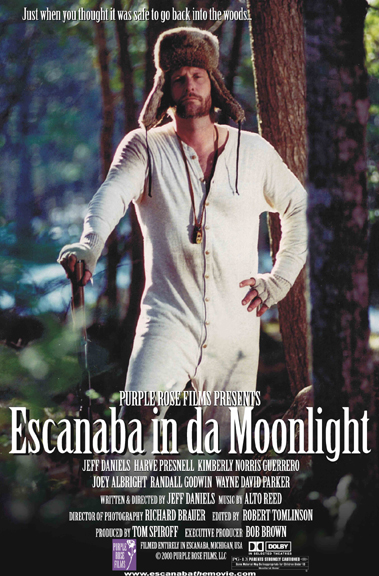
Kids had guns in my high school in the late 1970s, but they knew that it was wrong to shoot other students. It was a small town, but we were all taught the rules of engagement and we knew that other human targets were outside the scope. Every year there were accidental hunting fatalities (Dick Cheney would have felt right at home), but the schools were used to address that issue. Today I see wind-bag politicians trying to cut back on education as much as possible and I see kids who don’t know any better killing their fellow students indiscriminately. No, I’m not nostalgic. I do not own a gun. It is my belief that children learn from adults, and when politicians say through their words and actions that looking out for number one is all that matters and that bullying (yes, Mr. Governor) is appropriate for getting what you want, I think it is no wonder we find ourselves with children who can’t tell right from wrong. I’m ready to watch Escanaba in da Moonlight and pray to the god of the deer.

Deer God...


Exorcists, Serpents, and Rainbows

Tuesdays are release days for many new media products. I’m not sure why, but I accept it. This past Sunday’s paper ran a couple of stories by Stephen Whitty concerning the Blu-ray release of The Exorcist, counted by some critics as the scariest movie of all time. The press around the original release of the film in the early 1970s was enough to prevent me from seeing it until I was in my forties. I’m done using the word “release.” In an interview with Linda Blair, the iconic Regan MacNeil of the film, Whitty quotes her as noting that the rumors of “curses” on the filming of the movie were without basis. “But other people seemed to be trying to find something that didn’t exist,” she said. That sage statement could refer to considerable aspects of a society hungry for religious answers, but ill-educated on the religious facts-of-life.

Although sorely critiqued at the time by those whose religious sensibilities had been offended (Blatty is no theologian), Whitty nevertheless notes, “It may be a film full of gross obscenity. But in the end, ‘The Exorcist’ is a recruiting poster for that old-time religion.” He correctly observes that beliefs in possessing demons and that challenged social conventions will lead to evil permeate the movie. Traditional Catholicism wins out over that foreign Pazuzu every time. Even for those with more progressive beliefs, the film is difficult to watch. Religion, in addition to criticizing films, also provides some of the best plots.

Not to be counted among those best, but illustrative of the point, is Wes Craven’s The Serpent and the Rainbow. Ever since my days at the University of Wisconsin Oshkosh students have been after me to watch this film. Confused, dream-like, and at times difficult to follow, the movie opens with a claim to have been based on a true story. It isn’t the typical zombie movie either, although it features zombies. More of an attempted scientific thriller, the film explores the dangers of tetrodotoxin, “the zombie drug” when in the wrong hands. Understated in the movie, however, is the religious nature of Voodou. This is perhaps the most obvious failing point in the story. If the movie were to be really scary, the viewer has to believe that this is possible. The skepticism of science blocks the potential for unbridled religious expression. That is perhaps why The Exorcist has retained its power over all the years. Unlike more rational explorations of the world, it allows the audience to believe in personified evil that only old-time religion can cure.


Alternate Realities

Shutter Island and Inception share more than just Leonardo DiCaprio. Both films blend the conscious and subconscious worlds in such a way as to question what reality is. To many this issue is answered by what some philosophers label “naïve realism;” the world that our senses perceive is the world as it really exists. During a guest lecture this past week, a student repeated raised the question of how we know what we know. More than simply an attempt to get the teacher off the subject, this seemed to be a legitimate existential angst. Religious studies has a way of doing this to people.

Even physicists of the twenty-first century are increasingly forced to what looks more like science fiction than apparent reality to explain our world. The quantum world is a surreal environment and as scientists close in on a theory of everything, those of us who live in the macro world wonder where reality begins and fantasy ends. Perhaps the concept of reality itself is flawed. We live with many ineluctable truths; we function biologically, live, grow, and die. Beyond that we have no way of knowing, but we believe. And during that lifespan we experience both conscious and subconscious input. The closer we look at reality the more it appears to fracture.

Perhaps that is why movies such as Shutter Island and Inception have been so popular. Scorsese and Nolan have widely differing styles, but both are relegated to a world where apparent reality doesn’t seem to be enough. Only so much of life fits in a laboratory. The vast majority of it is simply experienced, whether wakefully or while asleep. Each at the time feels like real reality. Inception seconds the question raised by Shutter Island: what is reality, and, perhaps more importantly, what will we choose to do with it?


Ends and Beginnings

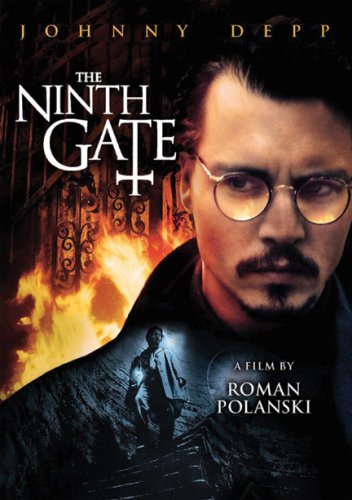
The Ninth Gate, a Roman Polanski film from a bygone decade, portrays a world the director doesn’t believe in. Typical of “devil movies,” the story involves a personified evil that not only seeks world domination, but who also writes books. I’ve been working on a book review for Relegere, the new online journal of Studies in Religion and Reception. In part the book addresses how the devil is portrayed in movies, although this particular film is not cited. Perhaps it is difficult to take seriously a film where the screenwriter is not a believer.

As a young teen I listened with horror as friends described The Omen, a movie that I never saw until just last year. The premise of the movie, that the Antichrist has already been born and is now walking the earth, ready to usher in Hal Lindsey-esque last days, is frightening to those who find a biblical basis for the idea. When finally watching the film the scariest part was viewing the extras. David Seltzer, author of both the book and screenplay, eerily tells the interviewer that he believes the Antichrist to be here now. His acceptance of mythology is admirable, but it is the problematic acquiescence to a modern reconstruction of disparate ancient views that is troubling. Like many late-twentieth century westerners, Seltzer has been influenced by attempts to construct a coherent account of the apocalypse from tattered bits of ancient traditions that never belonged together.

If education included a serious, critical look at how religious ideas developed, the world might be spared this sad predilection for seeking its own end. Apocalyptic ideas thrive in cultures of persecution, such as those very real torments of Jews under Antiochus and Christians under Nero. Their hopes for a brave new world of righteous rule, borrowing freely from Zoroastrian traditions of a new age, offered scraps of expectation of a better tomorrow to those dying today. When nineteenth-century evangelists saw the advances of industrialization and Darwin’s rational explanations of human origins, they felt the need to reconstruct the biblical demise of the world. Modern day apocalypticism, so evident in the Y2K, 9/11, and 2012 scares, is often ready to accept uncritically a supposed future already scripted by a sadly misunderstood Bible. If the world ends it will be our own doing, and maybe Roman Polanski will have to rethink whether or not a devil can actually write a book.


Noah in Time

When the silence was first broken at Gorgias Press, one of my colleagues suggested that I read The Time Traveler’s Wife by Audrey Niffenegger. The title suggested to me some kind of point-of-view rewriting of H. G. Wells’ classic The Time Machine, a novel that had a large influence on my young, science-fiction inclined mind. For some reason I wanted to keep this place sacred to the memory of Wells and I dismissed the suggestion with polite demurral. Since that time Niffenegger has been constructing quite a reputation as a novelist, and because I enjoy the implications of time-travel and I like to keep current – fashionably late, of course – I finally took the time to read the book.

I wasn’t sure what to expect; it is a sensitive love story, wrenching in parts, but the mysteries of time travel are left to a genetic defect and not some technological invention. In the course of wending in and out of past and present lives, the main characters, Clare and Henry, carry on a dialogue that includes the dynamic of a protagonist raised Catholic. Once, while discussing the bizarre nature of time traveling, Henry suggests that Noah is a fairy tale to which Clare replies, “Noah is in the Bible. He’s not a fairy tale.” This statement reaffirms that, for many people, Noah is the obvious touchstone of the Bible and modern society. A versatile figure, enigmatic and only sketchily drawn in the Bible, Noah reappears regularly in the popular media. Just this summer I noted how Justin Cronin’s The Passage also cites Noah as a schematic for much of the plot that bears the story. A few weeks ago I mentioned how the remake of The Day the Earth Stood Still viewed Klaatu’s ship as an ark. Noah from outer space.

Noah is a foundational figure for our society. This should not be surprising since the flood myth is among the most ancient of stories that humanity has relegated to religious literature. The Sumerians and Babylonians told the story long before Genesis was composed. In its own way, the Noah story is an example of time-travel. A tale whose origins are lost in the pre-literate stages of humanity, it becomes history with the uncritical acceptance of the Bible, only to become a defining myth of twenty-first century literature. The world of the twenty-first century often feels like a fragile environment ripe for a catastrophic flood. Consciously or not, we are still looking for our Noah.

Another kind of Noah


Athtar in Wonderland

Last night I finally got around to seeing Alice in Wonderland, the Tim Burton version. As a child I don’t recall having seen the overly optimistic Disney original, and I only read Lewis Carroll’s two-part, disturbing original after I had finished my undergraduate degree. When I first discovered Wonderland I was in one of my periodic phases of questioning reality and Carroll’s provocative prose and ingenious lyric ability only made the inquiry more complex. Strangely, it felt as if I had rediscovered a missing piece of my own childhood.

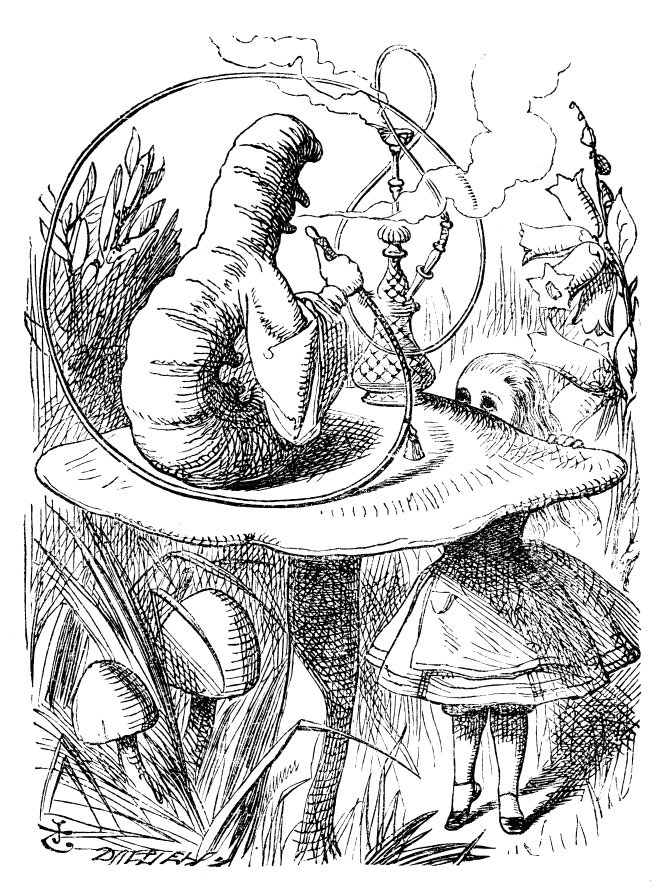
Burton’s versions of childhood stories would likely have been my preferred fare had they been available when I was young. Eerie without the overt horror of an R rating, the vision is one of a world where uncertainty reigns supreme. Then came the hookah-smoking caterpillar. It has been a few years since I’ve read the book, but I don’t recall the larval character as having a name. Linda Woolverton, the screenwriter, presumably gave him the name Absalom. Supposing this to be nothing more than the reassignment of a fated biblical name associated with failed attempts at kingship, I simply let the reference pass. Until the chrysalis scene. There he was, Absalom hanging from a plant, just like David’s son swayed from a tree according to 2 Samuel. This mysterious scene in the battle of Ephraim Forest had captured my attention before when I wrote an article on Absalom, eventually published in the Journal of Northwest Semitic Languages.

Noticing the strange phrase that Absalom was suspended between heaven and earth, I suspected that this might be a reflex of the ancient morning star (Venus) myth. The story of Athtar, the god who would be king but who must decline the throne, is a brief tale preserved in the Ugaritic Baal Cycle. As I watched the sage caterpillar giving wise advice to a confused Alice, the name Absalom took on new significance for me. I have no way of knowing if the reference was intentional or not, but in a culture deeply suffused by the Bible it would appear to be a logical guess. And if I was correct in my article, I was seeing a cinematographic reference to Athtar as a blue caterpillar last night. Wonderland indeed.

Curiouser and curiouser


Inception of Theseus

Never the first for new cultural memes, but often among the last, I finally took my family to see Inception over the holiday weekend. The Internet has been buzzing with comments about the movie for the last couple months, so it was difficult not to have preconceived notions of what to expect. Nevertheless, I found the film utterly engrossing. At one point I realized that I hadn’t blinked in so long that my eyes had begun to dry out. Having just finished Mark Danielewski’s House of Leaves at the end of June, and having begun my Mythology class on Friday, the Theseus myth has been on my mind anyway. Inception takes the hero’s journey through the labyrinth of the subconscious.

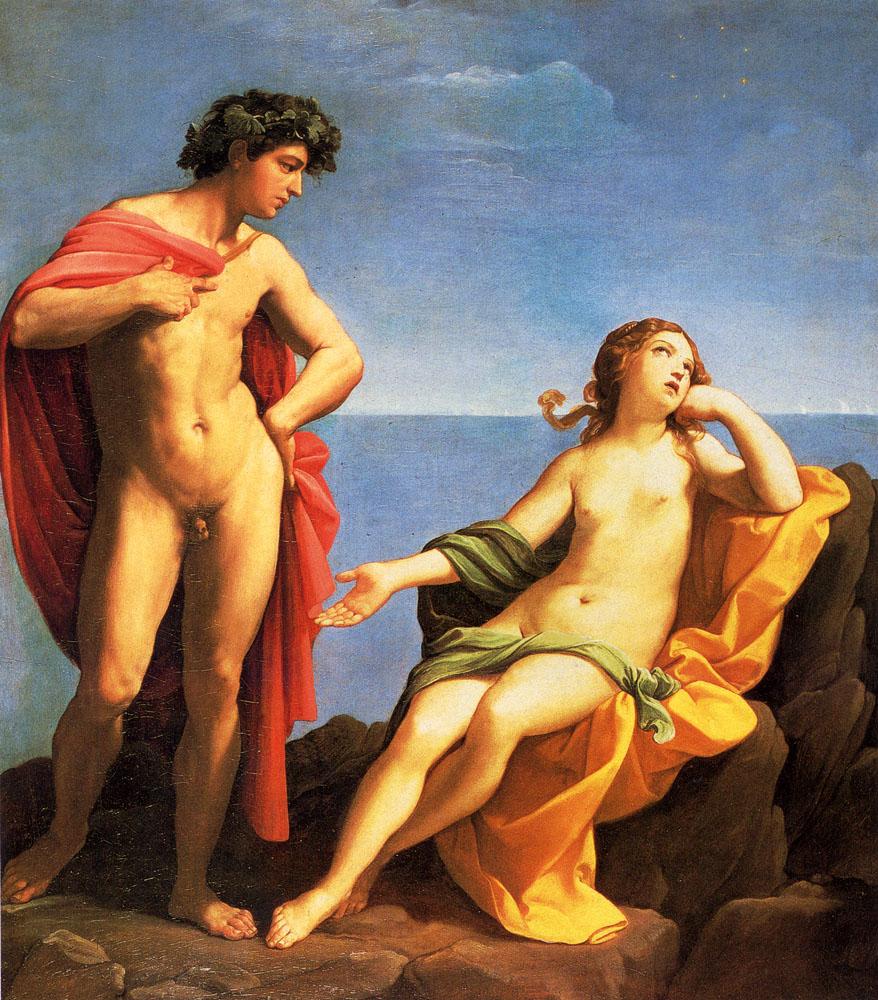
The first hint that Inception was the Theseus story, for me, was the introduction of Ariadne. The daughter of King Minos, Ariadne informs Theseus how to escape the labyrinth, and her first task in Inception is to draw a maze that takes a minute or longer to solve. Dom Cobb, like Theseus, is a deeply flawed hero. Part Theseus, part Daedalus, Cobb has trapped an unlikely Minotaur in the form of Mal, his wife, deep in his subconscious mind. She stalks him in his unsavory work, and when she threatens his very concept of reality, she is slain by Ariadne.

Coupled with classical mythology, the film also raises the unresolved question of the nature of reality. Is conscious existence any more real than the subconscious? This theme was explored in David Cronenberg’s eXistenZ back in 1999 with a similar ending that refuses to answer the question. Both films raise the troubling interference of technology with the most secret of human psychological repositories, the uninhibited subconscious. The closer the Internet comes to a global intelligence, the more the individual mind recoils into its own obscure and unexplored territory. Despite Freud and his disciples, we have not yet even begun to understand our own subconscious minds. Movies like Inception draw on classical sources to help us deal with the Minotaur that surely lurks there.

Ariadne explains her dream to Bacchus


Gort to Flood

There seems to be a society-wide fascination with the end of the world as we know it. Or maybe it is the just the perspective I bring to it. The past two decades with their breathless run up to Y2K and grappling to forge some sense out of 9/11 before 2012 rolls over us, have been awash in popular representations of how it might all come to an end. A society begging somebody to apply the brakes. We’ve got many senior citizens still around who’ve never used a computer attempting to coexist with a generation that has never been without one. From Kitty Hawk to the moon in just 66 years. I remember watching the latter on (black-and-white) television. Now I watch students walk into class with devices about whose function I can only ask Mr. Spock to speculate.

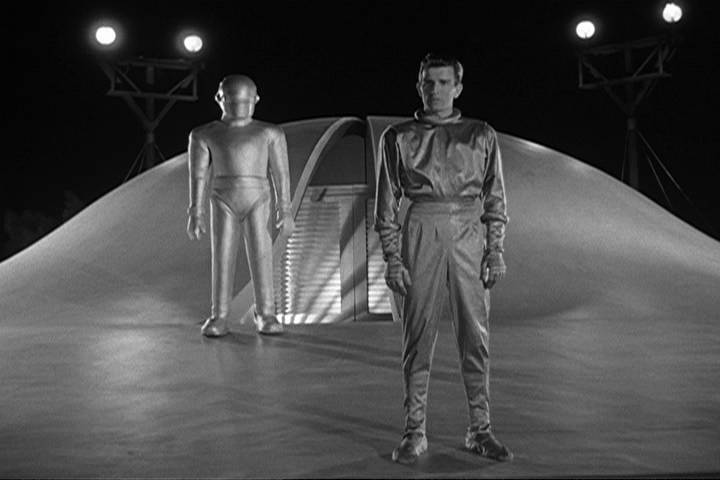
So it was that I finally got around to watching The Day the Earth Stood Still last night. The 2008 remake. Having long been a fan of the original, I can understand the insistent draw to bring it up-to-date. Even by the time Star Trek (original series) aired, it was hard to see what had terrified 1950s audiences about Gort or the idea of aliens. Thus I had great expectations when I first saw the trailers for the remake, but the reviews took the edge off my shine and I’ve only now experienced it. Naturally, I was looking for the religious angle.

Like Justin Cronin’s The Passage, the religious metaphor came in the guise of an ark. Klaatu is here to save all species except us, prompting Regina Jackson to state that after the ark is filled, the flood will come. The apocalyptic end of the world – being eaten by bugs (perhaps prescient of New York’s bed-bug infestation) – brings nanotech and the Bible together in an unhappy marriage. As soon as the authorities learn that Klaatu’s sphere is an ark they try to blow it to kingdom come. And yet Helen Benson is here to tell the tale.

We are vulnerable. For all our achievements, we fear the kids down the block that are bigger than us. Whether they be cold, emotionally flat aliens or ragingly wrathful gods, we are constantly watching the skies waiting for the next great flood.


Sobek to the Beginning

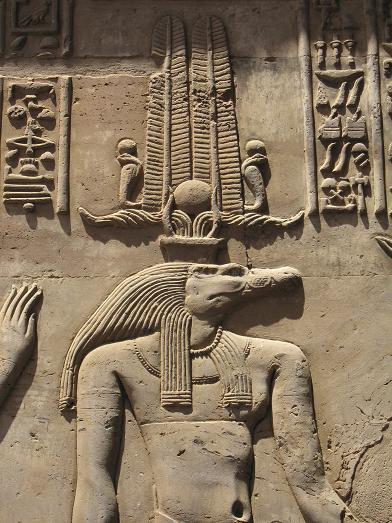
From some of my earliest reveries, Maine has been my favorite state. This strange feature had to have been gleaned from books since I never visited Maine until my early twenties. Since that time I’ve returned as frequently as possible; however, over a decade spent in Wisconsin made the trip somewhat daunting. So last night, still dealing with lingering intense emotions from the county fair, I decided to watch Lake Placid, the 1999 horro-comedy set in Maine. The movie is generally brainless escapism, and even the scenery is that of British Columbia rather than New England. It had been years since I’d seen the film, so I was surprised when Kelly Scott stated in defense of Hector Cyr that crocodiles were worshipped as gods by many ancient peoples, making them more prayed to than Jesus. This was, naturally, a healthy dose of celluloid hyperbole, yet it did bring to mind Sobek, the Egyptian deity mentioned by name in the film.

The ancient Egyptians venerated many animals as possessors of god-like qualities. Crocodiles, naturally dangerous to humans as well as to many large mammals, would suggest themselves as a form of divinity. Sobek was never a major focus of the Egyptian collective of gods, yet the mummified remains of crocodiles and the striking iconography of the deity attest his cult. The ancient Egyptians had no way of knowing that the crocodile had withstood the pressures of evolution for millions of years, a striking example of a body plan and lifestyle requiring no improvement. Few creatures have the staying power of the crocodile, an animal capable of feats more incredible than the fabricated beast in Lake Placid.

While Jesus has nothing to fear from crocodile worship (or, apparently, the Beatles), religion grasps, even unwittingly, to the unchanging. In a culture shifting so rapidly that our eyes barely have time to focus before something completely novel is thrust before them, the stable image of the crocodile may still serve as a useful symbol of something our religious forebears knew that we should continue to recollect. Stability is worthy of admiration. In a bizarre way, throwing Maine together with crocodiles may be an antidote for melancholy, but only in the right environmental conditions.


Reaping the Exodus

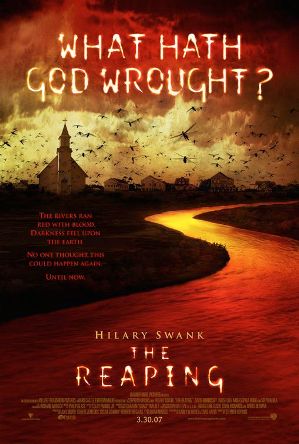
Strange coincidences transpire. In 2007, just after the professor in my discipline at Rutgers University retired, I showed up in the Religion Department seeking adjunct work. With the vicissitudes of “full-time” employment, at times my part-time stint at Rutgers is all I have. While covering the book of Exodus my first year there, students began asking me what I thought of The Reaping. I hadn’t seen the movie, which had been released on Good Friday of that year, but I promised my charges that I would. Still on my Hollyptic kick, I decided to rewatch it last night. The script was handled much better than that of Lost Souls, although the movie as a whole lacks credibility. It is, however, an example of how the Bible mystique continues to pulse through Hollywood’s veins.

The concept of bringing the plagues against Egypt into the bayou was a fresh one, but the satanic cult aspect has been overdone. A strong female lead in the role of a disenchanted former clergy-woman was a nice touch, and although the premise of her back-story was contrived, it was also decidedly eerie. The element of the movie that students wanted professional comment upon, however, was Katherine’s scientific assessment of the plagues of Egypt. This idea has a comparatively long history. Since critical biblical scholarship began, naturalistic suggestions for the non-historical plagues have been offered. Strangely, these offerings are intended to buttress an historical event that the theories themselves undermine. There is no archaeological or historical evidence for the exodus. Why then, are scientific explanations of the plagues necessary?

The story of the exodus is liberating; slaves liberated by a loving God forms a back-story that most oppressed people want to be true. The sad fact is that religion is more often used to repress than to liberate. Somewhere along the trajectory of human social evolution, religion became a key element in the control of the masses. This becomes clear from the merest glimpse at religion as it existed in ancient Egypt itself, or any of the other cultures contributing to Israel’s religious tradition. The Reaping, like so many films that springboard from the Bible, offers a conflicted worldview where nobody really knows who is in charge of the universe. In that aspect, it mirrors human religious experience.


Lost Apocalypse

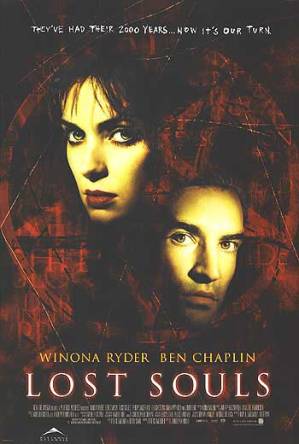
The Bible has many eminently quotable passages. I suspect that is one of the reasons it has the staying power that it does. Many critics of the theologies spun off by the Good Book have turned their vitriol toward the Bible itself, but I believe such hostility to be misplaced. Not everyone enjoys reading the Bible – that much is true for any book. The Bible, however, is foundational for not only our society, but the entire western literary tradition. Its influence on Shakespeare alone, who has, in turn, influenced just about every writer since the seventeenth century, underscores its literary importance. That’s why I’m always surprised with film-makers use concocted verses from the Bible when actual passages would produce the same effect. Granted, few Bible scholars comprise movie audiences and producers and directors seldom worry about writing the story for them. Last night I watched the “horror” film, Lost Souls, released in 2000. I’d read about the movie in Douglas Cowen’s Sacred Terror, so I wanted to see how it rated.

The movie begins with a false Bible quote: “… A man born of incest will become Satan and the world as we know it, will be no more. Deuteronomy Book 17.” Now granted, the movie failed to rock the critics, but the sheer weight of errors from pre-scene one should be the first warning to start from a better script. Beginning with an ellipsis for dramatic effect may be acceptable, but it serves no purpose – and what’s with the misplaced comma? A man born of incest in Deuteronomy is a non-starter because his potential parents could only be found dead, crushed together under a pile of hurled stones before the unfortunate could even be born. Satan as a devil is never mentioned in the Hebrew Bible, let alone Deuteronomy. Deuteronomy is almost never quoted by apocalypticists since it does not predict the end of the world, and Bible books are divided into chapters, not “books.” Well, the biblical illiteracy of Hollywood may be overlooked for a good story, but this is no such thing.

Lost Souls fails on the premise that a biblical “literalism” (and that is only if certain Evangelical interpretations are given unwarranted credence) about the coming of an Antichrist should be shored up by a fabricated quote from the Bible. I’m not trying to be a movie critic here, but a cultural one. The whole “end of the world” scenario held by many Evangelicals is a hodge-podge of biblical verses brought together by clever nineteenth-century clergy with little exegetical training. It is like trying to connect the dots while having to change pages constantly. The idea caught on amid the discarded lives left behind by advancing industrialism and the perceived threat of evolution. Apocalypticism has become its own industry as some otherwise unknown writers can attest. Movies like Lost Souls, or even The Omen, however, pale when compared to the antics of religiously motivated apocalypticists in the real world. Some of the rules in Deuteronomy itself are more frightening, if better written.