Toy Story 2.1

Summer is a season for movies. When the weather gets hot, sitting in an artificially cooled dark room for a couple hours, even if it is with strangers, seems like a good idea. Generally the movies I see in theaters are family movies – I’ve never been one to go to a theater alone and my personal taste in movies is unique in my family. The more interesting flicks usually have to wait until DVD release before I see them. Nevertheless, the movies are an experience that many of us remember fondly from childhood and children deserve good movie memories. Since the movie theater was invented it has become one of the signatures of culture in many parts of the world.

Last weekend, during the East Coast Heat Wave – a weather event so much talked about that it should have had its own theme music – we went to see Toy Story 3. In an unusual departure from my focus on religion, my comments here will focus on creativity. (Good religion is creative, after all.) Toy Story 3 opened to much critical acclaim, so my expectations ran a little high. A little too high. While I found the story to be interesting, it was a bit familiar. For those acquainted with the franchise, it felt like a remake of Toy Story 2. Both films open with the toys worried about their future because Andy is going away. In both 2 and 3 Woody is separated from his friends and has an epiphany that leads him back. Buzz gets returned to factory settings to reprise his humor in the first film. An evil toy in both movies holds the others captive against their wills. Meanwhile Woody makes new friends and with their assistance rescues the threatened toys. The evil toy ends up getting his just deserts and Andy’s toys successfully integrate.

The story line values friendship and commitment, and there is nothing to complain about there. Yet, after stepping out into the harsh sunlight, I felt like I’d just paid to see a movie I’d already seen before. Creativity – the factor that leads to truly new concepts – is not always valued in movies. This is particularly so in children’s movies. Our kids are being programmed to accept recycled stories as something new. It is not only Toy Story that has fallen into such rehashing: how many fresh ideas are shortly followed up by a 2, 3 or 4? Even if 1 wasn’t so good? I’ve even been told by publishers that publishing houses prefer to take few risks – they would rather have a product that is “like” one that has already proven a blockbuster. How many wizards and vampires have populated tween books over the last decade or so? It seems that the safe money is in the recycled story. In a society hooked on convenience, new ideas might seem just a little too dangerous. Once there was a cowboy blog…
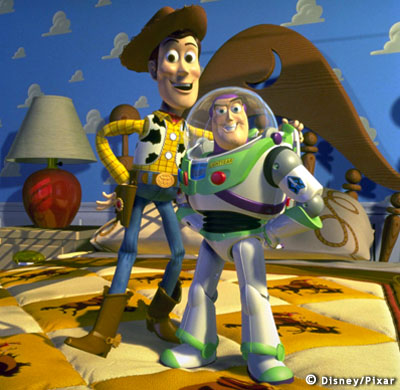
Best friends forever and ever and ever

Paranormal Prophets

At the suggestion of a friend, I watched The Mothman Prophecies last night. Very loosely an updated version of the collapse of the Silver Bridge in Point Pleasant, West Virginia, the movie both satisfied my monster movie habit and my interest in things biblical. As a monster flick, it was satisfying in maintaining tension, never clearly showing the creature. As a representation of prophecy, it falls into the camp of Nostradamus.

Reports of the “mothman” began in 1966 and continued over the next year. It was reputedly seen near the Silver Bridge, the artery that connects Point Pleasant with Gallipolis, Ohio. After the tragic collapse of the bridge, resulting in nearly 50 deaths, the paranormal prophet was never seen in the area again. While in West Virginia last year, a friend introduced me to a couple from Point Pleasant who stopped into her store. They looked a little embarrassed when the mothman came up in conversation.

Point Pleasant's mothman statue from WikiCommons

Prophecy, in the vernacular, refers to predicting the future. Although some biblical prophets correctly intimate future happenings, mostly the image of prophets in the Bible is that of effective speakers. Prophets are individuals who participate in the reality of the world by adding their powerful words to the mix. If their words regard a future event – fairly rare in the Bible – they affect the outcome because their words have influence in the world. It is a supernatural view of the spoken (or written) word, to be sure, but it is a long cry from predictive ability. It is a matter of perspective.

Interestingly in the movie, Alexander Leek, the specialist on mothmen (apparently there are many), suggests that they see farther because they are higher in the sky than humans. In other words, it is indeed a matter of perspective. Certainly the mothman must go down as one of the oddest cryptids sighted. I give them no credence as prophets, but I will think twice before driving over bridges from now on.


What’s Wrong with Eve?

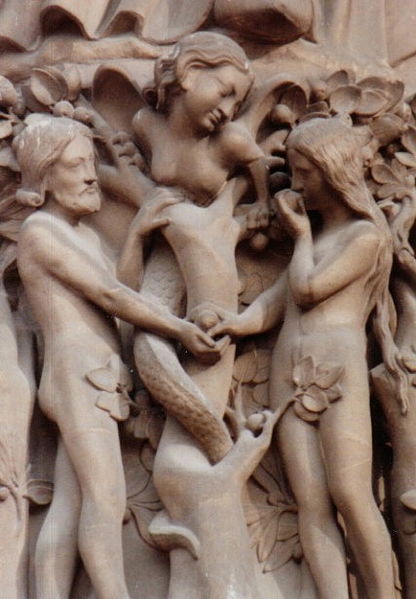
Reading a newspaper film analysis by critic Stephen Witty on film noir, I was intrigued by how he represents the role of the femme fatale. Most produced and directed by men, the classic noir features a dangerous woman. Noting that there are “nice girls” in such movies, Witty states, “they’re not the ones who matter, the ones as essential to the plot as that serpent is to Genesis.” Naturally, this statement evokes the image of Eve, the seductress.

Eve has been much maligned by patriarchal religions. She is a convenient scapegoat for men’s uncontrollable urges, and by making her the gateway to sin itself the male spiritual psyche is unburdened; it is all her fault. It often comes as a surprise that Genesis does not use the word “sin” in the episode in Eden. Interpretations of the tree of knowledge are not universally negative, nor is Eve alone to blame. Scapegoats, however, are much more comfortable than admitting culpability. Religions have stropped this to a high art; the masculine religious establishment can repress the feminine threat with scriptural justification.

Eve is a misunderstood heroine. She is the mother of knowledge. Genesis does not forbid the tree of life; ignorant humanity was free to live forever. Without knowledge. Eve, while perhaps under the duress of temptation, nevertheless took the initiative to find wisdom. And she has been paying the price ever since. Film noir is a reflection of life, as is most art. In a world where men like to think they have the right to rule, the woman who sees a little farther is considered dangerous. All feeble theological attempts to forbid religious leadership to women have Eve to thank for their revisionist hermeneutics.


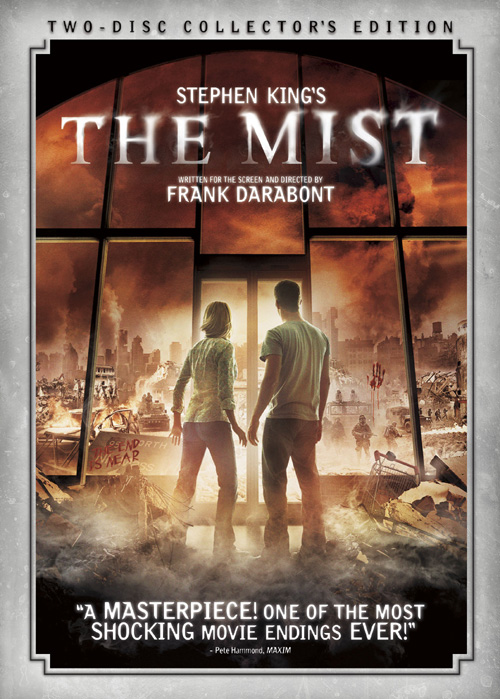
The Mist in the Pulpit

With the teaching schedule I have, vacations are not viable. One semester blends into another like some demonic tapestry with blurred edges between the somewhat discrete components. Breaks just aren’t part of the picture. While my family is on a well-deserved vacation, I’ve been home doing class prep and lecturing. On those nights when I have no classes, I sometimes watch a movie to hear the sound of human voices. This week one of my picks was The Mist.

My fascination with horror films stretches back to my college days, concurrent with my first degree in religious studies. Never a slasher fan, I’ve preferred the more thoughtful movie that has a (hopefully) profound message. I’d never read Stephen King’s novella on which this movie was based, so I didn’t know what to expect. All I knew was “there’s something in the mist.” The build-up was great until the creatures were shown – after that it became a standard monster flick. A human menace arises in the form of Mrs. Carmody, a religious zealot who is convinced the mist is the apocalypse. As the survivors try to form some plan of action, Carmody’s preaching becomes more and more strident and self-convinced as the “wicked” die and the “righteous” are spared. Not having read the book, I’m not sure if her over-the-top rhetoric originated with King or with Frank Darabont, the screenwriter/director.

I have often posted on the relationship of monsters and religion, but The Mist is almost too easy to cite. Perhaps released too late to make it into Douglas Cowan’s Sacred Terror, the connection between religion and fear is patent and bald. Mrs. Carmody’s religion, apart from being very generally Christian, is hard to identify. She insists on human sacrifice while constantly referencing the Bible. Although there are examples of human sacrifice in the Bible, that particular cultic activity is never advocated for monster invasions or the apocalypse. Carmody is a parody of religious over-reaction to the unfamiliar and dangerous. In her insistence that others take her point of view, the caricatured Carmody becomes a danger that threatens the community. It is left indeterminate whether her followers survive or not.

The religious agitator is a trite and tired character, but one that has instant recognition value. In The Mist, however, I came for the mystery and stayed for the monsters. Mrs. Carmody could have said much more by saying much less.


Kupalle or Ivan Kupala

The mysteries of newspaper layout are opaque to the laity, but the basic premises are clear; important news in the front, less pressing matter behind. The human eye, while expert at pattern detection, craves breaks in a series of repetitive columns of identically sized words. Newspapers and textbooks therefore punctuate the strictly “factual” information with images that lighten the ocular burden. So it was that yesterday’s New Jersey Star-Ledger graced the World and Nation section on page 10 with a photo of Kupalle.

Photo credit: Nikolay Yastrebov, European Pressphoto Agency

The caption notes that these young ladies are celebrating the pagan summer solstice holiday of Kupalle in Minsk. The summer solstice was almost two weeks ago, so why the photo made its premiere yesterday is one of those newspaper-specialist mysteries. Nevertheless, my curiosity about Kupalle was piqued. The photo looked like a more family-friendly version of a ceremony portrayed in The Wicker Man where young ladies leap over a fire. Some research revealed that Kupala is an ancient Russian water goddess, connected in some way with Neman, a Celtic goddess (thus the Wicker Man tie-in). The festival dedicated to Kupala involves leaping over a bonfire to ensure fertility. Kupala may have been lunar in origin but her name translates as “she who bathes.”

Christianity has a long history of subsuming “pagan” celebrations, often “baptizing” them into Christian form. In Belarus, Kupalle became the festival of Ivan Kupala, “John the Bather.” Kupalle was literally baptized. June 24, as the fictive date of John the Baptist’s birth, is a saint’s day in Roman Catholicism. The timing of the holiday intentionally coincides with Midsummer, one of the most sacred times of many nature religions. Ironically, in the Baptist’s name a holiday was reborn into Christian form. In the post-communist days of Eastern Europe, not only does Orthodox Christianity appear publicly, but its precursors once again engage public interest. Even if it is two weeks late.


Blogging the Blob

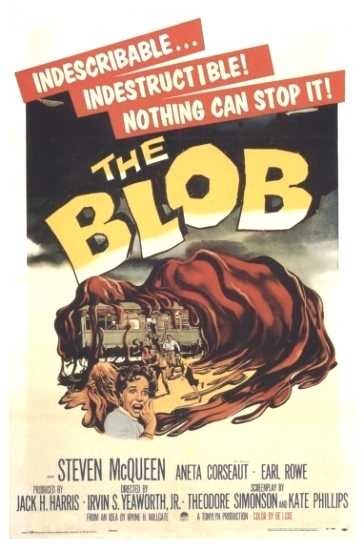
It has no shape. It has no brain. It oozes in where it is not wanted and wreaks havoc on the innocent people of the local community. It is in the hands of an apocalyptic clergyman. No, it isn’t the Republican Party, it is The Blob (1988). Having just watched the remake of the 1958 sci-fi film of the same name, a number of elements relevant to this blog (blob?) stood out in sharp relief. The most notable change from the original movie comes in the form of the role played by Reverend Meeker, the (apparently) Catholic priest turned tent-preaching revivalist. Of course, the whole government conspiracy plot is also new to the film, but that is best left to other blogs.

As noted in previous posts, religion and horror genres share much common ground. While it is hard to take a blob seriously – the role of Bob the blob in Monsters vs. Aliens is precisely comic relief – the idea of a crazed minister unleashing chaos is perhaps a little too believable. The real source of terror in the 1988 version of The Blob is not the monster but those who control it: the government and the church. When the government demonstrates that it cannot control the monster it has generated, it moves into the hands of Reverend Meeker. Here it rests until, after a sermon about the end of times, the reverend pulls out his jar of blob and indicates that as soon as he receives a sign from God, it will be released.

In a strange way this strange film proved prescient. The move of religion into politics was underway already in the Reagan years, but it was a threat few took seriously. It was not until W’s reign that the implications began to become clear. A religiously motivated electorate resembles a blob in significant ways. Once released it is difficult to contain, even by its creators. In aspect it is laughable, but in consequence it is deadly. It stops at nothing short of total domination. This film, which never made the impact that many horror films achieve, may turn out to be the scariest movie of its era after all.

Not your parents' blob


The Power of Christ Beheads Thee

Yesterday’s news carried the story of Gary Brooks Faulkner, self-appointed Osama bin Laden hunter. Faulkner, on his third trip to Afghanistan, is described as “extremely religious” and “highly intelligent” by his sister. Equipped with night-vision goggles, a pistol, sword, and “Christian texts,” according to the New York Daily News, he plans to behead bin Laden by the power of his (Faulkner’s) faith. Faulkner is fighting kidney failure, a disability he apparently shares with bin Laden, and although he appears to be dying Faulkner said, “God is with me, and I am confident I will be successful in killing him.”

It is hard not to admire a person so driven by conviction. On the other hand, it is difficult to imagine Jesus instructing his followers to lop off somebody’s head. The incongruity between the insistence of forgiving and loving one’s enemies and the more direct approach of beheading is a wide gulf indeed. At what point does religion become revenge? Is doing unto others as they have done unto you the corollary of its better known anastrophic sibling? Beheading is one of the most degrading forms of execution – although all forms of capital punishment raise serious questions in classical Christianity. What happened to turning the other cheek (neck)?

The image of a lone-ranger mercenary wearing night-vision goggles while toting a 40-inch sword is painfully ironic if not downright reminiscent of Attack of the Killer Tomatoes. Flying planes into buildings out of hatred for theological differences is even more ridiculous. If people could keep their religious hands to themselves the world might become a much more humane place and the daily news might become just a tad less colorful.


Jurassic Playground

Over the weekend I watched Jurassic Park for the first time in many months, perhaps even years. Despite the caricatures that substitute for believable characters, the dinosaurs are mostly believable and the warning tone appropriate. Throughout Dr. Malcolm cautions against “playing God” – an interesting perspective for a character who ascribes so fully to chaos theory. So when the television was off and the dinosaurs once again safely extinct, I continued to ponder this notion of “playing God.”

Quite often the phrase occurs in two main contexts: those of science and ethics. When humans have discovered the naturalistic explanation for a phenomenon and devise a human means of altering it, we are then in the realm of “playing God.” It seems to me that this is only a difference of degree from what people, and other creatures, have always done. Does not every action we take have endless ramifications? In our own little chaotic system, our decisions and activities impact others just as surely as a T-rex stomping through the park. It is only a matter of degree.

As human beings we may be the only animals that consciously “play God,” but the truth of the matter is that we are all pieces in an intricately interconnected system. Animals, even plants (behold the kudzu!), influence the activities of others, changing courses of rivers, degrading the environment, blocking the paths of ants, ant-eaters, or ant-eater eaters. What could be more natural than “playing God?” This, of course, doesn’t change the ethical angle, but throws it open much wider. Should we clone dinosaurs? Should we clone people? Don’t ask me – I’m too busy playing God in my own little corner of the world.

T-rex plays God


Zombies, Golems, and Robots – Oh My!

A truly great metaphor is hard to kill. Despite detractors and naysayers, the zombie has clawed its way into the modern psyche as a denizen of the living death of a world we’ve created for ourselves. Joblessness, environmental disasters, tea parties – just when you thought it couldn’t get any worse, the dead refuse to stay dead. Elsewhere on this blog I’ve written about the origin of zombies in Voodoo, and I mentioned in passing the connection with the golem. The golem is a mythical Jewish creature that serves the role of protector of the oppressed (one can’t help but think of the Democratic Party). It is strong, dedicated to its task, brainless and soulless (one can’t help but think of the Religious Right). Like the zombie, the golem has no inherent ability to think for itself, and it must be animated by a magical word written on its forehead.

Golem around the corner

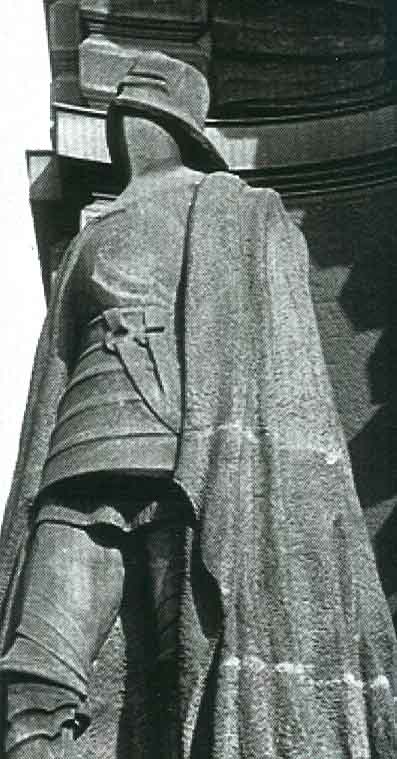
One of the most famous golem stories involves the Golem of Prague, defender of the oppressed Jews in that city in the Middle Ages. The Prague connection also forever ties the golem together with robots in Karel Capek’s 1921 play, R.U.R. (Rossum’s Universal Robots), the very origin of the word “robot.” Like the golem the robot putatively has no soul. It too is controlled by a code written precisely for it. Unfortunately on my one trip to Prague back in 1991, I didn’t know to look for the golem – I did find the statue of Jan Hus, however. Right around the corner the golem lurked, standing guard over the oppressed. It is a powerful image when the world is in such a state.

We need a hero

With the recent release of George Romero’s Survival of the Dead, the zombie has been given renewed life. Watching the Republican Party gearing up for a major thrust at the very soul of America, lining up the local BP station to support big oil, spouting false rhetoric about what the Bible says, I think I’d rather take my chances with the zombies. Does anyone out there happen to have a golem for sale, just in case?


Pulp Bible

Everyone is an expert on the Bible. This is one of the factors that provides professional biblical scholars with generous ulcers. Everyone is an expert because they know what they believe about the Bible. The difficulty is very few people actually know much about the Bible. Belief and knowledge are very different features of the human psyche. In my introductory course on the Hebrew Bible last night, I showed the clip from Pulp Fiction where Jules exegetes Ezekiel 25.17 (which is a fictional verse concocted for the movie). This offers a springboard to discuss how the Bible is perceived in society at large. Many people believe that Ezekiel 25.17 actually reads as Jules quotes it. The writer/director of any movie may freely manipulate the Bible since they are as expert as anyone else on the subject. (Of course, Ezekiel is a safe bet for a false citation since few people have actually read the book.)

As an officially trained “expert” on the Bible who has learned the original languages and who has read far more books on the Bible than health or common sense would dictate, I often wonder about this. When the Jehovah’s Witnesses stop by, knowing that I have these credentials, they plow straight ahead and tell me what the Bible really means. They are experts as well. When my wife was pregnant and we visited the obstetrician for an initial interview, as soon as he discovered my vocation, the physician quoted Scripture for this nervous young couple before him. Would you not rather have a Bible expert deliver your first child? Where is there room for the bone fide Bible specialist?

Having read Hector Avalos’ The End of Biblical Studies some months ago, I found myself largely in agreement. In many quarters the Bible receives a privileged treatment that only creates problems. Politicians, rap artists, physicians, movie directors, and janitors are all experts on the Bible; why do we need those of us who’ve made it a life’s work? The answer, I believe, is that knowledge of the Bible is at an all-time low. Many venerate the Bible without understanding what it is. Until society gets a grasp on what it means to have so many experts on the Bible, everyone should ponder the meaning of the passage that reads, “The path of the righteous man is beset on all sides by the iniquities of the selfish and the tyranny of evil men. Blessed is he, who in the name of charity and good will, shepherds the weak through the valley of darkness, for he is truly his brother’s keeper and the finder of lost children. And I will strike down upon thee with great vengeance and furious anger those who would attempt to poison and destroy my brothers. And you will know my name is the Lord when I lay my vengeance upon thee.”


Mystery of Mystic

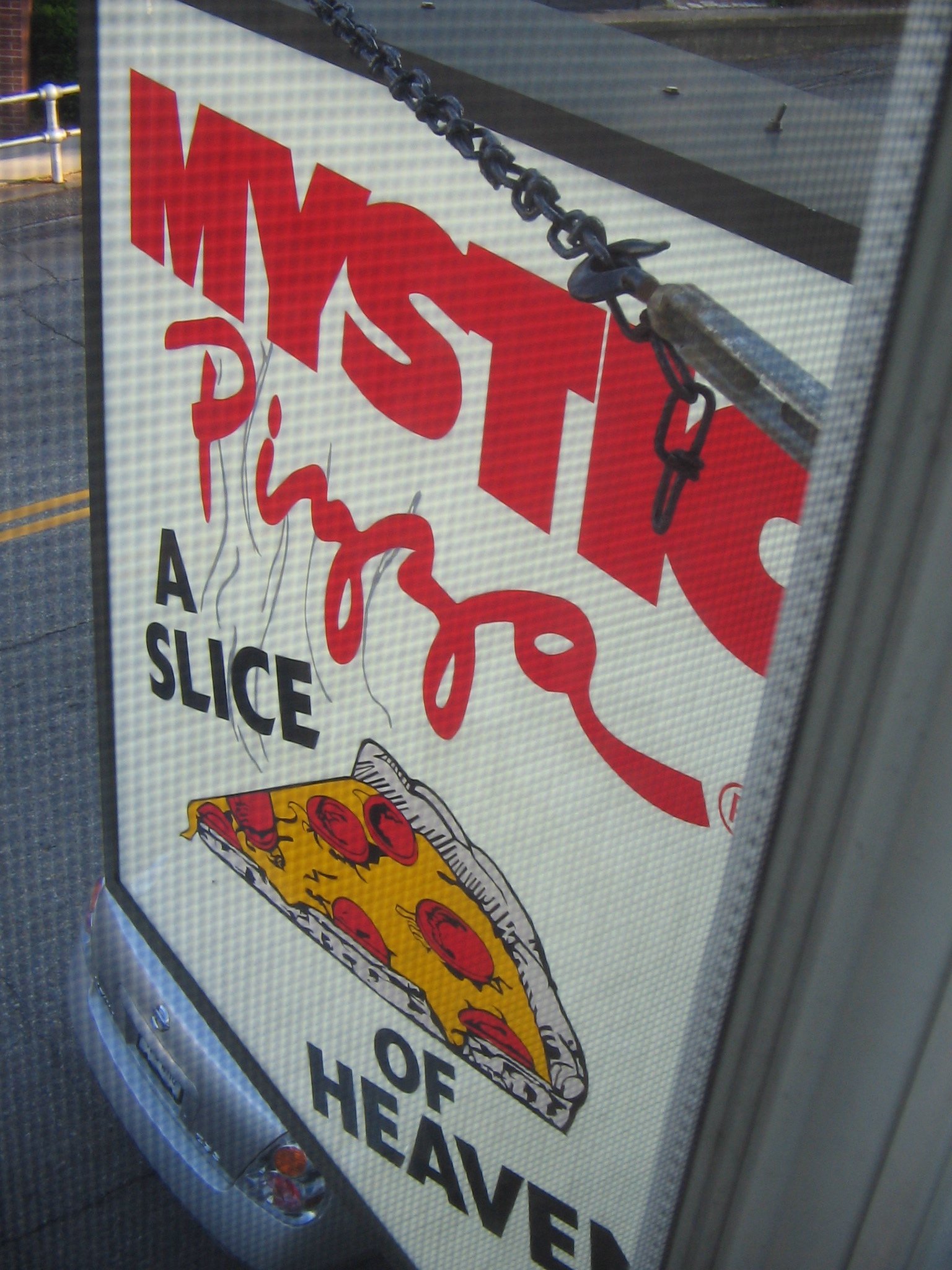
Ever since my school days at Boston University, even before a movie made the town famous, I wanted to visit Mystic, Connecticut. Perhaps it was the draw of the name that evoked foggy harbors and suggested the possibility of some kind of enlightenment. Perhaps it was because Mystic is near the gray waters of the north Atlantic that so captivate me. Perhaps because I am innately attracted by the sense of place. Whatever the reason, since we needed a break from my perpetual quasi-unemployment and my wife’s demanding hours, we have come to Mystic at last. Since traffic was exceptionally heavy, we haven’t had a chance to explore much beyond Mystic Pizza, now an iconic stop for all visitors.

She wasn't there

Curious about the name with its quasi-religious overtones, I tried to find in the town’s literature some hint of its origin. Nobody knows for sure. Like many “American” toponyms, however, Mystic likely derives from native American roots. The suggestion has been made that it means “great river whose water is driven in waves” (missi tuk). To the colonial ear ever alert for religious significance, this may have become “Mystic.” The true origin of the name may never be known.

Religious enthusiasm among early European colonists and their scions further west often inspired quasi-spiritual toponyms. Devil’s Tower and Devil’s Lake (Wyoming and Wisconsin, respectively) had no associations with the dark lord, but rather were locations of spiritual significance for the native populations. Grasping for a way to express this, the best evangelical Christianity could come up with was “Devil.” At least Mystic sounds much less diabolical. As we explore this town I will, by dint of natural disposition, keep an eye open for the religious implications. If I, perchance, uncover the true origin of the name, my readers will be the first to know.


Wicker or Wicked?

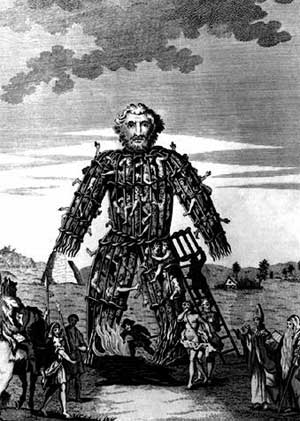
While I continued officially unemployed I keep to a strict regimen of not watching television except on the weekends. Since we don’t have cable or even a digital conversion box, my viewing is limited to grainy VHS tapes or DVDs. Many of them I’ve watched over and over. Last night I picked out one of perennial favorites, The Wicker Man (1973, of course!) for late-night viewing. Although classified as a horror film, the only terror comes at the very end in a scene that I always find difficult to watch. What keeps me coming back to this film is its unrelenting criticism of religious hypocrisy. (That and the longing evoked by the footage of a Scotland I left many years ago.)

Briefly told, a Highland police sergeant, Neil Howie, is lured to a fictional Summerisle in a mouse-and-cat game where he ends up the victim of a neo-pagan cult. The stunned Christian constable cannot believe the superstition evident on the island could still exist in modern Britannia, leading to one of the highlights of the film. Questioning Lord Summerisle, played by a striking Christopher Lee, Howie accuses him of paganism. “A heathen, conceivably,” Summerisle concedes in a tight shot, “but not, I hope, an unenlightened one.” Howie is shown growing increasingly rude and unsympathetic, forging a makeshift cross to lay over a Druidic burial. He threatens Lord Summerisle with being investigated by the authorities of the Christian nation under whose aegis he falls. The tensions between religions grow until the final scene.

The constant interplay between control and conviction raises again and again what the true nature of religion is. Summerisle reveals that the neo-paganism began as an expedient way to encourage the locals in growing new strains of crops. The images of palm trees in the Hebrides may seem unwarranted, but having strolled among them on the Isle of Arran nature itself belies the orthodoxies of convention. Does religion rule by force of law, depth of conviction, or pure expediency? The makers of the film were wise enough to leave that to the viewer to decide. No wonder that on many a bleary-eyed weekend night, ousted from my once stable career by the overtly religious, I choose to watch, yet again, The Wicker Man.


The Return of the Goddess

When the coalescence of events points in a single direction, it is worth paying attention. Goddesses, it seems, are once again on the move. Not Asherah this time, although she seldom sits still, but the creator goddesses. The notion that creation is a female prerogative seems only natural, and the concept is in the ascendant. In a local setting, the Alvin Ailey American Dance Theater troop is performing “Dancing Spirit,” a piece by Ronald K. Brown. The dance features a move that Brown attributes to Yemaya, the Yoruba goddess of creation.

WikiCommons' Yemaya

Now I have to confess to knowing little of Yemaya and Yoruba – African mythology beyond ancient Egypt has fallen outside my limited scope – but from the little I know I can see that she represents a fascination with feminine power. A dance to celebrate the power of the creatrix feels appropriate. Worlds created by masculine deities always go awry. Perhaps the power struggles built into images of strength and domination will always lead to conflict and suffering. The mother is here to protect.

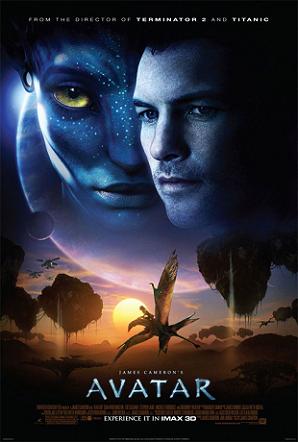
Despite its flaws, Avatar also shares in this image of the protecting mother. Eywa may be a fictional deity devised to give the Na’vi a central focus, but her mythological profile is sound. It is the mother who gives life and protects that life. The father disciplines and starts wars. These are not universal archetypes, but rather coalescences. Religions involve worship and worship may derive from fear or from love. I suspect that the goddesses engender the latter. I suggest that we could learn much from the creator goddesses.


I See You, This Time

With the advent of Avatar on DVD, I finally had the opportunity to see the movie. This time there was no booming bass and overly active 3-D, and I didn’t end up feeling nauseous for days after. On a small screen it lacked the compelling sense of being in each scene that the first ten minutes of my theatrical experience of the movie had, before I had to seal my eyes tight for the rest of the film or be carried out on a stretcher. Nevertheless, I was able to follow the story this time.

I have posted several times on my affinity for old science fiction films; a large part of my boyhood was spent watching hours of improbable adventure on the black-and-white. Perhaps counter-intuitively, I ended up studying religion instead of science, or even literature. Religion, however, is deeply embedded in science fiction, probably because it is deeply embedded in people. And Avatar was no different. Early commentators noted the similarities of Pandora to Eden. Two trees in the garden (Hometree and the Tree of Souls) were easily borrowed from Genesis. The idea of nearly naked natives living in harmony with the world around them, the soft, graceful curves of the forest contrasted sharply with the angular, obtrusive construction vehicles intent on raping paradise. I’m a sucker for archetypes, I guess. The concept of Eywa as “All Mother,” a nurturing goddess rather than a frowning father deity, only enhanced the sense that Pardora’s box should not be violently wrenched open. Even the hideout of the protagonists was nestled among floating rocks called the Hallelujah Mountains – presumably the name given by earthlings.

Yes, the writing was at times trite, and the characters were caricatures of themselves, but in the tragic light of the Gulf of Mexico Oil Spill, Avatar’s world was pristine, uncomplicated by greed and corruption. The Na‘vi, like zealous Christians, are born twice; the metaphor of foolishly maintaining hope in the harsh light of uncaring entrepreneurs might lead to a limited salvation even for this tired old planet. I am an unrepentant tree-hugger. And if there is a film that, despite its limitations, says it is alright, even noble, to hug trees, then I say it is religious in the deepest possible sense.

All Mother is watching


Zoroastrian Odyssey

Clinton's Red Mill

Clinton’s Red Mill is a popular New Jersey attraction, but numerous reports of paranormal activity have thrown an additional lifeline to the museum in the form of much-needed revenue in the form of seasonal ghost tours. Last year about this time my family and I participated in one. Touring the old grounds at night can certainly lead to spooky experiences, even for those of us who sit on the fence about ghosts. We discovered that The Atlantic Paranormal Society, the “TAPS” of Ghost Hunters fame, had investigated the Mill the previous year. We watched several episodes of the popular show, and for a lark, my wife bought me a subscription to TAPS Paramagazine for my birthday. All in good fun. I always thumb through when it arrives, but it is hard to take much of it seriously.

The last issue (volume vi, issue 2), however, contained an article about Demonology. Now, I thought I had graduated from The Exorcist and the Exorcism of Emily Rose to a healthy skepticism, but I could not resist reading this article. The first statement declares, “A demon is a fallen Angel that rebelled against God along with Satan, refusing to be humble before, and serve, God” (Adam Blai). While I never make light of things I don’t understand, I did consider the fact that the concept of demons, which derives from a Judeo-Christian mythology, presupposes a mythic war between the powers of good and evil. At the same time, I have been reading up on the Zoroastrians, one of the oldest continuously practiced religions in the world. There can be no serious doubt that the Judeo-Christian tradition borrowed the concept of the demonic from their Iranian neighbors of the ancient Persian Empire.

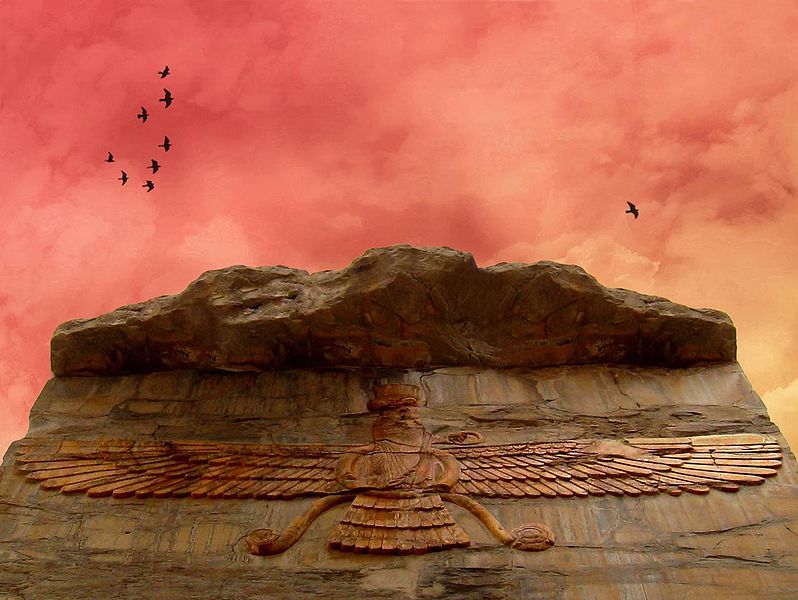
A Zoroastrian fravashi

The implications of the Zoroastrian connection are profound. If the ancient sage and Afghani priest Zarathustra was correct about the dualistic conflict of good and evil, was he not also right about Mithra and the Amesha Spentas as well? Zoroastrianism gave the Judeo-Christian tradition its base concept of Heaven and Hell, but the divinity of fire they did not accept. By picking and choosing what fit best into its experience, Judaism developed into a religion that allowed for Christian demons and angels and all the invisible hosts of the ethereal realms. Today many Christians accept demons as literal beings (less so jinns, although Clash of the Titans (2010) allowed for them). What does this say about the remainder of Zoroastrianism? Perhaps Ghost Hunters should begin with the Gathas and move on to the Avesta? As for me, I’ll be over here, sitting on the fence.