Clash of the Titans

Over the weekend I joined the thousands flocking to theaters to see Clash of the Titans. I first met Perseus in fifth grade and have been intrigued by classical mythology ever since. I tried not to believe that it was nearly three decades ago that I sat in the single screen theater back in Oil City, Pennsylvania watching a film with the same title and Ray Harryhausen’s famous stop-motion animated creatures. I was anticipating great things. While the new Clash is visually stunning at several points, the post-modern story line primarily demanded my attention. While there are gods galore in the film, the message is maybe not atheistic, but, to coin a word, anolatric – denying worship to the gods. Time and again Perseus refuses the help of the gods and when he finally meets Zeus, his absentee father, he shows him anything but respect.

Who let the trogs out?

The Greeks, like all ancient peoples, primarily feared the gods. Not offending deities was a societal expectation since an infraction on the part of any citizen might lead to divine repercussions. Dictys, Perseus’ adopted father, rails against the gods for allowing the degeneration of society, a trait that Perseus takes to extremes in the movie. In battling the monsters, Perseus is storming Olympus itself. In a nod to the Easter weekend crowds, Perseus defeats death himself by banishing Hades to an incongruously fiery underworld. I left the theater slightly stunned; here had been a hero standing before the very gods but refusing to worship. Clash of the Titans indeed.

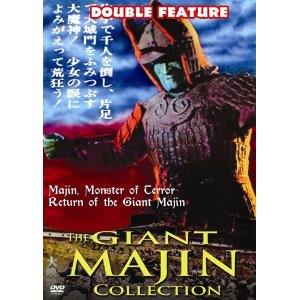
While my family was off winning the Connecticut Regional First Robotics competition in Hartford (go Team 102!), I had consoled myself the night before seeing Clash by watching the cheesy 1968 Japanese giant monster classic, Wrath of Daimajin (also known as Return of the Giant Majin). I had seen the original Giant Majin some time ago, but here was a “monster” movie where the destructive colossus was himself a god. The Giant Majin is a protective mountain deity who, when injustice grows unchecked, breaks free of his rocky home and destroys the wicked. The Wrath of Daimajin included startling biblical imagery: as the Majin stomps through the sea the waters part as if Moses were on the god’s shoulder. The faithful female protagonist is being executed on a cross (burned at the stake, but tied to a cross), and the Majin breaks the gibbet and holds her aloft, the very tableau of the evil-banishing crucifix. As always, the Giant Majin vanishes at the end, leaving the oppressed to build their own, better future.
I dream of Majin with a dark green face

Such movies are benchmarks of public theology. Made by laypersons trying to express their ideas about the divine world, I find them a crucial measure for any teacher of religion to watch, mark and inwardly digest. In just 24 hours I saw a Shinto god go Christian and a Greek polytheist lose his faith. The world just can’t figure out if the gods are for us or against us.
Mournful Metaphor

Sometimes the concept is great but the results disappoint. Those who have followed this blog know that a unifying concept over the past half-year has been the often hidden relationship between religion and monsters. Certainly this fascination has its roots in my refusal to admit that I’ve grown up, but with the popular media pushing the undead into our collective consciousness on a daily basis I feel a happy vindication. I posted last week about Seth Grahame-Smith’s new book, Abraham Lincoln: Vampire Hunter. Well, now that I’ve finished the book I would say that the jarring concept of our most honored president leading a secret life was fun to wrestle with, but the book failed to win me.

Lincoln’s great contribution to our nation is still echoing through a society slow to admit the equality of all. Perhaps that fact alone would render any book trying to throw some comic relief on a deadly serious issue mute before it even begins to spin its yarn. That, and I didn’t like the portrayal of the vampires. I’m no undead purist, and I’m aware that vampires have changed form and character over the centuries, but having masses of them in one place felt like being the proverbial cat-shepherd. Giving them political ambitions, with a nod to Francis Ford Coppola’s Bram Stoker’s Dracula, was too much. The issue of slavery, clearly the metaphor being utilized by Grahame-Smith, is hard to smile about. Lincoln’s personal suffering is difficult to lighten with his career as a vampire hunter. The story just didn’t work.

I’ve had enough bumps in my own life to eschew easy categorization. Even my current career must be listed in the TBD category. Nevertheless, I wasn’t sure if what I was reading was a serious attempt at a novel or a humorous exploration of a funny idea. I found the book catalogued in humor, but its narrative seems to have the earnestness of a determined novelist. When the story ended I felt as if I’d read a dime-store novel I’d purchased at Comedy Central. And with the headlines the way they are these days, I’d been hoping for a good laugh. Instead it seems that I have been bitten by a vampire wearing shades.

Two heroes, no smiles


Horror and Head-colds

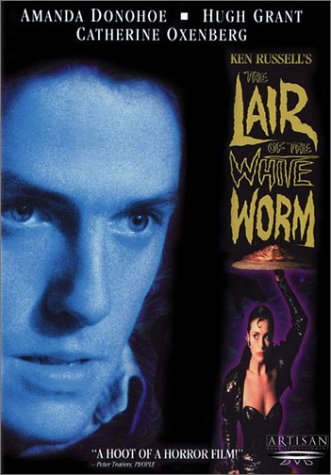
Religion is such a pervasive vehicle for movies, whether disguised or blatant, that pointing out such connections might seem too easy. Finding these connections in horror movies is child’s play since religion constantly probes our deepest fears. Trying to get over a lingering head-cold and suffering from lack of sleep, I pulled out Ken Russell’s 1988 film, Lair of the White Worm. The film itself is not unlike a Nyquil dream, disjointed with sudden shifts of setting and context. The immediate connections with The Cult of the Cobra and Stuart Gordon’s Dagon – based on H. P. Lovecraft – were unexpected bonuses.

Through all of the B- special effects pulses a strong religion subtext. The crucifixion vision juxtaposed with Roman soldiers raping nuns was a dead giveaway. The supporting female characters bearing the names of Eve and Mary could not be more obvious. And the snake wrapped around a tree – is this Sunday School 101? Lacking the sophistication of Robin Hardy’s Wicker Man, Lair of the White Worm nevertheless does strike some similar religious chords. When archaeologist Angus Flint discovers a Roman temple dedicated to Dionin under a convent in England’s north-country, a mosaic of the great white dragon wrapped around a cross tells the viewers all they need to know.

Like Marduk, Baal, Yahweh, Zeus, and St. George, Lord James D’Ampton becomes the dragon-slayer. Chaoskampf (god slays dragon motif) is perhaps the most ancient form of religion, alongside the world-wide flood and dying gods returning to life. These archetypical images populate many films to the point of saturation and Lair of the White Worm is a treasure trove of them. The plot successfully invents an ancient deity, Dionin, whose name and cult have clear connections with that of Dionysus, himself a dying and rising god. This religion is in conflict with Christianity, and the film is opaque enough not to reveal the winner. I need to ponder this some more. In the meantime, I think I need another dose of Nyquil.

Take it with a dose of Nyquil


Trojan Gods

Every great once in a while Hollywood produces a major motion picture that demands the attention of scholars. Well, at least those of us who like to stay current about the way our subject is being displayed to the wider public. When Troy was released in 2004, I was still firmly engaged in teaching biblical studies and the Trojan War, although located somewhere at the fringes of the Ancient Near East, was not a particular concern. Now that I’m also teaching a mythology course that covers the Iliad, I figured I’d better watch the movie. For research purposes only, of course. Although I hadn’t seen the film before, I knew of the critics’ complaints that the gods, conspicuous in Homer, had been left out. I was expecting to be disappointed, but I found the movie to be more intelligent and subtle than I supposed it might be. The absence of the gods, distressing as it may be to purists, gave the movie an angst that is generally reserved for more cerebral subjects.

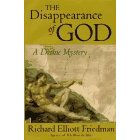
The question of where the gods might be in all the slaughter and destruction of war reminded me of a book that had profound influence on me several years ago. Richard Elliott Friedman’s The Disappearance of God: A Divine Mystery (Little, Brown, 1995) traces the gradual withdrawal of God from the scene in the course of the writing of the Hebrew Bible. The god who appears so active in the early chapters of Genesis distances himself further and further until the latest writings, according to Friedman’s dating, show few traces of the divine at all. God subtly, quietly, goes away.

Portrayed as defying the power of the gods in the film, Achilles desecrates the temple of Apollo and seals his fate. Nevertheless, although he is shot by an archer, the death of the hero seems more like an arbitrary act than the design of divine majesty. The Greeks, after all, did win the war. Atheism, however, did not exist in any real terms in the twelfth century before the Common Era. Then again, Achilles probably did not exist in any real terms either. Although Troy will never be among my list of most profound films, its commentary on the quiet skies of ancient Ilium serves as a useful metaphor, even for today.


In the Heart or in the Head?

I don’t have cable television. I don’t even have one of those digital conversion boxes. I’m afraid the costs and technology have gone beyond a guy who grew up with a black-and-white television with the screen the size of an old Mac Classic. I still try to keep a wary finger on the pulse of popular culture, and fortunately the internet provides just about everything in a condensed version. When I want to see a television show I generally do so through DVDs. Again, expense is prohibitive to the underemployed, but kindly family members often help out with occasional contributions. My brother surprised me this Christmas with the first season of the History Channel’s Monster Quest series (brothers sometimes see what you try to hide from the wider world). After a long weekend of class prep, I sat down to watch an episode last night that introduced me for the first time to the work of Dr. Robert J. White, a retired professor from Case Western Reserve University.

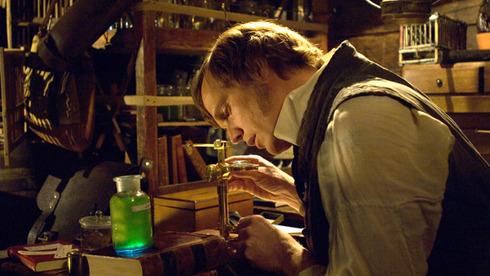
I have always been intrigued by the unlimited possibilities, no matter how remote, that science fiction can conjure. This episode, however, was factual and showed footage of Dr. White’s successful head transplant operations on monkeys in the 1970s. I had no idea that such work had ever really been conducted, let alone successfully. Visions from X-Files: I Want to Believe flashed across my cerebrum while I watched the footage. Not to mention the ubiquitous heads-in-jars of many a science-fiction movie! A plaguing religious question was also stirred back into life after having settled at the bottom of the tank for many years – where does the essence of a person reside? Organ transplants are everyday occurrences, and many lives are prolonged by the sharing of body parts no longer used by their original owners. And transplants do not stop below the neck – cornea transplants bring us very close to the brain, the presumed seat of our personality, consciousness, or, if you will, soul.

when a head meets a body

Dr. White’s monkeys that survived seemed to have retained the personality of the original monkey head on its new body, but I wonder if that was just an illusion. In our world where each individual is treated as a discreet unit, the essence of a person is thought to reside in the brain. Our brains, however, recognize our bodies and sometimes bodies reject the very organs intended to save them. Is there really any possibility of preserving the essence in one’s head alone? Or are we, like ants and bees and Portuguese Men o’ War, really all part of a collective organism? Maybe there is a good reason I don’t have cable or a digital conversion box.


Transformations

Last week my colleague James of Idle Musings sent me a review of Stephen Asma’s On Monsters that I’ve been meaning to incorporate into a post for several days now. Since New Jersey has been buried under more snow than it’s seen since the last Ice Age, I’ve been busy shoveling and navigating icy roads to class and only now am finding the time to respond. (Still, I have to say that the snow we have here now is no comparison to good old lake-effect snow where I grew up. Of course, the population back home was much smaller so the media never made a circus of it. After all, it is just winter!) In today’s paper, however, there was a review of The Wolfman that graciously affords me another opportunity to address one of my favorite, if under-represented, areas of religious studies: the monster.

Local film critics haven’t exactly panned the remake of the 1941 classic, although it is noted that the new version tries to avoid the essential subtexts of “alpha-male dominance, sexual repression, compulsive behavior and father-son feuds” (from Stephen Whitty’s Star Ledger review; Whitty also notes, on the cheerful side, that Universal is trying to revive its monster franchise). The werewolf has always been my favorite monster character. Aside from the negative aspects noted by Whitty, the werewolf also represents transformation from the helpless, lost, and confused Lawrence Talbot to a purposeful, confident, and unambiguous wolfman. The werewolf is everyman/everywoman pressed to the limits by a demeaning, heartless society until individualism breaks out in all its savagery and power.

Apart from the religious elements in all monsters (is the werewolf not a paragon of spiritual transformation?), a political subtext also emerges. While the front page declares the financial woes of the state and the continued trouble trying to pass any healthcare reform, page 3 declares “Top 5 health insurers post soaring profits.” One person’s cancer is another insurer’s boondoggle. Meanwhile the Larry Talbots of the world are being told, “give a little more – everyone’s got to share this burden.” Eventually, however, there will be a full moon and transformations will take place. As a student of religions, I can recognize the werewolf as more than a monster and as containing far more symbolism than a Robert Langdon could ever untangle.

Who's not afraid to look in the mirror?


Mythology in Cinema and Belief

My snow day activities yesterday would not have been complete without the viewing of a classic science fiction film for relief from my Mythology course prep. Still having mythology on the brain, I selected Dr. Cyclops, a 1940s movie that presages many of the concerns evident in the more famous members of the genre over the next decade. There were, even before the atomic bomb, clear concerns with radioactivity and its control by unstable elements of society. The fact that Dr. Thorkel is stereotypically Germanic would certainly resonate with audiences of the day. Given the title I focused on the classical elements and they eventually came through. As the radioactivity shrunk the cast, with the exception of Dr. Cyclops (Thorkel), Odysseus’ plight in the cave of Polyphemus emerged clearly. The doctor is symbolically blinded by the hiding and breaking of his glasses, and the shrunken prisoners escape like Odysseus’ crew. In one scene where the rival Dr. Bullfinch (surely no accident) addresses the much larger Thorkel the writers make it clear for the viewers that Bullfinch is really Ulysses (Odysseus).

Odysseus and Polyphemus

Presumably filmgoers in 1940 were still required to have read the classics in school so that such references would have been obvious from the start. Less obvious to viewers then and now is the fact that ancient mythology was a form of religion. Over the past week or so I’ve been participating in an exchange on Sabio Lantz’s blog, Triangulations, on the topic of metaphorical versus literal truth. I maintain that mythology reflects truth as perceived by ancient believers, whether they “believed” in an actual pantheon on Mount Olympus or not. Myths are intended to convey truth – although ancient religions were more often about correct practice rather than correct belief. Placating angry gods was the job of the priesthood, not the average citizen.

The question unanswered is when religion shifted from correct practice to correct belief. Correct belief can only truly apply in a monotheistic context – if there are many gods there are potentially many beliefs. With one god, one personality, the potential for believing incorrectly infiltrates a religion that is primarily concerned with keeping the many gods satisfied. So perhaps what Dr. Cyclops sees through his one good lens is a metaphor for seeking a single truth rather than the many. In the film, before he meets his demise in the radium mine, Dr. Thorkel is the only character with the stature of a god.


Out of Reach

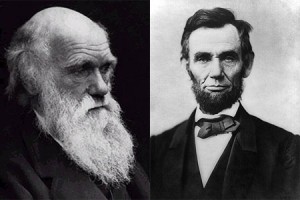
Last weekend I had hoped to see the movie Creation: The True Story of Charles Darwin. This is a movie that has had trouble in the United States since distribution companies felt it would be too controversial for American audiences. Believing that evolution is still a taboo topic in the most “advanced” nation on the planet is a peculiar conundrum. Why are we so sensitive concerning our natural pedigree?

Primatologists are constantly discovering new and unexpected connections between the great apes and homo sapiens. We share biological, and as we are increasingly aware, cerebral traits. Empathy and xenophobia, two features once believed unique to humans, are in evidence among our great ape cousins. We are on a continuum rather than a segmented train.

Bearing these provocative thoughts in mind, I was ready to head out to the theater, even if I had to go alone, to see the story of Darwin. I’ve read enough biographies to know there are some heart-rending moments in the story, situations that I would not be able to face – but it is a story of truth. It is ironic that we sometimes fear the truth, since religion is our effort to find exactly that. So, resolve firmly in hand, I searched for New Jersey theaters showing the film. None. The nearest show was in Midtown Manhattan. Add a twenty-dollar train ticket to the cost of admission, and to an underemployed academic the price was out of reach. Perhaps some day the movie will become available for general public consumption. Until it does, however, I’ll just have to lament my frustration to a local empathetic ape.

A scene from the movie, so I'm told


The Truth is in Here?

Constantly trawling for the shattered detritus of truth that rests scattered around our lonely little planet, I have often supposed they were here. I have never seen them, but in the Drake Equation there is a high probability that they exist. And now the newspaper says they may have been here all along. And closer than we thought.

Aliens. These latter-day angels and explorers of the cosmos are often pictured like E-T or the little gray aliens from Close Encounters of the Third Kind. The latest findings suggest they could even be quite a bit smaller than that. Paul Davies, a physicist from Arizona State, believes that life may have developed multiple times on earth, and perhaps some of the googol of microbes on our planet may have their origins in space. These potentially extraterrestrial microbes, he stated could be “right under our noses – or even in our noses.” Yikes! Time to put up the intergalactic “No Trespassing” sign!

Stop the alien menace!

In all seriousness, however, this concept of multiple origins of life, I fear, will be latched onto and misread by our Creationist fellow-life forms. I can see the fingers stiff from grasping at straws claiming that now there is scientific proof that different species do have different origins, thank you Mr. Darwin. The price to pay, if they apply logic, however, is not one evolutionary track, but many.

The movie Creation, focusing on Darwin, opened this past weekend in the United States. Delayed because of concerns that Americans can’t handle the truth, this film about Darwin’s sad voyage to the inevitable truth of natural selection will surely raise evangelical ire. Nevertheless, we did not design this world we evolved into, we simply inherited it. And the closer we peer at it, the more complex it becomes. These multiple evolutionary tracks may also explain the origin of Creationists – could they come from different stock than scientifically minded folk? In any case, the news today provides yet another reason to keep our noses clean and our eyes on the skies.


Noah in the Underworld

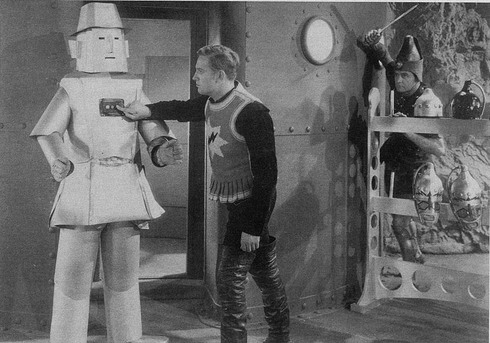
I recently was subjected to the 1940 sci-fi/western film Radio Ranch (a compilation of the series Phantom Empire). This happy-go-lucky story with Gene Autry in his first starring role is a romp through the unbelievable in just about any sense of the word. Based on the premise that there is an underground world called Murania, the film pits Autry against evil scientists who want to get a “bushel load” of radium from Murania, the “Thunder Riders,” or national guard of Murania, and indeed, against his corporate sponsors who will cancel his contract if he ever fails to get to Radio Ranch by 2 p.m. for his singing broadcast! This creative approach to early science fiction will be reincarnated more successfully in The Mole People, a movie that I wrote about a few weeks back.

The connections between the two films do not stop at an underground world with humanoids wearing Egyptian costumes (there is an unmistakable uraeus on the helmet of Argo in Radio Ranch), but go as far as the associations with the Flood Myth. I pointed out the flood connections in my post on The Mole People, and it was startling to note that Radio Ranch begins (and ends) with Gene Autry singing “Uncle Noah’s Ark.” That coincidence is, in itself, barely worth noticing. When the evil scientists invade Radio Ranch, however, they are shown an artifact from the Thunder Riders (whose thunder-producing horses are, admittedly, pretty cool) and they immediately identify it as an “antediluvian” idol. At this point it became clear how deeply embedded the biblical flood story has been in our culture, and how freely it was used in early science fiction films.

At a guest lecture in the Middle East Studies Program at Rutgers on Friday, I mentioned that the flood story goes all the way back to Sumer, making it among the earliest religious stories in the world. Several students had difficulty with this and began asking, “but when was Noah actually alive?” These college students, well educated in science, engineering, or political science, can’t get beyond the biblical literalism they were raised with. It is no wonder that America is falling behind much of the world in science education: we haven’t moved beyond Gene Autry’s overly cheerful belief in a deluge that never occurred.


Book of Eli

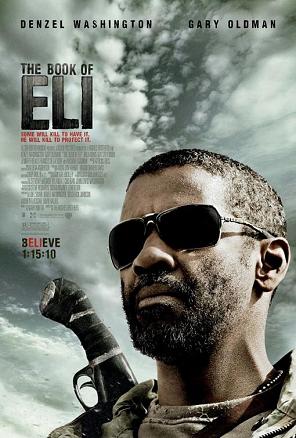
Feeling that it is incumbent on a teacher of Bible to stay current with media presentations of my subject, I went to see Book of Eli yesterday. Not really a fan of violent movies, I was a bit concerned about being subjected to gratuitous carnage, but beyond the expected post-apocalyptic context and its attendant, constant menace, there was not too much to worry about on this score. For several years I have been researching the presentation of the Bible in movies. It is my hope to write this research up into a book one day if I ever land a job that allows such a luxury. Book of Eli will deserve a chapter of its own.

Apart from fundie self-praise fests, few movies present the Bible in such a heroic role as it plays in Book of Eli. Eli, like Jake and Elwood, is on a mission from God: to deliver a Bible to the last repository of education in the United States, namely a famous correctional institution. Along the way Road Warrior-style bandits harass him and Carnegie (a kind of deranged librarian with lofty political aspirations) covets Eli’s Bible, the last in existence. Carnegie wants the Bible because, “it is a weapon” of social control. (All quotes are approximate since I couldn’t take effective notes in the dark.) Eli must keep it because of his mission. Along the way Eli explains why the Bible is important to Solara, a young woman who is drawn to his sense of mission and devotion to the book. Explaining that since the last war, all Bibles have been routinely destroyed and that, “some say it [the Bible] is what caused the war,” Eli lovingly wraps the book in a cloth before secreting it in his ubiquitous backpack next to his machete. At this point I could feel the social commentary pressing hard upon me. The Religious Right would love nothing more than to force Armageddon on the planet so that they might go to their wonderful fantasy-land in the sky. Their misreading of the Bible has caused wars in the past and will likely cause them in the future.

As Eli loses the Bible to Carnegie and continues his mission empty-handed he explains to Solara, “I’ve been protecting it [the Bible] so long that I forgot to do what it says.” Again the social commentary was evident as news headlines continue to push hot-button conservative political issues where the heart has been cancerously eaten from the Religious Right and the Bible as idol becomes more important than what it actually says. When Eli brings his mission to its conclusion, however, the viewer is presented with an entirely positive view of the Bible. It is the symbol of civilization in a world of anarchy and Solara marches off as its acolyte into a hostile world as the sun sets in the west.

What is truly remarkable about this film is that it presents the Bible in a way that would make its study cool again (if it ever was). For those of us who’ve spent a lifetime shying away from telling others that we have spent our lives learning about the Bible, we might now walk into the glaring sunshine and have others step back in reverence for our selfless efforts to benefit the human race. Well, at least once the apocalypse is over.


Eager for Eden

In a recent email from the Clergy Letter Project, Michael Zimmerman reports that the movie Creation is shortly scheduled to be released in the United States. To quote from the Project newsletter:

“You may have heard that the film, Creation, about Charles Darwin and his struggle with his faith after his daughter, Annie, died had trouble finding a US distributor because it was seen as being too controversial for the American public, particularly after being attacked on Movieguide.org, an influential site which reviews films from a supposedly ‘Christian perspective’.”

It is disturbing that a non-fiction film has been blocked from American viewers because distributors found the content too controversial. The controversy has nothing to do with sex or violence, but an assault on the fantasy of a literal interpretation of Genesis. Disturbing fact challenges comfortable fantasy.

In a related story, an article on CNN.com explores the sense of depression that several viewers of Avatar felt after the movie ended. While the reasons are deep and complex, the overall theme seems to be that these viewers can’t shake the image of a pristine world that seemed so real for two-and-a-half hours. They long for a paradise that doesn’t exist. A paradise that has never existed. I am not unsympathetic. Although I could not view the film, I left from the theater with a similar, if less intense, feeling. It is a similar emotion to that when a truly special event takes place and the mind plays it over and over like a new and significant song. Impressions and hazy images and euphoria wash over you, and a longing for a moment that can never be recaptured consumes your consciousness. These are some of the most bittersweet moments of life. They are the very heartbeat of fantasy.

There never was an Eden. Human existence has been brutal and harsh since we first stood upright and wondered why we could think. America is a nation in deep denial about this harsh reality. We would rather believe the biblical Eden is a literal paradise and that our aching imaginations are somehow giving us glimpses of a fabled utopia where life was perfect. Well, almost perfect. The movie Avatar presents a paradigm that many Americans can relate to: an electronic world of endless possibilities shielding us from the stark realities of illness, pollution, tragedy, and death. We are insulated in our surreal environment that we have created for ourselves.

The human capacity for wonder is perhaps the greatest asset that consciousness has deigned to bequeath us. We can imagine a world where all creatures live in harmony with their environment and love and peace flourish. But that is not our world. A good corrective to these tempting fantasies is to read some good old classic Greek tragedies. These imaginative explorations of the human condition are as true to life as dreams of utopian worlds are removed from it. It is all a matter of perspective. And the Greeks were writing B.C.E. — Before the Computer Era — when reality had not been hidden behind a haze of ephemeral electrons.


Prophets in Disguise

Yesterday I decided to take a break from austerity and take my family to see Avatar. Not just on the big screen (a rare enough treat), but in 3-D Imax format. In my zeal I had forgotten about my debilitating congenital problem with motion sickness. I have had trouble since I was a child sitting in the backseat, or riding backward on a train, or even turning my head around too fast. Once I was talked into riding a county fair ride by some high school friends and found myself still getting nauseous two weeks later. I have learned to live with this embarrassing problem, but sometimes I forget that the mere suggestion of motion will send me over the edge. I managed the first twenty minutes of the movie before having to close my eyes and bow my head for the rest of it. It is an interesting experience to listen to a movie. Following the basic plot wasn’t too hard, at least when I wasn’t thinking about all the talk of great special effects and the money I’d spent to see them.

Like most science-fiction movies, Avatar makes substantial use of biblical and mythological themes. The planet is named Pandora, after the “Greek Eve,” and I could hear traces of the hero quest throughout. When the indigenous people were introduced, however, my ears pricked up (as I understand those of the characters do). The Na’vi, it turns out, share the name of the prophets of the Bible. The Hebrew title for prophet is nb’, pronounced the same as the movie characters. I thought about this as I wondered what was going on during the action sequences that I could not see. Those who guard the traditional ways are the prophets, silenced by the grinding machinery of modernization.

Even avatars have their origins in religion. The first I had heard of avatars in science fiction was in Neal Stephenson’s Snow Crash. The idea felt so fresh then that I had to remind myself that Hinduism had given the world avatars as earthly manifestations of deities centuries ago. Placing oneself in another form ultimately stimulates the question of which is the true self, the ultimate reality. It is an inherently religious question.

The morning after, the room is still swaying about me, I can’t scroll down on the computer screen, and I am asking the questions of reality again. It cheers me that Avatar is doing so well at the box office. Any movie, even if unseen, that causes the viewer to question a frequently painful reality is worth the price of admission.

Another blue avatar


Tale of Two Anarchies

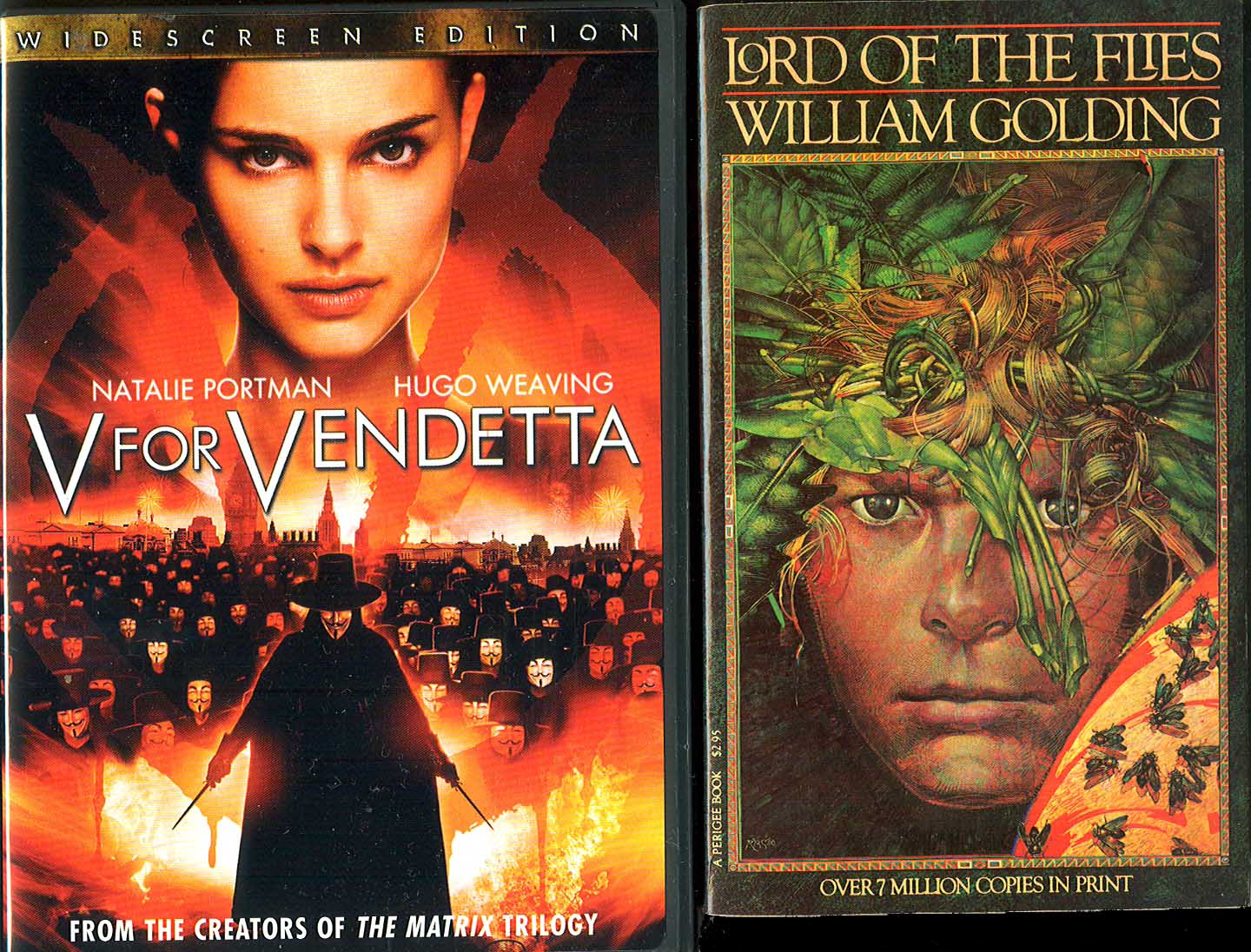
While snowbound over the weekend, I reread William Golding’s Lord of the Flies. I recalled a profound sense of awe from when I read it the first time in college, when students are invincible and optimistic. The second reading was still rewarding, but the message seemed darker, more true-to-life. Children on an isolated island devising their own schemes of democracy cannot repress the deep urge for self-advancement. When it comes to working together for the common good or promoting one’s own will, the latter wins out and seeks to destroy all dissenters. Anarchy becomes their natural state.

A few weekends ago I finally got around to watching V for Vendetta, the Wachowski Brothers’ dim and hopeful dystopia where individual conviction wears away at a conformity that benefits the privileged class. Recasting Guy Fawkes as a hero, albeit a tragic one, is a bold move in the post 9/11 world. The anarchy here leads to a rule by consent, the oppressed rising up as one to say “no more.” Even V is dead so there is no one to lead.

Better together?

Anarchy is a frightening prospect. Most people feel more comfort in the rule of law. One time I joined a discussion my brother-in-law was having with some friends on the rule of law. They were suggesting that if rule of law could be brought to bear on the Middle East then the seemingly continual crisis there might terminate. I disagreed from the far end of the table, not close enough to hear the whole conversation. My rationale is that the utter conviction of religion trumps the rule of law. Rule of law assumes all are equal, but religion in a monotheistic theater always assumes only one is right, and therefore superior. All others must submit. Problem is, many monotheistic religions feel the same way. We see it in the extreme power structure of the Religious Right in this country. Who is willing to say maybe the rule of law is superior to the rule of God? Watching the graceful anarchy of V, and reading the disturbing anarchy of Lord of the Flies, sometimes even the most stalwart free-thinker wishes everyone would bow to the rule of law.


Incredible Shrinking Saturdays

As a kid Saturday afternoon was devoted to the science fiction repertoire offered to B-movie connoisseurs on commercial television. There were only about a dozen channels in those days and one of the local Pittsburgh stations had the demographic of teenage boys’ viewing habits down to a science. Now that people tell me I’m grown up, although they won’t give me a full-time job, the temptation is there to let the television do the thinking for me. Actually, I only allow myself to watch TV on the weekends; it never gets turned on until Friday night. The rest of the time is spent getting ready for classes or looking for jobs.

Anyway, yesterday I decided to watch I movie I first saw as a tween (“kid” as they were called in those days), The Incredible Shrinking Man. The Christmas tree was set up and decorated and the snowstorm scheduled to bury the East Coast was doing its job quite well. So I settled in to remember old times. I’ve mentioned before the mild social criticism of 1950s sci-fi, and seeing this film as an adult yielded the same results. When Scott Carey realizes he’s shrinking, the doctors figure out that he had been exposed to radiation — a perennial plot device in Cold War movies — and the various creatures of the natural world become deadly threats. His cat, and, of course, the basement spider, both try to kill him.

Then, as the realization dawns that he will eventually shrink down to nothingness, Carey reflects how the infinite and infinitesimal are the “ends of a circle.” And in a movie where the divine is not previously invoked, he ends his relentless deflation by narrating, “To God there is no zero. I still exist.” When technology (medical science) and human help (his wife stays with him until he is the size of a cockroach, and only leaves when she believes the cat ate him) fail, the 1950s audience falls back on God. Theologians call this thinking “God of the gaps,” where God, the ultimate deus ex machina, is used to explain what human reason can’t yet figure out. It is still prevalent in Fundamentalism and most forms of contemporary Christianity. If belief in God relies on having unexplained phenomena, the question of who is shrinking becomes challenging indeed.