Biblical Science Fiction

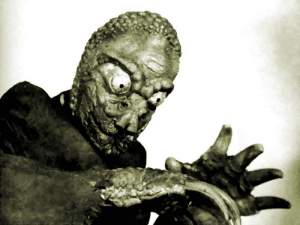
1950s science fiction films are perhaps the most parsimonious celluloid genre. Standard Saturday afternoon fare in my childhood, I still have a soft spot for the unapologetic self-confidence of these movies with their painted backdrops and hokey effects. The messages are frequently self righteous and often biblical. So yesterday as I treated myself to a viewing of The Mole People, I went on instant alert as the biblical references began right away for an audience that would have known the Bible well enough to take it all in. Set in “Asia,” the archaeologists are digging for Sumerian artifacts when then discover a stone tablet “below the great flood level.” That makes it at least 5,000 years old, the assembled academics declare. A diffident Dr. Roger Bentley tells his fellow excavators, “in archaeology all things are possible!” When a young boy of the indigenous population discovers an oil lamp shaped like a boat, the archaeologists note, “the flood’s been proven to be a historical fact.” The boat is a model of Noah’s ark, the Sumerian version. The scene of the expedition climbing Mount Kuitara includes footage from the 1955 Fernand Navarra trek up Mount Ararat during which a wooden beam was found, reputedly from Noah’s ark.

If you can stomach the bogus Sumerian you’ll learn that ancient Mesopotamians also survived the flood, a kind of “children of Cain” motif. These Ishtar-worshiping pagans are practitioners of a kind of social Darwinism, killing off their own kind when resources in their underground world become strained. Their great underground civilization parallels that of ancient heathenism while more advanced civilization on the surface of the globe has the benefit of an enlightened Christian worldview. Even the Sumerians whipping the actual mole-men is reminiscent of the Egyptians whipping the Hebrews in the Ten Commandments (released the same year).

Fast forward fifty years. We now live in a technologically advanced civilization where the myths of ancient people have little place. Science provides logical explanations for most of what we encounter in the world around us. Yet there are still otherwise intelligent people seeking Noah’s ark on Mount Ararat. The past is impossible to escape. The Sumerians in the film (whose walls are inexplicably decorated by Egyptian artwork and hieroglyphics) represent those who hold onto a confused religion that has become a form of terrorism in the eyes of the more advanced archaeologists. Perhaps the paradigm has shifted, and those who use religion today to gain political power and personal gain have become the self-righteous Sumerians of The Mole People.

Special Babies

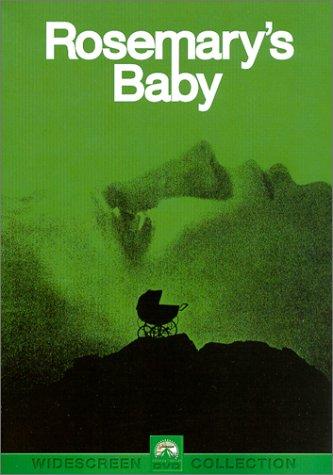
Roman Polanski has been in the news quite a lot lately. While I haven’t been following the story, his name is perennially associated with Rosemary’s Baby in my mind. In my youth I feared this movie and made no attempt to watch it until I reached my 40s. Like other works conceived by Ira Levin it features a threat to what we value most; the original Stepford Wives is still almost too scary to watch. While Rosemary’s Baby remains a good psychological thriller, the counter-Christmas theme became quite evident the last time I viewed it. I won’t worry about spoilers since the movie was released in the 1960s, but if you’re still waiting to watch it and want a surprise ending, you might want to turn to another post at this point!

The 1960s were times not only of a strong counter-culture but also a period of fear. Many popular evangelists were warning of the coming of the Antichrist and the Time article entitled “Is God Dead?” is featured in the movie itself. Although it is unclear until the end, upon first watching, who fathers Rosemary’s baby, the child-spawn of Satan is presented with many of the trappings of the first Christmas as Rosemary herself makes the discovery. In fact, Christmas comes as Rosemary is pregnant, and the film carefully accentuates the contrast between Mary and Rosemary. The suffering of the expectant mother still makes the film difficult to bear at points.

As Christmas nears in this very commercial and recession-ridden season, many lawns are sporting “Keep the Christ is Christmas” type displays. Isaiah is being taken out of context and the Religious Right continues its attempt to make Christmas a political petard. Babies represent new beginnings. And while Rosemary’s baby was born six months after (diametrically opposed to) the celebration of the birth of Jesus, in both cases the infant represents a radical change. Any human parent knows that babies are special and that knowledge demonstrates that a young Roman Polanski recognized a theme that would scare audiences for at least forty years.


2012

As the economy rolls along like a marble on a pebble beach and the stock market continues its own bumpy road to recovery, apocalyptic thought is again on the rise. It is when times are bad that apocalyptic comes in most useful. Individuals who feel that this world has run out of possibilities generally look to a new future world where things will be radically different. That’s why people flock to movies like 2012 and dream of a new day, a new era.

That’s the way it has always been. Jews being tortured to death under Antiochus IV Epiphanes, the Seleucid tyrant, looked for that day when Michael would take on the “Prince of Persia” and the new world would gush in and overtake this one. Almost two centuries later the early Christian movement, suffering at the hands of Roman emperors such as Nero and Diocletian, reveled in the visions of Revelation — the new world coming. Rental property is free in the New Jerusalem! The earliest exemplars of apocalyptic thinking appear to go back to the ancient Zoroastrians. This early Iranian religion (which may have originated in Afghanistan) took comfort in a dualistic world where good and evil constantly struggled until a cosmic conflict would result in the ultimate destruction of evil. It helped to explain why things could be so bad for good people in the here-and-now.

2012, however, derives from concerns that the Mayan calendar seems to have run out of space at that time slot just over three years from now. Otherwise intelligent people panic; this is an apocalypse of the secular kind! Experts on the Maya (among which I am not) explain that the Mayans use(d) many calendars (there are still Mayans around). Their large-scale, 5000 year calendar may run out on December 21, 2012, but that doesn’t mean the end of the world. In fact, that calendar only began on August 11, 3114 BCE, about 4.5 billion years after the creation of the earth. It was not meant as a road-map to the cosmos. The real apocalypse is in the minds of those suffering from their own private ills in this world. Ever since Zarathustra spoke, people have had an alternative, better future to anticipate.


The Call of Balu

After writing a post on Natib Qadish, a modern revival of Canaanite religion in the United States, I received some comments from Lilinah of Qadash Kinahnu, another modern Canaanite religion revival. These movements are a fascinating development in an overly technological era — both movements have online resources that include serious scholarly treatment of ancient religions of the Levant. Both appear to be sincere attempts to get in touch with what modern religions seem to have lost. Both have heard the call of Balu.

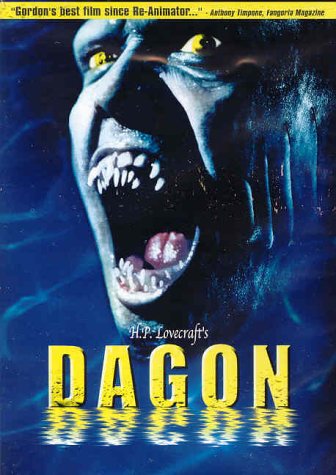
In a society where universities seldom offer programs to study the Ancient Near East, people are starved to know about it. I realize that the field of study will never bring in the money that the sciences or finance do, but obviously there is something deeply satisfying about it. And students are hungry for it. Not only appreciated by those who start revivals of ancient religions, many of those who read more recent popular treatments are intrigued. Neil Gaiman’s American Gods was a New York Times bestseller. Although much belatedly, H. P. Lovecraft’s Cthulhu Mythos has become a paradigm for many undergraduates I’ve met. I was reminded of this as I watched Stuart Gordon’s 2001 movie entitled Dagon. A relentlessly tense and macabre film, the Lovecraftian base assures a constant draw for those who hear the call of the ancient deities.

We love technology. I’m posting this entry on an internet where ideas are simply electrons forced into recognizable patterns. We can’t imagine what life was like before being able to communicate with people just about anywhere in the world instantaneously, and where we can live our entire lives without ever actually touching physical money. Over all the noise of technological progress, however, can be heard the distinct call of Balu — a call to a simpler era, pre-Christian, pre-Judaism, pre-Iron Age. It was an era when human destiny fell into the hands of ancient gods.


Moral Monsters

trees

Everyone likes to feel vindicated. From my childhood I have felt marginalized because of my interests in monsters, and now a book has just been released from Oxford University Press that vindicates my interest! Stephen Asma, a philosophy professor at Columbia College, Chicago, has written a monograph entitled On Monsters: An Unnatural History of Our Worst Fears. Further vindicating my idiosyncratic interest is the fact that the Chronicle of Higher Education even has an electronic front-page article on the book this week. I am overcome with credulity! I haven’t been able to lay my hands on the book yet, but I hungrily read the article and look forward to the whole product.

Readers of this blog know my assertion that monsters originate in a mental space shared by religion. Both are responses to the unknown. Asma writes in his Chronicle article, “The monster concept is still extremely useful, and it’s a permanent player in the moral imagination because human vulnerability is permanent.” Indeed, his article is entitled “Monsters and the Moral Imagination.” The thesis he promotes is that our morality (again tied to religion for many people) benefits from its struggle with monsters. We imagine our moral responses to being faced with the truly horrific, and the monsters themselves are less frightening than our imaginary responses. The top box-office winner this past weekend was Paranormal Activity, a movie noted for not showing the menace, but implying it. There is an evolutionary advantage here; we learn about coping with real danger by imagining danger.

So as I look out the window on yet another cold, gray, rainy October morning, and see the trees swaying in the wind, my imagination takes flight. Those Saturday afternoons and late nights filled with cinematographic visions of even worse things that could happen are cast in a new light. Instead of scaring myself, I was building moral character! As my friend K. Marvin Bruce likes to say, “monsters are only mirrors.” Sometimes the mirror reflects a truly untamed world, and Dr. Asma informs us “inhuman threats are great reminders of our own humanity.” I would simply add, “and of our religions.”


God-Adam! Is That What it Really Says?

GodAdam

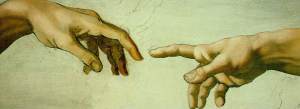
While reading a recent article on the origins of the abstract art movement I was struck by this quote from Wassily Kandinsky, widely considered to have been one of the founders of the movement: “the contact between the acute angle of a triangle and a circle has no less effect than that of God’s finger touching Adam’s in Michelangelo.” Apart from putting me in mind of Edwin Abbott’s Flatland, this statement emphasized once again the power of one of Genesis’ creation stories. It also made me aware of a new dimension of the distressed pleas of Creationists for a reversal of science and a resetting of the hands of time itself. It seems that there is so much to lose.

Michelangelo’s Adam, as I always tell my students, has bestowed a disproportionate influence on all subsequent biblical interpretation. Rather like the case with Handel’s Messiah and Isaiah 9, modern readers find it exceptionally difficult to climb over Renaissance images to peer directly at the ancient sources themselves. Isaiah was writing about Hezekiah ben Ahaz rather than Jesus of Nazareth, but just try to convince any holiday shopper of the fact! Art has made the decision for us; there can be no questioning of Handel. Michelangelo was a brilliant painter, indeed, a genius by any stretch of artistic imagination, but he was no Bible scholar. Even if he had been, the tools available now were not available then.

I sense that Creationists fear the loss of the literal image (if it can even be considered literal) of Michelangelo’s God and Adam. How threatening it is to ponder that God is not a bearded white man! What blasphemy to consider that instead of an insouciant Adam we have promiscuously procreating ape-like hominids hopping around!

One of my favorite movies has always been 2001: A Space Odyssey, Kubrick’s coming of age. The iconic monolith with early, distinctly apelike humans cavorting around it, timidly daring to touch it, to become something more — this abstraction felt like creation to me. Indeed, much of the film is abstract art. Creationists fear the demise of classical art; however, abstract artists do not destroy classical art, but rather build on it. It is humanity growing up. Like abstract art the biblical images leave much to the imagination. Is it better to remain firmly mired in what we know cannot be true or to allow human progression to continue? Even Wall-e reaches a mechanical hand out to the light (image copyrighted, all rights reserved).


The Life Is in the Blood

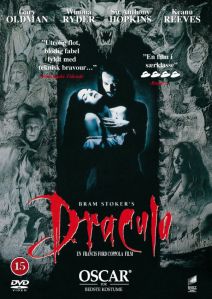
Finally, after a couple of decades, I got around to watching Francis Ford Coppola’s Bram Stoker’s Dracula. As viewers know to expect of a Coppola film, the cinematography is stylish and artistically exaggerated. It has been even more years since I’ve read Stoker’s novel, the book that gave birth to the modern vampire, but I am pretty sure that the many oblique references to the Bible count among the film’s innovations. Coursing like an artery through the movie is the phrase “the blood is life,” taken from Leviticus 17. I’ve posted earlier concerning the biblical outlook that life is equated with breath, and so it is. The Bible does not always remain consistent on this point — natural enough for a book with multiple authors living centuries apart. Blood and breath obviously share crucial functions in maintaining life.

Stoker

Ancient peoples believed in a world peopled with unusual, quasi-supernatural beings, including blood-drinkers and nocturnal baby-snatchers. Theirs was a world of harsh realities where death was more closely observed than it tends to be in many parts of the world today. The fascination, often coupled with religious underpinnings, continues to engage our imagination today, as can be seen in any given Halloween season or on el Día de los Muertos.

Whether el chupacabra or Bela Lugosi, the fascination with mythical creatures of the night that thrive on the life-source of others is a concept never far from religionists. No matter how many stakes we pound through undead hearts, the unholy bloodsuckers continue to show up in our theaters and on YouTube. A childhood penchant for Dark Shadows books has recently been reactivated in the restless gray-matter in my head. As the days grow shorter and shadows become an increasing element of daily experience, I marvel at how the human imagination parodies our daily experiences, dressing them up in fanciful garb to parade about with the other ghosts of October. What is perhaps even more unusual is that money is still to be made in this business of selling the parasite. How else can we explain Buffy and all her cohort? The life is indeed in the blood.


Noah’s Lark

This podcast deals with the myth of the great flood. It begins with a consideration of why modern expeditions do not find anything (nothing to be found), and considers the reasons the story is so appealing to present-day readers. The Sun Pictures productions on the flood story are reviewed, along with the story of the hoax played on Sun in their 1992 made-for-television movie. The history of the flood story is briefly narrated, beginning with George Smith’s 1872 discovery of the Mesopotamian flood story, back to Atrahasis and the Eridu Genesis from Sumer. The flood story is one of the earliest religious stories known.


Hallowed Be Thy Wolfbane

Anti-pesto to the rescue!

Anti-pesto to the rescue!

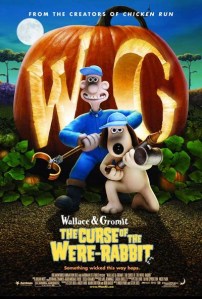
With autumn in the air and the harvest season looming near, my family recently watched Wallace and Gromit: The Curse of the Were-Rabbit. Quite apart from the inspired improbability of Aardman Studios productions, the central role of the village vicar in this film aroused my interest. Confirming an oft-cited proposition of this blog that mythical creatures burst from the same mental regions as religion, at Lord Quartermaine’s inquiry as to what might kill a were-rabbit, the vicar promptly pulls down a monster book from his shelves to reveal the secret. It is the church that knows about monsters.

In my continuing research into religious reactions to death and the afterlife, I constantly run into the name of Montague Summers. Summers was the author of the definitive books, in his period, on vampires, werewolves, and witches. He is best known for his translation of the Malleus Maleficarum, “the hammer of witches,” the main witch-hunting tome of the Middle Ages. A deacon of the Church of England before converting to Catholicism, Summers was a believer in the phenomena that he researched. Styling himself a witch-hunter (he lived from 1880 to 1948), he tried to live the fantasy world he helped to create.

The more that neurologists study the brain, the more we discover how deeply embedded religion can be. Any number of researchers have suggested various “God-shaped nodules” in the gray matter that provide for continuing religious belief in the face of advancing scientific knowledge. I would suggest, as a “religionist,” that perhaps nestled next to our mental menorahs, crucifixes, and statues of the virgin, there are also ghosts, witches, werewolves, and vampires lurking in the dark corners of the God node.


For God and For Gold

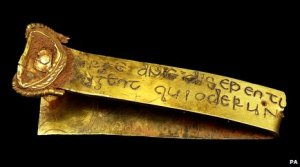
The Associated Press today released a story about an Anglo-Saxon treasure hoard discovered in England this summer. The trove, which likely contains at least 1500 items, many of silver and gold, is calculated to cause substantial reassessment of Dark Age England. Leslie Webster, a former curator at the British Museum, suggested that given the nature of the artifacts, new light could be cast on the relationship between warfare and Christianity.

Apart from the obvious deliria of daydreams of wealth that such finds always drag in their cloaks, this treasure once again underscores the connections between religion and violence. The Anglo-Saxons, Germanic invaders of England following the decline of the Roman Empire, had been early converts to Christianity. Even Alaric the Goth was a good Christian, although he had little patience with the oversight of Rome. The recently uncovered hoard contains mostly military trophies, but among the finds was a gold strip reading “Rise up, O Lord, and may thy enemies be dispersed and those who hate thee be driven from thy face” (Numbers 10.35). Already bloggers are drawing comparison with Jules’ quote from the fabricated Ezekiel 25.17 in Pulp Fiction, but the connection of Christianity and conquest is much more intimate than that. Once Christianity became the official Roman religion under Constantine, the imperial imperative took over. It became a religion of conquest. A similar phenomenon occurred after the advent of Islam. The zeal of the converted should never be underestimated.

I'm trying really hard to be the shepherd

I'm trying really hard to be the shepherd

So, what are we to make of this scriptural quote among sword knobs and doom sticks? Is it simply more evidence that religions, like the Roman Empire (according to Octavius) “must grow or die”? Those who believe carry a deep-seated fear that their religion might be proven false. On it ride serious (and often eternal) consequences. One way to ensure the quelling of that fear is to silence the heretics who decry the one true faith: take up your swords and nukes and threaten the infidel. The road less traveled, however, is to rise above our insecurities and simply enjoy the ride.


Rosslyn, New Texaco

Back before Dan Brown had becoming the Most Important Human Ever, even before he published Angels and Demons, my wife and I visited Rosslyn Chapel in Roslin Glen, Scotland. While not actually seeking the Holy Grail, I had been doing some research on Celtic lore, ostensibly where the Grail legend originates, and so we made our way to the remote and (then) desolate site of this unusual church. Officially the Collegiate Chapel of St. Matthew, it is, without doubt, the busiest piece of architectural stonework I have ever witnessed. We went for the grail. We stayed for the art.

WikiCommons image, ours isn't this good

WikiCommons image, ours isn't this good

The research I had been conducting (finally published just last year as a contribution to a Festschrift for Nicolas Wyatt) involved the Mabinogian, a repository of Celtic mythology, and the legend of Bran. For sharing the name of a healthful breakfast cereal, Bran is renowned for also having had a life-restoring cauldron. He even made a journey to the netherworld and his head kept singing even after having been dissociated from his body. An uncommon hero indeed. All historical indicators, however, point to the cauldron as the original of the Holy Grail. Certainly the Bible does not mention it, nor does it appear very early in Christian mythology.

People, as Dan Brown’s financial independence loudly indicates, like a good conspiracy theory. There is a comfort in believing that a magical object of great power is out there somewhere and that a rather ordinary Harvard professor (!) might be able to find it, yet resist taking it. Far truer to life is Indiana Jones and the Final Crusade; people feel the need to touch, to control the power beyond themselves. Even at the cost of their lives. Despite the fact that the Grail is a fiction, it simply will not disappear — although no one can find it and it has never been seen. Faith tends not to be based on tangibles. This is attested every time Dan Brown makes his way to the bank and the population reads with wonder about meanings that simply don’t exist.


Good Book, Bad Seeds

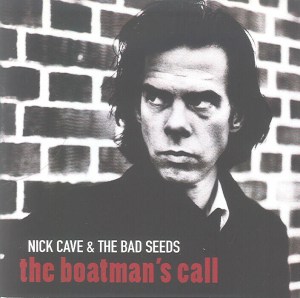
A gray day in September. Nowhere to go, nothing to do. A stark melancholy races on the winds of a distant nor’easter. It is a perfect day for The Boatman’s Call.

Searching for land

Searching for land

I have to admit up front that I found out about Nick Cave & The Bad Seeds from the Shrek movies. The soundtrack crew from the first two movies did their homework exceptionally well, tapping some truly desultory, lugubrious tunes from artists who don’t make the top twenty. I was so taken by “People Ain’t No Good” that as soon as I could afford it I purchased the album (The Boatman’s Call, not Shrek II). The album begins with the line “I don’t believe in an interventionist God, but I know darling that you do . . .” Throughout the album the achingly sacred and profoundly profane are blended in an eerily subdued way. The music is haunting and thought-provoking. Almost each track on the album has a biblical reference, but these references are mixed with what would be crude if handled with any less artistry.

All that I know about Nick Cave is what I’ve read on Wikipedia, but it is clear that he is well versed in the Bible and makes effective, if dark, use of religious imagery. Perhaps the reason I admire this album so much is that Cave’s ambivalence toward religious structures is so honest. He isn’t out to convert anyone, nor is he willing to let go of his religion. The religion that wafts out of the drafty attic of this disc mirrors the complexity that faith ought to possess. Especially on a dark and rainy autumn day.


For the Love of Aqhat

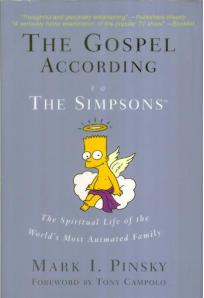
It seems that a new season of The Simpsons is upon us. With the release of season twelve on DVD last week, recession-ridden families everywhere are piling up on their couches to be entertained. Initially I had a hard time accepting The Simpsons; I had seen too many failed adult cartoons to give me much encouragement that this would be something worth wasting my time on. Surprisingly, it became clear after just a couple of seasons that The Simpsons was witty, smart, and surprisingly ethical. This final point was so pronounced that Mark Pinsky wrote a book focusing on it entitled The Gospel According to The Simpsons (Westminster John Knox, 2001). As to be expected in a book with a foreword by Tony Campolo, it was a little devious, but still retained a kind of sugar coating. Nevertheless, I found the book worth reading.

Bart after the birds?

Bart after the birds?

The Simpsons frequently pokes fun at all of us who take ourselves too seriously. Most of the time it is evident that the writers have done their homework as well, pulling in sometimes obscure references to classical or biblical literature. Recently while watching the episode entitled “Bart the Mother” I was struck by an ancient theme which was surely accidental. In the episode, Bart, trying to prove himself to the neighborhood bully, shoots a mother bird with a b-b gun. Guilt immediately sets in and Bart is haunted by his cold-blooded act. In a dream he sees a bird tribunal doling out the punishment for his crime — having his face pecked off. I’m sure this owes more to Hitchcock than to Ugarit, but I can’t help shaking the idea that the scene is somehow informed by the Epic of Aqhat. In one of Ugarit’s classic stories, Aqhat is given a divine bow that is coveted by the goddess Anat. When he won’t relinquish it, Anat has Aqhat pecked to death by raptors, “twice upon the noggin, thrice upon the ear!” Ugarit remains shrouded in cultural obscurity, so no easy cultural reference can point to it. Everyone has seen Hitchcock’s The Birds.

The story of Aqhat, although sadly broken, is a classic of ancient literature. So much more to pity is that it remains nearly as unknown today as it was while buried under the ground for three and a half thousand years. A colleague of mine approached Penguin a few years back trying to pitch the idea that they sell a translation of the Ugaritic texts in their classics series. They flatly turned him down on the basis of “no public interest.” If the publishers won’t put these world heritage classics out there, how will there ever be interest generated? Perhaps those of us bitten by the Ugaritic bug simply circulate in circles too small to have any impact on what the world thinks. Beyond a few souvenir-hawking vendors in Syria and a few crusty scholars sheltered away in dusty academic libraries, nobody knows the story. It seems that Aqhat’s fate is equally grim — pecked to death by birds and completely forgotten because the story just doesn’t possess sales potential.


Biblical Black Lagoon

During my summer-term courses I feel it is only fair to break the lecture time up a bit. Rutgers summer courses can run four hours at a stretch, and no matter how valiant the student, no one can pay attention to me for that long. I have long had an interest in the Bible in popular media, so for each class session I show a brief clip of a movie that features the Bible, often in a pivotal role. We then discuss how it is presented. As a personal pork barrel I give the students a multiple choice question on their exams as to which movies we have watched (it also gives them incentive to be in class, I hope). One summer, after sending the exam off to the print office, I realized I’d made a mistake. As usual, my interest in 1950s sci-fi flicks led to trouble. One film I hadn’t shown a clip from, and which I thought was Bible free (I hadn’t seen it in a long time) was The Creature from the Black Lagoon, a perennial favorite for both camp and kitsch.

Of course, The Creature from the Black Lagoon does have the Bible in it. The movie begins with a narrator reading Genesis 1.1. Well, I had to give all the students credit for that question, because there was no wrong answer. Nevertheless, the easy association between beginning the film with the Bible and its evolutionary plot-starter seemed worthy of comment. Back in the 1950s evolution was already a hot-button issue (so I’ve read). Forces lined up on the scientific and biblical fronts faced off like angry hockey players as they swung at that hard black puck of the truth. It does seem odd in a country so heavily reliant on science that the foundation of biology and its benefits (if scientists hadn’t recognized and reacted to the swift evolution among microbes I’d likely not be here typing this sentence) that one particular interpretation of a very small section of the Bible should have the power that it does. I’ve seen carnivorous, chrome-plated bumper Jesus fish eating the peacefully walking Darwin fish! Old metaphorical Moses would be scratching his head, I’m sure.

The Creature was, of course, also a metaphor (if I’m not shoveling out too much credit where it isn’t really due). The sequels to the original film grew progressively worse, but those who have the patience to sit through The Creature Walks Among Us discover that the gill-man is a man after all, under all that green rubber. The beast is us. Not too weighty of a revelation to be sure, but it isn’t too weighty a movie. Like any discriminating Bible reader I choose what to accept and what to explain away. When I watch The Creature from the Black Lagoon, it ruins the story for me to think ahead to the denouement of the gill-man being a real man. It is a passage I simply choose not to accept. (This is, of course, a metaphor.)

What might this be a metaphor for?

What might this be a metaphor for?


Cenobites and Angels

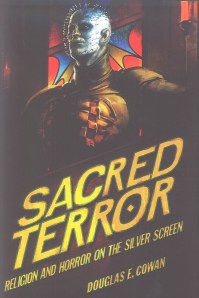
I recently became aware of Hellraiser. Actually, I’d seen images of Pinhead around for years, but never realized that he was a Cenobite until reading Douglas Cowan’s Sacred Terror (see my post on Vampires, Mummies and the Holy Ghost). In fact, Pinhead is featured on the dust jacket of the book and comprises a large part of Cowan’s evidence. Curious enough to watch the movie, I steeled myself for the macabre and terror, but although there were gory scenes it was no more disturbing than the Republican National Convention.

Pinhead for president?

Pinhead for president?

This movie draws its lifeblood from religious, particularly Christian, imagery. Cenobite, of course, is an old word for “monk” and in the movie Cenobites are interdimensional beings known as “demons to some, angels to others.” In a strange convergence of themes, I had recently viewed Dogma again after a gap of a few years. Here Loki and Bartleby are fallen angels, who, rather like myself, move from Wisconsin to New Jersey. Both of these films are pervaded with a healthy ambivalence towards those beings who have the potential for so much good but who opt for what most of us would consider evil.

Angels have a long pedigree in ancient religions, probably originally being gods who only ever achieved supporting roles. Not all gods were created equal. At Ugarit we find a whole class of deities below the power and dignity of reigning gods. Besides, in a non-scientific worldview, angels, especially fallen ones, had great explanatory value. When things unexpectedly go wrong and you’ve made all the proper sacrifices to appease the resident deity, bad angels might just be the cause. Theirs was a world of naive realism; what the eye observes is pure reality and what the eye doesn’t see is divine. Today we know this to be overly simplistic — reality is so complex that even our brightest can’t completely comprehend it. Yet when we have trouble explaining things, even in a scientific world, many are ready to point to the angels in the wings.