Folk Exorcism

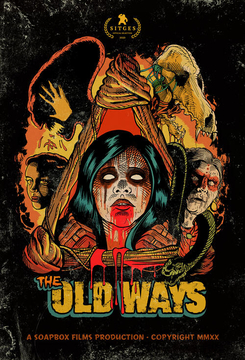
The consensus seems to be that The Old Ways is pretty good.  This folk horror, demonic possession film didn’t impress me too much, however.  The premise is good: there is a ruin in Mexico that explorers leave having been possessed.  They don’t know it.  At the same time, it seems that the possession of Cristina, the protagonist, came from her mother.   And she also visited the ruin.  Most of the movie takes place in a room where a bruja and her adult son attempt to exorcise Cristina while her cousin Miranda watches.  Things are a bit more complicated than that, however.  Cristina has returned to her hometown with the intention of dying via a heroin overdose.  Apparently the demon was luring her there to finish her soul.  In any case, it felt quite confusing to me.  

The story actually begins with Cristina finding herself held captive by a bruja named Luz.  She insists that Cristina can’t go until the demon has been destroyed.  Cristina feels fine, though, and doesn’t believe there is a demon.  Meanwhile she’s able to smuggle in her heroin and uses it at night.  But she also starts seeing what seem to be demonic entities.  She escapes but finds that she can’t cross a line of salt.  She’s forced to admit that she does have a demon and submits to a painful “old way” extraction.  Luz performs the ritual—nothing like Exorcist style—and even performs surgery on Cristina with her bare hands.  In the end, the exorcism leads to Luz’s death.  Cristina prepares to go back to Los Angeles, but then discovers the demon has taken possession of her cousin Miranda.

Becoming a bruja herself Cristina performs the ritual on her cousin.  The results are less dramatic but lead to a confrontation with a particularly nasty demon.  The cousins together are able to destroy it.  Meanwhile, Cristina’s boss has come looking for her and he too went to the ruin and has been possessed.  Cristina prepares to do another ritual, the old way.  There seems to be too much going on here and much of it is unfamiliar and therefore difficult to understand.  It is a good example of religion and horror cooperating and the use of folk methods for handling a demon felt fresh.  The eeriness of the situation is perhaps more uncanny than scary, but the biggest problem for me was that the origin of the possession kept shifting.  There is a character (a little boy) who’s not really explained, but who isn’t a good sign.  This isn’t a bad movie, but it made The Exorcist feel like old school.


Things Seen

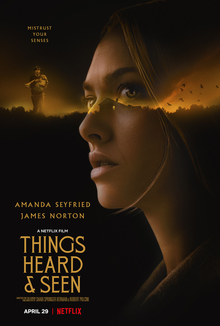
I disagree with the critics on this one.  Things Heard & Seen is a remarkable horror film.  That’s not to say it’s without its flaws, but it is quite engrossing for the right kind of viewer.  It has elements of dark academia, as well as ghosts and a respectful treatment of Swedenborg.  And it takes place in the Hudson Valley (the headless horseman is even mentioned once).  The Bible appears both visually and is quoted.  In short, it encapsulates many of my personal interests.  And it’s not badly made.  There will be spoilers here, but it’s difficult to discuss religion and horror without them.  George Claire married Catherine because he got her pregnant.  He has, however, finished his doctorate and been offered a post at Saginaw College, in the Hudson Valley.  It quickly becomes clear that George is an entitled, self-centered liar (sounds familiar).

As the story unfolds, both Catherine and their daughter Franny see ghosts.  George dismisses them but even at the college the head of his department is a Swedenborgian and tells him not to dismiss the spiritual world.  George’s true character starts showing through.  He cheats on his wife.  He forged his letter of support from his Columbia doctoral advisor because his work was substandard.  When a fellow faculty member finds out, he runs her off the road, putting her into a coma.  He drowns his department head while boating on the Hudson because he also learned the truth.  He even claims to have painted pictures done by his brother.  In other words, he’s a real piece of work.  The ghosts aren’t able to save his wife when he murders her, but his colleague comes out of her coma and spills the beans.

In the end, George sails away into a Thomas Cole painting where a Swendenborgian ending overtakes him.  The use of Swedenborg adds an etherial element to the film, figuring thoughtfulness to what otherwise might be just another story about an unhinged academic.  The department head’s advice about seeing death in a Swedenborgian way was also strangely affecting.  In other words, this is thoughtful horror.  And once again it demonstrates that religion can be crucial to understanding what we really fear.  I suppose some critics dislike the unambiguous use of ghosts and the supernatural breaking into “reality,” but that seems to be precisely the point.  I only learned of this movie because Netflix recommended it, but they hit on several major themes in my work over the past several years.  I would watch this one again.


Ordinary Buddhism

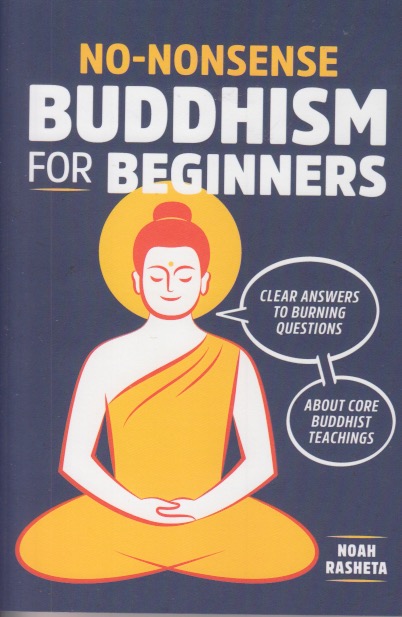
Refresher courses are a good idea.  I learned bits of Buddhism from my undergraduate days as a student of religions on, but my specialization was in “western religions.”  Those outside the field often don’t understand how technical religions can be.  They require time to learn and learn about.  I picked up a bit more Buddhism when I taught world religions, but still not enough to make me a specialist.  As a religion editor I continue to learn more.  My wife and I read Noah Rasheta’s No-Nonsense Buddhism for Beginners together.  Buddhism is divided into two major branches with a third sizable one.  Many would dispute that it is a religion since it has many aspects of a philosophy instead.  Also, Buddhism is non-doctrinal—it’s a matter of outlook and what you do, not the specifics of what you believe.  This book is a handy introduction, or refresher course.

The concept of religion itself developed because of the exclusive truth claims that grew from the Abrahamic traditions (Judaism, Christianity, and Islam).  The declaration that other belief systems are wrong—each of these traditions grew amidst what we might consider folk religions today, labeled “paganism” as a way of disparaging them—led to the idea of what we believe being named “religion.”  (Yours, of course, is the right one.  Everyone believes that.)  Buddhism remained largely unknown in the western world until the age of exploration, and in America was not really widely studied until the 1890s.  As a way of looking at the world, it is older than classical Judaism, having begun in the sixth or fifth century before the Common Era.  It follows, in large part, the teachings of Siddhartha Gautama, “the Buddha.”

Rasheta, the author of this book, is a secular Buddhist.  He makes the point that Buddhism doesn’t displace one’s current religion but can be practiced alongside it.  Being non-doctrinal it’s not a matter of which gods you believe in, if any.  It certainly isn’t about worshipping the Buddha.  A large part of it is mindfulness, and trying to avoid the traps that lead to suffering in human life.  This book is set up in a question-and-answer format and is a straightforward introduction to what Buddhism is and how to begin to apply it to your life, if that’s what you wish.  It’s difficult for those of us raised in the Christian tradition to get past the idea that the point of any religion is conversion.  It’s not.  Instead, Buddhism can be yet another tool to help deal with the suffering that life brings.  Is it a religion?  That’s a technical question.


Simple Gifts

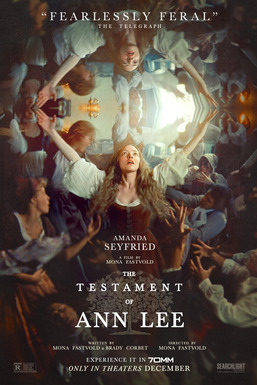
During my many years of studying religion I learned about the Shakers.  It was many years ago and my knowledge isn’t extensive.  I was caught off guard when my wife suggested we see The Testament of Ann Lee.  I hadn’t heard of it and knew nothing about it, but she had me at “Shakers.”  This is a most unusual and engaging movie.  I didn’t realize it was a musical until after it was over.  (It had been a long day and I did, a time or two, think, “hey, this is like a musical, the way characters break into song.”)  The thing is the songs are all diegetic; they fit into the plot and the Shakers were known for their music as well as for their furniture.  The movie follows, in broad outlines, the life of Mother Ann Lee, the founder of the sect.  It made me curious to learn more.  

The Shakers emerged during that period of intense religious foment in the eighteenth and nineteenth centuries.  They settled in upstate New York where numerous other sects came into the world, such as the Mormons and the Millerites.  The Shakers had their origins among the Quakers, but it is unclear if Ann Lee’s family were members of the latter denomination.  In the movie an encounter with George Whitefield awakens Lee’s spiritual curiosity.  Historically, Whitefield was one of the first trans-Atlantic superstars, drawing rock-concert-sized crowds to hear his outdoor preaching.  In my head much of this was muddled during the film—it had been a long and disappointing day and I was totally unprepared for it.  I’m glad to have watched it, however; it rekindled my interest in American sects.

I have on my shelf an unread history of the Shakers.  It has consequently been moved to my “to read” pile.  I read, a few years ago, a history of the Oneida community in Upstate, and also a biography of William Miller.  The Oneida community practiced open marriage and eventually became known as the producers of flatware—Oneida silverware is still easily found.  Shakers, on the other hand, believed in celibacy, meaning that they could only grow through conversion.  The many Shaker communities founded by Mother Ann Lee dwindled and now appear to be down to three members.  The movie, which is quite good, is unlikely to lead to a resurgence of celibacy and revival of the Shakers.  They did have an outsized influence, not only for their furniture (think Oneida) but also for their music.  Add to that now, a musical.


Unexpected Thoughts

The unexpected changes things.  We in the western world live under the false assumption of permanence.  We build something and it remains.  Well, any homeowner knows that constant maintenance is required, but still.  Then something unexpected happens and everything changes.  And it can be in the middle of a work week.  A death can lead to quick decisions and changes of a usual course of actions.  I wrote some funereal thoughts earlier, but a hastily planned drive all the way across Pennsylvania was organized just as a bomb cyclone hit our area.  We were thankfully spared feet of snow, but I had to deal with shoveling before driving early the next day.  After the funeral, a kind family member had invited us to her home, which we’d never visited before.  My wife and I drove there the night of the funeral.  The next day we had to cross the state of Pennsylvania again.  And then back to work on Thursday.

Something has fundamentally changed in my life, but still work expects the same Steve who was somewhat unexpectedly out of the office on Tuesday and Wednesday.  Thursday nothing has fundamentally changed at work, but in my life.  Even my usual morning routine feels off as thoughts constantly wander back to the intense previous two days.  And Monday’s stressful weather.  How the weekend before all plans had to be cancelled to, as the song goes, “let it snow.”  My mind, which operates largely on a routine schedule, has been shaken.  Jarred.  And yet, work persists.  Readjusting on a Thursday is difficult.  It’s as if I’d forgotten how things were usually done.  How did I use to sleep?  How did I use to drink so much water?  How did I jog before sunrise?  It was all routine last Friday.

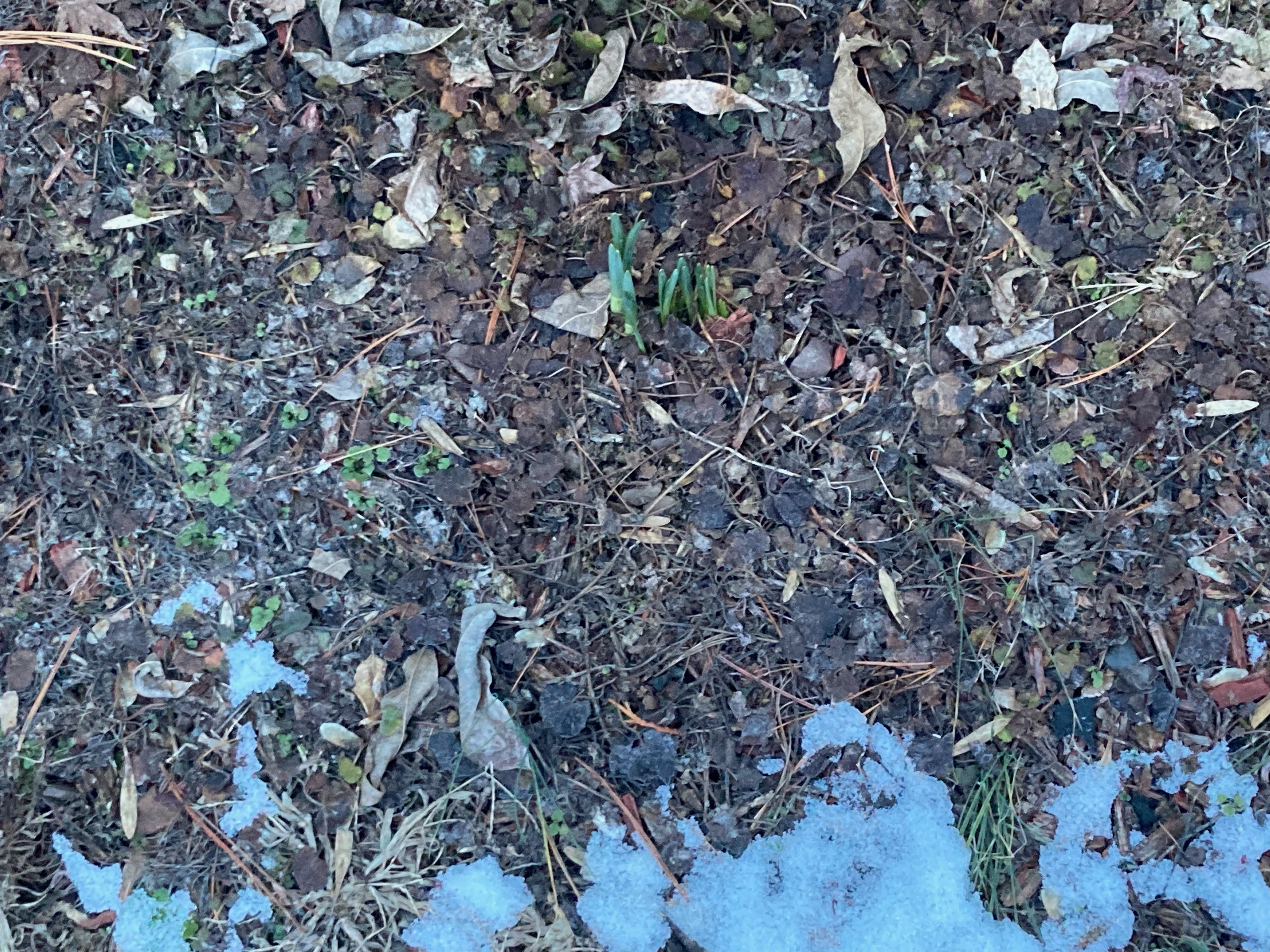
Last Friday.  It was a work day, but I could jog.  The snow had melted.  We knew the drive was coming, but the weather painted a huge question mark over it.  It seems, this year, just when that illusory normalcy has once again been established, winter rudely intrudes.  Some Good Samaritan plowed all the sidewalks on our block on Monday, relieving a bit of the pressure.  But not the anxiety.  February in Pennsylvania is anything but predictable.  It is the poster child of change.  Back home on Thursday I was remembering how to jog on the streets—my usual trail still hasn’t melted—wishing this winter would finally end.  I reached our house where I noticed something where the snow had melted while we were gone.  The daffodils I transplanted last year were beginning to push through the soil.


Funerals

Attending the funeral of a teen is a somber experience.  I can’t even begin to imagine what tempests the parents are facing.  After having given my condolences last night, I became reflective.  My thoughts went back to my teenage years.  First of all, there was that disturbing song, “Seasons in the Sun.”  The Terry Jacks rendition was popular during my teen years and it haunted me even then.  Perhaps more influential in my own life was Alice Cooper’s album Welcome to My Nightmare.  And the context.  I was a somewhat sickly child.  Raised in the Fundamentalist camp, I thought about dying quite a lot.  I became comfortable with the idea.  In seventh grade I missed a lot of school, having come down with the flu, then chicken pox, then a flu relapse.  And yet another bout.  Lying at home, feeling sick, having had pneumonia as a kid, I’d listen to Cooper repeatedly and read the Bible.

One of the lines from that concept album that stood out to me was one of the spoken interludes.  “I don’t want to see you die, but if that’s the way that God has planned you…”  God has planned you.  There was a fatalism there that in the context gave me a strange sort of hope.  I listened to it over and over again.  Our teenage years are when we’re just starting to get a sense of what our lives might be.  Most of the time our expectations don’t match reality, and sometimes reality is simply outside of our hands, such as a with an incurable disease.  Back to “Seasons in the Sun.”  I found myself without the words I felt I needed to console the parents.  I realize my view is the odd one out.

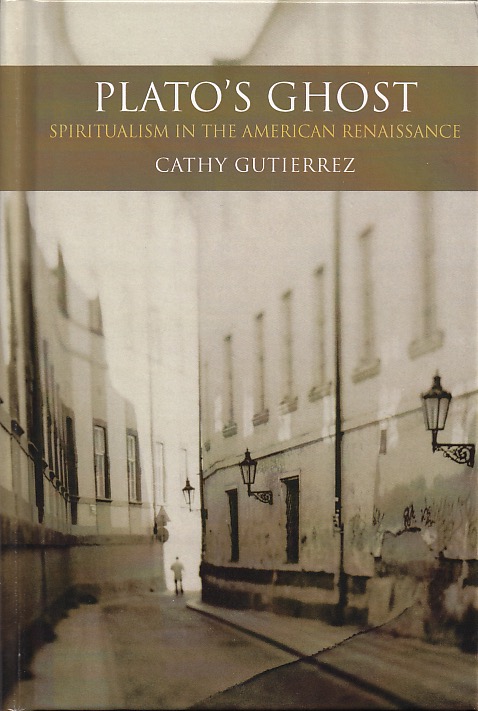
Early in my own life, I found myself of a philosophical bent.  I wanted to know what the meaning of life was.  I guess I was looking for instructions.  Probably my senior year in high school I discovered existentialism.  I identified with that school, especially after learning that Søren Kierkegaard was a Christian existentialist.  That seemed to mean it was okay.  Existentialists believe “existence precedes essence”—we make our own meaning.  Life has been a lesson in that as I studied and worked in religion, which should be some consolation, for over half a century.  The skies are silent regarding the meaning we attribute to our lives.  The song on Welcome to My Nightmare continues, “You’ve only lived a minute of your life.”  And those words come back to me now.


Super Human

There’s a line in the musical 1776 where Stephen Hopkins says “Well, I’ll tell you. In all my years, I never seen, heard nor smelled an issue that was so dangerous it couldn’t be talked about.”  Of course, there are many things that can’t be talked about; some of them so obvious that children can see the truth of the matter.  One of those subjects is what Jeffrey Kripal calls The Superhumanities.  Most of academia laughingly calls this the paranormal and dismisses it.  I have been following Kripal’s work since first encountering Authors of the Impossible, back in late 2011.  He is a brave scholar who argues that since encounters with the impossible have happened throughout human history, and still happen, we should study them.  Mainstream science, which is necessary and good, proceeds by discounting anomalies.  That doesn’t mean anomalies aren’t real, just that if you try to account for everything, well the engine stalls.  Because of this, most academics have followed the general public in ridiculing these things as magical thinking.

That doesn’t stop people worldwide, however, from seeing ghosts.  Or UFOs.  Or experiencing things that just shouldn’t happen.  Many of us are taught to brush off things like disappearing object phenomenon, precise coincidences that happen in a striking series, or episodes of picking up the phone to call someone you haven’t talked to in years only to have the phone ring and it’s that person calling you.  We tell our friends but generally conclude that it’s just “one of those things.”  Moreover, we don’t dismiss family or friends when they tell us about such things.  We know them personally and trust their integrity.  If a stranger walks in, however, we laugh about the event.  Kripal makes the case that something is going on here.  And we ought to pay attention.

The main idea of this book is that humans are “super.”  In order to rescue the humanities, which Kripal teaches at Rice University, we need to acknowledge them as superhumanities.  There’s a lot to ponder in this book.  It’s not an easy book, but it is an important one.  Kripal engages philosophers on their own terms, displaying an incredible depth of comprehension.  I almost didn’t finish the book because it’s so closely argued that I had to put it down for a few months.  It had become literally buried under a stack of other books I had in my to read pile.  I’m glad I picked it up again.  This is a profound book with important, essential conclusions.  It includes dangerous ideas, but, like Hopkins, I believe there should be nothing that can’t be talked (or written) about, especially in the academic world. Ridicule is never good debate.


Seeing Seagulls

It was a seventies thing.  Even though I lived in a small town, even I had heard about Jonathan Livingston Seagull.  At first I didn’t know it was a book.  (A similar thing happened to me in the nineties with a character named Harry Potter.)  It was probably in college that I learned this was a book I should read.  I did, and I followed it up with Illusions, also by Richard Bach.  Now, this was unorthodox stuff.  These novels consider what some would call superhumanities and others self-deification.  The two are related.  In any case, Jonathan Livingston Seagull is a story about a seagull that overcomes limitations.  An inspirational book.  The publisher had no great expectations for it but it ended up becoming a number-one bestseller without any real marketing support, largely through word of mouth.  You’d have had to have been living in a cave in the seventies not to have heard people mentioning Jonathan Livingston Seagull, whether bird or book.

I got a hankering to read it again but alas, it was one of the books destroyed in the flood.  I went to a local bookstore and was disappointed to see that it was out in a new edition—larger, and, of course, more expensive.  Longing eventually overcame reluctance and I bit the bullet.  I’m glad I did.  The story is still as empowering as I remembered it, but the fourth part, the new one, strikes me as very necessary.  In it, rumors of the disappeared Jonathan Livingston Seagull have turned him into a god.  A god, moreover, whose followers are more interested in the orthodoxy of ritual than what he taught.  This was published before Trump’s first election, but it accurately describes what “Christianity” has become under his two-pronged reign of terror.

The idea of Christianity itself has become deified to the point that Jesus—what he did and taught—have become completely irrelevant.  Now, you don’t have to walk all the way with Richard Bach (I read the two books after Illusions as well, The Bridge Across Forever and One), but this book has a message that still rings true after all these years.  The book is over half-a-century old now and I am glad that it’s having a small resurgence.  The message, when the book ended at part three, was perhaps a little lighter.  We still, however, have to learn to overcome limitations.  And there’s a fair amount of wisdom in this little book.  Even though it was a seventies thing, it remains a good thing.


Weird Films

I’ve read Gary D. Rhodes before and found him informative and enjoyable.  Although I hope his recent offering Weirdumentary moves beyond its ideal readership, I suspect I’m among that class.  I was alive and somewhat aware of cinema during the period under discussion—the 1970s—and I even saw a few of these films in the theater, as well as watching some of the television offerings.  I think Rhodes is correct in pointing out that this genre was a product of its era.  And what a strange time the seventies were!  I grew up watching the series In Search of…, which is discussed at some length here.  But before I get more into it, I should explain that a “weirdumentary” is a pseudo-documentary that has characteristic features such as dramatic recreations, questionable authenticity of at least part of what it covers, and often a famous personality as a host.

The book is handsomely illustrated with pictures that will offer a nostalgic rerun of the seventies for some of us.  It divides the material into eight sections:  the proto-weird, ancient aliens, UFOs, the Bermuda Triangle, the paranormal, mysterious monsters, speculative histories, and prophecies.  The proto-weird are this kind of documentary from before 1970, and the rest of the categories sometimes bleed into one another.  Not to detract from this excellent book (it’s often quite witty), my mysterious mind thinks a straightforward chronological treatment might’ve worked better.  “Paranormal,” for example, could cover quite a few of these topics.  Still, the organization of a book can be a personal thing and this layout, with “prophecies” at the end, works well.  A number of speculative religious films make the list, including In Search of Noah’s Ark and Late Great Planet Earth, both of which made it to my small-town theater, and drew me in back in the day.

I also admit to having spent some of my summer earnings to see Mysterious Monsters.  And maybe Chariots of the Gods—although I can’t remember for sure.  I certainly read the book.  Rhodes begins by explaining how 2001: A Space Odyssey set up viewer expectations for such films as these.  I definitely saw that one when I was young.  So the ideal readership here would seem to be those born in the sixties who were old enough to see these movies (and television programs) when they were making their initial rounds in the next decade.  Kids suggestible enough to believe the pseudo-science of many of these offerings, who would grow up to look back on them nostalgically.  Written with a light touch, but true appreciation of the subject, this book was a great way to relive one of the strange segments of my early life. 


Keep Remembering

Books used to be, and often still are, works of art.  I can’t imagine my life without them.  I read Charlie Mackesy’s The Boy, the Mole, the Fox and the Horse back in 2023.  A psychiatrist that’s a friend of mine recommended it.  Mackesy’s next book of wisdom, Always Remember: The Boy, the Mole, the Fox, the Horse and the Storm just came out in 2025.  It was a stormy year and I can’t help but think this book was one of the antidotes that the world seems to hide next to the poisons it contains.  The book is a work of art.  Like its predecessor, it builds on the importance of love, friendship, and hope.  These are the kinds of things we need in difficult times.  Indeed, we are in the midst of a four year storm that threatens to tear apart 250 years of progress.  We need this book.

I wanted to save this book to be the first I finished in 2026.  To start the year off in a good way.  I’m not a maker of resolutions since I try to self-correct as soon as I become aware of a problem.  But reading a positive book at the start of the year seems like something that is smart to do.  It’s so easy to get drawn into negativity.  Doomscrolling invites itself to be shared with others.  Pretty soon we’re all mired down.  But the horse is fond of reminding the boy, mole, and fox, “The blue sky above never leaves.”  It is there waiting for us, after our self-inflicted storm ends.  As I’ve noted before, writing books is a hopeful exercise.  Reading them can be too.

Charlie Mackesy is my age.  He seems to have distilled more wisdom from our time on this planet than I have.  Reading his observations is the very definition of nepenthe.  When the headlines foreground hate, we must respond with love.  When everyone tells us the storm will never end, we must beg to disagree.  Humans are problematic creatures.  We create our own ills much of the time.  There are those among us, however, who are wise.  And we can improve our state if we choose to listen to them instead of those who loudly proclaim their own praises.  Wisdom is often in short supply in this world we’ve created for ourselves.  It is not, however, completely absent.  Do yourself a favor and find Always Remember.  No need to save it for a rainy day.


Halloween in December

The wind was frigid.  We were still in the cold snap that layered the northeast in its gelid blanket for the first part of December.  We had advance tickets for Christkindlmarkt, a Bethlehem tradition.  As we wandered through the tents I was thinking of one of the few Facebook groups I follow, Halloween Madness.  Most of the posts are repurposed from the internet but the last few weeks, since Thanksgiving, the offerings have been blending Halloween and Christmas.  Most people don’t stop to think how closely related the two holidays are.  (I devote a chapter to Halloween in Sleepy Hollow as American Myth, where I explore this connection in a preliminary way.)  But in this bleak December—we’ve seldom seen the sun for more than a couple hours at a time since the aforementioned Thanksgiving—my thoughts emigrated towards horror.

For those of you who’ve never been to Christkindlmarkt, it’s a germanic themed market consisting of four (or more) large tents, full of vendors.  Many of them are Christmas themed, but not all.  Those that are Christmas themed tend toward the Currier and Ives version of the holiday, but some consider the more ghostly side of the season.  Although I didn’t see any booths explicitly devoted to horror themes or monsters, a few of them had a bit of this aesthetic to them.  I’m no fan of capitalism, but I have to wonder if this isn’t a missed opportunity.  I think there’d be some fans.  I do enjoy Christmas for its symbolism and optimism and coziness.  I really do.  But when I have a few free moments in the holiday season I sneak in reading a scary book or watching a horror movie.  There is a connection, but you have to study the holidays to see it.

I fear that this year I was trying pretty hard to preserve any bodily warmth between the tents and didn’t really have much time to think about it until the next day.  I’m always mindful that Edgar Allan Poe’s “The Raven” is set in December.  And that both Charles Dickens and M. R. James associated Christmas time with ghosts.  I suspect most people, however, prefer the cheerful, happy side of the holidays.  I don’t blame them.  Life can indeed be harsh, as harsh as this windchill, for much of the rest of the time.  There are some of us, however, who do find a little lift by peering into the darker corners, even at this festive time of year.  And with natural light in such short supply, there are a lot of shadows about this chilly December.


No FOMO

Some fringe websites (of course I do!) present the case for reincarnation via past lives memories, particularly of children.  You see, adults hear/read/see a lot of things as the years weigh down and we might misremember something we encountered somewhere else.  Children have less exposure and therefore make more credible witnesses.  I know perfectly rational adults who believe in past lives as well.  I must confess, however, that this is one of the scariest things I can imagine.  I’m glad to have lived, most of the time, and I’m not in a hurry to end it prematurely, but the thought of doing it all over again is terrifying.  Even if it’s a different and better life.  You see, I entered life with a lot of questions and I have to say, over six decades later, I’m still uncertain about many of the answers.

If reincarnation means starting from scratch all over again, that scares me.  I’ve spent much of my life building walls to protect myself from the things that hurt me.  I avoid overly risky activities.  I handle sharp objects with great care.  I spend quite a bit of time by myself.  I don’t like being hurt.  That may be one reason that I watch horror movies.  They help to desensitize that particular phobia.  Still, I have to think of all the hard lessons I’ve learned in this life and have to think about how I might improve upon it all with another go-round.  In religions of East and Southeast Asia, where belief in reincarnation is common, the idea is often that you want to break out at the end.  Nirvana.  The place were you don’t have to queue up again.  Even Plato thought reincarnation might explain a lot.  But the very thought makes me feel weary.

If you could be rebooted with the knowledge of your previous life intact, that’d be one thing.  The idea of one day finding myself in another mother’s arms, not knowing anything, learning each microsecond, well, it’s frightening.  My parents weren’t educated people.  They taught me the blue-collar hard knocks of life (which I don’t want to have to learn again).  The white-collar hard knocks are sometimes even worse.  I tried to live this life as a clergyman, but that never really panned out.  I sometimes wonder if the Abrahamic religions/monotheistic traditions, didn’t develop Heaven and Hell out of fear of reincarnation.  The idea certainly makes sense, in some contexts.  And it’s one of the scariest things I can imagine.


Boston’s Poe

Among my parasocial relationships, the strangest are those with people long dead.  Poe is among them, and, I suspect, this is probably a common thing.  As I age and find it difficult to muster the energy to attend large meetings with lots of people, the one factor that excited me about this year’s AAR/SBL, apart from being in New England again, was meeting Poe.  Now, I know that “Poe Returning to Boston” isn’t actually Poe himself.  But I do believe that places retain something of the essence of what happens in them.  Poe was born in Boston, on Carver Street.  The building itself was demolished some time ago.  I set out to see the site yesterday morning before the conference began, only to find that it is now fenced off, having been acquired by MassDOT.  As I stood there, wondering, fearing, it occurred to me just how much of a role pilgrimages play in our lives.

I’ve written about my SBL experiences before on this blog—look at my November posts for many of the years I’ve been doing this—but Boston is by far the most personal.  Part of it is certainly the fact that I lived here for about three years, but Poe is definitely part of it too.  As I went to do an uncrowded photo essay of Stefanie Rocknak’s statue, although it was quite early on a Sunday morning, and also quite chilly, I wasn’t the only one there.  A couple came along to pose with Poe.  When I took my initial photo (on my Saturday morning post) I had to await a different couple consorting with Poe.  I know this isn’t Poe, but it has come to represent his presence is my favorite city.  The mingling of emotions was strong.  

The sign designating this as Edgar Allan Poe Square is faded and weather-beaten.  I can imagine that local politicians have headier issues with which to wrestle, beyond replacing an aging sign for aging tourists.  And having read J. W. Ocker’s Poe-Land, I know there’s a bust of Poe in the Public Library now.  I walk by it each morning and evening, but the conference schedule keeps me out.  Poe himself was no great fan of Boston but this is where the world first met him.  I know that I should get my head in the game of academic conferencing, but I’m a little distracted by the presence of a friend I never met.  And breathing the rarified air of New England.


Shaping Halloween

Halloween is the favorite holiday of many.  I suspect the reasons differ widely.  Although the church played a role in the development of this celebration, it didn’t dictate what it was to be about.  It was the day before All Saints Day, which had been moved to November 1 to counter Celtic celebrations of Samhain.  Samhain, as far as we can tell, wasn’t a day to be scared.  It commemorated and placated the dead, but it wasn’t, as it is today, a time for horror movies and the joy of being someone else for a day or a few hours.  There isn’t a preachiness to it.  Halloween is a shapeshifter, and people love it for what it can become.  If December is the month for spending money you haven’t got, October is the month for spooky things.  Halloween is the unofficial kick-off of the holiday season.

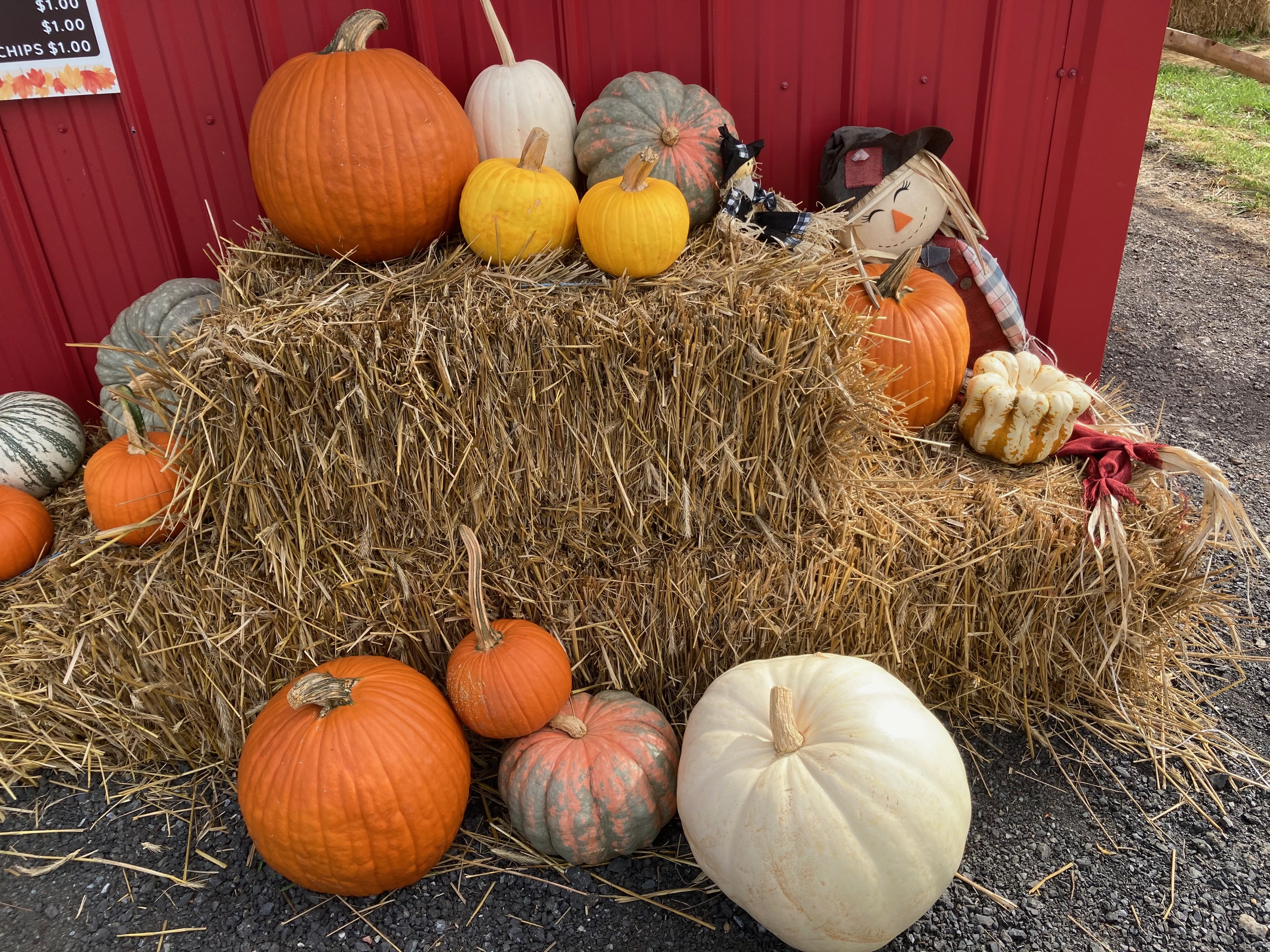
For me, it’s a day associated with dress-up and pumpkins.  Both of these bring back powerful childhood memories.  The wonderful aroma of cutting into a ripe pumpkin can take me back to happier times.  I remember dressing up for Halloween as far back as kindergarten.  I could be someone else.  Someone better.  It was a day when transformation was possible.  I’m probably not alone in feeling this, although I’m fairly sure that wasn’t what was behind the early use of disguises this time of year.  I’ve read many histories of Halloween and they have in common the fact that nobody has much certainty about the early days of its inception, so it can be different things for different people.  Even within my lifetime is has moved the needle from spooky to scary, the season of horror movies and very real fear.

There’s a strange comfort in all of this.  A knowledge that if we can make it through tonight tomorrow will be somehow less of an occasion to be afraid.  It is a cathartic buildup of terror, followed by the release of being the final girl, scarred, but surviving.  And people, from childhood on, enjoy controlled scares.  Childhood games from peek-a-boo to hide-and-seek involve small doses of fear followed by relief.  The future of the holiday will be open to further interpretation as well.  As a widespread celebration it is still pretty young.  And like the young it tests its limits and tries new things.  At this point in history it’s settled into the season of frights and fears in the knowledge that it’s all a game.  I wonder, however, if there isn’t some deeper truth if we could just see behind its mask.


House Spiders

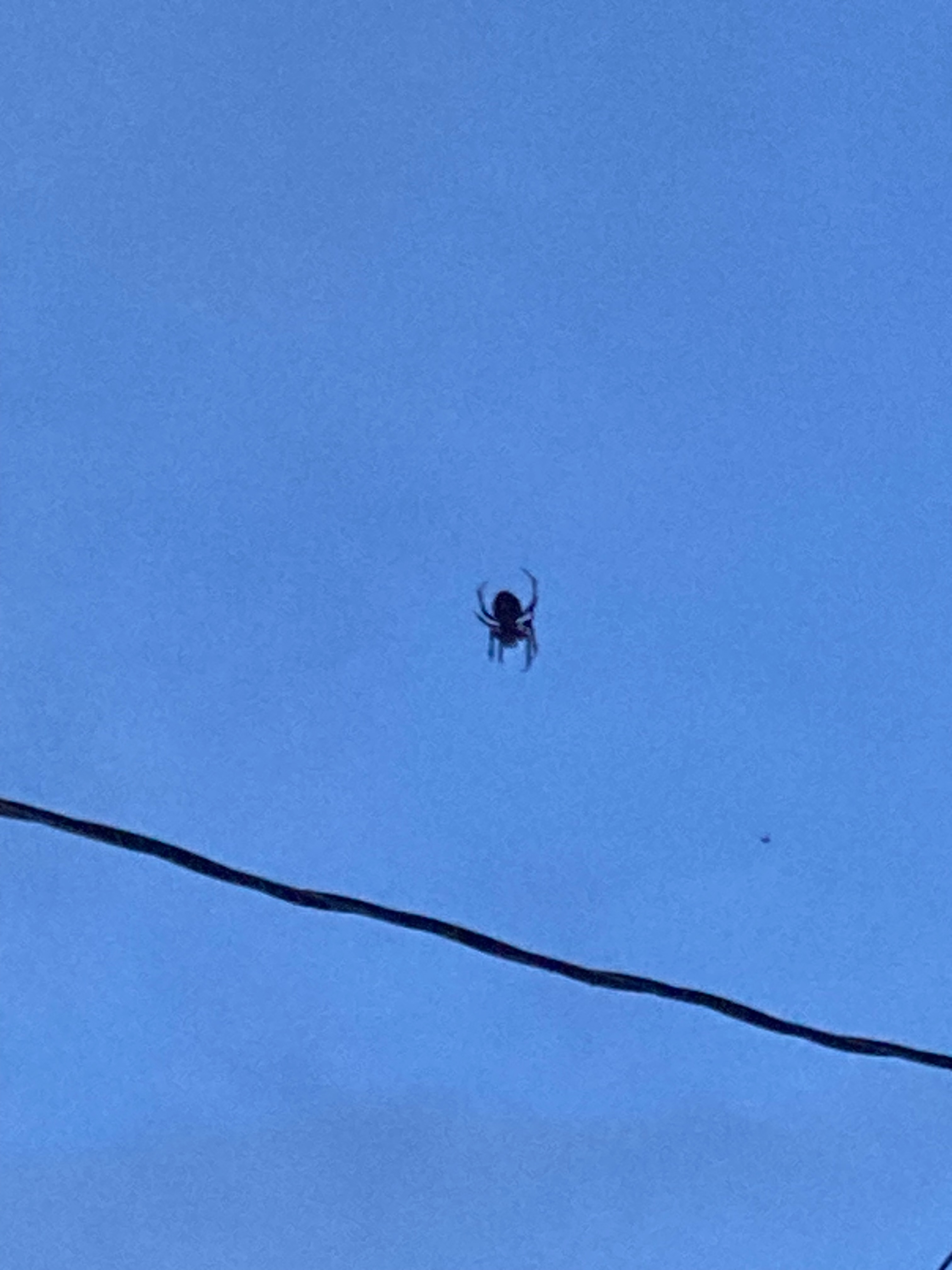
I give them names, the spiders who choose to live in our house.  That’s how I named Henry, shown in the photo.  I grew up with an almost debilitating arachnophobia, and as with most of my fears, worked hard to overcome it.  So when a spider moves in, I let them stay.  Unless they’re too big.  Here’s where it becomes interesting.  Like quantum mechanics, there seems to be an arbitrary point when something is “too big” for the rules to apply.  What is that tipping point?  The other day I bumbled into the kitchen early to get some water, having given up coffee years ago.  There was a spider that I could see from across the room.  It was very large.  It’s a sign of how much I’ve overcome my phobia that I was able to walk around the counter and to the sink to fill up.  I kept a wary eye across the room, however, in case Octavian made any funny moves.

The spider held very still, as arachnids often do when they know they’ve been spotted.  I sometimes wonder if they know how scary they are to other creatures.  I searched around for a jar large enough to catch and release, without pinching any legs, and crept over.  Turns out Octavian was faster than I am first thing in the morning.  And, honestly, I was still recovering from a vaccine that had knocked me out the day before.  At least I can blame that.  I wonder if that’s one of the reasons fear of spiders is so widespread—they’re fast.  Or is it something inherently menacing about those eight legs?  I’ve never experienced any kind of octopus phobia, so I can’t think that it’s merely the number.  The jointed legs?  That seem disproportionate to the body size?  Whatever it is, days later I’m still cautious in the kitchen.

I have a great appreciation for spiders.  I don’t like to be startled by them, but otherwise, if they keep their distance, I’m fine with them.  I do wonder what they think, living in a world of giants.  Some insects, in the same size range as arachnids, seem ignorant of the human threat.  It’s not unusual for an ant to find its way inside and walk right up your foot and leg, oblivious to the danger.  They seem to have no fear.  Spiders, however, do.  They’re very good at running and hiding.  I like to think they know our house is generally a safe space, until the vacuum cleaner comes out.  When I’m behind it, I always try to give Henry and his friends a chance to get out of the way.