How Flat is Your World?

I talk so much about lenses in class that some of my students must think I’m a closet optometrist. The lenses I refer to, however, are those that we all wear as part of our culture. We can’t help it – being born into a worldview is part of the human experience. From my youngest days I recall learning that the earth is twirling around at a dizzying rate and we are hurtling through space around the sun so fast that my thoughts can’t even keep up. These are lenses. Then we turn to the Bible (or other ancient texts for that matter) and read about the creation of their world. To understand their worldview we need to take our lenses off.

Last night I could see the understanding dawning on some faces in the classroom as I described ancient Israel’s worldview. They were flat-earthers, each and every one. The world that is described in Genesis 1 is flat with an invisible dome over it, a dome that holds back the cosmic waters and provides a living space for the sun, moon, and stars. The flat earth is upheld by pillars that erupt through the surface in the form of mountains, and there is water around all. Genesis 1 does not describe the creation of water; it is already there. You can tell there is water above the dome because it falls on us whenever it rains. Oh yes, and dead people are in Sheol, somewhere under our feet. This is the world that God creates in six days. It is not our world. It was their world.
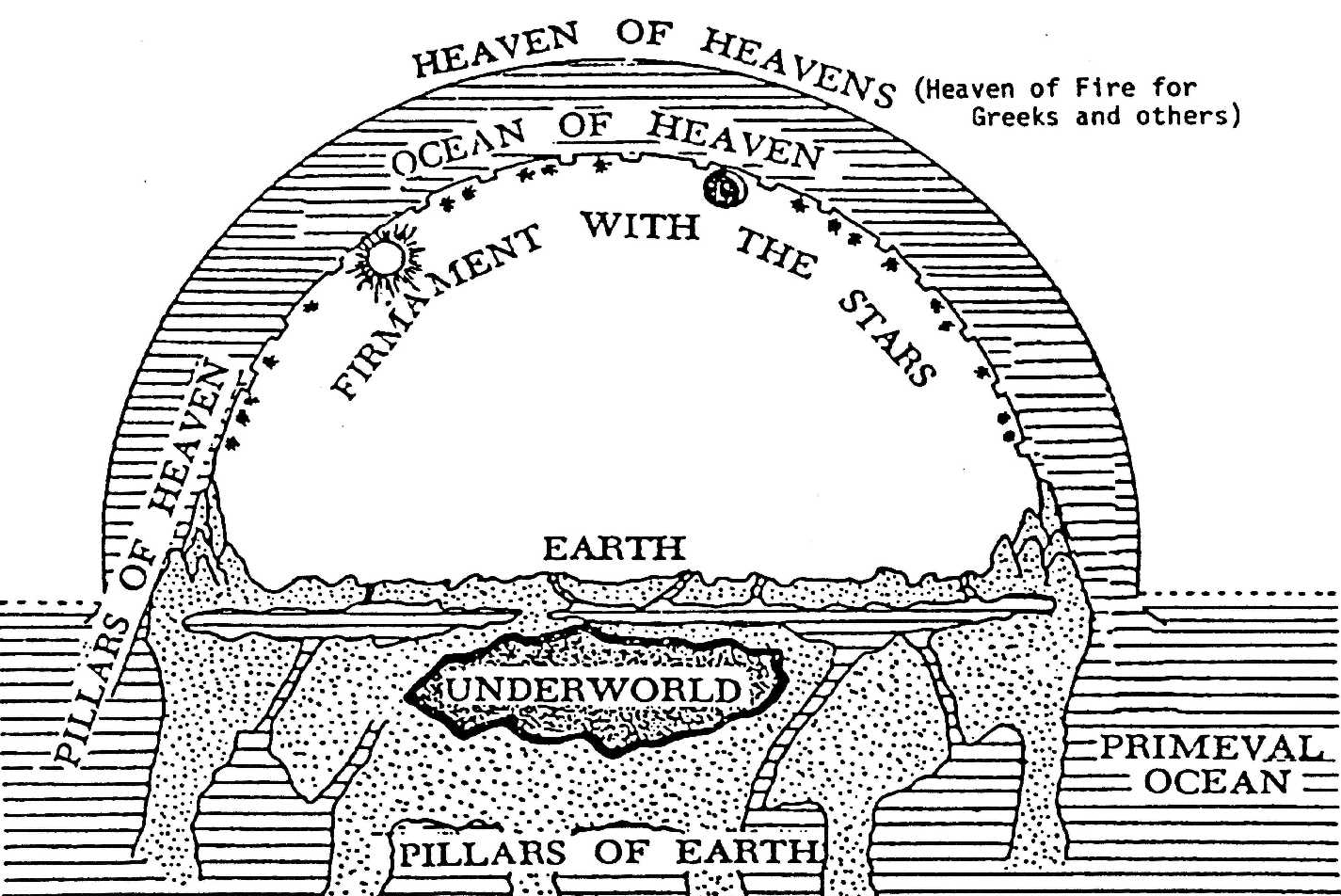
One possible rendition of an extinct worldview

It is not that the physical world has changed, but perceptions of it have. When I stand outside (this was especially noticeable when I lived in central Illinois), I see the world is flat. I feel no motion – I get sick as a dog swinging my head around too fast, so I would know! The difference is that I understand apparent reality is not the same as physical reality. The writers of Genesis 1 did not anticipate our world, nor did they describe how it came to be. They described the world they knew, a world that does not actually exist. Fundamentalists today claim that the Bible is factual in its description of the creation, and that may be the case. But only if you take your lenses off and admit that the world God created is flat and is covered by a dome. And by the way, it looks like the windows of the sky were left open because it is beginning to snow again.

In the Heart or in the Head?

I don’t have cable television. I don’t even have one of those digital conversion boxes. I’m afraid the costs and technology have gone beyond a guy who grew up with a black-and-white television with the screen the size of an old Mac Classic. I still try to keep a wary finger on the pulse of popular culture, and fortunately the internet provides just about everything in a condensed version. When I want to see a television show I generally do so through DVDs. Again, expense is prohibitive to the underemployed, but kindly family members often help out with occasional contributions. My brother surprised me this Christmas with the first season of the History Channel’s Monster Quest series (brothers sometimes see what you try to hide from the wider world). After a long weekend of class prep, I sat down to watch an episode last night that introduced me for the first time to the work of Dr. Robert J. White, a retired professor from Case Western Reserve University.

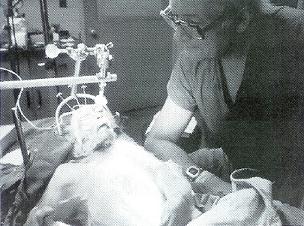
I have always been intrigued by the unlimited possibilities, no matter how remote, that science fiction can conjure. This episode, however, was factual and showed footage of Dr. White’s successful head transplant operations on monkeys in the 1970s. I had no idea that such work had ever really been conducted, let alone successfully. Visions from X-Files: I Want to Believe flashed across my cerebrum while I watched the footage. Not to mention the ubiquitous heads-in-jars of many a science-fiction movie! A plaguing religious question was also stirred back into life after having settled at the bottom of the tank for many years – where does the essence of a person reside? Organ transplants are everyday occurrences, and many lives are prolonged by the sharing of body parts no longer used by their original owners. And transplants do not stop below the neck – cornea transplants bring us very close to the brain, the presumed seat of our personality, consciousness, or, if you will, soul.

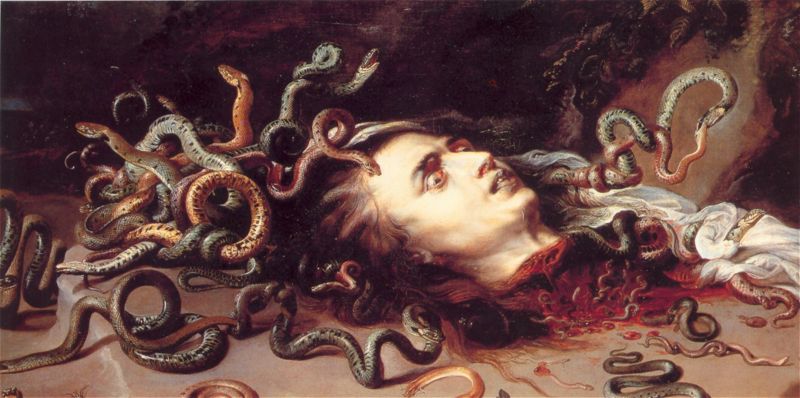
when a head meets a body

Dr. White’s monkeys that survived seemed to have retained the personality of the original monkey head on its new body, but I wonder if that was just an illusion. In our world where each individual is treated as a discreet unit, the essence of a person is thought to reside in the brain. Our brains, however, recognize our bodies and sometimes bodies reject the very organs intended to save them. Is there really any possibility of preserving the essence in one’s head alone? Or are we, like ants and bees and Portuguese Men o’ War, really all part of a collective organism? Maybe there is a good reason I don’t have cable or a digital conversion box.


St. Valentine’s Day

In keeping with my holiday series for young people, I present here my lighthearted essay on Valentine’s Day. This holiday was actually the starting point for the book project. My daughter had to do a school paper article on the holiday and had a difficult time finding information on the history of Valentine’s Day that was suitable for children. I starting writing this book at that time since there was nothing on the market. Still isn’t. In any case, here goes —

Hearts and cupids and tasty candy are a long way from the origins of this holiday! To get a grip on St. Valentine’s Day we have to go back to the Romans again. Remember that the Romans took over the known world in the first century B.C.E. Nobody has accused the Romans of having a great sense of humor! Like most empire-builders they had the serious business of looking out for their own best interests in mind.

Before Constantine (if you skipped New Year’s Day, there’s more there) the Romans worshipped lots of gods. Their religion didn’t really have a name, but it had plenty of gods, gods to spare even! So when they conquered the land where Jesus would show up, Judaea (aka “Israel”), they didn’t really need any more gods. There were so many religions around, in fact, that the Romans hated new religions.

One of the favorite Roman sports was killing Christians, because Christianity was a new and illegal religion. By a remarkable coincidence two guys by the name of Valentine were priests in the early days of the church. Although St. Valentine’s Day gets cootie points for some, the name actually means “valiant.” Well, these two Valentines were both traditionally killed on February 14 in the 200s (C.E.). So Valentine’s Day starts with blood and gore!

Read the rest here (under Full Essays).


Fear of Voodou

The Associated Press fed a story this morning entitled “How an earthquake shook the Haitian’s faith.” Among the aftershocks of last month’s horrific disaster, many groups have ignored Rush Limbaugh’s charitable advice and have gone to Haiti on humanitarian missions. The story reports how many of these groups, generally Christian, dispense their aid outside churches and that many of the native believers in Voodou are being encouraged to convert to mainstream Christianity. Voodou priests are worried about this since, in the words of one, “by rejecting Voodou these people are rejecting their ancestors and history. Voodou is the soul of the Haitian people. Without it, the people are lost.”

Many of the missionaries bearing gifts, among them Jehovah’s Witnesses, Scientologists, and members of the Church of Jesus Christ of Latter Day Saints, see Voodou as a strange and pagan religion. The fact is that Voodou is a form of Christianity blended with indigenous African religions during the unfortunate days of slavery. Retaining their African spirits in the guise of Roman Catholic saints, the slaves of the Caribbean developed a religion they could truly believe in as they were forced to “believe” in Catholicism. In mainstream Christianity their religion is viewed with fear and distrust primarily because the religion it blends with is non-European in origin. Most Christians are unaware of the blended variety of their own faith. Early Christian missionaries into Europe found it much easier to convert native gods into saints in order to convince local populations that Christianity wasn’t such as radical a switch as it seemed. The old gods could still be worshiped, only as lesser deities.

In the “New World,” Christianities continued to evolve. Today’s Fundamentalism has very little in common with the Christianities of the first century. Jehovah’s Witnesses, Scientology, and the Church of Jesus Christ of Latter Day Saints are all religions that have developed in or since the nineteenth century in America, quite often from blends of traditional Christianity and new religious sensibilities. Religion is not immune to evolution, and the history of religions proves that fact beyond any doubt. And yet to those who do not know the origins of Voodou it appears non-Christian and worthy of conversion. Is it not possible to help those of another variety of religion simply because they are humans in need rather than requiring a baptismal certificate in order to claim your daily bread?

A Voodou service from WikiCommons


Transformations

Last week my colleague James of Idle Musings sent me a review of Stephen Asma’s On Monsters that I’ve been meaning to incorporate into a post for several days now. Since New Jersey has been buried under more snow than it’s seen since the last Ice Age, I’ve been busy shoveling and navigating icy roads to class and only now am finding the time to respond. (Still, I have to say that the snow we have here now is no comparison to good old lake-effect snow where I grew up. Of course, the population back home was much smaller so the media never made a circus of it. After all, it is just winter!) In today’s paper, however, there was a review of The Wolfman that graciously affords me another opportunity to address one of my favorite, if under-represented, areas of religious studies: the monster.

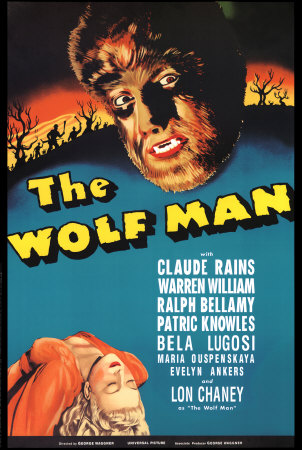
Local film critics haven’t exactly panned the remake of the 1941 classic, although it is noted that the new version tries to avoid the essential subtexts of “alpha-male dominance, sexual repression, compulsive behavior and father-son feuds” (from Stephen Whitty’s Star Ledger review; Whitty also notes, on the cheerful side, that Universal is trying to revive its monster franchise). The werewolf has always been my favorite monster character. Aside from the negative aspects noted by Whitty, the werewolf also represents transformation from the helpless, lost, and confused Lawrence Talbot to a purposeful, confident, and unambiguous wolfman. The werewolf is everyman/everywoman pressed to the limits by a demeaning, heartless society until individualism breaks out in all its savagery and power.

Apart from the religious elements in all monsters (is the werewolf not a paragon of spiritual transformation?), a political subtext also emerges. While the front page declares the financial woes of the state and the continued trouble trying to pass any healthcare reform, page 3 declares “Top 5 health insurers post soaring profits.” One person’s cancer is another insurer’s boondoggle. Meanwhile the Larry Talbots of the world are being told, “give a little more – everyone’s got to share this burden.” Eventually, however, there will be a full moon and transformations will take place. As a student of religions, I can recognize the werewolf as more than a monster and as containing far more symbolism than a Robert Langdon could ever untangle.

Who's not afraid to look in the mirror?


Gray New World

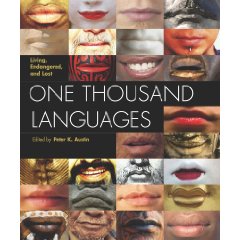
A few months back I purchased a book entitled One Thousand Languages by Peter Austin. Not a “reading book,” this is more of a reference manual to the often bewildering profusion of languages in the world. Having dabbled in the study of about a dozen languages over the course of my academic career, I was interested in seeing what tongues are being spoken in places I’ve only dreamed about. After introducing a plethora of different communication systems, the book dedicates a significant section to endangered and extinct languages. There is a sadness about a language dying; it marks the end of an important aspect of a culture and a move towards a bland universality.

O say what did you say?

Then a Rutgers student sent me this link. It is a video of Wade Davis lecturing on the topic of the rapid disappearance of minority cultures around the world. Initially Davis begins by telling the students that when they were born (this lecture was delivered in 2003), there were 6000 spoken languages in the world. As of 2003, there were only 3000. The rate of language extinction is (was) about one tongue dying out every two weeks. What makes this degeneration so unfortunate, as Davis explains, is that many are dying unnatural deaths. Cultures are obliterated because of exploitation. More powerful members of nations (artificial constructs, all!) ensure compliance by encouraging uniform languages and monochromatic cultures. It is culturocide.

I would encourage my readers to view this video; it is 20 minutes well spent. A major component of these dying cultures is religion, naturally. Davis makes very important observations about this aspect of cultural non-diversity as well. And I can’t help adding that one of the phenomena he addresses is how zombies are made! Quite apart from my fascination with the monstrous aspect of religions, Davis’ cautions are essential to recognizing the plight of the once diverse human cultural domain. You won’t regret seeing this – it is nutritious food for thought.


Constantine’s Dilemma

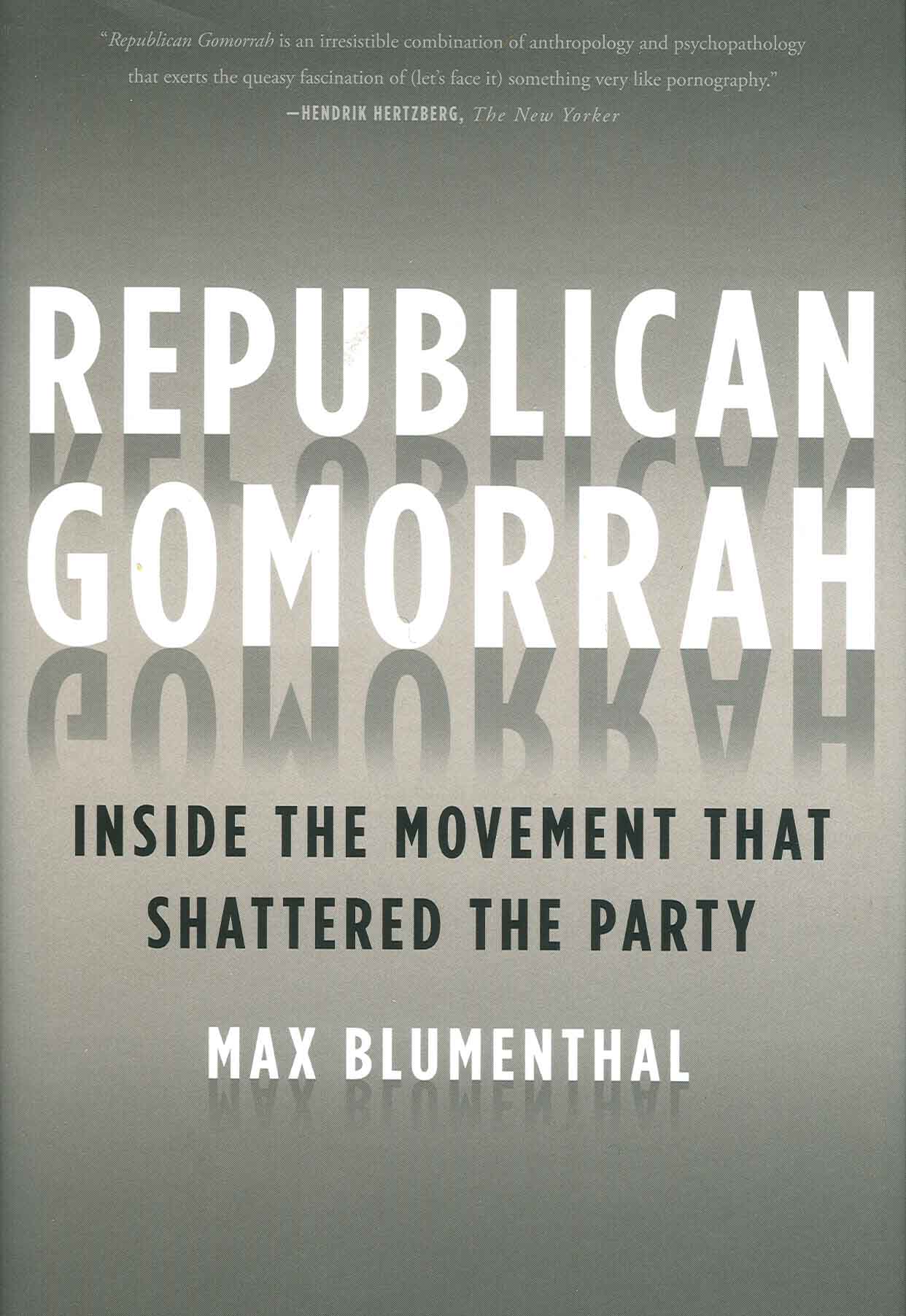
A time-honored adage educates each generation not to discuss religion or politics in polite company. The reasons for this are transparent; both religion and politics tend to be fiercely held belief systems and clashes between differing parties seldom end without scars and regrets. I recently read Max Blumenthal’s Republican Gomorrah: Inside the Movement that Shattered the Party. Initially my impression is that this book ought to be required reading for members of any political party so that they might find documented evidence of whence the real power struggles lie. It is known by anyone with a modicum of political savvy that the past several presidential elections have been decided on the success of courting voters of the evangelical variety of Christianity. What Blumenthal reveals and other sources confirm is just how intermixed religion and politics have become.

One of the most important books of last year

This is a very thorny issue. America was founded as a nation advocating religious freedom and also as a nation that would open its leadership to any qualified (more-or-less) candidate. Clergy have historically served in politics, but presidential candidates who are actively ordained and practicing their office have been rare. Not so rare in recent years, however, are those who forsake the adage and boldly proclaim their faith as a key to garnering votes. This has led to a public interest and scrutiny of what used to be the extremely private life of an individual. Religious beliefs, quietly held, motivate many people – presidents and politicians included. The difficulty Blumenthal highlights erupts when the genuinely religion-driven charge for political office with the hopes of implementing policy based on their personal faith. Americans have taken a new interest in discovering what the Church of Jesus Christ of Latter Day Saints is all about with the recent candidacy of Mitt Romney. We covered that religious landscape in Religion 101. Reading Blumenthal, however, I learned something new about Sarah Palin’s religious convictions.

Deemed “the Third Wave” movement (see also Bruce Wilson’s article in the Huffington Post), Palin’s religion is a variety of Christianity I’d never heard of even with a lifetime in the field of religious studies. What seems clear from the sketchy information available is that the putative wave began in the 1980s (when I was too busy studying religion to notice) with the work of Rev. C. Peter Wagner. Its goal, according to its theologians, is the takeover of first the church and then the world. Not just metaphorically. Since Palin told reporters, according to today’s paper, that she is seriously considering a run for the presidency in 2012, I wonder if it is time for all of us to go back to school and learn a little more about this variety of religious belief. I’m old enough to remember a time when politics was politics and religion was religion, and ne’er the twain did meet. That day is gone, and Americans will find it necessary to learn about religions again to discover the sometimes hidden motives behind politicians’ decisions. Max Blumenthal’s book is an excellent primer, but frankly, I long for the days I still recall when politics and religion had separate, securely locked bedrooms.


Mythology in Cinema and Belief

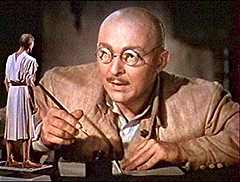
My snow day activities yesterday would not have been complete without the viewing of a classic science fiction film for relief from my Mythology course prep. Still having mythology on the brain, I selected Dr. Cyclops, a 1940s movie that presages many of the concerns evident in the more famous members of the genre over the next decade. There were, even before the atomic bomb, clear concerns with radioactivity and its control by unstable elements of society. The fact that Dr. Thorkel is stereotypically Germanic would certainly resonate with audiences of the day. Given the title I focused on the classical elements and they eventually came through. As the radioactivity shrunk the cast, with the exception of Dr. Cyclops (Thorkel), Odysseus’ plight in the cave of Polyphemus emerged clearly. The doctor is symbolically blinded by the hiding and breaking of his glasses, and the shrunken prisoners escape like Odysseus’ crew. In one scene where the rival Dr. Bullfinch (surely no accident) addresses the much larger Thorkel the writers make it clear for the viewers that Bullfinch is really Ulysses (Odysseus).

Odysseus and Polyphemus

Presumably filmgoers in 1940 were still required to have read the classics in school so that such references would have been obvious from the start. Less obvious to viewers then and now is the fact that ancient mythology was a form of religion. Over the past week or so I’ve been participating in an exchange on Sabio Lantz’s blog, Triangulations, on the topic of metaphorical versus literal truth. I maintain that mythology reflects truth as perceived by ancient believers, whether they “believed” in an actual pantheon on Mount Olympus or not. Myths are intended to convey truth – although ancient religions were more often about correct practice rather than correct belief. Placating angry gods was the job of the priesthood, not the average citizen.

The question unanswered is when religion shifted from correct practice to correct belief. Correct belief can only truly apply in a monotheistic context – if there are many gods there are potentially many beliefs. With one god, one personality, the potential for believing incorrectly infiltrates a religion that is primarily concerned with keeping the many gods satisfied. So perhaps what Dr. Cyclops sees through his one good lens is a metaphor for seeking a single truth rather than the many. In the film, before he meets his demise in the radium mine, Dr. Thorkel is the only character with the stature of a god.


Out of Reach

Last weekend I had hoped to see the movie Creation: The True Story of Charles Darwin. This is a movie that has had trouble in the United States since distribution companies felt it would be too controversial for American audiences. Believing that evolution is still a taboo topic in the most “advanced” nation on the planet is a peculiar conundrum. Why are we so sensitive concerning our natural pedigree?

Primatologists are constantly discovering new and unexpected connections between the great apes and homo sapiens. We share biological, and as we are increasingly aware, cerebral traits. Empathy and xenophobia, two features once believed unique to humans, are in evidence among our great ape cousins. We are on a continuum rather than a segmented train.

Bearing these provocative thoughts in mind, I was ready to head out to the theater, even if I had to go alone, to see the story of Darwin. I’ve read enough biographies to know there are some heart-rending moments in the story, situations that I would not be able to face – but it is a story of truth. It is ironic that we sometimes fear the truth, since religion is our effort to find exactly that. So, resolve firmly in hand, I searched for New Jersey theaters showing the film. None. The nearest show was in Midtown Manhattan. Add a twenty-dollar train ticket to the cost of admission, and to an underemployed academic the price was out of reach. Perhaps some day the movie will become available for general public consumption. Until it does, however, I’ll just have to lament my frustration to a local empathetic ape.

A scene from the movie, so I'm told


On Monsters

Long-term readers of this blog (both of you – you know who you are!) are aware of my interest in monsters. Constant companions of my childhood, I spent lazy days and sleepless nights both curious and fearful of these imaginary creatures. Like the concept of the holy, they both repel and attract simultaneously. Back in October, when I first heard of Stephen Asma’s book, On Monsters, I knew I would have to read it. I have commented occasionally during the progress of my time spent on the book, but having finished it I stand in a better position to consider the whole.

Not a monsterologist, I have nevertheless been fascinated by the juncture of monsters and religion, a point that Asma repeatedly emphasizes. His book is a masterful treatment of the subject from many angles, working through a roughly chronological treatment of the changing faces of the monstrous. Although monsters first appear with the earliest civilizations, they have persisted even in the strong light of scientific thinking and rationalism. As we comprehend our world, the monsters appear in deeper and darker corners, in the very folds of our throbbing gray matter, in the microbial world that floats invisibly around us, and in the smiling beneficence of technology. At many points in his historical presentation Asma is difficult to read; human brutality and emotional distancing have made for the most horrific of real-life monsters he cites.

Particularly useful in Asma’s treatment of the subject is his contention that monsters still have a place in our society. The word itself retains its usefulness in describing human, all-too-inhuman treatment of others. Unfortunately, the motivation for such treatment can often be traced to bad religious education. We may not be so fearful of the werewolf or the (supernatural) vampire, but we still fear those who treat others without empathy or human concern. Anyone with the parallel interests in religion and its aberrations owe it to her/himself to take a careful look at On Monsters and consider its implications.

A classic monster


Inter-species Prognostication

Groundhog Day is a holiday easily forgotten by all but Bill Murray fans and residents of Punxsutawney, Pennsylvania. The day, however, has a role deep in European folk religion that was reflected in the “cross-quarter days.” From ancient times, the four days of the year that fall precisely between the solstices and equinoxes were known as cross-quarter days, based on the day of the month that rent was due in England (“quarter days”). The Celts recognized this cross-quarter day in early February as Imbolc (later Christianized as Candlemas). Part of the folk religion held that animals had special powers on cross-quarter days, and that fair weather on Imbolc meant that more wintry weather was on the way.

In America, where Groundhog Day has its original burrow, the tradition began among German immigrants. The first historical reference to Groundhog Day was made in 1841 in Morgantown, Pennsylvania. By 1886 Punxsutawney had its groundhog Phil and the tradition has continued ever since.

Although it is a lighthearted holiday, I always tell my Hebrew Prophets class (which begins near Groundhog Day) that this is a form of socially accepted prognostication. Few believe that a marmot can predict the weather, but we like to believe that winter is on its way out when the cold starts to feel old and stubborn and we are ready for a few sunny days. The old tradition states that if Phil doesn’t see his shadow he won’t dash fearfully into his den and spring is on its way. Fact is, spring falls six weeks from Groundhog Day, so no matter what the rodent says, spring is on its way. Ancient religions always stress the hope that nature will continue as it has in the past and that spring will follow winter as it should. It is nevertheless a fun day to watch the largest member of the squirrel family amble out of his heated burrow, no doubt confused by all the furless bipeds standing around with cameras, and play the prophet for his fifteen minutes of national fame.

The world's hairiest prophet?


Who’s Your Mummy?

Yet another paternity suit appears in the news as promiscuous fathers try to slink off into the pages of history. This time, however, the kid is famous and his father will bask in reflected glory. Scientists in Egypt have been doing DNA tests on King Tutankhamun, “King Tut,” to determine the father of this most famous of pharaohs. Nor is this an idle bit of trivia, since it may rightfully be claimed that American interest in ancient Egypt was born with the discovery of Tut’s tomb in 1922. Art Deco styles began to emulate ancient Egypt, and even skyscrapers in Manhattan incorporated pharaonic stylings. If it weren’t for Tut’s wealth, this experiment wouldn’t garner any public interest at all.

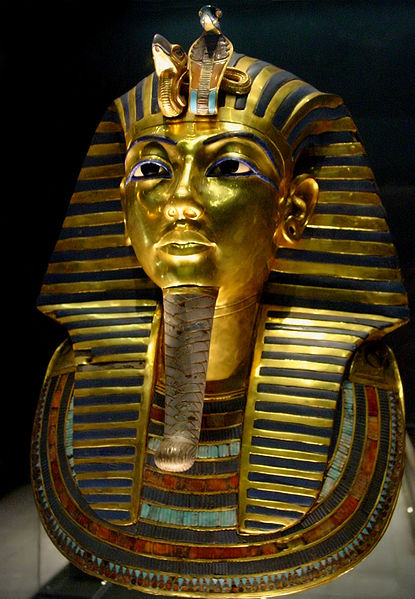
Tut's famous visage from Wikipedia Commons

In a classic case of ancient meets modern, the paltry wealth of Tutankhamun’s burial dazzled American imaginations. Here was a guy who matched the American dream – young, exceptionally wealthy (by even today’s standards), and powerful. Not just a metaphorical god, but a literal one as well. And yet his kingdom was troubled. Was it his father (Amenhotep IV, aka Akhenaten) who launched Egypt into turmoil with an unwanted religious revolution? The state reacted strongly, foundering under this uniformity of a religion that many couldn’t accept. Young Tut was forced to recant, if he hadn’t already rejected the reforms of his predecessor, back to the “old time religion” of eternal Egypt.

We may not know for sure who his father was, but King Tut remains a symbol of the power of religion. Ancient and modern believers alike ascribe strongly to their perceptions of the true religion. No one knowingly accepts a false religion. The truth claims of religions are sometimes mutually exclusive. What seems to have brought about the collapse of the 18th Dynasty of Egypt was the insistence on a religion not widely accepted, but enforced by the government. Considering the religious outlook of the James Dobsons, Pat Robertsons and Sarah Palins of our own political landscape, such a collapse becomes comprehensible. Religion must be allowed its freedom to be sincere. Those who believe only because forced to do so will soon place their own child king on the throne, regardless of whom his father might have been.


Portrait of an Artist as a Young Woman

The world is a topsy-turvy place. In times of turmoil people turn to the old, the familiar, the classic, for assurance of continuity and stability. Ah, those halcyon days! Perhaps the newspaper is not a place to seek solace, but as I was flipping through the Friday edition, usually a little lighter after the dread of another week, I noticed a story about Leonardo da Vinci (before the code made him famous).

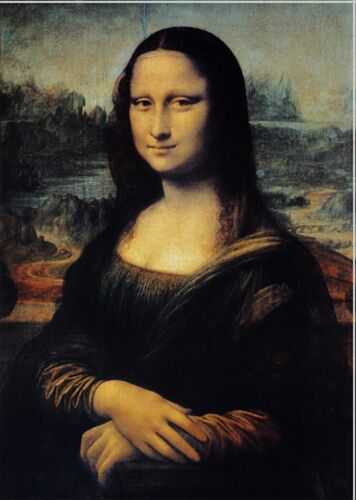
Self portrait or mirror?

For many centuries people have pondered the understated smile on the Mona Lisa’s placid yet knowing face. Recent forensic-type investigations are now strengthening the old suggestion that the Mona Lisa was actually a self-portrait of the artist as a woman. Some will, no doubt, find such news distressing – a masculine artist portraying himself as feminine? (Surely such a thing has never been done before!) Most concerned of all would be the Religious Right, a group that seeks a god excelling in sharp distinctions. Either male or female, no intersexuals need apply!

Over the past several months I have been reading Stephen Asma’s On Monsters, a book that can’t really be called “enjoyable,” although it has been eye-opening and informative. One of the recurrent themes throughout the book has been the fear of the liminal being conjoined with our growing understanding that sharp distinctions are rare. Ever since Freud it has been known (at least subconsciously) that people participate in aspects of both genders with social constructs determining which role is to be filled, feminine or masculine. Those who look honestly at the aggregate of the human race realize that we are all points on a continuum rather than simply members of one or the other gender. As Asma points out, however, we prefer distinctions.

In painting himself as a woman perhaps Leonardo once again proved himself ahead of his time. Perhaps the Mona Lisa is a mirror we should long gaze into before judging others on the basis of artificial distinctions.


The Truth is in Here?

Constantly trawling for the shattered detritus of truth that rests scattered around our lonely little planet, I have often supposed they were here. I have never seen them, but in the Drake Equation there is a high probability that they exist. And now the newspaper says they may have been here all along. And closer than we thought.

Aliens. These latter-day angels and explorers of the cosmos are often pictured like E-T or the little gray aliens from Close Encounters of the Third Kind. The latest findings suggest they could even be quite a bit smaller than that. Paul Davies, a physicist from Arizona State, believes that life may have developed multiple times on earth, and perhaps some of the googol of microbes on our planet may have their origins in space. These potentially extraterrestrial microbes, he stated could be “right under our noses – or even in our noses.” Yikes! Time to put up the intergalactic “No Trespassing” sign!

Stop the alien menace!

In all seriousness, however, this concept of multiple origins of life, I fear, will be latched onto and misread by our Creationist fellow-life forms. I can see the fingers stiff from grasping at straws claiming that now there is scientific proof that different species do have different origins, thank you Mr. Darwin. The price to pay, if they apply logic, however, is not one evolutionary track, but many.

The movie Creation, focusing on Darwin, opened this past weekend in the United States. Delayed because of concerns that Americans can’t handle the truth, this film about Darwin’s sad voyage to the inevitable truth of natural selection will surely raise evangelical ire. Nevertheless, we did not design this world we evolved into, we simply inherited it. And the closer we peer at it, the more complex it becomes. These multiple evolutionary tracks may also explain the origin of Creationists – could they come from different stock than scientifically minded folk? In any case, the news today provides yet another reason to keep our noses clean and our eyes on the skies.


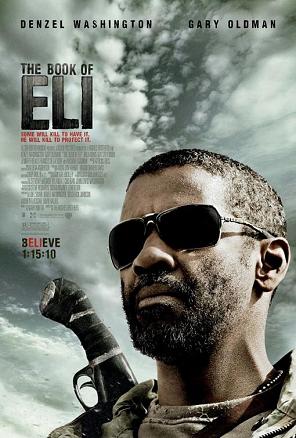
Book of Eli

Feeling that it is incumbent on a teacher of Bible to stay current with media presentations of my subject, I went to see Book of Eli yesterday. Not really a fan of violent movies, I was a bit concerned about being subjected to gratuitous carnage, but beyond the expected post-apocalyptic context and its attendant, constant menace, there was not too much to worry about on this score. For several years I have been researching the presentation of the Bible in movies. It is my hope to write this research up into a book one day if I ever land a job that allows such a luxury. Book of Eli will deserve a chapter of its own.

Apart from fundie self-praise fests, few movies present the Bible in such a heroic role as it plays in Book of Eli. Eli, like Jake and Elwood, is on a mission from God: to deliver a Bible to the last repository of education in the United States, namely a famous correctional institution. Along the way Road Warrior-style bandits harass him and Carnegie (a kind of deranged librarian with lofty political aspirations) covets Eli’s Bible, the last in existence. Carnegie wants the Bible because, “it is a weapon” of social control. (All quotes are approximate since I couldn’t take effective notes in the dark.) Eli must keep it because of his mission. Along the way Eli explains why the Bible is important to Solara, a young woman who is drawn to his sense of mission and devotion to the book. Explaining that since the last war, all Bibles have been routinely destroyed and that, “some say it [the Bible] is what caused the war,” Eli lovingly wraps the book in a cloth before secreting it in his ubiquitous backpack next to his machete. At this point I could feel the social commentary pressing hard upon me. The Religious Right would love nothing more than to force Armageddon on the planet so that they might go to their wonderful fantasy-land in the sky. Their misreading of the Bible has caused wars in the past and will likely cause them in the future.

As Eli loses the Bible to Carnegie and continues his mission empty-handed he explains to Solara, “I’ve been protecting it [the Bible] so long that I forgot to do what it says.” Again the social commentary was evident as news headlines continue to push hot-button conservative political issues where the heart has been cancerously eaten from the Religious Right and the Bible as idol becomes more important than what it actually says. When Eli brings his mission to its conclusion, however, the viewer is presented with an entirely positive view of the Bible. It is the symbol of civilization in a world of anarchy and Solara marches off as its acolyte into a hostile world as the sun sets in the west.

What is truly remarkable about this film is that it presents the Bible in a way that would make its study cool again (if it ever was). For those of us who’ve spent a lifetime shying away from telling others that we have spent our lives learning about the Bible, we might now walk into the glaring sunshine and have others step back in reverence for our selfless efforts to benefit the human race. Well, at least once the apocalypse is over.