Giving Lilith Her Due

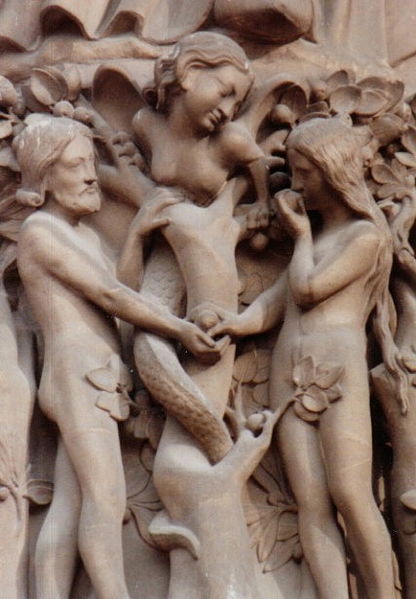
Lilith Fair has announced its 2010 tour dates and excited fans are already purchasing tickets. Lilith Fair is a collection of women artists who share a stage to showcase the female contribution to contemporary music and donate a considerable share to charity. The event name, of course, is taken from the mythological character of Lilith. Popularized as a rare example of “Hebrew myth,” Lilith is a character who likely derives from ancient Mesopotamia, although her origins are obscure. Best known as “Adam’s first wife,” her somewhat sexy story in Judaic tradition evolved into Lilith being the original woman. Unlike Eve she was created simultaneously with Adam. Things were fine until she wanted to be on top during intercourse – males were not made to be dominated, according to patriarchal old Adam, and Lilith ships out to shack up with Satan. She is demonized (literally and figuratively) and becomes the “night hag” that snatches babies and claims the first right of intercourse with every male (an etiology for nocturnal emissions). She becomes the mother of demons.

This story shows all the traits of a late development, but the idea of a strong female figure in Eden is an appealing one. Lilith has come to represent the empowered female, and the modern trend towards accepting her as an icon of feminine independence is apt. Long ago I was intrigued by the female side of the story. Perhaps because I was raised primarily in a single-parent family for my formative years, I have always wondered about the disparity in our “advanced” culture that still considers the male as the “default” model with the female as kind of an adjunct after-thought. This fascination led me to the study of goddesses in the first place, culminating in a doctorate on Asherah. In the Bible men have Adam, Noah, Moses, David, and countless other role-models – even God himself according to standard interpretation. Why not admit the goddess?

It is telling that when Lilith becomes too powerful she is presented as evil. Anthropological explanations have little to offer by way of adequate explanations for such a development. Not to blame biology (or to lay claim to an excuse), but Frans de Waal’s Inner Ape demonstrates that males are hopelessly paranoid about showing weakness. Female primates tend to express their power by group cohesiveness while males try to blunder their way to the top with brute individualism. Adam had nothing to fear from Lilith. To those who perform in Lilith Fair, I only have to say, “Rock on!”


Expect a Miracle

The Pope has been in Portugal. No visit to Portugal would be complete without a stop at the shrine of Fatima. Named for one of the most fascinating characters in Muslim history, Mohammed’s strong daughter Fatima, this small, centrally located town had no claims to fame until 1917. Suddenly three children declared that the Virgin Mary had appeared to them while tending their sheep. The story is about as eerie as the canonical photograph of the unsmiling youngsters. Their sincere proclamations were met with acceptance by many war-weary Europeans and predictions began to emerge from these visions. On October 13 that year some 70,000 pilgrims alleged that the sun itself danced, twirled, and took on new colors. Astronomers reported no solar anomalies at the time.

The events at Fatima have fascinated both religious and secular explorers of the supernatural. The religiously devout claim nothing shy of a miracle while those seeking more dramatic non-theistic explanations claim that aliens were behind the show. Whether or not a physical event transpired, something out of the ordinary occurred in Fatima that day. Now a permanent shrine graces the location. If the apparition appears again, she will be comfortably housed in doors, out of the elements. She might even see one of the bullets fired at Pope John Paul II during the famous assassination attempt. Many believe the Pope’s survival was itself a miracle.

Gnu version of Virgin under Glass

Now Pope Benedict XVI has visited the shrine where heaven once touched earth. Afterwards he climbed into the Popemobile, the motorized bullet-proof reliquary that allows papal viewing by the faithful while protecting Rome’s most valued asset. The message is clear: it is wonderful to believe in miracles, but it is prudent never to trust in them. Two of the three children (Jacinta and Francisco) died before they reached twelve, felled by the famed Spanish Influenza. The miracle that could have preserved their young lives never occurred. Lucia alone survived to 97. Expect a miracle? The odds are hard to predict on that one.


And With Perfect Teeth

This week drug stores across the country will begin offering a testing product that will help assess genetic predispositions to various diseases and weaknesses. Potential parents might learn what debilitating illnesses could plague their children. Who wouldn’t want to eliminate needless suffering and create a world involving less pain and wasting away? Who wouldn’t want to know in advance? Ethicists are up in arms for such knowledge is surely a dangerous thing, just like an overcrowded lifeboat.

Ancient peoples had their own way of dealing with such dilemmas – blame the gods. Disease was not the result of genetic predisposition or even microbes. Illness, plague, pestilence and degeneration were the punishing weapons in the arsenal of ill-tempered deities who didn’t really understand what it was to be mortal. In Ugarit the archer-god Resheph was the divinity who brought pestilence. Shooting from afar with his fiery arrows he could topple cities and nations. Yet few prayers to him are recorded. Better to appeal to a higher power, an outranking deity who might overturn random suffering.

With the loss of many gods comes the loss of the right of appeal. Should the one God be the one who sends disease, to whom can prayers be offered? For many prayers to Jesus or even to Mary are made to circumvent the sad lot poured out upon a destitute humanity by an implacable father. People now recognize genetics and microbes, but still talk to the spirit world about woes and fears. Starting on Friday, however, there will be a product locally available that might provide relief in advance. Who’s willing to take on the gods and give Pathway Genomics a try?


The Death of an Art

In most ways, I enjoy progress. Having electronic communication has spared the lives of many innocent trees, information may be had quicker, and ideas can be freed from the sometimes narrow constraints of staid publishers. (On the other hand, it has given internet users way TMI, some of it not worth the double-click.) There is, however, no comparison to holding a book in your hands. I grew up with cheap paperbacks with their brittle, brown-edged pages and their cadre of book-mites, but many happy memories have accrued to those hours of reading. I never much cared if the books were pristine, as long as they were legible. As intensive reading became a major part of my career aspirations, I started to notice the quality and longevity issues of books. Hardbacks were more durable, but less portable. Some were artworks in themselves.

I was disappointed, therefore, when I recently ordered an Oxford University Press book and I discovered that it had been done Print on Demand. Having worked nearly three years for Gorgias Press, pretty much a strictly Print on Demand publisher, I immediately recognized the hallmarks of this quick and easy way of keeping books in print – inferior print quality and image replication were dead giveaways. The truly disappointing part of the scenario was that this particular book has an intensive discussion of artifacts shown in their grainy, low resolution PoD reproductions. I realize that even large publishers save immense warehousing costs by supplying on-demand titles after an initial print run sells out, but when it compromises the quality, in part the raison d’être of a book with illustrations, some troubling issues are raised.

It seemed when I was young that no matter which copy of a book – barring obviously defective tomes – I picked up, the contents were virtually identical. The industry standard, offset printing provided many identical copies of good quality relatively cheaply. With Print on Demand, books can be outsourced to different vendors and interiors can vary considerably. I saw this all the time while checking proofs at Gorgias Press. PoD also means that little changes can be made between “print runs” resulting in different copies of the same book having variable text. The compulsive footnoter in my veins starts clutching his little chest. When books move from a print run that can only be altered by a new edition to a PDF that can be adjusted between each individual copy, I begin to wonder about the stability of the written word. I’m still enjoying my OUP book, despite the uneven printing and the grainy pictures. But deep inside I fear that rewriting history has become much, much easier.


What’s in a Name?

Two of my readers sent me an article yesterday about Lord Jesus Christ, the Massachusetts man who was hit by a car. Lord Jesus survived the brush with death this time. Clearly the angle on this story is the human interest aspect instead of the courtroom precedent or the political scope of its ramifications. In our minds, if we’re honest, we’ll admit that we’ve already come up with a profile for a man named “Lord Jesus Christ.” We’ve already judged him and determined his motives in legally taking such a name. This is a book to be judged by its cover.

From a purely semantic point of view, the victim’s name would probably have more impact with the definite article: The Lord Jesus Christ. As it is, the name differs only in degree from the thousands of Chrises out there, of either gender, or the many Hispanic men named Jesus, or those Anglos with the surname Lord. Not to mention all those Joshuas. Our names are the labels that others immediately use to prejudge us, although mostly our names come from our parents, or sometimes spouses. We are known through life by tags branded on us by parents who have no idea who we will become. As the non-adopted step-son of a second father I changed my name and I know the baggage that goes with such a change. The burden became so great that I reverted to my birth-name after college. I felt like I had been living a lie for much of my youth. What’s in a name?

Our injured man with the newsworthy name has not yet become the savior of the world. Some religious folk are offended by his appellation, yet most of us would be flattered by someone naming their child after us. Why not aim high when it comes to names? If we are to be judged by our verbal moniker, why not select one that states our point of view? With religiously motivated terrorism on the ascendant, however, it gives me pause to think about Lord Jesus Christ being run down. A man was injured here, while crossing the street. It could have been anyone. If it hadn’t been for his epithet, the story would not be national news. More than anything else, this may reveal the significance of the name.

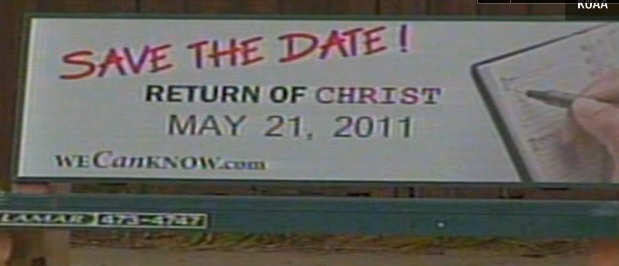
A message from on high?


Ch-ch-changes

Podcast 20 is here! For those who are wondering, it was a long semester with daily class prep, so I did not have the opportunity to record any podcasts. The topic of this discussion is how religions naturally must change over time. Even though religions are by nature conservative, if they last long enough they will face advances in human culture and experience. This creates a dilemma that is not often addressed. It’s evolution on a religious scale.


Holy May Days

The first few weeks of May are peppered with holidays, some religious, some secular. As my regular readers know, I’ve been working on a book about holidays for kids, so I showcase a few pieces on this blog, on occasion. Instead of providing several posts on May’s holidays, I’m combining the first three special days into a holiday compendium for early May.

May Day (May 1) is, in origin, a religious holiday. It is an ancient, pre-Christian Celtic holiday called Beltane, it celebrates fertility, and it is a day that workers throughout the world fight for fair treatment. Sometimes it is associated with Communism. So, where do we begin to unpack all that? To start with, May Day is a cross-quarter day (Groundhog Day and Halloween are two others). Cross-quarter days fall halfway between the solstices and equinoxes – the days that mark the change of seasons. Ancient Europeans believed that cross-quarter days allowed spirits of the dead and other supernatural beings into the human world, as can be seen in the Germanic Walpurgis Night (April 30-May 1). Although named after a saint (Walburga, d. Feb. 25, 779) Walpurgis Night has deep pre-Christian roots in northern Europe. It celebrates the coming of May, or summer, with huge bonfires lit at night. It Germany it was also called Witches’ Night (Hexennacht) because it was believed that witches gathered on Brocken mountain to await the coming of May. The Celtic May 1 is Beltane. For the Celts Beltane marked the start of summer and it was one of their two major holidays (the other comes around Halloween). Like the Germanic tribes, the Celts lit bonfires on Beltane. Druids would light two fires to purify those who would pass between them. In Ireland people would dress their windows and doors with May Boughs and would set up May Bushes. These were signs of the returning fertility of the earth. This tradition survives in parts of the United States in the form of the May Basket. May Baskets are filled with treats and are left at someone’s door. The tradition is to knock and run, but if you get caught, the gift recipient gets to kiss you! These days, however, an unexpected basket at the door is more likely to result in a call to the bomb squad, so let your sweetie know ahead of time if you plan to give a May Basket!

Today is Cinco de Mayo, and like most things Hispanic, it is misunderstood by many Angelos. Frequently Cinco de Mayo is represented as Mexico’s day of independence. What it actually commemorates, however, is a historic battle. Napoleon III’s French Army was in Mexico in 1862. These guys were in the state of Puebla where an outnumbered Mexican force under 33 year-old General Ignacio Zargoza actually beat them on May 5. In the States, Cinco de Mayo is becoming a day to showcase Mexican culture, kind of like St. Patrick’s Day is for Irish culture. The Battle of Puebla is not Mexico’s independence day – that falls on September 16 and often escapes notice in the United States.

And, of course, Sunday is Mother’s Day. People around the world celebrate their mothers at various times of the year, but many don’t realize that this holiday goes back to the ancient Near East. Cybele was an ancient goddess associated with all things motherly. Originally from the Levant, the Greeks and Romans believed her to have been from Turkey (Phrygia). She had a festival day at the vernal equinox. Although there is no direct connection with the date or form of our Mother’s Day, it is possible that this annual recognition of an exceptional mother gave people the idea for Mother’s Day. Whatever it ancient origins may have been, Mother’s Day as we know it started in the United States as a protest against the Civil War. Many women believed war to be wrong. During the Civil War Anna Jarvis organized Mothers’ Work Days (as if they didn’t already have enough to do!) to improve sanitation for both armies. Julia Ward Howe wrote the Mother’s Day Proclamation, which was a document calling for the end of the war. The idea was to unite women in protest and bring the conflict to a close. After the war ended Anna Jarvis’ daughter (who had the same name as her mother) campaigned for a memorial day for women. Because of her efforts, a Mother’s Day was celebrated in Grafton, West Virginia in 1908. After that various states began to observe Mother’s Day, and President Woodrow Wilson made it a national holiday in 1914, ironically the year the First World War began. It is celebrated on the second Sunday in May.

For whatever spirits, political ideals, or goddesses you admire, May is the appropriate time to celebrate.


Popes and Props

Something to believe in?

Like the pain from an old sports injury (or Sarah Palin), the Shroud of Turin just won’t go away. Decades after radio-carbon dating demonstrated what many had suspected all along – the shroud is a medieval devotional replica – true believers are still trying to find ways to prove that the cloth is physical evidence of the resurrection. Never one to shy from controversy, Pope Benedict XVI has endorsed the authenticity of the forged artifact. No matter how far science goes, it seems, it just can’t pry the hands of a needy faith off that piece of fabric.

The Shroud of Turin first appears in the historical record only in the sixteenth century. Prior to that a back-story has been composed that takes it all the way to the first century in Jerusalem. Hungry for proof of the truth of their conviction, thousands of Christians fervently believe this sheet is the tangible evidence of resurrection. What seems to have been forgotten in this whole debate is the Bible itself. Not one of the four divergent Gospel accounts of the resurrection (some of the most wildly disparate material in the whole of Sacred Writ) mentions the miraculous capture of a resurrection photograph. The Gospel writers, never shy about flashing miracles across their narratives, do not tout an artifact as proving the resurrection. The force of apostolic conviction was enough for the first century crowd.

Believers in the modern world lack such conviction. Too many forces in the natural world conspire against the supernatural. A faith shaken by science and the competition of hundreds of other religions desperately needs a sky-hook on which to hang certitude. Yet the Bible itself speaks to this very issue. “Now faith is the substance of things hoped for, the evidence of things not seen,” the writer of Hebrews declares. It seems, however, that true believers throughout history feel a little more comfortable with something palpable, just in case faith is not enough.


LOL Cat Bible Commentary, Part 1

It was bound to happen. Here is the first installment of the LOL Cat Bible Commentary.

Genesis 1.1 Oh hai! In teh beginning Ceiling Cat maded teh skys an teh Urfs, but he no eated them.

In teh beginnin
In teh beginnin ub teh dai — Ceiling Cat nawt wurk at nite, cuz datz wen
Basement Cat come owt to do ebil stuffz.
Ceiling Cat
Ceiling Cat writed da Bible. He’z the mos smartess an strongess kitteh ever. An him reely good — he no eat other kittehs fud, an he nebber jumpz on another kitteh in da middul ub teh nite (but for hoomuns dis ok).
maded teh skys
But first him taked a nap. Den Ceiling Cat maded teh skiez so him had place to liv. An den him putted a hole in da ceilin so him kood peep down on teh Urfs. Wait, him nawt maek teh Urfs yet! Ai sowwy, plz to furgive? Kthx.
an teh Urfs
K, nao Ceiling Cat maek teh Urfs. Urfs is where the hoomuns howse iz.
Ceiling Cat no maek teh udder Urfs, jus da wun wif da howse.
but he no eated them
Ceiling Cat can has a hunger after awl taht wurk, Aifinkso! But him no eated teh skiez, cuz den him fall owt, an den dere no moar kittehz to wurk on da Urfs. An him no eated teh Urfs howse, either. Him wanted to maek teh birdiez an teh moal an teh fishiez. An him also want to maek teh hoomuns for to maek his fud.

1.2 Teh Urfs has no shayps an has darwk fase, an Ceiling Cat roed invisible bike ovah teh wawters

Teh Urfs has no shayps
Cuz Ceiling Cat nawt evur maded a Urfs befoar. Him not no wut Urfs shayp iz!
an has darwk fase
Ceiling Cat can to seez in teh darwk, but dere nawt eny shayps to seez. The Urfs has dawrk fase liek teh howse wif no elec…elek…elekt…wif no lytes.
roed invisible bike
Liek him wuz dreemin. Invisible bike is hawrd to be finded in teh dawrk, but Ceiling Cat maded it an him finded it.
ovah teh wawters
Ceiling Cat nawt liek to get him feetz wet, so him no rided teh bike thru taht wawter. Wawters has see monsturs an stuffs.

1.3 At furst, has no lyte. An Ceiling Cat sez, “I can has lite?” An lite was.

At furst, has no lyte
Ceiling Cat nawt need lyte, but him noes taht hoomuns will to need lyte for to maek noms.
An Ceiling Cat sez
Ceiling Cat has to tawk to himself cuz of monokittehism. No udder kittehs arownd yet, not ebben Basement Cat.
I can has lite?
Ceiling Cat reely wanted a cheezburger. But him needed a hoomun for to maek cheezburger. So him has to maek teh lyte for to get noms.
An lite was.
Nao him can to see howse an da Urfs he maded. Den him maded lolz an udder stuffz, but first him taek moar napz.

(Translated into LOL Speek by the world’s greatest CATS! Fan Kthx)


I See You, This Time

With the advent of Avatar on DVD, I finally had the opportunity to see the movie. This time there was no booming bass and overly active 3-D, and I didn’t end up feeling nauseous for days after. On a small screen it lacked the compelling sense of being in each scene that the first ten minutes of my theatrical experience of the movie had, before I had to seal my eyes tight for the rest of the film or be carried out on a stretcher. Nevertheless, I was able to follow the story this time.

I have posted several times on my affinity for old science fiction films; a large part of my boyhood was spent watching hours of improbable adventure on the black-and-white. Perhaps counter-intuitively, I ended up studying religion instead of science, or even literature. Religion, however, is deeply embedded in science fiction, probably because it is deeply embedded in people. And Avatar was no different. Early commentators noted the similarities of Pandora to Eden. Two trees in the garden (Hometree and the Tree of Souls) were easily borrowed from Genesis. The idea of nearly naked natives living in harmony with the world around them, the soft, graceful curves of the forest contrasted sharply with the angular, obtrusive construction vehicles intent on raping paradise. I’m a sucker for archetypes, I guess. The concept of Eywa as “All Mother,” a nurturing goddess rather than a frowning father deity, only enhanced the sense that Pardora’s box should not be violently wrenched open. Even the hideout of the protagonists was nestled among floating rocks called the Hallelujah Mountains – presumably the name given by earthlings.

Yes, the writing was at times trite, and the characters were caricatures of themselves, but in the tragic light of the Gulf of Mexico Oil Spill, Avatar’s world was pristine, uncomplicated by greed and corruption. The Na‘vi, like zealous Christians, are born twice; the metaphor of foolishly maintaining hope in the harsh light of uncaring entrepreneurs might lead to a limited salvation even for this tired old planet. I am an unrepentant tree-hugger. And if there is a film that, despite its limitations, says it is alright, even noble, to hug trees, then I say it is religious in the deepest possible sense.

All Mother is watching


Friday’s Wednesday

The ultimate stag party?

Mythology never ends. Many people live by it today under its name “religion,” and many in the ancient world endlessly recycled their gods until they ended up looking rather unrecognizable from their earlier forms. I was, therefore, intrigued when a friend asked me about Herne the Hunter. Herne is a mythological character about whom I had not heard. The earliest reference to the stag-antlered deity comes from William Shakespeare, and he has been co-opted by the Wiccan community, nicely tying together many of this week’s posts. So, whence Herne?

Shakespeare seldom invented ex nihilo, but rather adapted. Herne, already an established character, was a wrongly accused poacher who was hanged from a great oak in King Richard II’s England. He had been magically revived after a near-death experience earlier in life and had been crowned with fantastic antlers at that time. The horned head has reminded some Celtic mythologists of Cernunnos, a horned chthonian god attested in mainland Europe but not found in the British Isles. Yet others, by virtue of his being hanged on a tree and the similarity of his name to the epithet Einherjar, suggest Herne may have evolved from Wotan, or Odin himself. Woden was involved in the “Wild Hunt” episode of northern and central European mythology, and since Herne is a hunter, well, isn’t the connection obvious?

Such tales as this are instructive of the way that religions evolve. We know very little of the true origins of the story, but later versions become canonical. The present-day version is perceived to be “historical” and all others are merely coincidence or happenstance. Today Herne is a typical ghost story of Windsor Forest, and those who report seeing him say he still wears his supernatural horns. Those who want to discover his origins are left with a handful of books by publishers of the occult and hundreds of unanswered questions.


Zoroastrian Odyssey

Clinton's Red Mill

Clinton’s Red Mill is a popular New Jersey attraction, but numerous reports of paranormal activity have thrown an additional lifeline to the museum in the form of much-needed revenue in the form of seasonal ghost tours. Last year about this time my family and I participated in one. Touring the old grounds at night can certainly lead to spooky experiences, even for those of us who sit on the fence about ghosts. We discovered that The Atlantic Paranormal Society, the “TAPS” of Ghost Hunters fame, had investigated the Mill the previous year. We watched several episodes of the popular show, and for a lark, my wife bought me a subscription to TAPS Paramagazine for my birthday. All in good fun. I always thumb through when it arrives, but it is hard to take much of it seriously.

The last issue (volume vi, issue 2), however, contained an article about Demonology. Now, I thought I had graduated from The Exorcist and the Exorcism of Emily Rose to a healthy skepticism, but I could not resist reading this article. The first statement declares, “A demon is a fallen Angel that rebelled against God along with Satan, refusing to be humble before, and serve, God” (Adam Blai). While I never make light of things I don’t understand, I did consider the fact that the concept of demons, which derives from a Judeo-Christian mythology, presupposes a mythic war between the powers of good and evil. At the same time, I have been reading up on the Zoroastrians, one of the oldest continuously practiced religions in the world. There can be no serious doubt that the Judeo-Christian tradition borrowed the concept of the demonic from their Iranian neighbors of the ancient Persian Empire.

A Zoroastrian fravashi

The implications of the Zoroastrian connection are profound. If the ancient sage and Afghani priest Zarathustra was correct about the dualistic conflict of good and evil, was he not also right about Mithra and the Amesha Spentas as well? Zoroastrianism gave the Judeo-Christian tradition its base concept of Heaven and Hell, but the divinity of fire they did not accept. By picking and choosing what fit best into its experience, Judaism developed into a religion that allowed for Christian demons and angels and all the invisible hosts of the ethereal realms. Today many Christians accept demons as literal beings (less so jinns, although Clash of the Titans (2010) allowed for them). What does this say about the remainder of Zoroastrianism? Perhaps Ghost Hunters should begin with the Gathas and move on to the Avesta? As for me, I’ll be over here, sitting on the fence.


Militant Evangelists

It is not often that the military gets to rebuke an evangelical, no matter how much the evangelist may deserve it. In the world of Christian crusaders few come close to the stature of Billy Graham, a man who has had more than half a century of undue influence on American culture. At a library book sale a couple weekends ago a middle aged-couple hovering over the religion books (where I have professional obligations to hover) were discussing how they’d read all of Billy Graham’s books. When the family business passed to Franklin Graham, however, the scepter failed to be firmly grasped by the blushing co-regent. At the center of controversy since his comments about Islam beginning in 2001, Graham the younger was recently stricken from the (apparently) prestigious Pentagon prayer service roster.

I have to admit that I was surprised to learn that the Pentagon has a regular prayer service. My image of the military is one of beefy guys (and some gals) with ultimate confidence in their weapons and more than enough brashness to go around. They don’t project the down-on-your-knees-before-the-almighty image. “Guided by the beauty of our weapons,” as Leonard Cohen once sagaciously quipped, the military gets first crack at technological advances and heavy metals. The basic components of carnage and devastation. Yet they pray.

The old adage that there are no atheists in fox-holes glosses military service with a divine prerogative, so when these tough guys rebuff a famous evangelist there must be a story behind it. The military’s refusal to dis Islam displays a sensitivity uncharacteristic of most evangelical rhetoric and theology. The Religious Right’s revisionist claims that America was founded as a Christian nation are impotent without their WMD. Even so, the program should continue. “I don’t think it’s quite fair to condemn a whole program because of a single slip-up,” do you?

When Enola Gay comes to play


Trite Lite

Fresh out of that improbable world called Nashotah House, I was introduced to a jarring concept while in Oshkosh: a Hasidic rapper called Matisyahu. The strange image brewed in my head did not match the reality of this persona, but the very concept of a religious conservative engaging in protest music just didn’t seem to fit. I make no claims to musical expertise, but I did grow up in the 60’s and 70’s, and I know authentic protest when I hear it. Rap began as a countercultural rebellion, and I knew age had its gray fingers wrapped around me when a friend in grad school claimed that rap was “the end of civilization as we know it.” Civilization didn’t end, it simply evolved.

Rap started to become mainstream, as happens to all radical movements when they become “cool” and the aging performers join their aged fans. Then along comes Hi-Caliber, the pathetic Republican attempt to appeal to the hip, the young, the impressionable. The Tea Party rapper (Zac the Rapper?) inveighs his tired message that progress is bad, privileging the wealthy is good, for the Bible tells me so. And the public sips it in. As a person who can’t help but overthink things, it alarms me how trite answers are easily accepted by so many people. If a person stops to think about the implications of issues, the simple solutions proffered by Tea Partiers simply don’t solve anything, no matter how many rappers, twitterers, or ravers they get on their side. Rather than exercise mental rigor, most voters see the shiny glitz and pull the voting booth curtain. Perhaps my friend was right after all.

I have to face the fact that I’m aging into a guy who casts a nostalgic, longing glance back to the sixties of my youth with a sentimental eye. The cardboard-cutout world of the 1950s seems that it was insubstantial, staged even, compared to the psychedelic colors I first saw through childhood’s wondering gaze. I heard protesters on the radio and saw them on television while being raised in a conservative environment. And even though I never personally rebelled, being the Bible-reading type, I secretly admired those who had the courage to challenge the social evils of the day and damn the consequences. Now I switch on the radio and hear conservative fat-cats clipping out pithy rhymes upholding the man. Where is the authenticity? It all makes me want to turn on, tune in, and drop out.

Authentic Republican wrapper


Bibles and Dolls

To celebrate my wife’s birthday, yesterday we drove to the historic Bucks County Playhouse in New Hope, Pennsylvania to see a show. The Playhouse has an illustrious history, having hosted performances including such players as Kitty Carlisle, Lillian Gish, Bert Lahr, and Robert Redford. We went to see a production of Guys and Dolls, the musical based on characters and situations penned by Damon Runyon. (My first introduction to Runyon, I must admit, was in the Alice Cooper anthem, Department of Youth.) Although we attended a performance of the musical back in the Edinburgh Fringe Festival a couple of decades ago, I’d forgotten how much the Bible moves the plot along.

Naturally, any love story that involves a Salvation Army cadet will have its religious conflicts, but it is Sky Masterson’s knowledge of the Bible that drives Sarah Brown to first give him serious attention. Without the arresting power of the Holy Bible, the love interest would never have sparked. As I frequently tell my students, without some knowledge of the Bible, American society just can’t be understood. Even Sky Masterson’s real name is Obadiah (“servant of Yahweh”).

Damon Runyon was anything but a saint. His lifestyle was diametrically apposed to that envisioned by his fictionally pure Sarah Brown – a heavy drinker, smoker, and perhaps womanizer, he was a friend of crime bosses and a noted gambler. But Runyon, like most Jazz Age Americans, knew his Bible. One of his famous phrases derives from the book of Ecclesiastes: “The race is not always to the swift, nor the battle to the strong, but that’s how the smart money bets.” From the quiet streets of an artsy hamlet in Pennsylvania to the glitzy lights of Broadway, the Bible still makes itself known. The smart money is on the one who learns to spot it.

An unorthodox sort of prophet