Old Father Hubble

“Space. The final frontier.” So I grew up hearing as Captain Kirk and Mr. Spock raced through the galaxy and plucky Will Robinson explored the cosmos with Robot despite the machinations of Dr. Zachary Smith. In Seattle a few years back I visited Paul Allen’s Science Fiction Museum and as I stood before the original Enterprise console and viewed Robot in person, it was almost a personal epiphany. This was my childhood all in one room.

Experience Music Project and Science Fiction Museum, courtesy Gnu

NASA has just announced the release of more deep space images snapped by the new and improved Hubble Space Telescope. These images show objects, galaxies, back to a mere 600 million years after the Big Bang. Look any further back and you’re liable to find yourself staring God right in the eye! These incredibly ancient images are humbling to a scholar of ancient times. In the cosmic calendar Sumer isn’t even on the map. And now we can see back almost to the Big Bang itself. It is another kind of epiphany.

Here's lookin' at you, kids - Hubble's new view

Cosmology is inherently religious. Even Stephen Hawking leaves room for the unknown, “religious” entity in his popular writing. As the infinitesimal biological apex of evolution on our own planet, we are somewhat less than cosmic dust on the grand scale. When we reach out to that cold blackness of outer space metaphors fail us until we fall back on God language. I look forward to the day when the Big Bang is captured on film (or digitally). I am almost certain that when that happens science will become far stranger than fiction.


Bible Lite

Over the holiday weekend I listened to an amusing recording my wife gave me as a holiday gift. A comedy troupe known as the Reduced Shakespeare Company produced a recording of their sketches entitled The Bible: The Complete Word of God, abridged. As might be expected from a comedic treatment of sacred writ, there were a few moments that were calculated to make those who take their religion very seriously tremble a bit, but overall the recording was quite funny. While listening to it, however, I became aware of just how much time the Company was spending on Genesis.

Not a sophisticated, exegetical approach to the Bible, a comedy album is not the place to assess the status of serious biblical study. Nevertheless, a deep truth emerges from this lighthearted treatment of the Bible — people today tend to focus too much on the beginning. Every semester I ask my students, “What is Genesis about?” and inevitably the answers begin with, “the creation of the world.” Genesis is not about the creation of the world, despite its unfortunate title. Genesis provides two of the many biblical creation accounts, but its primary purpose is to introduce the Israelites and the special relationship Yahweh has with them. Nearly four-fifths of Genesis deals with Abraham and the next two generations of proto-Israelites. Once Exodus is reached, we are fully within the realm of Israel’s story.

This misunderstanding of how to read the Bible has led to countless uninformed attempts to make the Bible into a narrative of the science of cosmology. Nobody was present for the creation of the cosmos, and the point of Genesis is not to state what actually happened. In borrowing mythic themes from Mesopotamia and Egypt, at the very least, the biblical writers start their account of Israel’s origins with a “a long ago in a land far away”-style introduction. Modern-day readers are trained to latch onto first sentences for vital clues as to what happens further along in the story. The Bible was never intended to be read this way. When we mix ancient ideas of setting the scene with modern attempts to understand our world, it might be better to listen to the Reduced Shakespeare Company than to pundits who claim that earth’s light was created before the sun.

In the beginning was a laugh


Money Driven Life

An Associated Press story this weekend fetes Saddleback Church’s Rick Warren’s ability to raise 2.4 million dollars at his megachurch in an economy where many are suffering because of our national plague of greed. I find the story distressing not because people are willing to put out money for what they believe in — that is human nature — but because what they believe in is so shallow. Oral Roberts is not yet a month in the ground, and megachurches are again begging for money. Worse, they are getting money.

The greatest stumbling block to the humble message of the teachings of Jesus has always been the greed and concupiscence of the church. Whether it be the Vatican or some evangelical Crystal Cathedral, churches that stockpile wealth, although they may indeed distribute some to worthy causes, ultimately become a major part of the problems that create an unjust society. The concentration of wealth into the hands of any religious body will corrupt it. I have known clergy to purchase vestments costing hundreds of dollars per piece while their children were fed with food stamps. I have seen televangelists wearing suits that cost more than a month’s salary for many of their parishioners. I have heard them giving God the praise for their personal glorification.

Glory to God at what cost?

Once the glitz is removed, whether it be priceless Renaissance art or the supreme comfort of a Rocky Mountain resort or southern California ranch, the real purpose behind such driven lives becomes clear. No amount of prevaricating will make the working-class founder of the religion touted by wealthy clergy a friend of the rich as long as the poor continue to suffer.


Decade Fail

In a recent newspaper report on the state of the nation, local journalist Tom Moran cites a Pew survey in which most Americans surveyed rated the current and swiftly ending decade as the worst one of their lives. As a professional academic who was ousted from a highly rated, long-term teaching post this decade after a Fundamentalist takeover of the school where I taught, I am inclined to agree. Five years later I am still searching for any kind of meaningful full-time work, while yesterday I spied an ad for a “Ghost Twitterer” (as if someone is so important that they can’t write their own 140 daily words) and bowed my head in sorrow. Maybe we really have sunk to a new low.

What really caught my eye, however, was the statement of a fellow professor at Rutgers (where I have been an adjunct for nearly three years). Ross Baker noted that “It has always taken calamities of almost Biblical proportions to shake this country out of its smugness and complacency.” While I agree with his assessment, the use of the phrase “biblical proportions” demonstrated once again that my chosen field of specialization has a solid place in the popular imagination. Generally “biblical proportions” is a phrase used to refer to disasters, something along the magnitude of a world-wide flood, the destruction of Sodom and Gomorrah, or the plagues of Egypt. These mythological episodes have left a deep impression on our culture that the message of the Bible is a fitting one for the first decade of the twenty-first century.

Perhaps we are really in trouble if this facile view of the Bible is wedded to a facile misuse of the same book for constructing prejudicial public policies and ill-conceived conservative “reforms.” If the past decade has been a wash in this country, I would attribute it to a conservative evangelical political machine that churned out a president who literally would have been pleased to bring on the mythical Armageddon. During this bushesque reign of biblical proportions, I lost a secure job teaching Bible and haven’t been able to find any other full-time work. I would continue my rant but I have to polish up my résumé, and hone my succinctness skills, and try for a Ghost Twitterer position.


Chris-myth

Mythology is beyond any single individual. I was reminded of this recently while discussing Joseph Campbell with a colleague. Joseph Campbell was an unconventional academic who exploded to public prominence largely through the immense influence of Star Wars, the original episode. George Lucas had famously latched onto Campbell’s Jungian use of archetypal imagery as the basis for good story-telling, and thus, by extension, good movie-making. With his books written at a level that is accessible to the average reader, Campbell assured his fame in a world starved for mythology. Others have interpreted mythology quite differently, but often more quietly. The fact is, mythology is alive and well in our culture. We simply fail to recognize it.

Joseph Campbell, mythographer

We are in the midst of the Christmas season, a period of intense mythopoeia in modern American culture. As can be seen in the Christmas Complex essay under the Full Essays section of this blog, the growth of Christmas characters and stories has been intense over the past several decades, and it shows no sign of slowing. Although not everyone will recognize Heat Miser or Zwarte Piet, many cannot imagine Christmas without Frosty the Snowman or Jack Frost, although they are not specifically associated with the holiday. This is the nature of mythology – it grows to encompass the many concomitant features of its immediate culture. Northern European and northern American experience of Christmas includes the snows of winter, so they become part of the Christmas myth.

While many this year, and every year, protest leaving the “Christ” out of “Christmas,” they fail to recognize that the snowballing Christmas myth has rolled far beyond the control of Christianity. The origins of Christmas predate Christianity, and the birth of Jesus is yet another element that has adhered to the mythology of the winter solstice. As the days grudgingly grow longer, and light begins to return into the chillingly crystalline days of January in the northern part of the northern hemisphere, mythological souls everywhere breathe a sigh of relief. Our fear of the long, dark, cold night is primal and very deep. C. S. Lewis, another mythographer, at least got it right with the Narnian concept of winter without Christmas being a kind of hell to northerners. The mythology of Christmas in the southern hemisphere is another complex mythopoeia in the making. How it grows will be an interesting exercise in the ongoing human quest for meaning as summer’s heat is just beginning.

C. S. Lewis, mythographer


Compassion Divine

A very generous relative graced this holiday season with the gift of the first season of Star Trek, the original television series. I am not now, nor have I ever been, a “trekkie.” I did, however, enjoy the show as a child and have come to appreciate it even more as an adult. I can’t cite episode and scene like a trekkie can, and a surprise FBI raid would not turn up any pointy Spock ears or a model phaser (although my wife’s cell-phone looks like a sophisticated communicator). As a child the show appealed to my love of science fiction, and as an adult the morality play aspect of the original series fascinates me. Yesterday we watched an early episode where a crew member has his mind boosted by a trip beyond the edge of the galaxy (a la Forbidden Planet). As this character becomes more and more omniscient and powerful, he refers to himself as a god. Captain Kirk, in his attempt to stop his old friend calls out that gods are marked by compassion rather than strength.

I have been rereading Homer’s Iliad in preparation for a course on mythology. Quite apart from the fact that Star Trek borrowed heavily from classical mythological themes, one of the features I have especially picked up on in this reading has been the appeals to the compassion of the gods. As Diomedes, Odysseus, and Ajax (and finally Achilles) battle Hector and Paris both sides call out for the kindness of Zeus, appealing to his compassion (as well as to his baser instincts). Reflecting the ancient perception of the world, Zeus’ responses are fickle.

Biologists have been probing the origins of human sympathies ever since Darwin. Creationists used to argue that compassion, altogether lacking in the animal world, could not have evolved naturally. Many recent studies, however, have demonstrated a naturalistic base for our altruism and compassion. These traits are certainly displayed in a number of animal species, particularly mammals. The ancient Egyptians believed animals to be superior to humans in many respects, lacking our weaknesses and being more adept at survival. It seems that they were right and some of the nobler human traits evolved from our animal milieu. If so, what is divinity beyond the gospel according to Star Trek — compassion to those in need by those who find themselves in positions of power?


Tale of Two Anarchies

While snowbound over the weekend, I reread William Golding’s Lord of the Flies. I recalled a profound sense of awe from when I read it the first time in college, when students are invincible and optimistic. The second reading was still rewarding, but the message seemed darker, more true-to-life. Children on an isolated island devising their own schemes of democracy cannot repress the deep urge for self-advancement. When it comes to working together for the common good or promoting one’s own will, the latter wins out and seeks to destroy all dissenters. Anarchy becomes their natural state.

A few weekends ago I finally got around to watching V for Vendetta, the Wachowski Brothers’ dim and hopeful dystopia where individual conviction wears away at a conformity that benefits the privileged class. Recasting Guy Fawkes as a hero, albeit a tragic one, is a bold move in the post 9/11 world. The anarchy here leads to a rule by consent, the oppressed rising up as one to say “no more.” Even V is dead so there is no one to lead.

Better together?

Anarchy is a frightening prospect. Most people feel more comfort in the rule of law. One time I joined a discussion my brother-in-law was having with some friends on the rule of law. They were suggesting that if rule of law could be brought to bear on the Middle East then the seemingly continual crisis there might terminate. I disagreed from the far end of the table, not close enough to hear the whole conversation. My rationale is that the utter conviction of religion trumps the rule of law. Rule of law assumes all are equal, but religion in a monotheistic theater always assumes only one is right, and therefore superior. All others must submit. Problem is, many monotheistic religions feel the same way. We see it in the extreme power structure of the Religious Right in this country. Who is willing to say maybe the rule of law is superior to the rule of God? Watching the graceful anarchy of V, and reading the disturbing anarchy of Lord of the Flies, sometimes even the most stalwart free-thinker wishes everyone would bow to the rule of law.


Im in ur blogz

Translation. The Bible as we know it would not exist without translation. Ours is a culture of convenience — Americans want divine revelation dished out in easy-to-swallow portions in their own tongue. Going through the rigors of learning new alphabets and grammatical systems, not to mention the eerie specter of textual apparatus, are enough to frighten off all but the most stalwart of truth-seekers. This is a good thing. We would never advance as a culture if we all had to spend our time learning actually to read our religious texts as they were written, only to find out that we have no original texts at all. So we trust our translators.

A few weeks back I posted an entry on Andrew Schlafly’s misguided (imho) Conservative Bible, devoid of liberal bias. Since then Stephen Colbert’s interview with Schlafly has been making its rounds on the internet and thousands of people are now aware of the project and its biases. I stand by my original objection that biased translations are unfair representations of the actual ancient texts. But it looks now like I’ll have to be eating crow. A new translation is scheduled to arrive in stores next month, and it looks like it may have a bias. Still, it is a translation that no internet-savvy reader can afford to ignore. Yes, the Lolcat Bible is nearly ready to pounce from the press.

The culmination of the Lolcat Bible Translation Project, over two years in the making, a Bible in Lolspeak will soon be available. Comparing what I’ve seen of the two projects, I think there is more truth in the Lolcat Bible than in the Conservative Bible. I’ve studied more ancient languages than any sane person rightfully should, but I do rely on my able research assistant (aka daughter) to help read Lolspeak. She suggested the title for this post, but the full text reads, “Im in ur blogz, postin mah wurdz of wizdum.” That’s straight from the mouth of Ceiling Cat!


Christian Movementarians

After a distressing day of job-hunting yesterday, I turned to the Simpsons for solace. Often the most intelligent program on American television, as well as being the longest running series, the Simpsons frequently hits religion with a few good-natured and well deserved whacks. Last night I watched The Joy of Sect from season nine. It has been a few years since I’ve seen the episode, and I was pleasantly surprised how it correlates with the overall theme of this blog.

Although the episode ends with a normalcy returning to Springfield after the appearance of a cult called the Movementarians, the parallels between the cult and Rev. Lovejoy’s church are numerous and poignant. This perhaps hits too close to reality for many religious believers — what separates a “cult” from a “church” is more a matter of perspective than a matter of practice or accident.

Even early Christianity had considerable connection to and similarity with Gnosticism. When religions collide, they must emphasize their distinctiveness to survive. Like biological organisms, those that meet the needs of their societies (“the fittest”) survive, while others go extinct. It seems to me that the main cause of religious violence is the need to claim exclusive access to the truth. People are not comfortable believing a religion that might be proven wrong. Like the Simpsons they wish everything will return to normal at the end of the day.

The very definition of normal


Special Babies

Roman Polanski has been in the news quite a lot lately. While I haven’t been following the story, his name is perennially associated with Rosemary’s Baby in my mind. In my youth I feared this movie and made no attempt to watch it until I reached my 40s. Like other works conceived by Ira Levin it features a threat to what we value most; the original Stepford Wives is still almost too scary to watch. While Rosemary’s Baby remains a good psychological thriller, the counter-Christmas theme became quite evident the last time I viewed it. I won’t worry about spoilers since the movie was released in the 1960s, but if you’re still waiting to watch it and want a surprise ending, you might want to turn to another post at this point!

The 1960s were times not only of a strong counter-culture but also a period of fear. Many popular evangelists were warning of the coming of the Antichrist and the Time article entitled “Is God Dead?” is featured in the movie itself. Although it is unclear until the end, upon first watching, who fathers Rosemary’s baby, the child-spawn of Satan is presented with many of the trappings of the first Christmas as Rosemary herself makes the discovery. In fact, Christmas comes as Rosemary is pregnant, and the film carefully accentuates the contrast between Mary and Rosemary. The suffering of the expectant mother still makes the film difficult to bear at points.

As Christmas nears in this very commercial and recession-ridden season, many lawns are sporting “Keep the Christ is Christmas” type displays. Isaiah is being taken out of context and the Religious Right continues its attempt to make Christmas a political petard. Babies represent new beginnings. And while Rosemary’s baby was born six months after (diametrically opposed to) the celebration of the birth of Jesus, in both cases the infant represents a radical change. Any human parent knows that babies are special and that knowledge demonstrates that a young Roman Polanski recognized a theme that would scare audiences for at least forty years.


Sunday Morning Football

There is a Baptist Church in East Orange, New Jersey that celebrates Football Sunday to draw the menfolk in. Complete with a tailgate party after the service, this event may boost numbers, but the winner of this divine gridiron has not yet been determined. Not being a fan of football (or any other sport — oh, the heresy!) this particular tactic would not appeal to me, but knowing that when guys get together the topic of sports always seems to come up, well, it just makes sense.

According to the canonical Gospels, Jesus never played football. (The Gospel of Judas, however, does mention a quarterback-sneak, I believe.) The few times I’ve watched games on television (generally under duress) I see a bunch of men trying their physical best to beat some other guys up. Rampaging after a pig-skin (definitely not kosher), they attempt to score and prevent the other team from doing so. This is my amateur analysis of what I am told is a very complex game.

Rewind. Stop. Replay. The Baptist Church. Founded to protest against the vicissitudes of the Church of England, the Puritan-inclined Baptists wished to establish a church free from the constraints of the formalism inherent in the staid worship of either Roman or Anglo-Catholic England. Breaking from tradition was an honored principle here. Like our football heroes, they joined a team against the competition for that Super Bowl in the sky. Will the men stick around for the post-season slump? Maybe not, but as Notre Dame has always known, the divine man is a big fan of the Catholic team.

Notre Dame's famous Touchdown Jesus


Highway Homiletics

“Over the river and through the woods to grandmother’s house we go,” is an assertion to be taken literally in my case. Crossing the Delaware River and trekking through the forests of Pennsylvania are the only means to reach my childhood home from New Jersey. Each time I make the trip I am amazed at how strident the highway preaching along the way has become. Signs on both the interstates and the backroads announce the truths of a certain vociferous brand of Christianity that maintains that everyone must think that way or spend an eternity in hell. Having experienced this kind of fear-driven faith firsthand, I can’t protest too much without being labeled a hypocrite, but some of what I observed over the river and through the woods leapt out at me anew this Thanksgiving.

Firstly it seems that Jesus saves big rocks. Several large, obtrusive boulders worthy of the land time forgot bear the message that Jesus Saves. Locally this form of homiletics can be as persistent as the Trust Jesus notes spray-painted on just about every interstate overpass between here and Illinois. A religiously aware lumber company in rural Pennsylvania hosts a sign declaring, “Read, Heed, Live & Obey the Bible!” When I think of lumber, I think of 2-by-4s and of their standard use of knocking sense into others who look at things differently. This sign said more than its owner might have intended. A few miles down the road I read, “Why not try Jesus? If you don’t like Him the Devil will always take you back.” The assumption, naturally, is that anyone reading the sign is already devil’s food.

One of the great things about freedom of religion and freedom of expression is that such messages declare their writers’ fervent beliefs, but they hold no force beyond the rhetorical. Having met many sincere believers in other faiths over the years, I do wonder what kind of good news such non-negotiable advertisements really send. Some of the writers, I believe, are railing against the godless world they see around them (although the number of churches along these backroads would seem to testify to religion a-plenty) while others can’t accept any form of any religion that differs from their own, even if it be a different flavor of Christianity. Perhaps it is time I put up a sign advocating a vegetarian version of Thanksgiving — no turkey need die for anyone’s sins. In some religions such a message is considered trustworthy indeed.


2012

As the economy rolls along like a marble on a pebble beach and the stock market continues its own bumpy road to recovery, apocalyptic thought is again on the rise. It is when times are bad that apocalyptic comes in most useful. Individuals who feel that this world has run out of possibilities generally look to a new future world where things will be radically different. That’s why people flock to movies like 2012 and dream of a new day, a new era.

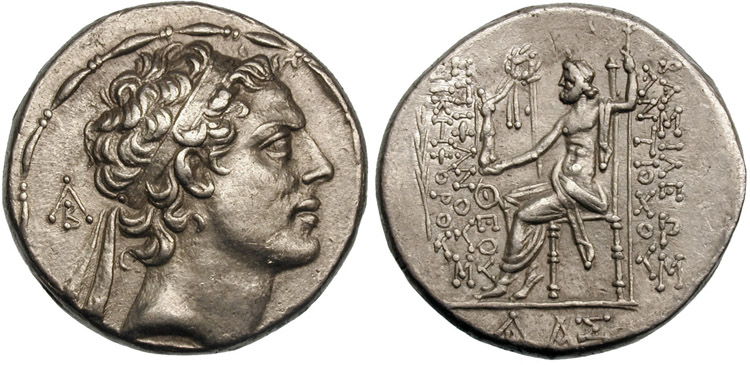
That’s the way it has always been. Jews being tortured to death under Antiochus IV Epiphanes, the Seleucid tyrant, looked for that day when Michael would take on the “Prince of Persia” and the new world would gush in and overtake this one. Almost two centuries later the early Christian movement, suffering at the hands of Roman emperors such as Nero and Diocletian, reveled in the visions of Revelation — the new world coming. Rental property is free in the New Jerusalem! The earliest exemplars of apocalyptic thinking appear to go back to the ancient Zoroastrians. This early Iranian religion (which may have originated in Afghanistan) took comfort in a dualistic world where good and evil constantly struggled until a cosmic conflict would result in the ultimate destruction of evil. It helped to explain why things could be so bad for good people in the here-and-now.

2012, however, derives from concerns that the Mayan calendar seems to have run out of space at that time slot just over three years from now. Otherwise intelligent people panic; this is an apocalypse of the secular kind! Experts on the Maya (among which I am not) explain that the Mayans use(d) many calendars (there are still Mayans around). Their large-scale, 5000 year calendar may run out on December 21, 2012, but that doesn’t mean the end of the world. In fact, that calendar only began on August 11, 3114 BCE, about 4.5 billion years after the creation of the earth. It was not meant as a road-map to the cosmos. The real apocalypse is in the minds of those suffering from their own private ills in this world. Ever since Zarathustra spoke, people have had an alternative, better future to anticipate.


The Call of Balu

After writing a post on Natib Qadish, a modern revival of Canaanite religion in the United States, I received some comments from Lilinah of Qadash Kinahnu, another modern Canaanite religion revival. These movements are a fascinating development in an overly technological era — both movements have online resources that include serious scholarly treatment of ancient religions of the Levant. Both appear to be sincere attempts to get in touch with what modern religions seem to have lost. Both have heard the call of Balu.

In a society where universities seldom offer programs to study the Ancient Near East, people are starved to know about it. I realize that the field of study will never bring in the money that the sciences or finance do, but obviously there is something deeply satisfying about it. And students are hungry for it. Not only appreciated by those who start revivals of ancient religions, many of those who read more recent popular treatments are intrigued. Neil Gaiman’s American Gods was a New York Times bestseller. Although much belatedly, H. P. Lovecraft’s Cthulhu Mythos has become a paradigm for many undergraduates I’ve met. I was reminded of this as I watched Stuart Gordon’s 2001 movie entitled Dagon. A relentlessly tense and macabre film, the Lovecraftian base assures a constant draw for those who hear the call of the ancient deities.

We love technology. I’m posting this entry on an internet where ideas are simply electrons forced into recognizable patterns. We can’t imagine what life was like before being able to communicate with people just about anywhere in the world instantaneously, and where we can live our entire lives without ever actually touching physical money. Over all the noise of technological progress, however, can be heard the distinct call of Balu — a call to a simpler era, pre-Christian, pre-Judaism, pre-Iron Age. It was an era when human destiny fell into the hands of ancient gods.


Sky God Redux

This week’s Time magazine includes the periodic feature of the 50 best inventions of the year. Flipping through the pages looking at techno-gadgets that leave me vacantly spinning in my office chair, I was surprised to see that invention number 49 is the work of our hypothetical sky gods. The undulates asperatus cloud has been receiving high profile attention of late, and now it is seeded on Time’s greatest inventions list! When I last posted on undulates asperatus, it had been written up in Wired. Prior to that I had seen a feature on the cloud in the New Jersey Star-Ledger some months back. Having written a(n unpublished) book on weather terminology in the Bible, I have had my head in the clouds for several years now. To find the humble collections of condensed humidity making the news is a strange but welcome validation of my work.

Undulatus_asperatus

Undulatus asperatus from Wikipedia, by Agathaman

Time resists bringing the divine into the description of the cloud, preferring the more neutral term “ominous” to describe undulates asperatus. After having spent several days under the blanket of a nor’easter here in New Jersey with its impenetrable gray clouds, I can appreciate how ominous thick clouds can be. The more I study ancient religions the more I am convinced that major gods primarily reflect the content of the sky. After all, gods were seldom seen in the fields and cities of antiquity, but the sky holds endless possibilities.

Perhaps some editor somewhere will stumble across my conviction that weather matters in the biblical world and will want to take a look at my book. If not, no worries. I’ll just be looking at the sky.