Death of the Gods

Americangods

Ancient gods surround me these days. Surely part of it is due to having recently finished Neil Gaiman’s American Gods (I know I’m a few years late on this, but novel-reading time is at a premium even when teaching only part-time). Gaiman’s not the first to have taken on the theme of “what if ancient deities still survived?”. As a child I read Lester del Rey’s Day of the Giants with its science-fictionalized version of Ragnarok, and even earlier H. P. Lovecraft had resurrected Dagon and Cthulhu. Gaiman’s treatment, however, is contemporary and is a barometer of how the old gods are faring these days.

Dark and witty, Gaiman’s treatment is a fun-house ride through the fanciful concept that old-time gods and folk-heroes emigrated to American with their believers. The resulting adventure brings a multi-cultural mix of supernatural powers that end up mostly focusing on the Norse mythological cast. Same was true of del Rey — the Norse mythology reflects a stark world of raw power, betrayal, death and resurrection, that resonates with northern European experience. Anansi and Chernobog also take starring roles in American Gods, although the only ancient Near Eastern deities with any prominence in the story are the Egyptian Thoth and Anubis in supporting roles.

Casting an eye over the American landscape, this assessment is perhaps true to life. Ancient Near Eastern deities seem so distant and unfamiliar. Gods long dead. Despite recent movements to revive the worship of Mesopotamian or Canaanite deities, their powers seem to have dissipated at the middle of the first millennium B.C.E. as Yahweh gained a prominence he has never relinquished, and the Greeks and Romans paved over the graves of Ninhursag and Yarikh with European versions of the more prominent West Asian gods. Universities reflect this lack of knowledge with slowly dying departments of Ancient Near Eastern studies. Like Gaiman suggests, America seems to have gone after the more modern gods suited to our present-day lifestyle.


Love the Craft

It is a cold, windy New England day in November. You find yourself in Providence. How can you not visit the gravesite of H. P. Lovecraft? I have mentioned Lovecraft before, in my podcast on Dagon, but that brief citation does not give credit to a man whose life provides episodes that feel strangely familiar to me. Barely known as a writer in his own lifetime, Lovecraft had difficulty finding employment and had a fascination with ancient gods. Indeed, I discovered Lovecraft while researching Dagon for a serious presentation and soon students were telling me about the Cthulhu (I would not dare attempt to pronounce) Mythos and how I had only scratched the surface of his writing.

Lovecraft’s fascination with ancient gods brought new life to forgotten entities. Dagon, despite being a major deity of ancient Mesopotamia, would likely have been completely forgotten by all but professors of arcane mythology had not Lovecraft resurrected him, albeit in a fishy form. His fascination with the protagonists of ancient myths, nearly forgotten deities, clearly influenced Neil Gaiman in his American Gods, and has preserved for the modern reader some of the fascination with powerful, ancient forces that show the insignificance of humanity. I found reading American Gods while in Providence a very humbling experience. Lovecraft also gave the world Arkham, the asylum of Batman fame, as well as Miskatonic University.

Along with Melville and Poe, Lovecraft deserves a place of honor in the pantheon of American literary explorers. The assortment of gifts left for him at his tombstone, including a small cairn, pennies, a pen, and even a note reading “thank you for the ideas,” attests his local fame. The prominence of his books at neighborhood bookstores assured me that I was not the only traveler to breathe in the air that Lovecraft exhaled. My visit also brought to mind a story that a friend of mine started to write some years ago. It had something to do with ancient gods coming back to life, although my friend had never heard of Lovecraft or Gaiman. Lovecraft’s spirit, it seems, may still be alive and well in Rhode Island and in the minds of other residents of Arkham.

Lovecraft


Our Myth of History

“Myth” is a difficult word to define. In the ancient world, however, reality, or truth, was expressed in terms of myth. Today we assume that myth is “untrue” or false. This dichotomy often leads to an unfortunate undervaluing of ancient texts and stories. At root the problem is that we are on the far side of a paradigm shift. This podcast addresses the question of how we might try to understand myth in a way that fits with the modern outlook. Since historical veracity is the modern paradigm, it stands to reason that history has become the mythology of present-day thinkers.


Picturing Genesis

genesiscr

The book of Genesis is elusive and evasive, telling stories that have been read as both science and fiction, but never revealing its own deepest secrets. For over two decades I have been researching the book, never publishing my work since there is so much more yet to read on it. Many truly bizarre interpretations on the introductory section of the Bible have appeared with the proliferation of publication — Robert Capon’s Genesis the Movie and Harold Bloom’s Book of J come to mind — even by otherwise careful scholars. Nobody seems able to get to the essence of the book while everybody thinks he or she already understands it. As a piece of literature it is perhaps the most influential ever penned since it is the basis for so much of the world we’ve constructed around it. Maybe the reason we can’t understand it is that we don’t have it in pictures. Now that’s all changed: R. Crumb’s (serious) comic book version, The Book of Genesis Illustrated, is finally available.

R. Crumb is well regarded in the comic book world, but less recognized in the biblical academy. He is not the first to storyboard sacred writ, nor will he be the last, but he is grappling with the same material that defies definition. Creationists can’t live without the assertions of Yahweh’s creatio ex nihilo, that they read into Genesis (for those who are willing to read what’s there, chaotic water is pre-existent, not created), and many biologists wish that J and P had shown a bit more discretion and humility before setting the framework that dogs their each and every evolutionary observation. Those who take Genesis too seriously will likely be offended by a comic-book version, but the text is based on the revered King James Version and Crumb said in an interview that he had “no intention to ridicule or make visual jokes.” The problem is, the text is full of its own riddles and jokes, along with serious assertions of the superiority of Yahweh over Marduk and Baal and Teshub.

Unlike many Bible readers, Crumb does not stop his Genesis with the Flood or the Tower of Babel. Instead he takes his readers through the entire book where “iron-willed Old Testament matriarchs” are presented in his characteristic muscular style, perhaps recalling She-Hulk more than Sarah. The images may be unfamiliar and a little frightening, but I applaud Crumb for taking on the patriarchal chokehold over shy, hand-wringing wives wondering why they can’t seem to take the biological package their virile husbands send their way. The Bible was written in a man’s world, but it is now ensconced in a more enlightened age and it is ready to benefit from a new, and unfamiliar reading.


The Power of Pyramids

One of the benefits of teaching is the constant refreshment of ideas presented by students to air out the stuffy closets in minds that tend to close around academic orthodoxies. Each field of studies has its sacred shrines not to be disturbed, and none more so than the field of religious studies. That’s why I appreciate the openness of student minds. This summer I was introduced to the alleged Bosnian pyramid that I posted about some months back. Having reviewed the statements of both archaeologists and geologists it is easy to see how what looks like a pyramid might not be a pyramid at all. Some experts even theorize that the pyramids of Egypt took their inspiration from the shape of a natural desert mountain.

Wikipedia's photo of the "Bosnian Pyramid"

As we were winding up our classroom discussion of Egyptian mortuary cult and its awe-inspiring pyramids, another student asked me if I had heard of the Okinawa pyramids. I hadn’t. Back in my student days I recall a professor entering my Egyptian Religion course after having just read a book on the mystical power of pyramids wherein the author claimed that dull razors placed under a small-scale pyramid would come out sharpened the next morning and other such nonsense. We all had a good laugh and got onto the serious business of comprehending the fascinating world of Ptah and Atum. When I first heard the phrase “Okinawa Pyramids” I had to fight down the immediate flash of embarrassment of unrestrained academic laughter should I be found even considering such a proposal.

I have always, however, listened to those willing to ask about even the most anomalous incidents of history. Two years back I had a student share the “helicopter hieroglyphs” of ancient Egypt with me, despite a fully understandable reading of signs that can look like a helicopter to the uninitiated. The Okinawa Pyramids, however, were different. As the student whipped out his laptop and pulled the images up from the internet, I was intrigued. These were not pyramids, but rather monolithic blocks 60–100 feet below the surface of the ocean near Japan. My amateur study of geology has taught me that many species of rock naturally have squared fractures along various planes and facets, but the number of offset angles and the profusion of the squared edges forced my mind open just a bit. What is more striking yet is that there is no Wikipedia article on this formation at all, despite its discovery in the 1980s. Most intriguing of all is that the complex seems to have sunk at the end of the last ice age, thus predating even the pyramids of Egypt. Even the stepped pyramid of Djoser.

Is there evidence of a pre-civilization civilization under the coastal waters of Japan? I am not qualified to decide. I feel safe in saying that whatever is there is not a pyramid, but I am impressed by the photos and the relative silence about them even on the web. Since the best photos are copyright protected, I’ll provide a link for anyone wishing to creak open a dusty mind-closet and wonder about the implications.


Sonoco

sonoco2

What do God and great pools of gooey, flammable, decomposed ancient biomass have in common? Quite a lot apparently. A picture in this morning’s paper of a Caribbean Petroleum Corp. storage facility explosion took me back to my childhood. I was born in the same place as the oil industry, although I think it was in different hospitals. Northwestern Pennsylvania is where the industrial use of oil was discovered (ancients had learned that the stuff was extremely flammable and used it for cruel weapons, but never figured how to grease an axle with it). One day my brothers and I were playing outside and noticed flames jetting up from an adjacent hillside. We saw giant ashes, some nearly the size of dinner plates, floating down on a summer day and it seemed like a strange gray snow was falling. A funny smell was in the air. That night on the news we learned that a local oil refinery had exploded and when we went to the site to gawk, it was amazing to see colossal storage tanks melted like so many ten-ton candles. It is an image I’ll never forget.

Lord Balfour envisions chariots of fire

Lord Balfour envisions chariots of fire

My wife’s favorite historian is Barbara Tuchman. We’ve read most of her books. Bible and Sword, however, was especially eye-opening for me. This book describes, step-by-step, how the British Empire forged its alliance with Israel. Tuchman is a meticulous historian, noting minute details that add understanding to the overall picture. One of the key motivating factors that led Lord Arthur James Balfour in his support of a homeland for the Jewish Diaspora was his belief that a physical Israel was required before the Second Coming of Christ could take place. This is a sentiment that has been shared by some recent, very highly ranking American politicians.

Enter Col. Edwin Drake. Drake was the first person to have the idea of drilling for oil. Several local prospectors scampered through the hills of Pennsylvania looking for oil streams where petroleum could be skimmed off the water and refined into kerosene. As an alternative to whale oil, petroleum was much easier to collect and didn’t involve peg-legs spearing great white whales — oh wait, wrong story. As an alternative to whale oil, petroleum made a market impact and soon other uses were descried. There was an oil boom near Titusville, Pennsylvania when Drake hit oil, and soon the industry that give birth to Quaker State, Pennzoil, and Enron was up and running. As uses for petroleum multiplied demand shot through the roof. Drake died in poverty and the industry he helped found rolled ever forward.

Col. Edwin Drake envisioning a drink

Col. Edwin Drake envisioning a drink

After the Second World War, vast oil beds were discovered in the Middle East. Israel was declared a nation, and world-wide demand for petroleum was astronomical. Not all nations of the former Ottoman Empire welcomed the sudden interest in their natural resources or the presence of an allied nation in their midst. Although the roots go deeper and are much more complex, the scenario was set for a crisis that has lasted for my entire life and shows no signs of slowing down.

So what does God have to do with a complex mix of hydrocarbons and other organic compounds? The unbelievable wealth generated by petroleum products has been under-girded with a religious gullibility and deeply held faith that Jesus needs some help in returning. As long as we’re waiting, we might as well get filthy rich. Politicians with connections to Big Oil and the Big Guy have it all figured out. Take all that you can and wait for the God who has blessed you so richly to come home. I still remember that refinery explosion, and some childhood memories have become paradigms and parables that have as many applications as petroleum itself. When the oil beds run dry, what will grease the axles of Kingdom Come?

Mechanical worshiper bowing down to a subterranean god

Mechanical worshiper bowing down to a subterranean god


Jersey Vampires

Subscribers to the New Jersey Star-Ledger receive a periodic local-interest magazine called Inside Jersey. Since I’m already inside Jersey and have too much to read as it is, I generally ignore the freebie unless a story catches my eye. Anyone who has followed this blog for long knows of my contention that what truly frightens us is related to religion, or lack thereof, including fictional movie monsters such as vampires and werewolves. Despite the claims that such interests are juvenile and immature, this month’s Inside Jersey features a story reflecting just how serious such issues can be. When my wife showed me the cover, I knew it was blog-worthy.

VampireJ

There are vampires among us. Not Bela Lugosi or Christopher Lee-type Draculas, but actual blood-imbibing vampires. Only those who have shunned bookstores like a crucifix will not be aware that the Twilight series of teen romances have dominated middle and high school female reading lists for the last few years. The vampires in this magazine story, however, are not conflicted teens, but conventional young adults. The story covers what religionists call a New Religious Movement, or NRM. It is a religion, growing in the larger New York City area (as well as in other parts of the country), where consenting adults don artificial fangs and sip blood from willing donors. According to the story these groups, which include professional people who join under pseudonyms, engage seriously in religious rituals not unlike traditional Christianity’s sacramental rites. Now before snatching up your holy water and fresh hawthorn stakes, consider for a moment that adherents to this sub-culture are actually exercising their religious freedom.

Older, established religions are often quick to judge newer religious rivals. The fact is, however, that every religion on the planet was once a new religion. Believers often attribute the origin of their species of religion to the divine: special revelation, enlightenment, or a growing-up of humanity. All other religions, therefore, must be false. The difficulty here is that there are no final arbiters who can stand outside human religious institutions to tell us which is the right one. Lessing’s three rings have reached mass production and still there is no Ragnarok so that one religion might brag “told you so” to all the others. While I’m no vampire — I’ve been a vegetarian for over a decade — I have to accept the claims of those who are that this is their religion. The article ends with a revealing quote from a member of a local Court, so I give the final say to an actual interview with a vampire: “So many people think being into a certain lifestyle, you cut yourself off from the divine. It’s quite the contrary. To me, when you become more attuned to yourself, who you are uniquely, it brings you closer to God.”


Clothes Make the God

What is it with gods and clothes? Today’s news announces that Rob Halford, the Metal God, vocalist of Judas Priest, has just revealed his own Metal God Apparel line. Now, I try to be equitable, but isn’t metal all about sticking it to the establishment? Isn’t designing your own line of clothing the most establishment-worthy enterprise ever? Where have the rebels gone?

Whip not included

Whip not included

No sooner are people getting the hang of things in Eden than God marks designer clothes first on their list of accessories. Gods seem to be impressed with dressing the part. The Bible details what priests, and especially the high priest, will wear in the temple/tabernacle. Such location-specific wear indicates a very deep awareness of sacred space that pervades most religions. More than that, however, the clothes themselves are highly symbolic. Although modern readers may not be able to come to any consensus on the “symbology” (oh that word!) of each and every ephod and tinkling bell, we can be assured that nothing about the priestly garb was accidental. Indeed, Exodus informs us that God selected the fabrics himself.

Judas Priest, meet High Priest

Judas Priest, meet High Priest

So I’m not so shocked that the Metal God has made his preference known in the line of apparel appropriate to wear to the worship of this particular deity. As I watched a motorcycle club in their well-worn leather roar past me in my timid mini-van this weekend, I was reminded of the power of clothes. We may not be born with the body we want, but if we dress it up right, others might be made to believe that we’re gods too.


God and the Boss

I seldom gush, nor am I given to great displays of emotion. Although I appreciate great accomplishments in others, I have never considered a living person a hero. Only Bruce Springsteen. An article in the newspaper yesterday described the first academic conference on the Boss’s music, held right where it all began — New Jersey. Unfortunately unable to attend, I relish the fact that others see in Springsteen what must be something like I see.

Last year at the Society of Biblical Literature Annual Meeting in Boston, I picked up a copy of a new book, The Gospel according to Bruce Springsteen, by Jeffrey Symynkywicz (Westminster John Knox, 2008). I am not a fan of “Gospel according to —” books, but there is a trenchant depth of struggle with religion embedded in Bruce’s songs that transfixes me almost as much as Melville’s Moby Dick. Now, this is deeply personal with me. I don’t discuss my amazement that borders on worship of Springsteen with anyone. Coming from a decidedly blue-collar background, and having wrestled against circumstance for everything I’ve earned, including my degrees, I hear resonances of empathy throbbing through what Bruce sings. He is not an icon; he is an authentic human being. And his music is a gospel.

Boss

I haven’t read Symynkywicz’s book yet. Whenever I’ve tried to read the popular bios of the Boss I soon become frustrated at how trite they all make it sound. Having survived (barely) the Reagan-Bush era with its utter lack of sympathy for the condition of most Americans, sometimes I just need to crawl into the corner alone, slip on the headphones, and listen to Nebraska over and over again.


Harry Potter and the Evangelical Emperor

There’s a chill in the air this morning that warns of impending winter and the visceral melancholy of autumn’s graceful death. As I try to warm up like a lizard awaiting the ascending sun, I think that maybe I’d better write this post before everyone forgets Harry Potter completely. It is the beginning of the witching season as sometime late tonight fall officially begins and people in temperate climes are permitted to show their fears as the barrier between seasons becomes effaced and the darkness slinks in. A few Harry Potter novels ago, a local town in Wisconsin sponsored a downtown release party for the book with a street-fair sporting a feel of general bonhomme. While sauntering down the incongruously sun-lit streets, enjoying the sense of people just having fun, I spotted this man with a placard across the street.

No caption necessary!

No caption necessary!

The truly scary part of this scenario is that I knew exactly where this fellow was coming from: the Bible says it, I believe it, that settles it. Black and white. Right and wrong. Good and evil. Strangely enough, there was no such dividing line for fact and fiction. Yes, I knew that the Bible condemns witchcraft, but I also knew that J. K. Rowling was a fiction writer. I had read the Bible enough times to know that it contains no commandments about what genre of fiction is permissible and to know that some biblical heroes were deeply flawed characters. Jonah and his big fish. David and the giant monkey on his back. Hezekiah and his doubts. I can’t pretend not to know the searing sting of needing a clear answer, and yet I had already discovered the infinite shades of gray that reside between pure white and absolute black. Bible covers should all be gray.

That very year a conservative evangelical administration had axed a highly praised job of over a decade’s duration, believing it to be in the name of righteousness. A conservative evangelical president was unleashing hellish terror on a country that had the misfortune of being the victim of a bloodthirsty dictator. And this man with a placard felt he had to underscore that even a flight of fantasy on a broomstick over a quidditch field of imagination was evil incarnate. Once again my mind turned to Molech, the perhaps fictional Canaanite deity who is never satisfied. In the Bible it was enough simply to believe that people were sacrificing their children to the fiery Molech. “White and black,” I could almost hear the tremulous author whispering as he penned his horrid fiction. History tends to paint a different picture, but then, historians make liberal use of the myriad shades of gray.


Devil Went Down to Jersey

I have to confess to being a fan of Weird NJ. For those of you not fortunate enough to live in New Jersey, Weird NJ is an unconventional travel-guide published twice a year, celebrating the strangeness of the state. Ironically, I discovered Weird NJ while living in Wisconsin. I was attending the 150th birthday celebration of a couple of friends (combined ages, not paranormal!) where one of the gifts was the then recently published Weird Wisconsin. After the original magazine had caught on, books about individual states were commissioned and this was the first one I’d encountered. My wife knows that look in my eye, so on my birthday that year I had my own copy. Even though it is written for a decidedly non-academic readership, I learned more from it than most textbooks I’ve read. When New Jersey loomed large in our future, I added the book version of Weird New Jersey to my growing collection and soon came to rely on it as a repository of local folklore and interesting places to visit.

Thanks to Matt for permission to use his art, see Matt Can Draw for more!

(Thanks to Matt for permission to use his art, see Matt Can Draw for more!)
This short flight of fancy relates to religion in a very decided way. Within the pages of these publications many locations (popular with teenagers, I’m guessing) bear the moniker, “Devil’s —“ where the space may be filled by any number of nouns: Footprint, Kitchen, Pit, Pathway, Tree, or even Tea Table. This decided interest in naming places after the dark lord seems whelming, even for New Jersey, home of the infamous Jersey Devil. The need to have an evil entity to explain the darkness in our lives is very powerful. Certainly it is not limited to New Jersey as the well-known examples of Devil’s Tower, Devil’s Lake, and Devil’s Postpile attest (although mistranslation may frequently be responsible). Those cultures bound by a monotheistic outlook mark their fears with the Devil.

A relative latecomer to the Bible, the Devil had not been available for earlier attributions of evil. Thinkers of the pre-diabolical period reached widely varied conclusions as to who or what caused the troubles they experienced. Some blamed God while others simply accepted the vicissitudes of circumstance. (Then again, they didn’t have New Jersey as a frame of reference.) Once the Devil entered the picture, the problem of good and evil took on a sharper focus. That sharp distinction, however, frequently belies human experience where issues and situations are seldom as clean cut as they seem.


Go and Dust No More

Finally getting around to reading Philip Pullman’s The Golden Compass (I hate to admit that it took the movie ads to prod me into reading the book), I have been surprised by the depth of the story. Spoiler warning! From the very first chapter I have been pondering what dust might be, and I have just discovered that it is Pullman’s metaphor for original sin. In the chapter where this is finally revealed to the protagonist, Lyra, her father reads an explanatory passage from Genesis 3 (somewhat altered). Indeed, dust drives the plot of the story.

With apologies to the magisterium

With apologies to the magisterium

Pullman’s treatment of the topic once again throws into relief a popular, but mistaken, concept. “Original sin” is simply not a biblical idea. Nowhere in either the Hebrew Bible or the Christian Scriptures does the text suggest that people are born with the taint of a physical liability passed on from the first human coupling, as Augustine hypothesized. In fact, the Bible hosts several potential explanations for the origins of human troubles. One solution that it never reaches is a genetic passing on of an original sin.

Tradition often makes Scripture into its own image. Ideas are inevitably read back into the story and a chimera of hazy concepts emerges. Pullman’s treatment of the human condition is to be applauded, and to his credit he does not attribute the concept of original sin directly to the Bible. Although he alters the text a bit he doesn’t add this most damaging concept to it. The belief that people are inherently defective has allowed for some of the worst crimes imaginable against our species. As a concept original sin is dust in the wind.


Edoc Elbib Eht

A number of 40-year commemorations of the Manson Family murders have brought these gruesome events of my childhood years back to memory. I was really too young to understand what all the fuss was about then, and now that I am old enough, I’m not sure I want to. Nevertheless, I have committed myself to exploring sects and violence in a religious setting, and the Manson murders have prongs of both phenomena. While recently refreshing my memory on these horrific events on a gray and rainy day, I noticed something I had not seen before.

Looks like someone's been on the yellow submarine a little too long

Looks like someone's been on the yellow submarine a little too long

Charles Manson was (probably still is) a believer in hidden codes. He allegedly cracked a code in the Beatles’ White Album that led him to the belief in an apocalyptic battle that he was determined to begin. I wondered why the Manson Family tends not to be listed among other apocalyptic groups such as the Branch Davidians or Heaven’s Gate. They all share several traits, and although Manson’s revelations came from the Fab Four rather than the Holy Trinity, a revelation from on high spurred him into actions that had a tragic outcome, just as David Koresh or Marshall Applewhite.

The whole Helter Skelter code also reminded me of another, equally bogus pawning of randomness as divine messages: Michael Drosnin’s The Bible Code. When I read this bestselling bit of intellectual dry rot a few years ago, I was amazed that anyone could possibly take it seriously. God writing hidden messages in a holy book like some hormone enraged high schooler? And figuring out that a singular genius would figure it out just before the apocalyptic end without realizing that it is possible to read messages back into any media after they occur? It seemed all too much for a rational mind to take. In one of my courses at the University of Wisconsin Oshkosh I gave students the option of reading it for a secondary project. To my chagrin, when I had the papers in one particularly tear-stained paper wailed (seriously) that the writer wished she had been warned sooner! This book changed her life! Everyone must know! Unfortunately I left Oshkosh without finding out what became of her.

God may not play dice, but apparently he likes crosswords!

God may not play dice, but apparently he likes crosswords!

I felt bad for introducing an undergrad to such “academic” sleight of hand; some college students just haven’t developed the critical facilities to see through the remarks of Balaam’s various sidekicks. Come to think of it, Manson’s followers accepted his revelations uncritically as well. Maybe the real lesson in all of this is that we must examine very closely those who claim special revelation, whether it be from Lenin, McCarthy, Starr, and Harrington, or just from God Almighty.


Animal Alarm

Where was Moses when the lights went out?

Where was Moses when the lights went out?

After undergoing a bout of oral surgery earlier this week, even before the nitrous oxide wore completely off, I pulled George Orwell’s Animal Farm off the shelf for a re-read. I hadn’t read it since at least 1984. It was even more disturbing reading it this time just off the Bush-Cheney years, and I realized that the Napoleons and Squealers are still with us. As a prophet Orwell may not have always got the dates right, but he was clever at spotting trends.

In this reading of Animal Farm a minor character leaped out at me. Among the tame, but non-domesticated animals was the raven Moses. Moses is the special favorite of farmer Jones and tells the animals of Sugarcandy Mountain vaguely up in the sky, where conformist animals go when they die. When the rebellion takes place, Moses flies off and remains absent until near the end of the story when the situation has deteriorated. Once again he is back to tell the others about Sugarcandy Mountain. The connection between Moses and Mount Sinai is transparent, although the heavenly connection is slightly misplaced.

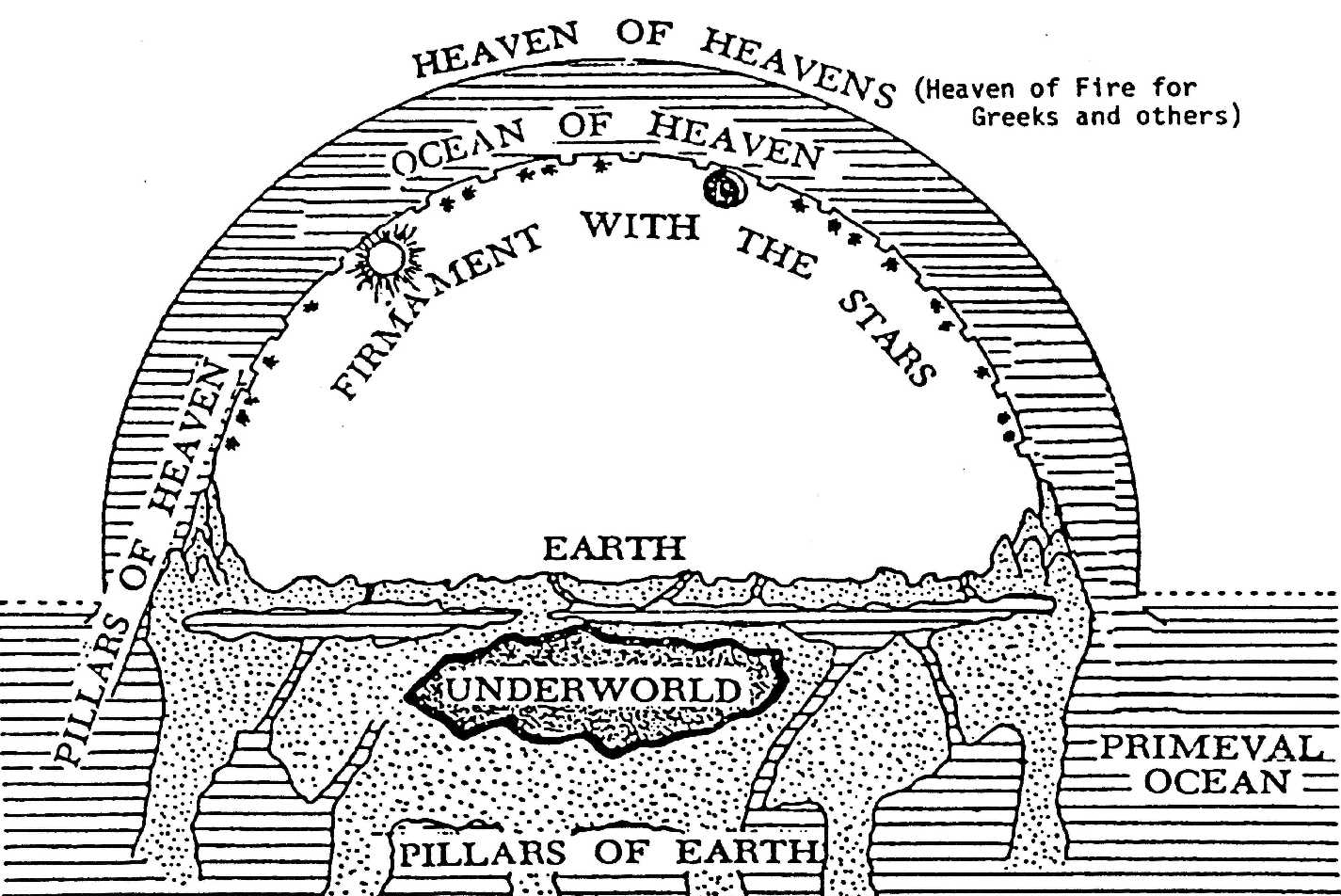
The Hebrew Bible (certainly in the period of Moses) does not recognize what will become the Christian concept of Heaven. Like many ancient West Asians, they supposed that Yahweh lived “up there” at times (at other times he lived in the temple, or on the world at large, or atop some mountain). The “heaven” they knew of had no place for dead humans; the afterlife was a concept that developed very slowly. Moses’ motivation for the ancient Israelites, however, also resonates in Animal Farm, even as it does in the startlingly similar film Chicken Run — freedom. Freedom is the pipe-dream of many religions, but even as early as Moses those dreams run into regulations. Religions have laws long before they have heavens. Perhaps Orwell was onto something after all.


This Fair’s for the Goats

“County fair, county fair, Everybody in town’ll be there, So come on, hey we’re goin’ down there …” Thus begins the chorus of Bruce Springsteen’s little-known song “County Fair.” (It is one of the bonus tracks on The Essential Bruce Springsteen.) The haunting melody of what might otherwise be a carefree summer song is enhanced by the fact that my wife has been staffing a couple of 4-H County Fair booths over the past weeks and I don’t get to see much of her with the long hours. While at a recent fair she pointed something out to me that, not having much experience on a farm, I had never known. Abattoirs employ goats in a specialized animal herding role. The animals in a stockyard, usually sheep or cattle, get familiar with the goat and learn to follow it. The goat is trained to lead them to their deaths while it is spared. The industry term for this animal is a Judas Goat.

It's a goat's life

Slaughter House Rock

Although the origin of the name is obvious, the practice strikes me as insidious, if justifiably biblical. Training an ignorant animal to lead more gullible animals to their premature demise — it sounds a little too much like Pat Robertson to me! Is this sending in a goat to do a man’s job? Then to saddle the poor creature with the title of Judas, as if the poor thing planned it! Yet another reason to be glad I’m a vegetarian!

The Bible is pervasive in and paradigmatic for our culture. I might even term it endemic. As many children grow up without the biblical force-feeding that many of those in my generation had, these images and metaphors may eventually go extinct. Or perhaps there will always be a goat to lead them back to a Bibliophile culture. The county fair itself might be instructive. Originally instituted in Roman times as periods of relaxation from labor (rather pointless for those of us not gainfully employed), fairs evolved into opportunities for individuals and companies to display their wares and goods. From a practical point of view there is little you can see at the fair that you can’t find quicker or cleaner on the internet. But the internet lacks that human element. Perhaps we are really all just glad to go with the crowd sometimes without even asking where the goat is leading us.