Signal

It’s difficult to tell signal from noise sometimes.  Specialists in such things tell us that it’s easy to mistake noise for signal.  An exception to this seems to be music.  I don’t often write about music for a couple of reasons: one, it’s very personal, and two, I have little formal understanding of it.  Unlike my wife, who can sing well and who can play more instruments than I could ever dream of, I always struggled in music class.  The teachers I had seemed impatient when I couldn’t quite understand what pitch was, or when I had difficulty keeping a beat.  (Part of the problem is that I overthink such things.  I wondered about things like whether a beat represented the beginning, middle, or end of the sound.  Or how, since your voice sounds different in your head than it does on tape, could you tell if you were replicating the pitch of a note.)  I told you it was personal.

Photo by C D-X on Unsplash

None of this detracts from my enjoyment of music.  In fact, it means quite a lot to me.  Growing up I tended to consider it in the form of individual songs I liked.  Since we didn’t have much money I didn’t buy a lot of music, but the radio was free.  My choice of which albums to buy—starting in college, really—was based on whether I liked enough songs on them to justify the expenditure on an entire LP.  I already knew that the quality of 45s was inferior and that many albums were united by a theme.  Something I didn’t do was get to know a band by its “sound.”  That only started for me recently.

I still don’t have a lot of money.  I also object to paying money for MP3s that seem to disappear when you change devices and you have to buy them all over again.  Still, I’ve begun to discover some bands by their sound without being able to point to a specific song.  MCR (My Chemical Romance) was one.  The Pixies was another.  And recently Radiohead.  The voices of the lead singers speaks to me of youth and all its angst.  Although these bands all have quite different sounds, I find them mesmerizing if the mood is right.  I tend to discover bands once they’re beyond their peak popularity, but I’m personally pleased that I’m learning, in my own way, to separate signal from noise.  It reaps rich rewards.

Still Standing

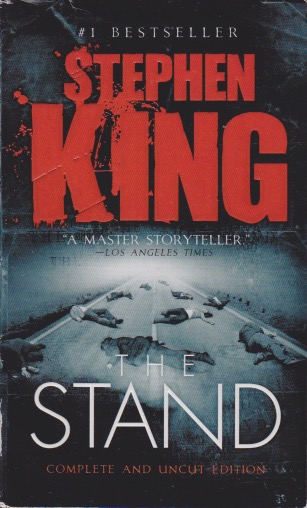
Investment.  Time is an investment, and I recently invested in Stephen King’s The Stand.  You have to realize that I made this decision sight-unseen.  More than one person whose opinions I value told me I should read it.  I had no idea it would be 1,400 pages and would dominate my life for a solid month.  Still, I’m glad I read it.  In case you haven’t, and intend to, there may be some spoilers below.  This is one of the King books I read without knowing the plot or the ending, so if you’re in that boat, skip a paragraph or two.

I hadn’t intended The Stand to be plague reading.  It just turned out that way.  The book is about a variety of flu that kills nearly the entire population of the world.  It’s only at the very end that you learn it’s a parable.  The ending also explains some of the apparently unrelated filler that makes the book so terribly long.  In any case, after wiping out much of the world, the story narrows down to several of the survivors and how they end up dividing into two camps: those who want to cause misery (think Republicans), and those who want to reestablish civilization.  Of course there are several unpleasant instances along the way.  The camp of violent ne’er-do-wells settles in Las Vegas under the demonic leadership of Randall Flagg—his identity only becomes clear at the end—while the good guys, under Mother Abagail, choose Boulder.  A confrontation is inevitable and when the smoke clears we learn that Randall Flagg is, essentially, civilization itself.  Perhaps Christianity.

Of all of the Stephen King novels I’ve read, this one has the most overt Christian imagery.  In fact, in his introduction to the expanded edition he refers to it as a “long tale of dark Christianity.”  There’s quite a lot of theological dialogue along with gruesome deaths.  The pacing often makes the story seem quite long.  Well, it actually is.  I suspect it was this Christian imagery that had friends recommending it to me.  The idea that evil is essentially our culture that comes around and kills us is both profound and paradoxical.  As well as “Christian.”  All along the good guys want to reestablish the cooperation and comforts of civilized life.  It was “civilization” that unleashed the killer virus, however, and herein hangs the tale.  I’m glad to have read it, and I have to confess that I miss the bleak world King created, after living with it for so long.  And it turns out to have been plague reading both literally and symbolically.


Keep at It

Photo credit: ESA & MPS for OSIRIS Team MPS/UPD/LAM/IAA/RSSD/INTA/UPM/DASP/IDA, CC BY-SA 3.0 IGO, via Wikimedia Commons

Perhaps it’s an indication of just how sick the United States has been for four years—waking up each day wondering what new crisis Trump would have put us into—that I heard nothing about our next Mars visit.  I’m normally quite interested in space exploration.  I seriously considered astronomy for a career, until I found out it’s mostly math.  In any case, I’ve watched our planetary explorations quite closely.  Yesterday, until just about five minutes before the landing of Perseverance on the surface of the Red Planet (earth is supposedly the Blue Planet), I knew nothing of the mission.  When my family alerted me to NASA’s live feed of the event I tuned in for those five minutes to watch as we safely landed our fifth such probe on our neighboring world.

It’s funny how a self-absorbed person can take a whole nation down with himself.  It was a relief to look outside for a while, and to wonder.  I remember when the rovers Curiosity and Spirit landed.  The advance of technology was evident in yesterday’s deployment.  No more bubble-wrap was necessary.  The landing system was incredibly elegant, and if there are any Martians I’m sure there were several UFO reports yesterday afternoon.  As the NASA interpretive explainer told what was going on, I wondered just how life might be on the Blue Planet if we were able to put all our tech to work for peace and the betterment of all.  Instead I find a Congress only too willing to acquit a traitor so we can continue the hate.

Emotion is a funny and unpredictable thing.  Although I knew nothing of Perseverance until five minutes before touchdown, I was immediately drawn into the feeling of the moment.  My eyes weren’t exactly dry as I watched the cheers of jubilation from those masked engineers in the control room.  This had been the culmination of years of hard work, and yes, math.  They were able to calculate fall rates and counter-forces, landing spots and trajectories.  And all of this from about 140 million miles away.  Perseverance was launched back in June—you can’t get there overnight—when we were still reeling down here from the overt evil of white supremacists.  Stoked by a man who would be king.  Leader of the Red States.  Would-be ruler of the Red Planet.  How I wish our technology could help us on our own planet.  Any probes landed here from elsewhere must, I suspect, not believe their mechanical eyes.


Call It Therapy

For many years, about all I ever pursued, research-wise, was ancient Near Eastern studies.  It’s still the reason people visit my Academia.edu page.   From the stats it’s clear that not many people are interested in the horror aspect of my work.  Still, I know what motivates me (most of the time).  I recently read a piece that features a brief interview with Peter Counter, discussing the therapeutic value of horror.  Since my interest in the genre has been rekindled (starting, not coincidentally, around 2005), I think I’ve known all along that horror is therapeutic.  The people I know who watch horror aren’t the kind many people picture—creepy troglodytes who don’t come out of their houses where the shades are always drawn.  No, they are normal folks, at least for academics.  They find the genre profound, for the most part.

The interview with Counter (in the Nova Scotia Advocate) makes clear that Counter uses horror therapeutically.  The first reason that he gives is that it’s honest.  I agree.  You see, I grew up with more than my fair share of phobias.  I could go into the reasons here, but I don’t know you well enough to trust you with them just yet.  In any case, I worried a lot about things that could go wrong, often involving everyday circumstances.  I didn’t think watching monster movies was a coping technique—I didn’t even know what a coping technique was.  I just knew that somehow those kinds of movies made me feel better.  I began reading gothic novels in my teens, even as I was becoming very religious.  I never saw a conflict between the two.

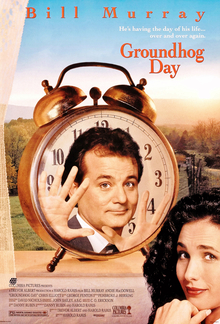
Now, as an adult, I feel that I have to explain this “unusual” interest to people who know me.  Now I can more clearly see the therapeutic value in such movies.  I can even see elements of it in movies that are classified otherwise.  I recently watched Groundhog Day (back around, well, Groundhog Day).  It had been many years since I’d viewed it, and the elements of horror in the film struck me.  Being trapped in the endless return, Phil Connors contemplates, and indeed commits suicide many different ways only to reawaken in the same scenario the next morning.  The look on Bill Murray’s face when he snaps the pencil before getting a couple hours sleep when he begins to realize what is happening says it all.  A similar realization same came clear on a recent rewatching of Willy Wonka and the Chocolate Factory.  Watch it with an open mind.  The interview with Counter makes the point that a pandemic like this is an opportunity.  Isolated, we can watch horror and we can learn to cope.


Religions and Horrors

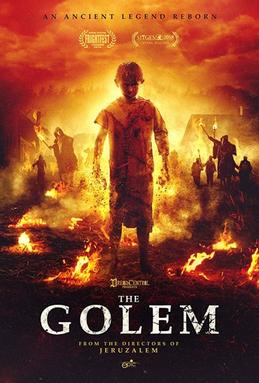
My latest piece on The Golem has just appeared on Horror Homeroom.  It’s free—check it out.  In it I briefly discuss Jewish horror.  I mainly write about Christian horror because that’s my immediate context.  That’s not to say other religions don’t participate in the genre too.  While I worked for Routledge I acquired the book Buddhism Goes to the Movies, by Ronald Green.  Like the title suggests, it’s about movies focused on, or made by, Buddhists.  What sold me on the project was the chapter on horror films.  Much of what’s being called “J-Horror,” or Japanese Horror these days, occurs in a Buddhist or Shinto contexts.  I’m not expert enough in these traditions, however, to spot them with the detail that I do in my own native religion. 

All religious traditions have certain commonalities.  As I’ve frequently discussed on this blog, sex and death are two of them.  Given the powerful ideas that religion trades in, it seems natural that it would appear frequently in the horror genre.  It’s just that modern viewers tend to be somewhat divorced from religion and can’t see it.  Religion is that way—it fills the cracks.  How often do we pay attention to the caulking or grout?  We tend to focus on the tile or woodwork instead.  Religion holds thought systems together, including those of the horror genre.  I just discussed no-go subjects yesterday, but even science shows religion in some of the cracks.  Learning to see it involves learning to shift your focus.

I blogged about The Golem just after I watched it, back in December.  The golem is an original Jewish monster, and Judaism is both a culture and a religion.  It’s difficult to tease them apart sometimes.  The same can be said of many traditions outside Christianity.  In fact, many cultures had no word for religion—the idea of a separate realm of life where you try to please the gods because what you do otherwise is inherently sinful.  (There’s probably a reason that capitalism grew in a Christian context.)  That means that horror particularly welcomes Christianity.  Many of the bases of fear are premised on a religion that, as culturally bound as it is, has always claimed that joining it is a choice.  If you can choose you can choose wrongly.  This is fertile ground for horror, especially when the consequences are eternal.   My Horror Homeroom piece takes a different approach than this, but religion and horror nevertheless find themselves together, often in the same room.


February Festivities

One of the more commonly overlooked holiday complexes comes around Groundhog Day.  It may seem strange to be thinking about spring right now, but it’s on everyone’s mind.  (In this hemisphere anyway.)  When seasons actually begin is a matter of perspective, and that’s not just a north-south hemisphere divide.  With our scientific outlook, we take the path of equinoxes and solstices.  If you look closely, however, there is a set of seasonal holidays that falls midway between them, dividing the year into eight spokes.  These cross-quarter days were recognized in some cultures as the early inklings of a new season beginning.  If Halloween (Samhain) marks the start of winter, this holiday, Imbolc, is the beginning of spring.  The day had many associations, one of which was watching a groundhog (or other animal) to see if the weather would begin changing sooner or later.  Spring itself is inevitable.

The popularity of Groundhog Day owes quite a bit to the movie of that name.  The film is more complex than its classification as a comedy might suggest.  Although the day itself does deal with the cyclical nature of, well, nature, repetition isn’t an inherent theme in the holiday.  Neither is it part of the related Christian celebration of Candlemas.  Indeed, I tend to think Groundhog Day has the makings of a horror story.  Being stuck in time could represent a terrible fate for many.  Interestingly, Phil Conners (Bill Murray), after having been stuck in this same day for a considerable amount of time, suggests to Rita Hanson (Andie MacDowell) that he might be a god.  He is immortal and he knows everything that is to be known in Punxsutawney.  He can predict things before they happen (of course, he has become Punxsutawney Phil, in a manner of speaking).

A philosophically rich movie, the story has appealed to adherents of several religions.  That, in itself, is amazing.  The endless repetition could represent samsara to those of south and east Asian religious inclination.  The learning to be kind, and even forgiveness aspects, appeal to those who want to find a Christian message in it.  Not bad for a holiday nobody gets off of work, and which frequently falls in the middle of the week.  The holiday complex of Imbolc, Candlemas, and Groundhog Day represents what had once been a more prominent season than we currently recognize.  Revivals of the more ancient celebrations have begun to appear, but the endless repetition so valued by capitalistic systems has nearly captured us all.


Mittens and Circuses

Bernie Sanders, since we’re now making up our own facts, clearly won this election.  Or at least the inauguration.  An inescapable meme of Sanders, bundled up with his notable mittens, has made major media as well as pedantic punters on the web.  Thanks in part to an app created to allow users to place Bernie anywhere, I’ve seen him at all kinds of places from Oxford University Press to Dirty Dancing to the exhibit halls at the AAR/SBL annual meeting.  As someone who suffers from the cold I was initially concerned that he must feel laughed at by it all, but Bernie seems to be taking it in good humor.  The only reason I bring it up here is a meme (I think) that my wife pointed out to me of Bernie among the Fond du Lac Circus.  I can’t find any credit for the creator, but it appeared on the Episcopalians on Facebook group.  (I don’t know how Facebook works, checking above the fold once a day only.)

I’ve actually posted on the Fond du Lac Circus before.  The photo was extremely popular at Nashotah House when I taught there.  The diocese of Fond du Lac (in which I once preached) is just north a bit in Wisconsin.  The photo was a celebration of the installation of a bishop with ecclesiastical haberdashery at its finest on display.  In my mind, Nashotah House stands for all that’s conservative.  I’m certain a great deal of the population supported Trump.  A former dean had a shrine to George W. Bush in the deanery.  I kid you not.  So seeing the most progressive senator amid that crowd of backward-looking clergy, apart from being unspeakably funny, made me reflective.

Many years of my life were spent among the Episcopalians.  Too many of those years consisted of feeling oppressed by the interpretation of “orthodoxy” held at Nashotah House.  The hubris of “the only right teaching” has haunted me ever since.  Faith can be a good thing, but it can also be extremely dangerous.  The greatest danger is when it ceases to be reflective.  Faith must involve constant thought and assessment to be honest.  Unthinking compliance was something Jesus, for one, simply didn’t accept.  Challenging the way it’s always been done is a venerable part of the agenda for those who start new religions, Jesus included.  When that religion becomes ossified (or too obsessed with appearances) isn’t it time to start looking toward the future?  Bernie Sanders is popular with the young.  They have little patience for the selfishness that’s been on display in American culture for far too many decades.  Would that he really attended the Fond du Lac Circus!  Perhaps a grassroots movement to improve conditions for all might’ve actually emerged long ago.


Down to the Sea in Ships

One of the first great trends of 2021 has turned out to be sea shanties.  Micro-current historians have traced the craze, at least in part, to a TikTok video released by Nathan Evans, a Scottish postal worker.  His version of “Soon May the Wellerman Come” has spawned an international cooperition of other singers and musicians who’ve added to a song that has created a sense of community among many who’ve never been to sea.  It even got the attention of the New York Times.  In the long, waning days of 45’s term in office (what a foul taste that leaves in my mouth) people were feeling isolated and largely directionless.  It isn’t so different than, I imagine, being out to sea.  I grew up away from the ocean, longing to be there.  Nevertheless, I didn’t discover Moby-Dick until seminary.

Melville’s classic is essential reading for those who want to exegete “Soon May the Wellerman Come.”  While I’m a vegan for a reason, understanding the lyrics of this particular shanty require some knowledge of whaling.  The wellerman was a supply ship that met whalers on their often multi-year voyages, to bring them provisions.  They’re not mentioned in Moby-Dick because the Weller brothers ran their operations out of Oceania.  The idea of relief being brought by others is nevertheless something we can all appreciate as we’ve been isolated from each other while being given the cold shoulder by the Republican Party.  The fact that a nineteenth-century sea shanty has the pandemic-ridden world by storm is really no surprise.  There’s a romance to the sea and those of us lubbers who spend our days on dry ground sometimes dream of the freedom the oceans represent.

Although not a shanty, a sea song that’s always spoken to me is “Sloop John B.”  A folk song from the Bahamas, it tells the tale of a homesick passenger wanting to go home.  It shares an element with sea shanties like “Wellerman.”  Both seek rescue.  Many world religions suggest humans need “salvation” of some kind—from sin in Christianity or samsara in Hinduism or Buddhism.  Songs of the sea also frequently share that hope of help.  Whether it’s the supply ship or a return home, a longing for salvation runs through the romance of the sea.  I can’t help but think that during this pandemic that need has surfaced in a viral song about the wellerman expected, but not yet arrived.  Or the trip to normalcy delayed.  However we might interpret them, songs of the sea give us some hope that the journey home will eventually come.


Savage Doc

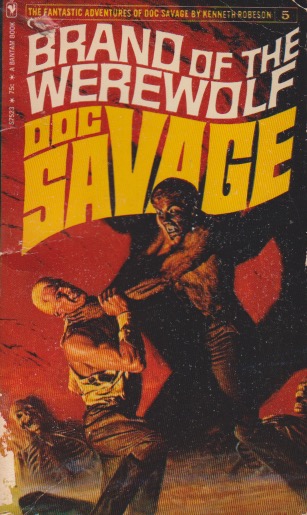
Over the past several years I’ve written quite a lot about childhood books.  Despite my ambivalence toward the internet, it has made it easier to find books from years ago.  Since one of my Modern Mrs. Darcy reading challenge categories was a book from my childhood, my thoughts went to Doc Savage.  I haven’t written much about the Doc on this blog.  I think I can understand why now.  Doc Savage, I suspect, was one line of inspiration for Indiana Jones, although the latter was much more of a hapless sort of adventurer.  Kenneth Robeson was a pseudonym mostly for Lester Dent, the author of many of the pulp fiction stories about Doc.  As a forerunner of the superheroes that were shortly to appear, Savage was a “Mary Sue”—a literary character with no faults.  The stories were originally written in the 1930s and ‘40s.

As a child I read many of these novels, beginning in sixth or seventh grade.  I recently found a used copy of Brand of the Werewolf, which I read as part of my challenge this year and I was embarrassed by what I found.  Not that Doc’s perfection came as a surprise.  No, my embarrassment was at the racial stereotypes that were so blatantly on display.  This particular story caricatures African-Americans, American Indians, and Spaniards.  It does so unselfconsciously with an air of entitlement that made me ill.  Sure, all characters suffer by comparison to Doc Savage, but those who aren’t “white” (or bronze, in context), are throw-away characters.  Unless, of course, they are pretty girls.  If so we’re reminded every time that they are pretty.

No wonder our culture remains so intolerant of difference!  Here the default human being is the white male.  Even Doc’s female cousin (pretty, of course) doesn’t really help at all.  The entire scandal is uncovered and resolved by the white man.  I realize that I might be putting too much stress on a pulp that just can bear much weight, but I do wonder about how such stereotypical messages, repeated decade after decade, blend into the cultural stew in which we all soak.  I was by no means the only tween reading these books in the 1970s, some three or four decades after they’d been published.  A friend of mine got me started on reading them, and they were still popular books at the time.  We need, it seems, to be aware that our prejudices will live on in our words after we’re gone.  And after all that there wasn’t even a werewolf in the book.  Childhood memories are sometimes unclear.


Sea Romance

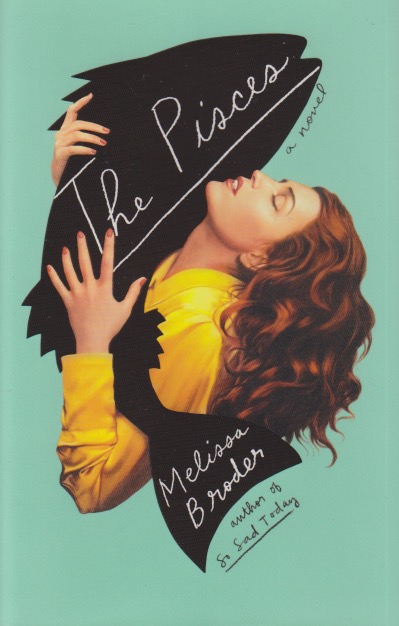
Sea shanties seem to be one of the early rages of 2021.  I’ll likely address this as a separate topic soon, but today I would note their appropriateness for discussing Melissa Broder’s The Pieces.  Despite my earlier concern about the Modern Mrs. Darcy’s reading challenge for this year, my family helped me put one together.  You see, January has become a bookish month for us.  Not only are books frequent holiday gifts, they are also a great way to anticipate a year of reading.  One of my categories was a book that makes you laugh out loud.  For help in selecting such a book I consulted some websites and found The Pieces so listed a few times.  The tie-in for sea shanties?  It’s the story of a woman’s love affair with a merman.

What defines a book as laugh-out-loud funny is largely the reader.  Yes, this is an amusing story with several parts that make the reader smile (or blush), but it seems to this reader a much more serious story than many reviewers suggest.  Yes, the idea of a merman makes it less reality based that much straightforward literary fiction, but the protagonist is portrayed as dealing with very real human relationship issues.  These made my reading of the book a pretty serious one.  When a person feels inadequately loved, it’s no laughing matter.  Sometimes such people (as the protagonist is portrayed as being) are driven to desperate measures, as the book suggests.  Perhaps some people find this funny, but others of us see a serious message dressed up in fiction.

Part of the draw here is clearly the romance of the sea.  Lucy (the narrator/protagonist) begins her relationship with Theo (the merman) because of the abusive kinds of relationships men have presented her with.  It’s a sign of Broder’s writing ability that she can make this kind of story lighthearted enough that some would call it hilarious or laugh-out-loud funny.  For me, however, when the issues raised are serious, even when couched in humor, there are underlying issues of sober import.  Relationships are complex.  Since the speculative element of a merman is thrown into the mix, it seems, many readers think the story is funny.  This despite the suicide attempts of one of Lucy’s friends and the death of the dog she’s watching for her sister.  For me laugh-out-loud books either have no serious consequences or dismiss such consequences as laughable in themselves.  The Pieces, however, made me think and, ironically, take a renewed interest in sea shanties.


Feelings of Horror

One thing that’s become clear to horror fans (or those of us who try to analyze it, anyway) is that more and more pundits are asking serious questions about its appeal and its utility.  A particularly interesting piece on Bloody Disgusting (and that title isn’t representative of the site) explores how horror is often about probing grief, loss, and mourning.  People who immediately associate horror with slashers and blood and gore probably became aware of the genre in the 1980s.  In the post-slasher era (and even during it) many thoughtful films have dealt with the primary areas associated with pastoral care: mourning, grief, and loss are the bread and vegan butter of ministerial work.  These are elements all people have to face, and some horror is remarkably adept at helping viewers do so.

We all die.  Horror has never been shy about that fact.  When the dead do come back it’s seldom good.  Given the permanence of the situation, it seems reasonable to think about it in advance.  Shallower topics are good too—life without fun is hardly worth the effort.  Horror, however, reminds us that the bill remains due at the end.  One of the main points of Holy Horror is that people tend to find their meaning through pop culture.  (It can also be through more classical means as well, but the point remains the same.)  We watch movies for more than entertainment.  Movies other than horror deal with loss, mourning, and grief, of course.  But as Stephen King once noted, this genre forces the reluctant to look.  What seems to be under-appreciated is how sympathetic it is to the human condition.

Apart from a few colleagues who work in this same nexus of religion and horror, I know few fans of the genre.  Most people I know shy away from it.  For me, it seems to be a brutally honest genre.  There are speculative elements in much of horror—those are the elements that make the films fun to watch, in my opinion.  Speculative is often synonymous with supernatural, or spiritual.  Spirituality is often coded as a positive.  Life throws a lot of loss and grieving our way.  A genre that brings these things together can’t be all bad.  Some of the more recent transcendent horror can be downright profound in its probing.  The editorial by Marcus Shorter doesn’t take the step of addressing the pastoral aspects of the genre, but they are plainly there.  And they can offer solace that all people can use.


Childhood Music

I recently happened to hear the Alice Cooper song “Desperado.”  If you’re thinking of the Eagles’ song, think again.  Cooper’s song is from his 1971 album Killer.  I came to know it as a child from his Greatest Hits album, and I came to know it very well.  Although I’ve not heard the song for probably two decades, I remembered every beat, every word.  In fact, anticipating music videos, as I child I penned a comic-strip rendition of the song.  Although it is long gone, I vividly recall every panel and how poorly they were drawn.  I’m not sure why that particular song spoke to me so intensely, but it is quite clear that Alice Cooper was a major childhood influence.  This was strange because I was an evangelical Christian as well.

Image credit: Hunter Desportes, via Wikimedia Commons

Vincent Furnier has had a tremendous impact on rock music.  When I went to see him in concert on his Along Came a Spider release tour most of the other people there in Atlantic City were guys my age.  I’d probably’ve been afraid of most of them if I’d met them on the street at night, but this wasn’t exactly a sell-out stadium event.  In fact the room for the show wasn’t that large and we could get fairly close to the stage.  You had to have tickets for the after-party, but Cooper was standing outside the room where it was being held, and we passed within mere feet of him on our way back to the car.  I wanted to let him know just how much he’d shaped my identity, primarily through his first solo album Welcome to My Nightmare, but I could barely hear after the show, and besides, I didn’t have a ticket.

I know Nightmares with the Bible isn’t being marketed or sold as a trade book but anyone curious about the title might consider Alice Cooper as an inspiration.  During seventh grade I missed a lot of school due to sickness (I was a sickly child).  During those days off I listened to Welcome to My Nightmare over and over, thinking about death.  Pretty intense for a thirteen-year old, but then I’ve always been that way.  Even at a young age I realized we all die.  It therefore made (and makes) sense to think about it.  That’s something my religion and fascination with horror tropes have in common.  Alice Cooper seemed to be able to blend these things, in his own way.  And that’s a lot to come out of a song last heard decades ago.


Slow Jinn

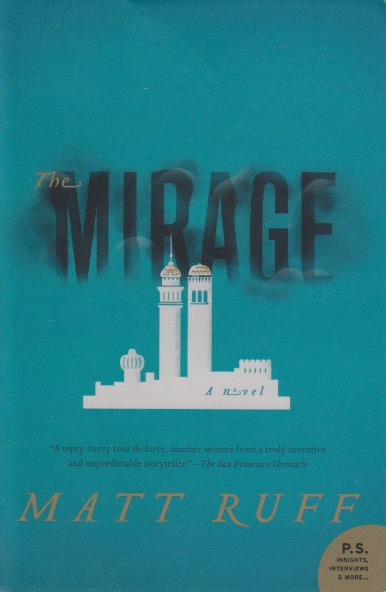
You can sort of tell when an author has a background in religion.  Early on in my blog writing, I made note when novels had religious elements.  It’s so common that I seldom do that anymore.  Matt Ruff’s father was a minister.  His understanding of the religious landscape comes through in The Mirage.  It wasn’t on my reading list, but someone gave me a copy and the story drew me in.  In case, like me, you only know Ruff from Lovecraft Country, this tale’s quite different.  There may be some spoilers here, so if you’re thinking of reading it fresh, you’ve been warned!

Set in an alternate reality in which the superpower in the world is the United Arab States, the story follows three police agents of Homeland Security as they uncover a perhaps unwelcome truth: the world they know is a mirage.  It is, in fact, the work of a jinn.  Before commenting on that, I would say that you don’t learn about the jinn until a good way into the story.  Up to that point I’d call this simply literary fiction.  The jinn adds a speculative element to it, and also explains, mostly, how things ended up the way they did.  Jinns, by the way, are often considered demons in Arabic culture.  They are quite different from Christian demons, and that point makes itself clear as the story unfolds.  Our three protagonists begin to uncover hints that the twin towers didn’t actually stand in Baghdad, and that Christian terrorists didn’t fly planes into them on November 9 (11/9).  They have run-ins with Saddam Hussein and Osama bin Laden as warring factions vie for power in the UAS.

This is a great story for trying to understand the world from the point of view of a different religion (unless you’re Muslim).  This is a world where Christians are terrorists (you get to meet David Koresh as well) and the United States is a backward country divided over religion.  Reading this as events unfolded in Washington, DC last week was a little bit disconcerting.  Alternative realities are often just a heartbeat away.  The plot is a bit complex at points, but it’s a fairly quick, if profound read.  Religion is the heart and soul of this book.  That religion could be either Islam or Christianity.  Perhaps even something different.  The way it plays out is very much like real life, dividing people against each other until reality becomes difficult to bear.  For anyone interested in what a Muslim-run world might have looked like, this is a good starting place.


Comedic Horror

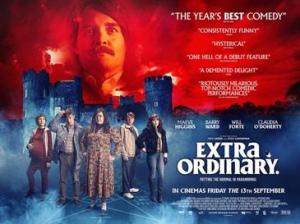
Spoofs can be a great way of preventing us from taking ourselves too seriously.  Extra Ordinary is a film I’d completely missed until my wife made a gift of it.  We weren’t quite sure if it was a horror film or a comedy, and genres aren’t always helpful here.  I would call it a spoof on possession movies, something of particular interest after writing Nightmares with the Bible.  Apart from being a bit of much-needed silliness after a terribly serious year, it’s also a demonstration of how genre can be helpful in knowing how to interpret what we see.  Not knowing anything about the film, it begins with the statement that it’s based on a true story.  There’s an interesting history behind that phrase, but when it comes with a spoof it only adds to the fun.

Extra Ordinary follows the adventures of Rose Dooley, a driving instructor who was raised by a ghost-hunting father.  Blaming herself for her father’s death, she’s taken on an anodyne career that she feels is safer.  A particularly desperate widower whose daughter is targeted by a hapless Satanist, brings her back to her true calling.  Although there are some horror-comedy scenes (that’s an entire sub-genre often eschewed by horror fans who don’t like to laugh at themselves) the witty dialogue and crude jokes make it fun rather than anything to be worried about.  Possession occurs in a specific way to move the plot along—Rose has to have a partner (the widower Martin Martin) accept possession by the ghost in order to send it to the beyond.  Although there are clever takeoffs from The Exorcist, the idea of possession is much different.

What is evil?  The film asks the question directly (if comedically).  Although washed-up rock star Christian Winter has become a Satanist, the demon in the film is Astaroth, a later development from the pre-biblical goddess Astarte.  As discussed in Nightmares with the Bible (for which this film could’ve been profitably discussed), there’s a confusion among demons.  (Beelzebub is also mentioned by name.)  The element that ties them together with the human condition is clearly sex.  The frantic search for a virgin, and the communal shaming of unwed mothers makes that obvious.  Although deliberately campy, Extra Ordinary answers the question of evil by noting that it is a person using their powers (magical, in this case) for their own benefit rather than for the good of others.  There is a moral to it, after all.  And if we can’t laugh about the human condition once in a while, we deserve to be spoofed.


Pre-Soul

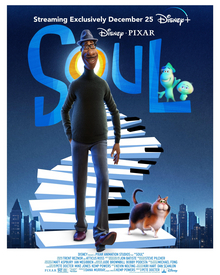
Streaming seems to be the way of the future.  I’m reluctant to trust corporations (does anyone remember Ultra Violet?) keeping content I’ve paid for, but the pandemic makes movie theaters scary places.  Some of the movies I’m eager to see aren’t even released on DVD or Blu-ray any longer, and your only choice, increasingly, is to subscribe to the death-by-a-thousand-cuts method of “buying” a subscription.  You’ve got to go where the content is.  All of this is a long way of saying I saw Disney/Pixar’s Soul very nearly on its release day.  It underscored a couple things for me.  One is that the idea of transmigration of souls is alive and well.  Second, and this is a point I make in Holy Horror, movies are often where people get their understanding of religious concepts.

In case, like me, you have to have movies pointed out to you by others more aware, Soul is about a jazz musician who dies the very day he gets his big break.  On his way into the great beyond, he tries to escape and ends up where souls are prepared for their embodiment on earth, “The Great Before.”  In order to make the leap, they must find their “spark”—the thing that makes them who they are.  Pixar may not be a theological seminary, but there are people who find meaning in many of their films, even to the point of  using them as coping mechanisms for real life.  When the internet didn’t exist and animated films required years of drawing or stop-motion animation to complete, people tended to go to religious/psychological professionals for such issues.  Now we have corporations.

The reason I find this of concern is that I have an idea of how content is created.  How those who come up with ideas have to pitch them to financial backers or publishers, and how those backers weight concepts in the scales of lucre.  In other words, money is frequently the deciding factor.  Those doing the pitching are seldom the same people with specialized training in the subject addressed, and yet they reach far larger viewerships than the classroom of such an expert does.  The financial implications are troublesome.  None of this is to suggest Soul is a flawed film.  I know many former seminary professors who’d quibble—or perhaps something stronger—with the way the afterlife/beforelife are presented here.  The movie itself is both fun and profound.  Don’t ask me, though.  I’m still trying to figure out this streaming thing.