The Clairvoyant and the Demonologist

As a special bonus, here’s a post by a Guest Author. Enjoy!

For almost half a century, the couple known as a clairvoyant and a demonologist investigated thousands of paranormal cases that led to film franchises and book deals. You can find films based on their investigations wherever there are streaming horror movies.

Although the Warrens’ wider-known cases spent half a century splashing the headlines, there’s more to their legacy than how Hollywood portrays them.

Ed and Lorraine’s Spooky Origins

Even as children, the two were destined to unite over the supernatural. Ed grew up in a haunted house, witnessing apparitions of his deceased relatives while Lorraine experienced clairvoyant visions. 

After dating as teenagers, the two later married while Ed served in the Navy during World War II. They had a child, Judy. 

Despite Lorraine’s skills as a trance medium, she remained a skeptic until she witnessed more substantial first-hand accounts through their business.

Haunted House Hunters

The couple’s haunted house hunting began as a means for Ed to make a living as a landscape artist. The project quickly grew bigger as they traveled across New England painting potential haunted sites. 

Ed’s sketches became a friendly gesture to gain entry for tours and then investigations. Their novel networking attempts and cases eventually led to newspaper coverage and TV appearances.

Religious But Not Occultists

The Warrens’ religious beliefs as Catholics both hindered and aided their cause. As self-taught investigators, they aspired to balance their religious beliefs with scientific research.

“The Haunted” TV Series

Though much about The Warrens’ work is showcased in The Conjuring franchise and features spawned from their experiences at Amityville House, Hollywood also adapted an unsung investigation with a television show called The Haunted (1991). 

From the smell of rotting flesh to the sounds of anonymous screams, Jack and Janet Smurl experienced diabolical activity in their Pennsylvania house for years. After going public with their encounters, they gained national attention and then reached out to the Warrens. 

The Warrens confirmed a dark entity inhabiting the Smurls’ house and tried to expel it. Unfortunately, the evil presence refused to vacate.

The Warren’s Occult Museum

The couple founded the New England Society of Psychic Research (NESPR) in 1952, which solved thousands of cases over 50 years. They also opened their home to the public with a museum of the occult featuring artifacts such as the possessed Raggedy Ann doll that inspired Annabelle. 

Following their deaths over the past decade, their son-in-law now manages NESPR, but the museum closed in 2019.

Today, there is still more ground to cover learning about the supernatural and paranormal. Without the Warrens bridging the gap between the living and dead, vast mysteries about the afterlife could’ve been buried in the dark. 

Their legacy ultimately encourages believers and skeptics to continue searching for answers.

Just Like Us

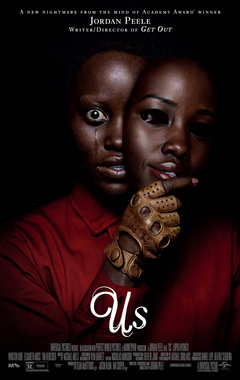
Jordan Peele has been noted for his intellectual, black horror films.  His work is good at making clear that African-American experience is different than white experience in America.  That was especially on view in Get Out, a haunting treatment of being “the other.”  His more recent Us, two years old already, takes a somewhat different angle but still comes to a similar point.  Since the movie has a notorious twist ending that I’d rather not spoil for anyone slower than I am, I’ll try to focus on the film’s use of Jeremiah 11:11—“Therefore thus saith the Lord, Behold, I will bring evil upon them, which they shall not be able to escape; and though they shall cry unto me, I will not hearken unto them.”  This message of the prophet was a warning that Jerusalem would fall to the Babylonians, but clearly it has wider applications.

It’s safe to say, I suppose, that the movie is about substitute people.  Each person has a doppelgänger that shares her or his soul, but is a puppet—it’s not too far to stretch to say “slave”—that must do whatever it is we have it do.  When those doubles, or shadows, arise and organize, things start to get real scary real fast.  Although the metaphors run deep, the biblical citation comes near the start of the movie, setting the tone of what follows.  This is divine judgment for the mistreatment of others.  While it isn’t ostensibly about race, at least not obviously so, the story follows the black Wilson family as the uprising begins.

Jeremiah’s message, although delivered to a specific situation at a particular time in history, could well apply whenever one people threatens another.  Like most prophecy, it’s less about prediction than it is about changing behavior.  Jeremiah presents a good warning tone because he was a prophet who loved his people but also saw that they had to fall in order to be redeemed.  His is a strong message for a country at a crossroads.  Peele has a lot going on in this movie and I suspect more than one viewing will be necessary to pick up on some of the points.  Not all parables have a single message.  Not all prophets are heeded in their time.  Jeremiah 11:11 provides context, and it rewards the biblically literate who know the context it which it originally applied.  Fitting it into the world of black horror is an example of how prophecy continues to be relevant.


Conjuring an Exorcist

In both Holy Horror and Nightmares with the Bible I discuss The Conjuring.  In the latter I actually go through the universe that the films spin around the investigations of Ed and Lorraine Warren.  Like most series where the writers and directors shift, the story line isn’t always consistent.  I suppose that one of the features of the series that appeals to those of us who love monsters is the fact that many of the movies have more than one.  The main threat, however, always seems to be demonic.  I enjoyed exploring this in both my book and in my recent piece on Horror Homeroom—check it out here.  

This series, in financial terms, has been highly successful.  There is little that attracts attention in any media more than money.  The Conjuring universe also shows that people are very interested in the topic.  A materialistic worldview doesn’t work for everyone.  We sense that there’s more going on that what the laboratory reveals.  I’ve often wondered why we can’t consider the world “both and” rather than “either or.”  We seem to think knowledge is some kind of zero-sum game.  I suppose that’s because the spiritual interferes with the material.  If there are outside forces working against the “laws” of physics then all that hard work is open to question.  It’s far easier to suggest that human beings (and other animals) who experience something “supernatural” are deluded.  Or superstitious.  Demons are a good case in point.  If they exist it would complicate the world of science.  And yet people pay good money to see movies based on them.

The Conjuring franchise pays off most of the time.  Some of the stories—those of the main series especially—are based on cases that the Warrens actually investigated.  There’s sometimes an element of the sideshow (the amazing Warrens!) to some of their work, but that doesn’t necessarily detract from the experience of real people.  Experience is an important way to navigate this strange world in which we find ourselves.  I’m not the only one who finds horror films to be a reasonable guide through this territory.  The Warrens’ case files leave lots of opportunities to explore this strange world of demons, and there are further movies in the franchise currently under development.  The most recent film, The Conjuring: The Devil Made Me Do It, changed basic concepts from its early days.  It was delayed by the pandemic.  And yet, it made money.  There must be a lesson to be learned here.


Fear of the Other

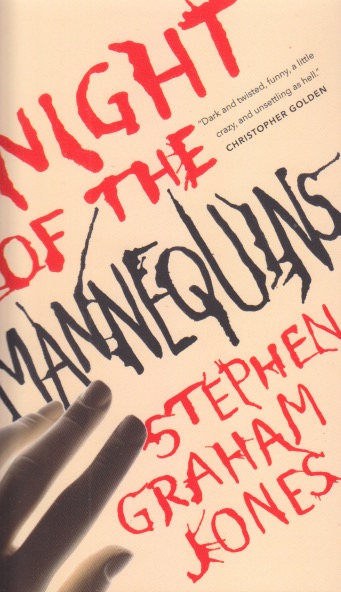
Two things: I’ve been reading about and materials by American Indians lately, and I learned about Stephen Graham Jones through a video of him reading one of his stories.  I was immediately hooked.  It seems to me that those of us who’ve gone through trauma—either personally or ethnically—are disproportionately represented among those who like horror.  I’m not suggesting a simple equation, but simply noticing a trend.  Jones has been winning awards as a horror writer and I was anxious to get started.  Night of the Mannequins didn’t disappoint.  Jones is a member of the Blackfeet nation and, according to the author bio, a real slasher fan.  This story isn’t really a slasher but it is an exploration of what happens when an idea takes over someone’s life.

More about growing up in Texas than being First Nations, it follows a group of teens who find an abandoned mannequin and a practical joke that goes terribly wrong.  It’s a story will a real feel for what it means to grow up beneath the middle class.  The realities for those who do are somehow quite different than from those who can take some measure of financial security for granted.  It also makes a good setting for horror stories as the protagonist tries to figure out what’s going on without the aid of authorities and adults.  It makes for a compelling read.  Jones’ no-nonsense style draws you in and it doesn’t let you go.

The book is fairly recent and I don’t want to give too much away.  I do often think about how a writer’s personal experience leads to the books s/he writes.  The horror genre is wide-ranging and can be deep and intelligent.  Despite its brief extent, there’s a lot of depth here.  The straightforward writing style gives the book verisimilitude.  You could see this actually happening.  Monsters, after all, are frequently in our minds.  That doesn’t make them any less real.  Mannequins tend to inhabit the uncanny valley—they’re human and yet, at the same time they’re not.  There are aspects of growing up in “white” culture that must suggest the same to those who’ve been and who continue to be, oppressed by that culture.  There is a real fear to being controlled by others whose intentions, it must be clear by now, are to make themselves rich.  The world is a richer place, however, for having books by Stephen Graham Jones in it.  I’ll be coming back for more.


Reading Wicker

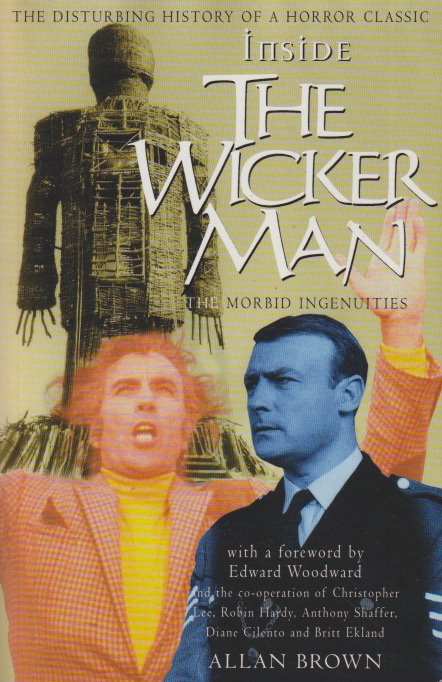
Have you ever read a book where factual errors make you question the larger picture?  I suppose being trained in research makes me more bothered by small inaccuracies.  Don’t get me wrong, I’ve made mistakes myself.  Even in publications.  But when they come near the beginning it’s rather unfortunate.  That’s not to say I didn’t enjoy Allan Brown’s Inside The Wicker Man.  I actually enjoyed it quite a lot.  There’s a real treasure trove here for fans of this cult classic.  I suspect it’s the definitive treatment of the misfortunes the film faced after it was shot, and even during the shooting process itself.  It’s somewhat surprising that so many of us have even heard of it.  When the film’s production company turns against the project it must present special difficulties. Errors are human. Most of the mistakes in the book were about religion.

For Wicker Man fans this book is a great resource.  Not only does it tell the story, but it serves as a useful reference. It includes information on locations, script excerpts, and behind-the-scenes stories.  You get to feel that you know the people involved beyond simply seeing them as characters in a play.  One of the points that Brown makes, while obvious in retrospect, is crucial:  The Wicker Man works as horror not in spite of religion, but because of religion.  I struggle to articulate what the two share in common, but it is useful to be reminded that a prime example comes in this unusual movie.  I wrote about it in Holy Horror, but there’s much even there that I left unsaid.

Brown had the distinct privilege of interviewing many of the people involved in the making of the film.  Most of the cast and crew have since died—the movie was, after all, nearly half-a-century ago.  Even so, when attempting to get at what a novel, movie, song, or piece of visual art means, the realization soon dawns that it’s often in the mind of the observer.  Some songs, for example, speak intensely to some people while being ignored by many others.  The Wicker Man never swam into the mainstream.  I discovered it during an intense period of watching as much quality horror as I could get my hands on.  Immediately I was struck by its intelligence and its strong message.  I’ve watched it several times since, making me, I suppose, a fan.  Enough of one to read this book and enjoy it, in any case.  And to recommend it to others who may be interested in the fascinating film it explores, along with its religion.


April Really Fools

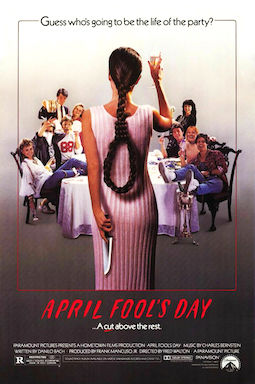
What’s the best kind of April Fools’ Day prank?  What about one that occurs nowhere near April first?  Actually, I’m no fan of practical jokes.  They usually come at the expense of someone and really aren’t that funny.  And where does that apostrophe really go anyway?  Still, because of a project I’m working on, and because it was available on a streaming service I use, I watched April Fool’s Day in July.  An example of holiday horror from the 1980s.  Although moderately successful at the box office, the movie never took off to become a cultural icon like, say, Halloween did.  In fact, I only recently heard of it.  Part of the reason, I suppose, is the ensemble cast is pretty large (nine friends together for a weekend) and none of them played by big names.  In case you don’t like pranks, there will be spoilers below.

The trope of a number of young people—often college students—isolated in some inaccessible location is common enough in horror.  The optimal number seems to be five, otherwise an hour and a half isn’t really time to get to know everyone’s character well enough.  Of course, one by one they get killed off.  Since it’s set on April Fools’ Day you’re led to think some kind of serial killer is loose on the island, but in the end the entire thing turns out to have been an elaborate prank.  Nobody has really been killed and the audience is on the receiving end of an extended practical joke.

As I try to catch up on horror movies I missed I quite often have to rely on those that come with one of the few streaming services I use.  When I was myself a college student I couldn’t afford to go to the movies often.  Home video hadn’t really become affordable yet to people of my economic bracket, and besides, I spent a lot of time studying.  As the only one in my family that watches horror, finding the time to do so remains a challenge.  And there is quite a backlog.  I’ve been trying to watch horror set on specific holidays as a way of keeping myself honest.  Even that can prove a challenge, however.  I can justify the time, however, and the somewhat modest cost, as research. Hey, somebody has to do it.  And that’s as good an excuse as any for watching April Fool’s Day in July.


Scary Folk

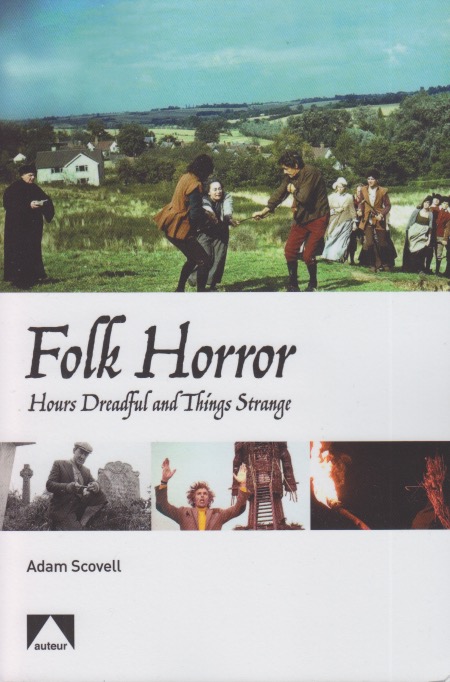
Genre is a useful category.  It can be misused, however.  Straightjacketing a piece of literature, music, or film can lead not only to confusion, but to constraining creativity itself.  Nevertheless, the category of Folk Horror is certainly expansive enough for a book-length treatment, such as Adam Scovell has given it.  Unless you’ve read quite a bit about the subject you might wonder what folk horror is.  A good part of Scovell’s work is definitional—providing the reader to an answer to that very question.   Although it has earlier roots, folk horror was initially a British genre that became particularly noticeable in the late sixties and early seventies.  It comprised movies and television programs that dwell on specific aspects of the landscape—particularly the rural—and isolation within it.

What I find particularly compelling about folk horror is that it is often based on religion.  In the countryside you encounter people who think differently about things.  Believe differently.  Their convictions are enforced upon the stranger who may be there by design or by accident.  Ironically the genre largely emerged in a nation that prides itself for its role in civilized behavior.  It speaks volumes about belief.  Civilization has produced more refined strains of religion, but on its own religion will tend to grow wild, even as the weeds in your yard are distantly related to the cereal grains we cultivate.  Examples of this are everywhere.  Fans of horror can name them off, but even those who don’t care for the genre know the kinds of belief this indicates.

Not all folk horror is about religion, of course.  It can be rural ways in general.  No matter how you classify it, most people can identify Deliverance and the danger it implies about being far from civilization where those who live in the woods can do as they please.  Scovell delves into the urban settings of folk horror as well—most of his examples are British—because it is possible to hide in the city also.  Although the genre reached a high point in the 1970s, it didn’t die out.  The book ends with consideration of some more modern examples, such as Robert Eggers’ The Witch.  The problem, as those of us who write about film know, is that just because you’ve written a book it doesn’t mean future examples won’t change the picture.  The Lighthouse and Midsommar were both released in 2019, after the book was published.  And they demonstrate that the scary folk haven’t gone away.


Altared States

Religion Dispatches is a great website.  I used to write for them from time to time, and according to Google they were probably the most read of my internet publications.  I’m not sure what happened, but a few years back time simply evaporated.  These days literally the only time I have to get things done is on the weekend.  A simple thing like taking the car in for inspection takes advance planning and can throw off my entire schedule for the week.  I have difficulty finding time to write for Horror Homeroom these days.  That’s a long preamble to saying I saw an interesting article by Hollis Phelps on Religion Dispatches titled “Hulu’s ‘Hamilton’s  Pharmacopeia’ Shows that We Can No Longer Ignore Connections between Religion and Drugs.”  There have been a number of suggestions that drugs and religion are related over the years, but our “Christian” culture has declared the former taboo.  (Except wine, of course, and even that’s suspect.)

Photo by Alex Kondratiev on Unsplash

This article has me thinking about chemistry.  Not that I ever did very well in it.  Still, I recall hearing one high school teacher or another saying life is organic chemistry.  I’ve come do doubt the standard definition of life as I’ve aged, but there’s no doubt chemical reactions are a large part of the somatic existence we all experience.  Eating leads to chemical reactions to break down the chemicals in food.  Some of them are good for us, others are not.  Some (but not all) of the really dangerous ones we outlaw.  Drugs are a good example.  I don’t use drugs, but I’m aware that many religions do.  I don’t doubt the altered states of consciousness that reportedly arise from the responsible use of such drugs.

I haven’t watched “Hamilton’s Pharmacopeia” (I have no time).  Still, I have to wonder why Christianity, in particular, came to declare its own war on drugs.  A large part of it, I expect, was the belief in the imminent return of Jesus.  You didn’t want to be caught unawares.  Then there was also the sad fact of abuse of controlled substances.  Alcoholism and the opioid crisis are reminders that these unfortunate aspects can still cause serious problems.  At the same time, research is demonstrating that religious experience and the use of some drugs are related.  American Indians, at least some of the tribes, found religious significance in peyote.  There are present-day religions devoted to cannabis.  Does it all just come down to chemistry?  I don’t know, but if there’s a drug to increase the number of hours in a day that might be a real revelation.


Laugh Out

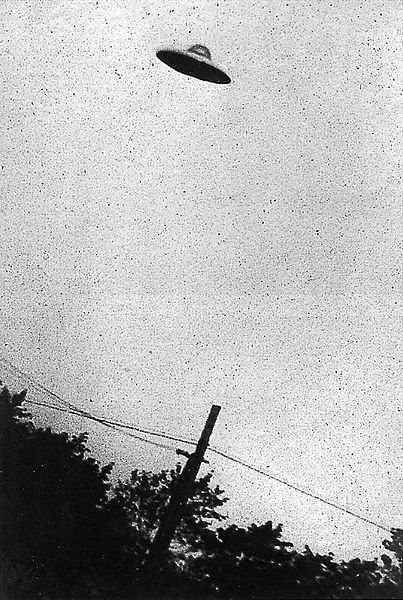
Is it safe to discuss this now, or are people going to laugh at me?  That’s the feeling that has attended any talk of UFOs until recent days.  Ironically, if the Ancient Astronaut people are right, we may’ve been visited from elsewhere ever since we’ve called this planet home.  In any case, now that UAPs are out of the bag, some are beginning to discuss how they might impact religion.  (Yes, “impact” can be a verb.)  Thus I came across a story titled “If UFOs are real, how would they impact our faith?” on Times News.  Kingsport Times News, based in Tennessee, ran this as an opinion piece.  While not deeply probing, it did raise the question of how all the recent UFO news affects people’s religious outlooks.

Image credit: George Stock, via Wikimedia Commons

As a country we’re both deeply religious and in denial about the fact that we’re deeply religious.  I’m convinced that this is behind the political woes we face: the educated have become more secular and religious literalism is considered laughable.  Yet it’s clearly there.  Ironically, UFOs were considered laughable until the US Navy admitted that they were real and had no idea what was going on.  Laughing at something we don’t understand is hardly ever a step towards enlightenment.  So the article concludes that even if aliens are here, things will be fine if we continue to go to church as normal.  Any extra-terrestrial visitors change nothing.  Strangely, one of my earliest memories is of attending a rural church service one evening where the program was on flying saucers and Christianity.  This was entirely in earnest, and nobody in the congregation was laughing.

Others interested in the topic have discussed religion and UFOs over the years, but perhaps the answer is yet another of those unknowns.  Religion is a remarkably adaptive phenomenon.  Scientists suggest it’s hardwired into our brains, even as those same brains give us evidence that some of those beliefs are misplaced.  What we can’t do is stop thinking about it.  As I watch politics continue to tear this country apart, I realize it’s not really politics we’re talking about after all.  It’s religion.  Meanwhile people are learning that the government has been keeping secrets about what’s up there in the heavens.  There are elected and appointed officials who’ve gone on the record saying they believe UFOs are demonic.  While that hardly seems like a scientific approach to something truly unknown, it is a religious one.  Only those who laugh rather than listen will find this news at all. 


Highgate Cemetery Again

Vampires can distort your thinking.  For example, whenever I hear of Highgate Cemetery in London, my mind immediately goes to the Highgate Vampire.  (There was somewhat of a comment kerfuffle on that topic right here on this blog some years back that resulted in several comments being removed.)  Highgate is the amazing final resting place of a remarkable number of famous people.  Still, when I visited a few years back I couldn’t get the vampire out of my mind.  (A friend of mine lives a short walk from the cemetery and that made the visit possible.)  This all came rushing back when I saw a book on Highgate Cemetery up for review on Reading Religion.  (And hey, Nightmares with the Bible has been available there for free, for any interested takers!)

Given my current vocation, writing actual book reviews is considered conflict of interest.  More’s the pity, since that’s how I often managed to get ahold of expensive books back in the day.  I’m pretty sure the book advertised (edited by Marie-Therese Mader, Alberto Saviello, and Baldassare Scolari) has nothing to do with the vampire, but I can think of it no other way.  Highgate is an architectural marvel for a necropolis.  It is spooky, inspiring, and impressive.  When something happens in a place, even if the facts are in dispute, it takes on an atmosphere that reflects such happenings.  At least that’s the way it feels for Highgate.  I’d heard about the vampire incident before visiting, but didn’t have the details.  Besides, you’re only permitted in on guided tours and the docents don’t point out such things.

Nevertheless, having been there I still have an interest in the cemetery itself.  It’s odd in a way.  Nobody I know personally is buried there.  No ancestors, as far as I know.  It’s the sense of place.  I’ve written about this many times before—there are numinous spaces in the world.  Science may deny it, but even scientists feel it.  Some places transport you somewhere beyond just the physical dimensions of where your body happens to be at the moment.  Cemeteries are filled with the memories of lives past.  They remind us that our time is limited, and that we too will cross that numinous threshold some day.  We all contribute.  Well, I can’t review the Highgate book and I can’t afford to buy it.  I nevertheless suspect that there’s nothing about the vampire in it.  I’m sure it’s my thinking that has been distorted by vampires.


Scary States

You can usually tell, if you look close, when I’m on the trail of a new project.  This blog ranges fairly widely at times, but when lots of posts concentrate in a single area it’s likely something much larger is going on behind the scenes.  I’ve been writing quite a bit about horror lately.  Quite apart from the Republican Party, scary things are on my mind often.  I recently came across an article on KillTheCableBill that made me feel less weird.  It’s a story covering a survey showing the favorite horror movie per state.  Now, I won’t be able to fit all fifty into my usual daily word limit (wouldn’t want to arouse the word count police), so I’ll just add a few words about some of the interesting connections I noticed.  As in my books, if you see something, say something, right?

It’s kind of embarrassing that I haven’t seen the movie most often mentioned: The Devil’s Backbone.  I have to admit falling behind on my Guillermo del Toro movies.  I was surprised at the number of states’ favorites that I hadn’t seen.  I’ve been thinking about this quite a bit lately: if you have a full-time job which doesn’t include movie watching, it can be pretty difficult to make the time.  A number of classics don’t show up on the list, while some states have somewhat obvious favorites: Massachusetts’ Jaws, Colorado’s The Shining (it was filmed there), New Mexico’s Alien (think about it), and Maine’s The Lighthouse all fit into state self image in some way.  Horror preferences, in other words, may reflect who we are.  

A number of states, more conservative ones mostly, favor older films.  The Abominable Dr. Phibes, Pennsylvania’s favorite, I haven’t seen.  Like most aspects of my home state it’s a mix of things.  It comes from the early seventies, just as modern horror was getting started, but not too far into it.  Studies like this end up giving me homework.  When I can find the time I have a lot of viewing to do to catch up with my fellow Americans. I was surprised that The Exorcist isn’t on anybody’s list of favorites, not even Washington, DC’s.  It may be that films that are too real are too scary for many people.  Another finding, as noted in the article, is that the southeast states like horror the least.  I can’t help but wonder if things would be better, politically, if more people there watched horror and pondered the implications.  


Screening the Dark

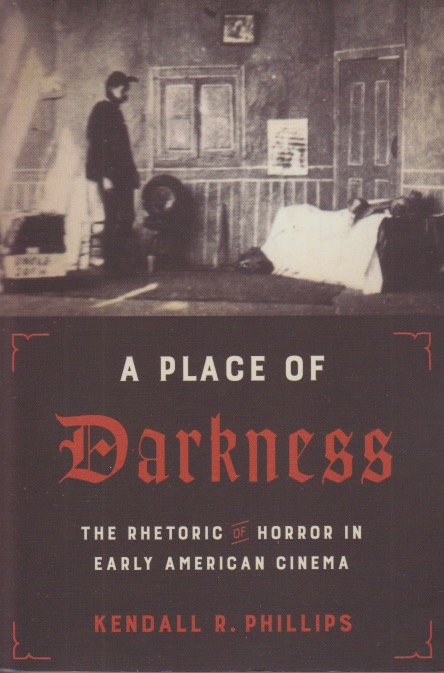
We’re spoiled.  The intensity of our media experiences makes it nearly impossible to imagine the truth of stories that viewers fainted at films such as Frankenstein even less than a century ago.  This change in outlook, this sense of being over-stimulated, occurred to me while reading Kendall R. Phillips’ excellent A Place of Darkness.  In keeping with the subtitle (The Rhetoric of Horror in Early American Cinema) Phillips primarily addresses pre-Dracula films, beginning in 1896 and demonstrates how horror themes emerged early and evolved along with society’s norms.  There is so much insight here that it’s difficult to know where to begin.  For me one of the big takeaways was how Americans at this stage were eager to appear non-superstitious and how they used that concern to keep the supernatural out of early ghost films.

Phillips isn’t afraid to address the role of religion in horror.  Other cultural historians note this as well, but many pass over it quickly, as if it’s an embarrassment.  Since my own humble books in the field of horror are based on the religious aspects of such movies, I’m always glad to find specialists who are willing to discuss that angle.  As America grew more and more enamored of the idea of rationalism, less and less energy was put into suggesting that anything supernatural might be at work.  Supernatural was considered foreign and cinema followed society’s lead.  This led to—and I want to add that this isn’t Phillips’ terminology—the Scooby-Doo Effect where every seeming monster had to be revealed as a hoax.  As a kid I watched Scooby-Doo in the vain hope that the mystery might turn out to be real.

Studies of horror films generally acknowledge that the first real member of that genre is Tod Browning’s Dracula of 1931.  Phillips demonstrates the valuable pre-history to that and does an excellent job of explaining why Dracula was such a singular movie.  Horror elements had been around from the beginning, but Browning’s film made no excuses—the vampire is real.  Audiences were shocked and thrilled by this and other studios didn’t quite know whether they should follow Universal’s Depression-Era success or not.  Mostly they decided not to.  The Universal monsters seem innocent enough today, but we go to theaters where the floors shake when heavy footsteps fall and the sound of a door creaking open comes from behind us.  Special effects make the horror seem real.  No excuse is made for religion and its monsters.  We’re spoiled. 


More Conjuring

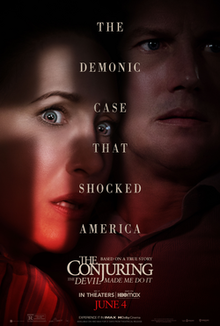
It was an almost surreal experience.  First of all, it’s been well over a year since I’ve been in a movie theater.  Secondly, I’ve never been to this particular theater before.  And in the third place, I’m absolutely alone in here.  I didn’t rent the theater out or anything, but I’ve been wanting to see The Conjuring: The Devil Made Me Do It since June 4.  Actually, since September when it’s initial release was delayed due to the pandemic.  Everyone else around here must’ve seen it already.   I knew the story of Arne Johnson and the Warrens, having found and read Gerald Brittle’s book, The Devil in Connecticut.  Loosely based on that event, this story focuses on the actual fact that this was the first time not guilty by reason of demonic possession was proffered in a US courtroom.  The story is a strange one and the movie, as movies do, makes it even stranger.

I’ve been anticipating The Conjuring: The Devil Made Me Do It, despite the title, for a few years now.  If you’re familiar with Nightmares with the Bible you’ll know that an entire chapter is devoted to The Conjuring franchise.  You may also know that it is the most lucrative horror series of all time, apart from Godzilla in its many, many iterations.  One of the points in Nightmares was to try to make sense of the demonic world presented in the Conjuring universe.  The franchise, for the most part, deals with actual case files from Ed and Lorraine Warren.  Some of the episodes are pure fiction, however, and the explanations given in the films are all, well, conjured for the big screen.  The movies call attention to the Warrens’ work, but in a way that requires an entire chapter to untangle.

My initial impression is that this isn’t the best movie in the series.  I can’t replicate my previous work here, and I’ve only seen the movie once, so there are details I certainly missed.  The demon isn’t named this time.  Indeed, the backstory proposed is drawn from the spin-off film Annabelle.  A fictional satanic group called Disciples of the Ram is posited as causing the trouble.  Like the demon behind Annabelle, they’ve placed a curse on the Glatzel family for some unknown reason.  During the opening exorcism Arne, in an Exorcist move, asks the demon to take him instead of the young David, the brother of his girlfriend.  The movie leaves the Warrens to find out who put the curse on the Glatzels in the first place, and break it.  With some time for pondering I’ll likely come back to this movie again.  I do have to say that the book was probably scarier, although sitting in a theater alone to watch a horror movie is not something I hope to make a habit of doing.


Electronic Ritual

Religion and horror go naturally together.  Perhaps that’s something I instinctively knew as a child, or perhaps it’s something only mature eyes see.  It’s clearly true, however.  While reading about The Wicker Man lately I felt compelled to read David Pinner’s 1967 novel Ritual, upon which the movie is loosely based.  In many cases it is better to read the book before seeing the film.  In other cases the movie ends up being the superior project.  I had to keep on reminding myself as I read the novel that it couldn’t be measured against a superior vision of what it could have been.  Having written seven novels myself (all unpublished) I hope that I have a sense of the process.  Unless you’re into the commercial side of things you don’t write for the movie potential—you have a story to share and this is your way of telling it.

The novel isn’t bad.  It’s written in a punchy style that I don’t really enjoy, but the story drew me in.  It almost wasn’t to be.  Like many novels of this era, print copies are difficult to find.  Those available on used book websites, or even on Amazon, probably because of rights agreements, sell for over $200.  That’s a bit much, considering that over two dollars per page is excessive for a novel.  I finally had to cave and get a Kindle version.  I don’t have a Kindle, but I have the software on my computer.  Reading it again reminded me of how superior a print book is to an electronic one.  Reading ebooks tends to be faster but like eating snack food, doesn’t really satisfy you.  

At one point the navigation function stopped.  Confused, I couldn’t go any further in the story and wondered if I’d reached a sudden but unexpected end.  With a physical book I could’ve paged ahead to find out.  In this case, with the controls frozen with that obdurate computer attitude, I had to find another way to make the illusion of reading continue.  I eventually got it going again after clicking here and there, but reminded myself again that ebooks should only be the last resort.  As for the story itself, it was okay.  I read it as a parable about intolerant religion.  I’m not sure it was intended that way, but it certainly seems like a reasonable interpretation.  It ends differently than the movie does, so I won’t put any spoilers here in case you decide to spring $200 to get a used copy.


Watching The Witch

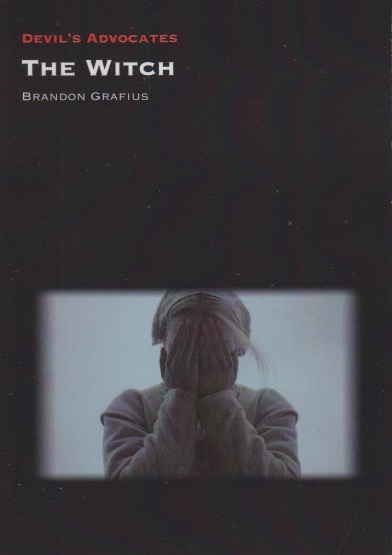
Good things often come in small packages.  I’ve read a couple of Brandon Grafius’ books before, and I’ve had The Witch on my reading list since I found out about it.  This is one of those books that benefits from knowing the raison d’être of the series of which it’s a part.  Devil’s Advocates is published by Auteur Publishing as a set of brief books on specific horror films.  If I didn’t have other financial obligations I could see myself purchasing the entire series.  Fortunately this volume was on a film I’ve seen (horror films have become so prolific that I can’t afford to see all of those I’d like either).  The Witch is a provocative movie, having gained critical acclaim as well as box office success.  It’s also a complex film.

Grafius ably takes us through the Puritan background that’s necessary to understand the social, and familial tensions that make this movie work.  Robert Eggers is a director known for his meticulous attention to period detail.  Even while weaving the fantastic into his stories, the plots are entirely believable.  Grafius has a solid grasp on how religion and horror interact.  That’s on full display here.  Looking at The Witch as an exploration of folk horror, he illustrates the importance of the landscape to the tale as well as how isolation sets a family off against one another.  The Puritan religion creates a monster, as it were.  Grafius doesn’t shy away from the misogyny behind the developing idea of the witch, either.  His explanations of—not excuses for—it are insightful.

Granted, horror films aren’t everyone’s cup of tea.  Or coffee.  As I sensed when writing Holy Horror, fans of the genre enjoy reading about it.  I often wonder why those of us who watch it do so.  In my case, in any way, it feels like a compulsion.  It’s a coping technique and perhaps an antidote to the headlines.  Horror can be an intensely creative and socially aware genre.  The best of it critiques the flaws of society.  As Grafius points out, Thomasin only wants to be a good girl.  The Puritan society into which she was born projects the image of the witch upon her.  Eggers gives us a real witch in the woods, of course.  Grafius explains how this becomes the aspiration of a young woman who’s only trying to do what’s right.  I have a feeling I’ll be going back to the Devil’s Advocates series again.