Speaking of X

The project that ultimately led to Holy Horror and Nightmares with the Bible was an article.  Intrigued that the quasi-horror Fox series Sleepy Hollow was so solidly based on the “iconic Bible” in its first season, I wrote an article on how the Bible functioned in it.  After that was published I realized that there was plenty of material for a book on how the Good Book appears in horror films.  That book, of course, appeared late in 2018.  Nightmares with the Bible was a kind of sequel, but moving in a different direction.  It looks specifically at how ideas about biblical monsters (demons) are mediated through horror films.  This post isn’t all an introspective about past projects; in fact, it’s about present watching.

At one point in my research I noted that the X-Files wasn’t as biblically based as Sleepy Hollow.  I stand by that assertion, but my wife and I’ve been rewatching the X-Files on weekends for several months now.  Nearing the end of season two I’ve noticed just how often the Bible appears in it.  Unlike Sleepy Hollow, where the entire story was premised on (largely) the book of Revelation, the X-Files has multiple episodes that focus on religion.  What we might call New Religious Movements feature in some of the vignettes while others posit older, hidden religions.  The Good Book appears visually many times, or, and it’s often quoted, even if not shown.  Although some of the episodes are lighthearted, many of them are played as straight horror and address the question of the reality of evil.  I hadn’t been alerted by Sleepy Hollow the first time we made our way through the X-Files, but if I had more time, and if anyone were still interested, there’s a book in this.

Ironically, even in the light of a political party that takes its energy from a religious base, universities are no longer interested in the study of the subject.  I have no reason to believe that these two television series are isolated instances that I’ve just stumbled across.  American culture is biblically based, no matter how secular it may be.  To my way of thinking, when something like the Good Book has such a strong influence, the response of the rational should be to try to understand it.  I know what biblical scholars do all day; I used to be one.  Only in recent years have some of them begun to turn toward the concept of the iconic Bible and to consider how it influences American thinking.  I can only do this on a small scale, in my free time.  What I see, however, like a good X-File, defies explanation.


Future Warming

It’s a good thing global warming is a myth, but somebody forgot to tell the hyacinths and lilies in my backyard.  February in Pennsylvania is not when you expect to see spring flowers.  Now I’m fully aware that unseasonal warm snaps and cold spells aren’t an indication of the global climate; they’re far too localized.  One thing I’ve learned in my several decades of life is that heat takes time to transfer.  If you’ve ever had to wait for a pan of water to boil when you’re hungry, you know that to be true.  On cold morning’s my coffee’s ice coffee before I finish the mug, but it does take time for that transition to happen as the cup empties.  With something so inconceivably large as the atmosphere, it takes time.  As our hemispheres take turns pointing at the sun and warming up, the air tries to reach equilibrium and so the weather goes.

Scientists are now talking about, once we get the deniers out of the White House, what long-term remediation plans we have to make.  We’ve already set in motion extreme weather events.  We’ve had decades of warning, but those who control the money just can’t bear to let any of it go.  It’s a safer bet to wreck the planet.  You can just cash in your insurance money and buy a new one.  That’s the way it works, isn’t it?  So I’m standing outside in my shirtsleeves in February staring at April flowers who think winter’s over already.  I don’t know what to say to them.

You can’t drive a car without a license, nor can you practice law or medicine.  To be a world leader you don’t even have to be literate.  I often imagine what the future survivors will say.  They’ll likely be there, since people have a way of getting by.  They may wonder if we knew this was coming.  Of course, the internet won’t be up and running then, and who knows what’ll happen to electronic information when there’s no power left to keep the servers going.  In any case, my perhaps futile answer to their imagined question is yes.  We did see this coming.  Some of tried every legitimate tool in the box called “democracy” (you’ll need a dictionary for that one) to introduce sanity into the discussion, but bluster wins over hard thinking every time.  I cup my hands around the tender, if resilient leaves.  They’re only doing as nature directs.  If only our species could pay such attention to what the planet is saying.


Horror Homework

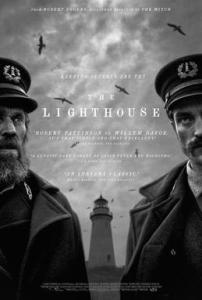
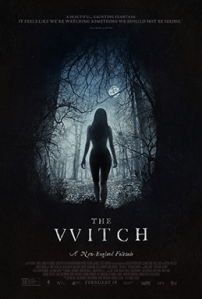
Although I haven’t been writing much on horror here lately, I’ve been doing my homework.  At least for homeroom.  Horror Homeroom, that is.  I’ve published on Horror Homeroom before, and, surprisingly, they’ve let me do it again.  This piece is on the films of Robert Eggers.  It’s pretty unusual for me to get in on the ground floor with a director’s oeuvre, but my wife has a tolerance for what is being called “smart horror” or “intelligent horror,” or even “transcendent horror,” and so we can get to the theater to see movies like The Witch and The Lighthouse before they go to DVDs or Amazon Prime.  In order to write up my thoughts about these two films I had to rewatch them a few times.  There’s so much going on here that both stories are difficult to summarize.

Holy Horror treated The Witch in the context of its biblical worldview.  The Calvinistic religion of William, and by extension, his family, is pretty scary stuff.  In The Lighthouse we find two men each grasping for their own ideas of the divine, as found atop the eponymous structure they inhabit.  Both films explore the psychology of isolated individuals, and, perhaps not surprisingly, finds frightening things.  We are social creatures, even those introverts among us.  When deprived of the interaction of those who think differently (hear this, o Republicans!) we soon begin to wilt.  We need not agree with all we hear, but conversation cannot be had without being open to at least the possibility that one might be wrong.  Nobody wants to think they are incorrect, but unless they can admit that possibility, there will be no discussion, by definition.

Horror quite frequently thrives on separating people from their fellows.  One of the fascinating aspects of the genre is the way in which it does this.  Groups, even, that separate themselves from the rest of humanity soon begin to behave in odd ways.  Checks and balances are necessary for any health in a society.  Those who claim absolute positions often can’t admit this.  Do I hear the violins of Psycho coming to life?  I suppose community is why I try to publish once in a while in wider venues like Horror Homeroom.  Even people who like to watch horror prefer not to do so alone.  Maybe having seen The Witch and The Lighthouse in theaters was a crucial part of their impact upon me.  And what is a good shudder without someone with whom to share it?


Hearts are Dark

For the most part, reading introductions to literary works is tedious.  Since this edition of Heart of Darkness was brief enough, and the introduction wasn’t as long as the novel, I decided to follow through.  I’m glad I did.  I’ve read Joseph Conrad’s classic before, but it was helpful to have pointed out before this reading just how much darkness is in the story.  Drawn in by Kurtz’s famous last words, I suspect, many readers make the heart of the darkness the life lived by this contradiction of a man.  An individual who’d set himself up as a deity, and who pillaged the region for his own gain.  A man who wasn’t above using terror to acquire his ends.  An enigma.

But in actual fact, the story is about as full of darkness as an early Bruce Springsteen album.  The story begins at sunset and ends at night.  There is darkness to the Europeans’ dealing with the Africans throughout.  Even Marlow participates in that interior darkness that seems present in all people.  Delivering the deceased Kurtz’s letters to his still grieving fiancée, he meets her as darkness is setting.  He lies about her beloved’s last words, preferring to preserve her feelings than to reveal the truth uttered upon the deathbed.  There are layers of interlaced darkness here and Conrad never gives a definitive statement about what it really is.

We live in dark times.  I suspect that, for someone somewhere, that will always be the case.  The corruption of our government is so blatant and obvious that we seem to have fallen under the shadow that must’ve driven Conrad to pen his novel.  When living in darkness it helps to have a guide who’s been there before.  No matter what evil Kurtz has perpetrated, he’s treated as a god by those he oppresses.  He knows their suggestibility and preys upon it.  Although slavery was no longer (officially) a reality when Conrad wrote, the attitudes—embarrassing in the extreme today—lingered.  Even more embarrassing is the reality that they linger even today.  Not just linger, but assert themselves and then deny that they exist.  This is the heart of darkness, I believe.  We cannot allow others to live in systems that don’t kick money back into our own.  Trade on our terms, with our worldview being the only legitimate one.  Like so many writers, Conrad has been made a prophet by history.  And we all know the horror.


Reading Education

Perhaps like me you’re afraid of the news.  Not because it’s fake, but because it’s real.  Then every once in a while curiosity gets the better of me and I uncover my eyes.  Sometimes you can’t help but see.  With the utter mess we’re in over here, it’s difficult to keep up with news from other countries we know.  I’ve lived in the United Kingdom and I’ve worked for British companies.  Needless to say, I wonder what’s going on over there from time to time.  Lately I’ve been getting auto-replies to my emails to British colleagues stating that they’re on strike.  I asked a friend in the UK about this.  It used to be the professorate was treated with some regard in Her Majesty’s domain.  Not being a financially minded person, I haven’t been aware of how deep or devastating our capitalism-induced recessions and depressions are.  Apparently they’ve been bad enough to derail even British higher education.

Compensation for the professorate has been eroded away.  Their pension plans have been depleted.  Knowing the problems we have over here with professors refusing to retire, I was surprised to learn the UK has the opposite problem—professors unable to afford to retire.  Now, lecturing isn’t physical labor, but class preparation (and committee work) take a considerable amount of effort.  I could see not retiring if it meant lecturing only, but with everything else required, not retiring would be, well, exhausting.  As over here the root of the problem is that higher education is the route into which many smart people are steered.  You’d think it’d be a wonderful problem to have too many highly educated people.  It’s not.  With advanced study comes advanced debt.  And limited employment prospects.

There are nations in the world where higher education is deeply valued.  Where educated people are respected.  Ironically, the nations enamored of capitalism aren’t those places.  The only learning that’s required is how to get money from someone else.  Beyond that, the rest is commentary.  British higher education has fallen on hard times since I read for my Edinburgh doctorate.  Schemes have been put in place to ensure faculty are being productive.  Yes, there are some lazy ones.  The majority, however, pull their weight and then some.  And now they’re being told they must do so until the grave.  No retired professor wants to spend her or his old age bagging groceries at Sainsbury’s.  And so they’re going on strike.  If only the world valued knowledge more than money there might be some news worth reading.


Frankenstein, Frankly

The classics.  No matter how much I read more contemporary fiction, the classics keep me coming back.  Mary Shelley’s Frankenstein is a classic in more than a single sense.  It was a novel that had tremendous influence in the nineteenth century and has continued its impact to the present.  Chris Baldick’s In Frankenstein’s Shadow can be considered a classic in its own right.  Although it only dates from the 1980s, it contains exhilarating analysis of Frankenstein in a number of authors and genres of the nineteenth century.  And I’m a fan of literary scholars who write accessibly.  I’ve read modern literary studies that I simply don’t understand and they leave me feeling alienated and cold, as if they were written for a private audience.  One that didn’t include me.  Baldick’s treatment is wide-ranging and full of moments of blinding insight and is open to all.

Often I put the book down thinking that I’d had my world changed.  Baldick’s no hero-worshipper.  He notes the weaknesses in Shelley’s writing (and they are admittedly there), but he does so respectfully.  The astonishing part of this study is the sheer breadth of the influence Baldick finds for Frankenstein.  A word or phrase, a theme here or there, and yet he makes an excellent case that these can be traced back to their monstrous forebear.  His section on Melville made me want to stand up and cheer.  (I have to admit to being more of a hero-worshipper than the author.)  This is literary criticism done right.  It makes you want to read the books you haven’t.

Since the book deals with literature, it doesn’t really address how the creature morphed into something completely different in the twentieth century.  I know I grew up thinking Frankenstein’s monster was part robot.  I suppose it was the bolts in his neck, according to the Universal script, that convinced me.  That, and his stiff-jointed lumbering about.  Shelley’s story is, however, very much a human one.  In many respects the monster is more humane than his creator.  Various aspects of this tale, including that one, are taken up in other classics and turned over, examined, and reapplied.  Suddenly quite a bit of what I’d read elsewhere made immediate sense.  Interestingly, although I grew up not so much a fan of this particular monster, books on him have become among my favorites as an adult, if I am such.  I think Baldick may have had his fingers on that revivified wrist when he wrote this book.  It certainly did for me what literary criticism always should.  At least for the classics.


Families in Trees

Genealogy is one of those things that’s fascinating as long as it’s yours.  It’s not hard to lose a few (or many) hours, trying to find ancestral connections.  When someone you don’t know begins to tell you, however, about other people you’ve never heard of, your eyes begin to glaze over.  My wife kindly gave me a gift of a local genealogy class that we attended the other day.  Along with some dozen others we gathered to learn some tricks of the trade.  The presenter began by having us introduce ourselves, “briefly.”  It’s a dangerous move in a genealogical crowd.  A few of our fellow students went into great detail about their ancestors, forgetting, for the moment, that we were there to learn how to do the research, not to find out about their families.  It’s a natural enough mistake.

None of us ask to be born, and we spend our lives wondering why we are here.  How did our parents meet?  Where were they from?  What did they do?  And the generation before that?  Some time ago I figured out that, due to the exponential nature of ancestors, that by the time you get back to just eight “greats” before for your grandparents, it took over a thousand people to make you.  It boggles the mind.  Suddenly it seems as if there would never be enough chance encounters or arranged marriages or tumbles in the hay for you to ever get here.  So many ancestors!  By the time I was in college I’d managed to trace it back to almost sixteen family names.  I was able to break through a barrier on this just over a year ago when talking to some family members about a lost ancestor at the turn of the twentieth century.  Genealogy is a search for meaning.

Both my wife and I share this interest.  Of the dozen or so others at the session, four others were married couples.  Almost all of us had done the voluntary DNA test to find our nations of origins—to confirm or deny family stories.  And that’s what it’s really about: stories.  Although we may be squeamish about some aspects, we want to know where we came from, the story of how we arrived here.  As if there’s some cosmic clue in it that gives us information on why we’re here.  It brought several of us out on a February afternoon.  We didn’t know each other.  If we traced back far enough, however, we would have found we were all related.  We are all family.


Icelandic Gods

There’s a lot to like about Iceland.  It has geothermal heat.  The people are literate and proud of it.  They don’t have an army.  Viking heritage and northern lights—what an interesting place!  A friend recently sent me a satirical piece on Patheos titled “Iceland Declares All Religions Are Mental Disorders,” by Andrew Hall.  I may not be as naive as I once was, but I have to admit I was nearly taken in on the fly.  Maybe because the idea seems so much better than what we have over here in our warmer, but less educated world.  Clearly, however, religion is extremely important to people, and if it is a mental disorder it’s an essential one.  Hall mades the astute point that Iceland didn’t want to become like the United States.  Who would, at this point?

Although this is a satirical piece, like most satire it works because it has chunks of truth in it.  Countries run by religions do seem to get into quite a lot of trouble.  I often think this is primarily a monotheistic problem.  If a nation accepts many gods, then adding those of other peoples is hardly an issue.  With a single deity, however, there is a single truth.  Anyone different is, by default, wrong.  When entire nations self-identify with a religion, it is only too easy to begin seeing those who believe differently just across the border as a threat.  Faith becomes fight.  As if a deity who always claims to value peace is only satisfied when we’re killing those who don’t share our same peaceful outlook.  Irony and satire have met together, it seems.

I’ve never been to Iceland.  It’s on my bucket list.  As a rockhound, the volcanic nature of the place calls to me.  I do wonder, however, how a vegan might fare on a far northern island.  My times in Orkney are among my mental treasures.  Those northern Scottish isles were places of wonder.  Not the most options regarding comestibles, however.  What they lacked in food they made up for in magic.  Iceland, despite the satire’s bite, has a considerable population that believes in the little people.  Anyone who’s too quick to dismiss such things ought to spend some time in the far north.  Driving to the ancient sites of Orkney certainly shifted my perspective a bit.  There’s great value in listening to the wisdom of those relatively isolated from the rest of the world.  You might, however, have to bring your own beans.


A Stiff Salute

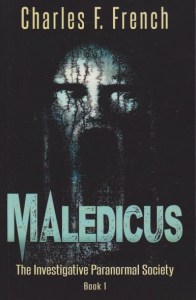
From the way he writes, Charles F. French was a Marine.  I don’t know that for certain, but those of us who venture into fiction put ourselves into our stories.  Those who blithely reject something into which you’ve poured yourself are either boorish or unfeeling.  Yes, even literary types can be so.  This year’s reading challenge includes a book from a local author.  Since I live within a (long) commuting distance of the city, I suppose I could count New York as local.  That felt like cheating, though.  To find local authors you have to haunt independent bookstores.  I do that anyway, and a few weeks ago I found a copy of French’s Maledicus.  It fit the bill.

Although the story is about the titular demon, the ensemble protagonists are mostly military men.  There’s a strong sense of combat-readiness among them, and a good deal about military honor.  I have to admit this made me a little sad.  Don’t get me wrong, I have respect for those who are willing to fight to protect their country.  I’m sad because we need military forces at all.  I’m also a born pacifist.  My father was a veteran of the Korean War.  The military was present at his otherwise sparsely attended funeral.  I grew up reading the Bible and committed to the peaceful resolution of disagreements.  In my idealized world, we really wouldn’t need weaponry at all.  There are bad people, yes.  But like Eli Lapp, I wonder how humans can judge such things.  There are good people too.  More of them than there are bad.  More often than not, they are the victims of weaponry.

Given my work on demons, I’m always interested in their origin stories.  Maledicus gives us an evil Roman lieutenant to emperor Caligula (ahem), who is a climber and a sadist.  After his nasty and brutish life, he’s approached by a demon in the next world and joins it.  This even worse Maledicus is then taken on by the Investigative Paranormal Society, which consists of three old men, two of them retired Marines.  So you see how the military comes into it.  I won’t give any spoilers, although to my knowledge I have no local followers here in eastern Pennsylvania.  It’s a nice area for peace, actually.  The same could be said for the rest of the world.  If we put our fears aside and pooled our resources to help the vast majority of good and innocent a good number of our demons would be banished naturally.


Caesar Salary

Juxtapositions interest me.  Washington’s Birthday and taxes have become connected in my mind.  Until the present administration I had no serious concerns about taxes; if people are going to live together they need to pool their resources.  If I had a choice now no Republican would be able to lay a dirty finger on my hard-earned contributions, but I know we all use the roads and bridges.  Some of the money actually goes to useful things.  I wonder what George would’ve thought of it all, though.  His birthday is a holiday, but employers have sent out their tax forms and so it’s become a kind of day of reckoning for me.  I used to be able to calculate roughly the right amount to be withheld so that I’d get a small return each year.  Tax laws being what they are, however, that has changed rather drastically.  I leave February feeling poor and cold.  And I don’t approve of how they spend most of our money.  Still, a day off work is a fine time to visit my accountant.

The mind of the Human Resources denizen is an odd place of rules devised by no god.  I never know from year to year whether “Presidents’ Day” will be a day off or not.  I remember standing on a wintery street corner waiting for the 114X into New York because the 117 didn’t run on federal holidays.  HR had decided that year that we wouldn’t have this day off.  Like the government, Human Resources has the ability to implement laws that make no sense.  I do appreciate the fact, however, that someone understands how medical insurance works.  For that you need a specialist.  Another strange juxtaposition.  In any case I’ll visit my accountant today and it may be the only time I’ll be sweating in February.

Adulting, some of the young say, isn’t much fun.  It has certainly become a lot harder to understand.  Our government complicates things to the point that you daren’t do your own taxes.  A visit to the doctor may or may not cost you.  And don’t even bother to try and find out where all that money you send to Washington’s going.  I just hope that when I get on the interstate that it’s maintained.  And that they keep an eye on the bridges.  If they don’t I won’t be able to get to the accountant’s office to be able to pay more taxes.  On Washington’s Birthday it’s in the best interest of the powers that be to keep the roads open so that we can send them our unholy tithes.  Strange juxtaposition, it is, between Washington and Lincoln.

Render unto Caesar


In the Cult

The word “cult” has fallen out of favor with religionists.  The reason for this is the problematic claim that any one religion makes to being the “only true” religion.  If that religion then sets about to study other religions there is a built-in bias that the study is being done from the perspective of those who know the truth looking somewhat bemusedly toward other religions.  A cult was defined as a relatively new religion with a fairly small number of adherents.  The more correct term is a “New Religious Movement.”  The idea of brainwashing is controversial, but it is clear that people can be made to follow the leader against their better judgment.  We’ve seen this time and time again and not just in places like Jonestown or Waco.  The word “cult” seems to fit.

Branch Davidian compound in Waco; photo credit: FBI, courtesy Wikimedia Commons

A friend recently pointed me to the work of the psychologist Jeremy E. Sherman.  Sherman has been studying the behavior of Trump followers and has illustrated quite well how it is a cult.  This is one place where the use of the term becomes essential.  I’ll lay aside my objections to the word to point out that a cult denotes a group that follows a leader without critical assessment of that leader.  You’ll have noticed that Democrats are quite critical of one another.  They think about and assess what each other say and do.  When someone like Trump, who is well known as a Pez-dispenser of lies, becomes a saintly paragon of his party, capable of no wrong, we’re in the land of cults.  What Sherman does that I can’t, is suggest how to deal with such thinking.

Most of us try to reason with our interlocutors.  If reason is turned off, as in blind following, it simply falls on deaf ears.  The public record of Trump’s doings speaks for itself.  Those who refuse to see it or engage it will never be reasoned out of it.  The parallels with Hitler’s Germany are extremely frightening.  Not even a decade after his death Hitler was understood to have been clearly unstable and driven by evil impulses.  Many of those alive today overlapped with the lifetime of this dictator.  There’s no doubt that Nazism behaved like a classic cult.  Presented with credible evidence of breaking the law while within office, Trump’s followers blithely acquitted him.  Those who study cults would expect no less.  We need to arm ourselves with knowledge of how religious thinking works.  To do otherwise is dangerous, despite what our economically driven bastions of higher education may say.  (See?  I’m critical of those on my side!)  Or we can lay down reason and simply follow.


The Tube

I’m sitting in a medical facility waiting room.  I’m not afraid of dying, but medical stuff terrifies me.  To calm me down, inane daytime television is on.  I may be one of the very few who brings a book to such places, but I can’t read with the insipid chatter going on.  This time, since I’m waiting for someone else, I brought my laptop.  Nevertheless, I can’t help but think of Ray Bradbury at times like this.  Many people think Fahrenheit 451 is about burning books.  Bradbury did write about burning books in his short stories, and it does happen in Fahrenheit 451, but that’s not what the book is about.  In interviews he said that he intended, as is pretty obvious from a straightforward reading of the text, to warn about the invasive nature of television.  It was, metaphorically, burning books.

Waiting rooms always bring that to mind.  Not only that, but it’s Valentine’s Day and all the talk shows are going on about how it’s “the day of love” (every day should be).  It’s not a day off work; I had to cash in a sick day to be here.  The word “holiday” keeps cropping up on the television, to which I have my back. Ever since leaving Nashotah House I haven’t watched television.  On our recent move to Pennsylvania our cable company didn’t offer a non-television option.  It was unthinkable.  We pay for something we don’t use.  Burning books.  I don’t have time for television.  I see shows that have proven their worth via DVD well after they’re off the air.  And that only when I can read or write no more in a day.  I guess I’m a Bradbury disciple.

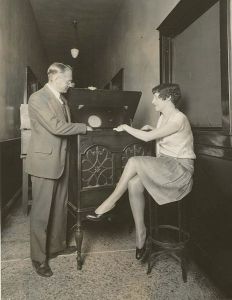
Like any disciple, I have changed certain teachings of my leader.  Bradburyism is a religion objecting to ubiquitous television.  At the same time, I grew up watching the tube, and to this day I’ll stop just about anything to watch DVDs of The Twilight Zone.  Rod Serling, however, selected stories and teleplays that were well written.  This was a literate show.  Besides, my daily life often feels like the Twilight Zone.  Like Valentine’s Day in a waiting room.  The book beside me remains unopened.  It’s the same when I take the car to the garage, or go in for an oil change.  You can’t escape it, even though everyone else is paying attention to their phones.  How long until we learn to switch off?  Of course, medical waiting rooms are the places where I may need brainless distraction the most.

Photo credit: Smithsonian Institution


Stickiness

As a concept, it’s what web designers call “sticky.”  Valentine’s Day, I mean.  And “sticky” has nothing to do with the expected chocolates or anything physical at all.  Stickiness, as I hear it used in these antiseptic clean-room days, refers to text, or an object, that stays in the same place as you change web pages.  Now, I’m no techie, in fact I’m probably a neo-Luddite, but this kind of stickiness is useful in thinking about St. Valentine’s Day.  We hardly need a reminder that humans are sexual beings.  Biology does quite well in that department, thank you.  Every year around this time, however, when the weather has been bleak for weeks on end, Valentine’s Day rolls in to give us hope.  I’ve noticed this as I’ve been out jogging.  The past couple of weeks the birds have been singing.  Me, I’ve mostly been shivering indoors as yet more cold rain falls.

Every year, I suspect (I haven’t stopped to look) I write about St. Valentine’s Day.  Valentine was an obscure saint associated, in the popular mind, with something saints shunned.  Such an embarrassment is this sexy saint that he was never mentioned in the liturgy of February 14th at Nashotah House in the days I was there.  (Given that most of the student body was male, there may have been a wisdom in that, but that’s a story for another time.)  Religions, as I used to tell my students in later settings, all have something to say about sex.  The two ideas, like monsters and religion, are tied closely together.  Scholars tend to blush rather than explore this.

There are so many things going on in the world that I could write about.  There are new scholarly developments every day.  Still, I keep coming back to this minor holiday.  Well, it’s not actually minor in the realm of economics.  Anything to get people to spend money in the middle of February!  Valentine’s Day is the embarrassing child of the celibate church.  Without somebody named Valentine, who may or may not have been martyred,  we wouldn’t have this uneasy reminder of winter’s impending end.  Instead of embracing him, however, many branches of Christianity second him to punch-out cards sold to school kids as teachers remind them that everyone gets a valentine.  What a sticky concept!  I’d been intending to write something about the state of the world.  I guess that can wait for another day.  Right now, as the sun begins to awake, I’ll sit hear and listen for the birds to start their sticky springtime song.


For the Squirrels

Our garage came with a house.  That’s one of the reasons we bought it.  You see, the one thing we don’t have is time.  (Well, that and money.)  When we were contemplating moving, we had no time off.  Vacation days for the remainder of the year had been allocated, and employers don’t like to encourage personal improvement.  Not on company time, anyway.  Which, of course, is as it should be.  We had to find a house with space enough to sort through things after we moved.  Ha!  As if there would be more time!  Still, the sorting would have to wait.  Our house has a detached garage with a second story.  It’s a converted barn, but I doubt its conversion story.  It still seems pretty heathen to me.  The neighborhood squirrels love it.

We store our unsorted stuff upstairs.  Shortly after we moved in, the squirrels had chewed through the stop-gap remediation the previous owners had put in place to satisfy our post-inspection demands.  It was pretty clear their solution wouldn’t keep out rodents, but our lease was about to expire and the market favored sellers, so we closed anyway.  Shortly after moving in I noticed styrofoam poking through the ceiling boards of the garage.  Then I began to find styrofoam chips in the yard nearly every morning.  I soon figured it out.  Squirrels raid the trash receptacles behind restaurants in town, and bring their carryout here.  No, seriously!  They haul styrofoam between the roof and ceiling, presumably licking off the scraps before tossing out the remaining foam.  I figure it’s a form of insulation, if nothing else.

Squirrel remediation is on our list of projects.  I’ve seen the squirrels run up the side when they spy me stepping outdoors.  When I reach the garage, they’ll stick their little heads out the hole they chewed and scold me.  This is their place, the garage.  They’ve insulated it, and the inside is a mess where the birds also get in and there are little animal parties every night.  I don’t have time to clean up after the squirrels.  It occurs to me that if we didn’t have a throw-away culture we wouldn’t have styrofoam containers for the poor beasts to plunder.  The food’s probably not healthy—the squirrels I see look plump and sassy.  They like the convenience of living in a shelter someone else built and on which someone else pays the taxes.  Perhaps I should start a zoo.  But first I’ve got some stuff to sort through, when I find the time.  If only I could teach the squirrels some other tricks beyond dining out. 


Voice of Experience

Trust your publisher.  Well, if you have one, that is.  I’m not the only erstwhile academic to have ended up in publishing, but what constantly surprises me is that academics care little about those who give voice to their ideas.  Now this blog is self-publishing.  It contains my ideas, but they are free for the taking, and here’s a bit of useful advice: trust your publisher.  These days with easy online publication and formatting that makes your posts look like a pro (not here, mind you), it’s sometimes difficult to realize that publishers actually provide more than just an imprint.  They offer services to make your book look serious, scholarly, and also to be useful to others.  Those of us who write books are often far too emotionally involved to see this.

I regularly run across academics who tell publishers how the text should look on the page.  I’m not talking about those weird and wonderful sections of ancient texts with <lacunae>… ellipses… [brackets] and whatnot.  No, there are those who want to control kerning, leading, and all sorts of things.  There are those who want practically every single word indexed, although research shows that most researchers access searchable PDFs rather than wasting their time thumbing through pages to find a reference.  And that traditional chestnut, “written for general readers.”  Publishers have access to book sales figures (at least of their own books).  There’s no need to bluff; if your book is only for scholars (does it have words like “reify” or “heuristic” in it?  Be honest now!), publishers know how to handle that.

We’re all nervous when our book gets through the acceptance process.  Peer review always breaks me into a cold sweat.  Believe me, we understand!  Take a soothing sip of tea.  Go for a walk.  Better yet, jog.  Scholars tend to be precise thinkers.  We get that.  When, however, is the last time someone used a map from a Bible for navigation?  Most of those cities don’t even exist any more!  This strange mix of online savvy and adherence to the old ways of print (which I love and of which I shall never let go) clash in ways that cause publishers great stress.  You can find a YouTube video on how to make your own book.  Those of us in the biz can tell at a glance if a book’s self-published or not.  And believe me, we’re rooting for you.  We want your book to succeed.  Why not trust those who know what they’re doing?