Hieroglyphs

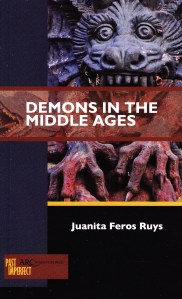
The word “hieroglyph” translates to “sacred writing.” If you’re like me, your first attempts to learn writing were probably not very sacred at all. Tongue pressed to the corner of my mouth, eyes staring fixedly at the paper flat in front of me, my hand going anywhere but where I wanted it to, writing was a burden. I soon grew to love it though, not realizing it was changing my brain even as I was assimilating how to do it. Anne Trubek introduces quite a few new angles to the story in The History and Uncertain Future of Handwriting. She begins at the beginning, cuneiform, not hieroglyphics, and offers a brief sketch of how handwriting developed into the phenomenon we know today. And how it is now becoming something very different than what it once was.

Trubek’s book is full of delightful surprises about the development of scripts and the technologies that attend them. Like most non-specialists in cuneiform suppose, she suggests handwriting is basically anonymous therein. In fact, it’s not. Molding clay into a smartphone-shaped tablet doesn’t seem like technology, but the process of writing took a leap forward when someone figured out how to do this. Those who work with cuneiform can learn to identify handwriting. In the Ugaritic corpus, the tablets “signed” by Ilimilku can be distinguished from those written by others, and not just by his name. Technology has been devised to measure depth and order of stylus strokes in the clay, the angle the stylus was held, and many other seemingly insignificant features. Handwriting was present from the very beginning.

Perhaps what is most striking about Trubek’s study is how religion enters the discussion at almost every stage. Very early on writing was identified as a sacred activity. This continued through the middle ages when monks were those who performed writing as part of their non-secular duties. Even those who piloted penmanship in the modern period often noted that a person’s moral, Christian disposition could be measured by how said person made their letters. Writing, as those who do it for a good while know, becomes a sacred activity. Most world religions have holy books. Many of those books were the reason for an interest in literacy in several cultures. Even a surprising number of secular writers have understood the activity to have spiritual dimensions. Trubek’s book gives bibliophiles plenty to ponder. She doesn’t see the rise of keyboarding as a threat to writing because even in the computer age, individuality comes through. And for those who truly understand hieroglyphs, all writing is sacred.


Not Devil’s Tower

The Sourlands, apart from being the setting of Joyce Carol Oates stories, are one of New Jersey’s characteristic features. Although the Garden State brings visions of heavy industrialization to many imaginations, there are also lots of outdoor options for getting back to nature. One is the Sourland Mountain Preserve. No one’s sure of the origin of the name—was it named after a person, or was the land poor for farming? Could it have come from another language? No matter what the source might be, these areas are today criss-crossed with hiking trails—some of them quite rugged. On a sunny September weekend my wife and I decided to take a walk. The sunshine and cool temperatures made the opportunity beguiling. Although it’s not far from where we live, we’d never been there before. Time to look at a map.

The most distinctive point listed was the Devil’s Half-Acre Boulders. Geonyms, or place names, can be quite evocative. New Jersey and Pennsylvania along the Delaware both lay claim to some impressive boulder fields. The Devil’s Half-Acre was clearly a place for rock climbing, as chalk dust on the trail indicated. It’s not territory that you can get through quickly. But why devilish? Across the Delaware may lie the origins of the name. Near another boulder field, Ringing Rocks, is the site of a tavern along the Pennsylvania Canal. Said to have been the locale of lawlessness, haunted by the ghosts of dead canal workers, the location earned the same diabolical sobriquet in the early nineteenth century. What we found on the Jersey side, however, was an impressive jumble of massive stone and a rather popular hiking path.

“The map is not the territory” Alfred Korzybski once famously wrote. His expression was borrowed and adapted by religionist Jonathan Z. Smith in a book that’s still required reading for those starting out in the field. The point of the saying is that a map is an abstraction. The experience down here on the ground is very different from that projected from a bird’s eye-view. We can easily adjust to the concept however, using maps to tell us what lies ahead. The difficult work of digging a canal, or the unyielding nature of boulders, may symbolically point to the devil. At several points on the trail we had to pull out our map to make sure of our bearings. Trails are hard to follow over rocks. There was no literal devil there, but territory might just help to explain the name on a map.


Biblical Hurricanes

Say what you will about western Pennsylvania, but it was a location fairly safe from natural disasters. My hometown was too far inland for hurricanes to cause much damage. A little too far east for Midwest tornadoes to touch down (mostly). Adequate-to-too-much rain, so wildfires didn’t occur. Not on any fault-lines that invited earthquakes, and volcanoes only thousands of miles away. We did get floods along the rivers during spring, but if you lived up the hill they weren’t much of a personal threat. It felt safe from the big news items of today. Leaving home for the sake of finding work moved me into Tornado Alley for many years, and currently, in New Jersey, in the range of hurricanes now and again. Still reeling from Hurricane Harvey and lack of effective national leadership, Irma is devastating lives, and Jose is in her wake. Then a massive earthquake rocks Mexico. It feels like the apocalypse.

Image credit: NASA, public domain via Wikimedia Commons

Ironically, many people read the Bible as a linear story from the creation of the world in Genesis to the end of the world in Revelation. They make an obvious set of bookends. Unlike western Pennsylvania, Israel lies on a fault-line that means earthquakes are not uncommon. Droughts occur. And being right on the path between major empires, it was frequently subject to human disasters such as invasions. It was not the most secure place to write a book that would change worldviews for millennia thereafter. What is so fascinating about this is that the message (or more properly, messages) of the Bible gets lost in the conceit that this is somehow a story of the history of the world with lots and lots of pages of preachy stuff between the exciting bits at the beginning and the end.

In times of natural disasters, people turn to the Bible for comfort. There are verses, often pulled from context, that do a fine job of that. Nevertheless, the Bible is an enormously complex text. Of its many books, Genesis and Revelation have had disproportionate influence on society. Any natural disaster big enough can be called “biblical.” Since the time of William Miller and John Nelson Darby, such disasters have been interpreted as heralding the end of the world. It is scary to see the devastation a single hurricane can cause. When it is followed closely by a second, one can’t help feeling a bit like Job. The apocalypse, however, is a misreading of Revelation. The book ends with Heaven on Earth. And if you can find a quiet place to read, you’ll find plenty of unexpected stuff tucked away in the middle. Just don’t take it too literally since that too leads to disasters.


The Way, the Truth

It’s striking how similar world religions can be. Granted, the concept of “religion” as a separate sphere of life is a western one, but throughout the world thinkers have drawn similar conclusions. Until the World’s Congress of Religions of 1893 in Chicago, however, most Americans knew only of the monotheistic traditions. Jews and Muslims had been in this country almost as long as Christians. Nobody paid much mind to the indigenous religions of the original occupants. In any case, in 1893 other religions—those of eastern Asia—entered American consciousness. Buddhism and Hinduism were exotic, if pagan, belief systems. There wasn’t much of a conceptual foundation upon which to build, however, so early on people tended to focus on the differences between them rather than the commonalities.

For me, I first really learned about such traditions in a World Religions course in college. I’d never heard of Daoism (or Taoism) before. The Dao, or “way,” pervades ancient Chinese religious thought. There’s a sense of flow to it—one of the main ideas is not to resist the way, but to bring yourself in line with it. Doing so helps you to realize that you need not be rich to be happy. Sufficiency is, well, sufficient. Meanwhile in the west, Christianity mostly bought into greedy consumerism. Our happiness is measured by what we have. And having, we want more. I’ve been reading about Daoism recently, and it occurs to me perhaps there are some accidental Daoists here in the west. This reading made me think of my father.

I can’t speak much for who he was, since I barely knew him. I only saw him once as an adult, before he died. For a brief moment he took me into his apartment. He owned practically nothing. A television, a few things to sit on. A magazine or two. That was about it. Did he want to acquire more? I didn’t know him well enough to ask. He was raised as a Christian, and I do not know what his religious beliefs were, if any. Thinking back to that experience, however, was the result of reading about Daoism. Being content with little. Not all of us are cut out for monastic life, but my visits to such communities have always left me with the sense that having less is more than enough. I know I’m over-simplifying here. I’m not an expert on Daoism. I’m certainly not an expert on my father. I do believe, however, that things can weigh us down. And even Christianity, read in a certain light, agrees.


Shocking Truth

The electrician recently stopped by. We’re renters and although I don’t mind doing minor household repairs to benefit the landlord, I draw the line at electricity. It’s a scary thing. I’ve been shocked too many times to want a jolt bigger than I can handle. I even once accidentally grabbed the metal prongs when unplugging something as a child (it was a microscope light, I remember) and that helpless feeling of being unable to drop the plug even while my body jerked uncontrollably left me with a healthy respect for those who actually understand insulation, capacitors, and those impossible electrical diagrams. So when the pull chain came out of the ceiling light I wasn’t going to try to fix it.

The electrician, like most people who see our apartment, commented on the books. “You like to read,” he said. I can’t help but feel guilty about that. It’s almost as if you should apologize for requiring the stimulation of so many tomes. I confessed that I did, but I wanted to justify it. “I work in publishing,” I feebly offered as an excuse. Concentrating on the fixture above his head, he said, “I don’t ever read a book unless I have to.” He fixed the pull chain and left. I couldn’t have fixed the thing so quickly, or safely. He even had a metal ladder. I was grateful for the light, but once again felt somewhat freakish for my bibliophilia.

Those of us who write books must read books. You can’t learn how to do one without the other. Because of movies and television, we picture writers as people with large houses and separate rooms as libraries where they can sit surrounded by books as they type away at their next bestseller. Those of us who work for a living seldom have such luxury. A separate room just for books? I like letting my books reside in whatever room they feel like. Most affordable apartments don’t come with a study. There are living room books that you want people to see, and kitchen books that suggest good things to eat. There are bedroom books that you might not want others to see. What I don’t have is a library. A book zoo. My books roam freely about my home. It occurs to me that one area lacking in my collection is one about household wiring. Maybe instead of feeling weird I should get wired. I’m sure there are books out there that will tell me how. Or at least that will let me know that a wooden ladder makes a poor conductor.


Church of Advent

It’s a common name. You might know one yourself: William Miller. Indeed, for many years of my own life I borrowed that surname from my stepfather before returning to my birthright after seminary. But the ordinariness of the name alone doesn’t explain it. Joseph Smith, a fellow creator of a new religion, also bore an innocuous name, and he was a Junior. While many people might have trouble placing William Miller among religious founders, they would likely know of Seventh-Day Adventism, a religion that sprang from the root of his teaching. During his lifetime the preferred title was Millerite, but Adventist also worked. David L. Rowe presents a sympathetic, but not hagiographic account of this somewhat remarkable life in God’s Strange Work: William Miller and the End of the World. For Miller, you see, predicted the year Jesus would return.

A self-taught farmer, Miller became convinced that the Bible indicated 1843 would be the end. This idea was based on calculations derived from cryptic books such as Daniel and considering their days to be years. A touch of math and before you know it, it’s all gonna burn. During the intense period known as the Second Great Awakening upstate New York was perhaps the most religiously creative place on the planet. New ideas bumped into each other and, as if the bounds of Christianity were too constraining, flew out into new forms of belief. People grew convinced that the world might indeed end in 1843. When it didn’t, they called it the Great Disappointment and carried on. Adventism is still with us today.

Rowe also makes the point that for being such an obscure individual, Miller influenced the great religious movements that would give us modern day Fundamentalism as well as Jehovah’s Witnesses. These groups trace their spiritual ancestry to the convictions of a not-so-simple farmer who could fill an auditorium with his plain speaking and clear exposition of the scriptures. He devised his end times scenario with the use of only a Bible and concordance. No seminary or advanced theological reading was necessary. Millerites did not reach the numbers of Latter-Day Saints. They were disowned by the Baptist Church that gave them birth. They got the date of the end of the world wrong. Yet they persisted. It is a curious story with a long afterlife that still helps elect extremist presidents to this day. William Miller, ever unassuming, managed to change the very world that he was certain would end even before the midpoint of the nineteenth century.


Overlooked Scripture

In this great Trump Tower of capitalism in which we all live, I often wonder about the overlooked Bible. Fundamentalist Trump supporters certainly know how to thump it, but do they know how to read it? This thought occurred to me as I was rereading the story of Ananias and Sapphira in Acts 5 recently. The narrative isn’t hidden or obscure. Here’s how it goes: the earliest Christians were communists. Literally. Peter himself was involved. After Jesus’ ascension, his followers pooled their resources and divided them up by how much each person needed. Ananias and Sapphira, a husband and wife duo, sold their property and presented the money to Peter and the collective. They held a little back, though, just in case. The result? Peter saw through the lie and they died instantly. The point was pretty clear—Christians don’t hold anything back for themselves. They live communally.

Obviously, this didn’t last very long. Let the one without a savings account cast the first stone. In fact, by half-way through Acts the holy experiment is already forgotten. Nevertheless, it was the ideal. Christians were people who took care of one another, especially the poor. By the time communist governments (which didn’t work because people are people) took hold, Christians were dead-set against them. Okay, well, they were godless—but the idea behind them was biblical. Today any form of socialism is soundly condemned by most evangelicals. Apparently they don’t read the book of Acts any more. There was no moment when this commune was castigated in Holy Writ. It simply vanishes without a whimper to be condemned as utterly evil in these latter days.

The wedding between capitalism and Christianity has proven an enduring one. Capitalism allows, indeed pretty much mandates, selfishness. It’s difficult to live in such a system and not feel entitled to more than you already have. Who ever says, “No thanks, I don’t need a raise. I have enough”? Those who attempt communal living are generally called “cults” and the suspicion is omnipresent that the leader isn’t holding (usually) himself to the same standards as the pedestrian members. The story in Acts 5, however, is even more extreme. After Ananias lies to Peter and dies on the spot, his wife Sapphira comes in just as those who buried her husband are returning. Peter baits her with a question about how much money they received for their property and when she concurs with her late husband, the undertakers have a second job for the day. This is a faith taken seriously. It was bound not to last.


First Look

Youth might be described in a number of ways. One, of course, is in biological years. Another may be in exposure to experiences which change your life. There was a time, for example, when you can’t believe you were ever so naive. No matter how youth might be defined, a patina of fond memories tends to cling to images from that time with the passage of years. For me, unsurprisingly, those images are frequently books. I still recall the cover images of books from my tweenage years, and often think that if I found such books in a second-hand store, I would buy them for their ability to conjure past times. One such book comes not from my physical youth, but from my days teaching at the University of Wisconsin, Oshkosh. It was at that time, when the internet was also still young, that I began to try online research into H. P. Lovecraft. I found an edition of his stories titled The Shadow over Innsmouth for sale on a used book website. I was under-employed, but it was cheap and my curiosity inflamed.

Mainly I was interested in what I would now call the reception history of Dagon. Dagon is an ancient Mesopotamian deity mentioned briefly by name in the Hebrew Bible. He is also part of the pantheon of gods borrowed and invented by Lovecraft to populate his eldrich, watery world. I purchased this book for the titular story, where Dagon doesn’t actually appear, but his worshippers do. It is often claimed to be Lovecraft’s best story. As I sat down to read the whole book, however, I was struck by the strangeness of the collection. This edition, from 1971, included such unusual choices as “The Transition of Juan Romero,” “In the Walls of Eryx,” and “The Festival.” Also bundled here was the Houdini ghostwritten “Imprisoned with the Pharaohs.” When I first purchased the book I’d only read “The Shadow over Innsmouth” and “The Colour out of Space.”

As my interest in Lovecraft grew, I acquired other, more representative editions of his work and have consequently read most of his oeuvre. It was that sense of yesteryear, however, that led me back to this browning, aged collection. It was, in truth, the cover. Looking at it brings back that very office in Oshkosh where I sat as I found the edition online for less than five dollars. No doubt, I was younger then. The call of Cthulhu has echoed across the web since then. For me, however, the first exposure will always be a beat-up paperback that I ordered secondhand.


Ned Ludd and Company

I’m sure you’ve seen them too. Maybe in the movies, or on a newsreel, or maybe on a filmstrip in school. I’m referring to those scenes, usually in some foreign location, where bicycles, ox-carts, cars, buses, and pedestrians all crowd the same streets in a holy confusion of conflicting human intentions. Some can afford no transportation at all beyond their own feet. Others can own, and use, automobiles. On a scale like this I’d put myself around either the bicycle or ox-cart-driver level. I’m referring to technology, of course, and not actual transportation. At a recent family discussion I was left completely in the dust and exhaust fumes of new technology, trying hard to comprehend the words that other family members were speaking so fluently. Software names, devices that do things I can’t divine, and what is a dongle anyway? I’ve fallen behind not only on my movies and books, but on technology as well.

Tech develops quickly despite how slowly the rest of the world moves. Some members of my family don’t have computers or use the internet. Others have devices so advanced that they might’ve been salvaged from Roswell, and I wonder how all this happened when I thought I was paying attention. I’m a late joiner when it comes to tech. Although I’d been warned, I made it through my Master’s degree having barely touched a computer. When I took a decidedly low-tech job teaching at a medievalizing seminary, we couldn’t afford television service and we haven’t really watched TV since. Now I hear that you don’t need to pay for the privilege. If you have the time, black boxes, sticks, and even software downloadable on your phone can be your television. I look at our flatscreen at home and wonder where the on/off switch might be. How have I fallen so far behind the times?

The real problem, from the view on my bicycle seat, is that in order to maintain some level of expertise in my field of study, I have to dedicate quite a bit of time to it. While others tickle their devices on the bus, I’m reading my books made of genuine paper. I’m thinking such activities will make me better informed. Most of these books address the past. If I want to upgrade from to an ox-cart, however, I have to learn a whole new language and the nouns that accompany pieces of hardware that look an awful lot alike to these antique eyes. Perhaps we have become cyborgs after all, and I just missed the introductory session. I wouldn’t know; I’m too busy trying to keep this bicycle out of the path of that speeding lorry.


By Numbers

Numbers 12.3 always struck me as one of the oddest verses of the Pentateuch. This was back in the days when I’d been taught that Moses wrote Genesis through Deuteronomy, in toto. When I read “Now Moses was a very humble man, more humble than anyone else on the face of the earth,” I had to wonder about the literalness of Scripture. How can someone who is humble boast of being the humblest person on the planet? Humility is a commodity sorely lacking in contemporary times. This shortage, in an era of fake news and border walls, finds expression in some very odd places. The White House, for example.

Kellyanne Conway, who’s apparently still around, recently told televangelist Pat Robertson, on the air, that Trump’s most characteristic trait is his humility. It seems that good old Moses got one wrong. The most humble man on the face of the earth is Donald J. Trump. You can tell that by the way he took a horrific hurricane and managed to make every media appearance concerning it about himself. It is quite a burden, being so humble. Especially when your race is the best one on the planet and there’s bad behavior on all sides when a white supremacist murders an innocent person for disagreeing. What would Moses do? Pat Robertson—you’re a literalist—help us out here! Mirror, mirror, on the wall, who’s the humblest of them all? I surely hope the Bible isn’t participating in fake news.

It used to be called the good news. The message was one of love for all people and acceptance of the poor, the outcast, the widow, and yes, even the tax collector. I forget which chapter in Matthew it is where Jesus suggests building a wall to keep the gentiles out. It must be in there somewhere next to the chapter where Moses builds a tower up to heaven and then names it after himself. He was, after all, the humblest man in the world. He could afford to throw away entire calves made of gold, right? Humility will do that for you. Since we’ve just undergone a major natural disaster, we might as well start pushing our own self-image again. If Moses promised to build a wall, even if thousands and thousands are suffering and could better use the money, he must push through with his plan to erect a wall. And when he’s done he’ll put his name on it for all to see. That’s the price of humility.


Oil Heritage

I love optical illusions. Apart from the sheer fun of ambiguity, such illusions are really all about perspective. Shifting perspective can be one of the most powerful ways of changing a person’s life. One of my more stalwart perspectives is that those who originate something deserve recognition. If that something is important, they may even deserve acclaim. And sometimes that thing may turn bad, in which case the discoverer may end up being notorious. Originality, the subject of bestsellers and media gurus, is sometimes the result of thinking differently than other people do. It can be cultivated and grown. Sometimes it’s simply fortuitous.

Every time I visit my own place of origins in western Pennsylvania, I think of the oil industry. It’s pretty hard not to around here. “Pumping jacks” still operate in some back yards, and petroleum tanks suddenly appear along beautiful rustic roads. The presence of fossil fuels isn’t as evident as it was when I was a child, for all the big refineries have closed down. Many of them have been dismantled. Still, I can’t drive by the site where a refinery fire glowed beyond the next hill from my childhood home and not wonder about it. Seeing those huge oil tanks melted and crumpled as if they’d been made of wax is an image that doesn’t get easily erased. Today, that’s all gone. Still, the oil industry itself was originally from this region. The auto industry—although increasingly electric—would’ve never started without the obvious boost that petroleum production gave transportation.

In the light, or perhaps dark, of Hurricane Harvey we’re set to see increasing gas prices. They will impact the economy in other ways, and energy giants will continue to degrade the environment in the quest for cheap and abundant crude. I’m not sure if that makes the discovery of oil in this region worthy of acclaim or notoriety. It does seem, from my perspective, that since big oil is so lucrative, a lifeline ought to exist for the struggling communities in my childhood home. Empty storefronts were rare here in my youth. Now they are almost as common as shops that remain open. I know; if people can’t move on, then maybe there’s a reason the economy is sagging. There are ghost towns in this area, and there may be more in the future. I just wonder how all this will looks from another perspective. Will it all be an illusion once electricity makes the past superfluous?


Night of the Museum

I admit to being a relative stranger to contemporary commercial television. We don’t have “triple play” at home, and since the internet provides more information and entertainment than one person can possibly handle in a lifetime, why pay extra? On a visit home, however, where internet does not yet exist, I fell to the default of watching TV. Scrolling through the cable channels available in this small town, I start to understand why we don’t pay extra for this at home. Much on offer appeals to the lowest common denominator, and although some educational programs exist, they have to put somebody in danger in some remote location in order to draw the viewers in. Then I stumbled on Mysteries at the Museum.

For those of us hopelessly enamored of the past, museums are an irresistible draw. I joined the program already in progress. It was talking about Stroudsburg, Pennsylvania, through which we’d driven to get here. A resort town in the Poconos, I always think of Stroudsburg as a traffic bottleneck, particularly on a holiday weekend. Instead the story was telling of a haunted jail in which a prisoner had to be exorcised after it was found that he could make it rain inside his cell. Then the name of the Warrens was mentioned. The Bible used in the exorcism is from their occult museum (thus the tie to the title of the program). Ed and Lorraine Warren, as my regular readers know, get mentioned here every once in a while. Real life ghost hunters, they kept a museum of the occult in their Connecticut home. I’d missed the part of the program where they revealed the provenance of the artifact. Now things started to make sense. After the commercial break, however, the story shifted to a historic pair of hiking boots.

Image credit: Creative Commons Share Alike 2.0 Generic license. Photo by Doug Kerr, Wikimedia Commons.

What was so striking about this brief segment of the show was not the implied credulousness of the investigation, but rather the certainty with which those interviewed declared this was a water demon case. Okay, so I’d just finished a seven-hour drive and I may not have been at my sharpest, but where did such certainty come from? Who were these experts telling us what had happened? I’ve read enough of the Warrens’ accounts to get a sense of how they worked, but not even the name of the priest was presented, let alone that of the demon. What we had, then, in this 15-minute segment, was a Bible and an anecdote of rain falling in a Stroudsburg jail. As I switched off the program to go to bed, I knew that I’d find the missing information on the internet. Even without triple play.


Hurricane Warming

Image credit: NOAA, public domain via Wikimedia Commons

My heart goes out to those suffering from Hurricane Harvey in Texas and Louisiana. Natural disasters like this are often tied to the “wrath of God” model, and outdated though it is, it still captures how it feels. The sheer amount of rain dumped by this one storm is literally inconceivable. Trillions of gallons. Coupled with a completely ineffectual president, the disaster is even greater. Like many others, I’ve been watching since the weekend as the numbers and statistics of woe rise. Lives lost. Property washed away. Once more it reminds us just how small we are in the face of the weather. Some of this same awe was in my mind as I wrote Weathering the Psalms. Ancient Israel did not experience hurricanes—the bodies of water nearby aren’t large enough to generate them. A single thunderstorm, however, is enough to put the fear of God into a person. In ancient times, with an under-developed meteorology, all of this was the provenance of providence. How else could you begin to explain such tragedy?

One of the books that got me started on my meteorotheological quest was Erik Larson’s Isaac’s Storm, about the Galveston hurricane of 1900. Thousands died in that storm, and it remains the most deadly natural disaster in US history. Although Hurricane Harvey developed quickly, there was warning. The death toll is remarkably small (at least at the moment) compared to the fury of the storm. The natural tendency of human psychology is to look to supernatural explanations for such devastation. What have I done to deserve this? How could God do this? Are we being punished? Questions such as these come to mind, although we know that hurricanes are entirely normal features of this planet. Somewhere in the back of our minds, though, we probably are aware that global warming causes more radical weather.

Even as Trump continues to surround himself with climate change deniers, we see what global warming looks like. The weather is an intricate mechanism. Small things effect it. Large-scale changes throw it into chaos. Those who see climate change as a pain in the pocketbook will do anything they can to deny its reality. More powerful than a freight train or battleship, the weather can’t slam on the brakes and suddenly resume a more milder form. No, we’ve already started the process, no matter how many billionaires disagree. My heart goes out to those who continue to suffer from the hurricane. We need strong leadership and clear thinking at such times as this. We will need more of that in years to come. But we must also keep in mind this isn’t the anger of God. Unfortunately the wrath of human greed can be just as devastating as the wrath of the Almighty.


Planet A

Two of the classics of ecology, A Sand County Almanac, by Aldo Leopold, and The Sea Around Us, by Rachel Carson, were published by Oxford University Press. In its present-day iteration the press has a Green Committee, on which I’ve sat from very nearly the beginning of my time there. As a committee, we’re reading these classics to see what we might learn some half-century-plus after they were published. I’d never read A Sand County Almanac before. It’s a pity, since I lived in southeast Wisconsin, from which the book takes its genesis, for about a dozen years. The writing is poetical prose, but the ideas are solid science—the land on which we’ve evolved knows how to take care of itself. When one species becomes too greedy, all suffer. Leopold ends his book by suggesting a land ethic should be put in place. Now, a human lifespan later, has it?

Hardly. Watching the Trump Administration doing everything it can to commodify any aspect of the environment that might make a buck—or at least a buck for the wealthy—is alarming in the extreme. There is no soul in the land, to this way of thinking. They believe that because they themselves lack a functional soul. A soul cannot exist without ethics. What we do to this planet is one of the largest ethical issues imaginable. No species, rational or not, destroys its own habitat. Except our own. Arrogant to the point of supposing ourselves divine, we think we can take what we want and give nothing back. And everything will be just fine. I wonder that we’ve had this inexpensive, readable guidebook this last seven decades and have continued to ignore its sage advice. Maybe we’re too busy making money to read something that sounds suspiciously like poetry.

One of the observations I had about the Almanac was how attuned to the philosophy of nature it is. Philosophy has many enemies these days, from prominent scientists to Republicans. Nobody seems to value the capacity for deep and thorough thinking through of a problem that is unbeholden to any orthodoxy. The philosopher can ask “what if?” without regret. When it comes to the environment, humans aren’t the only philosophers. We’ve convinced ourselves so completely that we’re more advanced than other species that we suppose they can’t teach us anything. One thing they do, however, without our interference, is create balance in nature. It’s an ethic to which even our species might aspire. If only we would listen to the wisdom of those who pay attention to the world that has given them life.


Birth of a Notion

Childhood is an impressionable time. Our phobias begin then. Children are vulnerable. (Of course our current government is intent on making us all afraid of bullies again.) This theme of childhood keeps coming up in interviews with directors of horror movies. A friend recently sent me a New York Times article by Erik Piepenburg about Annabelle: Creation. The piece includes some horror auteurs discussing what frightened them as children. We all experienced fear at a young age. For some of us it hung around awhile longer. Horror movies have, despite their low brow reputation, been reliable revenue streams from the beginning. People will pay to be scared, for a little while.

I have to confess to having fallen behind on The Conjuring diegesis. Since I’m the only one in the family who really likes to watch horror, I don’t see these movies in theaters and, well, there’s a lot to do besides watching movies these days. And finding DVDs is getting harder as well. Streaming scares me. Anyway, I missed The Conjuring 2 and the original Annabelle. I’ve read accounts of what supposedly happened in real life—Annabelle is one of the cases investigated by Ed and Lorraine Warren—and it has been written about a number of times. The Warren’s take on it was that a doll can’t actually be possessed. (Sorry Chuckie.) They suggested that it could act as a conduit that would’ve eventually allowed a demon to possess the two young women who kept the original Annabelle in their apartment. The doll showed up in The Conjuring, although it wasn’t part of the main story. The haunted doll trope is scary enough that the second knock-off in this universe focused on it.

Interviews with older horror directors reveal that they often grew up without fathers. Despite the gender profiling, for kids fathers are generally thought to represent protection. A child without a father often feels insecure. Even today when people talk of their fathers I have to remind myself that they can be a good thing. I often wonder if those of us who like horror films had childhood parental issues as a regular part of our pasts. I’m generalizing, of course. Growing up into Trump’s America has given us all plenty of things to fear in the present. Since January a number of high profile horror films have gotten notice in the press. Sometimes a real bully can cause as much fear as a possessed doll. That’s especially the case when our government wants us to submit like a bunch of frightened children. Childhood fears may, in some cases, serve us well.