Mad Charles

Moving to New Jersey was made easier by Weird N.J. I found out about the magazine while still domiciled in Wisconsin when the series of books produced a Weird Wisconsin edition. I read it cover-to-cover and learned about the magazine. When weirdness would have it that we’d be moving to that self-same New Jersey, I began reading the magazine religiously. Lately, however, it has become more mainstream and less weird, but still, it is a great source of local information. We landed in Somerville because of its educational reputation and closeness to Piscataway, where I worked. I’ve always had a thing about being able to pronounce the name of the town in which I live (and I’ve even resided in Oconomowoc), so Piscataway was out. In any case, Somerville High School has an engineering program and the expected robotics team that goes along with such pedagogy. When my daughter joined the team, the whole family was drawn into four years of endless fundraising and promotion for an underfinanced club. So it was weird when I saw a story called “Rock em’ [sic] Sock ‘em Robot: Somerville N.J. vs. Mad Charles, the World’s First Singer Songwriter Karate Robot” in the latest Weird N.J. In my four years in the club, I’d never heard of Mad Charles.

Robots and religion are topics I’ve often related on this blog, so I read with amazement that about two decades before FIRST Robotics ever got its start, there was a somewhat famous robot in Somerville. Eugene Viscione was the inventor of Mad Charles, a robot that was built to help improve karate moves. The robot, as often happens in small towns, went on to other things, such as cutting records that, according to the article by J. A. Goins, are quite rare. In the 1970’s, however, Mad Charles was a local sensation, now all but forgotten some four decades later. There were even Mad Charles tee-shirts available. While we sat dreaming up new ways to get money out of the locals, and even set up a booth for the Somerville street fair not far from where Mad Charles at one time could have been found, nobody mentioned the karate robot. I doubt anyone had heard of it.

History is a fickle friend. Of course, being from a small town myself, I know it is very hard to get noticed, and even harder to be remembered. So those sleepy, pre-dawn weekend bus rides to robotics competitions, it was sometimes easy to consider how one gets overlooked. This past November, many hardly noticed as NBC didn’t make a big deal of it, FIRST robots opened the Macy’s Thanksgiving Day Parade. Somerville’s latest robot was not among the horde (we have always had a problem keeping enough charged batteries on hand), but as the robots rolled through Herald Square, I was thinking of Mad Charles and a legacy that has been forgotten. Come to think of it, I guess that is weird after all.

A Somerville robot (center)


A Somerville robot (center)

Faithful Places

PlacesOfFaith Is there any more American a diversion than the road trip? Those of us who live on large land masses with relative ease of travel sometimes like to go for, well, the fun of going. If you’re a sociologist, however, you might find funding for a road trip if you can put a thesis behind it. Christopher P. Scheitle and Roger Finke made such a trip and entitled the results Places of Faith: A Road Trip Across America’s Religious Landscape. This isn’t really an academic book, but it does contain some interesting information about faith communities that might otherwise remain off the radar (with the exception of mega-churches, one of which they visit in Houston). Religion, it becomes clear, is still a large part of life for many Americans, and not just small-town rubes like yours truly. Thriving faith communities are found in New York, San Francisco, Houston, Detroit, and Salt Lake City. Scheitle and Finke don’t neglect the smaller venues either, stopping at rural sites in Nebraska and Pennsylvania. Perhaps the biggest take-away from their book is that religion is diverse and deeply embedded in the United States.

While many claim that atheism is humanity’s next big step forward, it has to be admitted that freedom of religion (without which atheism might be problematic) has gone far. Although Places of Faith sticks pretty close to Christianity, Islam, Buddhism, and Judaism, there can be no question that many, many other religions constitute a nation where “mainstream” is not as normative as it may seem. As also became clear from the descriptions and photos the authors provide, religions are fond of splintering. Faith can be made of brittle stuff. As I’ve argued before, we are really each our own entity of personal religion. We share some traits with the larger group, but unless we’re an identical twin, likely nobody thinks quite the same way we do. Religious leaders know this well—uniformity is often a thinly veiled illusion.

Having studied religion for most of my life, I can’t say that there was too much new to me in this little book. It provides a tolerant, and colorful tour through some religions that will be less familiar to those who don’t consider just how broad the landscape is. You won’t become an expert in Mormonism or the Amish, but you might learn a thing or two about both. The authors encourage something that many religion majors know by rote: you learn a lot by exploring your local religious landscape. As a college student I tried not only Presbyterianism and Pentecostalism, but also the Jehovah’s Witnesses and the occasional foray into that mysterious realm of Episcopalianism. There was more diversity, even in that small town of Grove City, than I had the ability to explore on my own. This much was certain, however, people find meaning and comfort in their beliefs. To deny them that is to deny them what makes religious freedom the wonder that it is.


Dromedary Dilemma

Photo credit: John O'Neill, WikiCommons

Photo credit: John O’Neill, WikiCommons

This past week two friends have pointed me to news articles about camels. In the modern, western imagination camels are biblical animals, pushing their way onto the ark, carrying long-suffering patriarchs across the desert, and squeezing through the eyes of needles. These news stories indicate that camels were actually not introduced into the Levant until about the tenth century B.C.E., i.e., a few centuries too late for poor Father Abraham, whom, according to Genesis, was a noted camel owner. Of course, the reason that this is news is because Fundamentalist groups insist that every word of the Bible is literally true. If it says Abraham had camels, then, by gosh, camels he had—archaeological evidence or no. One story points out the problems for Zionists, for whom claims on the land derive from the mandate to Abraham (and, presumably, his camels). Biblical scholars have long been aware of the complex methods of scripture writing, and no camels are no problem. The bigger issue, I suspect, is that Abraham has been awol for some time as well.

Abraham, as the progenitor of the three major monotheistic religions, bears a tremendous weight on his weary shoulders. It is the weight of history. Or lack thereof. I may be a few years outdated here, but the earliest figure historically attested in the Bible is (or was) Omri, the king of Israel who spawned the notorious Ahab. Prior to that, historical records are pretty silent. Yes, I know the Tel Dan stele mentions “house of David,” but that is like mentioning Willy Wonka’s chocolate factory—it doesn’t make Mr. Wonka any more real (even though you can buy a Wonka bar at some candy stores). That means that, in the jumble of biblical history, everyone in Genesis falls into the questionable historical category. Even if Moses (himself historically dubious), wrote Genesis (and he didn’t), he wouldn’t have known Mr. Abraham personally. He had been long dead. If he’d ever been born. I’m getting worried about his camels.

Religions have often tied themselves to historical claims. Such claims are always tenuous and negotiable. For instance, I watched a movie about Abraham—Lincoln, it was called—where I learned quite a bit that I didn’t know about a very historical Abraham. At the same time, I knew the movie wasn’t history. When we rely on history to cite our superiority (often one of the functions of religion), we had better be willing to take the risks. The first biblical historical figure is a “bad guy” king of a secessionist kingdom, this time in the north. Even once we learn that the storied characters of the Bible may have never trod the earth, we don’t leave them as camel fodder. They are part of the tradition, whether they participated in history or not. I realize, however, for some it would be easier to swallow a camel than to strain out this particular gnat.


God and King

Bible01

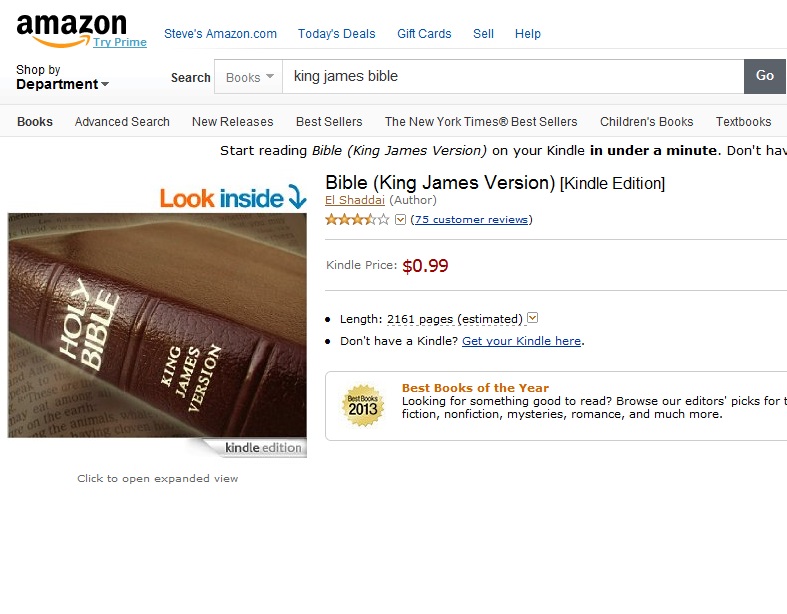
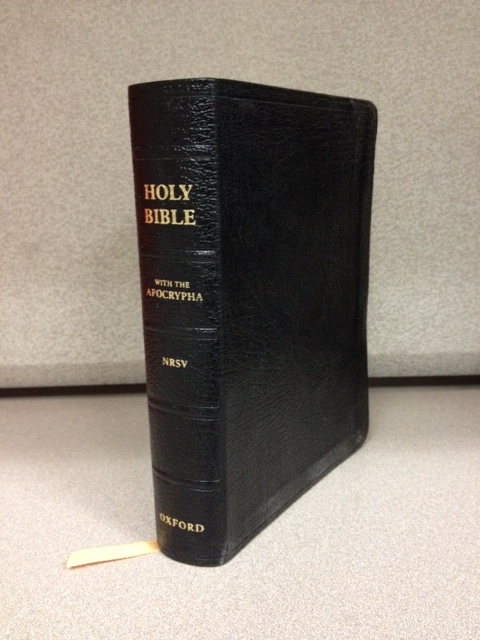
The King James Version of the Bible is in the public domain. (Except in Britain, where it is still royal prerogative to print the King James, and it has be licensed to Oxford and Cambridge University Presses.) In any case, that means that just about anywhere in the world, anyone can take the text of the King James, reproduce it, and sell it. In this day of electronic books, that means many King James Bibles are available online, as well as in print. Just look on Amazon. The other day, I was looking for King James editions when I noted a dilemma. When you’re listing your Bible on Amazon, who do you cite as the author? Seems pretty bold to list yourself as the either author or editor of the KJV, so there have appeared a number of improbable authors of late. The first one I noticed listed the author as El Shaddai. Either an Amy Grant fan or an educated reader, this editor chose the phrase generally translated as “God Almighty” as the author. A good, strong name. It may derive from the phrase “god of the mountains,” or a bit more racily, “god of the breasts.” El Shaddai was likely a pre-biblical god that eventually got merged with Yahweh.

Bible02

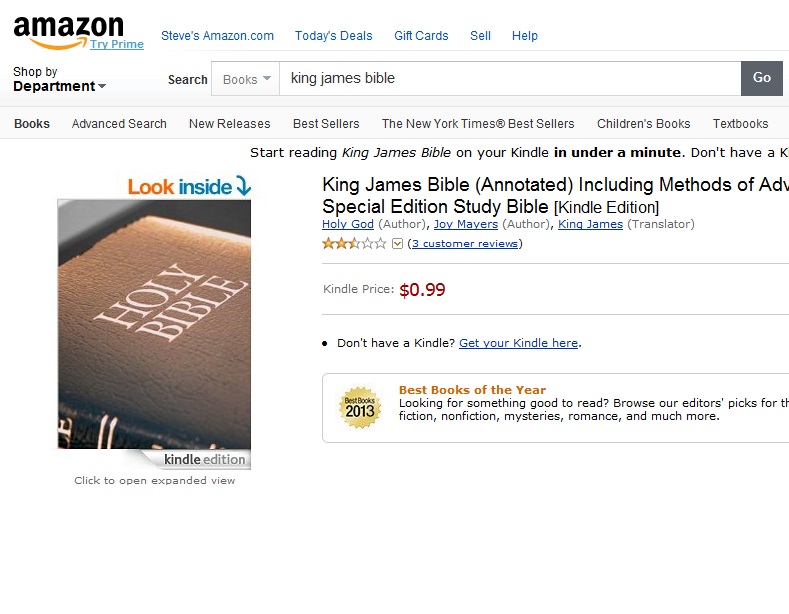
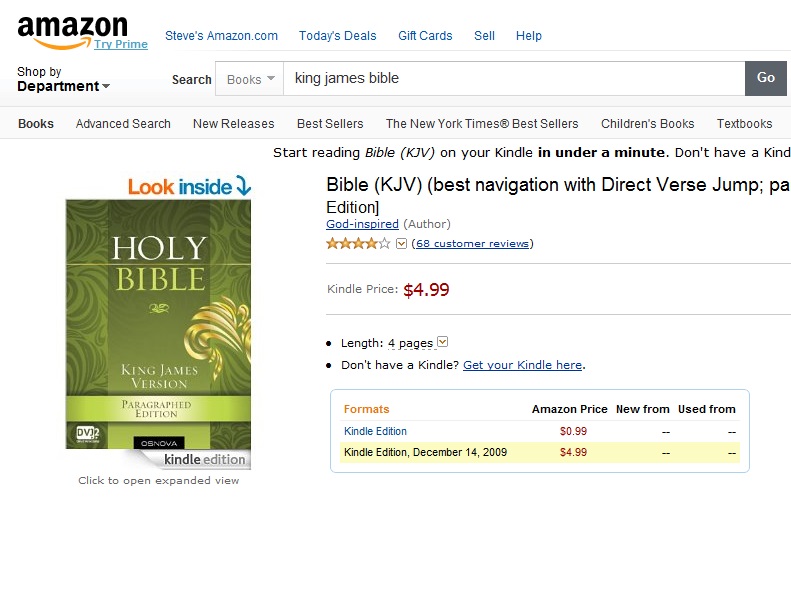
The second version (which looks the same to my untrained eye) lists a trinity of authors: Holy God, King James, and Joy Mayers. What a triumvirate! I’m not sure who Joy Mayers is, but I would certainly blush in the presence of gods and kings. Particularly Holy God. Interestingly, this is not exactly a biblical title for the deity. We do get the encomium “holy” applied to God, but I’m not sure that it ever appears as a name. Well, at least we can look up King James and Joy Mayers. The next edition I found listed the author as the safely hedged “God-inspired” (hyphen and all). The problem is that God-inspired might be taken a couple of ways. One, and likely the intended way, is to see the author, whomever it may have been, as divinely inspired. Another option, and one which sounds more exciting to me, is to think of a coffee-fueled deity scribbling away under the heat of inspiration. The inspired god, writing under a nom de plume, gave us the King James (if that was his real name).

Bible03

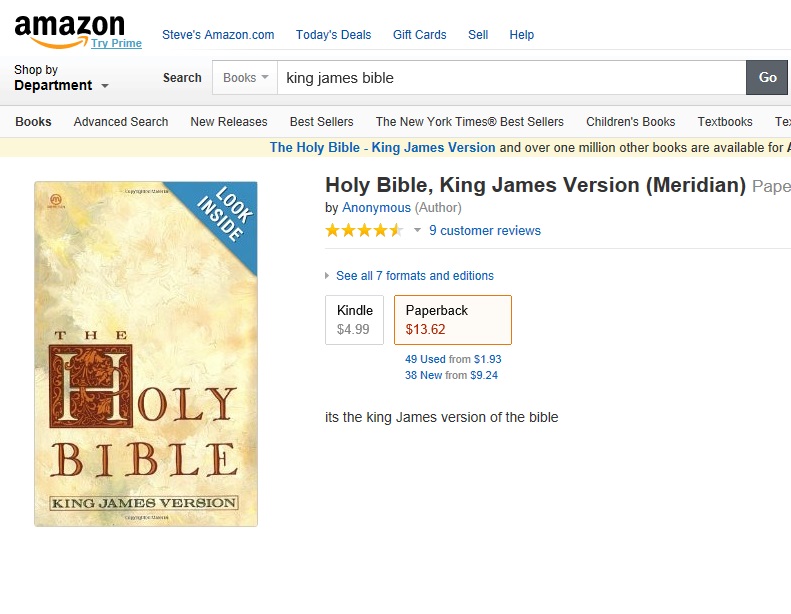
The last one I found was the most parsimonious. The author was listed as Anonymous. This comes the closest to the historical truth of the matter. We know very little about the writers of the Bible. Probably the best attested is Paul, along with his companion Pseudo-Paul. We know this historical person wrote a number of letters. There’s little reason to doubt that people named Matthew, Mark, Luke, and John wrote some gospels. Who these people are, we don’t rightly know. Once we get back to the Hebrew Bible we find authors writing about their own deaths, and events that take place thereafter with embarrassing frequency. It could be that people saw further back then, not having to strain their eyes at a computer daily. Of course, if it weren’t for computers, we couldn’t sell our own Bibles on Amazon. I’m just waiting until I learn the actual author’s name before I post mine for sale.

Bible04


Asp and Receive

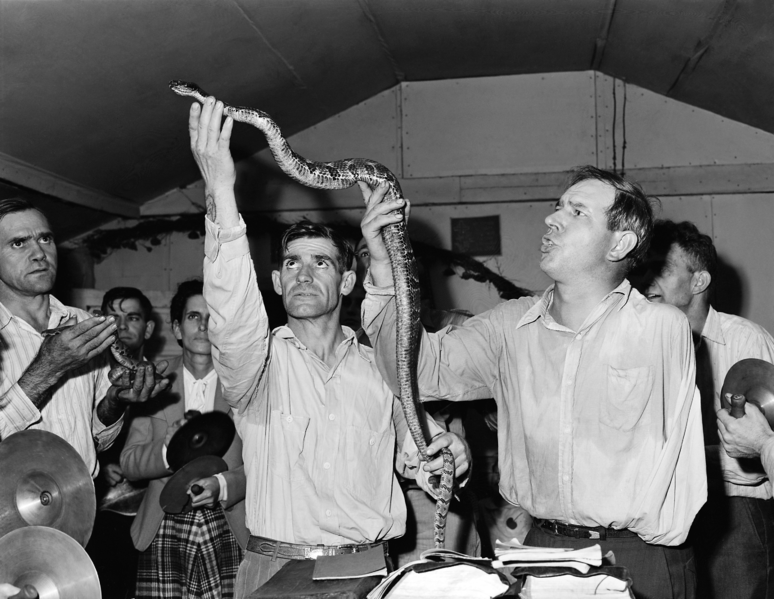
Among the X-Files episodes that bothered me the most was “Signs and Wonders,” where Mulder and Scully visit the snake-handlers. The human fear of snakes is so deep that it reaches back beyond our split from chimpanzees—our curious cousins who also fear serpents. The reality show Snake Salvation, which I’ve only seen once, has lost its star due to, you guessed it, snake-bite. I don’t rejoice in the death of Rev. Jamie Coots; it is tragic when a person with such faith falls victim to it. Nobody castigated Steve Irwin for swimming with rays, however. It comes with the job. Snake-handling tends to be an off-shoot of an extreme literalism. Many of the rest of the Christian mainstream are content to know that the snake-handling passage (note the singular) in Mark is a disputed section of the Gospel. It is likely not original and carries weight only for those who accept the King James without question. It doesn’t command the handling of snakes; it is merely a suggestion.

774px-Snakehandling

According to the story on USA Today, Rev. Coots refused medical treatment after his bite and soon died. Snake bites are not as fatal as they once were—with proper treatment they are often survivable. The faith, however, that declares asps risk-free comes with a caveat that doesn’t allow for medical intervention. If it’s your time, it’s your time. If it weren’t for reality television, probably none of us would even know. Snake-handlers do get bitten from time to time, just as surely as Baptists dry out once they get out of the water. It is the way of nature. Religion tends to view itself as capable of overcoming nature in various ways, and that seems to draw in the reality TV crews.

Not only Jamie Coots, but the famed evangelical Duck Dynasty took a hit recently. That’s because the stars are only people. When we put them on the magic box we either worship them or wait for them to fall. Authentic faith, I firmly believe, does not come through television. Shortly after the invention of the tube, evangelists found their way onto the airwaves. But reality television is necessarily about the slightly off-kilter, those who aren’t like the cookie-cutter executives in Manhattan or Los Angeles. Chances are they’ll be from the south and people will watch with incredulity. Isn’t that what belief is all about? Faith is a wonderful thing when it works. Like most non-empirical phenomena, however, it doesn’t always work like view on demand. Snakes evolved to bite, and people evolved to believe.


Strange Orthodoxies

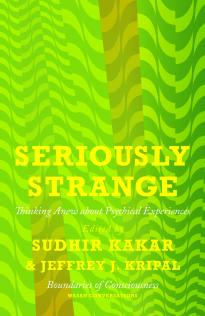
SeriouslyStrangeI had already read three of his books before I called on Jeffrey Kripal. Reading his work created a strange longing in me, as if I had been missing something I once might’ve had, but had lost on my way to academia. Kripal is a fearless writer and a profoundly kind man. He gave me a copy of his edited collection, Seriously Strange: Thinking Anew about Psychical Experiences, (co-edited by Sudhir Kakar, part of the Boundaries of Consciousness series). Like myself, Dr. Kripal had come to the conclusion that a number of apparently disparate human experiences actually belong to the same overarching class. Religion shares not a little ground with monstrosity, heroes, and the paranormal. With the exception of religion (generally) the other phenomena are classed as puerile and not worthy of consideration beyond their juvenile appeal. No real scholar would bother with them.

The orthodoxy of knowledge is a funny thing. I have been fascinated by what science teaches us about the universe since I was I child. Some of it is seriously strange as well. I always thought that science was observing the world closely and drawing logical inferences. Somewhere along the line, science became theory driven—I suspect it was some time after Darwin; and even Freud recognized the draw of the uncanny and how it related to numinous regions of human experience. In any case, by the time I was able to comprehend (partially) the fantastically complex system that science had built up I found a universe teeming with black holes that nobody had ever seen, and sub-atomic particles that behaved very naughtily, not being consistent with what we’d expect. Indeed, uncertainty abounded. Uncertainty is crucial to the humility which is the only true adjunct to human knowledge. We can only know enough to say we wish we knew more.

In the last few decades, however, science has adopted a magisterium like that of the medieval Catholic Church. That realm of unchallenged knowledge ignores the anomalous and declares that everything is reducible to material. Ironically, it seems, material is reducible to energy, and energy is less well tamed. Our understanding of our universe is still in its infancy. We haven’t even learned to walk yet. From the beginning, however, we have been religious and even science suggests that it may be biologically beneficial. So Seriously Strange takes some of the borderlands of mainstream science and looks closely at them. Some of the assertions are modest, and nobody claims to prove anything here. The essays will, however, instill a sense of much needed wonder into a Weltanschauung that increasingly has no space for simply being human.


Not Narnia

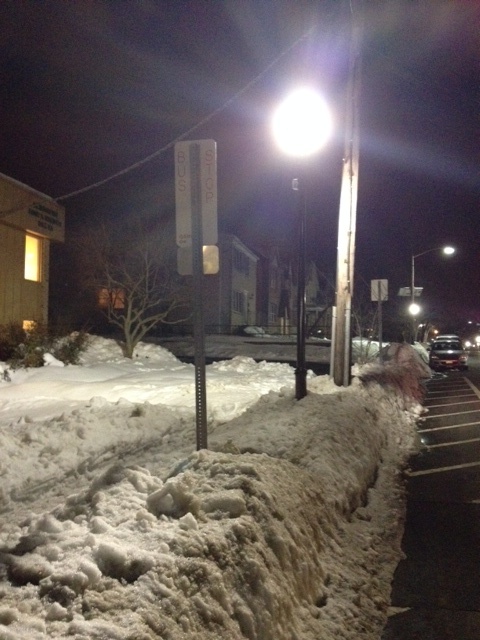
The snow fountain from a fast-moving snow-plow is a thing of beauty.  Unless you’re standing in the way.  It’s been that way this winter.  The sidewalk where I usually stand to wait for the bus is an arctic wasteland of waist-high snow piles shoved higher and higher by weary plow-drivers.  So I stand in the road, near a streetlamp in winter, but this is not Narnia.  I decided to try out New Jersey Transit’s highly anticipated “real time” bus locator—that way I know when to step out into the blowing wind to wait for the bus.  After I’d been sprayed by passing cars and the occasional snow-plow for 20 minutes, I became convinced that “real time” is just academic; it is the time that the bus would arrive, were the bus actually on time, if it ever left the garage.  Not that I blame the drivers—theirs is a thankless job that must lead to early retirement, or at least support the state mental hospitals.

Where's Mr. Tumnus?

Where’s Mr. Tumnus?

Now, I’m not the only one to be standing in the street, a hooker for capitalism, under my lamppost,  and some of the stops are completely snowed in.  When three passengers ganged up on the driver for nearly missing them because they weren’t at the stop because of all the snow, I began to feel a bit uncomfortable.  Springs can be wound too tightly, you know.  All of this is an issue because businesses don’t want to close for inclement weather.  During last week’s blizzard, I ended up taking the PATH train into New York, not knowing where it was going.  A young lady was fretting—she was going to be late for work.  An older African American gentleman comforted her.  “Don’t worry.  They don’t care if you come in late on a day like today.  They just want you to show up.”  They just want you to show up.  His words have haunted me. Businesses want you to show up because that reinforces the power of capitalism.  You don’t show and you don’t eat.  You lose healthcare.  Cobra is aptly named—you pay far more than unemployment’s pittance for monthly coverage.  Obamacare is about thirty years too late.

Every time I see the Mayor of New York justifying his decision to keep schools open when literally nine inches of well-predicted snow fall on the city—dressed in his trendy action-figure jacket, just like Christie after Hurricane Sandy—I wonder who is really being cared for.  The Mayor claims that of the over 1 million kids in the school system, a substantial proportion go to school so they can get their only hot meal of the day.  Is this the purpose of schools?  Is it not the humane duty of the largest city in the country to make sure fair opportunity is offered to those who wish to contribute?  Their parents, he adds, as an aside, have to go to work.  Why aren’t they being paid enough to feed their kids?  Oh, there is a blizzard coming, and it’s one of our own making.  As for me, it’s time to step back because I think I see another snow-plow coming.


Dead Certain

One look frightens me above all others. I have spent probably too many hours watching horror movies late at night, and I’ve seen actors—talented and otherwise—projecting the look of fear. It is a temporary thrill, soon banished by a more mundane reality. The look that frightens me above all others, however, is that of certainty. Well I remember it planted, etched, chiseled on the face of a man who believed without question that his duty was to deprive me of a career. I have seen it on faces devoid of any human emotion, but with a surfeit of self-righteousness. I was reminded of this when my wife pointed me to an article in the New York Times blog entitled “The Dangers of Certainty: A Lesson from Auschwitz,” by Simon Critchley. In this piece Critchley recounts watching Jacob Bronowski’s “The Ascent of Man” as a child. He focuses on the episode wherein Bronowski describes the danger of certainty, which often eclipses wonder when science alone is understood to be the basis of knowledge. And we have gone forty years further down that road.

Bronowski, in the clip provided by Critchley, describes how unwavering certainty led to the holocaust. It is a moving and poignant scene; indeed, the only one I remember from the episode as I watched it along with my classmates in the required humanities module at Grove City College. Bronowski, who had relatives murdered at Auschwitz, walks into the pond where their ashes were flushed, a man in a suit and good shoes, oblivious to the rational, and reaches down to touch whatever remains of the millions who died there. The scene has stayed in my head for over thirty years.

As an undergraduate I was certain. I knew the unflinching truths taught by my rock-solid faith. After four years as a religion major I had become more circumspect. Seminary found me still pretty well convinced, although much more temperately so. The doctorate, which required more intensive work than all the previous years combined, convinced me of how little I knew. I went to Nashotah House full of questions, and my goal was to bring my students, many of them very certain, to that human point of unknowing. We need to live with a question mark before we can be truly human. Curiosity is one of the more endearing traits people possess. Certainty disallows curiosity—questioning becomes the devil’s tool and honesty is the farthest thing from God that one might attain. In this era of easy certainty I often see a look on the faces of those in power that frightens me. I need to be reminded, along with Bronowski, that when shoes become more of a concern than human beings, we’ve already gone too far.

800px-Nazi_Holocaust_by_bullets_-_Jewish_mass_grave_near_Zolochiv,_west_Ukraine


Room for One More

Room_237_(2012_film)

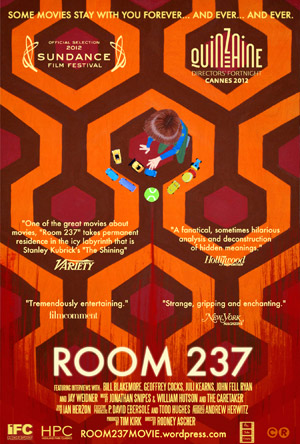
Conspiracy theories have a definite attraction. In a world where governments are more known for keeping secrets than for carrying out the will of the people, they are often easy enough to believe. Elected officials are, of course, human. Humans have recourse to prevarication from time to time, but we do expect that a corporation that takes its secular tithe from our income should be honest about its doings. So it is that I find Room 237 endlessly fascinating. Room 237 is a documentary about Stanley Kubrick’s The Shining. Winter is also an appropriate season to watch The Shining, so I took the ersatz experience of Room 237. This documentary, besides featuring some interesting conspiracies, also shows how religions may come to be.

Stanley Kubrick, as common knowledge goes, was a genius. In a day when movies are often pure escapism, much of it brainless, it might be surprising to consider a film-maker a literal genius, but anyone who’s watched one of Kubrick’s mature films is left in no doubt. The Shining, although based on the Stephen King novel, takes the story in very different directions, and there is much more going on in the film than first meets the eye. Room 237 interviews true Shining affectionados who find the “real” story line to be the genocide of Native Americans, the holocaust, a retelling of the minotaur myth, the faking of the filming of the moon landing, and a variety of other perceptions beyond the norm. Kubrick, known for the care he took in arranging every shot, clearly put subtexts into this film. What really caught my attention, however, was when one of the commentators said that he had his first real religious experience while watching 2001: A Space Odyssey.

2001 has always been one of my favorite movies. Simple and sometimes psychedelic, even with the novelization it is almost impossible to understand. With that haunting monolith, so like an outgrown iPhone, I found myself as a child believing in the evolution Kubrick suggested as a higher power led from ape to space in the instant of a bone toss. The majesty of that film that never lets humanity claim any true superiority still has the power to conjure nightmares that The Shining can’t. With the grand soundtrack of the opening of Also Sprach Zarathustra (himself the founder of a religion), I can understand how this might be a numinous experience. Movies function as modern myths, and, I contend, that is one reason that religious themes emerge so readily in great films. In Room 237 none of those interviewed considered any religious elements for The Shining, but no doubt, if an ape can walk on the moon, they’re there.


Snow Job

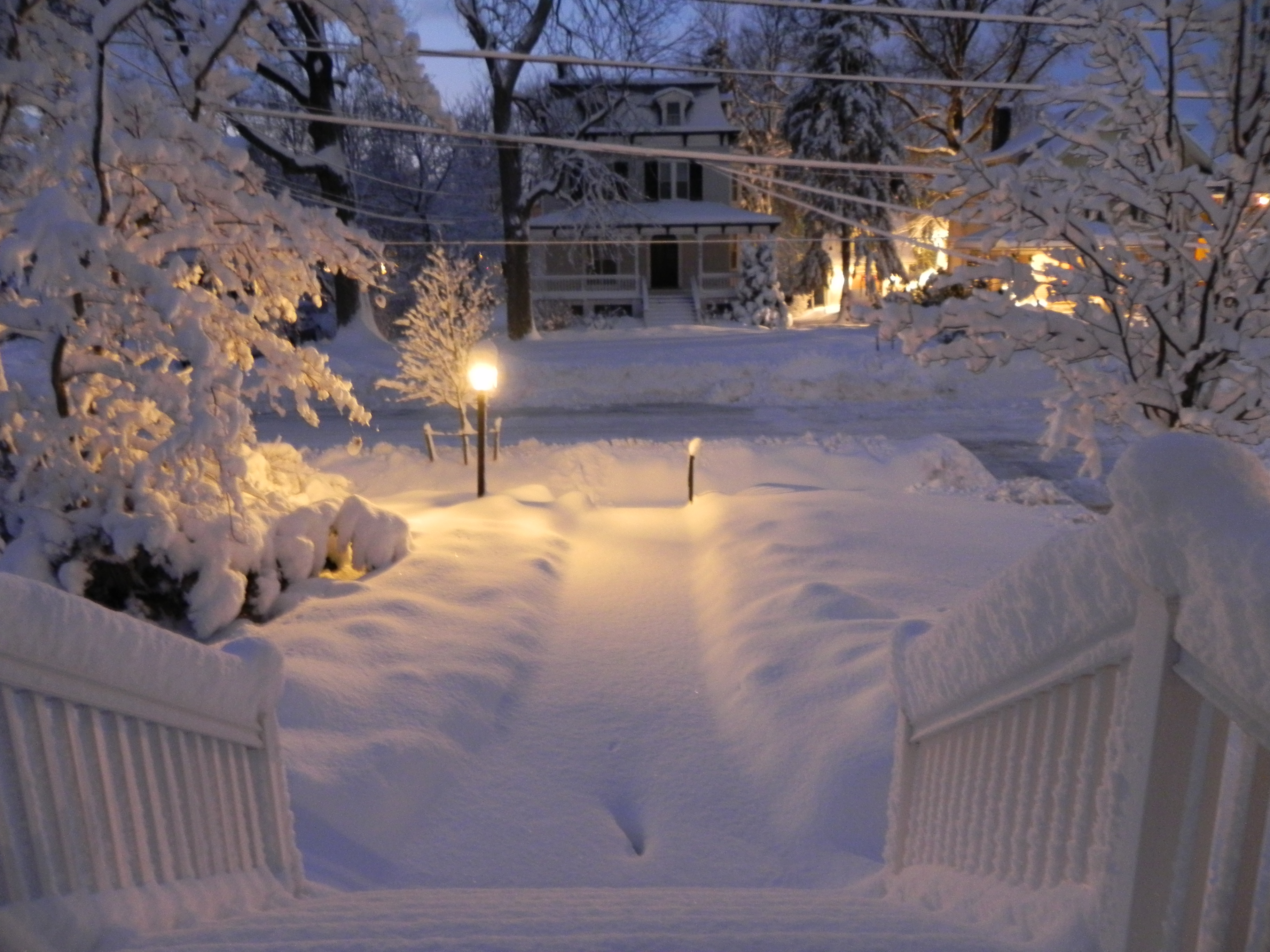
Snow does not get mentioned very often in the Psalms. Sometimes it surprises people unfamiliar with Israel that the Bible mentions snow at all. It does, and snow does fall once in a while on the higher elevations of the hills of the Levant. This year has been a memorable one for snow in the New York City area. Generally speaking, the coastal cities of the northeast are not known for their snow. This year, however, global warming is flexing its muscles as erratic weather brings storm after storm to the region. Interestingly, an internet rumor of a thirty-inch snowstorm (supposed to have come earlier this week) demonstrates just how gullible we’ve become. If it’s on the internet it must be true.

A story in the New Jersey Star-Ledger traces how the rumor began, starting with an experimental weather model by a credentialed meteorologist, which, in the keyboards of novices, grew to biblical proportions. Fact checking is something we just don’t bother with any more. The facile understanding of “global warming” as tropics for everyone shows that. The internet makes information—true or false—available at nearly the speed of light anywhere on the globe. Except where the power is out, perhaps due to weather. Not only does knowledge spread quickly, ignorance is just as fast. People weary of snow are perhaps more open to suggestion than others. We don’t hear our Minnesota or Wisconsin friends complaining (at least not too much).

There was a time when the standard sources of authority determined what we would believe. We didn’t accept just anybody’s word for it just because they had a Facebook account. For all the debunking that we hear about, it is easier to preach than to practice. Don’t get me wrong, sledging to work through piles of snow is not fun and the old circulation isn’t as vital as it used to be, so I have to add more layers than is practical to keep warm. But I’m not expecting palm trees and rain forests in Manhattan any time soon. Nor am I expecting a three-foot dump of snow. I know better than to trust what I read on the internet. After all, they even let me post things on it every day. Talk about your theoretical blizzard…

DSCN0099


Which Bible?

No doubt the Bible holds a privileged place in western civilization. Arguably, it is the most influential book that exists in terms of its cultural influence in this hemisphere. Not that the Bible has had an easy ride of late. Many are vocal about its shortcomings, notably its violence and steadfast consistency with its own social mores of patriarchalism and election. Unfortunately these critiques sometimes (often) discourage people from reading it. (It is a very big book.) Having spent a good deal of my career dealing with the Bible, however, it is like a friend. Most friends have a habit or two that drive you to the brink of madness, but still, you know and trust them and tend to see the good rather than the flaws. The Bible is a holy book with warts. I cringe when I read parts of it. I’m not quite ready to let it go yet, however.

One reflection of this ambivalence I see often is that scholars (among others) have now taken to spelling the Bible without a capital letter: the bible. Perhaps it is the latent editor in me, or perhaps it is the Chicago Manual of Style that hangs like Damocles’ dictionary above my head, but like it or not, the Bible is a proper noun. In English we capitalize proper nouns. On Twitter, Facebook, or YouTube (all of which my computer auto-corrects to capitalized proper nouns), I understand. Most hands don’t get sufficient pinkie exercise to make that stretch to the shift key. But in academic writing? I’m pretty certain that e. e. cummings had nothing to do with the title, and other than loss of prestige, I’m unsure how to explain it. I have read book proposals from biblical scholars (biblical, by the way, is an adjective and does not require capitalization unless it is part of a title) who leave Bible all in lowercase letters. Have we come to this?

Leaving the “Holy” out of the title is academically sound. After all, Holy is a confessional modifier, and scholars strive for neutrality. With the proliferation of bibles—everything from Beer Bibles to Gun Bibles are out there, all capitalized, I note—we should take care to treat the Bible with grammatical care. It shows nothing of one’s faith commitment to capitalize it properly. God, on the other hand, may be used as either a proper noun or a common noun. Usage dictates capitalization. In the Bible Elohim is more often a title than a name. I knew civilization was in trouble the day I saw the phrase “butt crack” in an article in the Chronicle of Higher Education. The least we can do to combat the decline is to stretch that pinkie once in a while as an offering to the god of good grammar.

Bible


Jesus, My Foot

A story going around the internet features pictures of Paula Osuna’s bruised second toe. According to the YouTube story, Osuna fell down the stairs then had her boyfriend rub some sacred dirt from the shrine of El Santuario de Chimayó in New Mexico over the injury. As part of the healing process, an icon of Jesus appeared on her injured toe. Now, New Mexico has a reputation for hiding some potent sites of paranormal import (at least 51 of them), but I had never heard of Chimayó before. It is apparently one of the most visited shrines in the country. Like Holy Hill, a local shrine I used to visit once in a while back in Wisconsin, the site itself is supposed to lead to healing. Healing sites sometimes hold their own irony.

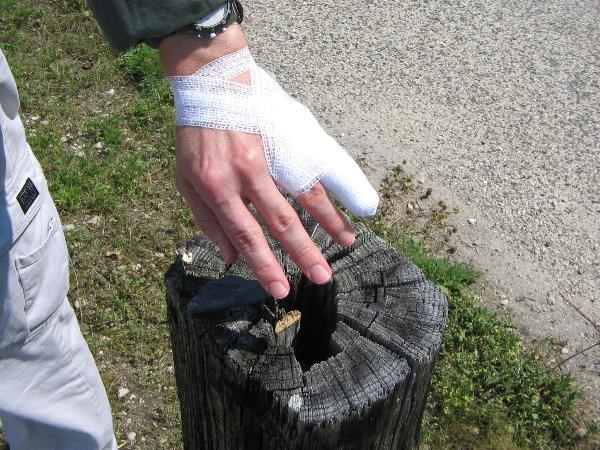
When we lived in Wisconsin, my family used to be avid geocachers. We still go out once in a while to find the little boxes hidden in the woods, but in Wisconsin there were plenty of day trips to be had with minimal traffic (unlike our current setting). One day we drove to Holy Hill National Shrine of Mary, Help of Christians, a discalced Carmelite community built atop a glacial moraine that gives spectacular views of the southeastern corner of the state. Inside there were many abandoned crutches, as I knew from previous visits, but this time we were present to find a small ammo box filled with trinkets, hidden in the wooded grounds. As our GPS narrowed us in on the coordinates, I made the typical error of watching my device rather than my feet. I slipped on a pile of rocks and my left hand slid onto a broken beer bottle, slicing open my little finger. Fortunately our geocaching bag held a small first aid kit, but no amount of gauze and holding my hand over my head could stop the bleeding. After we’d logged our find, we drove to a local emergency room where I received about ten stitches. Although the injury took place on the grounds of a healing shrine, no Jesus appeared on my shredded pinkie. Nor did miraculous healing come because of the location.

DoYouSeeWhatISee

Pareidolia is a most fascinating evolutionary development. One of the first things imprinted on a newborn person is the image of a human face. In remarkably short time the infant can register the intent of various expressions on a human face and will soon learn to mirror them. That desire to find a friendly face never leaves us. We see faces everywhere. There are entire websites dedicated to pareidolia. We like to think there is a watchful parent ensuring that we won’t stumble and fall. Life, however, is full of accidents and injuries. Some of them are even the results of visiting healing shrines. Belief is what makes the difference. Ironically, even when Osuna’s bruise lost the shape of Jesus, she still believed in the healing power of the dirt. Her story has been covered on television and is easily found on the web. It is a fame born of faith. Miracles are always there for the taking.


Horse Sense

In an article in last month’s Federalist, Tom Nichols lamented the death of expertise. Well, not exactly. Expertise is not so much dead as lost in the wash. In the days of internet reality, it is difficult not to feel an expert after half an hour on Wikipedia and with a glance at a few headlines. What concerns Nichols, however, is that those who have done the hard work of going through educational programs and heavy research to learn materials minutely and intimately, are no longer considered any more qualified to speak the truth about their subject than anyone else. The web is full of self-proclaimed experts, and even I was always a little alarmed at student papers that took online resources at face value (I warned students about us bloggers). We have truly entered democracy—intellectual democracy—and it is scarier than anyone might have imagined.

I’m not a snob. I grew up in a blue collar home and I generally trust blue collar people more than my more educated colleagues. In the working class, at least in my experience, if someone intends to harm you there is usually some warning shot fired across your bow. In the world of business and finance the unseen and surgical strike is carried out with far more finesse. Experts can make brutally efficient killers. It was only after years and thousands of dollars I had not yet earned that I could claim to be an expert on ancient religion. From the first day in the classroom (particularly at Nashotah House) I found myself face-to-face with self-acknowledged experts who put up with my instruction only by dint of ecclesiastical command. Being an expert meant I was to be mistrusted. I was the one who might lead astray. The internet was already out there, but it was only lurking in the background. In religion, expertise had been dead long before Jesus showed up on the scene.

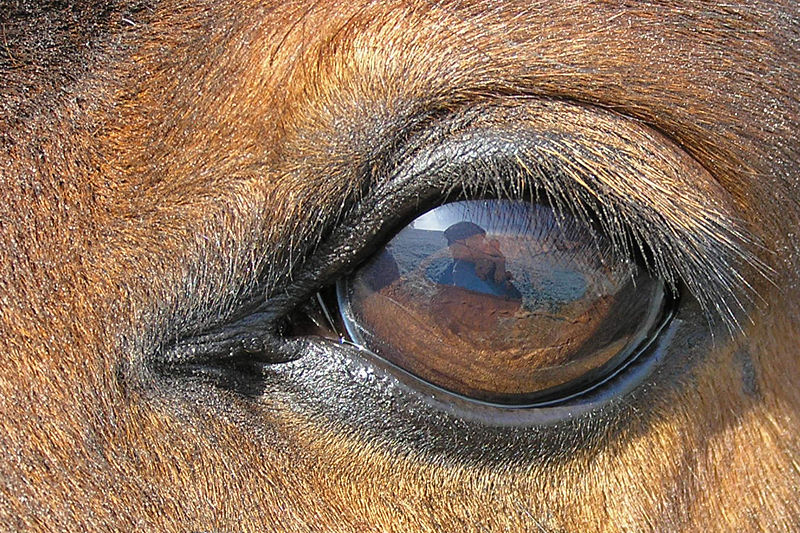
The problem with religion is that nobody can have the whole truth. I used to show my students a photograph of the silhouette of a horse against a sunset/sunrise. You can’t tell which way the horse is facing—toward the camera or away. When I asked them which way the beast faced, some would say away, but most said, predictably, towards them. Then I would reveal that not one of us in the room knew the answer. Religion is like that. The photographer who stood near the horse knows, but the person behind the camera may as well be in heaven for all it helps us. I was an expert because I’d spent years learning arcane languages and looking at texts in as close to the original format as we had available. All I had learned is that no one knows the direction that horse is facing. Tom Nichols is right: we face a crisis of expertise. But for me the only source of truth may be found astride a noble steed.

Photo credit: Waugsberg, WikiCommons

Photo credit: Waugsberg, WikiCommons


Myth-story

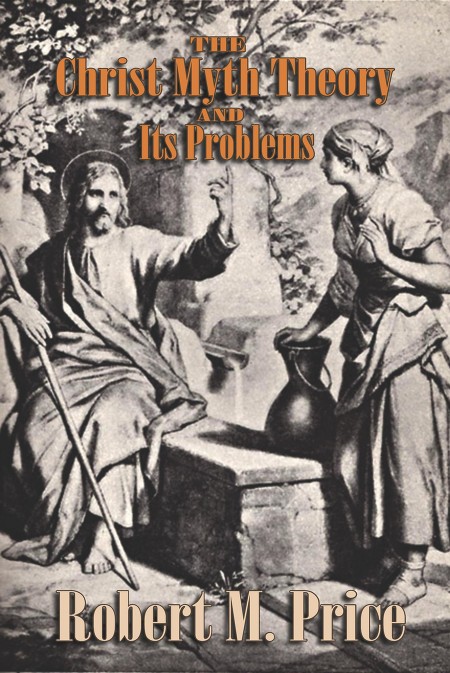
ChristMythTheoryEither there was, or there wasn’t. An historical Jesus, I mean. I just finished reading Robert M. Price’s The Christ Myth Theory and Its Problems, and I have to admit that it raises some interesting points. In short, Price positions himself among the Christ Myth school—scholars who doubt that there was an historical Jesus. This proposition may come as a shock to many who are raised never to question the orthodoxy of religion handed down from parent to child. Given the popularity of Christianity worldwide, it may seems like a difficult premise to accept. Price suggests that the figure of Jesus might’ve been a midrash (commentary) on Hebrew Bible texts. When you look closely at many of the Gospel episodes, they are couched in language from the Hebrew Bible, and for those familiar with ancient midrash, the elaborations he proposes aren’t that far-fetched. The real question, for me, is a bit more broadly based—how do we ever know what really happened? Religions, as I suggested yesterday, are echoes from the past. The past, despite the internet, is inaccessible to us beyond what ambitious writers and artisans have left behind for us. The bulk of making history is interpretation.

This should give us pause. Yes, there are undeniable events, witnessed and recorded by many. What really happened, however, is an atomistic enterprise. Take Lincoln’s assassination, for example. It happened, we’re pretty sure. What happened, we reconstruct from what we have left for us in witness accounts. But as National Treasure 2 shows, a little imagination can throw the whole picture askew. Or even closer to our own time—what really happened at John F. Kennedy’s assassination? Some of the facts we have, others we never will. Some posit high-level withholding of information. Try to put that together with a truly messianic figure that some claim is actually divine. The Gospels differ a bit on the details, particularly after Jesus’ execution. What really happened? A harmonization of the Gospels? Anything at all? Who was there to see it?

Religions are deeply tied to past events. Even the modern religions that are constantly emerging—new ones are formed on a nearly daily basis—soon distinguish themselves because of their histories. To get at those histories that we didn’t witness, we need to rely on the records of those who did. Some of those religions just won’t take off—the Shakers, for example, are slowing going extinct. The Oneida Community is already gone. Others, like the Church of Jesus Christ of Latter-Day Saints, scrape the stratosphere with their success. And these are just examples of religions from the Second Great Awakening. Did Joseph Smith really meet all those figures he claimed? How can we know? When it comes to Jesus, we might think we’re on solid ground (as Smith would agree, if he existed). Price asks us to consider that assumption anew. Direct evidence may not be plentiful, but on the strength of ancillary evidence, most of us see Jesus as historical. Of his life we have very little. What you make of him, however, is a question of faith. And interpretation.


Past Imperfect

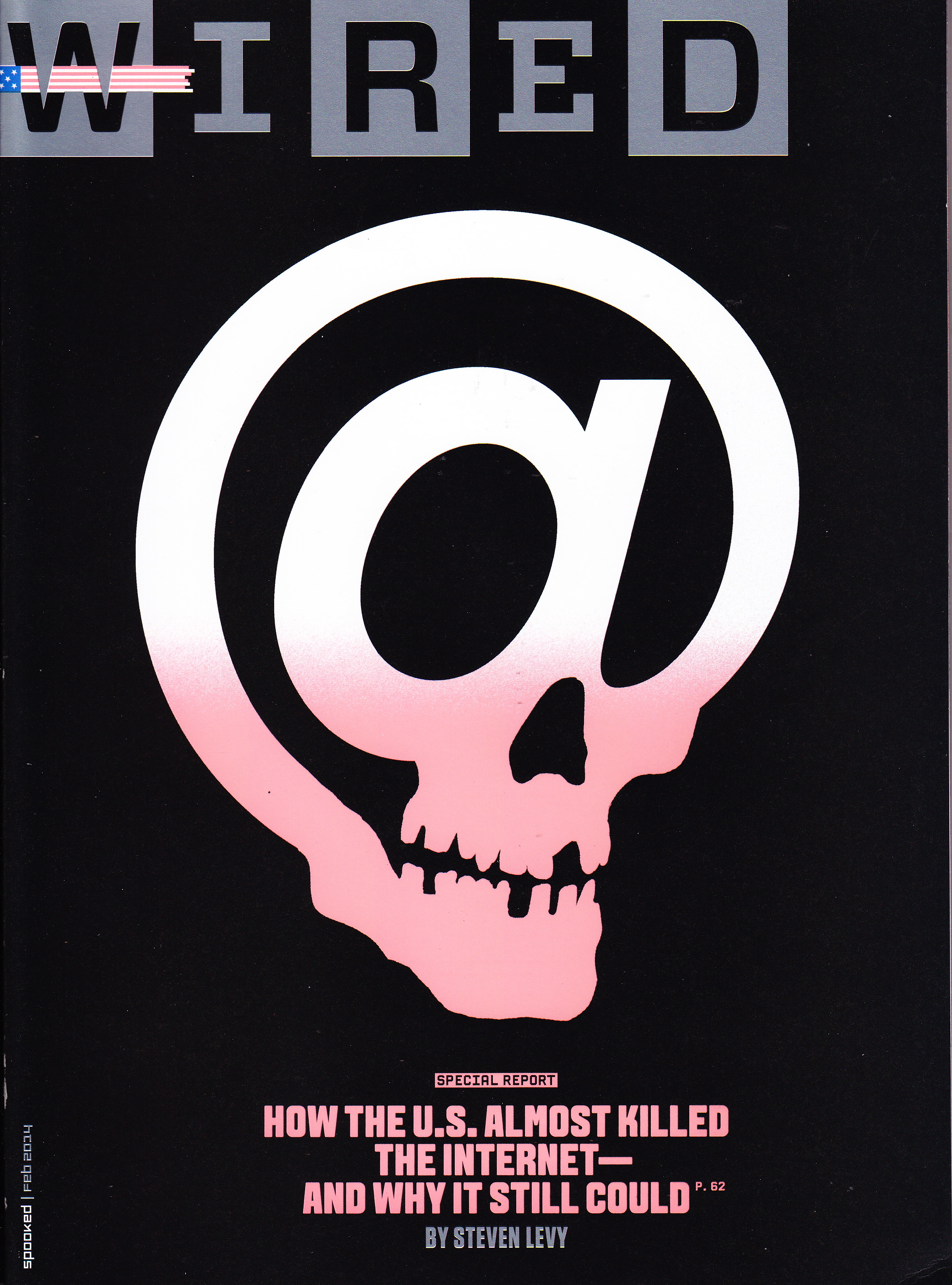
WiredPastReligion is inextricably tied to the past. So when I noticed an article in Wired entitled “The End of Then: Past? Present? Online, It All Runs Together,” by Paul Ford, I determined to read it once I could figure out whence that musky aroma arose. Maybe it is just my imagination, but the order of the major advertisements in Wired seems like a pre-packaged sexual scenario. Near the beginning of the magazine is an aromatic ad for Chanel for men. A few pages on is a more than full-page ad for Viagra. A few pages on is a short piece on Trojan lubricants, followed coyly by that rare cigarette ad. (I’m probably reading too much into this, but I’m a creature of the past.) Where was I? Oh yes, the End of Then. Ford’s point in the article is that the internet has made access to the past incredibly facile. Anyone with a portal into the web can find scads of information about the past, making past and present indistinguishable in a sense. My thoughts turn to the future.

The future seems to be the true unknown country. Not long ago I saw a story on the internet about how scientists conclude time travel to be impossible because we have not found messages from the future on the web. But we have found the past. Or have we? Ford mentions our fascination with Babylonian tablets, and suggests future historians will be equally intrigued by our continuous electronic chatter. But I turn back to that clay tablet. Those tablets, many of which were already in the deep past well before the Bible was scrawled, preserved what was important for a pre-industrial society: receipts, court records, and myths—the stories of the gods. And their command to build a round ark, at least according to Irving Finkel, whose book seems not to be available in the United States. Those myths, adapted to biblical proportions, have long been in the public domain, and yet, are they really in any sense present? Try giving students a quiz and find out.

We have a past that will always remain inaccessible. The present, for better or worse, is all we’ll ever have. Religion, however, is tied to the past. True claims are based on historical events, some less believable than others, that are permanently out of reach. We can watch how religions play out in the present and decide later. In the future. But the past haunts us forever. I, for one, had thought that cigarettes were on their way to extinction. But I need to put this edition of Wired down because that cologne ad is making me dizzy. And it leaves me wondering about future prospects and what religion has to do with any of it.