In Saecula Saeculorum

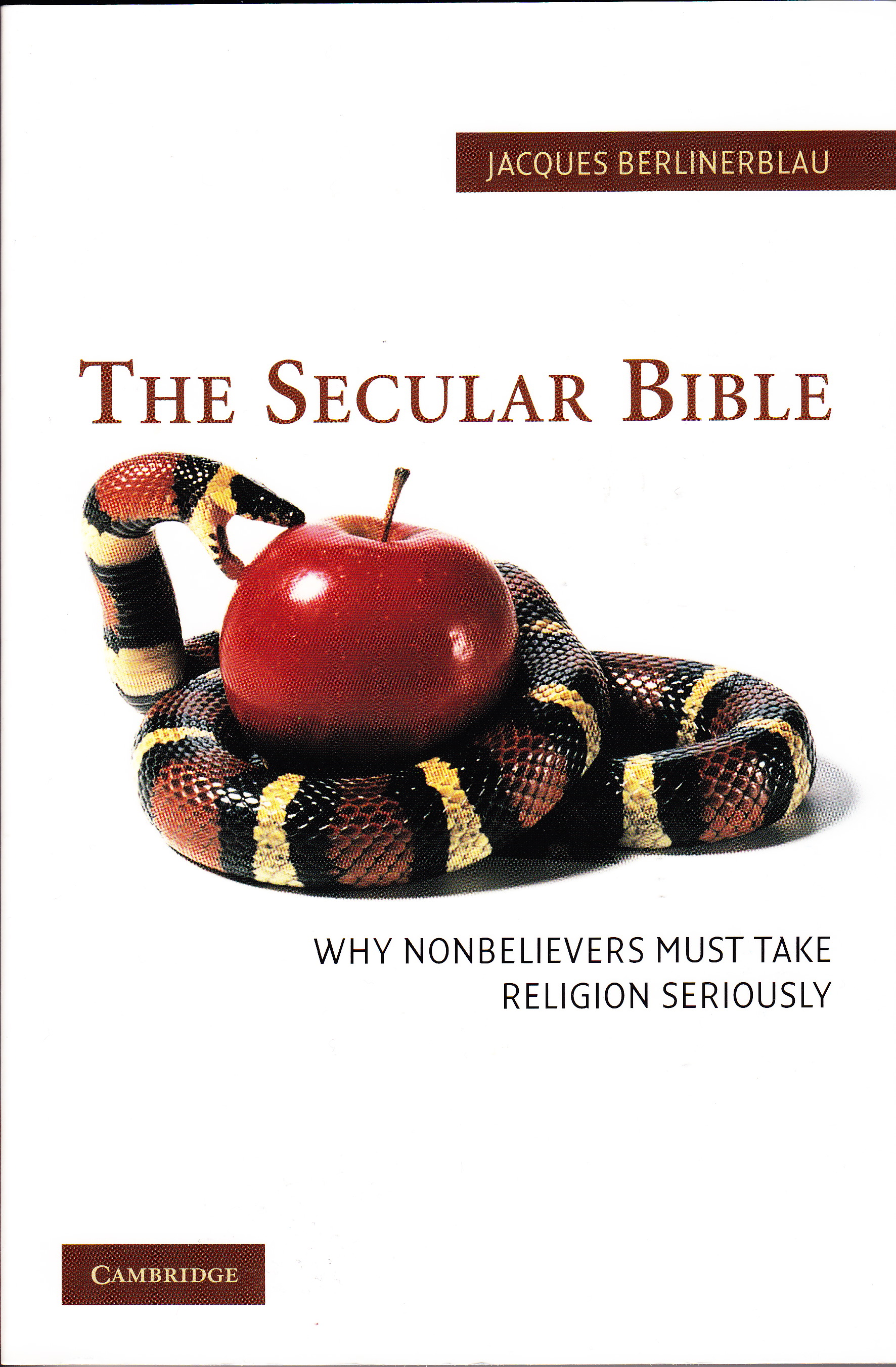
SecularBible“The Hebrew Bible is a misreading waiting to happen.” Jacques Berlinerblau’s The Secular Bible is a book containing much wisdom. My only real concern is that by having published it with a university press Berlinerblau may have inadvertently ensured that it would be read only by biblical scholars. Although yours truly was once such a credentialed scholar, I read The Secular Bible with its intriguing subtitle, Why Nonbelievers Must Take Religion Seriously, looming in my mind like a great raptor. This is an important book. With so very much of our lives heavily influenced by the Bible, eloquently argued by Berlinerblau, we have secularists who don’t know the Bible fighting the impossible battle to subvert it. The rationalizing, leveling influence, for the past two centuries, has come from the much castigated and discarded biblical scholar. Can I get an “Amen”?

Berlinerblau demonstrates unequivocally that we need Bible scholars and Qur’an scholars who know how to speak to their own traditions. Instead we have secularists who belittle and then wonder why the religious strike out. The pattern has repeated itself so many times that it defies reason that intelligent people would delude themselves that religion is a passing fancy. The Secular Bible argues what I’ve said time and again: if we want to avoid the dangers religion can bring, we must spend the resources to understand it. Instead we close departments and force those who know the field credibly well into unemployment. And we wonder why there’s a reaction.

“Self-critical religious intellectuals have never been much appreciated.” Instead we put the extremists on television so we can laugh at them or gape at their ability to do the unthinkable in the name of religion. Ironically, there are thousands of trained experts in the field, many of them languishing in un- or under-employment while towers crumble and mobs burst into violence. I do wonder what future generations will think of us. We have the resources handy, indeed, many of them willing to serve for a fraction of the cost of a business professor or basketball coach, but we choose to ignore them. As Berlinerblau states emphatically, we in the western world have the Bible so deeply ingrained that we can no longer even exegete all the ways in which it plays out in our society. If such influences were at work in a human body, we’d pay a doctor well to understand. Instead, we let the most foundational text in our society be used for duplicitous purposes while the simple reading of a book like The Secular Bible could save us all an eon of grief.
The Devil Made

Some things you just don’t mess with. Just in case. For a variety of reasons, not least of which is lack of biblical support, many Christians no longer believe in Satan, or “the Devil.” As I written before, the Hebrew Bible has no such diabolical character and he seems to have been devised from an old Zoroastrian dualistic belief system when he finally does appear. In other words, Satan is not among the core beliefs of the Judeo-Christian tradition. Nevertheless, according to an Associated Press story the Satanic Temple is petitioning to have a statue of Satan placed on the capitol grounds in Oklahoma City. The action was prompted by the placing of a Ten Commandments monument in this public space, and, invoking the freedom of religion clause, the Satanic Temple has decided to play tit for tat. Either religion is free, or it’s not.

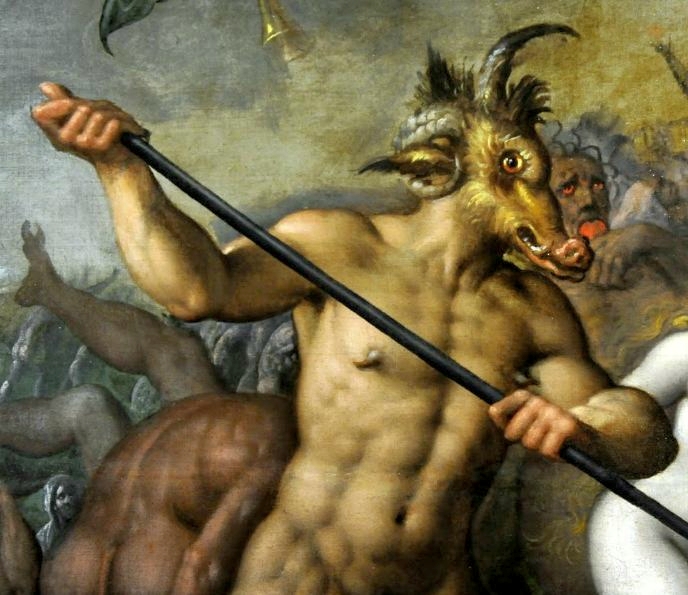
Backer_Judgment_(detail)Although the Satanic Temple claims to be sincere in its beliefs, the group’s website indicates that it understands religious belief in a metaphorical way, and that it wishes to parse superstition from religion. This envisions revising Satan as an “icon for the selfless revolt against tyranny,” according to the AP story. The commissioned monument includes a Baphomet-style Satan (goat head and beard, wings and pentagram—you get the picture), that features—sure to raise the ire of Oklahomo sapiens—children gathered around the dark lord. It will double as a seat where individuals may sit on Satan’s lap, although I’m not sure what they might be asking for. Various representatives of the Sooner State say they’re all for religious freedom, but Satan just has no place in the conservative breadbasket of the nation.

Provocation occurs on both sides in this trial of wills. Justice can be realized without Moses’ top ten on every courthouse lawn. The Code of Hammurabi demonstrates that. People are capable of enacting justice without God, or the Devil, telling them to do it. The triumphalism of religion is the heart of the issue. In a world daily aware of those outside the neighborhood, finding that other religions exist and thrive is an affront to the “one true faith,” whatever it may be. It may be that Jews, Christians, and Muslims have no problems with the ten commandments. Other religions might. Leading with having “no other gods before me” starts the conversation off on an awkward tone. The solution may be as simple as amending the commandments to add just one more. If we can see our way to doing that I have one that I’d like to propose: “thou shalt not let thy religion cause childish behavior.”


Eleventh Hour

Religion, as many a charlatan knows, makes a very good investment. History has demonstrated time and again that the confident huckster can easily siphon the money from the gullible in the name of God. What follows does not make any assertions about the character of the people involved. It is, however, a fascinating story.

Cyrus Ingerson Scofield did not have an exactly stellar career. He was raised Episcopalian (which may explain some of it), but upon being drafted into the Confederacy during the Civil War, deserted to become a lawyer in St. Louis. Scofield was forced to resign from his law post because of “questionable financial transactions” which may have included forgery. He was a heavy drinker and abandoned his wife and two daughters. The year of his divorce he remarried. Then he had a conversion experience. Conversion is the ultimate clean wiping of the slate. Any life of dissipation may be excused following a religious experience, eh, Augustine? And furthermore, in the sanctified state the motives of the former reprobate are never questioned.

Scofield went on to join the Congregational Church and to grow wealthy from his Scofield Reference Bible, still a perennial seller, despite his lack of formal theological training. This notoriety was largely because Scofield had adopted another unlikely scheme, dispensational premillennialism. This end-time scheme grew out of the work of John Nelson Darby and later evolved into what would be called Fundamentalism. The idea was that the Bible contained an esoteric roadmap to the future, culminating in the book of Revelation, whereby the blessed could figure out exactly how the end of the world would unfold. As a child I bought a literal roadmap to the end of the world, but having survived several such putative apocalypses, I have grown a tad skeptical about the efficacy of my chart.

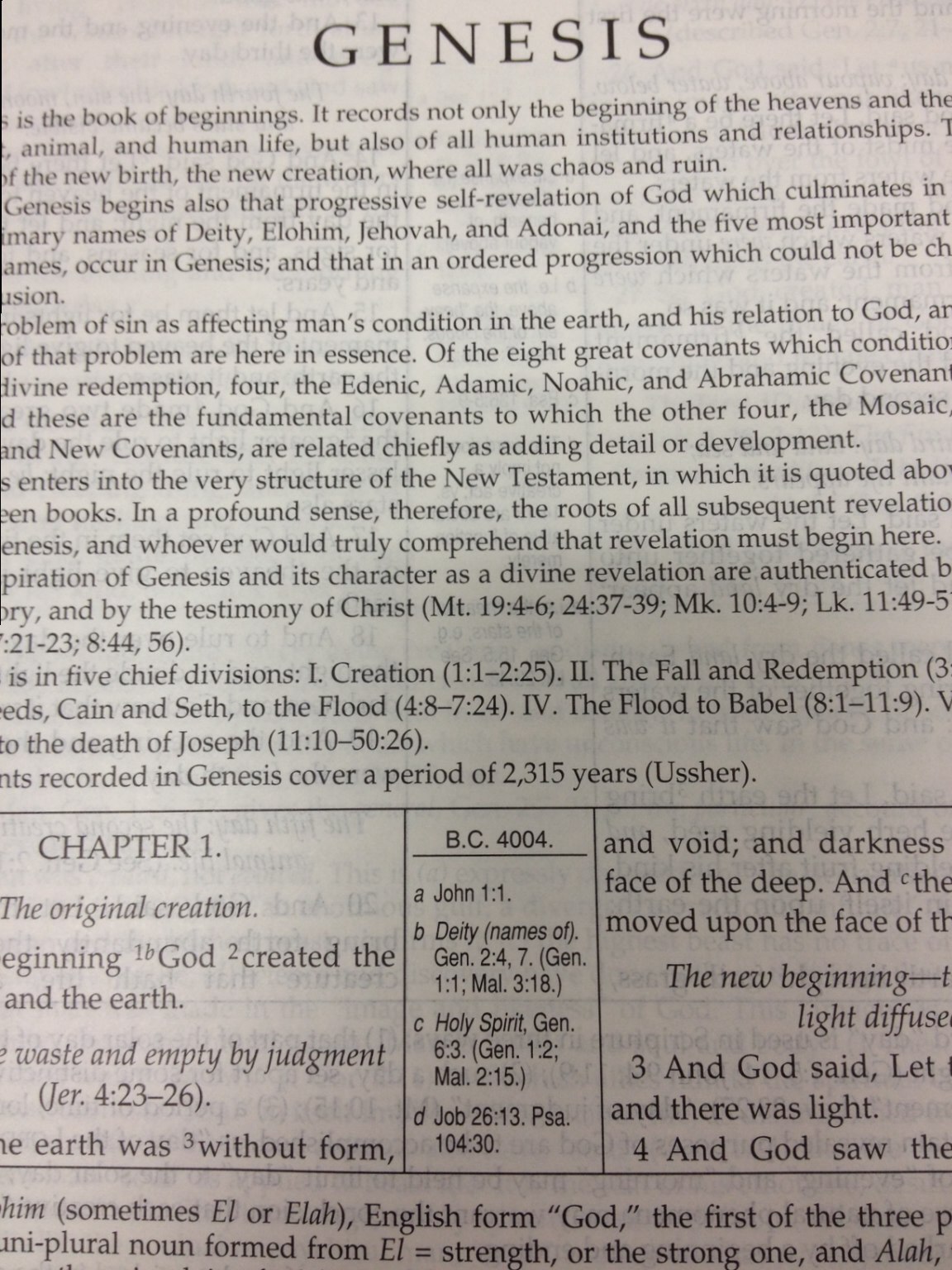
Any number of religious leaders have a background of self-promotion and more than a whiff of Phineas Taylor Barnum about them. A converted soul, however, is never to be questioned. Cyrus Scofield adopted Archbishop James Ussher’s dating scheme for the creation of the world in 4004 “BC” and placed it in his reference Bible, forever putting the cast of scriptural authority to a date that would come up in court cases even through the twenty-first century in Dayton, Tennessee, Little Rock, Arkansas, Dover, Pennsylvania, and Washington, DC, wasting tax-payers’ money on a myth of biblical proportions. Often creationists use “stealth candidates” who don’t exactly tell the truth before school board elections. I don’t doubt the depth of the convert’s belief, but I smell money here. And once upon a time literalists believed that it was the root of all evil.

The reason most Creationists cite 4004 is Scofield...

The reason most Creationists cite 4004 is Scofield…


Flash Freeze

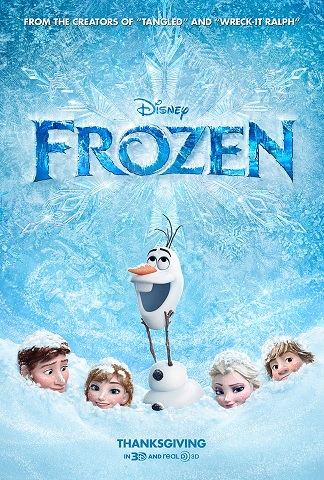
Frozen_(2013_film)_poster

One industry has, in this era of leisure, proven itself powerfully recession-proof. Entertainment, conceived broadly enough to include the sellers of strong drink, always seems to do well when the bread-and-butter parts of the economy tank. Among the entertainment giants is Disney, making it an easy target for curmudgeons like yours truly. Every once in a while, however, the cynicism has to melt. Frozen induced one of those experiences. I left the theater feeling that this may have been the best Disney movie of all time. You see, I grew up largely without Disney. We didn’t vacation in fantasy-lands like Disney World (when we could afford to vacation at all), and watching a movie was a rare treat. We did see some of the old style animations that came to our small town, such as Bambi and Dumbo, and we did watch the television program, I want to say on Sunday night. My real experience of Disney, however, came with parenthood where VHS and then CD then online versions of the movies made them accessible any time, in nearly any place. In the past decade or so, I’ve noticed, Disney has been putting considerable money behind the crafting of story, something many movie moguls fail to attempt. Frozen, however, stunned me.

The visual beauty of the Scandinavian world is no doubt part of it. I don’t often mention C. S. Lewis on this blog—he has been so thoroughly appropriated by the evangelical crowd that it is often difficult to admit how influential his work was to my college-age self. Lewis was unashamed of his Christianity, but in his fiction it isn’t always in your face. When I read Surprised by Joy, his autobiography, a scene—just a sentence really—lodged in my head. Joy, he noted, could be brought on by visions of the grandeur of the frozen far north. Lewis noted that not everyone has that perception, but I certainly share it with him. Elsa’s icy world impales with its beauty. Although I’m sensitive to cold, a deep desire stirred in the construction of that isolated ice castle. Elsa could, as an appropriately messianic figure, walk on water and ascend to heaven.

Of course, as I’ve observed before, the central trope of cinema is resurrection. Anna takes on the self-sacrificial role for her sister, marking Disney’s move away from the magic of the heterosexual kiss as the cure to all female ills. No, here are women who thrive not only without, but in spite of strong male characters. This is a world where not one, but two female protagonists are needed to carry the plot to fulfillment. Self-sacrifice, in fantasy worlds, often leads to resurrection. With Anna’s act of love for her sister, the cinematic world has reached an important pinnacle in its lesson to children: love comes in many forms, and if it is really love it is never bad. Elsa ends up satisfied without a king to guide her, a woman who reigns as she is, not as society says she should be. If only the ice of our patriarchal world could be melted so easily.


Shipwrecked

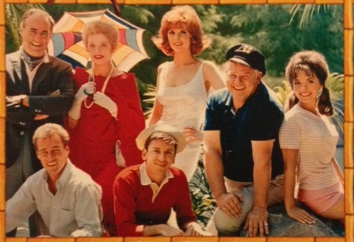
Childhood dies in pieces. There is nothing a young boy desires more than a father to show him how to negotiate life. As Mick Jagger eloquently declared, however, many of us know “you can’t always get what you want.” I did not get to know my father growing up, and so I did what any American did in the 1960s—I looked to television for solutions. Children can be terribly naive, but I had a shortlist of ideal candidates in my head. The one who unwittingly set the direction for my life was shipwrecked on a not-so-grim deserted island. Everyone loved Gilligan because he made them laugh, but the Professor, he seemed the ideal father: rational, mostly kind, and generally unflappable. My earliest career ambition, before I decided that janitor was my true calling, was to be a scientist. This was largely because of the Professor. Religion eventually interfered in my plans, but even as I attended seminary, and then graduate school, the Professor never left me. He had been a kind of father figure to me. I’m sure going to miss Russell Johnson.

TheIsland

I still feel a stab of delight when, watching old Twilight Zone episodes, “the Professor” appears. When I see Johnson in It Came From Outer Space and This Island Earth, it’s a particular island I’m thinking about. An island where, if religion came up, it was treated lightheartedly but even science, for all its clear thinking, never managed to help get the castaways rescued. This island represented my childhood. Innocent, sincere, and strangely funny. Little did I realize at the time that the science Roy Hinkley advocated would become such a fierce enemy to the religious milieu from whose baptismal waters I’d never fully emerge. It sure would’ve helped to have had a father to sort all this out.

Back before Borders (a kind of ersatz father) closed,Tina Louise came to our local to promote her new children’s book. I couldn’t believe I was standing twenty feet from a childhood icon—a movie star, nonetheless. How shocked I was to see her in The Stepford Wives where she talked about sex—that was always in the deep, deep background on the island. Pagan gods exerted real power on Gilligan’s island. As I grew up, religion held me in its powerful grip. With the Professor and the Bible in my head, I went off to become logical, intellectual, cynical. I taught Bible, students called me professor. Then my career was shipwrecked. Is it any wonder that I had that nightmare about being lost at Nashotah House again last night? Sometimes a boy just needs a father to show him the way. Thank you, Professor, for stepping in. You influenced one life in a way that I’m sure you never expected.


Holy Ghost

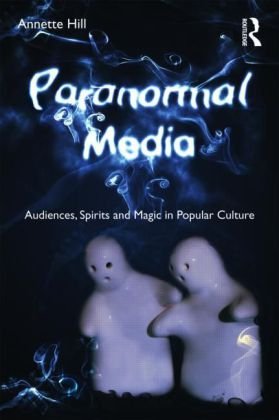
paranormalmediaOn a family trip to Cape May, New Jersey, some years back, a ghost tour caught my eye. My daughter was old enough not to be unduly scared, and appropriately curious. With a group of total strangers we walked the streets after dark, hearing tales of tragedy and woe. Little did I know at the time that I was being trendy. I just finished Annette Hill’s Paranormal Media: Audiences, Spirits and Magic in Popular Culture. The first point that really haunted me from her study is that the media has transformed the paranormal from religious to secular. I have always considered that paranormal belief and religious belief share an enormous amount of fuel—they are driven by similar engines. Then some media folk figured out that, like religion, the paranormal could become a revenant “revenue stream.”

Hill has other ghosts to hunt in her study—she is a media scholar after all—but I kept wondering about the cheapening effect of commodification. That which creates the most wonder becomes the most tawdry when it’s put up for sale. Life is terribly ordinary. There’s an ennui to much of human experience, so people turn to religion, drugs, or increasingly, the paranormal, for escape. But as any savvy media expert (or Heisenberg fan) knows, being involved in the experience changes the outcome. This applies to money just as it does to people. One is more evil than the other, however.

Experiences of awe are a dwindling resource. The frisson of many an adolescent night when something unexplained or holy lurked outside your window has now become just another CGI gag pulled on a gullible public. I used to watch Ghost Hunters on DVD. Then someone released debunking b-roll footage on the internet, making me feel like I’d wasted more than a few irredeemable hours on a fraud. Just one prank is all it takes. Why? The show has to make money, and who is going to watch if nothing is found? Don’t be offended, it’s only entertainment after all. Nobody said there really was anything that you couldn’t plumb yourself. Maybe it’s just me, but it seems nothing frightens a ghost away like money.


Dagon Cthulhu

Cthulhu has taken over the world, thanks to the internet. I wonder what H. P. Lovecraft thinks as he lies dead, but dreaming under the loam of Providence. A lifetime of struggle to gain recognition as a writer left him without much of a following, relegated to pulp magazines for low brow and Innsmouth-dwelling mentalities. Now everywhere from Davy Jones’ face in Pirates of the Caribbean to car bumpers in any parking lot, Cthulhu has awakened. My wife sent me a photo of a couple of such bumper-stickers recently: “Arkham’s Razor,” reads one, “The Simplest Explanation Tends to Be Cthulhu.” “Nyarlathotep is my co-pilot” reads another. I first discovered H. P. Lovecraft through bumper-stickers.

Lovecraft

Back in my post-graduate days in Edinburgh, I had decided to write my dissertation on Dagon. This seemed a reasonable topic as no serious, book-length treatments of this elusive, Mesopotamian deity existed. My advisors talked me out of it, however, noting that material on Dagon was so scarce that it would be extremely difficult to scrape enough together to call it a dissertation. A few years later, it turns out, an academic book on Dagon finally appeared, but the fact remains that he was, and is, a major deity who somehow mostly disappeared from the ancient records—the victim of chance finds and perhaps more aggressive gods. For my birthday one year my wife bought me a bumper-sticker with a “Jesus fish” that had the word “Dagon” inside. I posted it on my office door in Oshkosh and the department chair asked me what the tentacles were meant to represent. An web search indicated that the Dagon was not the biblical “fish god” but the Lovecraft reincarnation. I had experienced an epiphany.

Lovecraft, although an atheist, knew his Bible. I once wrote a scholarly article on the Dagon story in 1 Samuel 5 where the Philistine statue of Dagon falls down, decapitated, before the captured ark of Yahweh. This is the sole narrative involving Dagon in the Bible, and it concludes by saying only Dagon’s “fishy part” was left intact. Lovecraft took this obscure Bible story and built an entire mythos from one of its characters. Cthulhu, Dagon, Nyarlathotep, Shub-Niggurath, and their companions have risen from the deep, and encircled the world in an electronic web. The fact that kids who’ve never read Lovecraft can identify Cthulhu at a glance, attests to his power. Even Batman fans who cite Arkham without knowing that it was originally Lovecraft’s creation keep the master alive beyond the grave. Isn’t that what resurrection is really all about? Even if a writer has to be discovered through bumper-stickers.


Blessed Art Thou?

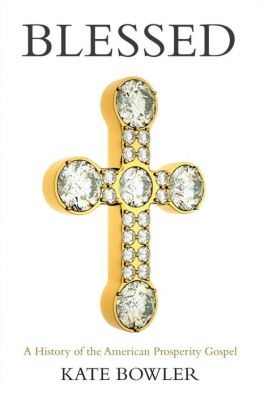
blessed“Con man” derives from the disparaging use of the term “confidence man,” as applied to those whose promised deliverables never appear, if they ever existed at all. History is filled with roguish con men who populate movies and popular biographies. Among their ranks have been hawkers of spiritual wares, but the institutionalization of religious profiteering is fairly new. Even growing up in a Fundamentalist setting, I don’t recall ever hearing of the “prosperity gospel.” Although I can’t in good conscience accept the distorted theology of the literalists, at least I can say that they are mostly an honest bunch with a high threshold for supernatural interference in daily life, if sometimes rationally challenged. The prosperity gospel is far more insidious.

Kate Bowler’s Blessed: A History of the American Prosperity Gospel was my first attempt to deal with the phenomenon academically. Bowler traces the movement to strains that appeared earlier than I might have guessed. Nevertheless, its fruit is rotted on the tree of greed, and it has nothing to do with historical spiritual seeking. One of the few things over which the Bible doesn’t equivocate is the corrupting influence of wealth. The needle has been jammed into the eye of the gospel in this confidence scheme. “Verily I say unto you, That a rich man shall hardly enter into the kingdom of heaven.” How did this become transformed into “bring your family jewels if you don’t have cash; our accountants can liquidate your heritage for the extreme comfort and obscenely expensive lifestyle of your ‘pastor’”? In a church of 10,000 how much does your pastor care for you? I would never join a church where the shepherd did not know my name.

Bowler does an admirable job maintaining academic neutrality in Blessed. She explores the central concepts, copied from the very entrepreneurial ledger of the root of all evil. Nevertheless the prosperity gospel remains terribly hollow, shallow, and callow. The mere suggestion that wealth equates blessing in a world where millions suffer for lack of basic needs is unconscionable. One could even be justified in saying “wicked.” What kind of god takes food from the mouth of a hungry child to give it to those who have more than enough? I grew up knowing some want. I also grew up knowing that my grandmother had religiously supported a millionaire who said, “expect a miracle” week after week and then claimed the Lord would take him if he didn’t raise 8 million dollars in the first three months of 1987. Meanwhile the Evangelist still enjoyed great wealth for two more decades when he heeded the call home. All the while those far more worthy perished for lack of bread and clean water. This is neither prosperity nor gospel. Of this I’m utterly confident.


Shadowy Futures

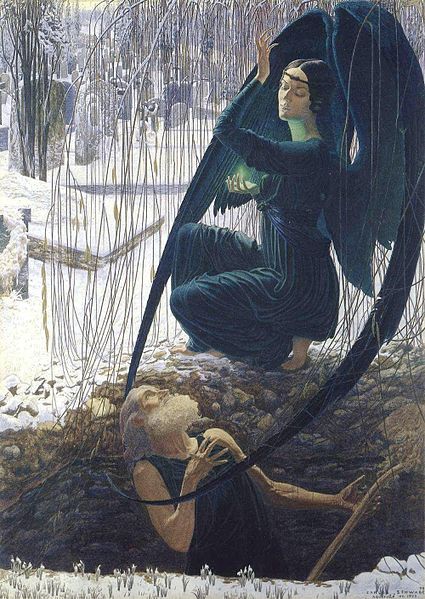
A thoughtful, if prescient commentary by Andy Crouch in this week’s Time magazine takes us into the uncanny valley. Despite the boastful protestations of the materialists, most people are not very brave at facing death. With the passing of Ariel Sharon and the sad story of Jahi McMath, the question of keeping the practically dead practically alive takes on a particular poignancy. It’s not that the dying are the ones protesting, but it is the living. We rage against the dying of the light, and, as Crouch notes, it is often the most religious that protest the loudest. Religion, ironically, is the framework that many use to cope with the ultimate inevitability. Death is scary. That’s why so many pray and others watch so many horror movies. We have trouble finding uncannier valleys than that of Crouch’s shadow of death.

Religion, in addition to putatively renouncing the fear of death, has often introduced the denial of life’s goods along the way. What ascetic would not have truly welcomed death? A starving belly day after day and crushing loneliness in the most barren environments earth has to offer should change one’s perspective. Not all of us have such heroics, however, hardwired into us. We may see the illogic of a religion that states death is release into a better world while creating even greater terrors of the other side of that veil. We dance between the horns of a dilemma where neither side will really sustain our weight. As Crouch notes, what we truly want is the assurance that somebody loves us at the end.

425px-Mort_du_fossoyeur

The materialist simply falls asleep for one last time. The faithful prepare to pass through a portal through which nobody has reliably come the other way. It is the ultimate test of faith. In the nineteenth century, when the death of a loved one at home was a common occurrence, an acceptance, perhaps morbid, pervaded the era. Who can think of Victorians without pondering the grave? Technology has cheated death both in small ways and in large. We are grateful for the salvation from small issues that once meant almost certain premature death, but we are scratching at the biggest door of all—immortality—begging to be let in. Will that head in a jar really be me? I have an uncanny feeling about that. Religion, for all its problems, should help us through this valley, if we really believe.


Bridge over Troubled Waters

“Let not many of you,” wrote the wise James, in a widely ignored admonition, “become teachers, knowing that we shall receive a stricter judgment.” The same could be said for politicians. Lord Acton, seconding James, noted “power corrupts,” and yet who is not drawn to its flame? The news has been awash in a flood over the George Washington Bridge scandal, something I could not appreciate until I joined the ranks of the myriads of commuters to Manhattan. The evidence is pretty clear that Chris Christie’s top staff (ahem) purposefully closed lanes on the George Washington Bridge to retaliate against Fort Lee mayor Mark Sokolich’s refusing to dance when the pipers piped for Christie’s reelection. I didn’t vote for Christie, and now I wonder if that is why my New Jersey Transit bus often comes so late that I’ve taken to calling it the Jesus Bus, since I never know when it might come again. Ah, the rush of power that encourages the grinding of the boot heel into the face of the smaller opponent. Could anything be more human?

Perhaps, in this world of infinite possibilities, Christie knew nothing of what his top aides were doing. The culture in New Jersey, however, as those of us who live here know, has been cast in the very large shadow of bullying. We spend taxpayer’s money to teach our children not to bully while our politicians give the lie to the teaching we purchase. “How the mighty are fallen,” lamented King David. But even he had his Bathsheba scandal. And many on the right claim their politics derive through their commitment to his great-great-great-great-great-great-great-great-great-great-great-great-great-great-great-great-great-great-great-great-great-great-great-great-great-grandson, if I count correctly. Let not many of you become politicians.

Manhattan is an island with limited access. The Lincoln Tunnel and the Holland Tunnel are for the troglodyte crowd, while the George Washington Bridge is the busiest bridge in the world. “He could have called,” the old evangelical hymn goes, “ten-thousand angels.” That’s roughly a forty-to-one ratio for New Jersey commuters to New York to angels. Somewhere along the line, the populace became the unwitting plaything of politicians. Stop a hundred-thousand people from getting to work? It’s just an arbitrary number. Never mind that trust used to be part of the social contract. As a citizen who spends approximately three hours a day on a bus, or waiting for one, I have to wonder whose best interest is in the mind of our elected officials. Yes, James, had I listened to you this might have all turned out very differently indeed.

Photo credit: Fly Navy from Wiki Commons.

Photo credit: Fly Navy from Wiki Commons.


Best Nowledge

Back in the day when paper books ruled, New York City used to be known as the publishing capital of the country. Even though many publishers still call New York home, a depressing lack of interest pervades the city that never sleeps (sounds like it could use a good book). Although I’m no fan of Barnes and Noble, it is just about the last presence left of the brick-and-mortar-style bookstore. When news arrived this week that one of the large New York branches of B&N was closing, a sense of despair settled in. I love my indie bookshops. I literally went into mourning when Borders shut down, even now the sight of a vacant Borders can make me weep. A walk though any trendy mall will reveal no books to be found, and I go home perhaps fashionably dressed and smelling vaguely of perfume but sad nonetheless. Perhaps it is because the book is/was the culmination of one of the most important technologies of all time: writing.

Technology, as we think of it today, is largely electronic. Circuit-boards, nano-chips, embedded in sealed cases constructed in sterile rooms where the humans are more protectively suited than a surgeon. Isaac Newton once famously noted that if he’d seen further than others it was because he’d stood on the shoulders of giants. One of those unnamed giants invented writing. Dragging a stick through clay would probably be considered decidedly low tech these days, but the person who realized that a crude scribble of an ox-head with dots next to it might indicate how many cattle you were selling was a giant. We have no idea who the scribes were who wrote down the first narrative stories of gods and heroes, but the process resulted in a still largely anonymous Bible that is used to decide public policy even today.

There’s no doubt that books take up space that electronic gizmos don’t. Storage has been an issue for libraries constructed before publishing became a major, competitive industry. But electronic books have their problems too. With the ease of self-publishing, you never know who is really an expert without researching the author. Often on Amazon I find an intriguing title only to see that it has been produced by any number of self-publishing software platforms that indicate only the author’s own word for his or her expertise. I wonder what happens when people who don’t know to assess information in that way take anecdote for fact. Where are the shoulders of giants? Perhaps I’m just old-fashioned, but the world without bookstores looks a lot like the stone age to me.

Alas, Babylon!  (Photo credit: Lovelac7, Wiki Commons)

Alas, Babylon! (Photo credit: Lovelac7, Wiki Commons)


Of Cuckoos and Kings

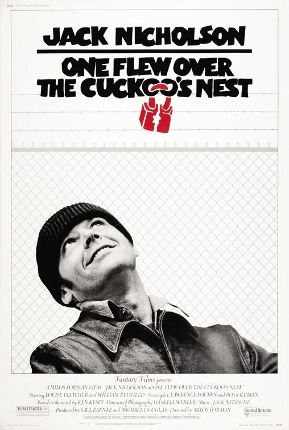
One_Flew_Over_the_Cuckoo's_Nest_poster

Having a life-long phobia of mental institutions, I shy away from situations that refuse to make sense. Some have attributed this to my having had an alcoholic father and responding with an über-rational expectation of analyzing how other people would likely act. Whatever its cause, the fear is real. So thirty years ago, when I watched One Flew over the Cuckoo’s Nest, I assumed it would be the last time. It was a relatively recent movie at the time, and it was required viewing for one of my college courses. With my phobia I really couldn’t get beyond the heebie-jeebies to consider what was going on beneath the surface, which is to say, most of the movie. Well, a few decades will cure many ills and I sat down to watch the movie again and my own experiences of asylum-like, heartless institutions in the intervening years had indeed hardened me a bit. I noticed much that I’d missed the first time around. For one thing the story of King David kept coming to mind.

For those who read the Bible somewhat objectively, David is a player, and not always the most admirable character. He has a subtle charm that wins the reader of the books of Samuel back time and again. He steps into a situation where his ambition is held back by a kind of Nurse Ratched named King Saul. So what does David do? He pretends to be insane and runs off to join the Philistines. He gathers a band of miscreants about him and goes to towns taking what isn’t his. He even brings a forbidden woman into his house. As R. P. McMurphy goes through these same shenanigans, he comes to really love young Billy (Saul’s son Jonathan). In the course of the movie our ersatz David takes a suffering nation and heals it. There, however, the parallels end and Ken Kesey’s story takes over.

Of course, I’m not suggesting that Kesey intentionally drew on the story of David—that would be crazy talk—but I do often wonder about the aphorism attributed to his son Solomon that there is nothing new under the sun. There were those who felt that Solomon had lost touch with reality as he sat down to write Ecclesiastes. The great stories, in some sense, have already been told. But not all. Those of us who write seek new truths, and sometimes use ancient sources to do it. David is remembered as one of the great biblical characters. One of the reasons, undoubtedly, is that he is so fallibly human—he’s not impossibly pious like Moses, or unfailingly sad like Jeremiah. He is a good man with peccadilloes for which we are willing to forgive him just for the pleasure of watching him go on. No, Kesey may not have had the Bible in his hand as he dreamed up the character of R. P. McMurphy, but he produced a true representation nevertheless. Of course, I might just be insane myself.


Loving Haiti

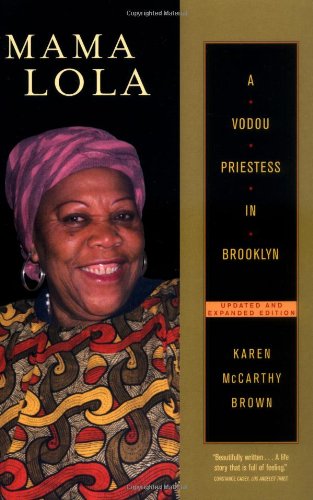
MomaLola Few religions are as routinely maligned as Vodou. I have to admit that my own interest was originally spurred in an uncouth manner—a combination of Live and Let Die and a sleepless night after watching The Believers. (I know, I know, The Believers was about Santeria, and not Vodou proper.) These sensationalist treatments nevertheless incubated a curiosity that broke the surface when I started to notice a book entitled, Moma Lola, a Vodou Priestess in Brooklyn in university bookstores. The author, Karen McCarthy Brown, took Moma Lola on as an anthropology research project and ultimately became friends with her subject. I was immediately chagrined to learn that much of the distaste towards Vodou (this is my own observation, not Brown’s) seems laced with, if not based upon, overt racism. Vodou is the faith of the descendants of African slaves living in the poorest nation in the western hemisphere. Those who adhere to it often live an existence that few would accept in a world awash in riches. The people in Moma Lola’s story are poor and deprived, and their nation is kept that way by complications of a past tied too intimately with slavery.

Although Brown is not a scholar of religion, her account is a very accessible introduction to the belief system of Vodou. Most adherents, it becomes clear, think of themselves as Catholic. They see no contradiction between the teachings of Rome and the activities of spirits (the “gods” of Vodou are in reality spirits that operate in a world where God is too busy to pay attention to everyone) who must be propitiated. The rituals associated with Vodou are common among peoples who believe in connections between things as they seem and things as they are. In fact, reading the accounts of possession that Brown provides, I was reminded very much of charismatic Protestant experiences of being “slain in the spirit.” Ironically, both traditions believe in the same god. Why anyone should fear Vodou, unless it is because they secretly harbor a deep-seated fear in the efficacy of magic, is baffling. Like most religions, it is moral and concerned with upholding good over evil.

Haiti has a unique history that has put it at the creative epicenter of religions forced into collision while being economically exploited by nations that putatively support democracy. Religion, as Karl Marx noted, is for the poor. Brown takes her readers through her own experiences with a religion few outsiders really know, introducing the “gods” of this intricate religion along the way. Moma Lola, a healer, tries to survive in New York City after a difficult life in Haiti, and rather than make her escape, she returns on occasion to help others. Even in the spiritual circus that the Big Apple represents, people are suspicious of Vodou (and Santeria), despite their common cause with other religions of the developed world. You can read the 400 pages of Brown’s Moma Lola with nary a mention of “voodoo dolls” or zombies. Instead you’ll find people—often women—working to survive in a hostile world. Untested attitudes toward other religions often bear their own dark secrets, and Vodou, as lived by Moma Lola, belies and exposes many hidden prejudices on the part of the affluent world.


Religious Education

The elephant in the room is exposed in a New York Times op-ed piece last week. “Indoctrinating Religious Warriors,” by Charles M. Blow, puts a finger squarely on the pulse of the ailing science stance of American religious believers. Noting that the Republican party has made no secret of its attempt to capture conservative votes by touting the religious intolerance of the theological right, Blow points out that more Republicans now believe that humans were created separately from animals than accept the scientific fact of evolution. And not just human origins suffer—our future will as well. The same mentality attends denial of global warming and advocating against fair treatment of committed, loving couples (depending solely on the visible sexual equipment). It is all of a piece. Blow points out that white, evangelical Protestants make up only 18 percent of the US population, but 43 percent of the Republicans who are classified as staunchly conservative. This imbalance leads to one of the world’s wealthiest nations being sidetracked from serious global issues while we continue to debate whether the Bible in inerrant or not.

I would add a further note of concern to what Blow says: higher education refuses to take religion seriously. As a life-long sideliner who has never been permitted fully into the halls of academe, I have watched as business schools have grown from the rubble of religion departments that have at best stagnated—when they have not been actively dismantled. In the worst case scenarios, universities have closed such departments down. With the exception of evangelical institutions. Very large departments of confessionally indoctrinated religionists thrive across the country. I am not the only religion scholar to have been kicked out of the academy for an intellectually honest approach. The wider society, with eyes wide shut, has decided that religion is a passing fancy while statistics indicate the exact opposite. We as a society will continue to be manipulated by religions as long as we continue to pretend they don’t pose a real concern.

Religion serves a purpose.

Religion serves a purpose.

Nor does castigating all religion, as Richard Dawkins, Sam Harris, and the late Christopher Hitchens do/did, solve any problems. Science itself appears to indicate that religion is part of the human condition, as surely a product of evolution as our opposable thumbs. Basic psychology would dictate that such direct challenges to religion will only result in retaliation. In fact, this is something that I recall learning from kindergarten. Until our society learns to go back to school and study the four R’s—yes, religion has to be there among the basics—we will continue to suffer from those who have vested interest in using religion for their own ends while those who could educate us on the subject continue to suffer the cut jobs of those who might be part of the solution. Charles Blow wonders if he is being too cynical. I suggest that he’s not nearly cynical enough.


2013 in Books

Screen Shot 2014-01-05 at 6.03.10 AM

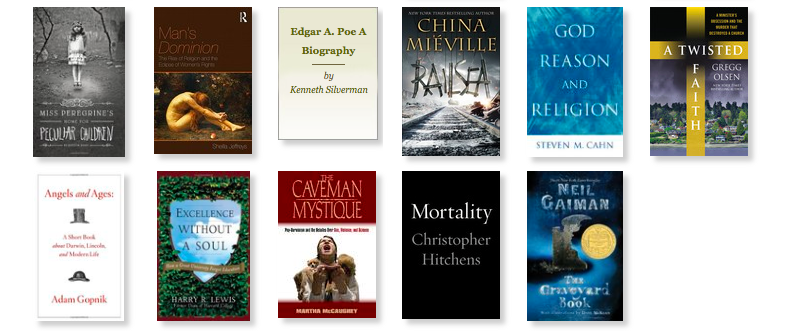
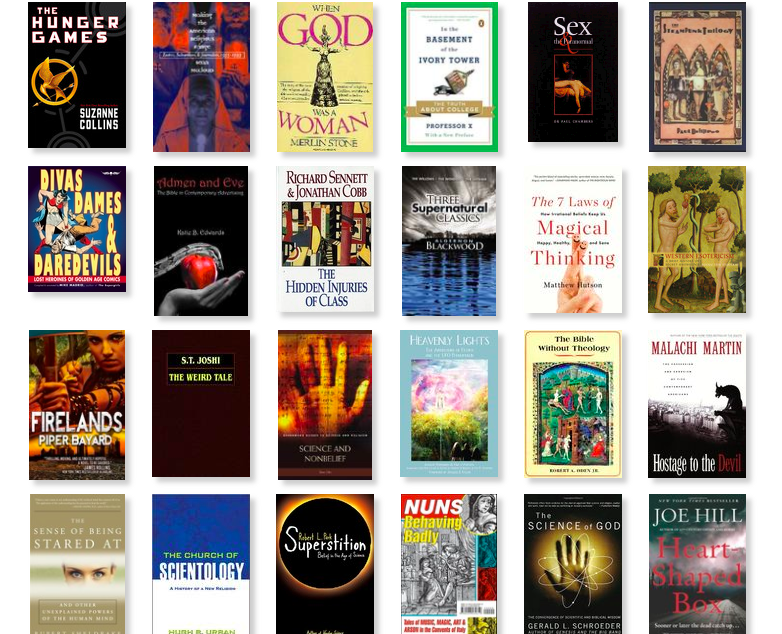
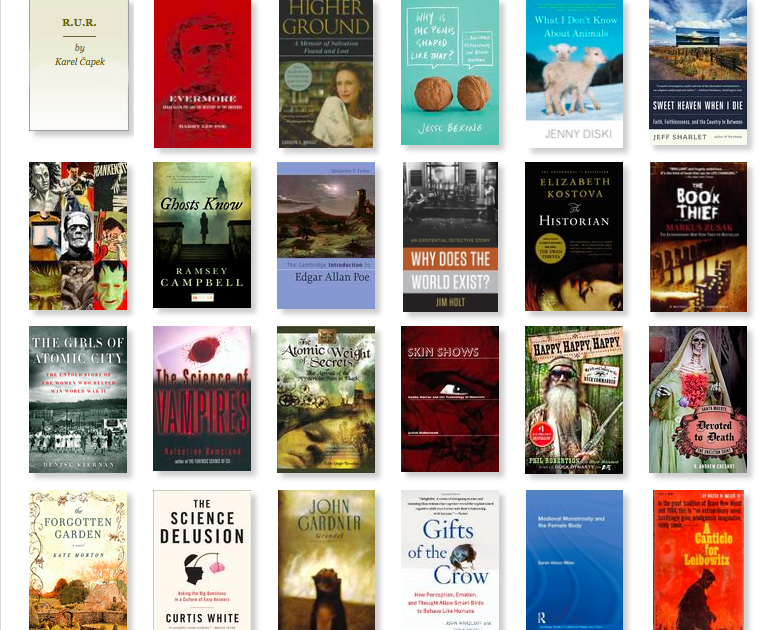
According to goodreads.com, I read 83 books in 2013. The beginning of a new year seems a good time to assess what is memorable among the reading material of the previous twelve months. I am an eclectic reader: this informed my research when I was teaching in higher education—nobody can know everything, and it doesn’t hurt to keep an eye on what fellow researchers in “unrelated” areas are doing. I always throw in a healthy dose of novels as well. Among the novels, some of the most profound were those written for younger readers (each of the books discussed here, by the way, can be found discussed in more detail by selecting the category “books” at the right on this blog). Neil Gaiman’s The Graveyard Book, Ransom Rigg’s Miss Peregrine’s Home for Peculiar Children, Suzanne Collins’ The Hunger Games, and Markus Zusak’s The Book Thief all stand out as particularly profound. They are all, as young adult books tend to be, stories about coming to terms with the adult world. The theme of death weighs heavily in all of them. In none do the children take refuge in religion.

Screen Shot 2014-01-05 at 6.02.33 AM

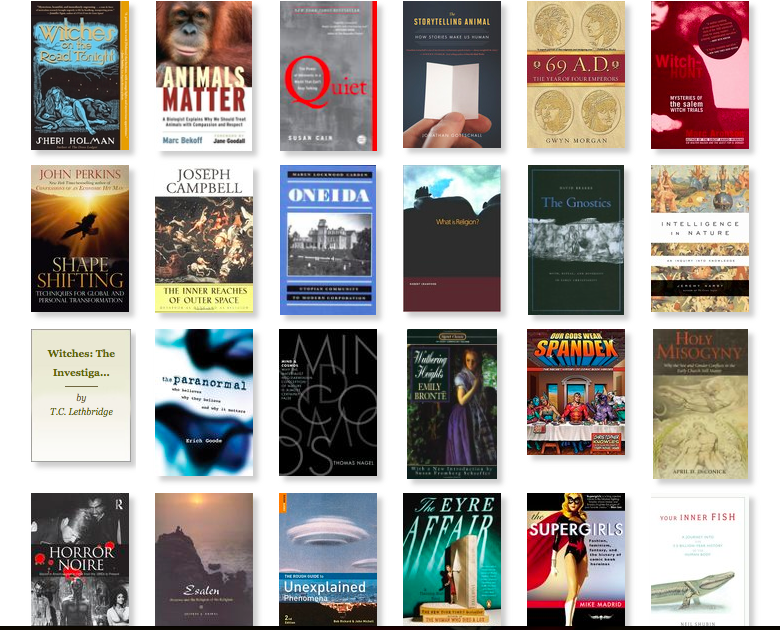
Among the non-fiction offerings, revisiting my most memorable also reveals trends, I think, in how religion might be usefully applied to an increasingly secular culture. It is no easy task to choose favorites, but I see that I read three books about comic books: Mike Madrid’s The Supergirls and Divas, Dames, and Daredevils, and Christopher Knowles’ Our Gods Wear Spandex. The work of Jeffrey Kripal started me on the quest of taking superheroes seriously as sublimated religious figures. Clearly that is the case, as has become increasingly apparent in top-grossing movies. Another set of books (Thomas Nagel’s Mind and Cosmos, John Angell and Tony Marzluff’s Gifts of the Crow, and Curtis White’s The Science Delusion) highlighted some of the deeply rooted flaws of a materialist reading of the world, whether they intended to or not. Robin Coleman’s Horror Noire, and Susan Hitchcock’s Frankenstein indicated that monsters are among the most eloquent of social critics, even when they have little to say. I would recommend any of these books without hesitation.

Screen Shot 2014-01-05 at 6.02.02 AM

Some of my reading was on specific religious traditions. Maren Cardin’s Oneida, Hugh Urban’s The Church of Scientology, Sean McCloud’s Making the American Religious Fringe, and Andrew Chestnut’s Devoted to Death each showcased either a single or several traditions that have emerged in the last century or two that have had a striking impact on America’s religious morphology. Katie Edward’s Admen and Eve is a great example of how businesses have figured out that a religiously hungry society will buy, if marketing pays attention to religion. Among the most powerful books I read were Susan Cain’s Quiet and Jonathan Gottschall’s The Storytelling Animal. Being human is, after all, the most religious of experiences. Starting with fiction, I’ll end with fiction. The novels for adults I remember most vividly are those with strong female protagonists: Sheri Holman’s Witches on the Road Tonight, Piper Bayard’s Firelands, and Elizabeth Kostova’s The Historian.

Screen Shot 2014-01-05 at 6.01.24 AM

This blog offers me a chance to give brief sketches of books that have much more to say than a few words might summarize. The fact that religious ideas and themes might be found in such a range of books underlines once again that we live in a religious milieu, whether we want to admit it or not. Read on!