Recalling the Story

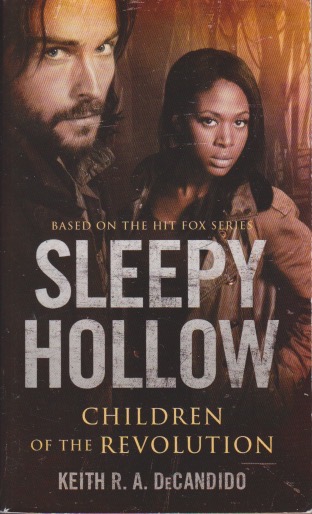
Remembering how a story goes.  That’s one of a book’s functions, particularly if a tale’s complex.  Running a season behind, I was one of those enamored of Sleepy Hollow when it first aired from 2013 through 2017.  In fact, that was the first story that I tried to explore, somewhat academically, in the horror genre.  At the time I hadn’t realized how many spin-off media had come out, based on these new characters.  I recently read The Secret Journal of Ichabod Crane in which Alex Irvine provides the service of summarizing the first season through the conceit of the main character’s secret diary.  It has to be secret because in the series he’s never shown keeping a journal, and the title explains why we’re just finding out about this now.  (Or then, since it was published while the series was still on the air.)

Reading it reminded me of just how complex the plot was.  I suspect that’s one reason so many people were taken with it.  Week-to-week you weren’t sure where it was going.  And the plot integrated religious themes from the first episode on.  That’s what first drew me to my current research trajectory.  The show wasn’t perfect, and some plot elements grew tired after a while, but overall it was compelling.  Mixed with the natural comedy of someone from centuries past trying to learn how to get along in a rapidly technologizing world provided light moments amid the death and bloodshed.  And, of course, the pairing of the patrician but progressive white man with a young black professional in the fight against evil was novel and necessary.

Irvine’s book is rather like the novelization of a movie.  In terms of hours, however, a television series outstrips the maybe two hours of a typical film.  A lot has to be left out, including scenes in which Crane wasn’t present, although he was pretty steadily in the camera’s gaze.  Initially suspected as a criminal, he had to be kept under pretty close watch, so his was a good perspective for a journal.  Its secrecy continues the trope of hidden documents that ran throughout the series.  Another aspect was that it addressed the Hamilton era when that show was becoming immensely popular.  And Sleepy Hollow was quite literary, with references to books from early writers.  There was a lot to like about the show.  It burned itself out in four seasons, though, and after season two there would seem to be little need for any further secret journals as the story grew even more complex.  This one, however, is a good reminder of how the story goes.


Foresight

God wasn’t thinking of search engine optimization (SEO) when he was writing the Bible.  First of all, he doesn’t seem to have considered that all the nice, short names he used would soon become the most common in the western world.  And he didn’t give all the characters last names.  Job is particularly egregious because you could be searching for employment and not a complaining old man (you can always find one of the latter here!).  Perhaps he wasn’t aware at the time just how popular his book would become so that just about everything in it appears on some twenty-million webpages and you need some distinctive keywords for SEO.  And this unfortunate high profile has also led to knock-on search problems.

I quite often have to search for bits of the Good Book together.  “Pentateuch” isn’t so bad because it’s a bigger word that most people don’t use every day.  But what about “historical books”?  It’s two words and search engines begin scouring the web for pages that have both words.  And there are plenty of historical books outside the Bible.  Writings?  Poetry?  Even Gospels is used all over the place.  I had to find something about the Catholic Epistles the other day.  My search engine found plenty of places with both words, but not linked together.  (I know the quotation mark trick, but bear with me here as I’m trying to make a point that will perhaps lead to divine intervention.)  I tried again with Pastoral Epistles but the same problem arose.  This is the burden of being so important that everyone copies you.

It’s the price of success.  God surely must’ve foreseen that.  The problem is that Holy Writ predates the internet by so many centuries.  Those who’ve determined how searching works have redefined our lives—have given us new commandments.  Thou shalt not put commas in titles, for example.  Thou shalt use distinctive keywords.  Pity the fool who must find information on a biblical character with only one name.  Perhaps that name is John.  Or David.  Or Mary.  Sure, you can add qualifiers but they’re all common words as well.  The Good Book is a victim of its own success.  And for containing all the prophecy that it does it is truly amazing that not even the creator of the universe didn’t see this coming.  We live in a world driven by tech and although the Bible had a direct role leading to that world, you wouldn’t know it by your standard Google search.


Fostering Euro-Horror

In another example of Euro-Horror, Hatching is a remarkably effective monster movie.  Filmed in Finnish, and set in Finland, it’s a remarkable parable about families and what we reveal to the world.  An affluent family consisting of Mother, Father, Tinja, and her brother Matias, live in a beautiful house in a nice neighborhood and Mother prospers with a blog about the ideal family life.  She videos the family, especially Tinja as she prepares for a gymnastics competition.  Then a crow gets into the house, causing chaos and bringing the true nature of the perfect family to the surface.  When Mother breaks the crow’s neck, reality seeps through the internet myth of perfection.  Tinja, disturbed by what happened to the bird, locates its egg and brings it home to care for it.

Mother, it turns out, has been having an affair.  Father is shown as caring, but ineffectual.  Matias has anger issues.  Meanwhile Mother drills Tinja in gymnastics practice until her daughter’s hands are raw and bleeding.  The egg grows.  Mother confesses to Tinja that she’s in love for the first time and for real.  She begins spending weekends at her lover Tero’s house.  The now huge egg hatches into a Tinja-sized bird-like creature, sparsely feathered.  As Tinja psychologically bonds with the creature, she hides it in the house and it becomes clear that what each feels what the other feels.  Over time the bird begins to become Tinja’s double, doing those things her “perfect daughter” image would never allow her to do.

The story is a parable.  Families uphold facades while the world pays to see perfection that doesn’t really exist.  Tinja isn’t terribly fond of gymnastics, but Mother drives her to compete.  Father knows about Tero, and pretends to be okay with the affair.  Mother spends her love elsewhere while her perfect family crumbles.  The monster in the movie is the revealer of truth.  The truth doesn’t broadcast well on the Internet, which prefers fiction passed off as fact.  Although the story itself could never happen, it is a probing tale that delves into psychology and the price we pay for not being honest about ourselves.  I won’t spoil the ending here, but let’s just say reality seldom works out the way that we hope it will.  Euro-horror has been producing some impressive films the past few years that demonstrate the intellectual side of horror quite well.  This may be offer body horror—without becoming slashers—because they have messages waiting to hatch.


Just Being

You know, I sometimes resent being forced to be something I’m not.  In these days of tolerance and letting people be themselves, the bullies have taken over, forcing the rest of us to clean up their messes.  Take politics, for instance.  I have no interest in it.  From the beginning of this nation to the present the political inbreeding has been obvious.  Wealthy families presuming that riches mean you know how to govern—since the beginning they have set the tone.  Voting is always important, but how can you be anything else when you need to be a constant political activist just to assure politicians are actually doing their jobs?  I’m no micromanager—in fact I’m okay with just getting by.  Still, I feel compelled to spend my time keeping an eye on corrupt politicians.  How are you supposed to write books?  Imagine what we could accomplish if they’d just do their job!

Or consider business.  It’s tax season.  Every New Year marks the time when you need to keep track of what you spend on what because accountants, backed by politicians, can’t keep their noses out of other people’s money.  You want to eat?  Find a place to sleep out of the incessant rain?  Then you have to play the capitalist game.  There’s no opt out short of heading under the bridge and going through trash cans for your next meal.  Those of us who are creative don’t really impose our wills on others.  You don’t like what I write?  Don’t buy my book.  (And I speak with authority on this particular point!)  Nobody forces you to look at art.  (Although they do force you to listen to music in many stores, even if you’d rather shop in silence.  This, I think, is a business decision.)

Image credit: Warren K. Leffler, public domain, via Library of Congress

One of the reasons a monastic vocation appealed to me even as a young Protestant was that I need time to think things through.  To contemplate.  To try to make sense of all of this.  I’m not motivated by money or power.  I want to be with others who just want to be.  I’m not lazy and I don’t mind being productive.  It’s just that, well, can’t things not be about money for a while?  Can’t politicians just act like actual adults with a moral center for a time?  The religious leaders who managed to do this were quickly commodified.  In this cloud-smitten winter I’m in the mood for lament.  Some of us want to live authenticly, but those with power and money simply won’t allow it.


More Dark Academia

It could be that I’m not smart or sophisticated enough.  Or maybe I’ve just lived a sheltered existence, although I grew up with an alcoholic parent and among a blue-collar drug culture.  Despite this, I attended a “preppie” liberal arts college, but it wasn’t in Vermont.  All of which is to say I had a difficult time getting into Donna Tartt’s The Secret History.  There may be spoilers here, so if it’s on your reading pile, maybe wait to read this.  Then tell me if you don’t agree.  So here goes.  The narrator, a perhaps unreliable Richard, is from a working-class dysfunctional family (check).  He attends a liberal arts college on scholarship (check).  It’s modeled on Bennington (the checks start stopping here).  There he works his way into an exclusive group of five highly intelligent students in a private study Greek curriculum (this is also a partial check).

The days are filled with intensive work in Greek and the nights with alcohol and drugs and cigarettes.  So many cigarettes.  I found myself wondering how such highly intelligent students accomplished so much when they were stoned all the time outside of class.  In any case, with two of the now six students not present—including Richard—they accidentally kill a man during a Bacchanal.  Their professor covers for them.  Then the other excluded student finds out and begins blackmailing the four.  Like the rest of them he’s fond of booze and he begins to let slip what he knows.  Spoiler alert: so they kill him.  This is followed by more drugs and alcohol and when the professor finds out he simply leaves his tenured post to do something else.  A rift develops in the remaining five that ends—another spoiler—the way dark academia often does, with a suicide.

Overall the story is captivating.  Overdone on the substance use and abuse, but it does keep you engaged, once you get through the first hundred pages or so.  I like dark academia, but I also like characters with whom I can sympathize.  Like Richard, I’d gone to what was at the time a selective college from a working class family.  There was drinking even at the notoriously dry Grove City College, and there were drugs.  Perhaps those from elite families indulged.  I hung out with scions of middle-class families (I didn’t know anyone else that was poor) and they didn’t spend their hazy nights under controlled substances.  Having been a professor at a gothic school, and having studied Classics-adjacent, though, I found much of this hard to believe.  It’s a book that becomes better upon reflection than in the actual reading.  Still, I’m sure that I didn’t get it because I’m not sophisticated enough.


Weathering the Winter

Although it’s been cold out, in many ways this feels like the year without a winter.  Around here we’ve had no real measurable snowfall and temperatures have generally hovered around 40 F, mostly cloudy.  I get cold easily, however, so I need to know how to dress for jogging.  During a warm spell I looked at WeatherBug.  It’s my go-to app for such things.  It told me the current temperature was 49.  Since it’d been in the sixties the day before, that was believable.  Then I glanced at our outdoor thermometer.  It read 39.  A ten-degree difference is significant for jogging, so I called in a third party.  Weather.com said it was 40, much closer to my actual feeling of things—it was chilly inside that morning.  WeatherBug also said it was cloudy, but Weather.com disagreed.  A glance outside showed thin, hazy cloud cover.

Now, I know apps can’t cater to individual needs, but it does seem that WeatherBug was using projections rather than real-time information.  Either that, or somebody was standing too close to the thermometer at the local reporting station, and perhaps breathing on it.  I’m not one of those people who rely on my phone for everything.  I do use it for navigation and snapping quick pictures, but until today I also used it for checking the weather.  I’ve been surprised how often WeatherBug tells me it’s sunny out when I can see nothing but clouds.  Sometimes looking out the window is the best way to learn what your individual weather is like.  Weather is terribly local.

The capriciousness of weather is one of the main factors that led me to write Weathering the Psalms.  Another, of course, was the hope that an academic post might actually consider a guy like me.  The weather has always been a source of personal fascination.  The threat of severe weather, particularly in the Midwest, was a source of naked awe.  I remember standing outside in Illinois with the wide, expansive horizon all around, and staring straight up to a brewing storm cloud thousands of feet overhead.  I didn’t need an app to tell me to take shelter.  Or that time in Wisconsin when a weather system led to repeated, identical cycles of storms that lasted days, leading to localized flooding with rain following a clockwork regularity.  Even then I was a jogger, and for a jogger knowing the weather in advance is important.  These days all that majestic sky drama comes via a device that fits inside my pocket.  It seems we’ve lost something, even though we’re safer this way.  At least within ten degrees.


Creepy

There’s some symbolism here that I haven’t had time to sort out.  (Some of us need time to just sit and think—time that work won’t allow.)  I’d been wanting to watch Jeepers Creepers for quite some time but streaming services said it was unavailable.  I suspect that was because a sequel has been running in theaters and those who own the rights want to capitalize on it.  So it goes.  When it finally did show up on Freevee, so you have to subject yourself to commercials, I had to see it.  Now I need some time to think.  In case you’re even slower than me, the film involves a couple siblings driving home for spring break when they encounter a monster/demon, Creeper.

Creeper smells peoples’ fear and consumes parts of those who have something it needs to regenerate itself.  The brother and sister encounter Creeper on one of those long stretches of road without civilization that you find in parts of America (in this case, the unspecified south).  I won’t spoil the ending, but for my money (or actually, Freevee patience), the first half is pretty scary.  The whole is not bad either.  So what do I need to think about?  Well, Creeper stores its victims’ corpses in a church basement.  The church is abandoned, but still.  This overlap between religion and horror is an aspect that has fascinated me time and again.  Shouldn’t a church be a safe place?  (For many of us, that’s a myth long debunked.)  Is it because it’s abandoned that a demonic monster has moved in?  Or does religious symbolism not bother it?  Or perhaps attract it?

Not only that, but the movie also has a prophet.  While she’s not called that, this local woman has dreams of things involving Creeper that haven’t happened yet.  Like Cassandra, however, everyone ignores her.  It seems that Jeepers Creepers experienced a budget cut during production that led to a rewritten, and cheaper, ending.  While I won’t spoil it, I will say that it is a bit of a letdown from how the film started.  A lot is left unexplained, but the story is pretty good and the acting, at least by the siblings, and the always entertaining Eileen Brennan, was impressive.  They have a way of conveying fear that’s believable and contagious.  The religion theme, however, appears to have been dropped once the church burns down.  It may be that it was somehow revisited in the ending that money forced to change.  Regardless, it is worth watching, and, if you have the time, pondering.


What People Like

It must be like showing up at a party wearing a flashy shirt that somebody else is also wearing.  Embarrassing, no?  A few years back I read Brian Jay Jones’ biography of Washington Irving.  As you may know, I recently finished Andrew Burstein’s.  The two were published within a year of each other, but both after a seven-decade gap in such biographies.  I suspect the renewed interest in Irving sprang up in the surge of public interest after Tim Burton’s Sleepy Hollow appeared.  Movies have power.  Books, especially big books, take a long time to write.  I don’t know if Jones and Burstein were aware of each other’s efforts or not.  Both are quite good, but they do stand as a testament to how fame can be fleeting.  Irving is infrequently taken as a genius writer today but he started more than one big thing.

What I’m particularly interested in is how Burton’s film seems to have kickstarted a new millennium interest in this old story.  I recently had a discussion with a couple of folks who felt that movies were too manipulative to be enjoyable.  Of course, nobody forces you to watch a movie, but I have found that they are powerful ways of influencing people.  And society.  Movies have been one of the more impactful forms of fiction media, spawning ideas that can change society.  Indeed, they may be modern mythology.  I wouldn’t yet make that exalted claim for Sleepy Hollow, but for those who follow such things, it has influenced the way we look at things.  And we can learn something from paying attention to them.

The Headless Horseman Pursuing Ichabod Crane by John Quidor

I suspect that is one of the perennial mistakes of higher education.  Assuming that something is popular means that it shouldn’t be worthy of scholarly attention.  If we want to understand what it means to be human, rather than just raping and plundering our planet until we choke it to death, we need to consider what it is that appeals to people.  What are the Classics if not the popular literature of antiquity, dating back to the time before most people could read?  What do we lose by trying to understand what motivates others?  There are those who spend their money on such things, after all.  Consider game developers.  They rake in the money because that’s what people like to do.  We don’t mind being manipulated, as long as we do so voluntarily.  We’ve wandered away from Irving at this party, but it does seem that Burton’s movie kickstarted our interest in America’s early wit again.  We ignore what interests hoi polloi at our peril.


Pentagrams

Not to dwell on Satanism, but the morning after my last post on the topic, while out on my morning jog, I came across a pentagram incised in the pea gravel of the bike path.  Then another.  Lest there was any lingering doubt that this had to do with the local school’s Satan club, a few feet further along a 666 appeared.  None of this was there the day before and, given that folks my age are too busy to be out scraping sigels in the sand, I suspect that it might’ve been someone younger.   Dare I say, school-aged.  Protesting or promoting I couldn’t tell.  As I jogged, I fell to thinking about pentagrams.  They’re not inherently evil and actually have an interesting history.  For most of that history it was morally neutral, if not a positive sign.

In the 1800s, during Romanticism’s heyday, it was supposed that an inverted pentagram—one with two points up instead of one at the top—was a sign of evil.  It was also in the 1800s that the contemporary king of outrage, Aleister Crowley, began what would eventually morph into modern Wicca.  Crowley liked to refer to himself as “the wickedest man on earth,” at least among his friends.  The upside-down pentagram was seen to represent a goat’s head, and if you’ve read my book you’ll know that some groups have long associated goats with demons.  Ironically, during the Nixon Administration the Grand Old Party began to use inverted pentagrams on their elephant logo.  Evangelicals who otherwise object to this “Satanic” symbol seem quite okay with it branding their political party.  Truth in advertising, I guess.

The thing about symbols is that they only have the power we give them.  The five points of a star symbol match well the pentagonal symmetry that we often see in nature: sea stars, sand dollars, strawberry flowers, and eucalyptus seed pods.  It’s pleasing to the eye for creatures with five fingers and five toes.  There’s a rightness about it, even if it doesn’t look a thing like the stars in the sky.  Is it Satanic?  No, only to those who believe it to be so.  Are there Satanists trying to take over public schools?  No.  That doesn’t mean people don’t think they aren’t.  (That last sentence is all tied up in nots, I guess.)  Symbols, by their nature, contain the meaning we assign to them.  They say to me that kids pay attention to what adults do,  so if we act grown-up perhaps—just perhaps—they will aspire to do the same.


Something I Said?

I’m very aware of my own insignificance.  I know that I’ll die and be forgotten, just like everybody else.  Even if I manage to survive by some “Kilroy was here” action, the sun will eventually red giant all of this out of existence.  Still, sometimes I wonder if it’s something I said.  You see, I really didn’t know where to start when I published Holy Horror.  I was an editor myself and thought maybe the secret handshake would earn some kind of attention, but no.  And when I wrote both Nightmares with the Bible and The Wicker Man, both were with established series.  And in latter cases, the editor I was working with (long-term employees, both) left.  Left before the book was published and I was left wondering.  Was it something I said?

Not to brag or anything, but I’ve got about the lowest self-image a person can have.  When life beats you up repeatedly, starting at a young age, you quickly learn your place.  But still, all this leaving.  I’m a member of a faith community (if you want to know which one you’ll need to get to know me personally).  This particular tradition requires a meeting with the minister before joining—something that makes good sense.  The first church where we tried this, the minister was in the process of leaving and couldn’t schedule us in.  Then we moved and in our new area, the minister left about a month after we started attending, before we could meet.  Was it something I said?

I ask this question half in jest.  Still, having a father leave when you’re only two or three, you start to question just about everything.  I’m sure retirements, new opportunities, or just fedupness with the job (which I certainly understand) caused these changes.  But then I was ousted from three jobs in fairly quick succession.  During my interview at Rutgers University the chair of the religion department said “You must feel like you have a target painted on you.”  Leaving is a natural part of life, I know.  As an editor I know that leaving such a post is somewhat unusual because where do you go from here?  Ministers, well, they’re leading the charge during the great resignation.  Maybe they’ll become editors?  As for the rest of us, we’ll just continue to spin dizzily on this globe until old Sol stretches his arms and lets out a big, red yawn.  I won’t be here by then, but wherever I am at that point, I’ll be wondering if it was something I said.


Bad Movies

I watch bad movies so you don’t have to.  Maybe that’s my ticket to retirement (it certainly isn’t working the usual way).  In any case, my habit of trying to find something “free” on a network I already pay for often leads to films that keep me awake on a drowsy weekend afternoon, but really don’t offer much else.  Sometimes you learn something nevertheless.  I recently watched From a Whisper to a Scream.  It was free and got more than five stars out of ten, but I didn’t really work for me, even with Vincent Price.  A vignette movie, it presents four episodes from Oldfield, Tennessee, making the claim that it’s a place infected with evil.  The first involved necrophilia, with consequences.  The second—more in a moment—was about eternal life.  Lovecraft’s circus comes to town in the third, and the fourth is about the founding of the town during the Civil War.  Of course, the framing is a “bonus” mini-story as well.

The second episode, “On the Run,” has a wounded ne’er-do-well, shot by some southern rivals, falling into a swamp boat.  He’s rescued by an older African American who lives alone in said swamp.  Noticing him practicing hoo-doo (cue The Skeleton Key), the miscreant soon figures his rescuer has found the secret of staying alive forever (which he has).  Naturally greedy, the petty criminal “kills” the African American and ransacks his shack for the secret potion that keeps him alive.  Being horror, the dead come back and the owner of the shack returns to punish the white man who is trying to steal what he already has.  The Black man had given him the potion to bring him back to life.

There’s a bit of a parable quality to this particular story.  Each vignette predictably has the evil-doer punished, with the exception of “Lovecraft’s Traveling Amusements,” where the Black woman owns those who work her carnival.  And she gets away with it.  None of the characters, apart from the Black man in the swamp and the children in “Four Soldiers,” are really sympathetic.  Religion does also come in the Civil War segment since, drawing cues from Children of the Corn, the kids have created their own god.  So, a diverting film, if not a great (or even a good) one.  This was Vincent Price’s last true horror film, making it worth seeing for that reason alone.  His role is limited to the framing story which, as we might expect, becomes part of the collection of horrors from Oldfield.


Satanic Struggle

Around these parts folks are in an uproar about an after-school Satan Club.  The idea is an action to get Evangelical undies in a bunch, and it’s only proposed when a school system supports an overtly Christian club.  Reaction more than action, really.  Right now Nextdoor.com is bursting at the seams with indignation about something most people don’t understand.  I can’t claim to be an expert, but I’ve read plenty of books about Satan and many of them deal with Anton LaVey’s Church of Satan.  The Church of Satan believes in no literal Devil or Hell.  It was established to draw attention but also to make a statement when Christian Nationalists start to get too pushy.  Still, people are afraid of Satanism as the numerous international panics about it have shown.  And conspiracy theories don’t help.

It seems to me that the solution to all of this is education.  People, naturally enough, react to things emotionally.  I do it all the time.  (This is one reason that Artificial Intelligence will never be truly that—humans think with their emotions as well as with reason.)  The sad thing is, there are many easy ways to correct mistaken assumptions.  The information is out there and it’s easily found.  It’s easier, however, to spout off on social media like you’re an expert on something you know nothing about.  Trump introduced a culture of outrage—did his supporters suppose nobody else was capable of doing the same?  The Church of Satan was established as such an outrage.  In a nation of literalists, they hit a nerve.

The Church of Satan does not worship the Devil.  It supports social causes and it cooperates with law enforcement when some unbalanced individuals think it means something that it doesn’t.  To my way of thinking, this creative endeavor, despite getting the attention it sought, might’ve been better thought through.  Although extremism appeals to those who, like Herostratus, crave fame at any cost, does it really move us any closer to where we want to be?  Part of the problem is that many outspoken political figures want us all to be the same as them.  White, Christian, male, heterosexual.  I really can’t imagine a worse kind of nightmare.  Humans crave variety and new ideas.  As I sit here watching a new, uninformed Satanic Panic developing in my own backyard, I wonder if we all wouldn’t do our blood pressure a favor by sitting down with a book.  And maybe learning what this really is about.  Shoving matches seldom end well.


Internet of Nothings

I don’t suppose it’s actually a confession, since my background’s available publicly on my CV, but I do admit to not being a media expert.  As is often said, the British higher education system doesn’t so much make one an expert as it teaches one how to become an expert.  The truth of the matter is, the critical thinking skills of higher education, plus your own reading and analysis, are what eventually produce expertise.  Still, I miss not having taken a degree in media studies and what I anticipate I’d have learned, if I had.  You see, what I miss, even on the internet (which is mainly trying to sell you things), is basic data.  Okay, so Wikipedia has it, but not enough of it.  Not enough to keep up with media, in any case.  I recently came by a couple of series on IMDb that I wanted to know more about.  Neither had a synopsis and neither was on Wikipedia.  The open web search that followed, even with “quotation marks” simply led to blind alleys, where, it turns out, you can buy stuff.

We are producing media at such a rate that keeping up is simply no longer possible.  While I was working on my doctorate in Edinburgh, I tried as hard as humanly possible to find and read everything previously published on Asherah.  I think I did pretty well for pre-internet days.  Now when I try to find everything on a topic I’m limited to the internet, and it simply doesn’t contain enough information.  Take these two series, for example.  No amount of searching brought up anything significant about them.  They weren’t exactly obscure, either.  Information was simply missing.  Like after the 1965 MGM vault fire, the information was just not to be found. 

It may seem impossible to believe, but there remain tons of information, trivial and important, that simply can’t be found on the web.  As a student in religious studies I learned about what used to be called Religion Index One.  It was a resource published by the American Theological Library Association and it listed just about all the articles published on a topic.  (It’s gone electronic now, I believe.)  I keep thinking there most be something like it for media studies.  But the new material keeps coming thick and fast, like a blizzard, and I’m not sure that such an index exists.  I use IMDb a lot, but even that’s not complete.  And nobody, it seems, is an expert on the entire internet.  If you are such a person, please let me know.  I have a few questions about media studies.


The Young and the Headless

Young adult literature is sometimes fun to read as an adult.  In addition to going swiftly, compared to much “adult” literary literature, it has a way of evoking what life was like when we were younger.  Or at least it can.  Sticking with my Sleepy Hollow kick, I read the first volume of the series “The Hollow” (later “Sleepy Hollow High”) by Christoper Golden and Ford Lytle Gilmore.  This volume, Horseman, posits the return of the headless horseman to Sleepy Hollow in the modern day, triggered by the return of some of Ichabod Crane’s unknowing descendants.  The story follows brother and sister team Shane and Aimee Lancaster, who’ve just moved to Sleepy Hollow from Boston.  Although full of unexplained happenings, the book conjures the emotional turmoil of teenage years well.

While I normally try to read within my usual age level, the occasional foray into tween, young adult, and now, new adult lit is a fun escape.  One of the mysteries of aging—and I certainly didn’t think of this myself as a young person interacting with my elders—is that you remember what it was like to be at the various stages of life you’ve passed.  When you’re young you’re discovering things for the first time and there’s a revelatory aspect to them.  I can’t make universal claims, but in my experience life just gets more complicated the longer you live.  We yearn for the simplicity of younger times when, for example, you just paid the rent, went to work, fell in love, and did your own taxes.  As an adult you find all of these things hide complexities that often hide even more complexities within themselves.  Why not throw caution to the wind and spend a weekend reading a young adult novel?

I’m undecided about reading the rest of the series.  This story quickly drew me in, but the other volumes are now published only in ebook format.  And I suppose I should do some more serious adult reading as well.  Actually, I’ve been plugging away at a novel written for adults by an author my age, but it’s long and, well, involved.  Kinda like life itself, I suppose.  One of the things I’ve noticed about modern engagements with “The Legend of Sleepy Hollow” is that they tend to skew towards a younger crowd.  Maybe I can recapture a bit of my own youth that way.  I’ve known the story since my youngest years but have only recently really began to pay attention to it as, well, I guess I have to admit, an adult.


Learning English

English is a difficult language to learn.  Growing up monolingual, I was able to pick up German, Greek, and Hebrew (and other semitic languages) without too much trouble, through intensive schooling.  I have to wonder if those learning English as a foreign language don’t have a much more difficult task.  The other day I was looking at a document in Icelandic (don’t ask), and marveling how I simply couldn’t penetrate it, although it is Indo-European.  Then I sat down to read an article in English.  The topic was of interest to me but it was clear that the content wasn’t written by native speakers.  Indeed, it turns out the authors were from an Indonesia university.  The journal was published by an Indonesian press.  It’s peer reviewed, but those who run it aren’t native English speakers.

Interestingly enough, although the article wasn’t in the field in which I was technically trained, I was able to follow what the authors were saying.  Partially it was because of my familiarity with the topic, which I’d read about before, but partially it was that you can read English without the direct and indirect articles that are our usual guideposts, and with the wrong verb tenses and declensions.  It is possible.  You wouldn’t want this, I suspect, if you were building a rocket carrying people into space, but it isn’t that much different from trying to read the instructions that come with most devices that are manufactured in nations where English is a foreign—very foreign—form of communication.  I admire their pluck.  I still recall enough German that I can get through some documents without generating more gray hairs, but I wouldn’t dare try to write to someone in it.  Nein.

Languages are fascinating elements of human culture.  Although there was no literal tower of Babel to create them, our species, in isolated areas, learned a variety of different ways to communicate verbally.  It’s only with travel that these isolated groups met and generally they try to talk, unless they simply kill strangers on sight.  We want to understand one another.  We all know that our language learning skills are at their peak during our very youngest years.  Brains get ossified into using one language to think and as you age it’s harder to pick up new ones.  Still, we have that old isolationist tendency hardwired as well.  Us versus them.  And if we can’t understand we quickly distrust.  Language study is probably one of the best ways to ensure peace.  If we can’t do that, at least we can try to read our language through the eyes of someone who’s made the effort, even if it’s difficult for us.