Living Right

Horace Liveright had an outsized influence for his somewhat foreshortened years.  Initially a bond trader, he eventually moved into publishing where he founded the Modern Library as well as Boni and Liveright.  The Modern Library still exists, now as an imprint of Random House.  Liveright ceased publishing operations eventually, but the name was revived as an imprint of W. W. Norton.  There have been many publishing Wunderkindern, including Richard L. Simon, co-founder of Simon and Schuster (and father of Carly Simon), and the Scot William Collins whose name still appears in HarperCollins.  While reading about Liveright recently I learned that he also was responsible, in an unexpected way, for the development of the horror film.

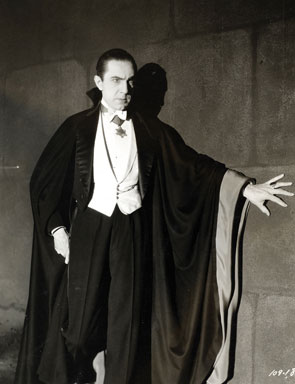
Liveright never worked in the film industry.  He did, however, work as a stage producer in New York in the 1920s.  Among his most successful works was a play titled Dracula.  It starred Bela Lugosi and Edward Van Sloan as Dracula and Abraham Van Helsing, respectively.  The success of the Broadway show caught the attention of Hollywood and Lugosi and Van Sloan were cast in the same roles in Tod Browning’s Dracula, widely considered to be the first horror film, released in 1931.  Van Sloan went on to appear in Frankenstein as well, and Lugosi reprised his Dracula character as well as several other monsters.  It’s possible, perhaps likely, that horror would’ve begun with some other entry into the genre, but as history stands Dracula, based on Liveright’s stage production, started the whole thing.

Unless we work in it, we tend not to think about publishing too much.  We don’t pay attention to the publisher of the book we’re reading, and who lingers over the copyright page?  Giving a thought to these details, however, often adds new stories to the ones between the covers.  A fellow editor is fond of saying that books are as much about the author’s story as they are about the story the author’s telling.  The press, for example, often focuses on the former.  Who is it that wrote this book and why?  The question may be extended further—what publisher took it on and how did they even get into the business of deciding what people will read?  The internet has democratized that quite a bit, of course, and some authors can become their own authorities by knowing how to handle it.  So I’m taking one such opportunity to highlight the work of a sometimes forgotten pioneer who nevertheless began a publishing venture from which we’ve all most likely read.  And he also helped created the horror movie.


Keeping Categories

Writing books about movies with a limited budget presents some challenges.  Our subscription to Disney Plus doesn’t really help with the horror genre, but my wife insightfully added Hulu to the package.  Now Hulu isn’t known as a horror streaming hub, but they do have some movies on my viewing list.  The other day I noticed one of their offerings with a title I didn’t recognize.  I  tried searching it on IMDb and came up with nothing.  A bit more research revealed it was an episode of an original Hulu series, mixed in with the horror movies.  The eroding of categories bothers me a bit.  It’s not just Netflix and Hulu and Amazon with movies, but it’s across the board.  I grew up when movie and television were easily distinguished.  Now we live with hybrids.

The same is happening in publishing.  When I sit down to write a book I have a specific end-goal in mind.  Everyone knows what a book is, right?  Well, the future of publishing is all about breaking that down.  Already years ago you could purchase aggregates for classroom use.  These were custom-selected chapters from certain books (electronic, of course) that an instructor could bundle into a “textbook.”  You could mix in articles, blog posts, anything to which you had the rights.  Such a textbook is not a book.  Nobody set out to write it in that form.  It looks like things are moving more and more in that direction.  You’ll be able to purchase just a chapter, or even a paragraph, to use.  Even if the book only makes sense when taken as a whole.

The electronic era is all about breaking down what civilization took centuries to build up.  Not everything about civilization has been good, of course.  It has been patriarchal, treating women unfairly.  It has been supremacist, treating those less technically developed in horrendous ways.  It has been classist, favoring the rich and their interests over those of the vast majority.  Still, it has left us some good legacies—the book, the symphony, the movie.  Such things have made us better people.  It may be fine to break such things down—who knows?  Maybe it will create more fairness for more people.  It won’t help me, however, when I’m trying to write a book about movies.  You still have to know what counts for each category, even if you have to do so on a budget.


Getting Used

Unknowing is a blessing in disguise sometimes.  There is so much to learn and, regrettably, little time outside work to do it.  Books are my life.  I work in publishing, so I know a passable amount about the book business.  I have much still to learn.  To support my research, which doesn’t include a university library, I often have to purchase academic books.  I know quite a bit about academic book pricing (hint: what the market will bear), and I know that it’s assumed academics have university professor-level salaries.  The “independent scholar” is as much a ghost as the next revenant.  So I buy books used.  The best clearinghouse I know of is Bookfinder.com.  They list other sellers who have the book and facilitate your buying of it.  I strongly suspect they take a small cut.

While looking for an obscure book (it pains me to say, for I met the author), I wondered if Amazon’s used copy had the lowest price.  So I went to Bookfinder.  The Amazon copy was there, along with seven comparably, slightly lower, priced other copies.  Reading the descriptions, I realized these were different vendors hawking the exact same copy of the book.  Some of the description wording was oddly specific and that led to this epiphany.  Down at the bottom was a lone seller some $4 to $5 dollars cheaper, selling the book directly.  Navigating to this page I discovered it was the self-same book—the same physical book being marked up by the other vendors.  Each reseller along the way, with wider reach, stopping at Amazon with the widest reach, was charging a finder’s fee for this same object.  It was available directly from the seller.

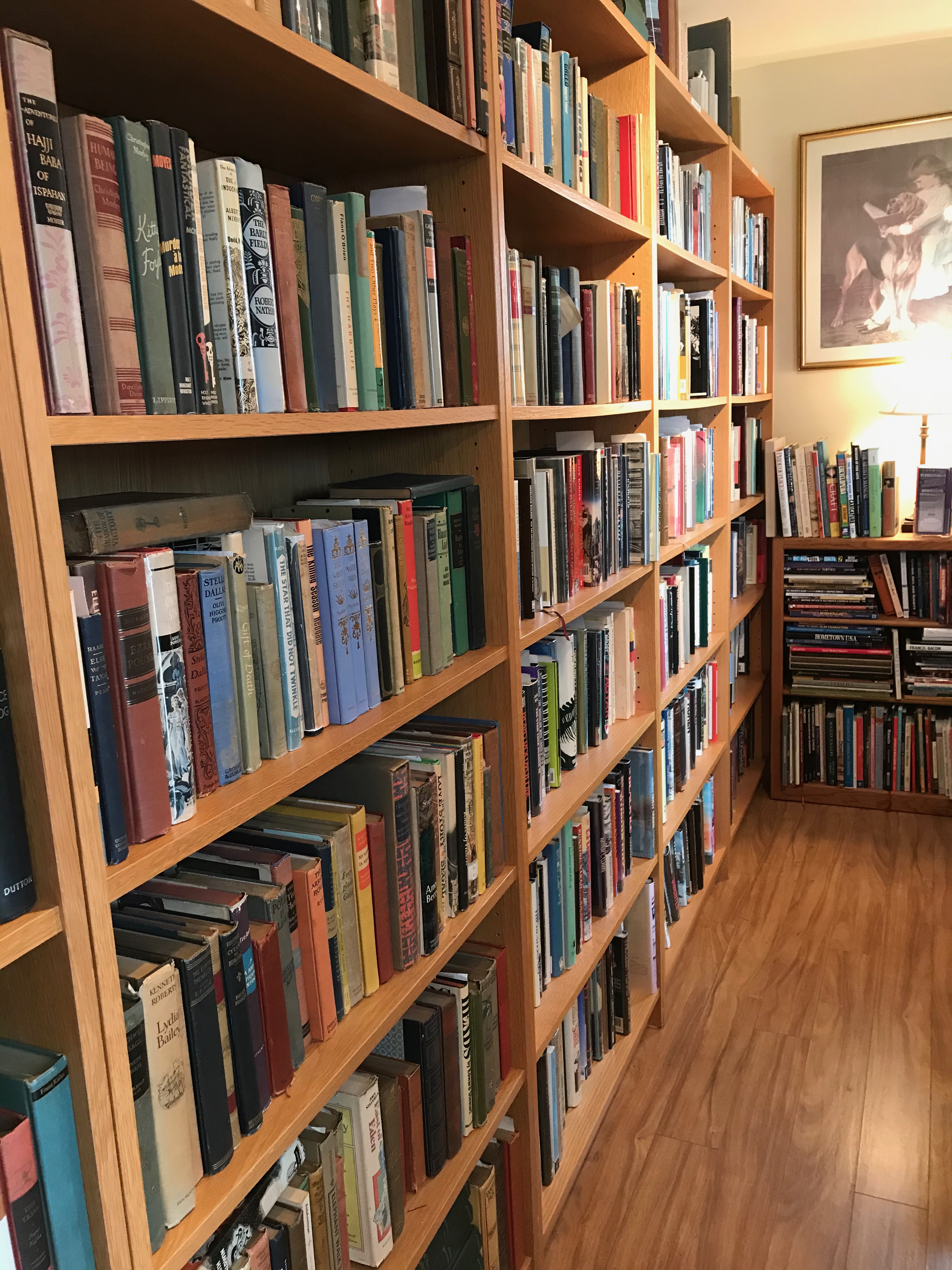
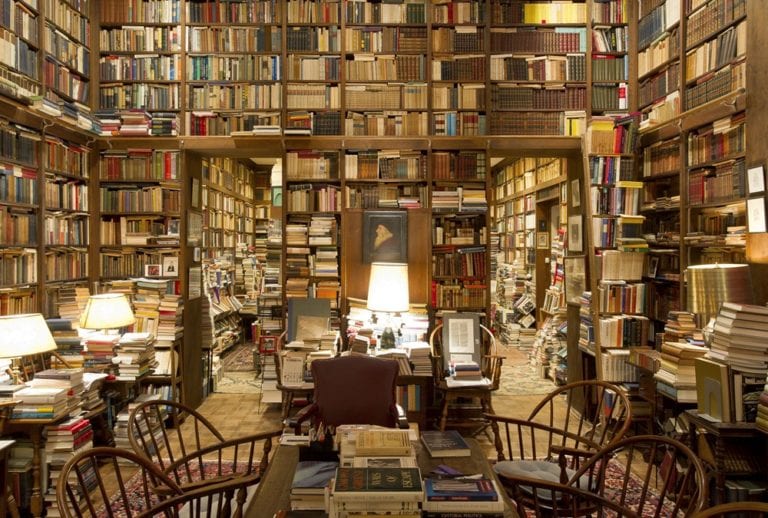
Used books are a thriving business.  Many publishers these days are focusing on “the electronic future,” scratching their heads that people are still reading paper.  What will happen to walking into that impressive library?  Have you ever walked into someone’s impressive iPad or Kindle?  It looks the same no matter how many electrons you add.  The internet has been taken with the photo of the late Johns Hopkins humanities professor Richard Macksey’s library.  Would it be possible to have walked in there and not been impressed with the obvious love of books?  As a Hopkins professor I doubt he had to resort to used books much, but I kind of think he probably did anyway.  Bibliophiles are like that.  A first edition is a thing of beauty forever.  And so I find myself on Bookfinder and I’m willing to give them a cut just for the privilege of holding a coveted book.

Richard Macksey’s home library. Credit: Will Kirk/Johns Hopkins University

Investigating Investigators

I firmly stand by my earlier assertion that you can learn a lot from reading badly written books.  It’s difficult not to attribute motives (particularly of the pecuniary kind) to a book apparently hastily written and self-published.  But still, but still.  Writing even a short book takes quite a bit of effort.  One thing that came through in my reading of Paranormal Investigators: The Complete Collection Books 1–10 is that Rodney C. Cannon and Leo Hardy have a legitimate interest in the topic.  Not everyone has the facility with wordsmithy that makes for pleasant reading.  Not everyone has years of research training.  Still, there were moments of eye-rolling and actual out loud snorting that accompanied reading this one.  It continues some useful information, but all of it will need to be double or triple-checked.

My reason for reading it is the dearth of good information on controversial figures.  This has bothered me for some time.  Academia tends to pretend figures such as Ed and Lorraine Warren, Hans Holtzer, and Montague Summers simply don’t matter.  The fact is they have very wide followings and they share the feature of being self-taught in the field of ghosts and/or monster studies.  I knew this book was self-published (itself a warning sign, but then many credible authors self publish because it’s nearly impossible to break into the commercial publishing world).  I had hopes that it was simply because publishers don’t like to take chances on authors without a platform, without household name recognition.

The book is, however, poorly organized and repetitive.  The grammar is bad enough to make an erstwhile teacher such as yours truly pull out his truly’s hair.  And yet there is information here.  I can’t accept anything as factual from a book loaded with grammatical errors, very very few citations, and factual mistakes.  That doesn’t mean there’s nothing of value to be found in it.  In fact, I learned a thing or two (that I’ll need to confirm) that may help me in my own research.  And besides, it’s a quick read.  Given the constraints in the publishing world, we can all be forgiven for not automatically dismissing those who have something to say but who need to sidestep the standard publishing world to do it.  Amazon and others have made self publishing as simple as clicking a few buttons.  Who can be blamed for taking advantage of what others have wrought?  I learned something and that is, after all, the point of reading.


Literary Thoughts

A book is a physical object.  It is printed on paper and has a cover.  It has a publisher who undertakes to have it printed and bound (and with any luck, marketed and publicized).  This, I would contend, it what most authors have in mind when they sit down to write a book.  It isn’t just “content,” of which you can find far too much on the internet.  It is an object of pride that you can slot onto your shelf with a great sense of personal achievement.  It has taken a lot of work, and headaches, to get to this point.  Several months or even years of your life.  An idea that can’t be addressed in a couple dozen pages.  A book is born!

Publishers are more and more pushing the ebook, however.  The ebook is not a book in the same sense as a printed object is.  In some sense it may be more durable.  It’s certainly easier to get quickly.  But how do you get excited over writing an ebook?  Whenever I’m writing a book, there’s clearly an object in mind, not a cloud of electrons.  Ebooks have their place, but as people start talking about a post-literate future I start seeing visions of my own tombstone.  It gives me a strange kind of comfort to know that all of my books so far reside in the Library of Congress.  Some university libraries even buy copies.  Would a carpenter take pride in an electronic table she built?  Can you set your book on it?  If you don’t carve your “Kilroy was here” in stone, how will you ever prove it?

As handy as ebooks are, nothing matches the sensation of walking into a room full of books.  The sense of rapture is palpable.  Such rooms are monuments to our culture.  A screen with metaphorical tons of content may be a tribute to technology, but is any of it real without ink connecting with paper?  There’s nothing wrong with “content;” I produce some every day.  The thought process is different from book writing, however; just like the process of writing poetry differs yet again.  The publisher always looks at the bottom line.  (And I don’t mean the last line of a poem.)  And to keep “books” profitable the conversion to “content” seems attractive.  It breaks down, however, if writers no longer think in terms of books.  The book has a storied history and a long future, if we keep in mind that it’s something far more refined than mere content.


Another Article

Some insecure people feel the compulsion, but really don’t know why.  Speaking strictly for this insecure person it’s because (I think) I’ve been ignored most of my life.  I didn’t cause trouble so teachers seldom paid me any mind.  (I’m pretty good about obeying rules.)  I was a middle child with less than a year at youngest status.  I was abandoned in a house at the age of one for God knows how long when my father went out on a bender.  Who knows?  In any case, this piece isn’t really about any of that.  It’s about the compulsion to write articles.  I don’t know why I keep volunteering to do this.  They get me nowhere.  You’re not paid for them, and you get little exposure.  I seem to be addicted to appearing in print.

This blog is purely an electronic phenomenon.  It exists nowhere in print.  I post on it every day in the hope that, like a Pioneer probe, it will connect with somebody who comprehends.  As a non, but erstwhile, academic I am not compelled to write.  In fact, it sometimes complicates things.  (If you believe that freedom of written expression exists you’ve never read a publishing contract.)  So print publication appeals to me.  I had an email from a volume editor the other day and I couldn’t place the name.  I opened it to read that the volume had been accepted as I was struggling to remember what I promised I would write for him.  I had to do an email search to locate the chain.  So that’s what I said I’d do! (The previous article I’d committed to I remembered well, since the proposal was long overdue.) 

Print publication, you see, takes a long time.  An erstwhile editor (likely an academic), gets an idea.  They wrestle with it a while and then write it down.  Pitch it to a publisher.  The in-house editor has to pitch it to the editorial board.  Often after peer review.  It can, in my defense, take months—plenty of time to have forgotten I said I’d contribute.  Then the book has to be written.  That part can take years, but in edited collections many hands make light work.  After the disparate pieces are finally cajoled in (one editor had to keep after me for four months), the editor, well, edits them.  Then they finally get sent off to the publisher.  The production process takes about a year.  The volume comes out and you get a congratulatory email or two, and then it’s forgotten.  I’m not sure why I do it, but I’ve been published by university presses for taking these on.  When I was teaching I couldn’t seem to get their interest.  Now that I’m writing about horror they’re starting to notice.  But then, that’s how monsters behave.


Rel Stud 101

There’s no such thing.  Religious studies, that is.  I first heard this a decade ago while working as religious studies editor for Routledge.  My supervisor stared at me with such knowing eyes that all I could do was nod.  I figured that since I’d spent my entire career in religious studies I’d probably know if it existed or not.  I’ve heard the statement a number of times since then and have come to realize that what it means is this: unlike other academic disciplines, religious studies has no single, central topic of study and no agreed upon methodology.  It consists of scholars trained in a variety of fields looking at different aspects of religion from different perspectives.  There’s even little agreement as to what religion is.

Religious studies is an outgrowth of biblical studies.  Studying the Bible was a long preoccupation with Jews and Christians.  Long before there were universities there were places you could study the Good Book in depth.  When enough time had passed history of Christianity and theology were added to the mix.  It was only fairly recently, about the late nineteenth century, that scholars of Christianity began to wonder about other religions.  The earliest religious studies were Christians studying other faiths.  Now, of course, religious studies exists in a number of universities and colleges (but by no means all of them) and nobody really stops to think how this came to be.  Students are very interested in religions, but as a major it offers few career options (yours truly is a case in point).  It’s a discipline under duress.  Pretty stressful for something that just doesn’t exist, isn’t it?

My suspicion is that many who entered this limbo started out as I did—a curious Christian wanting to know as much as possible about what I’d been taught.  You learn to think along the way, with somewhat predictable results.  Sometimes it takes years to dawn on you.  In other words, I doubt that many entered this field consciously thinking “I want to learn religious studies as a discipline.”  Like a pitcher plant, however, once you fly in there’s no way out.  Instead we have to find tools to study this strange and slippery environment into which we’ve fallen.  Otherwise we’ll simply be digested.  I made it through three degree programs in this field without ever encountering this idea that apparently has been long known.  Numbers are declining, which makes those of us in here how long our odyssey might continue.  If it even exists.


Ghost Publishers

Ancient Near Eastern studies, where my academic work has the widest recognition, is still an area of fascination.  I have to hold myself back when I see a new book published in the area.  You see, I learned when I researched in this field that there is little academic opportunity in it.  As per usual, the public seems quite interested so academia is not.  A few practitioners, however, have been able to break through.  One of them is Irving Finkel, a curator at the British Museum.  He’s been writing popular books about ancient ideas and getting respectable press for doing so.  His most recent book (The First Ghosts), as described in an article in the Smithsonian, deals with the earliest depiction of a ghost.

Perhaps because of copyright complications, his book on the subject doesn’t seem to be widely available in the United States, despite having been published by a trade house.  It could be that the publishers don’t think anyone will be interested.  Hello?  Ghosts and Mesopotamia?  Haven’t you been paying attention?  This is part and parcel of the academic publishing world.  The editorial board has to decide which books see the light of day and which won’t.  And how to price them.  Is this primarily a library book or can it somehow claw over into the crossover market?  Academic publishers will casually add five or ten dollars to the price, assuming it won’t hurt sales.  Guess what?  It does.  As much as I’d like to read Finkel’s book, my interest doesn’t hover around the 60 dollar range.

When I first studied Hebrew I wanted to buy a textbook my professor mentioned, but it cost nearly $100 in the US.  This was back in the 1980s, so that really was steep.  When we moved to Scotland I discovered the same book was available there is paperback for a reasonable price, so I bought it.  That’s when I began to realize copyright laws direct the shape of scholarship.  Publishers decide what makes it into reputable book form and who will be able to afford it.  That’s power.  You see, people have believed in ghosts from as long as we could convey the idea.  The dead never really leave us.  Finkel’s book examines a clay tablet used to exorcise ghosts and may contain a line drawing of a spirit.  Who wouldn’t want to read such a book?  It’s getting press coverage but those who make such decisions have decided, apparently, there’s no market for it.  When that happens a book hasn’t a ghost of a chance.

Postscript: Checking Amazon one last time before clicking “publish,” I see the book has now come down to the $30 range. I can’t take credit for that, but my point still stands.


Paywall

They were my former employer, for goodness sake!  Here’s how it happened.  It begins with research.  Nobody is born knowing all they need to learn.  Research teaches you to question what you read and check sources.  That’s how bibliographies are built.  So I came across a reference to an article I needed to read.  The problem was it was behind a Taylor & Francis paywall.  (Taylor & Francis own Routledge.)  The cost to read one article in an academic journal?  $45.  That’s usually my upper limit for buying an entire book.  Working in publishing I know the reason for this.  They want you to go to your library (I don’t have one) and ask them to subscribe.  If you need access, probably somebody else will too.  This particular author isn’t on Academia.edu.  Should I risk Sci Hub? I mean the article is right there, but I’m not allowed to see it!

I did find that you can ask the author for a copy on Research Gate.  First you have to join Research Gate.  They want your institutional email.  My email doesn’t have a .edu extension.  I therefore had to go through a lengthy process of verifying that I am a researcher.  I had to claim papers I’ve authored.  I had to explain why I don’t have an affiliation.  I had to have them email me, twice.  Each time I had to provide further information.  I swear, it’s like getting a Real ID all over again.  All this so that I can ask an author for a paper that’s only available for $45 on the publisher’s website.  Every time I start a new research project I ask myself why I keep at it.  I guess I want to be part of the conversation.

The open access movement is gaining steam.  The idea is that research should be free.  Very few object to paying nominal fees for access, but often prices are extortionate.  Publishers are caught in this web because overheads are so high—they have to pay employees—and the cost of materials isn’t cheap.  Traditionally this has been overcome by passing some of the expense on to customers.  That’s why academic books are so pricy.  With journals, such as the one I need, the scenario’s a little different.  Journals are purchased by libraries via subscription.  “They wouldn’t subscribe to them,” so the argument goes, “if researchers could get the contents for free.”  Still, putting in place a free article or two before dropping the price bomb would seem to be in the best interest of actually moving knowledge forward.  Hey, T&F, don’t you remember me?


Eve’s True Desire

Psst—don’t tell anyone!  There is a free copy of my first book available on Academia.edu.  I thought I was kind of radical for doing that, but people who write books want people to read them.  Having a book priced $70 or more, heck, even $30 or more, means only diehards will buy it.  Nightmares with the Bible promptly sank at $100 cover price, released during a pandemic.  I’ve always admired scholars who’ve bucked conventions to make their work available.  Recently I needed to consult a book.  I won’t say what it is because I fear a take-down order will be issued where I found it.  The author, aware the book was hard to access, actually photocopied the entire book and put it on a website.  I stand up and cheer!  Photocopying an entire book is a lot of work, a labor of pure love.

Now, I’m all for authors getting royalties.  It takes a lot of time and energy to write a book.  It can cost years of your life.  You ought to get something back for it.  It seems to me, however, that a different model is required for academic books.  Why are they so expensive?  Not only that, but smaller publishers without the distribution channels often publish worthwhile books, but in small quantities and they go out of print after the initial run is sold.  The academic enterprise (knowledge for knowledge’s sake) has become a captive of capitalism.  There’s no other way to trade in that market.  Books that have willing, even eager, readers are sequestered in libraries only accessible to employees.  Is there anything wrong with that picture?

Academics at less wealthy institutions often find ways around the rules.  I did my research for Weathering the Psalms at a small seminary that had trouble getting unusual items on interlibrary loan.  Bigger schools were distrustful of this tiny enclave called Nashotah House.  Would they ever get their rare property back?  Meanwhile worldwide mail service crisscrossed with offprints sent for free from scholar to scholar.  It was like your birthday, or Christmas, when a long-awaited piece of research landed in your mailbox.  Nobody was in it for the money.  We were beguiled by learning.  Eve looking wistfully up into the tree.  Now it’s all business suits with dollar signs for eyes.  The academic who puts their book up for free on the internet is nothing less than a saint.  Seeking knowledge is never really a sin.

Tasty fruit of knowledge

Strange Happenings

It all began with a lazy Saturday, back in those days of trying to make a living as an adjunct professor.  People often ask why such folks don’t do more publishing, but the fact is that as an adjunct most of your time outside class prep and teaching is spent looking for a full-time job.  On a weekend, after all the job postings had been examined, I’d sometimes head to the local FYE and look through the bargain bins.  I’d taken to watching horror as an inexpensive kind of therapy years before.  I came home with a two-fer A Haunting in Connecticut and A Haunting in Georgia.  I hadn’t heard of either one, but hey, this was bargain bin entertainment.  It turned out they were television movie documentaries and they were scary, but not what I was looking for.  I resisted watching the theatrical movies when they came out.

Eventually curiosity got the better of me, and I watched The Haunting in Connecticut and its sequel long after their release.  The strangely named The Haunting in Connecticut 2: Ghosts of Georgia dramatized the story of Heidi Wyrick almost beyond recognition.  Since the documentary had been based on a true story I wondered what had happened.  This wasn’t an Ed and Lorraine Warren case, so I turned to The Veil: Heidi Wyrick’s Story, written by two of Wyrick’s aunts.  Much of the book follows the documentary, only, strangely, with less detail about some of the hauntings.  It’s a quick read, and it’s fairly well paced.  It is, however, self-published.

A real dilemma, I imagine, for anyone wanting to publish their paranormal activities (unless they’re already influentially famous), is how to find a publisher.  From my own experience (and I work in the biz), finding a publisher isn’t getting any easier.  Self, or vanity publishing offers a physical book, but the usual gateways to believability (editors, editorial boards, etc.) are missing.  Established presses have reputation to worry about, and why take a chance when you can afford the luxury of buying projects that come to the top of an agent’s pile?  I enjoyed The Veil—I appreciate the effort of those who have a heartfelt story to tell.  But I couldn’t help thinking how much better it could’ve been with an editor’s guidance.  Those of us who write are often too close to our own work to see the problems—this is the real danger in self-publishing.  Hiring an editor is expensive and you need to have the income to do so, often creating a cycle of unaffordability.  I’m curious as to what really happened in Georgia, and I’m still curious after both the book and movie.


Clash of the Titles

Well, it seems I may be stuck in publishing for a while.  At least it’s a place to learn.  The inside story, it turns out, would be very helpful for authors to know.  Let’s take titles for example.  An editor sees a basic misunderstanding on the part of many academic authors.  Hey, I’ve even done it myself.  To correct this misunderstanding it’s important to see that academic publishers see different basic kinds of books.  One of them is the academic monograph.  No matter what the author thinks (I know the feeling of working on a book for years and supposing everyone else will be interested in the topic) academic books are of limited appeal.  Their main buyers are academic libraries and academic librarians want to know at a glance what the book is about.  The title has to say this, even before reaching the subtitle.

We’re all used to the idea of seeing books with clever titles in the bookstore.  (Remember bookstores?)  These are trade books.  Some of them are from academic presses, but these are books that have often been worked over by editors and marketers and publicists to make them more appealing.  The title can be clever, with an explanatory subtitle, because the target buyer is a bookstore rather than a library.  It’s difficult for an author to admit that this tome that has consumed your waking life for years, and maybe even decades, is primarily something a couple hundred libraries only will buy.  And family and friends who feel they need to support your efforts.  It’s a hard reality to face, but it often comes down to title.

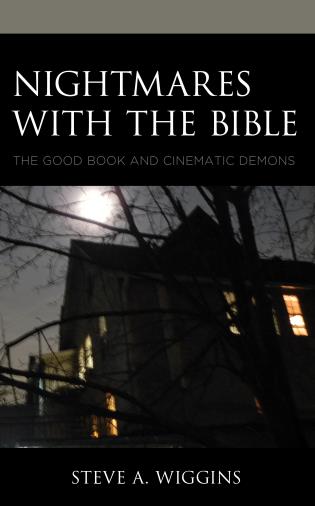
What are you going to call your book?  My own most recent effort, Nightmares with the Bible, was written for a trade readership.  The publisher, however, had the library market in mind.  For success in the library market, the title works against the book.  No matter how accessibly your book is written, no mere mortal will pay $100 for it.  (Some of us will feel compelled to dish out that kind of cash for a title we really must read, but we are the exception rather than the rule.)  I like my title, but it was a mistake.  It should’ve probably gone by its subtitle, slightly modified, The Bible and Cinematic Demons.  In my mind as I wrote it, I had an educated but popular readership.  The publisher had different ideas, unclear to me when the book was put under contract.  Now it’s time to give this post a popular title so that it will be read. And hopefully taken to heart.


Discount Nightmares

Now that we’re past the equinox it’s officially okay to obsess with monsters, right?  (Any excuse will do.)  Nightmares with the Bible was officially a pandemic book.  Academic publishers (especially) found out that books released in 2020 tended to flop.  People weren’t thinking about much other than the pandemic (or crying about losing an election fair and square).  Books, of course, take a long time to write and a long time to produce—it’s not as simple as it looks.  And if your production schedule falls during a pandemic, well, be prepared.  In the case of Nightmares there was the added burden of price point.  When all you’re thinking about is survival, cashing out a Franklin to read about demons seems hardly wise.

Just yesterday I received a flyer, that I’m passing along to you, for the book.  It has a discount code on it (look at part 2 below) so that the book is merely expensive rather than very expensive. Nightmares is part of a series titled Horror and Scripture.  The series, published by Fortress Academic and Lexington Books, is now coming out with its third volume.  The publisher, starting to recover from the pandemic, is promoting all the books in the series.  You see, Nightmares was not only a pandemic book, it also missed that highly sought-after pre-Halloween release.  Books that deal with horror get a boost during the holiday season.  Ironically the same thing happened with Holy Horror.  Both books came out in December when nobody but Charles Dickens is thinking about scary things.

Academic book pricing is based on a model that’s beginning to crumble.  It’s that capitalistic trope of what the market will bear.  The market is academic libraries, and it has been demonstrating lately that even they aren’t made of money.  I don’t know if libraries get to use discount codes or not—it can’t hurt to ask your librarian.  Fully employed academics, however, will sometimes pay a hefty price for a book they really want or need.  My shelves upstairs are filled with books that were overpriced but were required for the books and articles I wrote when it was an expectation of my job.  My next book, which is now in the negotiation stage with the publisher, will be more reasonably priced.  It will likely have a smaller appeal, but you’ve got to start somewhere.  I sincerely hope I’m through writing hundred-dollar books.  Please pass the flyer along to all your rich friends—it’s just in time for the haunting month of October.


Moral Compass

Where have all the morals gone?  Well, not exactly song-worthy, but it is a question I think about a lot.  You see, I work in publishing.  Publishing, above all, is a business.  People make their livelihood at it, and so they have to find a market that pays.  Money and morals don’t mix well.  A recent New York Times story pointed out that the political polarization that’s tearing America apart is reflected in bestsellers.  Political nonfiction bestsellers have topped the charts since Trump was unfortunately elected.  Books both pro and con have flooded the market.  What’s this got to do with morals?  Well, I believe publishing should be in the business of educating.  If you’re going to publish nonfiction, it should be material that doesn’t cause more problems than it helps solve.

When I look at a book, after checking the title and author, I next look at the publisher.  Some publishers are conservative, and that’s fine.  That’s what they do.  Most, however, consist of highly educated professionals who realize the severe, and continuing damage that Trump caused.  These publishers, however, will produce pro-Trump books if the numbers look good.  There’s gold in them thar hills!  I often have these scruples working for an academic press.  Some ideas are clearly distorted.  I’m no elitist—I’m still pretty much working-class all the way down to the bones—but education reveals when something very bad (fascism) is happening.  Others see it too.  Still, the temptation of all those dollars… it’s a real pressure, almost like being at the bottom of the ocean.  There’s money pressing on us and we want it.

The gray lady story bothered me.  Instead of publishers looking out their windows and seeing the political grand canyon of this nation, they see profits.  This is business, after all.  Just business.  Is there any such thing?  Morality informs the way you live, the choices you make.  Do I promote education, reflection, and sound reasoning or do I promote a very real 2024 threat of a man who leads by refusing to lead?  After elected Trump immediately began campaigning for his next term, loving the rallies, the cheers, the adulation.  Who doesn’t want to be worshiped?  But is that what we want to see three Novembers from now?  I remember the shock the morning after election day 2016 in New York City.  I see the damage four years of environmental degradation caused just when the effects of global warming were becoming obvious.  I see women demeaned.  I see voting rights quashed.  And now I look at the bestseller list and wonder where the morals have gone.


Paid Reading?

It’s like when you slowly pull a cotton ball apart.  Interrupted reading, that is.  Some people never cotton onto reading—we’re all different—but some of us find it such a beguiling exercise that we neglect other aspects of life so that we can engage it.  Almost an altered state of consciousness.  That moment when you have to close a good book, though.  There’s nothing else like it.  It’s difficult to pinpoint whether images or words make up the continuity a reader experiences.  For me it’s like a continuous conversation.  Since my life may be too regulated (“nine-to-five” jobs are like that), every day at work begins with interrupted reading.  If you’re awake early, you’ll find there’s no other uninterrupted time like it.  No librarian has to shush anyone at three a.m.

My job is largely reading.  It’s also a good deal of customer service.  As an author myself I guess I get that.  Content is what the world wants, and if you find a writer who does what your press likes, well, you try to keep her happy.  Why doesn’t enforced reading feel like reading by choice, though?  It’s that reading before work that feels like the pulling apart of fibers that’ve organically grown together.  By nighttime, which is still light in summer, it’s not so much pulling apart cotton balls.  Bedtime reading is more like stumbling through a forest.  When you come to that part of the path you know you’ve been on before—perhaps multiple times—it’s time to put the book down and hopefully reboot.

There may be jobs which consist entirely of reading for pleasure.  If there are I never learned about them in high school or college.  I have a friend who’s a musician.  Many years ago I asked him what he like to play for fun.  He looked at me and said “Music, for me, is work.”  I have to believe that somewhere deep inside he still found it enjoyable, but I instinctively grasped what he meant.  Once you take your passion and convert it into a source of income the magic goes out of it.  Once I get out of work the thing I want to do immediately is read, but what I want to read. And although studies show that the reasonable way to get your best work out of your employees is to give them more time off, employers tend to disagree with the data.  The more hours you put in the more “dedicated” you are.  But then, some of us are in publishing because we love to read.  But even now, as work time approaches, the cotton ball begins to shred.