Please Vote

If you haven’t done so already, please vote.  This day has never felt so portentous before.  I’ve been voting since the 1980s and we’ve had some real unsavory choices in some past years.  Never had we had a monstrous incumbent set on destroying the very nation that made him what he is.  Those who don’t, or won’t read the facts haven’t learned what’s obvious even to lifelong Republicans I know—Trump cares only for himself.  His family confirms it.  His policies, such as they are, show it.  He provides lip service to anti-abortion while using stem cells from fetuses to cure his own case of Covid-19 that he caught only by ignoring the science that tells us masks and distancing are necessary.  Even as our infection rates pass what they’ve ever been before, he fiddles while America burns.

Some of us have noticed a profound quiet for the past week or so.  It’s like the country’s running a low-grade fever.  Republicans have been attempting to prevent people from voting, wanting a country more like them, mean and unforgiving, that they can call “Christian.”  To me this feels like 9-11 did, only we have known the plot all along and have been too stunned to do anything about it.  Democracies are founded on the principle of the choice of the electorate.  The only way that we can make that choice known is to vote.  It’s the only way left to be a patriot.

Dietrich Bonhoeffer was faced with a similar situation in his native Germany.  An evangelical Christian, he didn’t acquiesce to Hitler, glorying in the rush of power.  He wrote that when a madman is driving the wheel must be wrenched from his hands.  Bonhoeffer was hanged by the Nazis he tried to displace, but his spiritual eyesight was clear.  Faith can blind believers to the truth.  We’ve seen this happen time and time and time again.  Instead of condemning we need to help them since they cannot help themselves.  This is the truest form of what Jesus stood for.  Read the gospels if you doubt.  This year the decision isn’t for Democrat or Republican, it’s for clear-eyed assessment or self-adoring narcissism.  If a mirror’s held too close, we can’t see what’s truly reflected.  We must vote today to show what we want America to be.  The eyes of both the past and the future are upon us.  How will we want them to be remembered?


Electricity

After the oven incident (see last Monday’s post), I took some time to examine the burned out bake element from the range.  Clearly a break in the piece led to some arcing like you might get in Frankenstein’s laboratory.  By the time I’d arrived on the scene (I always seem to be behind my time), the fire was snaking along the element itself and now that the piece is cooled and removed I was fascinated by the damage it caused.  I suspect this is why I leave any electrical repairs to experts.  This is dangerous stuff.  Interestingly, in the realm of monsters electricity is most frequently associated (in my mind, anyway) with Frankenstein’s creature.  Mary Shelley’s novel isn’t explicit about how galvanism resurrected the patchwork human, but it was clearly part of the tale.

Electricity retains a certain element of mystery for some of us.  If we stop and reflect on how recent our understanding and harnessing of it is, that further adds to the drama.  People have been thinking about and trying to understand religion for thousands of years.  Like early electricity, religion involves invisible forces.  Of course, lightning and sparks and arcing oven elements can be seen, but seeing isn’t the same as comprehending.  We are a curious species and we want to understand.  Being inside the situation, however, our understanding will never be complete.  We can get a pretty good grasp, a functional one even, but our brains will always limit just how much we can understand.

It should come as no surprise that those of us who chose to study religion are intrigued by mysteries.  The divine, the transcendent—no matter what you want to call it—can never be fully understood.  Thus the impatience with evangelicals and others who pretend they’ve got all the answers.  No, we’re all still attempting to get to the bottom (or top) of this mystery.  Like electricity, religion can do an enormous amount of damage.  Motivating those who have only a cursory understanding how it works has historically led to debacle after debacle.  It has generated wars and perpetuated human misery.  Like electricity, when used properly religion has done a tremendous amount of good in the world as well.  The thing is, as my bake element shows, we have all come to learn that electricity should be handled by those who know what they’re doing.  Ironically, religion has never gathered the same level of respect for the specialists.


No Way Out

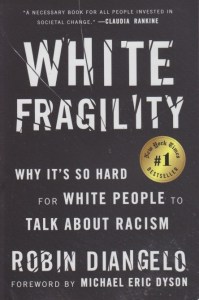
Racism is evil.  The grading of the shading of humans degrades us all.  Robin DiAngelo knows much about the subject and as we watch Trump rally the openly racist, she gives us all pause for thought.  Our entire culture is one of white supremacy.  Progressives, determined to combat it, are also part of it.  White Fragility is not an easy book to read.  It allows no escape for anyone “white” to use.  We must confront our racist culture and admit that we benefit from it.  When we try to explain that we’re misunderstood, she anticipates.  She has heard it all before.  The only thing we can do is confess, interrupt, and try to break down the system that continues to support the systemic evil we’ve embraced.

One thought occurred to me as I was reading.  No doubt DiAngelo would suggest I’m deflecting, and it may be that I am, but those of us who struggle with a perpetually low self-image, even if “white,” may not participate in feeling superior to anyone.  There are individuals whose natural assumption is the superiority of others.  I’ve experienced it time and again in my professional and personal life.  I assume the other is more adept and worthy than me.  In such circumstances a bit more carrot and less stick might’ve been helpful.  I know many both at work and more voluntary activities, for whom a word of encouragement is rare.  For those of us who assume the superiority of others, such encouragement goes far.

Even as I was thinking this I saw a post on Nextdoor.com.  The app, intended to help you find contractors or dentists or whatever, receives many posts on all kinds of topics from identifying animal droppings to alerts regarding crime.  The post to which I refer was from a security camera showing a “prowler.”  The young man seemed more to be walking than prowling to me.  His skin tone and the time of night led to a string of assumptions built on assumptions.  Since I’m often awake just an hour after the alleged “prowling” took place, I knew that were I caught on a security camera I’d merely be considered an insomniac.  Add some melanin and some racism and suddenly a walker is a prowler.  The words I was reading in White Fragility hit me with incredible force.  We have a massive amount of work to do.  “White” people have to own their history.  Own it and overcome it.


Tooth Less

The words “difficult extraction” are not what you want to hear, seated in a dentist chair.  Fortunately mine was not difficult.  I’m squeamish about most things, and like many kids raised in humble circumstances, experienced dental care at the largess of various government programs.  I remember going home nearly every time in a state of shock regarding how much it hurt and what he had done to us.  It has taken a lifetime to get over the fear of the dentist.  Now I patronize a local female dentist who is gentle and caring—something that didn’t exist, and we couldn’t have afforded anyway, when I was a child.  Even so, she’s telling me a tooth has to come out.  I’m being stoic and starting my meditation mantra.

Health care in the United States, as Trump’s recent treatment for a virus to which he carelessly exposed himself shows, is horribly uneven.  Those who are systemically kept poor—especially those who are “of color”—often have few choices and die younger.  Yet supporters of 45 see no problem with this.  Now, I wish I weren’t in this dentist chair right now.  I’m not looking forward to the novocaine shots or the tugging on my jaw.  Or the hours of gauze in my mouth afterward.  But at least I can afford this.  It pains me even more that there are others who can’t.  And that those who claim to follow a man who healed for free are voting for a man who has pledged to keep inequality as “the American way.”

I grew up taking care of my teeth the way the poor often do—that is to say, not enough.  The solutions involve education and empathy, both of which our government has chosen to eject for jingoism and bravado.  I’m not so much worried about having one tooth less.  I am worried about a government that feels it has the right to oppress the poor so that the wealthy can continue to gain more money that can, in turn, be used to control the government.  This is wrong.  There’s no way that it can be made to be “Christian,” no matter what evangelicals may say.  I’m sitting here in the dentist chair and the needle’s getting closer.  I’ll have a mouth full of gauze for the next few hours and I’ll be on a soft food diet for a while.  I may be in some pain.  But still I know I’m one of the lucky ones.


Dangers of Experience

I’m so used to being behind everyone else that when I turn out to be ahead of the curve it occasions genuine surprise.  That’s the way it appears when I think about the dominance of the far right in American politics.  As an editor I get to read proposals for other editors on the board.  Political scientists are trying to analyze how we’ve come to be a nation of religious far-righters when we seemed so progressive that we put a smart phone in everyone’s pocket and Alexa in everyone’s voice range.  I grew up as a far-righter when it certainly felt alienating.  Apart from people we met at church I didn’t know any others outside my family.  People we knew were, well, just different.  Back in those days we didn’t judge them.  We accepted them for who they were.

One of the aspects of my life to which I’ve grown accustomed is being ignored.  I’m not a big person, nor am I a loud one.  It isn’t unusual for me to be overlooked at work and even at religious gatherings (a field in which I’m a bona fide expert).  Nevertheless, I have a wealth of experience among the far-righters and I think it might help to understand our political climate.  I think I have a pretty good grip on what motivates this crowd.  Since I grew up (serious study will do that to you) and am no longer arrested at that stage, I’ve blended into the crowd as someone just as perplexed as everyone else.  I do, however, have an idea of what they’re after.  Our particular sect didn’t push this—we seemed more worried about our own souls staying out of Hell—but many fundamentalists wanted to take over the nation.  In fact, they have.

The fact that 45 isn’t one of them is immaterial.  Power is the thing.  Power to make others conform or suffer.  This particular faith is built on fear, not love.  It’s as if their New Testament lacks the gospel of John.  You see, I was ahead of the curve.  I was part of it before it took over congress, the White House and the supreme court.  Things move so far these days that thinkers just don’t have time to think about everything.  Work days are long and covid still complicates everything.  Who has the time to seek out those who grew out of the very source that now endangers our democracy?  I think I prefer running a little behind, don’t you, Cassie?


Belief and its Discontents

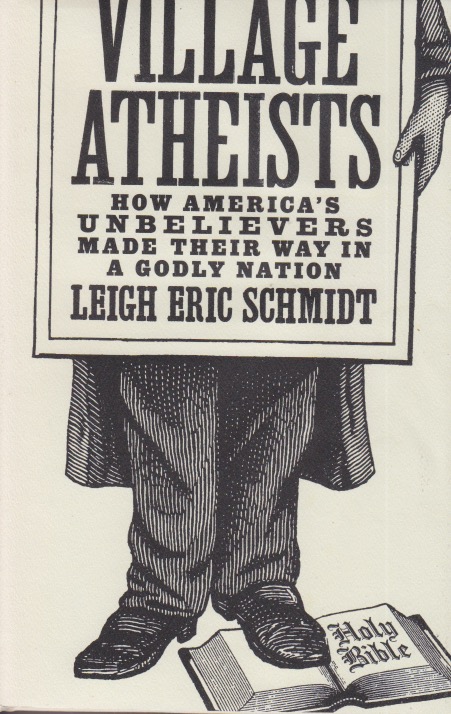
In this day of self-driving cars and instant, world-wide video conferencing, it is difficult to believe we still prejudice belief in God.  Village Atheists: How America’s Unbelievers Made Their Way in a Godly Nation isn’t exactly what I thought it would be.  Leigh Eric Schmidt is an historian, so this is an historical treatment.  Specifically focusing on four characters from the nineteenth (to early twentieth) century (Samuel Porter Putnam, Watson Heston, Charles B. Reynolds, and Elmina Drake Slenker), Schmidt focuses on a term I’d seldom heard before his book, “the village atheists.”  These men and women objected to the preferential treatment accorded to Christian believers in a nation founded on religious equality.  In the epilogue Schmidt shows that we are still not a nation committed to fairness.

The only crime these people committed (and two of them were clergy) was honesty in their search for the truth.  This was an actionable offense into last century.  Such was the hold of biblical religion in America that holding public office, being on a jury, or even protection under the law was disallowed for those who questioned the existence of the Almighty.  For sure Schmidt has picked out some colorful characters to sketch, but their common theme was that they were simply following where reason led.  In America this was a crime.  Secularists today who claim it’s not still haven’t come to terms with the power of religious ideology.  A deep distrust of the unbeliever remains, even after the four horsemen of earlier this millennium.

For me the question comes down to honesty.  Belief shifts over life, depending on your circumstances and your outlook.  Most people unreflectively stay with the religion into which they’re born.  Those who study it learn to ask questions and the result is belief that may shift over time.  Making what you believe a measure of your integrity is therefore a temporary thing.  This is well illustrated in Village Atheists; some of these people began as fervent ministers.  They, however, were honest about their thought process and were counted criminals.  You have to wonder about a religion that punishes honesty.  Perhaps it’s no wonder that evangelicals have no trouble with Trump’s incessant lying.  To be honest is to be vulnerable.  The people profiled in this study, tried for things we would have trouble believing count as a crime (consider what 45 has been able to get away with), came out of their trials with integrity.  It would be great if the same thing could have been said about their accusers.


Behind the Exorcist

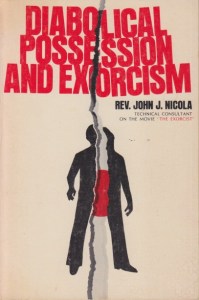
Some books from the 1970s are difficult to locate.  Since that was some half-century ago I suppose that’s not at all unusual.  One of those that I had been anxious to read since working on Nightmares with the Bible was Diabolical Possession and Exorcism, by John J. Nicola.  The main reason for my desire was that many people involved in the narrative about demons in the modern world are difficult to document, at least on the internet.  For academics, or even journalists, with budgets and release or research time, there’s the possibility of travel and interviews and archive searching.  I have none of those things, and I was curious about Nicola’s book since he wrote a forward to The Amityville Horror, vouching for its authenticity, and he was also technical advisor for The Exorcist.

I didn’t locate a copy of his book until after Nightmares was well into production, but research, even as I conduct it, is never-ending.  The book is kind of a memoir and kind of a “you should listen to your priest” lecture.  What’s fascinating about it is Nicola has no difficulty accepting both the paranormal and the standard Catholic teaching in matters of faith.  He does come across as somewhat credulous, and somewhat academic in this book.  His chapter on his role in The Exorcist is quite informative.  One of my main questions regarding both the man and his book was what his particular expertise is/was (even finding out if he’s still alive, via the web, is difficult; he is on the 2017 honor roll of giving for a Catholic charity).  The book provides a partial answer, but it also raises many questions.

This book is rare enough to have given rise to its own kind of mythology.  I would classify that in the same category as the various stories about The Exorcist production being plagued with curses and strange phenomena.  They’re all part of a culture of creating a belief structure that allows the supernatural back into an overly materialist worldview.  Kind of like Einstein’s “spooky action at a distance,” it causes pleasant shivers because it doesn’t really explain anything.  The book itself is though-provoking, but like the books of Gabriele Amorth, expends pages on the wonders of the Virgin Mary and building up a Catholic outlook on the spiritual world as the basis for combatting evil.  Nicola, correctly in my opinion, points to the (then impending) influence of The Exorcist movie.  This is a topic that I take up in Nightmares, for those interested in knowing more.


BBW

It’s a measure of how busy I am when Banned Book Week has started before I realize it.  Most years I make it a point to read a banned book at this time, but my reading schedule is so crowded that I seem to have missed the opportunity this year—I didn’t see it coming.   I’ve read a great number of the top 100 banned books over the years, and I’m sure I’ll read more.  I’ve recently been reading about America’s troubled history with free expression.  Probably due to a strong dose of Calvinism combined with Catholicism, many of the books challenged and banned, as well as prevented from ever seeing the light of day, have to do with bodily functions.  Sex, especially.  In American society, as freely as this is discussed, we still have a real problem when someone writes about it.

Why might that be so?  Many religions recognize the privacy aspect of sexuality without condemning the phenomenon itself.  The Bible (which is on the list of Banned Books) talks of the subject pretty openly and fairly often.  Our hangups about it must be post-biblical, then.  Much of it, I suspect, goes to Augustine of Hippo.  Although he had a wild youth, Augustine decided that nobody else should be able to do so guilt free, and gave us the doctrine of original sin.  Add to that the legalistic interpretation of Paul and his school, and soon the topic itself becomes difficult to address.  Victorian values, obviously, played into this as well.  Literature, which explores every aspect of being human, is naturally drawn to what is a universal human drive.

Banned Books also treat race—another topic that haunts America—or use coarse language.  Some challenge religious holy grails, such as special creation or Christian superiority.  It seems we fear our children being exposed to ideas.  The wisdom of such banning is suspect.  The publishing industry has many safeguards in place to create age-appropriate literature.  Banning tends only to increase interest by casting the “forbidden” pall over something that is, in all likelihood, not news to our children.  American self-righteousness tends to show itself in many ways, making much of the rest of the world wonder at us.  We seem so advanced, but we fear a great number of rather innocuous books.  The reasons are similar to those behind why we can support tax-cheating, womanizing, narcissists as leaders: our faith blinds us.  I may be late in getting to my banned book this year, so I guess I’ll just have to read two next time.


Up in the Sky

Superman stands for truth, justice, and the American way.  Or least he did when I was a kid.  One out of three ain’t bad.  Considering the many exposés that have come out about Trump in the last few weeks, many of them by intimate family or very close friends he’s recently betrayed, are a pretty amazing example of a liberal hoax, I guess.  Witness after witness after witness comes out saying that truth, justice, and the American way simply aren’t important to 45, and yet the evangelical bloc insists differently.  They can’t seem to see that those who like Superman don’t object to your garden variety Republican (although we prefer the other alternative), we object to Duperman saying he’s Superman.  When in history have we had several party members advocating that people not vote for their own party’s candidate?  And yet the true follower can’t accept the witness of closest friends and fixers that they’ve been lied to for four years.

Like many people I would rather not be political.  When it becomes an issue of destroying democracy, however, it suddenly seems like I have to add yet another thing to my already full plate.  For four years now I haven’t been able to trust the government to do its job.  Trump admits that he ignored how serious he knew the Covid-19 crisis to be back in the spring.  Six months later and we’re all still confined to our houses and businesses are suffering, and his supporters say he read this one just right.  Over 200,000 of our fellow Americans have died from a virus that our “president” won’t admit is a problem, even as the White House has taken over writing guidelines for the CDC.  Boy, are we ever great hoaxers over here on the left!

I recall Superman flying around Metropolis actually fighting crime.  Ensuring that the truth was upheld.  Justice was essential.  People adored him.  What happened on the way from Super to Duper?  We’ve come to praise a man who is a sworn enemy to justice unless there’s something in it for him.  Whose number of documented lies by any measure staggers the imagination, and yet whom “true Christians” support.  The Superman of the New Testament had quite a bit to say about truth and justice (the American way was a bit beyond his experience).  Those who lived in lies were considered friends of the Devil.  But times have changed since then.  Heck, they’ve changed since I was a kid.  We used to look up to Superman in those days.  Now we apparently prefer lies, injustice and what is apparently becoming the American way.


Kind Animals

How many people could it be?  That’s the question a pandemic naturally raises.  Last weekend my wife and I ventured to a Vegan Festival in Easton.  Since we vegans are a rare bunch anyway, and since we tend to be socially conscious, there wasn’t likely to be any dangerous behavior.  That, and how many people would actually show up for what is often considered a somewhat wobbly crowd who don’t like to “rise, kill, and eat.”  It felt like a safe place to be with socially distanced kindred spirits.  Everyone was wearing masks and there was no Trump bravado going on.  For a moment it reminded me of the kind of accepting country the United States used to be.

Veganism, you see, isn’t just about not eating and not exploiting animals.  It’s about honoring the wonder of life in all creatures.  I realize some of the issues—believe me, I try to think things through thoroughly.  It’s all about consciousness.  We’re still a considerable distance from being able to define it, and some people, like philosopher Thomas Nagel, believe it might go all the way down and through the plant kingdom as well.  Consciousness is one of the great mysteries of science.  We hardly know what it is, and how are we to know where it stops?  If we assume other people are conscious (with a few notable exceptions) based on their words and actions, might we not suppose at least some of the “higher” animals are as well?  Or are you just being a fool when you talk to your dog?

You see how this naturally suggests consciousness may lessen by matters of degree, but then we learn that even some insects know how to count and can understand a concept of zero (beyond most Republicans).  We like to put insects down at the bottom because we’re bigger and therefore more important.  Veganism suggests that we stop and think about these things.  We don’t necessarily take everything for granted.  It is clear that the largest polluter and environmental problem is industrial animal farming.  Rainforests are cleared for grazing land.  Profits from big agra are staggering.  Wandering through the stalls, keeping our distance from others who perhaps think too much, we partook of the counterculture in our own quiet way.  The street festival was small this year, but I do have hopes that it might grow, along with some serious thinking about the consequences of our actions.  


Propaganda

“[F]or the most part, thinking is inherently and irrepressibly liberal.”  As much as those who’ve drunk the Trump Kool-Aid (watered down, for sure) might want to deny it, these words by Jeff Kripal are true.  Thinking itself is nearly always a liberal activity.  This election has become one of propaganda versus thinking.  Propaganda is, according to Oxford Languages, “information, especially of a biased or misleading nature, used to promote or publicize a particular political cause or point of view.”  People who, I know for a fact, were taught about propaganda in high school (lots of little heads were nodding yes that they understood what propaganda was and then nodding no that they were never fall for it) have now jumped onto Trump’s propaganda bandwagon, claiming that facts are “liberal hoaxes.”  Thinking is liberal.  Thinking hoaxes, I guess.

Liberals, as I’ve stated repeatedly, don’t take anyone’s word for it.  We fact-check.  Herein lies the difference.  If Joe Biden were to state that Democrats couldn’t win without cheating in the election, liberals would be all over this, fact-checking.  Where did he get this idea?  Did he cite his sources?  Does science concur?  And then if he were to lie about having said it, liberals would point out the contradiction.  Trump’s followers, who have nearly four years of massive lies, well documented, taped, and public, to draw upon, simply deny he said them.  The “liberal hoax” they cite is propaganda, by definition.  It is not to be fact-checked because they might not like what fact-checking reveals.  In high school we were taught about Nazi propaganda.  We all understood.  Now we conveniently forget.

This election is about trying to bring a deeply divided nation back together again.  Trump’s lies from day one (biggest inauguration ever, although those of us actually there could see the lie clearly) have been about dividing and conquering.  Most Trump supporters have no idea what liberals are.  The very definition of liberal concerns broadening knowledge.  Higher education teaches us not to take anyone’s word for it.  Not only do Trump supporters accept his lies about liberal hoaxes, they simply dismiss the fact that liberals’ greatest critics are other liberals.  We don’t sit around coming up with hoaxes—we hardly agree with one another!  The most insidious thing about all of this propaganda is that Trump supporters distrust those who’ve seen behind the screen.  They won’t, however, look for themselves.  All the news from all the world lies, they say, if it doesn’t support Trump.  Thinking back to high school, I can imagine no better way to illustrate propaganda.  At least to those who were willing to pay attention to their teachers.  For those who refuse to learn, education itself is all a hoax.

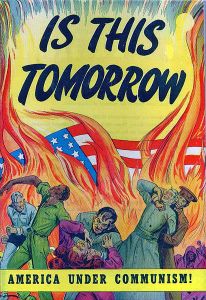
Looks more like today, America under Trump…


Defining Evil

Recently someone said, in a conversation in which I was involved, that understanding evil as entirely a human construct wasn’t working for her.  This particular person is rational, with a scientific outlook, and very politically aware.  There was a pause among the others in the conversation, almost as if embarrassed.  Can anyone admit the existence of evil these days without at least a chaser of irony?  I have to admit that I too was caught off-guard, but for different reasons.  I guess I have always supposed the struggle of good and evil was obvious.  If I hadn’t thought in these terms the last four years in the United States would’ve convinced me.  The degenerate depths to which corruption in this country have sunk leave me hard-pressed for any other answer.  

With an enabling Republican senate, a president who won a contested election with the help of a foreign nation with clear wishes to destabilize the United States (they succeeded), is now trying to destroy the Post Office so that voting by mail can’t be effective.  He does this in the wake of a pandemic for which he personally largely bears the blame.  Instead of admitting that he’s unaware of how to fix the mess he’s made, his focus is solely on keeping himself in power.  Exposé after exposé has been published, but the desire to hold power has blinded an entire political party to the natural correctives built into the system.  What is the use of stacking the judiciary, Mr. McConnell, if the nation you wish to judge falls apart under your watch?  What good are federal judges in a nation gone amuck?

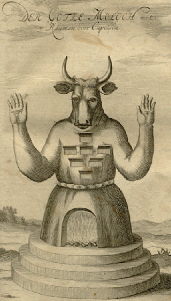
A government, any government, that devalues any classes of human beings—be they of different ethnic backgrounds, differently gendered, or in some way disabled—is participating in what simply can’t be chalked up to bad behavior.  Well over 150,000 US citizens have died from a pandemic that is still receiving a blind eye by the Grand Old Party.  Confused, the sheep of those diabolical feedlot owners think the whole thing is a hoax and refuse to wear masks, making them into a political statement.  They will be sacrificed on the altar of retaining power.  In the Bible the figure that acted like this was called Molech.  Now those who support it are called Evangelicals.  My friend in this conversation, I believe, was struggling to come up with a way to understand what she sees happening around her.  Although taught that there is no such thing as objective evil, she wonders how to make sense of what’s obvious to anyone with eyes to see and ears to hear.


Setting the Mood

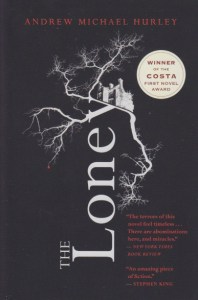
I can’t recall how I learned about Andrew Michael Hurley’s The Loney, but it was one of those books I knew I wanted to read.  One thing I do recall is that I didn’t know it had anything to do with religion until I started it.  It became quite clear that the story—which is difficult to classify—revolves around religion and a kind of gentle horror of things not being what they seem.  Set on a lonely stretch of English coastland where strange things happen, a family takes their mute son to a shrine to have him healed.  The younger brother, not mute, narrates the events.  There are many creepy suggestions of what may be happening, but a full explanation is never given.  That’s kind of like religion itself.

While I don’t normally read the discussion points or classroom/book group discussion material after most modern novels, I found Hurley’s included essay on “Nature, Faith, and Horror” to be of interest.  Several of us, it seems, find the combination of religion, or faith, ties in well with fear.  That was a large part of what I was trying to get at in Holy Horror.  Hurley goes in a different direction with it.  A family under the overbearing religion of the matriarch does her bidding in the hopes of either keeping peace or participating in the healing her son.  We learn from the opening pages that her son Hanny develops into a minister, and therefore has some degree of normalcy.  Hurley is a master of revealing important factors only gradually.  It keeps the tension rising as the story goes along.  There’s no bloodbath, but there is unsettling mystery.

The story is probably best characterized as gothic.  That’s rare these days, and it is the sub-genre of horror that most attracts me.  The mood it casts is kind of a spell and it’s difficult to break.  The Smith family insists on the sacredness of place and on strict religion of the Catholic species.  Evangelicalism could easily lead to horror, and not infrequently it does.  The Catholic variety, however, feels older.  More arcane.  There are things only a priest knows.  And that knowledge can be a challenge to both the knower and the seeker.  The Loney will leave the reader with questions ticking away about what really happened.  These are things we’ll never know.  Those of us who’ve ever entertained religious vocations understand this feeling well.  It stands behind certain kinds of horror and in front of religion, tying them together.


Laboring

I can remember when Labor Day was about honoring workers.  I suppose it still is, in some circles.  At the top, however, the strategy is to give all the breaks to the wealthy and convince those they exploit that it’s for their own good.  In as far as Trump has a playbook, this is on page 1.  All around the community I see poor, exploited people with Trump signs on their houses.  And they’re big.  Great.  Never been bigger signs.  The policies he’s enacted, however, have taken money from their pockets and lined those of the wealthy.  Why do you think he refuses to share his tax records?  Tax fraud is a crime.  If you’re a laborer, anyway.

I grew up working class and I still think that way.  I’m skeptical, though.  I don’t take anyone’s word for it.  That’s what happens when you become a professional researcher.  Looking at actions instead of words is most instructive.  As my step-father used to tell us, “Do as I say, not as I do.”  Pay no attention to the man behind the curtain.  Just let him pick your pocket and tell you he’s been on your side all along.  Can Labor Day be anything other than a lie under such circumstances?  The American aristocracy has both a firm grip and tax incentives not to improve the lot of those who are barely getting by.  And yet we take a day off and pretend that everything’s fine.

Polls repeatedly show that those in power have no idea of the realities of the lives of the working class.  They can’t name the price of a loaf of bread and, especially in the present day, don’t care to.  Many people in the United States fear socialism.  Ironically, many of them are “Christians” who completely ignore the socialism of the book of Acts.  Early believers, the Good Book says, pooled their resources and shared everything out equally.  It’s a pity it didn’t last.  Nations with socialized medicine—the only humane way to live—have handled the pandemic better than those that rely on health insurance at the same time its own government is trying to dismantle the only plan that would cover everyone.  Why do we find it so hard to care for the workers?  Maybe this Labor Day we can stop and think for a little while where we’d be without those who actually keep things going.  And maybe in November we’ll vote to help them out.

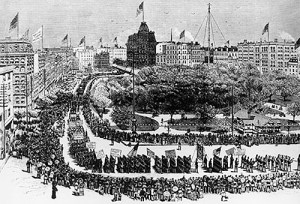
What Labor Day used to be; courtesy Wikimedia Commons


Laughing Maher

I recently rewatched Bill Maher’s Religulous.  I posted on it some years ago, but time changes perspectives.  Thinking back over the fun he makes against the religious, it is really only the Fundamentalist stripe that he scorns.  Whether Christian, Islamic, or even Jewish, he has little tolerance for those who take their sacred texts literally.  The Vatican scientist he interviews makes it through unscathed, but mainly because he’s arguing Maher’s point that the Fundamentalists aren’t at all stable.  Having noted that, Maher barely scratches the patina of the whole wide spectrum of religious outlooks.  Many of them are quite sensible, and some don’t even rely on the supernatural.  What he seems to have overlooked is that there is a vast complexity to religious thinking and people who believe aren’t always benighted.

Long, hard reflection on religion may be rare, but traditionally the seminary was the vehicle for those with the capacity for such thinking.  (Today seminaries are likely to accept just about any applicant and churches are facing shortages of clergy, making the rigorous thinking an elective course.)  It’s easy to make fun of the monks in their scriptoria, but those who learned to think logically—scientifically even—about matters of belief informed the best philosophers and other ”thought leaders” of the time.  If religion was the inspiration of scientific thinking (which then developed into humanism), it can’t be all bad.  Certainly there are and always have been abuses of the system.  Like science itself, thinking through this is a complex exercise.

Religulous is a fun movie.  Bill Maher is a likable narrator and he admits, at several points, to not knowing whether there is a God or not.  It is pretty easy to spot those whose religious beliefs are really more scarecrows than solid granite.  Literalism is pretty indefensible in the age of smartphones and the internet.  We’ve been far enough into space to know there’s no literal Heaven “up there.”  But this doesn’t mean religion has no value.  Many, many sensible religious people exist.  Most of them don’t cause trouble for society or embarrassment for their co-religionists.  Extremists, however, do both.  Unswayed by the damage they do, convinced with no evidence beyond personal feeling, they are willing to risk very high stakes indeed.  Those are the ones Maher is trying to take to task in his documentary.  On the ground religions are complex and psychologically helpful.  Complex subjects, as any thinker knows, bear deep reflection.