Still Evolving

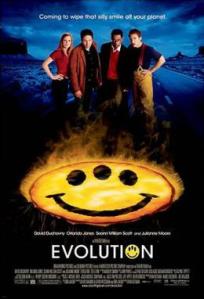
Evolution, the 2001 movie, I mean, is good escapism.  Thinking back on 2001, instead of a space oddessy, another piece of news—another national crisis, in fact, dominated.  The film kind of slumbered in the background until we could sort out what it meant to live in, ironically, an unsafe world.  That’s precisely what the movie was about.  I wasn’t thinking that when I recently pulled it off the shelf.  I was simply wanting some fantasy to relieve the daily pressure of living in stress mode.  Besides, it has some of the best alien monsters you could hope for in a comedic setting.  Soon, however, the parallels began to appear.  A source of contamination from outside.  A growing threat.  A government that doesn’t know what to do and that can’t admit its mistakes.  It all seemed eerily familiar.  Dr. Allison Reed is even from the CDC.

Life isn’t constant crisis.  Funnily enough, when Democrats are in office there seem to be far fewer of these large-scale troubles.  “There will be signs,” I guess, “in the sun, moon, and stars.”  The thing about signs is that we’ve left the reading of them up to Fundamentalists.  And Fundamentalists don’t believe in evolution.  Or science.  Or modernity.  Idealizing medieval thinking does come with a price tag.  So I reach for the remote.  While the government has lots of money that it spends on its own volition, the crisis grows.  The alien menace is set to spread across the country.  Although beginning in a different geographical location, all that red on the map sure looked familiar to me.  How little has changed in the last two decades.  Evolution came out before smartphones even evolved.

Meanwhile, practically unnoticed, the U.S. Navy has been saying UFOs are real.  The story, muted and subdued—we’ve got more immediate concerns, such as getting reelected—has been on major reputable media.  When they land on the White House lawn we’ll ask the aliens if they have respirators and masks aboard.  Preferably the kind with face-shields.  In the movie the monsters are aliens.  They’re like an infection, and even hazmat suits can’t keep you safe.  The solution, of course, isn’t fire-power, but a good shampooing.  Now I know you still can’t go to the salon in lots of places, but washing up at home seems to be pretty good advice.  We put the movie on for simple escapism, but there’s no escaping the fact that we now live in an alien environment.


Tent Pegs

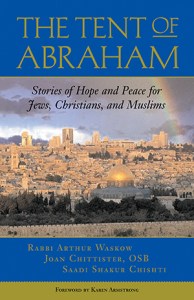
Among the many things that have happened during the pandemic to fill my time, I was invited to join a virtual book discussion group.  While the idea of reading groups has always appealed to me, there’s always the matter of who gets to choose the book.  I’m well aware from both what I post here on this blog and from my Goodreads account, that my reading tastes are eccentric.  I’m also very aware of how little time life really encompasses and I try to make it count.  Work takes up much of it, and beyond that biological necessities such as sleep, and household chores also weigh in.  All of which is to say I didn’t choose The Tent of Abraham to read.  It chose me.

The subtitle—Stories of Hope and Peace for Jews, Christians, and Muslims—pretty much describes what the book is.  Authored and edited by Joan Chittister, Murshid Saadi Shakur Chishti, and Arthur Waskow, the book focuses on the story of Abraham that ties the three monotheistic traditions together.  It is an exercise in creative exegesis, and sometimes eisegesis.  Given the point of the book, eisegesis is okay here, perhaps even necessary.  The reason for much war and hatred is the credulous, literal belief in our founding myths.  Abraham isn’t an historically attested character.  The stories told about him in ancient religious texts differ.  And although he doesn’t always come across sympathetically, he is always seen as a friend of God.  We’re not ever given a satisfying reason for that friendship, it just is.  Abraham is kind of a scary guy, as some of these stories make clear.  He’s not above abandoning his lover and child in the wilderness.  Nor attempting to murder his only remaining son.  Or passing his wife off as his sister to save his own skin.

Interspersed with these tales of imagination and horror, are scriptural versions (and by scriptural I mean biblical and those from the Quran and Hadiths), as well as real life stories of death in the Middle East conflict.  These are difficult stories to read.  Much of the violence between faiths comes down to conflicting claims of ownership.  As the book makes clear, if people resolve to celebrate difference rather than to distrust the other we can all live together in peace.  The only thing lacking to make this happen is the will.  Unfortunately, the conflict draws its energy from religious beliefs, or, more precisely, politics using religion to get its ends.  And for that one doesn’t have to travel all the way to the Middle East.


Divided by Eight

Analogies are useful, but never precise.  When Midsommar came out last year, people were saying “It’s like Wicker Man.”  It’s a good analogy, but not precise.  The plots have quite a bit in common and both are part of the genre that we might call intellectual horror.  Midsommar is a slow burn where you know from the beginning that something’s not right, and you can’t quite figure out what.  I’ll try not to give away too much, in case, like me, you’re late in seeing it.  It involves a group in Sweden, the Hårga, who celebrate a Midsummer ritual every 90 years.  A group of five graduate students—and the writers of the movie actually do know what grad school is like—go to study the ritual.  In central Sweden, far enough north that it’s never really night, they discover a pleasant group of white-garbed believers who use a combination of drugs, sleep deprivation, and folk magic to get the pawns into place.

What fascinates here is just how a fictional religion, with some basis in reality, becomes the vehicle for horror.  The deaths of three of the students are all in the service of a belief system that involves runes, fertility rites, scriptures, and ritual suicide.  It’s self-aware enough that one of the students compares it to Waco early on.  If there were no exotic religion here, there would be no horror.  Tragedy, yes, but horror, no.  The entire energy of the genre draws from four of the students (the fifth is from the community in Sweden) not knowing what is going on.  The village of the Hårga is isolated, and there is no law to keep them within the bounds of secular behavior.  By the end of the film you feel that secular is much safer than religious.

Midsommar foreshadows much of the horror in the illustrations that the community readily supplies.  Paintings show what is coming although the viewers, like the students, don’t know what they’re seeing at the time.  Some of the horror is based on shock, but the director doesn’t stoop to startle scares.  Well, maybe once.  This is horror that you can see coming and you’re fully aware that it’s because the white-robed ones truly believe.  The ending is similar to Wicker Man and the message is much the same.  Religion, when taken too seriously, leads to the sacrifice of those deemed outsiders.  And you don’t have to go to Sweden to find it.


Cross Quarters

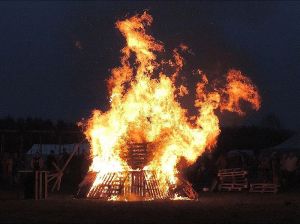
Happy Beltane!  We could use a holiday right about now.  For those of us who are under the spell of intelligent horror, May Day brings The Wicker Man to mind.  Not the remake, please!  I first saw it about a decade ago—my career history has made watching horror an obvious coping mechanism—and I was struck by the comments that the film was a cautionary tale.  One of the problems with being raised as a Fundamentalist is that you tend to take things literally and I supposed that the cautionary tale was against Celtic paganism.  The Wicker Man is about the celebration of Beltane on a remote Hebridean island, and it was only as I watched it a few more times and reflected on it that I came to realize the caution was about those who took their religion too seriously, pagan or not.

Photo credit: Stub Mandrel, via Wikimedia Commons

Lord Summerisle, after all, admits that his religion was more or less an invention of his grandfather.  More of a revival than an invention, actually.  In other words, he knows where the religion came from, and he has a scientific understanding of the soil and how and why crops fail.  That doesn’t prevent him from presiding over May Day celebrations to bring fertility back to the land.  The people, as often is the case with religions, simply follow the leader.  Of course, Beltane is a cross-quarter day welcoming spring.  It is celebrated in Celtic countries with bon fires and obviously those fires are to encourage the returning of the sun after a long winter.  The days are lengthening now.  I can go jogging before work.  The light is returning.

Capitalism, which is showing its weak side now, doesn’t approve of too many holidays.  Like Scrooge they think days off with pay are picking the pockets of the rich.  The government stimulus packages show just how deeply that is believed in this country.  Celts we are not.  So as I watch the wheel of the year slowly turning, and see politicians aching to remove restrictions so that money can flow along with the virus, I think that cautionary tales are not misplaced.  The love of money can be a religion just as surely as the devotion to a fictional deity.  Herein is the beauty of The Wicker Man.  Beltane is upon us.  As we broadcast our May Day it could be wise to think of the lessons we might learn, if only we’d consider classic cautionary tales.


WHO Believes?

These days it’s pretty clear that if you want to listen to anyone for advice it shouldn’t be the government.  I suppose that’s why I spend so much time on the World Health Organization’s page.  I’m no medical person and I certainly don’t understand epidemiology.  Contagion I get, because religion operates that way.  So WHO has been making somewhat frequent references to faith.  A recent status report noted that 84% of the world’s population reckons itself as religious and that many coronavirus outbreaks have taken place because of continued religious gatherings.  To that I suspect they’ll need to add political rallies supporting governments you shouldn’t trust, but what is such blind faith in leaders who don’t know what they’re doing if not religion?  People want to believe.

Religious gatherings also provide crucial support.  The community with which I associate has been using Zoom gatherings since mid-March.  It’s not perfect, of course, but during our virtual coffee hour I’ve been put in breakout rooms with people I don’t know.  I’m starting to get to know people I might be too shy to speak with in “real life.”  More than that, I’m asking myself what real life really is.  Technology has been pushing us in this direction for some time.  We relate virtually rather than physically.  I’ve never met many of the people with whom I have some of my most significant exchanges.  The internet, in other words, has an ecclesiastical element to it.  The words “church” and “synagogue” both go back to roots meaning “to gather.”  Faith, despite the stylites, is not lived alone.

WHO suggests that since religious leaders influence millions of people, if they would turn their message to prevention it could have a tremendous human benefit.  Consider how one man’s personal crusade in the mid-nineteenth century led to elections being decided on the basis of abortion alone.  If faith leaders were to take the good of humankind to heart and spread that message, it could well outstrip the virus.  Alas, but politics interferes.  Many religions also want to determine how people live.  There’s power in that.  We’ve seen it time and again with televangelists.  WHO has faith that these leaders might set aside their scriptures for a moment and read situation reports based in science and rationality.  WHO apparently has faith as well.  Until someone smarter than politicians sorts all of this out we’re probably safest meeting virtually.  Who knows—perhaps there are hidden benefits to that as well?


Bats and Bloodsuckers

In what looks (somewhat cynically) like at attempt to add newness to frightfully old news, the World Health Organization has renamed COVID-19 to the much scarier SARS-CoV-2.  The basics remain the same: the virus is transmitted the same way.  If it lands on a non-organic surface it soon dies without a host, rather like the elected officials of an old party once grand.  Like any parasite, it requires the life of another to prosper.  And so we find Mitch McConnell telling states to declare bankruptcy in a move taken from the Bible’s own playbook.  You see, during a famine in Egypt Pharaoh bailed out the food banks, and by buying all the land made peasants in essence slaves of the state.  The Good Book has all the answers.  A few generations later, however, and Pharaoh had to learn how to swim in the desert.  The divine economy is not without humor.

The WHO report also states that the vector has been traced to bats.  Bats make me think of vampires—I can’t help it, I’m a late monster boomer.  While WHO doesn’t make any connections with vampire bats, I researched them when I was younger.  Unlike elected members of the gOP, vampire bats aren’t selfish.  Nor are they greedy.  Finding a victim, the make a small incision with their sharp little teeth and lap up enough blood to survive.  If another bat goes a night or two without success, vampire bats will share their success, realizing in a way that politicians don’t, that helping one another is an assured way of establishing communal strength.  Or you could just be capitalist about it, let the unsuccessful starve, and go seeking another victim of your own.  Bloated bats don’t fly well.

If the Old Party learns from nature we’ll all benefit.  Greed is hardly the basis for sound government.  Nature would suggest that ingesting disinfectant isn’t the best advice to dole out to a nation about which you truly care.  The Old Party refuses to do anything, of course.  Having proven themselves unable to govern, they’re busy pulling together campaigns for November’s election.  With a leader who’s already said on national television that Republicans can’t win without gaming the election process itself, they don’t even blush.  I’m no expert, but it may be because they don’t have enough blood to rise to their cheeks.  If they’re short on blood it might be worth their while to learn a thing or two from vampire bats.


Moralizing Gods

In my more radical moods I sing along with John Cougar about fighting authority.  Living in society means never being completely free.  This pandemic only amplifies that.  What I want may not be best for others.  Not to mention excessively corrupt authority *ahem* Washington DC [coughs into elbow].  Still, a friend sent me an article titled “Did judgmental gods help societies grow?  The piece by Lizzie Wade appeared in Science recently.  The article begins by noting that judgmental gods are rare.  It then suggests complex societies seem to have had judgmental gods at their beginnings.  Moralizing gods demand cooperation.  People want to do what they want.  If we’re going to reap the benefits of a highly specialized society we all need to play our part, however.  Authority always does win, I guess.

Wade’s article suggests that this kind of orthodoxy is now being called into question.  Moralizing gods, it’s suggested, appear after a complex society gets started.  Interestingly, these gods tend to be males.  (That point’s mine, not Wade’s.)  I have been wondering for quite some time just how the data from Göbekli Tepe will influence the re-construction of models concerning how civilization began.  It seems that long before settled populations emerged, back in hunter-gatherer days, people still came together to build temples.  Were they afraid of judgmental gods?  Certainly they thought it was important to gather occasionally at numinous places and ponder the larger questions.  Since they left no written records and they’ve all died out the best we can do is make educated guesses.  Who knows what might’ve been their motivation?

The one thing that seems certain to me, no matter how we nuance it, is that religion is integral to society.  Science is necessary for our survival (ancient people weren’t backward rubes, by the way—they had a kind of scientific outlook, but without all the advanced math).  Religion, however, seems originally to have brought us together.  Outside our comfort zones.  Hunter-gatherer societies limit their sizes to people you can know reasonably well.  They tend not to have private property and they share things most people in “civilized” settings wouldn’t.  To grow larger than a roving band that can sustain itself by moving from place to place once the food’s gone, agriculture was necessary.  But Göbekli Tepe suggests it only followed after religion began bringing people together in the first place.  Were their gods authoritarian?  There’s really no way of knowing that.  So when I’m feeling radical I have to remember than when it’s over I turn the volume down, comb my hair and go back into society.  Well, once the pandemic’s over.


Who’s To Blame?

Back at Nashotah House Episcopal Seminary, we were a closed community.  Well, not completely closed, as much as some may have desired it.  When a communicable illness came to campus it quickly spread.  No wonder—we were required to all gather twice daily in the chapel, and there was the passing of the peace during mass.  And the sharing of a common chalice.  The germs of the Lord were readily spread.  One of the faculty members would refer to the vector of the illness as “Typhoid Mary,” a rather sexist remark in the mostly male environment.  Still, Mary Mallon came to mind as the current crises has settled in.  “Typhoid Mary” was an asymptomatic carrier of typhoid fever.  A working-class girl from Ireland, outbreaks of typhoid followed her in the various houses in New York City where she worked.

Photo credit: National Institute of Allergy and Infectious Diseases (NIAID), National Institutes of Health (NIH), via Wikimedia Commons

The current coronavirus outbreak in New York City seems strangely similar in some regards.  Although COVID-19 is less likely passed by asymptomatic carriers, according to what I’ve read from the World Health Organization, it is still a possible vector.  While out getting necessary supplies in the area I recently noticed store employees without gloves or masks, both of which I had on.  One of us was underdressed.  I went home, washed my hands thoroughly, and pulled my copy of The Andromeda Strain from the bookshelf.  Self-medication can come in several forms.  Some people still look at me funny for wearing a mask, but many other customers are now doing the same.  The Center for Disease Control recommends it.

Before I’d ever heard of Nashotah House, I worked in a grocery store.  I was a college graduate with facial hair that had to be removed.  “Customers don’t trust a man with a beard,” I was told.  Back then if you walked into a store with a mask on there would’ve been trouble.  Contagion can drive you crazy.  Nobody wants to be a “Typhoid Mary,” and yet it’s difficult to be out in public with a mask on.  “Who was that masked man?” they used to ask of the Lone Ranger.  From the theater and psychology I’ve studied, I know that hiding behind a mask can be a liberating experience.  Aware that nobody knows who you are, you are free to act most any way you please.  But this is different.  Maybe it’s because my mask is made of a paisley-ish bandana,  the kind old westerns show outlaws wearing.  Or maybe it’s because of the guilt a religious upbringing so generously left with me.  After all these years the old cliches are coming back to life.


Learning To Fly

It’s perhaps the most deeply rooted human dream.  Flying.  Women Who Fly, by Serinity Young, is a fascinating book.  Subtitled Goddesses, Witches, Mystics, and Other Airborne Females, the book covers all of these and more.  The dream of flying is played out in many ways here, but often the narrative comes back to how patriarchy imprisons women.  Is it any wonder they want to fly?  Very wide in historical scope, the book can’t cover all cases in equal depth.  It nevertheless demonstrates how pervasive the idea is.  Beginning with ancient female figurines bearing bird-like features, Young moves through the related concepts of captivity, transcendence, sexuality, and immortality, showing how female characters are related to these idea in universal and unrelenting ways in the form of flying females.

There are many lenses through which to view patriarchy.  It can be explained as a consequence of settled agricultural existence with its subsequent division of labor.  Such a scenario raises questions of whether women dreamed of flight before that, and I believe the answer must be yes.  For as long as we’ve observed birds and associated the sky with gods we have longed for flight.  Although birds make it look easy, it is an incredibly difficult and costly adaptation.  Still, women dream of travel without obstacles (let the reader understand) to the realms where deities dwell.  It is difficult to summarize a book that covers so much historical territory.  Young doesn’t limit herself to western religions but also spends a fair bit of time among Buddhist, Hindu, and Daoist ideas of flying women.  She covers mythical, folkloristic, human, and historical flying females all the way up to modern astronauts.

As I was coming to the close of the book the real message hit me—I can be thick at times, although much of my own writing is metaphorical—men have actively tried to clip women’s wings for a long time.  Often under the auspices of religion.  Think of it: for centuries of existence the major monotheistic traditions have refused female leadership.  The one (inevitably male) god has set up a boys’ club of sacerdotal leadership.  As Young points out, even the named angels in the Bible are male.  I used to comfort myself with the explanation that male leaders were simply too self-centered to consider others, but it is becoming clearer, the more I read, that men have always had a tendency to try to keep women down.  And thus they fly.  There’s much in this book for both women and men to ponder.


Holiday Complex

Now that we’re in the midst of a complex of Judeo-Christian holidays (Passover, Maundy Thursday, Good Friday, Easter, as well as other spring rites), I’ve been thinking of obligations.  I’ve had people introduce themselves to me as “Chri-easters.”  This isn’t a new form of religion, but rather a way of indicating that they attend services on Christmas and Easter only.  For others of us it’s never been so easy.  I was raised with the stern belief that Sundays in church were a matter of absolute obligation.  Serious illness was the only reason to miss.  If you were traveling (which was rare for us, being not terribly affluent), you found a local church to attend.  Never mind that you’ll look like strangers and won’t know how it’s done (unless you’re in one of the “liturgical” denominations, where variations are minimal).  Every Sunday was an obligation.

The minister at our church has been offering virtual holy week services.  The idea haunts me.  You see, back in Nashotah House days the sternness of days of obligation was palpable.  Yes, you had to attend chapel twice daily, but there were still days of obligation.  At this time of year we’d have had long rehearsals already for “the Great Three Days.”  Forsaking family and fellowship, we’d be forced to be together for long hours while the dreary events of two millennia ago were replayed.  Of course they were reinterpreted as well.  Made more Episcopalian—even a crucifixion should be done properly and in good order.  Knowing they had to get to their own churches on Sunday, students were kept up until about two a.m. for the Great Vigil and First Mass of Easter.  Obligation, not love, drove all this.

Coronavirus has us separated, of course.  Some of us are daily seeking coping techniques to help us get through a crisis that throws off schedules and sets new priorities.  To have someone suggest in the midst of all this that we could “come to church” (virtually) transports me to those fearful days of obligation.  As a teen I sought them out.  I’d ask to be driven to a different town on Good Friday so that I could spend it in church, hoping to be in connection with the tragic events.  I’d curse the sunshine when I stepped back out after three p.m., if it was shining.  This was supposed to be a dark and dreary day.  Nature, however, had its own ideas.  Spring was in full swing.  It was time to be thinking about life, not death.


All the Tea

I’ve been reading a lot about China lately.  Political scientists have been interested in its economic growth for some time and it has rivaled the GDP of the United States in such a way that it’s an open question as to which is the larger.  With so many things to keep track of in daily life, I’m loathe to add poli sci to the list, but I’ve always found history fascinating.  China has long been the target of Christian missionaries.  Finding a culture that had developed quite differently, in some sense socially distant, they were anxious to make them in their own image.  China had its own religious heritage of folk traditions, Confucian beliefs, and Taoism (as well as Buddhism and Islam), and Christianity’s claim of being the only true religion caused considerable social turmoil.  One such event was the Taiping Rebellion in the nineteenth century.

Image credit: Wu Youru, via Wikimedia Commons

A complaint of evangelical pastors, even in the United States, after Billy Graham had come through town was that local people, all riled up on revivalism, had unrealistic expectations for what their local churches could do.  Viewing this from a different angle, the issue was that one outlook on Scripture could lead to consequences that others didn’t understand.  The same thing applies to Taiping.  Hong Xiuquan, the leader of the Taiping Rebellion, had read his Bible (the activity encouraged by missionaries) and became convinced he was the brother of Jesus Christ.  He set about trying to establish what is called the Heavenly Kingdom.  This clashed with the government of China during the Qing Dynasty.  Eventually foreign powers even got involved.  The end result was between ten and thirty million deaths.  That’s right, ten to thirty million.

Religious ideas are powerful.  This is one reason that repressive governments often try to outlaw religions.  Other governments (including some not too far from here) use religions for political ends.  True believers are great followers.  I first learned about the Taiping Rebellion only relatively recently.  I’ve been reading snippets about China for several years now.  Its economic power may well be greater than that of the country in which I grew up.  Perspectives are shifting.  Vast numbers of people die because of religious conflicts.  If you’re one of them the real tragedy is that, in Stalinistic terms, you become simply a statistic.  There’s a reason authoritarian governments try to keep the opium from the hands of the people.  I’m no political scientist, but history reveals much about religion and its discontents.


Denying Reality

The science-deniers in the White House have had to accommodate themselves to evidence-based facts and they look none too happy about it.  Science denial has a long and venerable history in a certain type of evangelicalism.  Science teaches us that most things are more complex than they seem and this is also true of religions.  There are evangelicals all over the board, but those claiming the name most loudly have been outspoken Trump supporters.  The administration has had a three-year spree of decrying science and now that a very real virus is killing us they have no choice but to listen, albeit reluctantly.  So why do certain strains of evangelicalism deny science?  Is it all for profit?  Is there some kind of biblical mandate?

As someone who spent many years making a living as a biblical scholar (and it still plays into my work), I often think about this.  There is the underlying reliance on miracle as opposed to naturalism, for sure.  If God can do anything then science is ever only contingent.  Any moment a miracle (a word that doesn’t occur in the Bible, by the way) could happen and there’d be no way to measure it.  The main reason, however, goes back to Genesis and its creation stories.  When you read a book first impressions are important.  The Good Book begins with a theological account that eventually came to be taken literally.  It’s as if someone decided to live by a poem, taken as fact.  Some things can’t be expressed except with metaphorical language.  But since this creation takes place up front, any challenge to it is an affront to the Almighty.

The antagonism set up by Darwin’s discovery of evolution set the whole confrontation in motion.  Evangelicals in the late 1800s were feeling pushed into the corner by the overwhelming evidence that the creation accounts in Genesis were not factual.  This insult to miracle has simmered for well over a century—the Scopes trial, well into this period, took place 95 years ago.  Fear that the Bible’s loss of science authority might somehow lessen its spiritual message became a ditch in which to die.  Big business learned, back in the seventies, that evangelicals made great followers and could constitute a voting bloc if only a cause could be raised around which they’d rally.  We all know what that was.  That issue has led to the denial of science and the acceptance of anyone ill-informed enough to accept such denial.  Only after learning that you must fight pandemics with science has the White House had to start changing its story.  When it’s all over, however, it will go right back to denying everything.


Disease Divine?

I suspect many religious people are wondering where God is amid the current pandemic.   Theodicy (explaining the suffering of the innocent while defending the goodness of the Divine) has always been the bête noire of monotheistic belief systems.  (Polytheism has the advantage of always being able to blame another god.)   People have been pointing articles out to me that show the religious implications of a crisis.  I’m not at all surprised by the irrationality of the subjects.  The first article was an opinion piece in the New York Times.  It makes a good case that the religious right paved the way for the COVID-19 contagion in the United States.  The religious right is anti-science because they (wrongly) believe the Bible is a science book.  Even a small dose of seminary could cure that ill.  Katherine Stewart nevertheless makes a strong argument that the survivors of all of this will know whom to blame.  Science denial is not the same as authentic religion.

From NASA’s photo library

The other news stories that arise are of evangelical leaders defying government bans or guidance, even when delivered by messiah Trump, to large gatherings.  One of the main reasons for this is that said messiah kept saying the coronavirus was nothing to worry about.  Only when re-election seemed unlikely with all the uneducated dead did he finally start issuing warnings to avoid such idiotic congregating.  In the midst of it all, Jerry Falwell Junior (why did all these evangelists have to propagate?) decided to reopen Liberty University.  No doubt confident that God will keep them from any harm, the university officials decided it would be good to gather students from all over the country and put them together in dorms again.  If you’ve ever lived in a dorm I’m sure you can see why the decision is anything but wise.

It’s sad that evangelicalism has decided to pander to the uneducated.  You can believe in Jesus (many mainstream Christians do) without parking your rationality in the farthest parking spot from the door.  Many of us, huddled in our houses, not having seen other living people for days, are trying to isolate this thing and drive it to extinction.  Meanwhile, those who trust their own version of the supernatural are doing whatever they can to ensure the virus continues to spread.  Why?  They have long been taught that science isn’t real.  Never mind that their cell phones work and they get the news of open dorms through the internet, the science behind it all is bunk.  An entire executive branch administration that doesn’t believe in science is as sure a road to apocalypse as any.


Prophets and Exiles

One of the scariest passages in the Bible is Ezekiel 33.7-9.  I first read this before I was a teenager and it scared me deeply.  In case you don’t feel like clicking over to BibleGateway and searching, the pericope is a section where Yahweh is warning Ezekiel about the dangers of giving up hope (in the larger context).  Ezekiel, you see, had lived through the fall of Jerusalem.  Many people of Judah felt that the destruction of the temple was the end of the relationship between Yahweh and the chosen people.  Ezekiel here is being warned to deliver good news.  If Ezekiel doesn’t call out the lie (the sins of Israel weigh it down) he will be punished as if he were the sinner himself.  I knew evangelical friends in college who lifted that verse out of context and said God would punish them if they didn’t warn the people.  They weren’t so worried about the fall of Jerusalem—that was old news by the 1980s—but about some other issue they deemed important at the moment.

Taking verses out of context has a name.  It’s called “prooftexting.”  It can be done to just about any piece of writing, including this blog post.  All it requires is finding a passage that says what you want it to and claim that it means what you say it does.  The Bible’s a big, big book.  Trying to understand its contents in context takes years of dedicated work.  Even then biblical scholars don’t have all the answers because if they did we could all stay home and surf the net for the rest of our lives.  No, engaging with sacred texts is a never-ending task, by definition.  That warning to Ezekiel was for Ezekiel.  What was that message?  Stop saying the exile is the end!  There’s more to the story.  Read the book to the end and see.

The problem with prooftexting, if I might engage in a bit of it myself, is that it takes away from the totality of the Good Book itself.  Not adding too or taking away from the Bible is a biblical command (taken out of context), which means that with the Bible it’s all or nothing at all.  And if it’s the former, it means Ezekiel’s condemnation is contingent upon what follows.  Back in biblical times there wasn’t as much reading material as there is today.  It turns out, however, that there’s a lot more written down than we used to assume.  If we’re going to read it we should do so within its context.  But just in case, please be assured that the exile isn’t the end of the story.


Prophetic Breakfast

The irony doesn’t escape me—and why does irony always try to do that, anyway?—that Ezekiel 4:9 is about famine.  I’ve posted about the breakfast cereals from Food for Life (yet more irony, from Corona, California) before, but during this time of shortages at the local grocery stores, famine is an apt topic.  I don’t mean to underplay famine.  Death by starvation is something nobody should have to face, but looking ahead, who knows?  The reason I was eating Ezekiel 4:9 is that my usual cereal brand was sold out.  Empty shelves and the prophet seem symbolic, don’t you think?  The box quotes the verse as a kind of health-food recipe, but the point was, in context, that this was not something you’d normally want to eat.  This was food for hard times.

Ezekiel, you see, lived through the collapse of his own society.  In his case it wasn’t because of a virus, but imperial ambition.  The Babylonian Empire under Nebuchadnezzar was expanding and Judah was in the way.  The city was captured and Ezekiel, a priest, was exiled.  His symbolic action of eating poor food was to show people they ought to plan on this as “the new normal.”  Even now we hear people saying, “when things get back to normal…” but I also wonder if that will happen.  Collapse can occur slowly.  The thing about reading history is that we see centuries compressed into a few hundred pages.  Things take time.  Like restocking toilet paper.  Meanwhile empires crumble.

The Babylonian Empire didn’t last long.  Oh, it was long enough to mean some people knew nothing else, but looking back we can see that it held sway for decades rather than centuries.  In the middle of his book, Ezekiel changes his tune.  Once the temple is destroyed, when the worst has happened, he starts looking for a better future.  Many people have been under serious strain since November 2016.  Anxiety levels have been consistently high for damaging lengths of time.  I suspect the book of Revelation hasn’t been so well thumbed for decades.  The seventies were also apocalyptic times, as I recall.  Although we’re living through history, we each do it on the ground.  We experience it in our own little lives.  These seismic shifts can’t help but impact us.  It helps me to act like some things are normal.  I still get out of bed early.  I stumble into the kitchen and fumble on the light.  I settle down for breakfast with a prophet and wait.