Museum Piece

So the Museum of the Bible is now open in Washington, DC. It actually opened while a quorum or more of biblical scholars were busy making their way to Boston for the annual meeting of the Society of Biblical Literature. Many of the guild realize that the museum’s a conservative, evangelical venture, but it brings some attention to the beleaguered field and so it’s strangely welcome. This shows itself in the rather surprising names on museum publications. Renowned scholars don’t seem to think through the implications of supporting such places with the star appeal of their names. Indeed, many in the professorate are starved for attention—I’m not judging; I implicate myself even by making such a suggestion. When such an institution opens, it validates those it implicitly condemns.

A Bible museum?

Scholars can be woefully naive. Visiting places such as the Museum of the Bible, or the Creation Museum, or the Ark Encounter, pumps money into the already very well-funded Christian right. Such believers are extremely political and seek to get candidates like Trump elected. By slaking our puerile curiosity, we’re funding those who’d have us stripped of our very freedom to believe as we do. The paper trail’s there for any who wish to follow it. Supporting such ventures in any way will lead to headaches in the future. Sure, I’d love to see dioramas of dinosaurs on the ark so that I could feel superior for a little while. There’s a price for such vanity, however, and that price is the loss of freedom itself. We see it at work in our government at this very moment.

Museums are places for artifacts that are outdated. This is an ironic statement to make concerning the Bible. Especially by those who believe it is the final word. Why put that word into a museum? The irony’s worth it if enough paying customers arrive. Scholars meanwhile try to find ways to analyze this. Articles and books are appearing, stating what we already essentially know. The Green family, motivated to repressive political action because of their Bible belief, have spent money to build an elaborate museum, money that could’ve been used to help the poor. The book that appears in that museum suggests that the poor should be our concern. And although it actually does say that idols shouldn’t be worshiped, it has the great potential to become one itself. All you have to do is pay the admission price to find out.

Holiday Season

It was just after dark and the red and blue lights were shredding the night in Wallkill, New York. We’d driven past this mall just over an hour ago to take our daughter home after a too brief Thanksgiving break. Now there were police cars lined up along the length of the Orange Country Galleria Mall, and my wife said, “I hope it’s not a shooting.” Life in America’s that way. About two hours later we were home and yes, it had been a shooting incident. For reasons nobody knows, a man discharged a handgun into the floor at the crowded shopping center, injuring two. Police had not located the shooter, and no motive was known. The mall was evacuated and holiday shoppers feared for their lives.

Just a few months ago I was in Penn Station, New York when a similar panic ensued. Rail police had used a taser gun on a passenger who’d gotten out of hand. As we were entering the station to catch our train, scores of people were running out in a panic. It had sounded like a gunshot. Clothes and personal effects littered the floor of the station once we got inside. This is the world in which we live. A world enamored of weapons. A world where we hate and distrust the stranger. A world where our government receives support from gun lobbies and refuses to put controls on the sale and ownership of firearms. A world where a peaceful Sunday night on the busiest shopping weekend of the year ends in panic and tears.

Wallkill, New York, is not exactly a metropolitan area. Upstate, as we’ve been learning for the last several years, is pretty big. Small population centers dot an impressive landscape of Catskills, Finger Lakes, and beautifully wooded hills. The people are generally friendly, less brusk than they tend to be in New York City. It seems that where two or three are gathered together there’s a handgun in their midst, however. Trusting ourselves to be good people, we want to arm ourselves to shoot the “bad guy.” Meanwhile Congress still tries to pass legislation to reduce health care since, I guess, too many people are getting shot. It can be a real drain on the economy if the wealthy have to chip in. It’s upstate New York. We have about two hours to go before we can rest at home. Galleria Mall is in lockdown. The rest of the nation is too.


Devolving Apes

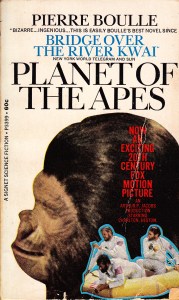
It would be difficult to overestimate the effect the movie Planet of the Apes had on me as a child. Raised a biblical literalist, evolution was, naturally enough, anathema to me. And yet here was a movie based on the idea that evolution had taken a different course. It was a transgressive film, but the screenplay had been written by Rod Serling, so well known for his trusted work on The Twilight Zone. I was utterly fascinated by it. Until the most recent iteration, I’d seen every sequel, spinoff, and reboot ever made. So important was this story line that as a child I found a copy of the book, in English, of course. Pierre Boulle told the story somewhat differently. Spying the book on my shelf after some four decades of my own evolution, I decided to read it again.

We all evolve. I noticed the improbabilities more this time through. The fact that, unlike the movie, humans wore no clothes at all must’ve scandalized my young eyes. I would’ve agreed, however, with Ulysse Mérou’s sentiments that humans were created in the image of God, not apes. In fact, there is an undercurrent of a somewhat conservative theological outlook here. Humans may experiment on animals, but when it’s reversed, it’s evil. In many ways, the cinematic version improves the story, but Boulle’s telling grows in intensity as the novel unfolds. Mérou develops a moral sense that includes the apes as well as human beings. The story, of course, is largely about prejudice and its evils. In that respect, it’s timeless.

As a child I realized that we lose something if we accept the fact of evolution. We lose that special feeling of having been intentionally created by a deity that made us God-shaped. Ironically, I also came to realize that those who rejected evolution often treated their fellow humans like animals. They held onto prejudices against other “races.” They castigated the poor for being lazy. They wish to remove healthcare from those made in the image of God. The contradictions and cruelties simply don’t comport with the Good Book they adore and ignore. Evolution, with the realities of nature impinging on our security, is far less dangerous than what biblical literalism has evolved to be. I can’t say why this book and its cinematic renditions became so deeply embedded in my young mind. But having read the book again, it’s pretty clear that the ideas have remained there, even as they have modified, with descent, over time.


Astronomers and Pirates

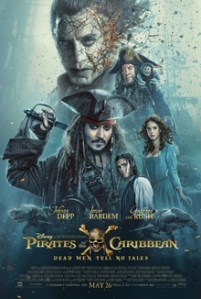
In an effort not to travel, the internet offers a great resource while it’s still free. If you don’t want to wander from home, it brings movies you might’ve missed right to your domicile. This year has been so busy that we’d missed completely Pirates of the Caribbean: Dead Men Tell No Tales. I know, as the Pirate movies spin on and on they become more special effects extravaganzas with insipid, if complex, plots. Still, we’ve been watching from the beginning, so last night we decided to see it through. The movies are fun, if less well written than they were at the beginning (and the movie began without a script). There are moments worth attention, however.

The story follows Carina Smyth as she attempts to discover her father through following his diary. This, of course, brings her path across that of Captain Jack Sparrow. Smyth is an astronomer and horologist. Because she’s female and this is the eighteenth century, she’s labeled a witch. Both the proximate and ultimate cause of the accusation is her gender. Although she proves to be the real hero of the film, the men can’t help thinking she’s a witch although she’s using science to find answers. In fact, if a male astronomer did the same things she did, there’d be no story here. This is a post-Galileo world. It’s also post-Salem. We don’t watch these films for history, of course, but it is true that although the witchcraft trials ended at the turn of that century, the accusations continued for some time after. The woman of science is a threat to the male establishment. She alone, however, discerns the truth.

Swashbuckler cinema was a male invention. Still, even in the twenty-first century too much of it comes at the expense of women. Jack Sparrow’s famous compass, for example, is passed on to him aboard a ship called the “Wicked Wench.” Surely this is meant to be funny, but at whose expense? The other women in the movie hardly come off better. Shansa actually is a witch, working for the establishment. Beatrice Kelly, in Jack Sparrow’s noose wedding, is portrayed as an undesirable bride, purely for laughs. Disney is famous for its princesses, but also for its wicked women. Even the strong female characters such as Mulan, Moana, and Anna find themselves being helped to success by male characters. Obviously the genders do interact in real life, and as recent history has shown us, men will demonize women if it helps them get ahead. You might think a movie of anti-heroes, however, would show the most intelligent character receiving a bit more respect. Especially since she’s a woman in a pirate’s world.


Predestined?

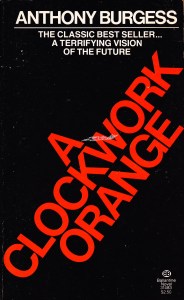
This particular doctrine struck me as evil. It violated every experience and thought I’d ever had, even raised as an unquestioning Christian as I was. Then, at Grove City College I was faced with it for the first time—predestination. If free will is an illusion, what crueler God can be conceived? I couldn’t avoid such thoughts upon re-reading Anthony Burgess’ A Clockwork Orange. A non-conforming non-conformist at the college assigned it in a science fiction class, so it has been decades since I’d read it. Now I found it perhaps more profound than before. Much has happened since my initial reading of the book, o my brothers. (And sisters.)

The framework of the story is well known. Alex and his friends are teenage punks who love ultra-violence. Alex is betrayed and imprisoned. Considered incorrigible, he’s reprogrammed to the point that he can’t even defend himself in a society that’s grown even worse during his time in jail. In the hospital after a suicide attempt, he awakes to find his old self restored, whether this is a good thing or not. The main point that’s behind this, it seems, is that without free will, repentance means nothing. In fact, in my edition of the book, an afterword by Stanley Edgar Hyman makes the point that some interpret A Clockwork Orange as a fictional defense of Christianity. Certainly the comparisons are there, from Judas through Jesus, healing, sin, and suffering. How much it actually meets that idyllic vision of God in Heaven directing the lives of individuals is, of course, an open question.

The idea that human beings are born as Hell-fodder posits a cruel and sadistic deity. Not only are the majority of human beings going to face eternal punishment for matters beyond their control, there is a divinity who planned it that way. We are all, literally, puppets in a universal morality play written by a being whose moral compass is horribly skewed. Indeed, even at Grove City some of the faculty would state that philosophically there could be no contest—free will was right. But, they would add, tapping the Bible, it’s not true because the Word of God says so. When I protested, it was declared, without irony, that even my protest had been predestined. In other words, in this clockwork universe I was clearly an Alex. Upon closer inspection, however, the truer analogy would be that we are all the victims of Alex and his droogs. But only if we have the freedom to make such an observation.


Horror Divine

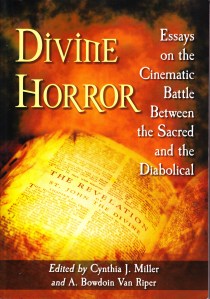
There’s a validation about finding something you figured out written in a book. For me that happened just about this season, some years back. At the Society of Biblical Literature annual meeting I found Sacred Terror by Douglas Cowan—the first book I’d discovered that discussed religion and horror films. Not only discussed them, but made the case that they have considerable common ground. Divine Horror: Essays on the Cinematic Battle Between the Sacred and the Diabolical, edited by Cynthia J. Miller and A. Bowdoin Van Riper, addresses the same theme but in more detail. Some of the essays in this volume get to the heart of the relationship between the sacred and the scary. As I mentioned, there’s a validation here for those of us who find horror movies fascinating. Others have noticed.

Genre fiction, as many fans know, comes with a subtle sense of shame. Low brow. Unsophisticated. Garish. Those with more refined tastes prefer subtlety and muted colors. Horror appeals to more basic instincts—but it’s also a form of expression that allows for the safe exploration of fear. There’s good horror and there’s bad horror. The eighteen essays in this book explore a bit of both. One conclusion that is unavoidable, however, is that religion—particularly Judeo-Christian religion—thrives in the context of horror cinema. The surprising part is that they often affirm the same message, but you need to look for it. Those who seek the origins of religion itself peer into the realms of awe and fear.

My own forthcoming book looks at similar territory. I don’t mind being classified as low brow. Raised in a blue collar world, that’s a fair assessment. What’s more, life confirms the reality of the connection between fear and religion. Consider the political moment in which we find ourselves. Much of the horror coming out of DC originates in religious “think tanks” trying to make evangelical Christianity the default faith stance of all our legislation. It means death and suffering to many, but the view of heaven for some becomes the tax haven for all. I know low brow when I see it. Horror comes in many forms—some lurid and some insidiously sneaky. Miller and Van Riper have pulled together a collection for our times here. The movies their authors discuss are part of a culture that is prominently religious and very afraid. If we want to understand what’s happening around us, we have to be willing to be scared.


Persecution Myth

The myth of persecution is a great cover. Christians, we are accustomed to think, are timid and loving individuals eager to turn the other cheek. In this sophisticated world of science and technology, they might appear a little naive, but they’re not really out to hurt anyone. Or at least some of them aren’t. I grew up among what would now be called Fundamentalists. Harsh to their own sins, they’d not imagine harming others. The story went that in the Roman Empire days it was open season on Christians and the oppressors liked nothing better than killing off a dozen before breakfast. That myth has largely been debunked by historians. Yes, there were some brief periods of intensive persecution, but for the most part the early Christians were left alone.

Many of the more zealous among the literalist sects today feel the loss of that mythology keenly. What can you do when you learn that your primitive ancestry wasn’t as heroic as you thought it was? For some, that myth must be kept alive today. When it is acknowledged that our world has become a smaller place because of technology, we get exposed to those who give the lie to our prejudices. Moral Muslims (despite the media portrayals), Hindus, Buddhists, and even secular humanists, abound. News, however, thrives on negativity. After all, it too is a capitalistic enterprise. We see the violence, the hatred, the bigotry. The myth lives on. Christian Dominionists have simply given up on the rest of the race. The Bible, after all, says few will be saved. And they have thrived for decades based on the simple fact that nobody takes them seriously.

I have seen the lack of compassion in evangelical eyes firsthand. A coldness that declares education to be evil since the only truth was revealed long ago in unchanging form. The word of God stands forever. It says so itself. And among the most despised of all human beings are those who study that word instead of “just reading” it. Those outside this camp know there is no such thing as “just reading.” They also know that we have no original biblical manuscripts at all and that translations are merely approximations. It’s difficult to build absolute laws on approximations. Among themselves these groups claim that legislation to treat others equally is a direct affront and insult to them. In fact, they claim they are persecuted because of the fair treatment of others. The thing about democracy is that any system can be gamed. Even Putin can be your friend, for this is the world of myth.


Bible Practice

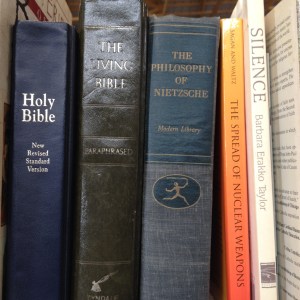
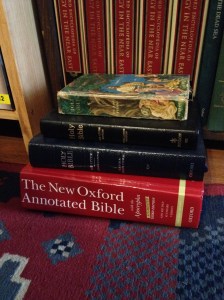
In a strange kind of oneupmanship, the horrendous murders in Sutherland Springs overshadowed the story of Scott Ostrem’s multiple shooting at a Walmart in Colorado. Ostrem apparently shot at random and killed three people. No motive is known, but when his apartment was searched a stack of Bibles was found. Plenty of people have Bible stacks in their houses—I know I do—but the odd element here is guns. The “reasoning” behind the NRA’s convoluted logic is that guns are for self defense. Everyone ought to have them, along with their Bible stacks. When those voices in your head begin to speak, which you grab—gun or Bible—may make all the difference. Fact is, you don’t have to be mentally stable to buy guns. And no matter how much the NRA says you should shoot back, guns in the hands of madmen obey no rules.

Trump promised to make America great again. One of the statistics at which we excel—indeed we’re a world leader—is gun deaths. We also do pretty well at opioid overdosing. Politicians can’t seem to figure out that the underlying causes here are related to the society they’ve built where you can’t ever get ahead and no matter what you do the 1 percenters will get richer while you spend your days struggling to get to the point when you can climb back into bed and sleep it off until it all starts over again. Watch them in congress. See them trying to thrust more money upon the wealthy. See them pocket the funds the NRA so generously offers. And then read the statistics. Some inexplicable disconnect exists that no amount of drugs will bridge. We are a hurting nation. And stacks of Bibles aren’t the answer.

A Bible stack in its natural habitat

In antiquity there was an ideal. Not that it ever existed in practice, but at least they had the idea. The ideal was that there was nothing wrong with wealth as long as the wealthy first ensured that everyone had enough. Then they could go on an accumulate as much as they wanted. The problem of course is that nobody knows what enough is. When do you know that you have enough? Today there’s no ceiling cap. Take your pick: money, guns, drugs, Bibles. You can have as much or as many as you wish. In just about any combination. Any combination that doesn’t involve money. Only the 1 percenters should be entitled to that. And the rest of us here below and fight it out over the remaining three.


Christian Story

The problem with the Bible is anybody can “interpret” it. As a book of unrivaled status in the American imagination, it can be tapped for anything from advertising to justifying pedophilia. So when stories of Roy Moore’s sexual dalliances with minors emerged, Alabama’s state auditor, Jim Zeigler drew the comparison with Mary and Joseph from his half-hearted knowledge of the Bible. There is no auditor for Bible interpretations. It’s the ultimate free market. Many, including evangelical clergy, were quick to jump on the inappropriateness of the analogy. What they didn’t see is that the Bible can justify just about anything. Despite what it says. That’s the problem with worshipping a holy book.

What the Good Book says about Mary and Joseph is very, very little. We do not know their ages—they are never mentioned in the Bible. The tradition about Joseph being older seems to go back to having to explain his continence to preserve Mary’s perpetual virginity—also not in the Bible. The church, in the early days, had issues with ideas such as “original sin.” When Augustine suggested it passed, along with bodily fluids, during sex, it became clear that Mary could have none of that. Even if she was a virgin by misquoting Isaiah, then she still had original sin from her parents. So Mary had to have been immaculately conceived. The Bible, of course, knows of none of this. Anybody can interpret it. And what senator-to-be wants to be bothered with consulting a Bible scholar? They’re hard to find. And besides, they might not interpret it the way you want it.

GOPolitics have sunk so low as to pressgang the Bible into justifying pedophilia. What’s more, the faithful don’t seem to mind. The Bible’s big enough that you can find just about anything in there. Except morality, apparently. You’d think that anyone running for public office would examine his—and it’s usually a guy problem—life pretty closely for possible scandals. We’ve lived to see the radical right, diligently groomed and oh-so-righteous, go after anyone who can spout insanity and be counted on to vote against women’s rights. You can be sure Roy Moore will be forgiven—already has been by many—because the Bible swings that way. We’ve already seen what happens when people like Moore take public office. They make America grope again. For the Bible tells them so.


Guns and Ghosts

The irony of a nation that has gun laws made by those with body guards is especially cruel in the shadow of Sutherland Springs. Just a month after the worst mass shooting in United States history, another cohort of corpses receives only empty answers from DC. The solution to all the shooting deaths, 45 asserts, is more guns. This from the same White House that can find no credible alternative explanations for global warming, yet continues to break down any emissions barriers it can. The real noxious emissions are coming from the greedy mouths of the chicks in the feathered GOP nest. What is the word for what lies beyond insanity? We need it now.

Like many thinking people I’m very pleased with the results of the gubernatorial elections in New Jersey and Virginia. It seems, temporarily, as if reason has found its voice. The mistake at this point would be to relax and feel as if the job were done. We have raving lunacy at the national level, gun violence out of control, and politicians who just can’t live without NRA blood money. The story of Sarah Winchester’s ghosts may not be true, but it doesn’t have to be. We have a nation full of ghosts. Barely elected candidates claim a mandate to destroy the infrastructure that has allowed them to become rich. The wealthy, you’ll notice, are those who want to take all the marbles and go home. And they live in houses with guards to protect them from all the firearms they’re handing out like candy on Halloween.

Stop and think about this. The White House admits that climate change is human caused. The conclusions are quite dire for those who own property in New York City, let alone entire nations that will be underwater in a few years’ time. The response? Ignore the facts. Boast a bit more about how great we are. Give tax cuts to the wealthy and guns to the poor. Why doesn’t this equation add up? Pardon my jeremiad on what is the first hopeful morning a reasonable person has had in a long time. We have to start taking back local politics and let the national government know that it no longer speaks for the people that somewhat giddily gave it power just a year ago. Otherwise there are bound to be many more ghosts about. And one thing we know for certain, Washington doesn’t believe in ghosts.


Joshua Fit

“Horrible things are going to happen!” shouts Grandpa Simpson. He ends his epiphany in church with the strange words “Epa, epa!” The Simpson’s Movie, among many other popular outlets, has had some fun at the expense of the Environmental Protection Agency. Over the years many people have concluded that it is ineffectual and that the heart of the government isn’t really behind it. One of the Dominionist creeds is that the government as we know it must be disbanded. Trump has been working hard at that, on his breaks from the back nine, since January. Appointing heads of agencies tasked with dismantling them, the underlying plan (not Trump’s, for he has no plan) is to take the current government apart while self-important Republicans simply can’t understand that they’re being used as pawns to be sacrificed as soon as a knight or rook comes along. Bishops don’t seem to be of much use anymore.

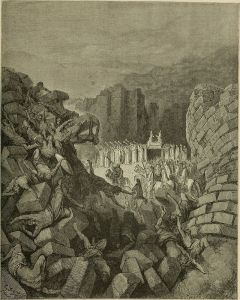
So when the head of the EPA cites the book of Joshua as science, some were surprised. Scott Pruitt, according to a story on BuzzFeed my wife sent me, has decided that the Old Testament is the new frontier. You have to choose who you’re going to follow. As for Pruitt and his house, it will be the Lord. And by “Lord” I mean money. Those who stand to gain by deconstructing the EPA are big businesses. Those who stand to loose? Only Homo sapiens and every other species on the planet. Although, in all fairness, rats and cockroaches have a way of thriving in our wastelands. In fact they seem to be thriving in Washington DC. I almost tripped over a rat on my way to work just the other day. They’re not just for the subway tracks anymore.

The Bible is the most abused book in history. This is what idolatry looks like. You take an object and make it a god. Nobody would be more surprised to find their words worshipped than those who wrote the Bible. Not one of them realized that their words would be taken the way that they are today. It’s pretty obvious that Paul of Tarsus would’ve taken a little more time in his letter writing had he known they’d be one day mistaken for God’s words instead of his own. And Joshua—well, we don’t even know who wrote that material. Whoever it was believed the earth was flat and that to stop a day from progressing all God had to do was hold the sun still for a day. No hot mitts needed either. This is, after all, the most powerful government in the world.


Amityville Revisited

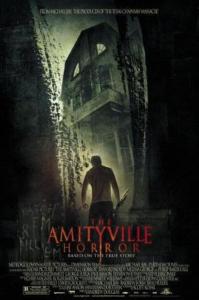
Remakes, standard wisdom holds, are seldom as good as the originals. When the original wasn’t great to begin with, the bar should be lower. Should be. I’ve been curious about the Lutz haunting in Amityville, having just read the book that started the phenomenon back in the late 1970s. I saw the movie first. That was several years ago now, but I do recall that even as horror movies go it had its failings. Some of that goes back to the book (presuming that anything happened)—nobody had a solid grip on whether this was a ghostly haunting or a demonic infestation. What the movie did do well is show how fragile family relationships can be, especially when under the pressures of supernatural supervision, not of the positive kind. Although, as is to be expected, the book was scarier.

Overcome by curiosity I finally watched the remake from 2005. Clearly I’m not the only one still curious about this alleged haunting, alleged hoax. I also have the alleged burden of looking for religion in horror. Only on this final count was it not disappointing. Well, that and in featuring burgeoning scream queen Chloë Grace Moretz. Although Father Callaway’s role is late in the film and brief, early on religious ideas are implicated. If the movie hadn’t tried so hard to be The Shining these themes might’ve been developed to good advantage. Instead it introduces Rev. Jeremiah Ketcham (also late in the film) as the first owner of the house in 1692 (did the real-estate agent’s mention of that date make you shiver?). Ketcham was a sadist to the Indians under his care, torturing them to death in the house. No time is left to explore the sinister minister’s motivation as the family implodes in its attempt to escape the house by boat.

As is frequently the case with the supernatural, we’ll likely never know what happened at the Amityville house. The story Jay Anson told is now generally classified as a novel. The preternatural can be judged neither in the courtroom nor the laboratory. The best that we can do is make celluloid adaptations to make some money on the deal. The DeFeo murders happened in living memory. The Lutzes left the house in a hurry shortly after purchasing it. Anson’s Indian “asylum” was never really there—and there were no such Native American practices in any case. What the remake left out was demons. Although the movie attempted other religious scares, the house just isn’t the same without them.


Turn the Other What?

The man next to me on the bus is reading his Bible. At one point in my life that would’ve made me feel safe. I would’ve known that the person next to me was committed to the same value system as mine—love for all, peace, equality, and acceptance. Now, however, I see that Bible and I’m afraid. You see, I’m reading Chris Hedges’ American Fascists: The Christian Right and the War on America. I can’t remember the last time I’ve been so scared. Hedges’ book was published a decade ago. What he wrote about then is coming true now and it’s because the elites of society—university folk and all—don’t take the radical religious seriously. In their delusional ways, they assume all will be well. If you think like that, read this book.

Dominionism is fascism dressed in Christian garb. It has no room for tolerance. It teaches that those outside its circle are to be ignored at best, and murdered without compunction at worst. This is not exaggeration. It is their teaching. It’s like that computer game that used to come with Macs where a time-traveling dinosaur collected the eggs of other species to save them from the coming asteroid. You could kill other dinosaurs without guilt because you knew they were going to die in 20 minutes anyway. That is very much the way Dominionists feel about you and me. We aren’t saved—their word is “Christian”—God has rejected us, and therefore we deserve to die. Many of them stockpile weapons just for this reason. Their goal, not at all hidden, is to take over the United States and make it a Christian nation. Already many in the houses of Congress are their candidates. They have a president who shares their values. We should be very afraid.

Hedges does a very good job providing the statistics that back his assertions. There is no question that this is real. Those who blithely vote Republican out of fiscal conservatism have risen to the bait. Trump has proved that once and for all. These “Bible believers” do not value or treasure love. They treasure treasure (many of them are very wealthy) and what they desire is power. Tolerance, in their view, is evil and compromising with the literal Satan in which they believe. Their Jesus does not love. He fights. And he fights for white, straight, privileged men. If you’re willing to forsake sleep, read this book. And if you think it’s exaggerating read the headlines.


Hiding Out

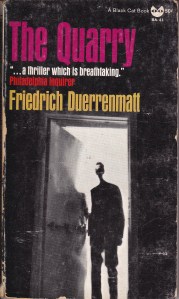
It’s seen better days. The spine is coming unglued and the pages are brittle, fracturing into tan snowflakes as I turn the pages. Still, this unusual little book is crowded with memories. I recall the used book store where I bought it—the Boston Book Annex, now sadly defunct. Unlike any other paperback I’d purchased, this one has gray-dyed page edges, adding an appropriate October gloom to the reading. Friedrich Duerrenmatt may not be properly among the existentialist novels, but that’s where he lives on my bookshelf. I picked up The Quarry three decades ago when “Der Besuch der alten Dame” was still relatively fresh in my mind. If I were a younger man I might’ve tried to find an edition in German, but the internet didn’t exist in those days and after a few years of no use, my Deutsch was dusty. It had been my gateway language.

As I read The Quarry I wondered why I had waited so long to do so. The story is brief but intense. And like novels of the period, it is philosophical and theological. (Like many translations it is sold under different titles; this one is also known as Suspicion, but The Quarry captures the duality nicely.) Hans Bärlach, a Swiss police commissioner, is on the trail of a Nazi war criminal. Suffering from cancer, Bärlach is bed-ridden but his quarry is a doctor and he finds a plausible excuse to become his patient. To help him set the trap, he enlists the aid of Gulliver, a Jewish concentration camp survivor. Their dialogue is what makes this brief story so theologically pregnant. Gulliver calls Bärlach “Christian” and reflects on how that feels to a Jew who was intended to be exterminated. I won’t spoil the ending here, but when Bärlach meets his quarry and realizes that he is also the quarry, the conversation once again turns to religion.

There’s an honesty to such novels as this. Writers were not yet afraid to invoke philosophical dialogue. A friend at the time I purchased the book once told me “nobody writes like that anymore.” Since his father-in-law was a novelist, I supposed he was right. I should have instead relied on my memories from high school German. We read “Der Besuch der alten Dame” and even went to see a stage adaption at the local community college. I’d shortly discover the existentialists. Their views on the absurdity of life mingled so readily with a theology becoming broken, tired, and top-heavy. Those ideas I’d met in class such as, if memory serves, Ilse Aichinger’s “Wo Ich Wohne,” became a part of my young psyche and, not surprisingly, many years later I’m finding myself their quarry.


Uncomfortable Truth

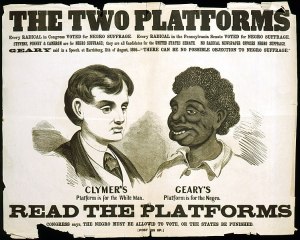
Ugly. That’s not a word I use lightly. The phenomenon of racism is ugly. More than that, it’s insidious. I recently attended a community course on racism sponsored by the Central Jersey Community Coalition. Since our government won’t condemn racism our communities must. This five-hour course was an eye-opener for me. I had known that race was a social construct with no basis in biology or any kind of science. What I hadn’t realized is that race was invented as a means of maintaining “white” power. And it was done so deliberately. The course leaders outlined the history of the modern concept of race and showed how it is primarily an American phenomenon (not exclusively, but it was intentionally orchestrated here). The idea was to keep property in the hands of wealthy whites.

During the discussion many topics came to mind. The primary two, for me, were capitalism and the Bible. These strange bedfellows are far too comfortable with one another. Both can be made to participate in the racism narrative. Capitalism appeals to the basest and most vulgar aspects of being human. Greed and selfishness. Wanting more for me and less for you. As one participant put it, it’s a zero-sum game. Your loss is my gain. We support this system every time we buy into the myth that life is about consuming. Buying more. Contributing to the economy. That which is lost is mere humanity. This is the narrative our government has adopted. The election of one of the uber-wealthy has demonstrated that with a nuclear missile shot heard round the world.

And what of the Bible? As the story of the flood unfolds in the book of Genesis, Noah develops a drinking problem. Naked in his tent, his shame is seen by his son Ham. Hungover the next morning, the only righteous man alive curses his son’s progeny. Then after the tower of Babel story, those cursed races, in biblical geography, end up in Africa. Christian preachers long used this myth as the justification of slavery. Races, after all, were decreed by God at that very tower. The tower shows us for who we truly are. Human hubris led to divine folly. And now we have a nation of liberty built on the basic premise of inequality. Racism is beyond ugly. It’s evil. The Bible may be complicit, but we need to take over the narrative. Race does not exist. Scientifically there is no such thing. Although race doesn’t exist, racism most assuredly does. Like all evils we must bring it to the light to make it disappear.