Haunting Toyland

Although it hasn’t always been this way, one of the most characteristic aspects of the modern horror film is the sequel. Some franchises spin into countless sequels and remakes, until their iconic anti-heroes become household names. The Conjuring diegesis participates in this somewhat, but instead of having a repeat fiend, it’s a theme that comes up time and again, tied together by the work of Ed and Lorraine Warren. I’ve written about The Conjuring before, as well as The Conjuring 2. Prior to the sequel there was a prequel of sorts—more properly a spinoff—Annabelle. Not attaining the critical regard as its originator, Annabelle nonetheless did quite well at the box office, as horror movies often do. The idea behind the movie was to give some backstory to the doll that appeared in The Conjuring.

According to the Warrens, there really is such a haunted doll. Technically it’s not haunted. They call it a conduit through which a demon seeks to entrap a human soul. This past summer a prequel to the prequel, Annabelle: Creation, received higher critical marks than its initial installment. All of this is to say that I had to see the original Annabelle in order to try to make sense of this whole series. Despite its failings, the movie once again shows the interlaced nature of horror and religion. It opens in a church and the priest, Fr. Perez, makes several appearances in the story as the Form couple struggles with the demon inside the doll. Pregnant and vulnerable, Mia Form is traumatized when two cult members invade and then die in her home. Annabelle Higgins, one the intruders, dies holding the doll, bleeding into it. She and her accomplice are satanists, trying to raise a demon for nefarious purposes. (I suppose those are the only kinds of purposes to raise a demon, actually.)

The plot takes various twists and turns, never veering far from the main conceit that the demon wants Mia’s soul. I won’t give any spoilers in case any readers are even further behind in their movie viewing than me. Suffice it to say, this is one of the most thoroughly religious horror films I’ve seen. The Conjuring 2 will pick up the story again with the Warrens and a demon disguised as a nun (and a sequel to both The Conjuring universe and the nun are in the works). Critics are certain religion is dying. If popular culture is any measure, that conclusion is far from certain. Sometimes it’s a bit preachy, but it’s there in horror. Even a possessed doll knows that.


Church Vampires

For people my age manga is a new form of reading that is easily ignored. Although I’ve read a graphic novel or two, “comic books,” no matter how adult the theme, seem juvenile. Note that word “seem.” I do know some younger folks, and one of them insisted that I read Kouta Hirano’s Hellsing. This particular friend is as interested in vampires as I am, and, knowing my history with religion, suggested this might down my alley. Dubious, I gave it a try. In this manga universe Hellsing is a Protestant organization for fighting vampires and ghouls (non-virgin vampire victims who come back as zombie-like creatures who are very hard to stop). Their activity is in England, but when they cross into Ireland they encounter a Catholic organization that kills all vampires, including the “secret weapon” of Hellsing, who is indeed a vampire.

What made reading this tale so interesting is that the reader’s sympathy is drawn to the Protestant sect. The Hellsing characters are engagingly drawn—handsome or beautiful, resilient, and naturally good fighters. The Catholic characters are ugly and maniacal. They kill all monsters, regardless of their “heart.” In this the direction from the movie Van Helsing is reversed. There Van Helsing is a hireling of the Catholic Church who won’t kill a monster unless it’s evil. The idea of the graphic novel is that religious rivalry runs deep between these two Christian organizations. Thinking about this, I wondered how Christianity might look to someone from Japan. In this context, it makes sense. Christian missionaries penetrated east Asia from both Protestant and Catholic evangelistic efforts. Although they worship the same deity, they are quite different religions. At least it must look so to anyone not raised in this strange milieu.

Colonialism, in all its forms, has forced peoples to make decisions about new religions in a somewhat violent way. Imagine someone confronting you with your way of life and warning you that you’re going to suffer never-ending torment unless you accept a faith of which you’ve likely never heard. Then you discover that there are two very different versions of that faith that mutually condemn each other. The natural result, if you acquiesce at all, would be to choose the one that either makes the most sense, or the one that got to you first. Hardly the way to gamble with eternal life. I’m not sure Hellsing is intended as commentary on the experience of the colonized. It seems reasonable to me. And if vampires are a problem, you’ll want to be sure to select the right belief system the first time around.


Ocean Blue

I suspect with Trump in office Columbus Day will get a boost. After all, it’s the narrative of the white man coming to America and improving on what anybody else had done. Making America great, one might say. That wobbly narrative has been justifiably under fire for some time. Not least for historical reasons. We know beyond reasonable doubt that the Vikings were here before Columbus. Ironically, the savage Vikings appear the more benign of the two. A friend recently sent me a story from Realm of History that asks “Did The Irish Reach The New World Before The Vikings And Columbus?” The story by Alok Bannerjee tells of St. Brendan, a sixth-century Irish monk who may have made the voyage even before the Vikings. And don’t get me started on the Bat Creek inscription or the Kensington Runestone.

The problem with early history is that it’s early. Evidence, when it exists, is rare and often perishable. We know that the technology to cross the Atlantic existed at least as early as the Phoenicians. And we know that no matter how crazy others tell us we are, people are insanely curious. And those who go down to the sea in ships might even make it into the Bible. Objections to anyone making it to the “New World” prior to the Vikings tells us something of the nature of orthodoxy. Yes, historians and scientists have it too. Orthodoxy is where evidence crosses the line into belief. And belief, as I’ve often said, is difficult to dislodge.

So, am I throwing open the doors for any who wish to claim they were here first? Hardly. Well maybe. My own opinions aside, when unorthodox evidence arises, what should we do? The traditional response of “when in doubt, throw it out” may not serve us well. Perhaps we should have a shelf, or locker somewhere. A receptacle in which we might store the stories. When I was a kid learning about Columbus, teachers doubted Vikings had made it this far. Orthodoxy has had to back off on the Norsemen, of course, since archaeology now backs them up. Vineland was a reality, it seems. Even before the purported Irish or Phoenicians, the first nations were here. Where is their federal holiday? We don’t like to think about that. Far too much investing in “superiority” has gone into it. It’s Columbus Day and most of us are at work anyway. Some of us dreaming of new worlds all the same.


To Fear Itself

Fear, as Franklin Delano Roosevelt knew, would paralyze a nation more quickly than anything else. In recent years politicians have rather cynically used that information to sway voters. Fear-mongers, such as Trump, tend to have the upper hand because, ignoring FDR, we’ve given in to our fears. The shootings in Las Vegas on Sunday night are only one more example. The NRA, which has doggedly insists that the only way to combat guns is with more guns, defends its rhetoric yet again as 59 people have needlessly died just for attending a concert where a madman checked 23 guns into a hotel room with him far above. Conceal and carry is no solution to fear. Guns have no place in the hands of a fearful public.

A profound sadness accompanies such insane violence, supported almost unequivocally by the GOP. It’s not a matter of someone armed in the crowd shooting back; the shooters take the initiative of taking their own life when some hidden trigger tells them they’ve murdered enough. We see the pattern over, and over, and over. We are a violent people. A violent people have no business having easy access to weapons. As long as money has politicians in its wallet this will never change. We’re all afraid of those who have the guns. And Washington has a perverse love of money. Those of us who don’t have guns are easy to push around. That’s what America is all about anyway.

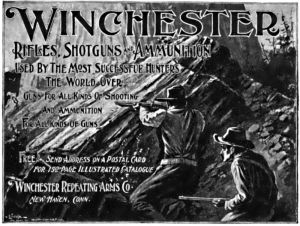
As this past election showed, and continues to show, a candidate without a mandate may easily buy the White House. The causes held so dear by the Republican Party—guns, no healthcare, tax plans that favor the wealthiest—all of this plays to our fears and gives them power. If we weren’t afraid, what need would we have of guns? After many decades of helping the poorest be an active part of this country, Washington is now intent on dismantling the aging safety nets we’ve put in place. Retirement is a reality for a very few. Medical costs are, even with Obamacare, still a constant worry for many. Natural disasters come and we can’t mobilize even to help our own. But we’ve got guns. Fear itself has come to define the home of the brave. It is said that Sarah Winchester, the widow of William Wirt Winchester, never let the mansion built on blood money be finished for fear of haunting. That is one fear we apparently no longer have, even though guns have no effect on ghosts.


Healthy Hurricanes

Three major hurricanes into the season and our Republican government has nothing better to do than try to think up new ways to take away our healthcare. In an effort—no victory is too insignificant—to show that the swamp is being drained, the Grand Old Party wants its own constituents to sicken and die off just to prove a point. Meanwhile Thurston Howell can’t find a charted island even after being marooned on it. Puerto Rico is a territory of the United States. Perhaps the White House should use some of its tax money to purchase a map and a history book. Houston is still recovering from Harvey and 45 spends his time campaigning for the loser in Alabama. Not even Shakespeare could have come up with tragedies like this.

Morality, at least in the post-Reagan elephant wing, used to be in line with evangelical Christianity. When I grew up in that tradition I was taught it meant fair treatment for all, regardless of race or social location. Since my childhood that brand of Christianity has become more exclusive, it seems. God now, contrary to the Gospels, rewards the wealthy. He tends to favor gentiles, but only those of caucasian stripe. Those who are poor and suffering should learn to speak English and stay out of the sun. Act like proper suburbanites and hurricanes will never strike you. Oh yes, and you need not fear being stuck by the sun by day either. You don’t even need to read your Bible. In fact, you can ignore it as long as you know enough to proclaim to others you alone know what it means.

So far 2017 has been a year of natural disasters. Earthquakes, hurricanes, and further from home, multiple landslides and monsoons. And even volcanoes. It’s tempting to see some biblical correlations here, but that’s playing fast and easy with the great torment from which our fellow human beings are suffering. Far more important is to show that we can repeal healthcare in a nation that has been spared, to a great extent, the worst the world has had in store so far this year. Oh, except for Puerto Rico. Does anybody have a map app on their phone? And while you’re at it, check to see if maybe some developer has come up with software to help govern an affluent nation. Preferably one linked somehow with Twitter. We mustn’t forget our priorities.


Doomsday, Again?

It’s hard to keep a good apocalypse down. Ever since Jesus of Nazareth did his best Arnold Schwarzenegger impression of “I’ll be back” some of his followers have obsessed when just when that will be. Sorry for the late notice, but the current prediction is for tomorrow. If you’ve got any weekend plans, you might want to rethink them. I know traffic in Jersey is already bad enough without white horses breaking through the clouds. An article my wife promptly sent me from NPR, “Is The Apocalypse Coming? No, It Isn’t!” by Marcelo Gleiser, addresses the documentary The Sign. No doubt about it, there’s some impressive astronomical gyrations here, but planets moving through constellations do not an apocalypse make. As Gleiser points out, the real question is why people believe such predictions so passionately.

Larry Norman’s song “I Wish We’d All Been Ready” captures the mood nicely. Growing up in a tradition that believed, as only literalists can, that this world is the center of the cosmos, Norman’s song haunted my teenage years. These were the heady days of Hal Lindsey and a very hot Cold War. I had to register for the draft. There was unrest in the Middle East. Sonny and Cher had split up. The signs were aligned, it seemed. As they had been nearly every year since about 30 CE. Paul of Tarsus was waiting. And John of Patmos. And Timothy LaHaye. True believers all. Conviction begets conviction. Seeing another fully convinced is a powerful incentive.

Even now, if I’m honest, I shudder a little when I hear such predictions. What if, by some odd chance, they are right? Raised in that tradition, it’s nearly impossible to jettison that private fear. Rationally I know that clever people can make all kinds of connections that have nothing to do with the Bible. I know that John’s Revelation isn’t about the end of the world. I know that the views of Paul were bound by the developments of his age. I know the Rapture was invented in the nineteenth century (CE). Still, the chill slithers through me when I consider how it felt as an uncertain teen on the brink of Armageddon. I could envision it clearly. Some who were utterly sure swayed me. Specific dates and times weren’t biblical, but the wait for any moment now was even more terrifying. Tomorrow will begin and end just as any other day on planet earth. And another apocalypse will enter the planning stages, coming soon to a universe near you.


Domesticity

One of the truly disturbing aspects of religion is its tendency to become domesticated. What I mean is that it becomes so much a part of the everyday scenery that you forget it’s there. I recently read a story about priests in the Church of England who don’t want parishes in poor neighborhoods. The reason given? They don’t want their children educated among the poor. That took me back a step. As someone with more than a passing familiarity with the Episcopalians, I wasn’t surprised that they didn’t want poor parishes. Of establishment Christianity, Anglicans are on the economical high end of the scale. I knew a few future priests like that at Nashotah House. Stylish worship and excess cash go together. But not to want your children educated with the poor? Is there fear of contagion?

I grew up poor. When I visit my hometown I’m reminded that although it featured in an X-Files episode, it will never be an affluent place. The people there, as a whole, struggle financially. I didn’t know any rich people growing up (I had to become an Episcopalian for that to happen) and I don’t think anyone rich lived in our town. Education, however, was a different thing. We went to school together and we learned. Some of us, despite not attending the finer establishments, managed to move through the educational system and on to college, seminary, and graduate school. Ironically, some of us even came to teach Episcopalians in seminary. A poor boy instructing the rich. But quite apart from that, it’s impossible to read the Gospels and not notice the concern for the poor in the founder of Christianity.

Image source: Julius Ejdestam: De fattigas Sverige, Wikimedia Commons

Early Christians weren’t Episcopalians. They were actually Jewish. Although a few of them had means, this new religion appealed primarily to the poor. As one of the earlier believers in the movement is said to have said, the rich receive their reward here. More and more Christians are coming to believe that this world is the locus of receiving rewards. Heaven isn’t so much on the radar anymore. We’ve been to outer space and it’s not there. Rather than put ourselves at risk among the poor, it’s better to blend in with the establishment. We can still rail aloud that the church is important and shouldn’t be ignored. But paying customers only, please. The poor? They’re a dime a dozen. And when we come to think of people that way, religion has become domesticated.


The Name of the Game

I have a confession to make. I’m not a gamer. Just like everyone old enough to be aware in the 1970s, I was amazed at Pong. Television, which had always only been a passive producer of entertainment, could now be interactive. Slower than real table tennis, the game nevertheless easily consumed hours of life otherwise productively spent. I went off to college and left the burgeoning video game market behind. Then in the late 1990s Myst appeared. The new Macs of those days came loaded with action games about dinosaurs stealing eggs. My daughter was fascinated and so I played. Then I lost interest again. That had been family bonding time, so it wasn’t completely wasted. Now we live in a world where, writers tell me, the real money lies not in movie rights to your novel, but game rights.

Kids, developmental psychologists assure us, need to play. It’s how they explore their world. As the human world becomes more and more electronic, games become more a part of virtual life. Some even have plots and genuine character development. A friend sent me a link to a story on Mashable, “Jesus battles the Buddha in fighting game hellbent on offending.” Victoria Ho describes Fight of Gods where deities of all denominations duke it out for dominion. After posting about god novels recently, it seems to me that we’ve begun to enter a time when the divine world hasn’t disappeared, but has transmuted. In this new world while all gods are not exactly created equal, they all have a shot at supremacy. It’s a matter of who can hit hardest.

No matter whether one finds this offensive or not, there is an element of profundity here. Historically religions have made gods of the things we fear. Storms, diseases, wars, and death—all of these have been, and continue to be, represented as deities. Human insecurity is deeply rooted in our psychology. We’re afraid of things we can’t control. In periods of governmental chaos, phobias naturally rise to the level of personal panic. What can we do in the face of such forces? Especially when prominent figures tell us all religious belief is for the weak-minded and feeble? Don’t we have to strap on our virtual armor and hope some powerful divinities are on our side? In such times as this we need our gods, no matter their tradition of origin. For me, I fear I won’t be able to spin this dial fast enough and that strangely square ping-pong ball is going to get past my virtual paddle.


Overlooked Scripture

In this great Trump Tower of capitalism in which we all live, I often wonder about the overlooked Bible. Fundamentalist Trump supporters certainly know how to thump it, but do they know how to read it? This thought occurred to me as I was rereading the story of Ananias and Sapphira in Acts 5 recently. The narrative isn’t hidden or obscure. Here’s how it goes: the earliest Christians were communists. Literally. Peter himself was involved. After Jesus’ ascension, his followers pooled their resources and divided them up by how much each person needed. Ananias and Sapphira, a husband and wife duo, sold their property and presented the money to Peter and the collective. They held a little back, though, just in case. The result? Peter saw through the lie and they died instantly. The point was pretty clear—Christians don’t hold anything back for themselves. They live communally.

Obviously, this didn’t last very long. Let the one without a savings account cast the first stone. In fact, by half-way through Acts the holy experiment is already forgotten. Nevertheless, it was the ideal. Christians were people who took care of one another, especially the poor. By the time communist governments (which didn’t work because people are people) took hold, Christians were dead-set against them. Okay, well, they were godless—but the idea behind them was biblical. Today any form of socialism is soundly condemned by most evangelicals. Apparently they don’t read the book of Acts any more. There was no moment when this commune was castigated in Holy Writ. It simply vanishes without a whimper to be condemned as utterly evil in these latter days.

The wedding between capitalism and Christianity has proven an enduring one. Capitalism allows, indeed pretty much mandates, selfishness. It’s difficult to live in such a system and not feel entitled to more than you already have. Who ever says, “No thanks, I don’t need a raise. I have enough”? Those who attempt communal living are generally called “cults” and the suspicion is omnipresent that the leader isn’t holding (usually) himself to the same standards as the pedestrian members. The story in Acts 5, however, is even more extreme. After Ananias lies to Peter and dies on the spot, his wife Sapphira comes in just as those who buried her husband are returning. Peter baits her with a question about how much money they received for their property and when she concurs with her late husband, the undertakers have a second job for the day. This is a faith taken seriously. It was bound not to last.


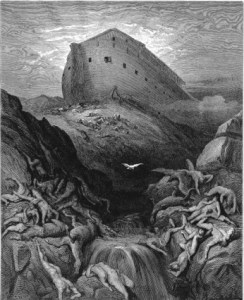
Noah’s Parable

I write a lot about Noah. For those who didn’t know me before this blog, I was once invited to write a book on Noah for a series ironically published by Oxford University Press. I had been researching Noah for years, and I intended to write the book. Then, as the kids are saying these days, life happened. My interest in Noah has never waned, however. And part of the reason is that it is perhaps the most influential story in the entire Bible. I realize I’ll need to explain that, but stop and think about it—Evangelicals seldom talk about Jesus any more. Their concerns are with unborn babies, people making babies outside wedlock, and destroying our environment in the name of capitalism. It is the last of these that brings us back to Noah.

A friend recently sent me a story on Splinter by Brendan O’Connor titled “How Fossil Fuel Money Made Climate Change Denial the Word of God.” O’Connor is looking at the history of how a pro-environmentalism-inclined evangelical movement decided to shift its base to align with climate-change deniers. Behind the scenes are fundamentalist clergy. Oh, we like to laugh at them and their ways, but they are the power behind the throne and we should really not let them out of our sight. You see, as O’Connor points out, they believe that the God of Noah can protect the world from the worst that we can throw at it. It’s perfectly okay to try to destroy the planet because the magic man upstairs can fix everything right back up if he needs to before sending his son back to town on the final business meeting. Laugh if you will. These people are dead serious and many who hold power in Washington believe every lie they utter.

As a nation—perhaps as an entire western culture—we’ve laughed off religion. Secure that there’s no God up there to rain down, well, rain, we laugh and jeer at Noah. It’s a children’s story, after all, isn’t it? Okay, forget about the part where everyone in the entire world drowns, except eight people. And when he gets drunk and lays naked in his tent after it’s all over. Other than that, it’s a kid’s story, right? The story of the flood is one of the oldest myths in the world. It has been part of human story-telling for millennia. We now have very powerful people with smart phones in their pockets and access to vast hordes of money who believe it literally happened. And since God took care of his own once, he can do it again. The educated smirk. The smart start building arks.


Fighting Nightmares

Some things are so personal, and inexplicable, that they’re difficult to put into words. Not only that, but they often involve other people and I try not to comment on those who actually know me in person. Still, having just watched Apocalypse Now for the first time, I feel I must. One of the people I admire most was a high school teacher. Although I never really said as much to him directly, he is one of the most formative people in my life. He served, and was shot up in Vietnam as a youth. His outlook on life, one that I’ve tried to emulate especially when my petty foibles overwhelm me, is an inspiration. I’m sure that he doesn’t know it, but every time I think of Vietnam he’s always in my mind.

Never a fan of war movies—I’m baffled that anyone can think of war as anything other than pure barbarism—I generally can’t watch them. Apocalypse Now, however, was widely discussed when I was in high school. It was released in 1979, just four years after the war had ended. It illustrates well the fog of war, and the Doors have been seeping in my head ever since the movie faded to black. When my wife and I began renting movies—VHS, of course—we made a list of must-see titles. First, partially for alphabetic reasons, was Apocalypse Now. That it took us almost two decades to get to it says something about the nature of life. And also my fear of war movies. Still, I knew I needed to see it. I figure that unless someone is even more behind the times than me, nearly forty years is safe from spoiler alerts.

The idea, based on Joseph Conrad’s Heart of Darkness, is that Colonel Kurtz has gone insane and Captain Willard has been called in to assassinate him. As he makes his way upriver Willard finds out that Kurtz is treated like a god. He has a cult following and does appear to have lost touch with reality. In the climatic scene, Willard hacks Kurtz to death as a cow is being hacked to death outside as a sacrifice. Ending with Conrad’s original words, “the horror, the horror,” an ambiguity lingers over what a people will do once their god has been killed. In fact, language of people being gods occurs early in the film as well, bookending this concept. The truth, of course, is that there are no gods here at all. I can’t guess what Conrad would’ve thought of this adaptation of his story. I know that when I saw it my thoughts returned to one man whose impact on my life continues in ways unexpected and deeply hidden.


Power in the Blood

Converts, they say, are often the worst. It matters less what the conversion is to or from, since the zeal of the newly enlightened is impossible to match. The textbook example with religion, especially in America, is Evangelicalism. Those who’ve “found Jesus” are eager and too willing to tell others about it. You don’t often hear, however, of those who grew up Evangelical, but then had second thoughts. Often they disappear quietly. Evangelicalism is a potent force in American life. Intellectuals, embarrassed by it, tend to pretend it doesn’t exist. Or it’s on its way out. No need to approach, with nervous laughter, those who actually believe this stuff. Evangelicals, however, can get presidents elected and their zeal can take away any number of freedoms deemed “godless” by those who may have no more education than the local bartender. Matthew Avery Sutton’s American Apocalypse: A History of Modern Evangelicalism is masterful. Although not comprehensive (the movement is too large for that) this book does not shy from the unifying fact behind radical evangelicalism—the belief that the end is nigh.

Oh, I know. Those of us who are educated have no need to take such nonsense seriously, right? Sutton may change your mind on that. When you realize just how close to disaster after disaster this thinking has led (and continues to lead, under the current administration) us, you might want to take the Fundamentalists a bit more seriously. They constitute the largest religious bloc in the nation. One of the baffling things about them is their protean nature. What’s the difference between an Evangelical and a Fundamentalist? And what’s with the obvious differences between a Timothy LaHaye and a Billy Graham? And where do these people get all their money? (Fundamentalists have always been close to nearly endless, well, funding.) Republican presidents from far before Nixon realized that big business and conservative theology, although strange bedfellows, are remarkably compatible. (Each thinks the other side doesn’t realize it’s being used.)

American Apocalypse is an important book. Written before perhaps the strangest turn in US history last November, it might have helped to show that Trump was a serious threat from the beginning. If only the educated took it seriously. Evangelical antipathy to women’s rights, civil rights for minorities, and socialized medicine run very deep. It’s the Old Boys’ Club with a vengeance. Recent events have shown yet again how important it is to understand these ways of thinking. And those of us with insider knowledge have never been welcome in the academy. That’s okay, though. If I go back to my roots I’ll realize the world’s about to end any day now. Those who’re smart might think about taking equestrian training because I’m sure there will be white horses involved. If only I could get myself converted back.


Thy Fandom Come

It’s not hard to feel that you’re from another planet. If you were born in the sixties and had kind of a rough transition to this whole internet thing, you know what I mean. Still, I want to be part of it—it’s kind of like New York City, only bigger. And faster. The commute doesn’t take nearly as long, now that dial-up’s a thing of the past. So I bought someone who was into fandom Sam Muggs’ The Fangirl’s Guide to the Galaxy: A Handbook for Geek Girls. This particular fandom, well, fan, gave me the book to read. I’m a feminist, so I don’t have any issues with reading a book intended for girls. What became clear to me, however, is that I don’t understand the internet nearly as well as I thought I did, and that girls find they’re oppressed there too. What is it with men and control?

It is an ethical issue. I don’t blame people in the past for not thinking like we do, but today there’s no excuse whatsoever for considering somebody a lesser person because of their gender. Women and girls have just as much right to “guy things” like geekdom as do males of the species. Fandom is all about fun. Enjoying the fantasy of living, for a little while, in other worlds. From the way many men treat women it’s no wonder that they feel that need just as much as my own self-identified gender. Religion, unfortunately, bears much of the blame for this. In the largest religious bodies in the world women are still excluded from leadership roles. Religion is kind of like fandom in that way, I suppose. It can be all about exclusion. We exclude others to make ourselves feel special. Why not celebrate difference and find a place for everyone?

It’s difficult to read The Fangirl’s Guide as a man simply because you’re constantly reminded (and not intentionally, because it’s written for girls) at how inhospitable men have made much of the world for their female earthling compatriots. I was reminded at several points in this book of how films like Wonder Woman and the recent Ghostbusters stand out in their sympathetic portrayal of women heroes. And equally how men find reasons to criticize them. Then I consider the White House and shudder. When a nation elects an open and avowed patriarchalist as president we all could use a fantasy world in which to hide. This little book didn’t make me into a fangirl, but I do hope it makes me a better man.


Implied of Course

The American terrorist attack in Charlottesville over the weekend should have us all frightened. Despite declarations of “it couldn’t happen here,” fascism is an adaptive disease that finds its way to new hosts quite readily. The atmosphere coming out of Washington only promotes contagion. Trump’s response—bad behavior all around, no one party to blame—left the supreme white commander open to criticism. The appropriately named “White” House spokespersons responded with an implied “Of course that includes white supremacists,” according to the Washington Post report. That’s an awful lot of weight for an adverb to bear. The past six months have given many of us reason to doubt it’s true at all. “Of course” 45 loves all Americans. Or at least their cash.

Of course, I could be making a lot out of an implied deflection. A national leader should not hesitate to point the blame squarely at any supremacist group. Listen closely: no group is superior to another. Anyone’s background, examined closely enough, is likely to turn up a character or two who would be suspect. Trump’s election gave a new boldness to fascist groups—this is the way America’s going, isn’t it? Republican leaders, full of squees and shivers, refuse to say anything negative about a man whose thumbs can’t even reach the humility emoji. Hate crimes are wrong. They used to be illegal. What has happened to leadership? It’s more than just the CFO, wait, I mean Commander in Chief, who’s implicated here. It’s an entire political party that won’t stand up against injustice. What ever happened to “truth, justice, and the American way,” Clark? There’s never a phone booth nearby when you need one.

Back when I worked at Nashotah House, we had a conflicted environment. One of my colleagues told me something that has stayed with me ever since: “silence implies consent.” If you don’t condemn evil, you are complicit with it. We all need to stand up and say racism isn’t just an opinion—it is evil. Human rights are more than just civil rights. All people have the right to be treated fairly. Someone who hates others enough to climb into a car, start the ignition, and accelerate toward a group of pedestrians is guilty of premeditation. A president who won’t say as much is tacitly saying it might just be okay. Of course, it might just be that he’s too self-absorbed to get the thumbs going on the words we’ll never read: “I’m sorry.” Of course I’d be glad to be proven wrong.


Prophecy of Hezekiah

Maybe my recollection of the Gospel’s a bit hazy. I seem to remember one of the main characters of the New Testament saying something about doing unto others as you would have them do unto you. And turning the other cheek. I may be recalling incorrectly, since Robert Jeffress, one of Trump’s “evangelical advisors” (and since when do Presidents need evangelical advisors?) has said the Bible gives you permission to take out your enemies. Granted, it takes a twisted exegesis of Romans, and twisted exegesis works best in twisted minds, but this runs full frontal in the gospel ideal of love just two books earlier in the Good Book. Forcing the Bible to say what you want it to say is a tactic as old as preaching itself, but still, those of us with training in Scripture shudder.

Pulling verses out of context like the Bible’s a magic book is called “prooftexting.” Not related to the current plague of texting, prooftexting means you can make the Bible say whatever you want it to. The classic example is that the Bible says “there is no God.” Check it out. I’ll even give you the reference: Psalm 14:1. What’s that? I’ve left out the most important part? “The fool says in his heart, ‘there is no God.’”? You see what I mean. The danger here is that a feeble-minded, biblically illiterate world leader could easily be swayed. Nukes, after all, are great for your ego. Who wouldn’t want the Bible to say that it’s fine to take out all your enemies, and horde all the money you possibly can (not it’s not the root of all evil—Paul is dead, after all.) Except Paul wrote Romans. How are we ever to decide?

The Washington Post story by Sarah Pulliam Bailey may not suggest that we should pay attention to Bible scholars—hey let’s not get too radical here!—but the world would be a very different place if we did. The Bible is a complex and difficult holy book. (As most holy books are.) The idea used to be that you had to spend a lifetime in a monastery, or at least a few years in a seminary, to say something intelligent about it. And that training wasn’t reinforcement of literalism. But we live in a brave new world. A world that re-envisions Jesus as the loving God with his finger firmly on the button. And sycophant preachers saying, “Go ahead, make my day.” It’s all there in the book of Hezekiah.