Fighting Nightmares

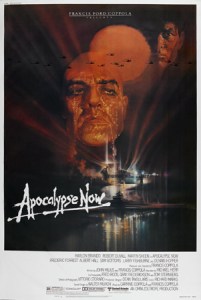
Some things are so personal, and inexplicable, that they’re difficult to put into words. Not only that, but they often involve other people and I try not to comment on those who actually know me in person. Still, having just watched Apocalypse Now for the first time, I feel I must. One of the people I admire most was a high school teacher. Although I never really said as much to him directly, he is one of the most formative people in my life. He served, and was shot up in Vietnam as a youth. His outlook on life, one that I’ve tried to emulate especially when my petty foibles overwhelm me, is an inspiration. I’m sure that he doesn’t know it, but every time I think of Vietnam he’s always in my mind.

Never a fan of war movies—I’m baffled that anyone can think of war as anything other than pure barbarism—I generally can’t watch them. Apocalypse Now, however, was widely discussed when I was in high school. It was released in 1979, just four years after the war had ended. It illustrates well the fog of war, and the Doors have been seeping in my head ever since the movie faded to black. When my wife and I began renting movies—VHS, of course—we made a list of must-see titles. First, partially for alphabetic reasons, was Apocalypse Now. That it took us almost two decades to get to it says something about the nature of life. And also my fear of war movies. Still, I knew I needed to see it. I figure that unless someone is even more behind the times than me, nearly forty years is safe from spoiler alerts.

The idea, based on Joseph Conrad’s Heart of Darkness, is that Colonel Kurtz has gone insane and Captain Willard has been called in to assassinate him. As he makes his way upriver Willard finds out that Kurtz is treated like a god. He has a cult following and does appear to have lost touch with reality. In the climatic scene, Willard hacks Kurtz to death as a cow is being hacked to death outside as a sacrifice. Ending with Conrad’s original words, “the horror, the horror,” an ambiguity lingers over what a people will do once their god has been killed. In fact, language of people being gods occurs early in the film as well, bookending this concept. The truth, of course, is that there are no gods here at all. I can’t guess what Conrad would’ve thought of this adaptation of his story. I know that when I saw it my thoughts returned to one man whose impact on my life continues in ways unexpected and deeply hidden.

Power in the Blood

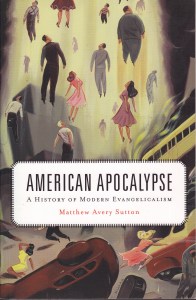
Converts, they say, are often the worst. It matters less what the conversion is to or from, since the zeal of the newly enlightened is impossible to match. The textbook example with religion, especially in America, is Evangelicalism. Those who’ve “found Jesus” are eager and too willing to tell others about it. You don’t often hear, however, of those who grew up Evangelical, but then had second thoughts. Often they disappear quietly. Evangelicalism is a potent force in American life. Intellectuals, embarrassed by it, tend to pretend it doesn’t exist. Or it’s on its way out. No need to approach, with nervous laughter, those who actually believe this stuff. Evangelicals, however, can get presidents elected and their zeal can take away any number of freedoms deemed “godless” by those who may have no more education than the local bartender. Matthew Avery Sutton’s American Apocalypse: A History of Modern Evangelicalism is masterful. Although not comprehensive (the movement is too large for that) this book does not shy from the unifying fact behind radical evangelicalism—the belief that the end is nigh.

Oh, I know. Those of us who are educated have no need to take such nonsense seriously, right? Sutton may change your mind on that. When you realize just how close to disaster after disaster this thinking has led (and continues to lead, under the current administration) us, you might want to take the Fundamentalists a bit more seriously. They constitute the largest religious bloc in the nation. One of the baffling things about them is their protean nature. What’s the difference between an Evangelical and a Fundamentalist? And what’s with the obvious differences between a Timothy LaHaye and a Billy Graham? And where do these people get all their money? (Fundamentalists have always been close to nearly endless, well, funding.) Republican presidents from far before Nixon realized that big business and conservative theology, although strange bedfellows, are remarkably compatible. (Each thinks the other side doesn’t realize it’s being used.)

American Apocalypse is an important book. Written before perhaps the strangest turn in US history last November, it might have helped to show that Trump was a serious threat from the beginning. If only the educated took it seriously. Evangelical antipathy to women’s rights, civil rights for minorities, and socialized medicine run very deep. It’s the Old Boys’ Club with a vengeance. Recent events have shown yet again how important it is to understand these ways of thinking. And those of us with insider knowledge have never been welcome in the academy. That’s okay, though. If I go back to my roots I’ll realize the world’s about to end any day now. Those who’re smart might think about taking equestrian training because I’m sure there will be white horses involved. If only I could get myself converted back.


Thy Fandom Come

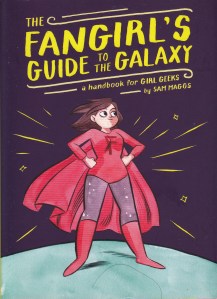
It’s not hard to feel that you’re from another planet. If you were born in the sixties and had kind of a rough transition to this whole internet thing, you know what I mean. Still, I want to be part of it—it’s kind of like New York City, only bigger. And faster. The commute doesn’t take nearly as long, now that dial-up’s a thing of the past. So I bought someone who was into fandom Sam Muggs’ The Fangirl’s Guide to the Galaxy: A Handbook for Geek Girls. This particular fandom, well, fan, gave me the book to read. I’m a feminist, so I don’t have any issues with reading a book intended for girls. What became clear to me, however, is that I don’t understand the internet nearly as well as I thought I did, and that girls find they’re oppressed there too. What is it with men and control?

It is an ethical issue. I don’t blame people in the past for not thinking like we do, but today there’s no excuse whatsoever for considering somebody a lesser person because of their gender. Women and girls have just as much right to “guy things” like geekdom as do males of the species. Fandom is all about fun. Enjoying the fantasy of living, for a little while, in other worlds. From the way many men treat women it’s no wonder that they feel that need just as much as my own self-identified gender. Religion, unfortunately, bears much of the blame for this. In the largest religious bodies in the world women are still excluded from leadership roles. Religion is kind of like fandom in that way, I suppose. It can be all about exclusion. We exclude others to make ourselves feel special. Why not celebrate difference and find a place for everyone?

It’s difficult to read The Fangirl’s Guide as a man simply because you’re constantly reminded (and not intentionally, because it’s written for girls) at how inhospitable men have made much of the world for their female earthling compatriots. I was reminded at several points in this book of how films like Wonder Woman and the recent Ghostbusters stand out in their sympathetic portrayal of women heroes. And equally how men find reasons to criticize them. Then I consider the White House and shudder. When a nation elects an open and avowed patriarchalist as president we all could use a fantasy world in which to hide. This little book didn’t make me into a fangirl, but I do hope it makes me a better man.


Implied of Course

The American terrorist attack in Charlottesville over the weekend should have us all frightened. Despite declarations of “it couldn’t happen here,” fascism is an adaptive disease that finds its way to new hosts quite readily. The atmosphere coming out of Washington only promotes contagion. Trump’s response—bad behavior all around, no one party to blame—left the supreme white commander open to criticism. The appropriately named “White” House spokespersons responded with an implied “Of course that includes white supremacists,” according to the Washington Post report. That’s an awful lot of weight for an adverb to bear. The past six months have given many of us reason to doubt it’s true at all. “Of course” 45 loves all Americans. Or at least their cash.

Of course, I could be making a lot out of an implied deflection. A national leader should not hesitate to point the blame squarely at any supremacist group. Listen closely: no group is superior to another. Anyone’s background, examined closely enough, is likely to turn up a character or two who would be suspect. Trump’s election gave a new boldness to fascist groups—this is the way America’s going, isn’t it? Republican leaders, full of squees and shivers, refuse to say anything negative about a man whose thumbs can’t even reach the humility emoji. Hate crimes are wrong. They used to be illegal. What has happened to leadership? It’s more than just the CFO, wait, I mean Commander in Chief, who’s implicated here. It’s an entire political party that won’t stand up against injustice. What ever happened to “truth, justice, and the American way,” Clark? There’s never a phone booth nearby when you need one.

Back when I worked at Nashotah House, we had a conflicted environment. One of my colleagues told me something that has stayed with me ever since: “silence implies consent.” If you don’t condemn evil, you are complicit with it. We all need to stand up and say racism isn’t just an opinion—it is evil. Human rights are more than just civil rights. All people have the right to be treated fairly. Someone who hates others enough to climb into a car, start the ignition, and accelerate toward a group of pedestrians is guilty of premeditation. A president who won’t say as much is tacitly saying it might just be okay. Of course, it might just be that he’s too self-absorbed to get the thumbs going on the words we’ll never read: “I’m sorry.” Of course I’d be glad to be proven wrong.


Prophecy of Hezekiah

Maybe my recollection of the Gospel’s a bit hazy. I seem to remember one of the main characters of the New Testament saying something about doing unto others as you would have them do unto you. And turning the other cheek. I may be recalling incorrectly, since Robert Jeffress, one of Trump’s “evangelical advisors” (and since when do Presidents need evangelical advisors?) has said the Bible gives you permission to take out your enemies. Granted, it takes a twisted exegesis of Romans, and twisted exegesis works best in twisted minds, but this runs full frontal in the gospel ideal of love just two books earlier in the Good Book. Forcing the Bible to say what you want it to say is a tactic as old as preaching itself, but still, those of us with training in Scripture shudder.

Pulling verses out of context like the Bible’s a magic book is called “prooftexting.” Not related to the current plague of texting, prooftexting means you can make the Bible say whatever you want it to. The classic example is that the Bible says “there is no God.” Check it out. I’ll even give you the reference: Psalm 14:1. What’s that? I’ve left out the most important part? “The fool says in his heart, ‘there is no God.’”? You see what I mean. The danger here is that a feeble-minded, biblically illiterate world leader could easily be swayed. Nukes, after all, are great for your ego. Who wouldn’t want the Bible to say that it’s fine to take out all your enemies, and horde all the money you possibly can (not it’s not the root of all evil—Paul is dead, after all.) Except Paul wrote Romans. How are we ever to decide?

The Washington Post story by Sarah Pulliam Bailey may not suggest that we should pay attention to Bible scholars—hey let’s not get too radical here!—but the world would be a very different place if we did. The Bible is a complex and difficult holy book. (As most holy books are.) The idea used to be that you had to spend a lifetime in a monastery, or at least a few years in a seminary, to say something intelligent about it. And that training wasn’t reinforcement of literalism. But we live in a brave new world. A world that re-envisions Jesus as the loving God with his finger firmly on the button. And sycophant preachers saying, “Go ahead, make my day.” It’s all there in the book of Hezekiah.


Apocalyptic Dreams

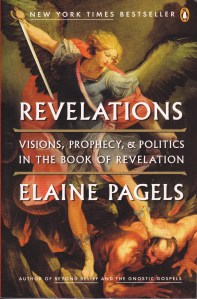
Words. They can be slippery sometimes. Take for example the word “revelation.” It can be secular or sacred, and if the latter, general or specific. Many recognize it as the title of the final book of the Bible, and some can’t even get enough of it and make it plural—Revelations. “Revelation” is actually a translation of the Greek word apokalypsis, the “original” title of the book. It has been a source of contention as well as fascination just about since John—whoever he was—put quill to parchment. Elaine Pagels, whose work is always rewarding to read, plays on the singular/plural convention that raises the ire of many a biblical scholar. Revelations: Visions, Prophecy, and Politics in the Book of Revelation is a refreshing change from what I read in college and seminary. No book exists without a history and that of the Apocalypse is colorful indeed. And it revolves around what has been traditionally taught about “revelation.”

The current final book of the New Testament presents itself as a revelation. It isn’t, however, the only book from this time period to do so. Many revelations existed, as did many gospels, in the first couple centuries of the Common Era. Some early leaders of the Christian movement who became inordinately influential decided that John’s revelation would be okay to keep but the rest should be destroyed. And they very nearly were. Some were recovered by the fortuitous discovery of the Nag Hammadi library in Egypt. These texts have preserved some of the other gospels and revelations that rivaled those of the current canon. It is in her close observations about their continuities and the motivations behind the politics of early Christians that Pagels sheds fascinating light on how Revelation became a tool of manipulation in a power struggle, primarily for centralized religious control of Egypt. Looking at headlines even now we know that it never really worked.

Revelation very nearly didn’t make the canonical cut. Many church leaders of the fourth century believed it spurious and not entirely helpful. It has, however, arguably become the most influential book of the Bible. Evangelicalism is hard to imagine without some kind of end times dispensational viewpoint that owes its existence to John of Patmos. Reformers, while not caring for the book, saw Revelation’s usefulness as a cudgel to strike at Rome. The papacy likewise saw it as a vivid threat against reformers. Those who took sola scriptura a little too literally used Revelation as the focal point of their hope and practice. Today we’re left with Left Behind and the Rapture and the Antichrist, whether they occur in Revelation or not. (They don’t, but who’s counting?) Pagels will give anyone plenty to think about here, and she’ll do it in surprisingly few words.


Night and Day

Jim was aghast. The joke had been entirely inappropriate. I had asked him about the Pentecostal service we’d just left. Jim was my college roommate and had invited me to see what his tradition was all about. I’d witnessed speaking in tongues before, but never on such a scale. That wasn’t what was bothering Jim, though. The minister had told a joke about a demon. It had something to do with a man possessed by a coffee demon. The exorcist declared to the demon “You have no grounds to be in him!” Inappropriate. It might make people think there weren’t real demons. We used to disagree on many points, but remained friends. I lost track of Jim. He dropped out of college to go follow a spirit-filled man in Waco who’d learned Hebrew and Greek without ever having studied them. His concern about that joke, however, raises an interesting question.

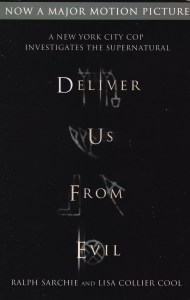
I’ve just finished reading Ralph Sarchie and Lisa Collier Cool’s book, Deliver Us from Evil: A New York Cop Investigates the Supernatural. It’s hard not to like Sarchie. A rough and tumble associate of Ed and Lorraine Warren, he is most sincere law enforcement officer (now, at my age, retired). Openly believing in the supernatural, claiming his traditionalist Catholic faith, he hates demons for the misery they cause both humans and God. I admire such unquestioning faith. At the same time he’s clearly aware of his own foibles and weaknesses—something we might like to see more often in the police force. He doesn’t doubt, however, that demons are real. The concern, however, is that he might sometimes be a bit harsh on non-Christian religions. He admits that he’s not the most studious of demonologists.

No doubt, belief is important. Belief with knowledge is even better, it stands to reason. Problem is, academic or scientific studies on demons are sorely lacking. Sarchie was an associate of the controversial Malachi Martin (whose book Hostage to the Devil I blogged about some time ago). I feel for someone who wants to know more but runs into the limits imposed by academia. Where do you find information if the recognized specialists in a discipline don’t write about it so regular people can read it? It is a real dilemma. A scientific approach would declare the events in Deliver Us from Evil (also published as Beware the Night, before being released as a movie) are anecdotal. This is technically correct. No laboratory procedure exists to confirm something science denies exists in the first place. The only weapon against such a foe is faith. Thinking back to college, I don’t know what happened to Jim, but on this point I’m sure he would have agreed.


Living Challenged

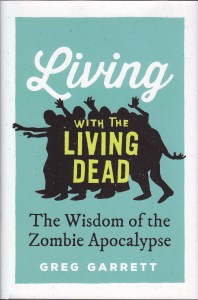
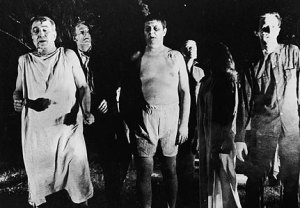
One of the surest signs of hope for the world is that academics are beginning to notice monsters. A trickle began some time ago and it’s probably best to call it a trickle still, nevertheless, the quality of the trickle is improving. Some serious publishers are now counted among the mix of those who pay attention to the lovable unlovable. Greg Garrett’s Living with the Living Dead: The Wisdom of the Zombie Apocalypse is one of the more recent approaches to the undead that looks for religious themes among them. They’ve been there from the beginning with zombies, of course, but few with tenured positions bothered to look. It’s an open question how long the current fascination with the undead might last, but Garrett’s treatment finds them useful sources of theological thought.

Perhaps the aspect of my own fascination that I feel most often compelled to explain is why fear has such an appeal. Garrett makes the point that fear often causes people to make bad choices, and I would have to agree. It is, however, the fear of fear that takes a greater toll. You see, fear is a survival instinct. Without fight or flight we’re all zombie food. Some of us learn this harsh lesson early in life, and if we manage to survive long enough we might even become nostalgic for it. It’s not that I like be afraid, but I do know that if we fear fear—if we avoid looking at what scares us—we put ourselves in danger that the flight response might well prevent.

Garrett’s treatment is helpful in demonstrating that there is a reason for such stories. In fact, according to his analysis zombies can leave you with a profound sense of hope. He uses the living dead as a means of thinking about community, ethics, and apocalypse. Not all end of the world scenarios are that bad. How we treat the living dead may tell us quite a bit about our own rectitude or lack thereof. In other words, zombies are more than their puerile thrills might suggest. There’s something of substance here. I don’t agree with all of Garrett’s conclusions, but he offers a stimulating tour of the current media frenzy around the living challenged and is surely correct that there is more going on with monsters than many of our parents would like to have a religion expert admit. Those childhood years might not have been wasted on monsters after all.


Hex Marks the Spot

Public versus private has been on my mind quite a bit lately. Partially it’s because I’ve been reading about magical beliefs and their persistence. It always amazes me how publicly we declare ourselves rational and uninfluenced by the supernatural. Once we get behind the closed doors of our domiciles, however, a transformation takes place. Our insecurities and uncertainties surface. Given the right circumstances we might even confess that we believe in magic. I know I’m generalizing here, but private space does allow for private thoughts and getting out with others can bring a much-needed relief. I was reading about Hex Hollow in an article a friend sent me from Roadtrippers. Hex Hollow is a small town in my native Pennsylvania where a murder took place over witchcraft. I won’t go into the details here—the Roadtripper story is quite brief and tells the tale—but it turns out a man was killed for being a witch. His murderer was also a witch who’d been sent to him by yet a third witch. The crime took place in 1928.

Think about the timeframe for a second. It was between the World Wars. Technology was fairly advanced. Witch trials had ended centuries ago. Still, some people believed enough in witches to kill for their conviction. Historians of religion have pointed out that Americans have never really outgrown the belief in magic that we deny so assiduously. I’m not trying to single out one nation here—there is widespread evidence that magical thinking is endemic to the human thought process. We aren’t so quick to let something go that, according to reason, has served us well. Had magical thinking been purely detrimental it should’ve died out long ago. We need our magic.

As yesterday, so today.

I’m not suggesting witchcraft is real. At the same time I know that it’s natural enough for thoughts to move into familiar terrain when stressed out. In Hex Hollow the man who did the murdering was convinced he’d been hexed by his victim. Perhaps he’d climbed the ladder of inference (what we tend to call confirmation bias) to a rung where the only way down was a criminal act of desperation. That’s no excuse to kill someone, of course, but it fits with what we know of an all-too-human form of stress relief. Nor is it rustic rubes to blame. Psychics in New York City are abundant and even US presidents have been known to consult the stars a time or two. Of course, once I step outside that door I’ll say it’s all nonsense.


Good Newsists

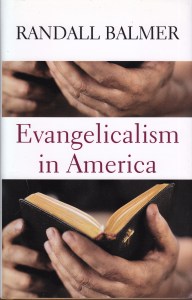
In the interest of avoiding conflict thereof, I cannot yet give a review of Randall Balmer’s Evangelicalism in America. Since I’m writing a review of it for Reading Religion, I’ll use it as a springboard into a topic that should concern all who believe in religious freedom. One of the resounding themes of Balmer’s treatment is that Evangelicalism, after it wedded to the Religious Right, lost its soul. Those are my words, not his, but the sentiment’s about right. For anyone who wasn’t politically aware in the 1980s, it may seem a surprise that religion didn’t enter into politics before that decade. With the exception of the fear of the Catholic in the case of John F. Kennedy, religion wasn’t used as a political wedge until the presidency of Jimmy Carter. The Religious Right, unhappy with the born again Southern Baptist in the White House, moved to solidify the Evangelical bloc.

Evangelicals had been an underground movement for half a century. Many had no idea what being “born again” meant when Carter first claimed the sobriquet. Balmer points out that it was the threat of the withdrawal of tax-exempt status to discriminating Christian schools that led to political action. Bob Jones University, fearful of racial intermarriage, didn’t admit African American students. Leaders of the Religious Right saw the loss of tax-exempt status as a move against their sacred segregated culture and a push that required a shove. Coopting the abortion issue (historically Evangelicals had supported women’s rights, including the right to abortion in many cases), they nailed together a platform for political activism which put women “back in their place,” kept racial “purity,” and romanced a total aberration in Christianity—the “prosperity gospel.” All of this is well documented. And well hidden.

Looking at Evangelical politics today, abortion—the control of women—has become THE issue. It’s hard to believe, as Balmer amply illustrates, that Evangelicalism used to be allied with the Social Gospel. It was a religious view with a conscience and it supported issues that are now polarized as “liberal” and leftist. This shift came about gradually, but not accidentally. There were political players—Balmer names names—who had one goal in mind, and that goal wasn’t Jesus or what he’d do. It was the sweet prize of political power. Evangelicals, you see, are born followers. A leader with a strong voice can lead them just about anywhere. Many Evangelicals today would deny their more liberal history, but it is right there for anyone who’s willing to learn something about who they once were.


Beautiful Beast

Like most kids in America I grew up with some form of Disney. We couldn’t afford to see many movies, but those we could often originated from the acknowledged master of childhood viewing. When I became a parent I naturally turned to Disney as one of the components of constructing a happy environment for my own child. Who doesn’t want better for their children then they had themselves? This was, however, in the days of VHS tapes. Disney frustrated more than one attempt to see a movie that was currently “locked in the vault”—a marketing tool used to glut the already overflowing coffers on demand. The heart wants what the heart wants, as the saying goes, and you knew that if you didn’t purchase the movie when it was available you might never see it again. Regardless, Disney does produce memorable work.

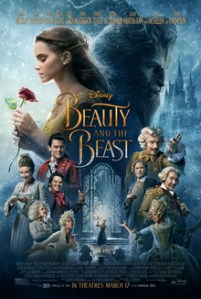
One movie that we missed until the vault unlocked was the animated Beauty and the Beast. We didn’t want to send the message that girls should be the captives of men, but Belle is a strong character, and we eventually realized that withholding much of childhood culture would isolate our daughter from what everyone else knew. Old habits die hard, as Disney knows. Our daughter is now grown, but a new Beauty and the Beast is in theaters and what was once vault material has softened into nostalgia. Recently I’ve begun to notice differences between original films and remakes when it comes to religion. In the new Beauty and the Beast there are only a couple of such instances, but they did make me wonder. In the opening sequence, as Belle is returning her book to Père Robert, a large crucifix stands in the background. Indeed, the camera keeps Belle off-center so as to make the cross obvious in the scene. Clergy and books make sense, and, of course, Belle offers to sacrifice herself for her father—a biblical trope.

When Gaston riles up the angry villagers, Père Robert is once more shown, objecting to the growing violence. Then, unexpectedly, as the castle transforms at the end, a gold finial of Michael the archangel slaying the dragon appears atop one of the towers. Again the symbolism is clear as the beast has allowed Gaston to escape, but the 45-inspired antagonist, unwilling to let grudges go, shoots the beast anyway. As the movie opens the famous Disney castle shows itself topped with that same finial. Is there a deeper message here? It’s just a children’s movie after all. Yet Père Robert is black and there are two interracial couples in the film. We should be, if I’m viewing this correctly, entering into a more tolerant and accepting world. Prejudice has no place in fantasy. Or reality. There are dragons to be slain here. If there is a deeper conscience at play it’s likely only to be found locked away in a vault.


Witching Well

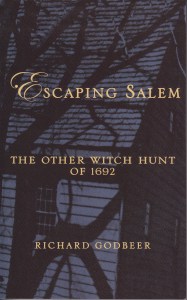
Salem, Massachusetts, brings to mind images of intolerance and a culture ossified in superstition. That’s not really fair, of course. Even in the late seventeenth century the people of Salem were living during the Enlightenment and they understood enough of science to question the legitimacy of the spectral evidence of the kind that would stand in Washington DC today. With twenty direct deaths due to witchcraft accusations and many more lives disrupted or ruined, this tragic episode has perhaps unfairly cast New Englanders as credulous rubes willing to believe just about anything. If you’re like most of us, you may not be aware that other witch trials were going on around that same time period, but with differing results. Richard Godbeer’s Escaping Salem: The Other Witch Hunt of 1692 recounts the events in Fairfield County, Connecticut in Salem’s haunted year. As in Salem a young woman began experiencing fits. Medical explanations—rudimentary as they were—didn’t explain everything away, so supernatural causation was considered. Witchcraft was suspected. Accusations were made.

In the case of Kate Branch of Stamford, as Godbeer shows, Connecticut was learning the lessons of Salem in real time. The belief in witches and witchcraft was just as real, but realizing the bad press their northern neighbors were receiving, the Connecticut Yankees insisted on more stringent evidence. Indeed, judges dismissed the jury to reconsider their decision and even overturned it based on reason. These were people who knew that human lives were at stake. They also knew that Salem was doing nothing to vindicate the cause of either Puritans or justice. We don’t hear about it so much, I suspect, because those in power did the right thing. Given present circumstances, reading about Americans who actually learned from history is encouraging. We read daily of a president woefully unaware (and proudly so) of his own nation’s history. What could possibly go wrong?

Witch hunts are sad miscarriages of justice in the best of times. In days when minorities are being scapegoated for the problems capitalism itself causes, we have to wonder if, apart from those in contemporary Connecticut, we’ve learned anything from Salem at all. Wasn’t it clear that targeting women—many of them social outsiders, and pretty much all of them recently descended from immigrants—was in itself just plain wrong? We pride ourselves on having outgrown belief in magic, and yet we go into that voting booth without a rational reason to elect a self-evident bigot and abuser of women and do it anyway. Reading, knowing where we’ve come from, prevents all kinds of tragedies. And this isn’t alternative factual history. It happened in the very shadow of the calamity of Salem, Massachusetts.


Come Together

Although today is Easter for some, for many it generally isn’t. And I don’t mean just those who follow faiths outside Christianity. One of the hallmarks of religions is their tendency to fragment like a sugar egg under Thor’s hammer. Christians have long disagreed on the date of Easter depending on which time reckoning scheme they follow. That which makes it onto most work calendars is the first Sunday after the first full moon after the Vernal Equinox after the Gregorian calendar. After all those afters it’s easy to get confused, but the fact is this kind of precision makes it possible to date Easter until the Earth slows on its axis or Mitch McConnell learns to look at things from someone else’s point-of-view, although we all know which is more likely. This year, in a rare coincidence of the Gregorian and Julian calendars, however, Orthodox Easter is the same as Catholic Easter. Could it be sign of hope?

You see, calendars aren’t just markers of time. They’ve always been religious devices. In fact, our current calendar, the Gregorian, was introduced by Pope Gregory XIII. The world still marches to the beat of Rome’s drum. Nature, it seems, is indifferent to our calendrical needs. The point of all this time keeping was to help those who lived by the soil to know when to plant and when to harvest. That might seem simplistic, but if you follow how it feels outside there would’ve been some sowing going on in February around here. Global warming, for those who’ve advanced to the Gregorian calendar (that’s okay Mr. McConnell, you may leave the room) will throw that off, and maybe we’ll be needing a new calendar. Will we retain the one with it’s pagan month names or shall we adopt one with months of evangelical heroes? But wait, not all evangelical groups celebrate Easter!

I had a college roommate who believed all holidays were of the Devil. His sect of Christianity didn’t celebrate Christmas or Easter. So even as Orthodox and Heterodox join together in recognizing today as Easter, not everyone’s together on that point. Some mythologize bunnies and eggs while others dismiss them as hopelessly pagan. So it is that we have to agree to disagree. Teach the controversy, right Mitch? While some celebrate resurrection today others put their Peeps in the microwave just for the fun of having that kind of power over the weak.

Having your cake, and having it too.


Death Challenged

Long before the Walking Dead, and even before Twilight or Buffy the Vampire Slayer, people took the undead seriously. Now, I know ratings are important (they attract advertisers and their money, after all), but when the fear is reality the stakes are upped a bit. Two readers sent me a Guardian story this past week of Yorkshire villagers mutilating the dead. In the Middle Ages, that is—it’s perfectly safe to die in Yorkshire now. The story by Maev Kennedy describes how archaeologists have been studying deliberately defiled corpses, well, actually the bones from those corpses to be precise, to solve a centuries-old mystery. Their conclusion? Medieval folk really did fear the dead coming back from the grave.

Now, Easter’s just around the corner and resurrection’s on a lot of minds. Outside the context of the Bible, however, resurrection of the dead is one of the most ancient and persistent of human fears. Nobody’s quite sure why. Dreams and visions of the recently departed are extremely common. Belief in ghosts is ancient and fairly universal. The destruction of the bodies of people already dead is not. We treat our gathered ones with respect. To me it seems to come down to the puzzle of consciousness. Call it a soul if you like, but I have a feeling things would be getting rather crowded in here if too many distinct entities claimed this body as home. Mind, soul, spirit, psyche, consciousness. We don’t know what it is because it can’t be studied empirically. We know that something like it exists and opinions of what happens to it after death vary. The body, we can all agree, has a more prosaic end.

That’s what makes fear of the undead so fascinating. They are only bodies. Bodies without souls. Rather like leaders of the Republican Party. We fear them because when we look into their unblinking eyes we see no vestige of human warmth or sympathy. Those who walk among us and who don’t care about those of us not yet undead remain a perennial fear. In the case of the Yorkshire corpses these were people already buried. Putting them back in their graves seemed kind of pointless when they would only climb out again. We don’t know what it was like on the ground in the Middle Ages. History, however, has an ironic way of repeating itself. We’re entering a new age when I suspect we’ll want to make sure the remains of some remain well and truly gone once they’ve finally given up the ghost.


Informed Deceit

I sign a lot of petitions. That’s because the job of prophet doesn’t pay well enough to support a family any more. What it does mean is that I get a lot of emails from causes looking for supporters. I don’t sign blindly. That was brought home to me the other day when I had an email from the “White House.” A more obvious effort at trying to scramble for table scraps of respectability I cannot imagine. Already since January our government has swooped to new lows of deception and now false news comes right to your inbox. This email informed me that Neil Gorsuch has overwhelming bipartisan support for his Supreme Court nomination. Being an individual with a working brain, I know that’s not true. The “White House” wanted me to sign a petition supporting Gorsuch when I’ve already signed several protesting his candidacy. It’s clear that our government wants a court prophet.

Isn’t it odd, I mused, that a government that has no intention of listening to the majority is sending a petition to support one of its own? We know that the Russian Party (formerly known as the GOP) will support anything Thurston Howell the President hands them. Such a petition is only a way of saying “I told you so.” I miss the days when Isaiah could walk right into king Hezekiah’s bedroom and say “Thus saith the Lord…” These days the Lord tweets and the chirplings in the nest beg for more worms. You see, court prophets know which side their palms are crossed on. This isn’t Ash Wednesday, it’s Ash Administration.

Court prophets, in ancient times, were those paid by the government to support what the king wanted to do. It was a cushy job. What the reigning Trump wants at the moment he or she (for the modern court prophet can double-cross her own gender) proclaims it as God’s will. No experience necessary. The thing about the Bible, though, is that court prophets are pretty roundly condemned. The real prophet could generally be told by the fact that he (less commonly she in those days) was dead. Or soon to be. Those in power seldom care for criticism. Especially when skeletons are fighting each other for elbow room in their closets. Even so, Holy Writ says, figuratively, that it’s better to be a living politician than a dead prophet. If that doesn’t sound biblical, read the words of the prophet: “Nevertheless the sun hides not Virginia’s Dismal Swamp… and break the green damp mould with unfathomably wondrous Solomon.”