Apocalypse Then

Krakatoa Sometimes everything blows up in your face. Literally. Simon Winchester’s Krakatoa has been on my reading list for years. Boys seem to have a fascination with volcanoes that they never outgrow, and given the world-wide implications of Krakatoa’s 1883 eruption, it is a tragedy that keeps me ever curious. We live on an angry planet. I know that’s projecting agency on nature, but like thunderstorms, to a human sensibility, volcanoes are raging phenomena. As Winchester points out, many indigenous cultures in the “ring of fire” consider volcanoes either gods or messages from the divine world. Honestly, I didn’t read Krakatoa to find out about religion, but it was there nevertheless. For human beings, it has an unparalleled explanatory power.

Krakatoa caused a stint of global cooling after its nineteenth-century eruption, leading to failed crops throughout much of the world, and perhaps played into larger political issues that would stress a world already attempting to cope with fast changes in technology. The story of the volcano is fascinating enough, but the religious dimension, it seems, played itself out more than just in a Gilligan’s Island sort of way. Despite what analysts say, people take their religious beliefs very seriously. So when I reached the end of the eruption, I wondered how Winchester was going to spin this book out for another fifty pages. It turns out that among the effects of the volcano was a religious rebellion. The East Indies, as they were called, were under Dutch colonial rule. This led to a bit of tension with the native Muslims (Islam has long been a major religion in Indonesia). As Winchester points out, the Islam in the region before the eruption was a syncretistic, almost laissez faire, faith. It blended with Hinduism and local beliefs, and even tolerated the Christian Dutch.

Symbolically, or literally, after the explosion that killed thousands, a religious movement that had been waiting for a sign came to life. A more strict Muslim sect saw the events as a predicted display of divine anger. A short-lived rebellion broke out, cut off by Christian repeating rifles, that led to a more strict version of Islam in the region. Although Winchester doesn’t linger on this too long—he is writing about a natural disaster after all—it does raise many very human responses. In the event of a cataclysm, science is cold comfort. We may rationalize, but human beings also feel. And it is religion that will attempt to answer for that pit in your stomach or that worry in your head. That’s what it does best. Science tells us that we can’t really stop volcanoes—we are too small and the planet too overwhelming. Religion, on the other hand, offers a grip on the very forces behind cataclysm—imagined or not. Although seeing natural disasters as divine punishment is never reasonable it is, in the words of a famous philosopher, human, all too human.


Why Crusade?

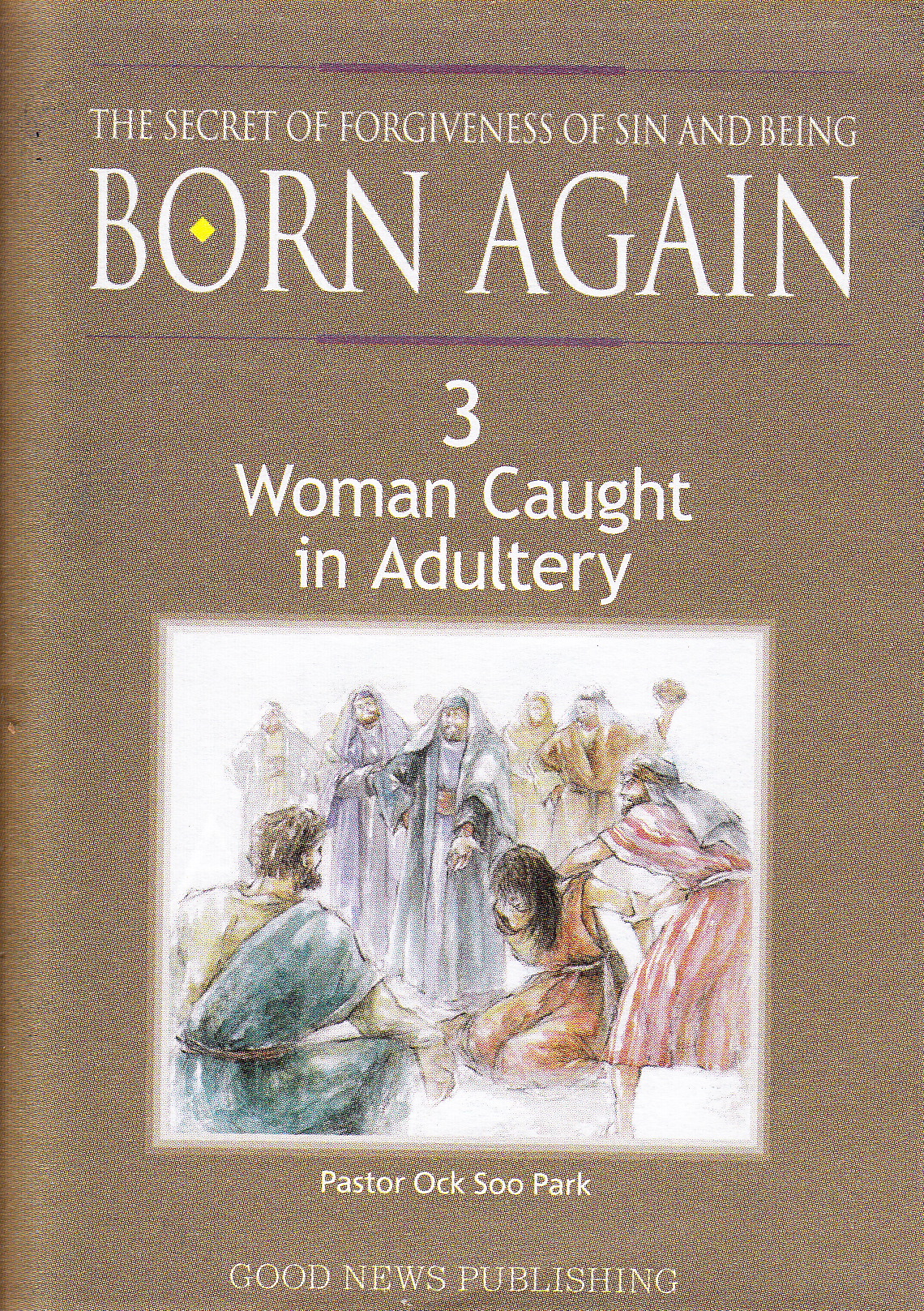
CrusadeAn invitation to join a crusade is a dicey proposition these days.  Perhaps Pastor Ock Soo Park is not aware of the burdensome theological freight the word carries these days.  The Bible Crusade is, nevertheless, coming up on April Fool’s Day, and, I’m glad to see, admission is free.  The tract I clutch in my gloved hand is more like a pamphlet and it is number 3 in a series, “Woman Caught in Adultery,” causing me to wonder what numbers 1 and 2 might have been.  Still, it’s Good News Publishing, so I suppose it can’t be bad, whatever the topic.  The young lady on Seventh Avenue seem surprised when I accepted the booklet she held out with a simple “Bible Crusade?” invocation.  I often accept what the shills hand out; a more thankless job is difficult to imagine.
 
The concept of biblical crusades has a strong resonance with my youth.  Although I attended the occasional revival at our local church, I never actually went to a crusade.  I did watch Billy Graham, however, on television.  I would sit glued to the screen, hanging on every word of the sermon, feeling once again the flush of my sin and the urgent necessity of repentance, then and there.  I was terrified of never giving enough of my life to the Gospel, of backsliding, of hypocrisy, of Hell itself.  As a youth I had no idea of Graham’s political agenda or of the close friendship he had with Richard Nixon.  For me, it was purely a matter of what I had witnessed on the screen as Beverly Shea lead the repetitive chorus of “Just As I Am” that reduced me to tears every time.  When we were asked to list an important person for history class in high school, I felt compelled to write Billy Graham on my slip of paper, and I wondered why people laughed when no one in the room could manage to guess who it was after 20 hints.  As guileless as a dove, but not as wise as a serpent. 

Crusades are all about conquering territory.  Sometimes, historically, that territory is physical and the violence is palpable.  It is charging fully ahead with the conviction that there is no way you could possibly be wrong, even in the face of others from foreign faith traditions willing to fight to the death over the issue.  It is invasion.  Conquest.  In the name of the prince of peace.  Evangelistic crusades are not much different.  The battlefield may be metaphorical, but it is not less real for all that.  The human psyche is not infrequently victimized in the worldview of utter conviction.  Often the driving force is the same as the Templar on his steed—control of the infidel.  With control, as the Templars soon learned, there is great wealth to be had.  As a poor boy in a run-down house, I never questioned that Billy Graham or any other evangelist deserved the money that accompanied such solemn longing of heartsick souls.  It was self-evident.  Now, standing among the crowds on Seventh Avenue, beneath a huge sculpture of a needle sewing on a gigantic button, I have to wonder about the economics of scale.  Reality is seldom what it seems.


The Edge

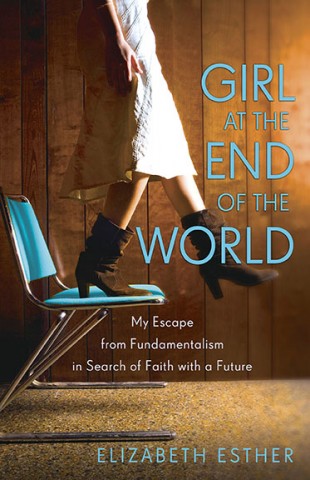
GirlattheEndoftheWorldElizabeth Esther’s Girl at the End of the World is finally out. I can’t remember the last time I read a book within two weeks of its release date. Of course, I have a soft spot for the religious memoirs of women, particularly when they manage to make their escape (I guess otherwise they wouldn’t be writing their experiences) from an unforgiving faith. Reading of the trials they have to go through to get there is far from enjoyable. But necessary. Often Bible-wielding males make the rules with a macho God behind them, and girls are abused in various ways so that the wrathful guy upstairs will be, well, a little less wrathful. I’ve read many of these accounts, and I worry deeply about the state of religion’s soul. Elizabeth Esther was raised in what she calls a cult, begun by her grandfather. This brand of fundamentalist Christianity taught the virtues of daily spankings of children, often beginning at about six months of age. The descriptions of how they used candy to tempt their children so that they could spank them to break their wills made me cringe. Evil wears many disguises, but none so effective as piety.

Religions are able to get away with quite a lot in a land of religious liberty. Elizabeth Esther proves that she’s made of some pretty stern stuff to have come through all of this, although she admits to still having panic attacks all these years later. She calls it Religious PTSD. She is right to do so. Although I grew up in a fundamentalism that scarred me for life, it wasn’t with the physical beatings that members of her grandfather’s religion doled out. When Elizabeth Esther describes the tendencies she has, the hyper-awareness of threat, I know that I am nevertheless still reacting the same way in my own life. After my fundie upbringing, I had the misfortune to be employed by a different kind of literalist religious institution. Faculty whispered about the new malady coming out of the Gulf when we started to develop nervous ticks and odd quirks after being kept under constant threat. When I contact many of my former colleagues I can still tell we were badly damaged there. Some religions, as Nietzsche long ago recognized, are life-denying to the point where a soul death would be more merciful. And yet we carry on.

Elizabeth Esther ends her book with a reluctant escape to Catholicism. She notes that even it doesn’t exist without its problems. We are, however, religiously evolved beings. It is in our constitution to seek the solace of communal worship, or at least a kind of spiritual solidarity. And there are those who will take advantage of people who simply seek their sense of self-worth from authority figures who claim to have it all worked out. Disproportionately those who are made to suffer are women. The Bible, although it cannot be blamed on the abuses heaped upon it in the name of the Judeo-Christian tradition, conveniently emerged from a patriarchal society. In the hands of some men it becomes an implement of torture. And many are left far poorer in life for having encountered this particular form of demon disguised as an angel.


42 Shots

Many of us were raised with the figure of a divine father who is ready to whip off the belt for any infraction we may make, intended or not. On a more human scale, our criminal justice system locks people in prison often on the basis of race rather than purely objective considerations. The infographic below demonstrates this clearly. African-Americans are disproportionately represented in the prison population in a society that is still reluctant to offer true justice to all citizens. When these numbers are wrenched from statistics and brought down to personal levels, the results are distressing indeed. I recently read of the case of a promising youth who was in the wrong place at the wrong time. His lawyer, a prominent African-American, pled with the judge for leniency for this young man who had great potential. Time in jail, even in one for youth, would probably scuttle this boy’s hopes for a productive future. Being an American, though, I had no hope that this might end well for the boy. Still I read on as the judge sentenced him to jail.

None of us likes to be reduced to statistics. At the same time, some social-justice disparities are easily overlooked until they are placed in such stark terms. Xenophobia is a normal human reaction. In fact, it is displayed in apes and other social animals as well as in people. Its biological function seems to be group cohesion and safety. We’ve evolved beyond that, however. The great promise of the New World was freedom. Unless you were imported as a slave. The Bible, being a document of its time, lent its voice to the approval of keeping slaves and those who wanted to justify their horrid treatment of fellow humans in the name of God relied heavily on the Good Book. We still put considerable roadblocks in the way of African-Americans and others of minority status, believing that we are somehow justified in the myth of Caucasian superiority. Humans are humans. Society benefits from the gifts that different traditions bring to the cultural table. And yet, we continue to lock up those who look different.

Justice shouldn’t be a distant dream. We know that for those who do commit crimes reformation is a possibility. Critics cite the expense, but I have to wonder whose bank account is being audited. As a society as a whole we could all benefit from some reform. The profession from which I have been repeatedly blocked is one of the few that has taken demographic configuration seriously. Some must pay the cost for others to be given an opportunity. Of course, opportunity itself is a rare commodity these days of hoarding and one-percenters. Perhaps those who build towers and remove themselves from the rest of society have put themselves in a kind of luxurious arrest. Until they are forced to share, however, those of us on the street level have to do our best to help each other out. Take a look at this infographic from arrestrecords.com and see if I’m right.


Holy Cows

Back in the days when a book was a luxury item, great care was taken in its production and protection. Having your investment lying around with flimsy paper covers that would begin to grow blunt and roll back even before you finished reading would have seemed irresponsible. To shield the vital contents from the weather and other dangers, leather was used as a kind of skin—come to think of it, it really is skin—and safely the words were housed. Many of these volumes were, naturally, Bibles. Leather and the good book became synonymous for some—even with onionskin paper a book’s not a Bible with just a printed case hardcover. Paperback? How can you take that seriously? To make a Bible authoritative, it seems, cattle must be harvested. After all, sacrifice is at the center of it all.

Being a long-time vegetarian, this often gives me pause. My belt and watch-band are made of canvas, and I try my best to avoid leather shoes (although this is often difficult). I’m pretty sure that my leather Bibles are faux skin. Even though my family respected the Bible to the point of bibliolatry at times, we really couldn’t afford genuine cowhide. Now I take a more circumspect look at the cost of appearances. We’ve outlived the need for animal-bound Bibles. It has become more of an expectation than a necessity. An affectation. There is, however, still a big business in leather Bibles, and Italian leather seems the best fit for a Semitic savior.

What troubles me the most is the idea that animals—deemed not conscious by the very religion that allows their slaughter—are made to pay the cost for human foibles. The whole sacrificial system is built around a radical inequality. Humans domesticated cattle for their own exploitation, and their skins, when no longer needed by their hosts, came to clothe holy books of their masters. In any shade or hue of the rainbow. We can make it less grim by dying it a cheerful color and declaring its progenitor had no thoughts in its vacuous head. It lived a life of servitude and when it paid the ultimate price, it received the martyr’s gift of becoming part of the Bible. The end result? We should feel less qualms about our peccadillos and atrocities. We’ve wired their brains to trust us—we are not the predators to fear. Try not to take it personally. It’s just what our religion demands of us, for we too are a domesticated herd.

From the herd of purple cows...

From the herd of purple cows…


Flatland

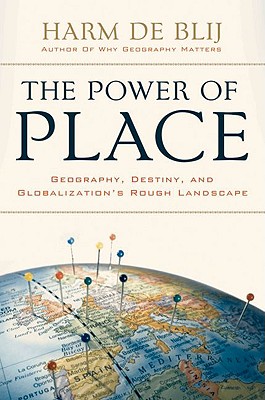
ThePowerOfPlaceThe world is flat—not.  Harm de Blij’s The Power of Place: Geography, Destiny, and Globalization’s Rough Landscape is, despite the author’s hope of improvement, a sobering read.  Geography is one of those subjects that studies show Americans consistently failing.  But de Blij begins and ends with one of my favorite themes: that place defines a person.  One of the realities with which all humans must reckon is that we have no control over where we’re born.  As de Blij demonstrates, not fatalistically, that place will determine to a great extent what life has to offer us.  Chances are that most of you reading this were born in what social geographers call “the core.”  The core is that affluent part of the globe that encompasses successful states with relatively good prospects for their citizens.  It is, numerically, the smaller part of the world’s population and it is the base of claims for the world’s flatness—that is, its apparent sameness across borders.  De Blij, who has crossed one or two of those borders, knows that there is a roughness inherent in this world, and those outside the core pay the highest price.

Among the many factors de Blij examines one—religion as an accident of birth—comes up repeatedly.  Religions quickly complicate efforts at fairness and equal distribution with various theologies of why the poor are poor and that we can justify leaving them that way.  Or worse, a religion may decide, since it alone is right, that those believing otherwise ought to be destroyed.  Internecine as well as international rancor is a commonplace of the news as religions compete for the alpha male spot on the human (actually man-made, gender distinction intended) hierarchy.  The religion you’re born into, for most of the world’s population, is the correct one.  Missionaries, by definition, disagree.  Theirs is the true correct religion and even if it doesn’t improve the lot in life of the poverty-stricken, it will at least make for a better afterlife, cold comfort though it may be.

One issue that de Blij touches upon only minimally is the sacredness of place.  Of course, that is often the ground for conflict, but in smaller ways we often feel an attachment to the place we enter the world.  Beyond visiting the relatives still near my hometown, sometimes I just want to go there and linger, pondering what this world intended for such as me.  The distress I feel when I see that the hospital where I was born has been closed down, the houses in which I grew up razed, and even my first school remodeled, touches something deep and undefinable.  It is a small part of who I am that has been erased, the silencing of the clock’s ticking.  Those rough hills were my home for the two most formative decades of my time on earth and I belong to them.  I owe them who I am.  This is the mystery of sacred geography.  The refinery fires, the childhood friendships, the Christian bookstore that propelled me in a direction I may alter but not eradicate.  It’s not rational, I know.  But like many animals, I feel the draw, and de Blij points out the many benefits and frightening realities that attend it.


Frozen Few

It’s that time of year, neither winter nor spring, when ambivalence is in the air. Gray skies with just the first damp aromas of a change in the season, followed by another snow storm and icy winds custom-made in the arctic. So we turn to movies. Frozen is continuing to make headlines and break records. And although the critics voice strong opinions, ambivalence about a powerful message still rocks a society that can’t decide if a woman director having success is an anomaly or an idea far past its time. Stories about the animated feature crop up on the internet on a daily basis, five months after its theatrical release. Some claim it is the most Christian movie in years while others claim it has homosexual marriage at its core. The queen doesn’t need a man and the world’s most conservative, progressive society is in a muddle.

Perhaps I’m just showing my age, but I noticed what I thought was an older child in the sauna when Anna first meets Kristoff. The movie didn’t give me any clues as to his being a gay partner to the shopkeeper, although it’s none of my business if he is. Disney movies have had subtle clues to a kind of radical equality that I’ve noticed over the years, from Edgar’s license plate that reads RU-1 in The Aristocats to two masculine creatures sharing a pad in Monsters Inc. I even remember some people staring suspiciously at Ernie and Bert while the insanely ambiguous Teletubbies were faulted for carrying purses and dressing in primary colors. (Even Judas Iscariot kept a purse, according to the Bible.) A good, empowering story is suspect if we think something more is going on when the lights go out in cartoon-land. Our culture can seem to think of little else beyond mores and how to enforce them.

Globalization has repeatedly demonstrated that there are many different ways of being in the world. And yet, when worlds collide the more conservative culture inevitably makes claims on its more “progressive” neighbor. We see this happening as the church in Africa, now larger than the church in America, drives social policy through denominations that somehow feel guilt at promoting equality. Perhaps proselytization is, at the core, of our fear of difference. What if the other guy is right and we are wrong? Read that back into all our misguided ancestors and we feel chilled indeed. How far do we really trust objective truth? My guess is that ice ages have come and gone that have forged the truth of the moment. Only when the cold faces us do we really admit just how slippery truth might be.

The beauty of ice.

The beauty of ice.


Any Witch Way

Witches&WitchHuntsIt’s easy to feel smug over the past. At every moment of human civilization we deem ourselves higher than those who came before. There’s no doubt that the eradication of the thought-processes that led to the witch hunts of past centuries seems decidedly positive for all parties involved. Wolfgang Behringer’s Witches and Witch-Hunts, however, is a surprising book. I’ve read a fair number of studies of those dark ages when people were cruelly tortured and murdered in horrendous ways because they were deemed to be in league with Satan. As usual in such books, Behringer begins with that history. What makes his study surprising, however, is that he doesn’t stop in the eighteenth century when, in what we’re usually told, the witch trials ended. Behringer points out that witch hunts are still happening, and that the rates of those killed perhaps rival those, per capita, of the numbers during the Middle Ages. How can this be? In an era of global awareness, we sometimes forget that the focus isn’t always on Europe or America.

In many parts of the world, witches are still part of local belief systems. Not all of these are women, by the way. Many cultures favor the male witch. What these cultures do have in common, however, is their natural fear of black magic being suppressed by colonialism. More “civilized” westerners came and enacted laws which, to the minds of the locals, protected the witches! Local tradition of eradicating those who practice black magic was considered righteous, and now the government forbids it? That seems strange, especially when many of the colonizing forces were also interested in Christianizing as well. Missionaries wanted to affirm belief in the supernatural, and, ironically, often became the vehicles that allowed beliefs in witchcraft to continue. As Behringer points out, some populations converted to Christianity precisely because it allowed the continued belief in physical evil—therefore witches—and the eradication thereof.

This creates a vexing problem. When cultures meet they inevitably attempt to assert their values. When the technologically superior force their ways of life on those behind on that front, a kind of pressure of misunderstanding builds. Instead of bringing witches to trial, they lynch them instead. It seems we may have underestimated the pull that belief in witches has on people. Traditional societies uninfluenced by the developments in Europe also came up with the idea of witchcraft independently. Witches, it seems, stand for the classic issue of theodicy—explaining why things go wrong in a world that should be ordered by deities. Coincidence is always cold comfort in explaining loss. Even the rule of law breaks down. At the same time, how can it be right to allow the murdering of those suspected of witchery even in the enlightened twenty-first century? This fear is one of our most abiding demons, and the solution remains out of reach, unless, of course, we allow ourselves to resort to magic.


Witch Way

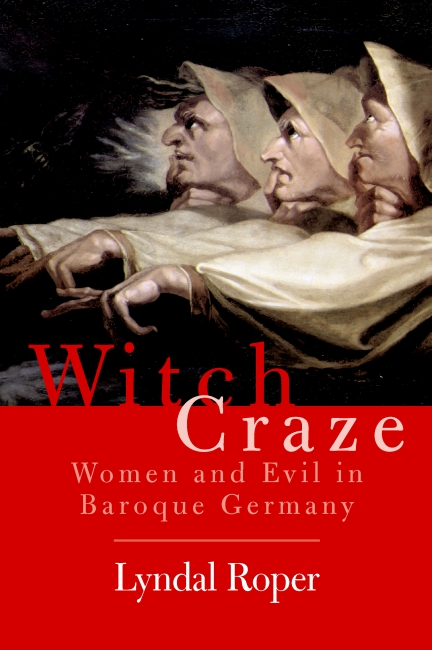
WitchCraze2Women generally bear the brunt of religious intolerance. This is an evil that has proven tenacious and insidious, and which has played out in history far too many times. Lyndal Roper’s Witch Craze: Terror and Fantasy in Baroque Germany brought this home to me once again. Books on witch hunts are deeply disturbing, but we need to engage with the brutality of the past if we want to prevent its reappearance. Roper points out that although many nations persecuted “witches” in the Middle Ages, even into the early modern period, Germany by far had the highest numbers. There were probably many reasons—no simplistic answer meets all the clues. One is clearly related to politics. Germany lacked the central cohesion of other European nations in this period. Feuding princedoms from a fragmented Holy Roman Empire had no strong central authority. When it is everyone for themselves, scapegoats are never far off. Roper doesn’t leave it at that. She points out that the central characteristic of the witch is the intent to harm Christians. Indeed, the witch is a monster born of religion, and which murdered thousands of women in the name of Christianity.

Compounding this unrealistic fear that Christians have always seem to have had, was the emerging Reformation. Distrust erupted in Germany. Was one’s neighbor a Lutheran or a Catholic? In either case, the other was heretical, from someone’s point of view. Distrust ran at premium prices. And women picked up the bill. Yes, there were male witches, most of them associated with women who’d been accused, as Roper points out. Even as the Enlightenment was burgeoning, renewed hunts for witches broke out, leaving innocent women dead in a land that valued fertility perhaps above all else. Women’s bodies, as Roper notes, were to focus of suspicion and fear on the part of a male power structure that dealt with its phobias by the use of violence. Even the Enlightenment couldn’t wipe this slate clean.

Today in the western world, secular thought has replaced superstition for many people. Women are not longer accused of witchcraft. Besides, witchcraft is a chic new religion in many places. But the longed-for equality is still not here. In many parts of the world religious violence is still directed at females by male power structures that should’ve died out with the fading of medieval Teutonic anxieties. Those who perpetrate such violence hide behind scriptures—even the Hebrew Bible acknowledges the reality of witches. Religion creates its own cadre of monsters, and those with stout conviction look for women to blame. The flames of the pyres did not lead to a universal enlightenment and the Tea Party tells us Christianity is still endangered in a world where it may spread largely unhindered. One truth, however, remains. The truly endangered are women, and men who don’t fight against the real monsters do not deserve to be called defenders of the faith.


Dead Certain

One look frightens me above all others. I have spent probably too many hours watching horror movies late at night, and I’ve seen actors—talented and otherwise—projecting the look of fear. It is a temporary thrill, soon banished by a more mundane reality. The look that frightens me above all others, however, is that of certainty. Well I remember it planted, etched, chiseled on the face of a man who believed without question that his duty was to deprive me of a career. I have seen it on faces devoid of any human emotion, but with a surfeit of self-righteousness. I was reminded of this when my wife pointed me to an article in the New York Times blog entitled “The Dangers of Certainty: A Lesson from Auschwitz,” by Simon Critchley. In this piece Critchley recounts watching Jacob Bronowski’s “The Ascent of Man” as a child. He focuses on the episode wherein Bronowski describes the danger of certainty, which often eclipses wonder when science alone is understood to be the basis of knowledge. And we have gone forty years further down that road.

Bronowski, in the clip provided by Critchley, describes how unwavering certainty led to the holocaust. It is a moving and poignant scene; indeed, the only one I remember from the episode as I watched it along with my classmates in the required humanities module at Grove City College. Bronowski, who had relatives murdered at Auschwitz, walks into the pond where their ashes were flushed, a man in a suit and good shoes, oblivious to the rational, and reaches down to touch whatever remains of the millions who died there. The scene has stayed in my head for over thirty years.

As an undergraduate I was certain. I knew the unflinching truths taught by my rock-solid faith. After four years as a religion major I had become more circumspect. Seminary found me still pretty well convinced, although much more temperately so. The doctorate, which required more intensive work than all the previous years combined, convinced me of how little I knew. I went to Nashotah House full of questions, and my goal was to bring my students, many of them very certain, to that human point of unknowing. We need to live with a question mark before we can be truly human. Curiosity is one of the more endearing traits people possess. Certainty disallows curiosity—questioning becomes the devil’s tool and honesty is the farthest thing from God that one might attain. In this era of easy certainty I often see a look on the faces of those in power that frightens me. I need to be reminded, along with Bronowski, that when shoes become more of a concern than human beings, we’ve already gone too far.

800px-Nazi_Holocaust_by_bullets_-_Jewish_mass_grave_near_Zolochiv,_west_Ukraine


Weather or Not

The internet’s nothing if not self-referential. A post by Fred Clark over on Patheos, pointed out to me by my brother-in-law, has received 235 comments (at the time of this writing) for a topic I’ve addressed repeatedly, to no avail. I know my place. In any case, the topic which brought such furor was that severe weather is caused by divine displeasure, something I’ve addressed a time or two. In fact, I’ve written a book about it. Never mind, some of us revel in obscurity. Fred is writing about the remarks of former Tory David Silvester that the UK has been suffering unusually severe weather because of homosexual marriage. That’s really old news to those of us over here in the colonies; Pat Robertson told us as much after Katrina (although he didn’t limit the sins to homosexuality). Sex tends to stir up storms of its own, regardless of divine voyeurism, while we ignore the obvious culprit—global warming. (Culprit of unusually severe weather, not of sex.)

Global warming, as a recent conversation with a very smart undergraduate confirmed, is a poor name choice. Those of us on the northeastern coastal corridor have been shivering a lot this winter, and snow has remained on the sidewalks of Manhattan for more than a single day at a time. You call this global warming? Yes. The science behind climatology tells us that warming the overall temperatures of the globe will result in erratic weather, including uncharacteristically cold and freezing in some locations, dampness in others, while yet others experience, yes, warming. We know it is real, we know it is happening. We just don’t know what to call it. Some choose to call it God’s wrath. Others choose to name it more properly human shortsightedness. After we hunted the last mammoth down, we decided to start building bigger fires to warm the ice age up a bit. Those fires have been burning ever since.

IMG_3659

My book on the weather, by the way, suggests that divine control of the elements is an essential part of the biblical mindset. To ancient folk this was a no-brainer. God is in (his) heaven and messing with the HVAC system is one of the ways (he) passes the time. Down here we may shiver, become parched, or get washed away. It’s all a matter of the divine thermostat. As Fred Clark points out, the divine temperament sets the temperature based on human activity. Sin leads to unusual weather. Unwittingly, however, David Silvester may have gotten it right. There is a sin involved, and that sin is called global warming. No deity need be involved. We have shown that humans are quite capable of messing with the thermostat on our own. And the day I get 235 comments on anything it will be a very cold day in a place famed for its heat.


In Saecula Saeculorum

SecularBible“The Hebrew Bible is a misreading waiting to happen.” Jacques Berlinerblau’s The Secular Bible is a book containing much wisdom. My only real concern is that by having published it with a university press Berlinerblau may have inadvertently ensured that it would be read only by biblical scholars. Although yours truly was once such a credentialed scholar, I read The Secular Bible with its intriguing subtitle, Why Nonbelievers Must Take Religion Seriously, looming in my mind like a great raptor. This is an important book. With so very much of our lives heavily influenced by the Bible, eloquently argued by Berlinerblau, we have secularists who don’t know the Bible fighting the impossible battle to subvert it. The rationalizing, leveling influence, for the past two centuries, has come from the much castigated and discarded biblical scholar. Can I get an “Amen”?

Berlinerblau demonstrates unequivocally that we need Bible scholars and Qur’an scholars who know how to speak to their own traditions. Instead we have secularists who belittle and then wonder why the religious strike out. The pattern has repeated itself so many times that it defies reason that intelligent people would delude themselves that religion is a passing fancy. The Secular Bible argues what I’ve said time and again: if we want to avoid the dangers religion can bring, we must spend the resources to understand it. Instead we close departments and force those who know the field credibly well into unemployment. And we wonder why there’s a reaction.

“Self-critical religious intellectuals have never been much appreciated.” Instead we put the extremists on television so we can laugh at them or gape at their ability to do the unthinkable in the name of religion. Ironically, there are thousands of trained experts in the field, many of them languishing in un- or under-employment while towers crumble and mobs burst into violence. I do wonder what future generations will think of us. We have the resources handy, indeed, many of them willing to serve for a fraction of the cost of a business professor or basketball coach, but we choose to ignore them. As Berlinerblau states emphatically, we in the western world have the Bible so deeply ingrained that we can no longer even exegete all the ways in which it plays out in our society. If such influences were at work in a human body, we’d pay a doctor well to understand. Instead, we let the most foundational text in our society be used for duplicitous purposes while the simple reading of a book like The Secular Bible could save us all an eon of grief.


The Devil Made

Some things you just don’t mess with. Just in case. For a variety of reasons, not least of which is lack of biblical support, many Christians no longer believe in Satan, or “the Devil.” As I written before, the Hebrew Bible has no such diabolical character and he seems to have been devised from an old Zoroastrian dualistic belief system when he finally does appear. In other words, Satan is not among the core beliefs of the Judeo-Christian tradition. Nevertheless, according to an Associated Press story the Satanic Temple is petitioning to have a statue of Satan placed on the capitol grounds in Oklahoma City. The action was prompted by the placing of a Ten Commandments monument in this public space, and, invoking the freedom of religion clause, the Satanic Temple has decided to play tit for tat. Either religion is free, or it’s not.

Backer_Judgment_(detail)Although the Satanic Temple claims to be sincere in its beliefs, the group’s website indicates that it understands religious belief in a metaphorical way, and that it wishes to parse superstition from religion. This envisions revising Satan as an “icon for the selfless revolt against tyranny,” according to the AP story. The commissioned monument includes a Baphomet-style Satan (goat head and beard, wings and pentagram—you get the picture), that features—sure to raise the ire of Oklahomo sapiens—children gathered around the dark lord. It will double as a seat where individuals may sit on Satan’s lap, although I’m not sure what they might be asking for. Various representatives of the Sooner State say they’re all for religious freedom, but Satan just has no place in the conservative breadbasket of the nation.

Provocation occurs on both sides in this trial of wills. Justice can be realized without Moses’ top ten on every courthouse lawn. The Code of Hammurabi demonstrates that. People are capable of enacting justice without God, or the Devil, telling them to do it. The triumphalism of religion is the heart of the issue. In a world daily aware of those outside the neighborhood, finding that other religions exist and thrive is an affront to the “one true faith,” whatever it may be. It may be that Jews, Christians, and Muslims have no problems with the ten commandments. Other religions might. Leading with having “no other gods before me” starts the conversation off on an awkward tone. The solution may be as simple as amending the commandments to add just one more. If we can see our way to doing that I have one that I’d like to propose: “thou shalt not let thy religion cause childish behavior.”


Blessed Art Thou?

blessed“Con man” derives from the disparaging use of the term “confidence man,” as applied to those whose promised deliverables never appear, if they ever existed at all. History is filled with roguish con men who populate movies and popular biographies. Among their ranks have been hawkers of spiritual wares, but the institutionalization of religious profiteering is fairly new. Even growing up in a Fundamentalist setting, I don’t recall ever hearing of the “prosperity gospel.” Although I can’t in good conscience accept the distorted theology of the literalists, at least I can say that they are mostly an honest bunch with a high threshold for supernatural interference in daily life, if sometimes rationally challenged. The prosperity gospel is far more insidious.

Kate Bowler’s Blessed: A History of the American Prosperity Gospel was my first attempt to deal with the phenomenon academically. Bowler traces the movement to strains that appeared earlier than I might have guessed. Nevertheless, its fruit is rotted on the tree of greed, and it has nothing to do with historical spiritual seeking. One of the few things over which the Bible doesn’t equivocate is the corrupting influence of wealth. The needle has been jammed into the eye of the gospel in this confidence scheme. “Verily I say unto you, That a rich man shall hardly enter into the kingdom of heaven.” How did this become transformed into “bring your family jewels if you don’t have cash; our accountants can liquidate your heritage for the extreme comfort and obscenely expensive lifestyle of your ‘pastor’”? In a church of 10,000 how much does your pastor care for you? I would never join a church where the shepherd did not know my name.

Bowler does an admirable job maintaining academic neutrality in Blessed. She explores the central concepts, copied from the very entrepreneurial ledger of the root of all evil. Nevertheless the prosperity gospel remains terribly hollow, shallow, and callow. The mere suggestion that wealth equates blessing in a world where millions suffer for lack of basic needs is unconscionable. One could even be justified in saying “wicked.” What kind of god takes food from the mouth of a hungry child to give it to those who have more than enough? I grew up knowing some want. I also grew up knowing that my grandmother had religiously supported a millionaire who said, “expect a miracle” week after week and then claimed the Lord would take him if he didn’t raise 8 million dollars in the first three months of 1987. Meanwhile the Evangelist still enjoyed great wealth for two more decades when he heeded the call home. All the while those far more worthy perished for lack of bread and clean water. This is neither prosperity nor gospel. Of this I’m utterly confident.


Religious Education

The elephant in the room is exposed in a New York Times op-ed piece last week. “Indoctrinating Religious Warriors,” by Charles M. Blow, puts a finger squarely on the pulse of the ailing science stance of American religious believers. Noting that the Republican party has made no secret of its attempt to capture conservative votes by touting the religious intolerance of the theological right, Blow points out that more Republicans now believe that humans were created separately from animals than accept the scientific fact of evolution. And not just human origins suffer—our future will as well. The same mentality attends denial of global warming and advocating against fair treatment of committed, loving couples (depending solely on the visible sexual equipment). It is all of a piece. Blow points out that white, evangelical Protestants make up only 18 percent of the US population, but 43 percent of the Republicans who are classified as staunchly conservative. This imbalance leads to one of the world’s wealthiest nations being sidetracked from serious global issues while we continue to debate whether the Bible in inerrant or not.

I would add a further note of concern to what Blow says: higher education refuses to take religion seriously. As a life-long sideliner who has never been permitted fully into the halls of academe, I have watched as business schools have grown from the rubble of religion departments that have at best stagnated—when they have not been actively dismantled. In the worst case scenarios, universities have closed such departments down. With the exception of evangelical institutions. Very large departments of confessionally indoctrinated religionists thrive across the country. I am not the only religion scholar to have been kicked out of the academy for an intellectually honest approach. The wider society, with eyes wide shut, has decided that religion is a passing fancy while statistics indicate the exact opposite. We as a society will continue to be manipulated by religions as long as we continue to pretend they don’t pose a real concern.

Religion serves a purpose.

Religion serves a purpose.

Nor does castigating all religion, as Richard Dawkins, Sam Harris, and the late Christopher Hitchens do/did, solve any problems. Science itself appears to indicate that religion is part of the human condition, as surely a product of evolution as our opposable thumbs. Basic psychology would dictate that such direct challenges to religion will only result in retaliation. In fact, this is something that I recall learning from kindergarten. Until our society learns to go back to school and study the four R’s—yes, religion has to be there among the basics—we will continue to suffer from those who have vested interest in using religion for their own ends while those who could educate us on the subject continue to suffer the cut jobs of those who might be part of the solution. Charles Blow wonders if he is being too cynical. I suggest that he’s not nearly cynical enough.