Lead Serve

For never having been a Catholic, my life has been strangely tied to the Roman Catholic Church. Like many in my diminishing profession, I was raised in a religious household—in my case non-denominational Protestantism with a strong Fundamentalist streak—and have wandered a bit from my starting point. When my family moved to a small town with just two churches—United Methodist and Roman Catholic—we had no choice which to join. I learned the Methodists were just disgruntled Anglicans, and logic dictated that I would eventually join the Episcopal Church and gain a deep appreciation of Catholicism. My first professional job was teaching at an “Anglo-Catholic” Episcopal Seminary. While there I was interviewed for positions at Roman Catholic schools, and not infrequently brought to campus: the University of St. Thomas in the Twin Cities, Assumption College in Worcester, Massachusetts, Sacred Heart School of Theology just down the road in Hales Corners, Wisconsin. Most of the time I was in the list of finalists when the position would go to a Roman Catholic, “no hard feelings, right?” Long ago the Episcopal Church, ironically, got out of the higher education market.

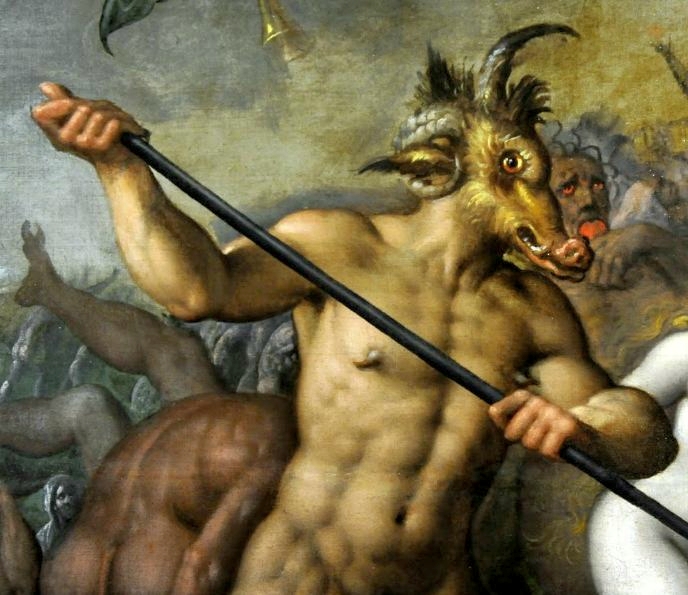
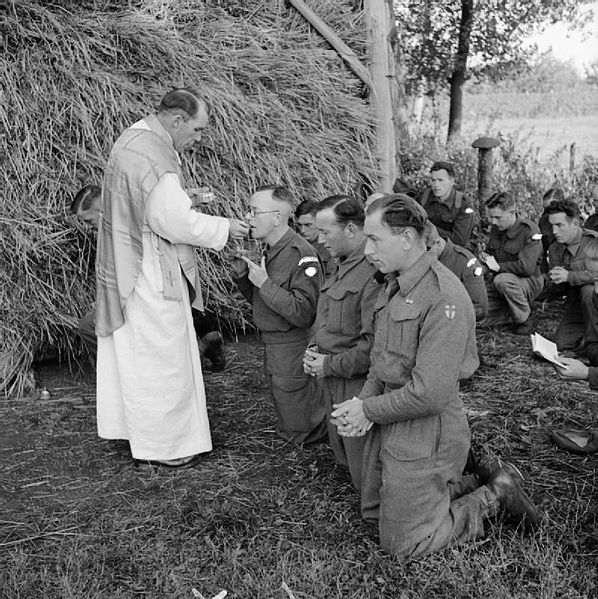
It is with this background that I keep an eye on the Roman Catholic Church. Many friends and colleagues are Catholic and we have far more in common than I have with my Fundamentalist forebears. I frequently find myself in wonder at Pope Francis. Many church leaders have made the news over the past several decades, but few of them for such good. In an article on NBC over the weekend, the Pope called for seminary reform, noting that always toeing the line will turn priests into “little monsters.” I taught at Nashotah House for fourteen years, and I know exactly what he means. I encountered students who could quote Paul about being freed from the law and in the next breath lay down ecclesiastical law with enough force to behead a heathen. The Episcopal Church, which is small but disproportionately powerful, should take the words of the pontiff to heart.

A cold day in...

A cold day in…

Pope Francis noted that seminaries need to keep up with the times. Indeed, the laity of most religious traditions have little trouble accommodating to culture while their faith remains mired in the Middle Ages. In a world robbed of essences and meanings, it is difficult to teach future clergy that the spirit of a faith can be honored in outwardly different ways. The idea that we can just hold on ’til Jesus gets back should’ve been questioned once Islam came to be a major force a few centuries after Christianity settled in. Since that time Christianity has fractured into thousands of sects united by little more than essences. Instead of settling in for the long haul as an empire, the Pope is suggesting that the church settle in as servants. That’s a radical idea. And it is one, if I read my Bible aright, that its founder would be pleased to find in force should he ever decide to return.


New Century

Time is the ultimate commodity. New Year’s Day is one of the ten standard holidays to the business world, a grudging nod in the direction that those who are tasked with making money for others might take a little break. Yesterday as I arrived in Times Square at 7 a.m., with a handful of others on the bus, vendors were already setting up their card tables on street corners with cheap, glitzy baubles to celebrate the drop of a ball as 2013 slowly wound out. Like many others, I marched to a job where little was happening. Emails elicited no response. Entire buildings in parts of Manhattan didn’t bother with anything but emergency lights since who really works on New Year’s Eve? Some of us must. As the long hours slowly passed at my cubicle, my mind wandered back over the past few weeks, months, year, decade, quarter and half centuries. New Year’s Day is one of the oldest religious holidays, if not the original one. But how far have we come?

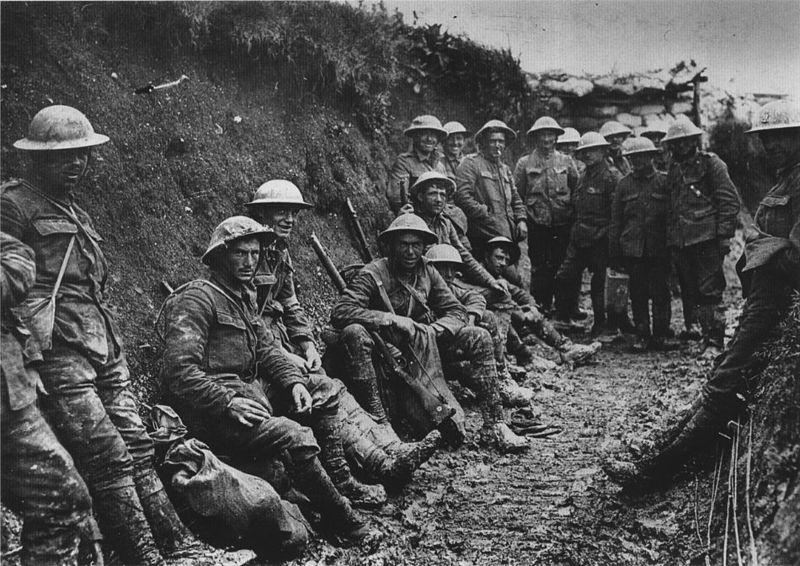
800px-Royal_Irish_Rifles_ration_party_Somme_July_1916

Only a century ago the world was poised for the Great War as 1914 dawned. Trenches were dug in minds before they ever appeared in the mud of the Somme. 1918 brought a tenuous peace that would lead toward inevitable renewal of hostilities after a decade was allowed for Gatsby and the jazz age. World War Two ended with the first threats of mutual annihilation, and just five years later the Korean War began. The police action ended in time to offer another opportunity at war in Vietnam around three years later. I grew up aware of the Vietnam War, but in a religion that taught me it was just preparation for the Really Great War yet to come. We gave ourselves fifteen years before starting a war in the volatile Persian Gulf, a conflict with a sibling Second Gulf War with its premature mission accomplished. Technically it’s over, but for how long? Drones fly over our heads even now. Books on World War One line bookshop shelves (in as far as there are any bookstores anymore). Sometimes I hope there are no prophets.

New year was a ritual marking that sacred resetting of time, and eventually it took on a significance all its own. A spiritual reboot, as it were. A time to move on from past troubles. As I walked through Times Square yesterday evening, my only thoughts were for the bus that would take me home, away from the massive celebration. I had a book to read against the long journey and already by five o’clock the crowds had begun to coalesce. So many people. So many hopes and dreams. The ball stood poised over Midtown, ready to fall, and a new kind of symbolism became apparent. We begin the new year with a downward trend. The tangled webs we’ve been weaving for decades have not been reset. Politics and power-brokers will continue to build on what they started long ago. Some of us just want to get home.


Vive la différence

Scientists, those to whom society has passed the responsibility for knowing, have an increasingly difficult time defining humans as opposed to other animals. Still, we know a person when we see one. That’s when the crucial ethical issues arise: how should we treat others? Two unrelated articles about human rights recently came across my virtual desk: one about Disney’s Beauty and the Beast and another about how religious rights sometimes/often hamper human rights. There’s so much to sort out here, and I’m not even one of those that society deems fit to do such sorting. Well, I am human, so perhaps I can give it a shot anyway. In an article in Friday’s The Guardian, Deborah Orr points out that for progress in human rights to move forward, rights for the freedom of religion have to take second place. Clearly she’s onto something because, historically, one of the greatest enemies of human rights has been religion. Labeling suffering as virtue, it’s relatively simple for religions to suggest that the lot of the oppressed is to bear suffering so that the faith can continue untainted. After all, those religions with an afterlife, in any case, declare that it all gets sorted in the hereafter.

Orr makes a very good point: we are all human, but we may not all share religion. Isn’t the need of the whole greater than even the need of the many? Utilitarianism would declare it so. So would common sense. (Science warns us not to trust common sense, however.) Some of the harshest violators of human rights continue to be religious traditions. Others are heathens, pagans, infidels, heretics, beasts—take your choice—and therefore displeasing to some divine being, generally male and either hetero- or asexual. Oh, and he’s from the Middle East, ethnically. Over on PhotoBlip.com, a piece about Beauty and the Beast makes the point that Gaston, the strapping, über-masculine antagonist of Belle’s provincial town, is frightening because the people so easily follow him. He whips the crowd into a frenzy because, as a thoughtless but handsome (and ripped) figure, people naturally do what he tells them to. He is a dangerous, selfish bully, and many politicians have learned their tactics from him. Belle, a bookish girl, is considered odd and in need of domesticating. The beast is deformed and in need of killing.

We could learn a lot.  (Photo credit: Brian Forbes, WikiCommons)

We could learn a lot. (Photo credit: Brian Forbes, WikiCommons)

These two stories, from very different sources, point in the same direction: tolerance is the only humane response to a complex world where lots of different types of people live. Still, the problem isn’t wholly a religious one. Human rights insist that all people have access to the basic necessities of life, and, ideally, the possibility of flourishing into what they desire to be. Some, however, desire to dominate. With or without religious backing, this Gaston-esque drive to bully is all too real since might does seem to make right, and even some political darlings get their way by being bullies. One of the most poignant points that religion has ever made is that you can identify the divine by its willingness to lay down power and identify with the weak. We are seldom presented with that side of the gospel truth, for there is a paradox at the heart of it, and people want clear answers, not puzzles. Even science, however, when pushed far enough must answer with a paradox. Is light a wave or a particle? Some religions would say that light is a gift of the divine.


Shaky Ground

HigherGroundFor the past few years I have been drawn to the spiritual memoirs of women. I suspect a deep disconnect prompts this interest. Religions—in this case primarily the monotheistic traditions—put a premium on fairness and justice, yet treat women as somehow outside these mandates. Women nevertheless respond to the human religious impulse somewhat more seriously than most men. This leads to a dissonance that surfaces in women’s memoirs. Carolyn S. Briggs’ Higher Ground: A Memoir of Salvation Found and Lost proved somewhat of an epiphany for me. In this story of an Iowa girl’s encounter and seduction into a Fundamentalist faith that never quite managed to smother her rationality, I recognized many aspects of her adopted religion from my own tenure in literalism. The real strength of Briggs’ account is her vivid recollections of how her own Fundamentalist mind worked. For many of us who’ve gone through that spiritual wasteland, dredging up those memories can be a harrowing experience. What shone through in Higher Ground, however, is how the fantasy-prone literalist imagination loses its tenuous hold on reality while promising deliverables that are always pushed off into the future. It is not a faith for the here and now.

The non-denominational, yet Calvinistic, Briggs’ church home convinced the author, for some years, that she was inferior to her husband. There can be no doubt that this is “Bible-based” teaching, for the Bible is the product of a patriarchal age. Literalism grows more oppressive with the passage of time, for despite neo-con posturing, society is better for many than it was in the “good old days.” Fundamentalist traditions seek to reestablish the mores of the first century two millennia later, as if a simple transfer were possible. Society has offered progress for women while literalism is rife with regress. This double standard led to the loss of one of their own because over two thousand years much water flows under the bridge and brig.

Higher Ground is not an easy memoir to read—the accounts of those who experience repression seldom are. Religion is generally a conservative force in society, even if based on radical principles. The sayings of Jesus, for example, remain revolutionary even today, but they are often hidden behind the (male constructed) facades of organized religious movements. In school we teach our children that the sexes are equal, in Sunday school the opposite. Fundamentalism is not, however, in any danger of dying out. As Briggs demonstrates eloquently, the very thought process of a rational person is altered by it. Briggs leaves us guessing at what happened after the story ends but she has nevertheless contributed yet more evidence that demands a verdict. Until the judgment of fair and just can be rendered, religions will repeatedly be called to the witness stand.


Piece on Earth

The New York Times recently ran a story about the academic boycott of Israel by the American Studies Association. For those unfamiliar with the ways of academics, many who teach in higher education participate in professional organizations. In my line of work it is usually either the American Academy of Religion or the Society of Biblical Literature. These organizations take on personalities of their own, often representing the character of the strongest voices within them. For example, a few years ago the American Academy of Religion decided it didn’t like the Society of Biblical Literature any more, and decided on a trial separation from their joint annual meeting. Like in most divorce cases, the children suffered. Eventually the two got back together and the study of religion could move ahead apace. The American Studies Association is an organization that has run out of patience with the Palestinian issue in Israel. The academic society is boycotting scholarship from Israel, as if professors agree with and support the policies of the government. A rare scenario indeed.

Growing up as a middle child, I often find myself in the role of peacemaker. Like AAR and SBL children, I know the lifelong insecurities caused in kids by divorce, and I know that it is important for people to talk to each other. The situation between Israel and Palestine is fraught. It is so much easier to make a decision about who is right when you don’t have as both sides populations that have been historically victimized. Like most people I have my personal opinions about who is in the wrong here, but I also realize the situation is far more complex than this small-minded biblical student’s ability to declare anything ex cathedra. It seems surprising that any academic organization would be willing to take such a stand. In most instances I’ve read of, it is politicians, not professors, who are the problem.

Of course, at the very root of the situation lies, like a snake curled, ready to strike, religion. It seems that mixed messages have been received from on high. Bethlehem, much in people’s minds this time of year, represents the issues coldly. Two groups claim the same land, broadly speaking, claimed by three major religions. Despite their common ancestry, the three major monotheistic faiths differ vastly from one another. The problem is, there is only so much habitable land. Historic ties going back hundreds, and in some cases, thousands of years, are not easily severed. Divorce hardly seems an option when both parties continue to live in the same house. Academic societies have minimal influence on public policy. They, however, can show public faces. Perhaps the best way forward does not involve silencing the voices of any who wish to speak. After all, we are told, even angels sang over the lowly town of Bethlehem in a time of deep political turmoil.

Ich habe einen Traum.

Ich habe einen Traum.


White Christmas Revisited

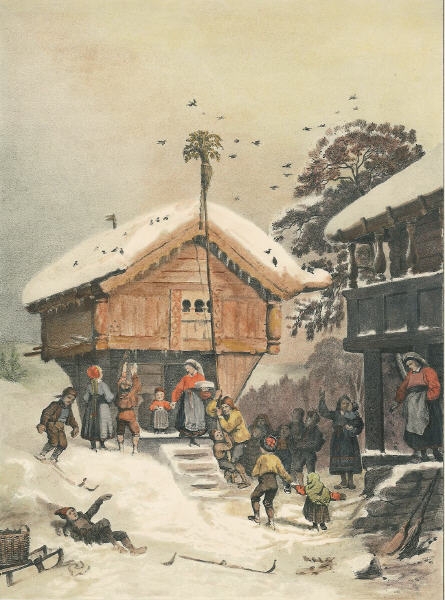
In the light of yesterday’s post, I’d like to tip my metaphorical hat to Brian Regal of Kean University for a piece he wrote in the New Jersey Star-Ledger. Entitled “The Real Meaning of Christmas,” Regal’s piece shows the striking disconnect that comes between the image of a “Christian” Christmas and the oft-ignored words of Jesus that make him such a great example to follow. We want the image and the affidavit without having to do the hard work of loving those we don’t like. This really seems to be the heart of what was once know as gospel—it’s okay to be who you are (for those of that bent, “who God made you.”) Too often “Christian” has come to mean someone who wears their hair far shorter than Jesus, who shuns those welcomed by Jesus, and who smile far more than Jesus. My Bible says “Jesus wept.” I don’t recall any verses reading, “Jesus put on his ‘I love you’ smile.” Ours is a society that wants it both ways—all for me, but isn’t that what Jesus really wanted? You know, he must’ve smiled a lot.

Regal rightly points out that the majority of Christmas traditions are admittedly pagan, and we are glad to baptize them as long as we don’t have to let the homeless into our churches or admit equal rights to those of all genders, races, and orientations. What seems to be the real desideratum is a “white” Christmas. A white, affluent Christmas. The very idea of the ownership of a holiday characterized by giving is a phenomenon worth serious study. Religion can certainly be used to justify such self-centeredness, but it is condemned by that very same faith. What are people worried about? Christmas has been a commercial holiday essentially from its origins in the modern period. It is one of the few holidays to which nearly everyone looks forward, at least for a break from work or school, if not for a windfall of new stuff.

Privilege as blessing is a perverse theology, as is shown repeatedly in the Bible. Israel’s long line of descent is chosen from the least, the youngest, the meek. Now we are constantly told that God rewards those who are blessed, and that the poor and underprivileged have only themselves to blame. At Christmas time it may be worse than many other seasons of the year. We want not only to keep good cheer, we want to keep a holiday only partially of our own making for ourselves, and then congratulate ourselves on just how good we are. It would seem that the spirit of Christmas might lie, as the pagans said, in giving. I am not a fan of commercialism, as my regular readers know. I can’t help but think that believing one deserves special rewards for righteousness in their own eyes will only have the opposite effect. Remember: he sees you when you’re sleeping, he knows when you’re awake…

Adolph_Tidemand_Norsk_juleskik


Won’t Someone Think of the Gods?

The annual holiday tradition of fighting over peace on earth has begun. It’s difficult to attribute blame since the “Keep Christ in Christmas” crowd do have a certain historical parsimony about them. Still, it was with tongue frozen in cheek that the Freedom From Religion Foundation put up a billboard in Pitman, New Jersey, with the message “Keep Saturn in Saturnalia.” Won’t someone think of the gods? In just the short span of my lifetime (well, half-a-century is really not that long) many assumptions about American religiosity have come to be questioned. There are those who seriously believe the Greco-Roman gods exist and they do have a right not to have their religion belittled. Those who find all religions laughable, I suppose, have the right to belittle. Some are devoted to Saturn. Others take seriously the Norse gods. Belief is like that—rationality is not a huge part of it.

Megyn Kelly, an anchor on Fox News, boldly declared this past week that Santa is, by dint of historical fact, white. I suspect she wasn’t thinking of Nicholas of Myra, but rather the jolly (white) man with glandular problems and the magical ability to visit every house in the world in a single night. The historical Saint Nicholas was born in Turkey. Kelly also made an unequivocal claim for Jesus’ whiteness, although he was clearly Semitic and historical records about him are extremely dicey. Conservatism, it seems, can only be pushed so far. I tend to think the problem is with making people into gods. Once a person becomes divine, in a monotheistic system—apart from all the theological casuistry than ensues—the nature of godhood is irrevocably associated with one race only. Of course Kelly, and many Fox News fans, have co-opted Christ from Judaism and suppose he was rather Nordic, as an article on CNN’s Belief Blog notes. Kind of like Thor, for what carpenter doesn’t know how to use a hammer?

To keep (white) Christ in (white) Christmas does betray a lack of familiarity with the Christmas story. Apart from angels appearing to some shepherds, the event was obscure—in the part of town across the tracks. Even the wisest men in the world had to stop and ask directions because they couldn’t find the place. The first Christmas, in as far as we can reconstruct it, was a silent affair with only the sounds of birth and the quiet desperation of a working class family far from home. No malls stayed open late that night.

The solstice is literally the darkest day of the year, the time when the slow return to light begins its weary trek over the next six months. We think of the cold, the dark, and hope for peace. No matter the holiday tradition, you’d think that peace would be one thing we could all agree upon. But gods are jealous beings, and, technically, they belong to no human race at all.

O holy night?

O holy night?


Not Knowing

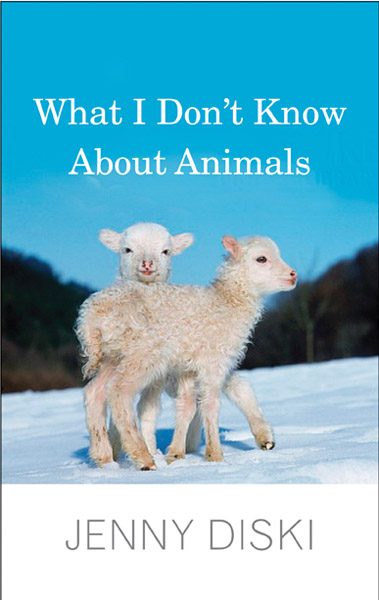
WhatIDontKnowAboutAnimalsBegin with a basic premise: we cannot know what a creature without language thinks. Add in the thoughtful anxieties of a post-domestic writer who knows about animals and you have What I Don’t Know About Animals, by Jenny Diski. Part biography, part science, part philosophy, wholly human. I knew from the day the book was released that I would read it since, like the author, I am one haunted by the relationship between the exploited and the exploiter. Diski’s confessions are difficult to read at times, veiling herself, as she does behind the curtains of one’s most private experiences, but she reveals plenty to those who read on. We can’t know for certain what another person thinks, so how can we know what a sentient animal thinks? Some, following Descartes and Skinner, would declare that animals don’t think, they simply do as programmed. The rest of us know that they are wrong. The evidence accumulates more each year that animals think and feel, but, as Diski repeatedly points out, we need to drive with the brakes on. We can’t get inside them to actually know if human experience corresponds at all with animal experience. We’ve shared the planet for millions of years, but we’ve lost track of our common origins.

As I suspected, the Bible came into the discussion. The book of Genesis lurks in the background of most human-animal rationalizations. The divine division into separate “kinds” must be kept discrete at all times. The problem is, nature won’t always play along with that game. One type slowly morphs into another and some biologists are even questioning the usefulness of “species” at all. Fear of bestiality, as Diski points out, is found already in the Bible. Best to keep everything in its proper pigeon-hole, whether that’s where it belongs or not. Genesis gives us the right to exploit, and so we continue to use animals for our own purposes. Although the feline, it turns out, may have figured out how to set this order on its head. In some cases.

What I Don’t Know About Animals is not a defense of vegetarianism or of radical, thoughtless abandon. Diski writing on spiders will cause many heads to nod in agreement, and her rage against the loss of the common lady-bug struck an amazingly responsive chord with this reader. The lady-bug’s demise came at human tampering, importing asian beetles as pest control—beetles that eventually edged out the harmless lady-bug, replacing the Volkswagen of beetles with a biting, omnivorous, massing pest. In Wisconsin the southern side of our faculty house was literally blanketed with them in the spring. Diski uses the same word I did then: biblical. Swarms seem to be the way that the Almighty has of telling us too much of even a good thing will go bad. Although I couldn’t agree with every statement Diski makes, I have the feeling this is a book I will reread more than once. Wisdom often comes in the form of admitting just how little we know.


Almost Human?

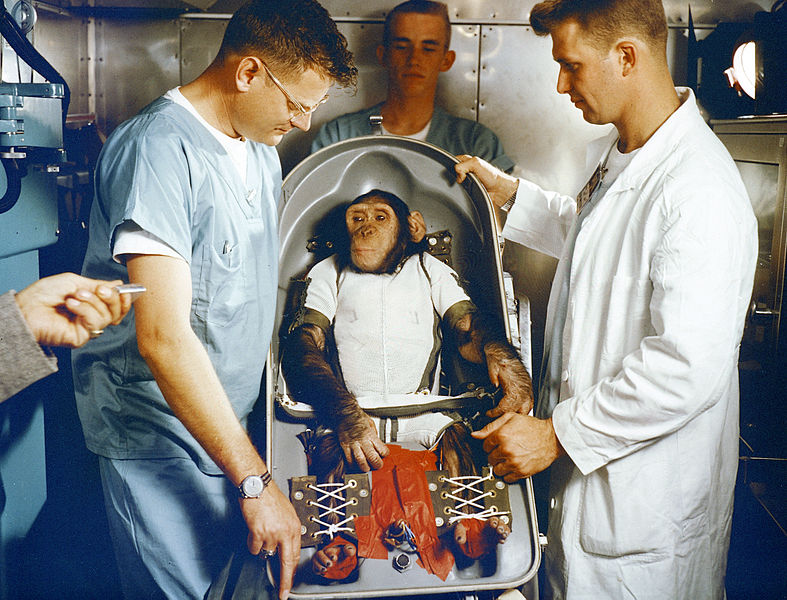
Last week the New York Times ran a story on the efforts of the Nonhuman Rights Project to have chimpanzees declared “legal persons.” Naturally this has set many legal persons at arms, given the unstated, biblical origin of the concept of human superiority. Without the biblical mandate we simply have to admit that we rule over animals on the basis of “might makes right,” a philosophical concept that never makes it far either in the classroom or the courtroom. We hold animals captive and experiment on them because we can. They can’t speak, can’t register protest, so we assume their silence as complicity and carry on. Research over the past several years, however, has pushed the human-separatists harder and harder. Animals are more like us than we are willing to admit. We acknowledge that we’ve evolved from them, but we suppose that at some point—probably the vocal cords—we surpassed them and therefore if they can’t speak they can’t think and they can’t feel. Even today many people still hold to the biblical orthodoxy that animals are merely here for our enjoyment and exploitation.

Considering how we treat other human beings, this is probably, sadly, no great surprise. In a world where many nations still allow women to be treated as property, putting a chimp in a cage and labeling it “mine” doesn’t appear so odd. Only the most crass of chauvinists would dare say that women are not human, but far too many, based mostly on religious biases, have no problem stating that women are inferior humans. Again, “the Bible tells me so.” This kind of thinking, prevalent even up until the 1950s in “civilized” countries like the United States, has yet to die out fully. What is it about the male psyche that insists on its own superiority? The Bible, it seems, has much for which to answer when found in the hands of men.

What makes us think that we are all evolving toward the “high point” of white males? Some of us in that class know that it is long past time that this glass “ceiling” should have been irreparably shattered. Nonsense, however, has staying power. Some of us even feel inferior just knowing such distinctions were ever made. Not that long ago Africans were said, by some, to be closer to apes than Caucasians. Women were said to be closer to snakes than men. What has been lacking is a sense of balance. Common sense. Genders and races equal but variable. Until that minimum bar is reached, how can it be hoped that fair treatment of nonhuman persons can ever be achieved? Some animals have been taught to read, at least in basic, symbolic ways. They understand that certain symbols stand in for defined rewards. Given time it might even be that this most human of inventions could be shared among nonhuman persons. If they do not learn to read the Bible with more sense than some human persons, however, we face a future of many other layers of distressing oppression.

787px-Chimpanzee_Ham_in_Biopack_Couch_for_MR-2_flight_MSFC-6100114


Help from Above

Frisbee, like Kleenex and Band-Aid, is a brand name that has become generic. Since at least the time of ancient Greece people have been fascinated with flying discs, and like many kids of my generation I grew up with a Frisbee or two around the house. We didn’t have much money, and in my younger days I remember playing “frisbee” with the lids to large margarine tubs—it’s more difficult to get these to do tricks, but they fly passably well with the right flick of the wrist. When I got to college I started to hear about a new game called “Frisbee golf.” It usually involved a group of friends and their flying discs picking out a target and seeing who could get their Frisbee there in the fewest tosses. Well, college was a couple decades ago (ahem), and who has time for Frisbee in the serious adult world of trying to stay employed? When some friends asked me to join in a game of disc golf over a recent weekend I knew a couple of things had happened. First, Frisbee had been either usurped or commodified to the point that it was either illegal or gouache to use their discs to try to hit “that tree over there,” like the redneck with his shotgun on a Friday night. Second, to play the game you needed to have the right equipment. Out on the course we came across a couple of guys with “golf bags” full of discs that they had to flip through like so many CDs before each toss. I felt woefully amateur. Like golfing in jeans.

IMG_1140Fortunately my friends had discs. Scientifically engineered discs, no less. Different “Frisbees” (not a technical “Frisbee” among them, not even a Wham-o) with different weights and characteristics made for specific tasks. I thought of the famous sculpture of the discus thrower and wondered what Plato would’ve made of all this. Since we were a large group with limited discs, we each chose one to be “our” disc so that we could follow it. It was either a rare show of masculine aggression or perhaps religious curiosity that drew me to the distance disc called Archangel. Bright orange, the Archangel was emblazoned with an actual heavenly being with his (a masculine angel, this) sword. He wore a vaguely Egyptianizing headdress that brought to mind the plagues of Egypt. The disc was heavy compared to a Frisbee, and had an edge like a, well, a sword. A dull sword of course, maybe wooden as opposed to steel. That disc could fly (although it didn’t improve my score much).

Angels have had a long fascination for us mere mortals. Originally a class of messenger gods in antiquity, monotheism forced them into a subservient role where swiftness was essential. For some, such as the Angel of Death (more likely the source of the imagery behind my Archangel), weaponry was essential. Unlike the Angel of Death my aim wasn’t very accurate. Or maybe that is just like the Angel of Death. No firstborn were slain by an hour’s diversion of tossing some Frisbees around, but my thoughts had been driven back to the biblical origins of my implement. I wondered why there was no archangel of peace. A few days later it was announced that Nelson Mandela had died. My thoughts went to Gandhi. To Siddhartha Gautama. Even to Jesus. Yes, there have been those who’ve insisted on the way of peace. And many differences might be settled by a friendly game of Frisbee golf, minus, of course, the copyright infringement.


Sunday Best

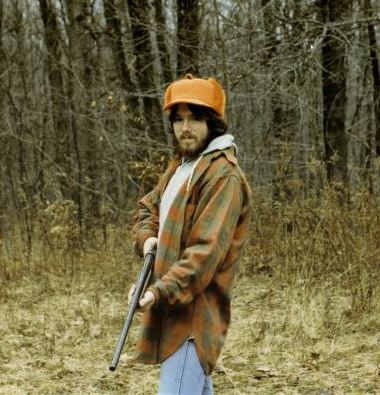
When my rural, northwestern Pennsylvania shows up in the news, I pay attention. An Associated Press story recently appeared concerning Rev. Chris Terbush of Bradford, Pennsylvania. Inspired by the success of Duck Dynasty (which seems poised to overtake even Apple as the most popular purveyor of popular culture), Rev. Terbush has encouraged his congregation to show up on Sunday mornings in camouflage, ready to go forth and claim dominion over nature once the service is over. I’ve been ambushed by enough clergy that the idea makes me a little nervous, I’ll have to admit. But then again, I know where he’s coming from. I grew up in a town that celebrated the first day of deer season as a public holiday, with schools closed and the hills alive with the sound of muskets. Not being a hunter, I just enjoyed the day off school. This upbringing, however, gave me a profound appreciation for the Jeff Daniels’ movie, Escanaba in da Moonlight. But I digress.

Religious services evolve, just like any other social phenomenon. When I was young, just as the sixties were wresting the color of life from the black-and-white fifties, going to church was a formal event that demanded your “Sunday best.” Only the worst of heathens would show up before the Almighty in anything less than a white shirt and tie, a jacket and uncomfortable shoes. You had to show the divine that you were willing to go that extra mile and implicate that you didn’t intend to have any fun when it was over because the sabbath is a solemn occasion. I remember the weird feeling of walking into church during the weekday wearing jeans for the first time. It felt as if I were dissing the rules of the club. It was an exclusive affair.

The “theology of dress” has become an area of scholarly investigation with the growth of embodiment issues. What we wear says something about our beliefs, and the fact that we wear clothes at all is sometimes even traced back to Genesis 3. The origin of “good clothes,” clearly, was a status issue. Those who could afford to keep some surplus clothes unsullied by labor wished to strut their stuff on occasion. And who better to impress than God? All of this has eroded over the years with many churches as casual as any man cave. Now you can camouflage yourself in church. There may be more going on here than meets the eye, both literally and metaphorically.

What happens in the woods stays in the woods

What happens in the woods stays in the woods


Fateful Dreams

Popular historians love a good coincidence. I suppose it is a way of reading order into a chaotic world where many events, in the final analysis, just don’t make sense. Perhaps academic historians shy away from coincidental events—after all, they contain a whiff of the improbable about them, and academics can admit no greater force driving our efforts toward a civil existence. The rest of us, however, like to note them. This week contains the anniversaries of a couple of significant landmarks of United States history, and they may somehow be related. November 19 marked the 150th anniversary of the Gettysburg Address while November 22 is the 50th anniversary of John F. Kennedy’s assassination. The events, a century and three days apart, stand for transitions in American society, and the implications of both still linger on as unfairness and fear continue to haunt our hopes for a future where all might indeed be considered created equal—and not just all men, but all people—and where optimism might edge out cynicism in the political world.

486px-Abraham_Lincoln_November_1863Of course, both Lincoln and Kennedy died at the hands of assassins. America has never been terribly comfortable with dreamers. The century that separated the Gettysburg Address from Kennedy’s tragic death was not enough time to swing the ship of state around to bring about a world of dreams. Unfortunately, war also defined both presidencies. The dream of a world at peace has been more difficult to attain than a human desire for such a world would seem to merit. If we all (or most) want a world at peace, why can’t we bring it about? Unfortunately, it seems that a basic sense of justice is lacking.

500px-John_F._Kennedy,_White_House_color_photo_portraitPerhaps it is a coincidence that many of the world’s religions stress the concept of a just society. By far the majority of the world population associates itself with one form of religious belief or another. Not all religions get along, however. Many of the conflicts that have erupted into wars have had a basis in differing religions. Power is easily seized from dreamers, religious or not. Watching modern elections is a terribly sobering event. We don’t advertise what we might accomplish, but rather what is so wrong with the other guy so that we win by a paltry default. Victory for whom? And why consider it a victory? A friend once suggested that Christians should start out as bishops and eventually be promoted to the level of laity. I thought it was a brilliant idea that could be applied to politics as well. Think of it: elected officials as servants of the people. Of course, by coincidence, I am a hopeless dreamer.


Rites and Wrongs

One thing about Amazon Prime is that you can watch a movie multiple times with no real fiscal consequences. Alone on a Saturday, I started my ritual of looking for a movie to match my mood. I’ve posted before on Cabin in the Woods, a kind of Lovecraftian parody of the five-people-in-an-isolated-cabin motif, but the movie is so deeply based on religious motifs that I noticed many things I’d missed the first time around. When the college kids descend to the basement to choose, unwittingly, their fate, they happen upon a diary written by Patience Buckner—one of the zombie family that will eventually emerge to murder three of the five. So far so good. The backstory to the Buckner family is sketchy (Drew Goddard and Joss Whedon are said to have written the script in three days, not much time to develop backstory), but they are religious zealots who believe in pain as a spiritual purgative. In other words, they hurt each other in an attempt to be religious. This idea is not without historical foundation, and although it plays only a small role in the movie, it is part of the larger plot as well.

The entire control center that is intended to keep the old gods satisfied, is a highly technical ritual center where the horror movie tropes take place to appease the ancient ones. As Sitterson and Hadley explain, the suffering of the kids as they face the ritual sacrifice is an essential element in pleasing the gods. It is, nevertheless, a ritual. As each victim is killed, a lever is pulled channelling blood down across icons of the roles played by the scapegoats. Marty, the stoner who ultimately figures out what is going on, makes the point that for a ritual all you need are robes and sticks. Of course, ritual is one of the main constituents of religion, and ritual has to meet the specs provided by the gods.

Cthulhu takes Manhattan

Cthulhu takes Manhattan

Modern day fascination with H. P. Lovecraft has led to a resurgence of interest in “the old gods.” Lovecraft, while personally an atheist, knew the powerful draw of the idea. Gods are controlled by ritual. Many religions trace the architecture of rituals to the deity placated by them, but this tacit domestication is a kind of archaic rule of law. Humans do this, gods will do that. The hastily written story of Cabin in the Woods abides by this pattern. As long as somewhere in the world a human sacrifice is made according to specifications, things will continue as they are. In other words, our random world is a throw of the dice by the gods. Unlike his contemporary, Albert Einstein, Lovecraft’s gods did apparently play dice. Cabin in the Woods is a modern farce of that ritual and is, in an unexpected way, a deeply religious movie.


History Bites

historian-elizabeth-kostovaAfter reading a post I’d written about Dracula last year, a friend recommended that I look at Elizabeth Kostova’s The Historian. This novel is very easy for a vampire fan to lose oneself in, taking a sweeping scope of the Balkans and western Turkey, and adding enticing bits of northern Europe as well. Although it is a novel, it is also a history lesson in international relations and in the costs that accompany clashing religious empires. Christendom and Ottoman powers frequently exchanged hostilities long before the Bush presidency, and it was in this milieu that Vlad Tepes, the Dracula of history, emerged. Interestingly, although vampires had been part of religious folklore since the earliest civilizations, it took Bram Stoker to make Dracula into one. It is difficult to believe that, with the household name-recognition of Vlad III’s epithet, Dracula would’ve likely remained one of history’s more gruesome footnotes without Stoker’s undead imagination. Vampires would’ve survived, I’m sure, but Dracula might not have come back to life.

Kostova does an excellent job of blending fact and fiction in an epic vampire hunt. She also takes the somewhat unusual step of making the historical Vlad her actual vampire. A defender of the Christian faith against the Turks and their Muslim ways, Dracula did earn a reputation for cruelty (and unusual punishments) during his lifetime. Kostova keeps him alive through a kind of scavenger-hunt through history as his decapitated body must be brought back together with his head, and then through the wilds of Transylvania, Wallachia, Bulgaria, and even into the cosmopolitan streets of Constantinople. This is an intellectual’s vampire story if ever there was one.

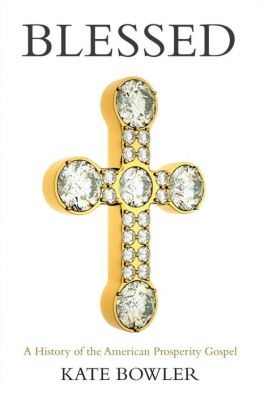
Although Dracula’s association with the vampire mythos began with Bram Stoker, his role as a symbol of religious conflict boasts much older roots. Indeed, conflict over what is the “one true faith” has been a bloody avocation of humanity since universal claims of salvation began to be made. The conflict continues, in a somewhat more civil guise, as science flexes its considerable muscles over the less empirical realm of religious belief. No matter which strand of religion one believes, if any, faith has a strange ability to set people seeking one another’s blood. The symbol of the vampire does not seem to be departing any time soon, for vampirism is part of human nature. We may never shed the physical blood of another, but we continue to participate in cultures where the strong impose their wills on the weak. And that is a scene darker than even the scariest tomb painted in The Historian.


The Problem with Apocalypses

Over on The Daily Beast, Joe McLean points out “How the Tea Party’s Apocalyptic Politics Are Destroying the Republican Party.” I say good riddance. Let me explain. It’s not that I have a problem with apocalypses. (Zombie apocalypses are especially fun.) My problem is that the mythology of one religion endangers us all. This is not some leftist-leaning rant, or at least not a leftist-leaning rant that’s uninformed. I grew up in a very conservative, apocalyptic Christianity. I was looking for the end of the world before I considered a college major. Even my (limited) choice of classes in high school were determined by a kind of eschatological laissez faire: the world’s going to end any day now, so why plan for a career? I was a true believer. In my Christian college I majored in religion. If the end is near, it pays to be ready for it. I know this doctrine inside-out. If Christ is returning any day now (can’t you hear the hoof-beats?) then we should pillage this poor old earth for all its worth. That’s what it’s here for. Do we want him coming back and saying we’re poor stewards? Besides, if we can ramp up the crisis in the Middle East far enough, Jesus will have to return. Won’t he? And these are “rational” adults thinking this way.

There was likely a naive cynicism on the part of the Republican Party when it realized that aligning itself with what was considered the religious fringe would boost their numbers. After all, the fringe surrounds the whole of the cloth. Apocalyptic Christianity is very popular because it appeals directly to the emotions. Although our society believes the study of religion is pointless, those of us who’ve persisted have noticed a few things. The religions that are really taking off are the ones that appeal to the emotions. Many Spock-like scientists intone their message of materialism only in the face of massive crowds of true believers. Who do you think is likely to win out? We have had presidents in the Oval Office who believed that triggering the apocalypse was a presidential prerogative. When society finally shook off its goofy grin and slowly pressed the electoral brakes, the Tea Party took off. Guess what? Apocalypses are all about destruction. If you invite apocalypticists to your party, the results are pretty predictable.

In the article McLean uses the word “zealot.” Rationalists might find the use of their dictionaries helpful here. Zealots do not respond to logic. Zealots are driven by emotion. Have you ever tried to argue with one? I have had years of experience teaching religion in a variety of classroom settings. Long ago I learned to lay down the sword when a zealot spoke up. Logic is not spoken here. The media, the scientific, the academic, they scratch their heads. How can any rational person believe this? The answer doesn’t require much effort to find. It might mean consulting someone who understands a bit about religion, though. Otherwise, the smart money is on stocking up on canned goods, gas masks, and a good supply of water. This could take a while.

Mary in the sky with circles, or the apocalypse?

Mary in the sky with circles, or the apocalypse?