Scouting for Boys

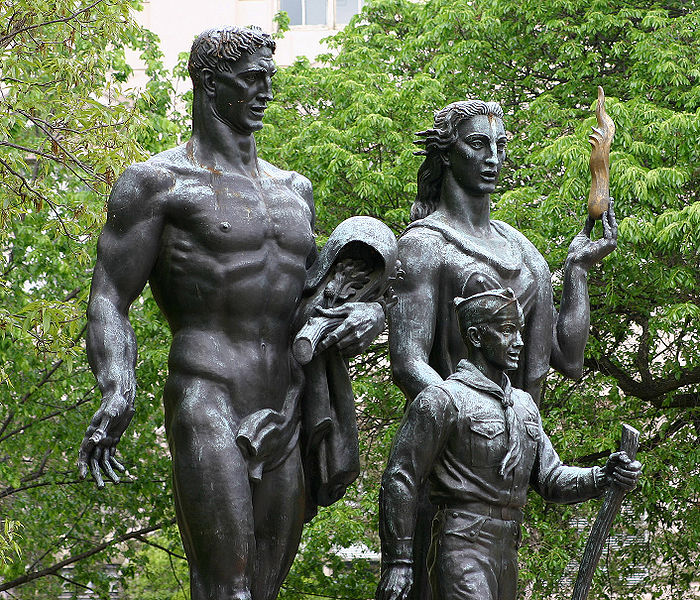
I guess losing a bid for a presidential nomination sanctions a guy to speak for God. Of course, that goes for just about any Republican these days. I’m frankly amazed that Moses managed to write the Ten Commandments without them. So Rick aptly-named Santorum has gone after the Boy Scouts. To remove the duplicitous ban on gay scouts, according to Santorum, is to remove God. Obviously Mr. Santorum was paid no attention in Boy Scouts himself. I spent many hours at Scout camp and I can attest that God was already the last thing on most boys’ minds. Maybe our former presidential hopeful ought to look back a little further, for Webelos and Cub Scouts may imply the love that dare not mewl its name. I predict this: if the ban is lifted, as it should be, no one will notice the difference. Santorum will continue beating his dead horse and the rest of America may achieve just a hint of maturity.

“Scouting may not survive this transformation of American society, but for the sake of the average boy in America, I hope the board of the Scouts doesn’t have its fingerprints on the murder weapon,” Santorum declared, according to CNN. I have to wonder what he knows about the average boy in America. Or the average girl. Santorum would have a difficult time finding the word “gay” in his Bible, for it is not there. But apparently God is not God without someone to hate, without the “Right” to show him the way. And God favors straight, white men, as the last presidential election clearly shows.

Any religion that makes someone feel better by repressing others is not worthy of propagation or emulation. Look at any oppressed group. What’s the backing always cited by the oppressor? Is it not narrow religious belief? Anyone can say “God says.” There—I just wrote it. And I could distort the Bible to make God dance to my prejudices as well. The problem is that I recognize how cheap and tawdry such eisegesis is. Of course, hot air expands. The Texas governor that God told to run for president, but then changed his divine, omniscient mind, and who never thought closely about the implications of that—aka Rick Perry—also had to weigh in on the issue. CNN quotes him as stating, “Scouting is about teaching a substantial amount of life lessons… Sexuality is not one of them. It never has been; it doesn’t need to be.” Mr. Perry needs to spend a weekend at camp with his eyes and ears open and his mouth shut. In the best of all possible political worlds, his bosom buddy Rick Santorum will be right there beside him. Maybe it will take a little child to lead them after all. And that actually is biblical.
From WikiCommons, AgnosticPreachersKid--worth a thousand words

From WikiCommons, AgnosticPreachersKid–worth a thousand words

Real World Ethics

Do yourself a favor. Spend five minutes watching this video:

(note: the video has been removed and a “family friendly” version is here: Kai)

Although it has a whiff of the apocryphal about it, I choose to believe that Kai is really who he claims to be. I don’t know what actually happened here, but this is ethics divorced from armchair pundits and congressional committees. Sometimes you see something and know it’s just wrong. Most of us wring our hands and await some authority figure to sort it out. When Kai met someone claiming to be Jesus, he was willing to be “the Antichrist” to save innocent people with no regard for himself. I am very impressed.

No, vigilantism is wrong. In fact, I wouldn’t trust a who coven of Republicans to ever arrive at so parsimonious a solution as Kai. He saw evil, he confronted it. I don’t know the backstory here, but I know that I feel a lot less threatened by the street people I see nearly every day than I do by those hiding away in limousines. Ethics is all about figuring out what is right. Kai has his head on straight here. If he could go back in time to stop “Jesus” reincarnated from harming an innocent bystander, he would. No regrets, no questions.

I have watched, and personally experienced, religious leaders intricately plotting how to ruin the life of their neighbors to maximum effect. I have read about politicians who shamelessly increase their earnings while knowing that some of their constituency live in poverty and persistent hunger. I have seen a president declare a war to fulfill a personal vendetta. And I have seen Kai lifting a hatchet to save a person he didn’t know.

There will certainly be those who would condemn such quick thinking and right action as immoral. For those who object from a Christian outlook I would remind them of Dietrich Bonhoeffer, one of the darlings of the Evangelical world. Bonhoeffer was hanged by the Nazis because he did what he knew to be right. Even though his bomb plot failed to kill Hitler, Bonhoeffer knew what Kai knows—those who sit around and watch evil happen as just as guilty as those who perpetrate it. And that’s like trying to surf when the ocean’s at a dead calm.


On a Wager and a Prayer

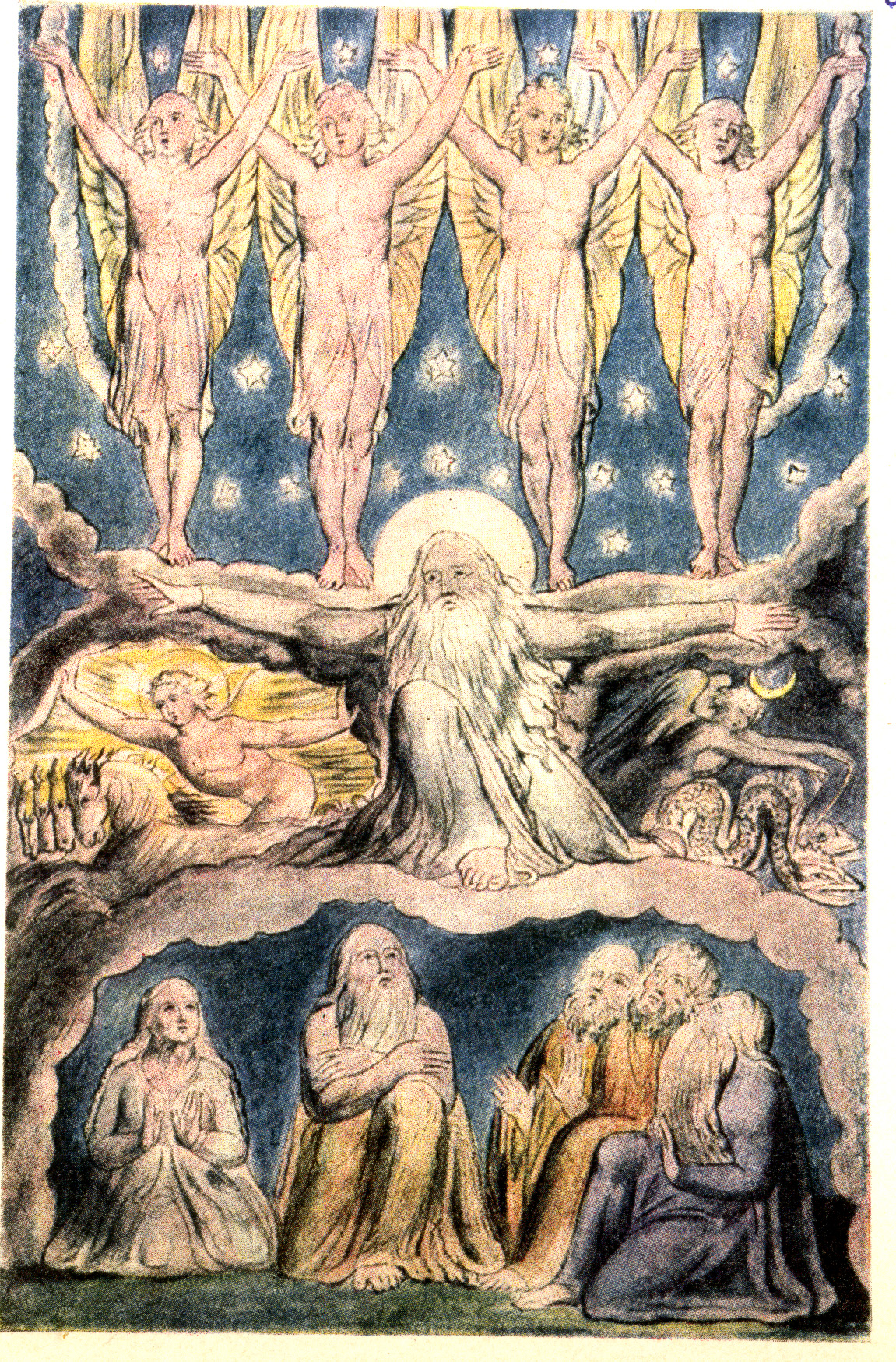
I’ve been thinking about Job a lot lately. Not my job, but the biblical book. Way back when I was preparing my initial classnotes on Job, I remember a commentator—I forget who—stating, as commentators are wont to do, that people have strong reactions to Job. Either they love it or they hate it. I have enough imagination to consider some people being somewhat ambivalent about it, but I have observed many people over the years revealing powerful reactions to this Wisdom book. One of the reasons, I suspect, is that God doesn’t come off looking particularly good in this story. This was recently reintroduced to my awareness in Steven Cahn’s God, Reason and Religion. The reader, unlike Job, knows the real reason for Job’s suffering. It was a divine wager, instigated by God, that Job would not curse him even if allowed GBH by the Satan. We know, however, and we are culpable for that knowledge. It puts a burden on the reader.

BlakesJob

When God does explain to Job why he shouldn’t question God’s acts, as Cahn points out, the answer rings hollow in the knowledge of the truth. God can’t admit to Job that he was playing fast and easy with his health and the death of his ten righteous children. A roll of the dice and Job is vulture-bait. The book of Job should make us squirm. We base our morality, we are often told, on the ideals of the Bible. If we were Job, who ends the book never knowing about the bet, we might be content. But the author, with a sly wink to those who face life squarely, points out that this is all a charade to justify God’s confidence in one of his many carroms. I suppose that might be small comfort to the pawns.

For Job there is no answer given to why he suffers. He doesn’t even really ask why—God’s right on that count, Job is very good. Yet the reader is not so lucky. How can we gain any comfort knowing that God sometimes lays us on that altar, not for any just cause, but as a wager against the divine prosecutor? No, the Satan in Job is not the Devil. He too is a divine character, an attorney borrowed from Zoroastrian mythology. He’s just doing his job. His Job. He is present to make us feel our guilt. And if Job, who the Bible itself says is perfect, can barely restrain his soul from cursing, how much of a chance do the rest of us have? There are many who hate the book of Job. I am not one of them. A more honest book I have a difficult time imagining. If it comes to justice in this world, however, I wouldn’t bet on it.


On My Honor

Some old fashioned institutions fear new learning. Although I was a Boy Scout for only a couple of years, I grew up in Cub Scouts and Webelos and had a pretty good idea what boys talked about when they were together. It would’ve shocked me at the time to learn that some Scouts were gay, but then, I was young and most new things shocked me. I later came to learn that not only some Scouts, but also many of the guys I knew from conference-wide church groups were gay. It wasn’t so much that they were in the closet as the rest of the world was. Society wasn’t ready to admit anything that challenged male patriarchy (this was the 60s and that was beginning to shift), and homosexuality did challenge that hierarchy. The Bible could be used to back a husband’s superiority over his wife, but if two men formed a couple—as B-movie computers used to say—”that does not compute.” A society that declared sex had one purpose only—procreation—was already deep in denial about the symbolic power that sexual relations inherently possess, something even the ancient Greeks knew about. How could a culture that out of sync with nature come to embrace true equality?

In the socially conservative icebox of the fin de siècle nouveau (pardon my French), evangelical forces began to declare the Bible as the basis for defining marriage. The problem is that the Bible doesn’t do such a good job of it. Marriage is far from a sacrament, and its main purpose seems to have been to make sure men were kept accountable for the children they sired. After all, they could have as many wives as they could afford, eh, Solomon? The Boy Scouts, so loyal to God and country, preferred not to admit what was already part of their culture. You isolate a bunch of boys together in a cabin in the woods, and what happens? The old myth of Platonic hero-and-sidekick pairs with nary a thought of the pounding chorus of hormones surging through the atmosphere held up remarkably well, considering.

We like to think we live in a more enlightened age. Sexologists tell us that mating is hardly just for reproduction—the natural world belies that. The Bible says little about its purpose, not being of a scientific bent. And yet the Boy Scouts hold up three fingers and go beyond don’t ask, don’t tell. I’m glad to see that they are again considering a look at the obvious. In the Bible that cotton-poly blend you’re wearing is mentioned as evil just a few verses away from one of the few passages that says the same thing about homosexuality (and even that is an overstatement). The Bible was a product of its time, just as the Boy Scouts were a product of theirs. If they want to honor their pledge about keeping morally straight, the Boy Scouts need to consider morality in the light of what we know and open the closet doors to what society has been keeping hidden all along.

Read the green words.

Read the green words.


Twist and Shout

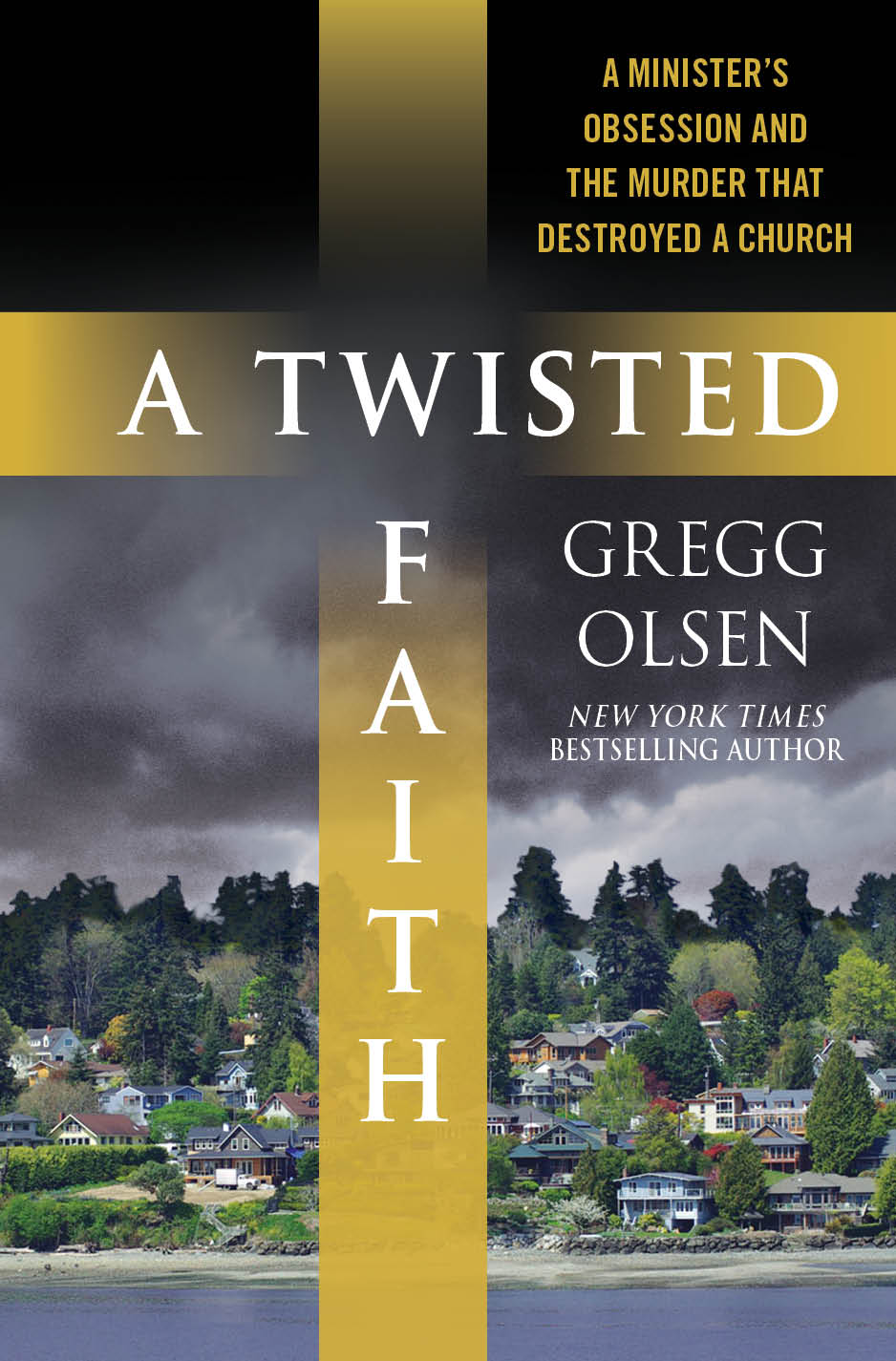
TwistedFaithTrue crime is not really my thing. I find regular life disturbing on a frequent basis, and reading about how someone willfully harmed another only seems to make my prognosis worse. When I saw that Gregg Olsen’s A Twisted Faith: A Minister’s Obsession and the Murder that Destroyed a Church took place in a number of places where various family members live (Poulsbo, Port Orchard, Seattle, Washington) I was drawn in. As the dark story began to unfold, at several points I almost put the book aside—this is a difficult account to read. Christ Community Church on Bremerton Island sounded a little too much like the Community Chapel in which I was reared. The power struggles, the self-righteousness, and the hidden lusts of those who live “clean lives,” all brought back painful memories. Nevertheless, I had to see how this sordid, almost salacious tale played out. Youth minister Nick Hacheney, to cut to the chase, murdered his wife and carried on affairs with at least four women in his church, including his murdered wife’s mother. Based on many personal interviews, Olsen digs deeply into the psychological trauma this one minister inflicted on the women he stalked, and revealed some of the neuroses of conservative religion.

I say “conservative religion” not to pick a fight, but because of the things both the women and men believed. After a conflict over whether to stay with the Assemblies of God denomination, Christ Community Church went independent when a new minister began seeking senior leadership over the congregation. So far that’s normal ecclesiastical politics. What made this so unbelievable is that many of the decisions were based on “prophecies” that self-proclaimed messengers of God presented and that clergy and people took at face value. Even when they blatantly failed to show any accuracy. There was never any questioning whether one received an authentic message or not. Some of these “prophecies” involved the deaths of congregation members, including the murdered Dawn Hacheney. Women with marriages in various states of decay, feeling sorry for the murderer (whom only one of them suspected) eventually gave in to his words “from God” that they were to have sex with him to help him get over his loss. The real pain was seeing the psychological manipulation he applied to his victims, causing them divine guilt if they refused.

In a community that readily accepts claims of direct messages from God, congregants are clearly sheep led to the slaughter. Most Christian denominations have mechanisms in place, no matter how faulty, to test such individual claims. Groups that trust their clergy to be honest all the time fail to calculate human weakness into the equation. It is no surprise at all when staunch, conservative clergy are caught violating their own rules (and congregants). Give them a blank check for signing God’s name to any statement and you’ve got a truly unholy writ. Many churches manage to avoid the most serious pitfalls most of the time. When one fails to discover the wolf in sheep’s wool, as happened on Bremerton Island at the end of the last century, true crime may be the mildest way to describe the results.


Hardsell and Gospel

When I find myself a considerable distance from my point of egress sometimes I have to take the subway to escape New York. Don’t get me wrong—I love New York, but Monday through Friday it is a place to work, not to play. Getting home is serious business. To get to the Port Authority Bus Terminal from the subway, one venue is a long underground passage. When I take this corridor, I find that it is often a favorite place for street evangelists during inclement weather; apparently the gospel goes underground when the weather turns nasty. So as I recently padded along that tunnel, I noticed an interesting conflict in worldviews. There were a series of street preachers, the central one with Bible in hand, and several others handing out tracts. If I’d had time I’d have listened to the preachers a bit; one was riffing with street language and intonation, and another was fluently flashing between English and Spanish. I took one of his tracts.

HanselGretel

The contrasting worldview was the posters repeatedly displayed in a long line along the wall—Hansel and Gretel: Witch Hunters. The movie is due for release next week. One of the modern remakes of fairy tales in the horror/action genre, this might be a fun ride, but the idea of secular forces taking on monsters clashed with the old fashioned gospel I was hearing with my ears. Or did it? Witch-hunting is not exactly PC in the days of religious pluralism when Wicca is becoming as normal a religion as the Anabaptists. Anyone who listens to most modern day witches knows that they are not evil, so I wonder how the movie plans on setting up the “evil” that our eponymous brother and sister have to conquer. I might just have to go to the theater alone to find out.

Tract

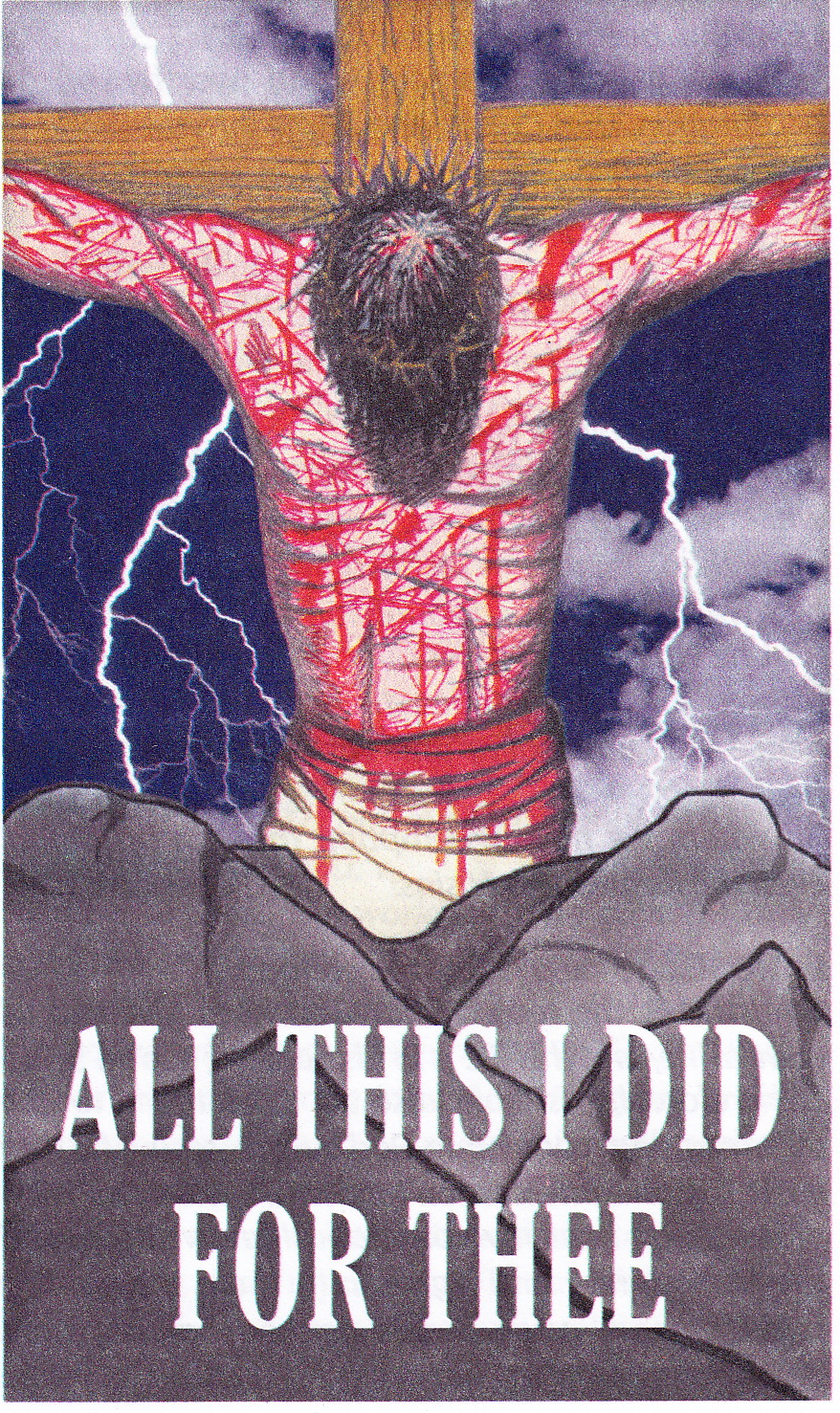
But is this really so different from our earnest street preachers below the ground? They are railing against the evil in the world, and if you follow their tracts, there is clearly no shyness about blood and torture here. The movie is rated PG-13, but what about the slip of paper I hold in my hand that shows a much bloodied Jesus hanging on a cross? Whether it’s with fancy crossbows or just plain crosses, the goal is to overcome evil. The real question is how to define it. Some, I suppose, would consider this movie a kind of evil; Gretel’s tight-fitting uniform is a little low-cut for taking on the forces of darkness, I should think. But the real evil is treating other people as enemies. And that even goes for street evangelists. If only they would admit the same for the wider world, maybe all this blood wouldn’t be necessary.


Out with the Old

It’s become a time-honored tradition, as an old, secular year ends and a new one, brimming with potential commences, for various pundits to sum up the past twelve months for us. And since there hasn’t been a year without religion since Adam and Eve were created, it stands to reason that the religious year in review is yet another perspective to take on this mid-winter’s day. The New Jersey Star-Ledger, my state’s answer to the New York Times, ran a 2012 top stories in religion feature on Sunday, the one day that anyone might be tempted to pay attention to things spiritual. The list reflects the view of A. James Rudin and it features several stories, most of which tend to show the embarrassing side of belief. Rudin begins his list with an amorphous Islam as reflected at unrest in the Middle East. One of the misfortunes I often deal with in my editorial role is this association of Islam with violence. There are deep roots to the trouble in the Middle East, many of them planted and watered by Christians. Religious extremists, however, are the more sexy side of the story and they always abscond with the headlines.

I should take care with my word choice, however, because yet another of the stories—dominated as they are by Christians—concerns the Catholic Church’s continuing troubles with hiding away child molesters (number five). The number two story, also about Christians, is also about sex as well. That story highlights the chagrin of the Religious Right at the recognition, long overdue, of same-sex marriages in three states. Gender plays a role in story four, the succession of Rowan Williams as Archbishop of Canterbury, but also the related story of how the Church of England still refuses to recognize women as bishops. A deity who can’t see past genitalia should be troubling to any believer. Yet a full quarter of one commentator’s top religious stories are concerned with sex. That’s how the world sees the issue.

The remaining stories Rudin points out have to do with Jewish-Christian relations, aging pontiffs, and the growth of Nones in the US religious marketplace. Anyone who spends time reading contemporary accounts of religion will be familiar with the Nones—that increasing number of people who declare no religious affiliation. Ironically, those involved in such scandals as we often see in the headlines are troubled by the number of people opting out of traditional religions. I almost wrote “opting out of faith” there, but that’s not really the issue. The Nones I know, and there are many, don’t necessarily not have faith. They have lost confidence (if they ever had it) in religious institutions. Interestingly, Rudin concludes his list with the tragedy in Newtown, Connecticut, along with the death of Sun Myung Moon and a few others. The Newtown tragedy remains the least and most religious event in the past year. And unless those of us who survive do something about it, these dead will have died in vain. Let’s hope 2013 has something better on offer.

Father_time


Mystique-alism

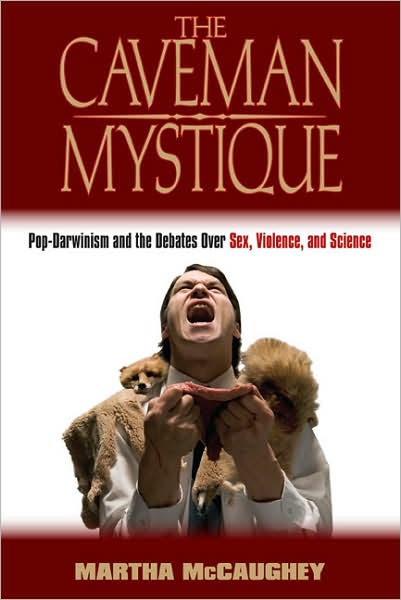
CavemanMystiqueReading in a public place gives peer pressure an entirely new meaning. Public transit is a place where I spend at least fifteen hours a week. Not having converted to Kindle, or even Nook, I still prefer the feel of paper in my hands. With the open book, however, comes exposure. On the bus you have no control over who climbs in next to you. You’ll be spending an hour, maybe two, side-by-side, and although s/he may never see you again, it could be that tomorrow they will find themselves once more at your side. I’m very conscious of the books I choose under such circumstances. I shouldn’t care what others think, but I do. Recently my choice was Martha McCaughey’s The Caveman Mystique: Pop-Darwinism and the Debates Over Sex, Violence, and Science. The issues here were multiple. McCaughey consciously chose her riff on The Feminine Mystique as a catchy, if very appropriate title. The person plopping down next to you with a bleary eyed glance over on an early morning bus will probably catch only one or two words in the title. One of them will be the only word with an x. Still, this important little book has big implications for the “s word,” and how men are socialized to think about sex.

Darwinism, and evolution, are concepts that are keyed to religion in the United States. There is no avoiding it. McCaughey, as a sociologist studying science, shows just how many assumptions scientists make about the universal applicability of their work. She suggests something that many of us have learned over the years: absolute objectivity is not possible for any human being. We are all socialized. We all bring biases to our work. We’re all human. McCaughey doesn’t question the results of scientific investigation, however. Her concern is that in a male-dominated field the results might be, well, screwed up. In a series of delightful thought experiments, she shows how very basic sexual biases get played out into larger scenarios that tend to excuse the inexcusable: violence against women. Men have to be taught to be cavemen. Science, improperly disseminated, gives men an excuse for blaming evolution for their lack of character. It seems to this man, at least, the McCaughey is certainly on target.

In a particularly insightful paragraph, McCaughey writes, “Invoking God’s will, or nature’s [i.e., science], hides the political context in which such a will was ‘revealed’ or ‘discovered.’” How easy it is for both scientists and religious believers to conclude that the way of their belief system is the only explanation for the world. Both camps forget they are profoundly political. As humans we can’t escape it. The world defies easy explanation—there are truths that we haven’t discovered yet. The main point of The Caveman Mystique, however, is clear. Just as men have been led to believe that the caveman is inevitable, they can be also taught that such a statement is a lie. Biologically there are gender differences, but socially—and this is the ability humans boast of—we can and must insist on equality.


Without a Hitch

I’m not really afraid of dying. All those years of being taught that “to die is to gain” have obviously done their work. At the same time, it is a poignant exercise to read the posthumous memoirs of a dying man. I remember my first funeral. Although I don’t recall the name of the poor, deceased honoree, I still see the reactions of the living vividly. I was under ten at the time, and the funeral home in Franklin, Pennsylvania was in a very somber mood. The man, who had been a friend of the family, “was not a Christian.” Having been buffed and rubbed in the Fundamentalist tub from my earliest days, I didn’t realize that what was meant was actually that he hadn’t been an active member of our particular church. Nevertheless, as a child, you get deeply impressed with these kinds of things. “I’ll never go to the funeral of a non-Christian again,” I remember my mother telling a friend. “The minister couldn’t find anything comforting to say.” While funerals are sad occasions by definition, this one left a crater that is still fresh over forty years later.

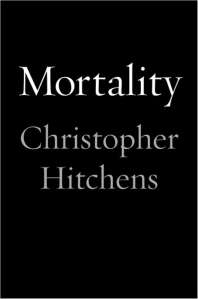
MortalityChristopher Hitchens is someone I found through his book God is Not Great. I don’t have time to read magazines, and I hadn’t read any of his previous works, but he raised some extremely valid points in this diatribe. My wife recently bought me his final oeuvre, Mortality. I felt as if I were back in that funeral home. It is not that I still hold to the odd belief system of Fundamentalism—of this my regular readers will have no doubt—but it is the forlorn feeling of reading the words of someone dying who hopes for nothing. Yes, it may be Stoic, and even noble. Certainly it seems far more worthy than visions of living in opulence with lots of available virgins with whom to toy while angels strum their harps overhead, but the certitude that one’s final days will be nothing but prolonged suffering—ouch! Maybe there isn’t a heaven, and if there’s a hell there’s something morally wrong with the universe, but doesn’t some residue of a human life remain? Even if it’s just the memories, the marks that we’ve made on others’ minds, don’t we somehow survive? Dying without hope nevertheless feels like milling about in that doleful crowd of specific Christians years ago.

Hitchens does offer a chapter in his final words devoted to those Christians who responded to his cancer with an unholy Schadenfreude, trying to torture the thoughts of a dying man with the promise of an eternal hell after experiencing a temporary hell of cancer treatments. This chapter made me sick. Anyone who so completely misses the message of compassion that suffuses the Gospels can hardly claim the designation Christian, I would insist. No one, no matter what their eternal plans, has the right to try to fracture anyone’s tenuous tranquility to make their own crown shine a little brighter. Such weekend warriors likely imagine that they are defending their fragile God, but in reality they are demonstrating that some of the criticisms of Hitchens were very well placed to begin with. No religion will live up to its full potential until it succeeds in the most basic practice of all—treating all people with respect and dignity. Until then, death has the final word.


Forget this Alamo

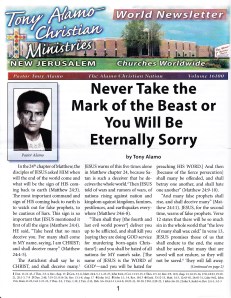
A person’s car is a haven of sorts. Very expensive, dangerous and yet necessary, they have made life a fair bit easier than caring for horses when you need to trot down to the Apple store to pick up a charger for your iPhone. When we leave our cars we don’t have to strap on the feedbag, but in many parts of the world, we do have to lock them up. From a young age I was taught not to touch somebody else’s parked car. People are very possessive of them and some folks get upset at even a smudged finish. I always find it strange, then, when a flyer ends up tucked under the windshield wipers. Not that it happens often, but around the holiday season some promoters will go in for the cheap advertising trick of that paper that first makes your heart skip since it looks like a ticket, and then annoys you when you find out it’s just more junk mail. The other day my wife came home with a new type of flyer under the blades. It was from Tony Alamo Christian Ministries.

To be honest, I’d never heard of Tony Alamo before. I seemed to remember the last part of his name, though. In any case, the earnest-looking evangelist warned loudly in the headline “Never Take the Mark of the Beast or You Will Be Eternally Sorry.” This was a cheerful way to greet the holiday season, but I decided to give him a hearing, or at least a brief reading. By the second short column I’d discovered his “Bible only” technique included interpolating [in brackets] his own reading of the Scriptures, but still enclosing them in the quotation marks. This is, categorically, not so different from preaching—the practice of making your followers believe that you have an inside line on what God meant to say in the Bible, but obviously didn’t spell out very clearly. This is the problem with all Bible literalists movements: they claim solely Bible [but only when interpreted their way]. Those who’ve found their windshields thus violated have grounds to be suspicious [if I understand this technique correctly].

It turns out that Tony Alamo is currently in prison [one suspects the parallel to Paul of Tarsus, or at least Silas, has passed his mind] for ten counts of transporting children across state borders for illicit purposes. I’m not sure which Gospel condones child molestation [perhaps “suffer the little children to come unto me”], but from the Illinois State Pen he still reaches out to put his grubby flyers beneath the nation’s windshield wipers. He also seems to be terribly worried about the end of times. With a 175 year prison sentence, anybody would be [unless, of course, they’ve be persecuted for righteousness sake, in which case they are blessed—and that’s actually in the Bible]. So beware the paper that get wadded up beneath your wipers. Sometimes the Alamo is best forgotten.

Alamo


2012 + 1

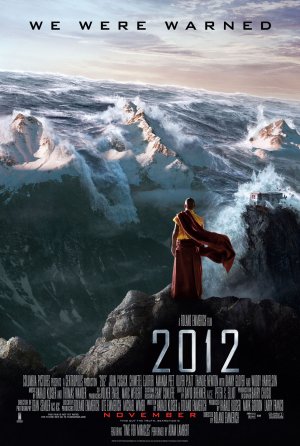
2012I just watched 2012. The conceit that the world will end last year must be getting tired by now, but I’d been curious about the movie since it came out three years back. As I suspected, there was plenty of religious banter as the putative version of us prepared for the end of the world. I noted that the little boy of the average family that managed to make it all the way to China to seek rescue bore the name of Noah. When the animals were being airlifted to the rescue station with its titanic boats meant to float out the world wide flood, it was clear that the myth of the ark was alive and well. (As I hope all of you reading this in the future are.) So this disaster movie turned out to be a bit of harmless fun, but I nevertheless shuddered at the implications. Those chosen to survive were, naturally, those who could afford to find a place onboard the secretly constructed arks. As even some of the film’s characters recognized, those who had money could buy a place on the ark, and of course they did. I do wonder what their brave new world would have been like. The whole idea of wealth has to do with the perceived value of specific commodities, and apart from our last minute stowaways, you can bet that everyone on board wanted their assets valued highest. Once the waters receded, if I recall the story at all, sacrifices would be made. Even the opening of the decks and the buzzing of helicopters like doves and ravens did Genesis proud.

The end of the world is a funny concept. Those of us who experience the world as mortals can’t really image the place without us, so I suppose it is natural enough. Nevertheless, the tone of the last four apocalypses I remember has been distinctly religious. There was a serious scare (perhaps local, because no internet existed) when I was in tenth grade. The next one I recall was Y2K, a silly episode where even priests I knew were seriously worried. With the Camping and Mayan “predictions” coming so close together, some no doubt supposed the Big Guy had it in for us all. When Christians tell the story it’s always the version with God glaring at us, belt in hand. Remember what Homer Simpson says of the song he wrote: “I’ve come to hate my own creation. Now I know how God feels.” Our cultural sense of disapprobation could be better addressed by helping those in need rather than building arks (or tax write-offs) for those who require no more to live like petty emperors. Emphasis on petty.

The world didn’t end and I wasn’t really worried that it would. The fact is we don’t need God to design an apocalypse for us because we’re very good about engineering our own. Unequal distribution of goods and services throughout a world where means exist for alleviating the suffering of countless numbers of the poor and disadvantaged has already created a purgatory on earth. We don’t need a Mayan calendar, or a New Testament whose message of compassion is overlooked in favor of its putative apocalypse, to show us the end of time. But since we made it to 2013, perhaps we should consider this a stay of execution. Let’s use our post-apocalyptic future wisely and hope humanity will live up to its name. And maybe it’s time for a new calendar.


Alien Religion

Alien3

Despite my interest in aliens, my viewing of the Alien movies has been tenuous at best. The image of what looked like an egg hatching a green sun over a particularly badly formed waffle always brought the tagline “In space no one can hear you scream,” to my juvenile mind. When the original movie came out in 1979, it seemed too scary for a kid in high school. I first saw Aliens (part 2) when living with a friend after seminary. He explained to me the missing gaps left from never having seen the original, and I was impressed by how Sigourney Weaver pretty much took on the alien queen single-handedly. I was still too young, however, to realize that there’s always room for an alien or its egg to attach itself inside any spaceship or escape pod. You can never really get rid of the things. I finally saw the first installment some ten years later, and it was clear that, as in nearly all series, the first was the best. Ridley Scott’s films take considerable energy to watch. No one seems capable of matching his dark moods and sense of a hopeless future. I left it at this state for another decade, until recently reading that Alien 3 marked the culmination of the “theology” of the series. Over the holiday break I decided to find out if this was true.

Ripley, who can never get a break, finds herself the sole survivor (again) on a prison-colony at what used to be a lead ore refinery deep in space. While the company had abandoned the facility, a group of inmates who had formed a religious order decided to remain. Having grown up in a refinery town, so far I’m on board with the story. Separated from society, from women, and from temptation, the prisoners are a fundamentalist sect that would seem to fit well into the woods of Wisconsin. Ripley threatens their delicate balance of celibacy, and although not a virgin she ends up conceiving an alien in a Madonna-esque way, not even knowing how she became pregnant. When she decides to incinerate herself rather than allow the alien to be born, she falls into the fire in a cruciform dive just to drive the point home. Before her dive into hell, however, Ripley tries to motivate this band of incarcerated monks to fight the alien. When they say the company will save them, she responds, “What makes you think they’re gonna care about a bunch of lifers who found God at the ass-end of space?” Again, echoes of Wisconsin.

Doubtless, my experience of the movies has been skewed by my own experience. Still, Alien 3 holds to a pattern that emerges fairly often in movies with a strong horror theme—religion is the progenitor of terror. The prisoners’ religion is described as “apocalyptic,” and it frequently appears that in movies where a civilization is on the brink of collapse, religion awaits to greet the survivors with open arms on the other side. In the horror genre, this is often a cold, clammy comfort. Although religious elements were largely lacking in the Ridley Scott and James Cameron episodes, I do hear distant echoes of Moby Dick here from the very beginning. The dark alien, like the white whale, is elusive and destructive and does not relinquish its hunt until Captain Ahab, or Lieutenant Ripley, is dead in its grip. And since Alien Resurrection awaits in yet another sequel, like the white whale, the alien never truly goes away.


No Year’s Eve

So the world’s supposed to end tomorrow. Again. These apocalypses have been coming thick and fast lately; it’s getting so that each end of the world is within sight of the previous end. Of all the strange ideas that religions have given us, the end of the world is the most insidious. While some may choose not to believe it, many politicians of record have actively attempted to provoke the end of time to force the divine hand at bringing a little bit of heaven to earth. Scary thing is, some of them had the power to annihilate us all in the process. Unlike past eschatons, however, this one derives from the interpretation of Mayan artifacts, strangely making it more believable to some people. Those exotic peoples of the past! They just knew so much more about worlds ending than we do. And I know otherwise intelligent people who believe that this is the last day of the earth.

Of course, if we take the earth’s temperature there does seem to be some cause for alarm. That’s not the Mayans’ fault, though. Some of these self-same fracking politicians have insisted that since the Second Coming is near it is alright to destroy the ecosystem that supports all life on the planet. Those are pretty high stakes if they turn out to be wrong. Oh, but they can make a healthy profit margin on the side, so at least they can go out in style. But what would a Mayan apocalypse mean to the firmly committed Christian? It would be very hard to recover from that, should Q’uq’umatz be behind it all.

The events of the past week have been more than a little rough. And the self-same politicians line up on the side of the NRA as they campaign for Jesus’ early return plan. The overall prognosis seems iffy at best. It is like the feeling the dinosaurs must’ve had on the evening of the asteroid. Some of them had brains the size of walnuts, an allegory too plain to require spelling out. What these eschatological episodes teach us is that human life is fragile. Madmen with guns remind us of the same point. I’m expecting, however, that things will be pretty much the same as ever tomorrow morning. I’ll be expected at work, the wheels of the sluggish economy will turn ever so slowly, and politicians will keep doing what they do best. Those counting on Mayan counting will find themselves in the company of Jehovah’s Witnesses and Harold Camping. All of us will find ourselves in a world where religion is perhaps the only power actually capable of total destruction. But if we wake up with aliens swarming the planet tomorrow we’ll honestly be able to say that we’d been warned.

The face of things to come?

The face of things to come?


Faith and Freedom

Schadenfreude is not my usual response to the downfall of a religious leader—with perhaps the exception of televangelists. After all, religious leaders are only human. Occasionally one crosses a very serious line, as the news about Nechemya Weberman, a Hasidic counselor who was found guilty of molesting a girl under his profession care, reveals. The sad part of this situation, apart from the tragic consequences for his victim, which are very serious in their own right, is that the Satmar Hasidic community insisted that it should have had the right to do its trial in secret. Sects that take their cue from the Bible are seldom fair to women. The Bible, after all, is not a very female-friendly tome, no matter how much feminists may try to rescue it from its androcentric world. Religions based heavily on the Bible feel they have the right to judge by their own standards—something a secular court can’t understand. It is back to the paradigm of the two swords here.

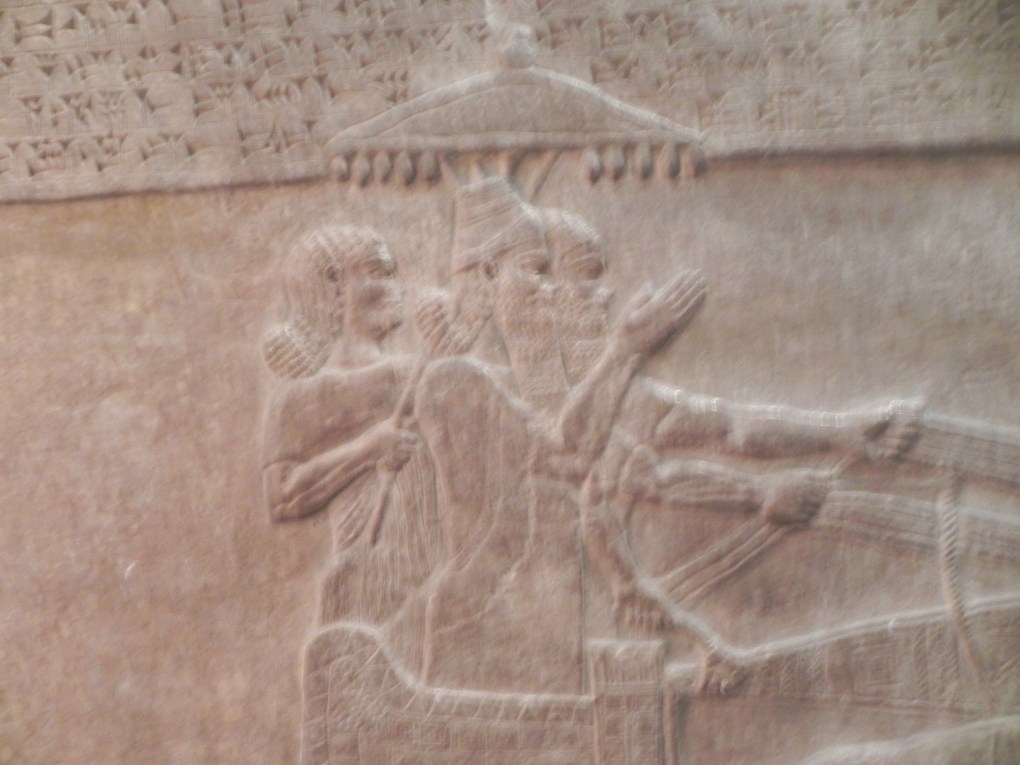
What are we to make of the civil crime that violates no religious laws for any one sect? What is wrong in one book is all right, or at least forgivable in the other. For a secular crime committed in a closed religious community in a country of religious freedom, who is to decide? These questions are decidedly more than rhetorical. Any religion that says women are here to serve men—and there are a disturbingly large number of such religions—can claim that God trumps gent d’armes every time. What’s more, they believe the decree is eternal and they are violating the divine will if they don’t keep to it. This situation is nothing new; at least as early as Tiglath-Pileser III, and probably earlier, ancient religions sometimes had to compromise under the hegemony of a higher power. But they were only biding their time until the political situation would grant their autonomy once more.

DSCN1828

It is simplistic to suggest that the two swords represent the two hemispheres of the brain, but we do have a rational versus emotive issue here. Rationally, would an unseen force endowed with a human personality demand the unfair treatment of some people simply because of an unexplained favoritism? It does not seem likely. But religions are seldom logical. “Credo quia absurdum,” Tertullian is remembered as sighing—“I believe because it is absurd.” Theologically profound? Certainly. Helpful in society? Not so much. Freedom of religion is a classic ouroboros, a serpent biting its own tail. Religions are free to declare their own beliefs, but their own beliefs may challenge the very authorities who grant them that privilege. Secular authority may have the ability to put to death, but resurrection is the prerogative of religion.


Rachel Weeping

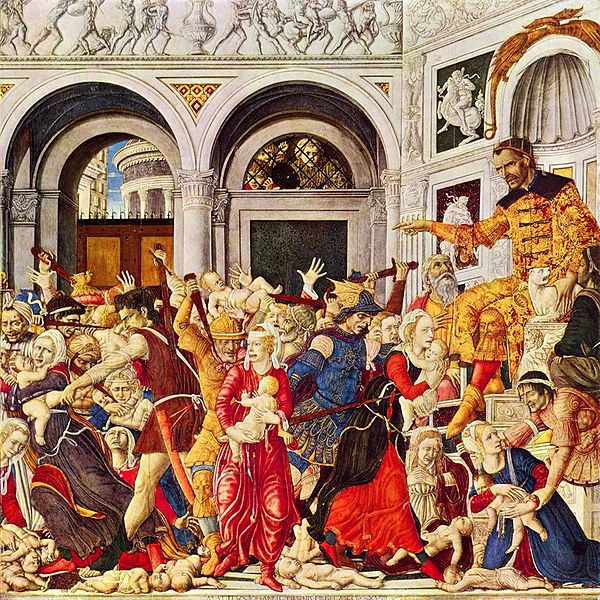
“In Rama was there a voice heard, lamentation, and weeping, and great mourning, Rachel weeping for her children, and would not be comforted, because they are not.” I just can’t get it out of my head. The tragedy of Newtown, Connecticut is the madness of Herod repeated over and over again. I stand outside my daughter’s room and weep as she sleeps, terrified of what we’ve become. For the right of one person to own guns, twenty-eight are dead. The balance of power is way off-kilter, like a fishing vessel in a perfect storm. Those who protest are those who are unarmed who wish to remain that way. The bravado of the NRA says, “I would protect them, if I were there.” If I were there. I would feel no safer. Where was the NRA in Stockton, California, Iowa City, Iowa, Jonesboro, Arkansas, Littleton, Colorado, Red Lake, Minnesota, Nickel Mines, Pennsylvania, Blacksburg, Virginia, DeKalb, Illinois, Oakland, California, or Newtown, Connecticut? Polishing their rifles in readiness, no doubt.

The time has come to put an end to easy access to guns. Life was more civilized in the days of the flintlock and musket—at least people had time to react or flee before another shot was loaded. Instead we tell people they will be safer if they can squeeze off forty-one shots before that crazy idiot shoots another. Drop to your knees and beg for mercy, you’ll be safer. While you’re down there, say one for a nation that loves its firearms more than its children.

Days like this it feels like God has us in his sights. The longer I ponder this the blacker my thoughts grow. We may blame the madman, but it is society that allows this to happen. Herod was king, and even the mother of God fled. But what of those left behind in Bethlehem? They paid the price for a man in love with power. I see a man in a cage, being sprayed by an upright ape holding a firehose. The man is one of the most vocal supporters of the NRA, but now he is the inferior being. “It’s a madhouse!” he cries. Yes, Mr. Heston, it is a madhouse indeed. Only those aren’t apes outside the cage, and those are firehoses in their hands. On further reflection, perhaps they are truly apes. Rachel is weeping for her children, while Herod reloads.

Slaughter of the innocents, 2.0

Slaughter of the innocents, 2.0