Bleak December

Tragedy follows on tragedy in 2012. Maybe the world really is ending this year. Not even a week after a man accidentally shot his own seven-year-old son in western Pennsylvania, a gunman kills twenty school children, six adults and himself in Connecticut, and still the “Religious Right” advocates our God-given sanction to own guns. Various commenters rail that guns don’t kill people—please allow the evidence to disagree. Loudly. Violently. Twas the fortnight before Christmas and all through the school… Nightmare before Christmas indeed.

As a nation we have outlived our need for guns. The only real threat out there is other people who have guns. Even a simpleton can see that it is an insane spiral because no one trusts the other guy. A miniature arms race. A cold war within a nation, state, town, or school. Like the journalists who write the sad stories for the papers, I think of Virginia Tech, Columbine, and children who will never grow up. Wikipedia has an entire article entitled “School Shootings.” America has its own sub-page. I think of other children scarred for life because some people think that it is our right to “protect” ourselves. From what? Still, they’d swear it on a stack of Winchesters. Having been shunted around from job to job and apartment to apartment, I’ve lived next to many people that I found unstable and thank local laws that they were unarmed. The sack on Santa’s back this year is a sack of serpents, and it has been opened and there’s no way to get them back in.

If the Church wanted to make itself relevant again, all denominations would band together and demand stricter gun control. No, it won’t stop every madman from massacring children, but if the Christian community really believes the Gospel it claims, it is far better to die than to kill. The next world is supposed to be better than this. The mother of the shooter, Nancy Lanza, appears to have been the owner of the guns. Probably they made her feel safer. She is now cold in the morgue because of them. Along with a classroom of children in the school where she worked. As the families of the murdered face Christmas this year, they will think that 2012 is the year the world ended. If only it would. But then, nature, and gun-ownership-rights activists ensure a future much more bleak than that.

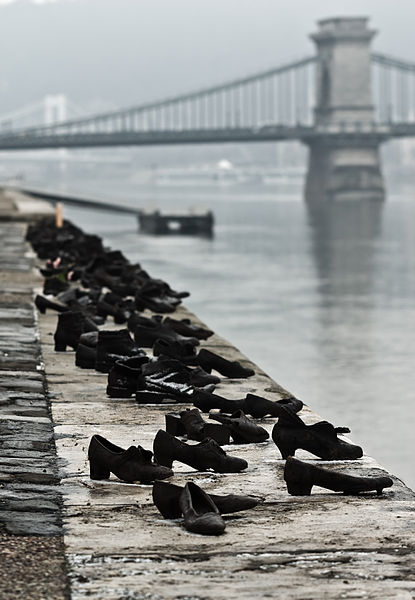
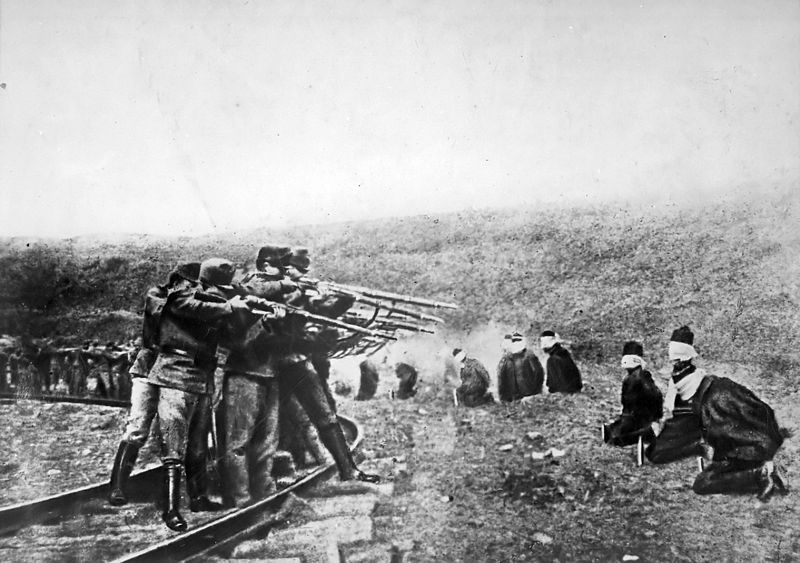
Nikodem Nijaki's photo of shoes on the Danube Promenade

Nikodem Nijaki’s photo of shoes on the Danube Promenade


Accidental Abortion

There comes a time in life when you realize that if a small town you know makes it into the news headlines, it is likely tragic. So it was when I read this morning that a man in Mercer, Pennsylvania—just a few miles from where I grew up—shot and killed his 7 year-old son, by accident. I grew up in a part of the country that has a love affair with guns. This may have been understandable in the days when a stroll to the outhouse could mean chancing a bear or cougar encounter, but these days bear sightings are rare and cougars, well, almost unheard of. The man was trying to trade in a couple of guns at Twig’s Reloading Den. Climbing back into his truck, the handgun discharged, killing his son. This is very tragic, yet the officer making a statement said something chilling. The man thought the gun was unloaded but, “This happens all too often where people think the gun was empty.” All too often. All too often.

I grew up in western Pennsylvania, and if Facebook is anything to go by, it has become consistently more Evangelical since I left. And that is saying something. In my younger days I wore a large cross around my neck and took my fair share of ribbing for being religious. Now I see those with whom I attended school posting on all manner of conservative causes, including the contradictory anti-abortion and loosening of gun control. This is not a phenomenon restricted to western Pennsylvania. At Nashotah House it was alive and well. Several students kept guns in their dorms, protested against the violence done to the unborn, yet called killing heretics “retroactive abortion.” It was their smiles when they said such things that frightened me. Wait until they grow up to kill them.

Like any insecure person I sometimes think a gun for protection might be good. I especially think this when I’m in the grizzly bear habitat of the Pacific Northwest, miles from civilization. I picture myself shooting into the air with a rifle that out-Thors thunder itself, a mighty man. Yet the only time I actually saw a grizzly bear I immediately jumped out of the car to snap a picture or two. I dream of going back to the days before guns were invented, but this evil genie has been let out of the bottle. There’s no getting it back in. Are we vulnerable without guns to “protect” us? Yes. But my reading of the Bible my Evangelical friends so often cite insists that turning the other cheek is the way to show that you believe it. A seven-year-old is dead not far from my hometown. His father was trying to sell guns at a store that doesn’t even buy guns. The boy died in the gun store, and yet my fellow Americans feel safer knowing they’re armed. I hope your hometown stays out of the news.

Feel safer?

Feel safer?


Saving Sin

ScienceoSin Although it makes little sense, I have always tended toward a monastic outlook. When I see something I want my first impulse is not to get it. I will sometimes deliberately not order my favorite dish when eating out. I never even went on a date until my Junior year in college. With considerable help I’ve overcome some of these tendencies, although I still wear clothes I bought in in my undergraduate days. So it was with considerable interest that I read Simon M. Laham’s The Science of Sin: the Psychology of the Seven Deadlies (And Why They Are So Good for You). Despite my monastic proclivities, I have never accepted the seven deadly sins as Gospel. They aren’t biblical and don’t always seem that serious. I mean, murder doesn’t even make the list. (And something need not be organic to be murdered.) In that sense Laham ‘s book exhales refreshingly unpolluted air.

More importantly, The Science of Sin demonstrates what sin becomes when God is removed from the equation. Sin is sin because God says so. As Laham clearly illustrates, the underlying bases of the seven deadly sins may be good for you. At any rate, they’re natural. Laham isn’t calling for a free-for-all, a no holds barred orgy, or the downfall of civilization—he just wants science to inform our natural urges rather than the ideals of some seriously outdated monks. That seems perfectly reasonable. I especially liked his demonstration of how asceticism tends to lead to more negative behavior than “gluttony.” What the church wanted to avoid it inadvertently assured.

Looking back over half a century of thinking pleasure might somehow be evil, it seems that maybe I’ve missed some, if not much, of what life offers. My years at a particular seminary were as close to monastic as a happily married man can get. I have yet to find a higher concentration of disreputable behavior than observed in such a religious setting, and I work in New York and live in New Jersey. Perhaps it is inevitably human that what we set out as ideals often becomes the very source of their dissolution. It is true that the seven deadly sins are beginning to show their advanced age, but perhaps the concept of sin retains some of its utility. When the behaviors condemned by the religious become frequent practices of that selfsame body, what other term fits as well?


Gonad Make Disciples

The funny thing about authority is that when it counts those who have it are often afraid to use it. So yesterday the “mother church” (if that honorific still applies) of the Church of England voted not to allow women bishops. According to Reuters, the voting breaks down into three parties: the bishops, the clergy and the laity. The bishops and clergy both approved the motion while the laity fell short of approval by only four votes. My regular readers will know that I normally shy away from coarse language, but I wonder, along with the Joker, “what happened, did your balls drop off?” In a church built around hierarchy, where there is tremendous authority—according to official teaching, the very power to let one in or keep one out of Heaven itself—vested in the clergy, can they not say, “this is the right thing to do” and just do it? In a Protestant milieu where Methodists, Presbyterians and Lutherans have all overcome centuries of chauvinistic stain, why does the Church of England not do what the collected bishops and clergy have decreed correct? Are the laity now running the show?

I have had a long history with the Church of England. As laity I know that when the clergy want to throw their considerable weight around they are not afraid to do so. My entire career was thrown into turmoil because just such tonnage was shifted. And I had met the Archbishop of Canterbury (before he ascended to the throne) as he received an honorary degree from Nashotah House. When a layman could still shake his holy hand. It is time for the church to drop its magical infatuation with testicles and get on with the business of making the world a better place. Otherwise Heaven may include too many football games and deer hunts to really make all of us comfortable. The gender divide should be dropped and the church should be getting on to matters that really could use some compassion, both human and divine.

It seems that the staid laity of the C of E didn’t follow the fortunes of the radical right very closely in the recent elections this side of the big water. The day of exclusivism is over. It should have been long ago. Many have been the times when I was informed that doctrine is not a matter of democracy. Perhaps in an issue so basic, so fundamental as the equality of humankind, this should be one of those instances. The titular head of the Church of England is a woman. Has been for decades. Before Elizabeth the Second, for six decades of the nineteenth century Queen Victoria held that role. I think I speak for the majority of sensible laity when I say, in the spirit of the departed monarch, “We are not amused.”

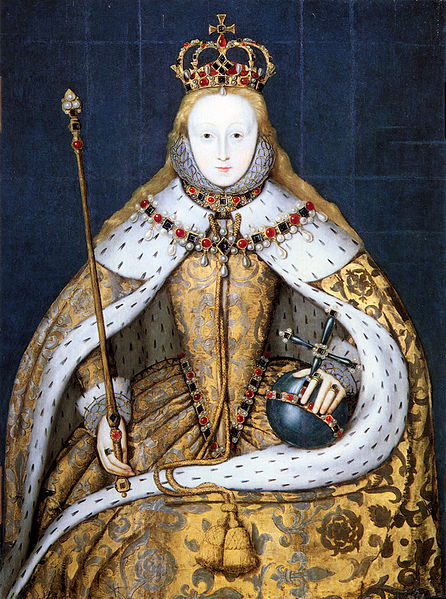
She’s got the whole world in her hand.


Under the Influence

A news story over the weekend—when oddball stories of religion are welcomed by the media—revealed that a judge in Muskogee County, Oklahoma sentenced a youth to a decade of church for a serious DUI crime. An underage drinker, the defendant committed the unforgivable sin of killing another youth while driving under the influence. It is a sad and tragic case. Law makers in Oklahoma are challenging the church decision, according to the video blurb on Newsy, but there is a much deeper flaw in the logic of Judge Mike Norman here. Had the lack of compassion and common sense so blatantly on display during the recent presidential campaign come from other than committed “Christians” it would have been considered downright shocking. We tend to excuse misanthropy when it comes wrapped in doctrinal packaging, a Twinkie in a Cliff Bar wrapper. The judge himself maybe needs a little churching.

There was a time when the moral values of a good, Protestant upbringing were unquestioned. The problem is, we live in a much more diverse world now. What is particularly telling has been the evangelical response to this growing siblinghood of humankind. It is seen as a great evil, perhaps the reverse of Babel itself. We are bringing people of different religions together in what is comprehended as an unholy mix. Thing is, many of these people participate in religions far older than Christianity that have no Babel story to put themselves in proper context. How can they know they’re inferior unless we can get them to read our Bible, attend our churches, learn our religion?

Timothy McVeigh went to church during his youth. Reverend Jim Jones started his own church. Would time in Westboro Baptist Church in nearby Kansas count? There is a reason that church and state should be kept separate. As an institution the church is nearly as diverse as the human race that invented it. Religion has seldom been the solution to crime. Law enforcement officials used to wear a pentagram for a badge, not a cross. But that was back in the days when Oklahoma was the wild west and white-steepled churches didn’t exist to inveigh against the evils of a satanic symbol worn by the representatives of the territory. And since Oklahoma doesn’t believe in evolution, we’ve got to wonder if some things will ever change.

Would this church be all right?


After the Gold Rush

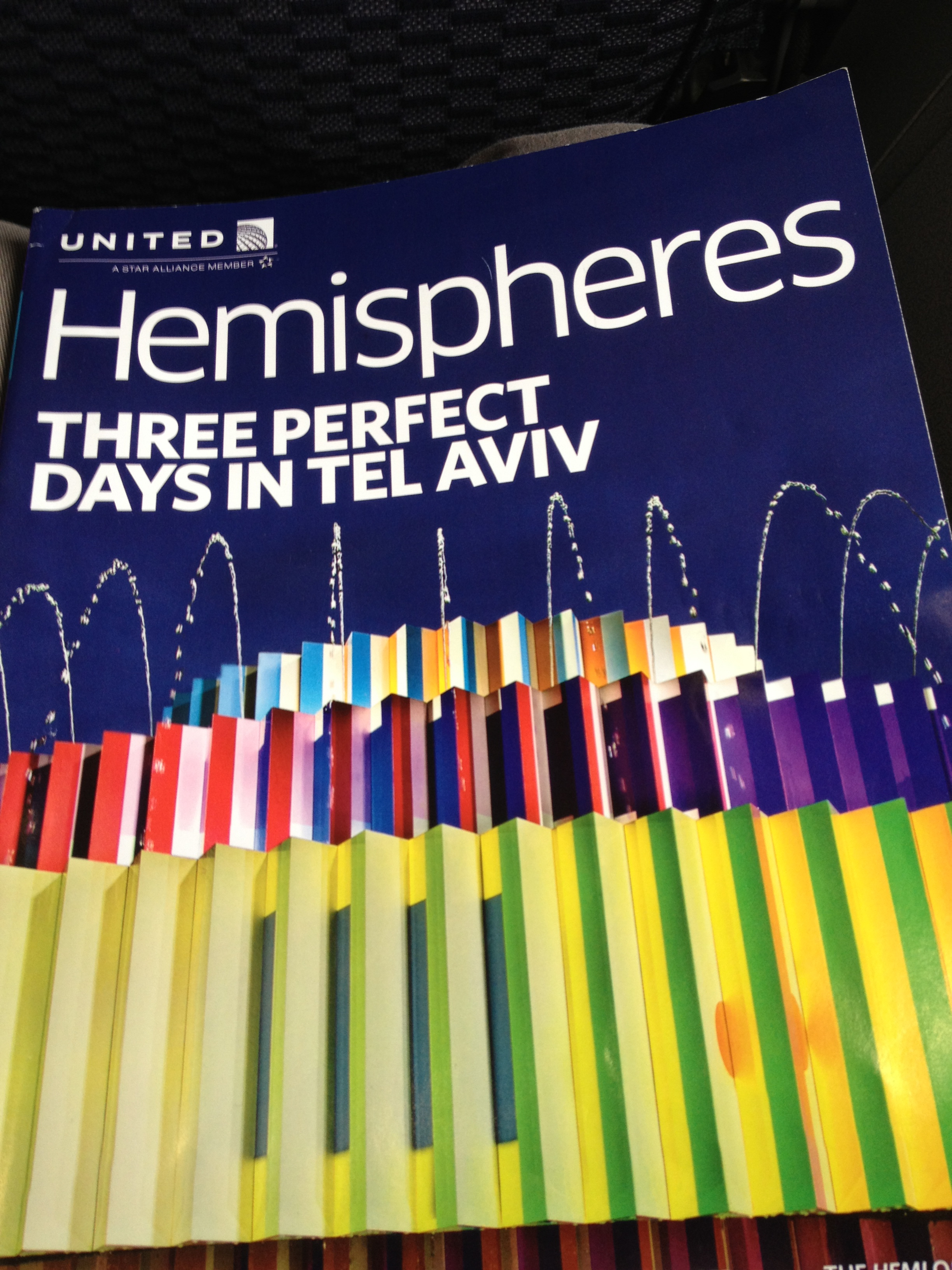
The morning I flew to Chicago for the American Academy of Religion and Society of Biblical Literature annual meeting, the headlines in the morning paper were about the rocket attacks in Tel Aviv. Ironically, the in-flight magazine cover on United, I noticed as I fastened by seat belt securely low across my waist, read “Three Perfect Days in Tel Aviv.” The irony wasn’t so much funny as it was sad. The situation in the Middle East is hopelessly entangled, but it all comes down to our obsession with dividing people into groups. Religious, ethnic, social: somehow we are not like them. We’re better, superior in some way. It matters not that proving superiority is a purely subjective enterprise. After all, we just know it. When history places one persecuted group in a position of persecuting another group, well, I’m afraid we all know what happens.

The problems in the Middle East are largely biblical and predominantly petroleum-based. Even those who tend to read the Bible figuratively can see a land claim based on an Abraham who probably never existed as strangely literal. Especially when there’s oil in them thar wells. Isolationism served the United States well until it was discovered that they had more black gold than even Texas does. Establishing a foothold in the region was not such a subtle policy; the x-ray vision of politicians funded by heavy industry saw beneath the sandy soil to the real deity that lay beneath. Dig a well, hit a gusher, and, like the Bible says, “he anointeth my head with oil, my cup runneth over.” Good news for modern capitalists. But some people will have to die.

As I sat in the lobby of a posh hotel, waiting for an appointment, I heard a fragment of a conversation as a couple of scholars rushed by. They were discussing the aftermath of the rocket attacks on Tel Aviv. One suggested to the other, in the context of how many Palestinians might die in retaliation, “well, if they can keep the numbers down…” and then they were gone. My mind jumped to The Prisoner. “I am not a number, I am a free man!” crashed in my head with the way that the dead in the Middle East are piled up as “the numbers.” I’m sure it was only intended as a convenient turn of phrase. Outside the hotel lobby the striking workers from the Hyatt labor disputes were protesting in a cold, crisp Chicago morning. They were soon cleared away. My fear, Number Six, is that you are wrong. We are all numbers, even the best of us.


Say Can You See

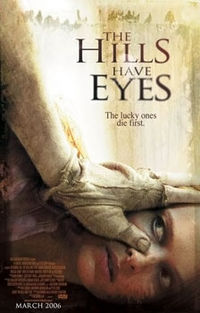
Remakes of classics. It is my sense that a classic has earned its place in its own constellation for a reason. Remakes seldom attain the je ne sais quoi of the original, but sometimes I have trouble telling them apart. I like scary movies—the classics anyway. In recent years various directors think they can improve on the masters and some of us get confused about what’s what. So it was that I came to watch the remake of The Hills Have Eyes without having seen the original Wes Craven version. As is typical for remakes, the writing tends to lack the flare that often characterizes the original vision. The story may be similar (in this case I’m only guessing) but more than the names may have been changed to protect—who? I’m afraid I didn’t care for the film. Graphic violence is seldom as effective as suggested terrors, but it can make you a bit queasy nevertheless.

I decided to stay with the movie to see if my thesis of religious elements and terror would become part of the story. In the remake, in any case, the action is set in a nuclear test zone where people disfigured by the radioactive fallout of American nuclear tests prey upon the victims they can lure into their lair. So an extended family is drawn in and very few of them make it out. The pater familias is a man who trusts his gun and has no fear of walking into the dark desert alone. But before he goes—yes! Religion. The mother of the brood, it turns out, is a devoted Christian and insists on praying before the men-folk set out to try to find help for their stranded vehicle. The eponymous eyes in the hills watch them pray and then begin to prey. The confident father says, “I trust my bullets more than your prayers.” (Or something along those lines.)

Ironically (and I can’t believe it was anything beyond coincidence) both dad and mom end up dead—the father in a crucifixion pose, the mother by being shot. Neither bullets nor begging save them from the mutants who seem to live just to cause others misery. The man who trusts his gun dies in a somewhat religious way, and the woman who trusts prayers is the victim of a gun. Now, in a classic there would be some lingering on the reversal here, but the remake syndrome is eager to add gore and grotesqueness to the screen without pausing for thought. The eerie backdrop of a nuclear testing town with mannequins still intact is effective, but otherwise you know to expect Road Warriors-type action in this small, post-apocalyptic world. The fact that even this wasteland supports a moment of prayer, however, demonstrates that fear and religion are never too far from each other.


Blame it on the Rain

I’ve been on the losing side of my share of elections (although it feels like far more than my share), but I’m amazed at the character of the GOP that has come through these last few days. The quote that keeps running through my mind comes from The Dark Knight when the Joker says to the Chechen that if they cut him up and fed him to his hounds, “then we’ll see how loyal a hungry dog really is.” Blame has been flying thick and fast, but one thing I don’t hear any Tea Partiers suggesting is that Hurricane Sandy was sent by God to seal the election for Obama. Hurricane Katrina may have been sent by God to wipe out the sinners in New Orleans, but when Sandy gave a chance for Obama to show his true colors, it was just a freak storm. I’ve never been a fan of Chris Christie, New Jersey’s bully governor. During Hurricane Sandy and its aftermath, however, I was very impressed how he handled the situation. He showed a rare side full of compassion for those who were suffering. He vowed to help President Obama make things right again. When the storm of the election was over, however, Christie’s own party verbally crucified him for doing the right thing. Does this not show us just what white privilege spawns?

Turning back the clock is an exercise best left for post-apocalyptic scenarios of rebuilding society and the occasional spring or fall weekend. As our world makes progress—and yes, it is slowly making it—we must constantly reassess the situation. The ethics of the 1950s favored white men, the mores were blithely uninformed that an entire world exists outside this strange isolationism that could only be broken when Communists threatened our way of life. We are over half-a-century beyond that: the Berlin Wall has fallen, the Cuban missiles are gone, and those seeking to move to America are by and large the tired, the poor, and those yearning to breathe free. Not all of them are “white.” Not all of them are male. They are, like the rest of us, human beings.

I have never wished want or deprivation on anyone. I know what moderate want feel like (I lost an entire day of my college education searching for three dollars that fell out of my pocket, wondering how I would make it through the week without it). I have spent several years of my life tip-toeing around unemployment, and sometimes falling into that crevasse for a year or two at a time. Each time I claw my way out I earnestly wish that no one would ever have to face that. A political party that puts such a strong emphasis on giving up all the good we’ve managed to obtain, and cries about health care that doesn’t even approach the humane, universal care available in just about every other “first world” nation, is a party in need of serious, prolonged soul-searching. On this day when we honor veterans who, despite personal differences, stood side-by-side for the good of their country, perhaps those attacking their own might in days of privilege spend a few moments in serious thought.

Blame it on the rain…


Vote!

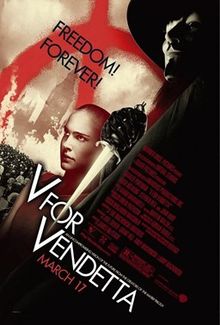
“Remember, remember the fifth of November.” Election day is upon us and my mind goes to V for Vendetta. The movie is about oppressive regimes and, more importantly, people finding a voice. It is a strongly emotional film for me not because of the violence, but because of the symbolism. Yes, V is out for vengeance, but we are all V, having been co-opted into a system that doesn’t seem to have our best interests at heart. At least we can vote. The scene at the very end, where V’s future, alternate universe gunpowder plot succeeds, always leaves me with damp eyes. By virtue of watching many movies, I am not prone to shed tears at what I know to be fiction. But some fiction possesses a verisimilitude that fact lacks. V for Vendetta is one such fictional vision.

I grew up a Fundamentalist Republican before such a combination was de rigueur. I also grew up believing in liberty, an idea that often resonates with those who don’t have much in the way of material goods. At least we have our freedom. By the time I attended a Christian college, I learned the error of my ways. I asked around to find out why America always seemed to get involved with conflicts under GOP administrations. I learned that, in some cases anyway, belief that Armageddon was around the corner motivated such wars. Even some presidents believed, as their religion taught, that the end of the world was nigh and it was their duty to hasten the process. Be careful what you vote for.

As I stood in long lines waiting for a bus out of New York City yesterday, I listened as other passengers wanted to talk. Hurricane Sandy left many people in poor circumstances, feeling the pain that is only alleviated by sharing. They told of devastated neighborhoods where people who hardly knew one another came together, naturally, to help each other. I listened to descriptions of those with power opening their houses and sharing their food with people they didn’t know. It wasn’t because the government forced them to—they did it because it was the right thing to do. When I watch V for Vendetta I don’t cry because I approve of violence; I have been a pacifist since childhood. I cry because the vision of justice prevailing is so beautiful that no other response seems appropriate. With that vision in mind, I am heading out to vote.


Hard to Digest

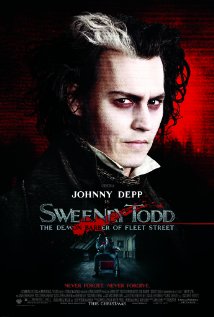
Sweeny Todd has never been one of my favorite shows, but the dark humor and gratuitous bloodshed made it seem somehow appropriate as a November movie after a hurricane. I’m referring to the Tim Burton movie, of course, and as I watched it this time I noticed a few religious themes that I had overlooked in previous viewings. The story is not complex: a barber is robbed of his young wife by a powerful establishment cad and determines that the time has come to exact his revenge. Along the way he rents a room from the hapless pie-maker Mrs. Lovett on Fleet Street and puts his murderous revenge to work supplying her with meat for her pies. The song where they hatch their nefarious plot, “A Little Priest,” is filled with innuendo and even a little social commentary. As the schemers look out at the crowds of London, several of their potential victims are mentioned as clergy.

When Todd asks Lovett if the priest is good she replies, “too good at least,” noting that its only fat where it sat. “Not as hearty as bishop,” nor “as bland as curate,” Todd observes. Mistaking a grocer for a vicar because it’s “thicker,” the duet eventually warble that the friar’s drier, but overall the clergy are “too coarse and too mealy.” Stephen Sondheim and Hugh Wheeler are not theologians, naturally, but it is noteworthy that the only role the clergy play in this film/musical, which is ultimately about social justice, is as fatty meat. When Benjamin Barker is wronged, the clergy are never mentioned as recourse or balance to a corrupt official. The church is simply establishment, a comfortable and expected part of the environment.

Johnny Depp portrays a mostly believable sociopath, interestingly reversing his first big screen role in Nightmare on Elm Street where he is the victim of a psychopath with razors for fingers. Edward Scissorhands, another step on the evolution from victim to perpetrator, found Depp with blades for fingers. In Sweeny Todd he declares with a straight razor held aloft, “at last my arm’s complete again!” The pattern here is a sad but familiar one. The victim who finds no redress in society adopts the role of the vigilante or the perpetuator of victimization. Who might step in to interrupt this cycle if not the clergy? But to return to “A Little Priest”: Todd observes that what the world terms business as usual is really one man eating another (this is, after all, patriarchal Victorian London). This may be the piece that at last makes sense of the puzzle. What is truly diabolical is not one man’s revenge, but the system that insists all play by the rules of genteel cannibalism while persistently calling it civilization.


Big Top

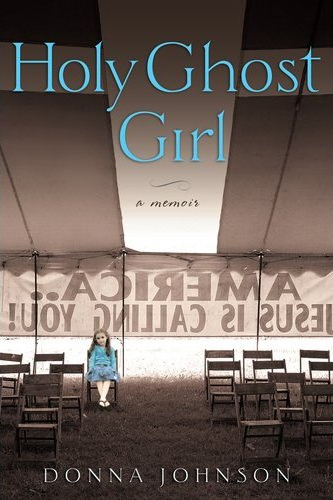
Being raised by a woman who staunchly kept her evangelical faith no matter what the world threw at her has undoubtedly left a deep impression on me. Over the past few years I’ve found myself reading the memoirs of girls raised in evangelical settings who’ve discovered truths often hidden from males in similar circumstances. Clearly one of those truths is that male privilege is the substrate for any kind of biblical literalism. I’ve just finished reading Donna M. Johnson’s Holy Ghost Girl and once again I’ve seen the light. Before I read this book I’d never heard of tent revivalist David Terrell, but I had attended a revival or two with my mother in my younger years and I knew, at least in theory, the evangelist is less important than the message. So they would have us believe. What Johnson accomplishes, however, is no less than astonishing. She presents a portrait that neither condemns nor condones her erstwhile stepfather, although her childhood was frequently undermined by the perils that accompany being raised by a revivalist groupie, and particularly being a girl in that situation.

Plaintive and reflective, Holy Ghost Girl raises questions that evangelicals often leave hanging in the air, such as when Brother Terrell’s son asks why he has to go to school when the rapture will come any day. Why indeed? When a court order had been issued, Johnson describes the puzzlement of the evangelistic team as they tried to decipher the letter: “Dreams, visions, prophecy, and scripture, our primary tools for making sense of the world, offered no insight on how to deal with legal issues.” This sentence suddenly explained so much of my own youth that I felt as if I’d missed out on the class that informed evangelicals of what was expected of them. The rules of this world do not apply here. Men are superior to women and girls who question that do so at their eternal peril. This becomes clear as Johnson reveals while the story unfolds that Terrell kept at least two secret families hidden from his wife, and, more importantly, from his followers. When Johnson’s mother found herself pregnant by Terrell and her daughter asked what she would tell the kids when they grew up the answer was pat: Jesus will return before then.

The idea of being excited for one’s belief is admirable. Evangelicalism has made an industry of it, conflating emotion with spirituality. Biblical literalism will always exact a heavy cost on girls. Those of us who study the Bible professionally learn early on that the Bible reflects the social conventions that gave rise to it and that world was unapologetically patriarchal. That stain will necessarily accompany any form of literalism—the sexes cannot be equal when the Bible says it ain’t so. Herein is the dilemma of the girl raised in an evangelical world: to question authority is to risk hellfire, and authority rests with men. Those who insist on women’s equality are of the devil. Johnson, obviously, took that great risk of making a deal with the devil and became a normal person. All of us raised evangelical have to come to grips with such issues if we want to make a lunge for normalcy, but the cost will always be far higher for girls.


Endorsement

Since a blog is a variety of media, and since media endorse their candidates, Sects and Violence in the Ancient World endorses Barack Obama for President of the United States. I endorse Obama for the working class, for those who think clearly, and for those whom society doesn’t give a chance.

Working class credentials are at a premium these days among politicians who want to appear to be just like the most of us. Often it is, in the words of Bruce Springsteen, “a rich man in a poor man’s shirt.” Some of us, many of us, maybe most of us, have grown up in the working class. We are fed a theologically conservative line by our clergy and sometimes they make efforts to wrap it loosely around political conservatism as well. I don’t buy it. I grew up working class and that mentality has never changed. This is something Obama understands. He may not be perfect, but in this working world, none of us are. Empathy is still currency.

Bemusement would be my reaction to the factual gaffs made by not only Mitt Romney but also most presidential candidates from the GOP over the last two decades, were they not so serious. They show a loss of touch not only with the average person, but with reality itself. In their world of corporate-level wealth and extreme privilege they don’t even have to obey the laws of climate change as long as their obsequious sycophants are willing to change the facts for them. I am amazed at how easily the wool is pulled over the eyes of the American public. Does anybody really listen to what these guys are saying? Does anybody bother to try to add it all up? No, not even a slide rule will help.

The economy was not fixed over night. Too many years of too much greed have dug us deep, deep in a rut. From their armored cars speeding along in the midst of motorcades maybe the politicians don’t see the homeless I walk past every day on my way to work in the richest city in the nation. Maybe they don’t see the utter lack of hope, the death of possibility in the eyes of those who, through no fault of their own, society deems useless. I’ve been unemployed, even though I played by the rules. I learned there are no rules, save one. Those with wealth will do whatever it takes to keep it.

I think Barack Obama understands all these points. As for the honorable opposition, I think his diamond-lens glasses may have grown too thick to read clearly what the tablets say. And those tablets, I’m told, are made of gold.


Fall Silent

Some books impact an individual profoundly. Others are powerful enough to influence an entire society. Rachel Carson was the author of both. Tributes to the fifty year landmark of the publication of Silent Spring have appeared this month, and although the players have changed, the plot remains the same. Bryan Walsh’s tribute in Time a few weeks back captures the essence of the situation: an environmental danger is discovered, “industry” will at first deny it, then attack the science, and then try to frighten the population with the inevitable escalation of costs. Sometimes common sense wins, but only after a long tantrum by those whose main desire is personal enrichment.

Silent Spring is credited with starting the ecological movement. Until the early 1960s the world seemed vast enough to absorb our filthy, toxic run-off. We were only on the cusp of understanding that the world is much smaller than we had ever imagined. Disney had not yet published the theme song that would get through to the American imagination. We had yet to stand on the moon and look back at just how tiny our troubles were in an infinite universe. Using pseudo-religious backing, industries often claim the planet was made for us. In truth, we evolved to adapt to this planet. The sad story after sad story of those who’d figured out how to line their pockets at the expense of the health, and often the lives, of others constitutes an ignoble hall of shame. Rachel Carson, who truly deserves the title of prophet, was considered the enemy of progress. Better living through chemicals—who hasn’t heard the phrase?

The science behind DDT, which nearly drove the bald eagle to extinction, is not the culprit. The radium that rotted the teeth, mouths, and jaws of young women employed to paint it on watch hands, had always been radioactive. The coal still burning under Centralia suffers from properties properly discovered by science. In case after case we find greed running away with the science. Science unlocks the secrets of our universe, but it also gives ideas to those who are always looking to make a buck. It may be that Rachel Carson knew she was slinging stones at giants when Silent Spring was published. This one biblical metaphor might come in useful for those who are able to see the larger picture. We’ve only got one planet and if we want it to survive we’ve got to make it last. Giants should come to fear the disadvantaged who know how to use slings, whether with rocks or words.


Seeing the Dark

The Dark may be a movie that tries to do too much, but it does illustrate an idea that has been lurking around my head for a few years. That which we fear and that which we worship are never far apart. Since The Dark was pretty much panned, in brief it goes like this—a separated couple gets back together in Wales to draw their troubled teen daughter back. While there she drowns and the ghost of a girl from the past shows her mother how to get her daughter back. The film is notable as being the first I’ve seen that could make sheep scary. Skulking in the back story is a minister, “the shepherd,” the father of the ghostly girl, who started a new religion over the ocean cliffs of Wales half a century ago. When his daughter died, he convinced his flock to leap off the cliff to reach a place that is a combination of Heaven and a Welsh mythical afterlife called Annwyn. The shepherd, however, is really using their sacrificial deaths to bring his daughter back from the dead. The story is complex and the darkness of the narrative is at times overwhelming, nevertheless, it is a showcase of how religious conviction can be more frightening than consoling at times.

Some years back I researched the Welsh mythology of the Mabinogion. Having been a student of ancient religions, however, I knew there was only so far I could go without the lexical support of learning Celtic languages. (This is a fact of mythological study often overlooked by popular treatments; if you really want to get what is going on there is no substitute for reading texts in their original language. I was too busy learning Ugaritic and the time, and struggling with Akkadian, to pick up Gaelic as well.) Nevertheless, the mythology struck me as particularly compelling. Some of the roots of the Arthurian legend lie deep within this lore, and although often uncredited, it still influences our society today. Mythology is simply religion dressed to go out for the evening. The concepts form the basis of much that we still believe and that which still has the power to terrify.

Although the critics didn’t care for the film, the dense interweaving of misplaced religious devotion, Welsh mythology, and basic human longing make The Dark in many ways a classic horror movie. It may be hard to find the characters sympathetic, but they are in some ways archetypal. With a sinister minister driven by personal loss turning to pagan folklore to bring his daughter back, we have a secondary character who curses the fate of an all-too-human condition. The concept of sacrifice becomes a tool for selfish gain rather than a means of helping others. Possibly those who panned the movie did so without an appreciation of the mythology that pulses just beneath the surface here. And while sometimes horror films are simply puerile escapism, at other times they should give us pause to think, and maybe even learn.


The Future of Theological Education

It is almost like stepping into a time warp. To be honest, it is difficult for me to admit that I graduated from Boston University School of Theology a quarter of a century ago. Standing here outside 90-92 Bay State Road, where I once lived, is like looking into a shattered mirror. Behind those doors much of what made me who I am took place. Perhaps I left some of myself there. I don’t even know if the property is still the single student “dorm” for the school of theology or not. Kenmore Square has transmogrified from an area that felt like Times Square in the ’80’s to an upscale dogtown. When I stepped into 745 Commonwealth Avenue, it was like being hit in the face with a combination of nerve gas and roses. The hallways look wider now then they did back then. The hallways where so many of my assumptions curled up and died. They still have chapel and community lunches. The Boston Book Annex is closed.

Boston University has sure poured a lot of money into the Back Bay redevelopment. Whence that sense of personal offense when I see a multimillion dollar new building there and recall the financial aid interviews where I was told, like in a Bruce Springsteen song, “we’d like to help you out, but we just can’t”? Has social justice come to live in these halls? In those days anyone who didn’t have an oppressed status was a minority. And I learned as much about hate as I did about love within these implacable walls. Is it ghosts that I feel rushing through me as i walk down Bay State Road, and stare out over Storrow Drive? I’m not sure of the future of theological education. Until schools of theology can lay down their swords and become truly ecumenical, can any change truly occur?

Theology is an exercise in the unknown. When I donned my red robe and graduated here, the world seemed to be full of possibilities. A lot of erosion can take place in twenty-five years, you know. I thought I was contributing to the future of theological education when I studied the Bible so minutely that no single letter existed that didn’t have a prehistory deep in the realm of pre-Israelite society. I assumed that truth was the end goal of theological inquiry. Problem is, for many, the end goal was written two millennia ago and we of the lost generations ever since have as our task simply to reinforce the crumbling foundations and assure our benefactors that we did have it right, we have had it right, all along. As I write this a very able colleague at another seminary is undergoing what can only be considered heresy trials for teaching the truth. Is theological truth so fragile? Maybe this is why it has taken a quarter century to return. Maybe this is the future of theological education. Those of us who still believe in theological education seem to be a dying breed, along with the ghosts of Bay State Road.