Bible Review

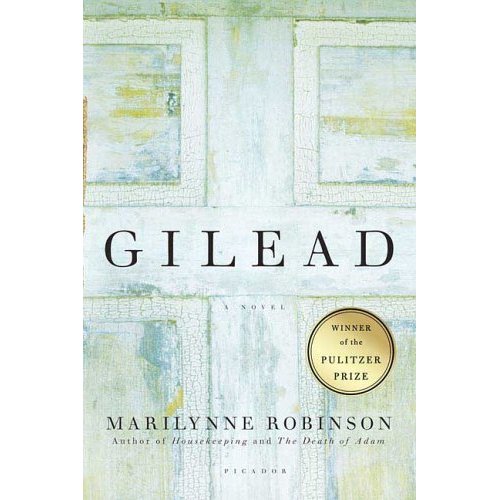
The Christmas edition of the New York Times Book Review begins with the Bible. Appropriate enough for a book that gave us “in the beginning” and the Christmas story in the first place. Reviewed by Marilynne Robinson, the Pulitzer Prize winning novelist, the Bible is presented as the unacknowledged source of much of our literary culture. It is a message that bears repeating every now and again, since the Bible itself is often equated with those who thump it instead of trying to comprehend it. The Bible is often guilty by association. Like any book, it has parts that we wish weren’t in it, but that is only problematic for those who think of the Bible in authoritarian terms, a book that must be rebuilt into modern culture, jot and tittle. Taken alongside other ancient writings, however, the Bible is a fine example of human evolution. It represents a segment of our developing culture. And, every now and again, atheist and evangelical should acknowledge, the Bible gives us profound insights.

Robinson’s article mostly focuses on reiterations. The Bible’s influence is deep, and in the English literary world, nearly universal. What authors have written in the past—and what they are still writing today—bears the stamp of the Bible. It was the first formative book in western culture, and to dismiss it completely is to throw away a valuable part of our selves. At the same time, even so able a writer as Robinson can’t escape the subtle supersessionism that coheres to the mythic reading preferred by a large cross-section of society. The Bible is a self-referential text, but the Bible does not know that “the Bible” exists. Books that eventually made it into the collection were written without an awareness that they would become authoritarian tomes millennia down the road. Modern believers still invest the books with the mystique of divine authority, often in subtle ways.

A point made by Robinson should be read by those aspiring presidential candidates super-bussing their ways across Iowa. “Moments of the highest import pass among people who are so marginal that conventional history would not have noticed them,” she writes of the biblical narrative. The vast majority of us are marginal in this sense. Those in seats of power frequently forget that it is the unassuming compliance of those further down the food chain that lends them their power. The Bible is nearly always on the side of the oppressed. The Bible, however, can also empower those deprived by the crass world of politics. It must be rescued first. Once they are done kissing babies and shaking hands, once they settle in their opulent offices built with the money that would have otherwise gone to those babies, politicians forget the basic truths of the Bible. As long as it can be thumped once in a while, however, they will keep it in the bottom drawer until it is needed again. Only by dealing with the Bible sensibly can its abuse be stopped.

There is, I hear, balm there.


Silent Might

Iowa is a state for reflection. For many years Christmas in Iowa was a family tradition, but living on the east coast makes such pilgrimages rare. On Christmas Eve in Ames, we drove past a Nazarene Church decked out for the holiday with a sign reading, “Jesus Came for You.” Perhaps I watch too many movies, but the images that came to mind were of Rambo and The Terminator—menacing figures who’ve sought out their victims for revenge. Coming for you was a threat rather than a promise. Who can forget Arnold’s “I’ll be back”? Was the child who came sent with a mission of punishment or of peace? To hear presidential candidates and other evangelicals tell the Christmas story, it is clearly the former—the Rambo of God who blows away the sins of the world—that we should expect. The Prince of Pieces.

That version of Christianity that likes to present itself as the default, the natural form of what the church has taught all these years, has a strong current of threat running through it. God never shows up unless there is a problem—an absentee father only too swift to remove his ample belt to begin a sound thrashing. Religion often thrives in the context of menace. Teaching that people are evil by nature and only good when under promise of Hell, such believers understand the coming of Jesus to be cause for fear and alarm. According to Luke, the angels began their message with “Fear not.”

How Christmas is understood reflects on the view of Christianity that believers choose. For the advent and arrival of an emissary can be cause for celebration or of fear. In some mangers the infant conceals a cudgel and woe to those who suggest equal treatment of all or a non-literal reading of favorite prooftexts. This time of year stands as an excellent test of what this child will grow up to be in the minds of his latter-day cohort. What arrival should we anticipate? If it is the Jesus of the politicians and evangelicals, we only have to look at the headlines to discover the answer.

What child is this?


R-e-s-p-e-c-t A-l-l

Every great once in a while a politician makes a statement consonant with the principles of the nation. Over the weekend Robert Menendez, one of New Jersey’s U.S. senators, make a public announcement of his support for the Respect for Marriage Act. Admitting that 15 years ago he voted for the Defense of Marriage Act, which would not recognize homosexual unions, Menendez has searched his conscience (a rare commodity among elected officials) and has come to realize this “Defense” Act for what it is: legislated immorality. It is immoral for a government to deny rights to committed couples based on the gender of either party. Gender is a social construct that may or may not align with sex—even the concept of two completely distinct sexes is now seriously questioned by biologists. The old measuring rod of ability to procreate together just does not match reality: infertile couples are granted the same rights as other married couples, so why not same “gender” couples? As Americans we often like to vote without thinking too deeply about the topic.

The value of procreation is obvious. Birds do it. Bees do it. Even educated fleas do it. (Cole Porter knew what he was writing about.) When did we become so fixated on this one aspect of sexuality that we let it become the sole purpose of sexual behavior? Many religions recognize sexuality for what it is, a form of human interaction. The end result may be a new child, but it is not so as the result of the vast majority of couplings. Christianity (in some quarters) early on took a dim view of sex, and soon began to relegate it to procreational necessity only. Even then you were supposed to try hard not to enjoy it. The Catholic Church even relegates the biblical siblings of Jesus to the role of step-siblings; children of Joseph from a prior marriage, despite what the Bible says. Such distortion of nature could only come at the interference of religion. And as long as we’re busy regulating sex, let’s add a few statements about the only appropriate outlets for that committed relationship. Never mind who gets hurt. It’s all gonna burn.

I, for one, salute Senator Menendez for his willingness to open his mind. Too often the “government for the people” is excised from Lincoln’s Gettysburg address. When did we the people pass to the government the right to decide whom we might love? The agenda set by the Religious Right is religious wrong, and too many tax-paying citizens are the heirs of its paranoia. It is time the government began serving the entire electorate rather than just the Southern Baptists and their friends. Nobody is attempting to regulate their sex lives, as Ted Haggard, Jimmy Swaggart, and Newt Gingrich will gladly attest. Keeping the zipper firmly up is not the strong suit of televangelists or politicians. If we’re going to have double standards here, let’s at least open the game to same-sex marriages. Those who feel threatened by the fair treatment of others need to gaze long in the mirror and ask why.


King Hong

When the same religio-historic event is described in three consecutive books I’ve read on diverse topics, I start to consider what strange form of coincidence is operating here. Coincidences are some of the potent spices that give life flavor—the tragic death of Suzanne Hart on Wednesday when an elevator crushed her to death occurred the very day my bus was late and I took the route directly past her building to avoid the crowds on 42nd Street. What was the series of uncanny events that led me to where someone was about to die? It hardly seems within the divine character. So coincidences have been on my mind of late.

The last three books I read have all discussed the Taiping Rebellion that took place in the mid-nineteenth century. Despite having studied religion all of my life, I had never come across this religiously motivated violence until reading Daniele Bolelli’s 50 Things You’re Not Supposed to Know: Religion. Unrest in imperial China had existed before, but Hong Xiuquan, the leader of the rebellion, was motivated by religion. Xiuquan was a Christian (no doubt the fruit of missionary activity) who came to believe that he was Jesus’ younger brother. His motivation for the rebellion was based on his aberrant version of Christianity that quickly grew into a full-fledged movement calling itself the Heavenly Kingdom. Basing itself in Taiping, the movement adopted the early Christian practice of communal property and came to rule over about 30 million people. The numbers are what is truly stunning about this tragedy. When the conflict with the Qing Dynasty ended, about 20 million people were dead. The number is so high as to shut down comprehension. So many dead because of religion. It has a corporate feel to it.

Religion evolves. When it is spread into new cultures, syncretism takes over. Many religious believers, through faith, insist that their religion is the same as the founder propounded. Such simplistic understanding is not true. Culture, just like biology, lives and grows through evolution. The American Christian dressed in expensive clothes in a phenomenonally costly mega-church with a shining preacher bearing a million-dollar smile is about as far from a property-less, vagabond carpenter from Nazareth as you can get. Yet we still pretend. If that pastor says he is Jesus’ younger brother, chances are good that many will believe him. Stranger things have passed the lips of televangelists. Emotional involvement in religion easily leads the zealous to extreme action. History has demonstrated this time and again. The Taiping Rebellion of the Heavenly Kingdom proves the point, even if we’ve never heard of it. Maybe it is no coincidence after all.


Silent Fright

Baylor University has begun to make quite a showing in the non-sectarian academic world of late. Knowing of the school’s Baptist heritage, I’d always been somewhat suspicious of any scholarship susceptible to doctrinal poisoning. I freely admit that my fear goes back to a hyper-evangelical college roommate. Even at the conservative bastion of Grove City College, John would lament the sorry religious state of the school and repeatedly thought of transferring to Baylor. (I need not fear that John will ever read this—he avoided liberal dribble like it was Planned Parenthood.) By association, Baylor became something in my mind that it apparently is not. When the administration recognized the direction the Southern Baptist Convention was going, they took steps to protect themselves from a takeover (something I’d witnessed at a much smaller school some distance north). The university press has been producing intriguing books, and the sociology department has been cranking out some fascinating studies of religion.

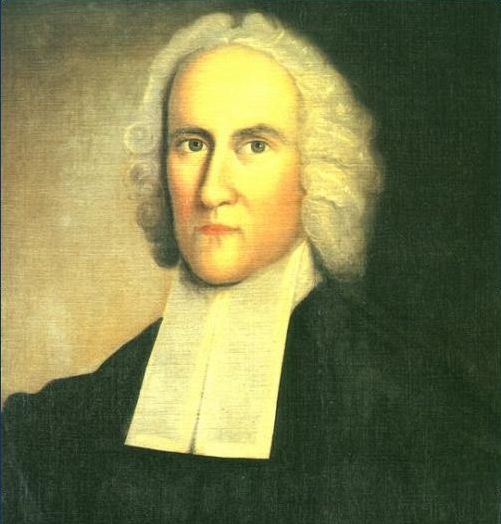
One of the more recent religion in America surveys from Baylor indicates that a correlation exists between the image of God presented by a version of Christianity and that contentedness of believers. More specifically, churches that promote a judgmental image of God (think Jonathan Edwards and his spiritual bedmates) tend to be anxiety-ridden and compulsive. Churches that teach a loving God have more balanced believers. Brimstone and hellfire, in other words, produce the expected results. What the Baylor study shows is not so much surprising as it is scientific. Well, softly scientific. As a social science, sociology relies on statistics and analysis to draw its conclusions. We now have a means of measuring religions outcomes.

Religion is, in many ways, self-fulfilling prophecy. By preparing believers for a literal Hell of a future, it cranks out automatons who’ll do anything to flee from the wrath to come. Herein lies its danger as well. Although some politicians may be naïve about the veracity of belief, many of them realize something their more liberal compatriots don’t—religion motivates. The religion of a loving God who has no Damoclesian sword hovering perilously over the heads of the faithful won’t get them to the polls. The god with believers on a skewer above the everlasting barbeque pit will. Baylor has shown us the data. If we ever hope to redress the damage constantly visited by politicians claiming God has told them to run for office, to invade Iraq, to commit war crimes in the name of the prince of peace, we must act on good information. If religion is a psychological anomaly, it pays to learn a little applied psychology. Otherwise the wrath of an angry god will consume us all.


Crimes and Misogynies

Mill Creek Entertainment has, through no fault of its own, accounted for many an idle hour of my weekends. Assiduously gathering and collating public domain movies, mostly of dubious quality, into sets of fifty movies per box, sold at a rate that probably isn’t actually cheap since most of the movies are available free online, Mill Creek panders to the connoisseur of B, C, D, or even lower, movies. Sometimes, however, a good one slips through. That’s how I discovered Bluebeard (1944). One of John Carradine’s many movies, this version of the seventeenth-century tale of a murderous husband is set in Paris sometime in the not-too-distant past, Gaston Morel is a demented puppeteer who murders his models because of a religious incident. In the final confession scene Morel explains how he, as a starving artist, took a homeless girl to his studio to nurse her back to health. As he sketched her, he realized she reminded him of the Maid of Orleans—Joan of Arc. After her recovery, she turned to a life of debauchery, driving Morel insane with rage. He thus comes to kill his models due to his tattered faith (and fragile psychology).

Despite some typical overacting and strange plot twists (why would a Paris police inspector take his American girlfriend to examine evidence to solve a crime about which he is clueless? Was he planning to run for president later?), the movie manages to provide an intelligent number of turns in the plot to keep viewers interested to the end. The concept of a killer deranged by an idealistic fiction of a female victim is somewhat frightening because it continues to this day. Long before Eve bit the fruit, ancient Mesopotamians feared the demonic female of the night who later came to be called Lilith. When the unruly female entered Judeo-Christian tradition, however, she became the target of the hate and fears of too many men who had their own ideas (backed by their own religions) of how women should act.

Witch-hunts (of all varieties) have their basis in religion-fueled misogynies. Religious texts, written mostly by men, set the standard of female behavior. Those who fail to live up to it must be enemies of the world order of masculine ideals. They are the heretics, the expendable, the feminine. As someone raised by a woman without benefit of her husband, I have never had any doubts that women were just as, if not more, capable of making it in the world as men. Yet even then, in the 60’s, many women believed equal rights with men to be immoral because of the magisterial pronouncements of the male Bible. Remember, God for the Bible is a bearded man. And upon close inspection, at times at least, one may discern in that beard a touch of blue.

Parable


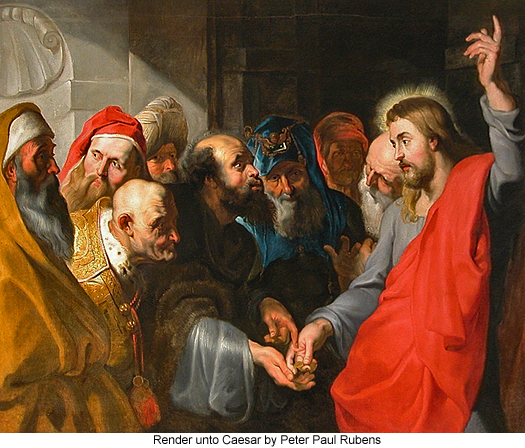
Render unto Caesar

My wife shared a very appropriate video concerning the ongoing tragedy of the GOP race for presidential nominations. Presented as an ad by Jesus, “Jesus” tells how Rick Perry has co-opted his name but not his message.

It is a fun look at a very serious issue. The serious issue is that people unable to think critically about religion are doomed to be its slaves. Where’s the proof that Jesus supports one candidate or another? When is the last time the voting, uncritical public ever demanded the proof?

Thinking back to just a few weeks ago, Herman Cain had made the spectacular claim that God told him to run for president. If the claim was sincere, how could he have withdrawn from the race? Where’s the lightning bolt (as long as we’re believing mythical images of God)? Has anyone checked his office lately to see if he’s still with us?

Religious gullibility is America’s most dangerous deficiency. We elect “the most powerful man on earth” based on his religion, and yet, very few know anything about it. But hey, it sure sounds good!

Religion is the elephant in the room. Nearly all people learn religion from their parents or guardians. Some rebel, but few study it beyond the requirements of their obviously biased religious leaders. Children trust adults to inform them of the truth. We fill their heads with images of a large, white man, bearded, sitting on a huge throne in the sky. You can’t see him, and he doesn’t answer when you talk to him, but he is very, very concerned about who you elect as president.

Many colleges and universities do not offer the opportunity to study religion with neutral experts. Those best poised to make a difference, like large state schools, often shy away from the study of religion completely. Those that do offer the chance to study often unknowingly hire a committed believer, sometimes presenting him or herself duplicitously as neutral and objective. And so the cycle continues. As the old hymn plaintively asks, “will the circle be unbroken?”

As a nation we value religious freedom, but we have set up a system to abuse that freedom. (One might say, “ritually abuse”.) Answer me honestly, Mr. Perry—is it not true? Oh, and that Frisbee is not a threat to national security.


Tolerance, Princeton Style

Princeton is an idealistic kind of town. A seat of great wealth, the town is dominated by the university and yet it manages to retain a sense of genteel quaintness that so often accompanies the aura of financial security. Even with my distrust of money, I love to wander its streets and imagine what the world could be like. My ideal world has bookstores, and so I always stop at the Labyrinth, the current incarnation of the university bookstore in town. Last time I was there I found an overstock sale copy of Ian Buruma’s Taming the Gods: Religion and Democracy on Three Continents. Well, both the price and the topic were right, so I read it this week. Buruma is actually a scholar of democracy, human rights, and journalism, not religion. One of the key identifiers of religion is that there is no central, unifying topic that ties all religions together, and therefore scholars of many disciplines have much to say about it. Buruma offers three chapters illustrating the way that religions interact with society, often violently. He then tenders suggestions for how this violence might be curbed.

Commenting on tensions of Islamic growth in a nominally Christian Europe, Buruma notes that one of the Enlightenment core values is a belief in universals. If truth is truth it is universal. This, he notes, often conflicts with religions since most religions also tend to make universal, often exclusive, claims. Here is precisely where human culture is brought to its knees by religion. Due to their revealed nature, western religions cannot be challenged on any rational grounds. This is as true of Mormonism as it is of Judaism. If God said it, and there is no empirical proof, people have no choice but to obey. Problem is, God can’t make up “his” mind about the final word on the subject. New religions sprout constantly, growing into inevitable conflict with their neighbors. Not to mention those who have reasoned their way out of religion.

What is the limit of religious tolerance? As Buruma notes, tolerance necessarily includes tolerating intolerance. Some religions are constrained to be intolerant of others, and how do we allow them to be part of our little tea party? (The metaphor is intentional. Think about it.) Buruma suggests, as many have, that the rule of law should settle the situation. People must learn to separate civil law from religion. But can it be done? I have serious doubts. I’ve heard this suggested before, by minds far greater than mine. Having grown up as a religious kid, however, I know that rule of law has its limits. It stops once God opens the door to direct revelation, whether to people today or thousands of years ago. Religion is not bound by the rule of law. It is its own highest authority. Many, many people throughout the world believe that. Moses, Jesus, Mohammad, all are noted to have had clashes with civil authorities of one sort or another during their lifetimes. The pattern is set. So even here in Princeton, with an engaging, thoughtful book in my greedy little hands, surrounded by great wealth, I realize just how idealistic all of it can be.


Ignorance Should Be Bliss

Even before we elected a president who was only a single year older than me, I had the creepy sensation that no one really knows what is going on. Call it what you will, but I am told, that for my own good, some information is kept from me. I can’t recall how old I was when I first came across the word “disinformation,” but the concept—a favorite of conspiracy theorists—has stayed with me ever since. It is that Kafka-esque sense that something is off kilter. Some time back I stumbled across a website called Disinformation, and was immediately intrigued. True to the nature of the title, the site keeps you guessing. I was pleased, therefore, when I was sent a prepublication copy of Daniele Bolelli’s forthcoming title, 50 Things You’re Not Supposed to Know: Religion. Disinformation has a plucky series of books in the 50 Things You’re Not Supposed to Know series, so I was decidedly curious about this new volume.

Not a heavy academic tome, 50 Things You’re Not Supposed to Know: Religion is written in a vein similar to this blog: reflective, unconventional, but not really earth-shattering. It is good fun. Bolelli does a great job pointing out less advertised aspects of otherwise socially respectable religions, not taking cheap shots, but simply rephrasing events as they really happened (mostly). Within all of this, however, some true wisdom lies. In thing 36 (of the 50), “Tao is the Sh*t,” Bolelli notes, “Many are those who, infatuated with all things ‘spiritual,’ forget that real spirituality is nothing but daily life lived with full awareness.” It is clear that Bolelli has an appreciation for eastern religions, but he is not so bourgeois as to let even those escape unscathed.

Often the reading of a book is the sharing of the author’s soul. The acknowledgements were so intense that I immediately felt that Bolelli has a hidden story. As the author of the highly regarded On the Warrior’s Path: Philosophy, Fighting, and Martial Arts Mythology, Bolelli is both a professor and a fourth-degree black belt. Clearly a man with whom to be reckoned (or better, reconciled). I too have been very influenced by a teacher who knows martial arts and who has one of the clearest heads around. I learned from him that there is a spiritual component to martial arts, and that spirituality seemed, rightly or wrongly, to be present even here in this book. Bolelli is willing to take on religions. In our alarmist society that stance is often confused with lack of morals or spiritual insight. From my idiosyncratic position, however, I found Bolelli’s small book engaging and irreverent and provocative (in every sense of the word). Do yourself a favor and read it. If you’re not careful, you’ll snigger a time or two and learn something along the way.


Fecit potentiam

Yesterday at Princeton’s annual seasonal choral concert, the program consisted of Bach. The first piece was a Magnificat, a piece that, in prose form, I quickly memorized at Nashotah House. With our daily double dose of chapel services, liturgical standbys such as the Magnificat quickly became reflex recitations, made with little thought beyond getting on to the next piece. It occurred to me as I listened to it at leisure, the hopes of poor Mary haven’t really materialized after these 2000 plus years. After a couple of millennia, perhaps it is time for a state of the theology assessment.

Despite the veneration of Mary in the liturgical branches of Christianity, the collective handmaids of the Lord have made slow progress in being integrated fully into church leadership. Only with the last century, and fairly late therein, did many Protestant denominations finally recognize that Mary’s gender might have something to teach the men. Paul, for one, would have had none of it. Even today the Roman Catholic Church stalwartly refuses to consider female priesthood. Perhaps Mary’s prayer should be uttered yet again within its walls?

At the section labeled “fecit potentiam,” however, I noticed further lack of fulfillment. “God has shown strength with God’s arm,” the program translates, “God has scattered the proud.” The hopes expressed in the next several verses have been silenced beneath the greed of an economic system with no responsibility. “God has deposed the mighty from their seats.” When did that happen? Those of the Occupy movement who’ve received a face of pepper spray might beg to differ. “God has filled the hungry with good things, and the rich God has sent away empty.” Sent away to their summerhouses, their mansions, and their penthouse apartments? Away from the working class who oil the gears of their massive machines. No, it seems that the Magnificat has not fared so well at predicting the new era to be brought in by a special child.

Of course, Luke’s song of Mary is based on Hannah’s song at becoming the mother of Samuel from the Hebrew Bible. Samuel was the great judge and prophet who saw to the law and order in the land. Strangely, however, the Bible manages to confuse Samuel with his erstwhile enemy Saul, conflating their birth accounts. Isn’t it just like the Bible to confuse the oppressed with the oppressor? The strength shown with the divine arm, the wealthy inform us, is the strength they wield. After all, god and gold differ by only one letter.


Name Recognition

Some two and a half years ago when my brother-in-law Neal Stephenson suggested I start a blog (primarily for the podcasts to which I intend to return), he asked me what I would call such a site. “Sects and Violence in the Ancient World,” was my attempt at a witty, non-committal riposte. Since I was unemployed at the time and still hoping some deus ex machina might put me back into a full-time university post, complete with an Ancient Near Eastern religions component, the title seemed apt. I determined that I would not exploit my relationship to a best-seller author since I wanted to earn my own readership. Sects sells, does they not? Since then I’ve had a number of curious readers wonder why I tend to address modern religious issues, unlike my title suggests. The reason goes back to what I want to be when I grow up.

How many eighteen-year olds really know what their lives will hold in store? Our society asks them to select majors and pick a career path far too young. I had visions of clergyhood in my head so I majored in religion. Like many children of alcoholics, I tend to be addictive in my devotion, so after completing a Master’s in religion, I had to have just one more degree—then I’ll stop—and a doctorate in religion finished ossifying my career track. Having been weaned on the Bible, I’d stuck with it for three degrees and found that during that time the job market had evaporated around me. As I watched society from the sidelines, I saw so many people at the place I had started out, staring wistfully at the Bible, looking for answers. Uncritically, magically expecting a miracle. Just like Oral Roberts said. Once my teaching career had been derailed by misguided Fundamentalists, I realized my interests were much more in the effect religion has on people. It was too late, however, to go back to school.

My way of dealing with any dilemma is to parse its history. That’s why I studied pre-biblical religions along the way to my doctorate in Bible. A couple of things had become clear along the way: religions are very fragile and easily splinter into sects. And most of the large-scale violence in the history of the world has a religious basis. (Probably much of the small-scale violence does as well.) Its origins are literally more ancient than history. What is religion in today’s world if not the direct descendent of sects and violence in the ancient world? And since my idiosyncratic musings have passed the 200K hit mark, it seemed all right to acknowledge the role my brother-in-law has played in all this. So, in good academic fashion, I’d like to acknowledge the suggestions and support of Neal Stephenson in starting this blog, but any errors are, of course, my own.


Seedless

“And Onan knew that the seed should not be his; and it came to pass, when he went in unto his brother’s wife, that he spilled it on the ground, lest that he should give seed to his brother” (Genesis 38.9). During the conference last week the Routledge booth stood across from that of an evangelical publisher. One of the realities of conference life from the point-of-view of an exhibitor is over-exposure to what is fresh, clever, or cute upon first blush. Harper One’s continuous loop video, however, demonstrated that N. T. Wright, Desmond Tutu, and Bart Ehrman can sound repetitive, and even Colbert loses his punch when you hear the jokes for the twelfth time. The evangelical publisher across the way, however, had a large cartoon drawing that mapped out the believer’s life, book-by-book through the Bible. As probably anticipated, I can’t get that silly cartoon out of my head. After four days of exposure, I finally succumbed to asking for a flier. It was the usual evangelical fare, and the warning against adultery on back used the traditional term “seed” for “semen.” I found myself pondering the implications.

Since the King James Version shares the pre-scientific worldview of the ancients, the term “seed” has been preserved in the literalist mind. Even Alice Cooper uses it in his lyrics (his father was, after all, a preacher). Well, since the Bible is Holy Writ, it seems that semen has been transubstantiated into seed. The seed, as biologists tell us, contains all the genetic material to grow a new plant. Just add water, warmth, and a little light. Presto! Life sprouts. Since evangelicals tend to be fluent in biblicalese, even today men—the default, fully equipped model of humanity—come complete with abundant seeds. Agway should be so lucky. It feels, however, as if half of the equation is missing. If the Bible-writers had raised chickens, perhaps men would be full of eggs.

Thinking life cannot exist without metaphors. Metaphors are very dangerous in the hands of religion where they get taken literally. Too easily imagery slips into facticity. The male seed demonstrates a diabolical gospel truth: men alone provide the next generation. Women, as usual, are largely superfluous. The biblical male dominates the biblical female. The man owns the wife and must be enticed to share his precious seed. If conception fails, it is inevitably her fault. The metaphor has become a thumb-sized rod. Let us speak plainly here. The Bible has betrayed womankind. Judas Immaculate. In ancient times this was accepted fact. The microscope and biology should have buried this seedy metaphor centuries ago. But once again, the unthinking promulgation of a biblical trope survives at the expense of women. I have no seeds. No man since Adam has.

An obscene photograph?


Lost Knowledge

While an actual apocalypse for many turkeys ensued on Thursday, Fox News announced that a second reference to the Mayan apocalypse has been “admitted” by Mexican authorities. So I guess the world will end next year after all. And it figures, I just finally got a full-time job. For some reason, for all of our modern technology and scientific knowledge, many people still fear ancient “prophecies.” This remains true after countless failed apocalypses, two of them just this year proposed by Harold Camping in the name of the Almighty. People who trust the science of their cell phones—which, from any trip to the airport or bus station proves, humans are incapable of surviving without—nevertheless fear the “lost knowledge” of the ancients who believed myths were the most parsimonious means of comprehending a cold and uncaring universe. Yes, I’ll trust my entire life, finances, travel plans, social calendar, to a plastic box barely the size of a credit card. But if the Mayans said the world was going to end… these are the Mayans, after all! The Mayans!

Never mind that we know little about this antique people; we have had predicted ends to the universe from disaffected visionaries and disgruntled prophets ever since the Zoroastrians suggested this might not go on forever. And now that two predictions appear to coincide, it looks like its time to sell some stocks, cash in some IRAs and party like it’s 1999. When 2000 came in with its baleful symmetry, as some saw it, with events two millennia earlier, not many were dissuaded from the concept that never emerges. Doesn’t the book of 2 Peter state that the universe is reserved for a fiery destruction? Perhaps the Mayans had access to Holy Writ?

The fact is that most cultures concoct origin myths, stories of beginnings. The way the mind works, it is almost a necessary corollary to construct myths of the end as well. And somehow we trust that arcane knowledge on such matters is more accurate than the scientific scenario that, given the limited longevity of any single species, no humans are likely to be present when old Sol balloons out to be a red giant. Far more spectacular to suggest some ancient sage or savage saw it coming and grow anxious with the waiting. Strangely, many people seem ready to discard all the progress, the monuments, the essence of our humanity for the sake of ancient predictions. 2013 does not seem so far away. Many of us are planning to be here, even if they find an entire library of Mayan predictions. Perhaps the truest prophecy of all is that we, as humans, make our own future no matter what other humans have said in the past.


Imagine Thanksgiving

Although mildly jetlagged and slightly incoherent, a promise is a promise, so I took my family to Manhattan to see (the upper half of) the Macy’s Thanksgiving Day Parade. Commercial and flashy, it is difficult to conceive of a more American expression of holiday wonder. It kicks off the secular Christmas season and the parade forms the background noise to many a feast preparation in the United States. Not living in the city proper, there are limits to how early public transportation can get one into town, so by the time we reached the Upper West Side, the crowds were pretty intense. We met our friends at West 72nd Street and tried to see the floats and balloons over the heads of a sea of humanity; if you could glimpse the flashing tip of a tuba, we counted that as seeing a marching band. The weather was cool but nice and in the dense crowd I kept my hands shoved in pockets, not always sure they were my own pockets, and waited for the next tall or hovering parade feature. In-between times I stared at the building to our left until a friend informed me that it was the Dakota. The site of John Lennon’s slaying and the exterior used in Rosemary’s Baby, where, presciently, a murder victim was laid out on the sidewalk not far from where Lennon fell. Suddenly the parade took on a profundity that betrayed the levity of the gas-filled characters floating by.

Mark David Chapman, a delusional, born again Christian, had spent many hours waiting about where we were suspended in the crowd. Thinking himself Holden Caulfield of the Catcher in the Rye, he murdered Lennon creating a saint and a demon simultaneously. Perhaps John Lennon’s ashes are still floating about Central Park, and as we walked through, the exterior of the Teutonic Dakota took on a haunting quality. Lennon was a lover and a protestor and an experimenter, and scenes from Rosemary’s Baby of Satanists smoking cigars also hung in the air. The shop window displays on Fifth Avenue drew great crowds, but as we drifted toward 51st Street, we decided to stop into Saint Patrick’s Cathedral, along with the surging mass of the faithful.

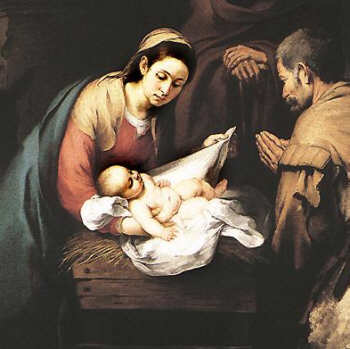
Cathedrals are best enjoyed in quiet solitude. Nevertheless, we followed the pilgrims through the long nave, stopping to glance at the numerous chapels with statues along the way, each with a collection box, securely locked, asking for donations. And people say Christmas is commercial! Want to pray through your favorite saint? Please deposit a quarter. Preferably two. Or more. Their budget in candles alone would support many a smaller church throughout the nation. Advent begins this weekend, so the crèche was set up at the front with life-sized figures of the usual players: holy family, shepherds, wise men. And collection box. There was no baby Jesus and when my daughter asked why I said, pointing to the collection box, apparently they were saving up to purchase one. Keeping Christ in Christmas? Indeed. All those bronze, life-size Pope head statues can’t be cheap. John Lennon was cremated and his ashes scattered, leaving no trace. Popes are cast in bronze. Yes, John Lennon was wealthy, and once quipped that the Beatles were more popular than Jesus. What is the truth of the matter? Looking at the façade of the Dakota, I know where I would rather light a candle.


Hair Today

In what may be the most bizarre recent example of religiously motivated violence, the Associated Press reports that a breakaway Amish group is accused of the crime of haircutting. Amish beliefs about personal appearance are well known, and taking various biblical injunctions seriously, they believe cutting a man’s beard or a woman’s hair to be a sin. (Any Amish reading this, please correct me if I’m wrong.) The aptly named Sam Mullet, the leader of a breakaway Amish group (the article doesn’t specify the contention) has been charged with forceful barbering with intent to shave. Not himself, but other Amish men in Ohio. The Amish trace their roots back to the Anabaptist movement that only accepted adult baptism and would rebaptize those who were sprinkled as infants. They acquired other beliefs along the way such as hard work and industriousness, distinctive dress styles, and the shunning of electricity. They are devoted to pacifism.

The story, which Rod Serling would have been proud to air, has Mullet forcefully cutting the beards of men and the hair of women in another Amish community. The article doesn’t explain how Mullet took on his Delilah-esque treason, but after giving his enemies the Seville treatment, he took photos of his victims. The Amish don’t like pictures either. Apparently the Amish community is terrified of this mad shearing heretic. The mind reels attempting to conjure an image of the struggle or even what might have led to it. Where did the camera come from?

Religion, no matter the denomination, prescribes unusual behavior. What one society supposes to be normative is simply a matter of socialization. When you are brought up with, say, a man wearing a colorful brocade dress while breaking a translucent wafer over a goblet of wine and claiming it to be God, that seems perfectly normal. Anyone who tries to challenge or desecrate this rite would be designated an infidel, heathen, pagan, or worse. Many think the Anabaptists, whether Mennonite, Hutterite, or Amish, to be quaint and curious like forgotten lore. In fact, their religious beliefs go back to a venerable past. Images of The Witness flood to mind when reading how the FBI has become entangled in the barbarous act. Perhaps it is time for Mulder and Scully to make a reappearance. But just in case, perhaps they should sport some sturdy helmets and Kevlar, since reports are out that some Amish are sitting on the porches with shotguns, while one lurks in the shadow with his snipping scissors.