I Left my Bible in San Francisco

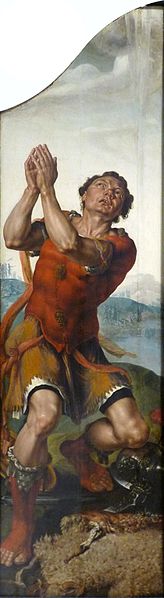
Gideon prays for a Bible

I’m staying at the Hilton, Union Square in San Francisco. Surrounding me are over 10,000 (is that a proper myriad?) religion and Bible scholars gathered for the American Academy of Religion and Society of Biblical Literature annual meeting. I travel light. Having left my Bible behind I went to look up something in the Gideon general issue. It is not here. The world’s largest academic conference focusing on the Bible, four hundred years after the King James Version hit the shelves, and I am Bible-less in my hotel room. Of course, once I get to work I will be surrounded by Bibles, some of them walking, talking resources who have the whole book memorized. Yes, the Society is that kind of place. The Gideon hotel Bible is an American institution. It feels like a constitutional right. When my daughter was very young and we stayed in a hotel, she found the Gideon Bible and asked what it was. We explained that the Gideons leave a Bible in hotel rooms all across the country. “That’s just weird,” she said with all the conviction of a pre-teen.

There are current movements to remove Gideon Bibles from hotels. They do, after all, represent a privileged position to Christianity in a nation founded on religious freedom. No one is forcing you to read that Bible, but it is there, like a tell-tale heart, in your bedside table drawer. Thumping incessantly. To read or not to read? What’s on the TV?

My favorite discussions at conferences like this are with scholars who find the privileging of one religion distressing. Our culture is so grown up in so many ways; we are more enlightened about sexuality and gender and race, and yet, and yet… We still like to have that Gideon Bible nearby. We like our political candidates Christian. Preferably Protestant, although a Catholic will do if he (inevitably he) is on the right side of the right issues. We are vaguely and implicitly afraid of those who don’t share our convictions.

In a moment of levity near closing time yesterday, a customer stopped by to say Routledge should have more gimmicks. Many publishers have giveaways, and some have little games that bearded, bespectacled professors sometimes even play. The customer suggest darts, or even a little shooting range. I said, “Guns and theology are sure to lead to trouble.” Although he laughed, I was serious. Few things in this world can be justified as easily as religiously motivated slayings, at least in the minds of the perpetrators. And to borrow a phrase from a budding genius, “That’s just weird.”


Saints and Angels

From Wikipedia Commons

San Francisco. As I take a look down the coast I see Santa Barbara, Los Angeles, San Diego. So many saints and angels. And, of course, San Luis Obispo. I’m here in the city of Saint Francis (an odd choice for a rustic saint) for the American Academy of Religion and Society of Biblical Literature annual meeting. Before I began this blog, I attended this conference every year, and then the societies decided that they didn’t like each other any more and had a trial separation. Unwittingly, they were following religion, American style. If we don’t like you, even if you’re in the same tradition, we’ll take our marbles (presuming we have any) and go form our own denomination. This easy divorce of dogma is very American.

For such a religious nation, the United States is remarkably prone to hatred. Even scholars of religion can’t get along. We call each other names like “liberal,” “conservative,” “evangelical,” “secular,” “atheist.” Each a swear word. Long ago it was recognized that these two academies have more in common than not. I mean, come on! Dowdy professors studying utterly impractical, arcane beliefs bridging magic and modernity? Who do we think we’re kidding? I used to give papers here based on one single word of the Bible! So in the city of Saint Francis we are together again. American Academy of Religion, meet Society of Biblical Literature. In the same hotel, but maybe not yet ready to share the same bed.

We reflect the society we inhabit. Christianity in America has a venerable tradition of splitting and reuniting. Evangelical United Brethren, United Methodist, United Church of Christ, anybody but the Unification Church. We come together and soon learn that some molecule of doctrine is out of place—time for an atomic reaction. We are the scholars of religion, and we can’t stand each other. So we’re leading the way, America—we’re reconciling! We’re trying to get together for awhile. Next time let’s make it in a Protestant city.


Inauguration

Religion is an all-consuming beast. I suppose that goes with the territory of making universal claims. In the light of the already ponderous influence religion has had on the selection of presidential candidates this year, I recently re-read Abraham Lincoln’s second inaugural address, delivered not long before his assassination. The Civil War was not yet quite over, and Lincoln knew the horror of the situation. He famously said:

Both [sides in the conflict] read the same Bible, and pray to the same God; and each invokes His aid against the other. It may seem strange that any men should dare to ask a just God’s assistance in wringing their bread from the sweat of other men’s faces; but let us judge not that we be not judged. The prayers of both could not be answered; that of neither has been answered fully. The Almighty has his own purposes. “Woe unto the world because of offences! for it must needs be that offences come; but woe to that man by whom the offence cometh!”

Lincoln, never a regular church member, knew his Bible but also knew the soul of his country. A century later Bob Dylan would compose “With God on Our Side,” in protest to another war where divine backing was assumed. When a major undertaking is launched, the Lord is always on the guest list. The problem is, God can’t sit on both sides of the table.

The religicizing of politics is a dirty business. Religion plays so heavily on the emotions that it is, as history has shown, a truly unstoppable force. Even so great a conservative as Barry Goldwater felt this mixing of religion and politics an unholy cocktail. “I am frankly sick and tired of the political preachers across this country telling me as a citizen that if I want to be a moral person, I must believe in A, B, C, and D. Just who do they think they are?” (The Congressional Record, 16 September 1981). So here we go again.

Religion and politics are a dangerous mixture. In a culture as religious as that of the United States, the potential for (and realization of) disaster is great. Think of the lives lost based on the religious outlook of our last president! Over the past few decades we’ve witnessed a parade of preachers, Fundamentalists, believers in New Religious Movements, and quasi-certifiable candidates march across our political stage, and yet our doors are closed to those who refuse to make public statements about their intimate relationship with an ancient savior. For the Bible tells us so. If we believe the preachers. Those of us who don’t will be putting on our Bob Dylan records and reading the wise words of Abraham Lincoln.


Bull Shot

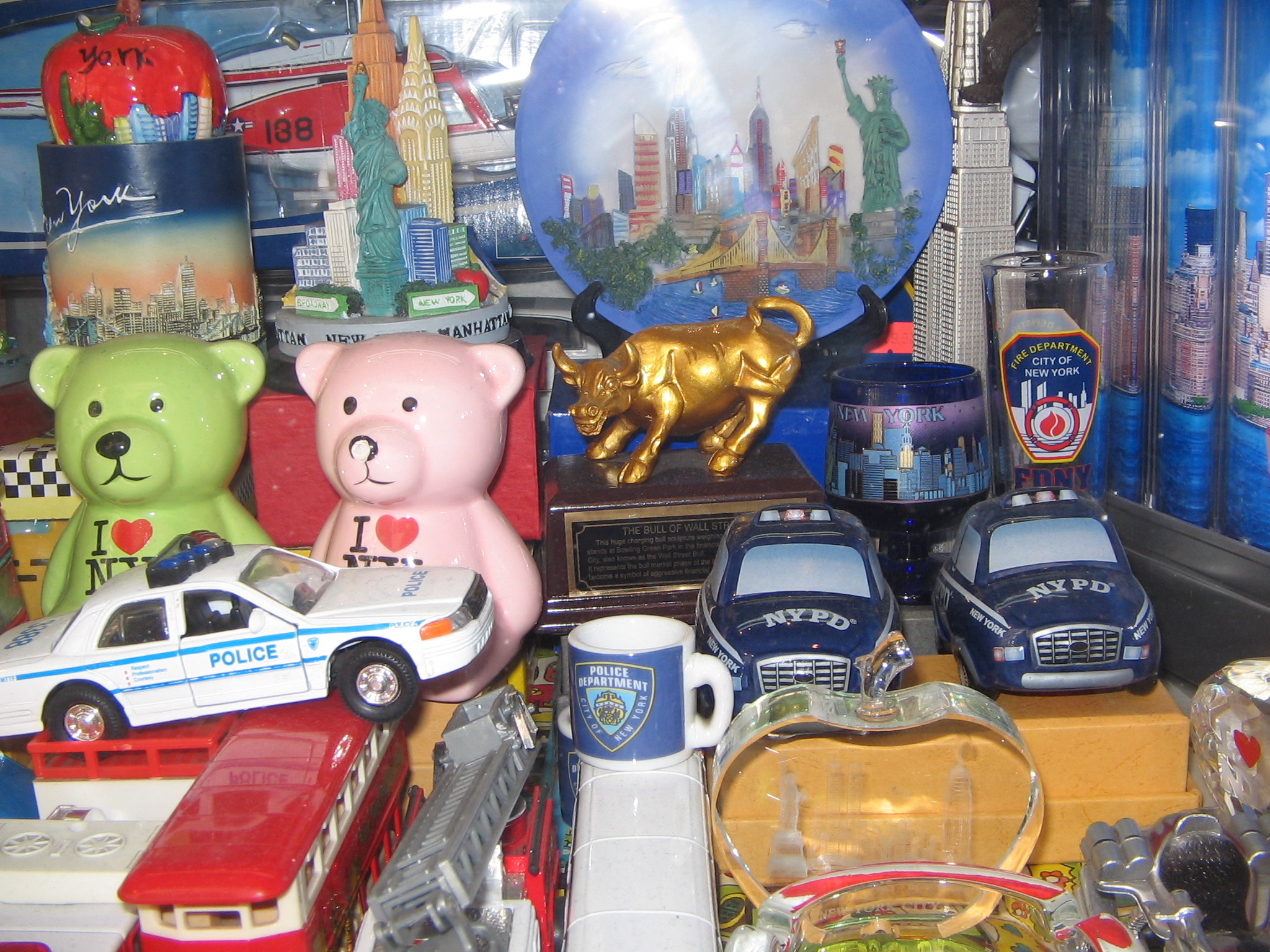
Sitting on an idling bus in the Lincoln Tunnel, I supposed I was too far underground for an epiphany to hit me. Then, on the way to Third Avenue it descended on me. I was passing one of the countless gift shops of Midtown when I saw it—a miniature replica of the Wall Street Charging Bull statue. Golden calves come in all sizes and shapes and when they grow up they may be very aggressive. Deadly even. Movie makers have long recognized the deep symbolism of the golden calf. And not just Cecil B. DeMille. Dogma, perhaps the most notorious of the anti-religion, religious films, centers around Mooby, a cartoon network golden calf, for one of its subplots. Even Bruce Almighty has the eponymous Bruce leaning back against the statue of a golden calf as he enjoys his new success in his new house, empty of all personal satisfaction. The list could go on. And of course, Wall Street.

What is it that makes us believe that gold leads to happiness? We all want it, if we are willing to look into the mirror with any semblance of honesty. Maybe we don’t want to be filthy rich, but who doesn’t really want to just kick up their heels and let their lucre do the work for them? Enter the “Prosperity Gospelers”—God wants it for you. Even if you demure and lower your eyes coyly, wealth will find you. And like that idol on Wall Street, calves grow up to be bulls. The horns of the dilemma are almost too literal. For a fulfilling life, give it all away. Like a misdeed long past, still unatoned, that bull follows you. You can’t escape a charging bull.

The episode of the golden calf in Exodus 32 is one of the more disturbing scenarios in Holy Writ. Moses, alone wreathed in the glory of the Almighty keeps forty days of silence and, tellingly, the clergy construct a golden calf. Probably an image of Yahweh. The next morning, “the people sat down to eat and to drink, and rose up to play.” Until distant Moses returns home. The calf is burned and ground down to dust, the people drink it, and the Levites kill three thousand of their compatriots. Prequel to Jonestown? “For Moses had said, Consecrate yourselves today to the LORD, even every man upon his son, and upon his brother; that he may bestow upon you a blessing this day.” The killing of their neighbors is their ordination. A blessing bestowed upon those who would worship the golden calf. That 7000-pound charging bull will follow you, even into the tunnels and tabernacles. When the golden calf is loose, no one is safe.

Bull comes in all sizes


Twin Towers

The newly opened World Trade Center memorial in Manhattan is truly a solemn place. Staring into the seemingly endless holes into which the water forever pours, one feels the emptiness of loss like a thousand graveyards. Like watching the Titanic sink from a lifeboat. In the chilly late October morning hundreds were huddled about, looking at those reflecting pools with an undefined sadness in their eyes and a sense of frustration in their souls. So much loss. And for what? The American way of life has its towering foibles as well as its nobility. The protesters of Occupy Wall Street are mere blocks away in Zuccotti Park, reminding the nation that we have forgotten the principles of human decency even while we honor the fallen dead. It seems an appropriate epitaph for All Hallows Eve—a peaceful park where hundreds died just blocks from where hundreds camp in the cold. It is not too late to stop this ship from striking the iceberg.

Ground Zero

The symbol of peace, given to us by the Bible, is the olive branch. Actually the olive branch comes from the story of the flood; it is less a sign of peace than it is a sign that some of us have survived the wrath of God. Read into that what you will. The olive branch only comes after all but eight people pay the ultimate sacrifice. It is peace on the terms of a vengeful deity. Near the center of the memorial, one tree stands out. It is not an olive tree. After the devastating attacks of 9/11, workers found a living Calleri pear tree among the rubble. The scorched and battered plant was taken to a nursery where it recovered. It stands now in the midst of the peaceful reflecting pools, bearing not olives, but pears. The tree was saved by human effort, a symbol of peace, survival, and endurance.

A different kind of tower

I spoke with one of the protestors in Occupy Wall Street, and gave him encouragement. I suffered unemployment for long years when the weight of the flood crushed me to my own ocean floor. Loss and more loss. I was moved to tears in the World Trade Center memorial. The decision not to build again on the site where the Twin Towers stood is a symbolic statement to those who believe that evil triumphs in the end. The god of those who destroy others in the name of their faith is the god who destroys innocent and guilty alike in worldwide floods. This is a god who offers people with no knowledge tempting fruit that they are not permitted to eat. Nowhere in the Bible does it state the species of the tree of knowledge. Is there anyone left innocent enough to tell? Artists like to use an apple, an idea based on the similarity between the Latin words for evil and apple. I believe that loss of innocence was the price of maturity, and I believe the tree of knowledge might just have been a Calleri pear.

Peace


Haunted Purgatory

Halloween season is a time for both pagans and evangelicals alike to tremble. Our usual local “haunted house” for charity being closed this year, my family went to the local haunted farm last night. In a nation where few of us grow up on farms, the agricultural world is already a foreign environment. And corn is a scary plant when it dries out, especially at night. The Creepy Hollow part of the farm tour was a long, rambling stumble through a corn field where costumed actors jump out at you or just as ominously shake the cornstalks as you walk by in the dark. Senses that we have long ignored leap to full attention, scanning for any possible fright. At nearly a mile long, this haunted trail was pretty intense, and I’ll admit to being glad to have seen the open field at the end. One of the props along the way was a haunted church. As I’ve noted before, religion and fear often stride hand-in-hand.

Earlier in the day, my wife had pointed out an article in the Huffington Post about the dilemma many evangelicals face when their kids want to celebrate Halloween. A holiday of Catholic and pagan origins (both feared equally by the truly staunch evangelical), Halloween is a season of dangerous influences. In response, some groups have started their own “Hell Houses” designed to show kids the horrors of Hell as they walk through a putatively non-fiction version of fear. The intention seems clear enough, although a little odd for a religion that claims to be based on love. The Hell Houses are part of an alternative holiday called “Jesus Ween” and people are encouraged to give out Bibles rather than candy. At least they got the scary book part right.

In an unrelated yet relevant story, Time projects that the seven billionth person will be born on October 31. I remember when there were just four billion of us, and my teachers began pointing out the stresses we place on our environment. Of course, those who co-opt the identity of being “pro-life” advocate for as many of our species as possible—less for God to pour out love, but better to populate Hell, apparently. The Roman Catholics share this petard with the evangelical camp, as Monty Python made famously clear in The Meaning of Life. We have overcome (largely) nature’s control on our expansion, and as Halloween, or Jesus Ween, races nearer, we have less to fear from chainsaw-wielding maniacs than we do from Bible-bearing clones who claim it is divine mandate to stress our own planet to death.


Dusty Flowers

V. C. Andrews was a name familiar to me from skulking around used bookstores where tons of over-printed, read-only-once books line the shelves. I had seen Flowers in the Attic on many shelves since the 1980s, but supposing it to be a romance title, I showed no interest. As Borders was closing, however, I noticed a copy of the novel on the horror shelf and couldn’t fight the curiosity any longer. I guess it might have been building, subtly, for three decades. My wife was surprised to see it in my stack, but I professed my lack of knowledge and began reading it.

Horror is a strange genre of writing. It is defined in various ways, but I have found that authors deal with their own fears with a variety of strategies. After thirty years I need not worry about spoilers, so I can say that the concept of a parent destroying her own children is about the scariest scenario imaginable. What makes the story of interest here, however, is the treatment of the Bible in the story. After the premature death of their father the Dollanganger children are secreted away in an unused upstairs wing and attic of their wealthy grandparents’ mansion. While the hidden foe is really their mother, Andrews introduces the grandmother as the Bible-quoting, intolerant, prejudiced symbol of oppression. Quick with the rod and completely unforgiving, she goes to bed each night reading her Bible and she insists the children do the same. When she finds an excuse, however, the children are lashed for being wicked.

Interestingly, it is the mother who is never shown quoting the Bible. Towards the end of the story the children recognize that while she is evil, the grandmother would not directly commit murder. The mother who has tasted the intoxicating liquor of wealth, however, knows that even her own children cannot stand in the way of her inheritance. The adults in the story are twisted—some by religion, some by greed. The questions raised by children, like all of us innocent of our own existence, merely ask where the love has gone. Religion without love is Hell, as the pictures selected for the children’s prison by the grandmother clearly show. Worse than Hell, however, is the blinding love of money.

We are all flowers in the attic of an uncaring world. Some find comfort in the power of wealth while others resort to religion. Many try to combine the two. At the end, those who are truly noble are those who survive without either.


Mystic Messiahs

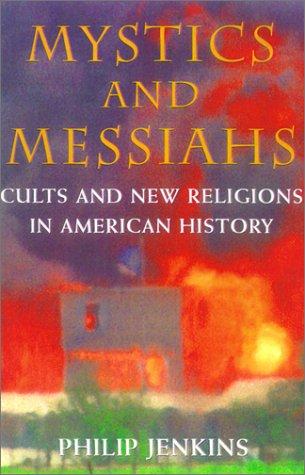
It is difficult to know where to begin when discussing Philip Jenkins’ Mystics and Messiahs: Cults and New Religions in American History. As a student of religion I early found myself drawn to the question of where religions begin. In the case of many religions we have an identifiable founder. Frequently that founder ends up being a god him (or more rarely) herself. In order for any putatively revealed religion to attain any credibility, the ultimate source must come from on high; God himself. So it is that we look askance at any religion that has appeared in the last couple of centuries, when, as we knew at the time, the earth was no longer the center of the universe and science had taught us to know better than to accept the old-timey stories of a god in the clouds. We can accept the ancient, time-honored stories, venerated as they are by centuries. If someone today tells us that God has spoken to him or her, we refer them to psychiatrists first, and then to the mind-altering drugs.

Jenkins, writing in the shadow of the tragedy of the Branch Davidians at Waco and the ritual suicide among the members of Heaven’s Gate (one of the members’ sons was one time a student of mine in seminary), tries to demonstrate that such groups are part of the fabric of religion. What is new in such movements is not the fact that they suddenly come into existence, or that society reacts violently to them, but that we now have a concept of “cult” to label them. Jenkins convincingly illustrates that fear of new religions stretches back for centuries. Even in the seventeenth century people experimented with new religions. When they survive, they become “churches.” Consider the Mormons, the Seventh-Day Adventists, and the Pentecostals. They all began as “cults” and are today considered just another variety of Christianity. Most adherents to religions do not inquire too closely as to the origins of their brand. Historically we know that the three denominations mentioned above are well under two hundred years old.

In a fascinating twist, Jenkins describes how the Zeitgeist of the early twentieth century was ripe for such developments. One of the sources, ironically, was the fiction of H. P. Lovecraft. His weird stories often invoked cult-like groups devoted to unusual practices that sometimes turned deadly. Also during that same time period, Christian Fundamentalism began as an effort to sort out what was “fundamental” to Christianity that set it apart from the cults (including Pentecostalism, now one of the most dominant Fundamentalist sects). As Jenkins points out, when these new sects become mainstream, they vehemently seek to destroy all new comers. Christianity began as a cult in the eyes of both Jews and Romans.

Religions are inherently conservative. As we will see in the approaching election, the religious background of a candidate plays a major role in public acceptability. We enjoy freedom of religion in the United States, but only to a point. Jenkins should be required reading for every religious believer. Tolerance would be the only proper and reasonable response.


Preoccupied

I wonder if I’m the only one who feels uncomfortable with the proliferation of armed military guards in public places. I know the rhetoric that “freedom is not free” (what is it then?), but when the coffee hasn’t really kicked in yet and I walk by guys young enough to be my kids holding machine guns in the bus terminals and train stations of New York, I really don’t feel safer. Sometimes I might look like a radical. Sometimes I don’t get my hair cut as often as convention dictates I should. Sometimes I forget to trim my beard. Some days I throw on my denim jacket as I head out the door in the predawn hours. Some days no one sits next to me on the bus. Am I the enemy here? I don’t like the idea of strangers seeing me naked in airports—even if only electronically. I do like the freedom of expression, but it is no longer really free.

I suppose that’s why I’ve noticed the other peacetime occupation going on in New York: Occupy Wall Street. It is time that people say “enough!” The religious leaders with the loudest voices declare this a dangerous thing, “class warfare” they say. The wealth that lines the very upper crust, however, is simply obscene. Was a day when wealth came with a healthy dose of social responsibility. They just don’t make Andrew Carnegies any more. A few Octobers ago my family visited Sleepy Hollow, New York. The cemetery made famous by Washington Irving (who is buried there) also houses William Rockefeller and Andrew Carnegie. On the top of the most prominent hill is a classical style, opulent mausoleum for the Rockefellers, overlooking all others. Down at the base of the hill, hidden away in a humble, quiet corner is the modest tombstone of Andrew Carnegie. I am certain that Carnegie was no saint, but he did not let his wealth go without doing some good for his fellow citizens.

Freedom is not free, but excessive wealth is tax-free. And Jesus was a venture capitalist, I’m told. We are a nation occupied in peacetime. We are occupied by our own military and their commanding officers in the towers of Wall Street. The GOP can’t support Occupy Wall Street, for it will alienate the moneyed vote it so craves. Call it “class warfare” instead. Those uppity middle and lower class bums! When the select few human beings climb too high in their towers to see the suffering of those down below, images of Babel come to mind. Babel is code for Babylonia in the Bible—the wealthy, powerful oppressor of the poor and displaced. If wealth breeds superiority, we are all in very deep trouble; the battle is already lost. In the meanwhile, I suspect Jesus might secretly be on the side of those camped out in sleeping bags, waiting for the sign of Jonah. And it has nothing to do with being swallowed by a whale.

Or maybe it does.


Jots and Tittles

While busy editing during the course of the day, I ran across this line in a Routledge book entitled What is Religion?: “We live in a pluralist, inter-racialist and multi-faith society and the need to understand one another is greater than ever before. Much misunderstanding arises from racialism and nationalism and could be avoided if people knew more about the beliefs and practices of one another.” Amen, Robert Crawford. I would, however, add a caveat to his statement: even more conflict could be avoided if people knew their own religions. I know many people, especially in the United States, who have no idea what their religion’s official teaching is. I know Presbyterians who have no concept of the official doctrines of this organization they’ve joined. Many Catholics, given the more corporate structure of that church, know the teachings but choose to ignore those that just don’t match the realities of life on earth. In such cases, the question of acceptance of religious teaching is a very relevant point. Can you get to heaven without crossing every “t” or, because it sounds more interesting, observing every jot and tittle? (By the way, “jot” is a stand-in for “yod,” the smallest Hebrew letter, “tittle” roughly translates as “serif” or the fancy little calligraphic flourishes typical of Tanak manuscripts.)

Religious membership devolves into self-declaration, often of a self-perceived version of the religion one favors. The vast majority of people are born into their religions, an immediate red flag that absolute truth claims will necessarily lead to conflict. And it won’t help to try to devise some Uber-religion that includes all the others, since apart from the occasional Universalist or Bahai, nobody buys that other religions are quite as good (or right) as theirs. Even the task of defining what religion is remains beyond the reach of mere mortals. I find Bronislaw Malinowski’s observation apt, that religion grows “out of the conflict between human plans and realities.” We can imagine a much better world than the one that exists. In some such fantasy worlds, religion itself ceases to exist.

Religion never existed in any pure form. It did not descend from the sky in a unified whole. Instead, religions have been cobbled together by people since the Paleolithic era, and we simply don’t have the time, resources, or influence to go back and start it all over again. Religion may be defined as conflict. Conflict between what is and what ought to be. Conflict between right and wrong. Conflict between us and those who believe differently than we believe. Religion brings, as one founder stated, a sword. Religion gets passed down the generations just as surely as the family jewels and deeds. To ask anyone to relinquish such valued property, even for the sake of world peace, is too much to ask. Even getting people to understand what they claim to believe is too much effort. It is much easier to praise whatever lord and pass the inhumane ammunition.


The Body Apocalyptic

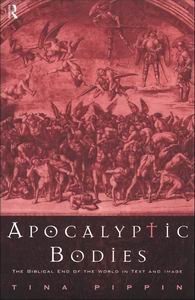
We are all products of our upbringing. Our early assumptions, although sometimes challenged and overcome, are generally with us for life. So it was that my progression of education led me to a small, conservative college to major in religion. Compared to what I learned at Grove City, the historical criticism firmly in place at Boston University sounded downright sinful. Nevertheless, it made sense, so I followed reason. At Edinburgh we were way beyond historical criticism in that wonderful, European way. Somehow in the midst of all the excitement, I missed Post-Modernism. “Po-Mo” has, like most recent movements, been quickly added to the pile of the passé, but I find it refreshing. I just finished reading Tina Pippin’s Apocalyptic Bodies (Routledge, 1999). This may have been one of the first truly Post-Modern biblical critiques I have read, and it was fascinating. Pippin is taking on especially the book of Revelation. If more people had read her book there would have been less panic back around May 21.

I find feminine readings of the Bible enlightening. As a member of the gender largely responsible for a book filled with sex and violence, it is often difficult to see how the other half of the human race might read that same text. Having grown up with a literal understanding of Revelation, I never questioned whether it was a good or a bad thing. The end of the world must be God’s will, therefore, by definition, good. One of the beauties of a Post-Modern interpretation is that everything is thrown open to question. Pippin does just that. Noting the ennui associated with eternity, she asks a question that always lurked in my mind—isn’t too much of anything eventually a problem? Eternity itself becomes problematic. Where do we go from here?

Perhaps the most striking comment Pippin makes is in the context of her chapter on the monsters of the apocalypse, “Apocalyptic Horror.” She compares Revelation to horror movies and demonstrates how all the elements are there in the Bible. She notes, “There are many monsters in the Apocalypse, but the real bad ass monster sits on the heavenly throne.” Pippin explains that God, in Revelation, joys in killing off humankind. As many of us have come to learn, people are generally good; at least most people have done nothing to deserve the heinous punishments gleefully doled out in Revelation. That, of course, raises the sticky question of ethics as applied to the divine. Here the book of Job comes to mind where our hapless hero declares that even though he is innocent, God still can count him guilty. It is the human situation. And Job was a good guy. Pippin’s little book challenged many of the assumptions with which I’d grown. Anyone who can read such a book and not worry about being a good parent is more Po-Mo than me.


Homeland Security

I work just two blocks from the United Nations building in New York. While out to grab my lunch yesterday I was engulfed in a peaceful, if vocal demonstration. Many people were standing along Third Avenue with a perplexed look, myself included, I suppose, when a protestor from a great, surging throng thrust a paper into my hand. Headlined “Bring Justice to Guinea,” the paper outlined the brutalities being perpetrated against the Fulani in Guinea. I have to confess to being ignorant of most of the world’s trouble spots. In a society that is relatively free, we’ve been struggling to attain any real form of social equity without success for over two and a half centuries. When I read of the atrocities against the Fulani outlined on the flier, I wondered why I’d not heard of them before. I didn’t have to wonder long, however, because many of us have not received any real education beyond what has happened in the developed world. I decided to learn what I could in the brief moments after the commute home and before bed time. I discovered that the Fulani were once an empire in West Africa. Today in Guinea, according to the information at hand, they are subject to truly horrific treatment. The flier asks, “Would you stop a genocide if you saw it coming?”

I honestly cannot know what lies behind the suffering of the Fulani in Guinea, but historically genocides have either been about, or excused as being about, proper religious belief. One of the saddest commentaries on religion is that even in varieties of religion that claim peaceable teachings and human welfare, violence frequently breaks out. The distrust of the other runs very deep, and if the clearest dividing line is religion, so be it. The very nature of our brains causes us to divide the world about us into categories. The problem with categories is that they are often mental constructs that do not correlate to the reality they attempt to describe. Take people, for example. Does anyone really ever stick to a category or a label in all ways and at all times? Are we not prone to inconsistency and evolution? To use a label as an excuse to harm another is rightly called a hate crime today. Unfortunately, hate crimes are very common, if illegal in some places.

Homeland of the human race.

Difference may be perceived at least two ways—we might respond to it negatively or positively. As a culture, all but the extremist groups seem to have accepted that people are people and deserve equal treatment. On the religious front, however, we lag far behind. Religions often make universal claims, and if a universal claim is truly universal no variation can be accepted. Our deep-seated distrust of those different from ourselves often finds its release in the guise of religion. No other human institution claims a divine prerogative for abusing others. Some people would admit that their animosity stems from basic human motives. If they act upon it, they wind up imprisoned. If, on the other hand, it becomes a crusade with divine standards proudly waving, the perpetrator is more likely to run for public office than to be sequestered in jail. Religion thrives on double standards. Until we find an objective way to assess them (those who have ears, let them hear) we will find ourselves dealing with unreasonable religious demands until our genocidal distrust spreads to the entire remainder of the world.


Dark Materials

After three years we have finally finished Philip Pullman’s His Dark Materials trilogy. The Golden Compass, a fantastic story made into a very disappointing movie, followed the adventures of Lyra as she struggled against the insidious designs of the Magisterium, Pullman’s not-so-subtle code for the church. The story picked up again when Lyra met Will in The Subtle Knife and revolves back to the Garden of Eden in The Amber Spyglass. It becomes clear early in the book that Lyra is a type of Eve, about to open a Pandora’s box for the entire universe. Along the way Metatron and the symbols of the old religion, including God, die. Detractors like to hurl accusations of atheism at the author, although Pullman tends to call himself agnostic. Whatever label is pasted to him, the fact is the message of the trilogy is profoundly in keeping with what is purported to be the message of Jesus. Not to put too fine a point on it, the message is “Christian.”

Of course, these days that word has to be qualified. “Christian” has been co-opted by so many special interests theologies that its vagueness is useful for little more than winning presidential elections. Part of the difficulty begins with the fact that we don’t have any objective way to assess what Jesus actually said. The earliest canonical Gospel, Mark, was written some three decades after the events that it recounts. There can be no doubt that Matthew and Luke borrowed heavily from Mark while John, written much later, blazed his own trail. Some of the statements attributed to Jesus in these variant accounts differ, but the basic idea seems to be: love others, try not to harm each other, and be willing to be the victim once in a while. These precepts permeate that story of Lyra and Will as they flee from an institutionalized church that seeks to destroy them. Yes, the parable is transparent here and even today many would-be rulers understand the power in the blood of the lamb. Accusations of someone being non-Christian can turn a red tide against them.

Ironically, today “Christian” often has the connotation of intolerance and lack of forgiveness. We see the wealthy and powerful adopting the rhetoric when it suits their purposes but refusing to live by its principles when the poor reveal their underprivileged faces. Taking Jesus out of context they like to say, “the poor will always be with you.” As if Jesus never spoke a harsh word to the wealthy. Something that Pullman makes abundantly clear is that power corrupts. The church in his books is not evil, but corrupt. It is too powerful for its own good. Above all, the books are a tale of growing up. Lyra realizes the danger that the Magisterium poses, and fights it with the conviction of the young. She learns to love and liberates the dead. She learns the pain of loss. Indeed, her sacrifice is for the salvation of the universe. Sounds like something Jesus might have approved of—when he wasn’t busy lining the pockets of the wealthy, that is.


Lead us not into Dominion

Christian dominionists emulate the Roman Empire, it seems. The Viewpoint in last week’s Time magazine, entitled “In God We Trust,” points out several of the objectives of the dominionist camp. Taking their cue from a decidedly modern and western understanding of Genesis 1, this sect believes the human control over nature to be a divine mandate in which our species dominates the world, with divine approval. As Jon Meacham points out, that dominion does not end at other animal species, but includes control of the “non-Christian” as defined by their own standard. This non-negotiable “Christianity” is a religion guided by utter selfishness and self-absorption. So thorough is this directive that those indoctrinated in it cannot recognize Christians that do not share its perspective as part of the same dogmatic species. It is a frightening religious perspective for a nation founded on the principle of religious freedom.

Rehearsing the rhetoric from Rick Perry’s “the Response” rally, Meacham rightly points out that when dominionists quote the Bible it is most important to note what the Bible does not say. Herein lies the very soul of the movement—filling in the void where God does not talk with human desires and ambitions. As any good marketer knows, however, packaging can sell the product. Introduce a rhetoric that claims to be biblical to a nation where most people have never read the Bible and smell the recipe for success. People want to believe, even if what they think they believe is not what it claims to be. Christianity is claimed by so many vastly differing factions as to have been drained of its meaning. This is the danger in the game of injecting religion into politics. Surely the Perrys and Palins and Bachmanns know what they believe, but they do not say it aloud, for their Christianity does not coincide with the various forms of the religion advocated by the churches historically bearing the torch of Christ’s teachings, insofar as they might be determined.

Dominionism is nothing new. Even the most pristine believer must see that Constantine had more than a warm fuzzy feeling in his heart when he adopted a foreign religion and fed it to his empire. No, Christianity was an effective, non-violent means of control as well as a way of achieving life after death. Rome was nothing without dominion. The parallels with the United States have been noted by analysts time and again. As we watch the posturing of political candidates wearing some form of their faith on their sleeves, the unsuspecting never question what might be up those sleeves. It is fairly certain that when the parties sit down at the table and the cards are dealt, it won’t be Bibles that we find scattered there. This is not a kingdom of God’s making. When dominionists take over all others must scan the horizon for the advent of the Visigoths who will not be dominated.


Bibles and Broomsticks

Continuing my musings on Kent Nerburn’s The Wolf at Twilight, I must pause for a moment on chapter eight, “Bibles and Broomsticks.” I must confess to having learned quite a bit in this account, and among the more disturbing facts is that government agents routinely removed Lakota children from their homes so that they would be sent to boarding schools to learn “white ways.” Many of these schools were run by Christian groups; in “Dan’s” case, the school was Roman Catholic. Confused and frightened, away from home, these children were compelled to give up their traditional ways so that they would be more accommodating to the people who had taken over their land. In the midst of the difficulties faced, Dan makes some pointed observations about the difference between what he had been taught as a child and what the establishment schools proclaimed. In punishment for speaking his own language, Dan was once sentenced to kneel on several marbles while holding a heavy Bible out at the end of each outstretched arm. Later he reveals that many of the children were sexually abused by the priests out on the prairie, far from the help of any non-religious adult.

Despite the grimness of this scenario, a parable may lurk for those of us who live in supposedly more enlightened times. The Bible being used as a physical weapon may be rare today, but it certainly has lost no force as a metaphorical one. We see this constantly when overly eager televangelists and politicians unilaterally declare that natural disasters are of divine origin, the god of the black book punishing the country he founded. Their logic twists like the rubber band on the balsam toy airplane of their mental depth. Complexity is the work of the devil when God can be blamed for every misfortune against those of whom they disapprove. The truly sad part is that they are continuing the oppression that was behind the mistreatment of the Native Americans. Books only enlighten minds when they are opened. Making a Bible into a cross is about as pagan an idea as can be conceived (my apologies to any pagans reading this—pagans are not nearly so barbarous).

At one point Dan explains to Nerburn that the Creator’s lessons could be found by observing nature, such as listening to the song of a bird. He said, “We could have taught your people, too. But they never listened…They just looked in their Black Book. They said it had everything they needed to learn the Creator’s lessons.” We are starting to learn this lesson, but very, very slowly. It was not by accident that the Navi in Avatar were portrayed as symbolic of Native Americans while the greedy industrialists mining their planet considered it manifest destiny to take charge. The Bible does not have all the answers. Those which it does contain in no way justify the abuse of others for one’s personal gain. It is one of history’s legitimate mysteries how an intelligent people can shut out reason when personal gain is at stake. It is easier to do, apparently, when there is a divine book to blame. When the Bible is used to punish others, however, it is always a safe bet that it has never been opened.

Differing worldviews