You Are Data

The dark web.  The very idea conjures up images of extremely seedy technophiles with ambitions that run from illegal to just plain inhumane.  It’s a place I never want to go.  Still, it was brought to mind by a recent article in Threat Post.  (If you ever want an excuse to unplug and curl up with your head under the blanket, Threat Post might be a good place to start.)  The particular story was about the theft of millions of users’ data from LinkedIn.  This followed shortly after major data theft from Facebook.  In the world of the web-addicted the hacker is king.  Data are used for who knows what nefarious purposes, but primarily, I suspect, to try to sell you stuff.  Anyone who’s produced something (such as, say, a book) knows how difficult it is to get that product noticed.  Forcing it into someone’s inbox is one potential way.
What bothered me the most about this story was a line from an official in cyber-protection research (not a choice of major when I was in college).  It was noted there that although the data contained no financial information, it does contain information of value, “which is why it’s not published it for free.”  Those last two words: “for free.”  Data are, apparently, available for sale.  The computer people I know (all of whom are younger than me) tell me data mining is common on everything from social media to web browsers.  When you choose to go online you’re offering information about yourself to others.  Some of them dwell in the dark web.

Personally, I don’t know what they’d want from me beyond the scary thought of getting ahold of the digits that define me.  I’m not a fan of shopping and tend to buy only what I need.  (Yes, books are a necessity.)  I have probably succumbed to purchasing something seen in an online ad once or twice, but it is generally only if a holiday’s approaching or if it’s something I’d already thought I needed.  The fact is we can get along with a lot less.  If only we knew how to grow our own food.  Which is something, I suspect, that we could look up online.  But beware, your agricultural interest will be noted, and likely sold.  There’s money to be made on the web.  And before long you’ll end up with John Deere ads tailor made to suit your interests, and liquid assets.
Lessons from Mars

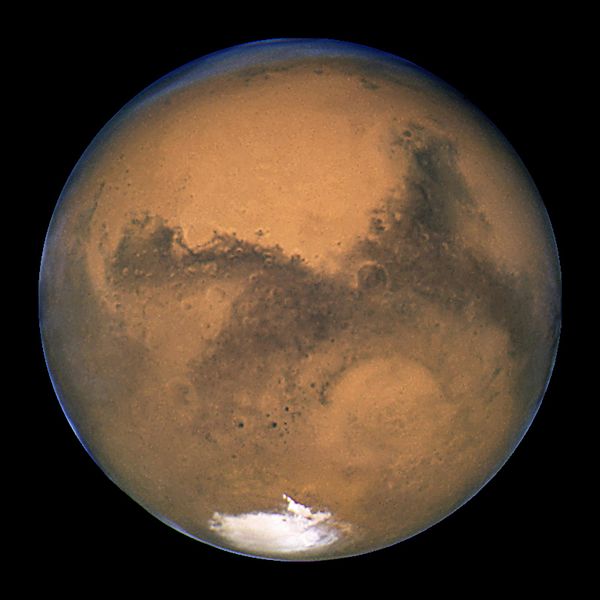
It’s a parable.  This week, on a planet weeks away, earthlings achieved heavier than air flight.  Considering that we flew for the first time on our own planet only 118 years ago (within feasible limits of a very successful human lifetime), the achievement is remarkable.  What I found most fascinating about the live stream provided by NASA, however, was the human element in the control room.  Not only did all the engineers look young enough to have been my children, I was cheered almost to tears to see several women among them.  We’ve come a long way.  And I don’t mean just to get to Mars.  There’s a lot of work yet to be done on the planet on which we evolved, but it does me good to see scientists recognizing the contributions women make to progress.

While many cultures worldwide still consider women the property of men, that scene showed that with women in leadership roles we can achieve remarkable things.  Only with the priorities of diversifying the workplace could we realize a dream that began long before Kitty Hawk.  People of all genders and all ethnicities have much to offer our growing sense of accomplishment.  Mars is millions of miles away.  Perseverance and Ingenuity are being controlled across this godlike distance by a group of humans that consists not just of angry white men who want to rule this world.  Although the palpable  excitement in the room was for what was happening far away, my spirits were buoyed by what was happening here.

Our biology defines us, but it becomes a sin when it confines us.  We are capable of more.  We’ve flown on another planet, and yet we still need to learn that on this planet all people deserve fair and equitable treatment.  It boggles my mind that on that reddish speck I can see on a clear night, a speck so small that my pinkie held at arm’s length can obliterate it, we have landed a car-sized rover and a helicopter.  The math involved staggers this old mind, but the imagination inspires it.  We come to moments like these when women and men of various backgrounds come together and dream.  Double-masked and socially distant, young people have shown us a world far beyond what angry white men could even imagine.  Watching the video of a helicopter taking off, hovering, and landing on another planet, looking at the people in the room, I realize there is a parable here.


Clippings

Weren’t newspaper clippings more fun than bookmarks?  For one thing, bookmarks are hidden away in your browser where they proliferate like bunnies in April.  Clippings were always limited in number, to the level of your interest.  Or physical storage capacity.  I once decided to organize all my bookmarks into “folders.”  I’m still not finished and some websites don’t seem to fit any category.  Still, the exercise is an eye-opening one.  I’ve been on thousands of webpages, hundreds of which I want to remember.  With newspaper clippings, there were a limited supply and they felt—let’s face it—real.  These words and images were printed on tangible paper.  Kept in a file (or in old movies, tacked to a bulletin board that inevitably contained clues), they were visible reminders of something that caught your attention.

I’ve seen movies made where research is being done on the internet.  They involve people who know they have to go beyond the top page of a Google search.  They may even go to the third page or further!  Such thrills.  Compare that to a scene where someone pulls open a desk drawer and finds a clipping.  Isn’t there real drama there?  No doubt the internet has made finding information easier.  It has also proliferated it so that we no longer have time to read it all.  I recall reading how Isaac Asimov read the entire encyclopedia when he grew up.  Who could read all of Wikipedia?  It changes every single day.  The clipping file, depending on the papers and magazines to which you had access, might be pretty slim but it helped to inform opinions and outlooks.  There were occasional hoaxes but nobody worried about fake news back then.  After all, reputations still meant something in those days.

There was a real thrill, growing up in a small town, to being mentioned in the newspaper.  In my case it was generally about being in the Cub Scouts, or, interestingly, being baptized in a river.  (This was a small town.)  Ironically I didn’t have a clipping of the baptism story; I found it online.  The Franklin News-Herald wasn’t a large circulation broadsheet, but it was paper closest to where the incident took place.  Perhaps it struck a locals as odd seeing a bunch of people wading into the river fully clothed, even though it was 1970.  It’s an event I remember well.  But most of my clippings have flowed away over time, like those sins that were washed downstream that day.  I must remember to bookmark that site.


Around the Bible

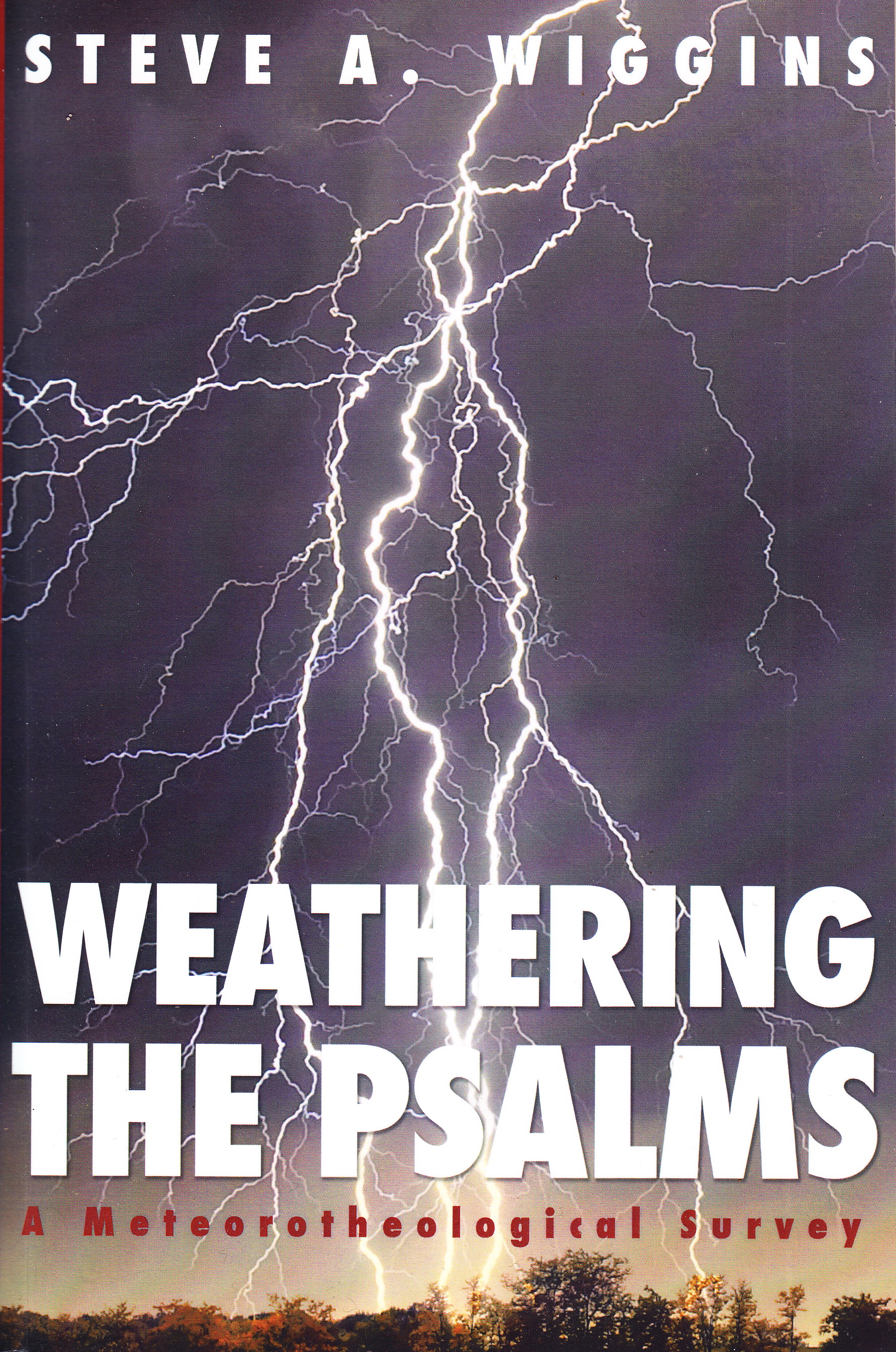
Perhaps it’s happened to you.  You grow curious about something adjacent to the action in the Bible and you go online to find information.  Instead you discover that Google (or Ecosia—plant trees!) searches round you up time and again into the biblical realm.  It seems as if nobody is interested in exploring the world of the Bible not mentioned in the Bible itself.  This has been an avocation of mine all along.  After a while you get tired of hearing what yet another commentator has to say about the Bible itself and you start to want information on, say, places Jesus didn’t go.  A startling apathy meets you online. If it’s not mentioned in the Good Book it’s not worth knowing.  Now quite apart from sending me to the pre-biblical world for my doctoral work, this was also the impetus for Weathering the Psalms.  Nobody seemed particularly interested in the larger picture.

I’m guessing this has improved somewhat in the academy, but it doesn’t translate well to the web, at least not the versions available in America.  Searches for topics around the Bible always herd you back to the Bible itself, as if it is the only reason one might be asking about the weather, geography, or natural flora and fauna of Palestine, Israel, Jordan, Lebanon, or Syria.  Who’d possibly have such an interest for its own sake?  Our bibliocentric culture seems to feed into search-engine algorithms and brings up Scripture time and again.  Try this for maps, for example.  You’ll come up with plenty showing places the Bible names.  If it’s not named there, you won’t find much.  Curiosity for its own sake isn’t encouraged.

This is related to the phenomenon of trying to search for something you don’t know the name of, I suppose.  Those who post content on the web, if they want to be successful, anticipate what others are interested in.  What of those of us who think differently?  Some of us put unusual stuff on the web, but how do you find it if you can’t put it into words?  Secular society doesn’t have much interest in the Good Book.  I’ve suggested many times why I think this is misguided—the Bible is foundational for the American way of life, whether you’re religious or not.  You might think curiosity would abound on related topics.  The thing is you have to get through all the clutter to get there.  I guess we need to be archaeologists of the web.


Whale Tales

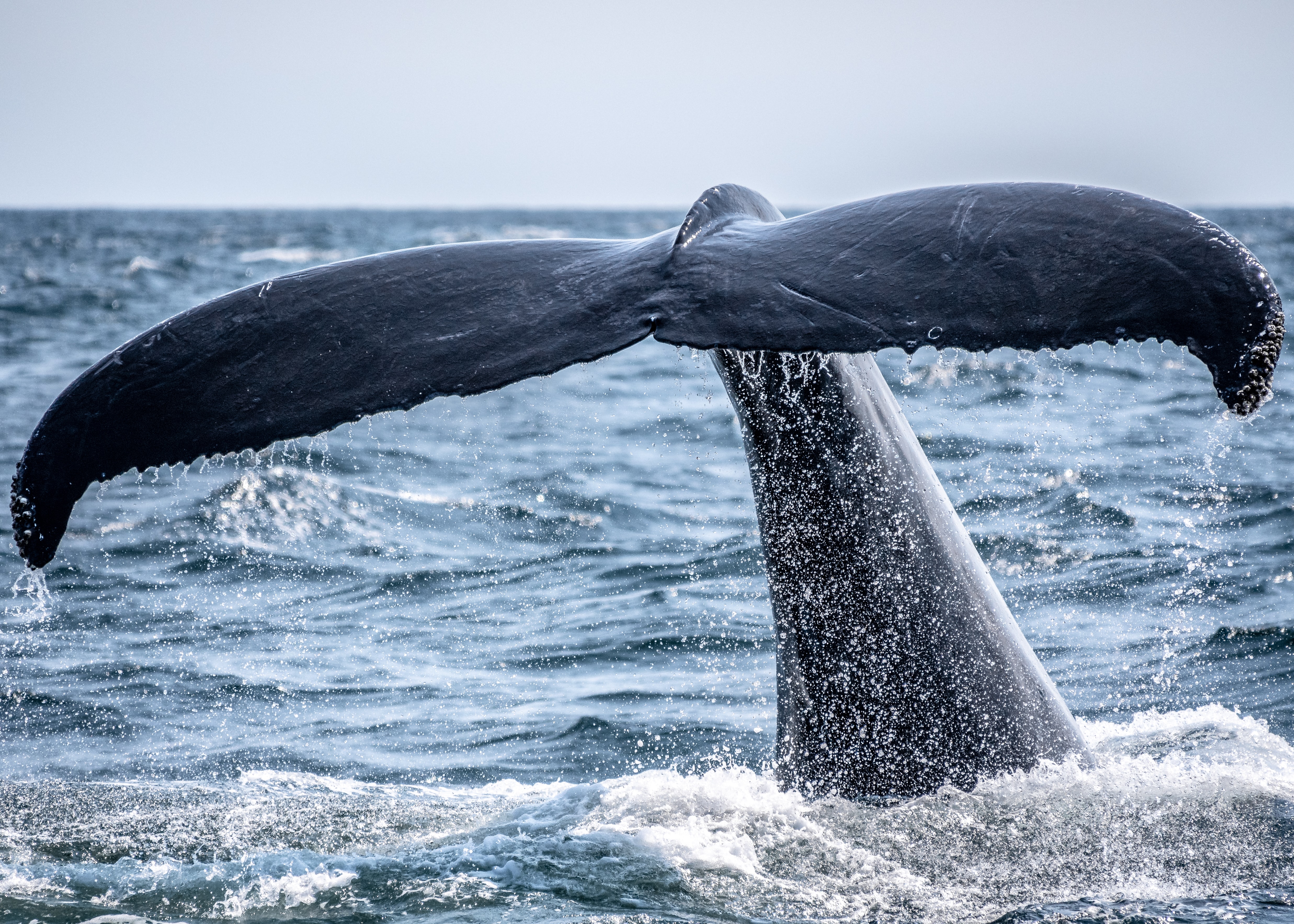
Photo by Richard Sagredo on Unsplash

Always I’m surprised when other people seem surprised, specifically about animal intelligence.  Then I have to remind myself that our culture has absorbed the biblical view that people are different so thoroughly that even scientists believe it.  I watch the birds out my window quite a lot.  What they do is intentional and often quite intelligent.  True, not all animals are college material, but they are far brighter than the “automaton” paradigm with which I grew up.  So when I saw a piece in The Guardian titled “Sperm whales in 19th century shared ship attack information” I kept the tab open until I could read it.  Then I woke up this morning wondering why one of my many open tabs had the header “Sperm” on it, only to remember that I was going to read about whales.

I’ve written about Moby-Dick many times on this blog.  Although Melville didn’t experience financial success with it, he managed to pen one of the most profound and memorable novels ever.  One of the things he stressed was the intelligence of the whaler’s prey.  The Guardian article describes how, due to the magic of digitized log books, researchers can now compare captains’ notes about whaling.  What this comparison makes clear is that whales shared the information about attacks and avoided the areas where they occurred.  Despite the massive size of their brains, researchers had supposed whales to be rather stupid—or automatons—simply waiting to get slaughtered.  Animal intelligence is visible anywhere as long as we’re not afraid of that bogeyman, “anthropomorphism.”

We’ve been taught that human beings are so special that we think other animals act like us only because we’re projecting onto them.  Since the Bible informs us that we’re special and they’re further down the food chain, we must assume that creatures who destroy their own planet believing that they’re serving the will of God are somehow smarter than animals living in harmony with their environment.  We’re so smart that we had to add an extra sapiens to Homo sapiens to show just how special we are.  I’ve long suspected that animals are far more intelligent than we allow them to be.  Philip Hoare’s article offers us yet more evidence that we’ve underestimated our non-sapiens companions time and again.  Ironically we can accept that evolution explains how life forms change over time, but we somehow can’t let go of the story that says we’re somehow different.  I think we need to get out more and simply watch how animals behave.


Slacking Off

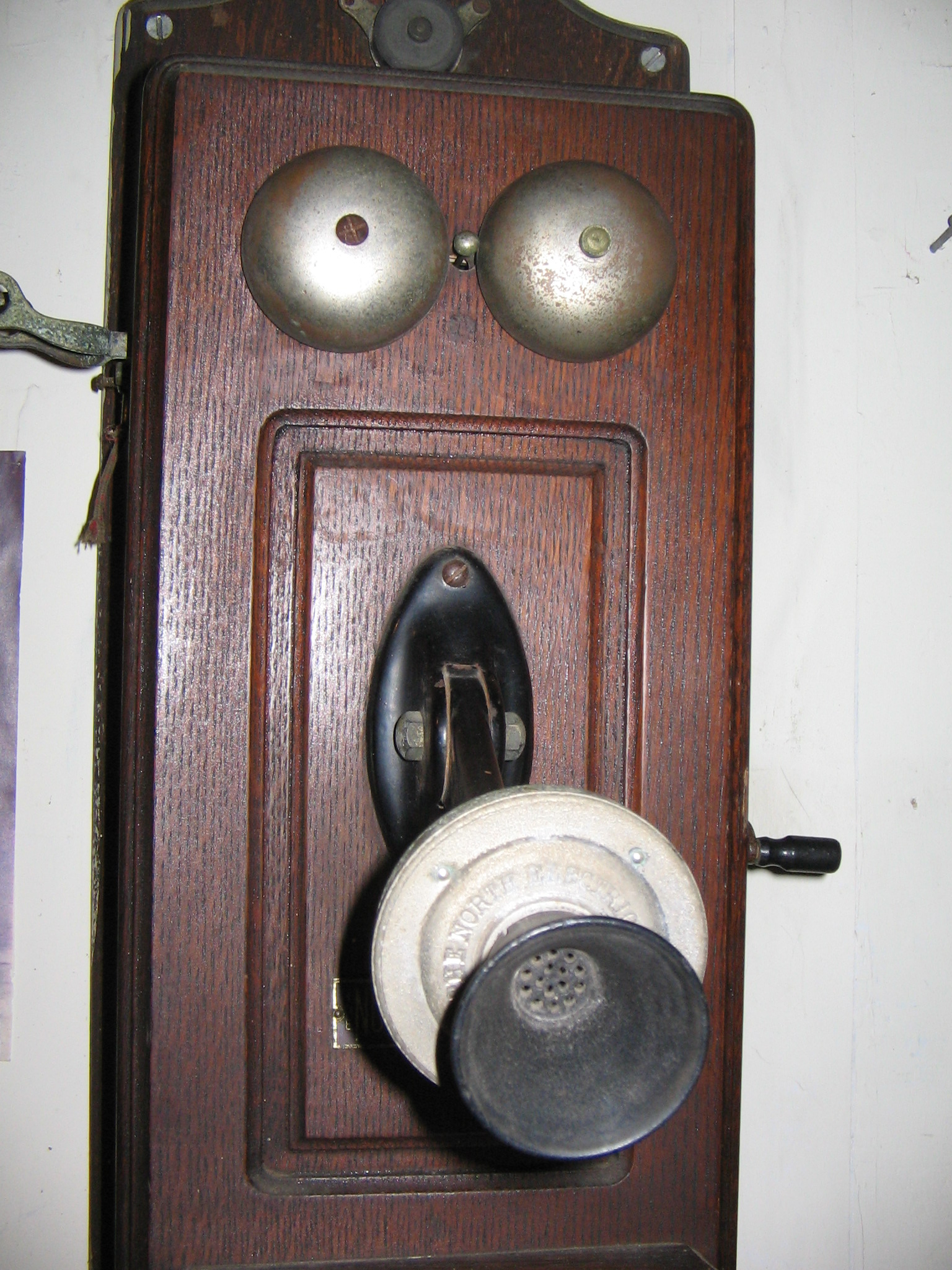
The other day someone on a committee on which I serve suggested we might eliminate the problem of buried emails by using Slack to communicate.  The problem, it seems to me, is that we have too many ways to communicate and yet lack the means to do so well.  For me email is indicative of the problem.  Email was devised—and I remember its beginnings well—as a means of swift communication.  The only real options before that were writing an actual letter (which I miss) or telephoning.  At that time you might have a cordless phone that you could carry from one room to another but you probably did not.  The phone was relegated to a place on a wall or table and, although I appreciate knowing things quickly, the fact is we got along in those days.  Junk mail was evident at a glance.  You sorted it and life went on.

Now email has taken over life.  I simply can’t keep up with it.  Some time ago Google offered a trifurcated email experience: primary, social, and promotional.  Their algorithms aren’t perfect (numbers seldom are) but I can often ignore large swaths of the promotional page.  That saves time.  Most of the social is dominated by people I don’t know wanting to connect on LinkedIn, or someone mentioning something I should pay attention to on Facebook.  Or perhaps something going on in the neighborhood on Nextdoor.  Primary deserves its name, but I can’t keep up with even that.  You see, I have a full-time job.  It largely consists of reading emails.  If I get a personal email in the morning, chances are it will be buried on the second page by the time the day’s out.  It may never been seen again.  I don’t need another new way to communicate.

The pandemic has introduced the new malady of Zoom exhaustion.  It isn’t unusual for my entire weekend to be taken up with Zoom.  If I don’t have a good part of a Saturday to sort my emails into files things I promised I’d do begin to slip.  I don’t see that email—the one that serves as a reminder to this addled brain of mine.  If I order something on Amazon I have to follow up on an email asking me to rate the service.  And then, if it’s not sold directly by Amazon, a vendor fishing for a compliment.  That after getting an email to confirm my order and another to tell me it’s been shipped.  No, please don’t subject me to Slack.  Or better yet, send me an email about it.  I’ll get to it eventually, as long as it stays on the first page.


Getting into SHAPE

The British Academy, in cooperation with a publisher or two, has taken the initiative to promote SHAPE. Social Sciences, Humanities, and the Arts for People and the Economy (SHAPE) may never match the steam of STEM, but the idea is an important one.  Science, Technology, Engineering, and Mathematics have driven society (and the job market) for many years now.  It’s sometimes easy to forget that we’re human beings and we act irrationally from time to time.  (Consider the last four years in these Untied States.)  Higher education was founded on the premises that the Humanities wouldn’t get studied on their own.  Business keeps us too busy.  Either that, or the egos of rulers lead us into war after war.  What gets left behind is the study of what makes us who we are.  The liberal arts college, learning for learning’s sake, has fallen on hard times.  What’s the profit in it?

SHAPE suggests a society suffers if it doesn’t promote social sciences—the so-call “soft sciences” that state humanity the proper study of humans—the humanities, and the arts.  The acronym itself contains a lesson “for people and the economy.”  The dismal science does, in some sense drive the initiative since we live in a world where tech does most of the work we used to.  We’re left with the non-paying business of being human.  Caring for an aging population where people live longer but aren’t given jobs that pay well enough to retire.  Looking in the mirror to see that the economy’s fruits go unfairly to those who already have too much.  The rest of us, are left to survive as, well, humans do.  Why not celebrate—and better yet, value—what people do?  Or humans for humans’ sake?

I’ve long felt that the priorities of capitalism are badly skewed.  The value of gold is artificial, one assigned by human beings and their love of shiny metals.  Our entire society is set up to, as we’re told, pursue wealth.  There is far more to life.  We humans, we love to create.  We love to socialize.  We love to help one another out.  These aren’t paid activities.  They don’t have to be commodified.  The one who goes home with the most stuff isn’t always the winner, especially when the majority of humans are left without enough.  It’s too early to tell if SHAPE will catch on, but I applaud the effort.  It is time we stopped exchanging the warmth of being human for the coldness of numbers and calculation.


Space and Time

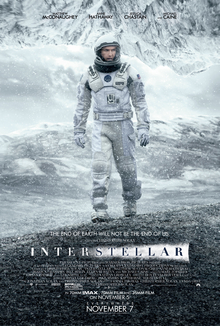
Keeping up with movies could be a regular vocation.  Until it is, however, I will always be running behind.  Seven years ago I planned to see Interstellar in the theater.   Seven years ago we had not dreamed of Covid-19 or a planetary pandemic.  I can’t see now how I would’ve possibly been too busy to have missed it.  If any movie, however, forgives the time-challenged, it’d be this one.  Apart from perhaps being the ultimate father-daughter movie, it plays with time like Inception plays with space.  Or space like it plays with time.  Einstein gave us the laws of relativity, and if they hold up when we finally get to interstellar travel (which has already happened on the space-time continuum somewhere), this is perhaps not at all unlikely.

Back in my teaching days I used to tell students that if they didn’t read at least one book during the summer or winter break that didn’t challenge their worldview then they’d wasted that break.  It was something I did my best to live up to.  Informing yourself—challenging your views—is a feature of education at which we seem to have failed.  Movies like Interstellar are examples of such challenges, albeit in the guise of fiction.  I’ve come to trust Christopher Nolan over the years.  His movies are cerebral yet moving, making us look at things from angles we didn’t know had existed.  I grew up watching not just horror, but also science fiction.  While I gravitated toward the former, I never lost my appreciation for the latter.  Especially when the latter made me think.

Much of Interstellar is, like the best of movies, is informed by previous films.  The influence of 2001: A Space Odyssey is pretty clear, as is that of Contact.  The idea at the center of Interstellar is that love drives the five dimensions in which Cooper finally ends up.  The love of a father for the daughter he had to leave behind and her love for the father that had to abandon her to save the world drives the entire plot.  To me this seems the right balance between science and spirituality.  Love is humanity at its best while science is some of our most advanced thinking at its best.  To recognize the strength of the former is important in a world increasingly driven by technology.  It took me, it seems, a full hour on the water planet to find the time to watch Interstellar.  It is time I won’t get back and I could have used some of it wisely by watching this movie sooner.


Critical Snow

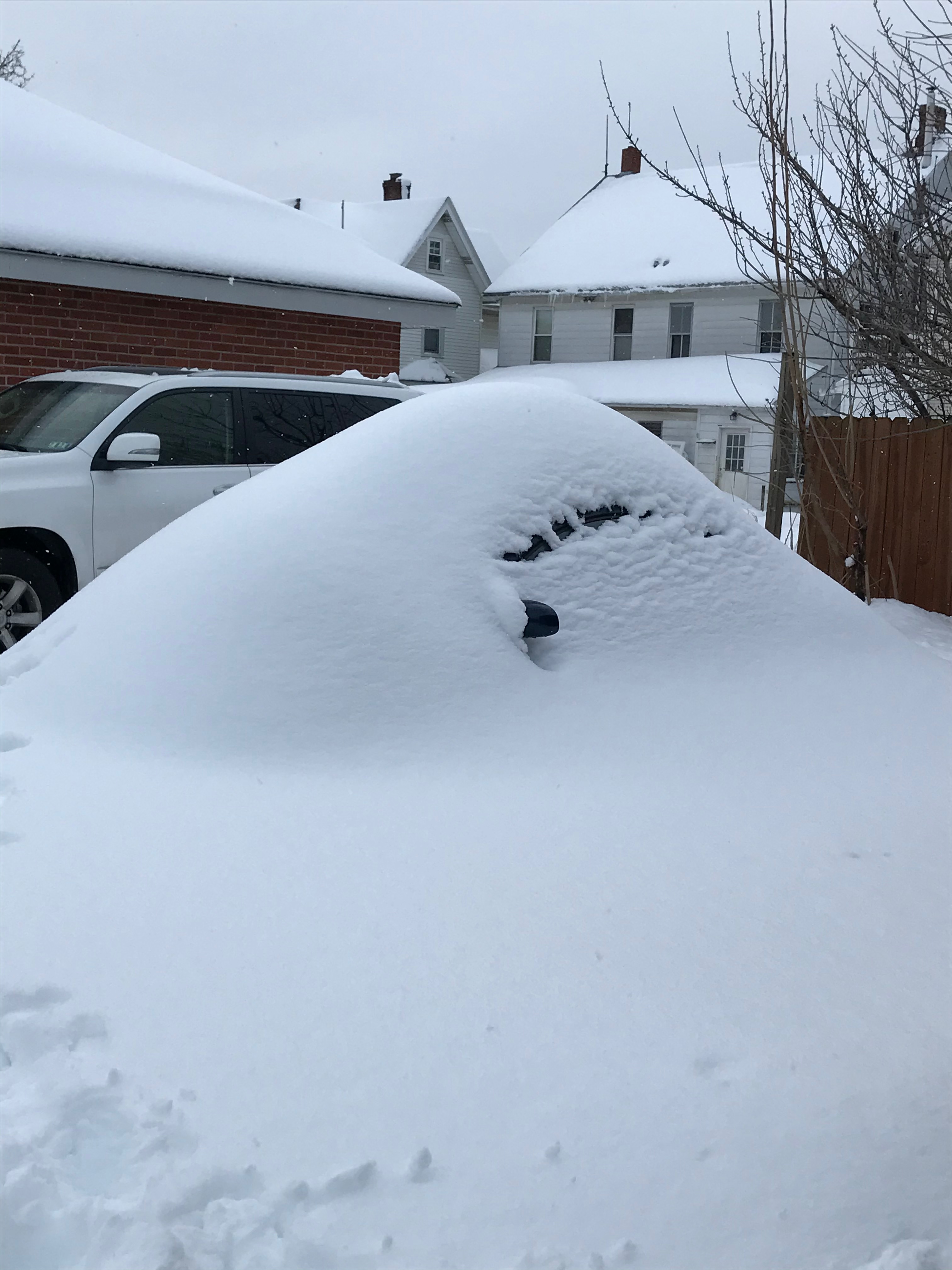
No two snowflakes, I’ve always been told, are the same.  Far be it from me to question the collective wisdom of our species, but I wonder how this fact is ever confirmed.  I suppose I’ve personally swallowed a good deal of the evidence over time.  Snowflakes melt and we can’t get them all under the microscope, can we?  This year has been a winter of more than usual snow around here.  During our most recent storm I stared out the window and tried to count.  Billions of snowflakes collected in my yard alone, and no microscope-bearing statistician was anywhere to be seen.  I like the idea of each flake being unique, but I know it’s a theory impossible to falsify, and I wonder if it’s accurate.

I’ve been thinking a lot about critical thinking.  At its base, critical thinking is about asking questions and learning reputable places to find answers.  Not “fake news” or “alternative facts”—these are tools in the Devil’s workbox—but evidence-based information.  Primary education, it seems, is about learning to read, and write, and handle numbers.  It is about learning who we are  and who we’ve been.  About the way that science helps us understand this old world.  Higher education, as it’s generally conceived, used to be about learning critical thinking.  That was before colleges became mere trade schools, catering mainly to careers with high earning potential so that alumni would give more money back to the college.  Where will we learn critical thinking?  No two are the same, right?

Instead, knowledge and hearsay become very similar things.  I used to tell my students not to take my word for it.  Just because I can legitimately put the word “doctor” in front of my name doesn’t mean I know everything.  Yes, I am an expert but even experts aren’t exempt from the test.  So, as more snow starts to fall, I think about all the many, many places I’ve heard that no two flakes are the same.  I think of the astronomical number of snowflakes that have fallen this year alone.  The number of years before we ever evolved on this planet.  In ice ages and even during human-initiated global warming.  And I realize nobody’s done the actual work of comparing every single snowflake to every other one.  Tradition is like that accumulating snow, building on past layers until great glaciers form.  And who, I wonder, would argue with a glacier?


Plants Will Lead

The world just keeps getting weirder.  Although I very much appreciate—“believe in,” if you will—science, sometimes the technology aspect of STEM leaves me scratching my primate cranium.  What’s got the fingers going this morning is spinach.  Not just any spinach.  According to a story on Euronews, “Scientists Have Taught Spinach to Send Emails.”  There are not a few Homo sapiens, it seems, who might learn something from our leafy greens.  The tech comes, not surprisingly, from MIT.   When spinach roots detect certain compounds left by landmines in the soil, it triggers sensors that send an email alert to a human being who’s probably eaten some of their (the spinach’s) very family members.  I’m not denying that this is very impressive, but it raises once again that troubling question of consciousness and our botanical cousins.

Some people live to eat.  I’m one of those who falls into the other category—those who eat to live.  In my life I’ve gone from being a picky omnivore to being a somewhat adventurous omnivore to vegetarian to vegan.  I’m not sure how much more restricted I can make my diet if I leave out plants.  I’ve watched those time-lapse videos of trees moving.  They move even more slowly than I do when my back’s acting up, but they really do move.  If they had legs and speeded up a bit we’d call it walking.  Studies into plant consciousness are finding new evidence that our brainless greens are remarkably intelligent.  Perhaps some could have made a better president than 45.  I wonder if spinach can tweet?

People can be endlessly inventive.  Our thirst for information is never quenched.  Universities are among those rare places where ideas can be pursued and it can be considered work.  While I don’t think everyone necessarily needs to go on to higher education, I can see the benefits it would have for a culture.  Indeed, would we have armed mobs trying to take over because of a fact-based election loss?  I wonder if the spinach would take place in “stopping the steal.”  Hopefully it would fact-check more than those who simply follow the leader.  Consciousness and education can work together for a powerful good.  I’m not sure why Popeye’s favorite was chosen for this experiment, but it does seem to show that we can all get along if we really want to.  Maybe then we could meet in the salad aisle rather than out in the field looking for explosives.


Keep at It

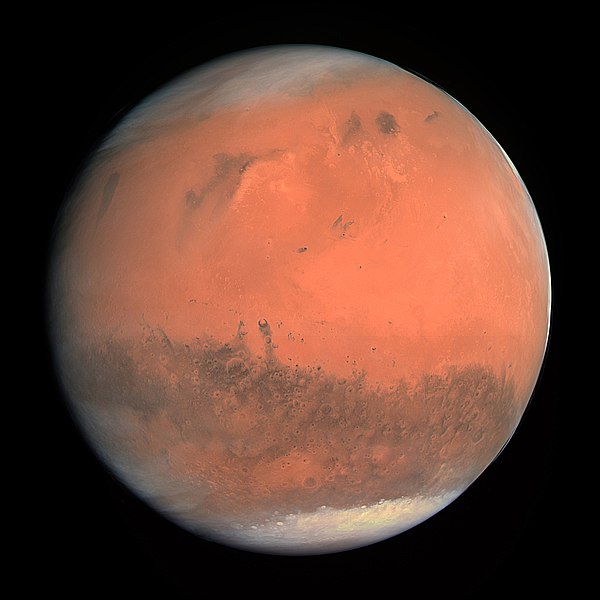
Photo credit: ESA & MPS for OSIRIS Team MPS/UPD/LAM/IAA/RSSD/INTA/UPM/DASP/IDA, CC BY-SA 3.0 IGO, via Wikimedia Commons

Perhaps it’s an indication of just how sick the United States has been for four years—waking up each day wondering what new crisis Trump would have put us into—that I heard nothing about our next Mars visit.  I’m normally quite interested in space exploration.  I seriously considered astronomy for a career, until I found out it’s mostly math.  In any case, I’ve watched our planetary explorations quite closely.  Yesterday, until just about five minutes before the landing of Perseverance on the surface of the Red Planet (earth is supposedly the Blue Planet), I knew nothing of the mission.  When my family alerted me to NASA’s live feed of the event I tuned in for those five minutes to watch as we safely landed our fifth such probe on our neighboring world.

It’s funny how a self-absorbed person can take a whole nation down with himself.  It was a relief to look outside for a while, and to wonder.  I remember when the rovers Curiosity and Spirit landed.  The advance of technology was evident in yesterday’s deployment.  No more bubble-wrap was necessary.  The landing system was incredibly elegant, and if there are any Martians I’m sure there were several UFO reports yesterday afternoon.  As the NASA interpretive explainer told what was going on, I wondered just how life might be on the Blue Planet if we were able to put all our tech to work for peace and the betterment of all.  Instead I find a Congress only too willing to acquit a traitor so we can continue the hate.

Emotion is a funny and unpredictable thing.  Although I knew nothing of Perseverance until five minutes before touchdown, I was immediately drawn into the feeling of the moment.  My eyes weren’t exactly dry as I watched the cheers of jubilation from those masked engineers in the control room.  This had been the culmination of years of hard work, and yes, math.  They were able to calculate fall rates and counter-forces, landing spots and trajectories.  And all of this from about 140 million miles away.  Perseverance was launched back in June—you can’t get there overnight—when we were still reeling down here from the overt evil of white supremacists.  Stoked by a man who would be king.  Leader of the Red States.  Would-be ruler of the Red Planet.  How I wish our technology could help us on our own planet.  Any probes landed here from elsewhere must, I suspect, not believe their mechanical eyes.


Too Fast

In the Easy Reader book Hooray for Henry (available on Amazon for $768.57; that’s $12.60 per page), our eponymous protagonist Henry can’t win any of the events at the picnic games.  One of the refrains as he participates in the races is “faster, faster—too fast” (I may have got the punctuation wrong, but then I haven’t read the book for at least a couple of decades and I can’t afford a new one).  That story seems to have become a symbol for those of us mired in technology.  The rate of change is, as in Henry’s experience, too fast.  The other day I noticed an annoying warning on my laptop that claims I’m low on memory and that I have to close some applications.  What with all that tech requires of us these days I probably do have too many things open at once.  It pops up, however, when I have even just one application open.

A web search revealed this is probably a virus (something that used to be rare on Macs, but that was back in the day when things moved a little slower).  The steps for removing it were technical and appeared to be extremely time-consuming.  What I don’t have is time.  And it’s not just my rare time off work that’s too full.  On the job we’re constantly having to learn new software.  It doesn’t really matter what your line of work is, if it involves sitting behind a computer we’re constantly being told to learn new applications while trying to find time to do the jobs we’re paid to do.  There’s no question of which is the tail and which is the dog here.  With an economy driven largely by tech, because that’s where all the jobs are, you risk everything if you don’t upgrade (about every two weeks at present).

I’ve been writing a long time.  Decades.  Some of my earlier pieces are no longer openable because the software with which I wrote them has been upgraded to the point that it can’t read its own earlier writing.  To the prolific this presents a real problem.  I have, literally, thousands of pieces of writing.  I can’t upgrade every single one each time a new release comes out.  The older ones, it seems, are lost forever.  I used to print out every post on this blog.  Given that there are now even thousands of them, I eventually gave up.  I know that they will inevitably disappear into the fog some day.  For writers who’ve been discovered after their deaths this would be a Bradburian fate.  Or perhaps a Serlingesque twist.  The world realizes a writer had something important to say, but her or his writing can no longer be read because the tech is outdated.  Faster, faster—too fast.


Many Moons

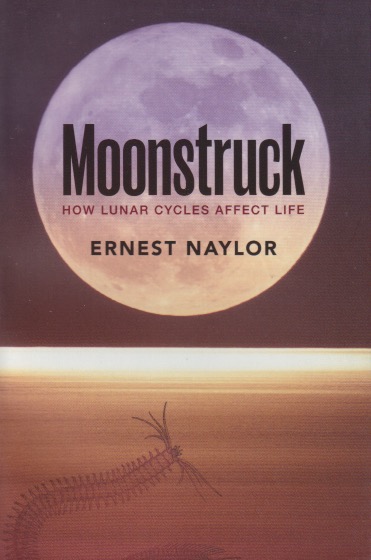
Scientists, often with their base matrix bound up with the local religion, are frequently interested in  myth.  And sometimes religion too.  This is no surprise.  Many of us go into religious studies because of its influence on our lives and scientists, who measure and analyze material realities, must be curious when their results challenge some religious or mythic assumptions.  So it is that Ernest Naylor addresses mythic beliefs about the moon’s influence on animals and what scientific findings on the same show.  Although this book wasn’t exactly what I thought it would be, Moonstruck: How Lunar Cycles Affect Life does address the subtitle assertion quite directly.  Naylor, a marine zoologist, knows about tides—caused by the moon—and their effects on marine organisms.  That connection is the main focus of the book, with occasional forays onto dry land.

What caught my attention right away was that when discussing myth and religious ideas, Naylor describes two stories as biblical: the woodcutter banished for gathering on the Sabbath and Judas’ banishment.  Both of these, he seems to believe, have the Bible banishing the criminals to the moon.  That was news to me.  There may well be folklore with such associations, but a simple opening of the covers of the Good Book would dispel this particular “myth.”  Neither the sabbath wood-gatherer nor Judas were banished to the moon after their deaths.  The former presumably went to Sheol and the latter presumably to Hell.  For me this illustrates yet again how many ideas professional people outside the guild suppose to be “biblical.”  The Bible says very little about the moon.  One New Testament demoniac is described as “moonstruck,” but beyond that the occasional references are mainly just to the moon qua moon.

The Bible’s a big book.  Everyone in western society knows it’s an important book but few read it.  Even fewer deeply engage with it to understand its original context and message.  We hear stuff and we’re told it’s in there, and we believe it.  I first noticed this in high school.  Classmates would tell me “the Bible says…” (you can fill in the blank with just about anything, this isn’t a quiz).  Almost always they were wrong.  By that point I’d read the Good Book many times cover-to-cover.  I owned concordances and knew when foreign matter was introduced.  The thing about the Bible is that it’s fairly simple to look it up.  Moonstruck focuses on marine animals and tells interesting connections to the moon.  It has a chapter on humans and the moon, finding little direct biological influence.  It’s an informative book, just don’t use it to verify what’s in the Bible.


Growing in Intent

Balance has become a desideratum.  Ours is an age of extremism.  Black and white instead of shades of gray.  One of the unnecessary polarizations is that between science and religion.  Part of the problem, it seems to me, is the labels we insist on using.  Science is shorthand for evidence-based research—it is a way of understanding the physical world.  It doesn’t necessarily discount a spiritual world but its methods can’t engage that world, if it exists.  Religion is a poorly defined word, often one of those “you know it when you see it” kinds of phenomena.  Often it is characterized by blind adherence, but that isn’t necessarily what religion is either.  To me, balance between the two is an authentic way to engage the world and other human beings.

Take plants, for instance.  And take consciousness.  While consciousness isn’t always associated with religion, it is one of those things that falls out of the ability of science to measure or quantify.  We don’t really know what it is, but we know we have it.  We know some animals have it, but rather arrogantly assert it is only the “higher” animals, as if we comprehend the hierarchy of nature in its entirety.  We dismiss the idea of plant consciousness.  For many years I’ve been pondering intent.  Without it no life would be possible from sperm germinating egg to heliotropes following the sun.  There’s some kind of intent there.  Will.  Recently The Guardian ran an article about scientifically measured intent in bean plants.  Although many have been left scratching their heads, or pods,  over it, to me it makes perfect sense.

I planted an apple seed a few months back.  It finally sprouted in late December.  I carefully watered it, and put it by a south window to get sunlight.  It grew quickly for a few days and then began to wilt.  I watched helplessly as it gave up the will to live.  I’m no botanist, but I suspected it was the coldness of being set on a windowsill.  (Ours isn’t the best insulated house.)  December had been mild, and it sprouted.  January took a sudden shift to chill, and I realized that new plants outdoors wouldn’t sprout in winter.  The seed had germinated, but the plant had no will to survive in temperatures chillier than its genes told it that might be safe.  I’m not a scientist, but I observed this scenario carefully.  Is it possible that french bean plants show intent?  I think it would be more difficult to explain if they did not.


Look, New…

You may’ve noticed a new look to my website.  That isn’t intentional.  I woke up Friday only to learn that Word Press (which used to be friendly to individual bloggers) decided to change at least one of the few templates they allow paying customers to use (if I upgrade even more to “business class” I have lots more options).  One of those templates happened to be the one I’d labored over, sacrificing an entire weekend about a year ago to get it just how I liked it.  Now, I’m a Neo-Luddite.  Behind the scenes my daughter and one of my nieces have helped me with technical aspects of this blog from the very beginning.  Several years ago I reached capacity for the free service, where, understandably, templates are limited.  Now I pay for both the domain name and the privilege of hosting it on Word Press.  But they like to limit privileges to try to force you to upgrade.  What would Amos say?

A few weeks back my iPhone began to lose its charge at an alarming rate.  I’d unplug it, and, doing nothing but occasionally checking for non-existent texts, it would be red-lining a couple hours later.  I feared I might need to get it serviced.  This went on for several weeks.  It occurred to me that Christmas was approaching and Apple has been known to slow down devices in order to encourage you to buy a new one.  Upgrade!  Everybody’s doing it!  Well, I don’t make enough money to constantly upgrade, so I kept my phone plugged in all the time when I was home (which, during a pandemic, is pretty much all the time).  Then, a few days after Christmas, when it was clear I wasn’t buying a new one, the battery began to hold its charge again.

The tech industry has us in a strangle-hold.  As soon as you purchase that first laptop, tablet, phone, or smart-watch, you’re an indentured servant to upgrades.  So I went to Word Press’s template library and tried to find something that didn’t look too bad with the images and “feel” I’m going for here.  Almost as if they’d chosen an algorithm that made available only a handful of templates that worked worst with what I’m trying to do on this website, I found their selection extremely limited.  If I upgrade to “business class” (which I will need to do when the capacity for my “service level” (not cheap) is full) I will have a plethora of choices.  Until they add a new service level above that, that is.  Then I’ll need to upgrade yet again to unlock all the neat features they “offer.”  Thanks, Word Press.  I’ve been with you over ten years now and I have to ask, is that the way you treat a longterm, paying friend?

Remember this?