Whose Computer?

Whose computer is this?  I’m the one who paid for it, but it is clearly the one in control in this relationship.  You see, if the computer fails to cooperate there is nothing you can do.  It’s not human and despite what the proponents of AI say, a brain is not just a computer.  Now I’m not affluent enough to replace old hardware when it starts slowing down.  Silicon Valley—and capitalism in general—hate that.  I suppose I’m not actually paid well enough to own a computer.  I started buying laptops for work when Nashotah House wouldn’t provide faculty with computers.  Then as an itinerant adjunct it was “have laptop, will travel (and pay bills).”  I even bought my own projector.  At least I thought I was buying it.

I try to keep my software up to date.  The other day a red dot warned me that I had to clear out some space on my disc so Catalina could take over.  It took three days (between work and serving the laptop) to back-up and delete enough files to give it room.  I started the upgrade while I was working, when my personal laptop can rest.  When I checked in it hadn’t installed.  Throwing a string of technical reasons at me in a dialogue box, my OS told me that I should try again.  Problem was, it told me this at 3:30 in the morning, when I do my own personal work.  I had no choice.  One can’t reason with AI.  When I should’ve been writing I was rebooting and installing, a process that takes an hour from a guy who doesn’t have an hour to give.

As all of this was going on I was wondering who owned whom.  In college professors warned against “keyboard compositions.”  These were literal keyboards and they meant you shouldn’t type up your papers the night before they were due, writing them on your typewriter.  They should’ve been researched and “written” before being typed up.  That’s no longer an option.  This blog has well over a million words on it.  Who has time to handwrite a million words, then type them up all in time to post before starting work for the day?  And that’s in addition to the books and articles I write for actual publication.  And the novels and short stories.  For all of this I need my laptop, the Silver to my Lone Ranger, to be ready when I whistle.  Instead it’s dreaming its digital dreams and I’m up at 3:30 twiddling my thumbs.


Rescued, Technically

One of the scariest tropes in horror (or other) movies is where the protagonist has to rely on the monster (or antagonist) to be rescued.  All the time the viewer is wondering if the monster is going to turn on the hero since, well, it’s a monster.  The tension builds because the situation is untenable to begin with, but there is no other way out.  So lately that’s the way I’ve been feeling about technology.  The first and only time I drove to Atlantic City (it was for a concert some years back), navigating by GPS was still new.  In fact, I didn’t have a device but my brother did so he brought it along.  I remember not trusting it to know the local traffic rules, but once we got into an unfamiliar city I had to rely on it to get us to the venue.  The fact that I lived to be writing this account suggests that it worked.

I no longer commute much.  Still, I’m occasionally required to go into the New York office for a day.  It’s a long trip from here, and to handle the true monster of New York City traffic, I have to leave the house before 4 a.m. to get a spot on the earliest possible bus.  If I do that I can justify catching the bus that leaves the Port Authority before 5 p.m., the daily urban traffic apocalypse.  The last time I did this, just this week, it was raining.  Rain almost always leads to accidents in New Jersey, where the concept of safe following distance has never evolved.  And so I found myself on a bus off route because the major interstate leading into Pennsylvania was completely closed.  The driver announced he wasn’t lost, just trying to find the back way home.  When the streets turned curvy and suburban he asked if anyone had a maps app on their phone.

Lately I’ve been complaining about smartphones.  Truth be told, I do use mine as a GPS when I get lost.  It’s at that stage in an iPhone’s life when it shows you a full battery one second and the next second it’s completely dead, so I let my fellow passengers—every single one of whom has a smartphone—do the navigating.  People on the narrow, off-route roads might’ve wondered what a bus was doing way out here, but we finally did get to the park-n-ride.  The monster had helped us to escape.  And people wonder why I like horror movies…


Who Owns Whom?

Who’s ready to sue?  Now, I’m not a litigious person, but when someone (and corporations are people, according to the law) to whom I’ve been paying buckoodles  of money for many years tries to force me to do things as quid pro quo, it’s time to sue.  I started using Apple products during the Reagan Administration.  I can’t recall how many laptops, computers, iPods, iPads, iPhones, and iTunes cards that entails, but it’s been a year’s salary’s worth at least.  Okay, my phone—which is a classic—has been fine until… and this is the kicker… we bought a new phone for my wife.  Since then my iPhone has started having problems it never had before.  Our service provider knows we bought a new phone.  There’s got to be more money available there, “What’s he got in his pockets, my precious?”, right?  As soon as it was activated, mine began acting up.  Coincidence?

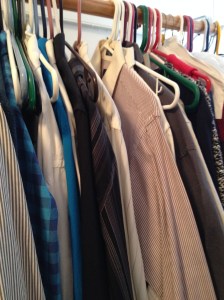
Look, tech gods.  I don’t need a whole universe in my pocket.  My phone is a camera, a GPS, and a text-sender.  That’s all I need it to be.  I can still read cursive.  I have LPs—not the modern retro ones either—in my living room.  I own pens and pencils.  You have no right to make me buy an upgrade I don’t even need!  I hate the capitalist game.  Come here into my closet with me.  (It’s okay, nothing weird, I promise.)  See this shirt?  I still wear it.  I bought it in 1981.  I know that’s 38 years ago.  That’s precisely my point.  The shirt’s still good, so why throw it out?  You guys in Silicon Valley need to get out more.  There’s more to life than upgrading people’s software while they’re asleep.  I don’t know how you sue gods, but I’m going to figure it out.

Some of us are minimally middle class.  Maybe in California you don’t have a lot of rain, but around here we do.  And that means roof replacements.  Maybe the tech gods pay you guys better, but I spent my youth earning a Ph.D. so I could earn less than a tree-trimmer in Iowa.  That is true, by the way.  So the last thing I need is some tech god extorting me to buy a new device.  Leave my phone alone!  And don’t tell me the tech doesn’t support it because I know people with cellphones over a decade old that still work.  Republicans and tech gods know how to ignore subpoenas, I guess.  But it’s time for the rest of us to file a lawsuit.  Who’s with me?


Home Phone?

I wonder if anyone’s done a study on how cell phones affect our psyches.  The other day my wife upgraded her phone.  What with this being technology and all, the setting up rendered both her old and new phones useless so we would have to go back to our dealer.  Since she has to drive to work and I don’t, I gave her my phone for the day.  I use my phone little on most days.  Soon, however, I began to feel very isolated.  Anyone could reach me by email or landline, but I was without my cell phone for about 10 hours and I grew edgy.  What had happened to me?  Was I experiencing withdrawal from tech?  My smartphone is with me all the time and I’ve come to depend on it being there, even if I don’t use it.  Is this healthy?

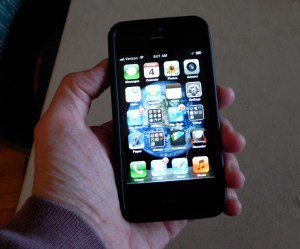
That night we were back at the dealer’s shop.  One of the techies was trying to help us and because of the uber-security state in which we live, he had to text me a passcode to get into my wife’s phone (it’s my name on the joint account).  When his text didn’t come through he asked if he could see my device.  I handed him my iPhone 4S and he acted as if I’d just passed him a human-alien hybrid baby.  As if he’d never seen anything so antiquated.  In all seriousness he said, “You have to upgrade.  Soon this phone will no longer work.”  I have to wonder about the extortion of companies that sell you expensive devices then force you to upgrade when your salary doesn’t keep up with inflation.  My old phone does what I need it to do.  A new one will be capable of much more for which I won’t use it.  I work at home and I don’t give my cell number out to work colleagues.

There’s a psychological study in here.  I don’t want people who don’t know me personally calling my cell.  That’s what a landline is for.  Not only that, but my hours are unconventional.  Even people I know forget and send me texts after 8 p.m., waking me from a night’s sleep.  You see, the phone is always present, and those of us who don’t conform must pay the price.  The thought of being out of contact with others feels like solitary confinement.  Tech companies have given us tweeting presidents and bosses that can reach us at any hour.  And we happily comply.  I appreciate the welcome text or call from family or friend, but when it comes to work and other necessities, I still prefer to receive a letter.  Maybe I need to see a shrink.


Fly Away

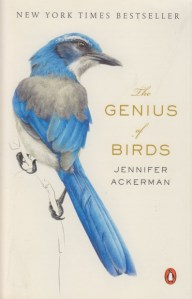
Humans can be quite likable, but we have some nasty traits.  One is that we tend to think of ourselves as the only intelligent beings on the planet.  The funny thing about evolution is that it gave us both big brains and opposable thumbs—a winning combination to destroy the planet.  (Just look at Washington, DC and try to disagree.)  Jennifer Ackerman’s The Genius of Birds is poignant in this context.  Page after page of nearly unbelievable displays of intelligence among birds demonstrates that we are hardly alone on the smarts scale.  Birds make and use tools, have better memories than most of us do, and can solve problems that I even have trouble following.  We tend to take birds for granted because they seem to flit everywhere, but the book ends soberly by noting how global warming is driving many species to extinction.

Homo sapiens (I’ll leave out the questionable and redundant second sapiens) like to think we’ve got it all figured out.  We tend to forget that we too evolved for our environment—we adapt well, which has allowed us to change our environment and adapt to it (again, opposable thumbs).  Many scientists therefore conclude that we are the most intelligent beings in existence.  Ironically they make such assertions when it’s clear that other species can perceive things we can’t.  Ackerman’s chapter on migration states what we well know—migrating birds can sense the earth’s magnetic field, something beyond the ability of humans.  We lack the correct organ or bulb or lobe to pick up that signal.  And yet we think we can rule out other forms of intelligence when we don’t even know all the forms of possible sensory input.  We could learn a lot from looking at birds, including a little humility.

The Genius of Birds explores several different kinds of intelligence.  What becomes clear is that birds, like people, have minds.  Like human beings they come on a scale of intellectual ability that doesn’t suggest only one kind is necessary.  For our large brains we can’t seem to get it through our thick skulls that we need biodiversity.  We need other species to fill other niches and our own remarkable ability to thrive has only been because we are part of a tremendous, interconnected net encompassing all of life.  Other species have contributed to our evolution as we clearly do to theirs.  When we end up thinking that we alone are smart and our own prosperity alone matters we are sawing away at the branch on which we sit.  Further up the birds look at us and wonder if we really know what we’re doing.


This Is a Test

For the next sixty seconds…  (If you were born after Civil Defense aired these commercials, it’s your loss.)  I’ve been reading about animal intelligence—there will be more on this anon.  Today’s lesson is on artificial intelligence.  For now let this be an illustration of how difficult it is to come down from an inspired weekend to the daily technology-enhanced drudgery we call day-to-day life.  One of the real joys of seeing art in person is that no tech intervenes in the experience.  It is naked exposure to another human being’s expression of her or himself.  Over the weekend we wandered through five venues of intense creativity and then, back home, it was once more into the web.  The ever-entangling internet of things.

I write, for better or for worse, on my laptop.  My writing’s actually better on paper, but you need everything in electronic form for publication, so who has the time to write and retype, especially when work is ten hours of your day?  Then a system update alert flashes in the upper right corner of my screen.  “Okay,” I say setting the laptop aside, “go ahead and update.”  But then the message that states I have to clear enough gigs for an update.  I have been a little too creative and I’ve used my disc space for stuff I’ve made rather than Apple.  This is a test.  Okay, so I plug in my trusty terabyte drive to back things up before deleting them.  But the laptop doesn’t recognize the drive.  Oh, so it needs a reboot!  (Don’t we all?)  I give the command to restart.  It can’t because some app refuses to quit beach-balling, as if it is the computer that’s doing the actual thinking.  Force quit.  “Are you sure?” the Mac cheekily asks.  “You might lose unsaved changes.”  I need a technological evangelist, I guess.

All of this takes time away from my precious few minutes of daily creativity.  Restart, login, start copying files.  Time for work!  Just a mere sixty hours ago or less I was wandering through showcases of genuine human creation.  Art pieces that make you stop and ponder, and not have to upgrade the software.  Artists can talk to you and shake your hand.  Explain what they’ve tried to express in human terms.  Meanwhile my phone had died and was pouting while I charged it.  I know Apple wants me to upgrade my hardware—their technological extortion is well known.  Anyone who uses a computer experiences it.  Buy a new one or I’ll waste your time.  The choice is yours.  This is a test.  For the next sixty years…


Bibliographic Blues

Now, I don’t know how often you have to compile a bibliography, but it’s harder than it used to be.  Some time ago—my hardware’s a bit aged, so I can’t remember exactly when—Apple products wouldn’t run Microsoft software.  In one of those turf wars that occasionally break out among those who vie for technical control of the world, the two companies divorced for a period.  As a result, when I open Word files on my Mac, they become “Pages” documents.  That’s fine; since I use a variety of word processors I can usually figure them out fairly readily.  One thing, however, that both Word and Pages do is to assume they know what you’re trying to do.  Software engineers control “smart options” so that when, for example, you’re working on a numbered list (or lettered list) it automatically goes to the next number or letter, formatting happily as it goes.

I have an article coming out in a collection of essays and I had to put a bibliography together.  One of the books was, unfortunately, written by an author who styled himself with an initial for his first name.  Since that initial was “A.” I had great difficulty convincing Pages (as I would have Word) that I was not trying to start a lettered list.  I was trying to build a bibliography.  No matter what I did—copy and paste, retype, hit “delete” til my fingers bled—it simply would not change this A. from a numbered list (just as it likes to capitalize the word that comes after a period automatically) to regular text.  I finally had to retype the whole entry, careful not to put the first initial first, so that Pages wouldn’t reform everything with no option to shut that feature off.  I later snuck in while Pages was dozing and added the A.

Early on, I admit, the footnote function in Word saved premature graying.  Having typed—literally typed—many a college paper only to find that I’d misjudged the spacing required for footnotes and having to retype the entire page, I appreciated this auto-function.  It was great to have an option where an algorithm could figure out all the spacing for you, and all you had to do was enter data.  Now, however, word processors think in terms of the lowest common denominator.  If you begin with “A.” you naturally will be progressing to “B.”  Apparently there is no other reason that a sentient being would begin with “A.”  And of course bibliography begins with “B.”

How do I list this?


Flipping

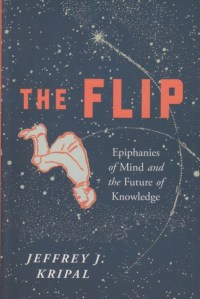
The mind-blowing book I mentioned last week is here unveiled.  I discovered Jeffrey Kripal’s work years ago, and have subsequently had a few conversations with him.  The Flip: Epiphanies of Mind and the Future of Knowledge is a challenging and necessary book.  In a way that only full-time academics can, Kripal examines the large picture.  When I say “large” I mean cosmic in scale.  He does so through the lens of the humanities and, especially, religious studies.  If anybody’s going to make religious studies cool, it is he.  The world is full of weird things.  If we’re honest most of us will admit to having had strange things happen to us.  Often we’ll filter them out or explain them away, but at other times we will stop, scratch our heads, and wonder what just went on.

The Flip is not a book of such anecdotes (and I, along with the author, am willing to take anecdotes seriously).  There is some strange stuff in here, but there is also a lot of science.  Historically the humanities, as understood by ancient Romans, included what we would call sciences.  Humanities, in other words, were attempts at understanding the world.  Today religious studies is among the humanities while science is separated out into STEM.  Kripal takes science seriously.  In fact, much of what he discusses here is the application of quantum physics to the macroscopic.  (I’m probably not explaining this well, but then, I guess you’ll have to read the book!)  In other words, science and the humanities need to come together again.  It’s not either/or, but both/and.

Holding out a hand across the aisle is uncomfortable.  Religion has done a great deal to disgrace itself of late, and it’s no wonder respectable folk want to keep their distance.  To understand what we are, however, requires a willingness to admit that humans are both deeply intellectually curious and deeply religiously inclined.  We can be both.  In fact, it is unlikely we can be any other way.  Anomalous occurrences aren’t generally welcome in religious studies any more than they are in the sciences.  That doesn’t stop strange stuff from happening.  This little book of big ideas uses that disjunction to lead the reader into spaces where the future might faintly be discerned.  Wide-ranging and provocative, this book needs to be read.  It is a strange world where two different approaches to knowledge so often decline to speak to one another.  Here they do, and their conversation is mind-blowing.


Paradoxical Psychology

In college I took enough psychology courses that I could have minored in it, had I simply declared it.  Focused on ministry at the time, this declaration never happened.  My own psychological issues (who doesn’t have them?) show up, I suspect, to those skilled at spotting such things, and friends sometimes suggest books I might enjoy reading.  As a result I recently finished Paradox and Counter-Paradox by Mara Selvini Palazzoli, Luigi Boscolo, Gianfrancro Cecchin, and Guiliana Prata.  Attempting to summarize the study would necessarily over-simplify what is clearly a very complex topic—what used to be called schizophrenia—but the basic idea can be explained.  These psychoanalysts worked as a team to help patients with (since it was the 1970s) schizophrenia.  Realizing that the basic mental processes are developed within a family, their practice used group therapy to treat families rather than singling out the “sick individual.”  This book is an account of the methods they used.

Seeing schizophrenia as a family issue rather than an individual one, the therapists saw the identified patient as often a child trying to keep family expectations in order.  The psychoanalyst team called this a “game” played by families seeking homeostasis—the perceived state of balance between members to assure that things stay the same.  The psychotic member enables this to happen and families, as recounted in some of the cases, clearly try to manipulate the situation to keep this strange and awkward balance.  The doctors used paradoxical (thus the title) scenarios to treat such families and reported a good rate of success.  The focal point of their work was often not on the “sick” member, but on the group dynamics which led to the sickness.

The idea is a fascinating one.  We are all members of families (with some exceptions), and the way our group functions is, for the most part, acceptable.  Dysfunction, however, sometimes leads to psychosis, which, according to these authors, is a state of affairs best treated on a family scale.  While it may be easy for me (having grown up in a clearly dysfunctional family) to see this, I sometimes wonder at how widespread mental issues really are.  Our species lives a highly unnatural existence for evolved beings.  Our work together in family units often leads to conflicts, overt and subtle.  Children—often the identified patients here—can see such things much more clearly than we frequently suppose.  Afraid of the consequences, they learn to play the game to keep the situation stable, if untenable.  There’s great insight here, even if the book is a touch outdated; our learning about the human mind is never-ending and it makes perfect sense to pay attention to the context when wondering about the results. 


Plumbing Depths

This past week we had a plumber here for a day.  Our house has been owned by a succession of DIY weekend warriors who had more confidence than ability when it came to things like electric and water (which, I’ve learned, you want to keep apart).  Somehow our home inspector failed to spot these costly fixes, and I try to think of them all as investments—a concept foreign to a guy with my background of living paycheck to paycheck.  In any case, all this plumbing has me thinking deep thoughts about water.  And depth.  Things are seldom what they seem—there’s more below the surface, and those who struggle with the depths often come up with sayings we call profound.  And they often express them in poetic form because, when you get deep enough, words themselves break down.

I often consider this in the context of science.  Physicists break things down into formulas.  There’s a certain uniformity, they tell us, until you reach the quantum level, then the rules change.  I sometimes see this as an analogy with the staid nature of scientific prose versus the depth of good poetry.  Or even, dare I suggest it, profound fiction.  These sometimes explain our world better than the accepted facts of mundane existence, such as water always seeking the lowest point.  There comes a profundity, however, at which down becomes up.  The behavior of water, which we want in our houses but only in controlled locations, is somehow indicative of this.  “Deep calls unto deep” as one ancient source says.  And the plumber walks away with a good chunk of your cash.

Learning about science in school, I was always taught that good science is elegant—there should be beauty in a theory that explains the world.  I’ve often wondered how this fits in with a reality that is often messy—chaotic even.  Ancient peoples from the area that produced our Bible believed water to be chaotic.  It had to be controlled by the gods.  It is vital for life, we need it and yet it wreaks havoc on dry land as those who experience hurricanes know all too well.  The world into which I was born was one of indoor plumbing.  Once water gets in, as our leaky roof attests, it introduces chaos in a place we want to stay dry.  When water won’t behave like we want it to, however, we no longer call on the gods.  We call a plumber and pay our offering with profound reverence.

Young Dr. Wiggins contemplates chaos


Correct Auto

I’ve tried turning it off, but it sometimes doesn’t work.  Every time there’s a system update (about every other hour, now) the new system reloads autocorrect.  True, my weary fingers are glad for the help when they just can’t spell hypocoristic, but it does seem that autocorrect, although the results are often funny, has no sense of humor.  As a writer I often use ironic misspellings.  I sometimes have my irony interpreted as ignorance, but if writers aren’t misunderstood they’re not doing their jobs, I suppose.  The thing that gets to me is that those who program autocorrect—although sometimes they’re right—can’t let us express ourselves as we wish.  The other day I wrote something with  a deliberate misspelling.  When I hit the “post” button I realized I’d been autocorrected to a nonsense word in the context.  I thought I’d turned autocorrect off.

Now don’t get me wrong—I’m not the world’s greatest speller.  Sometimes I use words with the slightly wrong connotation.  My choices, however, are generally deliberate.  Unless my device has selected them, that  is.  I suspect that autocorrect is appreciated by those who type on tiny screens.  The affluent, I notice, wear iWatches.  I wonder if they carry tiny people in their pockets whose thumbs can fly across such minuscule surfaces.  “No,” someone told me, “it has voice recognition technology.”  I was reminded of some embarrassing mispronunciations I’ve made.  In seminary the homiletics professor had an individual session with me.  “Given your educational background,” he told me, “you don’t mispronounce many words.”  Oh, but I do.  I just save them for the most embarrassing situations.

My inner critic’s a pretty active guy for his age.  He doesn’t need autocorrect to make me realize how little I know.  That’s the thing about technocrats, though.  They like to correct us based on the most common combinations of these letters.  Sometimes I glance back at something I wrote and find a word I don’t even know replacing something that was, in fact, correctly typed in the first place.  I write in a program called Scrivener.  My Mac’s too old to run Word, and Pages isn’t bad, but it doesn’t allow for the complex architecture of my thoughts (and I’m no architect; I can’t even spell it).  In other words, I have to turn autocorrect off not only on my device, but also in the individual applications I run.  But then there are days when verisimilitude just won’t flow the way it should without it.


Burger Impossible

On the way home from Ithaca, we’ve learned the hard way to avoid I-80 through the Poconos on a holiday weekend.  Past experience indicates that about 80 percent of the population of New Jersey (to be fair, a percentage of that may be those from New York City) tries to squeeze through the Delaware Water Gap at just about dinner-time the day before work starts again.  There is a longer alternate route, I-476, the turnpike, which you catch north of Scranton and exit in Allentown.  The only issue with this plan is that, unless you want to exit the turnpike to try to find food in rural Pennsylvania, there’s only one travel plaza between our entrance and exit.  It’s a nice enough stopping point, but for a vegan on the road options are limited.  As we pulled in we noticed there was a Burger King.  Would they have the much touted “impossible burger”?

It turns out that they did.  Having last had a whopper well over two decades ago, mouth memory may have faded a bit, but I can honestly say this was like the whopper I remembered.  If you hold the cheese and mayo, you have a vegan version.  This discovery made me strangely happy.  For years at remote locations (and some urban) we’ve stopped when the only other options are meat based and had the BK veggie burger.  It’s not too bad most of the time, but if you want to think you’re eating meat while not contributing to the massive environmental degradation of industrial farming, the impossible burger seems like a reasonable option.  This is one area of technology that I’m glad seems to be catching up with ethics.

I often ponder how much our western point-of-view is based on the Bible.  Our reluctance to include animals in our ethics is another example of how the hard line between species has been applied.  Even scientists are susceptible to worldview bias.  When we realize we’re all part of a continuum of biological relatedness, it’s a lot more difficult to argue for our special place in the divine eye.  At the same time, insisting one’s ethics be applied to all is a form of fascism.  I’m just glad my conscience can be assuaged with some plant-based food options.  After all, I’ve been on the road for a few hours and I’m sitting here happy to be eating at Burger King.  It’s a matter of perspective.


Turin Turnabout

Turn about, they say, is fair play.  Turin, on the other hand, is a city in Italy.  Its claim to fame is a shroud housed there that is believed by many to be Jesus’ burial cloth.  Tests have been done over the years, most authoritatively a carbon-dating done by three independent laboratories, with the results suggesting a medieval origin to the cloth itself.  In case your chronology is a little hazy, the medieval period comes centuries after the time Jesus lived.  Now, some thirty years after the definitive study, some scientists are questioning the results.  They’re being skeptical of the skeptics.  Turn about.  According to a story in The Catholic Register, a Freedom of Information Act request, honored only by one of the three labs (the one at Oxford University) has revealed that the bits of the shroud subjected to analysis were the worst possible parts of the cloth to test.  Herein lies the rub: scientists like to poke holes in credulousness—what do you do when your science is itself the subject of skepticism?

The Shroud of Turin, like Donald Trump, is one of those utterly arcane artifacts that unites Catholics and Evangelicals.  When I was growing up these two groups were the cats and dogs of the theological world.  They united under the umbrella of conservative social causes during the Bush years and have been sleeping together ever since (while both convinced that the other is going straight to Hell when it’s all over).  You see, the Shroud is a Catholic possession and allegedly bears wounds that support the Catholic narrative.  (The Vatican has never declared it an authentic relic, however.)  Evangelicals see it as proof positive that Jesus was resurrected, and so they tend to go further than the Catholics in citing it as proof.  We live in odd times when believers successfully out-skeptic the skeptics.

Since the other two laboratories (the University of Arizona and the Swiss Federal Institute of Technology) haven’t released the raw data, the grounds for a conspiracy theory grow fertile.  When information is kept secret, that’s a natural enough response.  The conspiracy-prone mind asks why the data isn’t being made public.  They do have a point.  The claims of religion are often hoisted on the petard of “no evidence” and when evidence (such as the lab results) exists but isn’t shown, that suggests somebody’s hiding something.  I have no vested interest in the authenticity of the shroud, but we all should have such an interest in getting at the truth.  The turnabout in this case, however, was completely unexpected.


Positive ID

It’s a little bit worrying.  Not just the GOP’s indifference in the face of two mass shootings on the same weekend, but also the fact that the internet knows who I am.  I am the reluctant owner of a smartphone.  I do like that I have the internet in my pocket, but I’m a touch paranoid that I can be traced to anywhere unless I lose my phone.  Even then the government can probably email me and tell me where it is.  Don’t get me wrong—I’m not important enough for the government to pay attention to me, but what is really worrisome is that the web knows me.  Here’s how I came to learn that.  On my home computer I had done a rather obscure Google search.  (If you read this blog that won’t surprise you, and no, it wasn’t anything naughty!)  When I signed into my work computer—different username, different email address, different IP address—and had to do a work related search, Google auto-suggested the search I did on a different computer over the weekend.

I’m savvy enough to know that Google metrics are all about marketing.  The internet wants customer information to predict what they might sell to us.  Advertisers pay for that.  Assuming that I want to buy underwear and summer dresses online (why?), they tailor their ads to sites I visit.  As a sometime fiction writer I go to some sites from which I’m not interested in purchasing anything.  (As an aside, old fashioned book research didn’t leave such a “paper trail.”)  I’ve gotten used to the idea of my laptop knowing me—it sits on my lap everyday, after all—but the work computer?  Does it have to know what I’ve been doing over the weekend?

Artificial intelligence is one thing, but hopping from one login to another feels like being caught in the shower by a stranger.  Like everyone else, I appreciate the convenience of devices.  When I get up in the morning my laptop’s more sure of who I am than my own sleep-addled brain is.  That doesn’t mean my devices really know the essence of who I am.  And it certainly doesn’t mean that my work computer has any right to know what I was doing on another device over the weekend.  Those who believe machine consciousness is now underway assume that this is a step forward, I suppose.  From the perspective of one who’s being stalked by electronic surveillance, however, the view is quite different.  Please leave my personal life at the door, as I do when I go to work.


Monsters and Gods

Nothing makes you feel quite as old as seeing a documentary where the names of the experts are unfamiliar to you because they’re too young.  So it was when I watched PBS’s Ancient Skies episode “Gods and Monsters.”  They had me at “Monsters” although I know that when paired with gods the term generally refers to Greek mythology.  This documentary had a pretty cool rendition of Marduk battling Tiamat that would’ve left many a Babylonian quaking in his or her sandals.  Ranging across the world, it showed the earliest efforts to understand astronomy, and then went on to contrast it with how the ancients nevertheless still believed in gods.  It was a striking kind of condescension, I thought.  Many scientists today still believe in a deity, although it’s no longer the fashion.

That sharp dichotomy, that either/or, bothers me a bit.  It’s not that I have a problem with science—I’ve always supported the scientific method.  No, it’s the idea that everything is explained that bothers me.  We understand so little about the universe.  Yes, we’ve made great strides over the past millennia, but we’ve not even been out of the cosmic neighborhood yet.  And I wish we could acknowledge that even on earth life is still a mystery that can only be solved with poetry as well as reason.  “Gods and Monsters” made the point that the ancients realized the explanatory value of stories.  Myths weren’t just idle constructs to pass the time.  They were ways of understanding how this universe works.  Some people take their mythology too seriously, of course, but that doesn’t mean that no stories are required to make sense of it all.

It was the inherent conflict implied between science and religion, I think, that bothered me the most.  Not everything in life comes down to an equation.  That doesn’t mean that equations are wrong, just that they’re not everything.  One of the points Ancient Skies makes is that people of bygone eras had a very sophisticated understanding of the sky.  It featured the builders of the great pyramid of Khufu, those who constructed Stonehenge, the Maya, and the Babylonians.  They all knew much of the math that would only be formulated in Europe much later.  And they all assuredly believed in gods.  It didn’t prevent them from complex thought in either architecture or astronomy.  Our modern dilemma is the razor burn left by standing before the mirror too long with Occam.  You don’t have to shave to support science.