Scotland the Evolved

Imports and exports are the stuff of international commerce. Nations import what they require or desire from nations that have a surplus. One surplus that the United States has is Creationism. The origins of the movement share some culture with England, but there is no doubt that the idea of Creationism is a distinctly American one. Histories of the movement have been written, and it has proven itself remarkably resilient and tenacious. The leaders of the various forms of Creationism (yes, of course there are factions) tend to be very good at fund raising and political maneuvering. Once Creationism has been safely laid to rest in one form, another arises in its place like the heads of a hydra. The United States has been exporting Creationism for years now. I recall talking with colleagues from the UK many years ago and they were asking what this thing was that was showing up in their classrooms. The Brits tend to be sensible people and they were unacquainted with this blatantly faith-based approach to “science.”

A recent piece on IFL Science! declares that Scotland, at least, has banned Creationism from science classes. As a form of religious or cultural belief, of course, it may be studied. I have a feeling that in the future our generation will be regarded with wonder as that which experienced a massive delusion that science is whatever you want it to be. Don’t get me wrong; I understand Creationist concerns. Indeed, up through my sophomore year in college I shared them and could not see how evolution would fit into a biblically informed worldview. This was not discouraged at Grove City College. The serious study of religion, however, does bring many truths to light. Religion can be studied empirically. When it is, ideas such as Creationism can be objectively assessed. When they are, mene mene tekel upharsin.

We will not see Creationism going away. With the conviction of righteousness that is fueled not only by monkey business, but also fears of social changes, it gives a verisimilitude of respectability. Science has eroded systematically such ideas as homosexuality as an aberration, gender being fixed and defined at birth, women being inferior to men, races as being different species. It used to feel like a safe world to those who felt the Bible supported their right to run the place. Creationism feels like science and tries to cast doubt on a worldview that has relegated the Bible to a quaint place on a dusty bookshelf of Weltanschauungen. It would be naive to suppose that it is about to go away just because it is banned. If we would take the time to understand it, and to try to address the insecurities it effectively assuages, we might see different results. Making fun, however, seldom leads to conversion. We’re simply too evolved for that to work.


America’s Book

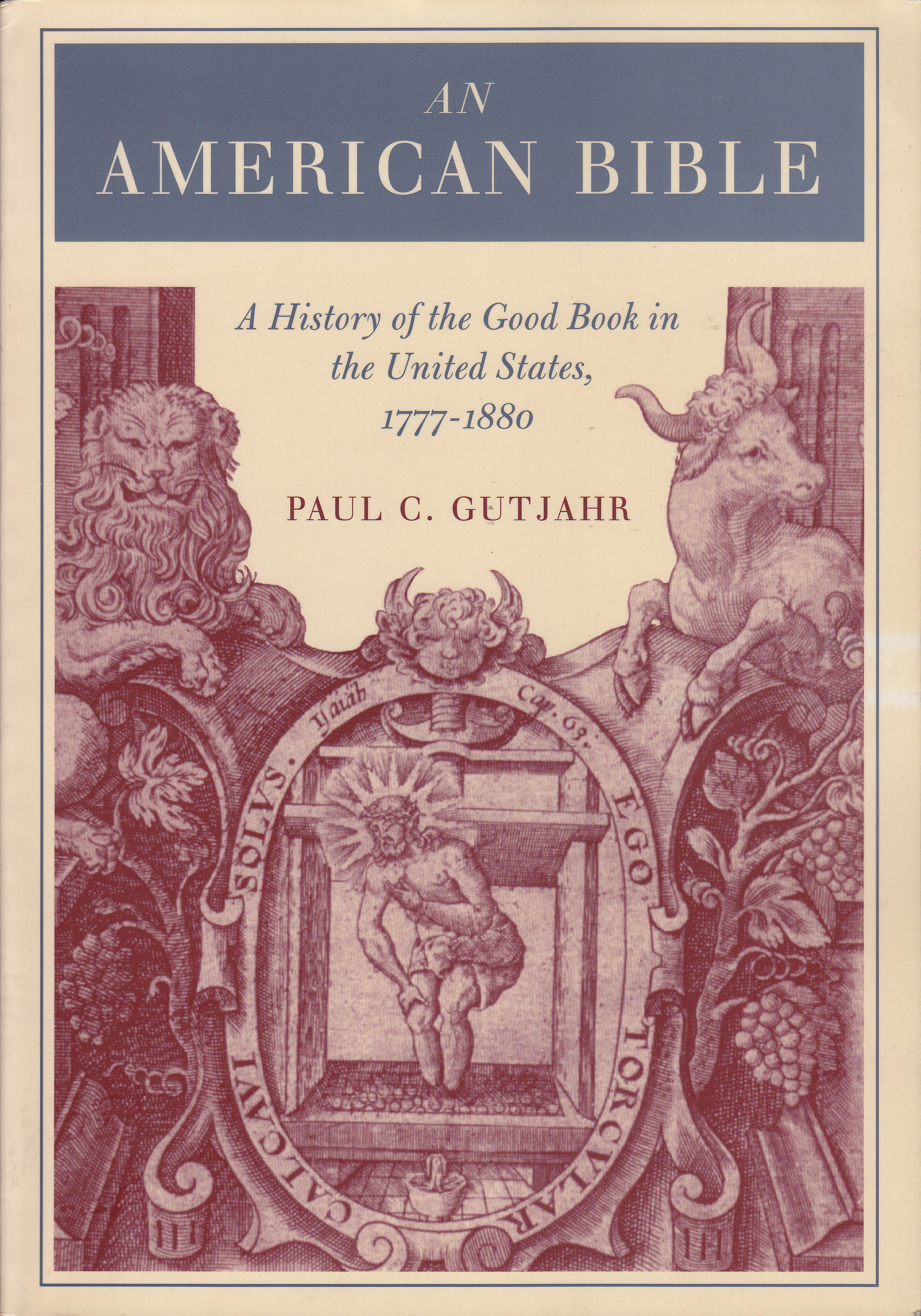
AmericanBibleOne thing that would be difficult to overstate is the influence the Bible has had on America. In our increasingly secular society, it may seem like the Bible has lost its edge. Then comes a presidential election and the Bible is headline news again. Actually, it is present all along in more subtle forms, causing embarrassment for those who think it’s just puerile mythology. Many useful aspects of this may be glimpsed in Paul C. Gutjahr’s An American Bible: A History of the Good Book in the United States,1777-1880. Thorough, insightful, and at times even witty, this reader-friendly analysis probes many aspects of how the Bible has impacted society in ways long forgotten. Who remembers that there were “Bible Wars” in the nineteenth century? That Bible publishing could at one time make one wealthy? That Bible illustrations caused scandal because bare-bosomed biblical ladies appeared in the pages of sacred writ?

The Bible is America’s book. Although Gutjahr only covers about a century of the story, there’s no question that the Good Book has roots that reach down into the sixteenth century and branches that continue to sprawl into the twenty-first. Some of it may be chalked up to civil religion, but the whole picture is more complex than that. From earliest days the colonial invaders drew on their understanding of the Bible to justify actions that really can’t be justified, and assuaged their guilt with the same holy book. Medieval European culture held the church and its founding document in high esteem, and when the Reformers broke from the hierarchy, the Bible became, well, sola scriptura. It was the Protestants who were annoyed enough at the situation to seek a life in somebody else’s land.

Once here, however, the Bible became foundational. Schools were established to teach students to read, and the main reading material was the Bible. A moral society, it was believed, would be founded on such curricula. Colleges were built primarily to train ministers. Revivals periodically swept the land. We currently live in the days of mega-churches. The elites sometimes overlook the appeal of the Bible to the average person. Here is a book that offers hope. And even if it’s rough, a love to those who don’t get their share of the culture’s spoils. It is more than a book. The Bible is a symbol. On his inauguration George Washington not only laid his hand on it, he also kissed the Bible before the crowds. If, like me, you didn’t know that, I suggest An American Bible as a reminder of how it has brought us to where we are. Borrowing a term from its sub-title, it too is a good book, and it serves to remind us of the power of an idea.


Life as we Know it

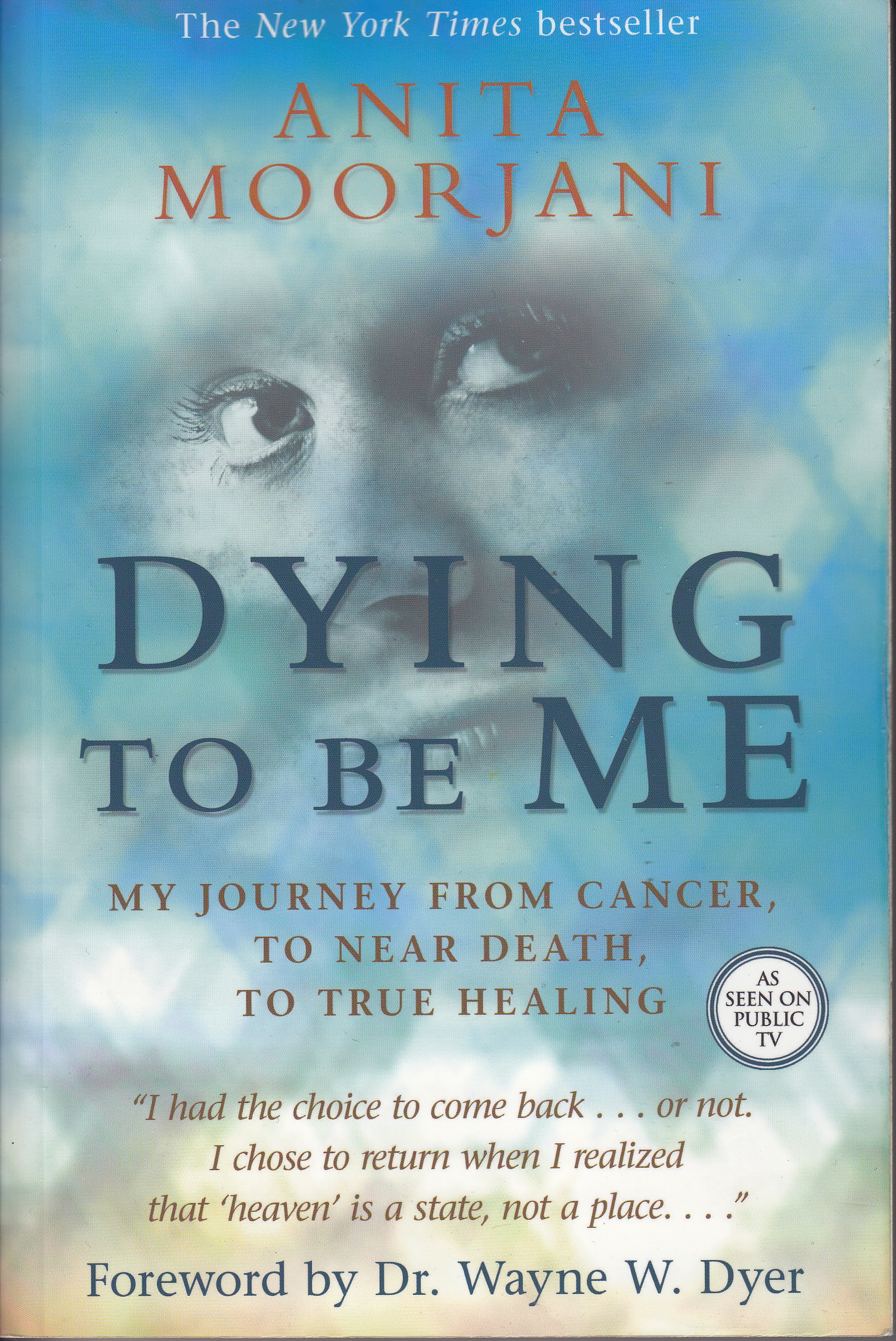
Dying2BMeA friend asked me for a book. Since my life has mostly been about books, I’m generally happy to supply what I can. This friend is a cancer survivor and wanted to read Anita Moorjani’s Dying To Be Me. The last time I saw this friend, she handed me the book, saying she didn’t care for it. Although the author tells of her dramatic Near Death Experience, and is very optimistic about all that we can improve by loving ourselves and others, she isn’t a Christian. Raised as an Indian living in Hong Kong and sometimes attending a Catholic school, Moorjani is conversant with several religions but doesn’t favor one above the others. Her experience of being in a coma with very advanced cancer and having a prognosis of days, at most, to live, yet coming out of the coma and being completely healed of disease within weeks could be overlooked on the basis of a belief system. I decided to read her account myself.

Ironically, Moorjani directly describes why she can’t accept any single religion in her book. Her reason is because religions tend to block being open to possibilities that fall outside of doctrine. Her Near Death Experience, described in great detail, doesn’t fit any particular religion very well, including her native Hinduism. It led her to believe in a kind of universalism with everyone ending up realizing their own divinity and loving all others unconditionally. Even though many of her interpretations of her experience are a bit too New Agey for me, I have a deep appreciation for her advocacy of trying to understand others and loving everyone. I saw nothing incompatible with Christianity there. Or any other ethical religion.

Religion can divide as much as, if not more than, plain common sense. Those who think deeply about it realize that religion should make life better for all. That seems to be its evolutionary purpose, apart from personal survival. Of course, some religions also reject evolution as well. When missionaries reached far shores and found good people living ethical lives, they feared for their souls, thinking only one religion could fit all. Many of us are heirs of such missionaries, being taught from our youngest days that living in fear and self-abasement is the loving, Christian way. It may be that a Hindu who learned to trust herself by nearly crossing the brink of death has something to teach the missionaries as well. If only they could listen.


Scientific Voices

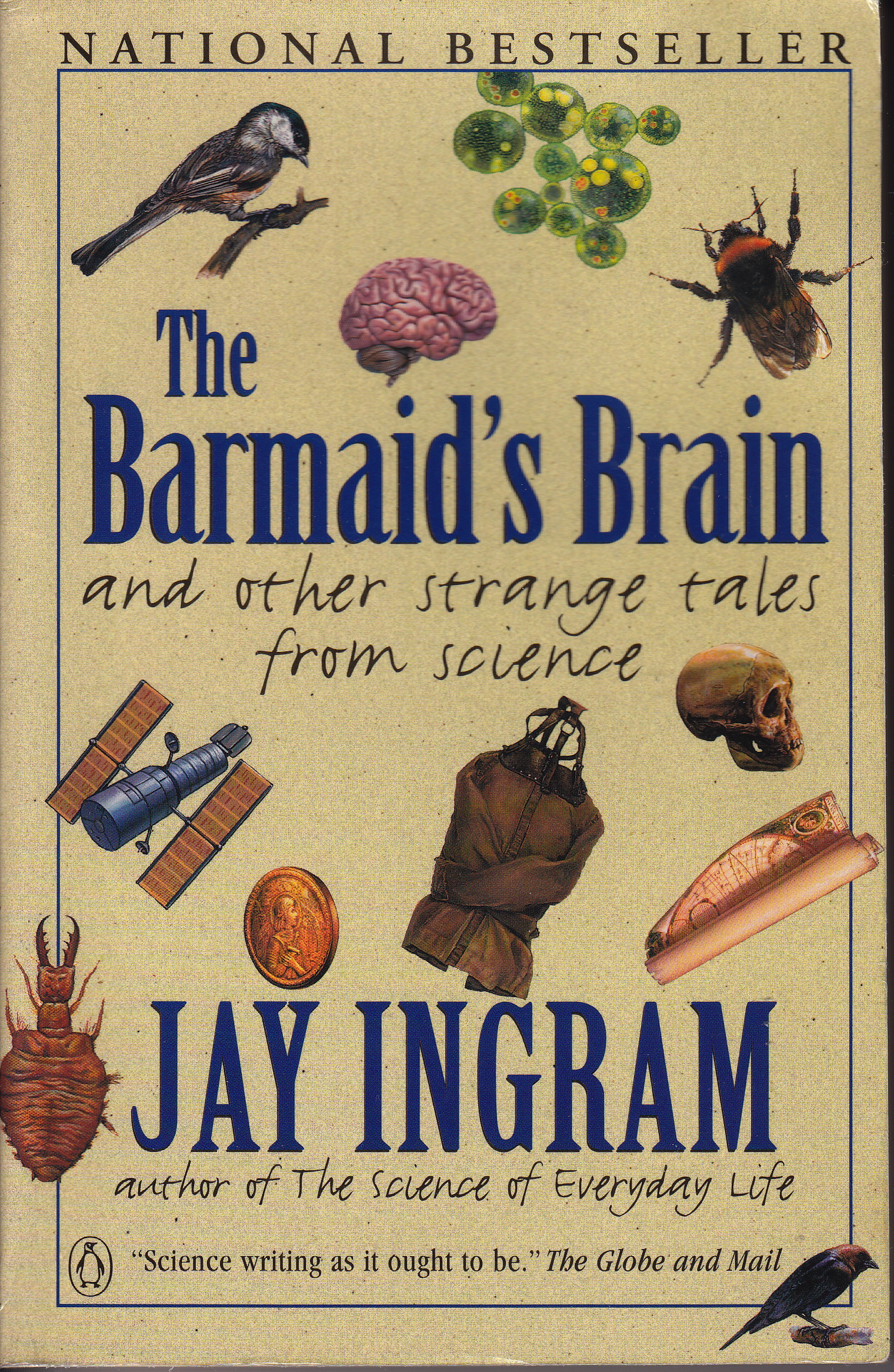
BarmaidsBrainScience requires translation. Even very intelligent people in other fields of study have trouble understanding what scientists have been saying. That’s why science writers are so important. They can distill the heady knowledge that empirical method produces into a palatable tipple for the laity. Jay Ingram’s The Barmaid’s Brain is one such digestible report. As the subtitle (And Other Strange Tales from Science) indicates, this book is about the weird world of science’s often hidden charms. We all pretty much know that quantum mechanics has turned conventional wisdom on its head. We also know (courtesy of the media) that science and religion fight like cats and dogs. What we don’t see is that scientists often disagree on how to interpret data, particularly on the weird end of things. Ingram tells many such interesting tales from nature, psychology, and technology.

The essays in the book are loosely grouped into areas with some common theme. The psychology story that struck me as being particularly appropriate for this blog was the one about Joan of Arc. Joan, as most of us learned from history, was a prodigy. Illiterate, female, and poor, she nevertheless displayed a military genius that led her to the head of a French army trying to hold off the advances of the English. When turned over to the enemy she was treated as a witch, tried for heresy, and burned at the stake. Later she became a saint. The reason that she’s in a book of science essays is that Ingram wonders what exactly was going on when she heard voices and saw visions. Neuroscientists have devised ways of peering into the brain during religious experiences, and psychologists have constructed theories of why otherwise sane people hear voices. Joan doesn’t fit into the category that used to be called schizophrenia, nor does she appear to have been in any way insane. She was religious and her religion spoke to her.

When I was growing up, it wasn’t unusual for scientists to be believers. Nothing was wrong with believing in a god and studying the physical world. Indeed, the idea went back to Isaac Newton and other scientists of the first generation of the Enlightenment. Implications eventually led to the utter absence of deity from the world. People such as Joan were understood as sadly misled by a religion that could not be distinguished from magic. Yet Joan, as Ingram well knows, would hardly be a household name without her visions and her faith. At the end of the analysis, Joan rises from the couch still a mystery. An enigma to science, and suspect to many religious. She was, it seems to me, quintessentially human. We are all, it seems, whether saints or scientists, subject to what empirical evidence will allow us to believe. Most of the time, anyway.


Peak Oil

Having no control over where we’re born, people nevertheless often feel a connection with their native region. My family had no roots in western Pennsylvania, and the consensus on why we ended up here focuses around jobs. My grandparents settled here because of a job. While working here on a job my father, from the south, met my mother. My brothers and I all consider ourselves Pennsylvanians. One of the places we liked to visit as children was Drake Well. We knew that the oil industry began in western Pennsylvania, and we knew that famous people like George Washington had traveled through the region during the various wars of the nation’s early years. The towns where I grew up are not exactly affluent, and one of them seems in danger of becoming a ghost town. Drake Well, however, the birthplace of commercial oil, still draws visitors from the region and from around the country. On a recent visit to the site, I was interested to see how religion interplayed with petroleum in Victorian Era western Pennsylvania.

thumb_DSCN5064_1024

Among the displays was one showing the various means used to find oil. In the days before geological surveys, finding something hidden underground required more than just technical knowledge. More precisely, it often utilized different forms of technology—some scientific, some not. Dowsing was popular, and spirits were consulted. Access to the supernatural world was not uncommon. The oil industry really took off during the same era that spiritualism began to become popular. Religion and science co-existed in a way that is difficult to imagine today. Indeed, Drake Well was established in 1859, the same year Darwin’s Origin of Species was published. The means used to reach the oil were, however, unabashedly scientific and technical. Nitroglycerin fatalities were just another fact of life.

Looking over the triumphal displays about fracking, it became clear that in the realm of petroleum production the spirit has made way for a technology with unknown consequences. The museum at Drake Well is pretty straightforward that other energy forms pose a threat to an industry that was, and currently remains, massive. We have technologies that can utilize cleaner forms of energy, but powerful oil interests have maintained the focus on more and more invasive ways to keep things going the way they are, pulling in more profits while the limited supply lasts. We know petroleum will run out. We’ve deeply integrated it into our way of life and instead of looking ahead to the next step, we’ve been reaching back to pad our fat pockets. Gone are the dowsers and spiritualists and in have charged the corporate executives. And in western Pennsylvania, the towns where the industry began struggle to stay alive as thinking that allowed for spirits has acquiesced to that which has loyalty to Mammon alone.


Watchers and the Holy One

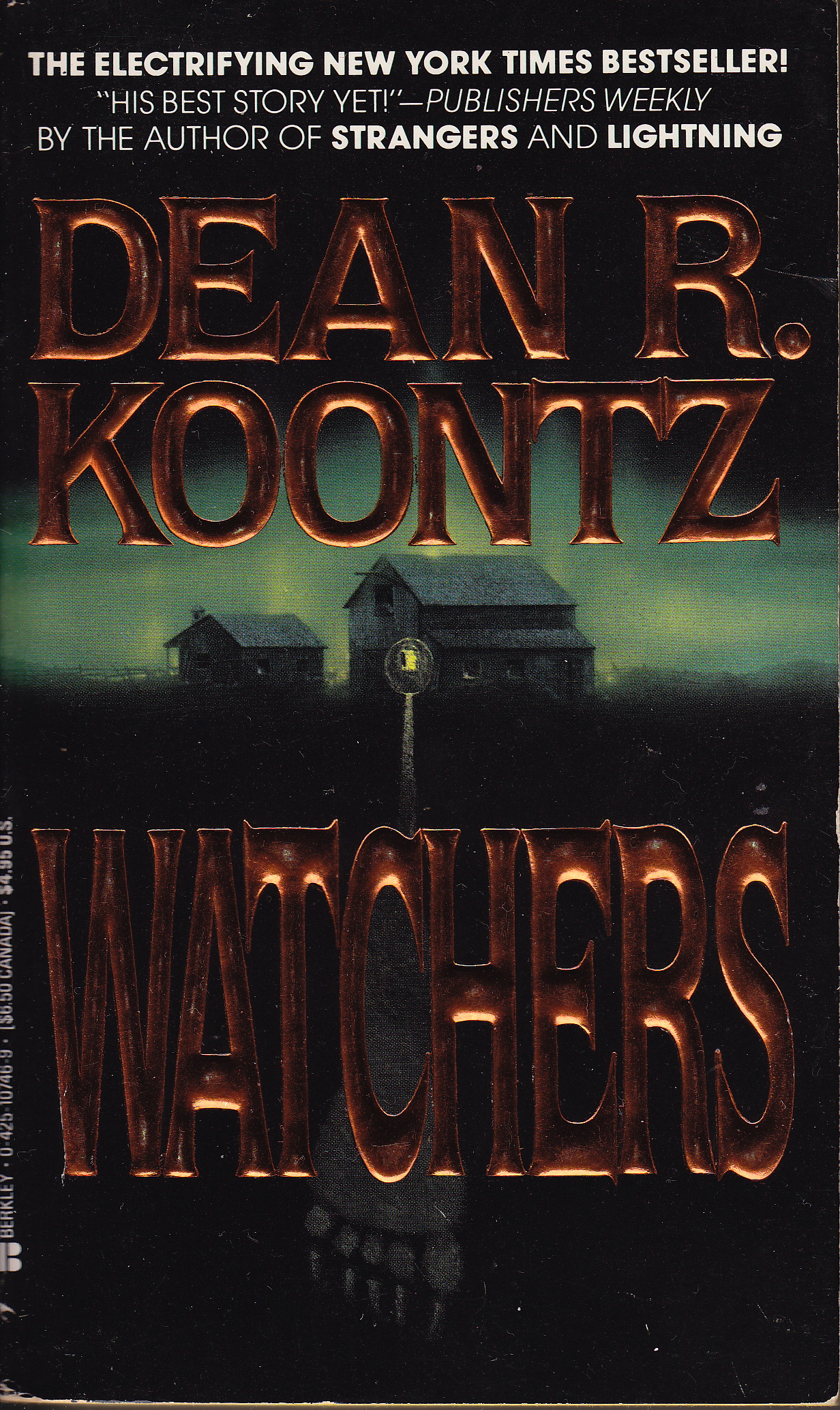
WatchersI’m not really a fan of Dean R. Koontz’s thrillers, but I do find myself turning to them from time to time. Like Stephen King’s, Koontz’s books are easily found at book sales, but you don’t always have your choice of which titles. I picked up Watchers because it had a vaguely biblical sound to it. The title seems to fit the story only loosely, but there are a number of points where God is invoked in the tale. Watchers is a book about genetic engineering, both the good and the bad aspects of it. Scientists have produced a dog as intelligent as a human being, and a monster that kills indiscriminately; a Cain and Abel. As this is being explained to one of the characters, he says “If we can do this, we have the power and, potentially, the wisdom of God.” Here, in a nutshell, is the debate about intentional genetic modification. We don’t have the ability to see ahead very far, and although we like to think ourselves god-like, we could very well be creating catastrophes. At least, in this story, God is deemed wise.

Some time later another character in the story opines that when humanity can create an intelligent species, it is our responsibility to act, in a sense, as its deity. “If we’ve come so far that we can create as God creates, then we have to learn to act with the justice and mercy of God.” Interestingly, there is no question of theodicy here. The justice and mercy of God are assumed, despite the many wakeful nights and unsettled days of the theologians. Casting God as the “good guy” is not as easy as it used to be, and our own “engineering” isn’t always assumed to be for the good of our own planet.

Finally, as some of the characters are discussing who has the right to own this super-intelligent dog, God is invoked once again. The qualities of the dog (a golden retriever, since, one presumes, a Rotweiler, for instance, might have different qualities), its courage, ability to distinguish right from wrong, ability to love, and selflessness, make it more in the image of God than human beings. Again, God here is unquestioningly assumed to be the great good, the advocate of humankind. I realize novelists are under no obligation to be theologians, yet it is difficult to tell a tale of genetic tampering without invoking the Almighty. What I find so interesting here in Koontz is that despite the evil of some of the characters, the goodness of God is never called into question. It is assumed that the evil we create is our own while the good in the world belongs to God. It’s a view of the world that could be called almost biblical. Those who professionally reflect on these things, however, often come to a different conclusion.


Pillars of Science

I sometimes wonder if science would have the appeal that it does, if it didn’t have religion to shock and awe. I’m thinking of not only the fact that The Humanist magazine quite often has a focus on religion, but even websites, irreverently named to make the sensitive blush, frequently use it as a foil. My wife likes the site now more commonly known as “IFL Science!” Web acronyms have taught us what the second of those letters denotes, but perhaps because making the name more family friendly leads to more hits, it’s been muted a bit. In any case, the most recent post I’ve seen has to do with that marvelous Hubble image of interstellar gas and dust columns where stars are being born, know as “The Pillars of Creation.” Apart from the stunningly beautiful images, I’ve always been taken by the way that implicitly or even subliminally, concepts of deity lie behind this scene. When the image was first published, I remember staring at it in rapt fascination—here we had stolen a glimpse into the private chambers of the universe. We were seeing what, were we in the midst of, would surely prove fatal. It is like seeing, well, creation.

Eagle_nebula_pillars

Creation is enfolded in the language of myth. Reading the description of this great, gaseous cloud, we are told of the tremendous winds in space (what I had been taught was an utter vacuum) where dust is so hot (I was taught space was frigid) that it ignites into stars, like a silo fire gone wild. It’s like witnessing the moment of conception, although Caroline Reid tells us the dust will be blown away in 3 million years. Perhaps ironically, scientists are scrambling to study it before that happens. Or before that will have happened. At 7000 light-years away, it will have been gone as long ago as Sumerians first put stylus to clay before we know of it. We still have a couple million years for a good gander. And the Sumerians, the first writers of which we know, were writing stories of creation.

It is really a shame that science has, in general, such an antipathy towards myth. As scholars of biblical languages, indeed, nearly any language, know, the language of myth and poetry is especially useful when standard prose breaks down. “Wow!” is not a scientific word. Nor is “eureka!” What other response, however, can there be to seeing the act of creation with our own eyes? Meanwhile there will be those who use science to belittle the worldview of the myth maker and and thinker of religion. Our world, it is widely known, is that of superstition and ignorance. We are those who think only in shallow pools and deny the very reality that is before our eyes. That reality can be full of stunning beauty, but were we to describe it in terms empirical, we might have to keep the interjections and useless adjectives to a minimum.


DOA

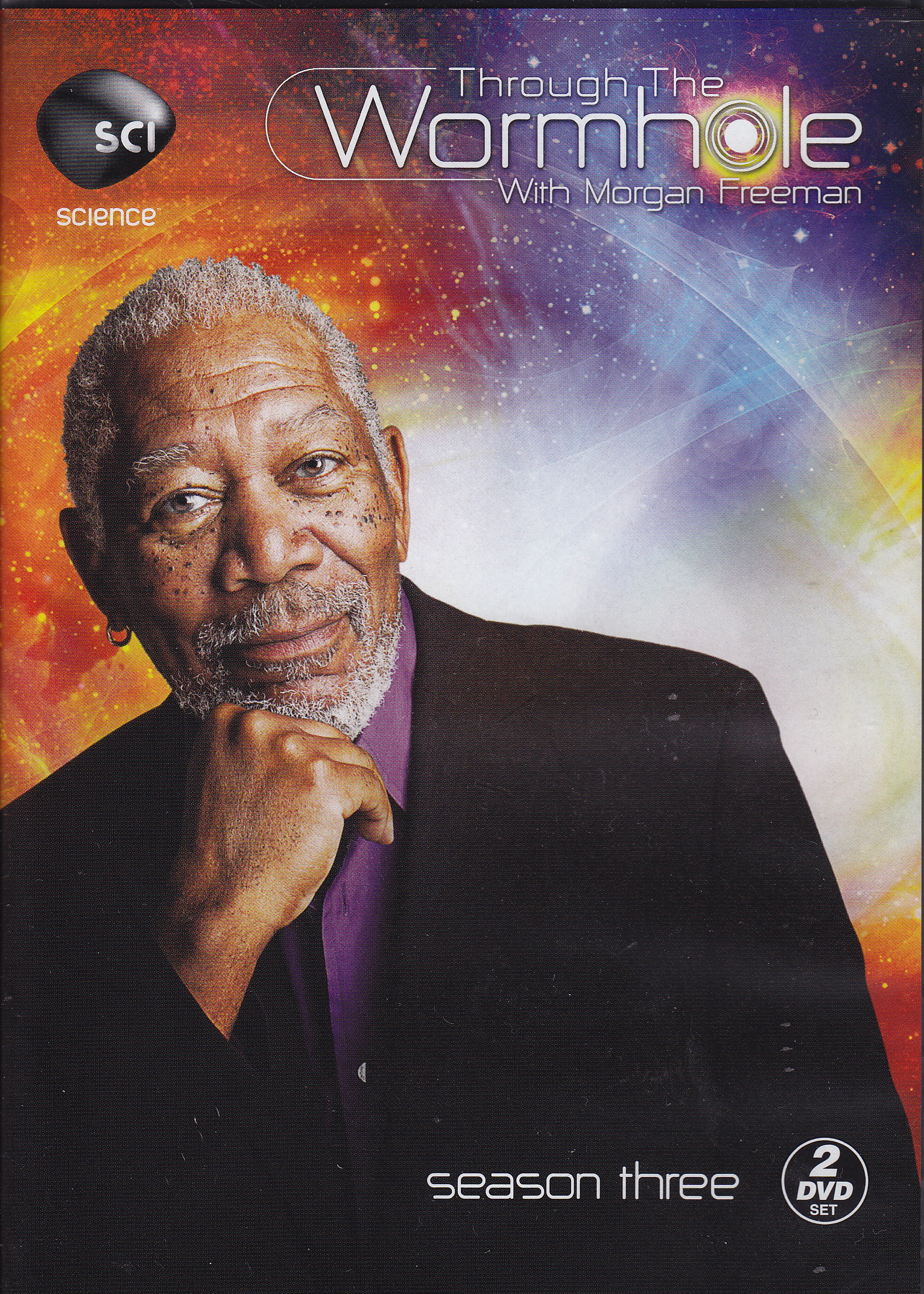
Wormhole3Perhaps it’s just me, but the third season of Through the Wormhole has taken a dramatically metaphysical turn. I always run behind the time when it comes to media; I know that the season is long passed. I started watching Through the Wormhole shortly after the first season became available on DVD. Science has always been an abiding interest of mine, and I face it as someone raised religious and wondering whence lies the truth. (“Through the wormhole,” for the record, is where it might be found according to Morgan Freeman in the opening voiceover.) The third season, through which I’m currently making my way, has begun to raise disturbing questions about life and mortality that start to highlight some of the more Frankensteinian aspects to human curiosity. I recently watched the episode “Can We Resurrect the Dead?”

In the world with which I am familiar, resurrection has always been a religious issue. I grew up with a strong notion of the afterlife, and it was suggested to me that survival beyond death was assured. But the resurrection that various scientists are now exploring is of a different order. For those who can afford the increasingly astronomical costs of top medical care, resurrection is not such an unusual thing. Only, when your body is resuscitated, you wake up the the same weary body that just died. So some of the scientists interviewed suggest that if we can reverse the death “mechanism” that is apparently built into our own mitochondria, we might be able to bring back the dead. Even more bizarre are those called “life loggers” who wear devices to record their experiences in life so that they can be uploaded and preserved. A consciousness digitized and stored on a hard drive heaven for all eternity. Meanwhile a scientist smoking a cigarette in Japan shows us a robot straight from the uncanny valley that looks almost like him and is sent to do some of his lectures in his place.

Maybe it’s just me, but it seems that resurrection used to be somewhat simpler. It was a matter of following the right doctrine and living a life worthy of being continued after this one ends. Now it is a matter of peering through a microscope, or trying to capture on mere devices the multitude of experiences that flood us daily, making us human. Can our future, digital selves really experience human emotion? All those pictures taken while riding a bike—will they convey the effort of balance learned as a child, the sensation of a self-generated breeze on my face, the wonderful weary sensation in my legs upon stepping off? What of that hint of lilac in the air that I picked up momentarily on the wind? Will eternal life, missing the actual life be worth it? I think Victor Frankenstein discovered the answer to that almost two centuries ago.


Two Outlooks

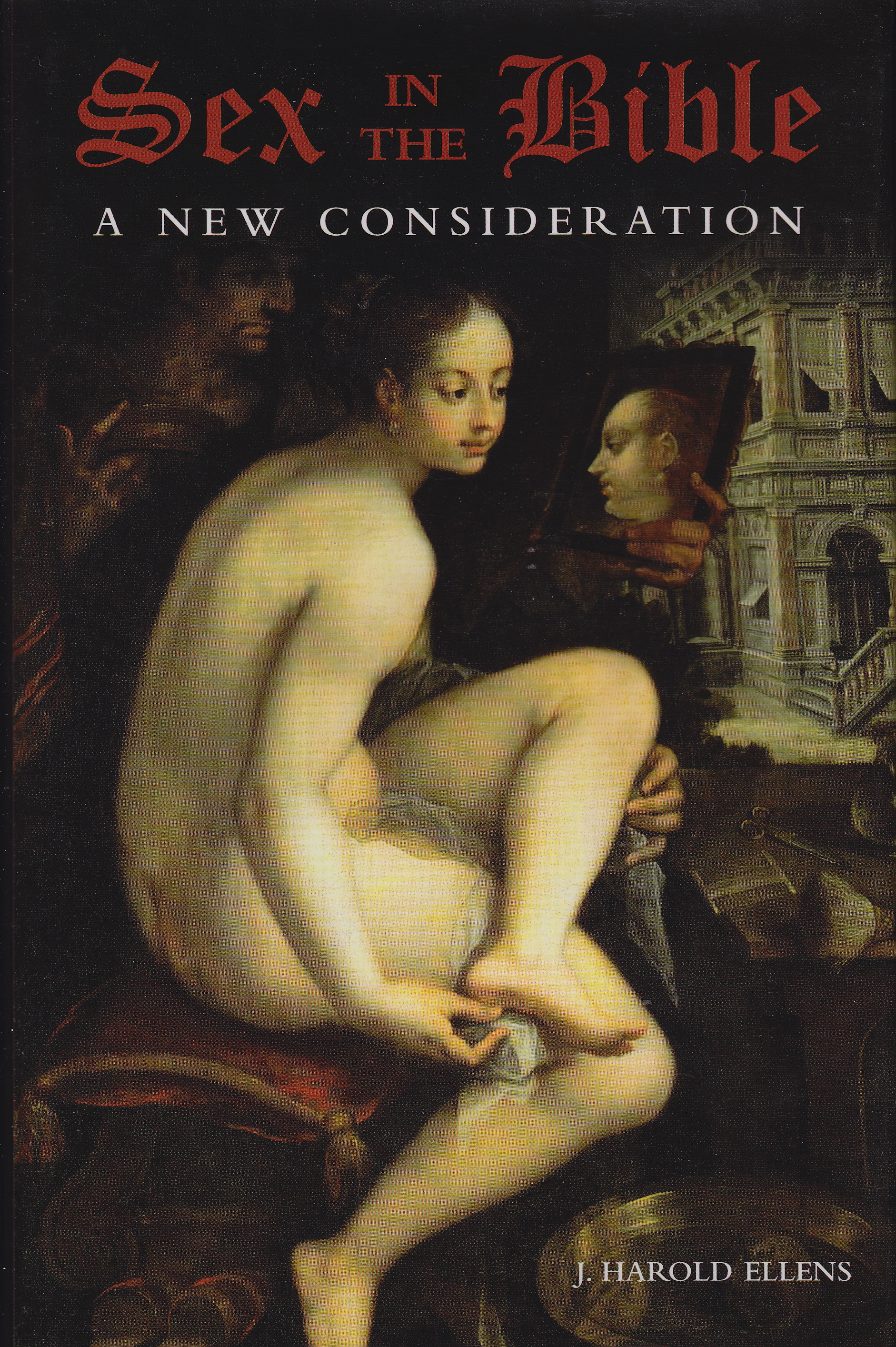
SexInTheBibleThe word polymath used to be applied more easily. In these days of highly specialized training, it is difficult to have expert knowledge in more than a couple of areas. The two areas, sexuality and scripture, dealt with in J. Harold Ellens’s Sex in the Bible: A New Consideration, are such zones of specialization. Students of the Bible have recently begun an intensive exploration of how sex fit into the ancient worldview. Ellens’s book surveys all of the biblical legislation about sexual matters and a fair number of the stories involving the same, with the sensitivity of a professional counselor. Indeed, his practical knowledge of human sexual development and psychological needs based on it should inform society’s understanding of scripture. The Bible is no pristine book. Neither is it a romance novel. Still, ancient people were not as shy about sex as post-Victorians tend to be. The Bible is often frank on the subject.

The main danger of a project like this is trying to decide where to take the Bible literally and where not. Ellens, while he has some training as a biblical scholar, falls into a familiar trap. He assumes, as parts of the Bible do, that Israel’s neighbors were sexually depraved. Not only did they condone things like bestiality, according to Ellens, but they incorporated sexual deviancy into their worship. Ancient records, readily available for decades, give the lie to that outlook. Ellens makes the case that biblical writers had no way of knowing, however, that homosexuality, for example, is a biological predisposition that can’t be changed at will. Other sexual practices that are now considered normal and healthy were perversions in the biblical period. Medical science should inform our understanding of Holy Writ.

This is an argument Ellens can’t win. Passionate though he may be about how all of this just makes sense from a scientifically informed point of view, the fact can’t be changed that the Bible does condemn some sex acts outright. Even more damaging, in my opinion, is that the Bible clearly views women as the sexual property of men, and men regulate the sexuality of their females. Anyone arguing that the Bible is a moral guidebook in regard to sexual mores must face this issue head on. There’s no tip-toeing around it, even with verified psychological pedigree. The Bible is the product of a patriarchal structure that did not tolerate sexual practice outside prescribed limits. We now understand the same behaviors from a scientific point of view, but the written text doesn’t change. It is just that dilemma that makes it very difficult to be an expert on two fields so diverse as sexuality and biblical studies.


Brain Dead

I’ve been thinking about brains (is there any more existential thing to do?). Reading a book this week about the mind (see Thursday’s post) probably has something to do with it. And also having finished a book on zombies maybe contributes as well. You see, I find it strange when scientists assume that we can figure out all the answers with our limited brains. Although we are endlessly fascinated by them, neuroscientists have long noted that they do have weaknesses—they (brains) are easily fooled, and, for those who find no room for the mysterious in the universe, we’ve made up gods to keep us company. We know that relative brain size—relative to body mass, that is—is a large factor in intelligence, but we seem not to imagine the possibility of larger brains than those we carry around. I suppose it’s not without reason that alien brains are disproportionately larger than our own, according to the standard image of the “grays.” We don’t like to think there’s something smarter than us hanging around. It’s a frightening thought.

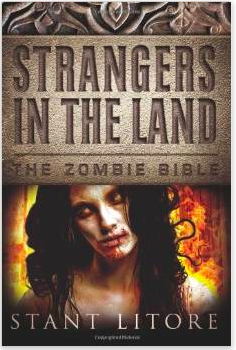
Screen Shot 2015-05-02 at 5.35.48 AMOn the more earthy side, brains have been the usual fare for zombies in one sub-division of the zombie movie neighborhood. George Romero gave us flesh eating as a paradigm, but eventually zombies settled on brains. This was on my mind as I finished the epic Strangers in the Land that Stant Litore kindly sent me in Kindle form. I’d read What Our Eyes Have Witnessed on my own, and the author wanted me to read more. Litore’s zombies are more in the canonical Romero sector—they eat flesh and their bite conveys zombiehood. Strangers in the Land takes its base story from the book of Judges. Only Deborah becomes a zombie slayer. Brains aren’t eaten here, but they must be destroyed for a zombie to—what? Redie? Full of colorfully drawn characters, the story rambles through the countryside of ancient Israel, plagued with zombies. It is the brain that keeps a zombie going.

While I have to stand by my recurring assessment that the zombie is a hard sell in novelistic form (here goes my mind again! Reading a book gives your brain too much time to focus on the utter impossibility of bodies missing organs or vital tissue to move, or “live,” even with a brain) Litore is onto an interesting idea here. Looking at it metaphorically (as surely he intends it) helps. Perhaps I just miss the lumbering revenants of Return of the Living Dead calling out “Brains! Brains!” The Bible, however, is endlessly open to reinterpretation. What Our Eyes Have Witnessed was post-biblical. This current installment moves us into the realm of reception history. I’ve been researching reception history and the undead for a few months now. I have some conclusions to share in an academic paper a few months down the road, but for the time being, I’m still trying to figure out brains. Or maybe I’m just out of my mind.


Mind the Gap

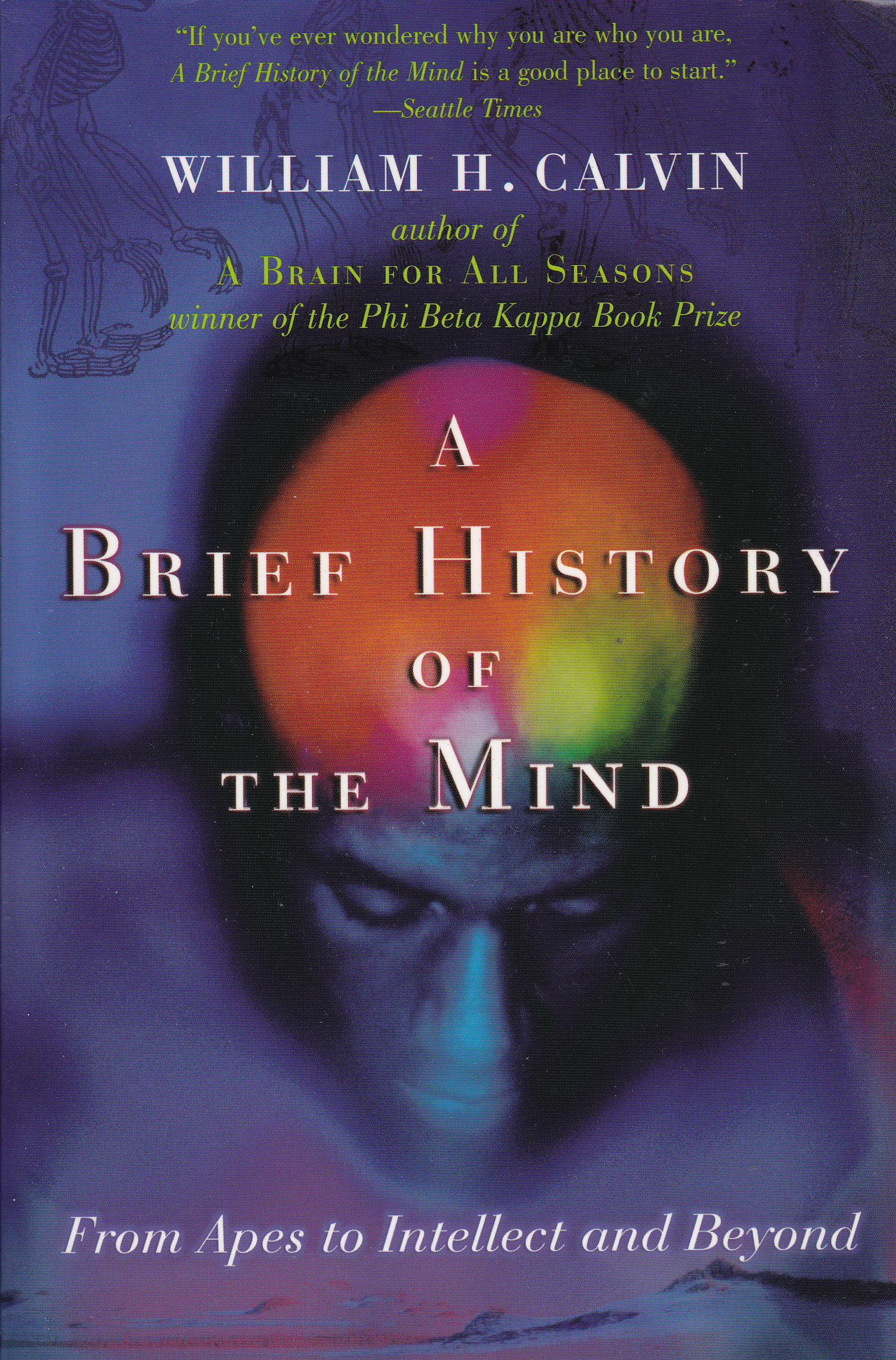
HistoryOfMindThere’s something on my mind. I guess that’s the normal state of a conscious being. William H. Calvin’s A Brief History of the Mind might clarify that a bit. Although I have trouble accepting Calvin’s belief that mind is the same as brain, he does allow, in this wonderful little book, for a somewhat more expansive view. Subtitled From Apes to Intellect and Beyond, the story is more than just a survey of archaeological finds and their physiological counterparts. This is a story. It is a story of how we developed minds. Calvin approaches the topic with the realization that others will have different stories, and that future discoveries (some of which may have already been made in the decade since the book was written) may change it a bit. The book ranges from the quasi-technical (at least from the perspective of sitting on a bus) to the amusing, but always keeping in sight of the fact that this is of human interest.

Particularly compelling is Calvin’s consideration that we may have, at least from our modern perspective, gotten ahead of ourselves a time or two. In discussing the migration of hominids from Africa, he makes the brilliant point that perhaps we weren’t quite ready for that adjustment at that time. We seem to have perhaps driven other hominids to extinction. Our technology might have been outracing our conceptual knowledge of how to handle it. When he returns to this theme later in the story, the results are even a little frightening. We do sometimes get to the point where we can do things that we shouldn’t do. Before our minds have realized the full implications. Atomic bombs, anyone?

Unlike many scientists who believe in materialism, Calvin does not ridicule religion. He notes that it can be taken too literally, but does not suggest we are fools for believing. In fact, he discusses a couple of sects that have turned dangerous over time. He shows how they acted logically, following their thought process in an orderly, if clearly wrong, direction. Some would use this as a cudgel to bash religion in general. Instead, Calvin seems to suggest that we might learn from all of this. Minds, while impressive, are not perfect. Logic can have its flaws. We can, despite the tragedy, learn valuable things about how the mind works. This is an open-ended story; the future of mind is being constantly disclosed. If there is a future for us, we can perhaps prepare a bit better by understanding what’s on our minds.


Receive History

Sacred texts, without readers, are mere artifacts. While so evident as to be trite, this truth lies behind the area of biblical studies called reception history. Perhaps from the earliest days that some books were considered holy, those who studied them wondered primarily what the original author meant. That was, after all, why the texts were preserved as special—they possessed a quality that other writings lacked. Over the centuries this perspective gained nuance and sophistication. (Despite what some secularists say, the study of the Bible can be quite scientific. Some of it is so technical that even specialists have a difficult time following it.) Until last century, however, one aspect remained unchallenged. The goal was to reach what the original author meant. The enterprise of exegesis is geared toward that end. Strip away the reader to get to the writer.

thumb_IMG_2069_1024Meanwhile sacred texts, such as the Bible, continue to develop their own lives in culture. While today’s facile use of the Bible in politics may seem to be something new, the use of Scripture in government is as old as this nation. It easily goes back to European explorations of text, and perhaps even to Asian exegesis before then. Even though the founders of the United States were unquestionably Deists, for the most part, they also were biblically literate. Even the Enlightenment recognized that the Bible held a privileged place in western civilization. Perhaps it was not the only sacred text, but it was a sacred text to many thousands, or millions, or people. Such a pedigree is wasted only with great loss to all. Enter reception history.

In the days of ecclesiastical hegemony, the church, however defined, had the right to interpret Scripture. With the growth of literacy and education the possibility of understanding the Bible spread to any who could read, or had ears to hear. We have only to glance around to see the ramifications of that today. While students may not know who Moses was in the Bible, they can tell you Christian Bale played him in a recent blockbuster. They may not know that Noah was 600 years old when the flood came, but they can tell you he was a troubled, if not somewhat psychotic, devotee of God. At least in popular culture. And that is merely the thinnest veneer of the surface. The idea of sacred texts remains embedded in our worldview. It would seem that if we want to understand ourselves, reception history will unearth vital clues.


Plainly Ghosts

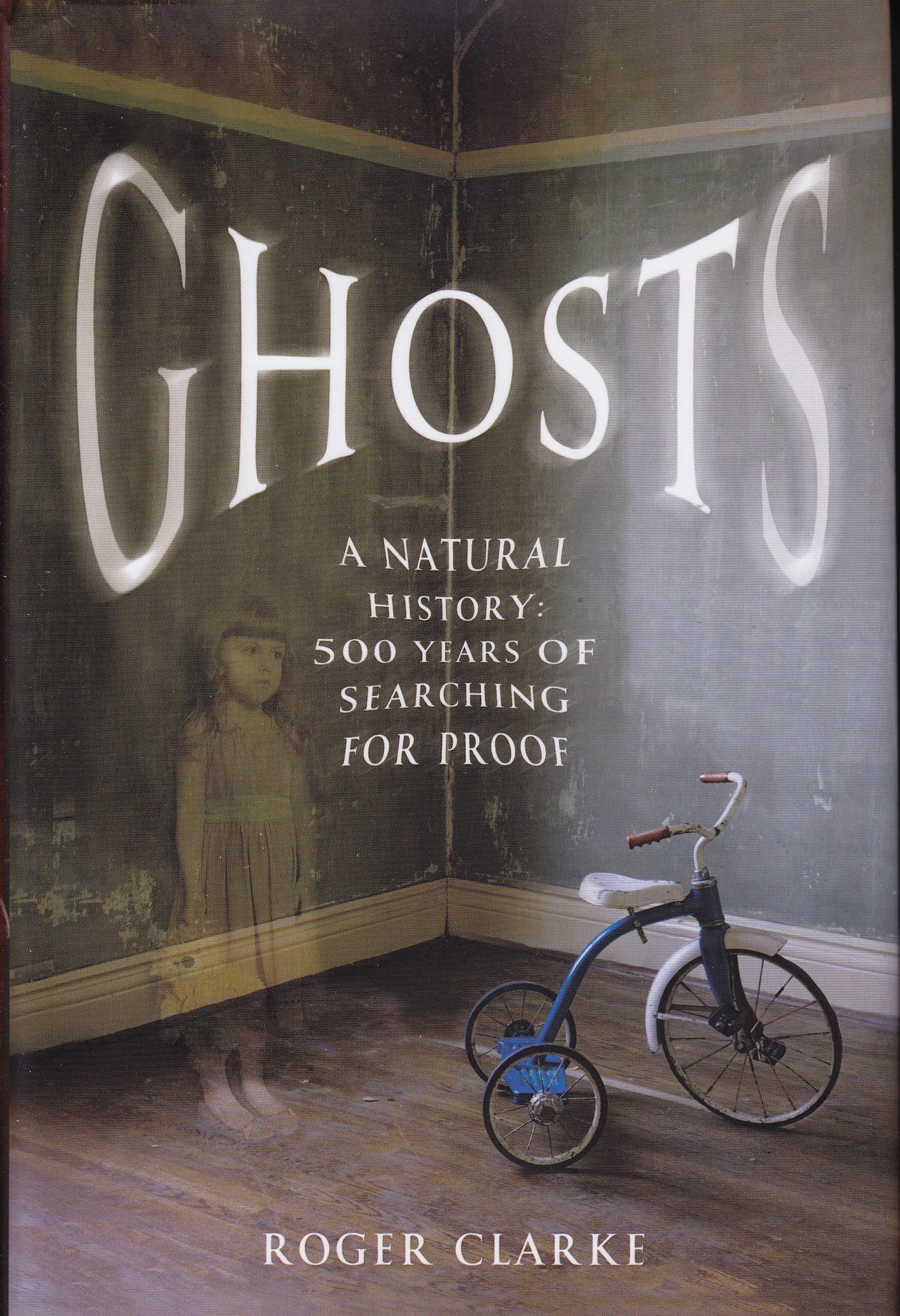
GhostsSometimes I’ll buy a book and secret it aside to read later as a kind of reward for making it through some heavier material. Research monographs don’t always do the job for which they are required in the commuter’s life—keeping me awake on a long and tiresome bus ride. I look forward to the book that has more appeal, and I don’t want to rush through it right away. I picked up Roger Clarke’s Ghosts, A Natural History: 500 Years of Searching for the Truth in Princeton’s wonderful Labyrinth just after Christmas (the traditional time, I learned, for telling ghost stories). Now that spring is more or less firmly in place, and I’ve gotten through some erudite studies that I might use for an academic paper or two, I picked it up to pass the time on my weary ride. As regular readers will know, ghosts have long been a preoccupation of mine, but one on which I’ve always been ambivalent. Clarke doesn’t set out to prove anything here. His book is more experiential than agenda-driven. He begins with the simple observation that people do see ghosts.

Lamenting that he himself has never seen one, Clarke sets out upon a partially autobiographical explanation of where this fascination began. Being from the United Kingdom—often cited as the most haunted country in the world—he goes through some of the more famous accounts with a sharp eye. Crying shenanigans when they’re obviously there, he questions how one can claim that any one country is more haunted than another. More importantly, he notes how seeing ghosts is a marker of class. Historically, the rise of the middle class led to the death of the ghosts. The rich and the poor see ghosts more often. Those in the middle associate such sightings with poor education, while those who are most educated and refined take ghosts for granted. It is only with the rise of reality television, the true opiate of the middle class, that ghost belief has become acceptable in the broad center.

Clarke also frames his work against the religious background that Catholics, with their belief in purgatory, had room for ghosts in their theology. Protestants tended to see anything reported as a ghost as a demon, since the soul either went to heaven or hell after death, meaning that there’s no ghost left to wander around. While doubtlessly skeptics exist, I have always been intrigued that even hard-nosed scientific views of the paranormal world tend to go a bit softer on ghosts than they do on cryptids and aliens. I suspect that’s because ghost reports have been around as long as written records and, presumably, long before. People have always seen ghosts, and in such large numbers that it is difficult to simply call them names and say they’re foolish. Yes, we may be a credulous lot, but we can still find books like Ghosts at a reputable bookstore. And we can tuck them away as guilty pleasures to take the chill off an otherwise very dull ride.


Worth Saving

Once we speed past Easter/Passover, holidays start to fall by the wayside as we try to get back to the serious business of either finishing up school for the year or, in a more pedestrian view, just plain business. Holidays interrupt the flow. Break the continuity. Stop and start. That’s why those of us on the working end of the spectrum appreciate them so much. Nevertheless, what should be the most important sacred day of them all is just another work day. Today is Earth Day. Recognized by no major religion (what religion wants to shake the status quo of business that brings in lucre?), Earth Day is a chance to pause and think about the undermining that we dole out to our long-suffering planet. We are nearing the point, many scientists warn, where climate change will become unreversible. We’ve had years, indeed, decades of lead time, during which the wealthiest nation in the world has been digging the grave the fastest. Even the popular media has been sending its subtle hints: anybody wonder why flood stories predominate in this climate? Think about it.

Reading books about environmental degradation is a depressing exercise. The size of the task is overwhelming and we’ve lost the ability even to reach our own government officials who are nevertheless impotent before big business. We can try to plant a tree, pick up trash, or recycle our plastics, but the destruction is taking place on an industrial scale. Ironically, as we go about making our own planet uninhabitable, scientists are beginning to believe that there is life on other planets. Some of us have suspected that all along. And if they come here that must mean we have something worth preserving. My guess is that it is nothing big business can provide. We can be so much more than consumers.

IMG_3528

Businesses are like all of the selfish motives we’ve had to suppress congealed into an anonymous venture in which none have the ultimate responsibility. Driving at night with the headlights off. I have worked for companies that have wanted to be seen as environmentally friendly. None of them, however, have taken the step of making Earth Day a recognized holiday. A moment of silence. A requiem for a dying planet. The draw of profit is just too strong. The old adage is that if a business is not growing it’s not healthy. Instead of ensuring that the only planet we can reach will be able to sustain us for a few more years, we want to go out with our pockets full. And where, I wonder, to we plan to spend all that money?


Pacific Rim

Pacific_Rim_FilmPoster

Pacific Rim is a movie that once again brings monsters and religion together in the cinema. Since I’m generally late seeing movies, I won’t worry too much about spoilers here, but in case you’re even later than me here’s the gist of it: giant monsters from outer space (properly an interplanetary portal) are emerging from the Pacific Ocean to take over the earth. These radioactive, dinosaur-like aliens are called Kaiju. Although they can be taken down with conventional weapons, the most effective fighting tool is the Jaeger, a colossal robot piloted by two humans acting as the two hemispheres of the brain. These humans must “drift”—share their brains—in order to control these massive machines in unison. Lots of action and destruction, of course, ensue. We later find out that dinosaurs were an earlier invasion of these same aliens, but that our environmental degradation has made the atmosphere much better for them, and this time they’re back for good.

The resistance is led by a mysterious marshal named Stacker Pentecost. Pentecost, of course, is the festival celebrating either the giving of the Torah (Jewish) or the giving of the Holy Spirit (Christian). In either case, it is a holiday celebrating God’s plan for humanity. As Pentecost leads his beleaguered and shrinking army of jaegers against the Kaiju, scientists Geiszler and Gottlieb disagree about how to conquer the beasts. Gottlieb swears, “Numbers are as close as we get to the handwriting of God,” while advocating the predictive elements based on the statistics of the attacks. Science and religion have come to an uneasy truce here. As Geiszler seeks a Kaiju brain to drift, he observes some of the masses in Tokyo praying to the fallen beasts. A blackmarket dealer in Kaiju remains explains that they believe the Kaiju have been sent by God. Pentecost unwittingly concurs when he declares it is time to end the apocalypse.

Pacific Rim, like most Guillermo del Toro films, is a complex movie. There is also more than a sprinkling of H. P. Lovecraft here. The worship of the Kaiju keyed me in to the fact that these were the old gods, come to earth, under the sea, from space. As the first category 5 Kaiju swims past the camera, I couldn’t help but think of Cthulhu. Although Kaiju is Japanese for “monster,” it even sounds like his sacred name. We fear that which is larger, stronger, and unknown to us. When that fear becomes reverence we are on the brink of worship, and our monsters have become our deities.