Strange Days

The flight from London to New York is eight hours. Although I always travel with books, sometimes the selection made before the actual reality of time on a plane turns out to be too academic. I read academic books on my daily commute from New Jersey to New York and back, but these trips are not so drawn out as the long flight across the Atlantic. Since my flight was departing Terminal 2 at Heathrow, I had trouble finding a bookstore. There are stores that sell books, but having been to Blackwell’s the day before, the selection was not inspiring. I wandered to the magazine section. Magazines can be good travel fodder since they don’t demand the rigors of a monograph, and glossy pictures always add to the appeal. But what to buy?
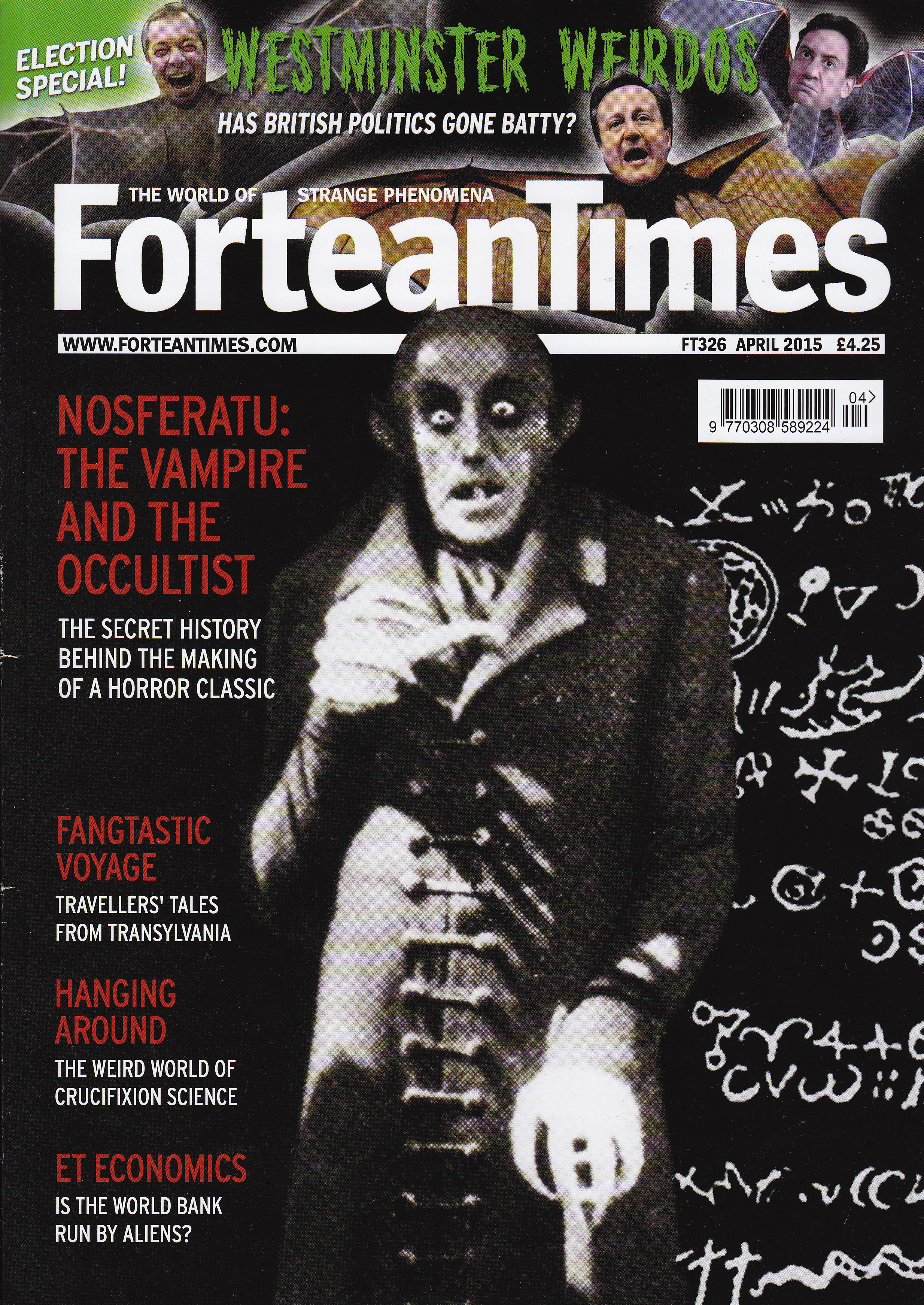
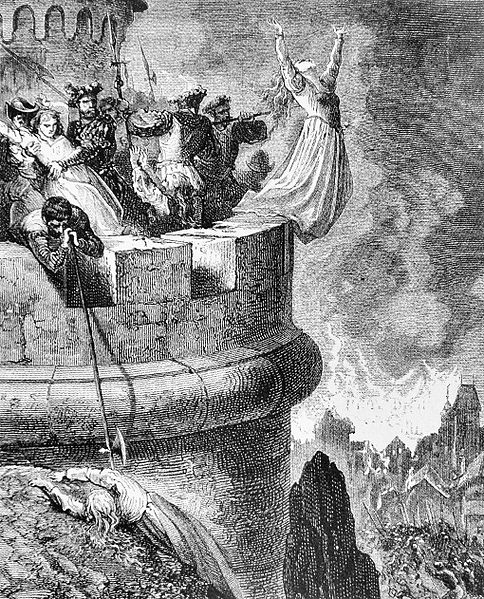
ForteanTimesLooking over the covers, I found one featuring vampires. It turned out to be the Fortean Times, but since I had a row to myself on the plane, I couldn’t see the harm in having a magazine about strange phenomena. I’d never actually read an issue of the Fortean Times before, although I had a general idea of what to expect. While it may seem odd, there is a pretty solid connection between the paranormal and religion. I’ve noticed this for years. Reading through the Fortean Times, it was clear that others have made the connection as well. Many of the articles, including the ones on vampires, touched on obvious religious themes and motifs. This was so much the case that I began to wonder if any kind of solid wall can be erected between the two.

Religion, broadly conceived, tends to be concerned with the non-material world. Its claims tend to defy empirical verification, and its subject matter is often at odds with science (at least in the mainstream). The paranormal is open to scientific investigation in that it tends to be based on secular claims. Like religion, however, it tends to dwell in the non-material realm. After all, vampires coming back from the dead is hardly a phenomenon that is readily recorded with any instrument beyond a Hollywood movie camera. Still, most religions are hostile to the paranormal, and investigators of the paranormal may be unconnected to religion. Both, however, are an engaging recipe for a long flight. Especially if nobody is sitting in the row next to you.
A Slice of Pi

Raster images are made of pixels. MP3 files fit into neat little squares. Who owns a watch with an obsolete dial anymore? We live in the digital age. We are satisfied with less. We are told—and who dares question?—that digitization is more precise than any old analogue technique. There really are not curved surfaces anywhere. At lunch with a friend recently, this topic came up. Again. It is a conversation I’ve had before. Not everything can be quantified. Once upon a time, there was something called “quality of life.” No more can Nigel Tufnel claim, “Well, it’s one louder, isn’t it? It’s not ten.” Everything is ten.

If you don’t believe me, take a digital image and enlarge it. At some point the edges will grow fuzzy. That’s only because our eyes can’t focus on the smallness of the pixels. Keep on enlarging. Eventually you’ll come to the point where the little squares, the pixels, show their characteristic stairway to Heaven. Then go to your favorite art museum. Look at a painting. Get as close as the docent will allow you. Where are the pixels? Or get to know someone with a high quality camera. Preferably one that handles film larger than 35 millimeters. Watch them at the enlarger. The images get bigger, the edges remain sharp and curved. Where are the pixels? Some of us may be too old to truly tell the difference, but try breaking out your old LP’s. If you can find a turntable try one out. Then listen to the CD. Can’t tell the difference? Try putting it up to eleven.

IMG_2535

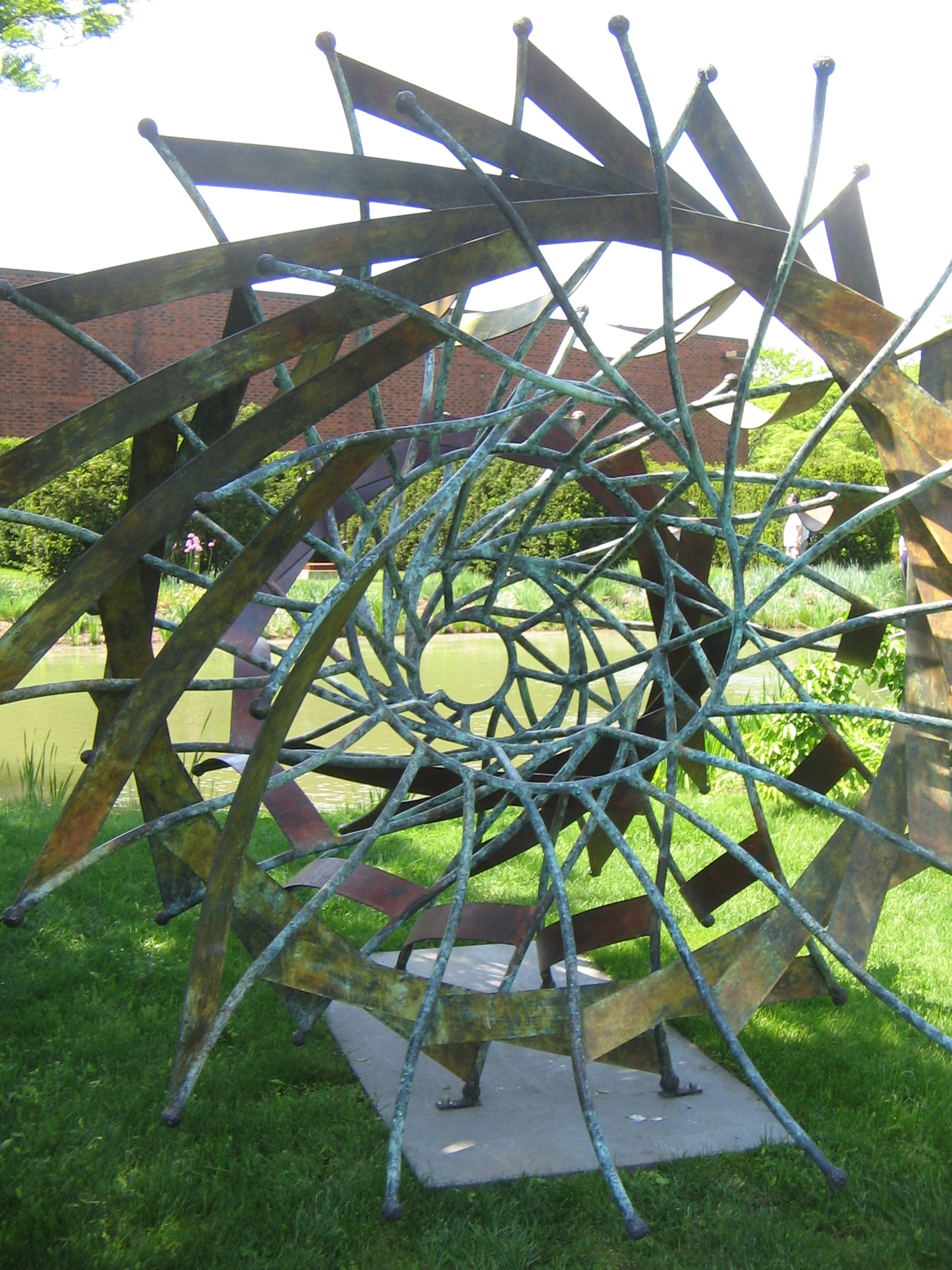
The classic manual aptitude test has both round and square pegs. We’ve all been told that you can’t fit a square peg into a round hole, but we do it all the time. Life is full of circles, swirls, curlicues. We don’t teach our children to read cursive anymore. The square pegs on the keyboard are sufficient for every possible form of communication. There’s no need to sit back and wonder at the implications that pi is a non-repeating, infinite decimal number. You can’t find the area or perimeter of a circle without it. Nature is stunningly rococo with its spirals, from non-pixelated ripples in the water to the colossal swirls of galaxies so large that the human mind can’t comprehend them. For that you need a computer. And just to be safe, you better make sure that it’s one that can go up to eleven.


Out There…

Spring is a time of hope. As crocuses poke their heads through the slowly yielding soil, we’re reminded that the long months of darkness are only temporary after all. It was only appropriate, then, that my wife should point out to me the returning of the X-Files. Only a limited season of six episodes, but after hearing rumors for years that the third movie was in the works, we’ll gladly take six episodes to remind us that the truth is out there. I’ve not always been a fan or the X-Files, but there are reasons for that which have to do with living in the middle of the woods in Wisconsin in a seminary where the paranormal was, at times, just a little bit too readily at hand. And also because the very topics addressed are those of taboo. The anomalous is fodder for ridicule. Nobody could be so naive. Meanwhile the show was winning awards and creating enduring cultural memes.

Thexfiles

As I’ve suggested many times on this blog, the paranormal and religion are closely related categories. While not many X-Files episodes directly dealt with religion, the second movie made the connections explicit, blending Bible and spooky effects at a distance with abandon. The X-Files and religion share a fascination with wonder. It is all right not to know. Sometimes wanting to believe is enough. We can find information on nearly any topic instantaneously by pulling out our phones and tapping into the local wifi network. We access any bit of random information with ease. And we wonder at our lack of wonder. Where has it gone?

Thirteen years ago the haunting music died. We’ve been left with a reality that feels dull and devoid of possibility. We need some sign of hope. Ironically, it is Fox that offered a world of possibilities far beyond a Republican purview. This was a realm where humanity was no longer in control. Forces outside of and more powerful than us swept into our mundane setting to remind us that even government control is only an illusion. Human pride requires timely mementos that we are simply the dinosaurs of our age. The incomprehensible overshadows us as we spin away our time on a planet nowhere near the center of our galaxy, let alone our universe. And yet we tell ourselves we are capable of discovering the laws that lie behind it all without stepping foot on even the nearest of other planets. Welcome back, X-Files. Remind us where the truth may be found.


Final Final Frontier?

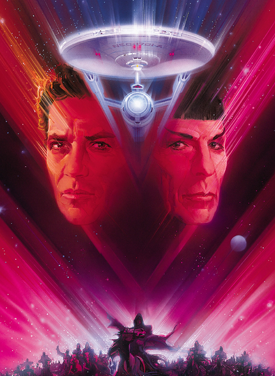
Over the past several months my wife and I have been making our way through the Stars. Not really Trekkies or Jediists, we both came of age during the early days of Star Trek and the dawning of the original Star Wars. Both franchises have continued to grow and have become cultural markers in their own rights. We have survived all the episodes of Star Wars I through III, and have made it, so far through Star Trek V: The Final Frontier. As we switched off the DVD player, we mused that we hadn’t seen this particular installment (with good reason) since we had originally watched it together shortly after it came out. It has its moments, but it just doesn’t measure up to what Kirk and Spock can usually muster. Watching it as a somewhat jaded critic of space movies, however, its religious elements simply couldn’t be ignored. After all, this is the episode where they find God, then shoot him in the face.

Opening with Sybok, the emotional Vulcan messiah, with a tacked-on identity as Spock’s brother, healing his first convert, the movie follows a typical kind of progression of a boy and his god. The town on Nimbus III (every Trinity watcher surely caught that reference) is named Paradise. Some wag painted the Miltonesque “Lost” after the town name on the gate through which Sybok rides like Jesus entering Jerusalem. Hijacking the Enterprise turns out to be remarkably easy, even with Spock, Bones, Uhura, Sulu, and Kirk in the shuttlecraft. And soon we’re off to the Great Barrier, which, as it turns out, is just a bunch of colored lights.

When God appears, he takes the shape of a typical Terran, white beard and everything. When Sybok questions him he briefly turns Vulcan, but we get the sense that God is whoever you want him to be. He is definitely masculine, and he has anger issues. His Eden is a barren rock, and he feels trapped and requires a starship to get about. We are forced to conclude that this is no deity after all and life is but a dream.

Despite its many disappointments, Star Trek V is a theologically aware movie. Its conclusion of science trumping the need for the divine leaves us with three old men around a campfire waiting to die. A trinity in its own right, but one where the only hymn to be mustered is “Row, Row, Row Your Boat.” And God lies dead at the center of the galaxy.

Star_Trek_V_The_Final_Frontier


Three Thoughts

If it weren’t for friends sending me little nuggets they find on the internet, I might be uninformed about much of the weird and wonderful world unfolding around me. With hours not spent at work being laid out on spartan public transit, I don’t have much time for surfing. So it was that I watched this video of St. Patrick trying to explain the Trinity to a couple of normal Irish blokes. Of course it’s funny, but as I watched it, a thought occurred to me. I used to think what a waste it was for learned minds to sit around arguing the fine points of theology. The Trinity is a prime example—three is one but not really one. Form, substance, essence, accidents or effects? What is it that makes them distinct yet not? It is, of course, a logical impossibility. Yet hearing words like modalism and arianism made me realize that these were highly sophisticated concepts. They were developed in Late Antiquity in a world with quite a different frame than our own. Atheism probably existed then, but it was very rare. What we might call naturalism did not exist. Some kind of deity or force was obvious behind the natural world.

To be sure, some thinkers had already suggested that the earth was round and that laws of mathematical precision governed aspects of nature. The frame of the human mind, at the point when engineers can construct pyramids and ziggurats, had already reached the point of science. What do you do with science when gods can’t be dismissed from the picture? Naturally, you turn your science on the gods. Although many today would argue that if God exists, the deity is a being (or concept) outside the realm of science. Science deals with the material world, not with supernatural possibilities. Dividing a single deity into three persons without making yourself a polytheist is a real mental puzzle. The concept of the Trinity isn’t biblical, although the basic ideas are derived from the Bible. It is a purely theological construction to explain how Jesus could be God and yet die. Well, it’s more complicated than that.

One of the great joys of the angry atheists is to point out the obvious frippery of theological discourse. How many angels can dance on the head of a pin? Why would anyone waste their time on such nonsense? Yet, the thinking behind early theology was exquisitely rational and highly developed. One might almost say “scientific.” The people of antiquity were not stupid. Our mental picture of the Middle Ages is often of unwashed louts chasing witches and hiding from dragons. Their society, however, was advanced by the standards of hunter-gatherers. The technology of the day may not have reached down to the level of the everyday worker, but human thought, ever restless, was working its way toward a scientific revolution. And God tagged along. Even Sir Isaac Newton gave a nod in that direction. While theological arguments may have outlived their usefulness in a society such as ours, they did represent, in their day, the best of rational thought. And in their own way, likely contributed to the birth of what we know as science.

The fate of heretics

The fate of heretics


A Kind of Lunacy

I can never keep track of the vernal equinox. Actually, I have the same problem with the autumnal equinox and both solstices. I think it’s because when I was growing up I thought they always came on the 21st of the month. That’s a nice, regular interval. Our months, however, are not natural. Were they to follow the moon (whence we get the word “month”) they would be about February length. The moon’s phases, however, do not keep to human time. In actuality, a month is approximately 29.53 days. Various emperors throughout history added days to their months, making our jumble of 365.25 days a mix of mostly 31-day periods, with some being 30, and February alone holding out at 28. Or 29, depending. All of which is to say, I didn’t realize spring was here until the day was mostly over. Here in the northeast it was snowing, and the celestial dome was occluded. That was a shame since it was also the day of a solar eclipse. I consoled myself by realizing that even if it had been sunny I was in the wrong location to see the eclipse, so I wasn’t missing much.

DSCN3762

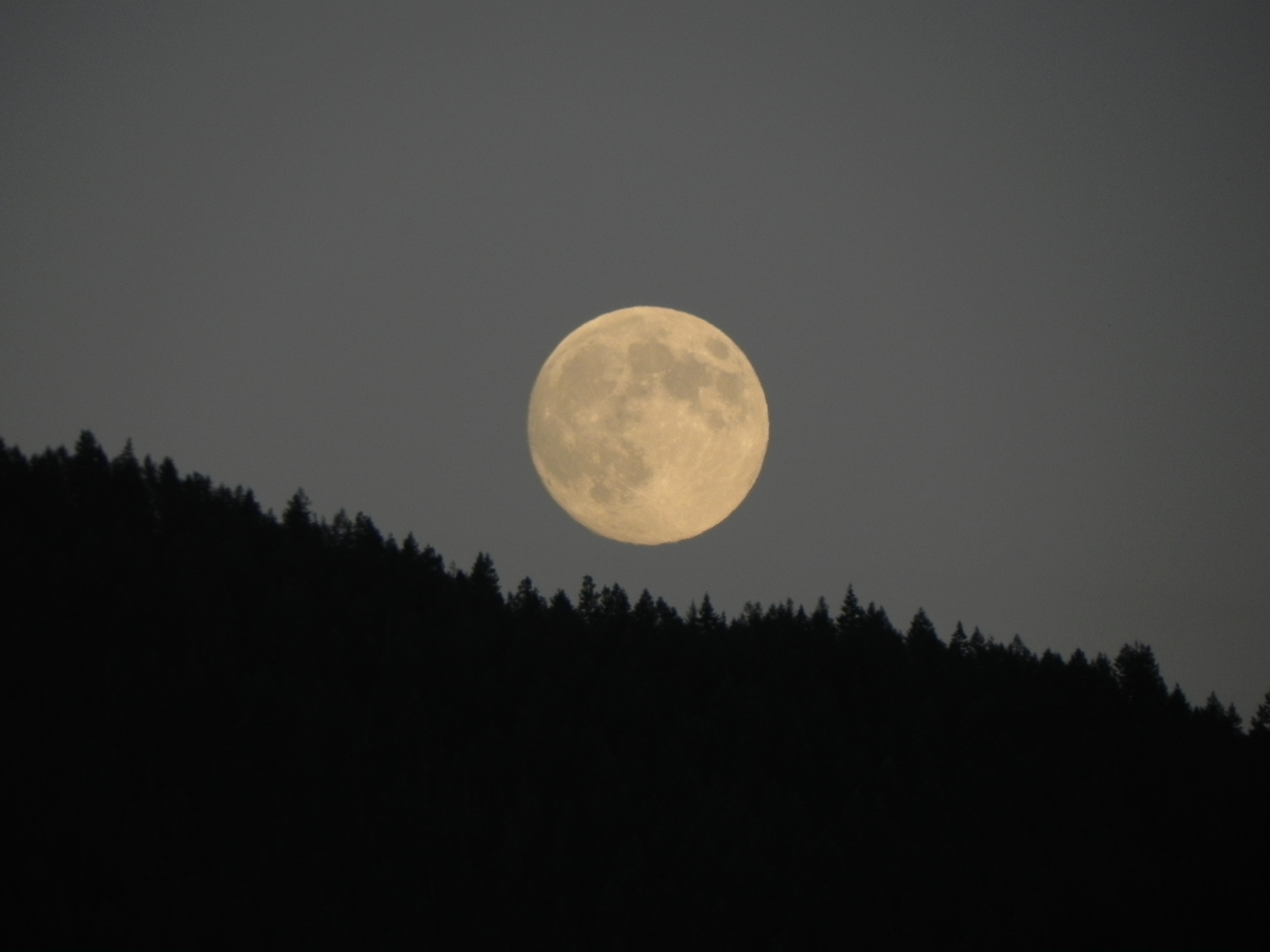
So spring subtly appeared this year. Not only was the day an eclipse day, for some, it was also a “supermoon” day. That is to say, the moon was at its closest point to earth at the time, making the eclipse a truly spectacular one, if you could see it. All of these astronomical machinations on the event that sets the date for Easter has developed a new kind of mythology. According to The Guardian, some minority of clergy have seen this event as initiating the apocalypse. Of course, eclipses are by their nature local events. The vernal equinox occurs every year, and the first Sunday following the first full moon of the equinox will be Easter. We get a supermoon (or perigee-syzygy of the Earth-Moon-Sun system) about every 14 months, so this is hardly rare. But then, the moon has always been the locus of mythology.

Ancient peoples knew the phases of the moon intimately. As the main source of non-artificial light at night, it was a boon to those without electricity, or even gaslight. Without physics to provide a mechanism, stories developed to explain the ever-changing status of our nearest neighbor. Some of those tales took on religious elements, and many religious calendars remain lunar. The vernal equinox, however, is a solar event. From now on the days will get longer until the summer solstice, a day of celebration and mourning, as we move back into the days of declining light. Each of these celestial events comes with its own religious freight, and it seems, dissenting clergy notwithstanding, that so it shall carry on for many moons to come.


Losing My Religion (Excuse)

I’ve always appreciated New Jersey inventiveness. This is a state where lottery winners register with the social security numbers of dead people to avoid taxes. Politicians and honest folk both seem to resort to inventive means of getting around the system. A recent article in the New Jersey Star-Ledger brought this home. An uproar has developed, it seems, over a more stringent regulation concerning religious exemptions for vaccines. If the bill passes, parents and guardians opting out of vaccines for their children will have to state their religion and the cause for the objection. Many have been suggesting this is government of the worst kind, because, well, it wasn’t really a religious reason that they used the religion waiver. Have you met my dead relative? He recently won the lottery.

A timeless problem that arises from a situation such as this is the issue of defining religion. We’re not really sure what it is, other than a reason for not preventing disease. Experts disagree about the essential components of religion. Since the concept of God is up for grabs, doing what pleases said deity (or not, depending on whether a religion has a deity) would seem to be part of it. Most religions, whatever they are, suggest honesty is a virtue. And honestly, most religions have no trouble with vaccines. The paper even had a helpful chart of religions, even indicating that Christian Scientists and Jehovah’s Witnesses have no issues, really, with vaccines. Clearly some churches do. One suspects other may have had such regulations, but they eventually died off.

Since we can’t bother to define religion, it becomes a most convenient excuse for just about any kind of deviant behavior. Many religions exist; more than most people even suspect. Sects of Christianity alone number around 40,000, and that’s leaving aside all other religious traditions and their many splinter groups. Truly held religion, as the media often underscores, can lead to extreme behaviors. The only way to come to grips with this is to try to understand what religion actually is. The most logical locus for such study would be universities. Many of them are run by states. States that are afraid of breeching that wall of separation. Even in the cause of public health. In my opinion, funding the study of religion could be a real shot in the arm. But then, so could winning the lottery.

800px-Typhoid_inoculation2


Getting Exorcise

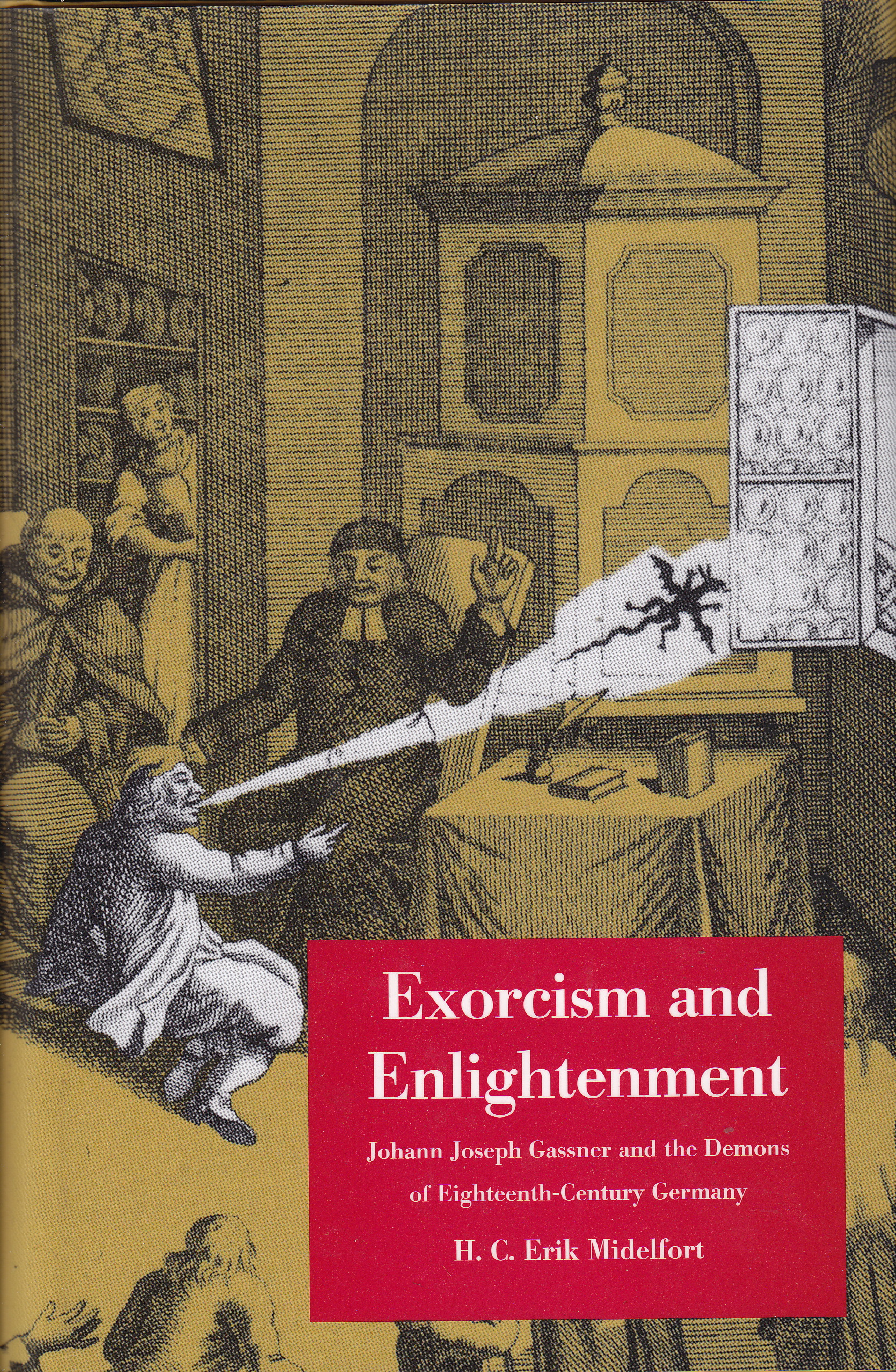
ExorcismTo be honest, I can’t recall having heard of Johann Joseph Gassner before. Given his role in the European witch-hunting culture, however, I must have read his name a time or two. As with most names out of context, it was quickly forgotten. H. C. Erik Midelfort, therefore, is to be congratulated with bringing out not only Gassner’s name, but his remarkable career. Exorcism and Enlightenment: Johann Joseph Gassner and the Demons of Eighteenth-Century Germany, like so many other books, came to my attention in a bookstore. Books on demons have a strange kind of draw to someone interested in both religion and monsters, and since it was on an overstock shelf, I found it impossible to let it lie. This proved to be a wise decision.

Midelfort proves himself one of the rare academics who doesn’t talk down to his readership, yet makes what could be a complex topic understandable. Complex is about the only word to describe what would become Germany in the Eighteenth Century. The remnants of the Holy Roman Empire left a divided region with prince-bishops—clerics with political control outside their own dioceses—vying for all kinds of authority. Although the Enlightenment was well underway, the region was embroiled in the controversy of a priest by the name of Gassner. Gassner was a healer, but also an exorcist. Believing that many torments suffered by the populace were demon-spawned, he used highly public and, to some, incredible exorcisms before healing those in need. His success was unquestioned, but the church, struggling between Catholicism and Lutheranism, as well as struggling to find a place in the Enlightenment world, found Gassner a bit of an embarrassment. What do you do with demons in a world where science says they don’t exist?

One of the most notable takeaways from Midelfort’s book, for me, is that the Enlightenment did not suddenly change the world. Even fully aware of empirical experimentation and the use of reason, the scholarly world did not utterly acquiesce to a subdued materialism. It still hasn’t. As the case of Gassner demonstrates, our comfortable, physically predictable world holds some surprises for us yet. At least for Gassner, believing demons don’t exist doesn’t stop them from tormenting people. As he cured his thousands, skeptics gathered (including his contemporary Franz Mesmer) to explain away what was happening. Even today, as Midelfort points out, we can’t explain the placebo effect. There’s no question, however, that it works. As does, if the media is to be believed, the occasional exorcism in the twenty-first century.


Scientific Belief

AtlanticThe human brain is a marvelous thing. Neuroscientists find all kinds of surprises as they probe the gray matter in our heads. One of those findings is that we don’t always believe what we say we do. Some time ago I read Matthew Hutson’s Seven Laws of Magical Thinking. Scientists didn’t like the book too much since it caught them with their empirical pants down. Really, there’s no shame in that. We are at the mercy of our own minds. In this month’s Atlantic magazine, Hutson has a brief piece entitled “The Science of Superstition.” In the space of just over two columns he runs down the evidence that even those who claim materialism is the answer to all life’s mysteries, even those scientists can’t escape superstition. Friday the thirteenth, a couple of weeks back, I walked under a ladder on my way to work. What happened? I had to go to work. Is that bad luck? I suspect it’s a matter of opinion. I’m the first to admit, however, that I did have fleeting reservations.

Study after study, as cited by Hutson, shows that physiological measures indicate anxiety when those who don’t believe in God say bad things about him/her. We all attribute cause to natural events, even those steeped in the hard sciences. Thinking about death reveals subconscious beliefs about God. It’s the way we’re hardwired. Hutson himself, if I recall correctly, doesn’t really attribute much credence to the supernatural. This is all a matter of what our material brains believe. Interestingly, we are evolved to be open to religious ideas. Many choose to believe, despite our brains, that we are evolutionarily deceived. Screwed by natural selection, as it were.

Far more interesting, in my deluded opinion, is that we don’t really choose what to believe. At least not at first blush. Our brains tell us to believe in the invisible causation that just doesn’t fit in a material world. To get beyond that takes some effort. It does give one pause, however, to consider that blind evolution has puckishly kept all this in the mix. Does evolution have a sense of humor? Perhaps we are all taking all of this far too seriously. Or maybe, just maybe, our brains are smarter than we think.


Parallelism?

An article in Mother Nature Network that a friend sent me suggests that “Parallel worlds exist and interact with our world, say physicists.” The article, by Bryan Nelson, discusses quantum mechanics and the many-worlds interpretation that suggest that these worlds interact. Perhaps they explain the anomalous happenings so often reported in this world. I find the “many interacting worlds” idea compelling. We all know, whether or not we’ll admit it, that strange things sometimes happen. It may be that interacting multiverses can explain some (although I somehow doubt, all) of this. Everything I read about quantum physics suggests that it is weird and we just can’t understand how it’s possible. That’s the kind of universe I’m glad to live in. Still, I wonder.

The many interacting worlds hypothesis suggests that at every juncture, every decision, in some universe we went a different way. Should I go right or left? And as I made that left turn, some me somewhere else went right. The problem is perhaps the sheer number of variables. The many decisions I’ve made, and I’m just one person, have multiple possibilities. Each of these possibilities links and intertwines with even more possibilities. It’s not hard to believe that this universe revolves around me and my petty problems. Add to this the variables of the billions of others who share the planet and soon I start to grow dizzy. Does each and every one of these take place somewhere, somewhen? And who are we to think that we even know what two possibilities might be? What if I type an e instead of an i? What will my post say in an alternate universe? At what level of insignificance do I finally admit utter ennui and say that life in this universe I know is just too full to admit of any others? Of course, anyone looking at my bank account knows I have no experience with large numbers.

Parallel worlds have always fascinated me. I suspect that deep down I know this can’t be all that there is. In some universe my Ph.D. led to a real teaching post. I wrote all those books that are rattling around inside my head. I attained tenure and showed the world that a kid from a blue-collar family with no connections can actually make something of himself. In another world I’m the one laying in the cold on the streets of Manhattan begging quarters from the other me, looking worried as he races to and from work every day. Or maybe this whole thing is just a dream I’m solopsistically having. Of course, if you’re reading this you’re welcome to my dream. Or any other universe that you might choose. I only ask that if you allow me into yours, may I please have tenure? I’d really like that universe best of all.

IMG_1577


Material to Ponder

EndOfMaterialismFrom my youngest days I remember wanting to be a scientist. This desire was tempered with a real fear of Hell and wish to please. In my career, it seems, the latter won out. Well, mostly. I never planned on being an editor, but it was clear that I missed the hard-core science courses and would always lack scientific credibility. You see, I believed what scientists said, and that included science teachers in high school. To this day I still believe in the back of my mind that you can’t really see atoms with a microscope. One of my teachers had said it was impossible, and although electron microscopes were still a long way off, it was clear that atoms were just too small. The force of materialism first hit me in ninth grade physics. If what I was hearing was true, then if you had enough information, you could figure out the whole universe. But what of Hell?

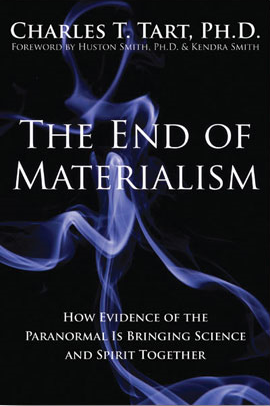
I read Charles T. Tart’s The End of Materialism because of my need for reassurance. Materialism leaves me cold. To find a scientist who feels the same way is a bonus. Not all authorities agree that we’re just excited atoms that can be seen. Tart is willing to consider the spiritual as part of what the evidence reveals. He explores it in the context of psi rather than in the doomed attempt to test religions empirically, but he does make a case for more to this universe than Horatio’s philosophy ever dared dream. And some of that more is decidedly not physical. It’s what we know from our experience of the world. We don’t only reason, we also feel. I have to wonder if reason is really the friend of materialism after all.

You can’t walk across Manhattan without seeing an ambulance most days. Often they’re called out to collect some unfortunate homeless person who collapses from our collective neglect. If we are only matter, then why do we bother to assist those in distress? It’s just a little electricity and some chemicals in a biological organ, right? Consciousness is only an illusion, after all. Unless, of course, the person suffering is a prominent scientist. Then we should all make way for the ambulance lest we lose an asset of great value. Materialism is insidious in its take-no-captives mentality. Feel what you will, there’s nothing more to life than physical stuff. You can make a good living believing that. Why is it that I’m suddenly thinking of Hell again?


Seeing I

One of my few Twitter followers (stawiggins) suggested that I watch Dr. Ken Hayworth on YouTube. Specifically, Part 3: If we can build a brain, what is the future of I?, hosted by Galactic Public Archives. It is well worth 9 minutes of your time. Trying to figure out consciousness has been a major preoccupation of mine for some years. I don’t have the tools of neuroscience, but I do have over half a century of coming to know this “I” that constantly seems to wake up in this same body and experience all its woes and occasional joys. Hayworth suggests that the self is a model projected by our brains to help us make decisions and to plan for the future. In a fascinating thought experiment, he notes that if a duplicate self were made, we (or I) should not object to being executed since there is an exact copy now. Hayworth notes, however, that any individual will object because we are “designed” to think this way about ourselves. Designed, I wonder, by whom? I suspect Hayworth means evolution designed us that way, but evolution is non-teleological, and, I suspect, not really reificatory. Evolution is merely a process.

Perhaps the horns here are only those of a semantic dilemma, but I feel not. Hayworth goes on to discuss how instinct works to continue this illusion of self. I’ve never found instinct a very believable concept. We use it when we want to deny consciousness to animals and very young children. Since they can’t have a concept of “I” they have to have “instinct” to preserve themselves. Logically, to me, this seems to be fudging. What is instinct? Is it really any different than admitting at some micro-level, animals have consciousness? To me it seems that consciousness is one of those “turtles all the way down” kinds of propositions. To be alive is to be conscious at some level. Be careful how far down you dig here.

DSCN2021

Hayworth then goes on to what sounds like an almost biblical conclusion. Ethics insists that humans are part of a whole. (A very diseased whole, as the imbalance in society forces us to conclude, but a whole nevertheless.) To kill one is to violate the consciousness of the whole. This concept seems sound, and I would suggest that it might benefit from expansion. Why stop at the human level? We are animals. Animals are conscious. Here we are back at the turtles again. Perhaps we have expended too much energy trying to parse self from soul from mind from consciousness. Perhaps we are all part of a large collective consciousness. If so, we got some very sick units near the top. Any organic being that insists only one percent needs to be kept in perpetual plutocratic indigence while billions of others wonder how long they will survive at this payscale in this economy, or, more realistically, act as slaves to that one percent, is a sick beast indeed. If consciousness is collective, we could all use a massive shrink.


Soulful Phantoms

PhantasmagoriaPhantasmagoria is a most appropriate title for the book by Marina Warner that bears that single-word name. The back cover bears none of those helpful tags that give the reader a handle by which to categorize the book. The subtitle helps somewhat: Spirit Visions, Metaphors, and Media into the Twenty-first Century. The book is about ensoulment. The popular rage among many academics is the exploration of embodiment—the times and trials and wisdom of having a physical body. (We all know it, but it is the scholar’s job to think about it.) Warner asks what soul stuff is and pursues this through many media: wax, air, clouds, light, shadow, mirror, ghost, ether, ectoplasm, and film. She’s not suggesting that souls are made of these things, but rather that people have used these media to explore what a soul might be. Apart from being a fine historical resource on these different avenues of exploration, individual chapters in the book focus on various artists, psychologists, parapsychologists, writers, and Scriptures. This makes for a fascinating, if challenging, exploration to undergo.

One of the topics that emerges in the discussion is how soul distinguishes itself from other unquantifiable aspects of being human: what is mind, for example. We can’t really define soul, but it is frequently differentiated from mind or personality, neither of which is particularly well understood. In an era when we’ve not so much ceased to ask these questions as sublimated them into various fictional realms, a book like Phantasmagoria is especially important. The reaction against materialistic reductionism is strong, if not empirically provable. We still flock to theaters to watch zombies on the screen, precisely because we too have become soulless. Romanticism had a place for Gothic sensibilities as well.

Along the way Warner makes a particularly apt observation that politics and entertainment have become difficult to distinguish. Thinking over the number of entertainers who’ve become policy makers, this is a particularly disturbing thought. We trust the media and it gives us entertainment. Most college professors make so little money as to be jokes when it comes to running a political campaign. Where your treasure is, as the saying goes. Media, in all the forms explored, has failed to capture the soul. The chapter on Revelation (the book) is truly spectacular, coming, as it does, in the section on film. It is the embracing of the chimera of the end of the world pieced together from various myths and nightmares that our political leaders find, in many cases, far too compelling. Someone like Warner might be a much better leader to trust, even if she is a scholar.


Creating Diversity

Informed opinion is a chimera. I write that as someone who has time to read only the news stories my wife or my friends pass on to me. Once in a while one of those stories makes me feel less bad about being uninformed. A recent piece by Slate author William Saletan looks at polls regarding Creationism. The piece, picked up in the New Jersey Star-Ledger on a recent Sunday, demonstrates that although the United States is a nation of Creationists, we don’t agree about what that means. What becomes clear to me when I read such stories is that people who believe in the Bible seldom read it. Or at least understand it. Creationism “is not a thing” in the Bible. Many accounts about how the world began are represented, and the main point seems to be that it’s important that it was the God of Israel who did it rather than the competition. The first couple of creation accounts are compelling with their insistence that people are special, and that we are in charge while the owner is away. In fact, however, creation is a minor point in the story. It just has to start somewhere.

Those who set out to read the Bible, I suspect, begin to stumble in parts of Exodus and generally give up once they reach Leviticus. Although the main point of the books of Moses is the rules, the modern Christian finds the story more engaging. And the creation accounts of early Genesis are among the stories people actually read. They do make for a great, if contradictory, tale. They have, however, little impact on what people are supposed to do. Ironically, those accounts have become failsafe political devices. We vote according to how old we think the earth might be. We are special, after all.

Saletan’s point in the article is that the finer we parse the questions, the more divergent opinion becomes. The Bible doesn’t say how old the earth is—it’s really not a point of any significance to the story—but if you’re going to take it literally, you can do the math. Few literalists truly take the Bible literally. Logic very quickly breaks down as Genesis 2 follows Genesis 1. Americans are told that the Bible is literally true, but such a view literally makes no sense. We are committed to it, however, as we somehow equate believing in stories to be more important than understanding what those tales are trying to say. The polls, according to the article, make the point abundantly clear. When it comes to understanding the Bible Americans are very committed, if very confused.

Just one Creationist museum.  Photo credit: Creashin, Wikimedia Commons

Just one Creationist museum. Photo credit: Creashin, Wikimedia Commons


Bodily Futures

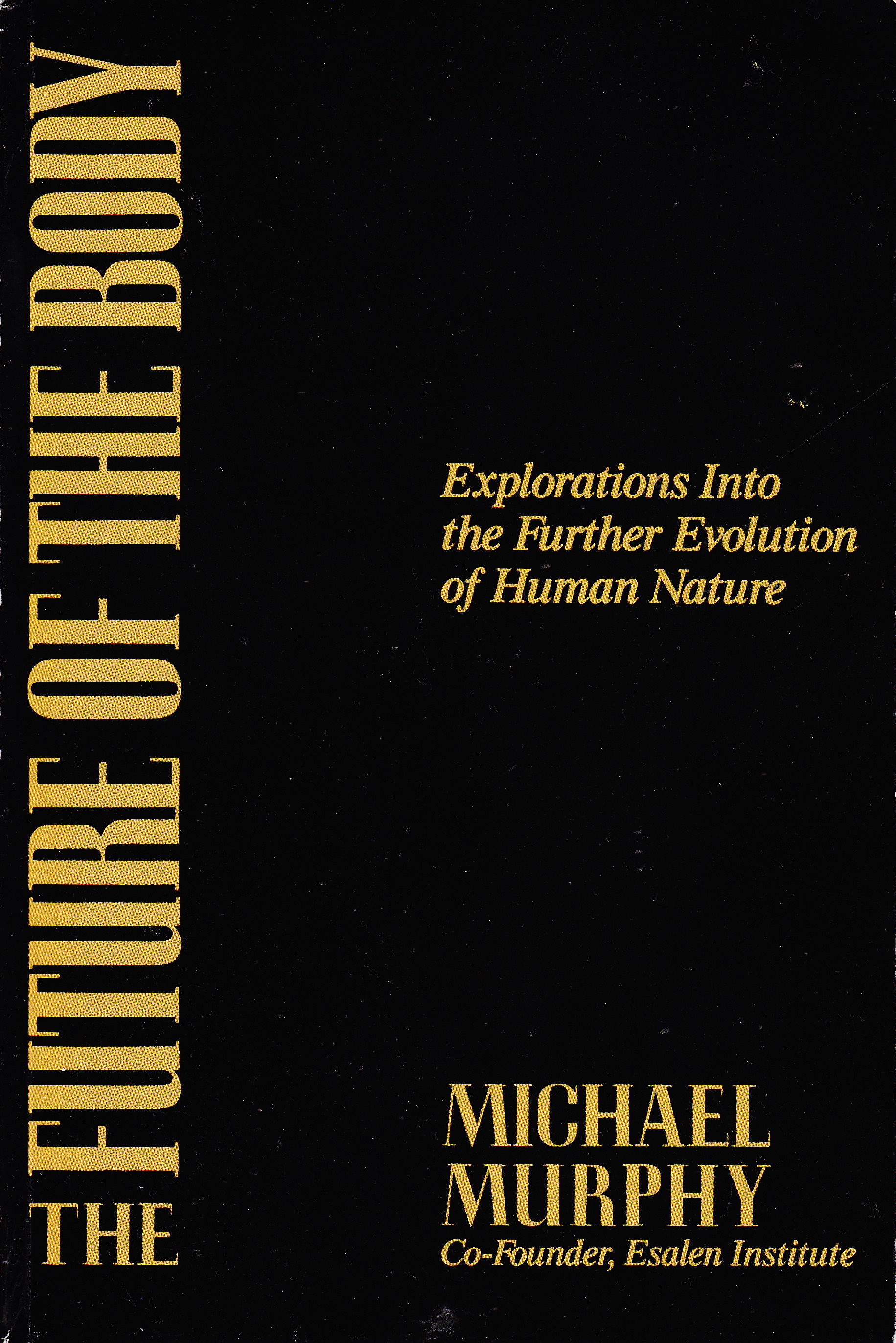
FutureOfTheBodyJust about everyone I know has their own method of curing the hiccups (or, in their more evocative spelling, hiccoughs). Most of these involve holding one’s breath or elaborate ways of drinking a glass of water. Since hiccups are involuntary spasms that can be quite annoying, they can’t be predicted or easily foreseen. Some years ago I realized that the methods I’d been using to rid myself of this unpleasantness were really just ways of getting my attention off of the hiccups—in other words, it was a matter of concentration. I started to respond by thinking the hiccups away whenever they struk me. Cut out the middleman, as it were. And it works. All of this is preamble to the remarkable material to be found in Michael Murphy’s The Future of the Body: Explorations Into the Further Evolution of Human Nature. Murphy is one of the co-founders of the Esalen Institute, about which I’ve posted before. Promoting exploration of human transformative potential, Esalen was a landmark in 1960s culture that I was a little too young to appreciate. Besides, I lived far from California and in a strictly religious mindset. Those who founded Esalen knew, however, that people are capable of more than we appear to be.

Human transformative potential involves matters with which materialistic science is often uncomfortable. Religious practices such as meditation, sports, and martial arts training, all, however, can produce results that shouldn’t be on the books. Whether it is the basketball player who can stay in the air a little too long, or a religious adept who can survive being buried alive for protracted periods of time only to be revived later, or even the remote viewer hired as a spy by the government, people are capable of more than we’re told we are. Murphy suggests that perhaps it is because we are socialized to think this way. Our young minds are open to a realm of possibilities that adult minds have been conditioned to discount. If it’s impossible, it’s impossible. Or is it?

The Future of the Body will take some readers where they do not wish to go. The fact is, however, that faith healers and stigmatics exist without fraud. Just because some frauds imitate reality, it doesn’t follow that the genuine article can’t exist. The usual reductionistic answer is that such things can’t possibly be real—let’s teach our children this fact—we are only robots made of meat. But this view still hasn’t accounted for consciousness, and consciousness is, at least for most of us, inescapably real. We know that because these bodies with whom we are associated do all kinds of things that bring it to mind. We get sick, we experience pain and emotion. We get up and go to work when we don’t feel like it. Most of the time we’re conscious of where we are, and what he have to do. Or do we? It very well may be that matters much larger than the hiccups might just be negotiable.