Grin and Bear It

The dentist’s chair is about the last place I’d like to spend my Saturdays, but given my work schedule there are few alternatives. So there I was yesterday, yellow light glaring in my eyes, drill whirring ebulliently away, and finally gagging embarrassingly into the tiny sink at my right. Those back teeth come in handy for grinding, but they are poorly designed for brushing. I find the dentist’s office a good place for philosophical thought. In that chair where I’d rather not be, feeling sensations I’d rather not feel, I wonder in what sense my body is my own. Lately I’ve been contemplating this quite a bit. Consciousness seems attracted to a single body at a time, but the biological organism I call me doesn’t always have a say in where it is slated to go, or what it is free to do. Each job I have taken has come as an “only offer”—I’m not one of those over whom bidding wars are likely to erupt. That crown that popped off my tooth wasn’t really my doing, nor was the memorable root canal that led to it being there in the first place. Still, here I am.
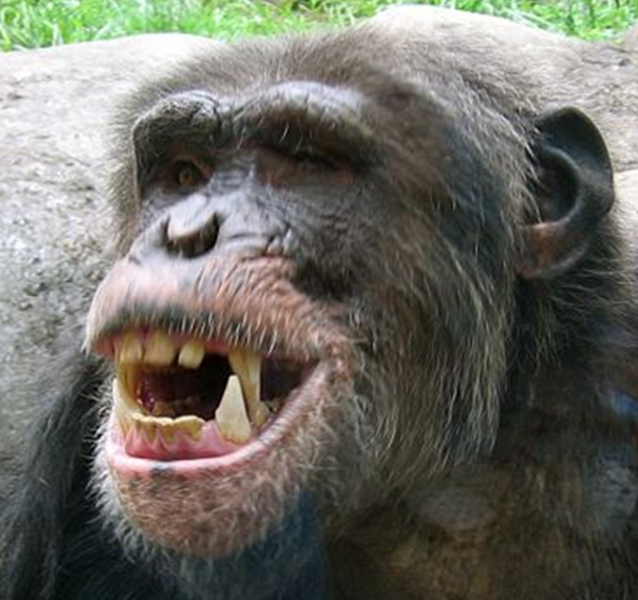
Photo credit: Richard from Canton, Wikipedia Commons

Photo credit: Richard from Canton, Wikipedia Commons

Religions regularly teach that overcoming physical limitations is one of the perks of paying attention to your soul. I suspect parsing soul, consciousness, mind, and psyche is to slice this entity I call “me” a bit too thin. Whatever all or any of this is, having x-rays shot through it while the assistant hides behind the wall, it is hopefully made of sterner stuff than the teeth nature has given it. One hopes that this can’t be all to expect out of our existence. Life, if only our physical years, is too short to spend much of it in the dentist’s chair.

I’m not sure I like dentists knowing more about this body than me. Is it mine at all? I recall the exasperated call for a tongue blocker in a Wisconsin dentist office and the tooth-meister proclaimed, as if I weren’t in the room, “he has a curious tongue.” I don’t intend for my tongue to be curious, but it always seems to wonder about what finds its way into my mouth. Is it me? Is it mine? The consciousness always seems to come back to this body that does things I can’t control. These thoughts come on a sleepy Saturday morning when I should, by all rights, still be in bed. That is, if I’m indeed the one who wakes up in this body yet again today. And whichever body it may be, if it is mine, I know I brushed its teeth before going to sleep, as I have for as long as I can remember. And yet the drill whirs on.

Pope for the Planet

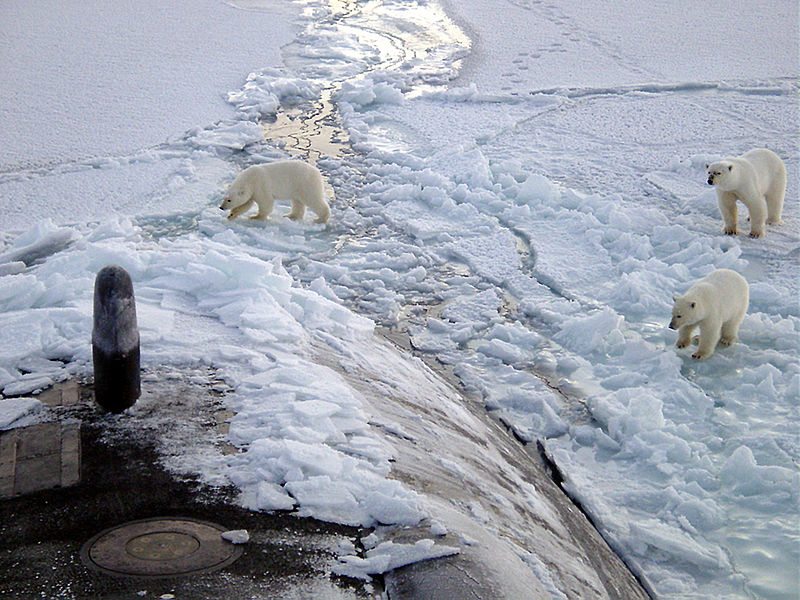
According to The Guardian, Pope Francis is about to weigh in on the faux question of global warming. Faux because there really is no question—we know it is happening. Some high ranking Catholic politicians, no doubt, will not be amused. Apart from the fact that Francis has proven himself a true saint from the moment he got out of the gate—distancing himself from European pontiffs far more interested in church politics than what really matters—he has brought a sensibility borne of knowing how people really live and what is really important. Global warming is real, and the science behind the assertions is unquestioned. Interested parties (such as big oil) have hired their spin doctors to confuse the voting public, casting doubt on one of the few certainties we have. Politicians, whose funding comes from business interests, of course choose what to believe. How anyone can be so shortsighted, or selfish, as to saw off the very branch on which they stand I can’t comprehend. Past popes were too busy trying to keep ladies out of the exclusive gentlemen’s club to worry about those who feel the brunt of global warming.

Photo credit: Chief Yeoman Alphonso Braggs, US-Nav, Wikipedia Commons

Photo credit: Chief Yeoman Alphonso Braggs, US-Navy, Wikipedia Commons

Of course, it will catch up with all of us eventually. I’m not much of a swimmer, and I’m worried. Hurricane Sandy (a superstorm only in the sense that it hit the affluent) showed us just how near sea level Manhattan is. One gets the sense that the fastest growing cities being in Texas is no coincidence. As long as it doesn’t impact me personally, what’s the worry? Some entire island nations stand at threat, but perhaps they should’ve considered that before they moved to an island. Here’s the news flash—all land is island. We need each other, and the lowlands are as important as the highlands.

Organized religions of all kinds have been under fire for years. As science began to explain more and more, religions had to explain their own existence. Many turned internal—not in the spiritual sense, but in the aspect of clarifying the precise points of what makes them right (i.e., different from everyone else). In the United States the small town without five or six different steeples was the exception rather than the rule. Meanwhile, the emissions continued. And continue. At least we know we’re right. At last there is a pontiff who is a realist. A priest who understands that church is all about caring for people—those in the lowlands as well as those in the highlands. Of course, politicians know how to turn off the religion when it gets inconvenient. As long as I get mine, all is right with the world.


Angels We Have Seen on High

Humans have always ascribed significance to what they see in the sky. Evolution, I suspect, has a great deal to do with it, but so does religion. As I suggest in Weathering the Psalms, the sky is the barometer where we seek the temperament of the divine. The weather is an indication of what God might be feeling, in the pious mind. Of course, as a child I used to lay back and look at the clouds to see what messages I might find there. Pareidolia makes the process good fun, and lots of random “noise” can be interpreted as “signal.” It’s all done in a light spirit. Still, if the internet is to be believed, many people take images in the clouds much more seriously. Apropos of the holiday season, a story in The Telegraph tells of a woman from Lincolnshire who, on her way to a Christmas gathering, saw an angel in the clouds. Or more properly, an angel of clouds. Being the anniversary of her father’s death, she saw this as a sign from above that left her in tears. Others would call it matrixing.

The photo the woman’s daughter took as they were driving is impressive (click the link above to take a look; I’ll wait). I understand how it could be interpreted as an angel. Or even a bird. The feathering on the left wing, along with the wing structure itself, is stunning. And of course, given the time of year, angels are much on the minds of many. What would any manger scene be without them? Although pareidolia is not a religious phenomenon by nature, it nevertheless is frequently interpreted that way. We certainly don’t take much personal comfort in a mechanistic universe. When a loved one is gone, we would rather consider the more human (and perhaps supernatural) aspects.

430px-Bernhard_Plockhorst_-_Schutzengel

Interpretation of information is a constant activity of sentient beings. We don’t want to miss anything that will be of survival value. In the case of the angel in the clouds, the survival is beyond that of every day. We are constantly reminded that death is the final word, and yet we can’t quite bring ourselves to believe it. Whether it is shepherds on a Palestinian hill in the first century or a woman motoring along A17, the sight of an angel is something that stops the viewer and inspires an openness that we otherwise have been taught to deny. It may be that all she saw was a pattern of water vapor in a December sky. But even water vapor can mean much more than two hydrogen atoms binding to one of oxygen. It can be part of the breath of life itself.


Weather for the Birds

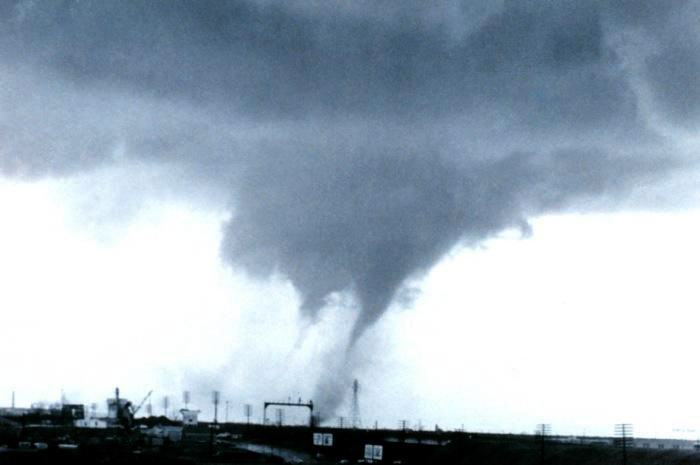
As Christmas nears so does a warm front, dashing hopes of a white Christmas in New Jersey. Well, at least there are no tornadoes coming. The weather, as my readers know, has long been perceived as a divine barometer. In a time when patience is wearing thin with religion, and weary headlines ask if it will ever finally disappear, our animal cousins seem, as usual, to pick up on clues more readily than we. An article on the BBC science page describes how a set of tagged golden-winged warblers vacated their nest a day before a tornado struck. Scientists suspect that the birds—and likely other species of birds as well—picked up the infrasound of the tornadoes that is well below human hearing range. Sensing the danger, they flew nearly a thousand miles, stopping just south of the storm’s track.

1957_Dallas_multi-vortex_1_edited

Of course, tornadoes don’t last an entire day. If the birds fled that long in advance, they couldn’t, I suspect, have heard a tornado that hadn’t formed yet. Since I’m no scientist, I’m not really qualified to offer an explanation, but I do wonder if such behavior isn’t related to consciousness. Several books that I’ve read recently have explored the concept of animal consciousness, and although we are reluctant to admit them to the realm of the self-aware, I wonder how long we can deny it. No doubt, if the birds fled (and returned after the danger had passed) there was an intentionality to their actions. Jealous of our intelligence, we must find a way to explain that animals can predict natural disasters of many kinds long before humans detect their more obvious traits. Our technology gives us seconds, or minutes, of warning. Dogs, cats, and birds know well in advance. But we are the superior beings here.

One of the problems with consciousness is that we can never get outside our own. Other people act in ways similar to us, and describe similar mental states, so we assign them the same kind of consciousness we have. Animals, not using human language, also act in similar ways to us. We call it “instinct” and continue on to the truly important stuff. I have no idea if birds can detect infrasound; I wouldn’t be at all surprised if they could. Without the ability to place it in the context of danger, however, I doubt they would take a thousand mile vacation just after their annual migration. We could learn a lot from our fellow creatures, if only we’d admit them to the conscious club and not the food club. And perhaps they might be able to explain to us why, despite all we know, religion never seems to go away.


When Darkness Reigns

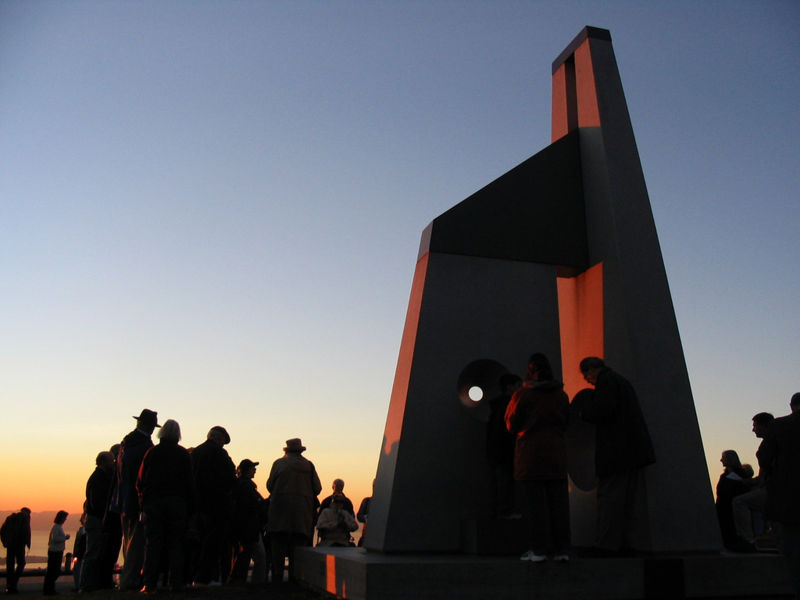
I recently read an article about the Druids. The fact is, historically speaking, we know little of them. They are mysterious and silent and irrevocably linked in the imagination with the solstices. Cultures throughout the northern climes of the northern hemisphere have always treated the winter solstice with an extreme reverence. It is the day of the year when it seems like light just can’t come in any shorter supply. In the depths of that desperation, offerings are made to ensure that tomorrow, if only by the merest moments, the day will be longer. And so we begin the lengthy climb through frigid days to the point six months from now when light will reign supreme. We don’t know, historically, if the Druids gave the great significance to equinoxes and cross-quarter days that the Celts eventually incorporated into their religion, but we do know that much of the monumental architecture of the United Kingdom and Ireland is oriented toward the sun’s feeblest rays at the winter solstice. Stonehenge, New Grange, Maes Howe, and the list could go on and on. We are waiting for light.

Lawrence Hall of Science; photo credit: Tim Ereneta (Wikipedia Commons)

Lawrence Hall of Science; photo credit: Tim Ereneta (Wikipedia Commons)

The solstice seems to creep up on me these days. I work in a cubicle with no outdoor light visible. I leave for work in the dark and arrive home in the dark. I’m inclined to offer up prayers to Odin while I while away the hours before an unresponsive computer monitor. Business has already shut down in all but the greediest minds by this time of year. It is time to hibernate and await a brighter tomorrow. Even in the darkness there can be light. This weekend I attended a Hanukkah celebration, and looking at the menorah I was struck once again how fervently we seek light this time of year. Of course, Hanukkah is connected with the rededication of the temple after the desecration of the Seleucids, but is it coincidence that the candles are lit near the solstice? Perhaps I’m getting too old to believe in coincidences.

In the ancient apocalyptic mind, light and darkness were bitter enemies. Of course, today we recognize that people generally use eyesight as a primary way of interacting with the world—of keeping us from danger. With our diminished senses of hearing and smell, we feel vulnerable when we can’t see our potential predators. Light is the key to our successful preservation. Today technology has taken the place of ritual. We have artificial lights to help lengthen our working hours. We eschew the limitations of being associated with the earth’s rhythms. We are the masters of our own domain, and we can keep the forty-hour work-week going on all but the most insistent of holidays. Perhaps the wisdom of the Druids needs to be rediscovered. Perhaps only then will natural light really return.


M Is for Mary

While pre-celebrating Christmas with some friends recently, the topic of cats came up. This really isn’t surprising since two of the families present had been members of the local 4-H cats club. For a while cats were ubiquitous on the internet, but since I have so little time to browse the web anymore, I’m not sure if that’s still the case. Nevertheless, being near Christmas, someone narrated a story I’d never heard before. Tabby cats (like many jungle cats) have a distinctive marking in the form of an “M” on their foreheads. The legend suggests that on the first Christmas a tabby cat was in the manger. Seeing a mouse trying to crawl into the trough were baby Jesus lay, the cat killed the mouse, earning the thanks of Mary, who kissed it on the forehead, bestowing her characteristic M. It is a nice story (apart from the point of view of the mouse, I suppose)—an etiology to explain an evolutionary development in fur patterns.

Blessed is M...

Blessed is M…

Shortly after that my wife sent me a story on the BBC about the oldest inscribed human artifact. Zigzag marking found on a fossilized clam shell from Indonesia suggest that Homo erectus was an abstract thinker, I’m told. The markings, which must at least be 430,000 years old, predate the earliest known human markings by 300,000 years. If accepted by anthropologists this evidence could rewrite all of human history. We had no idea that Homo erectus had time to doodle on shells. Looking at the photos accompanying the BBC article, I couldn’t help but notice they’re in the shape of an M. Perhaps Mary kissed these shells too? So etiologies begin.

If you’ll pardon me for attempting to brush off my training in ancient languages, Mary of Nazareth was likely born into an Aramaic-speaking family. Her name, Mariam, would have been spelled with mem, which, although representing water is some scripts, took roughly this form: מ (assuming the Imperial Aramaic alphabet). If Mary were both historical and literate (the latter, at least, is doubtful) she would not have recognized the tabby’s distinctive mark as part of her name. It would have been an abstract symbol. Of course, God, being a natural lover of cats, may have had the Greek alphabet in mind, where the letter mu gives us our classical capital M. Mary, however, would probably still not have known what to make of it. We love to attribute significances to perceived patterns. The tabby’s distinctive M, as well as Homo erectus’s early exercises in penmanship present us with opportunities to continue making myths. And we should keep the myths in Christmas.


Real Devotion

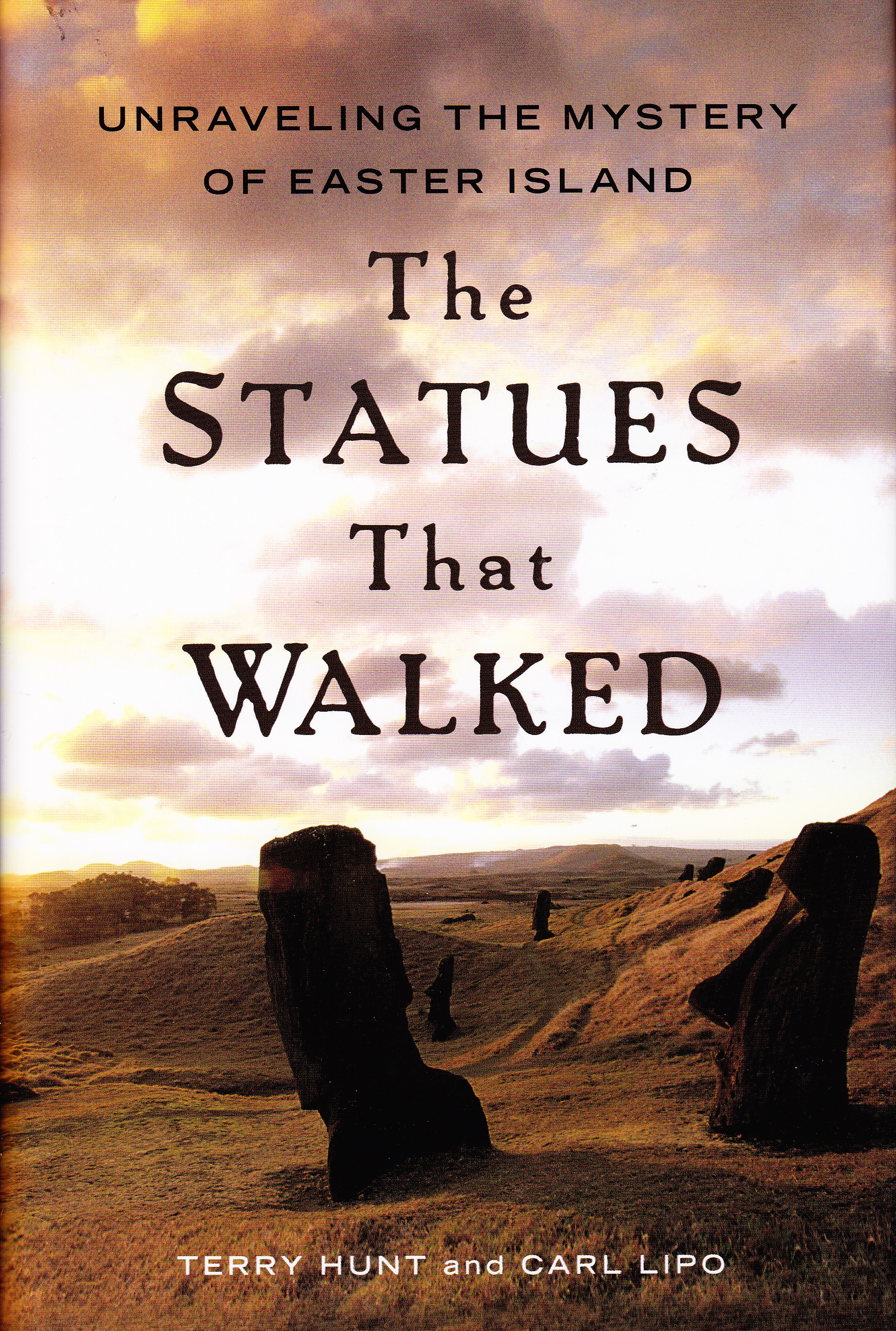
StatuesThatWalkedEaster Island instantly brings up images of massive statuary and mystery. From childhood (and that will likely continue for some time due to Night at the Museum) the sensationalized accounts of these eerie statues appeal to our sense of wonder. And they should. Still, as Terry Hunt and Carl Lipo demonstrate in their informative book, The Statues That Walked, the island is more than it first might seem. A small, extremely isolated bit of volcanic rock in the south Pacific, Rapa Nui—the native name for Easter Island—has never been a lush paradise. Its volcanic soil long ago depleted, it was only occupied from about 1000 CE, and then only marginally. In fact, were it not for the moai, nobody would probably have paid much attention to it. Even today this remote island draws thousands of visitors, despite its lack of luxury, because of these huge-headed, silent statues. And who but a specialist would read a book about the island if the moai were not featured?

Hunt and Lipo are archaeologists and anthropologists. Their interest is not primarily in mystery, yet after beginning their fieldwork on Rapa Nui, they felt compelled to turn their attention to the huge statues. Their book, in fact, takes its title from the moai, and soon settles in to a discussion of them. They are, not surprisingly, religious symbols. Many people would probably prefer that critically minded scientists leave their favorite mysteries alone. Yet the story of the moai is fascinating, and still unexplained in the larger sense of why people in a subsistence-level situation would expend so much effort on religion. Hunt and Lipo suggest the moai are examples of costly signaling—the evolutionary principle of the peacock’s tail. Even people with barely enough to eat will put enormous effort in demonstrating to their neighbors that they have the favor of the gods.

Other ancient Polynesians also built statues. On Rapa Nui it grew to a kind of religious obsession. Hunt and Lipo propose a perfectly naturalistic way that the massive statues could have been, and probably were, moved across the island. More importantly, they uncover that the inhabitants probably did not indulge in ecocide, cutting down all the trees. There were other culprits involved. After European discovery of the island, it was time and again devastated by disease. Although they don’t come out and say so in the book, European contact probably contributed to the abandonment of the great statues, many of them still in situ at their quarry. The moai likely represent ancient ancestors in a culture where veneration of the same is the basis for a natural religion. I won’t reveal any spoilers here since The Statues That Walked is an important book to read on many levels. And, although it doesn’t make this claim, it shows that religion will likely always be part of history’s great feats of lasting intrigue.


Not Your Grandma’s Moses

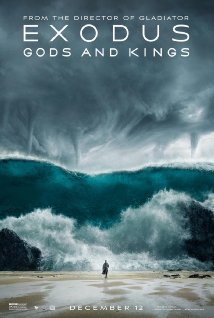
Exodus Gods and Kings

Exodus: Gods and Kings is, in many ways, a startling movie. It didn’t leave me with a strong impression of profundity, but it did make me a bit reflective. The media hype about God as an eleven-year-old boy proved to be merely hype. In fact, the boy deity was one of the most intriguing characters in the film. The role was played respectfully, and God, like a good Englishman, favored his tea. There was nothing comedic about it, however. More troubling was the agnostic Moses, à la Clash of the Titans with its unbelieving Perseus. Moses, even after meeting God, comes across as having little interior life. He hides in a cave and builds an army of terrorists making him seem like Moses bin Laden. He conceals himself while innocent Hebrews are hanged for his crimes (and did they even hang people in ancient Egypt?). When a great storm brews over Memphis, however, it is with a sense of wonder that we ponder at an eleven-year-old doing all this.

The movie plays lightly with the scholarly “explanations” that used to be doled out in seminaries about how one plague led to another. In fact, the character called “the Expert” in the credits is shown lecturing the Pharaoh on the causation scheme of clay churning up in the Nile turning it red, and killing the fish which in turn drove the frogs from the toxic water, but when they died flies came along and the flies spread disease. Then the Expert is hanged. Not so subtle a warning to biblical scholars. In fact, there seems to be a science behind much of the movie that makes miracles less acts of God than acts of nature. Even the drying of the Red Sea is understated. Its return is reminiscent of the Christmas Tsunami of 2004. God is sometimes not there when you’d expect a deity to care.

On the matter of caring, for an age of nones who have concerns for equality, the film was thin on women’s roles, making even the Bible appear to foreground them more. Sigourney Weaver—great in any context—seems only to be there to wish Moses dead. Even Miriam is given scant lines in the movie and no role in the Exodus itself. In Prince of Egypt she at least led her famous song. Zipporah is lovely but shows no sign of being as handy with a flint knife as Exodus makes her out to be. A woman of action. Miriam’s quick thinking saved the infant Moses. Overall, however, the Bible is a guy’s book, and Exodus is a guy’s flick. Opening with the battle of Qadesh on the Orontes is a way to draw men to a Bible movie. Lots of slashing, gashing, and charging horses. And the splendor of Egypt, filmed in Spain and the Canary Islands. Some miracles, it seems, are even impossible for CGI.


Exobiology

Are we alone in the universe? The answer is every day growing more and more certain that we are not. Humanity may experience shortages of many things, however, pride is not among them. For millennia we’ve been convinced of our own superiority and, of late, we’ve become convinced that we must be as good as it gets. We’ve mastered logic and our material world. We’ve sent probes to land on Venus and Mars, and flying by just about every other planetary body close enough to reach. We sure are smart. So it stands to reason that we are the brightest beings in a universe that we tell ourselves is infinite. A recent article on Exobiology that my wife pointed out to me on The Conversation, traces the history of the idea of life outside the earth. Not surprisingly, the idea has its origins in religious thought.

Giordano Bruno was an early modern Dominican who was burned at the stake for his heresies. Like his near contemporary Galileo, he was fascinated by the sky and postulated that the world up there could be full of life. A church increasingly under pressure from the pesky Protestant movement had no time for flights of fancy among the faithful. No, religion at the time wanted its feet planted on solid ground. The only life up there was angels and God. Still, the idea had been broached. Since the world’s major religions have been geocentric, as a rule, they’ve had a bit of difficulty adjusting to the idea of the other other. God as other is one thing, other creatures as other is quite another. How do earth-bound religions account for the possibility of life in space? This is not merely academic fancy at play. We will almost certainly discover life elsewhere—whether it comes to us (or already may have), or we go to it (which might take a little longer), we will discover that a universe that is infinite has infinite possibilities. Will religion keep us grounded?

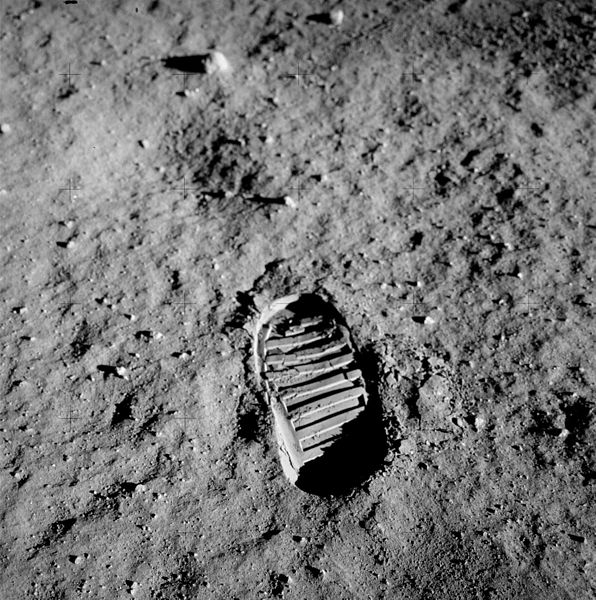
596px-Apollo_11_bootprint

Ironically, one of the areas where science and religion have broadly agreed is in the superiority of humankind. Both remain staunchly geocentric. Religions and tend to say we’re sinful, but other than that, pretty much the best the earth has to offer. Although biologists say evolution is non-teleological, they still have a hard time imagining something more advanced than us. We are pretty self-absorbed. Meanwhile, we are discovering water is likely not unique to earth. Rocky planets seem to be the rule rather than the exception. And there are billions and billions of stars in our own galaxy alone, among billions of others. What are the chances we’re alone? Virtually none. Here is one place that both religion and science might learn a lesson based on early spiritual teachings. In the face of the unknown, humility is the most logical response. I’m impressed in how far we’ve come in the last several millennia of civilization. I think, however, that we’d better be prepared to meet exobiology with a realization that Genesis 1 was only the beginning.


And With Thy Spirit

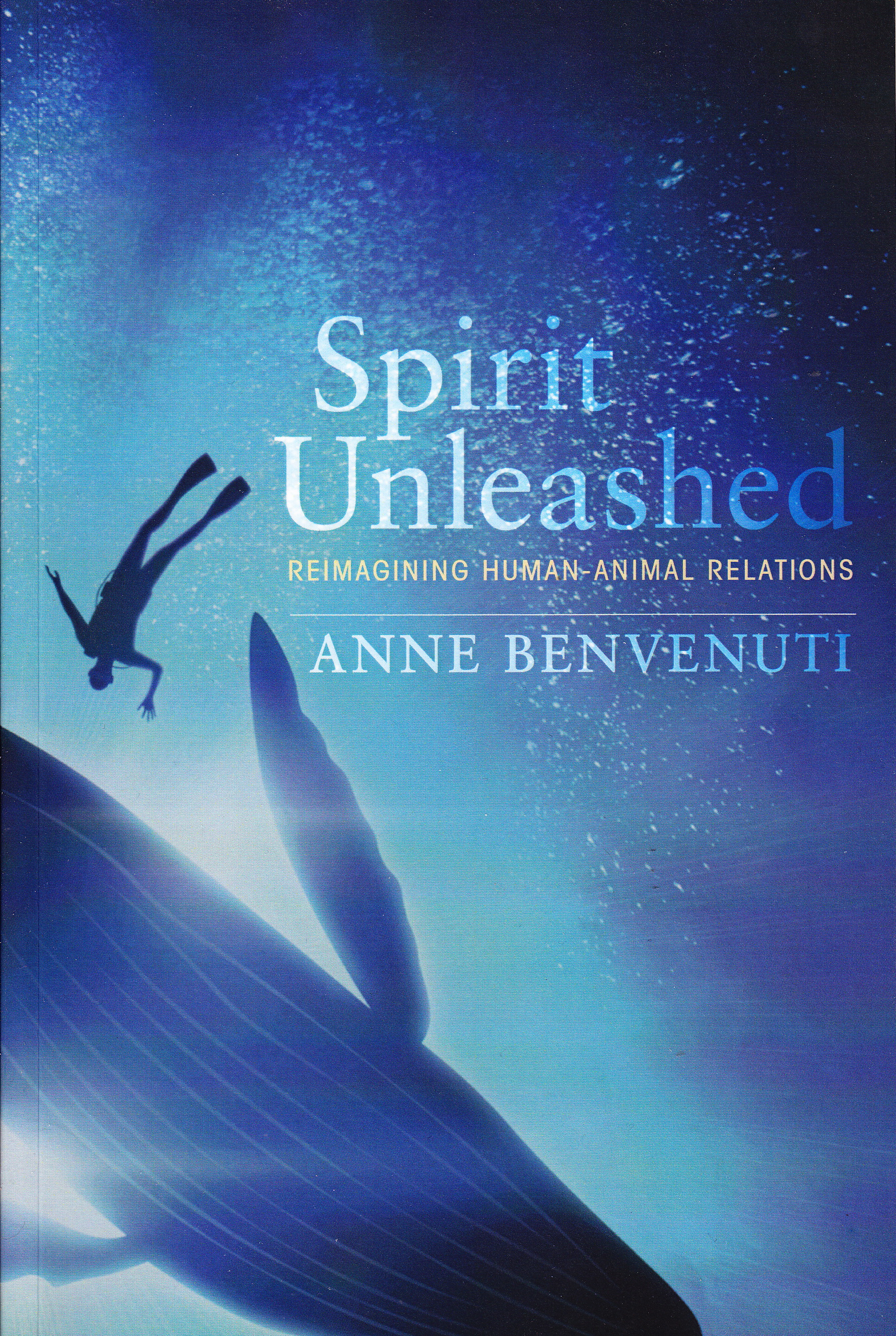
BenvenutiI grew up with pets. In a house with three boys, an aging mother, and no husband, my mother seemed to know instinctively that animals were a way to engage children. She herself had grown up with animals, although not really from a farming family. Living with animals leads to conclusions scientists fear to make. That’s one reason I find Anne Benvenuti’s Spirit Unleashed: Reimagining Human-Animal Relations so important. Not only do animals remind us of who we are, they are who we are. Benvenuti has the scientific credentials to make her case, although, I have to admit, her anecdotes of interactions with animals were my favorite part of the book. We may be told that animals don’t think or feel. Nature, however, proves that wrong for anyone who actually pays attention to animals. Unfortunately, humans are often the bullies of the planet just because our animal brains developed the way they did and our thumbs migrated to a position where we could easily manipulate objects. It’s time to bring animals up to the table with us.

For years I have suggested to my students that animal behavior has the rudiments of what we call religion. I’ve always felt like a voice calling in the wilderness here since both proponents of and opponents to religion think it is uniquely human. Again, the evidence suggests otherwise, but human knowledge often comes at the cost of evidence. It is refreshing to read a book—perhaps the first I ever have—that makes this idea plausible. The “spirit” of Benvenuti’s title is literal, in a sense. She argues forcefully that animals have souls and with this I would agree. The main problem is that we can’t quantify souls and therefore we don’t really know what they are. We know one, however, when we feel one. I’m not sure they’re much different than minds, or maybe they’re the feeling side of the thinking mind. Whatever they are, we are not the only animals to have them.

I’m convinced that one of the reasons we don’t like to admit animal souls (or animal religion) is that such belief ratchets up accountability. Stockyards start to become detainment camps for innocently condemned creatures. If we dare address the moral issue, we have to ask what gives us the right. To kill for food is natural (although I’m happily vegetarian) but to keep animals in miserable conditions their entire lives and then heartlessly kill them and process them as if they were mere objects is immoral. As Benvenuti notes, even farmers who spend time with their animals know they have personalities. Spirit Unleashed is a book full of wonder and awe. Not so much at human superiority, but rather at how much animals really are like us. How they communicate with us if we’ll listen. And how we all have, even if we can’t define the word, souls.


Scientific Seminary

Old Testament. New Testament. Church History. Pastoral Theology. Systematic Theology. Homiletics/Liturgics. This was a typical kind of seminary curriculum about a quarter-century ago. Obviously there were variations, but the basic topics were Bible and its application. When I attended seminary science was already in the ascendent (seriously, it wasn’t that long ago!). Nobody much worried about how it might impact religion. People in the United States still attended church in large numbers but no one I knew really considered science a threat to belief. They were essentially different realms of inquiry and although some on each side asserted the superiority of their enterprise, the debate seemed to be good-spirited and without excessive rancor.

IMG_1656The situation has, of course, shifted radically since then. We’ve become a society guided by business principles and technology, and religion has all the appearances of being quaint at best, likely just useless, and, at worst, dangerous and deadly. Civilization, however, was built on the premises of a religion that permeated every aspect of life. That influence has been slowly replaced by that of a materialistic reductionism that suggests all things, this blog included, are but the random results of dry atoms bumping about a cold universe. Naturally there has been a reaction. The most vocal of believers, the Fundamentalists of all stripes, have directly challenged science in the arena of veracity. As we all know, however, Fundamentalists aren’t really equipped to convince the masses. The Bible, the underlying strength of the literalist, has come under scrutiny and has been demonstrated to be more inclined to myth than history. What more does a scientific worldview need to weld shut its superior outlook? And yet, reasoning, non-reactive religion still exists. Still has a place in this mechanistic universe where miracles are disallowed.

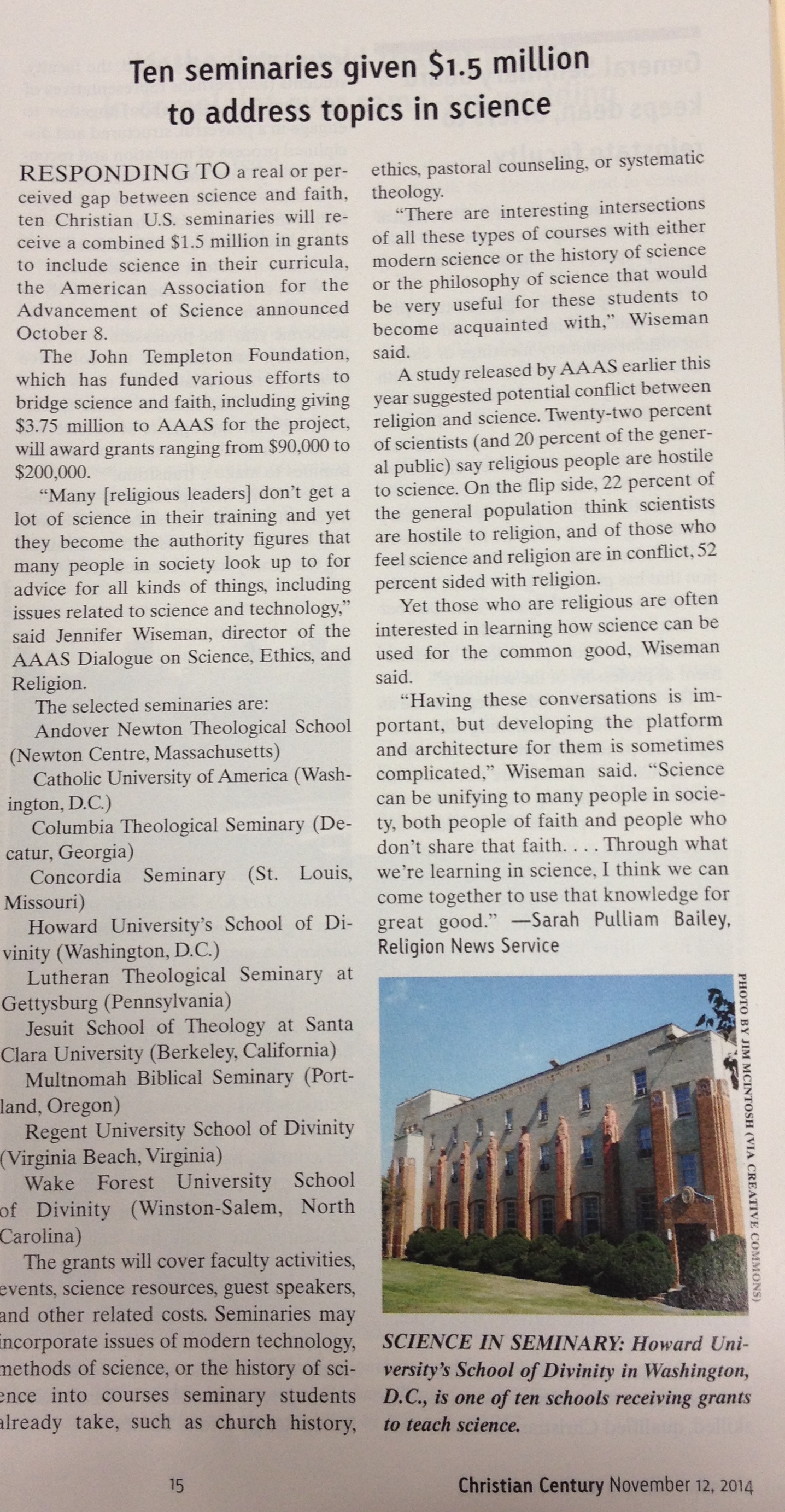
I recently read about a Templeton Foundation initiative that is funding programs on religion and science at seminaries. Some scientists excoriate the Templeton Foundation for trying to keep religion in the picture, but my humble opinion is that Templeton and its money have nothing to do with it. Religion is a very human response to a universe it can’t fully understand. Empirical method seems to work, and the results are so complex that few can even hope to comprehend. All but the most hopeless, on the other hand, can understand “love thy neighbor.” Religion continues to guide countless lives—most of them for the good, and not for the incendiary responses of a challenged literalism. The time has come for seminary curricula to adjust to the world as we know it. That world is run by inhuman forces that may help or harm humanity in equal measure. Religion, however, need not battle with science. It must, however, add it to the curriculum.


Thinking about the Universe

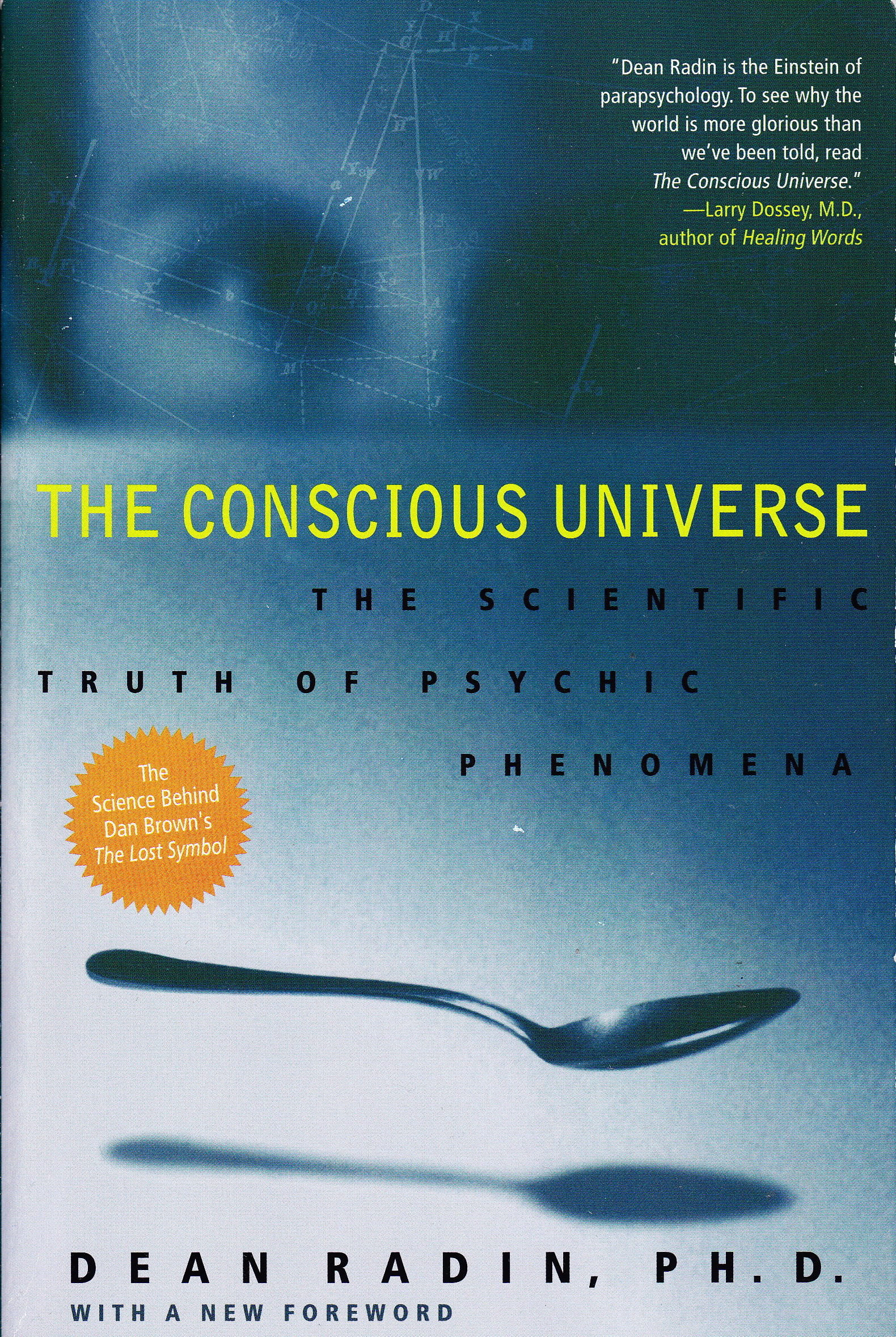
Conscious Universe Notwithstanding appearances, I have been reading. Despite the determination, disruptions to my commuting schedule always throw me off a bit. Having recently read The Holographic Universe, I decided to follow it up with The Conscious Universe. Subtitled The Scientific Truth of Psychic Phenomena, Dean Radin’s book is one of those that you don’t want other commuters examining too closely, although, however, they probably should. Radin is a fully credentialed scientist who has a rare trait: a willingness to follow where the evidence leads. Respectful of traditional scientific method and even mainstream science writing, Radin demonstrates in this book just how risky it is to go against the trends that are like deeply rutted wagon tracks over a sun-baked prairie. Science progresses by examining the evidence, but today science is, in some senses, over-reacting to the refusal of religious thought to, well, give up the spirit. Religion persists and rationalists can’t understand why. Investigating “spooky effects at a distance” is not entirely welcome in such a climate.

Radin, however, approaches psi with scientific rigor. Laboratory experiments, as he thoroughly demonstrates, have revealed with greater evidence than many readily accepted theories, that there is something behind psi. In fact, the government and private industry have invested, and continue to invest, in it. And in our more unguarded moments, most people will generally admit that sometimes coincidences are a little too odd, or that you might, from time to time, really be able to send a thought to someone else. The laboratory results, as Radin clearly shows, are simply dismissed as aberrations because they don’t fit into preconceived (frequently materialistic) worldviews. It is far easier to laugh than to sort out how all of this might actually work.

There is no triumphalism in this. It is simply the willingness to ask honest questions. Quantum mechanics, as physicists know, are not always as mechanistic as they seem. Even Einstein was willing to keep an open mind concerning the larger picture. The universe we envision today is not the same as that which Einstein knew. It isn’t easy to summarize what Radin is addressing in his book, but if I were to try I would say something like this: consciousness is essential. I know materialists dismiss essence, but I believe the evidence goes against them here. Consciousness is an integral part of the universe, and we can’t even define it yet so that all parties agree. If we don’t know what it is, how can we possibly know what it might not be able to do? Radin does what seems to be the only logical response in such a situation: he keeps an open mind.


Only Midway

Unlike some employers, my current one sees the wisdom in arriving early for a major conference. The American Academy of Religion and Society of Biblical Literature is meeting in San Diego this year, and for those of us in the New York area, it’s about as long a flight as you can have in the lower 48. Having arrived in good time, and not knowing much to do in San Diego (I don’t know of any famous writers from this area whose childhood homes I might haunt), I ended up walking to the USS Midway. I’ve never been on an aircraft carrier before, and, on the eve of a religion conference, it was a strangely moving experience. Maybe it was the recognition that I was standing on a floating city on which many people had died in various wars. Perhaps it was the fact that this was a massive piece of machinery designed for its destructive potential. Or it might have been the sheer determination that appeared in every placard: this was a cause we had to win.

No doubt, the Second World War was a just cause. The force of destruction had to stop and the aircraft carriers that enabled the war effort were a huge feature in the “Pacific theater.” Staring at these massive jets, the finest technology of their day, I knew that our greatest efforts had been poured into violence. These were not mere deterrents. Yes, people had died here, but those launched from these decks also killed. War makes claims that way. As I pondered these sobering thoughts, I came to the chapel. Obviously I had to see. An eerie recording of “Eternal Father, Strong to Save” came over the speakers as I walked in. Yes, those on a warship are in peril on the sea. If they are successful, others will have died.

IMG_1797

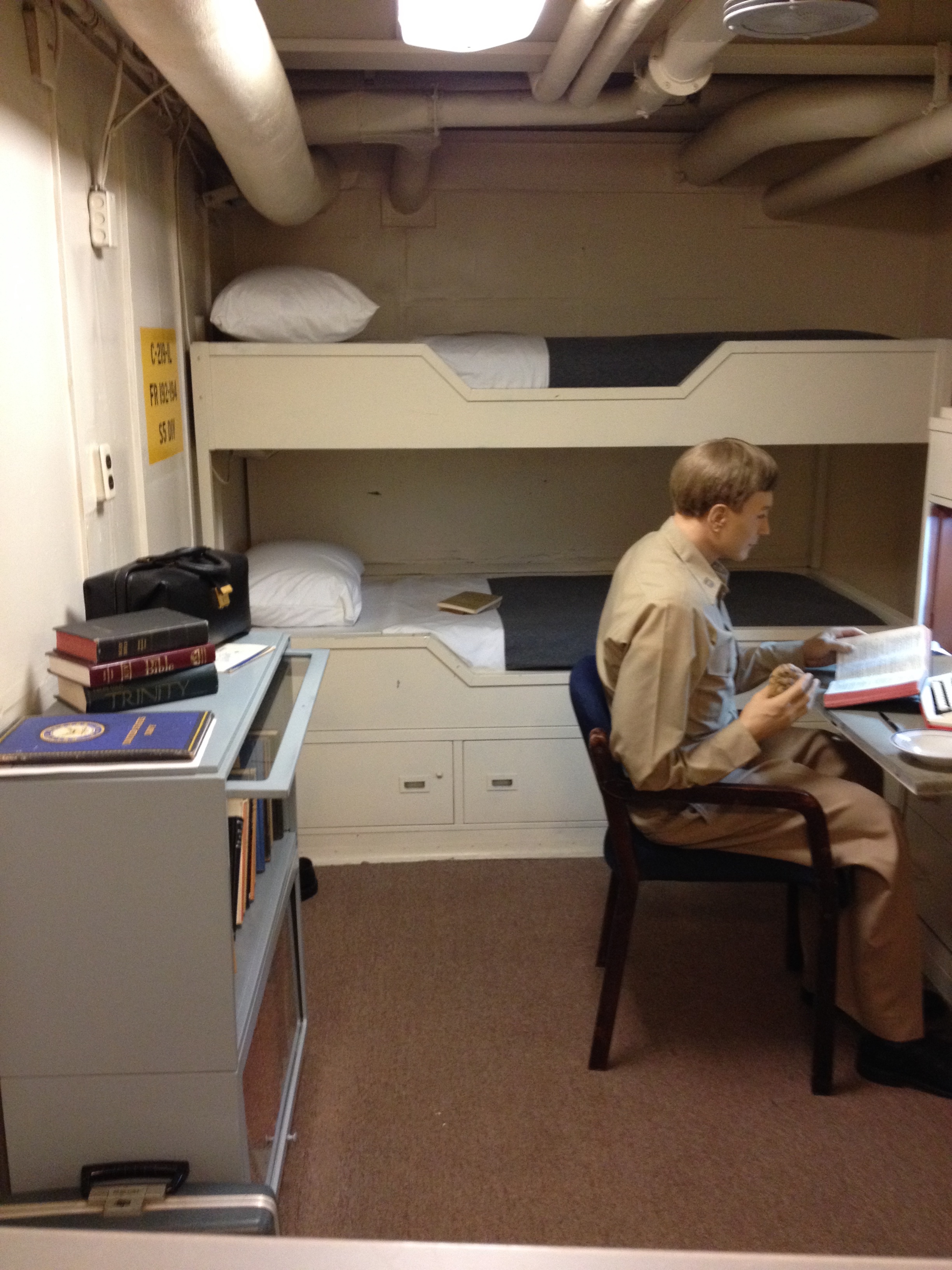
A little further along the corridor (or is it “hatchway”?), I came upon the chaplain’s room, along with my first Bibles of the trip. (I knew they would be here.) A mannequin of the chaplain, cookie in one hand, Bible in the other, sat, apparently, preparing a sermon. What does one say to those going to war? God is on our side, obviously. But what more? The Bible does not forbid warfare. It was a way of life in the centuries during which it was composed. We like to think we may have advanced since then. But as I prepared to exit back onto deck in the warm California air, I passed a display of aircraft carriers past and present. More sophisticated, more deadly weapons continue to be built. And in this day of nones, I wonder who their chaplain might be.


Rosetta’s Stone

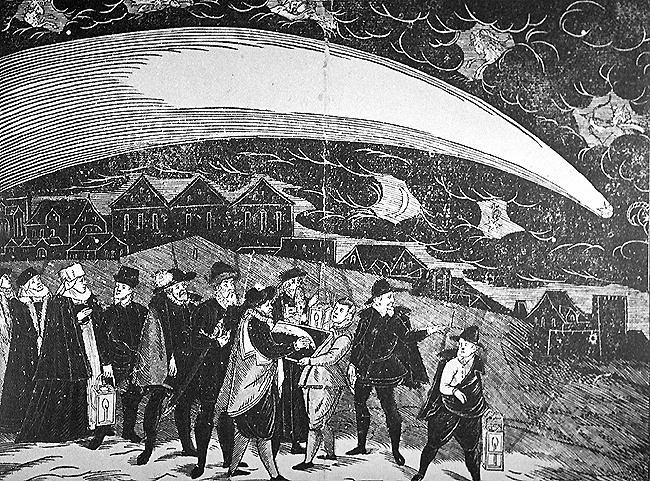
Among the earliest forms of writing, Egyptian hieroglyphs were known long before they were deciphered. Despite the famed insanity of Napoleon, his visit to Egypt led to the discovery of the Rosetta Stone and we’ve been able to read what was once pure mystery for over a century now. A week ago today, Rosetta, a robotic space probe, landed on a comet in flight. For a guy who finds a rendezvous with a bus that runs on a supposedly regular schedule a challenge, this is nothing but mind-blowing. If you know the math, you’ll go far. Comets, you see, have long been the provenance of both religion and science. The ancients, apart from being very religious, we also first rate astronomers. Limited by a universe that circled the earth, they nevertheless figured out how to predict things like solstices and eclipses and phases of the moon. Some suggest that megalithic structures as impressive as Stonehenge and the pyramids of Giza were aligned to significant celestial events. The eyes in the skies.

Great_Comet_of_1577

Comets were generally considered harbingers. Even in ancient times they were difficult to figure out; their orbits aren’t easily deciphered and some never survive their close encounter with Old Sol. Still, they can be impressive. Living in the cloudier climes, glimpsing comets is not a guarantee. Light pollution, especially on the horizon, interferes with all kinds of observations. Now, however, the European Space Agency has shown us that it can be done without seeing where you’re going. A decade of travel time, after at least as long of planning for the trip, and you can boldly go where no person has gone before. Recordings of the electromagnetic frequencies, translated into human audible range, confirm everything from Predator to Signs. 67P/Churyumov–Gerasimenko has its day in the sun and 2001 every day comes closer.

Just a year ago comet ISON disappointed many in its failure to live up to the hype. In our workaday world, we’re eager for a harbinger of some kind. A sign that something out there can still evoke wonder. Comets have long been stripped of their religious garb. They are merely rocks and ice lit up by the sun on their weary trek through the cold loneliness of space. Still, landing on a comet can’t help but change our perspective. It’s like looking at the earth from the moon. Or Mars. We name our planets after gods, but comets bear the names of human discoverers. And we have constructed our own Rosetta stone to read the mysteries of the universe. Meanwhile, the bus waits for no one. If you calculate the trajectory correctly, you’ll hopefully get to work on time. And that, after all, is what really matters.


Holistic Universe

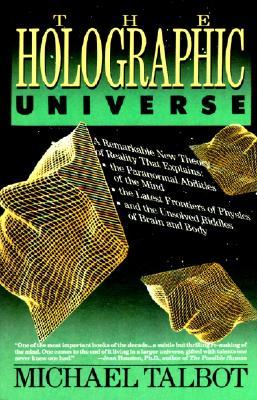
HolographicUniverseThings have been so busy that a satellite landed on a comet and I didn’t even know. I have always wondered about the universe. In fact, as a young man, vying with my tendencies toward ministry I had a vibrant interest in astronomy. The universe, however, has a predilection towards mathematics that frustrates my attempts to understand. I did well enough in my college astronomy class, but I knew it could never be my major. My recent reading reminded me of Michael Talbot’s The Holographic Universe—a book that has been on my shelf since about the time it was published. In my mind, holograph had translated into arithmetic, and every time I picked it up, fear gripped me anew and I vowed I’d read it later. Later caught up with me the last few days, and I found myself plunged down a rabbit hole that I did not even know was there. When I took physics there was no talk of quantum mechanics. It was all the three laws of thermodynamics and the angle of incidence equals the angle of reflection and things like that. Nevertheless, I continued to read science written for the laity, and Talbot’s book rather caught me off guard.

First off, I still have no idea how a holograph works. It is something that seems, to my pragmatic way of thinking, impossible. As Talbot explores this strange concept, however, he introduces a universe I began to recognize. This is one of those realities where the edges don’t quite meet and things that shouldn’t exist show up anyway. In other words, phenomena that are often called “religious” can be made to fit into a holographic universe. Talbot spends a great deal of time discussing miracles and healings. We know that they happen, but we’ve been conditioned to question them. They don’t fit into that universe Mr. Wynecoop told you about in eighth grade. And yet, there they are.

Even after reading the book, I can’t claim to understand how a holographic universe works, but I did come away with a model of reality that allows for the evidence generally swept off the table. Everything from ghosts to time warps are possible in a universe that is a holograph. I’d step off the bus never sure which reality I’d encounter. Still, glancing up at the dark sky, I knew that millions of miles away, someone had recently scored a direct hit on a comet and if we can’t even interpret all that we see on Mars, we’d better be prepared to open our minds for something new. After all, we only see what we allow ourselves to see. Society programs us, just as surely as any computer. And if, like a virus, you play by your own rules, you’ll be the enemy. If you’re willing to ask the uncomfortable questions you’ll be labeled as having tea down a rabbit hole. Maybe, however, I can find a home here. As long as Deacon Dodgson can take care of the math.