Bridge over Troubled

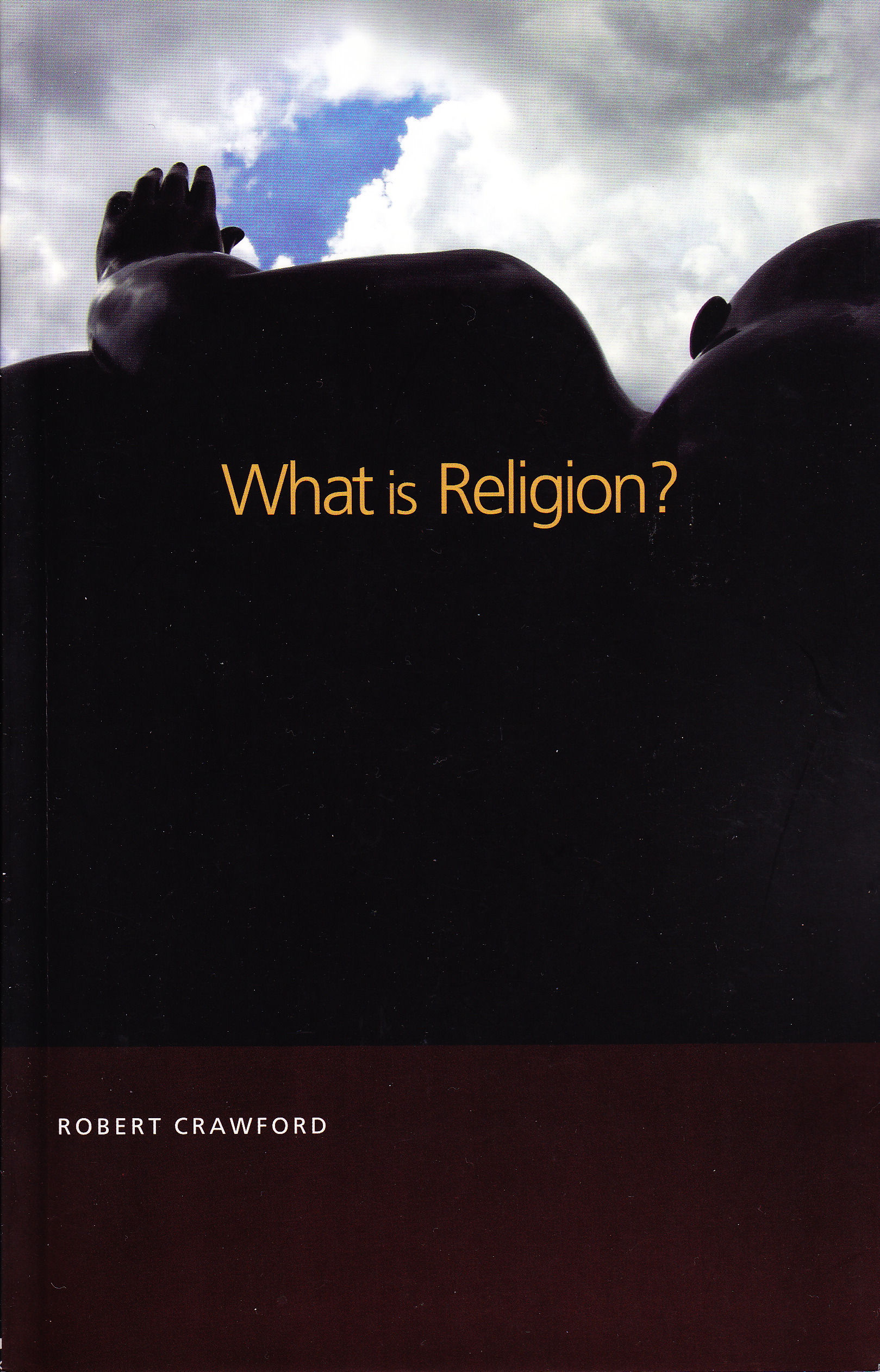
ReligionThe fundamental question of what counts as religion remains elusive. I read Robert Crawford’s What is Religion? hoping to find out. Crawford begins with the admirable assertion that in a pluralistic world all religions must learn to get along. Unfortunately, learning hasn’t always been one of religion’s strong suits. And we still don’t even know what religion is. As becomes clear within minutes of starting the book, consensus will be a stranger in this room. Nevertheless Crawford plows on, hoping against hope that comparison will reveal conformity. Religions aren’t really team players in that way.

Crawford keeps his focus on the “big six”: Judaism, Christianity, Islam, Hinduism, Buddhism, and Sikhism. Although these faiths contain the lion’s share of numbers, they in no way corner the market on religion. I wonder if Crawford’s net is really large enough. When trying to define religion, cutting corners gets you into trouble every time. No matter how we count it, religion is more than a matter of belief and broader than prescribed rituals. It must take seriously the attempts of even small knots of seekers in its preternatural accounting. Crawford sometimes gets bogged down in the details. Science plays a key role in his discussion but then the scope shifts to Christianity, a religion with more than its share of scientific troubles. Islam, for a while anyway, led the world in scientific thinking. What of Sikhs and science?

The more I read of What is Religion?, the more I got the feeling that all of these pieces don’t go to the same puzzle. Religions develop out of historical circumstances and needs. They, with a few exceptions, are not consciously devised by a bunch of eggheads shut up in ivory towers. Religions develop from people in difficult situations, whether physical or psychological. Think about it. If the Bible is to be believed Judaism grew out of slavery in Egypt (either that or Abraham’s childlessness). Christianity out of Roman oppression. Islam from Muhammad’s conviction that polytheism didn’t add up. Hinduism’s old enough to have lost its origins in deep antiquity, but Buddhism is clearly a reaction to pervasive suffering. Sikhism tried to steer between the clashes of Hinduism and Islam. We could go on, but I don’t wish to try your patience. I’m not suggesting I’ve finally done the impossible and defined religion. In fact, I may be suggesting the opposite. Religion encompasses many ways of being in the world. Crawford maybe got a start on the discussion, but it will go on as long as people have troubles.

Sea Wonders

There’s a hole in the bottom of the sea, if we are to believe childhood songs. News reports this past week, however, have suggested that just the opposite applies to the Sea of Galilee. According to Science on NBC, a huge stone structure, larger than Stonehenge, rests at the bottom of the lake over which Jesus reputedly walked at the height of a storm. To the untrained eye, this stone pile looks like just that—a stone pile. The problem is that there is no natural source for the mound, and it seems highly unlikely that it was built under the water. This astonishing find is only one of the many underwater structures known that seem to defy conventional chronologies and logical behaviors. If this gigantic cairn was built on land, the means remain a problem. It is one thing to climb a conventional pyramid, complete with ramps and sledges, and quite another to mount a mound of apparently random stones to drop another on top. Perhaps it was built under water after all, like one of those tantalizing toys where you try to land your penny in the cup at the bottom of a tank of water.

Pacman's Sea of Galilee from Wikimedia

Pacman’s Sea of Galilee from Wikimedia

Ancient monuments are one of the great fascinations of antiquity. When no rational explanation is forthcoming, a religious one will be declared. Without written records, we know nothing of the real purpose of Stonehenge or Avebury, let alone Galilee-henge. With the pyramids of Egypt we have a better set of data, and we can feel justified calling them religious structures. But why were ancient people building massive rock mounds in what was to become the Sea of Galilee? The place has irrevocable religious associations to the modern mind. Did it possess such connections in the deep pre-Israelite period as well? The false mountain of Silbury Hill, not far from Stonehenge, comes to mind. People are mountain makers.

Cairns have been among the most persistent of human monuments, but what makes this new finding of interest is its location. Baptized in the very lake that holds the headwaters of River Jordan, the mysterious mound has already claimed its sanctity. Who built it, why and when, will take backseat to the fact of its holy location. Archaeologists will eventually dive and probe and will declare an anthropologically sound explanation for this newly found, artificial, miniature mountain. Mountains and gods go together, however, as readily as offering plates and churches. Whatever this newly discovered structure may turn out to be, it will always be a religious site for those who believe.


Intelligence, Evolved

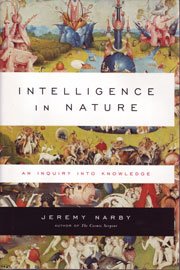
intelligenceinnatureAnyone who has looked into the eyes of a cat or dog can have little doubt that they think. What exactly they think is, of course, a matter of conjecture. I had been meaning to read Jeremy Narby’s Intelligence in Nature for a few years now. We are taught at a young age to eschew anthropomorphism—although our eschewers don’t use that word—as the childish way of perceiving the world. Animals don’t think because that’s reserved for people. We sit in the finest spots in the poshest corners of the animal kingdom and the sign says “No Dogs Allowed.” I never really outgrew this child-like belief because the minimal scientific evidence I’ve been able to infer supports the idea that like us, other animals think. Narby, an anthropologist, agrees. At least to a point. I don’t wish to make claims for Dr. Narby that he wouldn’t support, but he provides fascinating empirical evidence, “down” to the level of amebas and plants, that indicates intentionality. Nature is alive with thought.

As an anthropologist, Narby begins his consideration with the insights of shamans. Although scientists rarely countenance shamans, they are among the earliest of human religious specialists and they have long promoted the idea that humans are fully integrated into nature. We are not separate and above. From our brains to our bones, we are one with the natural world. If we think, should not animals think? Interestingly, this idea brings Narby into some of the same territory as Thomas Nagel; intelligence may be a cumulative process. Our brains’ ability to think may be the result of collecting together the thought processes of our fellow creatures to a point where our thinking becomes abstract. We’re told that dolphins and whales don’t think like us—they don’t build cities, do they? Maybe it’s because they didn’t evolve opposable thumbs. Maybe it’s because they’re smarter than we are.

There are, it seems, many thinkers on the outside of the hallowed confines of hard science that are chipping away at the strict materialist edifice. There can be no serious question that the empirical method explains much of what we experience in the universe. It has always amazed me, however, that we assume that humans are able to find the outer limits of existence with our limited senses. We know animals can see, hear, smell, taste, and maybe even feel in ways beyond our capabilities. Who’s to say that there isn’t other input well beyond our limited senses that we use to survive in this environment? After all, we didn’t evolve to know everything—we evolved to be able to thrive in our ecosystems. For that you don’t need all the answers—just enough to get by. If you doubt my reasoning here, I suggest you ask your dog or cat.


The Triumph of Lovecraft

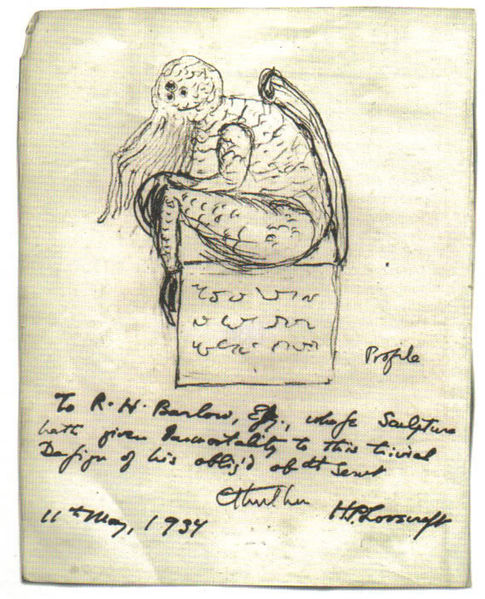
The deeper you peer into the mouth of nature, the more Lovecraftian the world becomes. Just days after I had posted a little meditation on Cthulhu, the great old god of H. P. Lovecraft’s unholy pantheon broke into the mainstream news. No less a source than NBC ran the headline “Tiny Cthulhu ‘monsters’ discovered in termite guts” only a few days ago. The microbe with the scientific name Cthulhu macrofasciculumque lives in the digestive system of termites, helping them in their destructive work. True, Lovecraft described Cthulhu as a bit bigger than that, but the first appearance of the microbes, according to Megan Gannon, reminded the discoverers of the eponymous terror of the Cthulhu mythos.

From microbes to the major football leagues such as the Baltimore Ravens, writers of the macabre have left their mark on our culture. The darkness they describe so richly is something we all feel at some level, but that we sublimate most of the time so that we can get on with our lives. Cthulhu macrofasciculumque may be very, very small, but the super-viruses and bacteria that we are encountering have the ability to destroy us just as surely as the chimerical colossus of Lovecraft’s nightmares. When we look for a way to describe these terrors, we have brave literary heroes from whom we might draw. We would be lost without them. They make it safe for us to venture into that darkened room, for they have been there before us. Lovecraft gave the world its first scientific description of Cthulhu, and although that description defies adequate reconstruction, we recognize it when we see it.

As Lovecraft saw him.

As Lovecraft saw him.

Science has brought us so very far. We can now see to almost the brink of an infinite universe and delve into the guts of termites. We have the ability to prolong life and increase physical comfort for those who can afford it, and we can annihilate entire nations at the press of a button. Drones can fly overhead and do the dirty work, and we don’t even have to step outdoors. Yet when we meet something that shivers our scientific spines, we turn back to the old gods to name it. Yes, religion may be the bête noire of science, but the dark night of the soul is not illuminated by LED’s or lasers. To see in this dark you need to have the night vision of literary perception. And those lenses, according to Lovecraft, reveal that the old gods are dead but still dreaming.


They, Robots

Somehow I knew robots would continue to be part of my life. After all, they are a staple of science fiction and they are indeed also a staple of science fact. As my association with FIRST Robotics taught me, robots are everywhere. (And they can play frisbee better than I can.) So when I saw an article in the Chronicle of Higher Education entitled “Robots Aren’t the Problem: It’s Us,” I knew I was in for a scolding. It’s not so much the robots that worry me, it’s what they say about us. People thrive in environments of complexity. Even a simple robot has me standing next to a bunch of teenagers scratching my head. I don’t know what half the parts are and have no idea what the other half do. Even the components can be complex. A good case can be made that the natural world is equally, if not more, complex. I can imagine how, for instance, being confronted by a tiger in the wild would offer a bewildering variety of complex implications. And yet, robots are the world we’ve constructed for our selves.

Not every job is immediately threatened by mechanical replacement, but we know that in the industrialized world some jobs have disappeared. Our choices of how to find meaningful vocation are being conscripted by the machines we make. Like God we make them in our own image. Unlike God, we make them more powerful than ourselves. Richard Florida, in his Chronicle article, notes that some claim the robots will free us to become more human. Only if the economic barons will allow it. Even today, at the very beginnings of the robotics revolution, it is awfully hard to find a satisfying job. Even with very extensive education. I know this from experience. At the end of the day you end up working to make money for somebody else. Robots didn’t steal my vocation, business did.

Al-jazari_robots

I appreciate Florida’s point, but I wonder if we can’t point a finer point on it. All people are greedy, to a point. In most of us a human, all too human, conscience starts to bother us when we realize that we are unfairly advantaged. Some people even actually do something about it. Those who run the business, however, didn’t get to the top by obeying the dictates of conscience. The apotheosizing of money demands that humans be treated like, well, robots. We are all servants to those who aren’t shackled with quibbles and moral qualms. Robots, on one end, are reducing the number of jobs. On the other end entrepreneurs are seeking whom they may devour. The mass of humanity is caught in the middle. When it is time to beg for mercy, from what I’ve seen, the far safer bet is with the robots.


Mind Your Cosmos

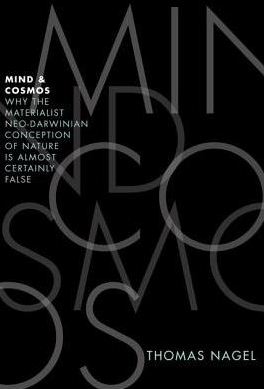
MindandCosmosSomething on your mind? How often do we bother to think clearly about our minds? One of the most dispiriting concepts ever invented is the idea that even our minds are merely part of a reductionistic, mechanistic universe. All those beautiful, frightening, sublime, and mundane thoughts are just noise, clutter. An inevitable side-effect of all that electro-chemical activity in the gray matter. Nothing more. It is an idea to which it is very difficult to warm. Philosopher Thomas Nagel, however, doesn’t use a soft approach to the concept of mind in his Mind and Cosmos: Why the Materialist Neo-Darwinian Conception of Nature is Almost Certainly False. This is not an easy read, but it rewards the reader well.

Some, I suspect, will accuse Nagel of being a closet creationist, but he addresses that concern up front. Nagel is an atheist, but he recognizes that the creationists have raised some valid points about the explanatory value of a materialistic, reductionistic view of the universe. Nagel, like all careful thinkers, realizes that the fact of evolution is not to be disputed. The mechanism driving mutations, however, is open to some speculation. I’ve read many books that suggest we are but (in a more than angst-ridden Kansas) dust in the wind. Particles and reactions and nothing more. That love you feel when your heart is thumping wildly over that special someone? Mere chemistry. And not the kind that implies a transcendent state. Just lab-coat chemistry. I read Nagel because this kind of reductionism just doesn’t fit reality as I’ve experienced it. I’m no physicist, but I’m all I’ve got. And my reason tells me that there’s something more too it.

Nagel approaches the issue by examining the origins of mind. Whence does consciousness emerge? Using precise, carefully selected reasoning, he demonstrates that there is a chance that consciousness is inherent in this universe we inhabit. Just as bodies are built of cells, and cells are built of proteins built of molecules built of atoms, the mind could be constructed of components as well. I can’t replicate Nagel’s elegance of expression, but his suggestion that we may be part of a universe beginning to awake is as much poetry as it is logic. And that, more than anything else, is a reflection on the complexity of being human. We are meaning-seeking creatures. Being told that we’re mechanistic automatons is like slamming a door in a two-year old’s face. If I am merely particles and tiny jolts of electricity, I’m going to take the particles that make Nagel’s book with me as I try to reconcile myself to a universe where nothing is really what it seems.


Infinite and Expanding

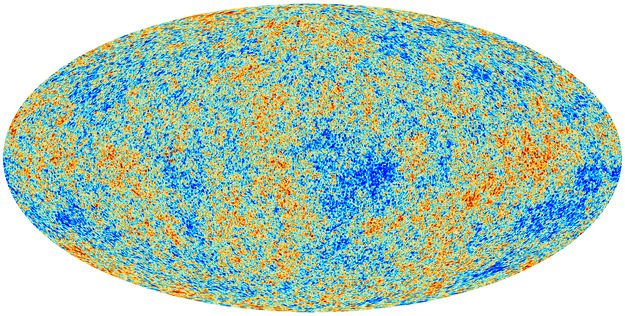
Show me the birth certificate. Whoa! It seems the universe padded the figures by about 80 million years. To you and me that’s 80 million years. To old universe, it’s merely the blink of a cosmic eye. The news has been humming with the results of the European Space Agency’s Planck Space Telescope picture of the microwave background radiation of the universe. From what I can see, the universe forgot to say cheese. Unless, of course, it’s swiss cheese. Further and further science confirms our big bang of a beginning, and, quite literally, it has been downhill from there.

PLANCK

Cosmology is the most theological of the sciences. I’m sure many cosmologists would demand to differ on that point, but the inexorable draw to find out how it all began had its humble origins in religious thought. The mythologies of the Sumerians, Babylonians, Egyptians, Israelites, among many, many others, explored options for how the universe (as they knew it) might have begun. The curiosity is deeply embedded in the human psyche—we want to know our origins. Physicists, of course, play by the rules. Astrophysicists use incredibly complex formulas that all point to a big bang that nobody has ever heard. The inevitable question is, however, what happened before that? Could it be there was no before? A time before time? It seems to me a religious question.

The Planck telescope tells us that our middle-aged universe also has more girth than it admitted previously. No surprises there, after all the theory of the universe’s growth is called “inflation.” I sympathize. All of this information is wonderful news on an intergalactic scale, but it hasn’t solved many of our problems out here in this corner of the cosmos. Reading the rest of the news headlines, after I wipe away the tears, I see that our universe really is showing its age. We are older than we thought, but are we wiser? Scientists are examining fossilized light with glee, but we still can’t figure out that if a guy loves another guy (or girl another girl) that it’s just another instance of what happens after the big bang. We can’t accept that our industrial greed has messed up the weather—has anybody been outside lately? We know that one percent control almost all the wealth and yet we buy lottery tickets and hope for the best. And these are only a few in a long series of echoes that can’t seem to allow some people to think clearly in this girth-challenged, more-than-ancient universe. It must be a religious issue after all.


RoboStop

Although few objects are as soulless and mechanistic as robots, I still feel strangely emotional about them. Had my daughter not been interested in them, I would never have become involved with FIRST Robotics, even serving for a year as an officer in the Team 102 foundation to help raise the thousands of dollars needed to run such a club. Like most people with a background deep in the humanities, I would’ve not pondered too deeply how much of ourselves we put into our machines. Right now I’m reevaluating that hypothesis.

No one doubts that an artist or musician puts her- or himself into her or his work. Those who do it best are most highly valued (after we let the artist die off, usually, after having lived a difficult life). We admire those who are able to catch the human spirit in such forms of expression while many scientists inform us that there really is no spirit at all—it is just chemical reactions and electrical circuits in the soft tissue of our brains. When we see the Mona Lisa, or hear Beethoven’s Seventh, however, we know they must be wrong. What we make becomes part of us. And I’m thinking that may apply to robots too.

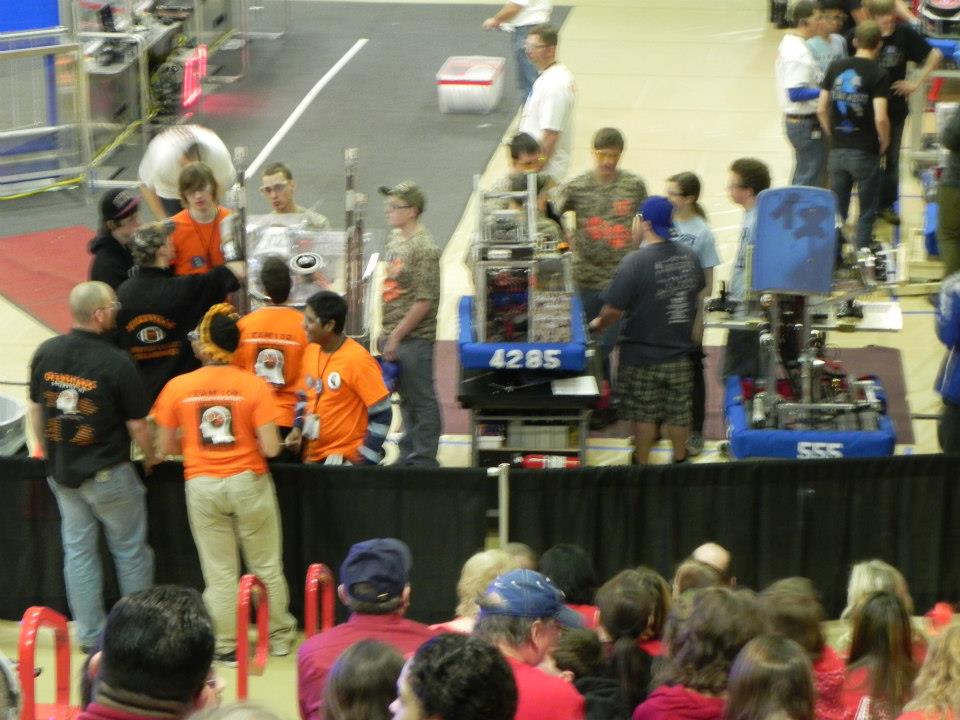
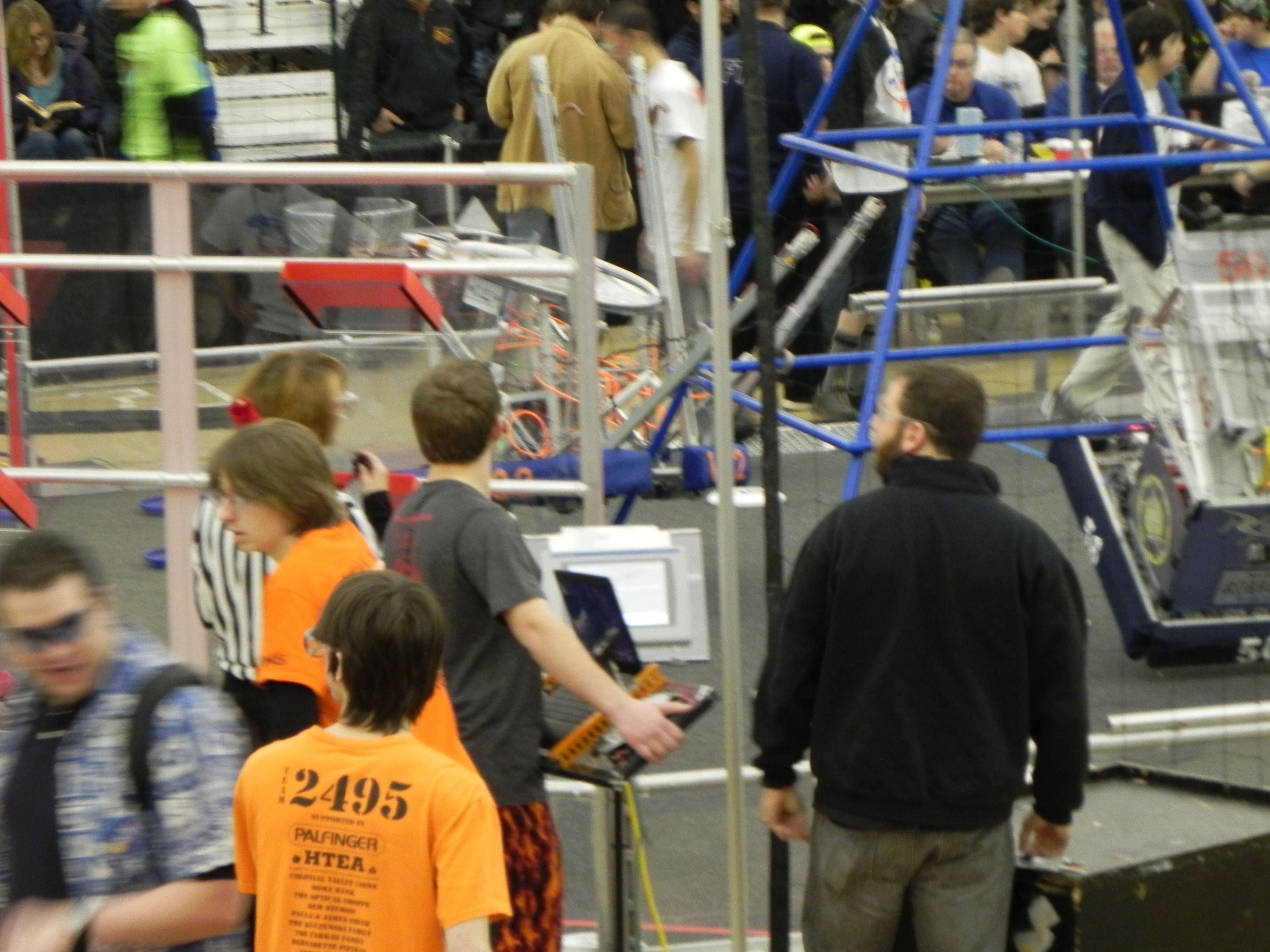
I’ve just attended my last FIRST Robotics competition. It is difficult to convey, if you’ve never been, what such an event is like. Hundreds of screaming high school students excited about engineering and the thrill of competition. A playing field is constructed to exacting specifications and six teams in two alliances facing off their creations to emulate human—sometimes superhuman—behavior. All the while the thumping rock beat of loud music and the play of colored lights give the event the emotional charge of a football game and homecoming dance rolled into one. Only you really don’t have to move very much at all.

I’m not a robot designer or builder. It is difficult to imagine anything further from my training (except perhaps accounting). Still, I’m a little let down after my last FIRST competition. Four years ago it seemed so novel, and there have been some difficult moments along the way. I’ve seen kids build robots that play soccer, hang inflatable tubes, play basketball, shoot frisbees, climb towers, climb poles, and do many other seemingly impossible tasks. I’ve been up before dawn to ride a chilly school bus across the state to compete, coming home in time to fall in bed to get up early for work the next morning. But most of all, I’ve seen kids putting themselves into more than machines. I’ve seen them putting themselves into a team. Although we didn’t win this year, and next year I probably will be consumed with other concerns, I am proud to have been, in my small way, a part of Team 102. Way to go, Gearheads! Maybe robots do have souls after all.

Team102FinalAlliance


AP Physics

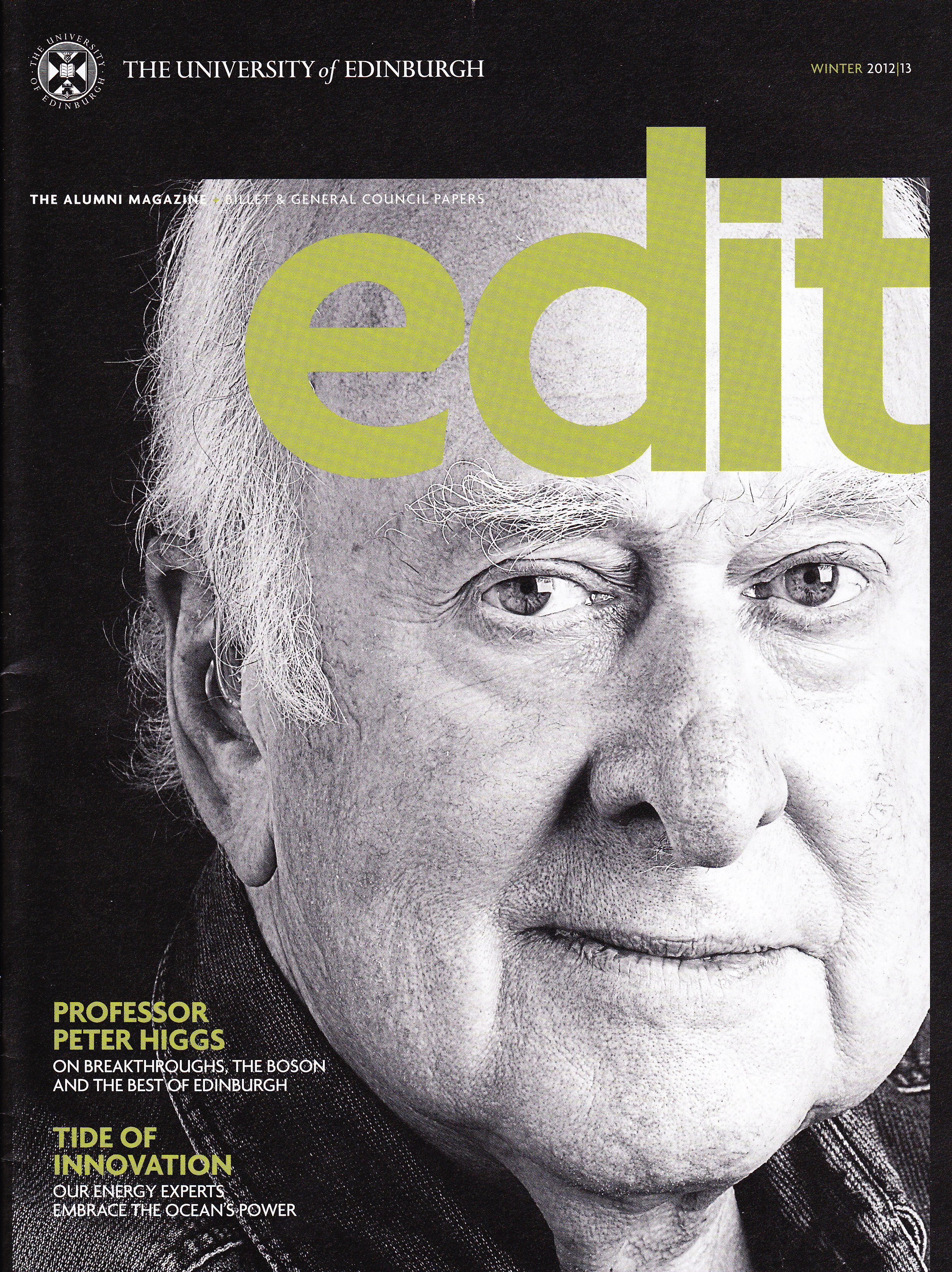
AP Physics. Few words strike terror into high school students like these initials and scientific surname. As a student I didn’t really comprehend AP, and never took any Advanced Placement courses, but I enjoyed physics. It was by far my favorite science class. Even as a Fundamentalist, I saw that here was the explanation for the entire universe, as we knew it. Laws deduced by people far smarter than I could even dream of being could explain everything. But then Heisenberg. And Schrödinger. And quantum mechanics. I remember being taught that nothing was smaller than an atom. (Primarily school teachers in the early ‘60s can easily be forgiven the generality.) Still, on my own I read about protons and neutrons and electrons with wonder. When physics and chemistry brought these to the level of reality, it was like we really understood that each atom was like a solar system and boy didn’t it look intelligently designed! But then we looked closer. Quarks, in a Life-Saver array of juicy flavors, string theory, and the God particle itself, the Higgs boson, coyly showed their elusive faces and physics got weirder and weirder.

Edinburgh does physics (and God) proud

Edinburgh does physics (and God) proud

When my daughter told me about AP Physics recently, I was reacquainted with this world where apparently conscious beings have their choice about reality. The observer bends the results of the quantum experiment. And yes, particles can be two places simultaneously. When a friend pointed me to an article on Quantum Reality in The Waking Times, I was ready to throw open the doors of perception and celebrate life in a universe so strange that the very concept of reality itself is up for grabs. Some physicists now believe the entire physical universe is constructed of energy and that it flashes into and out of existence at a staggering speed that makes me feel a little perpetual-motion sick. Reality is, literally, what we make it.

I have to admit just a little bit of pride on the part of having chosen to study religion here. The more we learn about the quantum world, the more religious it becomes. There will be hard-core reductionists who dispute this, I know. Those who’ve spent any time among the mystics, however, will know what I mean. Back beyond the singularity the laws of physics are so stretched and protracted that even Stephen Hawking can’t sort them all out. And we find ourselves daily living in a world that we help create, on a sub-atomic level. Reality may not be what it seems. I learned this in high school physics. Now that my brain has ossified into patterns that don’t admit much of calculus or accounting any more, I’m beginning to realize that physics is suggesting that reality may be consciously constructed after all. Only this time we’re the gods. And that’s a really weird concept.


Blob Blog

Those who actually know something about movies occasionally complain that Hollywood seems to provide us with diminishing returns. How many movies have been remade? Can anyone even count all the sequels, prequels, and just plan quels? A similar trend is evident in publishing. A teen-vampire novel takes off and every publisher faces a twilight of the profits if it doesn’t spin off its own version. Sometimes I end up becoming familiar with a movie through its remake before ever viewing the original. The Blob is one example of this. I’ve seen the thirty-year remake 1988 version a few times. Just this weekend I saw the original 1958 version for the first time. It seems to me that teen movies of the late fifties and early sixties tried a little too hard to get the snappy, sassing dialogue of teens on the brink of the incredible cultural changes that were about to take effect after the extreme conservatism of the McCarthy Era. At times it is so hip that I can hardly stand it.

The_Blob_posterThe Blob falls into that category. A young Steve McQueen trades ripostes with his chums who think a drag race and a Bela Lugosi movie with your gal are pretty daring behaviors. Buried in all that innocence, however, I found a hidden warning tone. When I watch scary movies, I always keep an eye out for religious themes. Sometimes they fail to materialize. The Blob is about as secular as they come. I didn’t even spot a church or a priest (unlike the 1988 remake) in the typical American town. Just a bunch of kids that, Archie-like, try to convince the adults that they’re serious. A blob from space really is loose in town, and nobody has an idea how to stop it. All the adult men wear ties and the ladies all wear dresses. It is a world that follows the rules.

What of this warning tone I mentioned? Well, the blob itself is, apart from its disruptive raison-d’être, hardly more threatening than the stifling culture it attacks. It can’t be shot or burned, and nobody has any other ideas. It is unstoppable. Except for cold. And here’s the chilling part. As the carbon-dioxide drenched blob is airlifted to the Arctic by the military, Lieutenant Dave declares the world safe once more. Steve (Andrews, i.e., McQueen) chimes in with, “Yeah, as long as the Arctic stays cold.” The film ends with a trademark horror question-mark (this one literal) as the blob is parachuted onto a snow-covered landscape. Global warming was a future monster in 1958. The optimistic world could see nowhere but forward. Now, over 50 years later, our future looks a lot less cold. With politicians and some religious leaders decrying global warming as just another liberal myth, we might do well to remember The Blob. Something up there on our melting ice caps is waiting for us to return to the 1950s to begin its sequel of terror.


Next to Godliness

Catholics, secularists, and even a Pharaoh or two. Loud, pounding music. Dancing teenagers. It must be FIRST Robotics season again. Although I’m ambivalent about the implications of a world filled with robots, I can’t help but be impressed by what high school students can do when they are mentored so closely by adults eager to share the tricks of the trade. If you’re not familiar with FIRST Robotics, here are the basics: each January a new game objective is released. Participating high schools throughout the world have six weeks to plan, design, construct, and program a robot to perform the tasks spelled out. Since this is a busy time of year for many schools, dedicating extra hours to building a robot leads to complaints and loss of sleep—maybe a skipped supper or two. When they come together on the playing field, however, all that is forgotten and the wonder is that kids, who are often disparaged in our society, have managed to construct a working, complex machine capable of tasks impossible for many adults (for example, doing chin-ups).

Every year I can’t help but think how like a religious service these events are. The robots are like deities to be served and the technology flits about like mechanized angels. There is an increasingly complex hierarchy of officials telling you what you can’t do (now this is beginning to feel like work!). At the end of the day, however, the kids get to be the stars in a competition that puts brains over brawn. And the robots are treated with extreme deference, because we know that we wouldn’t stand a chance if they had a will anything like the deities of yore.

The religious imagery, however, is never absent. Technology represents humans doing things without divine intervention. These are empirically devised devices, performing according to the laws of physics. And yet, teams from Catholic high schools, bearing mythologically-laden names, join in the world where no gods need apply. Robots, as initially named by Karel Čapek, were human servants, the ultimate in godliness—making images in our likeness to do our bidding. And yet we can’t escape the language of religion when thinking about our own creations. The fascination applies to non-parochial schools as well, with some teams claiming names echoing themes from holy writ. Creating autonomous beings is next to godliness. We make our own future, and, god-like, we hope that nothing goes wrong.

Humans and machines

Humans and machines


Evolving Leadership

Simple answers are seldom correct. Unfortunately many people will accept a simple answer rather than try to sort through the complexities that life in the universe provides in such abundance. I was given cause for hope by an interview that I saw on The Upworthiest. Zack Kopplin, a student only nineteen years old, is taking on the creationists in the south. It’s not an easy thing to do. As Bill Moyers points out in this interview, 46% of Americans believe in creationism. In a land where everything is a matter of choice, it seems, science is just one of many options. Also, Fundamentalist clergy are among the most gifted spin-doctors ever to have evolved. By pairing evolution and atheism and values that are dangerous to their beloved lifestyle, the message goes out from thousands of pulpits that evolution is a lie and that the Bible is a science book after all. And people, easily led, will follow. For many decades scientists and religionists alike refused to even address creationism, supposing illogical thought would eventually die out. What they were actually witnessing was a match thrown into a kindle-dry forest after decades of drought.

Even the case of Zack is a demonstration of this. When a law passed in his native Louisiana making it easier to teach creationism in the public schools, those who knew better did nothing. It took a nineteen-year-old to try to change the law. One could argue that full-grown scientists and other professionals have too much to do to waste their time on such foolishness. The problem is, as Zack is keenly aware, the creationists are well funded, strategic, and insidious. Fueled by self-righteousness, and supported by at least 16 years of presidential administrations that approved of creationism as a form of science, this movement is as much a threat as the NRA is to a peaceable kingdom. Maybe more of a threat because nobody takes them seriously. There is a plenty of history documenting the growth and development of the creationist movement, and, as Zack knows, it is not a fad. Most serious scholars just don’t bother to read it.

Creationism thrives by its own sense of victimization. Science offers us no cuddly deity who will make everything right at the end of a life of toil and turmoil. That is fine for science, but we must never forget that people are people. We need something to hold onto. It is this that creationists understand. Instead of calling it delusional, perhaps scientists need to step back and realize that it is a profoundly human need. That doesn’t make creationism right—not by a long stretch—but it might help to understand why it just doesn’t seem to go away. Instead of ignoring, science must address creationism. And so must those with serious training in religion. Creationism doesn’t survive close scrutiny by either scientists or religious specialists, but it sure does offer a feel-good ending. Until we admit that they’ve done their homework, those who oppose creationism are going to find themselves being led by nineteen-year-olds with a sense of what’s really at stake. And that’s complicated.

Yes, they will attack the prophet

Yes, they will attack the prophet


A Tale of Two Bees

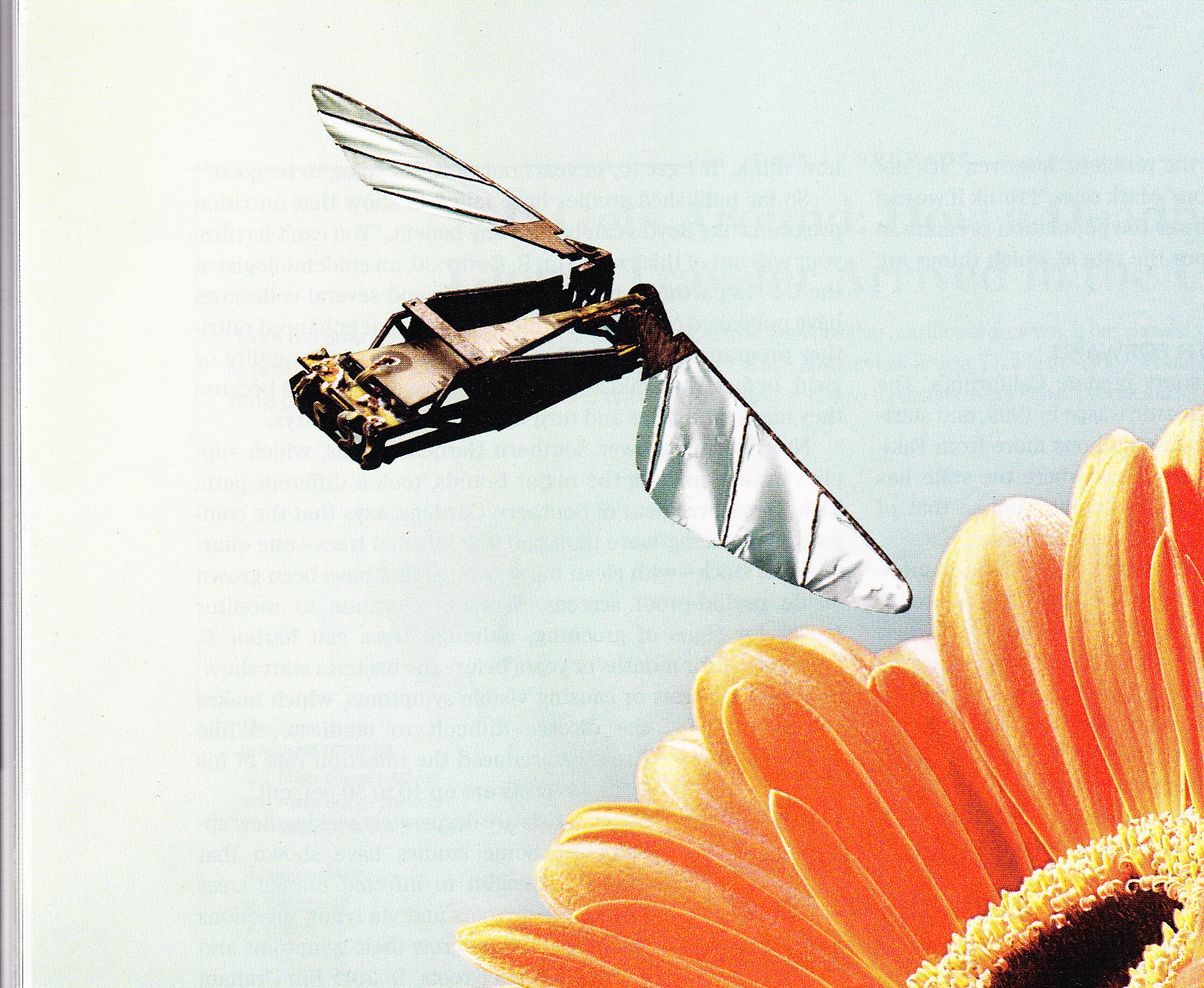
We’re nearing the competition season for FIRST Robotics. The animated, mechanical creatures created from scratch since early January are now set to compete for a kind of ultimate, ultimate frisbee. Only you can’t call it “frisbee,” for copyright reasons. Ironically drone bombers have been in the headlines this past week. Drones are robotic planes that fly their missions with human pilots sitting safely hundreds, or even thousands of miles away from the action. People are beginning to wonder—is this ethical? I pull out the Scientific American I purchased at Bush International in Houston last week. There’s an article about robo-bees. In a scare that seems like it could have come straight from the X-Files, I’ve been reading about the disappearance of bees. There are people seriously worried about this. It does seem that we failed to learn the lesson of Rachel Carson, and a land of milk and honey just doesn’t appeal without the honey.

The robo-bees are the size and roughly the shape of biological bees. They can be programmed to behave like bees and pollinate plants that our missing bees have been, well, missing. There may be hope for the flowers after all. But I wonder about the honey. No doubt, technology will come to the rescue. Those labs that gave us sucralose, aspartame, and stevia can surely invent a golden, viscous liquid sweetener that drips from a pipette. No cause for worry here. We can recreate the natural world in the laboratory. Honey has been reputed to have medicinal effects, but we can synthesize medicines in the lab as well. You might not want to dribble those on your biscuits, however.

Honey is made from nectar, the mythological food of the gods. Hinduism, Buddhism, and Judaism all recognize the religious significance of honey. Those of us who’ve been stung realize that a price has to be paid for such divine sweetness. The gods are like that. Roses have thorns for a reason. Not that I’m not impressed with the technology behind robo-bees. I am astounded that tiny robots can be built to fly and perform as we understand nature to dictate the Apis genus. They don’t, however, have the minds of bees. Mind is not the same as brain, as we’re beginning to learn. And minds are not limited to Homo sapiens. I recall when in our arrogance we thought we could improve the productivity of bees (capitalist bees) by breeding them with their Africanized cousins, biologically separated by an ocean. Many nightmares haunted me of the resulting killer bees. Yes, I had been stung as a child. Just by regular, garden-variety bees. From those painful events I learned a valuable lesson. We tinker with nature at our own cost. I, for one, am willing to deal with real-life stingers to taste the very food of the gods.

True bee or not true bee?

True bee or not true bee?


Animal Mentalism

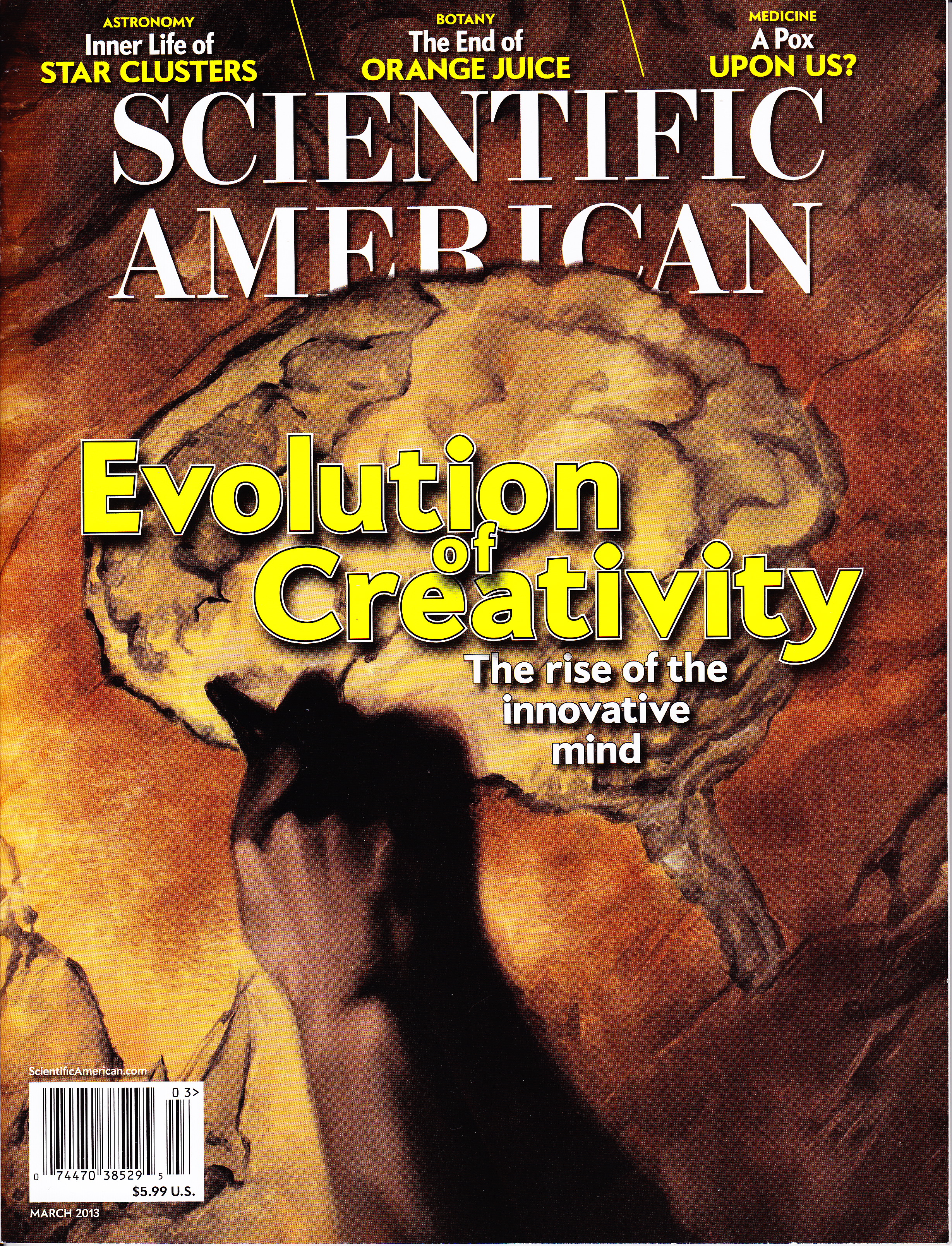
SciAmScience is how we know things. Most things, at least. One of the fundamental aspects of human life not yet grasped by the great empirical method is creativity. We generally have an idea how it works, but, like so much of human experience, it is difficult to describe precisely. When I saw this month’s Scientific American fronting with the headline “Evolution of Creativity”—two of my favorite topics—I knew I’d have to read it. The article by Heather Pringle zeroes in on the archaeology of very early human history. Before modern human, actually. I’d been telling students for years that the development of such traits as artistic representation, burial, music, and an awareness of some forces “out there” could be found tens of thousands of years ago. These, I suggested, marked the beginnings of religious sensibilities. I’d be willing to go even farther, however, and suggest that we share some of these traits with our fellow creatures. Religion may have a biological basis. That’s not where Pringle is going, however, and she addresses not religion, but creativity.

Pringle suggests that evidence for human technology—modest though it may be—stretches back further than the 40K epoch that seemed to house an explosion of human innovation. She shows how sophisticated knowledge of the environment and corresponding innovations were occurring 77,000 years ago, and even earlier. Some of it stretches back before Homo sapiens; stone weapons may be as early as Homo heidelbergensis and kindling fire as early as Homo erectus. Even our Australopithicene cousins seem to have been happily knapping stones two-and-a-half million years ago. The evidence, at the moment, seems to end there. I wonder, however, how far back cognitive development goes. We tend to underestimate the thinking abilities of animals, despite our constant surprise at how smart they seem to be. How very human! How very male, to assume that everything else is here for our use and pleasure.

Scientists often come upon with astonishment ideas that creative folks have been pondering for centuries. Science must be careful—that is one of its limitations. Creativity, the phenomenon Pringle explores, contains, in the words of Lyn Wadley’s team in Science, chemistry and alchemy. Creativity, like religion, isn’t afraid of magic. No doubt, some scientists will claim that true intelligence only begins with humanity. Looking at the way we treat each other, sometimes I doubt that it begins even there. If there is any hope for us, I would humbly suggest, it will come in the form of creativity. It is that very alchemy that keeps me coming back to science, and science will teach us, eventually, that animals are creative too. When we place ourselves among them, we will have created a world.


Flying None?

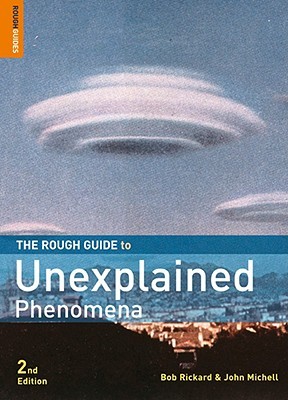
RoughGuidesWhile reading about a saint or two recently, I once again came across the concept of levitation. Long dismissed as overly gullible piety of superstitious pre-moderns, the practice has been relegated to the scratched and damaged basement of religious thought. Or so it would seem. While examining a World Religions textbook at work, I came across a picture of a young person in meditation who was, to all appearances, levitating. The caption simply noted that levitation is a component of some religious practitioners’ discipline and then quietly moved on. No scare quotes or allegedlys to be seen. The publisher of the text was one of the major textbook moguls. Curious, I found a reference to The Rough Guide to Unexplained Phenomena by Bob Rickard and John Michell. This intriguing book, in its second edition, bears the Penguin imprimatur, and therefore should be taken seriously. While I am certain that any number of skeptical readers will declare me hopelessly naive, I found the book full of interesting anomalies, and many of them, as I’ve noted several times on this blog, tied the paranormal to religion.

While I can’t accept everything I read in The Rough Guide, there remain, even after healthy doubt, a number of weird things that persist in our reductionistic world. Strange phenomena do not necessarily validate religion, of course, and many of those “revelations” people claim must be simple pareidolia. These are entertaining, no doubt, but hardly newsworthy. It is rather those phenomena that refuse to play by the rules that raise questions about our demon-haunted world. If even just a handful, or even one of the cases of levitation actually occurred, it would mean some serious rethinking concerning the nature of gravity. Do saints levitate? I’m no saint, so perhaps it’s best not to ask me. If one lies about it, then s/he is hardly a saint.

As uncomfortable as the unexplained may make us, these reports do serve as a reminder that our scientific worldview is, in many ways, still in its infancy. A few years back, sitting in on the lecture of a friend concerning the science of the Mesopotamians, it was clear that rational thought has very early origins in human civilization. At the same time, the Mesopotamians had plenty of room for gods and the supernatural in their worldview as well. Here in our electronic twenty-first century, it might seem that reason will see us through just about any crisis. Even a glance at the headlines reveals we’re not there yet. Some will blame the religious, the “superstitious,” the irrational for our problems. Meanwhile far from the eyes of scientists and authorities of secular power, maybe, just maybe, a religious practitioner may be hovering a few inches off the ground.