AKA

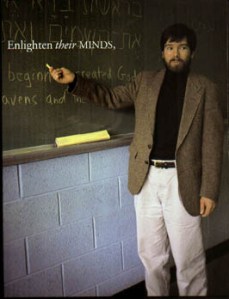
“Professor?”  While not technically correct, I was surprised and not unpleased to hear the title yesterday while on the streets of Easton.  One of the greatest compliments a former teacher can receive is word from a former student.  While dressed in Saturday clothes on the way to the country’s oldest continuously operating farmer’s market, I wasn’t sure the voice intended was for me.  I’ve been out of the classroom now since 2011.  Sure enough, one of my students from Rutgers recognized me and called out.  We had an ersatz but wonderful conversation after a completely chance meeting.  Already since graduating he’s had a few different jobs, but he remembered the classes I’d taught and I recalled that he’s the person who started me reading Neil Gaiman.  Teaching is, you see, a two-way street.

I’m doing a guest service at a local church next Sunday.  In preparation I’ve had lots of emails (for me).  One of them was from the music director.  He opened by calling me “Reverend.”  I’ve never been a reverend.  The idea isn’t unappealing but I’ve gone pretty far down the path of independent thinking and any church that would ordain such as me would need to be comfortable with that.  In fact, I heard a sermon recently by an Episcopal priest and was pleasantly surprised at how welcoming and, dare I say, liberal it was.  I was never really welcome in that club, I know.  When I was still fairly fresh out of seminary and working on my doctorate the idea of being “Rev. Dr.” was still appealing.  Now I go by my first name.

Labels.  I tend to eschew them.  Like my young colleague I’ve had to learn that work doesn’t necessarily define you.  (I’ve had many employers, however, who not only beg, but insist to differ on that point.  The ideas of owning individuals die hard, apparently.)  On the weekend, though, off the clock, people are calling me “professor” and “reverend.”  I’m generally sitting in a corner with my laptop on those early mornings calling myself a “writer.”  For none of these things do I receive any pay.  (Well, perhaps some for writing, but very little and very infrequently.)  The move to our new location was a chance, I think, to try to remake myself.  A chance to figure out what labels, if any, really fit.  Better throw “telecommuter” and “remote worker” into the mix.  Those are the ones, come Monday morning, that matter most.


Ghouls and Dolls

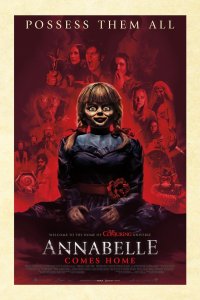
It was my plan—as if plans ever really work out—to see Annabelle Comes Home on opening weekend.  July got away from me but I finally found my way to the theater yesterday.  My current book, Nightmares with the Bible, deals with demons in cinema.  One of the chapters covers The Conjuring universe, and since this is the sixth film in that diegesis (with one tangentially attached spin-off) watching the movie was as much research as it was fun.  While the demon utilizing the doll Annabelle is clearly the main villain, the film, as in most of the franchise, interjects any number of entities.  Ed and Lorraine Warren, in real life, kept a museum of occult objects in their house.  This room contained items that had figured in their cases—they maintained demons didn’t possess objects, but people—including the doll Annabelle.

The new film maneuvers three girls (Judy, the Warrens’ daughter, her babysitter, and a friend) into the house alone.  One of the girls releases Annabelle from her blessed case, and a nighttime of terror ensues.  The demon behind Annabelle animates several of the haunted objects, so the girls have to deal with many ghoulish threats.  The film knows it is following tropes such as a car breaking down by a cemetery at night, and the idea of a babysitter being attacked by monsters, and at times it gives a slow wink to fans of the genre.  Still, there are plenty of genuinely creepy moments and a few jump startles.  It also shows the clearly demon in its “true form” at the climax of the film.  When it does so, it matches traditional renditions.

Set to become the highest grossing horror series of all time, The Conjuring universe mixes films that claim to be “based on a true story” and others, such as Annabelle Comes Home, that use real settings but without claiming to follow actual events.  What I found engaging about this particular movie was the fact that the youngest girl, Judy Warren, was the one who figured out how to re-capture the demon.  There are holes in the plot, of course, but featuring a young woman not requiring a man’s help to trap a demon is somewhat unusual in a Catholic diegesis.  True, she doesn’t perform an exorcism, but Judy does contain the evil without a priest, or even her father’s direct help.  As this diegesis wends its way into American folklore, moments like this are increasingly important.  Even though there are demons here, the women don’t require men to do the heavy lifting. 


Born Once More

Every once in a while a reader, either here or on other social media, asks me what my religious beliefs are.  The expected answer to such a question is the standard label of a denomination of some sort.  My response, however, is that knowing the group I belong to (and I do) should not effect the way my thoughts are viewed.  With the exception of some groups suspected of mind control, standard religions are generally trusted as being motivated by pure intentions.  Having both attended and taught in seminary settings, and knowing a great number of clergy, however, it becomes clear that denomination is less important than one might think.  In short, I answer this question in the public forum of neither classroom nor blog as I truly believe there’s nothing to be gained by readers/students knowing where I personally seek meaning, denominationally.

It’s no secret that it was once the Episcopal Church.  (I could not have taught at Nashotah House otherwise.)  It was made pretty clear after being at said seminary for many years that the Episcopalians had no official place for me.  Even when I worked a few blocks from the church’s headquarters in New York City I could find no one willing to listen or consider my credentials.  Its Church Publishing branch wouldn’t consider me in their book wing.  Were it not for some former students who still minister to me, it was clear they did not miss me.  So it was with some surprise that I found myself in Nativity Cathedral in Bethlehem on Saturday for their Celtic Mass.  The Cathedral itself is lovely with a négligée of wrought iron tracery for a reredos, appropriate for a city built by steel.  Eight angels with outspread wings stood atop it.  Like most sanctuaries, it was a place of refuge from the busy, noisy street outside.

The reading from Amos 7 stood out to me.  Lectionaries, by definition, take pericopes (selections) out of context.  Amos’ vision of the plumb line is actually part of a series of visions, but here stands alone with the episode of Amaziah trying to send Amos back to Judah.  The prophet responds by saying he’s not a prophet, but just a guy who’s received a message from God.  In ancient times there were prophets paid for their services.  They supported the government positions and governments made sure they were cared for.  The situation hasn’t much changed, at least among conservative religious groups under a Republican administration.  There were other parallels here, but saying too much on them might end up giving too much away.


Bible Misunderstood

Okay, so I wrote a post a couple days ago about evangelicals challenging Trump’s China tariffs because it will raise the price of Bibles.  Little did I know that Miriam Adelson wants a “Book of Trump” added to that very Bible.  Now, heroes are a personal business; to each their own.  Adding someone to the Bible, however, especially when that person has no idea of what Jesus said, is problematic.  Biblical and ecclesiastical scholars know that even if most Christians agreed books simply can’t be added to Scripture.  Many think the Gospel of Thomas should qualify—it may actually be closer to the words of Jesus than some of the canonical gospels and was putatively written by a disciple.  Thomas, however, will never make the cut.  Early bishops and elders in the church set pretty firm limits to the New Testament.  

Some religious traditions, such as Mormonism, have gotten around this impasse by writing entirely new sacred texts.  Loyal Trump followers might indeed fit the description of what used to be called a cult.  Thing is, George W., and George H. W., and even Ronald Reagan were more religious than the incumbent and nobody suggested adding them to the Good Book.  Our world has somehow flipped upside down in the last three years.  All I know is that in the photos of Trump with the most Jesus-like Pope in modern memory the Holy Father wasn’t smiling.  Then again, the Pontiff would likely not autograph Bibles if asked to do so.  Has anyone suggested a book of George Washington?  There’s such a thing as getting carried away.  

The Bible, apart from being the sole recognized authoritative text of the world’s largest organized religion, is an iconic text.  This means that the Bible is recognized as an important book—perhaps even a stand-in for God—without considering what it actually says.  This was a major point behind Holy Horror and it’s essential to understanding American political behavior.  Manipulating Scripture for political ends is generally the most cynical of approaches to the Good Book.  In America you can drive down highways and see the Bible advertised on billboards.  Large segments of an increasingly secular society are still motivated by it.  There was a time when it was believed that such cavalier suggestions as that of Ms. Adelson would constitute blasphemy, or would at least profane the founding book of Christianity.  In the minds of some Trump has clearly become a god.  So it was in Rome before the fall.


A Decade

Please pardon my being sentimental, but today marks one decade of blogging on Sects and Violence in the Ancient World.  I realized, thinking this over, that I used to make some interesting, perhaps even quotable statements back then.  Why not, I thought, farm those older posts to celebrate what I was thinking when I was a tenth-of-a-century younger?  So for today’s post, I’m presenting some quotable quotes from July 2009, starting with one of the zingers from my very first post.  For convenience, I’ve even provided the links to the posts so you can see them in context, if your July has somehow not filled itself up already.

Sects and Violence in the Ancient World, by the way, was the name given when one of my nieces thrust a recorder in my face and asked me what I would call a blog, if I had one.  She subsequently set this site up for me.  One aspect of the title may not have been evident: it’s a quasi-anagram for my initials.  It has been, from the beginning, mostly metaphorical.  Without further ado, then, a few of my favorite lines from a decade long gone:

“He had a sidekick called Cypher (sold separately), and arch-enemies with such names as Primordious Drool and Wacky Protestor. I marveled at the missed opportunity here — they could have called them Text Critic and Doctor Mentary Hypothesis!” First post: Bible Guy, July 12, 2009. <https://steveawiggins.com/2009/07/12/bible-guy/>

“Technology has outstripped reality.” Asherah Begins, July 13, 2009 <https://steveawiggins.com/2009/07/13/asherah-begins/>

“Black and white are not in the palette of serious religious studies.”  God is Great (not)?, July 14, 2009 <https://steveawiggins.com/2009/07/14/god-is-great-not/>

“When he [Aqhat] refuses to release it to the goddess he is unfortunately pecked to death in a hitchcockian demise by a swarm of buzzards with attitudes.” Sects and Violence, July 15, 2009 <https://steveawiggins.com/2009/07/15/sects-and-violence/>

“Indeed, one may think of them [religion and monsters] as fellow ventricles in the anatomy of fear.” Vampires, Mummies and the Holy Ghost, July 16, 2009 <https://steveawiggins.com/2009/07/16/vampires-mummies-and-the-holy-ghost/>

“Better to consider it [weather] human than to face unfeeling nature.” Changing Faces of the Divine, July 18, 2009 <https://steveawiggins.com/2009/07/18/changing-faces-of-the-divine/>

“As the gods are drinking themselves senseless (how else can the latest Bush administration be explained?)…” Drunken Moonshine, July 20, 2009 <https://steveawiggins.com/2009/07/20/drunken-moonshine/>

“As usual, we kill off what we don’t comprehend.” Not Lion, July 22, 2009 <https://steveawiggins.com/2009/07/22/not-lion/>

“A bonobo was recently documented as uttering the word ‘yes’ to a keeper’s question, officially making her more articulate than some clergy I’ve known. Even today there are churches that still call their leaders Primates!” Religious Origins, July 23, 2009 <https://steveawiggins.com/2009/07/23/religious-origins/>

“I never used a computer regularly until I began my Ph.D., and then it was only a glorified typewriter, qwerty on steroids.” Who We Were, July 27, 2009 <https://steveawiggins.com/2009/07/27/who-we-were/>

“I grew up in a blue-collar household where paying ladies for favors was itself considered a sin.” Yes, Mammon, July 28, 2009 <https://steveawiggins.com/2009/07/28/yes-mammon/>

Where do you suppose we’ll be a decade from now?


Trumping the Bible

The media is chattering about one of the very many contradictions of evangelicals who support Trump.  Since I have a foot in the world of the Bible business, I read with interest how Trump’s tariffs on China will put Bible publishers in a bind.  You see, the Good Book is generally sent offshore since printing costs (and technologies) are too expensive to replicate in God’s new chosen nation itself.  This lack of divine foresight should be a bit disturbing.  The entire evangelical enterprise is based on their reading of Scripture, and the belief that the divine choice of America is behind such momentous events as 45’s election.  Maybe we should check our pipes for lead.  In any case, Bibles, which are printed cheaply in high volume overseas, are set to become too expensive to give away because of the great pretender’s tariffs.

A few media outlets have picked up this story, including one that noted Trump’s favorite Bible verse is “an eye for an eye, and a tooth for a tooth.”  The famous lex talionis statement was famously, well, trumped by Jesus who said that the ideal was to turn the other cheek.  In a rather Philistine way, evangelicals have sided with a man who says Jesus was wrong.  If you want to check up on me in your Bible you’d better get your wallet out.  Ironically from a Republican point of view, tariffs are themselves the breaking of the commandment of free trade.  Still the party that claims to believe that does nothing to prevent the sale of their souls, cash on the barrelhead.

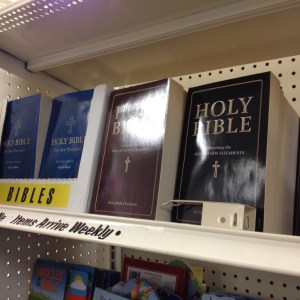
Many evangelicals may find the idea of Bibles as a business distasteful.  It is, however, extremely profitable for those on the supply end of the deal.  Bibles are printed at a volume that would make most authors green, and due to its size the Good Book requires specialized paper most of the time.  This is so much the case that Bibles not printed on “Bible paper” just don’t feel like sacred writ.  Since costs of living in the United States are quite high, and since this kind of specialized printing would be too expensive in this situation, publishers outsource God’s word.  Some publishers have been pleading with the government to exclude books from Trump’s tariff so the Good News can continue to spread.  The fact is that only one deity, called Mammon in the Bible, runs this enterprise.  And to continue to buy Bibles at the evangelical rate will soon be requiring an act of sacrifice.  I guess the lex talionis still applies.


Naming Rainbows

Living in the area around Allentown-Bethlehem-Easton (ABE, in airport parlance), one can’t help but be aware that Crayola is based in the E sector.  We visited the Crayola Experience while still residents of New Jersey and if there’s any place that smells like childhood this was it.  One of the truly interesting aspect of Crayola is that it defined specific shades of color.  Or at least Crayola’s version of it.  Many of us have pretty clear ideas about the basic six colors: red, orange, yellow, green, blue, and purple.  Sure, they added “indigo” to make it into a pronounceable name, and changed purple to “violet” to give us the standard seven, but this illustrates the point that I’m making—colors are somewhat relative.  Try to get anyone to describe, famously, puce (which I’ve learned is French for “fleas”).

A friend has recently been sharing stories from a book on the origins of color names (Secret Lives of Colors by Kassia St Clair), from which I learned about puce.  Although I haven’t read the book myself, it has become clear that colors indicate different things to different people.  All of this reminded me of a crisis I faced in my youth.  One of my teachers in middle school, in physics class, mentioned that not all people perceived the same color in the same way.  Or at least there’s no way to know whether they do or not.  Perhaps, he suggested, everyone has the same favorite color, but what they call it is different.  While the latter point seems unlikely, I took to heart that not everyone sees things the same way.  The same dilemma came back to me as my friend showed me various colors and said that her idea of what that color name designated was something quite different.

As in much of what I write, there are metaphors and analogies active here.  A paradox of religions is the great variety among them combined with the certainty that one’s own alone is “the truth.”  And all religious believers tend to be certain that theirs is true.  Like the color names we learn as children, we seldom grow up to question what we were told in our youth.  Some religions appeal to adult converts, but most people stay close to the orthodoxies of their youth.  Religions, like colors names, are a matter of consensus, for there are any number of shades and hues, and what we decide to name them is not revealed from on high.  They do, however, give the world considerable color.


Waiting for a Miracle

A friend recently sent me a New York Times story about Marianne Williamson’s spiritual background.  Before I say anything more about this I have a confession to make.  I didn’t know who Marianne Williamson was and, consequently, I’ve never read any of her books.  I also didn’t know about her presidential bid, although she seems much more grounded than whatever it is that sits in the Oval Office these days.  In any case, it’s the spiritual background part on which I’d like to focus.  Williamson is apparently a devotee of A Course in Miracles, a book written by Helen Schucman in the 1970s.  According to the NYT article, Schucman penned the book by the dictation of a divine voice.  This aspect seems worthy of further exploration, regardless of politics.

You see, sacred books have a long history of divine dictation.  The Bible makes such claims only obliquely, but clearly there were some who believed that Moses was the recipient of narration from on high.  Mohammed heard a voice saying “Write.”  Centuries later the Book of Mormon was written out at the dictation of Joseph Smith.  The point is that such texts are often believed to have had sacred origins.  I find Schucman’s reluctance to put herself down as the author of A Course in Miracles instructive.  She didn’t believe she wrote it.  Not to devalue any of these sacred texts mentioned, I would nevertheless note that authors often feel that their words come to them.  Maybe academic books don’t count, but when I’m writing fiction, it’s like somebody’s hands are on the wheel, but I’m not sure I’m the one driving (with apologies to Jeff Daniels).

A Course in Miracles has been translated into double-digits languages, something quite rare even among many bestsellers.  What this says to me is that people still crave answers from an authoritative text.  The written word has a power that electronic publication lacks.  Who wants to point to a screen and say, “this is divinely revealed truth”?  Hefting a heavy book, printed on actual paper, has a symbolic power that outweighs that of ebooks.  Probably it’s because the Bible paved the way.  We’re already primed for a sacred text, in physical form.  The longer I study holy books the clearer it becomes that they will unlikely ever cease to be written.  Helen Schucman didn’t have the last word.  As long as people write it’s doubtful anyone ever will.


Not for Men

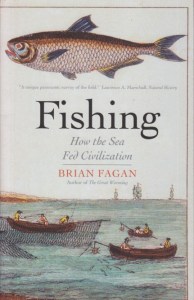
Does anyone else think that feeding fishmeal to herbivores so that they, in turn can be eaten, is weird?  Brian Fagan in his Fishing: How the Sea Fed Civilization describes the long history of eating seafood.  In evolutionary terms it makes sense, but so does veganism.  One thing that becomes clear from this study, however, is that human civilization simply could not have developed the way that it did without fishing.  Food for those performing massive public works came from the abundance of the ocean.  Theology played its part too.  Roman Catholicism established a habit that still exists of eating fish on Friday.  In Catholic areas of this country Friday fish fries, and the occasional fish boil, are cultural icons.  As Fagan points out, part of the reasoning behind this was the belief that God gave humans fish to exploit.

We find, interestingly enough, that religious thinking often stands behind tragic results.  Although I’m a vegan, I find it distressing that the oceans—so vast in extent—have been depleted by human activity.  The main problem, which we’re slow to learn, is that technology has made fishing too efficient.  This isn’t some kid with a rod and reel on the bank of a muddy river, but rather the industrial-scale trawling that begins by locating fish schools with sonar.  Not only that, but the land habitat to which we bring the fish is also being depleted.  I’m probably not the only one who gets the feeling that Fagan’s writing about more than just fish.  Where there is abundance, we take it as an invitation to exploit.  Tech makes it so easy!

In the early history of humankind, seafood was a necessity.  As Fagan shows, it was sometimes reserved for hard times.  Now we feed fishmeal to domesticated animals not because it’s what they naturally eat, but because—you guessed it—it’s cheap.  I’m still not allowed to give blood because of the Mad Cow Disease scare that rocked Britain when I lived there.  In part it was caused by feeding herbivores feed that consisted of meal made from other herbivores.  I no longer eat fish.  With the world population what it is, and global warming stressing agriculture, it seems we need to be thinking about what’s for dinner.  Quite apart from the fact that fish are, despite proclamations of ecclesiastical bodies, animals just like any others, we’ve managed to scour the ocean so thoroughly that recovery may be impossible in some locations.  The reason often given is that God gave us the oceans to use.  And that kind of thinking always leads to disaster. 


Weathering the Sun

I may have given up on Weathering the Psalms a bit prematurely.  Those who know me know that the weather impacts my mood.  Now that I have a yard to mow that feeling has grown exponentially since perpetually wet grass is happy grass and is impossible to cut with a reel mower.  Today, while those of pagan inclinations celebrate the sun, there’s more rain in the forecast.  As there has been since Sunday.  If Yahweh’s the God of the sun, then Baal’s had the upper hand for some time now.  As an article on Gizmodo has pointed out, this has been the rainiest twelve months on record for the United States.  And we’re largely to blame.  We’ve known we’ve been warming the globe since the 1980s, at least.  Yet we do nothing about it.  You can’t stop the rain. 

Our species occupies that odd role of predator and prey.  Most predators, actually, are prey to somebody else.  Not being nocturnal by nature, we fear the dark when we feel more like prey.  Since we’re visually oriented, we crave the light.  Today, when the conditions are right, we have it abundantly.  Ironically, of the seasonal celebrations, the summer solstice is the only one with no notable holidays.  Easter and a host of May Day-like holidays welcome spring and Halloween and Thanksgiving settle us into fall.  December holidays around the other solstice are the most intense, but summer, with its abundant light and warmth, is perhaps celebration enough.  Or maybe we know that marking the longest day is a transition point, since now we’ve reached a natural turning point.

So, it’s the solstice.  From here on out the days start getting shorter and we slowly move toward the time of year when horror becomes fashionable again.  The light that we crave now ebbs slowly to the dark we fear.  There should be a holiday around here somewhere, for those of us outside academia continuing working right on through.  The problem is western religions, especially Christianity, place no especially memorable events here.  Resurrection’s a hard act to follow.  Calendars, apart from telling us when to plant and harvest, are primarily religious tools in origin.  When things are their darkest, six months from now, the church moved the likely spring birthday of Jesus to counteract pagan festivals encouraging the return of the light.  I, for one, would like to see a day to commemorate it, even if it’s raining again.


Identified or Not

Okay, so this will require some explanation.  It came about like this: I was in a used bookstore.  (This in itself requires no explanation, of course.)  I noticed a slim book, cover out, called A Pocket Guide to UFO’s and ETs: A biblical and cultural exploration of aliens.  Biblical?  I picked it up only to discover it was from Answers in Genesis.  Please note: I do not buy books or paraphernalia of Fundamentalist groups unless I can get it used.  I don’t want to support this particular weirdness in any way.  Well, the money for this used book was going to support a used bookstore and not a religious aberration, so I figured it would be good to see what the Fundies have to say about a topic that seems to have started to engage public interest again.

The book begins by helpfully pointing out that if there’s life on other planets the Bible doesn’t mention it.  And since the only way it could’ve got there is by evolution—for surely the Almighty would’ve said something about it in his book, if he’d invented it—the whole idea is a non-starter.  Evolution, as everyone knows, is a satanic idea meant primarily to challenge the Bible and secondarily explain the diversity of life forms on earth.  And since earth is the only planet the Bible recognizes, it is the only one with life.  So, UFOs, it stands to reason don’t exist.  Well, that’s not quite fair.  They do exist but most can be explained away and those that can’t may well be demonic.  Since there can be no aliens, and since some sightings can’t be otherwise explained, then demons—which the Bible does mention—must be responsible.  They (demons) can also explain why other world religions exist.

There’s plenty in here to offend just about everyone apart from the Answers in Genesis crowd.  The screed spends quite a bit of time knocking down ancient astronaut ideas, and taking Erich von Däniken to task.  Science is useful in explaining how pyramids were built, but not in how the rock used to build them was formed (it takes far too long to make limestone the old fashioned way; God simply used a variety of different rock types to make the one inhabited planet more interesting geologically).  And those UFO religions?  Inspired by demons, no doubt.  In fact, even reading a little book like this could lead you to become interested in the subject, so be careful!  In fact, the safest thing of all (and I’ve only got your well-being in mind) is to leave it on the shelf.


Refuge in Diversity

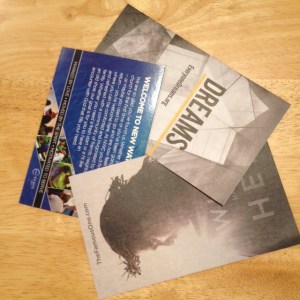
The Easton Saturday morning farmer’s market is a happening place.  Daring to spend a non-raining Saturday away from mowing, my wife and I decided to check it out.  If you’re not familiar with Easton, Pennsylvania, it has more than the Crayola factory that smells like childhood itself.  The downtown is marked by a traffic circle with an island in the middle large enough to fit, well, a thriving farmer’s market.  As usual, large gatherings attract those selling spiritual rather than material goods.  A very well dressed gentleman handed me a flier and when I got home I had to look up Refuge Church of Christ to find out what it it’s all about.  A New York City-based denomination of predominantly African-American membership, the church has over 500,000 members.  That I hadn’t heard of it before is no surprise.  There are well over 40,000 denominations of Christianity alone and it’s difficult to keep track of them all.

There comes a time in the life of anyone who takes religion seriously enough to study it professionally when s/he’s inclined to ask which is the original.  Think about it: you’re bartering with your eternal soul on the barrelhead here and don’t want to make the wrong choice.  When someone invites me to convert (I don’t know the secret handshake to show I’m already a member) I’m curious about them.  The unfortunate thing about all of this is that each tradition believes it has the truth and most, if not all, others have got it wrong.  Few are the faiths that declare, “Believe whatever, just believe.”

I once tried to make a denominational genealogy chart.  Part of the problem is that tracing things back to Catholicism isn’t quite right.  The Roman Catholic Church as it exists today is quite different than anything Paul, or Peter, or James would’ve recognized.  To say nothing of Jesus.  And that’s inevitable.  Religions don’t stay the same.  They evolve as soon as they pass from person to person.  Those who belong to denominations often do not know what the official teachings of the body are, and getting back to the original they’d find that their denomination started out believing things quite different than its own current theology.  If you’ve got only one soul with which to make that eternal decision and literally thousands of choices, well, let’s just say that you don’t want to think about it too much.  Besides, we’re here for fresh fruits and vegetables.  And it’s a rare gift of a Saturday without rain, no matter who’s responsible.


Fear of Religions

There’s a narrative of fear in Christianity that seems to have been absent at the beginning.  This is evident when driving the highways of America where you’ll see billboards (which are meant for selling things) advertising the truth of a kind of biblical Fundamentalism.  On my recent trip across Pennsylvania this fear stood out in some rather obvious ways.  And it doesn’t reflect the Christianity reflected in the Good Book.  Stop and think about it: although the persecution of early believers was probably never as widespread as the usual narrative says it was, the writings we have describe facing persecution with joy.  Believing that they would be delivered, the oppressed welcomed the opportunity to prove their faith.  The Chick tracts I read as a child, however, focused intently on how scary the future persecution would be.  Fear, not joy, was the motivation for belief.

As we stopped in a turnpike rest area, we noticed a kiosk of Christian books amid snacks both salty and sweet.  The only other reading material available had to do with tourist attractions and finding directions.  It was, upon retrospect, odd.  Pondering this I recalled the narrative I heard repeatedly in my youth—a time was coming when it would be illegal to be Christian.  There would be persecution and the only proper response was a faith borne of fear.  This was not a religion of love thy neighbor.  No, this was a religion of armed survival based not on turning the other cheek, but on asserting itself with a show of firepower.  This kind of weaponized evangelicalism has taken over the narrative of Christianity.  Paul of Tarsus, knowing he would likely be executed, wrote of his joy from prison.  In the land of plenty we tremble.

The more cynical side of my experience suggests that politicians—who have learned that fear gets them elected—found in this form of Christianity a convenient set of sheep without a shepherd.  There’s fear in these billboards.  Fear that another religion may take over.  Or that secularism may make cherished beliefs illegal.  This isn’t cause for celebration, as the sermon on the mount proclaims it should be, but rather a call to arms.  In this country we have more than enough.  Among those left out, however, this fear grows just as rapidly as among those who fear they may lose the abundance they have.  They try to convert the weary traveler whose eye is drawn to the billboard.  And even those who stop for a drink of cold water which, the Bible suggests, should be freely given.


A Nightmare or Two

Some books are complex enough to require a slow reading.  Alan E. Bernstein’s The Formation of Hell: Death and Retribution in the Ancient and Early Christian Worlds is such a book.  For those of us raised in a faith primarily geared toward avoiding Hell, the concept becomes a lifelong nightmare.  It doesn’t help that, depending on your clergy you’re taught different, sure-fire ways of achieving that avoidance.  Often it hinges on “believing” the “right” thing.  Fundamentalists tend not to call it “doctrine” since that sounds rather Catholic, but the idea’s the same; it’s a tenet of faith.  As Bernstein shows, however, Hell is an idea that developed over a very long time with several different views of what happens after death.  There’s no single, linear progression, but rather a conglomeration of ideas from a variety of sources.

No single volume can cover all the background to Hell.  Bernstein focuses on Egypt for the early material, as well as Babylonia.  These early civilizations demonstrate that people have always wondered what comes next, and what happens to those who oppress others—the bullies of this life who don’t deserve the same eternal rest as the rest.  Usually some form of punishment awaits, but not always.  In the Hebrew Bible one of the great issues was the fact that everyone goes to Sheol, good and bad alike.  As in classical Greece and Rome (on which Bernstein spends a great number of pages) the concept of the netherworld is gloomy, but not torture.  Except in exceptional cases, of course.  The Greeks had Tartarus as a place for those who dissed the divine.

Even early Christianity didn’t have a uniform view of it.  The New Testament is decidedly divided on the topic.  Revelation seems to be the last word, but it’s not.  Later thinkers such as Origen and Augustine (who came to different conclusions) weighed in.  Catholic Christianity lavished great love on the latter and Augustinian views became disproportionately influential.  Reading his lack of compassion can cause nightmares, although he justifies it theologically.  The one thing I missed in Bernstein’s lengthy treatment was the Zoroastrians.  This religion of ancient Persia introduced a distinct dualism into the biblical world; it perhaps represents the first relatively developed concepts of Hell and Heaven.  Zoroastrianism suffers from lack of documentation, however, and it is difficult to parse it as meticulously as Bernstein does the other cultures covered.  This book requires much pondering as it’s read, and if you were raised believing this kind of thing it’s sure to bring back a nightmare or two.


Myth and Magic

Magic and religion are difficult to tell apart.  Scholars have known this for some time, but don’t often say anything about it for fear of offending.  A few days ago Religion News Service ran a story headlined “How the ‘Harry Potter’ books are replacing the Bible as millennials’ foundational text.”  While many reacted with shock, to me the fact that a foundational text can be identified at all is a relief.  You see, reading is good for you.  Really, really good for you.  One of the most hopeful things I observed as a parent was the increased quality and volume of young adult literature available.  Of course it’s produced to make a profit, but the fact is it showed that reading is alive and thriving.  If the young make a habit of it, well, let’s hope that habit’s hard to kick.

My own reading doesn’t always keep pace with my desire to do more of it.  I go for a couple of weeks sometimes without finishing a book.  I begin to feel depleted.  There’s something spiritual about reading, and fiction can reach parts of your soul that are on guard when non-fiction’s your subject.  And that’s like magic.  It took a couple years for me to catch on to the Harry Potter craze.  Eventually my wife and I broke down and bought book one and read it together.  As millions of readers can attest, that first book was a fishhook.  We all really hope the world does contain some magic.  Many people find that solace met with religion.  Either way, fiction can enhance the experience.  We read the original series, hanging tensely until the final volume came out.

Many of those who believe in a magical religion protested the sale of magical fiction.  We were still in Wisconsin at the time, but we saw the protestors outside a local bookstore the release day for one of the later volumes.  Like Death-Eaters the protestors opposed Harry Potter.  The root of the problem seems to have been unique truth claims.  Whenever a religion declares itself the sole harbinger of “the” truth, every other way of looking at things becomes evil.  Even if it expressly declares itself to be fantasy fiction for young adults.  Years have passed, and Harry Potter, like other forms of pop culture, has grown to the status of a religion.  Even Nones want to believe in something.  Magic and religion are, after all, very difficult to tell apart.