Imagining Monsters

WideSargassoSeaAll fiction writing, it is often said, is borrowing. I’m not exactly sure that’s literally true, but the basic idea is that writers often trade with one another. They also borrow against their own experience and observations that others have made. When a character, or set of characters, an author develops become(s) wildly popular, fan fiction can result. There are websites dedicated to “fan fic” where characters from one writer are personalized in another writer’s imagination. Another form of borrowing is the parody. Pride, Prejudice, and Zombies takes Jane Austen far beyond her original scenario while using her novel as the basis of something somewhat new. These borrowings, as the saying suggests, have been around for a long time. I recently read Jean Rhys’ Wide Sargasso Sea. The novel from the 1960s is a “prequel” of sorts to Charlotte Brontë’s Jane Eyre. Although spoiler alerts for literature nearly a couple centuries old might seem like overkill, I’ll give one here anyway. You’ve been warned.

Jane Eyre includes quite a lot of gothic mystery. Thornfield has a mad woman, Bertha, the first wife of Mr. Rochester, living in the attic. Bertha is from the Caribbean, and Rhys, although Welsh, was born in Dominica. Taking an interest in the point of view of the neglected, insane Bertha, she decided to tell her story in Wide Sargasso Sea. I won’t sum up the plot here since you may decide to read it. The reason I brought the whole subject up in the first place is the glimpses given of the religions of the Caribbean. Clearly this was not Rhys’ main objective. The Creole of the various races from the slave trade and colonialism, however, did produce fascinating religious amalgams. The zombie, a figure that plays a small part in the imaginative aspects of the novel, is only the most familiar of the creatures.

The soucriant, or soucouyant, is a blood-sucker. A figure that combines elements of witches and vampires, the soucriant takes the form of an old woman by day and a blood-sucker by night. (Before you get the wrong idea, there are no zombie or soucriant characters in Wide Sargasso Sea—they are merely mentioned briefly in conversation.) This concept, while derived independently, relates to the succubus but also to the more modern chupacabra. These are all creatures that suck the vital essence from another, be the victim human or animal. The ubiquity of the idea is striking. In the context of the novel, however, such creatures merely haunt fevered imaginations. Our minds, however, are what make monsters real. Although Rhys declines to diagnose “Bertha” completely, it is clear that human mistreatment of one another creates, in its own ways, monsters. That’s an idea, I suspect, that I’ve borrowed.


Not Quite Dead

Duria_Antiquior

Extinction is a cause of fear. Having evolved a certain level of self-aware consciousness, we fear becoming the next tyrannosaurus-rex or spinosaurus, or whatever the next top predator turns out to have been. We’re here to stay. So we like to think. Data have been known to interfere with comfort zones, however. Take religion, for example. America has always been a religiously diverse “country,” but many people suppose it has a Christian beginning. Moreover, the historically uninformed suppose that generic Christianity to have been Protestantism (which is not really a single religion) and white (which isn’t really a race). Now, it seems, that white Protestantism is slowly going extinct. An article in the Washington Post by John Sides contains an interview with Robert P. Jones of the Public Religion Research Institute. Jones has written a book about the end of this particular hegemony.

Demographics tell the story. The powerful cultural force of the mainstream Protestant churches hasn’t disappeared, and really isn’t likely to become extinct. It has, however, diminished. As soon as we began to embrace technology this was a more or less inevitable trajectory for the human race. We made oceans smaller and came to see that we’d evolved different religions in different regions. And that Christianity wasn’t quite unique as we’d thought. “Orthodoxy” was actually a form of prejudice for a past that may never have been. We saw the writing on the wall and went on scribbling. Making claims the data don’t support.

One of the drivers—and this is a complex phenomenon—behind this shift has been the ossified positions of religions in the light of increased understanding. For example, most people see no problem with homosexuality. They believe shooting someone because of their race is wrong. Women, they radically suggest, should have the same rights as men. The hold-out positions on these issues have historically been religiously based. Just listen to the rhetoric of televangelists and see if it has changed. Meanwhile, the world moves on. Many religions are holding still. Or racing to see if their diminishing number of feet might make the world spin backwards after all.

Religion is a human invention. Many protect themselves by claiming direct revelation by a God who used to live in a glass ceiling above our heads. Trips to the moon, probes to Mars, and out of our solar system have proven that view false. If the view of something as basic as the universe was wrong, what else might’ve been a mistake? Jones’ new book will no doubt cause some panic. Extinction, at least not imminently, doesn’t seem to be in the cards. Protestantism seems to have reached a stasis. Religion still has an important function in society. When it takes the lead on issues of equality, we may begin to see a miracle.


In the Details

To a certain mindset, nothing conveys a threat quite like Satanism. Many parts of the world witnessed this dynamic during the “Satanic scare” of the 1990’s. In reality, however, most groups identifying as Satanism do not believe in a Devil and, often enough, don’t engage in worship. These groups are a reaction against aggressive Fundamentalism. For example, a Washington Post article timed as parents (at least) are thinking of back-to-school worries, announces “An After School Satan Club could be coming to your kid’s elementary school.” News headlines are intended to make you want to read a piece, and this one worked in my case. It turns out that the Satanic Temple, the group behind this current initiative, is one of those rationalist groups that doesn’t believe in the Dark Lord. They object, however, to schools allowing Good News Clubs to meet after school hours and want to make a point by offering alternative programing. Devil-themed, but not Devil-believing.

It’s difficult to imagine this kind of situation developing in many world cultures. It raises some very basic dilemmas where two conflicting freedoms co-exist: freedom of speech and freedom of religion. Most people would agree, upon reflection, that public schools should not be used for religious instruction. After school programs, in the minds of kids, still take place “at school” and are not easily separated from regular instruction. (Just ask an undergraduate what an adjunct instructor is and you’ll see that they pay little attention to administrative issues like that.) Fundamentalist groups, such as Good News Clubs, use freedom of speech as their wedge to offer after school programs. It’s not “school,” and it’s after hours. Don’t we allow freedom of speech, and isn’t there space available? Good News Clubs are, of course, evangelistic engines. The Satanic Temple makes the claim that if one religious group can meet after school, so can another.

Neither academics nor society have a good understanding of literalist beliefs. Those of us who once believed—sincerely believed—Fundamentalist teachings are a resource academia has chosen to ignore. Higher education is still an “old boys network” where jobs are offered on the basis of who you know and not on the basis of the knowledge they might offer to students. This, I suppose, is yet another clash taking place. Fundamentalism may seem laughable from the outside, but from the inside the untenable beliefs are taken with deadly seriousness. After school programs are an expression of a very deep-rooted fear that such religions promote. Satanist groups will get headlines by taking them on, but they will continue the conflict rather than offering dialogue to try to understand. They’re only doing what higher education teaches them to do—support those you like instead of trying to move knowledge ahead. Perhaps that’s the real work of the Devil after all.


Pagan Virtue

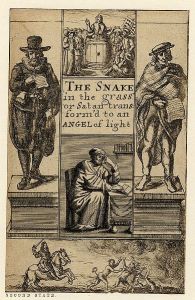
We are products of our place of birth. One of the truly amazing things about human culture is how quickly it can evolve. As biologists have noted, populations separated by natural barriers such as mountains, big rivers, or oceans, tend to evolve in different directions. They adapt to their environment. So far the world-wide web hasn’t flattened our differences out completely with a cultural creole, and it may be best to celebrate it while we still can. In an article in The Atlantic, “Why the British Tell Better Children’s Stories,” by Colleen Gillard, answers her titular query with religion. The British, she suggests, are better attuned to their pagan past. In the United States children’s stories tend toward the moralistic, reflecting the Puritan values that some decry as absent from culture. British stories lean toward magic and earthiness in a way that American stories don’t.

Any generalization opens itself for criticism. (Including the generalization I’ve just made, I suppose.) Still, I think Gillard is onto something. Children are magical thinkers and have to be taught not to see what they think they see. We acculturate them into the dull, adult world of making money instead of magic. American kids get started on the entrepreneurial pathway with early moralizing about hard work and attaining goals—just glance at the titles mentioned in the article and see if you can disagree. Christianity arrived in Britain much, much earlier, of course. There it encountered a pagan sensibility that tempered its increasingly harsh edges. Puritanism took the remaining joy from the good news and made it into a very serious belief system, indeed, with eternal consequences that persistently threaten any enjoyment of life. You constantly have to examine and prove yourself. The British allowed their former earthiness to survive, as early epistles to Augustine (not of Hippo) demonstrate.

389px-The_Snake_in_the_Grass_or_Satan_Transform'd_to_an_Angel_of_Light

The article ends by reflecting on recent American dystopian novels for young adults. These, Gillard suggests, reach toward fantasy in a way earlier efforts didn’t. I wonder if a bleak future is the natural consequence of founding a nation under the eye of an ever watchful, and vengeful, deity. Even a Trump may appear righteous with a Pence in his pocket. We’ve got to return to those old Puritan ways of subjecting women to men to make America great again. As this mass insanity continues to grow and infects the internet, dystopian futures appear to be strangely prescient. The C. S. Lewis of real life was not the grinning evangelical that modern-day candy Christians suppose. He knew a faun wasn’t what it seemed.


Camping Season

Summer is the time for camp. I’m not into extreme sports, like sleeping outdoors in the snow, so in my mind, summer is the time for camp. While in college I spent two summers as a counselor for the Western Pennsylvania United Methodist Conference camps: Wesley Woods, Camp Allegheny, and Jumonville. These were formative experiences for me since I’d never camped as a kid (beyond sleeping on the front porch and an ill-fated attempt at Boy Scout camp one winter), and certainly not in a Christian context. My wife recently sent me a story in The Guardian about Jesus Camp. The documentary is a decade old now, and people are wondering if the religious indoctrination of children is child abuse or what. As always in such situations I tell myself the real issue is that you can’t understand Fundamentalism unless you’ve believed it. Really believed it.

IMG_2856 copy

Some psychologists claim children can’t conceptualize God. Many adults can’t either, but for those who try, what they believe is true. The Fundamentalist parent doesn’t attempt to deceive his or her child. The thought of having your own children suffer eternally in Hell is a wrenching, and very real one. A convinced adult is morally, viscerally, and utterly compelled to teach her or his child the truth. Anything less would be monstrous, hideous, and inhumane. Critics from the outside say that such nonsense damages children psychologically. I have to admit that watching Jesus Camp made left me feeling enraged and, in some measure, victimized. The untold reality, however, is that apart from some cases of deep insincerity, most Fundamentalists truly believe what they teach their children. They’re not trying to abuse any more than a parent who teaches their progeny that the stove is hot. They want the best for their kids and life is full of uncomfortable truths.

Richard Dawkins, notably, has argued that teaching children religion is a form of child abuse. The fact is nobody knows the truth about religion. All we can do, scientists included, is believe. Believe for or against or somewhere in the middle. God, by definition, stands outside the reach of empirical evidence. Perhaps it’s just a trick of consciousness, but we have to leave the possibility open. We don’t even understand consciousness yet. Rare aberrations apart, people love and care for their children. They try to give them the best that they can, and that includes their religion or lack thereof. I saw some strange stuff at church camp. It wasn’t in any sense “Jesus Camp,” but it’s safe to say it changed my life. On the brink of fully legal adulthood I was coming to learn that certainty was impossible, and the only honest way to be in the world was to admit that we all, in some form, believe.


Holy Girdles

Religions, it seems, come in belts. Or at least elements of religions do. Although we may not all agree on what constitutes the “Bible Belt” we all have a pretty good idea that it includes several southern states, and parts of the Midwest. It doesn’t really resemble a belt that I can tell, but its convenience and assonance keep the phrase alive. Over this past weekend I was in the “Borscht Belt.” I’d heard the term before, but had no idea where this supposed belt was, or, indeed, why it was called this. Historically, three counties in the southern Catskills, so I learned, were attractive locations for summer homes for Jewish families from New York City. All within a easy day’s drive of Gotham, they provided the low mountain, resort feel of much of New York State and Pennsylvania. According to Wikipedia (surprisingly, I had no books on the Borscht Belt in my library) this designation is less descriptive now than it had been, back in the day.

BorschtBelt2

One of the immediately obvious features of the region, at least as recently as last weekend, were the number of orthodox Jews walking beside the roadways throughout these counties. I’m using “orthodox” here not as a technical term since I have difficulty identifying the different brands of conservative Jewish belief (there I go again!). Another obvious indicator was the number of billboards written in Hebrew. Just a hundred miles down the road west and these markers tend to disappear. By the time you reach the central part of “the southern tier” you come back to what was once called “the Burnt Over District” from the “Second Great Awakening.” Distinctively Christian in orientation. Religion is endemic in these hills.

The internet tells me that the Borscht Belt began to unbuckle with the relative ease of air travel. I have many Jewish colleagues who pop over to Israel on a fairly frequent basis. I suppose the Catskills just don’t compare with the Holy Land. Further south, along this same rocky spine, you come to the Poconos. I grew up hearing about this vacation paradise in my own state, but, like the Catskills, the region has been largely abandoned for higher mountains, bigger thrills. Having grown up in the foothills to the Appalachians, I learned in school that these are ancient mountains. Old ways are naturally preserved here. The religion I grew up in was old-time, for sure. There’s an agelessness to these weathered hills that seems to invite those with old religions to form enclaves and imagine that little has changed, despite what Wikipedia might say. And maybe it’s time to get a bigger belt, since conservative religion seems to be growing rather than shrinking.


Insane Deities

GodsMustBeCrazyIt was 1987. I was in Israel for a good part of the summer excavating at Tel Dor. Between degrees and trying what to do with my life, like many people, I sought out a holy place. One evening while I was there, the locals (I can’t recall if it was the dig coordinators or the local community) sponsored a public showing of The Gods Must Be Crazy. The movie was fairly recent then, and it was the first and only time I’ve seen a movie captioned in Hebrew. I had a seminary friend who often showed me movies at his place, but this was one I had somehow missed, even though it came out when I was in high school. I’ve seen the movie several times since then, but not in the past seven years or so (this blog is a pretty good record of my movie viewing as well as book reading). This weekend we dusted it off and popped it into the DVD player and I noticed a few things for the first time.

Spoiler alert: not for the movie, but for reality. The portrayal of the bushmen in the movie is pure verisimilitude. While living much more in harmony with nature than modern, industrial late capitalists, they are not a completely peaceful people with no violence. We can overlook the “noble savage” viewpoint for the sake of entertainment, but anyone who researches human cultures closely finds that the perfect society doesn’t actually exist. Still, what I noticed in the movie diegesis was the bushmen had no need of theodicy. Theirs was a world where the gods gave them only good. The Coke bottle becomes their “tree of knowledge,” to put a Judeo-Christian spin on it, and they even use it for curing snake skins. The movie doesn’t work, of course, without this fictional view, but in reality all believing people require a theodicy.

Our particular disc of this movie has a less-than-dynamic special feature of someone who never identifies himself following up on the movie. This rambling, twenty-minute featurette shows “current” (for it must be a decade old by now itself) developments among the bushmen. Two hundred miles from the nearest electrical grid, schools are being equipped with solar panels so that the children can learn about computers. A laptop in the middle of the Kalahari. As I reflected on the loss of innocence theme, this struck me as surely as an angry serpent. The world in which we live allows for only one way of existing. It is a world of money where even the self-sufficient must be wired into the matrix. If ever there was a need for theodicy, this was surely it.


All Things Newton

Andover Newton Theological School is the oldest stand-alone graduate school of theology in the United States. Was, I should say. Declining enrollment—supply and demand dictates fewer clergy are required—and the rising costs of a job description that has no obvious retirement age have led many seminaries to merge or close. It seems that Andover Newton is about to merge with Yale Divinity School, much like Berkeley Divinity School, bringing together a mix of Congregationalists, Episcopalians, and Nones to huddle together across the quad until people want to believe again. Those of us who grew up being taught that belief was normal, and widely accepted, have experienced a sense of bad investment lately. We poured resources into keeping our product current only to find the use by date predated the use of use by dates.

Think of it as evolution. From the earliest days of civilization, priests were integral to, well, civil society. Evidence more and more points to religious belief being the actual glue that held larger communities together in permanent settlements. In other words, that’s how we’ve lived for five thousand years. How were we to know that the rules were about to change? You could always count on a need for clergy. The world’s first service industry. Ah, but it’s the latter word of that noun phrase that’s the problem. When religion becomes a commodity it’s subject to supply and demand. Supply has exceeded demand for some years now and the factories are shutting down. Anyone want a used Bible, cheap?

The Episcopal Church, with its outsize influence for such a small body, used to have eleven seminaries in this country. The United Methodist Church, larger by nearly an order of magnitude, had thirteen. Once and future clergy such as yours truly were produced in classes of dozens. We didn’t diversify our portfolios enough. So now, Andover Newton—the very school where I learned Hebrew—is downsizing faculty by a rather drastic percentage. I’m not so worried about deans and administrators since they easily buy into the business model of education. I do wonder about the effect on society of having so many unemployed theologians around. One thing we don’t have to worry about is organized groups of them roving the streets; theologians are fiercely individualistic. As they transition into the corporate world—the only world that now exists—they’ll find themselves wondering how to live among the soulless multitudes. There’s only one orthodoxy here—lucre be thy name. And, oh, you might consider asking about entry-level positions.

IMG_1550


Stations, Everyone

Station11There has been a movement, of late, among some sci-fi authors, to envision a more optimistic future. I have always been a fan of dystopias, myself. Perhaps it’s the working-class mentality backed up by being raised in poverty speaking, but sometimes I feel that collapse is more fair than progress. What passes for progress, anyway. Maybe I’m thinking this way because I just finished Emily St. John Mandel’s Station Eleven. This book has been on my radar for some time since it is one of the more hopeful dystopias out there. The story of a group among the very few who survive banding into a traveling troop of musicians and thespians is about the most hopeful outcome I can imagine. Not a day passes when I don’t feel the effacement of humanity that has been slowly taking place since I first became aware of the world. Sure, I do appreciate the strides made in medicine. Of this internet, which is the only place anyone ever really sees me, I’m less sanguine. It has its benefits, but even Mandel mentions the cell-phone zombies that are all too real and as omnipresent as an omnipotent deity used to be.

Station Eleven has, as many dystopias do, a religious sect that emerges after society collapses. This element of bleak futures is actually very accurate, I anticipate. We’re constantly being told by the “intellectuals” of the public variety that religion is for weak-minded dreamers with milquetoast aspirations for fantasy. The fact is the vast majority of people in the world are religious. The numbers are nowhere even near close. If a pandemic were to wipe out all but one percent (and hopefully it wouldn’t be the one percenters that survive) those who remain would, without doubt, turn to religion. People are easily led in this area of life. Mandel gives us The Prophet. His vision of the world is not helpful, but he has no trouble gathering a following. He’s also somewhat messianic: child of a single parent, raised in Israel, he comes to bring a sword to a nation already prostrate in the dust. This is powerful stuff.

Societies that try to rebuild themselves after traumas quite often rely on religion. This is hardly surprising as civilization itself began as religions coalesced into temples and their priesthoods. What is surprising is that so many intelligent people today can’t see just how important religion is to our species. As I suggested before, part of this is that religion defies simple definition. It’s easy to belittle “magical” thinking when it’s assumed religion has to do only with the supernatural. Religion, however, reaches into whatever we believe. Some ideas in modern cosmology, derived from physicists and their mathematics, can look sort of religious when viewed from a certain angle. As those who write dystopias know, religion is complex. It may lead to massive destruction. Chances are, however, that if there are any human beings left to crawl out of whatever pit we dig, they will do so with religious ideas in their heads. As usual, the writers have foreseen it.


New World Witches

MarWitchOne of the most coveted phenomena in the publishing world is the bad review. Controversy sells a book like nothing else. It wasn’t because of the controversy, however, that I read Alex Mar’s Witches of America. Looking back, I wasn’t even sure of what to expect. Witches can mean many things and there is little one can do, beyond reading the blurbs and summaries (and who has time for that?) to know beforehand what a book’s really about. I like books about witches, so I just read it. I soon found myself engrossed in a spiritual memoir. Perhaps even more than books on witches, I’m drawn to women’s experience of religion. Many such accounts have haunted me over the years, but Mar’s story was different than most I’ve read. Women often write of escaping intolerant, priapic religions of a conservative stripe. Mar may be the first account I’ve read of a spiritual seeking becoming part of modern paganism.

The negative reviews largely focus on what they perceive as a false bill of goods. A woman passing herself off as an authentic seeker just to write a book that violates confidences. As a writer, and as someone who knows authors, I was a little taken aback at this. Those who know writers know they’re disruptive personalities. They look at things differently than most other people do. More than that, their experiences are subjective and must be explained in that vein. Some reviewers claim Mar was just wanting to write a book. Writers know that books write the authors. Spiritual experience is notoriously difficult to capture in words. I’ve read plenty of books about modern witchcraft, including the balanced, academic titles everyone commends. Mar was able, however, to explain the lure far better by taking a personal approach.

There are inherent dangers to sharing your innermost experiences. Other people are involved and honest perceptions will sometimes hurt. A writer finds it difficult to hold back. Spiritual experiences are something complex, multilayered, and scandalous. Often I was told, as an undergraduate at a conservative Christian college, that mystical experiences were to be avoided. They are powerful, frightening, and addictive. I can’t say if Mar violated any confidences, but it seems to me that the portraits she paints of witches are complimentary, and generally feel heartfelt. Then again, Christianity has been analyzed seven ways to Sunday, so it may feel like violation if a religion is still largely secretive. Were it not for the negative reviews, I would’ve never guessed that I’d read anything more shocking than the spiritual memoir that offers other ways of looking at what we think we already know. Oh, and did I mention the book was about witches?


Holy Castle

ManHighCastleReading about Philip K. Dick prompted me to read one of his novels. But which one? Some Amazon pick-up lockers on the way to work are painted with a mural of The Man in the High Castle. I haven’t seen the series, but there was the paperback, facing out, at the local independent. It’s been a while since I’ve read Dick, so I have to find my legs for his style. I’m surprised at just how much religious language he uses. Our cultural biases tend to insist that intelligent people aren’t hoodwinked by religion, but it does, nevertheless, appear. The premise of Dick’s novel is based largely on I Ching, the “Book of Changes.” Indeed, the conclusion of the novel relies heavily upon it. Along the way, however, Dick shows his sacred mettle when it comes to Judaism and Christianity as well. His prose is sprinkled with biblical quotes.

More than just a surface awareness, The Man in the High Castle offers some deep reflection for the reader. Mr. Baynes, seated on the rocket to San Francisco, ponders the Nazis who’ve won the Second World War. Reflecting on their hubris he considers how they’ve come to think of themselves as divine. “Man has not eaten God; God has eaten man.” This gave me cause for pause. Apart from Dick’s narrative, the idea of divine anthropophagy is in keeping with much human experience. We often consider ourselves masters of our own fates. Many, however, find themselves dangling like a spider from a web over the fire. Not that of Edwards’ Hell, but simply that of human circumstance. The Nazis didn’t win the battle, but listening to today’s political rhetoric, they may have won the war.

Nobusuke Tagomi explains to Baynes how I Ching, a 5000-year-old book, is alive. “As is the Christian Bible; many books are actually alive.” Far from poking fun, Dick suggests there may be something to all this mumbo-jumbo after all. We are conditioned to mock, dismiss, and ignore religion in this world where rationality leads to presidential races such as this one we’re currently suffering. Follow the trail back, I suggest. Look for clues. Philip K. Dick isn’t the only secular writer who knew more than the average person about what fascism looks like, and about the role of religion in its downfall. The novel may not be easy to read. It demands much of those who approach it. Nevertheless, it preserves the truth that many books, indeed, are alive.


The Devil Made Me

TheWitchesWitch-hunts, I suspect, will become all the rage again if a certain presidential candidate is elected. The fear of witches is not easily explained in a world driven by materialism, but certainly misogyny plays an unholy role in much of it. Stacy Schiff’s The Witches: Salem, 1692 has been selling well. Since my wife is one of the many descendants of the Towne family that suffered three witch accusations resulting in two executions (Rebecca Nurse, Mary Esty, and Sarah Cloyce) we read this book together. It is a detailed account of the year we went mad. A year when being different, especially not being Puritan, and not being male, was dangerous. Religious tolerance was not a gleam in the colonists’ eyes since religious freedom translated into not being forced into the government church, not allowing others the same privilege. Indeed, as Schiff points out, religious tolerance was considered by many to be a satanic idea. If ministers starved due to such freedom, it would be easy for Satan to take over. As it was, the Dark Prince seems to have done a pretty good job among the Puritans without such tolerance.

The idea of the Devil has been (and still is) the ultimate scapegoat. People in a capitalist society are naturally frustrated—surprisingly few see this—and frustration always seeks a reason for its own existence. That is patently clear at Salem: blame the Indians, blame the French, blame the Quakers, blame the women. Any and all may be agents of the Devil. Even the descriptions of the Lord of Darkness varied so much that, were he a human, no one could be quite sure who it was they saw. The Devil always takes the form of your enemy. All it takes is an influential clergy willing to push tense believers over the edge. Soon we begin building walls. Then we build gallows.

Religious tolerance has always been a frightening thought. Protestantism challenged a somewhat uniform Catholicism and the mite of a doubt burrowed deeply into peoples minds: is my religion the wrong one? Tolerating other religions means admitting that yours might be wrong. The logic that plays itself out is a terrifying one to some. Belief is never easily changed. States can’t stand dissenters. The only capital crime for which the federal government still executes citizens is treason. Treason sits uncomfortably on the other side of the coin whose obverse reads “tolerance.” You’d think that three centuries would be long enough to learn something. Unfortunately some lessons—often tragic ones for the powerless—have to be played out over and over before we start to comprehend that Satan can be anyone we want him to be.


Not for Prophet

Delicate isn’t a word we’ve been taught to associate with Islam. I remember a priest speaking to me oh-so-earnestly about how Islam by nature wanted to take over the world. I wondered about his education in the history of Christianity. If you turn the clock back far enough, even the early Israelites, according to Judges, attempted genocide. We do religions a grave injustice by reifying them in this way. A recent story on NPR tells about the restoration efforts of a library in Fez, Morocco. As Leila Fadel points out in this story, we tend to suppose Islam is ISIS destroying history, but this library, full of Arabic manuscripts, is one of the oldest in the world. We sometimes forget the great contributions Arabic—yes, Islam—has made to world culture. Including literary culture. Some of the scientific works of Aristotle were preserved only in Arabic. Even the word “algebra” bears the distinct signature of its Arabic roots. What we should be attempting to halt is extremism.

Arabic_herbal_medicine_guidebook

One of my readers commented the other day about absolutism. This was in the context of Christianity, but it applies here equally as well. Absolutism tends to see only sharp divisions in a world where everything, in reality, blends into everything else. Islam emerged from a prophet who was influenced by Christianity and Judaism in the context of Arabian polytheism. Many of the tenets of Islam would settle comfortably in the pew, if we would let them. “Revealed” religions, however, take no prisoners. The concept of “revelation” means that your scriptures come straight from God’s anthropomorphic mouth to your all-too-human ear. When your religion is revealed, you can’t mix it with the best of your competitors. That’s one of revelation’s greatest dangers.

It does my soul good to see the begloved curator of the Qarawiyyin Library touching an Arabic manuscript so gently. It is the very picture of a pair of lovers. Those who love books—truly love books—can wish no harm on their fellow human beings. Reading is, after all, exploring the minds of others. All texts, in this way, are sacred. All are revealed. Too often we listen to those who tell us this is all an apocalyptic struggle to the death. In reality, revelation never ceases. Of its source I’m uncertain. Of its literary progeny I am certain that human minds are only richer for having received the words of the many prophets of the literary endeavor.


The Survey Said…

Survey

There may come a time, perhaps “when the trumpet of the Lord shall sound,” that junk mail will be no more, a mere historical curiosity. For now, in these days of declining postage prices, we’ll continue to put up with it. I suspect much of it targets my generation and those older—people who are modest about the time they spend on the internet, and who long to look out the windows when they’re at work. (The non-virtual windows, I mean.) Although I lament the waste of paper, and the cost to our literal dendritic friends, sometimes free amusement comes in my mailbox along with the occasional profundity. I received a survey the other day that had decorative check-boxes on the envelope for agreeing or disagreeing. “My beliefs about religion are nobody’s business but my own” the question read. My knee-jerk reaction, itself a religious term, was to think “Of course! Nobody can tell me what to believe.” An occupational hazard of being a religionist, however, is that the ready application of exegesis always stands to hand.

Are my religious beliefs nobody’s business? I suspect since the sender was looking for money that some manner of business was indeed involved, but beyond that are my beliefs nobody’s concern? Freedom of religion allows us to believe what we will, and since beliefs are very, very difficult to change, this is a central tenet of any form of democracy. You can’t have a free people without letting them believe what they can’t help but think to be true. It may, however, sometimes be somebody else’s business what I believe. If my religion is dangerous—and what religion isn’t, to some degree?—don’t hoi polloi have a right to know? Ah, but then aren’t we in danger of registering, profiling the believer? This is a violation of rights as well.

My pen hovers uncertainly over the paper. My views are something that I keep to myself. Few people know what I actually believe. On the other hand, day after day I post thoughts that in some way can be tied to religion. Is this a trick question? A junk mail survey shouldn’t be so hard. When did studying before checking the mailbox become a requirement? In my teaching days I had students who claimed they had a right to know what I believed. I had a right to keep my views private. Who’s right? Whose right indeed? Belief doesn’t come easy. It’s not as cheap as the media makes it out to be. Unless, of course, it arrives unbidden among the junk mail that makes up so much of our lives. And even then it might be something to take seriously, at least for a little while.


Religious Melancholy

DamnedNationI’d never come across the term “religious melancholics” before, but somehow it seemed to suit me. Perhaps that goes without saying as I’m reading Damned Nation, by Kathryn Gin Lum. While sitting on a bus. We’re sitting in traffic and the guy sitting next to me has obviously just finished a cigarette before climbing aboard. Having grown up as the victim of second-hand smoke for my first two decades in life, I’m thinking about Hell as well as reading about it. You see, Gin Lum’s descriptive subtitle is Hell in America from the Revolution to Reconstruction. The fact that Hell’s alive and well, despite some evangelicals’ attempts at annihilating it, suggests that it’s best to keep informed on the topic. This book’s mostly historical, however, reporting how Americans interpreted Hell in the eighteenth and nineteenth centuries.

As with most histories, I find the earliest material the most interesting. Gin Lum tends to focus, naturally, on preachers at this period since they are the ones most likely to talk about eternity. The thing that struck me the most was the number of people she describes who, after contemplating (a primarily Calvinist vision of) Hell, attempted suicide. I tend to think of suicide as a contemporary problem, but obviously it has been a steady human practice since our species first learned that you don’t have to wait for someone else to help you slough off this mortal coil. It is troubling, however, that it was a “doctrine” barely found in the Bible that led people—most of whom later became preachers—to try to kill themselves. It also seemed a touch odd that evangelicals in those earlier days of our nation didn’t find it troubling that those leading the flock had almost sent themselves to perdition. These early days of literal Hell believing were most interesting indeed.

The phrase “religious melancholics” comes from the resistance. There were those—generally skeptics, doctors, psychologists, and the like—who felt that the preaching of hellfire and brimstone took a toll on the healthy psyche, particularly of the young. As one of those who grew up attending revivals where Hell was a featured guest, I know that my life has been a prolonged attempt to avoid said eternal lake of fire. Even when I rationally learned that there is no three-tiered universe in which it still fit, and that the idea was cobbled together from a variety of religions into the ultimate scary place, Hell still manages to haunt me. Does it keep me moral? I don’t suppose that to be the case, since I have tended to believe people are basically good. Don’t bother trying to convince me logically that Hell doesn’t physically exist. I know that already. It’s the mental one that I’m trying to avoid. And that can be a full-time job for a religious melancholic brought up on a diet of overcooked theology.