Freezes Over

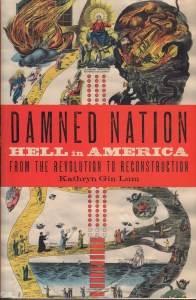
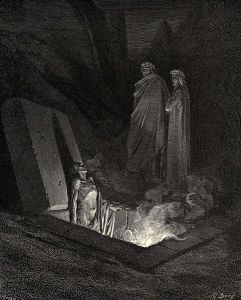
A good metaphor gone bad can do a lot of damage. Like a loose cannon. Hell is a bad neighborhood for metaphors. Taken literally Hell can be hell. So it is that many evangelical Christians are abandoning the concept. Jumping ship on the Manichean outlook that has policed bad behavior for two millennia now. A recent article on National Geographic by Mark Strauss discusses why many leading conservatives are now casting Hell into the pit and looking for ways to make God look better. Like many metaphors, Hell best resides in a world of black and white. A dualistic world where there are no shades of gray (certainly less than fifty of them). A world where any behavior can be understood as good or bad, forward or retrograde, never neutral. You’re either for us or against us. There’s no Switzerland in this geography. That’s precisely why so many people want to keep Hell on a leash.

Dore_woodcut_Divine_Comedy_01

Hell probably never would’ve become such a motivator for good had Jesus not mentioned it. Prior to its encounter with Zoroastrian beliefs, Judaism held that the dead quietly resided in Sheol, a dreary place, true, but hardly fiery real estate. You worked out justice here on earth because that was the only chance you had. The dead were sleepier than early morning commuters and they received neither rewards or punishments. It was a much more egalitarian view of things. The dualistic Zoroastrians saw paradise and torment as a great image to explain evil in the world. The sorting takes place after this life is over. Jesus used such language as well, and the image became canonical.

Evangelicals are now starting to think through the implications of all this. A God with the kinds of anger issues that condemn people literally forever might be problematic. Sure, we may get angry at our enemies, but only the most truly heartless person has no pity on their suffering. What does it say about God if his anger lasts for eternity? Some, therefore, are trying to put the metaphor back into Hell without losing the strict divisions for which the good news crowd is famous. Instead of full-time Hell, perhaps there’s part-time Hell with time for repentance. Or simple annihilation. Metaphors lose their power when they come to be taken literally. Hell is such a loose canon. Doctrine among the doctrinaire is often non-negotiable. Although some may try, as a whole, the fires of Hell can never be extinguished. At least to those who understand figures of speech as statements of fact.


Noah Way

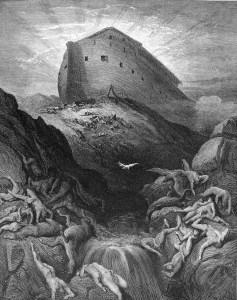
As a fleet of Noah’s Arks near completion, some critics would like to stop these Titanics from their mythical crossing. The Ark Encounter, despite announcements of its demise, is set to open soon in Kentucky. This Noah’s Ark replica, unlike its seaworthy compatriots, is land-locked in bluegrass country. According to a story originating in the Lexington Herald-Leader, Tri-State Freethinkers tried to take out billboard ads suggesting the ark advocates genocide and incest. Well, marrying first cousins has been done before (think about it). And if you go back ten generations things get even a bit dicier with Cain’s wife and that of Seth. All in the Family wouldn’t even air for 6000 years. As for genocide, well, this was more like genomicide. Not a race, but an entire species, apart from kissing cousins, was about to learn the hard lesson of being born not of chosen stock.

According to the article billboard companies have rejected the Freethinkers’ proposal. It might cause accidents, they suggest, which, although not technically genocide, do take the lives of the innocent, even in dry weather. The flood divides people. Thus it always has.

Dore_arch_noah

The culture wars, curiously, pick strange targets. I’m not in favor of teaching children to read myths literally, but then, I’m not in favor of bringing them up as materialists either. There used to be a concept called the “via media”—the middle of the road. Now such a stance appears decidedly wishy-washy. Milquetoast anyone? It is much better to be combative. “Oh George, you’re always so forceful,” sighs Winifred. So we teach our children. Boys, push your way to the front.

Implications can be tricky things. Allowing opponents, no matter how naive, their say has always been a mucking out of the Augean stables. Nobody likes to accommodate other points of view. Watching the parade of politicians we must be assured that we alone are right. Still, the stillborn billboard has a point. Building arks is the sign of the ultimate intolerance. Not only do you condemn those who differ to the outside, you are giving them a self-righteous death sentence. Maybe the billboard should stand. Or maybe it should not. What would Charlie Brown do?


Omen, O Man!

Omen_ver4

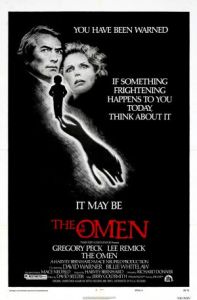
Of the unholy trinity of late-60s to mid-70s horror movies Rosemary’s Baby (1968), The Exorcist (1973) and The Omen (1976), the last always seemed the least effective to me. Having recently read about the Devil in American popular culture, and having a rainy Friday evening alone, I decided to give it a try again. Based as heavily on Hal Lindsey as it is, once one outgrows dispensationalism it is hard to be frightened by the idea of biblical end times. Everything from making up verses in “Revelations” to utterly bogus Holy Land geography (Megiddo is north of Jerusalem, not south—did the writers not even own a map?) contributes to a set of untenable tenets, even among the bibliterati. The film relies mostly on shocks and startles to earn its horror stripes, and after you’ve seen the movie once, these lose their power in subsequent viewings. Nevertheless, on this rainy May night, so close to June 6, I noticed new ways in which the movie undermines its own message.

The premise, of course, is that Damien, the son of the Devil (who apparently has a thing for bestiality), is plotting to take over the world through the means of politics. Having been watching the events of the past few months I have to wonder how the Devil could improve on progress through such channels. But I digress. His step-father Robert Thorn, US ambassador to London, discovers his “son”‘s identity and tries to kill him. With a strong anti-Catholic bias (the Antichrist is born in Rome, the seat of the church, and is protected by Roman clergy) the film nevertheless spawns sympathy for the Devil. As a child, Harvey Stephens hardly appears diabolical. Maybe it’s just because my brothers and I also spilled goldfish from their bowl once, but it seems to me he acts just like most little boys do. Who really wants to go to church at that age? As the movie approaches its climax, he’s represented as the biblical good-guy.

Thorn has to confirm Damien’s satanic identity. Like Delilah, he creeps up on the sleeping boy and cuts his hair. Convinced by a man who introduces himself “I am Bugenhagen” that he has to stab the boy, Thorn in a white car outraces police (so there might be a bit of prophecy here after all) to sacrifice the child on the altar. The movie casts Damien as both Samson and Isaac within a few short minutes. Apart from the film’s use of violence against women’s bodies (Thorn won’t allow an abortion, Kathy seems to have a penchant from falling from high places in slow motion, Baylock gets a fork in the neck) it actually seems ambivalent about the evil of the boy. An unfortunate birthmark does not a devil make. We’ve made it through the change of the millennium and many other hazards, yet dispensationalism is still with us, as is its anticlimactic Antichrist, Damien. He’s less scary than the real politics of an entirely secular age.


Vitruvian Savior

If memory serves, I was still in seminary when “Piss Christ” was first unveiled. As photographic art, I can’t say when the shutter snapped, but I seem to recall animated discussion over it and since seminary animated discussion has been at a premium, so I think I’d remember something like that. In any case, the artwork still has the power to shock and enrage as the world teeter-totters in its love-hate relationship with religion. Some people seem surprised when other people respond somewhat pointedly to what they perceive as affronts to their beliefs. The thing about beliefs is, well, people believe them. In this day of electro-chemical signals between synapses it may be hard to attribute any substance to belief. Still, if someone makes that claim, insult their mother and see what happens. Beliefs, by their nature, are sacred.

438px-Vitruvian

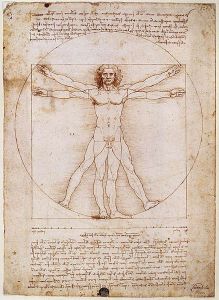
I was reminded of this when my wife pointed out to me a story about Dartboard Jesus. If you’re not a Rutgers University person (as I no longer am), it takes only a little imagination to visualize this artwork. Conjure a dartboard in your mind. Then picture a crucifix superimposed on it with darts instead of nails. Red darts, if that helps. You’ve got it. The official name of the piece is “Vitruvian Man,” but the public outcry was enough to have the piece removed from public display. I taught (strictly as an adjunct, no complications, please) at Rutgers for four years. People sometimes expressed surprise that multiple sections of Intro to “Old” and New Testaments filled up every semester. I wonder if the university ever takes measure of its students’ beliefs. I had Seventh-Day Adventists in my courses. I had Jains, Muslims, and Hindus. I had Atheists and, God help us, Episcopalians. One thing all these people had in common was belief. Not beliefs, but more singular: belief.

No one in the world intentionally believes falsely. Indeed, should Oxford Dictionaries be trusted, belief is “Something one accepts as true or real.” By definition, it seems, beliefs are believed. Artists serve a valuable function in expressing ideas that words struggle to articulate. There is more going on when your crucifix is juxtaposed to a glass of urine or a dartboard than you might otherwise imagine. It says something about belief. In some cultures such heresy is punishable by death. It isn’t so much a matter, I would suggest, of freedom of expression as it is a matter of advocacy. Artists are teachers and even teachers sometimes don’t consider how their lessons will be taken. Respecting belief, perhaps, is something electro-chemical signals leaping tall synapses in a single bound simply don’t understand.


With Your Measure

“With what measure ye mete,” someone once said, “it shall be measured to you again.” I certainly hope that’s true, but empirical verification seems to be lacking. I’m looking at, with the full armor of irony, a postcard from Nashotah House. Those of you who’ve long read my posts (I know who both of you are!) will know my history with said sacred institution. No, it’s not with me that they stay in touch, but my wife. You see, she’s one of those women who kept her maiden name, so in the eyes of many at the sacerdotal school we were probably never properly married. They certainly never came out to wave goodbye. Anyway, this past year they’ve begun corresponding with my spouse. I can’t remember—did I ever teach there for a decade and a half? So what are these sweet nothings they’re sending?

The card in front of me informs me that they’ve been praying for my spouse. Don’t get me wrong—she’s married to me and she needs all the help she can get—I never begrudge anyone’s prayers. I also can’t help exegeting a bit. Occupational hazard. One of my students once told me “don’t exit Jesus from your exegesis.” And they tell me I have no practical experience in the real world! So I’m looking at this prayer card wondering whose autograph it is. A man wants to know who’s praying for his wife. More than that, it appears that the name was scribbled out and written again. Did someone pray for those in the outer darkness by mistake? Heaven forfend! Alas, for my meting days seem to be about done. I must have a measuring tape around here somewhere.

That same guy whom I’ve quoted above also said, “pray for them which despitefully use you,” which I suppose might be some good advice. I understand that one-percenters and their ilk couldn’t be where they are despite using you. You just can’t help it—if something is inconvenient, you can simply toss it away. Build a tower to the heavens—what can be more biblical than that? See, words are endlessly flexible. They can be twisted and turned and made to say whatever you want them to mean. And should it ever come to meting cups, there are some recipes that might call for more than a wafer and a sip of wine. This is probably all obscure, but I’m trying to read by candlelight, and this text seems to say “when thou doest thine alms, do not sound a trumpet before thee” and “when thou prayest, enter into thy closet, and when thou hast shut thy door, pray to thy Father which is in secret.” But how will anybody send you money if you don’t let them know?

IMG_2767


Comic Culture

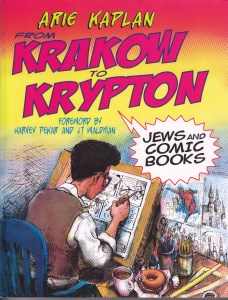
KrakowKryptonPerhaps the most obvious deviancy in my otherwise conservative childhood was MAD Magazine. I honestly suspect my parents didn’t know that it wasn’t just another comic book. I read it—like I read everything—religiously, and I was fluent enough in the lingo to discuss it intelligently with my sixth-grade teacher, a fellow fan. Having made that admission, my reading of comic books was muted since we lived in a town with no literary aspirations or conveniences. There was no book store, or even magazine shop, let alone a public library. We were one of the towns Carnegie left behind. Still, I was draw to MAD contributor Arie Kaplan’s From Krakow to Krypton: Jews and Comic Books. Over the past few years I’ve been reading academic treatments of comics as, with my beloved monsters, the high-brow academy has come to view low-brow as “culture.” (I learned the term “high-brow” from MAD, by the way.) As I grew into an Episcopalian, I tended to leave these markers of my shameful past behind, but now I’ve come once again to embrace them.

One of the odd things I’ve noticed about Jewish (and other “outsider”) analyses is just how deeply felt the anti-semitism of our culture is. This always strikes me as odd as, although it is hard to believe, I was raised to be non-prejudicial toward anyone else. (Poor folk are often that way; we know our place, beneath others.) I never felt superior to Jews, African Americans, or women. I was in awe of them. Maybe MAD helped. As Kaplan points out in his treatment, much of the comic industry was Jewish in origin because so many Jews were kept out of other businesses in New York. (Well, there is Diamond District, but let’s stick to publishing.) With few options, poor immigrant kids turned to cartoons. As a child in a humble household I often took out my frustrations by making my own comic books. I can understand the catharsis.

With the current glut of superhero movies, it may be hard to imagine a time when comic books and their denizens were considered utter foolishness. Now they’re big money. It’s not so much that the mighty have fallen than it is the humble have been exalted. I haven’t really read comic books since I was maybe fourteen. Up to that point, however, they got me through many a difficult time with the belief that there was someone out there watching over me. No superheroes ever delivered me from my troubles, but belief was sometimes all I needed. I can understand why those who are discriminated against would turn to this medium for release. Faith and fantasy share more than an opening syllable, for those with eyes to see.


Game of Thrones

IMG_2763I risk my already flagging street cred by admitting this, but I don’t watch Game of Thrones. In fact, I started to read the first book a couple years back and I just couldn’t get into it. Well, only 80 pages into it. The fault is, I’m entirely sure, my own. I lack some gene or enzyme that makes life without Game of Thrones impossible. Still, I have to admit curiosity. A story on the Washington Post, by Ishaan Tharoor, suggests “The ancient Persian god that may be at the heart of ‘Game of Thrones’” is Angra Mainyu, aka Ahriman. This managed to catch my attention. Zoroastrianism is a religion that seems to lie behind quite a bit of modern religious thought. Although dating Zarathustra, or Zoroaster, is notoriously difficult, concepts from his religious system show up in Hinduism—one of the earliest forms of religious expression about which we know a fair deal—as well as in Judaism and therefore Christianity and Islam. In fact, many of the ideas you may associate with the central tenets of Judeo-Christo-Islamic tradition may go back to Zarathustra.

One of the certainties about Zoroastrianism is that it was a dualistic religion. Good and evil are engaged in a constant struggle for control. The good god, Ahura Mazda (which sounds like a blend between Star Trek and a Japanese auto maker) struggles constantly against Angra Mainyu. Mazda’s website states that the car line is named after the deity (according to Wikipedia, I note, losing the last vestige of cred), pushing his reach even further east. With this incredible pedigree, it is no wonder that George R. R. Martin may have tapped into it. This kind of dualism is ripe for the picking.

My friend K. Marvin Bruce wrote a satire about the Persian gods, in fictional form, that was published a couple years back in Calliope, a small circulation literary journal. He told me he even won third place in a contest for it. The idea was that a disgruntled professor wanted to start the apocalypse (a Zoroastrian idea) by summoning Ahura Mazda and Angra Mainyu to earth to try to start a fight between the two. It was a fun story, but the point, if I may speak for my friend, is serious. Warring religions stand the best chance of beginning the end of times. We don’t even need the gods to do it, really. Although I don’t watch Game of Thrones, I can’t help wonder if Martin had the same idea in mind. If you want the answer to that, don’t ask me. I’m not even a hundred pages into it, and I don’t have triple play.


Come Sail Oy Vey

Nothing says unorthodox like a headline that reads “Smart Jews? Thank the Extraterrestrials.” Breaking Israel News ran the story recently and, being constitutionally unable to pass up anything so strange, I had to take a look. The article, by Adam Eliyahu Berkowitz, is really just a half-century retrospective of Erich von Däniken’s Chariots of the Gods?. I remember fifty years ago—not well, mind you, I was only three—but even when I was a teenager and the book had its second (of many ordinal) gasp(s), and a movie came out. People, even those not traditionally labeled as “crazy,” flocked to theaters to see it. The book went through multiple printings. The era of “ancient astronauts” was born. Von Däniken, it seems, is alive and if not exactly kicking, still making people uncomfortable.

IMG_0038

In this news story von Däniken suggests that Jews are more intelligent because of their alien DNA. Don’t quote me on this, but I’m pretty sure that was the plot line of the X-Files season 10. Isn’t Fox Mulder Jewish? Maybe I’m getting myself mixed up in some kind of plot here. I have to admit, however, to having a touch of nostalgia for Chariots of the Gods?. There was a kind of innocence to it. Nobody seemed to be inseminating anyone else, or stealing babies. It was good, clean fun.

Something bothers me, however, about the assertion that aliens are, indirectly perhaps, responsible for holy writ. I remember thinking through the implications of this idea (already floated four decades ago) that God might be more Captain Kirk than Jesus Christ. It is inherently disturbing. Especially when von Däniken says in the interview that the Jews are the chosen people, but they just got the chooser wrong. ET instead of I AM. The really interesting part is that ancient astronauts have become a somewhat accepted cultural trope. I don’t know whether they were there or not (I wasn’t around at the time), but they sure do make Saturday afternoons much more interesting. One wish I hold is that people writing about this old idea might find a new opening bit. Ezekiel seeing the wheel has been done to death. Surely a bit of creative thought might suggest a new, undiscovered ancient truth.


Perceiving Religion

ViperHearth“Sticks and stones,” they used to tell me, “may break my bones, but words will never harm me.” We teach our children lies like that. I have been hit by sticks and stones—fortunately wielded by other children—but the things that hurt worst were the words. Some of those scars are still with me. I recently read Terryl L. Givens’ The Viper on the Hearth: Mormons, Myths, and the Construction of Heresy. It is my policy on this blog not to poke fun at religions of which I’m not a member. (Those that have been willing to take me on, well, they should’ve known what they were getting into.) I can’t say that I know many members of the Church of Jesus Christ of Latter-Day Saints, but the few that I do know have been just like anybody else. Well, to be honest, they’re scholars so they are probably just as strange as the rest of us who spend too much time hitting the books. I don’t hold to their religious beliefs and they don’t hold to mine, so what’s the problem? Givens’ book shows what it’s like to be on the receiving end of those “harmless” words. Mormons, almost uniquely among religious groups, have been verbally castigated with impunity. This book is an attempt to answer the reasonable question “why?”.

As I read this account I found myself trying to put on Mormon shoes and walk in them for a while. Things sure looked different from that perspective. Things have changed in the nearly two decades since the book was published: Stephanie Meyers’ Twilight series brought Mormon fiction into the mainstream (Orson Scott Card, although he continues to charm the sci-fi crowd, hasn’t quite caught the crucial young lady demographic, it seems). We’ve had an LDS candidate for President of the United States. Even though Book of Mormon, the show, pokes fun, it is fair to say that you only get this level of attention when you’ve been mainstreamed. Protestant, Catholic, and Jew have all taken their knocks on the comedic front. Still, there is a poignancy to The Viper on the Hearth. Mormons, like other religious believers, are simply wanting to make the world a better place. This is perhaps the surest way to draw fire.

Givens provides some likely answers as to why the Mormons have been shunned by their fellow Americans. One reason that I didn’t notice (sometimes things escape me) but which might have put them in good company is a statement from the New Testament; prophets don’t seem very good at gleaning honor among their compatriots. It may be hard to trust a religion that comes from your own neighborhood. We know too well the corruption, the pettiness, the foibles of those who live next door. If we’re honest, we know that we have them too. No need to go outside. The glimmer of hope here in this nation of religious freedom is that things seem to have improved over the last few years. As Mormonism grows, ages, and becomes passé in the looming age of Nones, perhaps we’ll apologize for not only the sticks and stones, but for those weapons that hurt most sharply with no physical existence at all.


Fast One Flood

I’m not sure what to believe anymore. This crisis of faith revolves not around religion, but around media. Pundits have been saying for some time that the internet has meant the slow death of journalism, and there are so many websites that redistribute news that its like the whole world is involved in a constant, perpetual game of “telephone.” All of this is preface to a story a friend sent me that appeared on the website God. I’m not sure I trust God. The story is too good to be true. At least in a schadenfreude sort of way. God is hosted on thegoodlordabove.com, and, well, we all know about dot coms. The article concerns the destruction of Answers in Genesis’ Noah’s Ark theme park by a flood. That is believable. Floods do occur, as Noah knew. What becomes unbelievable is that the National Weather Service forecaster stated that there were no storm clouds in the area at the time. That qualifies as a miracle.

Martin,_John_-_The_Deluge_-_1834

Did this really happen? I don’t know. I wasn’t there. Plenty of times when I was there (wherever there happened to be at the time) I wasn’t even sure what happened. Can I find the truth? One of the police sites for internet rumors is Snopes (also a dot com). I remember when Snopes began as a place to quell fears of urban legends. Back when the worldwide web was young, there was a verisimilitude to stories gleaned from the net. Living in the sparsely populated Midwest, it was easy to believe that some of these things could happen to you. At times I held onto Snopes like a crucifix, especially if I had to go out alone at night. Snopes tells me that thegoodlordabove is not to be trusted. The story is false, like others that have originated on the site. Answers in Genesis, unfortunately, is still going strong with its theme park.

Authoritative texts aren’t what they used to be. There was a day when all you had to do was pull a black leather book off the shelf to find the definitive answers. In Genesis or any other of the books. Now we rely on the worldwide consensus of the web. You can’t trust God on a website. Snopes, however, is pretty reliable. It’s the Scully to our natural Mulder. That’s why the web will never have the same impact as print media. Even the website for your bank or government can be cleverly faked. I might’ve looked no further had the purported flood not fallen from a cloudless sky. I guess I’d better be a wary believer. For the internet tells me so.


Prayer before Meals

It was in Wisconsin. Oshkosh. I was teaching for a year in a replacement position, and my roster of classes at the university covered several aspects of religious studies. During the course of prepping a course, I first saw it. The Flying Spaghetti Monster. It was only a virtual Flying Spaghetti Monster sighting, but since Creationism was much in the news in those days, I boiled with curiosity. By now it would probably be a strain to explain the whole thing, since everyone knows about his noodly appendages and predilection for pirates. The short story is that the Flying Spaghetti Monster was an invented deity to demonstrate the ridiculousness of trying to get Creationism taught as science in public schools. For those who believed in other gods, such as the FSM, there should be equal time in the classroom, the argument went. Since that time Pastafarianism has taken on the semblance of a real religion with “believers” earning the right to have driver’s license photos taken with colanders on their heads, and even a book of scriptures being written.

An Associated Press story from Sunday’s paper tells of the world’s first known Pastafarian wedding. Bylined Akaroa, New Zealand, the blurb indicates that the Oceanic nation down under has decided that Pastafarians can officiate at weddings, and a couple was married with al dente accoutrements. The Church of the Flying Spaghetti Monster, it seems, is going the way of the somewhat more serious Jediism and Avatar religions in that people are deliberately electing fiction as their faith. Interestingly, this may not be a new phenomenon. We are told, for example, that Zarathustra deliberately outlined a new religion—one that may end up having had the greatest impact on humanity of all time, if roots are considered. In those days the strict division between fiction and fact may not have been a mental filter yet discovered. The “it really happened” test of religious veracity was still some distance in the future. Metaphor meant something then.

IMG_2753

The internet, it seems likely, has facilitated and accelerated the appearance of new religions. As with most things, the real issue comes down to money and power; if a government recognizes a New Religious Movement as legitimate, it may be granted tax exempt status. And how can it be proven that someone really does or does not believe what s/he says s/he does? If you’ve got a box of Barilla on your pantry shelf, who’s to say? It’s a short distance from that colander in the cupboard to the top of one’s head. And who doesn’t like pirates? And who’s to say that under that rotelle moon in a stelline-studded sky someone hasn’t indeed kissed their hand and swore the ultimate starchy allegiance? Keep watching the skies!


Biblical Stories

The Bible had quite a week last week. It went from being vetoed as the “state book” of Tennessee to making it onto the list of the ten most challenged and banned books of the year for the first time. Did you ever get that feeling that you should’ve thought a bit more closely about career options? I mean, the Bible’s not half bad. Yes, it has some naughty bits, a few instances of cursing, and adult situations. There are homicides, suicides, and genocides. It endorses slavery and advocates religious intolerance. It’s not all bad news, however.

IMG_2634

We find it easy to make summary judgments based on our own tendency to elevate human products to divine status. That which is most holy, after all, becomes the most profane when it’s defiled. The Bible itself can be like any other book. Printed on paper, bound between two covers, it contains ideas that must be interpreted. There’s no such thing as “just reading.” Even that road sign that says “slow children” is open to hermeneutics. What is objectionable is the use to which the Bible is put. And that use is objectionable due to the claims made about it. Saying that God rolled up his immaterial sleeve and took a transcendent pen into his incorporeal hand and began to scrawl is a bit naive. We know that people wrote the Bible—and much of it is sublime—and other people compiled it into a book that eventually acquired sacred status. It wasn’t born holy, it had to grow into it.

Once the Bible became objectified it turned into what people eventually use all objects for: a weapon. We can take sticks and stones and break your bones (no, that’s not in the Bible), and we can take paper and ink and hang you as a witch. Or pillory you as a liberal. Or say that it forbids the love you feel in your God-given heart. Something strange has happened here. The Bible’s not a bad book. It’s a bit on the long and repetitious side, but it has many, many memorable sayings and noble sentiments. Entire civilizations have been based on it. Or readings of it. They’ll ask you to put your hand on it and swear in court, and then they’ll ban it so your kids can’t read it. It’s been a tough week for the Good Book. Somehow, however, I don’t think we’ve heard the last of it because people love a conflicted story.


Taking God to Bed

SavingSexThere are varieties of evangelical experience. It is so convenient to put people into neatly labeled boxes that we tend to forget religious experience can be very different, even to conservatives. This point is made very clearly in Amy DeRogatis’ Saving Sex: Sexuality and Salvation in American Evangelicalism. The title of the book requires some further disclosure. DeRogatis is offering an academic study of evangelical sex manuals and teachings about sexuality. If you’re anything like me, the very concept sounds strange. I grew up in an evangelical household and we would’ve been scandalized to learn that such things as godly sex manuals existed. In fact they did, but we didn’t know about them. Although evangelicals share a common idea that there are appropriate and inappropriate varieties of sexual experience, they disagree, according to the evidence, over what some of those boundaries are.

DeRogatis’ book offers some fascinating insights even within this circumscribed field of study. For example, some writers of such manuals give rather permissive instructions as to what might happen in a heterosexual, Christian boudoir, while others keep to the basics. Some suggest that the very practice of sexuality opens its participants to demonic infestation, so much so that they consider STD to be Sexually Transmitted Demons. This is an intriguing and frightening world to enter. Many of the writers of such books suggest that women should indeed be under the authority of their husbands in all things. No room for Lilith there! Others, however, are surprisingly broad minded. More so than some Episcopalians I’ve known.

This brings me, as a former evangelical, to my concern about academic studies of such groups. It seems to me that to truly understand what are undoubtedly irrational beliefs, you must have had the experience of truly believing. If I might be excused of the pun, are you experienced? As much as we wish it were, evangelicalism isn’t a neat packet of propositions that people simply accept. It is a complex, emotional, and, in its own universe, logical response to the belief that the Bible is the owners manual. Sola scriptura gone wild. How individuals deal with this impossible truth is widely divergent. We’re taught not to discuss sex in polite company, but we just can’t help ourselves. For some that’s good news indeed. For others it is the very definition of wickedness. As Saving Sex shows, there is more than one position to be taken.


Psychics Anonymous

New York is a city that is fascinated with itself. To me it’s kind of like rooting for a professional sports team. The members of the team come from all over the place. As Jerry Seinfeld once said, “You’re rooting for the jerseys,” or something to that effect. So it was that I found a piece in News Watch so interesting. “New York City: Psychic Capital of the World?” the headline ran. New York has to be first in this too? I’ve noticed on my daily walks through Midtown Manhattan that many psychics hang out the shingle proffering their wares. In my half decade of commuting into the city, I’ve only ever seen one person take up such an offer by pushing through the door. Nevertheless, I have been impressed by the sheer number of psychics that advertise in New York.

IMG_1178

I’m not one to rule out psi without giving it a fair hearing. Much knowledge is lost, I fear, by the ridicule factor. How many times have you thought about someone for the first time in years and then they called you? We all experience significant coincidences from time to time. Princeton and Duke Universities even set up, once upon a time, laboratories to test such things. What really interests me here, though, is that those who advertise are doing it as a business venture. Something of value changes hands for a chance at some insider knowledge. For legal purposes the psychics have to declare their wares for entertainment only—they go where no empirical evidence dares follow. Lawyers live for such ambiguity. Even so, some of the most influential people in the world of politics have relied on psychics. Some police departments do as well, very quietly.

News Watch says that psychic consultation is the closest some New Yorkers get to spiritual. If so, I’m glad they exist in such profusion. Our world has many shortages: fresh water, adequate food, and, for the tastes of some, fossil fuels. Perhaps the most dangerous shortage of all is the recognition that we are spiritual beings. Call it emotion, call it irrationality, call it feeling—our non-physical selves are what we care most deeply about. When we greet someone after an illness or surgery, we don’t ask “How do you think,” but rather “How do you feel?” We can give it many names, but the existence of our psyches is what keeps us sane and healthy. New York City is just like anywhere else, in that regard. It is a very human city.


Ark Apocalypse

I get lost in the web. Although my work requires that I remain plugged in to the internet all day long, I confess to feeling lost on the weekend. I don’t know what to browse or where to look for titillating new information. A friend then asked me what I thought of Gabriel’s Ark being sent to Antarctica. I had no idea what Gabriel’s Ark might be and I had to hunt through the corridors of rumor and conspiracy that make up much of the worldwide web to find it. Once I did the story grew incredible and also impossible to verify. Maybe this is why I avoid the web on weekends.

337px-Folio_29r_-_The_Ark_of_God_Carried_into_the_Temple

So the story goes like this: Gabriel, the archangel, gave Mohammed a secret weapon called an ark that would herald the last days. This ark was buried in Mecca. So the story goes, it was unearthed in September and it was the power of that ark that led to the tragic crane collapse that killed over a hundred pilgrims in Mecca last year. Days later the weapon went off again, leading to the death that the media blamed on a human stampede. Wanting to rid themselves of the ultimate weapon, the Saudi officials handed it to Russia. A research ship headed for Antarctica took on the mysterious cargo in Arabia before chugging south. Patriarch Kirill of the Russian Orthodox Church met with Pope Francis, so the story goes, to receive an ancient document to control the ark. The Patriarch then showed up in Antartica to enact a strange liturgy before the trail goes cold on the story.

No major, respected news media carried the story. That only confirms that it is a cover-up in the eyes of many. What is so fascinating about all of this is that those who continue to keep the story alive clearly believe that the end of days is being unleashed not via the Christian apocalypse, but a supposed Muslim one. It’s as if Revelation didn’t deliver, so now we need to turn to some other ancient, obscure document to document the apocalypse. Meanwhile, those who’ve spent their lives learning to read ancient texts by accredited universities scrounge for whatever work they can find. Odd people aspire to very powerful political positions. Money is the only thing that matters. Maybe it is the end of days after all.